
Abstract
To address the prevalence of per- and polyfluoroalkyl substances (PFAS) in drinking water and their associated health risks, this study investigates and proposes a sustainable remediation strategy combining adsorption and biological degradation. Discarded oyster shells were investigated as adsorbents for PFAS-related contaminants due to their porous structure, followed by treatment with functional bacteria. High concentrations of fluoride ions, indirectly indicating the presence of PFAS, were detected in various household products. Further, PFAS-contaminated water has shown toxicity to human lung cells and plant growth. Treating PFAS-contaminated water with oyster shells exhibited possible adsorption effects, and alleviated toxicity in human lung cells. Additionally, 18 types of bacteria were isolated from soil that had been long exposed to PFAS, and two colonies with potential contaminant degradation effects were selected. 16S ribosomal ribonucleic acid (16S rRNA) sequence analysis showed that one matched 98% with Bacillus megaterium and the other matched 99% with Bacillus thuringiensis. This study demonstrated that discarded oyster shells and functional bacteria have potential as an integrated PFAS remediation strategy for reducing PFAS-related contaminants in water systems.
Keywords: Adsorption, Bacillus megaterium, Bacillus thuringiensis, Oyster shells, PFAS, Water Remediation
Introduction
Connecticut has created the world’s first ‘The Connecticut Oyster Trail’ by collaborating with more than 12 oyster farms and 20 restaurants and stores in order to promote oyster production and consumption through tourism1. However, as oyster consumption increases, the amount of oyster shells being thrown away is also increasing. Seafood restaurants discard substantial amounts of oyster shells, creating a persistent shell-management issue. These shells degrade very gradually over a period of years2, and emit toxic gases such as hydrogen sulfide and ammonia3.
In addition to waste management challenges, Connecticut also faces significant water contamination issues: they contain high levels of per- and polyfluoroalkyl substances (PFAS). PFAS is a group of more than 9,000 different synthetic chemicals that cannot be decomposed4. PFAS were developed in the 1940s and has been widely used as water, oil, and fat resistant coatings5. Because of PFAS’s non-decomposable nature, it has been used industrially as a coating for frying pans, fabric protectors, and more efficient firefighting foams6. However, this advantage has turned into a fatal disadvantage after being abandoned, as it is known as a ‘forever chemical’ that not only does not decompose naturally, but also accumulates in humans and the environment, causing various environmental problems and diseases.
Connecticut is one of the states with a high level of concern regarding PFAS contamination and is the fifth oldest state in the United States. The older urban and industrial land use have created PFAS source areas, including sites associated with firefighting foam, landfills, and wastewater pathways7.
PFAS have been identified in drinking water in Connecticut, and consumption of PFAS has been associated with the ability to cause various diseases such as thyroid disease, liver damage, kidney disease, or reduced fertility8. PFAS also causes environmental problems. When PFAS enter rivers, they interfere with the photosynthesis of phytoplankton and is toxic to aquatic organisms9, which means that PFAS poses a threat to fish and animals that feed on fish through the aquatic food chain. PFAS also destroys the structure of plant cells and interferes with the function of cell organelles10.
To address PFAS contamination, various treatment technologies have been developed. Several technologies have been developed to remove PFAS. Although these technologies can reduce PFAS concentrations, they have significant limitations. Adsorption-based technologies mainly transfer PFAS from water to land without destroying them, creating secondary waste that has to be treated again. Membrane processes often can be energy-intensive requiring high energy inputs. These limitations highlight the need for a low-cost and sustainable approach that can both capture and degrade PFAS.
The purpose of this study is to simultaneously address the environmental problems in Connecticut caused by PFAS and oyster shell waste. Various methods for upcycling oyster shells have already been proposed, including returning oyster shells to the ocean to create a habitat for young oysters11. Nevertheless, a large amount of oyster shells is still being discarded. Oyster shells are composed of 95% calcium carbonate (CaCO3) and ~0.1–5% organic matrix proteins12, and structurally, the shells are stacked in layers with numerous pores between them13. Due to these structural characteristics, oyster shells are known to adsorb various components such as phosphorus, copper, zinc, chromium, or cadmium14. In addition, oyster shells possess a porous hierarchical structure with measurable surface area that allows many adsorption sites for contaminants. These properties suggest that oyster shells may also have potential for PFAS adsorption.
While adsorption offers a potential solution, it does not fully resolve the issue, as the adsorption of PFAS on oyster shells does not mean the decomposition of PFAS. The adsorbed PFAS from river water remains inside the oyster shells without being decomposed. When the oyster shells that adsorbed PFAS in river water are recovered into the land, the PFAS are only transferred from the river to the land with the oyster shells. Therefore, a method to decompose PFAS adsorbed on oyster shells is needed. Recently, PFAS-decomposing bacteria, Desulfovibrio aminophilus and Sporomusa sphaeroides, were isolated15. For bacteria to survive and proliferate in an environment where toxic substances exist, they must acquire the ability to decompose the substances through evolution. Therefore, it is highly likely that bacteria that decompose PFAS exist in an environment contaminated with PFAS.
To overcome these limitations, this study proposes an integrated approach combining oyster shell adsorption with PFAS degradation using functional bacteria. Specifically, the main objective of this study is to determine whether a treatment system can be developed in which oyster shells adsorb PFAS and functional bacteria subsequently degrade the adsorbed contaminants, after confirming the prevalence and the biological impacts of PFAS. I hypothesize that oyster shells can act as an effective, low-cost adsorbent for PFAS due to their porous structure, and that PFAS-contaminated environments may contain bacterium capable of degrading PFAS, supporting an integrated adsorption-degradation treatment approach.
Methods
Fluoride Ion Testing for PFAS Detection
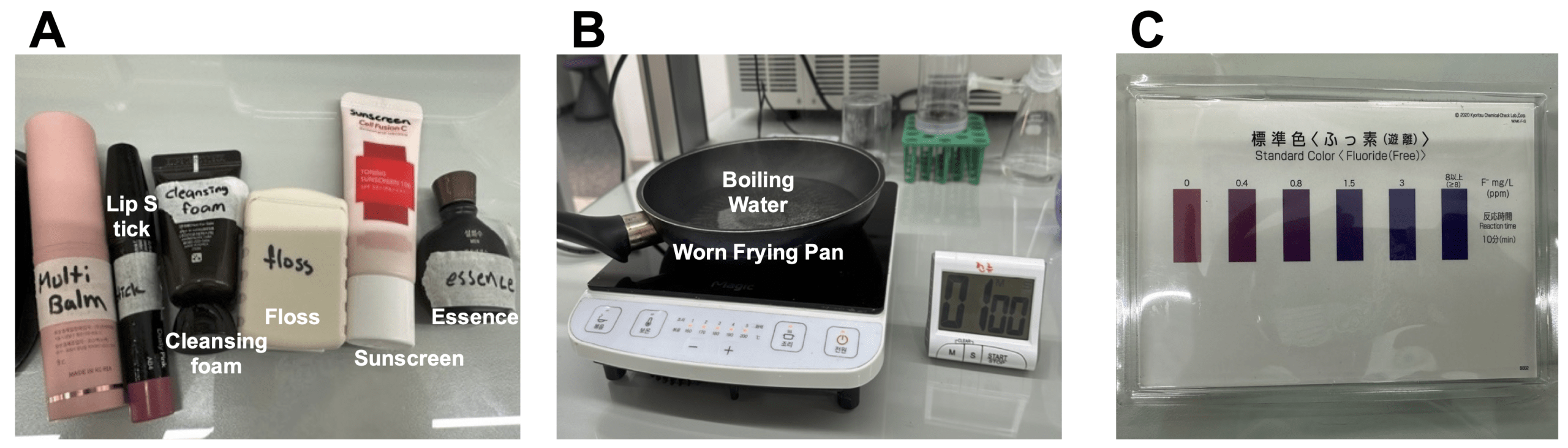
To evaluate the level of fluoride ions in daily items, four types of cosmetics, cleansing foam, dental floss, and a worn-out frying pan were prepared (Figure 1A). The cosmetics or dental floss were each gathered and placed in a 15 mL conical tube as shown in Table 1. Distilled water (DW) in an amount equal to nine times the sample weight was added using a serological pipette, and the cosmetics or dental floss were shaken using a vortex mixer to mix well. 200 mL of DW was added to the worn-out frying pan, boiled for 7 min and then cooled to room temperature (Figure 1B). To provide a negative control for the frying pan test, the DW was also tested before boiling, which showed 0 parts per million (ppm) of fluoride ions. Water boiled in the worn-out frying pan was used throughout this study as a model PFAS-related test solution, because it represented water exposed to a fluorinated consumer surface and showed detectable fluoride ions. Hereafter, this frying pan derived solution, used as a model of fluorinated solution in this study, is referred to as “PFAS-water.”
| Items | Multi-Balm | Lip Stick | Cleansing Foam | Floss |
| Amount used | 0.33 | 0.19 | 0.51 | 0.13 |
| Items | Sunscreen | Essence | Boiled Water from Worn-Out Frying Pan | |
| Amount used | 0.31 | 0.37 | 12.4 | |
PFAS were confirmed by measuring the amount of fluoride ion using a fluoride ion testing kit. 200 µL of sample was mixed well with 0.01 g of fluoride ion testing kit powder using a micropipette, and the mixture was stored at room temperature for 10 min. The amount of fluoride ion was determined by comparison with the standard color chart (Figure 1C). Fluorine ion testing was used in this study as a method to assess the possible presence of fluorinated compounds in consumer items and experimental solutions. Because PFAS contains carbon-fluorine bonds, fluorine detection was used as an indirect indicator of PFAS-related contamination.
Preparation of Oyster Shells
The oysters used in this experiment were collected from Tongyeong, Gyeongsangnam-do, South Korea, and 4 kg were delivered to the laboratory in a refrigerated state the day after collection via quick delivery. Immediately after arrival, the oysters were placed on newspaper, and all oyster contents were removed except for those that could not be opened, and the shells were collected and washed. This process was performed under an ice pack to ensure that the oysters did not lose their freshness. The oyster shells prepared in this way were dried by turning them over in a fume hood for 48 h, and 1/3 of them were put into an autoclave and high-pressure steam sterilized at 121℃ and 1.5 atm for 15 min to make steamed oyster shells. 1/3 of the remainder was ground in a grinder and sieved to make powder.
Adsorption Testing of Oyster Shells for PFAS Removal
A frying pan derived fluorinated solution (PFAS-water) was prepared by boiling 500 mL of distilled water in a worn out frying pan that had been used for more than 3 years, boiling it for 10 min and cooling to room temperature, and measuring the amount of fluoride ions.
Then, to prepare oyster shell powder (OSP) gels, four 200 mL Erlenmeyer flasks were each filled with 100 mL of DW and 1 g of oyster shell powder, and then 0.8 g, 1 g, 1.2 g, or 1.5 g of agarose powder were added to each. The agarose was completely dissolved in a microwave, mixed well, placed in a square plastic container and allowed to solidify. The OSP agarose gel (OSP gel) was placed on a plate, and 30 mL of the prepared PFAS-contaminated water was added to each. The flasks were covered and left at room temperature for 48 h, and then 200 µL of overlying PFAS-water was subjected to fluoride ion testing.
In a separate experiment to evaluate the effect of oyster shell powder concentration, five 200 mL Erlenmeyer flasks were filled with 100 mL of DW and 1.5 g of agarose powder, and 0.8 g, 1 g, 1.2 g, or 1.5 g of oyster shell powder were added, respectively. They were boiled in a microwave until fully dissolved, cooled, and solidified. They were placed on plates and 30 mL of PFAS-contaminated water was added each. After covering the flasks and leaving them at room temperature for 48 h, fluoride ion testing was performed on the overlying solution.
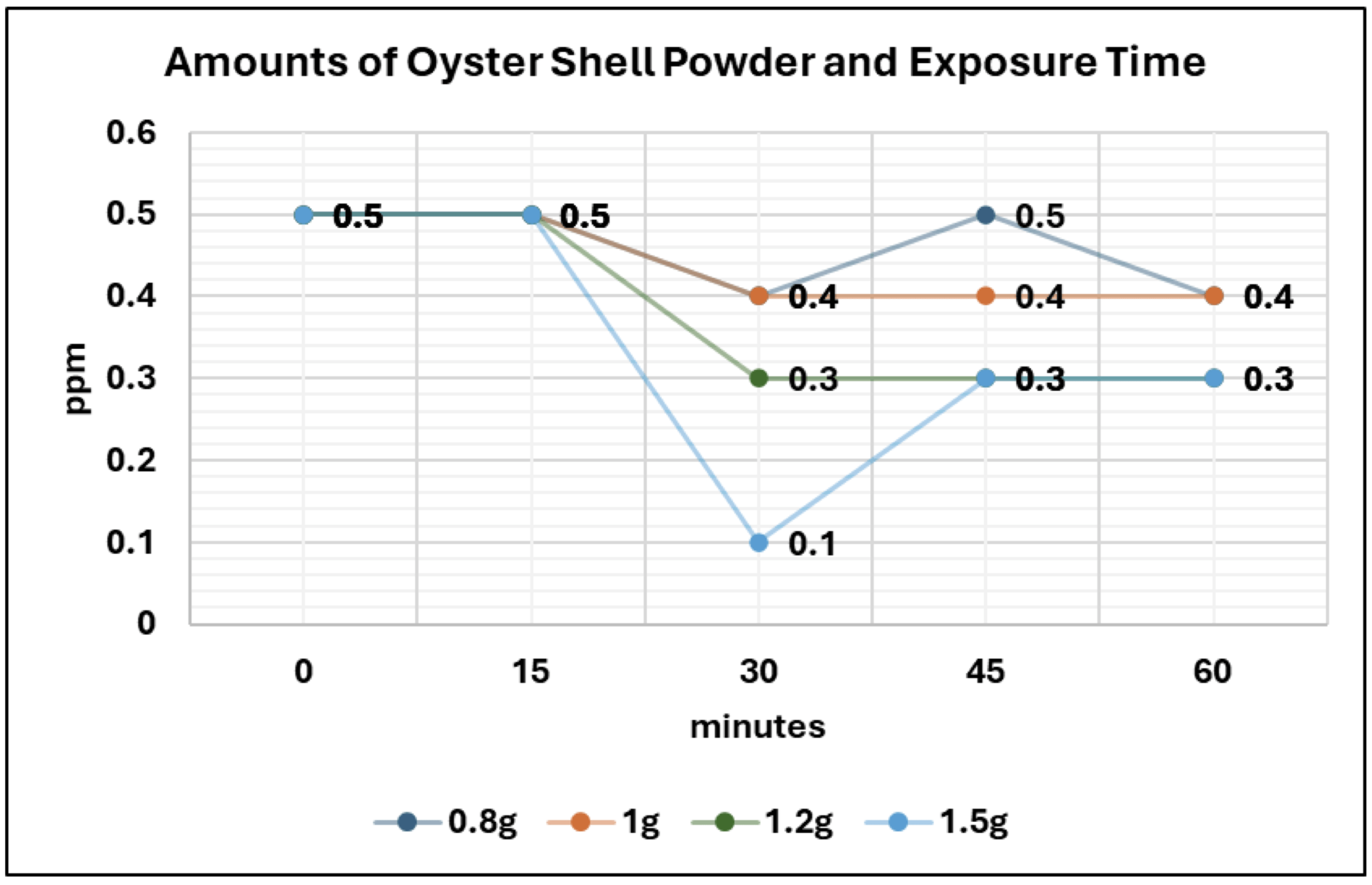
To determine the time needed for effective adsorption, OSP gels with different oyster shell powder concentrations were placed in petri dishes, and PFAS-contaminated water was added at 20 mL each. From 0 to 60 min, 200 µL of contaminated water from each petri dish was transferred to each well of a 96-well plate every 15 min. Fluoride ion testing was performed a total of five times for each sample: data was collected at 0, 15, 30, 45, and 60 min marks.
To examine the effect of PFAS on plants to check the alleviating effects of oyster shell powder, three 200 mL beakers were prepared. One beaker contained 100 mL of DW along with 1.5 g of agarose powder, and the other two were added with 100 mL of PFAS-contaminated water. 1 g of OSP was added to one beaker containing the PFAS-contaminated water. After boiling in a microwave to completely dissolve the agarose, it was poured into each well of a 6-well plate. DW (negative control) was placed on the left row, OSP and PFAS-water in the middle, and PFAS-water (positive control) on the right row. Corn, rice, perilla, and radish seeds were prepared. According to the size of the seeds, 2 corn, 4 rice, 6 perilla, and 4 radish seeds were planted per well of each 6-well plate. An additional soil-based germination trial was attempted to increase sample size; however, no seeds sprouted in the soil condition, including the control, and these data were therefore not included in the analysis. After 4 d, the number of germinated seeds, root length, and sprout length were measured. Next, the roots were cut, and the thickness and hairs of the roots were observed under a stereo microscope. Plant growth data are presented descriptively as mean ± standard deviation (SD) of measured seedlings. Because the agar-based plant assays were performed using one well per treatment, these measurements do not represent independent biological replicates at the treatment level, and inferential statistical testing was therefore not applied.
PFAS removal effects of oyster shell processing
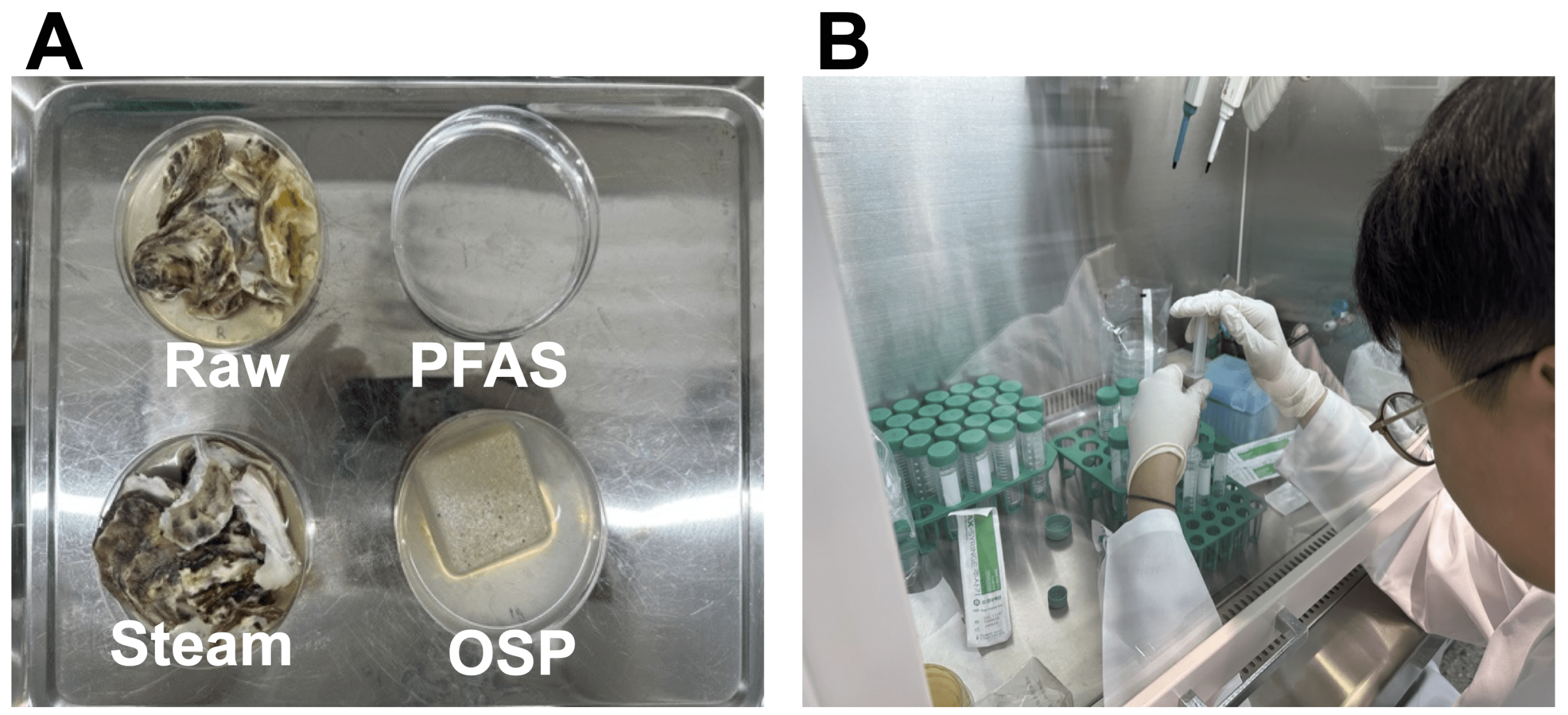
Raw oyster (30 g), steamed oyster (30 g), and 1% OSP gel was placed in a petri dish, and PFAS-contaminated water (30 mL) was added to each dish (Figure 2A). After 48 h, fluoride ion testing was performed. Afterwards, the solution was sterilized by filtration using a 0.2 µm disk filter and syringe in a 15 mL conical tube (Figure 2B). The solution was stored for subsequent experiments.
Biological Safety Testing of PFAS-Contaminated Water Treated with Oyster
To evaluate the biological safety of treated PFAS-water in plants, 0.8 g of plant agar and 80 mL of DW were mixed and boiled in a microwave. 4.5 mL was added to each well of a 6-well plate. In five different wells, 500 µL each of filter-sterilized PFAS-contaminated water, OSP-treated water, steamed oyster-treated water, raw oyster-treated water, or DW were added, mixed, and allowed to harden. Next, 2 corn and 4 radish seeds were planted. Germinated sprouts were observed after 6 d.
To examine the effects on human cells, A549 cells, a human lung cell line, were purchased from the Korea Cell Line Bank (KCLB). A549 cells were seeded in a 25 cm2 cell culture flask containing 5 mL of high glucose Dulbecco’s Modified Eagle Medium (DMEM) supplemented with 10% Fetal Bovine Serum (FBS) and 1x penicillin/streptomycin and cultured at 37 °C and 5% CO2. When more than 80% of the cells were attached to the bottom of the flask, the old medium in the flask was removed and the cells were washed with 5 mL of 1x phosphate buffered saline (PBS). 1 mL of 0.25% trypsin/ethylenediaminetetraacetic acid (EDTA) was added and incubated at 37 °C for 5 min to detach the cells from the bottom of the flask. 5 mL of PBS was added to the cells, and the detached cells were collected and transferred to a 15 mL conical tube. After centrifugation at 1,200 rpm for 3 min, the supernatant was discarded, and the remaining cell pellet was suspended in 15 mL of DMEM (+/+). 150 µL of cell suspension was added to each well of a 96-well plate.
Next, to assess cell viability, the old medium was removed from the cells cultured for 4 d in 96-well plate, and 200 µL of new DMEM (+/+) containing 2 µL of filtered sterilized PFAS-contaminated water, OSP-treated water, steamed oyster-treated water, or raw oyster-treated water was added. DMEM (+/+) without any addition was used as a no-treatment control. Each treatment was tested in 10 wells (n = 10) in a single experiment. 6.3 mL of DMEM containing 1x penicillin/streptomycin but not 10% FBS (DMEM -/+) and 0.7 mL of Cell Counting Kit-8 (CCK-8) were mixed to prepare a 10% CCK-8 mixture. The old culture medium was removed from the cells treated for 2 d, and 100 µL of the prepared 10% CCK-8 mixture was added. After 1 h of incubation, the cells were placed in a microplate reader, and the optical density (OD) value was measured at a wavelength of 450 nm. The data were recorded and the mean value of 10 technical wells for each treatment was calculated. No independent biological replicate experiment was performed. Statistical analysis was performed on this experiment by analyzing the differences among groups using one-way analysis of variance (ANOVA). The ANOVA was followed by Tukey’s post hoc test. A p-value < 0.05 was considered statistically significant.
Selecting Potential PFAS-Resistance Bacteria
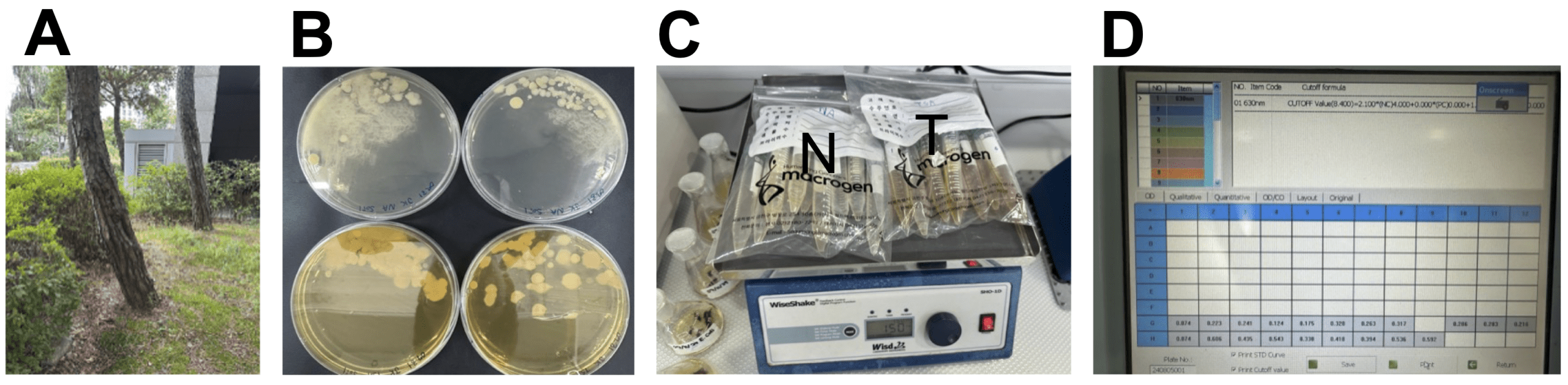
To isolate bacteria with potential resistance to PFAS-related contaminants, 500 g of soil was collected from the upper layer of the flower bed in the Dongbu Centerville apartment complex in Daechi-dong, Gangnam-gu, Seoul, where pesticides were used regularly for tree management (Figure 3A). The soil sample was placed in a plastic bag and transported to the laboratory on the same day.
For bacterial culture, four kinds of media (Nutrient Broth (NB), Nutrient Agar (NA), Tryptic Soy Broth (TSB), and Tryptic Soy Agar (TSA)) were prepared. To make NB or TSB, 0.8 g of NB powder or 3 g of TSB powder were added to each 250 mL Erlenmeyer flasks containing 100 mL of DW, and mixed. To make NA or TSA, 1.5 g of agar powder was added to 100 mL of DW, and then 0.8 g of NB powder or 3 g of TSB powder were added and mixed. The four inlets of the Erlenmeyer flasks containing the mixtures were covered with aluminum foil and placed in an autoclave for autoclave sterilization. After sterilization, the cooled NA or TSA solutions were transferred to a clean bench and poured halfway into 90 mm diameter petri dishes to solidify.
To extract bacteria from soil, 1 g of soil and 10 mL of DW were placed in a 15 mL conical tube, mixed with a vortex mixer, and placed on a clean bench for more than 10 min to allow the soil to settle. The soil supernatant was picked up with a sterilized 10 µL loop and streaked onto NA or TSA for inoculation. After 48 h of incubation at room temperature, the colonies were classified based on color, shape, and size (Figure 3B), and each colony was picked up with a loop and inoculated into a 15 mL conical tube containing 5 mL of NB or TSB. A total of 18 bacterial isolates were found, including 10 colonies from NA and 8 from TSA. The media inoculated with the colonies were placed on a shaker and incubated for 48 h while shaking at 150 rpm (Figure 3C). 100 µL of each bacterial culture was transferred to a 96-well plate and placed in a microplate reader to measure the OD value at 450 nm wavelength (Figure 3D). Based on the measured value, the amount of bacterial solution corresponding to an OD value of 0.01 was calculated.
To select potentially PFAS-resistant bacteria, 2 mL of PFAS-contaminated water and bacterial solution with an OD value of 0.01 were added to two 12-well plates and cultured at room temperature for 48 h. After that, 2 mL each of NB or TSB was added and cultured for another 48 h. 100 µL of each bacterial culture was transferred to a 96-well plate and the OD value was measured. For practical screening purposes, isolates showing visible growth and OD values above a threshold of 0.07 after exposure to PFAS-water were operationally classified as PFAS-resistant bacteria in this study. The PFAS-resistance screening assay was performed in four trials for each isolate, and OD values are reported as mean ± SD from four trials. Further, NB and TSB only controls containing PFAS-water but no bacteria were included in each trial.
In addition, the solution in which the bacteria grew was filtered and then subjected to Fluoride Ion Testing to initially select PFAS-decomposing bacteria. This process selected candidates for potentially PFAS-decomposing bacteria, and was subject to testing on oyster shells in a future experiment.
Selection of PFAS-Decomposing Bacteria
After sterilizing 400 mL of PFAS-contaminated water, 200 mL was divided into two 500 mL beakers, and three sterilized oyster shells were added to each. After 5 d, the oyster shells that had been soaked in the PFAS-contaminated water were placed on five petri dishes, and 10 mL of DW or NB was added. The four types of PFAS-decomposing bacteria that were initially selected were diluted to an OD value of 0.001 and added to the four dishes and cultured for 24 h to allow the PFAS adsorbed on the shells to react with each bacterium. One untreated dish was used as the control. The oyster shells were transferred to a 100 mL beaker, and 50 mL of DW was added. The oyster shells were placed in an ultrasonic cleaner and operated for 15 min to remove any remaining fluorinated material attached to them. The recovered solution was then subjected to fluoride ion testing. Bacterial isolates with lower fluoride ion values than the untreated control were considered more effective candidates for reducing PFAS-related contaminants adsorbed on oyster shells. Because this evaluation was based on fluoride ion measurements, the results were interpreted as indirect evidence of PFAS reduction.
Identification of PFAS-Decomposing Bacteria by 16S Ribosomal Ribonucleic Acid (16S rRNA) Sequencing Analysis
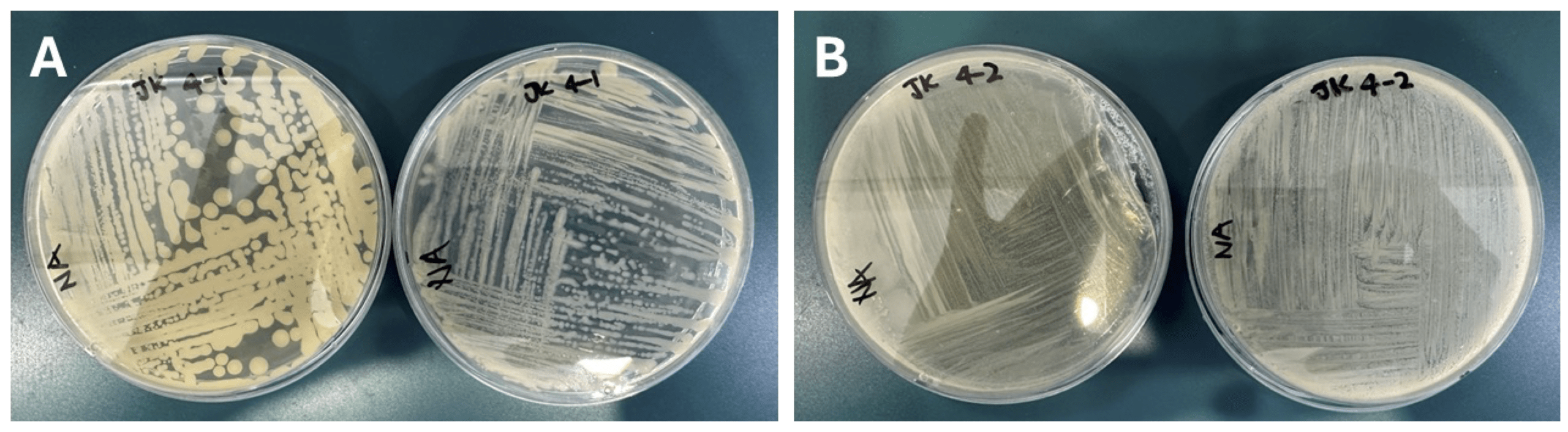
To identify the species of PFAS-degrading bacteria, NB media-cultivated PFAS-degrading bacteria #4 were streaked on NA plates and cultured at room temperature for 48 h. Two types of colonies with different morphologies (bacteria #4-1 and bacteria #4-2) were looped and streaked on NA plates and cultured at room temperature for 48 h. The 16S rRNA sequence analysis of each bacterium was requested to Macrogen (Microgen, Korea). The species of each bacterium was finally determined by Basic Local Alignment Search Tool for Nucleotides (BLASTN) analysis of the analyzed 16S rRNA sequences.
Results
Spread of PFAS in Daily Items
Recent studies have shown that PFAS are present in many products around us, including drinking water and clothing, and that 98% of Americans have PFAS in their blood16. Yong and colleagues identified the presence of PFAS in particulate matter by measuring extractable organic fluorine (EOF)17, and Schultes and colleagues identified the presence of PFAS in food packaging by measuring total fluorine (TF)18. Although the detection of fluorine indicates the presence of all fluorine compounds, and not just PFAS17,19, the detection of fluorine in everyday products that are known to not contain fluorine compounds indicates the presence of PFAS in everyday products. Therefore, in this study, the concentration of PFAS in materials was identified by measuring fluoride ions.
To determine whether products frequently used by people, such as various cosmetics, cleansing foams, dental floss, or worn-out frying pans, contain PFAS, fluoride ion testing was conducted on extracts from these products. Fluoride ions were detected in all products except dental floss and cleansing foams, and among cosmetics, essence contained the highest amount of 0.8 ppm, while sunscreen and frying pans contained 0.4 ppm (Table 2). This suggests that people are already widespread to PFAS-related substances.
| Items | Multi-Balm | Lip Stick | Cleansing Foam* | Floss |
| Amount used | 0.2 | 0.1 | – | 0 |
| Items | Sunscreen | Essence | Boiled Water from Worn-Out Frying Pan | |
| Amount used | 0.4 | 0.8 | 0.4 | |
*Cannot measure due to foam
Concentration of Agarose and OSP Required to Effectively Adsorb PFAS
It was investigated whether the components of oyster shells could adsorb PFAS well. First, to prevent the oyster shell powder from becoming cloudy due to water, the oyster shell powder was prepared in gel form by mixing it with agarose, the main ingredient of which is seaweed.
To determine the addition ratio of agarose powder, oyster shell powder was adjusted to 1% in DW, and agarose powder was varied from 0.8% to 1.5%, made into a gel, and immersed in PFAS-contaminated water. When the fluoride ion concentration of the PFAS-contaminated water was measured after 48 h, it was effective as the concentration decreased to 0 ppm in an agarose gel of 1% or more (Table 3). If the density of agarose is low, even if the oyster shell powder inside adsorbed PFAS, it may have been released again over time.
| Before Treatment | After Treatment in Varying Concentration | ||||
| 0.8% | 1% | 1.2% | 1.5% | ||
| Agarose Gel in 1% OSP | 0.3 | 0.1 | 0 | 0 | 0 |
| OSP in 1% Agarose Gel | 0.3 | 0 | 0 | 0 | 0 |
To find the OSP concentration, agarose was fixed at 1%, and the amount of oyster shell powder was varied from 0.8% to 1.5%. The concentration of fluoride ion in all concentrations of oyster shell powder was 0 ppm (Table 3), which means that PFAS were adsorbed to OSP. It suggests that calcium carbonate (CaCO3), a component of oyster shell, or organic matrix proteins is a factor that determines PFAS adsorption.
Time required for PFAS adsorption
To determine the minimum time required for oyster shell powder to adsorb PFAS, OSP gels with different concentrations were placed in PFAS-contaminated water and fluoride ion was measured every 15 min. As shown in Figure 4, the fluoride level decreased over time, and although higher OSP concentrations were more effective, the value did not reach 0 ppm within 60 min. Therefore, OSP gels must be placed in contaminated water for a sufficient amount of time to remove PFAS.
Negative Effects of PFAS on Plants and Recovery Using Oyster Shell Powder
To determine the environmental impacts of PFAS spills, monocotyledon corn and rice, and dicotyledon radish and perilla seeds were planted in soil containing DW, PFAS-contaminated water, or PFAS-contaminated water containing OSP, and the germinated corn and radish sprouts were observed.
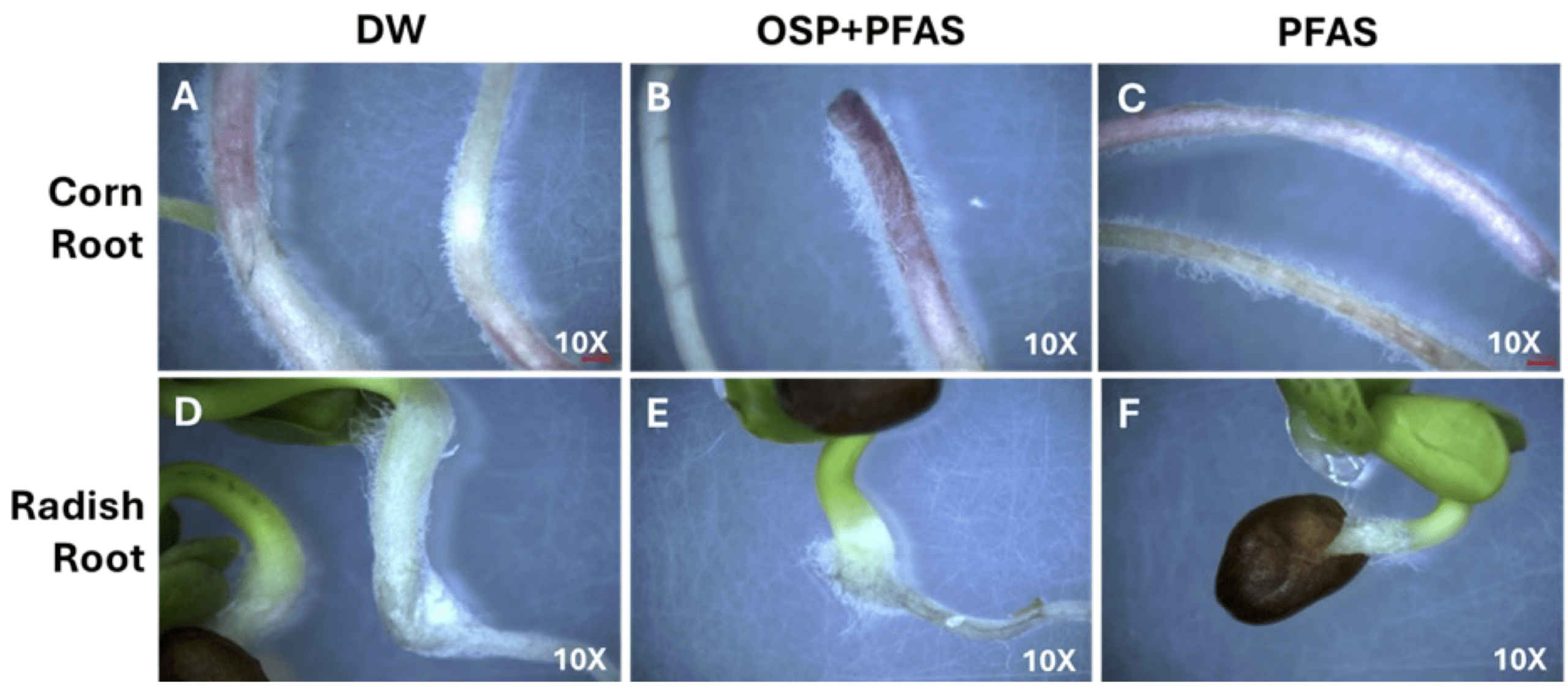
All corn seeds germinated, and the roots of the sprouted sprouts were observed under a microscope (Figure 5A-C). The roots of the corn sprouts grown in PFAS were thinner and longer than those of the control (DW), and had fewer root hairs. The roots of the corn planted in PFAS-contaminated water containing OSP were thinner and had fewer root hairs than those of the control (Figure 5A, C), but had thicker and more root hairs than those of the corn in the soil treated with PFAS-contaminated water (Figure 5B, C).
Next, the radish sprouts were observed under a microscope (Figure 5D-F). In the soil treated with PFAS-contaminated water, only one seed germinated, and it was so small that the roots and root hairs were not well observed (Figure 5F). On the other hand, both DW and OSP+PFAS germinated four seeds each, and root hairs were observed, but the plants treated with OSP and PFAS had fewer roots than the control group (Figure 5D-E).
To compare the growth of plants sprouted in each soil, the size of the sprouted shoots was measured.
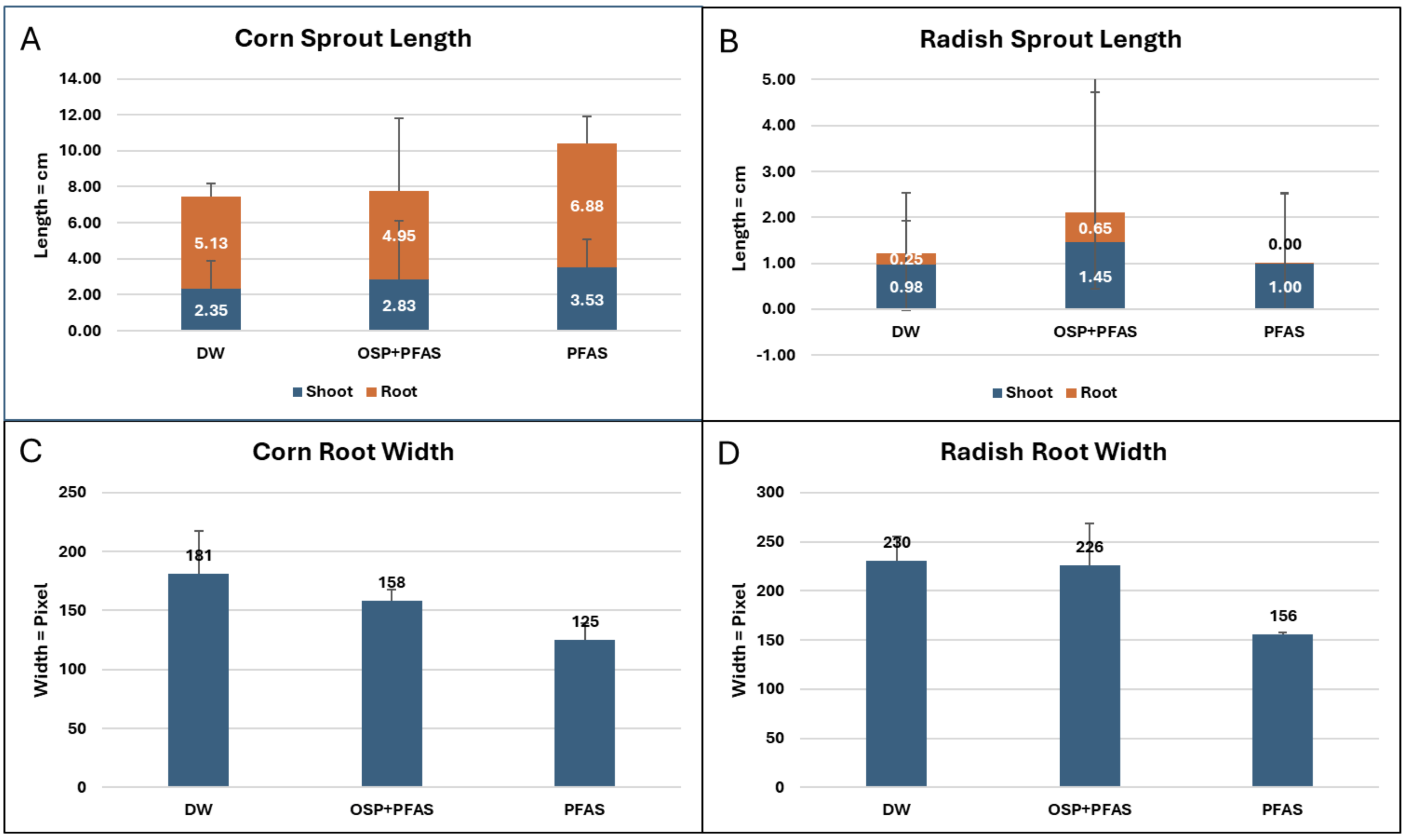
The length of corn shoots in the soil treated with PFAS-contaminated water was longer than corn in the soil treated with PFAS-contaminated water containing DW or OSP (Figure 6A), and the root width was narrower (Figure 6C), and the root hairs were also much smaller (Figure 5C). It suggests that PFAS inhibits the development of root hairs, thereby reducing the amount of water and nutrients absorbed by the plant, and thus the plant promotes the growth of roots and stems (shoots) for survival. In addition, OSP appears to reduce the toxicity of PFAS released into the soil to some extent by absorbing PFAS.
The roots of radish sprouts sprouted in the soil treated with PFAS-contaminated water were narrow, and the growth of root hairs was reduced (Figure 6B & D). It suggests that the toxicity of PFAS inhibits the root development of radish sprouts.
As a result, PFAS inhibited the germination and growth of plants, and the development of roots, while OSP alleviated the toxicity by absorbing PFAS.
Effect on PFAS Adsorption and Biosafety according to different processed methods of Oyster Shells
Since oysters are consumed in the Oyster Trail either raw or cooked, the processing status of the oyster shells discarded there varies. Oyster shells are composed of three overlapping layers: prismatic layer, cross lamellar layer, and foliate layer20, and various heavy metals are known to be adsorbed in the small spaces between each layer21. Therefore, the processing or treatment of oyster shells can affect the porous layer structure, thereby damaging or enhancing the ability to adsorb heavy metals.
To determine whether changes in the porous layer structure of oyster shells affect PFAS adsorption, corn and radish seeds were planted in agarose gels made with PFAS-contaminated water treated with Raw shell (Intact), Steamed shell (Transformed), or Shell powder (Destroyed), and the growth of the plants was observed. PFAS-contaminated water treated with OSP, Raw shell, or Steamed shell did not inhibit corn growth, but untreated PFAS-contaminated water inhibited plant growth (Table 4).
In gels containing no PFAS (DW) or PFAS-contaminated water treated with Raw shell or Steamed shell, three out of four radish seeds germinated. However, in gels containing untreated PFAS-contaminated water or PFAS-contaminated water treated with OSP, one or zero seeds germinated, respectively (Table 4). These results suggest that although oyster shells have the ability to adsorb PFAS, the adsorption capacity of oyster shells is reduced by destruction of the porous layer structure due to crushing.
| Sprouts | # of Seed | DW | in PFAS Water | |||
| None | OSP | Raw Oyster | Steamed Oyster | |||
| Corn | #1 | 9.8 | 5.7 | 7.3 | 10.6 | 9.4 |
| #2 | 7.2 | 5.3 | 7.6 | 7.0 | 9.5 | |
| Radish | #1 | 0.3 | No sprout | No sprout | 6.0 | 3.7 |
| #2 | 2.6 | No sprout | No sprout | 1.0 | 4.6 | |
| #3 | 0.1 | No sprout | No sprout | 1.7 | 1.0 | |
| #4 | No sprout | 4.0 | No sprout | No sprout | No sprout | |
PFAS absorbed into the body can cause various diseases such as thyroid disease, liver damage, or kidney cancer22. The main routes of PFAS entry into the body are the skin, respiratory system, or digestive system, but PFAS entry through the skin is blocked by the skin barrier, and PFAS entered through the digestive system is excreted from the body through bowel movements. PFAS entered through the respiratory system is directly exposed to lung cells that do not have a barrier or excretion route, so the lungs are expected to be most affected by PFAS.
To determine whether PFAS inhaled into the respiratory tract causes lung damage, human lung cancer cell line A549 cells were exposed to PFAS and cell viability was measured. The cell viability of lung cells exposed to PFAS-contaminated water decreased to 62% of the control cells (Figure 7). It suggests that PFAS may cause lung damage.
Next, it was investigated whether the toxicity of PFAS to lung cells is reduced by oyster shells and whether the toxicity reduction effect varies depending on the processing method of oyster shells. To this end, PFAS-contaminated water purified by oyster shells processed in different ways was treated to A549 cells, and cell viability was compared.
The OD values of cells treated with untreated PFAS (PFAS Water) and the control (no treatment) cells were 2.84 and 3.19, respectively, indicating that PFAS decreased the survival rate of cells (Figure 7). The survival rates of cells treated with PFAS purified with OSP or steamed oyster were both 2.85, which was not significantly different from the survival rates of cells treated with untreated PFAS (Figure 7). However, the survival rate of cells treated with PFAS-contaminated water purified with raw oyster was 2.97 (Figure 7).
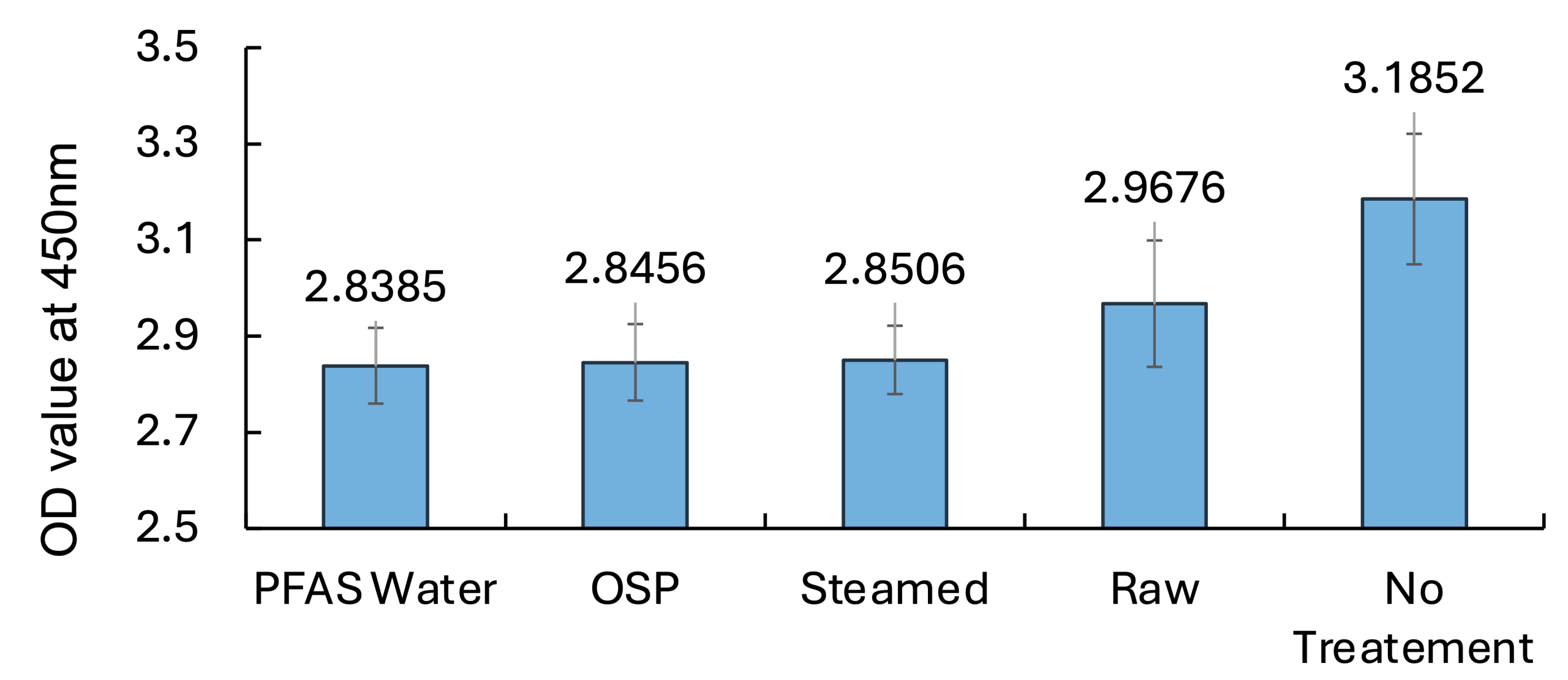
In this experiment, A549 cell viability differed significantly among grounds (one-way ANOVA, p < 0.001). Tukey’s post hoc test shows that the no-treatment control had significantly higher cell viability than the PFAS-water with a p-value less than 0.001. Further, the comparison between raw oyster-treated water and powder-treated water approaches significance (p = 0.0796), and the comparison between the raw oyster-treated water and PFAS-water was near the significance threshold (p = 0.0558). These results suggest that PFAS-water is toxic to A549 cells, and unprocessed oyster shells may reduce the toxicity of PFAS to lung cells.
Selection of Potential PFAS-Decomposing Bacteria
Complete decomposition of PFAS is required to prevent PFAS potentially adsorbed on oyster shells from being released back into the environment. Since pesticides may contain PFAS both as active ingredients and from fluorinated packaging23, PFAS-decomposing bacteria were selected from the soil of an apartment garden where pesticides were periodically sprayed. This site was selected as a potential enrichment source because long-term exposure to fluorinated pesticide contaminants may favor survival of bacteria tolerant to or capable of transforming PFAS-related compounds.
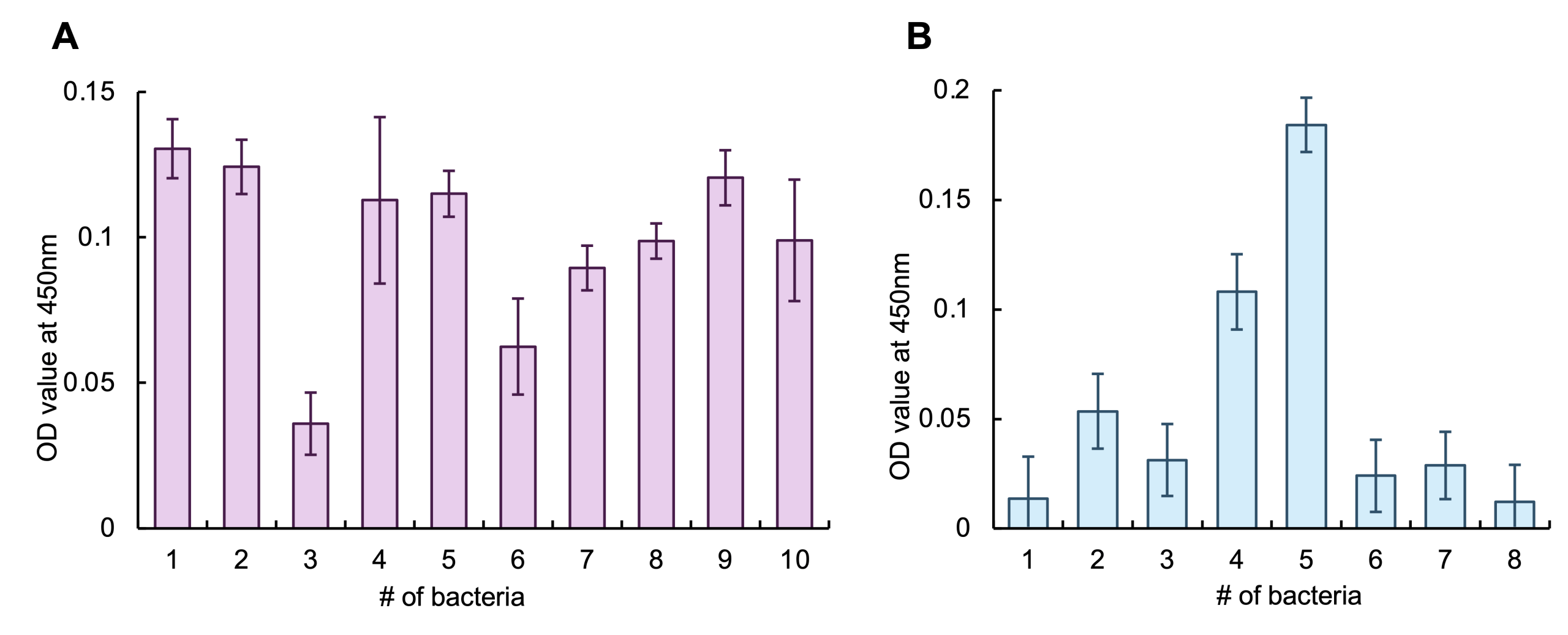
Bacteria from the collected soil were inoculated into the medium containing PFAS-contaminated water and cultured for 48 h, and then the optical density of the medium was measured. Based on the operational screening criterion, bacterial isolates showing visible growth and optical density at 450 nm (OD450) values higher than 0.07 after incubation in medium containing PFAS-water were classified as PFAS-resistant bacteria in this study. Several bacterial growths were confirmed visually, indicating that PFAS-resistant bacteria exist in the soil. #1, #2, #4, #5, #7, #8, #9, and #10 grown in NB medium, and #4 and #5 grown in TSB were determined to be PFAS-resistant bacteria (Figure 8).
To isolate PFAS-decomposing bacteria among PFAS-resistant bacteria, PFAS-contaminated water was reacted with each PFAS-resistant bacteria, and then a fluoride ion test was performed. Candidate PFAS-decomposing bacteria were selected based on lower fluoride ion values relative to untreated PFAS-water. The fluoride ion level was lowered in PFAS-contaminated water treated with bacteria #1, #4, #8, and #9 grown in NB (Figure 9).
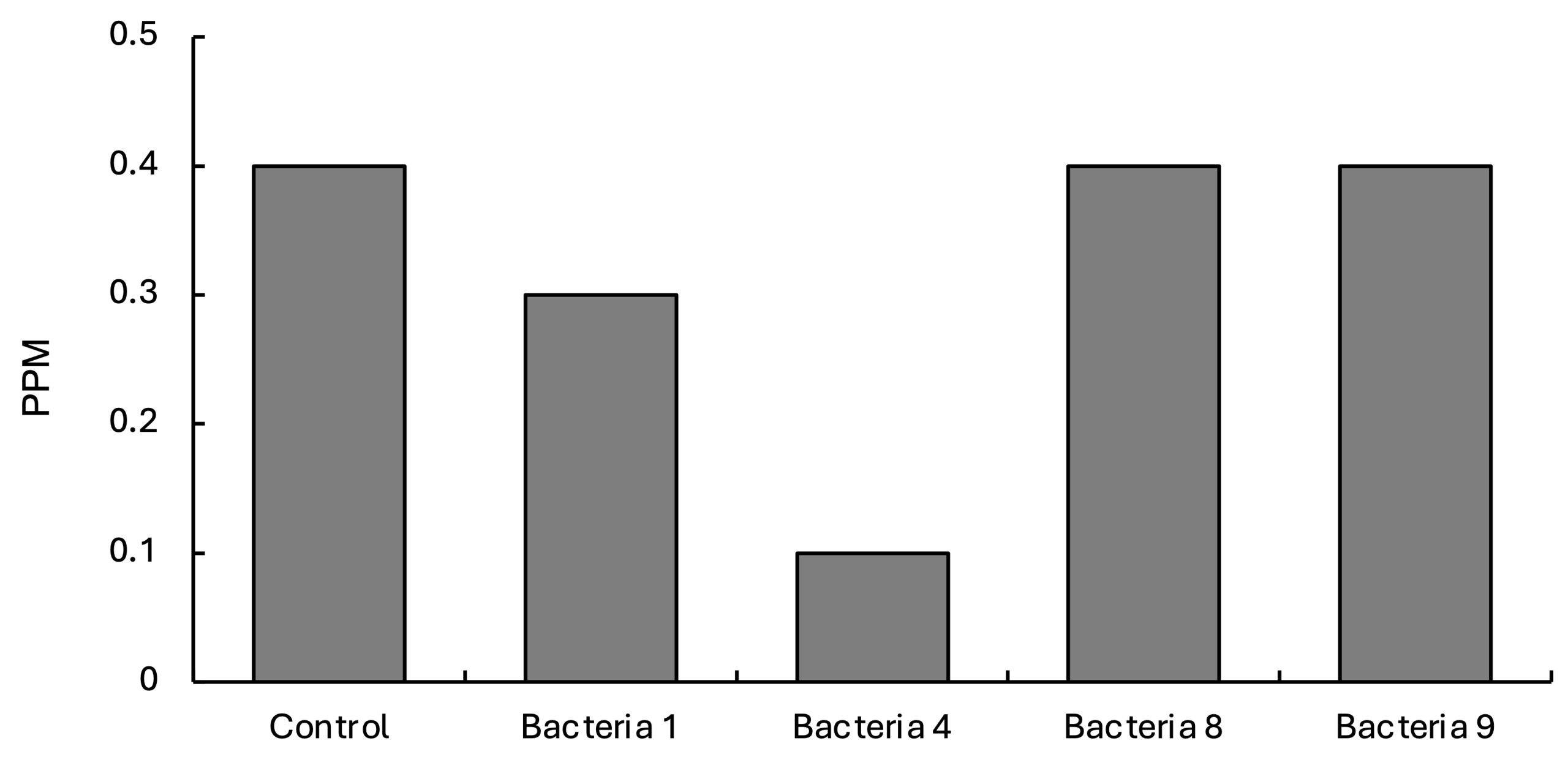
Among the bacteria with confirmed PFAS decomposition ability, bacteria that effectively decompose PFAS attached to oyster shells were isolated. To this end, oyster shells that had been placed in PFAS-contaminated water for 5 d were treated with bacterial cultures of #1, #4, #8, or #9 grown in NB, and after 24 h, the concentration of PFAS released from each oyster shell was determined using a fluoride ion test. An untreated oyster shell exposed to PFAS-water but not bacterial culture was used as the control. The PFAS concentration in the oyster shells treated with the bacterial cultures of #8 or #9 was 0.4 ppm, which was not different from the concentration in the untreated oyster shells (Figure 9). However, the PFAS concentrations in the oyster shells treated with the bacterial cultures of #1 or #4 were 0.3 ppm and 0.1 ppm, respectively. Based on this indirect evidence of PFAS reduction, isolate #4 showed the greatest reduction in fluoride ion signal and was therefore selected as the most promising bacterial candidate under the conditions for this study. Therefore, #4 bacteria were finally determined as the PFAS-decomposing bacteria. This experiment served as a sequential treatment test in which oyster shells first adsorbed PFAS-related contaminants from PFAS-water and were then subjected to bacterial treatment to evaluate reduction of the adsorbed contaminants.
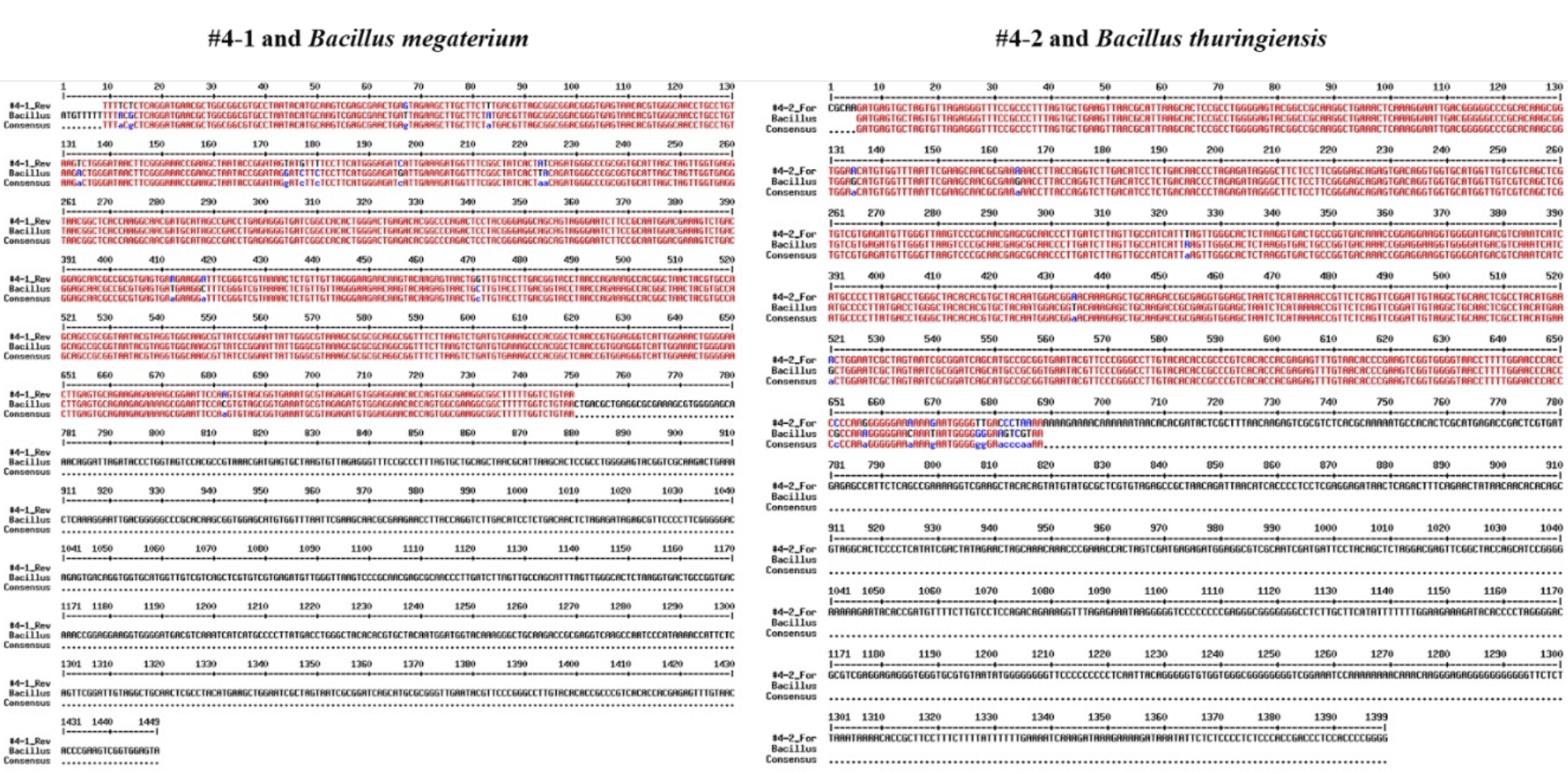
To identify the species of the #4 PFAS-decomposing bacteria, 16S rRNA sequencing and BLASTN search were performed on each colony of the isolated cultured #4 (Figure 10). #4-1 was 98% identical to Bacillus megaterium24, and #4-2 was 99% identical to Bacillus thuringiensis25 (Figure 11).
B. megaterium is a bacterium that is used for biotechnological applications such as the production of vitamin B1226. In addition, this bacterium is known to be non-pathogenic with very low virulence27. B. thuringiensis has an insecticidal effect but has low mammalian toxicity28. These findings suggest that non-pathogenic soil bacteria may contribute to the reduction of PFAS-related contaminants under the conditions of this study. However, further PFAS-specific analyses are needed to confirm the extent of this mechanism.
Discussion
In order to confirm the distribution of fluorinated compounds, including potential PFAS-containing materials, in our daily lives, various types of cosmetics and frying pans were examined, and fluoride ions were detected in almost all samples. Among them, fluoride ions were also detected in water extracted from frying pans that had been used for a long time, and the extract from frying pans showed biological toxicity, reducing the survival rate of human lung cells and inhibiting plant growth. Because distilled water showed 0 ppm fluoride ion before boiling and 0.4 ppm after boiling in the worn-out frying pan, the pan surface was considered the most likely source of fluoride-containing compounds released into the water. Further, because PFAS compounds contain carbon-fluorine bonds, fluoride ion detection was used in this study as the PFAS detection method. Previous studies have shown that fluorine-based measurements can serve as a useful screening tool for materials that may contain PFAS17,19. However, because fluoride ion detection is an indirect method to track PFAS concentration, these results should be interpreted as evidence of fluorinated compounds rather than definitive identification of PFAS. These results may help explain why PFAS detected in large quantities in the Connecticut River is a concern, as the contamination may be associated with domestic water and wastewater discharge7.
First, it was investigated whether oyster shells adsorb PFAS and which factors determine the adsorption effect among the components or the structures of oyster shells. Raw oyster shells without any processing adsorbed PFAS most effectively, and these oyster shells have a layered structure. In addition, steamed oyster shells showed the second best PFAS adsorption effect. The CaCO3 component of oyster shells changes to calcium oxide during the steaming process29, and CaCO3 adsorbs pesticides better than CaO30. Therefore, it seems that the adsorption effect of steamed oyster shells decreased compared to raw oyster shells as the components changed to CaO. It means that the micropore structure composed of the folding structure of oyster shells plays an important role in PFAS adsorption20,31.
Other studies have shown that oyster shells can adsorb nitrogen and heavy metals such as nickel, zinc, or manganese due to its layered structure32,33. Further, previous studies have shown that porous surfaces can remove PFAS through electrostatic interactions and trapping mechanisms within the porous structure34. Although oyster shells have been primarily investigated for adsorption of other substances like saxitoxin35, their CaCO3 dominated composition and hierarchical porous structure may provide similar adsorption sites for PFAS related contaminants.
Second, the biodegradation method of PFAS adsorbed on oyster shells was investigated. Since PFAS adsorbed on oyster shells is not decomposed, if oyster shells adsorbed with PFAS are left as they are, PFAS will be released back into nature. PFAS-decomposing bacteria were isolated from soil that was continuously exposed to pesticides that may contain PFAS23. As a result, a total of 10 PFAS-resistant bacteria were selected, and among them, 4 PFAS-decomposing bacteria were isolated in the first stage. These bacteria were treated on oyster shells adsorbed with PFAS, and 2 bacteria that effectively decompose PFAS were finally determined. The 16S rRNA sequences of these bacteria were analyzed, and it was confirmed that they are homologous to Bacillus megaterium and Bacillus thuringiensis, which are non-pathogenic. Bacillus species are plausible candidates for fluorinated contaminant transformation because they are known to degrade diverse xenobiotic compounds36, and recent work has shown that a Bacillus isolate can cleave ester linkage in Cyhalothrin through enzymatic hydrolysis37. Although these mechanisms are not directly equivalent to the cleavage of PFAS bonds, these findings demonstrate the metabolic versatility of Bacillus species towards synthetic compounds. Therefore, the present findings support the possibility that the isolated strains participate in PFAS-related contaminant transformation, and further studies would be required to determine the exact degrading mechanism. However, as fluoride ion detection is an indirect analytical method, the bacterial treatment results should not be interpreted as evidence of reduction of PFAS-related contaminants rather than definitive confirmation of PFAS bond cleavage.
Further, this study did not examine adsorption and biodegradation only as separate concepts; oyster shells were first exposed to PFAS-water and then treated with selected bacterial isolates, showing evidence of sequential adsorption-biodegradation workflow. However, this sequential treatment was evaluated at a preliminary level and should be more systematically quantified in future studies.
However, this study was limited by the fact that exact pH and oyster shell powder particle size were not recorded during the adsorption experiments. These factors may affect adsorption efficiency and should be more carefully controlled in future studies. Furthermore, several experiments were conducted with limited sample sizes because of practical constraints in materials, time, and study scope, and so the results should be interpreted cautiously; future work should include larger sample sizes. Because many experiments in this study were conducted with limited sample sizes, inferential statistical analysis could not be applied to all datasets, and several results should therefore be interpreted descriptively. In addition, this study did not evaluate the reuse potential of oyster shell adsorbents or the possibility of secondary pollution from PFAS-adsorbed shells. The long-term stability of bacterial treatment was also not assessed. These limitations should be addressed in future studies before practical environmental implementation is considered. Additionally, abiotic controls were not included to distinguish PFAS-related adsorption from possible fluoride scavenging or water chemistry effects. Measurements of fluoride-only spike controls were not tested, and therefore the reductions in fluoride ion signal cannot be attributed exclusively to PFAS adsorption. Further, the OD450 threshold used for bacterial screening was selected as a criterion for exploratory study rather than a formally validated cutoff. Future studies should establish more rigorous and standardized selection criteria for PFAS-resistant and PFAS-reducing bacterial isolates. Lastly, although multiple seedlings were measured in the plant assays, the treatments were conducted in one well per condition, so these measurements should be interpreted as descriptive observation rather than independent replicate experiments.
In summary, this study proposes a treatment workflow where discarded oyster shells are first applied as adsorbents in PFAS-contaminated water, allowing PFAS to be captured in the hierarchical porous structure of oysters. After adsorption, the recovered shells are treated with PFAS-decomposing bacteria isolated from soil so that adsorbed PFAS can be biologically degraded. The treated oyster shells may then be further recycled for other purposes.
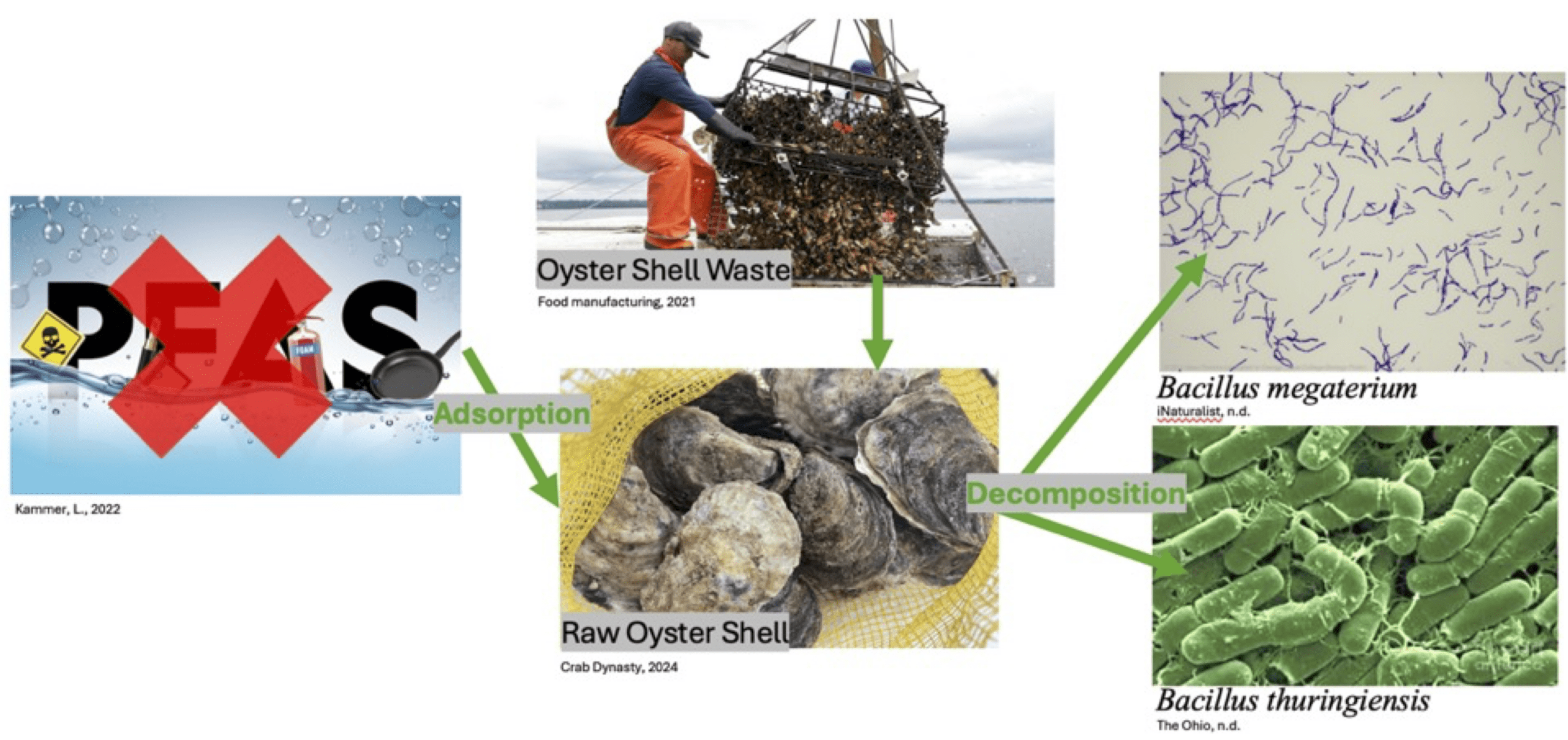
In conclusion, this study demonstrated the prevalence of fluorinated compounds in household products, the biological risk with PFAS-related exposure, the PFAS adsorption capacity of oyster shells, and the effectiveness of PFAS-decomposing bacteria in removing absorbed PFAS. Taken together, these findings provide preliminary support for an integrated oyster shell-bacteria treatment concept for PFAS-related contaminant reduction, while highlighting the need for compound-specific validation and controls for future studies. Future research should focus on confirming PFAS degradation pathways using advanced techniques and improving efficiency in adsorption and biodegradation. This approach may contribute to the development of low-cost sustainable remediation strategies by repurposing oyster shell waste for water treatment applications.
Acknowledgements
I would like to thank my parents for their constant support and encouragement throughout the course of my research, as well as the opportunity to conduct this research. I am also grateful to the research institution for providing access to the resources and facilities necessary for conducting this study. Lastly, I extend my appreciation to my mentor for her guidance, feedback, and support, which were essential in helping me navigate the challenges of this research.
References
- Governor Lamont Champions Connecticut Oysters: Unveils Statewide Trail and New Documentary, Urges Restaurants To Buy Local. CT.gov. https://portal.ct.gov/governor/news/press-releases/2024/05-2024/governor-lamont-champions-connecticut-oysters. [↩]
- Powell, E. N.; Kraeuter, J. N.; Ashton-Alcox, K. A. How Long Does Oyster Shell Last on an Oyster Reef? Estuarine, Coastal and Shelf Science 2006, 69 (3-4), 531–542. https://doi.org/10.1016/j.ecss.2006.05.014. [↩]
- Ruslan, H. N.; Muthusamy, K.; Syed Mohsin, S. M.; Jose, R.; Omar, R. Oyster Shell Waste as a Concrete Ingredient: A Review. Materials Today: Proceedings 2021, 48. https://doi.org/10.1016/j.matpr.2021.02.208. [↩]
- Hammel, E.; Webster, T. F.; Gurney, R.; Heiger-Bernays, W. Implications of PFAS Definitions Using Fluorinated Pharmaceuticals. iScience 2022, 25 (4), 104020. https://doi.org/10.1016/j.isci.2022.104020. [↩]
- Ramírez Carnero, A.; Lestido-Cardama, A.; Vazquez Loureiro, P.; Barbosa-Pereira, L.; Rodríguez Bernaldo de Quirós, A.; Sendón, R. Presence of Perfluoroalkyl and Polyfluoroalkyl Substances (PFAS) in Food Contact Materials (FCM) and Its Migration to Food. Foods 2021, 10 (7), 1443. https://doi.org/10.3390/foods10071443. [↩]
- Cordner, A.; De La Rosa, V. Y.; Schaider, L. A.; Rudel, R. A.; Richter, L.; Brown, P. Guideline Levels for PFOA and PFOS in Drinking Water: The Role of Scientific Uncertainty, Risk Assessment Decisions, and Social Factors. Journal of Exposure Science & Environmental Epidemiology 2019, 29 (2), 157–171. https://doi.org/10.1038/s41370-018-0099-9. [↩]
- PFAS Task Force PFAS Action Plan Governor Ned Lamont; 2019. https://portal.ct.gov/-/media/Office-of-the-Governor/News/20191101-CT-Interagency-PFAS-Task-Force-Action-Plan.pdf. [↩] [↩]
- Fenton, S. E.; Ducatman, A.; Boobis, A.; DeWitt, J. C.; Lau, C.; Ng, C.; Smith, J. S.; Roberts, S. M. Per‐ and Polyfluoroalkyl Substance Toxicity and Human Health Review: Current State of Knowledge and Strategies for Informing Future Research. Environmental Toxicology and Chemistry 2020, 40 (3), 606–630. https://doi.org/10.1002/etc.4890. [↩]
- Mahmoudnia, A. The Role of PFAS in Unsettling Ocean Carbon Sequestration. Environmental Monitoring and Assessment 2023, 195 (2). https://doi.org/10.1007/s10661-023-10912-8. [↩]
- Li, J.; Sun, J.; Li, P. Exposure Routes, Bioaccumulation and Toxic Effects of Per- and Polyfluoroalkyl Substances (PFASs) on Plants: A Critical Review. Environment International 2022, 158, 106891. https://doi.org/10.1016/j.envint.2021.106891. [↩]
- Brumbaugh, R. D.; Coen, L. D. Contemporary Approaches for Small-Scale Oyster Reef Restoration to Address SubstrateVersusRecruitment Limitation: A Review and Comments Relevant for the Olympia Oyster,Ostrea LuridaCarpenter 1864. Journal of Shellfish Research 2009, 28 (1), 147–161. https://doi.org/10.2983/035.028.0105. [↩]
- Ulagesan, S.; Krishnan, S.; Nam, T.-J.; Choi, Y.-H. A Review of Bioactive Compounds in Oyster Shell and Tissues. Frontiers in Bioengineering and Biotechnology 2022, 10, 913839. https://doi.org/10.3389/fbioe.2022.913839. [↩]
- Lee, S.-W.; Jang, Y.-N.; Ryu, K.-W.; Chae, S.-C.; Lee, Y.-H.; Jeon, C.-W. Mechanical Characteristics and Morphological Effect of Complex Crossed Structure in Biomaterials: Fracture Mechanics and Microstructure of Chalky Layer in Oyster Shell. Micron 2011, 42 (1), 60–70. https://doi.org/10.1016/j.micron.2010.08.001. [↩]
- Xu, Z.; Valeo, C.; Chu, A.; Zhao, Y. The Efficacy of Whole Oyster Shells for Removing Copper, Zinc, Chromium, and Cadmium Heavy Metal Ions from Stormwater. Sustainability 2021, 13 (8), 4184. https://doi.org/10.3390/su13084184. [↩]
- Jin, B.; Liu, H.; Che, S.; Gao, J.; Yu, Y.; Liu, J.; Men, Y. Substantial Defluorination of Polychlorofluorocarboxylic Acids Triggered by Anaerobic Microbial Hydrolytic Dechlorination. Nature Water 2023, 1 (5), 451–461. https://doi.org/10.1038/s44221-023-00077-6. [↩]
- Sunderland, E. M.; Hu, X. C.; Dassuncao, C.; Tokranov, A. K.; Wagner, C. C.; Allen, J. G. A Review of the Pathways of Human Exposure to Poly- and Perfluoroalkyl Substances (PFASs) and Present Understanding of Health Effects. Journal of Exposure Science & Environmental Epidemiology 2019, 29 (2), 131–147. https://doi.org/10.1038/s41370-018-0094-1. [↩]
- Young, A. M.; Pickard, H. M.; Sunderland, E. M.; Allen, J. G. Organic Fluorine as an Indicator of Per- and Polyfluoroalkyl Substances in Dust from Buildings with Healthier versus Conventional Materials. Environmental Science & Technology 2022, 56 (23), 17090–17099. https://doi.org/10.1021/acs.est.2c05198. [↩] [↩] [↩]
- Schultes, L.; Peaslee, G. F.; Brockman, J. D.; Majumdar, A.; McGuinness, S.; Wilkinson, J. E.; Sandblom, O.; Ngwenyama, R. A.; Benskin, J. P. Total Fluorine Measurements in Food Packaging: How Do Current Methods Perform? Environmental Science & Technology Letters 2019, 6 (2), 73–78. https://doi.org/10.1021/acs.estlett.8b00700. [↩]
- Schultes, L.; Peaslee, G. F.; Brockman, J. D.; Majumdar, A.; McGuinness, S.; Wilkinson, J. E.; Sandblom, O.; Ngwenyama, R. A.; Benskin, J. P. Total Fluorine Measurements in Food Packaging: How Do Current Methods Perform? Environmental Science & Technology Letters 2019, 6 (2), 73–78. https://doi.org/10.1021/acs.estlett.8b00700. [↩] [↩]
- Tang, S.; Tassanakajon, A.; Vatanavicharn, T.; Supungul, P.; Toyohara, H. Biotechnology of marine invertebrates-recent advances in shrimp and shellfish. https://www.researchgate.net/publication/228708594_Biotechnology_of_marine_invertebrates-recent_advances_in_shrimp_and_shellfish. [↩] [↩]
- Xia, C.; Zhang, X.; Xia, L. Heavy Metal Ion Adsorption by Permeable Oyster Shell Bricks. Construction and Building Materials 2021, 275, 122128. https://doi.org/10.1016/j.conbuildmat.2020.122128. [↩]
- Fenton, S. E.; Ducatman, A.; Boobis, A.; DeWitt, J. C.; Lau, C.; Ng, C.; Smith, J. S.; Roberts, S. M. Per‐ and Polyfluoroalkyl Substance Toxicity and Human Health Review: Current State of Knowledge and Strategies for Informing Future Research. Environmental Toxicology and Chemistry 2020, 40 (3), 606–630. https://doi.org/10.1002/etc.4890. [↩]
- Donley, N.; Cox, C.; Bennett, K.; Temkin, A. M.; Andrews, D. Q.; Naidenko, O. V. Forever Pesticides: A Growing Source of PFAS Contamination in the Environment. Environmental Health Perspectives 2024, 132 (7). https://doi.org/10.1289/ehp13954. [↩] [↩]
- Bacillus megaterium strain MSC 2 16S ribosomal RNA gene, partial sequ – Nucleotide – NCBI. Nih.gov. https://www.ncbi.nlm.nih.gov/nucleotide/317141305?report=genbank&log. [↩]
- Bacillus thuringiensis strain wb2 16S ribosomal RNA gene, partial sequ – Nucleotide – NCBI. Nih.gov. https://www.ncbi.nlm.nih.gov/nucleotide/963929906?report=genbank&log. [↩]
- Biedendieck, R.; Knuuti, T.; Moore, S. J.; Jahn, D. The “Beauty in the Beast”-the Multiple Uses of Priestia Megaterium in Biotechnology. Applied Microbiology and Biotechnology 2021, 105 (14-15), 5719–5737. https://doi.org/10.1007/s00253-021-11424-6. [↩]
- Bocchi, M. B.; Perna, A.; Cianni, L.; Vitiello, R.; Greco, T.; Maccauro, G.; Perisano, C. A Rare Case of Bacillus Megaterium Soft Tissues Infection. Acta Bio Medica : Atenei Parmensis 2020, 91 (Suppl 14). https://doi.org/10.23750/abm.v91i14-S.10849. [↩]
- Siegel, J. P. The Mammalian Safety of Bacillus Thuringiensis- Based Insecticides. Journal of Invertebrate Pathology 2001, 77 (1), 13–21. https://doi.org/10.1006/jipa.2000.5000. [↩]
- Xing, R.; Qin, Y.; Guan, X.; Liu, S.; Yu, H.; Li, P. Comparison of Antifungal Activities of Scallop Shell, Oyster Shell and Their Pyrolyzed Products. The Egyptian Journal of Aquatic Research 2013, 39 (2), 83–90. https://doi.org/10.1016/j.ejar.2013.07.003. [↩]
- Song, Y.; Li, H.; Gan, X.; Zhang, M.; Xue, M.; Li, J. Comparative Experimental Study on Calcium Oxide, Calcium Hydroxide, and Calcium Carbonate Solidified Zinc-Contaminated Red Clay. Geofluids 2022, 2022, 1–9. https://doi.org/10.1155/2022/8428982. [↩]
- Xia, C.; Zhang, X.; Xia, L. Heavy Metal Ion Adsorption by Permeable Oyster Shell Bricks. Construction and Building Materials 2021, 275, 122128. https://doi.org/10.1016/j.conbuildmat.2020.122128. [↩]
- Song, W.; Zeng, Y.; Wu, J.; Huang, Q.; Cui, R.; Wang, D.; Zhang, Y.; Xie, M.; Feng, D. Effects of Oyster Shells on Maturity and Calcium Activation in Organic Solid Waste Compost. Chemosphere 2023, 345, 140505. https://doi.org/10.1016/j.chemosphere.2023.140505. [↩]
- Aneke, F.; Adu, J. Adsorption of Heavy Metals from Contaminated Water Using Leachate Modular Tower. Civil Engineering Journal 2023, 9 (6), 1522–1541. https://doi.org/10.28991/cej-2023-09-06-017. [↩]
- Du, Z.; Deng, S.; Bei, Y.; Huang, Q.; Wang, B.; Huang, J.; Yu, G. Adsorption Behavior and Mechanism of Perfluorinated Compounds on Various Adsorbents—a Review. Journal of Hazardous Materials 2014, 274, 443–454. https://doi.org/10.1016/j.jhazmat.2014.04.038. [↩]
- Melegari, S. P.; Matias, W. G. Preliminary Assessment of the Performance of Oyster Shells and Chitin Materials as Adsorbents in the Removal of Saxitoxin in Aqueous Solutions. Chemistry Central Journal 2012, 6 (1). https://doi.org/10.1186/1752-153x-6-86. [↩]
- Arora, P. K. Bacilli-Mediated Degradation of Xenobiotic Compounds and Heavy Metals. Frontiers in Bioengineering and Biotechnology 2020, 8. https://doi.org/10.3389/fbioe.2020.570307. [↩]
- Chen, S.; Deng, Y.; Chang, C.; Lee, J.; Cheng, Y.; Cui, Z.; Zhou, J.; He, F.; Hu, M.; Zhang, L.-H. Pathway and Kinetics of Cyhalothrin Biodegradation by Bacillus Thuringiensis Strain ZS-19. Scientific Reports 2015, 5 (1). https://doi.org/10.1038/srep08784. [↩]