Abstract
In an increasingly interconnected world, the strategic use of economic measures, often termed the weaponization of finance, has become a prominent instrument for geopolitical pressure. Yet the impacts of sanctions can vary widely depending on a country’s economic framework, political alignment, and trade dependencies, a complexity that existing studies often overlook. This paper addresses that gap by examining how the sanctions on Russia (imposed by the United States and its allies following the 2022 invasion of Ukraine) impacted two different third-party countries: India (a historically neutral, “multi-aligned” nation) and the United Kingdom (a NATO-aligned sanctioning nation). Using a mixed-methods approach that combines secondary data with a survey of young adults (age group 16–22 years) in both countries, the paper focuses on providing a comparative analysis of economic spillovers, policy responses and public perceptions. The findings indicate that both India and the UK have experienced significant spillover effects – primarily increasing fuel prices and inflation – in the wake of the Russia sanctions. However, the perceived impacts and geopolitical takeaways differ markedly.1 UK respondents felt similar economic impacts but showed lower awareness of sanctions, viewing the UK’s pro-NATO stance as strengthening Western ties while straining Russia relations. Chi-square tests confirmed significant differences in awareness and trade disruption. The study shows geopolitical alignment mediates sanctions’ effects, warning that financial weaponization may fragment the global order, and offers youth insights for policymakers on wider sanctions consequences.
Keywords: weaponization of finance; economic sanctions; Russia; India; United Kingdom; NATO; neutral alignment; geopolitical strategy; spillover effects; youth perceptions
Introduction
With globalization deeply interlinking capital flows and markets, geopolitical conflicts now ripple across economies worldwide. This has given rise to the “weaponization of finance” — the strategic use of economic tools like sanctions, tariffs, and trade restrictions to exert political pressure without military conflict. Often compared to siege warfare, sanctions aim to coerce behavioral change by isolating economies. However, their effectiveness varies significantly based on a country’s economic structure, political alignments, and trade dependencies, making outcomes far more complex than simplistic assessments suggest.
Problem Statement
Existing literature on sanctions has largely focused on direct consequences for the target nation and intended political outcomes, with little attention paid to how sanctions affect third-party countries — particularly whether those effects differ based on geopolitical alignment. This gap is significant: in an interdependent world, major sanctions send shockwaves through global trade networks, impacting allies and neutral nations in unpredictable ways. This study addresses that gap by examining the differential impacts of sanctions on countries with varying alignments — contrasting, for instance, how Russia sanctions play out for a neutral power like India versus a NATO-aligned nation like the UK. Such analysis is essential to accurately evaluating sanctions’ true efficacy, collateral effects, and policy implications for affected nations.
Significance and Contributions
This study compares India and the UK’s differing responses to US–Russia sanctions, highlighting how geopolitical alignment and economic ties shape transmission effects. It incorporates youth survey data (ages 16–22) to add societal insight and examines mitigation strategies, offering practical implications. Overall, it emphasizes sanctions’ context-dependent impact in a multipolar world. This study adopts a mixed-methods approach, combining secondary economic data with primary surveys of youth in India and the UK. Moving beyond single-country analysis, it examines sanctions’ cross-border ripple effects, emphasizing unintended impacts on third countries. The findings help policymakers anticipate collateral damage and balance global alignment with national interests. To guide the inquiry, the study addresses the following central research questions:
- Youth Perceptions: How do young adults in both nations perceive the effectiveness of their country’s policies in response to the Russia sanctions, and to what extent do they feel personally impacted by these events?
- Geopolitical Context: To what extent do the differential effects observed correlate with the two nations’ geopolitical standings (non-aligned/multi-aligned in India’s case versus NATO-aligned in the UK’s case)? In other words, do respondents and data indicate that alignment (or lack thereof) helped cushion or exacerbate the impacts?
- Policy Responses: What policies and strategies have been implemented by India and the UK to navigate the economic and diplomatic challenges arising from the sanctions scenario?
- Economic Impact: How have the sanctions on Russia (post-2022) impacted the economies of India and the United Kingdom, respectively? (in terms of trade flows, energy prices, inflation, etc.)
This paper examines sanctions’ multifaceted impacts, emphasizing geopolitical alignment as a key mediating factor often overlooked. It acknowledges limitations, including youth-focused survey bias and non-random sampling, and notes difficulty isolating US sanctions from broader global measures. Therefore, the study analyzes the sanctions regime holistically to better capture overall effects.
Literature Review
Sanctions have long bridged economics and geopolitics, evolving into powerful tools of economic warfare. Realist theory views them as instruments of state power, used to coerce adversaries and advance national interests without military force.
A key theoretical concept relevant to modern sanctions is “weaponized interdependence” (Farrell & Newman, 2019), which explains that states dominant in global networks (financial, trade, technology) can leverage those networks to coerce others.2 The unprecedented freezing of Russia’s central bank assets in 2022–2023 is a prime example: Western powers, controlling major reserve currencies and financial infrastructure, used that position to immobilize roughly $300 billion of Russia’s reserves. This action was historic as Christine Abely (2023) discusses in The Russia Sanctions, no comparable move had been made against such a large economy in decades. Abely’s work examines how these sanctions affected global markets for energy and food and even challenged the dominance of the US dollar in international finance. By weaponizing financial interdependence, the U.S. and EU indicated that access to the dollar system (and institutions like SWIFT) can be revoked as a form of punishment. However, theory and emerging evidence suggest this may spur unintended consequences.3
As Erum Naz (2024) notes, the scope of sanctions today includes travel bans, asset freezes, and cutting off access to global financial systems, reflecting their expansion as a comprehensive foreign policy tool. Naz’s study of sanctions against Russia brings it to light that while sanctions exert significant pressure in Russia’s case causing economic contractions and social/political strain, their effectiveness in changing state behavior is mixed and heavily dependent on how the targeted state adapts. Importantly, Naz (2024) applies both realist and constructivist perspectives to the Russia case, suggesting that states also interpret and internalize the meaning of sanctions (e.g. as unjust or as existential threats), which in turn shapes their resolve to withstand them. This theoretical insight implies that third-party countries will likewise interpret sanctions through their own historical and political lenses, influencing how they respond or align.4
Olusegun Obasun (2024) highlights that the Russia sanctions especially the central bank asset freeze – have triggered a significant shift in the international financial order, as other countries’ central banks began diversifying reserves away from Western currencies. Trust in the dollar-centric system weakened, encouraging shifts toward alternative currencies and payment networks to hedge against future sanctions. Obasun highlights rising uncertainty for multinational firms in politicized financial conditions. While Realism views sanctions as power projection, Liberal and Institutional perspectives warn they may erode cooperative financial structures and drive parallel systems like BRICS currency initiatives. Indeed, respondents in our study speculated about de-dollarization and new blocs, reflecting this broader geopolitical undercurrent.5
From a theoretical standpoint, these developments resonate with both Realist and Complex Interdependence theories. Realism is evident in how states like the U.S. wield financial power and how Russia seeks survival via new alliances. At the same time, Complex Interdependence (Keohane & Nye) reminds us that states are linked by multiple channels, and coercive attempts can backfire by prompting reconfiguration of networks. Our study builds on these ideas by examining concrete sectoral impacts and strategic responses in India and the UK.6 For instance, literature from Indian strategic think-tanks had presaged some issues: Aparna Bhandari (2017) at Gateway House analysed how previous US sanctions on Russia could jeopardize India’s defence acquisitions and spare parts supply. India’s reliance on Russian military hardware (estimated at 70% of India’s defence imports) meant U.S. secondary sanctions (like CAATSA) posed a real risk to India’s security preparedness.7 Sanctions scrutiny later affected some Indian firms and transactions, while restrictions on Russia disrupted global oil markets, indirectly impacting major importers like India. In the UK, Donnarumma at the ONS (2023) reported imports from Russia fell over 98% and exports over 75%, severing trade ties and causing market losses, supply shifts, and higher consumer fuel and utility prices. In essence, the literature suggests that third-party impacts of sanctions manifest through trade disruptions, price shocks, and financial market volatility, and these effects are filtered through each country’s unique mix of dependencies and policies.8
Another stream of literature examines the effectiveness and adaptation aspects of sanctions. Classical works by Hufbauer et al. (2007) attempted to quantify when sanctions “work,” finding success often requires multilateral coordination and narrowly defined goals. However, the Russia case in 2022–2023 presented a quasi-“economic war” scenario: sweeping multilateral sanctions aimed to cripple a major economy, yet stop short of direct conflict.9
Nataliia Vlasova and Ahmed Alwadeai (2025) provide empirical evidence that such sanctions can “consistently constrain economic liberty” in target states, adversely affecting investment and financial freedoms. They confirm that Russia’s economic growth and trade were indeed curtailed. But a recurring theme is sanction leakage or evasion. Ayushmaan Mukherjee (2025) delves into how Russia and its partners responded to Western sanctions, uncovering extensive evasion networks. Mukherjee highlights Russia’s adaptations rerouting trade through intermediaries, using a “shadow fleet,” and alternative payment systems to soften sanctions, aided by partners like China, Türkiye, the UAE, and India’s increased discounted oil imports. This created mixed effects: non-sanctioning states like India gained economically yet risked secondary sanctions, while the UK enforced sanctions and faced supply losses and higher prices. Overall, the review emphasizes that sanctions’ economic, diplomatic, and societal impacts are multidimensional and geopolitically contingent. This lays the groundwork for our hypotheses and methodology, as we aim to empirically examine these dimensions in the cases of India and the UK.
Hypotheses
Based on the theoretical background and prior findings, we delineate a set of hypotheses to be tested or explored in this comparative study.
1: Differential Economic Spillovers – We hypothesize that Russia sanctions will affect India and the UK differently. India, maintaining trade with Russia, may face sectoral impacts like energy adjustments and defence delays but offset them through alternative suppliers and discounted commodities. The UK, enforcing sanctions, is expected to experience broader domestic effects such as higher fuel prices and inflation without compensatory trade benefits.
2: Awareness and Public Opinion – Youth Awareness Gap: The study hypothesizes that Russia sanctions will impact India and the UK differently. India, continuing trade with Russia, may face sector-specific effects like energy adjustments and defence delays but offset them through alternative suppliers and discounted commodities. The UK, enforcing sanctions, is expected to experience broader domestic impacts, including higher fuel prices and inflation, without compensatory trade advantages.
3: Impact on International Relations – Divergent Diplomatic Outcomes: The study hypothesizes divergent public perceptions in India and the UK. Indian respondents are expected to view India–Russia ties as stable or strengthened and India–US relations as largely unaffected. UK respondents are likely to see UK–Russia relations as significantly worsened, while believing the UK–US partnership was reinforced through their shared sanctioning stance against Russia.
4. Geopolitical Alignment as a Factor – Perceived Shield vs. Trade-offs: The study hypothesizes most respondents will see geopolitical alignment shaping sanctions’ impact differently. Indian youth are expected to credit multi-alignment for limiting economic harm, while British youth may accept economic costs as a trade-off for supporting Ukraine and strengthening alliances. Thus, alignment is viewed as an advantage in India but a necessary sacrifice in the UK. Essentially, alignment is hypothesized to be seen as an advantage in the Indian context and as a necessary sacrifice in the UK context.1
5: Policy Satisfaction and Future Outlook – Evaluation of Government Response: The study hypothesizes differing youth evaluations of government responses. Indian youth are expected to show satisfaction or neutrality, viewing India’s approach as pragmatic and beneficial, while UK youth may be more divided, balancing support for Ukraine with concerns over domestic economic impacts. Indian responses may stress financial alternatives, whereas UK views may emphasize conflict risks and caution in sanctions use.
These hypotheses will be examined through the survey data and supported with secondary information.
Research Methodology
This study employs a mixed-methods, comparative research design to assess Russia-related sanctions’ impact on India and the UK. It combines secondary analysis of economic indicators and policy documents with an original youth survey in both countries. The methodology outlines data sources, sampling strategy, survey design, analytical techniques, and the rationale guiding these choices.
Research Design: The study uses a cross-sectional, non-experimental survey complemented by descriptive economic analysis during the sanctions period. Rather than isolating a single causal effect, it examines perceptions and correlated outcomes through an exploratory comparative framework. Triangulating quantitative survey data with qualitative responses and secondary reports strengthens the validity of its conclusions.
Sample and Sampling Procedure: The study targets young adults (16–22) in India and the UK, chosen for their long-term stake in geopolitical shifts, accessibility through educational and social networks, and active engagement with global issues. While valuable for perception analysis, this focus limits generalization, as older adults may have greater direct economic exposure and differing perspectives.
Sampling followed a convenience-based approach with post-hoc balancing. The survey was administered online via personal networks, university mailing lists, and social media, targeting students and recent graduates in both countries. Efforts were made to ensure diversity across gender, educational background, and regional representation, though no rigid stratified or random selection framework was applied. Respondents were volunteers, with a post-hoc effort to achieve roughly equal representation from India and the UK and a gender mix. This yielded 42 completed responses (n = 21 per country). The sample is admittedly small and non-random, limiting statistical generalizability — a limitation acknowledged in the conclusion. The findings should therefore be read as an exploratory snapshot of this demographic rather than a definitive representation of Indian or British youth broadly.
Data Collection Timing: The survey was conducted from 29th May 2025 to 21st July 2025 This timing is significant as by this time in 2025, multiple waves of sanctions had been implemented (starting in early 2022 and expanding through 2023 and 2024). The impact of such sanctions were being felt and debated.
Survey Instrument: The survey questionnaire (see the Data Analysis and Interpretation for the details of the questions asked to the respondent) was developed specifically for this study, with both multiple-choice and open-ended items. It was designed to capture: (a) awareness and knowledge of the Russia sanctions; (b) perceived economic and personal impacts; (c) opinions on the country’s geopolitical stance and policy response; and (d) views on international relations and future implications. In total, the survey contained 20 questions.
Ethical Considerations: All participants provided informed consent electronically before starting the questionnaire. The consent form explained the study’s purpose, assured anonymity and informed participants of their right to skip questions or discontinue at any point. No sensitive personally identifiable information was collected. The dataset is stored securely and reported only in aggregate or anonymized form.
Data Analysis: For quantitative survey data, descriptive statistics (frequencies, percentages) were used to summarize responses for each country group. Given the small sample size, the statistical tests are modest, however, the study has used few chi-square tests to examine differences between Indian and UK respondents on key categorical questions. The findings are presented as associations or observations without asserting that the sanctions caused a specific outcome in a deterministic sense. The survey responses were also contextualized with survey responses with external data.
Financial Warfare – Conceptual Background
Before diving into the country-specific findings, it is useful to briefly outline the concept of financial warfare and how it applies to the Russia sanctions scenario. Financial warfare refers to the use of economic tools to weaken a rival’s economy and thereby pressure them into changing behaviour or limiting their capacity to act.
Following Russia’s 2022 invasion of Ukraine, Western powers launched unprecedented financial warfare, largely isolating Russia from the global financial system. Key actions included removing major banks from SWIFT, restricting cross-border payments, and sanctioning the Central Bank, state firms, oligarchs, and oil exports. These measures aimed to curb war financing and demonstrate international condemnation.
The Russia case also demonstrated how broad-based financial warfare can have cascading global effects. Cutting off one of the world’s largest commodity exporters created shockwaves: global oil prices spiked in 2022–2023, contributing to the highest inflation rates in decades in many countries. This dynamic confirmed Nicholas Mulder’s observation that sanctions on a major economy have “global economic effects far greater than anything seen before”. Even countries far removed from the conflict (for example, those in Africa or South Asia) felt these ripples in energy and food markets, sometimes leading to shortages or unrest. Hence, financial warfare, when waged against an interconnected economy, is a double-edged sword – it can weaken the target but also inflict collateral damage worldwide.10
Economic Sanctions as Political Tools
Economic sanctions are political tools used as alternatives to armed conflict, aiming to inflict economic pressure by restricting trade or financial engagement so targets change behaviour. They may be unilateral or multilateral and can target entire economies or specific individuals, companies, or sectors through more focused “smart” sanctions. For India and the UK, the sanctions became a prism through which broader foreign policy was understood by the public. In India, they raised questions of sovereignty and autonomy in foreign affairs. In the UK, they were a matter of solidarity and moral stance but also raised issues about national resilience. Thus, in both countries, sanctions functioned as a political signal: India signalled non-alignment by not joining them formally while still complying with some aspects, like UN sanctions, and the UK signalled staunch Western unity by implementing them robustly.
Impact on Neutral Nation – India Case Study
Historically, India has maintained strong ties with Russia in defence, energy, and diplomacy, while also building a closer partnership with the United States in recent decades. When the U.S. and its allies-imposed sanctions on Russia, India did not join these sanctions which reflected its policy of strategic neutrality or “non-alignment 2.0,” often termed multi-alignment in current discourse. However, as a major trading partner of Russia in certain sectors, India inevitably felt indirect effects of the sanctions.1 The impacts on key sectors and India’s responses, as well as how these were perceived by our survey respondents from India have been detailed below:
Energy Sector: Before the Ukraine war, Russia was not India’s top oil supplier. But after Western sanctions, Russian Urals crude oil became available at significant discounts on the world market. By 2023–2024, Russia became India’s largest crude oil supplier as refiners imported discounted oil, helping contain inflation. However, sanctions created logistical challenges, requiring alternative shipping and insurance arrangements. In 2024, BPCL reported difficulties securing “sanction-proof” tankers, highlighting operational constraints despite the economic benefits of increased Russian oil imports. A Hindu (2025) article reported BPCL’s warning that supplies “may be impacted” because some shippers were unwilling to touch Russian crude.11 Our survey data showed that 57% of Indian respondents cited higher fuel prices in 2022–23 as an observed effect, which is consistent with what happened globally.
Defence Sector: Over the past decade, about 70% of India’s major weapons imports came from Russia, including critical systems like the S-400. U.S. sanctions under CAATSA raised concerns about payment disruptions and secondary penalties. After 2022, uncertainty grew over contract fulfilment, maintenance support, and potential sanctions on Indian entities engaging Russian defence firms, leaving agreements in flux. For instance, Business Today (2022) reported that the S-400 deliveries might be delayed and that Indian officials were exploring alternate payment routes to avoid US financial networks.12 In our survey, Indian respondents did not directly mention defence deals, but a couple of open-ended comments alluded to “long-term military supplies could be hit” as a concern. The bottom line is that sanctions introduced friction and risk in the India–Russia defence pipeline.
Trade and Business: Early disruptions in fertilizer imports from Russia and Ukraine forced India to diversify suppliers. Exporters faced payment hurdles, though some pursued opportunities in Russia amid Western exits. In 2024, the U.S. sanctioned 19 Indian companies and 2 individuals for alleged dual-use exports (Businessworld, 2024), freezing assets and restricting USD transactions. This had a chilling effect as it signalled to Indian businesses that doing too much with Russia could invite penalties. The Federation of Indian Export Organizations (FIEO) at the time advised caution and sought clarity on what was permissible. Inflation in India did reach around 7% in mid-2022, partly due to imported energy and fertilizer costs. Job market effects are harder to attribute, but a few might have felt that global economic uncertainty affected hiring.
For India, Russia sanctions produced mixed effects: higher commodity prices and supply uncertainties alongside access to discounted oil. The government pursued careful navigation—maintaining Russian ties, engaging the U.S. diplomatically, and diversifying suppliers and payment systems. This approach aligns with India’s broader multi-alignment strategy to safeguard national interests through balanced great-power relations. India thus illustrates how a neutral country can be affected by sanctions on a partner but also how it can manoeuvre to mitigate damage.1
Impact on NATO Nation – UK Case Study
The United Kingdom, aligning with the U.S. and EU, was a leading imposer of sanctions on Russia and sharply reduced economic ties after February 2022. Unlike India’s neutrality, the UK adopted an adversarial stance, leading to notable domestic repercussions and significant impacts on its foreign trade and broader economic landscape. Following are the listed impacts on NATO Nation:
- Financial and Asset Freezes: The UK also aggressively froze Russian assets and banned Russian entities. By 2025, the UK government reported £25 billion worth of Russian-owned assets in Britain had been frozen under sanction orders. These ranged from bank accounts of oligarchs to properties and company shares.13
- Trade Disruption: Sanctions caused UK–Russia trade to collapse: by late 2022, UK imports from Russia fell 98.2% and exports dropped about 77%. Fuel, metals, and raw material imports were curtailed as the UK phased out Russian oil and gas. Sourcing alternatives at higher global prices drove record petrol and diesel costs for British consumers in 2022.
- Evasion and Workarounds: A few British manufacturers quietly tried to navigate around sanctions for business survival. The UK government increased enforcement, and indeed in 2025 convicted some individuals for sanctions evasion and money laundering related to Russia trade. Such prosecutions serve as a message that the UK is serious about compliance, but they also indicate that the economic incentive to circumvent sanctions existed for some.
- Energy Crisis and Government Measures: Reduced Russian gas flows sparked a 2022–2023 European energy crisis, driving UK gas prices sharply higher. The government introduced an Energy Price Guarantee to shield households from steep bill increases, secured alternative LNG supplies from the U.S. and Qatar, and temporarily extended some coal plant operations to maintain electricity security.
India’s Geopolitical Strategy
India’s approach to the Russia-Ukraine war and the associated sanctions regime is best characterized by its policy of multi-alignment. Unlike the Cold War era doctrine of non-alignment, multi-alignment in the 21st century involves actively engaging with all major powers to maximize national interest. India seeks to be “friends with everyone, allies with no one,” maintaining flexibility to pursue its economic and security goals. This strategy was on full display in India’s response to the Ukraine conflict.1 From the outset of the war in 2022, India took a nuanced neutral stance. It abstained on UN resolutions condemning Russia’s invasion – choosing neither to endorse nor explicitly oppose Russia’s actions. Michael Kugelman (2025) observes that India’s neutrality was “not passive” but rather a proactive effort to protect its interests amid great power rivalry. India increased purchases of Russian oil (strengthening economic ties with Moscow) yet also increased cooperation with the US.14
Several factors drive India’s multi-alignment strategy vis-à-vis the Russia sanctions issue:
- Historical Ties with Russia: Russia has been a reliable partner for India for decades, supplying military hardware, assisting in strategic projects like nuclear energy, and often providing diplomatic support for e.g., vetoing UN resolutions against India’s adversaries in the past. In the Indian strategic community, there’s a reservoir of goodwill and trust towards Russia. The war in Ukraine tested this, but many Indian policymakers felt it was not in India’s interest to alienate Russia. The survey reflected this sentiment. 62% of Indian respondents believed India’s relations with Russia were “not affected” by the crisis, and 33% even thought ties improved because India continued engagement. Only a tiny fraction (5%) felt India-Russia relations worsened. This aligns with reality, far from distancing, India ramped up economic dealings with Russia (especially oil) during this period.
- Economic and Energy Security: India’s multi-alignment reflects economic pragmatism, preserving access to critical imports like oil and fertilizers while sustaining Western trade ties (Roy, I. 2022). Bilateral trade with Russia surged in 2022–2023, even as exports to Europe and the U.S. grew amid supply chain diversification. This stance provided flexibility to pursue economic gains while maintaining formal neutrality.
- Maintaining US and Western Ties: India values its growing relations with the United States, Europe, Japan, and other Western-aligned powers. These relations have economic benefits (trade, investment, technology) and security ones (India sees the US and its allies as important partners in balancing China’s rise in Asia). Therefore, India had to perform a diplomatic balancing act. It engaged in intense dialogue with the US to explain its position. Eventually, India managed to largely avoid Western secondary sanctions. From the perspective of our respondents about 19% of Indians in our survey did worry that India’s stance might have negatively affected India–US relations, but a strong majority (76%) believed there was “no effect” on India–US ties. A small 5% even felt ties improved (perhaps seeing that the US engaged more with India to keep it onside).
India pursued neutrality to safeguard national interests, advocating dialogue while maintaining ties with Russia and avoiding Western antagonism. This balanced approach proved largely effective, and survey findings show most Indian youth approved, viewing multi-alignment as cushioning economic impacts and preserving strong relations with both Russia and the United States. Many explicitly credited the government’s diplomacy for “ensuring minimal effect” on India.1 This contrasts with the UK’s approach, which we will detail next, where alignment was clear-cut and there was less ambiguity in choosing a side.
UK’s Geopolitical Strategy
The United Kingdom’s geopolitical strategy in the context of the Russia-Ukraine war was firmly rooted in its identity as a core Western ally and NATO member. From the onset of the conflict, the UK government under leaders Boris Johnson (and later Liz Truss and Rishi Sunak) positioned Britain as one of the most active supporters of Ukraine. The UK’s approach can be summarized as full alignment with the US/NATO and a leadership role in the European response, even post-Brexit. Key elements of the UK’s strategy:
- Framing Russia as a Threat: The UK’s strategic documents, such as the Integrated Review (its national security strategy), were updated to label Russia as an “immediate and pressing threat” (language used in 2025). This showcases that the UK viewed the conflict not just as a distant war but as directly relevant to its own security and the international order it wants to uphold.
- Robust Support for Ukraine: The UK provided substantial military, economic, and humanitarian aid to Ukraine. This included sending advanced weapons systems (such as anti-tank missiles, air defence systems, and later even tanks), training Ukrainian soldiers (some training programs were conducted on UK soil for thousands of Ukrainian recruits), and offering humanitarian assistance for refugees and reconstruction. By 2023, the UK had committed billions of pounds in aid.
- Accepting Economic Costs for Strategic Goals: The UK acknowledged sanctions’ domestic costs but sought to offset them through short-term measures like energy subsidies, prioritizing the long-term goal of deterring aggression and upholding international law. Strategically, it viewed firm action as essential for European security. Public opinion (YouGov, Aug 2025) showed about 75% support for continued sanctions despite economic burdens.
- Alliance Solidarity: After Brexit, the Ukraine crisis enabled the UK to reaffirm global relevance by coordinating with the US and EU on sanctions and supporting Ukraine, highlighting NATO’s importance. Boris Johnson’s Kyiv visits symbolized strong commitment. Domestically, firm alignment with the Western coalition gained cross-party backing, reflecting broad consensus that opposing Russia served the UK’s moral and strategic interests.
- Diplomacy and Coalition-Building: The UK expanded diplomatic efforts to strengthen the anti-Russia coalition, urging Commonwealth and other nations to condemn or avoid supporting Russia. Leveraging its global network, the government emphasized democratic cooperation against aggression and accepted deteriorating relations with Moscow as a necessary outcome of sustaining unified international pressure.
- Domestic Unity vs. Division: Politically, the handling of the Ukraine crisis was one of the few areas where UK leadership got bipartisan support. Even as UK cycled through Prime Ministers in 2022–2023, each maintained the stance on Ukraine. There was criticism from some quarters (e.g., far-left voices or a small minority of populist right) that the UK should prioritize domestic issues over “foreign wars,” but these were marginal. For the most part, the British public remained sympathetic to Ukraine and accepted the government’s approach.
The UK adopted a firm pro-Western stance, supporting Ukraine and sanctioning Russia, consistent with its NATO and US-aligned identity. In contrast, India pursued neutrality and strategic autonomy. This comparison shows how differing geopolitical positions shape responses to the same crisis, with each strategy influencing how sanctions affected both countries.
Analysis & Interpretation (Based on the collection of Primary Data)
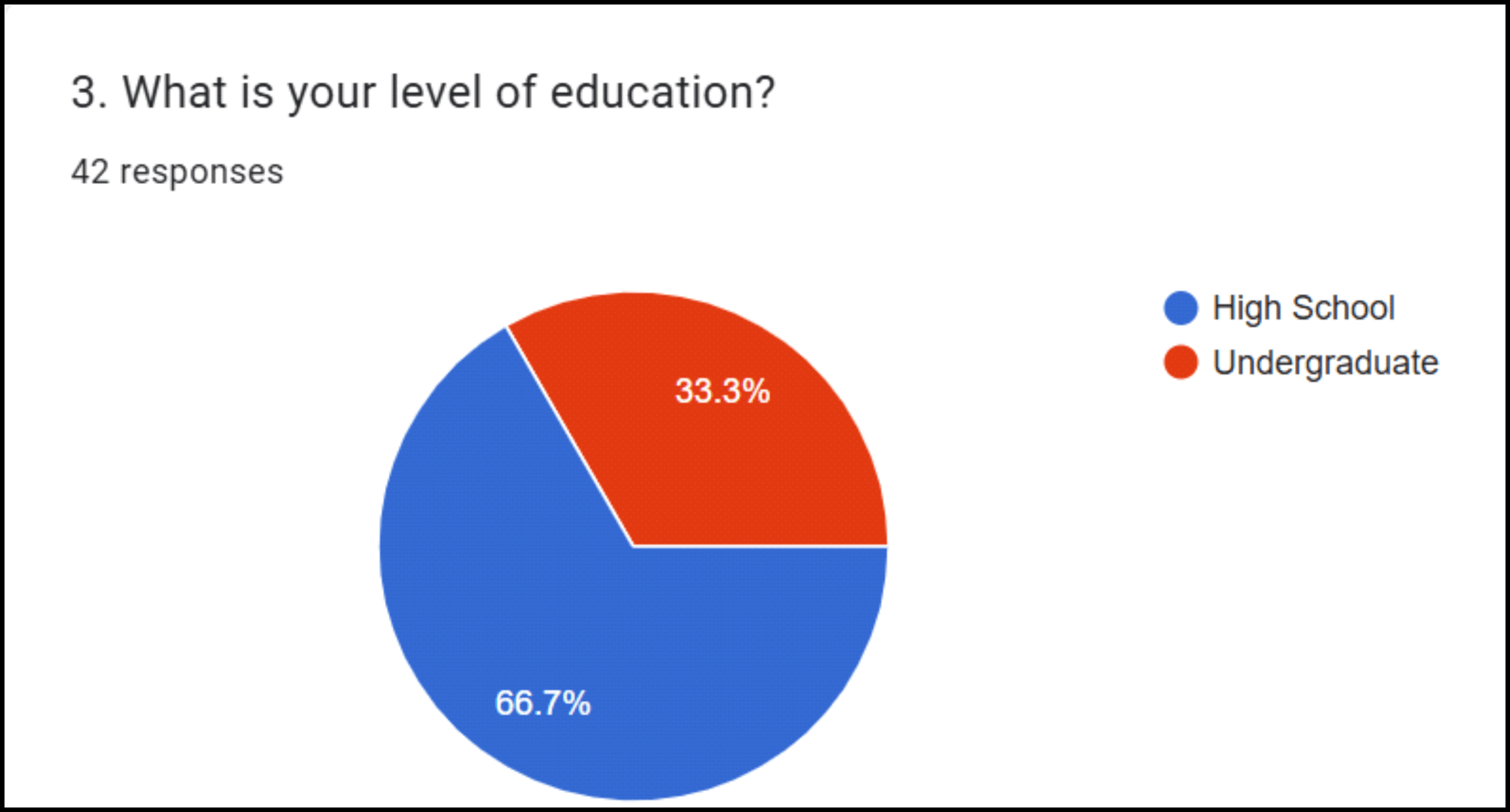
Q1. Which country are you from?
- Frequency: India – 21 respondents; United Kingdom – 21 respondents.
- Chi-Square Test:
- χ² = 0.00, p = 1.00
- Interpretation: The distribution is balanced between India and the UK, and the country grouping will be important for subsequent comparative analyses. The highly significant chi-square value reflects an intentional equal sample allocation.
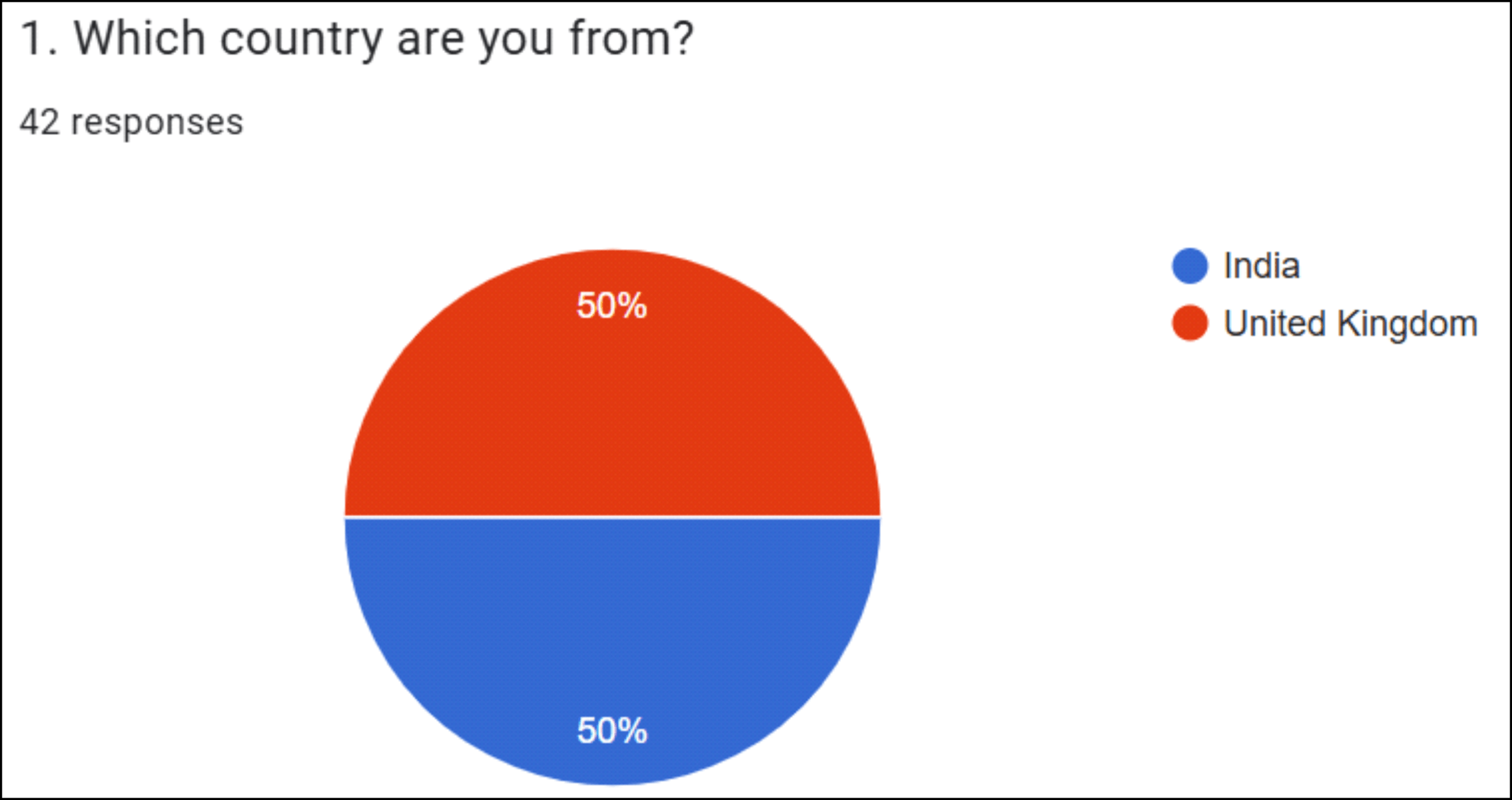
Q2. How old are you?
- Frequency:
- 16: 16 respondents
- 17: 11
- 18: 5
- 19: 3
- 22: 5
- 20:1
- 21:1
- Chi-Square Test:
- χ² = 5.34, p = 0.376
- Interpretation: Most participants are aged 16–18, consistent with high school to early college students. No statistically significant age variation across countries was observed.
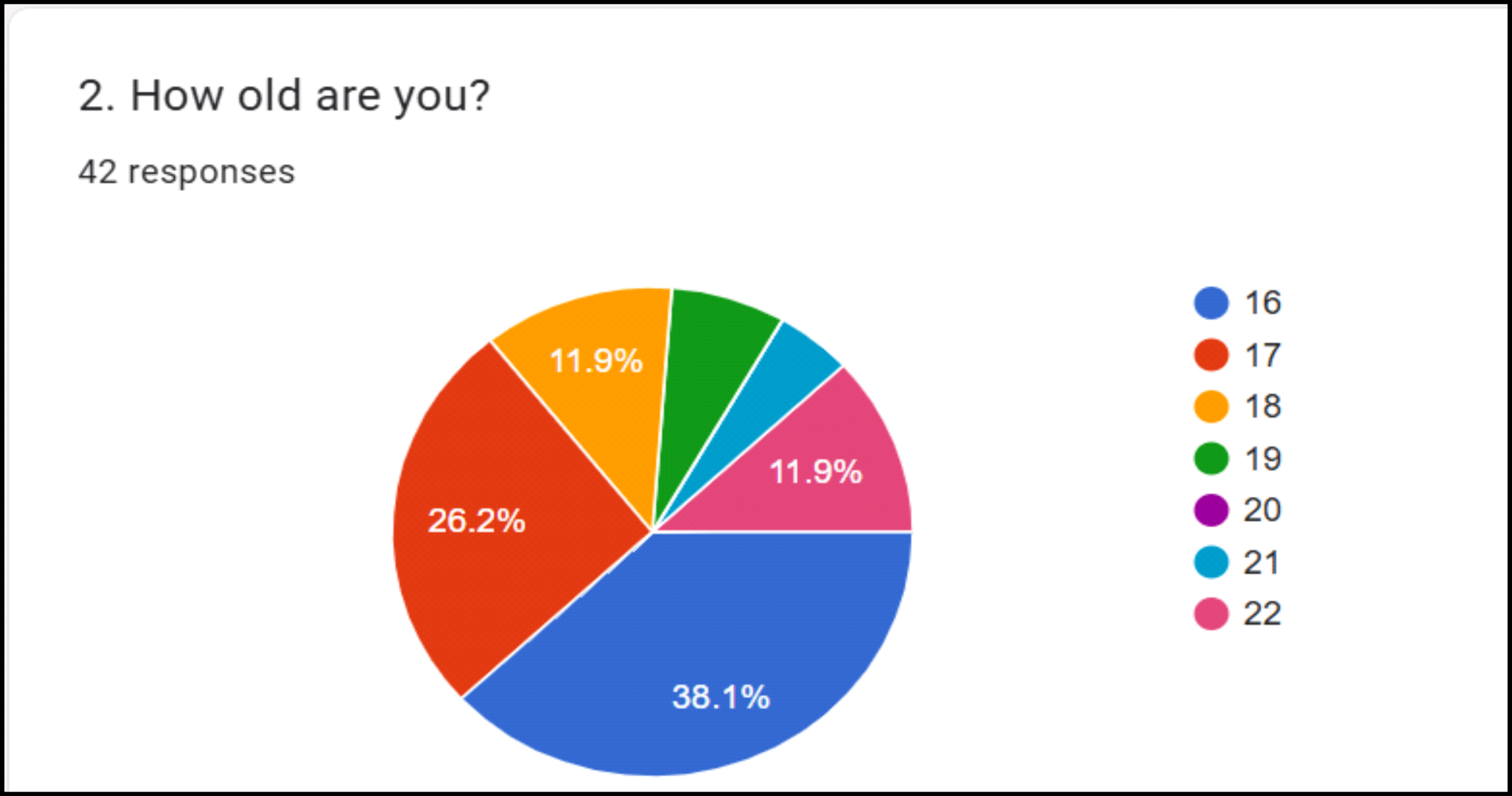
Q3. What is your level of education?
- Frequency:
- High School: 28 respondents
- Undergraduate: 14
- Chi-Square Test:
- χ² = 0.11, p = 0.743
- Interpretation: The sample is largely composed of high school students. The education level is not significantly different between India and the UK participants.
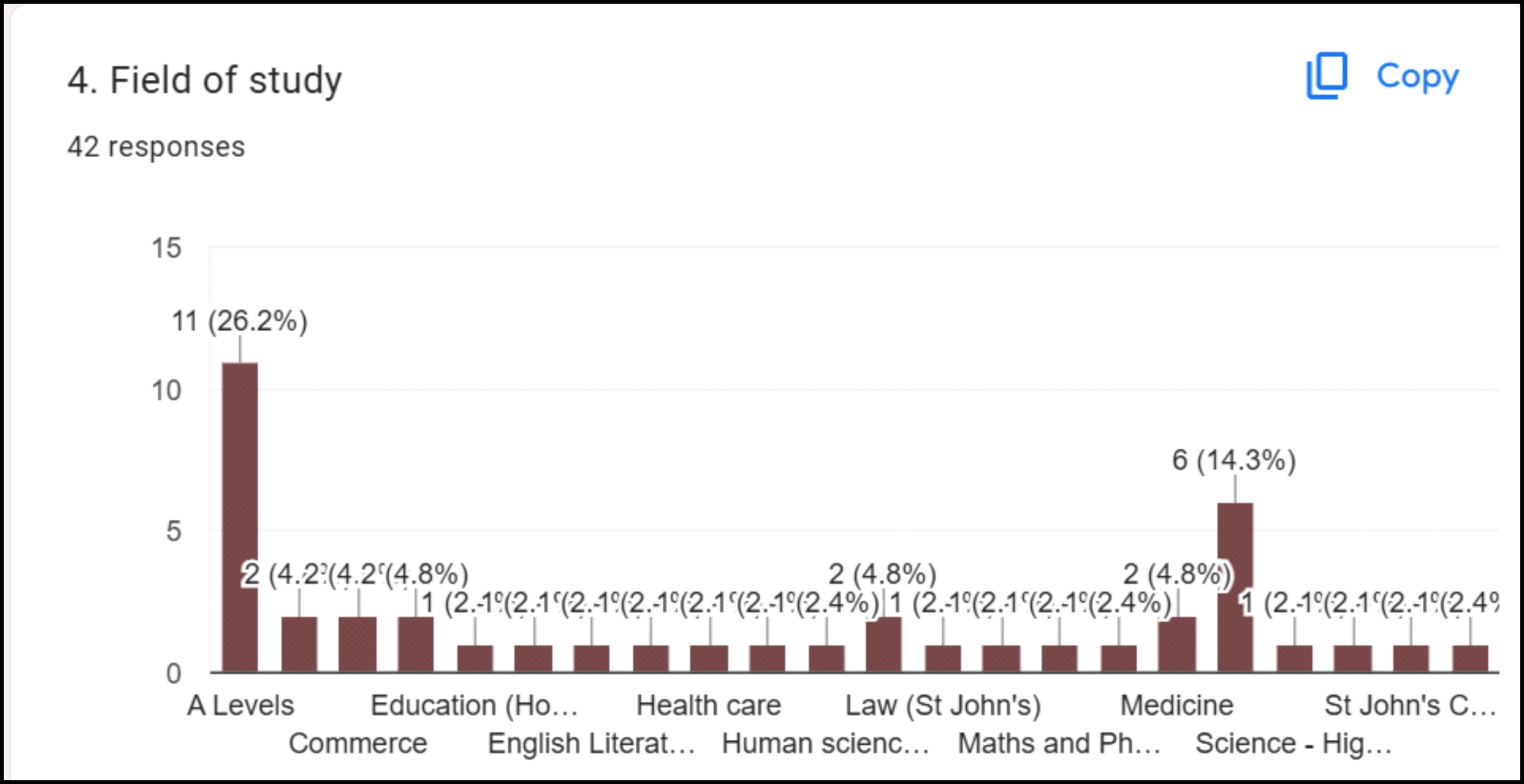
Q4. Field of study
- Frequency: Highly diverse responses with many unique or similar variants (e.g., “Science”, “Science “, “Science stream”).
- Chi-Square Test:
- χ² = 42.0, p = 0.018
- Interpretation: Field of study varied significantly across the sample. Despite inconsistencies in data entry (e.g., spacing issues), the result indicates diversity of academic backgrounds, which may influence perceptions.
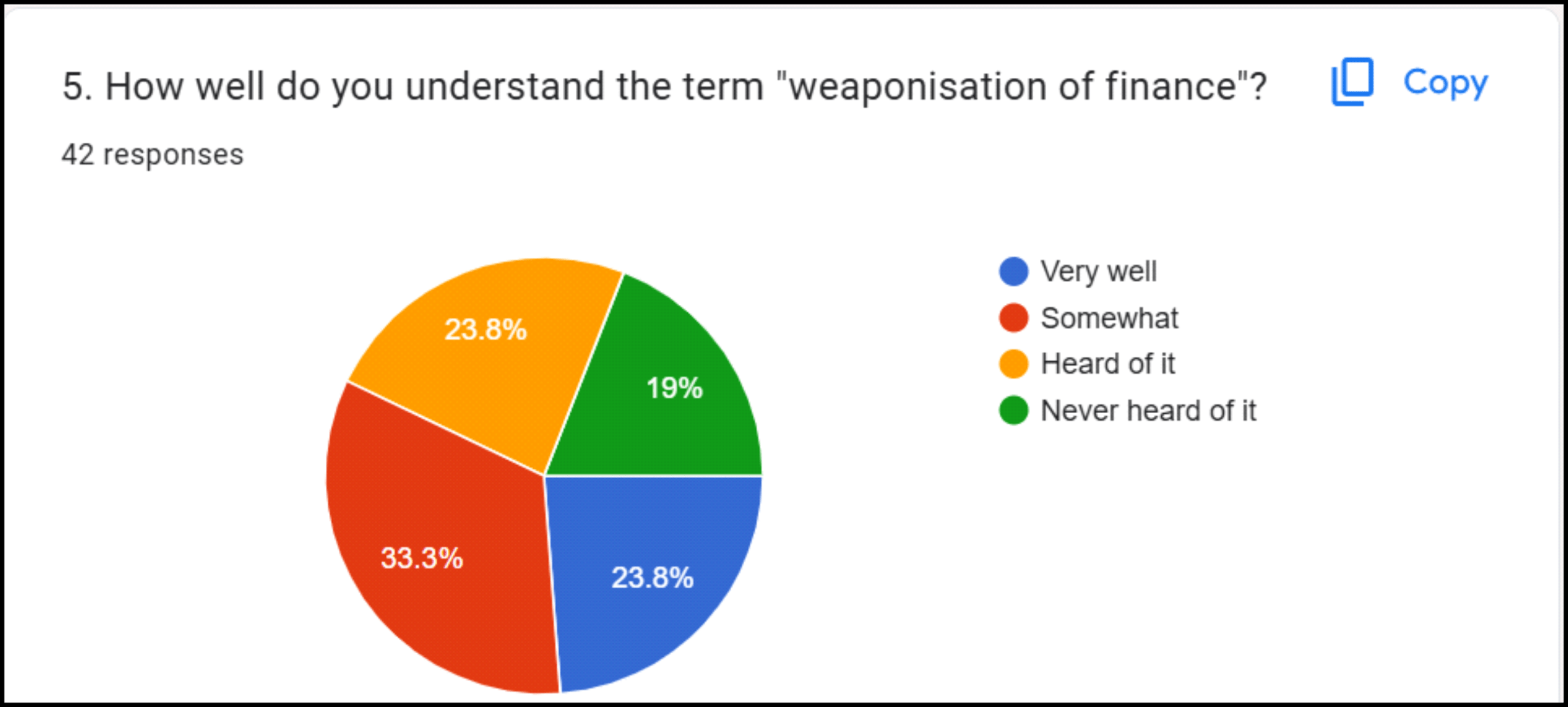
Q5. How well do you understand the term “weaponisation of finance”?
- Frequency:
- Very well: 10
- Somewhat: 14
- Heard of it: 10
- Never heard of it: 8
- Chi-Square Test:
- χ² = 5.59, p = 0.134
- Interpretation: Understanding varies, with a tilt toward partial or moderate familiarity. Differences in awareness levels across countries are not statistically significant.
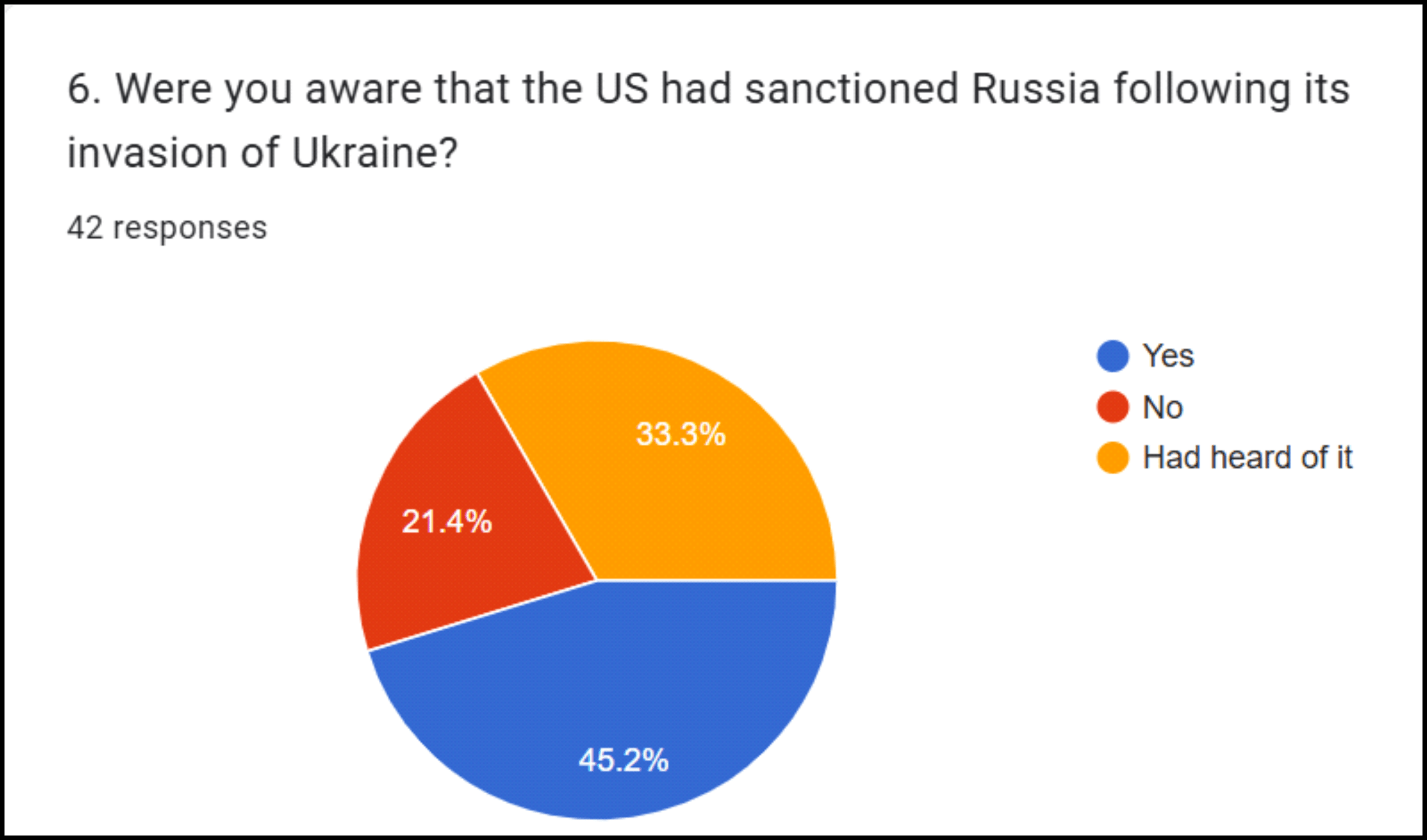
Q6: Were you aware that the US had sanctioned Russia following its invasion of Ukraine?
- Most common response: “Yes” (19 respondents)
- Statistical test (Chi-square): χ² = 7.05, p = 0.0295
- Interpretation:
There is a statistically significant difference in awareness levels between respondents from different countries (p < 0.05). This suggests national context or media exposure may play a role in shaping awareness.
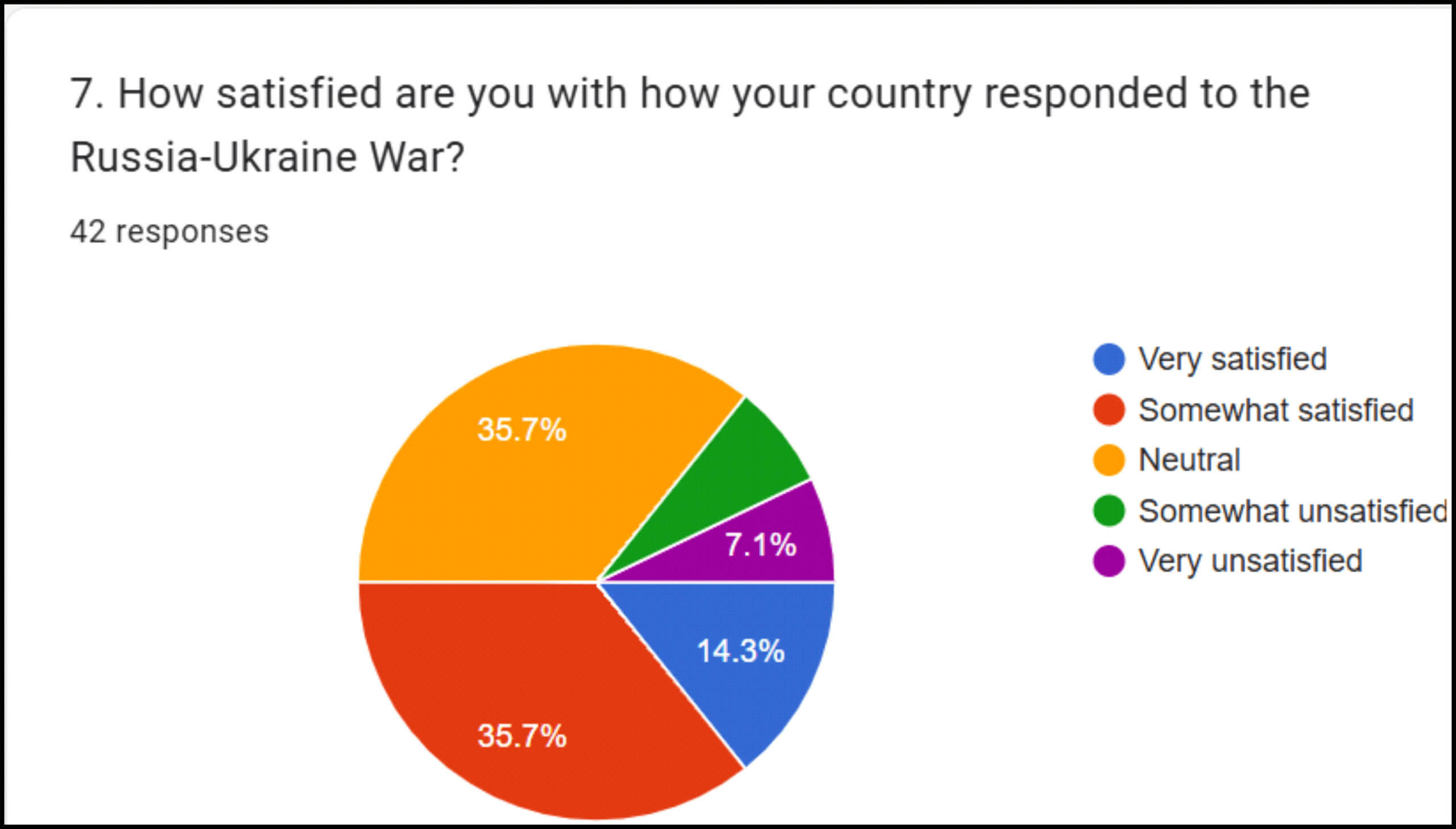
Q7: How satisfied are you with how your country responded to the Russia-Ukraine War?
- Most common response: Somewhat satisfied (15 responses)
- Chi-square test: χ² = 9.33, p = 0.0533
- Interpretation: No statistically significant difference found across countries (p > 0.05), but marginal. Respondents leaned slightly toward moderate satisfaction.
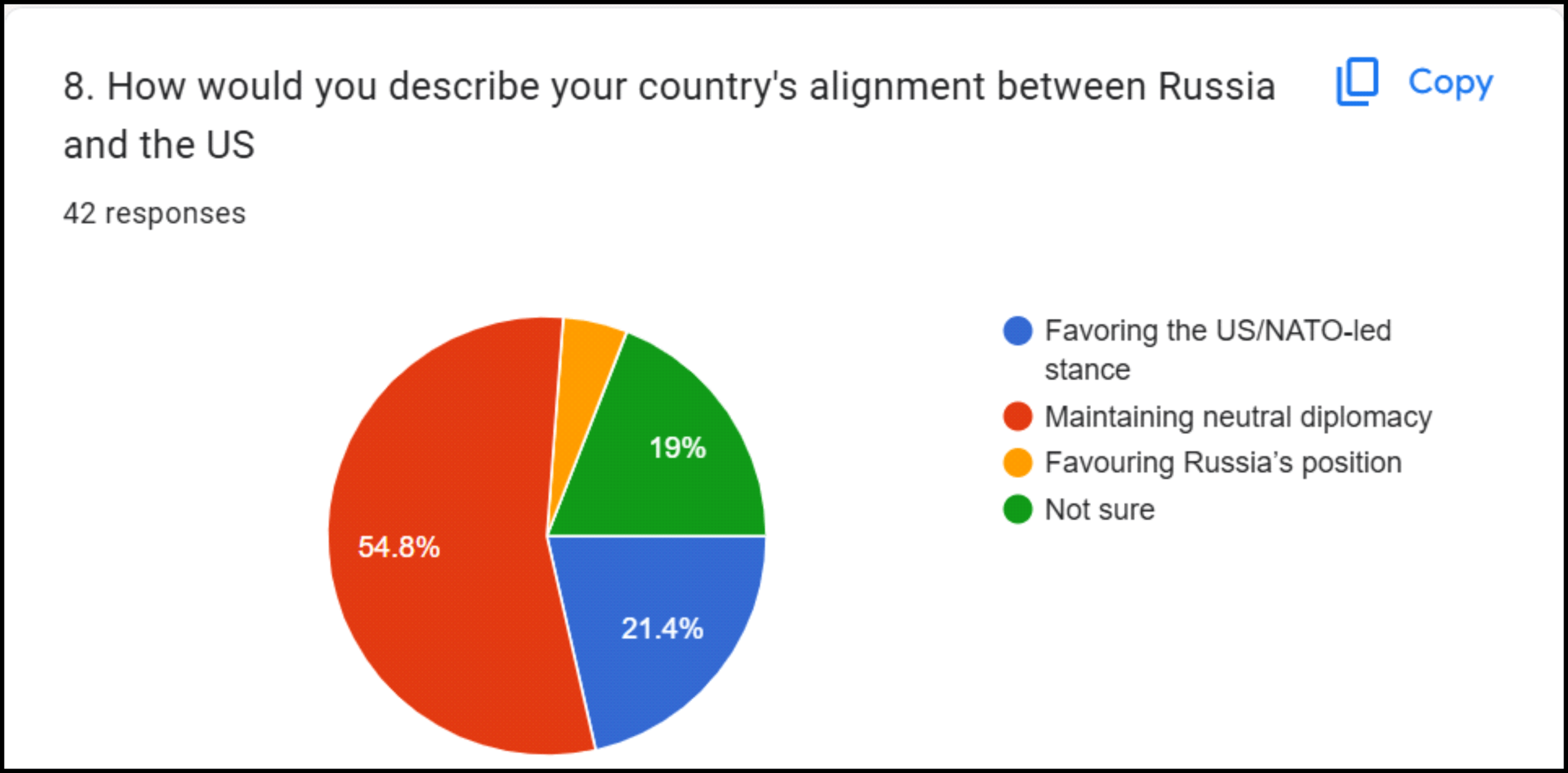
Q8: How would you describe your country’s alignment between Russia and the US?
- Most common response: Maintaining neutral diplomacy (23 responses)
- Chi-square test: χ² = 18.26, p = 0.0004
- Interpretation: Strong statistically significant difference by country. This shows meaningful differences in perceived geopolitical alignment.
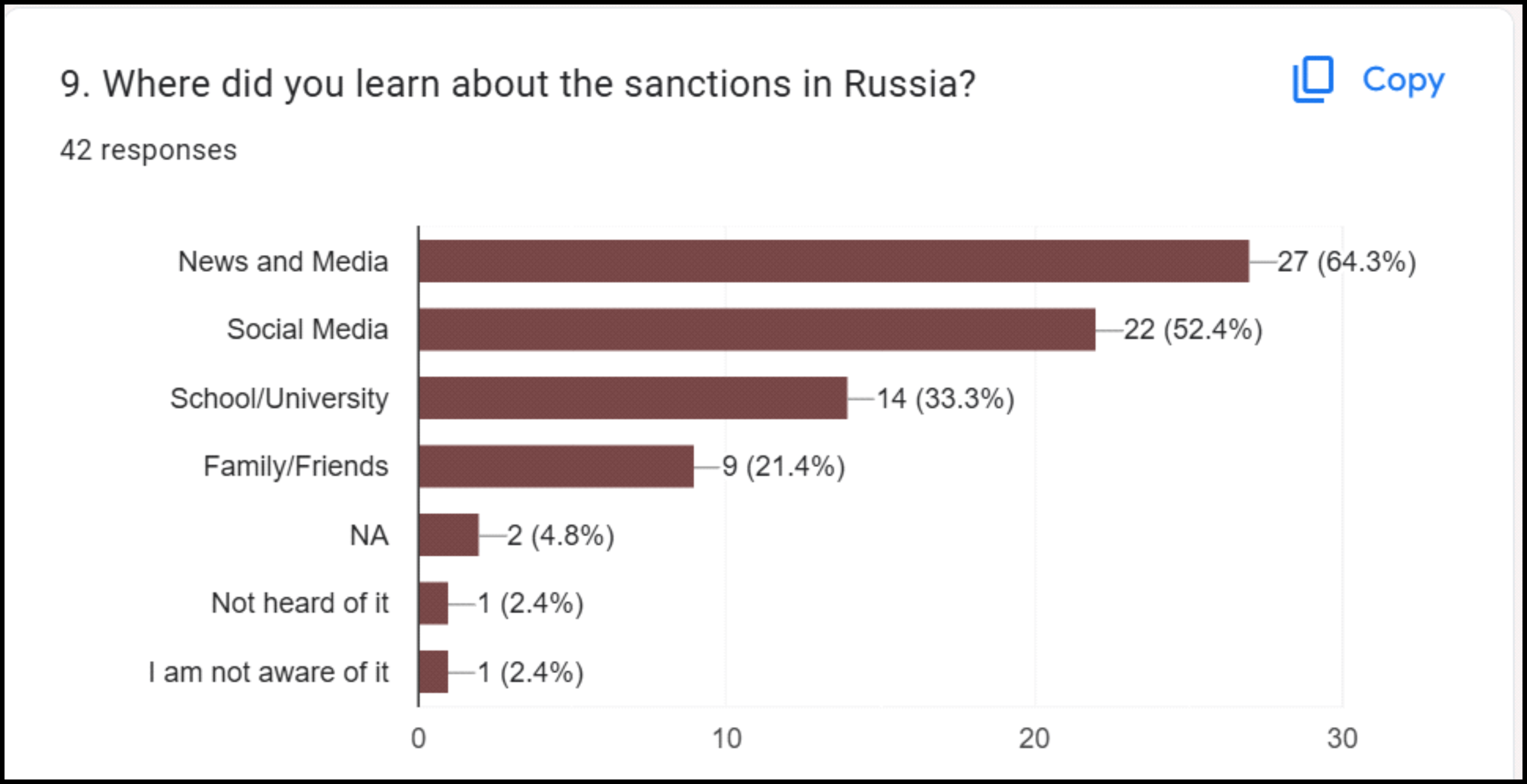
Q9: Where did you learn about the sanctions in Russia?
- Most common response: News and Media (27 responses)
- Chi-square test: χ² = 21.97, p = 0.0558
- Interpretation: No statistically significant difference, though media is the dominant channel across countries.
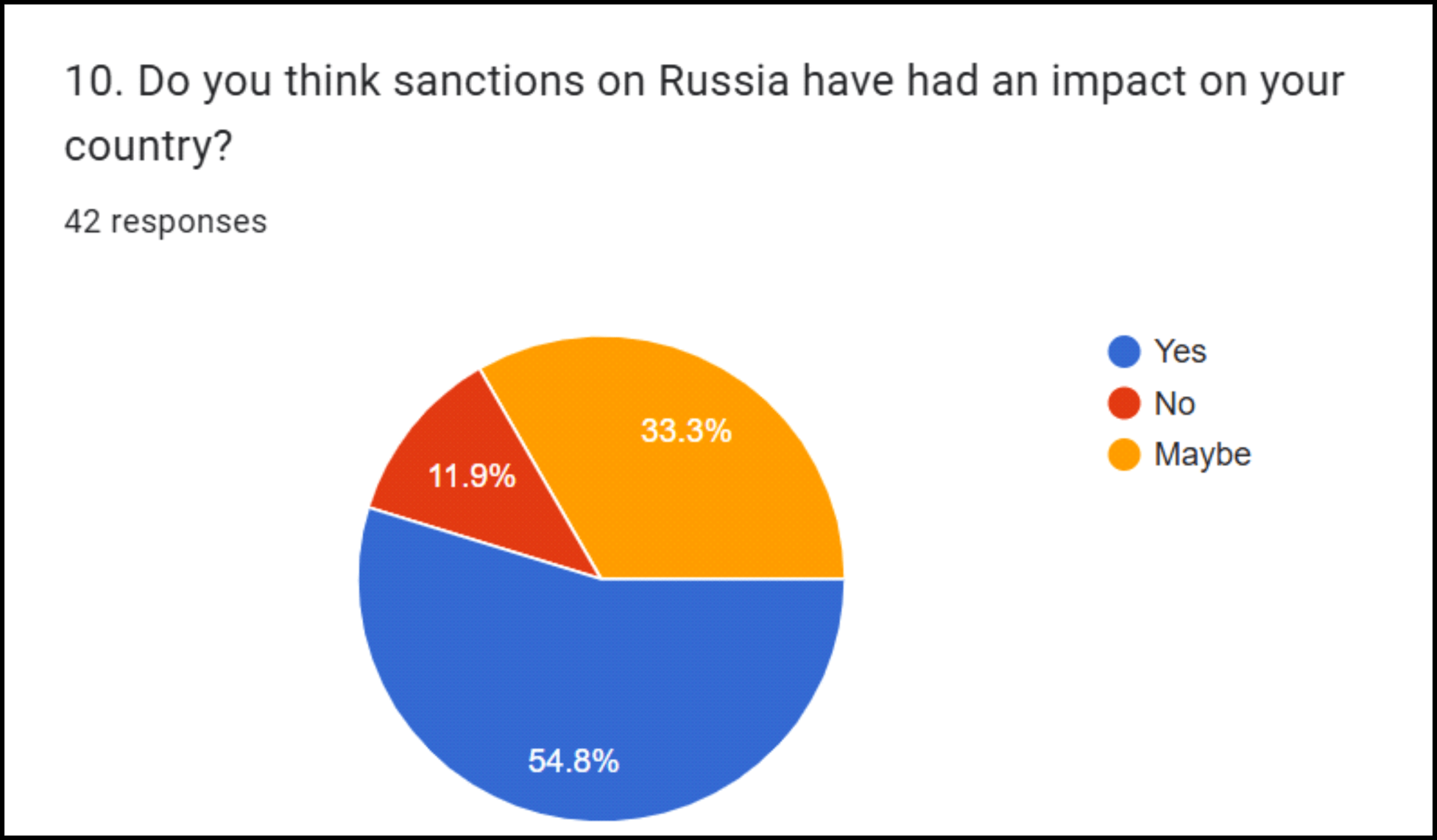
Q10: Do you think sanctions on Russia have had an impact on your country?
- Most common response: Yes (23 responses)
- Chi-square test: χ² = 2.99, p = 0.2247
- Interpretation: No significant variation across countries, suggesting a shared perception of impact.
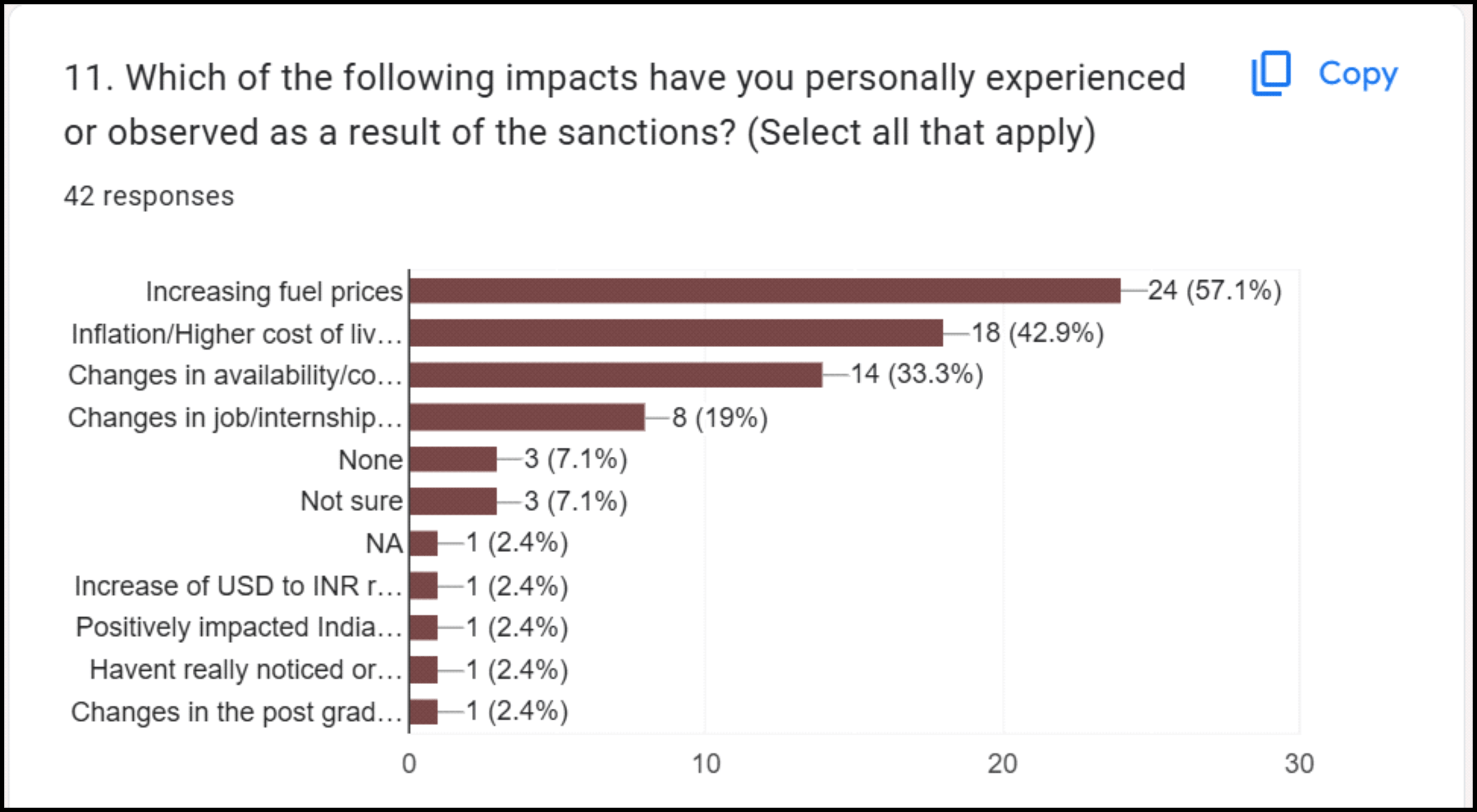
Q11: Which impacts have you personally experienced or observed due to the sanctions?
- Most common responses: Increasing fuel prices (24) and Inflation/Higher cost of living (18)
- Chi-square test: χ² = 27.21, p = 0.0270
- Interpretation: Statistically significant differences exist—impacts are perceived differently depending on country context.
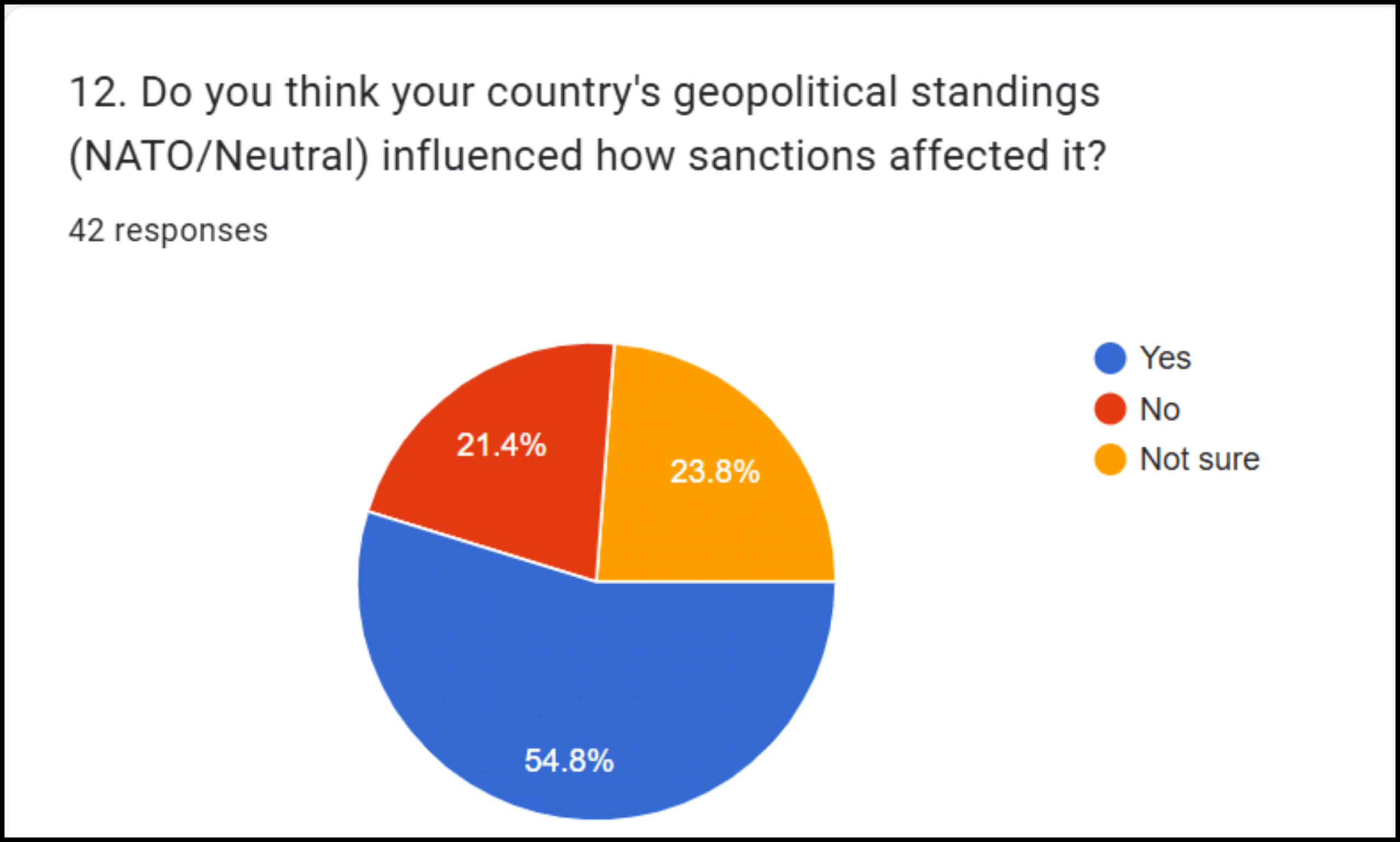
Q12: Do you think your country’s geopolitical stance influenced how sanctions affected it?
- Most common response: Yes (23 responses)
- Chi-square test: χ² = 0.15, p = 0.9256
- Interpretation: Strong consensus across countries; no variation, indicating wide agreement.
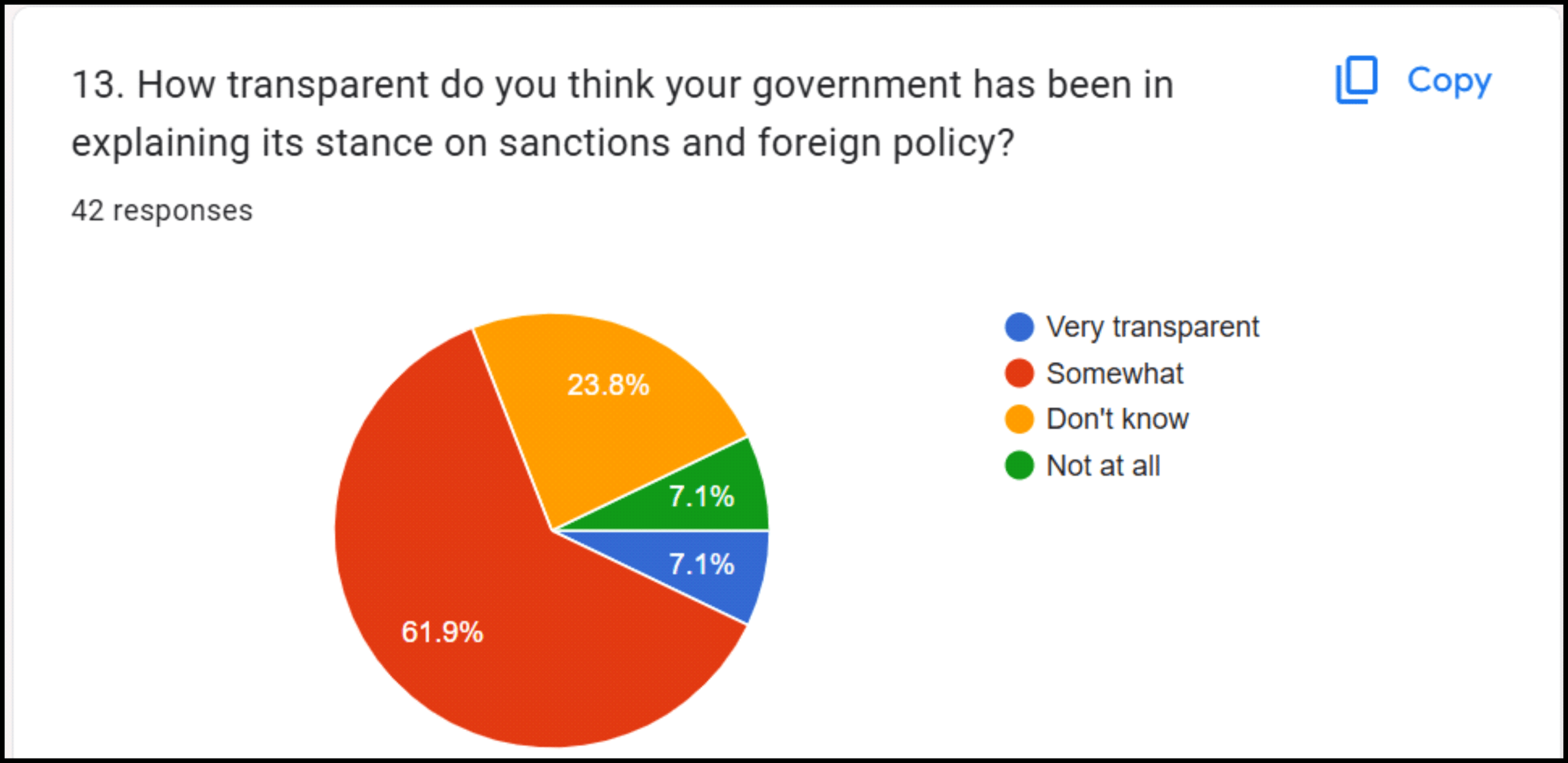
Q13: How transparent do you think your government has been on sanctions and foreign policy?
- Most common response: Somewhat (26 responses)
- Chi-square test: χ² = 5.12, p = 0.1634
- Interpretation: No significant difference, though transparency levels are viewed as modest across the board.
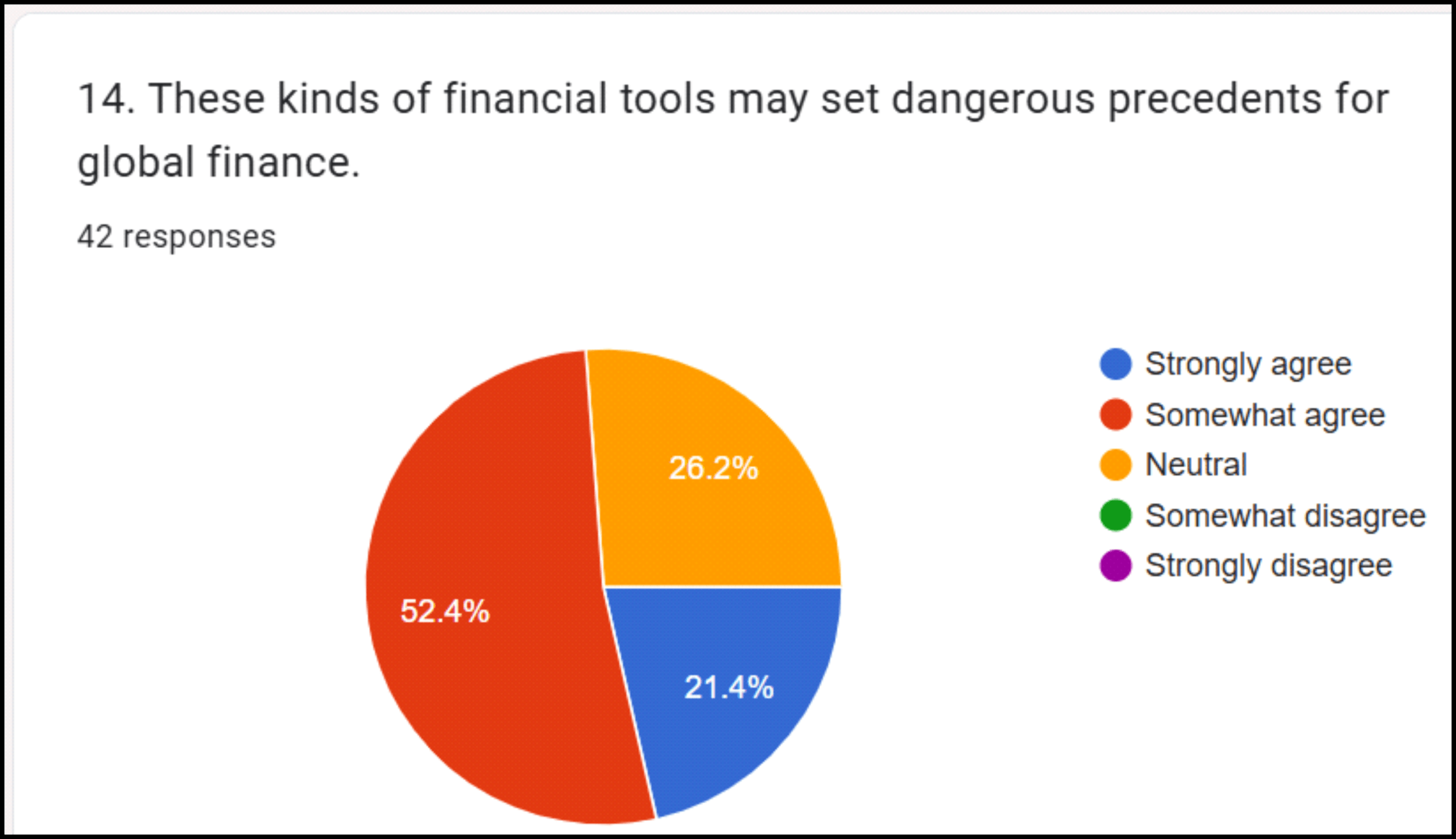
Q14: These kinds of financial tools may set dangerous precedents for global finance.
- Most common response: Somewhat agree (22 responses)
- Chi-square test: χ² = 10.38, p = 0.0056
- Interpretation: Statistically significant variation by country; concerns about weaponized finance vary based on geopolitical exposure.
Q15. Can you name a policy implemented by your country or explain it?
Analysis:
- Responses varied widely in detail and specificity.
- Some participants referenced national initiatives such as Atmanirbhar Bharat, Ayushman Bharat, or fuel-related geopolitical strategies.
- A notable number of respondents indicated lack of awareness, stating “Not aware” or leaving the response blank (“-”).
Interpretation:
- This suggests mixed levels of awareness among youth regarding national policies linked to geopolitical or economic sanctions.
- While some Indian respondents showed awareness of domestic economic resilience measures, others struggled to connect these policies directly with the global context of sanctions.
- This may highlight a gap in civic education or engagement with economic diplomacy and policy.
- Educational interventions or awareness programs could bridge this gap and help youth understand the broader implications of such policies.
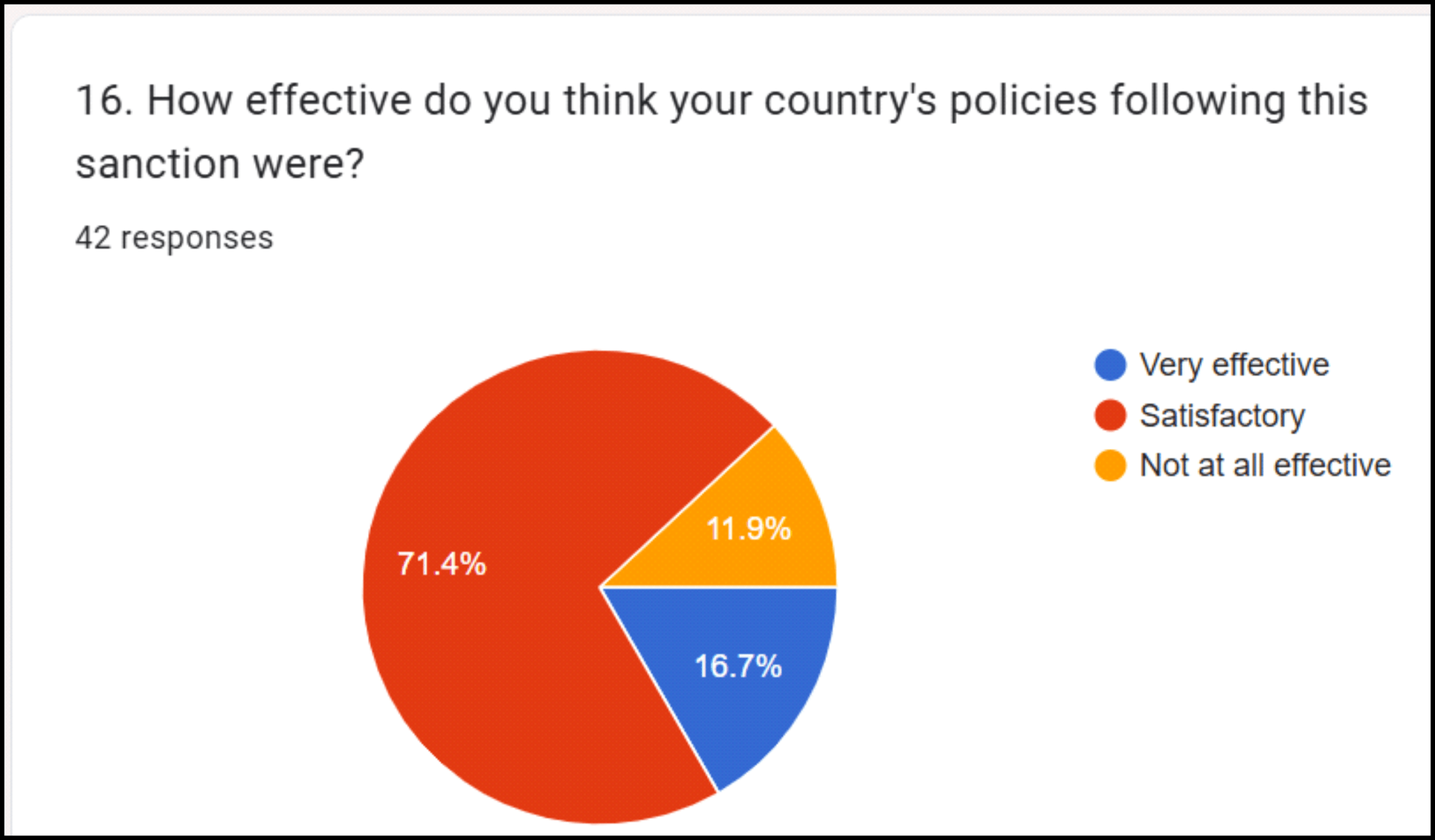
Q16: How effective do you think your country’s policies following this sanction were?
- Most common response: Satisfactory (30 responses)
- Chi-square test: χ² = 0.48, p = 0.7881
- Interpretation: No major differences across countries; general agreement that policies were adequate but not outstanding.
Q17: How do you think this has affected your country’s ties with Russia?
- Most common response: No effect (18 responses)
- Chi-square test: χ² = 23.79, p < 0.0001
- Interpretation: Very significant differences by country, suggesting divergent geopolitical relationships with Russia.
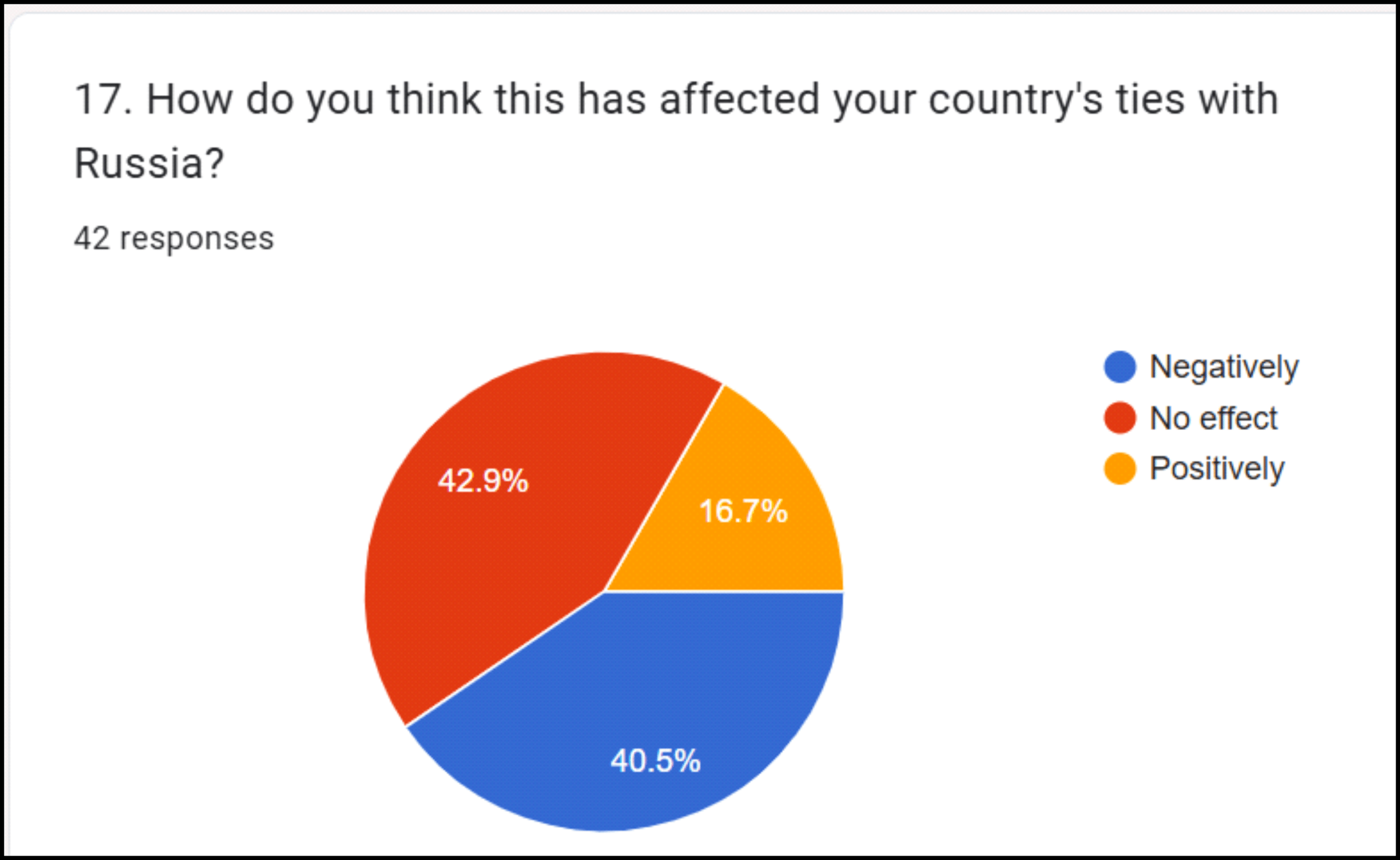
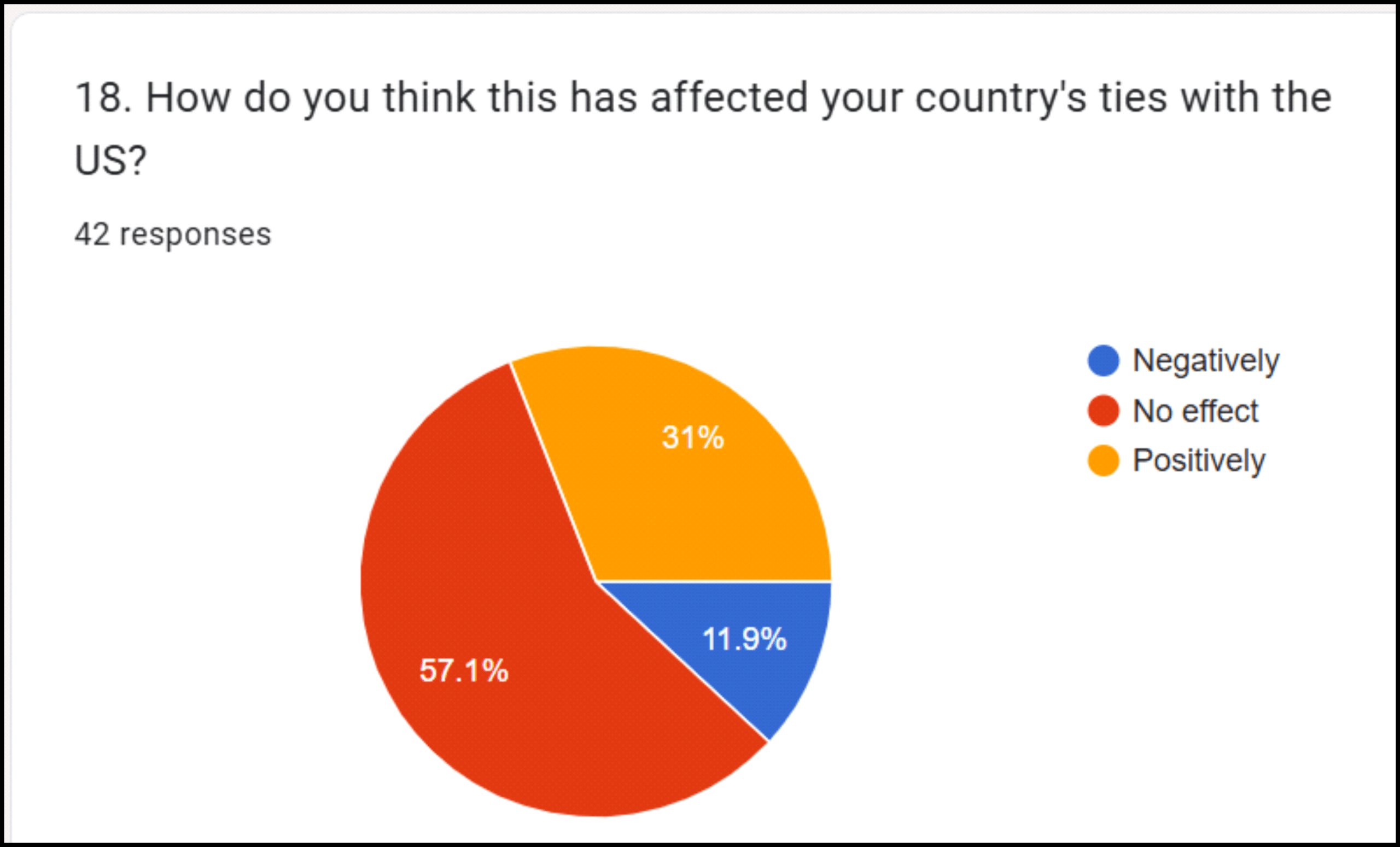
Q18: How do you think this has affected your country’s ties with the US?
- Most common response: No effect (24 responses)
- Chi-square test: χ² = 13.77, p = 0.0010
- Interpretation: Statistically significant. Perceptions of ties with the US vary significantly by country, likely influenced by political context.
Q19. If you had to suggest any changes to current policies or suggest new ones, what would it be?
Analysis:
- Responses ranged from maintaining neutrality in foreign affairs to ambitious proposals like limiting war durations or enhancing global cooperation.
- Some respondents suggested reforms in education, climate action, tech regulation, and political transparency.
- A few stated satisfaction with current approaches or abstained from offering suggestions.
Interpretation:
- These responses indicate that many youth are critically aware of policy limitations and possess aspirational ideas for reform.
- Suggestions emphasized peace-building, humanitarian values, and strategic neutrality, reflecting a desire for diplomacy over conflict.
- The broad scope of suggestions implies that respondents associate the effects of financial sanctions with multiple policy domains, not just finance or trade.
Q20. What long-term global changes do you foresee due to the increasing weaponisation of finance?
Analysis:
- Major themes include:
- Global economic recession
- Rise of alternative currencies and financial systems (e.g., de-dollarisation, digital currencies)
- Fragmentation of global trade
- Erosion of trust in Western financial institutions
- Potential rise in military conflict or political instability
Interpretation:
- Respondents show awareness of macroeconomic consequences and demonstrate a grasp of complex geopolitical shifts.
- There is concern about the polarization of global financial systems and the possibility of new blocs forming outside Western-dominated frameworks.
- Some answers reflect media-informed insights, while others show speculation or pessimism about global stability.
- These views underscore that youth perceive financial sanctions as impactful beyond economics, touching on security, diplomacy, and institutional legitimacy.
Discussion
Comparative Insights: India vs. UK – Bringing together the findings, several notable contrasts emerge between Indian and UK respondents, reflecting the differences in their countries’ positions and experiences:
- Awareness and Knowledge: Indian participants showed greater awareness of Russia sanctions, reflecting extensive domestic debate and media focus on diplomacy and economic choices. UK youth were less informed about sanctions’ mechanics, as media emphasized the war more than technical details. This gap suggests differing media and educational influences shaping sanction awareness in both countries.
- Sources of Information: Indian youth mainly relied on mainstream media, shaping views around India’s cautious diplomacy and economic effects like fuel prices linked to the war and sanctions. British youth relied more on social media and peer discussions, resulting in a more uneven and sometimes less comprehensive understanding of sanctions. This suggests that Indian respondents’ views might align closely with the official or expert narratives commonly presented since mainstream media in India often echoed government perspectives on multi-alignment being wise, whereas British respondents might have had more varied inputs, some possibly less informed or more emotive content on social networks.1
- Economic Impact Perceptions: Both Indian and UK youths felt economic pain. Indians highlighted trade and supply chain issues, whereas Brits focused on energy prices and inflation (the cost shock of suddenly cutting out Russian supplies or global price spikes). This aligns with the reality that India actively continued trading with Russia, while the UK voluntarily severed trade.
- Geopolitical Stance and Reactions: Indian respondents largely viewed their country as effectively neutral and multi-aligned, approving its balanced approach toward Russia and the West. UK youth opinions were divided: some supported standing with NATO and Ukraine, while others were critical or ambivalent, questioning domestic costs. This reflects typical democratic debates over balancing foreign commitments with internal priorities.
- Impact on International Relations: Consistent with expectations, Indian youth believed their government preserved relations with both Russia and the West, even strengthening ties with Russia through increased trade. UK respondents accepted deteriorated Russia relations as deliberate, instead emphasizing a strengthened alliance with the United States, reflecting differing geopolitical priorities and interpretations of sanctions’ diplomatic outcomes.
- Domestic Satisfaction and Unity: Indian youth showed near-unanimous satisfaction, reflecting broad domestic consensus supporting the government’s balanced approach toward Russia. UK youth were more divided—while broadly backing support for Ukraine, some expressed dissatisfaction over economic impacts and policy execution. This contrast suggests stronger foreign-policy unity in India and greater openness to critique in UK political culture.
- Global Consequences and Future Outlook: Both Indian and UK youths exhibit a quite sophisticated understanding that the widespread use of sanctions can have unintended systemic effects – a point aligned with scholars like Abely (2023) and Obasun (2024) who warn about the long-term risks of weaponizing financial interdependence.15 Indian youth anticipate greater financial autonomy from the West, including alternative systems and possible fragmentation of the global financial order. British youth also foresee new blocs and polarization, often linking this to rising conflict and cyber threats. Overall, respondents expect a less globalized, more divided world, reflecting emerging post-2022 geopolitical and financial trends.
In evaluating our hypotheses against these insights:
- We hypothesized India’s neutrality would lead its youth to view impacts as mitigated and policy as effective, which is strongly supported by the data. Indian respondents do believe their stance cushioned economic fallout and they widely approve of it, feeling both main relationships (with Russia and US) remain good.
- We hypothesized UK’s alignment would lead its youth to accept more negative impact as trade-off for alliance benefits – the data shows they do report severe impact (fuel/inflation) and yet still strongly support sanctions/aid to Ukraine (with some complaints about domestic handling). And they clearly note the trade-off: Russia ties worsened, US ties strengthened. This reflects an understanding and acceptance that being a sanctioning country incurred costs – consistent with hypothesis of observational (not causal) language: UK youth see these as chosen consequences rather than feeling victim of others’ sanctions, since their country co-authored them.
- On awareness, we didn’t explicitly hypothesize the gap, but the results highlight it which in retrospect aligns with the idea that India being outside the Western info sphere had to talk more about sanctions explicitly to justify its position. The UK as part of the sanctioning coalition took it as an implied measure not needing granular public debate.
- On hypotheses about differences in sources and perceptions of alliances: the results confirm that youth perceptions align strongly with their country’s official stance which is a demonstration of how foreign policy consensus at state level penetrates youth thinking. There’s a psychological aspect: British youth possibly derive a sense of moral satisfaction or identity from their country “doing the right thing,” whereas Indian youth derive a sense of practical satisfaction from their country “looking after itself wisely.” These are different value frameworks (idealism vs. pragmatism) shaped by circumstances – neither group is monolithic in these traits normally, but the context elicited those respective values.
Policy Implications: The comparative youth perspective highlights a few lessons:
- Communication and Transparency: Differences in awareness indicate a need for better youth education on foreign policy actions like sanctions. Some UK respondents perceived limited transparency, while Indian youth appeared highly informed. An optimal approach would ensure clear, accessible communication of key facts without overwhelming audiences or appearing propagandistic, strengthening informed civic understanding.
- Managing Domestic Impact: Youth in both countries reported inflation and cost-of-living pressures. Effective policymaking required balancing principle with pragmatism: the UK used energy subsidies to cushion hardship, while India secured discounted imports and managed inflation. Though British support remained strong, a notable dissatisfied minority highlights the need to sustain domestic morale during sanctions-driven strain.
- Long-Term Strategy: Youth expectations of a fragmented financial order signal policy challenges. Western governments may need to moderate financial coercion and keep global systems attractive and fair to prevent erosion, while adapting to emerging shifts. Meanwhile, countries like India may view fragmentation as opportunity, leveraging alternative networks and reduced dependence on Western-dominated financial structures.
- Geopolitical Alignments: The satisfaction of each public with their country’s stance suggests that each country is likely to continue on its chosen path – India continuing multi-alignment or non-alignment, and the UK (and similar Western countries) continuing strong alliance solidarity.1 The UK’s mix of support but some fatigue might mean British leaders will remain firm but also keen to show they are protecting citizens from fallout, learning from this experience for any future sanction regimes (e.g., they might stockpile or prepare better for next time to reduce inflationary shock, to keep that minority from growing).
- Youth Engagement in Foreign Policy: The fact that youths could articulate quite complex ideas means they are engaged and should be included in discussions. It might be beneficial for governments or international organizations to have youth forums on these issues, harnessing their insights and addressing their concerns – after all, they’ll inherit whatever new global order comes. Perhaps integrating more IR topics in school curricula
In conclusion, comparing Indian and UK youth perspectives shows how geopolitical role, media framing, and domestic management shape public responses to sanctions. Financial warfare affects not only economies and diplomacy but also national narratives. The alignment of youth opinion with national strategies suggests these policies enjoyed social legitimacy, supporting their political sustainability. However, the differences in understanding and content of what they echo also remind us that the world doesn’t have a single narrative – each country, aligned or non-aligned, is writing its own story of the Russia-Ukraine sanctions episode. As these youths become older stakeholders, their experiences and views will shape future policy: Indian youth’s comfort with multi-alignment might steer India to continue that path; UK youth’s commitment to alliances will reinforce UK’s Atlanticism, albeit tempered by lessons on resilience.1 Ultimately, our comparative study underscores that while sanctions can isolate a target like Russia, they also inadvertently weaponize perceptions in different ways: strengthening resolve and unity among allies, and strengthening self-interest-driven solidarity among neutrals with the target.
Comparative Insights: India vs. UK
Bringing these findings together, several notable contrasts emerge between Indian and UK respondents:
- Awareness and Knowledge: Indian participants were generally more aware of the sanctions and familiar with finance-weaponization concepts than their UK counterparts. This could be due to differences in media consumption and the direct relevance of the topic in India’s foreign policy discourse. UK youths had a higher fraction who were uninformed about the sanctions initially, perhaps reflecting lower engagement with international news among teens. Educational or media systems might influence these gaps.
- Sources of Information: Indians predominantly got news from conventional media, whereas Brits leaned more on social networks and academic settings for information on sanctions. This suggests Indian respondents’ views might be shaped by national news narratives, while UK respondents’ understanding could be peer-influenced or patchy if they “never heard of it” at all.
- Economic Impact Perceptions: Both groups felt economic impacts, but Indians highlighted supply chain and import issues far more, whereas Brits focused on energy prices. The difference mirrors the countries’ positions – India faced dilemmas over importing Russian commodities (which it continued, mitigating some domestic costs but still feeling global inflation), whereas the UK faced fuel price spikes and inflation largely as a sanctioning country adjusting to new supply sources. Additionally, many UK youths did not personally feel any impact – possibly due to stronger social safety nets or simply perceiving the effects as normal inflation – whereas almost every Indian noted some economic effect, indicating a more acute awareness of global economic interdependence.
- Geopolitical Stance and Reactions: Indians overwhelmingly perceive their country as neutral in the Russia–US divide (81% said India maintained neutral diplomacy), reflecting India’s official stance of non-alignment in this conflict16. A small minority even thought India leaned pro-Russia. In contrast, a plurality of UK respondents (43%) saw the UK as explicitly pro-U.S./NATO in alignment – in line with reality, as the UK is a core NATO member sanctioning Russia – though it’s interesting that a sizable portion (29%) of UK youths believed the UK was “neutral” or were unsure (perhaps indicating some confusion or differing interpretations of “alignment” among the public). Many Indian respondents voiced approval of their neutral stance, citing it as shrewd balancing, whereas some UK respondents were split on their government’s overt partisanship – some dissatisfied or wanting more transparency, others supportive of standing with NATO.
- Impact on International Relations: Indian respondents generally think their country managed to maintain good relations with both sides – keeping Russia a close partner (with even opportunistic benefits like cheap oil) while avoiding a serious fallout with the West. UK respondents agree that Russia–UK relations suffered (which is expected in this case) but believe this also fostered closer US–UK ties. The table below summarizes these perceptions:
| Perceived effect | India’s ties with Russia | UK’s ties with Russia | India’s ties with US | UK’s ties with US |
| Improved | 33% (strengthened) | 0% (none) | 5% (few saw improvement) | 57% (strengthened) |
| No change | 62% (mostly unchanged) | 24% (unchanged) | 76% (unchanged) | 38% (unchanged) |
| Worsened | 5% (few saw harm) | 76% (relations hurt) | 19% (some strain) | 5% (few issues) |
This comparison underscores that India’s balancing act allowed it to escape the conflict with minimal diplomatic damage (in public perception), whereas the UK’s firm stance came with the expected trade-off of badly degraded Russia relations but stronger alignment with Western allies. These outcomes match each country’s strategic choices: India’s “multi-alignment” strategy vs. the UK’s Atlanticist solidarity.
Finally, looking ahead, participants from both countries shared some common visions about the long-term global consequences of the growing “weaponization of finance.” Many foresee a more fractured international financial order as a result of these sanctions precedents. In conclusion, the survey reveals that young educated Indians and Brits are conscious of the US–Russia sanctions and their ripple effects, though to varying degrees and with different takeaways. Indians exhibit higher awareness and tend to view their country’s neutral stance as beneficial economically and diplomatically. British respondents, while generally supportive of their country’s pro-Ukraine stance, have a mix of views on its domestic impact and express clear recognition of the fallout with Russia.
Both groups emphasize economic pain (especially via fuel and prices) as the tangible impact, and anticipate that the continued weaponization of global finance could reshape future geopolitical and financial landscapes in profound ways. Their insights – drawn from personal observation and national context – echo many expert analyses of this sanctions episode as a “historic shift” in global statecraft17, one that is testing how nations navigate the intersection of economic interdependence and geopolitical rivalry in the 21st century.
Conclusion
The events surrounding the Russia-Ukraine war and the ensuing sanctions regime illustrate how finance has been transformed into a theatre of geopolitical contestation. Our comparative analysis of India and the United Kingdom – two countries with starkly different alignments – reveals that the impact of financial warfare is multifaceted and deeply contingent on national context. Both India and the UK faced economic spillovers from Russia sanctions, especially inflation and higher fuel prices, but impacts differed by alignment and policy. India’s multi-alignment cushioned effects and was viewed positively, while the UK bore higher costs yet accepted them as necessary for allied commitments. Youth in both countries broadly understood and supported their governments’ strategies. Policy implications highlight communication and long-term foresight. Clear, transparent messaging builds public support, as seen in India’s multi-alignment narrative, while some UK youth sought greater clarity1 Respondents also warned that extensive sanctions could hasten de-dollarization, parallel blocs, and cyber-economic conflict, urging policymakers to balance immediate gains against risks to global financial stability. Thirdly, our comparative approach highlights that domestic context can flip the script on sanction outcomes. For a country like India, which was not the sanction initiator but an affected third party, adaptability and maintaining flexibility were key to mitigating negative impacts. India’s case shows that third countries will actively seek ways to navigate great-power economic crossfire, by finding new suppliers, alternate payment mechanisms, or negotiating carve-outs to protect their own interests. This suggests that sanctioning coalitions need to consider outreach to neutrals to limit evasion and ensure broader efficacy, or else sanctions may only partially achieve their goals as target states find economic lifelines through neutral partners. This study deepens understanding of financial weaponization by showing its real-world effects across societies. Large-scale sanctions have global consequences, influencing citizens as well as markets and governments. Findings from India and the UK suggest such measures may fragment the international financial order, prompting Global South nations toward financial autonomy while Western actions reinforce bloc-based divisions.
Appendix A: A list of all variables used in the study is provided below.
1. Geopolitical Standing (independent variable) – the orientation of a country with respect to its foreign policy.
2. Economic Spillover Effect (dependent variable) – changes in the economies of a country, specifically in trade and fuel.
3. Public Perception (dependent variable) – the understanding and knowledge about sanctions and effects on the economy by the targeted group.
4. Policy Satisfaction (dependent variable) – a measure of how happy the general public is with policy implementation/effects.
5. Age Group (control variable) – fixed demographic of target group to achieve consistency
References
- Roy, I. Decoding India’s new multi-alignment plan. Hindustan Times, 29 Jul 2022. [↩] [↩] [↩] [↩] [↩] [↩] [↩] [↩] [↩] [↩]
- Farrell, H., & Newman, A. L. Weaponized Interdependence: How Global Economic Networks Shape State Coercion. International Security, Vol. 44, No. 1, pp. 42-79, 2019. [↩]
- Abely, C. The Russia Sanctions: The Economic Response to Russia’s Invasion of Ukraine. Cambridge University Press, 2023. [↩]
- Naz, E. Economic Sanctions Against Russia: Impact, Challenges, and Global Repercussions. Journal of Business Strategies, Vol. 18, No. 1, pp. 1-24, 2024. [↩]
- Obasun, O. Sanctioning of Russian Central Bank assets and consequential impacts on other central banks and international trade and investments. African Journal of Business Management, Vol. 18, No. 6, pp. 123-135, 2024. [↩]
- Keohane, R. O., & Nye, J. S. Power and Interdependence: World Politics in Transition. Little, Brown and Company, 1977. [↩]
- Bhandari, A. U.S. Sanctions on Russia and its impact on India. Gateway House: Indian Council on Global Relations, 2017. [↩]
- Donnarumma, H. The impact of sanctions on UK trade with Russia: November 2022. Office for National Statistics, 2023. [↩]
- Hufbauer, G. C., Schott, J. J., Elliott, K. A., & Oegg, B. Economic Sanctions Reconsidered. 3rd ed., Peterson Institute for International Economics, 2007. [↩]
- Ahmadi, A. A., Biswas, S., & Shukla, A. Trump orders India tariff hike to 50% for buying Russian oil. BBC News, 2025. [↩]
- The Hindu. U.S. sanctions hit Russian oil supply to India; BPCL says supplies may be impacted. The Hindu, Mar 2025. [↩]
- Business Today. How will sanctions on Russia impact India’s defence deals with Moscow? Business Today, 27 Feb 2022. [↩]
- Government of the UK. UK sanctions freeze £25bn of Russian assets [Press release]. Gov.uk, 2025. [↩]
- Tellis, A. J. India and the Ukraine War. Carnegie Endowment for International Peace, 2022. [↩]
- Abely, C. The Russia Sanctions: The Economic Response to Russia’s Invasion of Ukraine. Cambridge University Press, 2023 ; Obasun, O. Sanctioning of Russian Central Bank assets and consequential impacts on other central banks and international trade and investments. African Journal of Business Management, Vol. 18, No. 6, pp. 123-135, 2024. [↩]
- A. J. Tellis, India and the Ukraine War. Carnegie Endowment for International Peace. (2022). [↩]
- Financial Times, Weaponisation of finance unleashed on Russia. Financial Times. (2022). [↩]