Abstract
Over the past few decades, adolescent mental health has emerged as an area of growing concern for scholars, healthcare professionals, and policy developers. The complex interaction of biological changes, cognitive growth, and environmental factors during this pivotal stage of life makes teenagers especially susceptible to various influences that can affect their emotional well-being and behavior. This study investigates whether adolescent mental illness is associated with increased risk of fentanyl-involved overdose using data from SUDORS. The data in this research indicates that fentanyl is the top used substance among adolescents impacted by various mental health behaviors. Through this comprehensive exploration, we aspire to not only advance the theoretical understanding of the complex connection between fentanyl and adolescent mental health but also provide valuable insights that can guide evidence-based approaches to reduce the potentially far-reaching consequences of fentanyl misuse on this critical demographic. Adolescents who died from fentanyl-involved overdoses frequently exhibited co-occurring mental health disorders, suggesting a significant overlap between substance misuse and psychological distress in this population.
Keywords: Mental health, Adolescent, Fentanyl, Substance
Introduction
In recent decades, the landscape of adolescent mental health has become an increasingly concerning focal point for researchers, clinicians, and policy makers alike. The intricate interaction between physiological development, cognitive maturation, and environmental influences during this critical phase of adolescents is particularly vulnerable to a countless number of factors that can shape their mental well-being and behavioral patterns1. One such factor of these challenges is the increase in the likelihood of adolescents using substances as an adaptive mechanism2.
Adolescent mental health is an emerging public health crisis in the United States, with increasing rates of depression, anxiety, and suicidal ideation3. Simultaneously, teens are facing an all-time high danger from so called synthetic opioids, specifically illegally manufactured fentanyl, the leading cause of overdose death among 10- to 19-year-olds4. The intersection of both epidemics, mental illness and fatal drug use, has not been extensively studied at the national level, especially with respect to whether mental illness disorders might influence vulnerability to overdose. Including research that shows that drug overdose in the U.S. more than doubled from 2019-2020 after being stable during 2016-2019 even outdoing cancer in terms of years of lives lost4. This research shows that drug and opioid use are extraordinarily increasing, however not much research has been done specifically for fentanyl correlating with mental health of adolescents, whose brains are still developing.
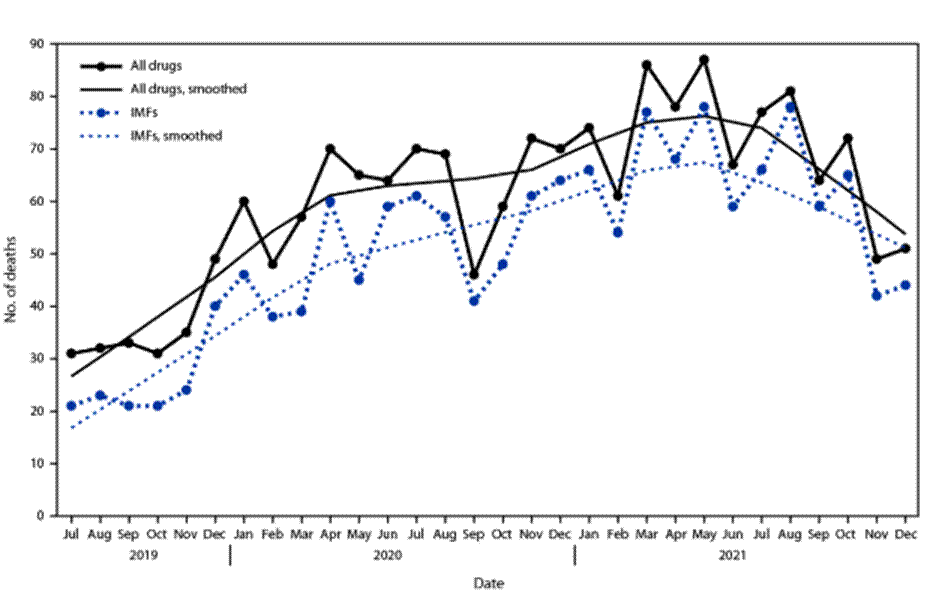
The influence of fentanyl and its application in counterfeit pills have created the circumstances under which adolescents are likely to unintentionally ingest lethal amounts. Adolescents with existing mental health problems may use drugs as self-medication or a coping mechanism, putting them at increased risk. The prevalence of substance abuse among adolescents has been a recurring public health concern, with far-reaching implications for both short-term and long-term psychosocial development. Adolescence is marked by a period of heightened risk-taking behavior and exploration, driven in part by ongoing neurobiological changes that contribute to impulsivity and sensation-seeking tendencies5. Psychological distress during this phase may lead some to use drugs such as fentanyl, which provide temporary relief or a way of anesthetizing negative emotions. Unlike traditional opioids, fentanyl’s exceptional influence and rapid onset have led to its illicit distribution and increasing presence in entertaining drug use, intensifying the urgency to comprehend its impact on a demographic that is already struggling with the complexities of transitioning into adulthood6 (Figure 1). The assumption is that mental illness disorders, particularly depression and anxiety, are highly associated with teen overdose mortality, and fentanyl disproportionately affects these fatalities. Isolating tendencies and mental health under sampling locations in overdose victims from this study promises to inform more targeted prevention of high-risk youth.
This paper seeks to investigate the various dimensions of the relationship between mental illness in teenagers and the risk of substance use, in this case, fentanyl. Fentanyl is a synthetic opioid notorious for its potent analgesic effects and has emerged as a particularly intimidating concern. The alarming rise in fentanyl-related incidents and its potential impact on adolescent mental health behavior necessitate a comprehensive investigation into the intricate relationship between this potent drug and the various dimensions of adolescent mental well-being7. Exploring the Psychological Side of Fentanyl: A Scoping Review to Disclose the Psychosocial Dimensions of Illicitly Manufactured Fentanyl Users. Health Psychology Research, 12. https://doi.org/10.52965/001c.120958). By synthesizing existing literature and critically examining experimental studies, we aim to shed light on the intricate interplay of why mental health outcomes, including but not limited to depression, anxiety, and impulsivity may lead teenagers to drug use to escape. Furthermore, the potential mediating and moderating factors that may shape this relationship will be explored, ranging from genetic tendencies to environmental stressors. By untangling the intricate web of interactions between fentanyl and adolescent mental health, this research endeavors to provide a comprehensive foundation for informed intervention strategies, preventive measures, and policy initiatives geared toward safeguarding the well-being of this vulnerable population.
In the subsequent sections of this article, we will review the current state of knowledge on fentanyl and its pharmacological profile, clarify the neurobiological underpinnings of adolescent brain development, explore the existing literature on mental health behavior’s affect towards drug abuse, and discuss the implications of these findings for clinical practice, policy, and future research directions Through this comprehensive exploration, we aspire to not only advance the theoretical understanding of the complex connection between fentanyl and adolescent mental health but also provide valuable insights that can guide evidence-based approaches to reduce the potentially far-reaching consequences of fentanyl misuse on this critical demographic.
Results
These studies have reported a sharp rise in the abuse of opioids among youth with a 47% rise in last year’s reported drug abuse, and 1.4% of high school seniors reported misusing opioids in the past year, and of these, a rising number are exposed to fentanyl.
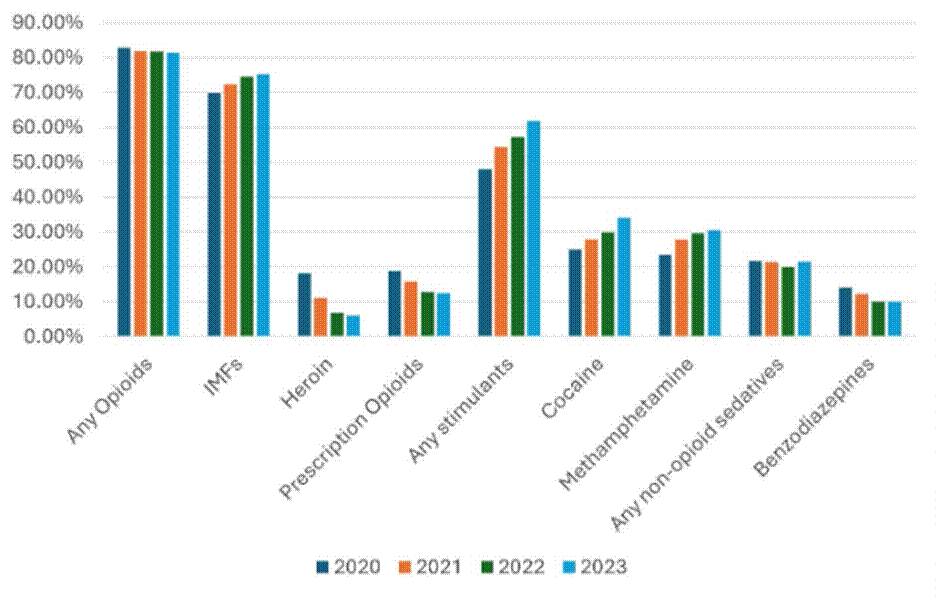
Figure 2 shows the changing percentages of overdose deaths involving different drugs and drug classes from 2020 to 2023. Fentanyl’s role in adolescent overdose deaths has not only risen comparatively between 2020 and 2023, as recent figures show. As prescription opioid and heroin overdose mortality remained relatively low and stable, year after year, the share of overdose attributable to illicitly manufactured fentanyls rose, reaching nearly 80% in 2023 (Figure 2). Along with the illicitly manufactured fentanyls, the rise of any stimulants and cocaine can also be observed. It can be seen how illicitly manufactured fentanyl consistently has the highest percentage among the categories, showing how the use of fentanyl leads to most of the overdose deaths, including among adolescents. This is an indication of fentanyl’s growing penetration into the teen drug market and its lethal potency, especially among vulnerable youth with mental illness. The convergence of untreated mental illness and the rise in fentanyl use points to a lethal intersection that continues to claim young lives. Of 2,231 overdoses in teenagers aged 10–24 years, mental illness appeared to underlie substance use and overdose outcome.
| Characteristic | Age group, yrs, no. (%) | ||
| 10–14 (n = 89) | 15–19 (n = 2,142) | Total (N = 2,231) | |
| Drugs involved | |||
| Antidepressants | 7 (7.9) | 79 (3.7) | 86 (3.9) |
| Benzodiazepines | 5 (5.6) | 324 (15.1) | 329 (14.7) |
| Any opioids | 71 (79.8) | 1,966 (91.8) | 2,037 (91.3) |
| IMFs | 56 (62.9) | 1,815 (84.7) | 1,871 (83.9) |
For the 2019-2021 SUDORS dataset (32 jurisdictions), mental health disorders were identified in approximately 40% of fentanyl overdose deaths in adolescents. Of these, depression was the most frequent diagnosis, found in over a quarter of cases (Table 1). Anxiety disorders and bipolar disorders were identified but at lower rates. In addition, among 2,231 teen 10–19-year-old overdose deaths, opioids were implicated in 91.3% and illicitly produced fentanyls (IMFs) alone in 83.9% (Table 1). This shines a strong light on fentanyl being the primary cause of overdose death in this age group. That the IMFs were so highly represented reveals that teens are often inadvertently getting exposed to fentanyl, especially when they’re taking counterfeit pills or street drugs. Prescription medications commonly used to manage psychiatric illness were also involved in a large percentage of these deaths. Benzodiazepines, which are prescribed for anxiety disorders, were found in 14.7% of adolescent overdose deaths. Antidepressants, which are prescribed for depression and mood disorders, were involved in 3.9% (Table 1).
| Characteristic | Overdose deaths, no. (%) | ||
| Total N = 63,424 | With any reported mental health disorder n = 13,897 | Without reported mental health disorder n = 49,527 | |
| Age group, yrs | |||
| <15 | 193 (0.3) | 17 (0.1) | 176 (0.4) |
| 15–24 | 3,675 (5.8) | 901 (6.5) | 2,774 (5.6) |
| 25–34 | 13,624 (21.5) | 3,047 (21.9) | 10,577 (21.4) |
| 35–44 | 16,770 (26.4) | 3,762 (27.1) | 13,008 (26.3) |
| 45–54 | 13,428 (21.2) | 2,894 (20.8) | 10,534 (21.3) |
| 55–64 | 12,036 (19.0) | 2,553 (18.4) | 9,483 (19.1) |
| ≥65 | 3,694 (5.8) | 723 (5.2) | 2,971 (6.0) |
Table 2 shows the prevalence of selected mental health and substance use-related factors among adolescent overdose deaths between 2019 and 2021. findings indicate the two-sided role of prescribed medications and illicit drugs in adolescent overdoses, particularly in adolescents with pre-existing psychological illness. Likewise, data in 2022 indicated that among all overdose deaths (N=63,424), individuals with a recorded mental disorder comprised 21.9% of all instances. In the 15-24 age group, overdose deaths were modestly higher in individuals with recorded mental disorders (6.5%) compared with individuals without them (5.6%)(Table 2)
| Characteristic | Overdose deaths, no. (%) | ||
| Total N = 63,424 | With any reported mental health disorder n = 13,897 | Without reported mental health disorder n = 49,527 | |
| Any mental health disorder | 13,897 | 21.9 | 100.0 |
| Depressive disorders | 8,189 | 12.9 | 58.9 |
| Anxiety disorders | 5,983 | 9.4 | 43.1 |
| Bipolar and related disorders | 3,728 | 5.9 | 26.8 |
| Schizophrenia spectrum and other psychotic disorders | 1,988 | 3.1 | 14.3 |
| Trauma- and stressor-related disorders | 1,712 | 2.7 | 12.3 |
| Neurodevelopmental disorders | 1,363 | 2.1 | 9.8 |
| Other mental health disorders | 889 | 1.4 | 6.4 |
| Unspecified mental health disorder | 361 | 0.6 | 2.6 |
Table 3 outlines the types of mental health diagnoses among adolescents that is known to have mental health conditions. Furthermore, it is shown that among individuals who died from overdose and had a mental disorder, 58.9% had depressive disorders, 43.1% had anxiety disorders, and 26.8% had bipolar disorder, which also indicates that disorders are overrepresented in overdose deaths (Table 3).
Together, the data suggest a strong correlation between psychiatric illness and overdose death in adolescents, with fentanyl being the most lethal (Table 1). The presence among adolescent descendants of both psychiatric medication and potent synthetic opioids also suggests that psychiatric illness may not only overlap with but also contribute to precipitating or exacerbating drug use in this population (Table 3). The emergence of fentanyl use among teens indicates a disturbing intersection of mental illness and drug addiction, highlighting the vulnerability of this age group to drug abuse (Figure 2). Untreated mental illness like depression, anxiety, impulsivity, etc. correlates with the rising rate of fentanyl use (Table 2). Teens who experience mental pain lack healthy coping mechanisms and sadly, may resort to fentanyl as a dangerous escape. This crisis is not only a public health emergency, but a systemic failure to address the mental health care needs of our young people, exposing them to addiction.
Discussion
This study highlights the currency of a high rate of illicitly produced fentanyl in teen overdose deaths and the frequent co-occurrence of reported mental health disease among victims. Opioids, and most specifically IMFs, were the cause or contributory factor of over 90% of youth overdose deaths between the ages of 10-19. Furthermore, co-use of benzodiazepines and antidepressants reflects concurrent use of psychiatric medication and illicit drug use. While the findings report a correlation between reported mental illness disorders and overdose death, the data are descriptive and do not establish causality. The modestly small excess prevalence of overdose in 15–24-year-olds compared with without reported mental illness (6.5% vs. 5.6%) suggests potential higher risk, but confounding factors of access to care, socioeconomic status, or polydrug use cannot be ruled out.
The challenge of detecting fentanyl and its analog lingers, even when utilizing fentanyl test strips. These strips, while valuable, may not identify compounds such as alfentanil, highlighting intricate connection between fentanyl and adolescent mental health behavior, aspiring to unravel the various implications of this pervasive substance on a vulnerable demographic. The relationship between fentanyl and adolescent mental health behavior can be explored through several theoretical frameworks, including biological, psychological, and social models. This section examines how these theories apply to the understanding of substance abuse in adolescents, specifically in relation to fentanyl’s effects on mental health.
Biological Models
Biological Models of addiction and mental health fentanyl, like other opioids, has a profound effect on the brain’s reward system. The biological theory of addiction suggests that substances like fentanyl can hijack the brain’s neurochemical pathways, particularly those involving dopamine and serotonin, which are integral to mood regulation and the experience of pleasure. Adolescents, with their still-developing brains, may be particularly open to the neurobiological effects of fentanyl, leading to altered mood states, impulsiveness, and heightened risk for mental health disorders such as depression and anxiety.
Psychological Models
Psychologically, underage use of substances is often driven by poor emotional regulation, history of trauma, or central psychopathology. Adolescents might be using opioids to blunt depression and anxiety symptoms as per self-medication theory. Furthermore, the behavioral bluntness the model postulates that people with mood disorders are more likely to have risky or disinhibited behaviors such as drug abuse triggered by cognitive control deficits. Attachment theory clarifies too: adolescents lacking secure home or peer attachments will tend to experience emotional emptiness that renders them open to external coping mechanisms like drug use. The developmental immaturity of the prefrontal cortex, tasked with decision-making and risk assessment, further solidifies the susceptibility in adolescents with mental illness.
Social Models
Societal level, conditions such as poverty, unstable housing, family disintegration, exposure to violence, and limited access to mental health care all contribute to an elevated risk of both psychiatric disorder and drug abuse. The social stress model explains the process by which chronic stressors in a teenager’s life will lead to psychological distress, which in turn will drive them toward high-risk behaviors such as drug use. Peer pressure, particularly in online environments where drug use is presented as attractive or acceptable, also contributes. Stigma of mental illness can prevent adolescents from receiving treatment, compelling them to manage symptoms themselves in unhealthy ways. Geographic differences in access to care further widen the treatment gap, especially for low-income and rural groups.
Limitations
This study is constrained by the design of the SUDORS dataset. Diagnosed mental health diagnoses were only recorded if they were noted, and diagnostic precision may vary. The dataset cannot recognize nonfatal overdoses or drug use patterns more general confounders, which constrain inference power.
Implications
The study shows that fentanyl’s influence, added to weaknesses in mental health care, is fueling a deadly cycle for adolescents. Preventive measures must be combinative and include mental health services in schools and communities, expanding treatment access, and increasing education on the silent dangers of synthetic opioids8. Mental health policies aimed at normalization, and early screening may be a key to suppress adolescent overdose death. Subsequent studies are also needed to incorporate longitudinal mental health and drug use information to enable temporal relationships to be analyzed. Further breakdown of data on treatment accessibility, history of trauma, and family dynamics may shed light on pathways to overdose risk between mental health and other categories. Enhanced detection of fentanyl analogs and intervention strategies for youth with psychiatric risk are also in order.
Methods
This research uses longitudinal data from research done through Centers for Disease Control and Prevention (CDC), using the State Unintentional Drug Overdose Reporting System, United States, 2022, which has information for analyzing all the age group that have been associated with drug overdoses. The data below comes from CDC’s State Unintentional Drug Overdose Reporting System (SUDORS). SUDORS captures information related to mental health conditions in overdose deaths primarily through reviewing source documents like death certificates and medical examiner/coroner reports. SUDORS, United States, 2022, has data of demographic characteristics, select circumstances, and drug involvement among persons who died of unintentional or undetermined intent drug overdose, by non-substance-related mental health disorder status with a wide range of ages from <15 to ≥ 65 years. The table shows the overdose percentages of any reported mental health disorder with a sample of 13,987, without reported mental health disorder with a sample of 49,527, and the total of both with a sample of 63,424. Furthermore, to find the age group that is needed, CDC has done another research with another set of data: By age group, State Unintentional Drug Overdose Reporting System, 32 jurisdictions, July 2019-December 2021, which has information for analyzing adolescents before development into adulthood. In this research they showed the median monthly overdose deaths among persons aged 10-19 years (adolescents) from July-December 2019 to July-December 2022. The data showed deaths involving illicitly manufactured fentanyl (IMFs) and other opioids, and the approximate number of decedents that had evidence of mental health conditions or treatment. The table shows the percentages of two different age groups 10-14 years from a sample of 89, 15-19 years with a sample of 2,142, and the total of the two groups with a sample of 2,231.
Data Source
The data used comes from the CDC’s state Unintentional Drug Overdose Reporting System (SUDORS), which reports comprehensive data on fatal overdoses from reporting U.S. jurisdictions. Two datasets were utilized: 47 jurisdictions from July 2019-December 2021, with emphasis on 10-19 years, and 52 jurisdictions in the calendar year 2022, with broader age categories for comparison. Both datasets include toxicology results, scene data, and documented mental health information. The 2022 data is more recent and covers greater geographies but also introduces variation in terms of reporting patterns and jurisdiction participation. To maintain analytical integrity and avoid heterogeneous comparisons, we did not merge the two datasets. They were analyzed independently to identify trends in fentanyl-associated adolescent overdoses and associated mental health markers. Comparative inferences between the two-time intervals were conservative due to the difference of geographic scope.
sample
Those aged 10-19 years were the primary target age. Between July 2019 and December 2021, the total number of overdose deaths for this age group was 2,231. For comparison purposes, 2022 data (N=63,424) were used to examine overdose patterns for individuals with vs. without known mental health conditions across all age groups, focusing on those aged 15-24.
Variables
Variables of interest that were examined are:
- Presence or absence of non-substance mental illness
- Substance(s) involved in each overdose (ex. Opioids, IMFs, stimulants, antidepressants)
- Type of mental illness determined (ex. Depression, anxiety, bipolar disorder)
- Demographic characteristics (age group, jurisdiction)
Analytical Strategy
This paper used descriptive analysis to publish shift in the co-occurrence diagnoses of psychiatric conditions and fentanyl use prevalence among adolescent overdose deaths. Proportions were compared between groups (with and without mental illness), but no statistical estimation was performed due to the combined nature of data available in the public domain. Tables and figures are used to describe drug use involvement and mental illness prevalence.
Conclusion
This report highlights an urgent point of intersection between teen mental illness disorders and rising fentanyl-associated overdose fatalities. Based on CDC’s SUDORS data system, most of the teen victims who perished in overdoses had pre-existing psychological disorders, with fentanyl occurring in most of these cases. These findings affirm the imperative for more comprehensive, integrated mental health treatment and teen drug prevention. While this analysis is limited by its descriptive scope and lack of statistical modeling, it provides evidence for a pressing necessity for additional research. Future work should explore causal effects, control for confounders such as socioeconomic status and access to health care and quantify the effectiveness of interventions. As a matter of public health necessity, preventive intervention in adolescent mental health and reduction in exposure to man-made opioids should be a priority if we are to curtail the tide of overdose fatalities among American adolescents.
References
- Mastorci, F., Francesca, M., Vassalle, C., & Pingitore, A. (2024). The Transition from Childhood to Adolescence: Between Health and Vulnerability. Children, 11(8), 989–989. https://doi.org/10.3390/children11080989 [↩]
- Swadi, H. (1999). Individual risk factors for adolescent substance use. Drug and Alcohol Dependence, 55(3), 209–224. https://doi.org/10.1016/s0376-8716(99)00017-4 [↩]
- Lu, W., & Keyes, K. M. (2023). Major depression with co-occurring suicidal thoughts, plans, and attempts: An increasing mental health crisis in US adolescents, 2011–2020. Psychiatry Research, 327, 115352. https://doi.org/10.1016/j.psychres.2023.115352 [↩]
- Hermans, S. P., Samiec, J., Golec, A., Trimble, C., Teater, J., & Hall, O. T. (2022). Years of Life Lost to Unintentional Drug Overdose Rapidly Rising in the Adolescent Population, 2016–2020. Journal of Adolescent Health, 72(3). https://doi.org/10.1016/j.jadohealth.2022.07.004 [↩] [↩]
- Romer, D. (2010). Adolescent risk taking, impulsiveness, and brain development: Implications for prevention. Developmental Psychobiology, 52(3), 263–276. https://doi.org/10.1002/dev.20442 [↩]
- Moumeni, Selsabil, ZIAITA Chaima. (2024). The Fentanyl Crisis in the USA: Univ-Guelma.dz. http://dspace.univ-guelma.dz/jspui/handle/123456789/16776 [↩]
- Caponnetto, P., Triscari, S., Prezzavento, G. C., Farrugio, G., Farrauto, C., Lanzafame, S., Schilirò, G., Uccelli, E., Vitale, N. M., Fakhrou, A., Nagi, K., & Concerto, C. (2024 [↩]
- Fishbein, D. H., & Sloboda, Z. (2022). A national strategy for preventing substance and opioid use disorders through evidence-based prevention programming that fosters healthy outcomes in our youth. Clinical Child and Family Psychology Review, 26(1), 1–16. https://doi.org/10.1007/s10567-022-00420-5 [↩]