Abstract
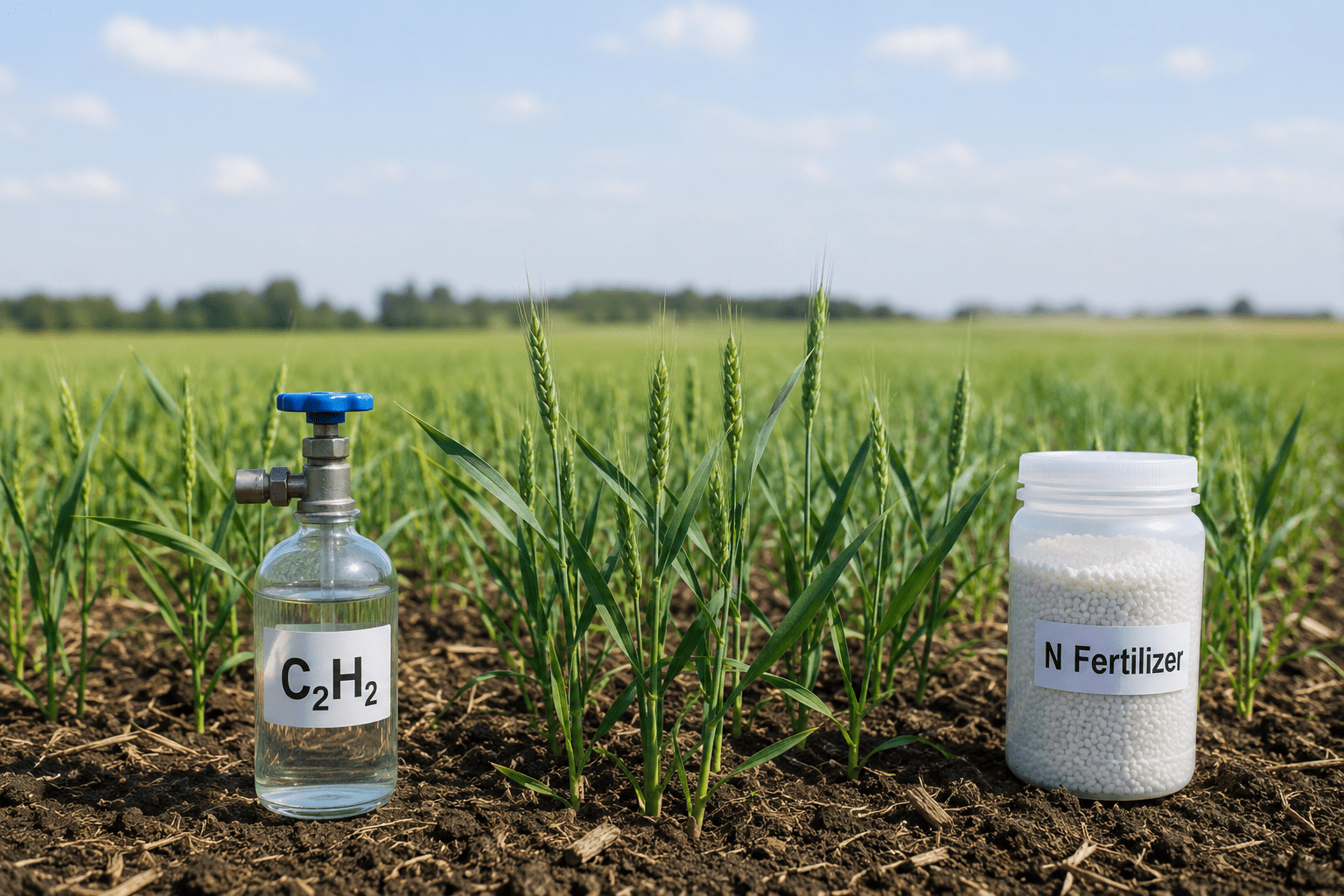
Cereals, which produce grains, are unable to fix nitrogen (N), a critical nutrient for growth, and therefore rely heavily on synthetic nitrogen fertilizers (SNFs), which significantly contribute to greenhouse gas emissions (GHGs). This occurs because ammonium (NH₄⁺-N), the initial form of urea fertilizer, is microbially oxidized into nitrate (NO₃⁻-N), a highly mobile form that is prone to leaching. Nitrification inhibitors (NIs) mitigate this process by preventing the conversion of NH₄⁺ to NO₃⁻, thereby improving nitrogen retention and plant uptake; however, existing inhibitors often exhibit limited effectiveness across varying soil conditions. This study evaluates acetylene as a novel nitrification inhibitor through both computational and controlled soil microcosm analyses. Experimental results demonstrated approximately 60% inhibition of nitrification over a 56-day period under the conditions tested, along with a significant increase in nitrogen use efficiency (73.1% compared to 42.1% in controls) and a 46% increase in root biomass. Molecular docking simulations further supported these findings, indicating strong binding interactions between acetylene-derived intermediates and key enzymatic sites involved in nitrification. To address practical limitations associated with acetylene application, adsorption onto activated carbon was investigated, revealing high affinity and potential for controlled release. These findings highlight acetylene’s potential as a scalable and effective alternative to conventional nitrification inhibitors, with significant implications for reducing environmental nitrogen loss and improving agricultural sustainability.
Introduction
Cereals are grain-producing plants that are currently unable to efficiently fix nitrogen (N), one of the most important nutrients for their growth. This forces agricultural farmers to rely heavily on synthetic nitrogen fertilizers (SNFs) which contribute to GHGs (Greenhouse gases)1,2,3. Particularly, the overapplication of SNFs by farmers contributes to SNF runoff, which leaks into groundwaters or lakes4. This occurs because fertilizer nitrogen, initially present as ammonium (NH4+-N), is oxidized by soil microbes into nitrate (NO3−-N), which is less strongly retained by soil and is therefore more susceptible to leaching. This is because soil particles is largely negative, repelling nitrate and with subsequent water exposure, there is no traction to stop it from leaving the soil5.
Runoff into lakes and other water bodies causes nutrient enrichment, which can disrupt aquatic chemistry and promote eutrophication. This leakage subsequently contributes to algal blooms, due to excess nutrients in the aquatic environment6. Algal blooms are known to increase GHGs from the promotion of bacterial respiration and microbial activity7,8. Specifically, nitrous oxide (N2O) can be produced during microbial nitrogen transformations in soil and aquatic systems.
N2O is a potent greenhouse gas with a global warming potential far greater than that of carbon dioxide over a 100-year timescale.9. Algal blooms are also extremely toxic for aquatic life in general, impacting the relationship between the biosphere (marine life) and the hydrosphere as a whole4. Their toxicity is characterized by the death of marine life through imbalances in the aquatic ecosystem and ocean pollution due to excess nutrients (from SNFs). Thus, this inherent problem calls for an immediate solution for mitigation.
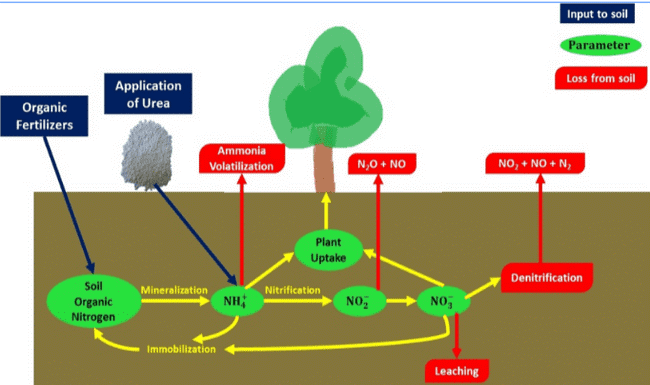
Currently implemented strategies to prevent the runoff of N involve sending soil samples to local laboratories. Here, they would get processed using nitrate tests such as the Kjeldahl method10, and based on the result, a treatment plan would be provided. However, there are many drawbacks to this approach, including the a) Labor needed to get the soil samples at the proper depth, b) The time it takes for the lab to get back its results, and c) the overall inefficiency and costliness of having to send soil samples back and forth from a lab. Other strategies involve proposing a nitrogen inhibitor (NI). The way this strategy works is by disrupting the nitrogen cycle, and preventing the microbial oxidation of NH4-N to NO3-N (Figure 1). Since NH4-N can be used by the plants as food, and sticks to the soil unlike NO3-N, it is a quicker, and more efficient way of addressing nitrogen runoff. Maintaining the proper balance of ammonium to nitrate is crucial to soil health. However, current proposed nitrogen inhibitors such as 3,4-Dimethylpyrazole Phosphate (DMPP) and Dicyandiamide (DCD) have not been nearly as effective in pasture soils or soils with higher clay/silt %, higher or lower temperatures, higher or lower pHs, and more. NIs also require constant re-addition as they wear off quickly11. Therefore, I propose a novel usage of acetylene, a small hydrophobic molecule as a long term inhibitor of all soil types.
Acetylene showed promise as a nitrification inhibitor because of several physicochemical properties relevant to microbial uptake and enzyme interaction12,13. First, acetylene was a small hydrophobic molecule, allowing it to penetrate through the plasma membrane of bacteria such as nitrosomonas. Secondly, acetylene reacted to the oxygen and NADH (free energy) in the bacteria, causing it to oxidize to more reactive forms. This reactive intermediate, ketene, may inhibit the activity of ammonia monooxygenase (AMO), the enzyme involved in the first step of nitrification.
This study aims to evaluate the effectiveness of acetylene as a nitrification inhibitor in soil systems and its impact on nitrogen retention and plant growth. It is hypothesized that acetylene treatment will reduce nitrate formation by inhibiting ammonia oxidation, leading to increased nitrogen availability and improved plant performance.
Materials and Methods
Molecular Docking
In order to see acetylene’s interactions within the microbes that convert ammonium to nitrate, docking simulations via computer software was conducted through AutoDock Vina14. While acetylene was the applied treatment, ketene represents a possible oxidized intermediate and is used here as a model ligand to explore potential interactions with AMO. Ketene’s (oxidized acetylene) structure was obtained via PubChem15 and then converted to the .mol2 format. The protein sequence for ammonia monooxygenase subunit A (AmoA) was obtained from UniProt16, and the three dimensional structure of the ammonia monooxygenase complex from Nitrosomonas europaea was utilized for docking (PDB ID: 9CL6). The protein was prepared by initially deleting all water molecules, adding polar hydrogens, adding Kollman charges, and then saved as .pdbqt format. The ligand was prepared by adding gasteiger charges, merging non-polar hydrogens, and was also saved as .pdbqt. The files were then merged, and a grid box of 40x40x40 was created. Finally, all dimensions were extrapolated and the molecule was docked using handwritten code in AutoDock Vina. AutoDock Vina uses a gradient-based conformational search algorithm to identify low-energy binding poses. After docking was simulated, the resulting protein-ligand complexes were viewed and analyzed through BIOVIA Discovery Studio visualizer17.
Soil microcosm experiments
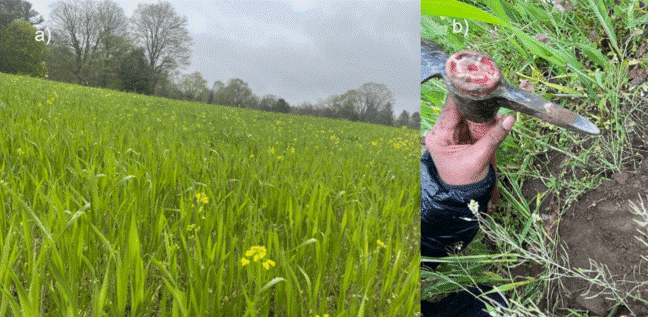
The Molecular Dynamics simulations paved the way to begin conducting in-person experiments. The objectives of the soil analysis experiments were to a) measure acetylene’s effects on the amount of nitrate in soil over time b) measure changes in plants over time when acetylene was applied, and c) measure plants ability to utilize soil nitrogen when ammonium was applied. Wheat soil for experimentation was initially collected from a local wheat farm in Connecticut. The coordinates of the farm was at 41° 47’ 5.8992” N, 72° 23’ 22.6854” W, encompassing an area of 1 acre. 15 soil sample cores of 3” depth were taken by spade and pickaxe, placed in pail, mixed well, placed into 12 samples and stored at a temperature of 37°F (approximately 3°C) (Figure 2). 6 cereal plants were also taken and placed into 6 of the 12 soil samples. After initial storage at 37°F (approximately 3°C), all samples were incubated at room temperature (approximately 22°C) for the duration of the 56 day experiment. The 56 day period was selected to capture medium term changes in soil nitrogen dynamics and plant growth, allowing sufficient time for observable treatment effects in both soil chemistry and plant development. Plants were maintained under natural light conditions near a window and watered every 2 to 3 days to maintain consistent soil moisture without oversaturation. No inert gas injection control was included in this study, which should be considered in interpreting treatment effects.
The soil was then air-dried and divided into 12 samples, each weighing in at 1 kg each. All 12 samples (6 with plants, 6 plain) were given an estimated urea amount of 0.3 lb per ft². Each concentration of urea was precisely calculated. First, the area of each cup of soil was measured in cm, then the cup radius was divided by 1 acre in cm^2 (to get the nitrogen applications in lb per acre). Then, this value was multiplied by its application (eg. 110) converted into grams. This calculation was used to approximate field-equivalent nitrogen application rates within each container. Each sample received 1.5 tsp deionized water for constant moisture. 5mL acetylene from a tank was injected directly into each plant, and plain soil, while the corresponding untreated samples served as controls, with three replicates per condition. The 5 mL acetylene injection was administered into containers with an estimated headspace volume of approximately 500 mL, corresponding to an approximate acetylene concentration of 1% (v/v). Containers were loosely covered to reduce gas loss while avoiding pressure buildup, and acetylene exposure was assumed to decrease gradually over time due to diffusion. Each sample was then processed at the UCONN Soil Nutrients Laboratory after incubation18. Samples were taken from each replicate at two week intervals, where they were processed for nitrate. At the end of the 56 day experiment, the plants that were growing were also grounded, sieved and sent to the lab after calculating their initial root masses and overall plant weight. All plant weights were measured with analytical balances and estimated to the nearest hundredth. Each treatment condition (acetylene-treated and control, with and without plants) was conducted in triplicate (n = 3) to improve reliability of observed trends. Replicates followed similar trends across all conditions.

Soil Processing
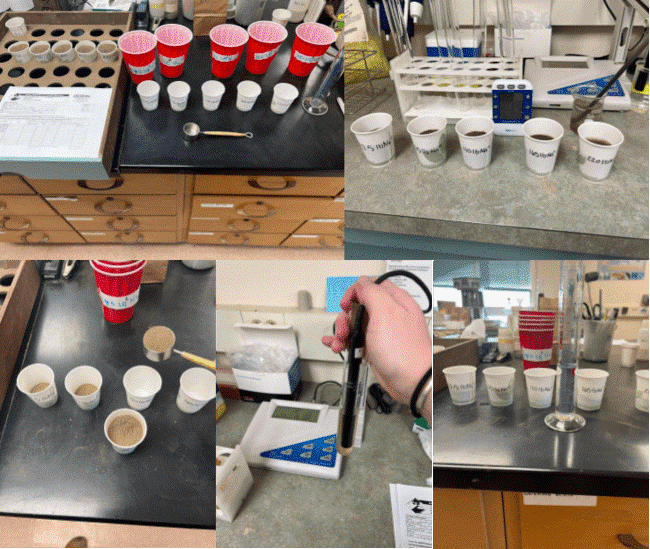
At the laboratory, the samples that were received were dried for 24 hours. This testing followed the Recommended Soil Testing Procedures For the Northeastern United States19. With the help of Dr. Patrick Mcintosh, a laboratory technician at the University of Connecticut soil and nutrients lab, I determined the concentration of nitrate in the soil. Initially, the soil was placed in an oven to dry. Simultaneously 1.47 g of CaCl2 was dissolved in 1 L deionized water. Calcium chloride was used to determine nitrate concentration due to the composition of clay and silt in Connecticut soils. The soil was then grounded and sieved into a 125mL Erlenmeyer flask. 50 mL of the 0.01 M CaCl2 solution (previously created) was mixed with the 5 g of soil. Then the soil sample was shaken for 15 minutes on a reciprocating shaker at 200 oscillations per minute. Finally, the soil samples were filtered and observed via ion chromatography. To test nitrogen use efficiency (NUE), the potted plants were grounded up to pass through a fine mesh sieve and tested for nitrate concentration in parts per million (ppm). Nitrate concentrations were reported as mg/kg dry soil (NO3-N), based on laboratory output and conversion from extract measurements. The following concentration was converted to the overall plant weight. Nitrogen use efficiency (NUE) was calculated as the ratio of nitrogen uptake by plant biomass to the total nitrogen applied. In this study, nitrogen uptake was estimated based on measured nitrate concentration in plant tissue and total plant mass. The formula used for this calculation is as follows:
NUE (%) = (N_output / N_input) × 100
where N_output (mg N) was estimated as: N_output = (plant NO₃–N concentration, mg/kg) × (plant dry mass, kg) and N_input (mg N) represents the total nitrogen applied through fertilizer.
Nitrous Oxide Emissions
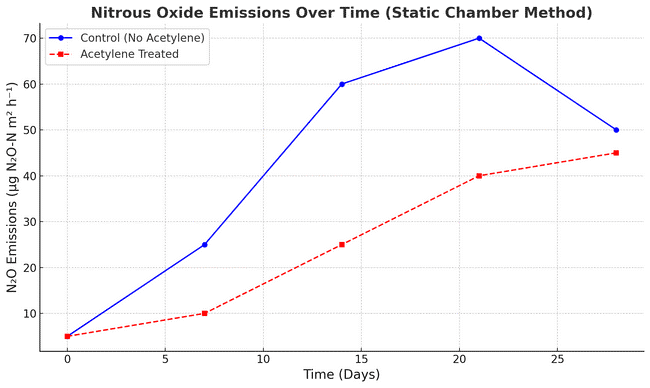
To quantify nitrous oxide (N₂O) emissions from soil, the static chamber method was utilized. Cylindrical chambers (PVC, 20–30 cm in diameter and 10–30 cm in height) were inserted into the soil to form an airtight seal. Gas samples were collected at regular intervals (7, 14, 21, and 28 days) using air tight syringes. Samples were then analyzed using a Gas Chromatograph (GC) equipped with an Electron Capture Detector (ECD) to determine N₂O concentrations. The flux of N₂O emissions (F, expressed in µg N₂O-N m² h⁻¹) was then calculated. Chambers were sealed for approximately 30 minutes during each sampling event. Gas samples were collected at consistent time intervals and analyzed immediately. Flux was estimated based on the change in N₂O concentration over time within the chamber volume. It should be noted that acetylene can influence denitrification pathways, including inhibition of N₂O reduction to N₂, which may affect interpretation of measured emissions.
Activated Carbon Langmuir Isotherms
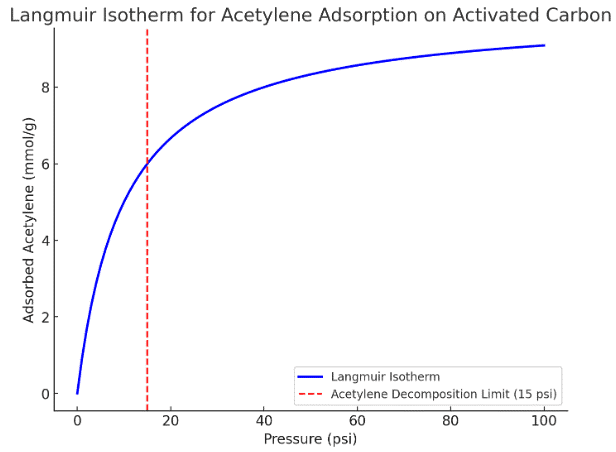
Acetylene, despite its potential, also has some drawbacks which limit the usage of acetylene. This is because acetylene is a) volatile, so more controlled amounts could improve efficacy, and b) Acetylene could combust at pressures over 15 psi. Acetylene therefore showed stronger promise when adsorbed or incorporated into a complex that slowly released the gas in soils. This is because adsorbent complexes such as activated carbon trap acetylene into micropores and contain acetylene (preventing it from combusting as a free gas) while rapidly stabilizing the molecule with its adsorption energy. In order to test acetylene’s ability to adsorb on activated carbon, Langmuir Isotherm was calculated using both empirical and literature data. This followed the mathematical formula. (Figure 5) Essentially, the isotherm relates the equilibrium fractional occupancy of the adsorption sites (qe), or the fraction of available sites for adsorbate molecules to attach, to the gas pressure (Ce)20.
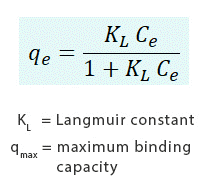
After code was written, a simulation was created to measure how much acetylene could adsorb on to activated carbon under different pressure conditions.
Microbe Plate Count Monitoring
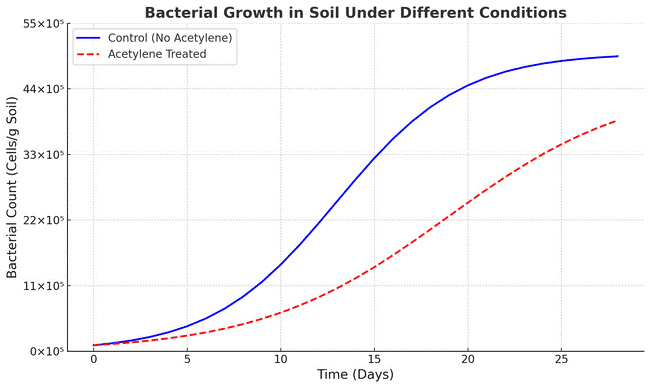
After experimentation had concluded, potential issues with acetylene found was a potential bacterial population decline. Therefore, using a standard brightfield microscope at 400x resolution and a hemocytometer, bacteria was counted using a Neubauer Counting Chamber. To do this, 0.01 g of soil was vortexed with 9.99 mL of NaCL. The supernatant was collected, and the solution was diluted until the bacteria was 10⁻⁵. Serial dilution was performed to approximately 10⁻⁵ concentration to ensure countable cell density within the hemocytometer grid. The solution was dyed with methylene blue and placed in a hemocytometer. The amount of colonies over the 28-day testing period was graphed, revealing crucial insight on the microbiome following acetylene injection.

sterile pipettes and laboratory test tubes. A hemocytometer was obtained from amazon.

There was no extraction with KCL that took place in this sample.
Results
Molecular Dynamics Docking Results
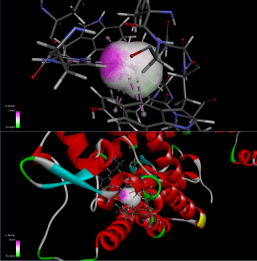
The Docking Simulations from AutoDock Vina revealed a high binding score of 6.8 kcal/mol for ketene. This suggests a favorable binding interaction of ketene with histidine based on predicted binding energy. The interactions between ketene and AMO-a in the binding pocket were further observed. The simulation revealed ketene formed hydrogen bonds with the amino acid histidine, forming a ketene-histidine complex which may contribute to inhibition of protein function. This was supported since the complex showed signs of inactivated ion surfaces.
Soil and plant results
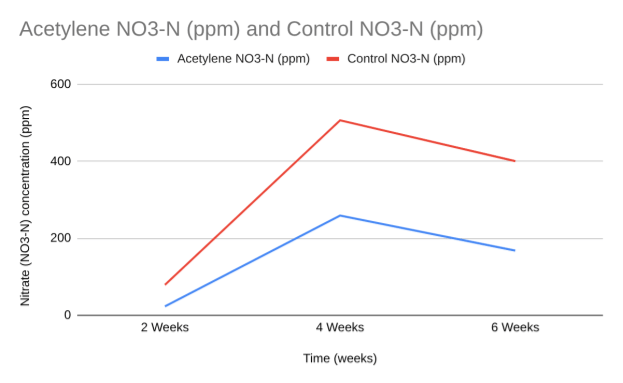
Acetylene also showed strong effects in its controlled soil microcosm. Acetylene-treated plants experienced an overall ~60% ± 5.2% (mean ± SD) rate of inhibition, which lasted throughout the trial period, suggesting a potential continued effect beyond the testing period (Figure 6). Values reported represent the mean of three replicates (n = 3), with variability estimated where applicable. This means that acetylene may be able to penetrate through Nitrosomonas europaea, and bind to its AMO and inhibit the oxidation of ammonia in the first step of nitrification. With a higher ammonium present in soil, it is more likely the plant can efficiently take the nitrogen without runoff. Due to limited replication (n = 3), formal statistical significance testing was not performed, and results are interpreted as trends rather than definitive statistical differences.
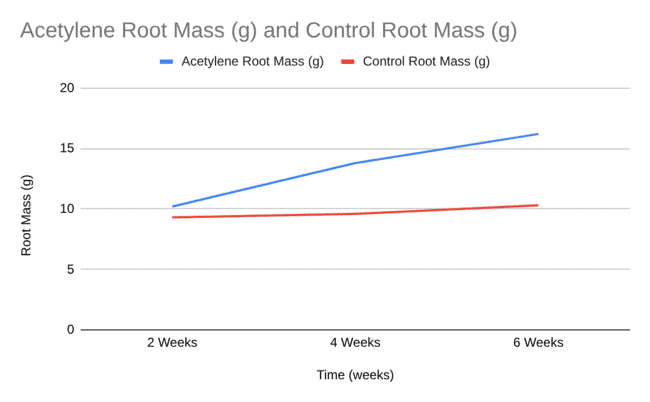
For example, the root mass experienced a ~44.6% increase from acetylene introduction. This hints that acetylene positively affects plant size and growth. I speculate that by increasing the amount of non-volatilized nitrogen available to plants and altering microbial compositions, it may have favored growth in the soils (Figure 7).
The Nitrogen Use Efficiency revealed that acetylene treated plants experienced an increase in around +30% (Figure 8).

Nitrous Oxide Emissions
Utilizing this data, results suggest that nitrous oxide emissions were reduced. Acetylene may reduce nitrous oxide emissions under the conditions tested. This reinforces acetylene’s sustainability, helping ecosystems by preventing algal blooms (by nitrogen runoff), and preventing excess nitrous oxide emissions over time.
Activated Carbon Isotherm Results
The Langmuir isotherm for acetylene adsorption on activated carbon demonstrates a rapid increase in adsorption at lower pressures, followed by a plateau at higher pressures, indicative of monolayer saturation (Figure 9). At 15 psi (marked by the red dashed line representing acetylene’s decomposition limit) approximately 75% of the total adsorption capacity is reached, corresponding to 6.2 mmol/g.
Microbial Growth in Soil
After points were plotted, a curve of best fit was utilized to better represent the data. This shows that the microbes in the soil was higher in the control. However, over time, Acetylene actually grew and matched the amount of bacteria in the soil. Therefore acetylene’s impact on total microbial abundance appears limited based on observed trends.
Environmental Benefits
Adding acetylene along with traditional fertilizer can greatly improve the condition of the hydrosphere. It is a scalable and easily usable molecule with the capability to inhibit nitrification and prevent massive fertilizer runoff rates previously described. This can prevent excess nutrients from accumulating in water bodies and causing algal blooms. Furthermore, excess nitrate pollution in drinking water can be mitigated. Stopping algal blooms also helps the flourishing of aquatic life (biosphere), and prevents bacteria from releasing CO2 into the atmosphere, a remediative effect necessary for reverting the harsh climatic conditions created by humankind. Over 75 million tons of nitrogen fertilizer is being displaced every year, and by implementing acetylene, these issues could be mitigated. Preventing the overapplication of fertilizer in general can help reduce nitrous oxide emissions, which thus helps out the atmosphere from having increased greenhouse gas emissions and subsequent global warming.
Conclusion
This research highlights acetylene’s potential as a nitrification inhibitor, suggesting potential effectiveness comparable to existing nitrification inhibitors. These results likely stem from acetylene’s small hydrocarbon structure, which enables it to efficiently penetrate Nitrosomonas Europaea, bind to its enzymatic sites, and effectively halt the conversion of ammonium to nitrite. By preventing this conversion, acetylene allows plants to retain nitrogen in a more stable form, reducing the likelihood of runoff and improving nitrogen use efficiency in agricultural systems. This strategy still has its fair share of challenges that need to be addressed before continuing. To begin, the soil depth for samples taken in this study was still at a surficial level (3”), while usual soil samples should be taken at a depth of 1 foot. This can be simply addressed by taking the same samples at a deeper depth, and it does not technically undermine the strategy used for predicting the nitrogen rate in soil. While acetylene’s volatility is a known consideration, preliminary work suggests that adsorption onto activated carbon (as modeled using the Langmuir Isotherm)21 and Metal-Organic Frameworks (MOFs)22 could provide a controlled-release mechanism, potentially mitigating concerns about flammability. Due to the controlled microcosm setup and limited replication scale, further field-based validation is required. The lack of direct measurements of intermediate nitrogen species (e.g., NH₄⁺, NO₂⁻) limits mechanistic interpretation. Changes in nitrate concentration may also reflect plant uptake or microbial processes not directly measured in this study.
Future Avenues
Moving forward, optimizing the application rate of acetylene will be essential to maximize its efficiency while ensuring it benefits crop growth without unnecessary waste. Understanding the precise balance between NH₄-N and NO₃-N in different soil conditions will also be critical, as this could further enhance nitrogen retention and minimize environmental runoff, making acetylene even more effective in real-world agricultural settings.23. Additionally, further investigation into adsorption technologies, such as activated carbon and Metal-Organic Frameworks (MOFs), could provide a viable solution to acetylene’s volatility, allowing for controlled, sustained release in soil. Developing a stable and scalable delivery method would not only improve its safety but also make it more accessible for widespread agricultural use. Future work may explore practical implementation and field validation.
References
- M. Lepetit and R. Brouquisse. “Control of the Rhizobium–legume symbiosis by the plant nitrogen demand is tightly integrated at the whole plant level and requires inter-organ systemic signaling.” Frontiers in Plant Science, 14, 1114840 (2023). [↩]
- J. E. Fox, M. Starcevic, R. P. Kow, N. Burow, and J. A. McLachlan. “Pesticides reduce symbiotic efficiency of nitrogen-fixing rhizobia and host plants.” Proceedings of the National Academy of Sciences of the United States of America, 104(24), 10282–10287 (2007). [↩]
- A. J. Thomson, D. J. Giannopoulos, J. Hall, and J. M. Smith. “Biological sources and sinks of nitrous oxide and strategies to mitigate emissions.” Philosophical Transactions of the Royal Society B: Biological Sciences, 367(1593), 1157–1168 (2012). [↩]
- J. N. Galloway et al. “Transformation of the nitrogen cycle…” Science, 320(5878), 889–892 (2008). [↩] [↩]
- M. M. M. Kuypers, H. K. Marchant, and B. Kartal. “The microbial nitrogen-cycling network.” Nature Reviews Microbiology, 16(5), 263–276 (2018). [↩]
- H. W. Paerl and T. G. Otten. “Harmful cyanobacterial blooms…” Microbial Ecology, 65(4), 995–1010 (2013). [↩]
- A. R. Ravishankara, J. S. Daniel, and R. W. Portmann. “Nitrous oxide (N₂O)…” Science, 326(5949), 123–125 (2009). [↩]
- “A Review of Harmful Algal Blooms: Causes, Effects, Monitoring, and Prevention Methods” https://doi.org/10.3390/w17131980 (2024). [↩]
- Griffis TJ, Chen Z, Baker JM, Wood JD, Millet DB, Lee X, Venterea RT, Turner PA. Nitrous oxide emissions are enhanced in a warmer and wetter world. Proc Natl Acad Sci U S A. 2017 Nov 7;114(45):12081-12085. doi: 10.1073/pnas.1704552114. Epub 2017 Oct 16. PMID: 29078277; PMCID: PMC5692531. [↩]
- J. M. Bremner. “Nitrogen-total.” Methods of Soil Analysis (1996). [↩]
- X. Shi, J. Hu, X. He, X. Zhang, J. Chen, and J. Shen. “Effects of the nitrification inhibitor 3,4-dimethylpyrazole phosphate on nitrification and nitrifiers in two contrasting agricultural soils.” Applied and Environmental Microbiology, 82(17), 5236–5248 (2016). [↩]
- M. R. Hyman and P. M. Wood. “Suicide inactivation…” Biochemical Journal, 227(3), 719–725 (1985). [↩]
- T. Yoshinari and R. Knowles. “Acetylene inhibition…” Biochemical and Biophysical Research Communications, 69(3), 705–710 (1976). [↩]
- mgl-admin. “AutoDock Vina.” AutoDock Vina. https://vina.scripps.edu/ (2025). [↩]
- PubChem. “Ketene.” https://pubchem.ncbi.nlm.nih.gov/compound/10038 (2025). [↩]
- UniProt. “Q04507 entry.” https://www.uniprot.org/uniprotkb/Q04507/entry (2025). [↩]
- Dassault Systèmes. “Discovery Studio.” https://www.3ds.com/products/biovia/discovery-studio (2023). [↩]
- M. Chen. “Soil testing.” Soil Nutrient Analysis Laboratory. https://soiltesting.cahnr.uconn.edu/sampling/ (2022). [↩]
- University of Delaware Cooperative Extension. “Recommended soil testing procedures for the Northeastern United States.” https://www.udel.edu/academics/colleges/canr/cooperative-extension/fact-sheets/soil-testing-procedures-northeastern-US/ (2025). [↩]
- I. Langmuir. “The adsorption of gases…” Journal of the American Chemical Society, 40(9), 1361–1403 (1918). [↩]
- W. L. S. Laukhuf and C. A. Plank. “Adsorption of carbon dioxide, acetylene, ethane, and propylene on charcoal at near room temperatures.” Journal of Chemical & Engineering Data, 14(1), 48–51 (1969). https://doi.org/10.1021/je60040a016. [↩]
- Y. Li and G. Wen. “Advances in metal‐organic frameworks for acetylene storage.” European Journal of Inorganic Chemistry, 2020(24), 2303–2311 (2020). https://doi.org/10.1002/ejic.202000220. [↩]
- H. Akiyama, X. Yan, and K. Yagi. “Evaluation of effectiveness…” Global Change Biology, 16(6), 1837–1846 (2010). [↩]