Abstract
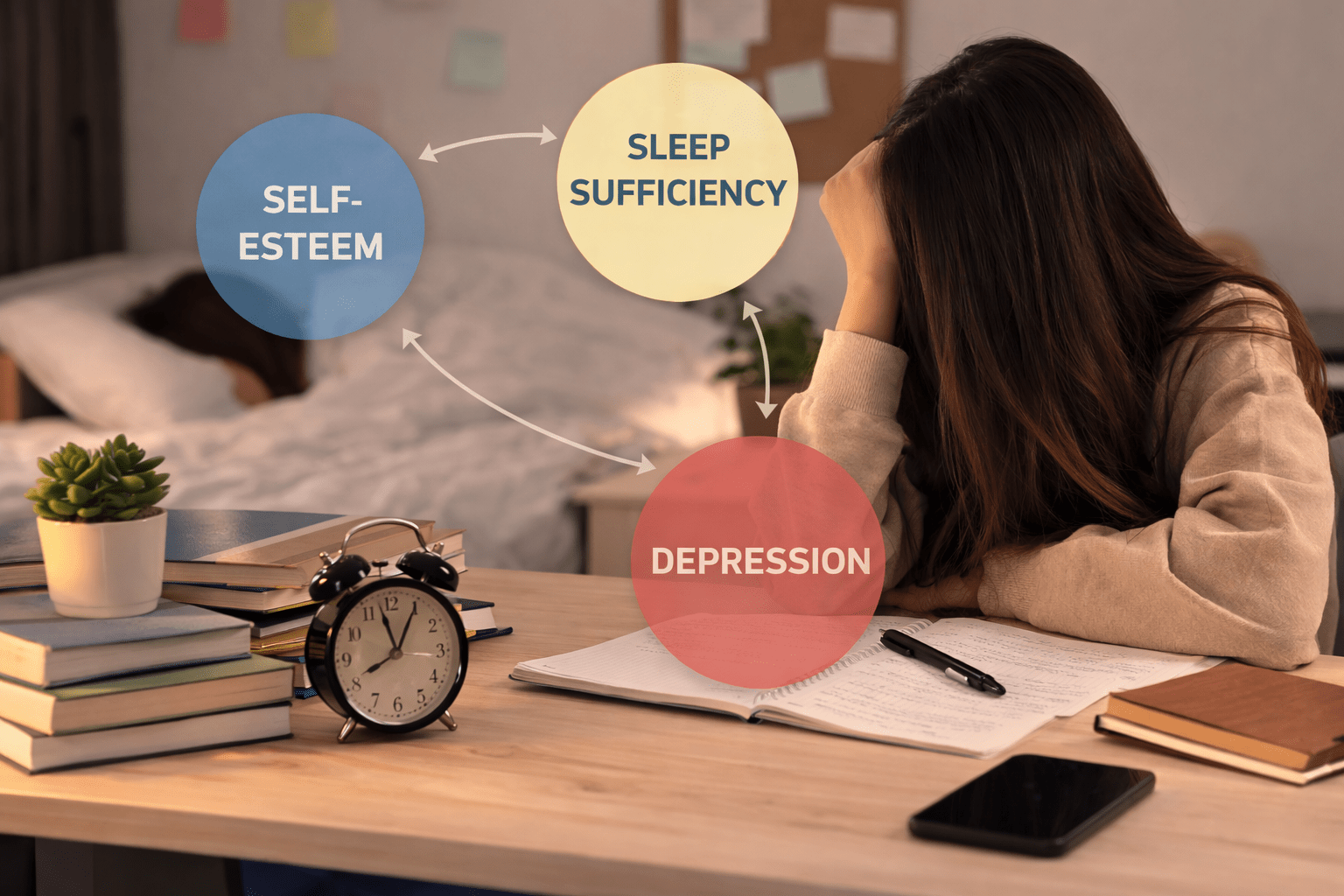
Depression, a mental health disorder that causes persistent feelings of sadness and hopelessness, is increasing in the adolescent populations in both incidence and prevalence, currently affecting 1 in 5 adolescents in the United States. In addition, self-esteem and sleep sufficiency are decreasing in adolescent populations. While previous research has explored relations among depression, self-esteem, and sleep sufficiency, the majority of the studies utilized cross-sectional designs and focused predominantly on adult populations, leaving critical gaps in understanding the relationships over time in adolescents. Our study examines the longitudinal relations among self-esteem, sleep sufficiency, and depression symptoms in adolescents based on Beck’s cognitive theory of depression. Utilizing a de-identified dataset from the National Longitudinal Study of Adolescent to Adult Health database (Add Health) with a sample size of 6504 adolescents in the United States, we conducted secondary analyses with two different time points. Results of our study show that 1) self-esteem positively correlates with sleep sufficiency but negatively correlates with depression symptoms, 2) sleep sufficiency negatively correlates with depression symptoms, 3) self-esteem negatively predicts depression symptoms, and 4) sleep sufficiency weakens the negative relation between depression symptoms and self-esteem among adolescents across time. These results underscore the importance of addressing both self-esteem and sleep sufficiency in intervention programs for adolescent depression. By fostering a positive sense of self-worth and promoting healthy sleep habits, interventions may better support adolescent mental health.
Keywords: Depression, Self-Esteem, Sleep Sufficiency, Longitudinal Relations, Adolescents
Introduction
Adolescent depression
Depression is a serious and common mental health disorder that is categorized as a mood disorder, causes persistent feelings of sadness and hopelessness, and/or loss of interest and energy1. While depression can be treated even in the most severe cases, the earlier the intervention the more effective it is1. Therefore, it is crucial to recognize signs and manage symptoms in a timely manner. Notably, adolescent depression is increasing at an alarming rate, with 1 in 5 adolescents suffering from depression2. In 2021, about 5 million adolescents aged 12 to 17 in the United States had at least one major depressive episode, representing 20% of their age group3. Depression has detrimental effects on adolescents’ daily activities and functioning, including alcohol and drug misuse, academic and behavioral problems, relationship difficulties and conflicts, as well as self-harm, suicide attempts, and suicidal deaths4. The prevalence of adolescent depression and alarming trend highlights the urgent need to deepen our understanding of factors contributing to adolescent depression to explore potential avenues for prevention and intervention.
Adolescent self-esteem and its association with depression
Self-esteem, a critical facet of mental health, is the subjective perception and confidence of one’s own qualities, abilities, and worth5,6. Low self-esteem is intimately linked to academic disengagement, risk-taking behaviors, as well as psychopathology among adolescents7,8,9,10,11.
Self-esteem influences not only well-being but also safety. Adolescents with low self-esteem are more likely to engage in sexual decision-making and substance-related risk-taking and less likely to perform well in school12,13. Yet, about one third to one half of adolescents struggle with low self-esteem, especially during early adolescence14.
Adolescent sleep insufficiency and its association with depression
There is a disquieting trend of sleep insufficiency, with 35% of adolescents experiencing short or inadequate sleep15. Sleep insufficiency is associated with a host of negative academic and psychosocial outcomes in adolescents, including poor physical and mental health, as well as attention, learning, and behavioral problems15. Sleep insufficiency and depression often manifest together, with 72.7% of adolescents diagnosed with depression experiencing sleep deprivation 16.
Theoretical Framework-Beck’s cognitive theory of depression
Beck’s cognitive theory of depression posits that depression is, at least in part, the result of faulty ways of thinking and distorted beliefs about oneself, others, or the world17. Representations or assumptions that individuals have of themselves, others, or the world, also known as schemas, shape how individuals interpret and react to experiences. When these schemas are unhelpful or maladaptive, they can lead to biased processing of information, where individuals tend to view inherently neutral or positive experiences through a more negative lens. This theory provides a crucial conceptual framework for this study, which seeks to examine the relationship between self-esteem, sleep, and depression in adolescents. Based on Beck’s cognitive theory of depression, self-esteem may play a pivotal role in depression – adolescents with low self-esteem are more likely to develop unhelpful schemas despite objective reality. Furthermore, unhelpful schemas can cause difficulties falling and/or staying asleep, leading to inadequate sleep18. Sleep insufficiency or deprivation in turn impairs executive functioning or cognitive processes, such as working memory, flexible thinking, and self-control, which are necessary to manage thoughts, emotions, and actions described in Beck’s cognitive theory of depression19. This theory is particularly relevant to the present study because it provides a psychological explanation of how self-esteem and thought patterns can impact physical (sleep) and mental (depression) health. Beck’s cognitive theory of depression emphasizes the role of an individual’s internal beliefs-supporting this study’s research on self-esteem, sleep, and depression.
Addressing Gaps in Current Literature
Among the various factors influencing adolescent depression, self-esteem and sleep sufficiency have proven to be critical determinants. However, existing research on the interplay among these factors is limited by several gaps. Many studies examining the relationships between self-esteem, sleep sufficiency, and depression rely mainly on cross-sectional designs rather than longitudinal designs. Additionally, while self-esteem and sleep sufficiency have often been studied independently, their combined effects on depression symptoms remain unexplored. Few studies have examined their joint effects despite growing evidence that they may interact in meaningful ways. For example, adolescents with low self-esteem may have constant negative thoughts that interfere with sleep. Yet, this has not been sufficiently explored in research. Current interventions for adolescent depression fail to recognize the individual influences (unique effects) or the combined influence (interaction effect) of self-esteem and sleep sufficiency in mitigating depression symptoms. The findings of this study can help us deepen our understanding of how psychological and behavioral factors jointly contribute to adolescent depression, offering new insights for this critical developmental period.
Significance and Purpose
This research is significant because it seeks to uncover the relationships between self-esteem, sleep sufficiency, and depression in adolescents using a longitudinal design. Findings from this study have the potential to help inform educational practices, parental guidance, and clinical interventions aimed at improving adolescent mental health. Highlighting factors such as self-esteem and sleep sufficiency can help shed light on practical strategies to reduce depression risks and symptoms among adolescents.
Scope and Limitations
This study focuses on adolescents aged 12-17 in the United States, utilizing a nationally representative sample and an analysis of a two-wave longitudinal design. While this study provides insights into the interplay between self-esteem, sleep sufficiency, and depression, it has certain limitations. The reliance on self-reported data can introduce biases and there is a potential adolescents did not give full insight into their own beliefs and actions. The study sample also predominantly consisted of White and African American adolescents, limiting the generalizability of findings. Lastly, the study did not account for other confounding factors such as family environment, socioeconomic status, and peer influence, which could have impacted the results.
Study research questions and hypotheses
Given that most research studies are cross-sectional in nature, it is imperative to elucidate the interplay between depression symptoms, sleep sufficiency, and self-esteem in adolescents using a longitudinal design20,21. Compared to cross-sectional studies, longitudinal research follows the same individuals over time, enabling the observation of developmental changes and providing stronger causal inferences. This study addresses the following Research Questions (RQ) with a nationally representative sample of adolescents and using a two-wave design over a one-year period:
RQ1: How does self-esteem correlate with sleep sufficiency and depression over time?
H1: We hypothesize that self-esteem at wave 1 will have positive correlations with both subjective and objective perceptions of sleep sufficiency at wave 2, but negative correlations with depression symptoms at wave 2. We also hypothesize that both subjective and objective perceptions of sleep sufficiency at wave 1 will have negative correlations with depression symptoms at wave 2.
RQ2: How does self-esteem predict depression symptoms beyond sleep sufficiency over time?
H2: We hypothesize that self-esteem at wave 1 will negatively predict depression symptoms at wave 2, while controlling for both subjective and objective perceptions of sleep sufficiency as well as baseline depression at wave 1.
RQ3: Does sleep sufficiency moderate the relation between depression and self-esteem over time?
H3: We hypothesize that objective perception (continuous variable) of sleep sufficiency at wave 1 will decrease the negative relation between self-esteem at wave 1 and depression symptoms at wave 2, while controlling for baseline depression at wave 1. Subjective perception (binary variable) of sleep sufficiency was not included as a moderation variable given the potential for loss of information and reduced statistical power associated with dichotomous variables.
Literature Review
Adolescent Depression-Previous Research
Depression is a serious and common mental health disorder that is categorized as a mood disorder, causes persistent feelings of sadness and hopelessness, and/or loss of interest and energy1. While depression can be treated even in the most severe cases, the earlier the intervention the more effective it is1. Therefore, it is crucial to recognize signs and manage symptoms in a timely manner. Notably, adolescent depression is increasing at an alarming rate, with 1 in 5 adolescents suffering from depression2. In 2021, about 5 million adolescents aged 12 to 17 in the United States had at least one major depressive episode, representing 20% of their age group3. Depression has detrimental effects on adolescents’ daily activities and functioning, including alcohol and drug misuse, academic and behavioral problems, relationship difficulties and conflicts, as well as self-harm, suicide attempts, and suicidal deaths4.
Although previous research has extensively dived into the prevalence, severity, as well as consequences of adolescent depression, much research has focused on describing the outcomes rather than continuously diving into risk factors that can influence depression symptoms over time. Therefore, there still remains a limited understanding of the different psychological and behavioral processes that can contribute to the persistence of depression during adolescence. The present research study aims to build on current research by shifting focus towards factors that may shape the influence or existence of adolescent depression, or identifying mechanisms that can help with prevention or intervention efforts.
Self Esteem-Previous Research
Self-esteem, a critical facet of mental health, is the subjective perception and confidence of one’s own qualities, abilities, and worth5,6. Low self-esteem is intimately linked to academic disengagement, risk-taking behaviors, as well as psychopathology among adolescents7,8,9,10,11.
Self-esteem influences not only well-being but also safety. Adolescents with low self-esteem are more likely to engage in sexual decision-making and substance-related risk-taking and less likely to perform well in school12,13. Yet, about one third to one half of adolescents struggle with low self-esteem, especially during early adolescence14.
Previous research suggests that self-esteem plays a key role within adolescent mental health and can function as a factor related to depression. However, not many studies have explored how it interacts with other behavioral factors. The present study instead expands on current research by examining self-esteem longitudinally and putting it in a broader framework to address gaps on how self-esteem influences depression symptoms over time.
Adolescent Sleep Insufficiency-Previous Research
There is a disquieting trend of sleep insufficiency, with 35% of adolescents experiencing short or inadequate sleep15. Sleep insufficiency is associated with a host of negative academic and psychosocial outcomes in adolescents, including poor physical and mental health, as well as attention, learning, and behavioral problems15. Sleep insufficiency and depression often manifest together, with 72.7% of adolescents diagnosed with depression experiencing sleep deprivation 16.
Though there has been a strong association between sleep insufficiency and adolescent depression established in current research, sleep has been selected as an independent risk factor. Furthermore, literature mainly has relied on cross-sectional data, limiting on how sleep can influence depression over time. Therefore, the current study builds on previous research by examining sleep sufficiency longitudinally and exploring how it may interact with other psychological factors such as self-esteem.
Current Literature and Gaps Addressed by the Present Study
Among the various factors influencing adolescent depression, self-esteem and sleep sufficiency have proven to be critical determinants. However, existing research on the interplay among these factors is limited by several gaps. Many studies examining the relationships between self-esteem, sleep sufficiency, and depression rely mainly on cross-sectional designs rather than longitudinal designs. Additionally, while self-esteem and sleep sufficiency have often been studied independently, their combined effects on depression symptoms remain unexplored. Few studies have examined their joint effects despite growing evidence that they may interact in meaningful ways. For example, adolescents with low self-esteem may have constant negative thoughts that interfere with sleep. Yet, this has not been sufficiently explored in research. Current interventions for adolescent depression fail to recognize the individual influences (unique effects) or the combined influence (interaction effect) of self-esteem and sleep sufficiency in mitigating depression symptoms. The findings of this study can help us deepen our understanding of how psychological and behavioral factors jointly contribute to adolescent depression, offering new insights for this critical developmental period.
Specifically, the present study builds on prior research that has linked self-esteem and sleep insufficiency to adolescent depression by examining these factors within a single, integrated framework. Instead of just focusing on cross-sectional associations, which previous research has mainly focused on, this study extends existing findings and utilizes a longitudinal approach that attempts to examine changes in depression over time. By examining self-esteem and sleep sufficiency simultaneously, this research extends beyond prior findings and instead creates a more comprehensive model that considers the interaction between multiple psychological factors.
In addition, by using a longitudinal design, the study addresses a key limitation created by the methodology in existing literature. Current literature mainly exists of cross-sectional studies, which are limited in their ability to explain a development change or establish whether a factor has a temporary or long-term effect. This limitation can be significant especially during adolescence, a developmental period that can be characterized by rapid changes mentally, emotionally, and socially. Therefore, by employing a longitudinal design and following the mental health of adolescents across time, the present study provides more insight into how factors like self-esteem and sleep sufficiency relate to the persistence of depression symptoms rather than just their impact at a single time point.
This present study contributes to current literature by emphasizing the importance of examining other psychological and behavioral factors in a developmental context for adolescent mental health. By putting self-esteem and sleep sufficiency within a framework related to adolescent depression, this study leads to important implications for prevention and intervention efforts.
Results
Associations among self-esteem, depression symptoms, and sleep sufficiency (RQ1)
There were significant negative correlations between self-esteem and depression symptoms at both wave one, r = -.37, p < .001, and wave two, r = -.49, p < .001, among adolescents. There were significant positive correlations between self-esteem and objective perception of sleep sufficiency at both wave one, r = .09, p < .001, and wave two, r = .12, p < .001, among adolescents. There were also significant positive correlations between self-esteem and subjective perception of sleep sufficiency at both wave one, r = .16, p < .001, and wave two, r = .20, p < .001. There were significant negative correlations between depression symptoms and objective perception of sleep sufficiency at both wave one, r = -.14, p < .001, and wave two, r = -.14, p < .001, among adolescents. There were also significant negative correlations between depression symptoms and subjective perception of sleep sufficiency at both wave one, r = -.26, p < .001, and wave two, r = -.27, p < .001. Correlation findings were consistent with our hypotheses (H1) that self-esteem has positive correlations with sleep sufficiency, but negative correlations with depression symptoms, over an one-year period among adolescents. Sleep sufficiency also has negative correlations with depression symptoms, over an one-year period among adolescents.
Hierarchical regression of self-esteem on depression symptoms (RQ2)
Depression symptoms and sleep sufficiency at wave one accounted for 37% of the variance in depression symptoms at wave two among adolescents, F(3, 3022) = 600.56, R2 = .37, p < .001. Specifically, baseline depression symptoms was a significant positive predictor of subsequent depression symptoms after a one-year period, β = .60, t = 40.05, p < .001. However, neither objective perception, β = .004, t = .24, p = .81, nor subjective perception, β = -.03, t = -1.84, p = .07, of sleep sufficiency at wave one was a significant predictor of subsequent depression symptoms among adolescents. Hierarchical regression showed that self-esteem at wave one accounted for an additional 1% of the variance in depression symptoms at wave two among adolescents (that is above and beyond depression symptoms and objective and subjective perceptions of sleep sufficiency at wave one), F(4, 3021) = 471.28, R2 = .38, ΔR2 = .01, p < .001. Specifically, self-esteem at wave one was a significant negative predictor of depression symptoms at wave two, β = -.11, t = -7.26, p < .001, while controlling for baseline depression symptoms and sleep sufficiency. Regression findings were congruent with our hypothesis (H2) that self-esteem negatively predicted depression symptoms over an one-year period, while controlling for objective and subjective perceptions of sleep sufficiency as well as baseline depression, among adolescents.
Moderation of sleep sufficiency between self-esteem and depression (RQ3)
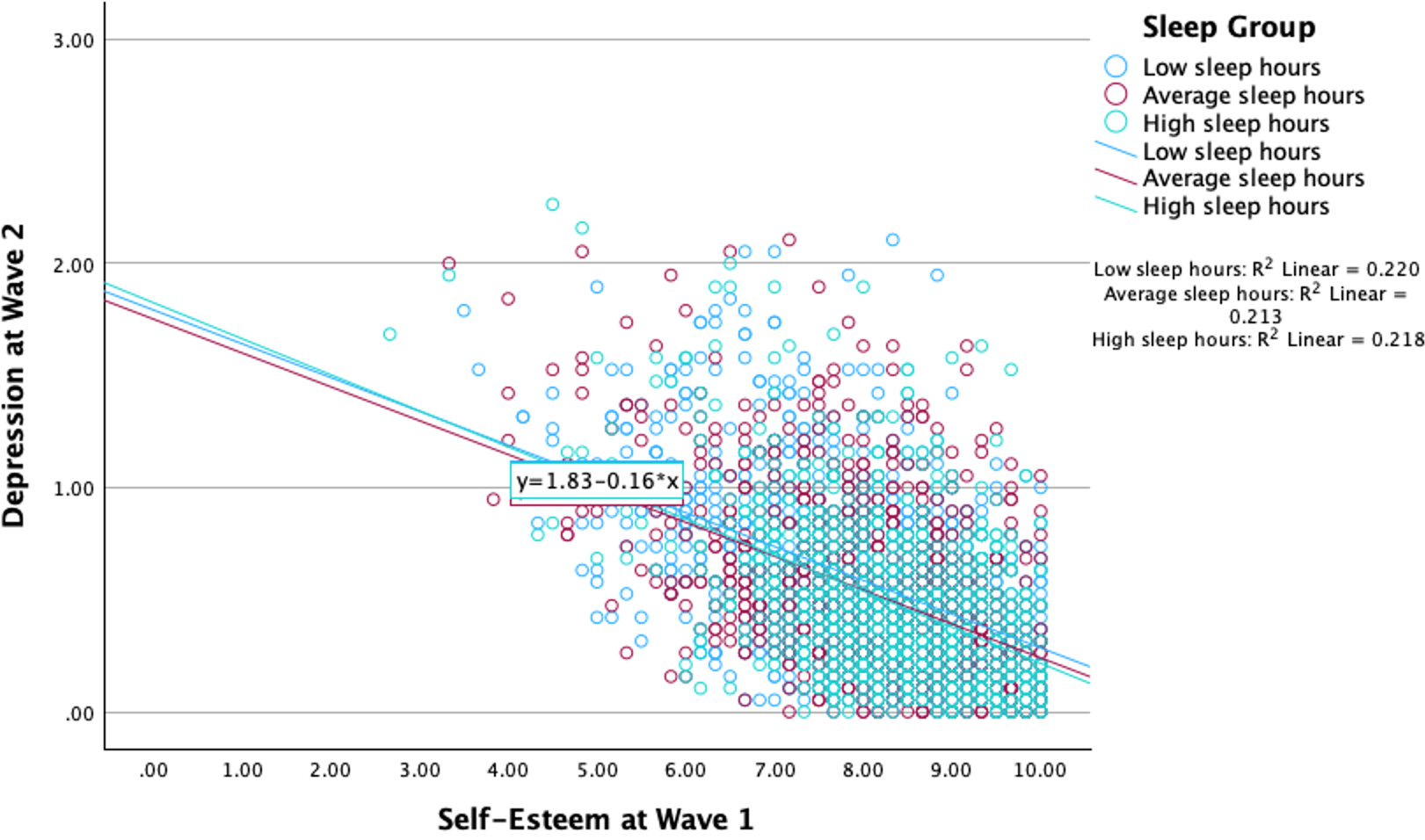
Depression symptoms at wave one accounted for 37% of the variance in depression symptoms at wave two among adolescents, F(1, 3025) = 1798.03, R2 = .37, p < .001. Specifically, baseline depression symptoms was a significant positive predictor of subsequent depression symptoms after a one-year period, β = .61, t = 42.40, p < .001. This implies that adolescents who reported higher or lower depression symptoms continued to report high or low depression symptoms one year later. Hierarchical regression showed that self-esteem at wave one, sleep sufficiency at wave one, and their interaction accounted for an additional 2% of the variance in depression symptoms at wave two among adolescents (that is above and beyond baseline depression symptoms at wave one), F(4, 3022) = 472.31, R2 = .39, ΔR2 = .02, p < .001. Specifically, self-esteem at wave one (grand-mean centered) was a significant negative predictor of depression symptoms at wave two, β = -.11, t = -7.42, p < .001. This indicates that adolescents who reported higher self-esteem had lower depression symptoms one year later. While objective perception of sleep sufficiency (grand-mean centered) at wave one was not a significant predictor of depression symptoms at wave two, β = -.003, t = -.19, p = .85, it was a significant negative moderator of the relationship between self-esteem at wave one and depression symptoms at wave two, β = -.03, t = -2.11, p = .04. Post-hoc simple slope analysis indicated that adolescents in low (n = 2455), average (n = 2400), and high (n = 1622) sleep sufficiency groups had a mean 6.43 (SD = .81), 8.00 (SD = .00), and 9.62 (.99) hours of sleep respectively. Figure 1 showed simple slopes of the predictor and the outcome (i.e., changes in the relationship between self-esteem at wave one and depression symptoms at wave two) at different levels of the moderator (i.e., low, average, or high hours of sleep at wave one). This suggests that the longitudinal relationship between self-esteem and subsequent depression symptoms is weaker for adolescents in the high sleep sufficiency group (whose usual hours of sleep is high) compared to adolescents in the low sleep sufficiency group (whose usual hours of sleep is low), while controlling for baseline depression symptoms. Moderation findings were consistent with our hypothesis (H3) that objective perception of sleep sufficiency (or usual number hours of sleep) weakened the negative relation between self-esteem and depression symptoms over an one-year period, while controlling for baseline depression, among adolescents.
Discussion
Summary
Our findings offer insights into the longitudinal relations among self-esteem, sleep sufficiency, and depression symptoms in adolescents. Consistent with our hypotheses, our results revealed that 1) self-esteem has positive correlations with objective and subjective perceptions of sleep sufficiency, but negative correlations with depression symptoms, 2) objective and subjective perceptions of sleep sufficiency have negative correlations with depression symptoms, 3) self-esteem negatively predicts depression symptoms, and 4) objective perception of sleep sufficiency (or average/usual number hours of sleep) weakens the negative relationship between depression symptoms and self-esteem among adolescents over a one-year period. Our findings are congruent with previous studies, including a prospective study which showed that low self-esteem is a risk factor for depression, but depression is not a risk factor for low self-esteem, among adolescents22.
A recent meta-analysis also found that sleep disturbance predicted depression symptoms, but depression symptoms did not predict sleep disturbance, across different adolescent samples23. Our study bolsters evidence for the predictive roles of self-esteem and sleep sufficiency in adolescent depression over time. Our results suggest that adolescents with higher self-esteem and sleep sufficiency may experience fewer depression symptoms, providing evidence for Beck’s cognitive theory of depression which posits that low self-concept and impaired cognitive processing increase vulnerability to depressive thoughts and behaviors. Furthermore, the positive association between self-esteem and sleep sufficiency implies that those with higher self-worth may experience greater sleep quantity because of reduced negative schemas that would otherwise disrupt sleep. Moreover, self-esteem predicts depression symptoms over a one-year period above and beyond baseline depression and sleep sufficiency, indicating the critical role of self-esteem in adolescent mental health. Moderation analysis showed that average/usual number hours of sleep moderates the relationship between self-esteem and depression symptoms, suggesting that sleep quantity can serve as a buffer between the negative relationship between self-esteem and depression. This moderation effect adds to existing literature and is consistent with Beck’s cognitive theory of depression finding that greater hours of sleep can buffer the detrimental impact of low self-esteem on depression in adolescents.
Implications and Limitations
Our findings may be valuable to parents, educators, and mental health professionals in mitigating adolescent psychopathology by underscoring the importance of self-esteem and sleep sufficiency in strengthening adolescent mental health. Therefore, programs can adopt a proactive and preventative approach by targeting self-esteem and sleep sufficiency (by fostering positive self-schemas and good sleep hygiene) to lower depression symptoms among adolescents. Good sleep hygiene practices include reducing screen time before bed, establishing consistent sleep schedules, and creating a restful sleep environment. Previous research found that a supportive school environment can affect students’ self-esteem and social support, which in turn can enhance their self evaluation and self-image24,25. School-based interventions that incorporate positive self-concept may serve the dual purpose of reducing depression symptoms and increasing self-worth among adolescents.
The study has several limitations that should be addressed in future research. First, the reliance on self-reported data can introduce biases such as social desirability or inaccuracies in self-assessment. Although self-reports can provide valuable subjective insight, there is a potential that adolescents did not have full insight into their own thoughts, feelings, and actions or have social desirability bias, which may lead to under-reporting (understated) or over-reporting (inflated) of information. The study also did not account for other confounding factors that could have impacted the results, such as family environment, socioeconomic status, and peer influence. Future research should look into how these variables may affect the relations among self-esteem, sleep sufficiency, and depression symptoms in adolescents. Future studies should also explore possible interaction effects between objective and subjective measures of sleep sufficiency. Based on Beck’s cognitive theory of depression, this study focused on unidirectional effects over time. Future studies should explore potential bidirectional influences over time using cross-lagged panel analysis. The sample also predominantly consisted of White and African American adolescents, which can limit the generalizability of findings. Future studies should aim to recruit more ethnically and racially diverse samples to offer a more comprehensive understanding of how self-esteem, sleep sufficiency, and depression symptoms interact in diverse adolescent populations. Future research should consider potential confounds or third variables, such as gender, socio-economic status, severity of depression symptoms, that may account for study findings. Future studies would also benefit from evaluation of the robustness of our regression models through cross-validation (estimation of how well a model generalizes to new data) or sensitivity analysis (identification of input parameters that have significant impact on the output of a model).
While the incremental variance of self-esteem and sleep sufficiency is small after controlling for baseline depression, it is meaningful and relevant as it provides valuable additional insight and predictive power to improving adolescent depression in the real world. By addressing self-esteem and sleep sufficiency in adolescent populations, educators, parents, and mental health professionals can take proactive steps to support adolescent mental health and help provide tools to navigate and prevent depression.
Methods
Research Design
This study conducted secondary analyses using two waves from the National Longitudinal Study of Adolescent to Adult Health (Add Health), which is a public-use dataset and nationally representative sample of US adolescents in grades 7-1226. A sample of 80 high schools and 52 middle schools from the US was selected with unequal probability of selection. Incorporating systematic sampling and implicit stratification ensured the sample is representative of US schools with respect to geographical region, urbanicity, school size, school type, and ethnicity. See guidelines for analyzing Add Health data for details about the research design27.
Participants
This study involved 6504 adolescents with a mean age of 16 years in the United States. Gender distribution was 52% female and 48% male. Race distribution was 4% American Indian or Alaska Native, 4% Asian, 25% Black/African American, and 66% White. Grade level distribution was 15% seventh grade, 15% eighth grade, 17% ninth grade, 18% 10th grade, 17% 11th grade, and 15% 12th grade.
Measures
Depression
Depression was assessed using a 19-item measure modified by Add Health from the Center for Epidemiologic Studies-Depression Scale (CES-D), a self-report measure of depression symptoms28. Sample items included “I felt that I could not shake off the blues even with help from my family and friends” and “I thought my life had been a failure”. Each item is rated on a 4-point Likert scale from 0 (never or rarely) to 3 (most or all of the time), with higher scores reflecting more depression symptoms after reverse scoring. Factor structure of the CES-D is well-established among adolescent populations29. High internal consistency is documented for the CES-D, with coefficient alpha of .85 or more with adolescent samples29.
Self-Esteem
Self-esteem was assessed using a 6-item measure modified by Add Health from the Rosenberg Self-Esteem Inventory, a self-report measure of global self-esteem30. Sample items include “You have a lot of good qualities”, “You have a lot to be proud of”, and “You feel loved and wanted”. Each item was rated on a 4-point Likert scale from 1 (strongly disagree) to 4 (strongly agree), with higher scores reflecting greater self-esteem. Factor structure of the Rosenberg Self-Esteem Inventory is well-documented among adolescent populations31. High internal consistency is documented for the Rosenberg Self-Esteem Inventory, with coefficient alpha of .80 or more with adolescent samples31.
Sleep Sufficiency
Objective perception of sleep sufficiency was measured by an open-ended question “How many hours of sleep do you usually get?” Subjective perception of sleep sufficiency was measured by a binary question (0 = No, 1 = Yes) “Do you get enough sleep?” Objective perception of sleep sufficiency is a continuous variable of sleep quantity, while subjective perception of sleep sufficiency is a binary variable of sleep quality.
Procedures
The study presents secondary analyses of two deidentified (waves 1 and 2) datasets from the National Longitudinal Study of Adolescent to Adult Health (Add Health), a longitudinal study of a nationally representative sample of adolescents in the United States26. Ethical approval for Add Health was obtained through the Institutional Review Board of the University of North Carolina. Wave 1 was conducted with adolescents via in-home interviews between April and December 199526. Wave 2 was conducted with adolescents via in-home interviews between April and August 199626. All participants were assigned a unique numeric identifier to ensure confidentiality26.
Analysis Plan
Pearson correlations were computed to assess the linear associations among self-esteem, objective and subjective perceptions of sleep sufficiency, and depression symptoms in adolescents (RQ1). Hierarchical regression was conducted to examine the effect of self-esteem on depression symptoms, above and beyond baseline depression symptoms as well as objective and subjective perceptions of sleep sufficiency, over a one-year period (RQ2). The first block of hierarchical regression included baseline depression symptoms (wave 1) and objective and subjective perceptions of sleep sufficiency (wave 1) as predictors, with subsequent depression symptoms (wave 2) as an outcome. The second block of hierarchical regression included self-esteem (wave 1) as a predictor. Another hierarchical regression was performed to explore whether objective perception of sleep sufficiency moderates the effect of self-esteem on depression symptoms over time (RQ3). Both predictors were grand-mean centered before creating the interaction term. Grand-mean centering is the process of subtracting the grand mean from predictors to reduce collinearity between the two predictors. The first block of hierarchical regression included baseline depression symptoms (wave 1) as a predictor, with subsequent depression symptoms (wave 2) as an outcome. The second block of hierarchical regression included self-esteem (wave 1), objective perception of sleep sufficiency (wave 1), and their interaction term as predictors. Post-hoc simple slope analysis was conducted to understand how the relationship between the predictor and the outcome changed at different levels of the moderator. Assumptions whether underlying regression models are met with SPSS were checked. These include linearity, independence, normality, homoscedasticity, and lack of multicollinearity. All analyses were conducted using the Statistical Package for the Social Sciences (SPSS) version 30.
Conclusion
This study explores longitudinal relations between self-esteem, sleep sufficiency, and depression in a nationally representative adolescent sample. Study findings highlight that higher self-esteem and sleep quantity can help mitigate depression in adolescents. This supports the need for interventions that boost self-esteem and improve sleep to better address adolescent depression.
Acknowledgements
This research uses data from Add Health, funded by grant P01 HD31921 (Harris) from the Eunice Kennedy Shriver National Institute of Child Health and Human Development (NICHD), with cooperative funding from 23 other federal agencies and foundations. Add Health is currently directed by Robert A. Hummer and funded by the National Institute on Aging cooperative agreements U01 AG071448 (Hummer) and U01AG071450 (Aiello and Hummer) at the University of North Carolina at Chapel Hill. Add Health was designed by J. Richard Udry, Peter S. Bearman, and Kathleen Mullan Harris at the University of North Carolina at Chapel Hill. The first author would like to thank her science research teacher, Mr. Prendergast, and her family for their support throughout this process.
References
- National Institute of Mental Health (NIMH). Depression, https://www.nimh.nih.gov/health/topics/depression#hts-intro (2025). [↩] [↩] [↩] [↩]
- Mental Health America. Depression in teens, https://mhanational.org/depression-teens-0. [↩] [↩]
- National Institute of Mental Health (NIMH). Major Depression, https://www.nimh.nih.gov/health/statistics/major-depression (2023). [↩] [↩]
- Mayo Clinic. Teen Depression, https://www.mayoclinic.org/diseases-conditions/teen-depression/symptoms-causes/syc-20350985#:~:text=Untreated%20depression%20can%20result%20in,Suicide%20attempts%20or%20suicide (2022). [↩] [↩]
- S. Harter. Identity and self development. At the threshold: The developing adolescent. 352-387 (1990). [↩] [↩]
- American Psychological Association (APA). APA Dictionary of Psychology, dictionary.apa.org/self-esteem. (2023). [↩] [↩]
- Y. Zhao, Z. Zheng, C. Pan, L. Zhou. Self-Esteem and Academic Engagement Among Adolescents: A Moderated Mediation Model. Frontiers in Psychology, 12 (2021). [↩] [↩]
- M. B. Donnellan, K. H. Trzesniewski, R. W. Robins, T. E. Moffitt, A. Caspi. Low Self-Esteem Is Related to Aggression, Antisocial Behavior, and Delinquency. Psychological Science. 16 (2005). [↩] [↩]
- D. Macphee, D. Jackman. Self-Esteem and Future Orientation Predict Adolescents’ Risk Engagement. The Journal of Early Adolescence (2016). [↩] [↩]
- U. Orth, R. Robins, K. F. Widaman, R. D. Conger. Is low self-esteem a risk factor for depression? Findings from a longitudinal study of Mexicanorigin youth. Developmental psychology (2014). [↩] [↩]
- W. Li, Y. Guo, W. Lai, W. Wang, X. Li, L. Zhu, J. Shi, L. Guo, C. Lu. Reciprocal Relationships between Self-Esteem, Coping Styles and Anxiety Symptoms among Adolescents: Between-Person and within-Person Effects. Child and Adolescent Psychiatry and Mental Health (2023). [↩] [↩]
- S. B. Wheeler. Effects of Self-Esteem and Academic Performance on Adolescent Decision-Making: An Examination of Early Sexual Intercourse and Illegal Substance Use. Journal of Adolescent Health. 47 (2010). [↩] [↩]
- M. Z. Booth, J. M. Gerard. Self esteem and academic achievement: a comparative study of adolescent students in England and the United States. Compare: A Journal of Comparative and International Education. 41 (2011). [↩] [↩]
- B. Hirsch, D. DuBois. Self-esteem in early adolescence: The identification and prediction of contrasting longitudinal trajectories. Journal of Youth and Adolescence (1991). [↩] [↩]
- A. H. Claussen, L. V. Dimitrov, S. Bhupalam, A. G. Wheaton, M. L. Danielson. Short Sleep Duration: Children’s Mental, Behavioral, and Developmental Disorders and Demographic, Neighborhood, and Family Context in a Nationally Representative Sample. Preventing Chronic Disease. 20 (2023). [↩] [↩] [↩] [↩]
- X. Liu, D. J. Buysse, A. L. Gentzler, E. Kiss, L. Mayer, K. Kapornai, A. Vetro, M. Kovacs. Insomnia and hypersomnia associated with depressive phenomenology and comorbidity in childhood depression. Sleep. 30, 83-90 (2007). [↩] [↩]
- A. J. Guastella, M. L. Moulds. The impact of rumination on sleep quality following a stressful life event. Personality and Individual Differences. 42, 1151-1162 (2007). [↩]
- N. Goel, H. Rao, J. S. Durmer, D. F. Dinges. Neurocognitive consequences of sleep deprivation. Seminars in Neurology. 29, 320-339 (2009). [↩]
- R. E. Roberts, H. T. Duong. The Prospective Association between Sleep Deprivation and Depression among Adolescents. Sleep. 37, 239-244 (2014). [↩]
- S. A. Tafoya, V. Aldrete-Cortez, M. Fouilloux-Morales, C. Fouillouz. The contribution of self-concept to sleep quality in adolescents: A cross-sectional study. Psychology, health & medicine. 28 (2023). [↩]
- L. A. Shrier, S. K. Harris, M. Sternberg, W. R. Beardslee. Associations of depression, self-esteem, and substance use with sexual risk among adolescents. Preventive Medicine. 33, 179-189 (2001). [↩]
- U. Orth, R. W. Robins, B. W. Roberts, low self-esteem prospectively predicts depression in adolescence and young adulthood. Journal of Personality and Social Psychology. 695-708 (2008). [↩]
- N. Lovato, M. Gradisar, a meta-analysis and model of the relationship between sleep and depression in adolescents: Recommendations for future research and clinical practice. Sleep Medicine Reviews. 18, 521-529 (2014). [↩]
- J. Chung, S. Son. The Effects of Supportive School Environment on Children’s Prosocial Behavior: Sequential Mediation Effects of Children’s Self Esteem and Happiness. Korean Journal of Childcare and Education, 16, 105-122 (2020). [↩]
- Q. Liu, M. Jiang, S. Li, Y. Yang. Social support, resilience, and self esteem protect against common mental health problems in early adolescence. Medicine (Baltimore). 100 (2021). [↩]
- Harris, K.M., C.T. Halpern, E.A. Whitsel, J.M. Hussey, L. Killeya-Jones, J. Tabor, and S.C. Dean. 2019. Cohort Profile: The National Longitudinal Study of Adolescent to Adult Health (Add Health). International Journal of Epidemiology 48(5):1415-1425 https://doi.org/10.1093/ije/dyz115. [↩] [↩] [↩] [↩] [↩]
- P. Chen, K. M. Harris, Guidelines for Analyzing Add Health Data (2020). [↩]
- American Psychological Association (APA). Center for Epidemiological Studies-Depression, https://www.apa.org/pi/about/publications/caregivers/practice-settings/assessment/tools/depression-scale (2011). [↩]
- J. M. Blodgett, C. C. lachance, B. Stubbs, M. Co, Y. Wu, M. Prina, V.W.L. Tsang, T. D. Cosco, a systematic review of the latent structure of the center for epidemiologic studies depression scale (CES-D) amongst adolescents. BMC Psychiatry (2020). [↩] [↩]
- M. Rosenberg. The measurement of self-esteem, Society and the adolescent self-image. Princeton University Press (1965). [↩]
- W. Tinakon, W. Nahathai, a comparison of reliability and construct validity between the original and revised versions of the rosenberg self-esteem scale. Psychiatric Symptomatology (2012). [↩] [↩]