
Abstract
This experiment investigates the ability of nitrogen-reducing bacteria to deplete oxygen levels in water, potentially making denitrification more cost-effective and efficient. Denitrification requires anoxic (oxygen-free) conditions, so oxygen must be reduced without harming the surrounding environment. Excess nitrogen in water, primarily from fertilizer runoff, contributes to algae blooms and oxygen depletion, harming aquatic ecosystems. This study explores whether combining compost with anaerobic bacteria can create an anoxic environment, facilitating denitrification. To proceed, a 1-liter storage tote served as the base for three test conditions: control (water only), water with organic compost, and water with organic compost and anaerobic bacteria. A 3-watt pump was used to circulate water, creating a continuous current for two hours. Dissolved oxygen (DO) levels were measured before and after filtration using a dissolved oxygen meter. Each test was repeated five times with fresh water. For the compost-only treatment, 37 milliliters of organic compost were added. In the compost with bacteria treatment, 15 milliliters of anaerobic bacteria solution were also added to the mixture. To conclude, the compost with bacteria treatment was the most effective, reducing oxygen by 4.48 mg/L, compared to 1.14 mg/L in the compost-only group and 0.71 mg/L in the control. This supports the hypothesis that nitrogen-reducing bacteria enhance oxygen depletion, potentially improving nitrogen removal in aquatic ecosystems. These findings suggest that biologically facilitated denitrification using compost and nitrogen-reducing bacteria represents a promising, low-cost approach to nitrogen removal, and scaling this method could offer a sustainable alternative to conventional wastewater treatment systems for addressing nitrogen pollution from agricultural runoff.
Introduction
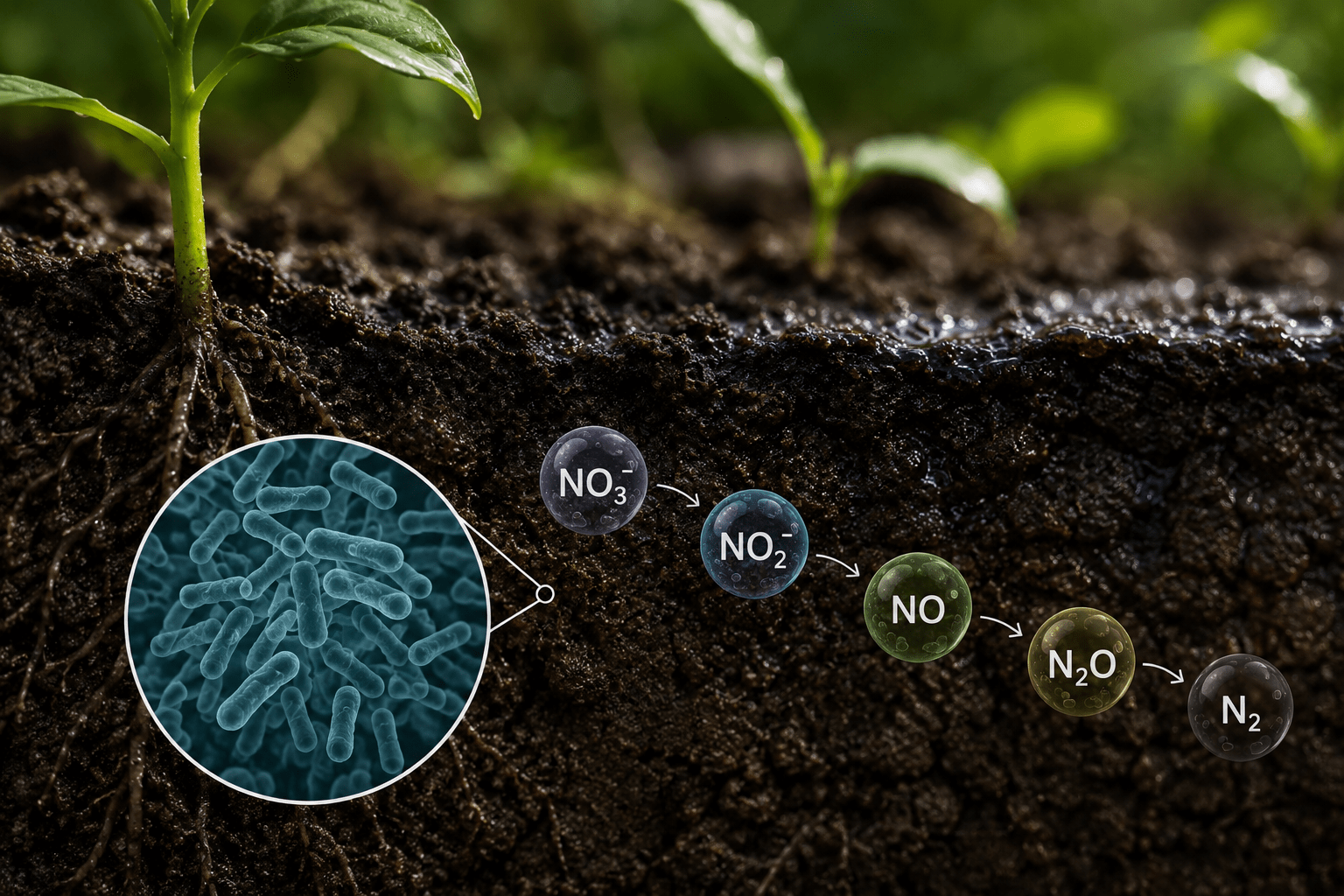
Sustainable nitrogen management in aquatic systems is an increasingly critical challenge, as conventional wastewater treatment methods struggle to keep pace with rising nitrogen pollution from agricultural sources. Fertilizers applied to land often contain high levels of nitrogen which, when not fully absorbed by plants, contribute to runoff that degrades water quality and disrupts aquatic ecosystems. After rainfall, excess fertilizer can seep into groundwater or run off into nearby rivers, lakes, and oceans, carrying nitrogen in forms such as ammonia, nitrite, nitrate, and organic nitrogen1,2,3. This runoff delivers nutrients to aquatic systems at concentrations exceeding their natural processing capacity4. Excess nitrogen in water can promote the rapid growth of algae, leading to algal blooms. These blooms block sunlight from reaching deeper waters and can obstruct water intake systems. As algae die, bacteria that decompose them consume large amounts of dissolved oxygen, creating anoxic zones that are uninhabitable for most aerobic aquatic organisms5,6. Nitrogen pollution disrupts aquatic ecosystems and can indirectly threaten human health when toxins from affected organisms enter the food chain7. To remove nitrogen from water, wastewater treatment systems commonly rely on the nitrification/denitrification process. Nitrification begins with the conversion of ammonia into nitrite and then nitrate, carried out by aerobic microorganisms known as ammonia-oxidizing and nitrite-oxidizing bacteria8,9. Denitrification follows, performed by heterotrophic, anaerobic bacteria. These bacteria require low-oxygen (anoxic) conditions and use oxygen bound in nitrate for respiration, ultimately converting nitrate into harmless nitrogen gas10,11. This process can be represented by the following reaction: 2NO₃⁻ + 10e⁻ + 12H⁺ → N₂ + 6H₂O.
Effective denitrification requires anoxic conditions in which oxygen demand exceeds supply, enabling nitrogen-reducing bacteria to function efficiently12,13,14.
In engineered systems, such as water treatment filters, anoxic zones can be created by combining low flow with a large tank and adding media such as compost. Despite the promise of biological denitrification, its widespread implementation remains limited by several practical challenges. Maintaining stable anoxic conditions in engineered systems is difficult, as fluctuations in oxygen levels can inhibit denitrifying bacteria and reduce nitrogen removal efficiency15. Additionally, conventional biological denitrification often requires the addition of external carbon sources such as methanol or acetate, which increases operational costs and introduces potential toxicity risks to the system16. The scalability of these systems also remains a concern, as conditions that work in small controlled environments do not always translate effectively to large-scale wastewater treatment facilities. Compost represents a low-cost, environmentally compatible alternative carbon source that could address several of these limitations simultaneously — providing organic matter to sustain microbial activity while avoiding the chemical inputs associated with conventional approaches. However, the extent to which compost combined with nitrogen-reducing bacteria can reliably establish anoxic conditions has not been thoroughly investigated at even a small scale. This study therefore aims to fill that gap by testing whether this combination can effectively deplete dissolved oxygen, laying the groundwork for a more sustainable and scalable denitrification approach.
The compost provides organic matter that supports microbial respiration, while nitrogen-reducing bacteria accelerate oxygen depletion by separating nitrogen from oxygen during respiration17,18,19,20.
The aerobic microbial breakdown of organic matter follows the general equation:
C₆H₁₂O₆ + 6O₂ → 6CO₂ + 6H₂O.
Together, these factors make it possible to simulate the low-oxygen conditions necessary for denitrification in a controlled system.
Bacterial strains used in biological denitrification systems vary in oxygen consumption rates and nitrogen removal efficiency depending on strain characteristics and reactor conditions21,22,23.
This experiment aims to determine whether nitrogen-reducing bacteria can decrease dissolved oxygen levels, potentially making denitrification more cost-effective. For denitrification to take place, the water must be anoxic (no oxygen), which means we must find a way to remove oxygen without harming the surrounding environment. This experiment is quite essential because our oceans, lakes, and rivers are in danger. Excess nitrogen is among the most damaging pollutants in aquatic environments, threatening the survival of diverse organisms. Excess nitrogen promotes algal blooms and subsequent oxygen depletion. Nitrogen in oceans can seriously affect human health negatively by poisoning the food we eat that comes from the ocean24,25. Organisms we consume can ingest these toxins. The reason why compost and nitrogen-reducing material were chosen was that they can easily be integrated back into the environment without harming it26. If successful, this approach could improve water quality and reduce the environmental burden of nitrogen pollution.
This project focused on the effect of nitrogen-reducing bacteria on oxygen depletion. The bacteria were added to a compost filter, and oxygen levels were recorded using an oxygen meter. The null hypothesis states that nitrogen-reducing bacteria will not affect oxygen depletion. The alternative hypothesis states that nitrogen-reducing bacteria will influence oxygen depletion when combined with compost. To test this hypothesis, a controlled experiment was designed using a compost-based filter system with and without nitrogen-reducing bacteria, and the following procedures were followed to measure changes in dissolved oxygen.
Methodology
The controlled variables for this experiment are the room, water temperature, bacteria strain, filter, compost, and oxygen meter. The independent variable is the nitrogen-reducing bacteria, while the dependent variable is the amount of oxygen depleted.
Setting Up the Control Group (Baseline Filter System Without Additives): A 1-liter storage tote served as the base for the filter system. 0.85 liters of water were accurately measured and poured into the tote. A hole was drilled in the lid to accommodate the pump’s power wire. A 3-watt water pump was securely placed in one corner of the tote to maintain a continuous current. The pump’s power wire was carefully threaded through the drilled hole and plugged into an outlet. The hole was sealed with tape to prevent air exchange and maintain controlled conditions. This setup was designated as the control group for the experiment.
Conducting the Control Group Test (Measuring Oxygen Reduction Over Time): For the control group test, the initial dissolved oxygen (DO) level in the water was measured using the UIUZMAR Smart Dissolved Oxygen Meter Kit before starting the test. The pump ran continuously for 2 hours to simulate steady water movement. The 2-hour timeframe was chosen to allow measurable short-term changes in dissolved oxygen within the small, closed 1-liter system while enabling consistent repetition of trials, though it does not reflect the longer timescales typical of full denitrification processes in natural or wastewater environments. After 2 hours, the DO level was measured again to assess the decrease in oxygen concentration. Oxygen depletion for each trial was calculated as: ΔDO = DO_initial − DO_final. The process was repeated five times with fresh water for each trial to ensure consistency. The recorded results were stored for later comparison with other experimental conditions.
Testing Water with Organic Compost Solution (Assessing the Effect of Compost on Oxygen Reduction): To test the effect of compost, a new 1-liter storage tote was prepared following the same setup steps as the control group. 0.85 liters of water were again measured and added to the tote. 37 milliliters of organic compost were added to the water. The 37 milliliters of organic compost was chosen to provide enough organic matter to support measurable microbial oxygen consumption without overwhelming the water or compromising consistency across trials. The pump was activated to evenly disperse the compost throughout the solution. The same testing procedure as the control group was followed. The initial DO level was measured before activating the pump. The pump was run continuously for 2 hours to allow for oxygen depletion. The DO level was measured again to analyze the impact of compost on oxygen reduction. The experiment was repeated 5 times, replacing the water for each trial to maintain accuracy. The results were documented for comparison with the control group and the next experimental condition.
Testing Water with Compost and nitrogen-reducing Bacteria Solution (Assessing the Effect of Bacteria on Oxygen Reduction): To evaluate the combined effect of compost and bacteria, a new 1-liter storage tote was prepared identically to the previous setups. 0.85 liters of water and 37 milliliters of organic compost were again added, as in the previous test. Additionally, 15 milliliters of Microbacter7 bacteria solution (an aquarium, nitrogen-reducing, algae-reducing bacteria blend) were carefully introduced into the mixture. The 15 milliliters of nitrogen-reducing bacteria solution was chosen to introduce a sufficient number of active microbes to noticeably accelerate oxygen depletion while maintaining consistent and controlled experimental conditions across trials. The pump was activated to circulate the solution and promote interaction between the compost, bacteria, and water. The same DO testing process was conducted as in previous trials. The initial DO level was recorded before starting the test. The pump was operated continuously for 2 hours to allow bacteria to influence oxygen depletion. The DO level was measured again to assess the impact of the nitrogen-reducing bacteria on oxygen removal. The experiment was repeated 5 times, ensuring fresh water was used in each trial to maintain consistency. The data collected from these procedures were recorded and then analyzed with an ANOVA and Tukey HSD tests to determine the effect of each treatment on oxygen depletion.
Results
In Fig. 1, the mean oxygen levels with error bars before and after the filter run are shown for the control, compost, and compost with bacteria groups. The average initial oxygen levels for all groups were above 7 mg/L. After running the filter for 2 hours, the oxygen levels differed among the groups: the control group decreased to 6.85 mg/L, the compost group decreased to 5.99 mg/L, and the compost with bacteria group decreased to 2.79 mg/L, representing a substantial decrease compared to other groups. Dissolved oxygen measurements were taken using a calibrated meter and repeated across five independent trials, which produced consistent trends, supporting the reliability of the observation. A dissolved oxygen meter was used to measure the oxygen levels before and after the filter, and these changes are also shown. On average, the oxygen levels decreased by 0.71 mg/L in the control group, 1.14 mg/L in the compost group, and 4.48 mg/L in the compost with bacteria group. Percent oxygen reduction was calculated for each group using: % Reduction = (ΔDO / DO_initial) × 100, yielding average reductions of 9.3% for the control, 15.1% for the compost group, and 61.6% for the compost with bacteria group. Each treatment group consisted of five independent trials (n = 5), and variability between trials was assessed using standard deviation. The standard deviations of oxygen depletion were ±0.50 mg/L for the control group, ±0.99 mg/L for the compost group, and ±1.38 mg/L for the compost with bacteria group. These results reveal a clear trend: oxygen depletion increased from the control group to the compost group and was greatest in the compost with bacteria group. This pattern reflects underlying biological processes, as microbial respiration in the compost and added bacteria consumes oxygen while breaking down organic matter. The presence of nitrogen-reducing bacteria further accelerates microbial activity, amplifying oxygen depletion compared to the compost-alone or control groups. Based on this data, the hypothesis that compost with bacteria would deplete oxygen more effectively is supported. To statistically evaluate these differences, a one-way ANOVA was performed on mean oxygen depletion values among the three treatment groups. Before analysis, data were assessed for independence, approximate normal distribution within groups, and homogeneity of variance. The ANOVA revealed a statistically significant difference among treatments, F(2,12) = 22.7, p < 0.001, indicating that the observed differences were unlikely to be due to random chance. A Tukey HSD test was also performed, with a critical value of 1.42 and a confidence interval of 0.05, showing that differences in group means greater than 1.42 are significant at the 95% confidence level. These analyses indicate that the results are reliable and not due to random chance. These findings provide insight into the role of nitrogen-reducing bacteria in oxygen depletion and are discussed in further detail below.
Discussion
Before interpreting the broader implications of these findings, potential limitations and sources of error in the experimental design should be addressed. Several additional controls were not included in this study and should be considered in future investigations to better isolate the mechanisms responsible for oxygen depletion. For example, compost was not sterilized prior to use, meaning native microorganisms present in the compost may have contributed to oxygen consumption independently of the added nitrogen-reducing bacteria. A treatment containing only the bacteria solution without compost was also not tested, so the independent effect of the bacterial inoculum cannot be fully separated from the contribution of organic carbon in the compost. Similarly, a heat-killed bacteria control was not included to confirm that oxygen depletion resulted from active microbial metabolism rather than non-biological components of the solution. In addition, nitrate concentrations were not directly measured or supplemented, which limits the ability to conclusively attribute the observed oxygen depletion to denitrification specifically, as opposed to general aerobic respiration. Future studies incorporating these controls and chemical measurements would strengthen causal interpretation and clarify the biological mechanisms underlying the observed effects. A small, closed system does not accurately reflect natural aquatic environments. The closed setup restricts air exchange and biological complexity, potentially exaggerating oxygen depletion compared to natural conditions. Additionally, the small water volume may accelerate dissolved oxygen changes relative to larger aquatic systems. Because of these differences, the findings should be interpreted as controlled laboratory results rather than direct predictions of real-world aquatic systems. Future iterations of this experiment should incorporate filter modifications that better replicate real-world conditions. Additionally, an increase in the test’s scale could improve the accuracy, making it more comparable to real-life scenarios. To further enhance test accuracy, a different filter should be used for each test to minimize the likelihood of external influences affecting the results. One notable challenge was compost particles clogging the filter outlet, which impeded water circulation. This could be mitigated by using finer-grained compost material, allowing particles to pass through rather than accumulate at the outlet. The conclusions regarding denitrification in this experiment are limited because nitrogen concentrations were not directly measured. Although compost likely provided the carbon necessary for denitrification, carbon availability was not quantified, so it is possible that factors other than organic carbon limited the rate of oxygen depletion. It should be noted that while creating anoxic conditions can harm aquatic ecosystems if applied in natural water bodies, the approach tested in this experiment would only be relevant in controlled wastewater treatment systems, where oxygen depletion is managed to promote microbial nitrogen removal and is not released directly into the environment.
This experiment tested whether a filter containing both compost and nitrogen-reducing bacteria would deplete oxygen faster than a filter with only water or organic material. The null hypothesis proposed that there would be no difference in oxygen depletion, while the alternative hypothesis suggested that the bacteria would have an effect. Based on the results, the null hypothesis was rejected, and the alternative hypothesis was supported, as the compost with bacteria depleted oxygen significantly faster than the control and compost-only setups. This outcome occurred because the nitrogen-reducing bacteria accelerated oxygen consumption during the breakdown of organic matter in the compost. Specifically, the compost with bacteria treatment achieved a mean oxygen depletion of 4.48 mg/L, representing a 61.6% reduction from initial levels — more than six times greater than the reduction observed in the control group and four times greater than the reduction in the compost-only group.This result is consistent with findings reported by Hu et al., who demonstrated that dissolved oxygen levels are a critical determinant of heterotrophic nitrification and denitrification activity, with excessive oxygen suppressing the metabolic functions of anaerobic denitrifying bacteria27— supporting the logic that reducing DO to near-zero levels is a necessary precondition for efficient nitrogen removal. Similarly, Hao et al. noted in their mechanistic review of aerobic denitrification that carbon source availability directly governs the rate at which denitrifying organisms consume oxygen, which aligns with the observation in this study that the compost-amended treatments showed greater oxygen reduction than the control28. The magnitude of oxygen depletion observed in the compost with bacteria group was notably higher than passive biological systems reported in the literature, where typical DO reductions in unaugmented compost filters range from 0.5 to 2.0 mg/L, suggesting that the addition of nitrogen-reducing bacteria provides a meaningful enhancement beyond what organic matter alone can achieve. This method could theoretically reach anoxic conditions more quickly than typical wastewater treatments, demonstrating both cost-effectiveness and environmental benefits29.
| Feature | Biological Denitrification (Compost + Bacteria) | Conventional Chemical/Physical Methods |
| Cost | Low — compost is inexpensive and widely available | High — requires chemical inputs such as methanol or acetate |
| Environmental Impact | Low — compost is biodegradable and non-toxic | Moderate to high — chemical additives may introduce toxicity risks |
| Ease of Implementation | Moderate — requires careful control of anoxic conditions | Moderate to high — requires specialized equipment and monitoring |
| Scalability | Promising but not yet fully demonstrated at large scale | Well established at large scale in municipal systems |
| Nitrogen Removal Efficiency | Effective under controlled anoxic conditions | High efficiency under optimized conditions |
| Carbon Source Required | Organic compost — naturally available | External chemicals — must be purchased and managed |
| Sustainability | High — aligns with green treatment principles | Low to moderate — relies on synthetic chemical inputs |
| Current Stage of Development | Experimental / small scale | Widely implemented in full-scale systems |
This claim is partially supported by Huang et al., whose review of novel bio-denitrification technologies found that biological approaches combining organic carbon with active microbial communities have been successfully applied across a range of wastewater types, with the advantage of lower operational costs compared to chemical or physical alternatives30. However, because this study was conducted under controlled laboratory conditions with a limited sample size and short runtime, the results should be interpreted as preliminary rather than definitive evidence of large-scale effectiveness. This is an important caveat — González-Tineo et al. demonstrated in a fixed-film bioreactor study that simultaneous nitrification-denitrification under real treatment conditions required precise management of organic matter loading and hydraulic retention time, variables that were not controlled in the present experiment31. Facilitating denitrification helps remove excess nitrogen from water, preventing harmful consequences like algal blooms and oxygen depletion in aquatic ecosystems. This concern is well-documented: Paerl et al. highlighted that nitrogen loading from agricultural and urban sources has driven the expansion of harmful algal blooms across both freshwater and marine systems, reinforcing the importance of upstream nitrogen removal strategies such as the one explored here28,32,24,25. These findings contribute to a better understanding of biological filtration for water treatment, but further investigation is necessary before confirming its practical implementation in full-scale wastewater systems33. In particular, future work should consider the carbon-to-nitrogen ratio of the organic amendment, as Zhou et al. identified this ratio as one of the most critical variables governing nitrogen removal efficiency in biological treatment systems34. Future research should focus on quantifying nitrogen removal directly by measuring nitrate and nitrite concentrations before and after treatment, which would allow for a more precise evaluation of denitrification efficiency. Scaling the system beyond one liter and testing under variable temperature and flow conditions would help determine whether the oxygen reduction observed here can be replicated in environments more representative of real wastewater treatment systems. The carbon-to-nitrogen ratio of the compost amendment should also be optimized, as Zhou et al. identified this ratio as one of the most critical variables governing nitrogen removal efficiency in biological treatment systems34.
References
- S. M. Ahmed, S. Rind, K. Rani. Systematic review: external carbon source for biological denitrification for wastewater. Biotechnology and Bioengineering. Vol. 120, pg. 642–658, 2022, https://doi.org/10.1002/bit.28293 [↩]
- K. Anas, S. Krishnan. Fertilizers and nitrate pollution of surface and ground water: an increasingly pervasive global problem. Discover Applied Sciences. Vol. 3, pg. 1–19, 2021, https://doi.org/10.1007/s42452-021-04521-8 [↩]
- S. Akinnawo. Eutrophication: causes, consequences, physical, chemical and biological techniques for mitigation strategies. Environmental Challenges. Vol. 12, pg. 100733, 2023, https://www.sciencedirect.com/science/article/pii/S2667010023000574 [↩]
- M. Zhuang, S. Gongadze, Z. Guo. Nutrient water pollution from unsustainable patterns of agricultural systems, effects and measures of integrated farming. Water. Vol. 16, pg. 3146, 2024, https://doi.org/10.3390/w16213146. [↩]
- J. Heisler, P. M. Glibert, J. M. Burkholder, D. M. Anderson, W. Cochlan, W. C. Dennison, Q. Dortch, C. J. Gobler, C. A. Heil, E. Humphries, A. Lewitus, R. Magnien, H. G. Marshall, K. Sellner, D. A. Stockwell, D. K. Stoecker, M. Suddleson. Eutrophication and harmful algal blooms: a scientific consensus. Harmful Algae. Vol. 8, pg. 3–13, 2008, https://doi.org/10.1016/j.hal.2008.08.006 [↩]
- J. Lan, P. Liu, X. Hu, S. Zhu. Harmful algal blooms in eutrophic marine environments: causes, monitoring, and treatment. Water. Vol. 16, pg. 2525, 2024, https://doi.org/10.3390/w16172525. [↩]
- B. M. R. Hasan, M. S. Islam, P. Kundu, U. K. Mallick. Modeling the effects of algal bloom on dissolved oxygen in eutrophic water bodies. Journal of Mathematics. Vol. 2023, pg. e2335570, 2023, https://doi.org/10.1155/2023/2335570. [↩]
- S. Wigginton, E. Brannon, P. J. Kearns, B. Lancellotti, A. Cox, G. W. Loomis, J. A. Amador. Nitrifying and denitrifying bacterial communities in advanced nitrogen-removal onsite wastewater treatment systems. Journal of Environmental Quality. Vol. 47, pg. 1163–1171, 2018, https://doi.org/10.2134/jeq2018.03.0116 [↩]
- R. Yang, J. Li, L. Wei-Xie, L. Shao. Oligotrophic nitrification and denitrification bacterial communities in a constructed sewage treatment ecosystem and nitrogen removal of Delftia tsuruhatensis NF4. Polish Journal of Microbiology. Vol. 69, pg. 99–108, 2020, https://doi.org/10.33073/pjm-2020-013. [↩]
- J. Yang, L. Feng, S. Pi, D. Cui, F. Ma, H. Zhao, A. Li. A critical review of aerobic denitrification: insights into the intracellular electron transfer. Science of the Total Environment. Vol. 731, pg. 139080, 2020, https://doi.org/10.1016/j.scitotenv.2020.139080 [↩]
- Y. Ye, K. Zhang, X. Peng, Q. Zhou, Z. Pan, B. Xing, X. Liu. Research progress on biological denitrification process in wastewater treatment. Water. Vol. 17, pg. 520, 2025, https://doi.org/10.3390/w17040520. [↩]
- P. Jin, Y. Chen, T. Xu, Z. Cui, Z. Zheng. Efficient nitrogen removal by simultaneous heterotrophic nitrifying-aerobic denitrifying bacterium in a purification tank bioreactor amended with two-stage dissolved oxygen control. Bioresource Technology. Vol. 281, pg. 392–400, 2019, https://doi.org/10.1016/j.biortech.2019.02.119 [↩]
- H. Yuan, Z. Dang, C. Li, Y. Zhou, B. Yang, S. Huang. Simultaneous oxygen and nitrate respiration for nitrogen removal driven by aeration: carbon/nitrogen metabolism and metagenome-based microbial ecology. Journal of Water Process Engineering. Vol. 50, pg. 103196, 2022, https://doi.org/10.1016/j.jwpe.2022.103196 [↩]
- R. Zheng, K. Zhang, L. Kong, S. Liu. Research progress and prospect of low-carbon biological technology for nitrate removal in wastewater treatment. Frontiers of Environmental Science & Engineering. Vol. 18, 2024, https://doi.org/10.1007/s11783-024-1840-3 [↩]
- A. Sgroi, P. Roccaro, G. Vagliasindi. Advances in nitrogen-rich wastewater treatment: a comprehensive review of modern technologies. Sustainability. Vol. 16, pg. 2112, 2024, https://doi.org/10.3390/su16052112. [↩]
- S. Fudala-Ksiazek, A. Luczkiewicz. Comparison of various technologies used to eliminate nitrogen from wastewater: a review. Journal of Environmental Sciences. Vol. 125, pg. 490–506, 2023, https://www.sciencedirect.com/science/article/abs/pii/S2214714422003294. [↩]
- X. Chen, E. Peltier, B. S. M. Sturm, C. B. Young. Nitrogen removal and nitrifying and denitrifying bacteria quantification in a stormwater bioretention system. Water Research. Vol. 47, pg. 1691–1700, 2013, https://doi.org/10.1016/j.watres.2012.12.033 [↩]
- W. Hassen, A. Ben Rejab, B. Hassen, N. Jedidi, A. Hassen. Investigation of a basic nitrification–denitrification biofiltration system for primary wastewater treatment. Water Quality Research Journal. Vol. 58, pg. 153–168, 2023, https://doi.org/10.2166/wqrj.2023.103 [↩]
- K. Kłobukowska, J. Rodziewicz, A. Mielcarek, K. Ł. Bryszewski, W. Janczukowicz, P. Bugajski, K. Jóźwiakowski, A. Operacz. Novel materials as exogenous carbon sources for denitrifying biofilters. Applied Sciences. Vol. 14, pg. 176, 2023, https://doi.org/10.3390/app14010176 [↩]
- H. Wang, C. Yang, B. Wang, Z. He, T. Fu. Nitrogen removal performance and microbiological characteristics for the landfill leachate treatment in a three-stage vertical flow constructed wetlands system. Environmental Technology & Innovation. Vol. 28, pg. 102728, 2022, https://doi.org/10.1016/j.eti.2022.102728 [↩]
- Q. Li, Y. He, B. Wang, N. Weng, L. Zhang, K. Wang, F. Tian, M. Lyu, S. Wang. Heterotrophic nitrification–aerobic denitrification by Bacillus sp. L2: mechanism of denitrification and strain immobilization. Water. Vol. 16, pg. 416, 2024, https://doi.org/10.3390/w16030416 [↩]
- F. Wang, Q. Cui, W. Liu, W. Jiang, S. Ai, W. Liu, D. Bian. Synergistic denitrification mechanism of domesticated aerobic denitrifying bacteria in low-temperature municipal wastewater treatment. npj Clean Water. Vol. 7, 2024, https://doi.org/10.1038/s41545-024-00299-5 [↩]
- H. Awad, M. El-Mewafi, M. S. Negm, M. Gar Alalm. Insights into nitrogen removal from domestic wastewater by a novel divided-flow aerobic–anoxic reactor without external carbon source. Applied Water Science. Vol. 15, pg. 11, 2025, https://doi.org/10.1007/s13201-025-02647-3 [↩]
- X. Liu, H. Arthur, J. Wang, van Hoek, X. Ran, J. M. Mogollón, A. F. Bouwman. Impact of groundwater nitrogen legacy on water quality. Nature Sustainability. 2024, https://doi.org/10.1038/s41893-024-01369-9 [↩] [↩]
- M. Li, W. Wang, S. Yuan, K. Wang, S. Wang, W. Li, X. Jiang, W. Zhang, B. Shan. Nitrogen cycling and functional gene diversity of drinking reservoir area in agricultural districts: implications for nitrogen transformation processes. Ecological Indicators. Vol. 173, pg. 113349, 2025, https://doi.org/10.1016/j.ecolind.2025.113349 [↩] [↩]
- J. Li, Z. Niu, L. Li, S. Zhou. Optimizing nitrogen removal in advanced wastewater treatment using biological aerated filters. Frontiers in Bioengineering and Biotechnology. Vol. 12, 2024, https://doi.org/10.3389/fbioe.2024.1463544 [↩]
- B. Hu, J. Lu, Y. Qin, M. Zhou, Y. Tan, P. Wu, J. Zhao. A critical review of heterotrophic nitrification and aerobic denitrification process: influencing factors and mechanisms. Journal of Water Process Engineering. Vol. 54, pg. 103995, 2023, https://doi.org/10.1016/j.jwpe.2023.103995. [↩]
- Z.-L. Hao, A. Ali, Y. Ren, J.-F. Su, Z. Wang. A mechanistic review on aerobic denitrification for nitrogen removal in water treatment. Science of the Total Environment. Vol. 847, pg. 157452, 2022, https://doi.org/10.1016/j.scitotenv.2022.157452 [↩] [↩]
- A. Brozinčević, D. Grgas, T. Štefanac, M. Habuda-Stanić, B. Zelić, T. Landeka Dragičević. Cost reduction in the process of biological denitrification by choosing traditional or alternative carbon sources. Energies. Vol. 17, pg. 3660, 2024, https://doi.org/10.3390/en17153660. [↩]
- S. Huang, Y. Fu, H. Zhang, C. Wang, C. Zou, X. Lu. Research progress of novel bio-denitrification technology in deep wastewater treatment. Frontiers in Microbiology. Vol. 14, 2023, https://doi.org/10.3389/fmicb.2023.1284369. [↩]
- P. González-Tineo, A. Aguilar, A. Reynoso, U. Durán, M. Garzón-Zúñiga, E. Meza-Escalante, L. Álvarez, D. Serrano. Organic matter removal in a simultaneous nitrification–denitrification process using fixed-film system. Scientific Reports. Vol. 12, 2022, https://doi.org/10.1038/s41598-022-05521-3. [↩]
- H. W. Paerl, T. G. Otten, R. Kudela. Mitigating the expansion of harmful algal blooms across the freshwater-to-marine continuum. Environmental Science & Technology. Vol. 52, pg. 5519–5529, 2018, https://doi.org/10.1021/acs.est.7b05950 [↩]
- Y. Zhou, Y. Zhu, J. Zhu, C. Li, G. Chen. A comprehensive review on wastewater nitrogen removal and its recovery processes. International Journal of Environmental Research and Public Health. Vol. 20, pg. 3429, 2023, https://doi.org/10.3390/ijerph20043429. [↩]
- T. Wojciechowska, K. Kołecka, M. Gajewska. Wastewater denitrification with solid-phase carbon: a sustainable alternative to conventional electron donors. Nitrogen. Vol. 6, pg. 22, 2025, https://doi.org/10.3390/nitrogen6020022. [↩] [↩]