Abstract
Wildfires are becoming more frequent with climate change, causing soils to lose moisture and nutrients and delaying natural recovery. Restoring soil function in these environments is difficult, and approaches that require minimal input are needed. Mosses, which tolerate drought and establish on nutrient poor substrates, are potential candidates for early stabilization. This study explored the short term feasibility of embedding two moss species, Racomitrium canescens and Hypnum plumaeforme, into small clay and loam seed balls. The seed balls were placed under controlled laboratory conditions simulating post fire soils, including ash covered and nutrient poor substrates. In initial trials, H. plumaeforme fragments showed low survival, likely due to tissue damage from fragmentation. In contrast, R. canescens fragments survived for more than three weeks within the seed ball structure and remained viable on ash covered soil surfaces, suggesting resilience to short term desiccation. A biodegradable, wind driven dispersal device was also designed to illustrate a potential means of spreading seed balls across landscapes, although its performance was not tested in the field. These findings should be regarded as preliminary. They demonstrate only short term survival under laboratory conditions and do not confirm long term persistence, ecological integration, or restoration effectiveness in natural environments. Nevertheless, they provide an initial step toward evaluating moss seed balls as a proof of concept for post fire soil recovery. Future research should involve extended monitoring and field experiments to determine whether this method can contribute meaningfully to restoration strategies.
Keywords: Moss; Seed ball; Soil restoration; Wildfire
Introduction
Climate change, particularly global warming, has contributed to the increasing frequency of large forest fires, resulting in the loss of soil inorganic salts, reduced soil moisture content, and severe ecosystem damage. Notably, it can take several decades to more than 100 years for the soil to recover from fire damage, hindering vegetation restoration and ecological balance restoration1,2,3.
Mosses are non-vascular plants belonging to the group Bryophyta that lack true roots and possess indistinct leaves and stems. However, they exhibit remarkable survival capabilities, thriving even in extreme arid environments. Mosses excel at absorbing moisture and inorganic nutrients, playing a crucial role in retaining moisture and nutrients in degraded soil1,4. Notably, mosses can grow in infertile soils where other plants struggle, making them highly suitable organisms for ecological restoration after forest fires. Mosses reproduce through both spores and vegetative propagation.
A previous study on the soil restoration effects of moss revealed that the soil organic matter content increased by 2–2.5 times compared with that of the original soil5. Additionally, the soil pH shifted from alkaline to slightly acidic (m 6.0–6.5), creating an environment favorable for plant growth. Furthermore, the available phosphate content increased by more than 10–20% compared with that of the control group, contributing to enhanced soil fertility. The air purification capacity and soil stabilization effect of moss have also been experimentally verified.6
Artificial reforestation has been employed to address the damage caused by wildfires; however, it can introduce other problems, such as labor-intensive processes and the recurrence of forest fires. Therefore, in this study, I proposed the use of seed balls made with mosses as a potential solution. I aimed to restore soil devastated by forest fires by employing moss embedded in seed balls. Additionally, I sought to propose a device that can contribute practically to soil restoration by distributing seed balls.
This study focuses on the feasibility of using Racomitrium canescens-based seedballs for post-wildfire soil restoration and the development of a biodegradable, wind-driven dispersal device. The scope is limited to laboratory-scale experiments simulating post-fire soil conditions, including ash coverage and drought. Field-scale deployment and long-term ecological monitoring were beyond the scope due to resource and time constraints. Additionally, the study did not analyze microbial interactions or broader ecosystem impacts, which may influence restoration outcomes. These limitations suggest the need for further field-based studies to validate scalability and long-term effectiveness.
An experiment was performed to examine the feasibility of using mosses for post-fire soil restoration. In this study, I employed vegetative propagation by cutting moss into small segments and inserting them into seed balls. This method is simple to implement in the field and is expected to be widely applicable within a short period of time7.
Methods
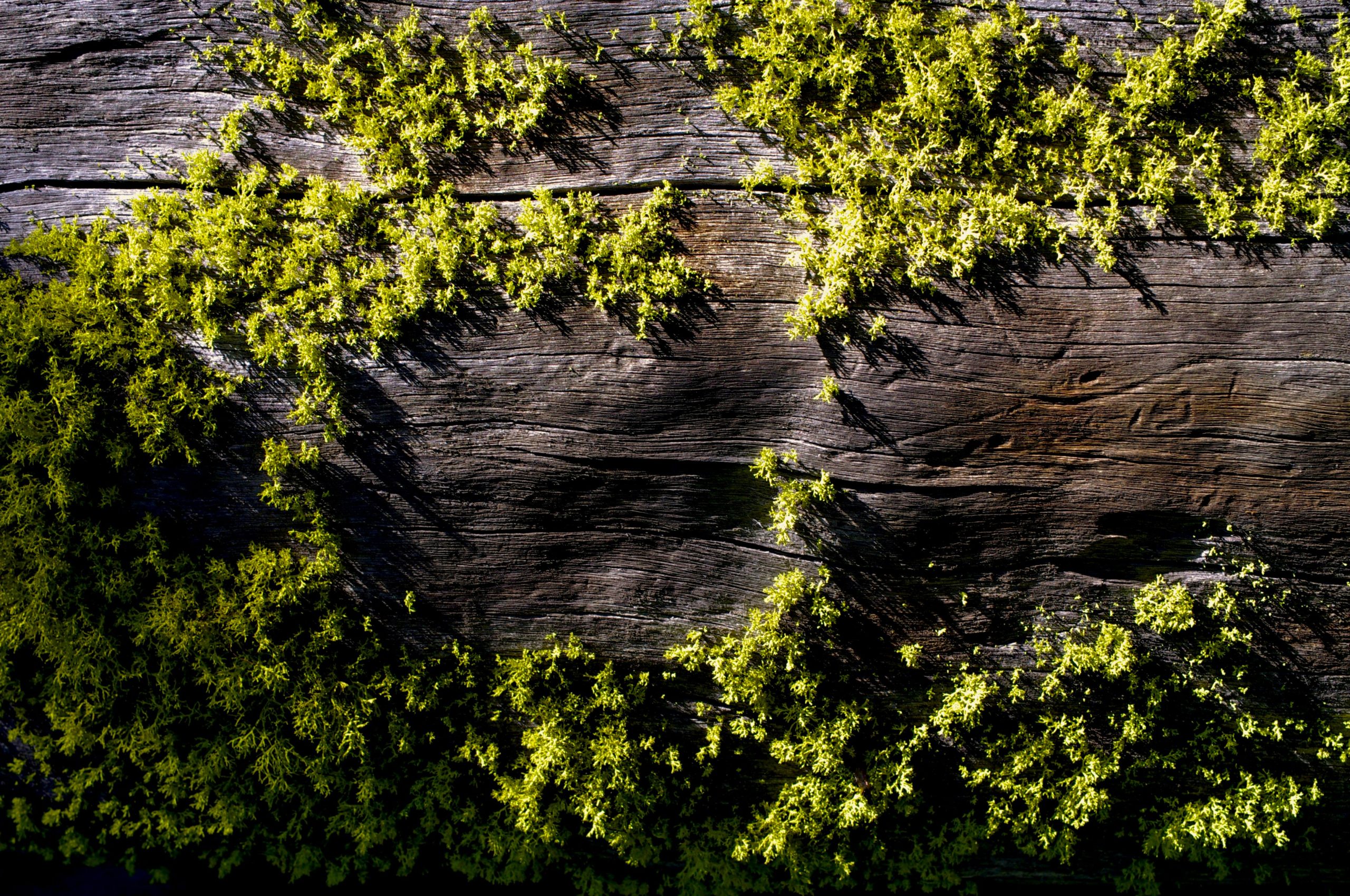
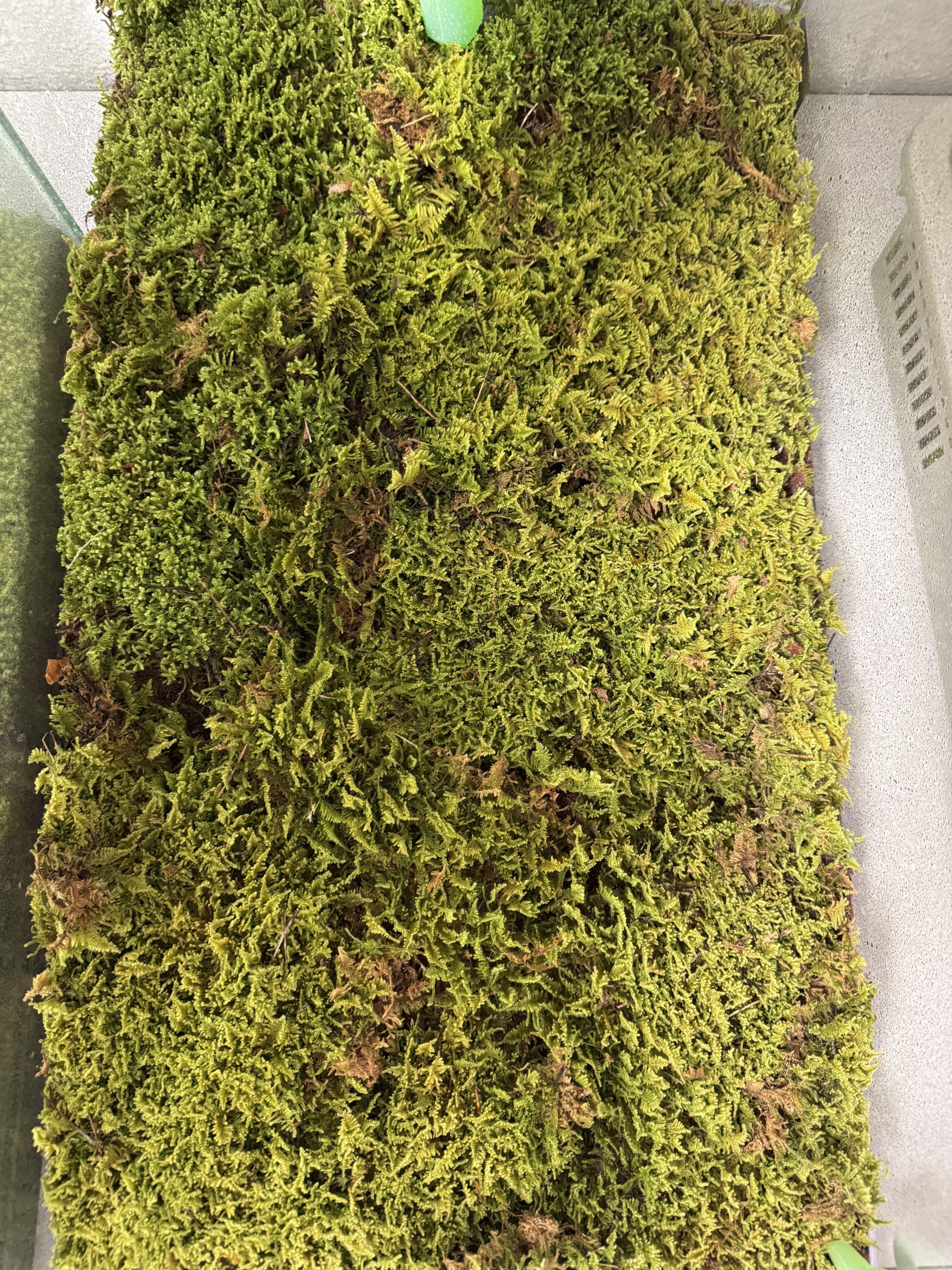
Based on the results of previous studies, I selected Hypnum plumaeforme and Racomitrium canescens (Figure 1), which grow well even in dry environments and under strong sunlight, for use in seed balls5,6. The moss samples were purchased from a commercial online supplier. After acquisition, both species were transplanted into the same culture soil and maintained under identical conditions for one week to allow acclimation prior to the experiments. All experiments were conducted in a shaded environment with limited direct sunlight, at temperatures ranging from 17–20 °C, a relative humidity of approximately 54% and 15–20% moisture content.

Seed Ball Creation and Moss Suitability Experiment
The moss species Racomitrium canescens and Hypnum plumaeforme, along with culture soil, red clay, water, kitchen wrap, water tanks, and ash were used for the experiment. The initial seed ball production experiment involved mixing culture soil and red clay at a ratio of 3:1. Seed balls were produced by mixing 300 g of culture soil, 100 g of red clay, and 90 g of water until a uniform consistency was achieved. Finely chopped Hypnum plumaeforme was added, and the mixture was kneaded with water, wrapped in kitchen wrap, and dried for approximately 24 hours. The seed balls were spherical in shape with a diameter of 1.5–2 cm. Separate seed balls were prepared using Racomitrium canescens and Hypnum plumaeforme, and both types were placed in the same container filled with cultivation soil for observation. The key point of observation was whether the moss inside the seed balls survived8. However, in the first seed ball production experiment, 11 seed balls containing Hypnum plumaeforme were produced. Only 1 survived (9.1%), while the remaining 10 died after drying (Figure 2). This outcome was presumed to be due to tissue damage caused by cutting Hypnum plumaeforme into smaller sizes, which affected its survival.
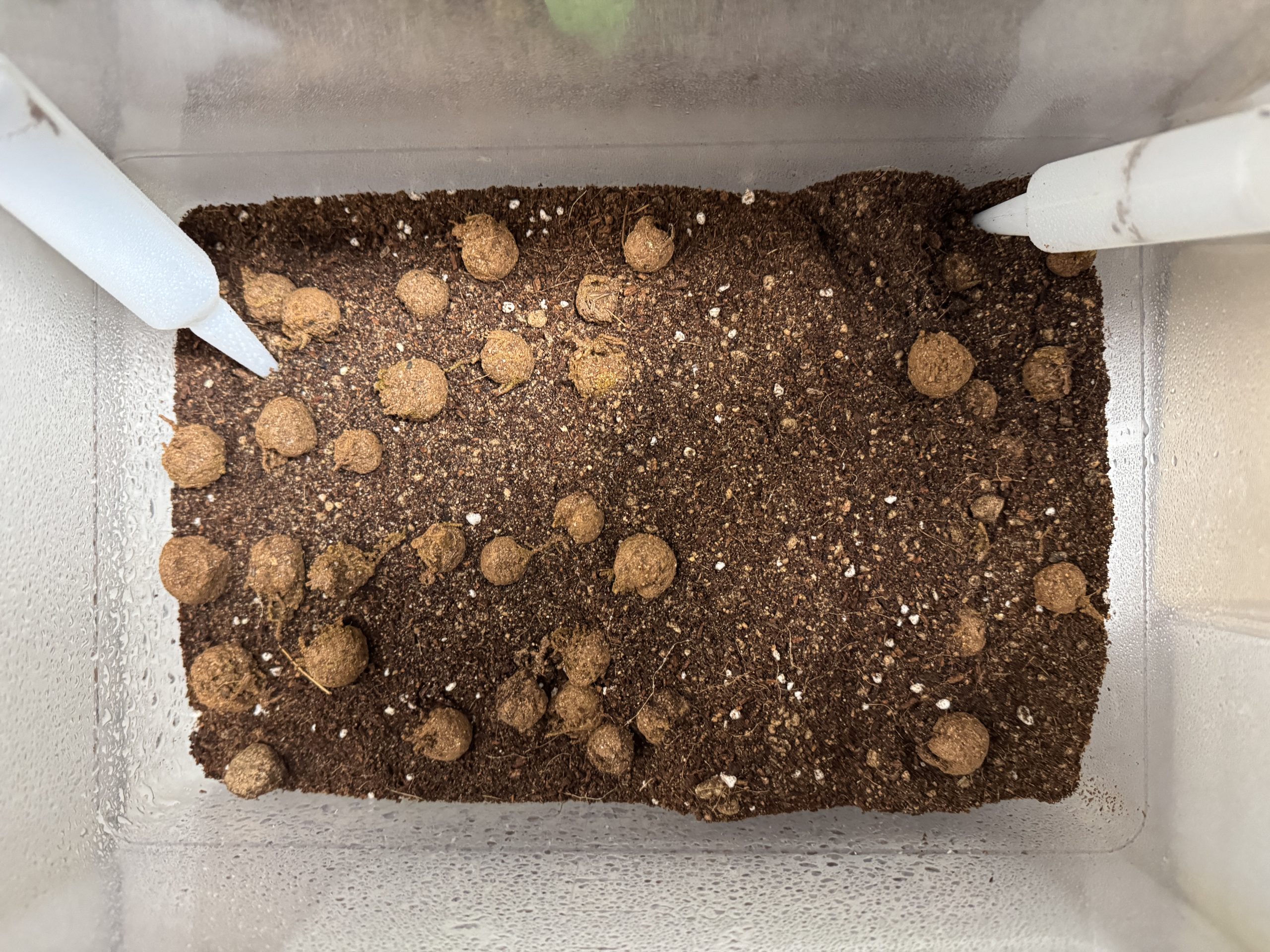
Accordingly, a separate comparative experiment was performed to determine which type of moss was more suitable for use in seed balls. In this experiment, each moss species was cut into fragments of 0.5–1 cm, which is the actual size used for embedding in seed balls, and then cultivated in soil for observation. Here again, the primary observation was whether the moss survived. After placing Hypnum plumaeforme and Racomitrium canescens on culture soil in two water tanks and observing them for 2 weeks, none of the 14 H. plumaeforme fragments survived (0%), while 12 of the 14 R. canescens fragments survived (85.7%) (Figure 3). Thus, as Racomitrium canescens is small and survives well even when finely chopped, it was considered a more appropriate species for seed ball application.


A second seed ball experiment was conducted (Figure 4), and Racomitrium canescens was confirmed to survive for more than 3 weeks, indicating a strong biological basis for its utilization in seed balls. It was also assumed to be highly suitable for application in areas affected by forest fires.
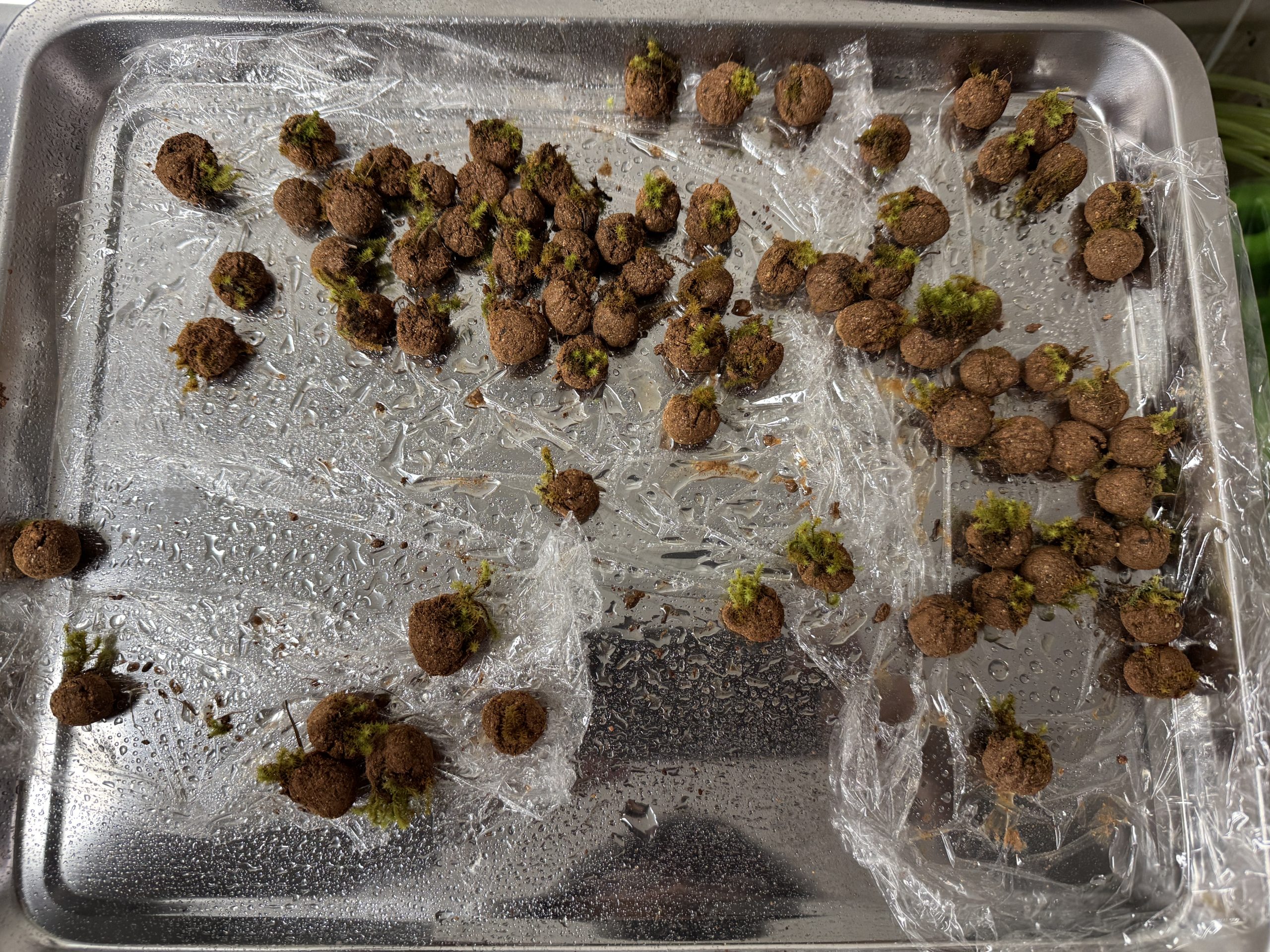
This experiment was conducted in the same way as the first experiment, with seed balls placed in a container with cultivation soil to observe survival.
Forest Fire Environment Simulation Experiment
An experiment was designed to determine whether Racomitrium canescens could survive in soil covered with ash, simulating post-forest fire conditions. A water tank was filled with soil, the surface was covered with ash, and finely chopped moss was placed on one side while moss embedded in seed balls was placed on the other for observation (Figure 5).
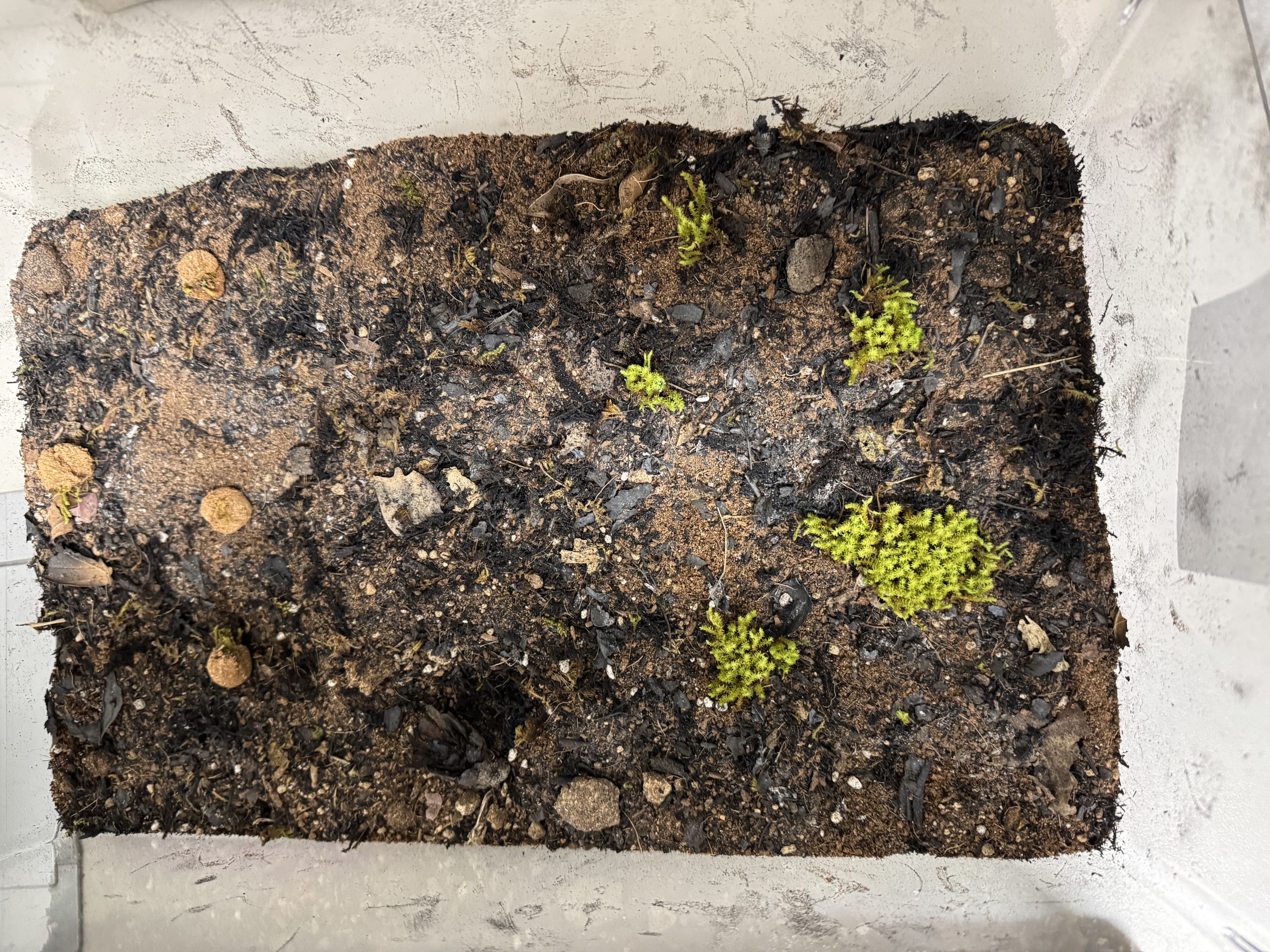
In this experiment, designed to simulate post-wildfire conditions, the surface of the cultivation soil was covered with ash instead of leaving it bare. Moss and seed balls were then placed on top to examine whether they could sur vive under such conditions. The size of the seed balls was the same as in the previous experiments (1.5 – 2 cm in diameter), and the moss fragments were 0.5 – 1 cm in length.
After 3 weeks, both the seed balls and the loose fragments of Racomitrium canescens survived (100%). This experiment provided key foundational data supporting the scientific feasibility of applying this method to areas affected by forest fires.
Dispersal Device Selection
The crucial factors in device production are durability (to maintain its functions even in the harsh environment immediately after forest fires) and biodegradability (to allow it to decompose naturally after use). Based on these considerations, starch-based plastic, paper pulp composite material, and polyhydroxybutyrate (PHB) plastic were compared.
Starch-based plastic is environmentally friendly and highly biodegradable, but it has difficulty maintaining its shape during rolling due to its vulnerability to moisture and its tendency to swell and break easily. Paper pulp composite materials are also sensitive to moisture and collapse easily, even with rain or humidity, making them unsuitable for use as structural materials.
In contrast, PHB is both biodegradable and durable. It can withstand environmental changes after forest fires, naturally decomposes over time, and is non-toxic and harmless to the environment. Although its production cost is relatively high, this is acceptable considering the purpose and effectiveness of the device9. Therefore, PHB was selected as the material for the seed ball dispersal device.
Results
In the first seed ball production experiment, 11 seed balls containing Hypnum plumaeforme were produced. Only 1 survived (9.1%), while the remaining 10 died after drying. In the comparative experiment, 14 fragments of Hypnum plumaeforme were tested and none survived (0%). In contrast, 14 fragments of Racomitrium canescens were tested and 12 survived (85.7%) after three weeks, confirming that it is a highly viable species for seed ball application.
In the second seed ball production experiment, 78 seed balls containing Racomitrium canescens were produced. After three weeks, 54 survived (69.2%), while 24 did not(Figure 4).
| Total Seed Balls | Survived | Survival Rate |
| 78 | 54 | 69.23 |
In the ash simulation experiment, 6 seed balls and 6 loose fragments of Racomitrium canescens were tested. All 12 samples survived (100%) after three weeks.
Notably, the fact that the moss survived without dehydration even in ash demonstrated the species’ excellent drought resistance and resilience. Similar results were observed when the experiment was repeated under the same conditions, increasing the reliability of this strategy for field application. These findings demonstrate that the use of seed balls is a feasible method for natural vegetation restoration.
Discussion
In this study, a method for restoring soil devastated by forest fires was proposed, which involved producing seed balls embedded with Racomitrium canescens and dispersing them using a specialized device. Racomitrium canescens was confirmed to be a suitable moss for seed balls as the species is small and sustains minimal damage when cut10. In quantitative terms, it showed survival rates of 69–86% depending on the experiment, while Hypnum plumaeforme showed 0–9% survival. This clear contrast supports the suitability of R. canescens for seed ball application.
The survival of Racomitrium canescens under laboratory conditions suggests a potential for short-term establishment when dispersed using seed balls. This may represent an early step toward biocrust formation, but its long-term effectiveness in fire-affected soils remains uncertain11,12,13.In the ash simulation experiment, both seed balls and loose fragments of Racomitrium canescens showed 100% survival, demonstrating short-term resilience under post-fire soil conditions. These results provide preliminary support for the feasibility of seed balls as a restoration method14,15. However, their practical applicability in field conditions requires further testing and validation over longer timescales.
The second seed ball production experiment showed a survival rate of 69.2% (54/78) for R. canescens. This outcome indicates that, even under controlled laboratory conditions, R. canescens shows promise as a candidate for soil restoration using seed balls. In the ash simulation experiment, both seed balls and loose fragments of R. canescens achieved 100% survival after three weeks16. This suggests that R. canescens can tolerate barren, ash-covered environments typical of post-fire soils. Notably, the consistent survival observed in repeated ash simulation trials highlights the species’ strong drought resistance and resilience. The reproducibility of these results increases confidence in the reliability of seed ball-based restoration approaches. The short-term resilience of R. canescens, demonstrated by its ability to survive for more than three weeks in dry and ash-covered conditions, further underscores its suitability as a pioneer species for ecological restoration. While these findings are encouraging, long-term field validation remains necessary to confirm ecological integration and sustained survival.
The destruction of ecosystems by forest fires is a serious issue, as it leads not only to the loss of soil and vegetation but also to disruptions in biodiversity and ecological balance. The device designed in this study illustrates a potential approach to ecosystem restoration, inspired by natural principles, but its actual effectiveness remains untested.
This device utilizes wind as an energy source, moves autonomously without external power, and disperses seed balls. Because of these features, the device could potentially reduce labor requirements for seed ball distribution, but its actual contribution to soil restoration has not yet been demonstrated17. In particular, dispersing vegetation with strong environmental adaptability, such as Racomitrium canescens, may help initiate early biocrust formation, though its role in broader ecosystem recovery requires validation under field conditions.
This study has certain limitations, including the absence of long-term, field-based observations and the relatively small scale of simulated environments18. In addition, the complexity of applying laboratory findings to diverse real-world post-fire environments, such as variability in soil properties, climate conditions, and ecological interactions, was not fully considered19,20,21. These limitations should be addressed in future research through larger-scale, long-term, and field-based studies.
Although this study remains at the proof-of-concept stage, moss seed balls could be applied as an initial step to promote soil recovery22. Once the soil is stabilized, this approach could then be integrated with existing post-fire restoration strategies, such as reforestation and erosion control, to enhance the overall effectiveness of forest recovery.
Acknowledgments
This research was supported by Daegu Il Science High School, which provided funding and facilities for the experiments.
References
- Dollery, R., Bowie, M. H., & Dickinson, N. M. (2022). The ecological importance of moss ground cover in dry shrubland restoration within an irrigated agricultural landscape matrix. Ecology and Evolution. [↩] [↩]
- Alexis, M. A., Rasse, D. P., Knicker, H., Anquetil, C., & Rumpel, C. (2012). Evolution of soil organic matter after prescribed fire: A 20-year chronosequence. Geoderma. [↩]
- García-Carmona, M., Lepinay, C., García-Orenes, F., Baldrian, P., Arcenegui, V., Cajthaml, T., & Mataix-Solera, J. (2022). Moss biocrust accelerates the recovery and resilience of soil microbial communities in fire-affected semi-arid Mediterranean soils. Science of the Total Environment. [↩]
- Siwach, A., Kaushal, S., & Baishya, R. (2021). Effect of mosses on physical and chemical properties of soil in temperate forests of Garhwal Himalayas. Journal of Tropical Ecology. [↩]
- Park, J. H. (2023). Soil restoration by using moss: A case study of Donary Oreum in Jeju Island (Master’s thesis). Seoul National University, Seoul, Korea. [↩] [↩]
- Korea Institute of Planning and Evaluation for Technology in Food, Agriculture, and Forestry. (2010). Industrialization of moss bioresources as a novel cash ornamental plant substituting for rice (National R&D Report). Ministry of Agriculture, Food and Rural Affairs. [↩] [↩]
- Pedrini, S., Stevens, J. C., & Dixon, K. W. (2021). Seed encrusting with salicylic acid: A novel approach to improve establishment of grass species in ecological restoration [↩]
- Pedrini, S., Balestrazzi, A., Madsen, M. D., Bhalsing, K., Hardegree, S. P., Dixon, K. W., & Kildisheva, O. A. (2020). Seed enhancement: getting seeds restoration-ready. Restoration Ecology [↩]
- Kim, J., Gupta, N. S., Bezek, L. B., Linn, J., Bejagam, K. K., Banerjee, S., Dumont, J. H., Nam, S. Y., Kang, H. W., Park, C. H., Pilania, G., Iverson, C. N., Marrone, B. L., & Lee, K. S. (2023). Biodegradation studies of polyhydroxybutyrate and polyhydroxybutyrate-co-polyhydroxyvalerate films in soil. International Journal of Molecular Sciences. [↩]
- Liu, C., Zhang, X., Li, Y., Yang, H., & Wang, Y. (2022). De novo transcriptome assembly and analysis of genes involved in desiccation tolerance in Grimmia pilifera. Plant Physiology and Biochemistry [↩]
- Reeve, S., Palmer, B., Cobb, P., Pietrasiak, N., & Lipson, D. A. (2023). Facilitating restoration of degraded biological soil crusts using mixed culture inoculation. Journal of Arid Environments [↩]
- García-Carmona, M., Lepinay, C., García-Orenes, F., Baldrian, P., Arcenegui, V., Cajthaml, T., & Mataix-Solera, J. (2022). Moss biocrust accelerates the recovery and resilience of soil microbial communities in fire-affected semi-arid Mediterranean soils. Science of the Total Environment [↩]
- Muñoz-Rojas, M., Doerr, S. H., Shakesby, R. A., & Winston, R. (2021). Restoring post-fire ecosystems with biocrusts. Journal of Applied Ecology [↩]
- Antoninka, A., Faist, A., Rodriguez-Caballero, E., Young, K. E., Chaudhary, V. B., Condon, L. A., & Pyke, D. A. (2020). Biological soil crusts in ecological restoration: Emerging research and perspectives. Restoration Ecology [↩]
- Gage, H. J. M., Newmaster, S. G., & Paré, D. (2024). Assessing moss transplant methods to enhance post-disturbance recovery [↩]
- Grover, H. S., Belnap, J., & St. Clair, S. B. (2020). Post-wildfire moss colonisation and soil functional responses in southwestern USA forests. International Journal of Wildland Fire [↩]
- Pedrini, S., Lullfitz, D., Fontaine, A., Just, M., & Turner, S. (2025). Effectiveness and economic viability of native seed pelleting in large-scale seedling production for revegetation. Science of the Total Environment [↩]
- Withana, P. A. V. H., et al. (2025). Biodegradable plastics in soils: sources, degradation, and impacts on soil health. Environmental Science: Processes & Impacts [↩]
- Guida, G., Eldridge, D. J., Serpe, M. D., Rossi, F., & De Philippis, R. (2023). A review on effects of biological soil crusts on hydrological processes. Earth-Science Reviews [↩]
- Campanale, C., Volpe, M. G., Uricchio, V. F., & Massarelli, C. (2024). A critical review of biodegradable plastic mulch films in agriculture: Environmental fate and soil health implications. Science of the Total Environment [↩]
- Liwarska-Bizukojc, E. (2021). Effect of (bio)plastics on soil environment: A review. Science of the Total Environment [↩]
- Jech, S. D., Day, N., Barger, N. N., Antoninka, A., Bowker, M. A., Reed, S., & Tucker, C. (2023). Cultivating resilience in dryland soils: An assisted migration approach to biological soil crust restoration. Microorganisms [↩]