Abstract
The revival of South Korea’s traditional garments in the 21st century has been reflected in diverse representations across K-pop, fashion, and global media. However, this raises the question of whether this revival is an act of cultural preservation or commercialization. The study’s principal analysis examines how the modern revival of cultural heritage through global media and consumerism reshapes cultural value, traditional authenticity, and the market structure surrounding Korean traditional garments. The study primarily employs a mono-method approach, focused on qualitative methods through the compilation of interviews with professionals in the field. Interview findings indicate that, although professionals differ in their prioritization, they commonly observe that both domestic and international youth respond more positively to traditional garments when reinterpreted through modern adaptations. Likewise, a review of secondary data, including global media data, fashion market reports, and existing academic literature, contextualizes these findings within broader trends that the recent global visibility and popularity of traditional garments are largely driven by media exposure and aesthetic consumption within international markets, despite the limited cultural and historical understanding of the Korean traditional heritage. The study concludes that this revival should not be understood as a binary between preservation and commercialization, but rather as a negotiated process of refining cultural heritage in the digital age. This negotiation directly shapes cultural understanding among audiences, emphasizing the need to balance authenticity and accessibility to foster a sustainable cultural revival, ensuring that Korean traditional garments remain both a living heritage and a symbol of modern Korean identity.
Keywords: Korean Identity, Traditional Garments, National Heritage, Cultural Preservation, Commercialization, Soft Power, Global Media
Introduction
Korean traditional garments, collectively referred to as “Hanbok,” are gaining global visibility through cultural diffusion of K-pop, fashion, and media. While contemporary representations often emphasize visual appeal and consumer demands, Hanbok is not merely a stylistic or aesthetic artifact. Rather, it is a historically layered cultural system shaped by social hierarchy, political authority, and everyday life across different historical periods. The contemporary global visibility of Hanbok, therefore, reflects an ongoing tension between cultural heritage and stylistic reinterpretation. This study critically investigates how media visibility, commercialization, and cultural preservation can be aligned to strike a balance between cultural preservation and aesthetic innovation.
Historically, hanbok functioned as an umbrella concept encompassing a wide range of garments, including both everyday attire and highly formalized official dress. Within this broader tradition, official garments, such as Gwanbok (official robes), Jobok (court attire), and Yongbok (military clothing), represented the most codified expressions of Hanbok, embodying state authority, Confucian values, and social hierarchy1. However, the historical legacy and function of codified attire that categorized social status were not only simplified to modern adaptation but also replaced with Western-style clothes2. Today’s rapid spread of Korean traditional garments through the media is a double-edged sword. The global spread of Korean culture has evolved into a form of soft power. In particular, K-pop, which shapes modern Korean identity through music, dramas, and movies, has expanded the scope, reaching international audiences and commodifying everything Korean3. However, the transformation and adaptation of traditional garments for convenience, visual appeal, and global commercialization have raised concerns about the erosion of historical authenticity and cultural significance.
To address this issue, the study primarily focuses on the representation and reinterpretation of Korean traditional garments across media, fashion, and cultural industries, rather than on individual consumer behavior or large-scale statistical trends. Methodologically, this research gathered direct interviews from professionals in the field; however, this approach limits the scope to perspectives drawn from interviews with three industry experts. The review of secondary sources provide theatory-driven analytical framework for the study. Stuart Hall’s Representation Theory guides the analysis of how media constructs and reshape the meaning of Hanbok through repeated visual and narrative representations, informing the study’s focus on media portrayals and symbolic transformation4. Joseph Nye’s concept of Soft Power provides a lens for understanding how the global exposure of Hanbok contributes to Korea’s cultural influence while introducing tensions between the opportunity of gaining national branding while losing authentic cultural preservation5. Homi Bhabha’s theory of Hybridity further frames the revival of Hanbok as an active process in which traditional elements are selectively adapted within global consumer culture2. These theoretical frameworks directly align with the study’s objective, methodological design, and interpretation of findings by studying the new meaning of Hanbok through media representation, cultural power, and hybrid identity formation in the digital age.
Accordingly, this study is guided by the following research question: To what extent is the modern revival of Korean traditional garments in media, fashion, and pop culture driven by cultural preservation versus commercialization, and how does this dynamic shape cultural understanding among domestic and international audiences?
Methods
Research Design
The study employs a qualitative research design to understand the revival of Hanbok in relation to issues of authentic cultural preservation and global commercialization. The approach is operationalized through theory-guided analysis of secondary sources in the academic literature and media, as well as primary interviews with industry professionals. While the theoretical frameworks of representation, soft power, and hybridity inform the reinterpretation of Hanbok in the digital world, interview data from a fashion CEO, a Hanbok CEO, and a Hanbok designer are synthesized to present diverse expert perspectives. Together, these qualitative methodology is well-suited to investigating the experiences of cultural meaning, authenticity, and media-driven heritage transformation.
Data Collection
Google Scholar and JSTOR were used to identify credible academic literature on the historical evolution and cultural significance of Korean traditional garments. The database search was conducted between July and October of 2025. The search string focused on key conceptual categories, including cultural authenticity, commercial appeal, youth engagement, and global perception.
Media trends were identified through systematic qualitative observation and comparison of recurring themes in Hanbok representations and functions across K-pop performances, historical dramas, promotional campaigns, and Hanbok rental websites for tourists. Patterns were determined by examining context, style, and reception of Hanbok reinterpretation across these platforms. Media examples were selected based on the following inclusion criteria: (1) high visibility or wide public reach, either domestically or internationally; (2) explicit incorporation of hanbok or Korean traditional garments-inspired and related design; (3) relevance to contemporary cultural production between the 2010s and mid-2020s. Hence, media examples that were excluded if the content was limited in reaching broad audience or lacked cultural, symbolic, or commercial emphasis of hanbok or “K-culture.”
To complement the secondary data, primary interviews were conducted online to gather insider industry insights and examine how traditional Korean garments are produced, marketed, and perceived today. The interview protocol was designed to explore four core themes: (1) perceptions of cultural authenticity and historical responsibility, (2) the role of media and globalization in shaping Hanbok’s contemporary image, (3) professional strategies balancing preservation and commercialization, and (4) perceived differences between domestic and international audience reception.
All interviews were recorded with the participants’ prior consent and subsequently transcribed. The participants were selected through purposeful sampling based on expertise criteria in: (1) professional leadership or senior-level experience in the Hanbok or fashion industry, (2) direct involvement in the design, production, branding, or commercialization of Hanbok or fashion-related products, and (3) sustained engagement with domestic or international audiences through media, retail, or cultural platforms. These participants were drawn from distinct professional roles for comparative insights across sectors.
Data from both secondary and primary sources were extracted and analyzed through qualitative thematic analysis. The study employed theoretical coding to identify linkages between theoretical frameworks and the causes and implications of the spread of Korean traditional garments, examining whether they are preserved for cultural purposes or exploited for commercial gain. The secondary audience-percention surveys included quantitative data of reported percentages of domestic and international audience response to Hanbok representations in popular media content. Yet, quantitative analysis was restricted to descriptive statistics such as frequency and proportional comparison, and was not performed for cause-and-effect analysis. Since these data were drawn from secondary sources rather than an original survey, they are interpreted as being useful to support the analytical reliability of broader trends rather than to establish statistically generalizable conclusions.
Data Analysis
This study employs a theory-driven analytical framework in which Stuart Hall’s Representation Theory, Joseph Nye’s Soft Power, and Homi Bhabha’s Hybridity directly inform the coding and interpretation of both primary and secondary data. Rather than applying these theories descriptively, they are operationalized as analytical lenses that guide the identification of recurring themes, patterns, and contrasts in the phenomenon of Hanbok’s reinterpretation through global digital media and commercialization.
Hall’s Representation Theory categorizes the coding of media content and interview data related to visual framing, symbolic meaning, and the recontextualization of Hanbok in digital media. Nye’s Soft Power framework informs the coding of global visibility, cultural attraction, and national branding, particularly through the current international appeal of “K-culture.” Bhabha’s concept of Hybridity informs the coding of design adaptations that blend traditional elements with contemporary forms, as evident in media and fashion. Within this framework and coding, empirical findings from interviews and media analysis are consistently examined in relation to the study’s objective.
Ethical Considerations
The study followed established ethical principles for non-invasive social science research. All secondary data were obtained from publicly accessible, legally sourced materials. For primary interviews, participants provided consent prior to the interviews and were informed of their right to withdraw at any time; no sensitive information beyond professional roles was collected or reported.
Historical Context
The Evolution of Korean Traditional Garments
The history of traditional Korean clothing is far from simple, with numerous traditions and procedures that dictate the way individuals dress, reflecting their political authority, social status, and cultural identity. Its value extends beyond mere means of covering the body, serving as a visible representation of power and legitimacy, while also reflecting Confucian values. From the Three Kingdoms period onward, Korean clothing systems differentiated rank and status through color, headgear, and ornament6. During the Joseon Dynasty, Gyeongguk Daejeon (National Code) further institutionalized social status by categorizing Jobok into nine ranks and detailing differences in headgear, robe types, and footwear. By the late Joseon, the core structure remained the same; only the fourth rank and above wore Jobok, while lower ranks wore Heukdanryeong (black robes)6. In this way, Hanbok—particularly in its official forms—functioned not only as clothing but as a visual language of governance, legitimacy, and order within Korean society. The meaning and form of Hanbok continued to evolve in response to social and political change.
During the Gaehwagi period in the 19th century, the concept of “Hanbok” was further solidified into a traditional garment with distinct features in contrast to Western dress. Yet, practical adaptations were introduced for comfort and mobility, such as shortened Jeogori, widened skirts, and the removal of restrictive ornaments. Following the Gabo Reform, historical legacy and function of official attire was further simplified, and government uniforms were replaced with Western-style uniforms2. These transitions illustrate that Hanbok has never been static; rather, its transformations have consistently reflected broader historical, ideological, and cultural shifts during each era.
The Origin of the Korean Traditional Garments
The Korean traditional clothing system originated from the Three Kingdoms period (57 B.C. – 668 A.D.), when Baekje (18 B.C. – 660 A.D.), Goguryeo (37 B.C. – 668 A.D.), and Silla (57 B.C. – 935 A.D.) occupied the Korean Peninsula7. From these periods, the distinction of rank was expressed by the color of robes, headgear, and ornaments worn in social attire1. Accordingly, clothes began serving as a visual representation of the political and social hierarchy. Garments served to signify authoritative rank with distinct characteristics.
For example, in Baekje, commoners wore wider pants with longer jeogori, while court robes showed influences of southern China; in Goguryeo, there was no distinction between common men’s and women’s hanbok and official garments emphasized martial and military elements; and in Silla, hanbok was primarily influenced by the Dang Dynasty’s fashion with social ranks strictly differentiated by color of attire7.
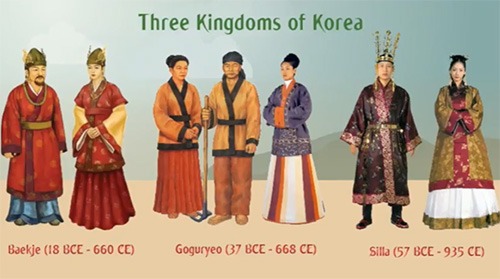
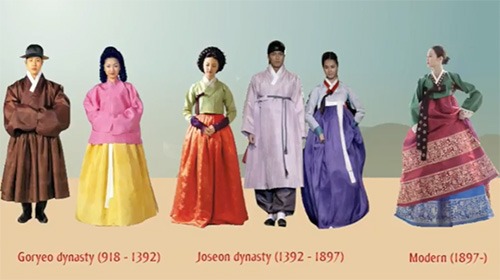
These rigid garment classification systems continued to influence the clothing of the Goryeo (918 – 1392) and Joseon (1392 – 1897) dynasties. In the late Goryeo Dynasty, the Ming Dynasty’s vestimentary system acculturated to Korean culture, serving as a framework to refine the Joseon Dynasty’s garments8. The Goryeo Dynasty’s clothing system exemplifies a blend of Buddhist aesthetics, featuring ornaments adorned with gold and silver. This was also influenced by the Song and Yuan dynasties through active cultural exchange, leading to Ming China’s vestimentary style being the framework for Joseon’s attire system. As such, Korean garments underwent evolutions, adopting the historical context of different periods, and were never static.
Joseon Dynasty’s Formalization of the Gwanbok System
The Joseon Dynasty marked a turning point in the gradual transformation of Korean traditional attire, as it strictly formalized the Gwanbok system. The Gyeongguk Daejeon made strong interventions, separating official attire into nine ranks of Jobok, which are traditional wear worn during important occasions. However, during the late Joseon Dynasty, only officials of four ranks and above were allowed to wear the Jobok, while lower officials wore black robes called Heukdanryeong1. Small changes also showed shifting values; the Jungdan (the middle garment) changed from white to blue and green, and leather shoes were replaced with cotton1. The detailed modifications were tailored in response to political, social, and economic contexts. For instance, the yongbok contained different values depending on the occasion, like wartime, royal processions, missions, and to express Korea’s sovereignty1. Despite the evolution of traditional attire throughout the centuries, the main groundwork of Joseon official garments has remained the last form of Korean traditional clothing to this day, reflecting the Confucian ideology that created a social and political order.
Women’s Danryeong
Although it is often believed that Gwanbok was only associated with male officials, archaeological research shows that women also wore such official attire, known as danryeong. In 2002, discoveries showed remnants of a female corpse dressed in danryeong, suggesting that women have also worn official garments8. It featured unique designs: cylindrical sleeves, French seams, and double sleeves to attach Hansam (hand covering layers). However, it also adopted the collar design from men’s danryeong and later became the model for the wonsam (a ceremonial wear for women). Such an official garment, specifically designed for women, not only reflects the creation of distinct female codes of authority but also demonstrates that official attire expanded beyond expressions of male-centered authority. This highlighted that Confucian values were represented not only in political and social hierarchies but also in gender roles.
Results
Theoretical Applications
By applying theoretical frameworks, the revival of Korean traditional garments can be understood as a multi-layered cultural phenomenon shaped by modern contexts of meaning-making, adaptation, and commercialization.
Stuart Hall’s Representation Theory
Stuart Hall’s Representation Theory provides a framework for understanding the cultural revival of Korean traditional garments, which acquire new meanings through media circulation. The theory posits that the media does not alter reality directly, but rather actively constructs symbolic meaning through repeated framing of cultural objects within specific visual and narrative context5. Through global media platforms, Korean traditional garments are increasingly represented not only as historical attire but as a contemporary aesthetic associated with modern Korean identity. This representational framework shifts the association of traditional garments from Confucian values, power, and legitimacy into flexible cultural icons. Their visibility, as evidenced by K-pop performances, collaborations between global fashion brands and Korean traditional garments, and stylized media portrayals, detaches traditional garments from their original social and political functions and places them within the global economy.
This process of representational reconstruction is also supported by the primary interview data. What was consistently observed among industry practitioners was that younger domestic audiences and foreign audiences tend to respond better to modern versions of hanbok, regardless of whether historical symbolism is reduced, especially when it has been reinterpreted in contemporary form. For instance, interviewees mentioned how the traditional features are frequently abstracted or simplified to make them more marketable and globally appealing. This empirical evidence highlights that Korean traditional garment gaining collective recognition shows how media-driven framing actively moves Hanbok’s image from Confucian authority and social hierarchy to flexible cultural icons branded as “K-style” or “K-beauty.” Nonetheless, the finding also complicate limitation in Hall’s theory. Although representation construct new meanings often effectively for modern adapation, representation ultimately reshapes cultural heritage that often erode historical depth, raising critical concerns about sustaining authenticity and sustainability.
Joseph Nye’s Soft Power
Joseph Nye’s concept of Soft Power defines power as the influence that affects others to achieve a result, differentiating between aggressive hard power and persuasive soft power4. Soft power comes from attraction – culture, values, and policies that naturally draw interests4. Although the concept is sometimes criticized for being abstract, it remains essential for understanding global trends4. Since Soft Power operates through attraction from the influence of culture, values, and visual appeal, this explains why Hanbok’s representational shifts gain international traction4. The global circulation of modern, stylized, and popular appeal of Hanbok functions as a form of cultural appeal that enhances South Korea’s Soft Power. In other words, this appeal develops national branding within broader expansiono of K-pop, dramas, fashion, and visual media.
Although traditional attire has been modified to better appeal to global tastes, this strategic use in Soft Power also creates tension between culture’s authentic preservation and global commercialization. While the aesthetic adaptation of traditional garments increases global visibility and attractiveness, it simultaneously reframes cultural meaning according to audience values4. For domestic audiences, Hanbok remains as a symbol national pride, tradition, and identity, closely tied to social and political representation. In contrast, for global audiences, its appeal often lies in its exotic cultural design and fusion of modern style, as seen through popularized visual media content.
However, critics of Soft Power argue that the boundary between Soft and Hard Power is often blurred, as cultural attraction frequently depends on underlying economic strength, institutional support, and global media industries. In the case of hanbok, its international visibility is closely linked to the commercial infrastructure of the Korean entertainment industry, suggesting that attraction may not operate independently of structural coercion. Moreover, the divergence of audience reception demonstrates that Soft Power does not merely promote culture but selectively amplifies aspects that resonate with global consumer perferences. This limitation complicates efforts to maintain cultural authenticity, implying that Soft Power can amplify cultural visibility abroad without necessarily strengthening cultural understanding or continuity in domestic level.
Homi Bhabha’s Hybridity
Homi Bhabha’s concept of Hybridity explains the negotiated process of preservation and globalization in the revival of Korean traditional garments. Bhabha argues that the past does not define cultural identity; rather, it is formed in the “third space” where multiple traditions intersect9. In the case of Hanbok, hybridity is evident in both historical adaptation, such as the shortened Jeogori to the waist and widened skirts during the Joseon Dynasty, and the contemporary reinterpretation through K-pop performances by groups like Blackpink and BTS, where traditional elements are reinterpreted with stylized taste for global audiences2,10. These hybrid representations suggest that the contemporary revival of hanbok is driven less by formal historical education and more by mediated cultural consumption through digital entertainment.
While such hybridity increases accessibility and relevance for younger generations and global audiences, it simultaneously develops cultural dilution. The global commodification of culture inevitably risks erosion of cultural authenticity, and separating culture from context creates stereotyping and loss of identity. Nonetheless, Hanbok’s transformation illustrates the potential for cultural preservation and modernization through media and commercialization to coexist harmoniously within a hybrid space. This third space enables the re-signification of cultural continuity while risking the dilution of historical meaning.
Modern Media Representation
Korean traditional garments, once classical attire, now function as a form of modern cultural capital on a global scale. Across media, tourism, and fashion, Korean traditional garments are reinterpreted beyond the original social, political, and ceremonial functions. Contemporary designs emphasize symbolic hybridity and modern beauty, often aligning with female empowerment by redesigning garments in more comfortable ways—such as shorter Jeogori, wider skirts, or the removal of inconvenient ornaments—so that Korean traditional garments can retain a cultural appeal while losing elements of the historical context11. These garments also become significantly performative, whereby spectacle outweighs authenticity10,11.
K-pop’s Global Virality
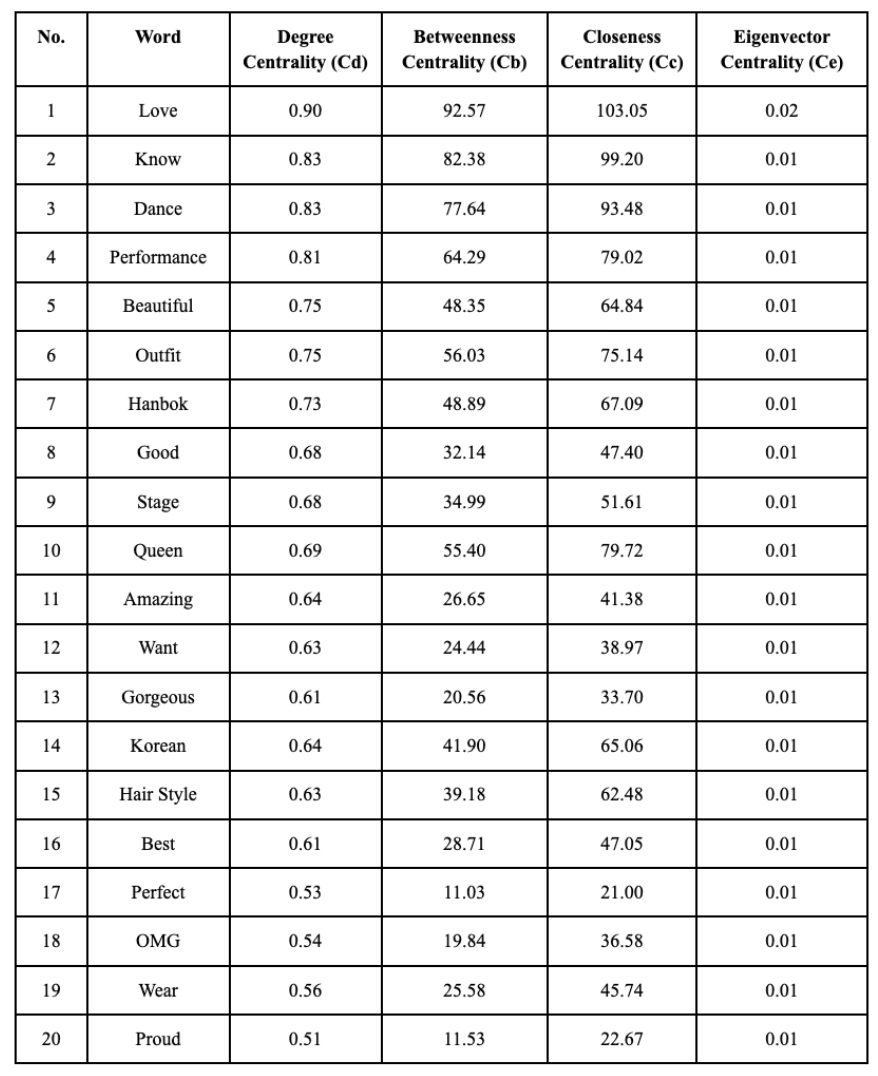
K-pop plays a major role in the global revival of Korea’s traditional garments. For example, BlackPink’s music video, “How You Like That,” which surpassed 200 million views within a few weeks, wore stylized hanbok outfits that combined traditional motifs with bold, modern jackets12,13. After the video release, the keyword “hanbok” in Google reached its highest level in a year, and online hanbok shops experienced increase in foreign customer from United States, Europe, and Asia12. In this study, these indicators are used as contextual evidence of increased global exposure rather than as direct measures of audience cultural understanding.
Although this manifests the impact of hanbok’s global revival, the audience reaction towards the new stylized hanbok was fragmented. Audience reactions discussed in this section are derived exclusively from secondary sources, including published audience-perception surveys, media reports, and platform-based engagement analyses cited in existing literature. The domestic audience values hanbok’s cultural authenticity and symbolic meaning, reflecting debates over tradition, modernity, and national pride10. In contrast, the global audience centers on admiration for visual aesthetics and performance quality, treating new hanbok as an emblem of K-pop’s global style rather than a traditional artifact. For example, 51.9% of Korean respondents expressed patriotic nationalism by using phrases like “self-esteem” and “pride”; however, 31.0% criticized the costumes for excessive exposure, arguing that they do not embody the original beauty and meaning of hanbok10. In contrast, 72.4% of the global audience found their performance outfits to be “exclusive and beautiful”14. These figures are interpreted through descriptive comparison rather than statistical analysis and therefore indicate general reception patterns rather than statistically generalizable conclusions.
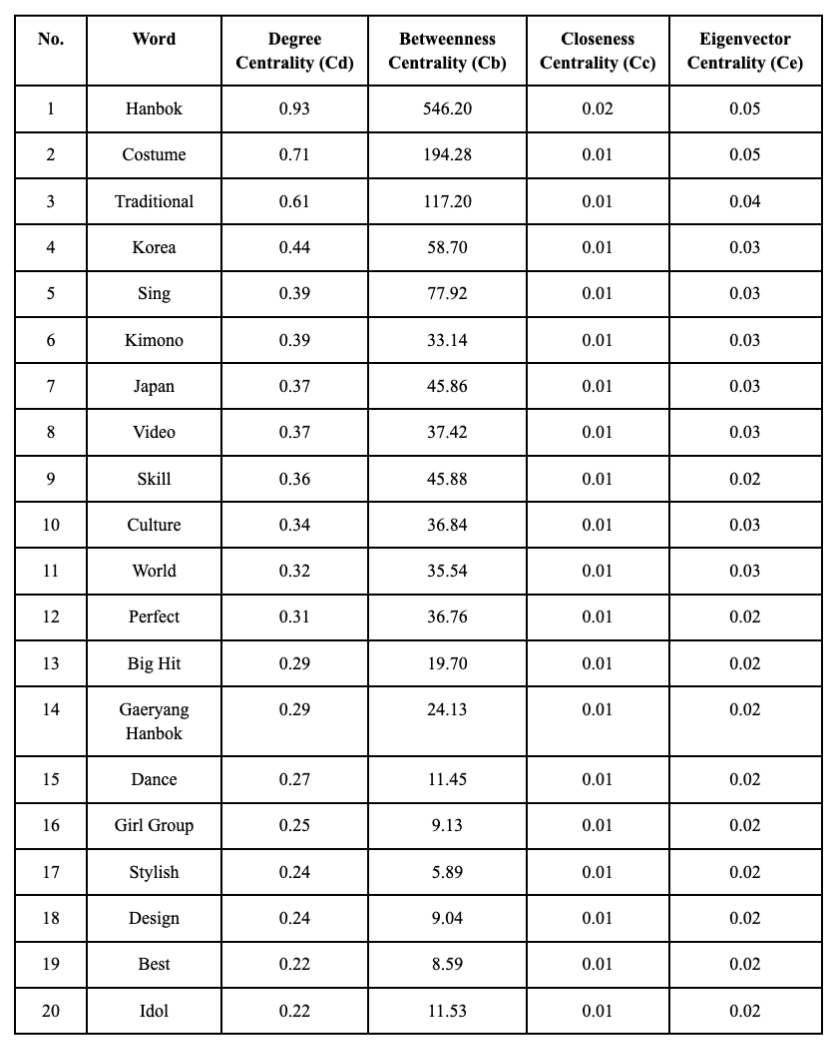
These cultural concepts have been consistently incorporated into idol performances. On her recent solo comeback in 2024, one of BlackPink’s members, Jennie Kim, has referenced values of Confucianism and Buddhism, featuring a non-traditional Hanbok with contemporary, avant-garde, surrealist aesthetics in her music video, “Zen”16. Moreover, BTS, the most influential K-pop boy group, showed a similar narrative in 2018. Their track “Idol”, featuring Suga’s solo video “Daechwita”, incorporated Hanbok into their dynamic performances13. This video went viral, drawing massive global attention and demonstrating Hanbok’s adaptability as a visual and symbolic element within global pop culture rather than as evidence of audience historical comprehension13. Such representational patterns in media are not limited to K-pop idol performances. Hanbok has also been prominently featured in globally distributed Korean historical dramas, such as Kingdom and Mr. Sunshine, which reintroduce traditional garments through high-budget streaming platforms and contribute to international perceptions of Korean heritage.
Tourism and Daily Cultural Experience
The surge in tourism helped popularize and redefine traditional Korean clothing as a cultural export commodity. Renting and wearing hanbok in historical tourist locations, such as Gyeongbokgung Palace or Bukchon Hanok Village, has led to a new niche industry, “hanbok tourism13. This ostensibly “authentic” Korean experience, marketed to tourists, reframes Hanbok not only as clothing but also as a symbol of modern Korean identity.
The success of Korean dramas and films has led to a revival in the popularity of traditional Korean garments. Kingdom (2019), Netflix’s first Korean drama to go viral, showcased Joseon Dynasty hanbok in cinematic form. Pachinko, Apple TV+’s drama, presented early 20th-century Korean life with detailed hanbok costumes17. Since these media representations attempt to associate hanbok with its original historical context and authentic cultural identity, they attracted more international tourists to experience Korea by wearing such traditional costumes in the settings they have seen in the media17. Recently, hanbok rentals by tourists increased 30% in the month following the release of the recent hit Netflix animation K-pop Demon Hunters (2025), suggesting the significance of the connection between media and tourism18
The Fashion Industry’s Commercialization
The heightened interest has enabled it to establish itself in the global fashion world. Designers like Miss Sohee and Leesle Hwang have creatively adapted and modernized hanbok elements, such as large skirts, elegant embroidery, and cropped jeogori, into gowns that have been showcased at fashion weeks in Seoul and Paris11. These fashion pieces are worn from everyday life to luxury red-carpet events. Also, foreign designers like Carolina Herrera, one of the most sought-after formalwear designers worldwide, launched a collaboration in 201719. The entire collaboration was displayed at the Museum of Arts and Design and debuted during the New York Fashion Week. However, global recognition of Hanbok may also create deep tension regarding cultural commodification and asymmetries of the global fashion system. In Western-centric high-fashion contexts, reinterpretations of Hanbok often occur, in which cultural meaning is compromised through luxury branding and market exclusivity. Consequently, access to Hanbok-inspired fashion is largely limited to affluent consumers, which may exacerbate socioeconomic disparities and reinforce perceptions of the Korean traditional garment as an elite commodity, thereby weakening the authenticity of its historical legacy.
Beyond its collaboration in high fashion, hanbok has become increasingly visible at international parties and events, as well as on social media posts featuring individuals wearing hanbok. Furthermore, many Korean college students in fashion studies are experimenting with traditional Korean fabrics, forms, and designs, demonstrating that hanbok is being adapted not only for ceremonial occasions but also for casual and expressive fashion across borders. However, this widespread adaptation may also risk transforming Hanbok into a simplified visual commodity, thereby overlooking the historical craftsmanship and cultural knowledge required to assess its authenticity and marginalizing local commercial supply chains.
According to the Hanbok Advancement Center, “The hanbok’s design has evolved along with the passing generations, though it continues to represent a distinct representation of national identity and cultural customs”19. This statement highlights continued tension between evolution and preservation, yet institutional narratives often expose the positive aspect, such as innovation and market growth, overlooking the downsides of cultural ownership and equitable representation. Consequently, while commercialization on fashion platforms expands Hanbok’s visibility and relevance, it also exposes how the global fashion industry can appropriate cultural heritage in ways that prioritize branding and profit over local craftsmanship, cultural meaning, and social equity.
Discussion
Diverging Perceptions Across Generations and Borders
Perceptions of Hanbok do not represent isolated attitudes. Instead, the findings below reflect a patterned divergence based on generational experience, media exposure, and market demand. Across Korean youth, global consumers, and industry professionals, hanbok serves simultaneously as a symbol of cultural heritage, a visual aesthetic, and a commercial product. Since these interact differently across domestic and international contexts, this suggests that the negotiation of cultural authenticity, accessibility, and commercialization across cultural boundaries and heritage is a viable possibility in the digital age.
Domestic Perspectives Among Korean Youth
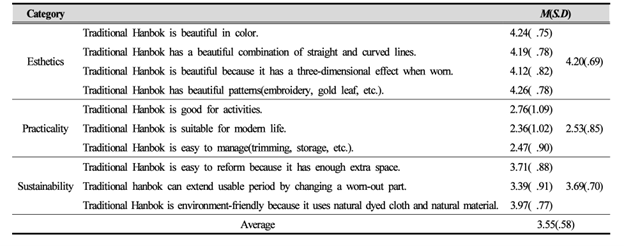
The public perception of Korean traditional garments among the young generation in Korea exhibits both admiration and ambivalence. Reported surveys indicate that aesthetic attraction towards Hanbok was quite positive. Based on observations of people in their 20s who had seen Hanbok being worn in royal palaces, traditional streets, or in hanok villages, 83.6% described Hanbok as “beautiful and attractive”20. Additionally, high school students reported that Hanbok is most frequently associated with elegance (75.8%), while some expressed that it is splendid (19.86%) or tacky (4.34%)20. However, these students preferred traditional, authentic Hanbok (57.54%) over fusion (19.18%) and modern daily Hanbok (6.16%)20.
While these survey results provide useful insight into generational attitudes, they represent a limited empirical snapshot rather than a comprehensive assessment of Korean youth perspectives. To strengthen analytical depth, these findings are triangulated with qualitative interview data and media observations discussed elsewhere in this study. The survey results suggest that Korean youth view Hanbok as both aesthetically pleasing and historically significant. However, most of them agreed that Hanbok is within the boundaries of being “formal,” “old-fashioned,” or worn only during “special occasions,” discouraging its frequent everyday wear14. This perception aligns with interview findings from industry professionals, who note that younger consumers are more receptive to hanbok when it is reinterpreted through modern silhouettes or integrated into streetwear and social media aesthetics.
Experts further claim that MZ generation, commonly referred terminology for Millennials and Generation Z in Korea, simultaneously view traditions as both “old” and “hip”21. This is especially true in media analysis, where Hanbok is paired with streetwear or popularized by social media21. Hence, survey data, industry experts’ perceptions, and media observations reveal a consistent pattern and an inevitable truth: admiration for Hanbok’s visual and symbolic value coexists with unease about its practicality and everyday functionality. This triangulation of analysis emphasises that generational ambivalence is not based on survey data alone but more on cultural and media forces shaping young people’s relationship with tradition.
International Reception and the Role of Tourism
International audiences encounter hanbok through the lens of media and tourism, resulting in a more visual and celebratory sense. Social media, in particular, has amplified this effect, where Seoul’s royal palaces have turned these sites into an appealing “Instagrammable” destination. Consequently, the hanbok rental industry has emerged at the center of the tourism economy, framing one of the primary cultural experiences for foreign visitors23.
However, the issue is that while these cultural experiences through rental shops create and reinforce a branding of Korean identity, they often prioritize visual appeal and are altered for commodification and convenience. For example, snap buttons are replaced with goreum ties, and mass-produced garments often feature lace, non-traditional patterns, and imported fabrics23. These modifications, while expanding accessibility, also invite criticism for diluting historical meaning. Some respondents in a survey study were uncertain whether hanbok originated from Korea, and some suggested that it came from China17. Yet, the modern experience of habok contributes to a positive cultural image, where most foreign visitors perceive it as “beautiful,” “unique,” or a “perfect blend of modern and traditional”17.
Moreover, the dataset is limited, as international reception may not be uniform across regions at both the local and global levels, depending on cultural proximity, historical familiarity, and modes of media consumption. Yet, obtaining such a dataset is challenging, as it is difficult to track the exact geographical extent and content that has been dispersed. However, recognizing these regional variations clarifies that global popularity does not reflect a singular foreign perspective but a spectrum of engagements that differ in depth, context, and cultural understanding.
Nonetheless, Hanbok has proven to be a powerful cultural symbol outside of the media. For example, California has designated a “Hanbok Day,” and Hanbok donations to students in San Francisco, illustrating how Hanbok serves as a means of deepening cultural engagement through diplomatic and educational tools17. This indicates that even when stripped of historical depth, it still fosters cultural connection and enhances Korea’s soft power. Therefore, the international reception of Hanbok is shaped by visual platforms, tourism practices, and cultural diplomacy. While this global popularity helps construct a favorable image of Korea, it also raises questions about authenticity and the depth of cultural transmission.
Expert Insights
According to the primary interviews conducted for the research study, the direct insider perspectives from the fashion and Hanbok industry practitioners and leaders reveal multiple layers regarding the current trend and future direction of Korea’s traditional garments. Interview data were analyzed using a operationalized qualitative thematic coding process. After transcription, interview responses were coded to identify recurring themes, which were then grouped into study-related themes. These themes included (1) commercialization and marketability, (2) cultural preservation and education, and (3) design accessibility and generational engagement. Each interviewee’s responses were coded across these categories to enable patterned comparison rather than anecdotal description.
A fashion brand CEO based in Seoul, Korea shared that the consumer’s desires and brand identity are shaped by the design itself21. This company blends culture into functional garments by adapting iconic traditional components, such as the Jeogori line or dongjeong design, or by evoking the sensation of Hanbok even in a more contemporary style, like jackets. The interviewee emphasized that Korean youth encounter Hanbok after it is reinterpreted rather than reproduced. However, the interviewee also mentioned that while international consumers value the design and rarity, they do not recognize the cultural significance of the item. This suggests that marketability and reinterpretation to align with consumer ideals are significant strategies for connecting with younger generations.
In contrast, a CEO of a Hanbok brand, also based in Seoul, Korea, highlighted the significance of conserving and educating the Korean tradition, warning that mass-produced rentals and foreign-made garments can distort the cultural meaning within the Hanbok’s design24. The interviwee interpreted the trend that Hanbok demand is concentrated among customers over fifty, while younger generations only purchase or rent Hanbok for special occasions. The interviewee argues about this problem, emphasizing that education, heritage preservation, and experiences should be prioritized over commercialization and reinterpretation of Korean culture24.
Lastly, a traditional Hanbok designer based in Los Angeles, shared a nuanced perspective25. While the designer believes in preserving historical accuracy in style and purpose, she argued that strict traditional designs will appear outdated, causing alienation among younger generations. For instance, the desinger incorporated Sokgot patterns and royal motifs into modern dresses, which younger consumers received positively. In addition, the designer also claimed that international customers often seem to show more respect for traditional design than Korean youth, such as a preference for authentic fabrics like silk. The designer believes that Hanbok needs to remain both accessible and comfortable to survive as a living heritage25.
Alignment with Research Objectives and Theoretical Application
The study presents three significant findings that directly address the research objective of examining whether the contemporary revival of hanbok is driven by cultural preservation or commercialization, and how this process shapes audience understanding across contexts. First, media representations, specifically K-pop, television shows or dramas, and social media are primary engines shaping the global image of Hanbok; however, quantitative media analysis shows that they often privilege visual spectacle over historical and cultural value26,27,28. Second, drawing on interview data and tourism-related secondary findings, the revival is largely driven by market forces, including reinterpretations for commodification through Hanbok rental shops and the fashion industry, rather than being spread through formal education29,30. Third, descriptive survey data triangulated with expert interviews reveal significant value and knowledge gaps are evident between audiences. Korean youth are highly positive about aesthetic details, but they still view Hanbok as reserved for formal or ceremonial occasions. In contrast, international youth accept the visual design, yet show uneven and limited historical knowledge and overlook traditional functions31,28. Recent media representations have amplified this trend through social media virality32,33.
These findings can analytically be interpreted through the theoretical frameworks of Representation, Soft Power, and Hybridity, which were selected to guide both the research design and the interpretation of empirical data. Hall’s representation theory explains why the media reconstructs Hanbok into an entirely different symbolic icon, as international youth often perceive Hanbok as visually appealing but misinterpret its origins34,28. Moreover, Nye’s soft power underscores how attraction has become a means of enhancing a nation’s image and promoting cultural diplomacy. Nevertheless, this soft power strategy also has an adverse effect: the attractive features, such as convenience, spectacle, and hybrid, can dilute historical depth at home, for instance, as seen in the case of Hanbok, which is often referred to as “formal” or “for special occasions”28,19,23. Hence, even though the branding of cultural awareness is successful, the integrity of cultural education and historical knowledge is weakened. Lastly, Bhabha’s hybridity explains how stylistic modifications and Western assimilation weaken the strict binaries of tradition, allowing hanbok to become globally consumable clothing9,11,17.
By integrating qualitative methods, empirical findings, and theoretical applications, this study demonstrates coherence among its objectives, techniques, and conclusions. The revival of hanbok is therefore understood not as a singular outcome but as a negotiated cultural process shaped by media representation, market structures, and generational perception.
Conclusion: Balancing Cultural Heritage and Commercialized Visibility
Implications and Significance
The resurgence of Korea’s traditional garments demonstrates important analytical implications for understanding the relationship between cultural conservation and globalization. Rather than indicating a singular outcome, this revival reveals the ongoing tension between global proliferation and historical tradition. Findings from this study suggest that increased visibility through media and markets often foregrounds aesthetic consumption, which may coexist with, but does not necessarily replace historical and cultural meaning20,17. In this sense, education and heritage programs emerge not as normative solutions but as relevant variables influencing how cultural context is maintained alongside visual appeal.
Additionally, its global revival highlights the structural tension between cultural preservation and innovation. Hybrid designs incorporate modifications to traditional garments, enhancing accessibility and appeal through convenience. Analytically, these modifications indicate a shift in the function of hanbok—from a garment embedded in political and social symbolism toward one operating within aesthetic and commercial frameworks35. This shift does not inherently signal cultural loss; rather, it reflects the reconfiguration of cultural value within contemporary systems of media circulation and consumer culture. While innovation can cater to global consumerism and encourage global commercialization, the standardization and repetition of certain visual elements may constrain meanings and homogenize Hanbok, reducing it to a commodity and pure fashion11,13.
Taken together, these findings frame the revival of hanbok as a continued negotiation of cultural identity and power within globalization, shaped by media, markets, and audience interpretation. From a policy perspective, this suggests the importance of distinguishing between strategies that enhance visibility and those that sustain historical understanding and cultural continuity.
Recommendation
To balance cultural sustainability with modern adaptation, institutional policy initiatives can stimulate collaboration across sectors of culture, education, and industry. At a practical level, this could be implemented through collaborations led by existing public organizations such as cultural foundations or local governments, beginning with limited regional programs rather than nationwide mandates. For example, developing short and project-based Hanbok literacy programs integrated into school cultural weeks, museum workshops, or tourism orientaations would strengthen public understanding. Offering incentives for local designers to integrate traditional elements into innovative forms would also be beneficial. Such incentives could be evaluated through design outputs, audience reach, and collaboration with certified artisans, ensuring accountability. These measures would support the preservation of traditional elements alongside modernization.
Ultimately, the solution lies not in choosing between preservation and popularity. Instead, innovation should coexist with education that maintains historical context, symbolism, and craftsmanship. Some low-cost, immediately actionable measures are feasible, including adding standardized informational tags or QR codes linking to explanations to hanbok rental services and photospots at heritage photospot sites.
Collaboration with museums and artisan associations to create collaborative media content would also be effective, allowing historical narratives to circulate within existing social and digital media ecosystems and reinforce the symbolic relevance of Hanbok17,18,23,33,36. Because these initiatives rely on existing tourism infrastructure and digital platforms, they require limited additional resources while offering high visibility. Treating traditional clothing as part of meaningful life events ensures that its significance endures with respect and continuity.
Future research should expand the interview sample to include a broader range of stakeholder groups. These groups may include cultural heritage organizations, policymakers, and consumers, to incorporate perspectives beyond those of fashion professionals. A mixed-method survey, administered online across selected regions, would be a realistic next step to address gaps in evidence regarding generational and regional perception, both within and outside Korea. Comparative studies of traditional garments across borders could further enrich cross-cultural discussions of heritage and commercialization. Examples may include Japan’s kimono, China’s hanfu, and Vietnam’s ao dai.
Limitations
The primary limitation of this research study is the lack of interview data. Although the interview was conducted with professionals in the field, it was based on a small sample of three individuals, which limits the generalizability of the findings. From a qualitative research perspective, this constrains the breadth of thematic saturation, potentially underrepresenting certain interpretive patterns, particularly those related to non-industry stakeholders. Additionally, participants were concentrated in the fashion industry, which may not fully represent perspectives from cultural policymakers, educators, or general consumers.
Moreover, the availability of secondary sources is uneven across media types and regions. Reliance on analyzing current media trends through a highly visible yet narrow selection of K-pop groups and dramas may yield biased results rather than a comprehensive understanding of Korea’s holistic cultural landscape, particularly regarding the representation of Hanbok. Future research could address this limitation by adopting media sampling strategies that include regional festivals, independent designers, educational programming, and archival sources.
The temporal and geographical scope of modern data is primarily drawn from the 2010s-2020s Korean context, meaning interpretations may differ across earlier or future cultural phases. While appropriate for examining contemporary globalization, this focus restricts longitudinal analysis or comparative analysis of how representational meanings evolve across historical periods. Moreover, the study does not quantitatively measure audience perception or track changes over time, leaving room for longitudinal or comparative analysis in future work. This limits the ability to assess causal relationships between media exposure and cultural understanding, particularly across generations and regions. Future studies could enhance empirical depth by integrating mixed-methods designs, combining original surveys with qualitative interviews to test and refine the theoretical frameworks employed in this study.
Closing Thought
This paper examines the pioneering revival of Hanbok, particularly official attire, and discusses whether this revival represents a step in the right direction, as well as how media visibility, commercialization, and cultural preservation can be reconciled. By examining the historical context of the rank system and 19th-century developments, as well as frameworks for interpreting the present, such as those of Hall, Nye, and Bhabha, it is determined that the current revival is more closely aligned with a platform, tourism, and market approach than with genuine cultural preservation or historical education.
Theoretical constructs of representation explain the process of visibility, where Hanbok is perceived as a “visible sign.” In the context of soft power, it explains the value of that visible sign in shaping Korea’s modern identity and cultural diplomacy. Hybridity explains the lowered threshold of access and the flattening of meaning. Its global expansion is arguably successful because it has elevated the global visibility and aesthetic recognition of Korean traditional garments, allowing them to be easily seen, worn, and shared; however, that “ease” does not directly or accurately convey their historical, institutional, and traditional meanings.
Finally, in the primary interviews, differences lie not in goals but in weighing, with the fashion sector emphasizing participation and expansion. Hence, the future of traditional Korean garments, such as the Hanbok, lies in a balance between preservation and education. Ultimately, the key is authenticity within commerciality. If institutions can bridge the gap between knowledge and innovation, the revival of Korean traditional garments can continue evolving while balancing heritage and modern appeal. Thus, its future depends on embedding meaning in visibility, ensuring that the traditional Korean garment remains not just a trend but a living tradition.
Acknowledgements
I would like to express my sincere gratitude to the mentors, peers, and interviewees who generously contributed their time and insights to this research.
References
- Encyclopedia of Korean Culture. 관복 [Official Attire]. https://encykorea.aks.ac.kr/Article/E0004850 (2025) Accessed 2025. [↩] [↩] [↩] [↩]
- Academy of Korean Studies. The development of Korea’s traditional clothing culture. CEFIA. https://www.aks.ac.kr/cefia/webzine/2402/focus_eng.html (2024) Accessed 2025. [↩] [↩] [↩] [↩]
- S.M. Kim. Analysis on the Hanbok image, perception and preference type of high school students: focused on participation in hanbok classes and gender. Journal of Korean Home Economics Education Association. Vol. 33, pg. 81-93, 2021, https://doi.org/10.19031/jkheea.2021.6.33.2.81. [↩]
- A. Rochira, S. Salvatore, G.A. Veltri, R.R. Redd, F. Lancia. Theory and Method for the Analysis of Social Representations. pg. 17-18, 2020, https://doi.org/10.1007/978-3-030-36099-3_2. [↩] [↩] [↩] [↩] [↩] [↩]
- J.S. Nye. Soft power: the evolution of a concept. Journal of Political Power, 2021, http://doi.org/10.1080/2158379X.2021.1879572. [↩] [↩]
- Encyclopedia of Korean Culture. 관복 [Official Attire]. https://encykorea.aks.ac.kr/Article/E0004850 (2025). Accessed 2025. [↩] [↩]
- National Clothing Organization. History of the Korean hanbok – evolution of hanbok during the last 2,000 years. http://nationalclothing.org/asia/70-korea/361-history-of-korean-hanbok-evolution-of-hanbok-during-the-last-2,000-years.html (2018). Accessed 2025. [↩] [↩] [↩] [↩]
- Asia Society. Hanbok Part 1: The Origin and the History. https://asiasociety.org/korea/hanbok-part-1-origin-and-history (2021). [↩]
- H.K. Bhabha. The Location of Culture. Routledge. (1994). [↩] [↩]
- Y.H. Choi, T. Chen, K.H Lee. The global response to K-pop idol group’s new hanbok: the case of Blackpink fashion, Journal of Digital Convergence. Vol. 18, pg. 533-541, 2020, https://doi.org/10.14400/JDC.2020.18.12.533. [↩] [↩] [↩] [↩]
- M. Kim. The story behind Seoul’s latest street style staple. Vogue,2015, https://www.vogue.com/article/hanbok-street-style-seoul-korean-traditional-dress. [↩] [↩] [↩] [↩] [↩]
- Y.H. Choi, T. Chen, K.H Lee. The global response to K-pop idol group’s new hanbok: the case of Blackpink fashion, Journal of Digital Convergence. Vol. 18, pg. 533-541, 2020, https://doi.org/10.14400/JDC.2020.18.12.533. [↩] [↩]
- K.V. Smith. Transformations of hanbok in the age of hallyu: fashion, cultural hybridization, and the construction of vernacular Korean nationalism. UCF Honors Undergraduate Theses, 2022, https://stars.library.ucf.edu/honorstheses/1210. [↩] [↩] [↩] [↩] [↩]
- Y.H. Choi, T. Chen, K.H Lee. The global response to K-pop idol group’s new hanbok: the case of Blackpink fashion, Journal of Digital Convergence. Vol. 18, pg. 533-541, 2020, https://doi.org/10.14400/JDC.2020.18.12.533. [↩] [↩]
- Y.H. Choi, T. Chen, K.H Lee. The global response to K-pop idol group’s new hanbok: the case of Blackpink fashion, Journal of Digital Convergence. Vol. 18, pg. 533-541, 2020, https://doi.org/10.14400/JDC.2020.18.12.533. [↩] [↩]
- Sharing Sparks. A Buddhist monk’s interpretation of Zen by Jennie. https://sharingsparksnow.com/a-buddhist-monks-interpretation-of-zen-by-jennie/ (2025). Accessed 2025. [↩]
- S.J. Cha. Foreigners’ perception of hanbok – focusing on China, Myanmar, Nepal, Vietnam. Journal of the Korean Society of Clothing. Vol. 47, pg. 1012-1026, 2023, https://doi.org/10.5850/JKSCT.2023.47.6.1012. [↩] [↩] [↩] [↩] [↩] [↩] [↩] [↩]
- Y.H. Choi, S.Y. Lee. Trends and key variables in hanbok research amidst the rise of K-wave – insights from qualitative meta-analysis. The Research Journal of the Costume Culture. Vol. 32, p.g 731-747, 2024, https://doi.org/10.29049/rjcc.2024.32.6.731. [↩] [↩]
- R. Veridiano. Designer Carolina Herrera, South Korea collaborate to ‘reveal elegant beauty’ of Korean hanbok. NBC News, 2017, https://www.nbcnews.com/news/asian-america/designer-carolina-herrera-south-korea-collaborate-reveal-elegant-beauty-korean-n722621. [↩] [↩] [↩]
- S.M. Kim. Analysis on the Hanbok image, perception and preference type of high school students: focused on participation in hanbok classes and gender. Journal of Korean Home Economics Education Association. Vol. 33, pg. 81-93, 2021, https://doi.org/10.19031/jkheea.2021.6.33.2.81. [↩] [↩] [↩] [↩]
- Fashion CEO, Semi-Structured Interview. Conducted by Seoyoon Kim, August 2025. [↩] [↩] [↩]
- Y.H. Choi, T. Chen, K.H Lee. The global response to K-pop idol group’s new hanbok: the case of Blackpink fashion, Journal of Digital Convergence. Vol. 18, pg. 533-541, 2020, https://doi.org/10.14400/JDC.2020.18.12.533. [↩]
- J.E. Lee, Y.J. Ko, E.H. Yim, Exploring cultural awareness through experience hanbok in the context of fusion tourism. Journal of the Korean Society of Costume. Vol. 75, pg. 19-31, 2025, https://doi.org/10.7233/jksc.2025.75.1.019. [↩] [↩] [↩] [↩]
- Hanbok CEO, Semi-Structured Interview. Conducted by Seoyoon Kim, August 2025. [↩] [↩]
- Hanbok Designer, Semi-Structured Interview. Conducted by Seoyoon Kim, August 2025. [↩] [↩]
- Y.H. Choi, T. Chen, K.H Lee. The global response to K-pop idol group’s new hanbok: the case of Blackpink fashion, Journal of Digital Convergence. Vol. 18, pg. 533-541, 2020, https://doi.org/10.14400/JDC.2020.18.12.533. [↩]
- K.V. Smith. Transformations of Hanbok in the age of hallyu: fashion, cultural hybridization, and the construction of vernacular Korean nationalism. UCF Honors Undergraduate Theses, 2022, https://stars.library.ucf.edu/honorstheses/1210. [↩]
- S.J. Cha. Foreigners’ perception of Hanbok – focusing on China, Myanmar, Nepal, Vietnam. Journal of the Korean Society of Clothing. Vol. 47, pg. 1012-1026, 2023, https://doi.org/10.5850/JKSCT.2023.47.6.1012. [↩] [↩] [↩] [↩]
- J.E. Lee, Y.J. Ko, E.H. Yim, Exploring cultural awareness through experience Hanbok in the context of fusion tourism. Journal of the Korean Society of Costume. Vol. 75, pg. 19-31, 2025, https://doi.org/10.7233/jksc.2025.75.1.019. [↩]
- K.H. Kim. Interview. Conducted by Seoyoon Kim, 31 Aug. 2025. [↩]
- S.M. Kim. Analysis on the Hanbok image, perception and preference type of high school students: focused on participation in Hanbok classes and gender. Journal of Korean Home Economics Education Association. Vol. 33, pg. 81-93, 2021, https://doi.org/10.19031/jkheea.2021.6.33.2.81. [↩]
- Y.H. Choi, S.Y. Lee. Trends and key variables in Hanbok research amidst the rise of K-wave – insights from qualitative meta-analysis. The Research Journal of the Costume Culture. Vol. 32, p.g 731-747, 2024, https://doi.org/10.29049/rjcc.2024.32.6.731. [↩]
- L.S. Lee. 인천공항에 뜬 산책보이즈 … ‘케데헌’ 사자보이즈 포즈 눈길 [The boys strolling at Incheon airport … draw attention for posing like ‘Kpop Demon Hunters’ Saja Boys]. Asia Economy, 2025. https://www.asiae.co.kr/article/2025081219070102434. [↩] [↩]
- A. Rochira, S. Salvatore, G.A. Veltri, R.R. Redd, F. Lancia. Theory and Method for the Analysis of Social Representations. pg. 17-18, 2020, https://doi.org/10.1007/978-3-030-36099-3_2. [↩]
- K.V. Smith. Transformations of hanbok in the age of hallyu: fashion, cultural hybridization, and the construction of vernacular Korean nationalism. UCF Honors Undergraduate Theses, 2022, https://stars.library.ucf.edu/honorstheses/1210. [↩]
- M. Lammbrau. ‘Hanbok-wearing’ to become national intangible cultural heritage. Kukak News, 2022. https://www.kukak21.com/bbs/board.php?bo_table=news&wr_id=24548. [↩]