
Abstract
As a developing country, Ethiopia is facing improvement in social media platforms from time to time. Due to the exclusive opportunities and connections that social medias offer, Ethiopian youth aged 13-19 are highly attracted to it. As their age makes them more vulnerable and eager to know about the world, they easily fall into the trap of the digital world. Because of age factors, teenagers feel isolated and lonely which creates a clear path for potential deterioration of their mental health. According to research projects conducted by experts in the field, social media is affecting the generation’s mental health by making them socially alienated, depressed and addicted. This paper tries to fill the knowledge gap and briefly describe the possible effects of social media on mental health of Ethiopia’s future generation. Using mixed method approaches, the study employs data analysis, which is collected from teenagers through survey, and content analysis on social media use, mental health indicators and related issues. The prospective effects of social media on mental health like depression, anxiety, mood swings and so on will be examined and discussed in the paper. The research aims to investigate the relationship between social media and mental health among Ethiopian teenagers and identify support areas.
Keywords: social media, mental health, Ethiopian teenagers, social media engagement, adolescents
Introduction
The digital landscape is transforming rapidly, with social media platforms becoming increasingly influential on individuals’ lives. Social media is rapidly expanding, influencing daily interactions and behaviors. The effects of social media on mental health are complex, as different goals are served by different behaviors and different outcomes are produced by distinct patterns of use1. According to research conducted by Joseph D’Souza, approximately 59% of social media users say that it has affected their mental health2. Also, it reveals the fact that 41% of teens who use social media the most rate their mental health as poor or very poor; this is higher than the 23% of teens who use social media the least. For instance, 10% of heavy social media users have had thoughts of suicide or self-harm in the past year, compared to 5% of light users.
Teenagers navigating the complexities of identity formation, peer pressure and academic demands are particularly vulnerable to pressures and anxieties that social media can create. While offering so many benefits in connecting with friends and accessing information, concerns about effects of social media are growing. Since social media engages communication, it requires more brain activity than physical activity. As a result, the effect is seen on mental health of people in recent years. Those who use social media excessively are often found to experience poor mental health conditions. Teenagers, who experience some changes because of natural processes, are also experiencing changes because of social media. As teens want to be free and enjoy self-control, they prefer to use social media excessively. When they lose the access to social media or feel natural changes, their prior experience leads them to some mental health problems like depression, mood swing, anxiety, distorted self-image, loneliness and so on3.
As a country which encompasses more teenagers who use social media frequently, Ethiopia is also one of the vulnerable countries to the possible danger of social media on mental health. Even though there are so many teenagers who are struggling to use social media in appropriate way, the effects of social media on mental health of those teenagers are not seen being mentioned anywhere. I chose this topic because I observe that students who have great performance and who are expected to create a change in the future Ethiopia are being addicted to social media and encountering so many mental health issues. Although there are a lot of teenagers who suffer from the effects of social media, there are fewer investigations on the field when compared to the potential consequences that it can have. This research aims at indicating how the mental health of Ethiopian youth is being deteriorated by social media and identify support areas to save the generation.
Literature review
Mental health is more than the mere lack of mental disorders. The positive dimension of mental health is stressed in WHO’s definition of health as contained in its constitution: “Health is a state of complete physical, mental and social well-being and not merely the absence of disease or infirmity.” Concepts of mental health include subjective well-being, perceived self-efficacy, autonomy, competence, intergenerational dependence and recognition of the ability to realize one’s intellectual and emotional potential. It has also been defined as a state of well-being whereby individuals recognize their abilities, are able to cope with the normal stresses of life, work productively and fruitfully, and contribute to their communities4. From the main causes which can deprive one’s mental health, social media is the one. According to WHO, the rise in problematic social media use among adolescents raises significant concerns about potential impacts on the mental health of young people. “It’s clear that social media can have both positive and negative consequences on the mental health and well-being of adolescents,” noted Dr. Hans Henri P.Kluge, WHO Regional Director for Europe5. In the world where 5.22 billion (63.8% of the world’s population) people use social media worldwide, the possible danger of social media on mental health is increasing from time to time6. Excessive use of social media is causing negative impacts on mental health like an increase in anxiety, depression, loneliness and low self-esteem7.
Mental health and social media have a strong relation, especially when it comes to teenagers. Adolescents have found it difficult to live their lives with-out social media. In addition, when people are unable to deal with stress in a healthy way, they may act out in ways that temporarily make them feel better but ultimately harm their long-term goals and wellness like dwelling on social media. According to the hypothetical terms, those who participate in sedentary behaviors, including excessive screen time on social media, engage in fewer opportunities for in-person social interaction, both of which have been demonstrated to be protective against mental illnesses. Numerous studies conducted on social media’s effects propose that prolonged use of social media sites may be linked to negative manifestations and symptoms of depression, anxiety and stress8. Nowadays, teenagers’ disproportionate use of social media is one of their most apparent characteristics. Being socially connected with other people is a typical phenomenon, whether at home, school or a social gathering, and the youth are constantly in touch with their classmates via social media accounts. Adolescents are drawn to social networking sites because they allow them to publish pictures, images, and videos on their platforms which highly satisfy their desire to enjoy self-control. It also allows teens to establish friends, discuss ideas, discover new interests, and try out new kinds of self-expression. Users of these platforms can freely like and comment on posts as well as share them without any restrictions. Teenagers now frequently post insulting remarks on social media platforms. Adolescents frequently engage in trolling for amusement without recognizing the potentially harmful consequences. Trolling on these platforms focuses on body shaming, individual abilities, language, and lifestyle, among other things. The effects that result from trolling might cause anxiety, depressive symptoms, stress, feelings of isolation, and suicidal thoughts9.
Despite the fact that Ethiopia has one of the lowest internet connectivity rates globally, some previous studies show that social media is causing danger regarding the mental health of the country’s adolescents10. Digital landscape in Ethiopia has been widening from time to time with its effects on mental health. Prior research shows that Ethiopian adolescents especially teenagers, are being highly exposed to social media11. Another research suggests that the usage of social media has significant effects in Ethiopia, and they mention the low Ethiopian entrance exam passing rate (less than 5% every year) as one of the effects that social media is making currently12. The Ethiopian education curriculum emphasizes responsible citizenship, psychological well-being, and social responsibility among adolescents, highlighting the importance of mental and social health in youth development13.
Methodology
In this research, a survey was conducted through online in social platforms. A survey question was distributed and the total population was estimated based on the given sample information. A questionnaire was created using Google Forms. The analysis is based on data collected from 27 volunteer teenagers who filled the online survey form. From the questions on the questionnaire 14 were qualitative while 3 were quantitative. The survey includes open-minded questions. The quantitative data is analyzed using descriptive statistics, inferential statistics and data visualization (using bar-graphs). Whereas, the qualitative data is interpreted by content analysis, thematic analysis, narrative analysis and discourse analysis. The survey questions will help the author to understand what effects and symptoms are seen on Ethiopian teenagers because of social media engagement. Some questions included in the survey were the starting reason for social media versus the purpose they use now, the most preferable social media platform by Ethiopian teenagers, hours spent on social media per a day, life before social media versus life after social media, the previous awareness about the effect of social media on mental health, changes encountered after social media, etc. A few weeks were used to collect the answers from volunteer teenagers and the data was used to see the progress of social media’s effect on their mental health. Ethical considerations such as obtaining informed consent from participants and ensuring confidentiality are taken to address potential risks related to participation .The findings of this research will contribute to the awareness of the impact of social media on teenagers of Ethiopia.
Results
The following result is presented based on data collected from few volunteer teenagers. The volunteers were from different parts of the country like Addis Ababa, Adama, Hawassa, Bale robe, Dessie, Bule Hora, Bahir Dar, Mekelle, Asella and so on that ensures the collection of data from most parts of the country. Ages from 14 to 19 were addressed during the survey. The data is presented below in the form of graphs, pie charts and tables. The results are analyzed and interpreted in the discussion section.
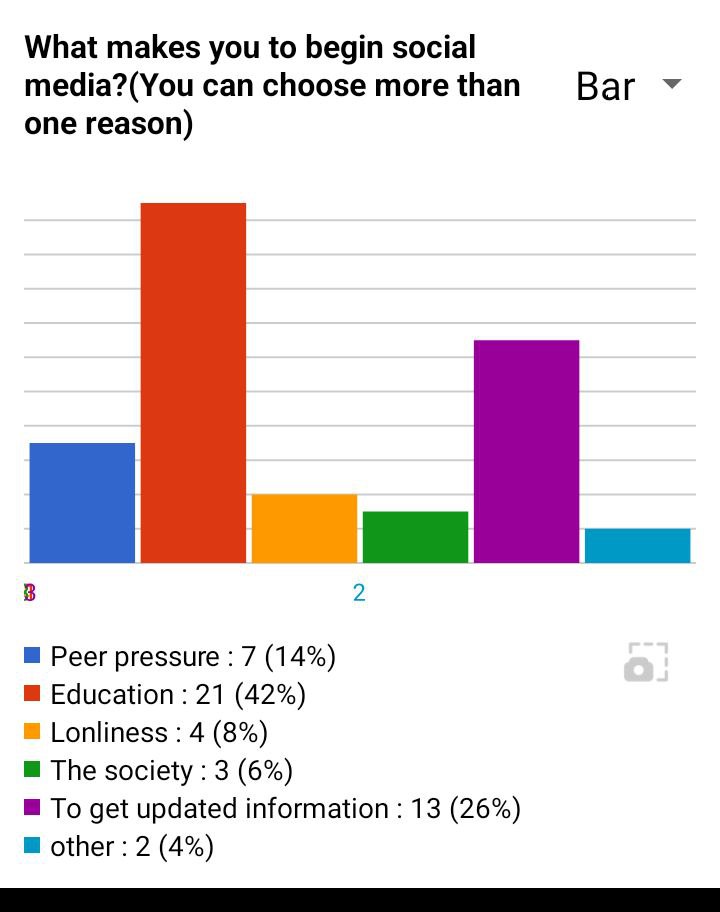
This data would help to identify key causes which force teenagers to start their journey with social media.
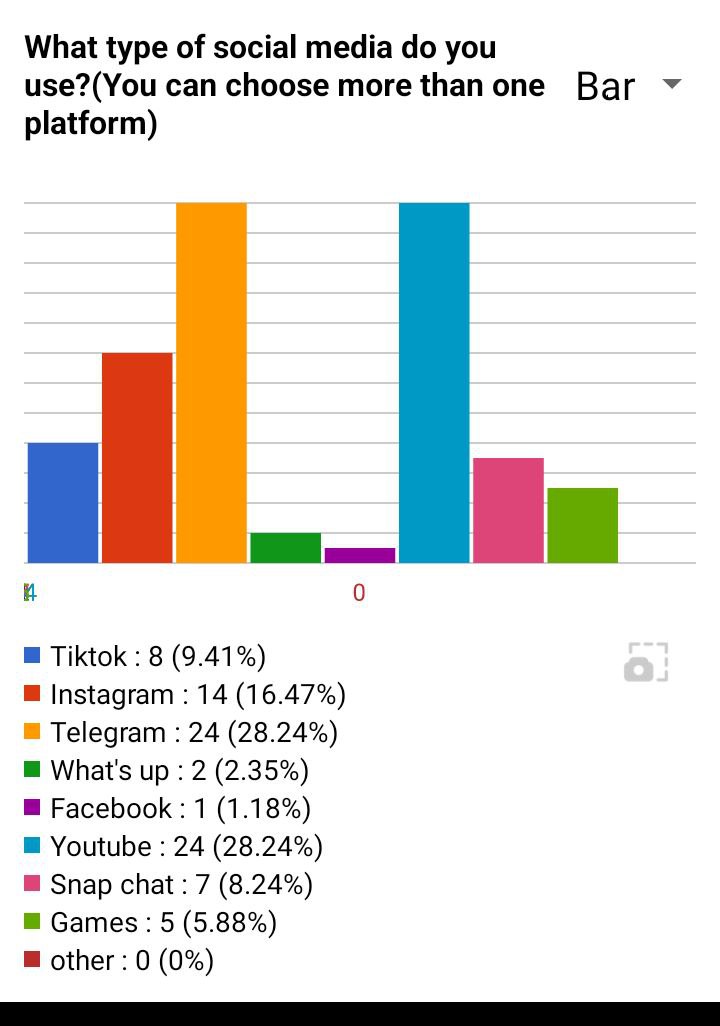
Figure 2 | Types of social media used by the teenagers
This is used to identify the purpose why they use social media by linking to the offers that each platform has. Example: those who use apps like telegram, Instagram, Facebook and what’s up are more likely to build more social relations than others who use Tiktok, Youtube, Snap-chat and games since the first set of medias provide platform to connect users.
| Hours per a day | Percent used |
| 1-2 hours | 22.2% |
| 2-3 hours | 26% |
| 3-4 hours | 18.5% |
| 4-5 hours | 11.1% |
| 5-6 hours | 7.4% |
| 6-7 hours | 3.7% |
| 7-8 hours | 0% |
| 8-9 hours | 0% |
| 9-10 hours | 3.7% |
| 10 hours or more | 7.4% |
These statistics help to point out the screen time of teenagers. Higher screen times indicate more vulnerability to mental health deprivation which then implies that immediate and comprehensive response is needed.
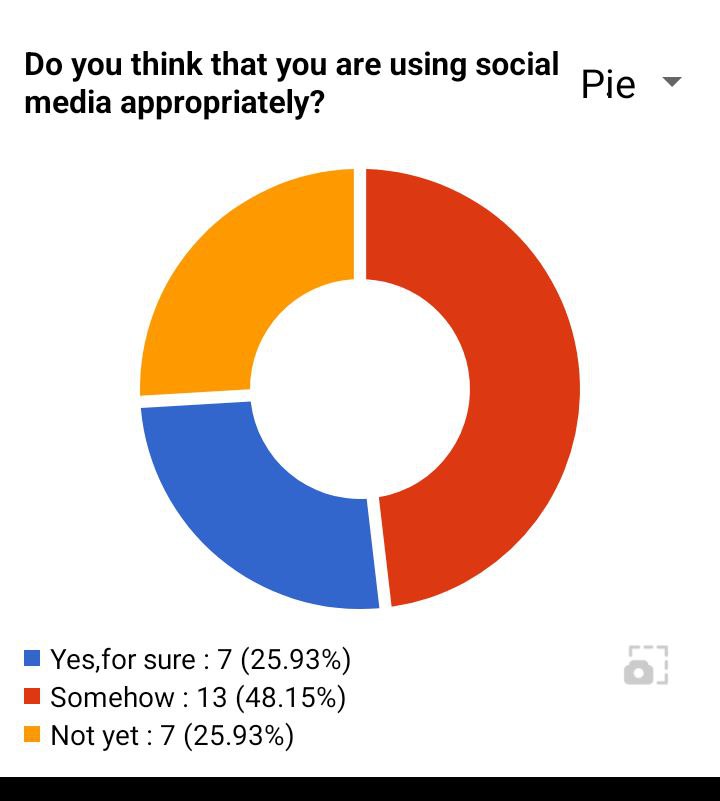
Figure 3 | Appropriate usage
This data tries to indicate if the volunteers think that they are using social media for the right purpose. Appropriate engagement implies lesser vulnerability to mental health deprivation; Uncertainty infers symptoms to mental health, and inappropriate consumption denotes that they are likely experiencing the adverse effects of social media on mental health.
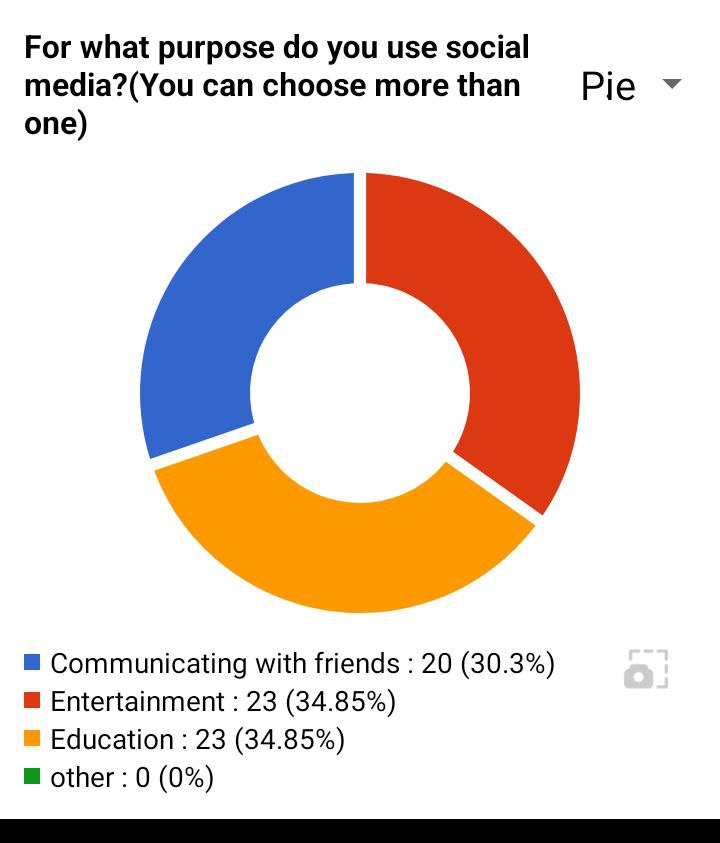
Figure 4 | Purpose of using social media
This would help to analyze if their social media engagement affect their productivity and personal relationship. Example: If the purpose is more for entertainment, it decreases their productivity in education affairs and provides less opportunity to develop social relation with others.
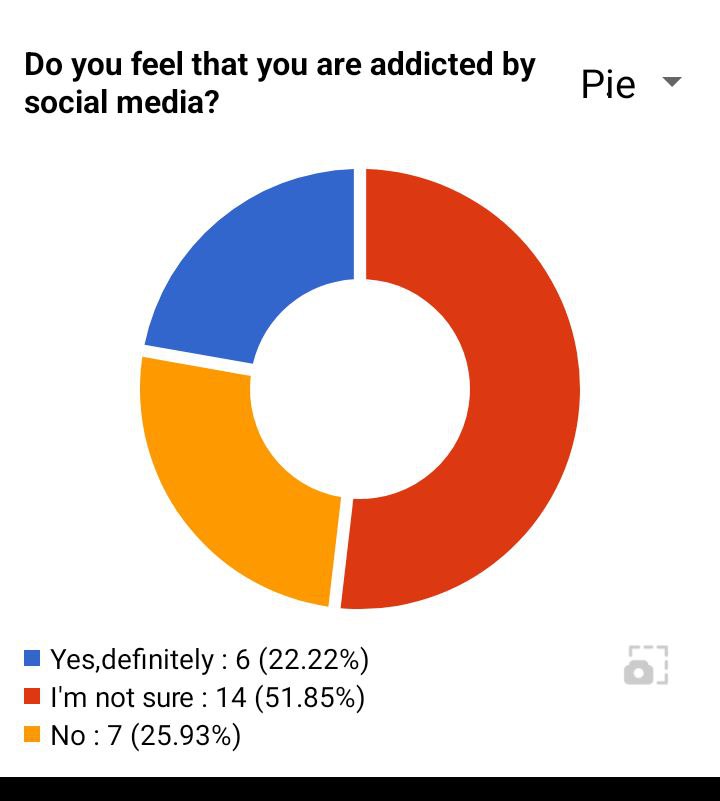
Addiction to social media is the main indicator of mental health deterioration. So this data would help to identify one of the key symptoms.
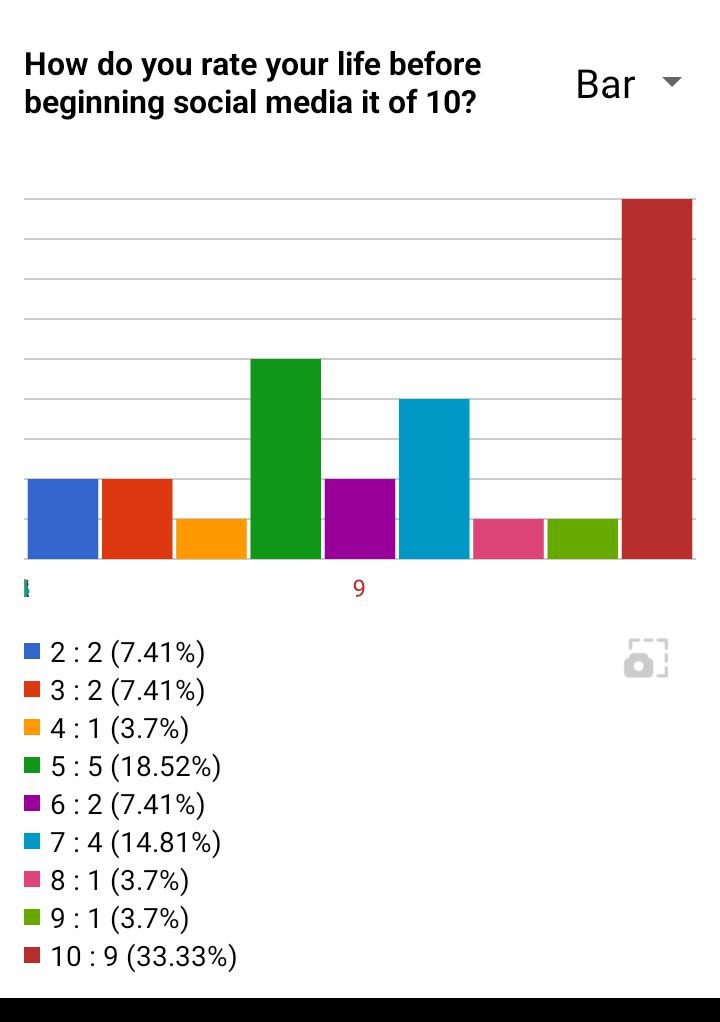
This helps to compare their satisfaction with and without social media. Less satisfaction would possibly indicate exposure to mental health conditions.
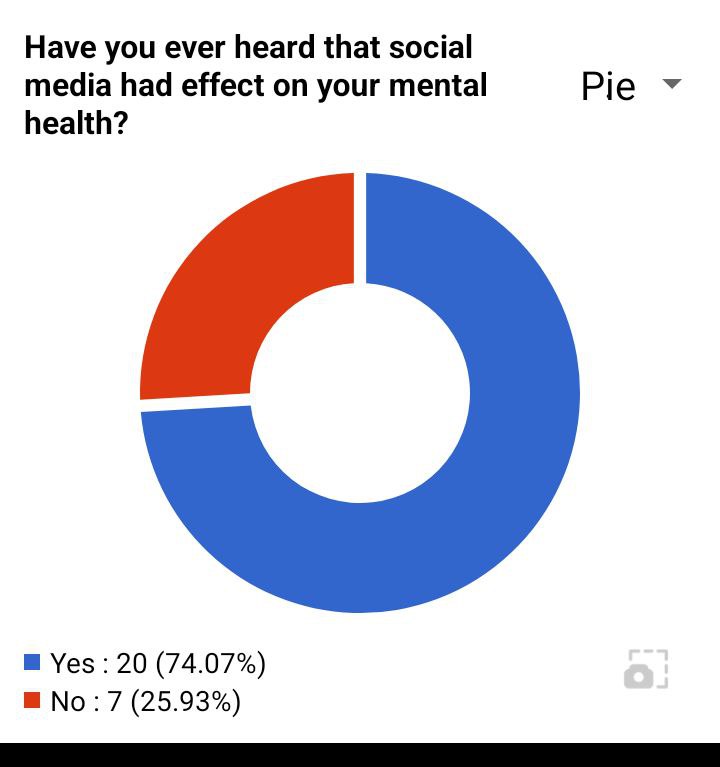
Helps to assess their awareness about the issue.
| Changes experienced | State the changes | Percent of the total population |
| Positive | Help through education so increase in academic performance, entertainment… | 14.81% |
| Negative | Anxiety, depression, loneliness, low self-esteem, fear of missing out, mood swings, anger, … | 55.56% |
| None | – | 29.63% |
Mainly used to differentiate whether the changes they feel now are due to age factors or social media. No changes denote that their feelings come due to adolescence age factors, and negative changes possibly indicate exposure to mental health issues.
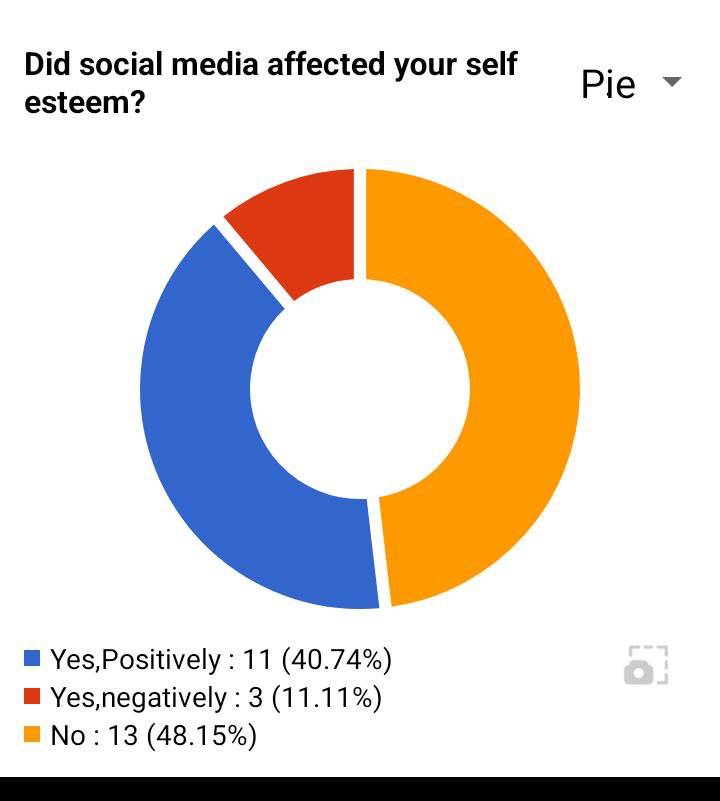
Aids in identifying one of the symptoms of mental health disorders which is low self-esteem
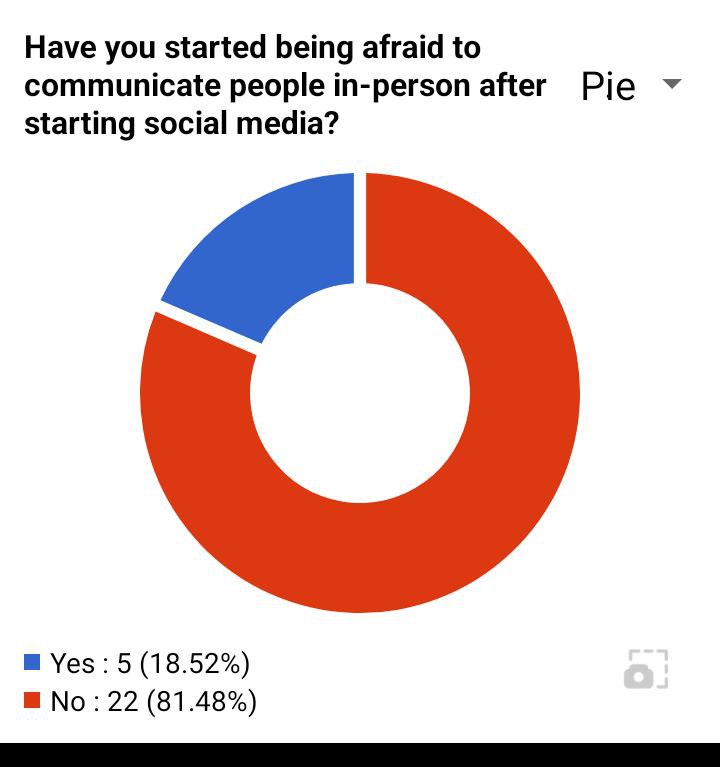
being affected would lead to loneliness and less communication skills.
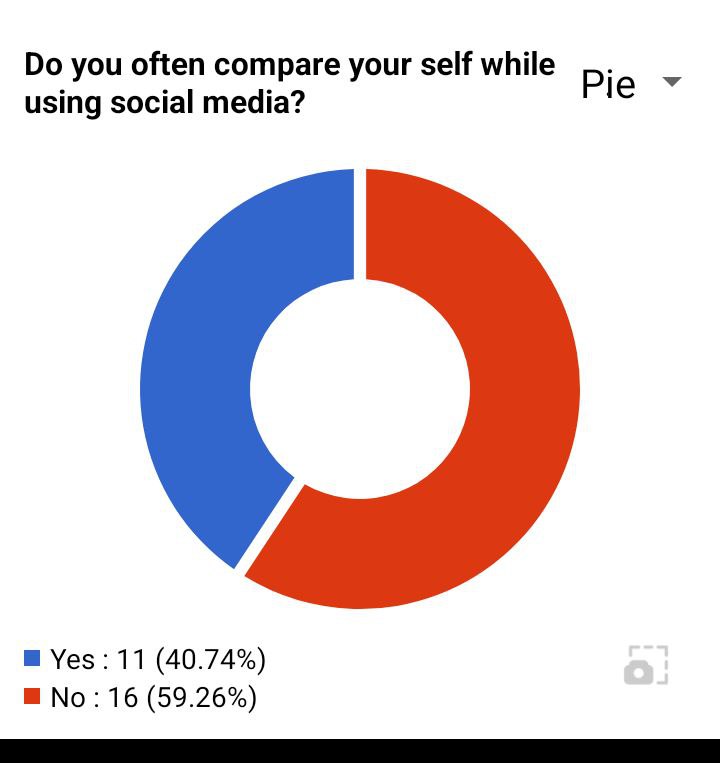
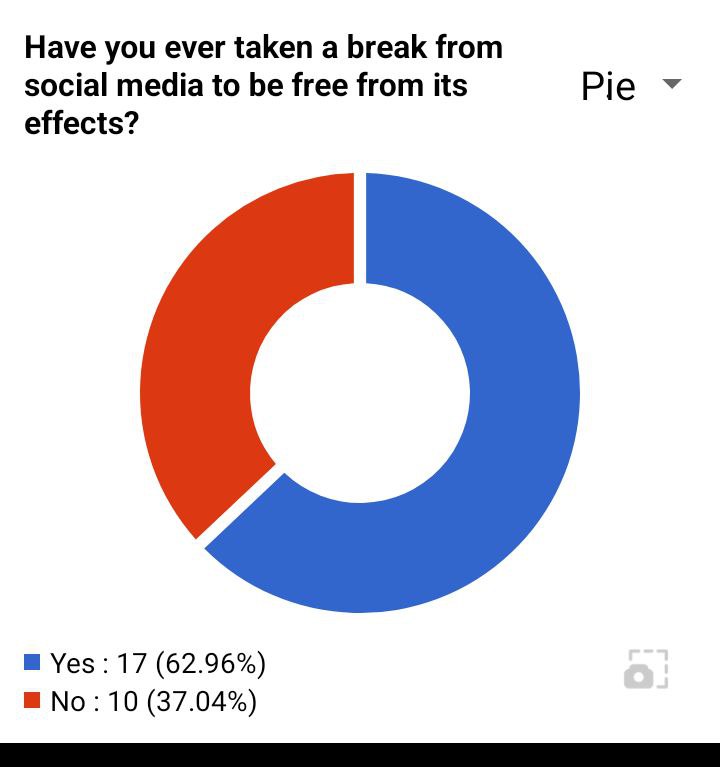
Aids in assessing if they consider self-control mechanisms while using social media.
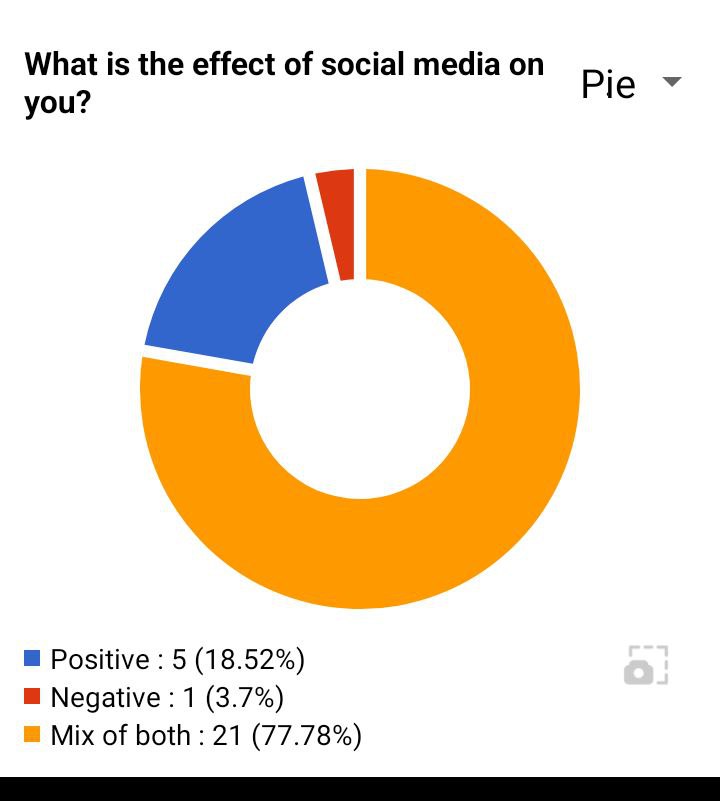
Negative impact would possibly indicate mental health issues while mixed effects may show possible danger in the future.
Discussion
Here, the data expressed in the result section is used as a sample to estimate the condition in the total population. The results show that some symptoms are being seen by Ethiopian teenagers. Most teenagers start using social media to help them in their educational affairs and stay updated. Also, there are some others who begin their journey with social media because of peer pressure and loneliness which emanates from their age. Telegram and YouTube are found to be the most common social media platforms. Instagram, TikTok, Snap chat, Games, WhatsApp and Facebook take the position from third to eighth. Regarding the category of social media, the most common are the media sharing and messenger social media platforms; however, media sharing takes the lead. This shows that Ethiopian teenagers are more attracted to platforms that make them to get information rather than communicating with people. Less communication leads to loneliness and weak social relationships which creates a clear path for mental health erosion. The average usage time per a day was 3 hours and 24 minutes. The highest hours per a day is found to be 10 hours, which is used by 7.4% of the teenagers. The least time of social media usage is 1-2 hours which is used by 22.2% of the given data. The range is 9 hours which implies that there is a huge difference in social media consumption among Ethiopian teenagers. About 33.3% of the total population wastes more than 4 hours per a day on social media. This high screen time implies that they are at high risk of experiencing mental health regression. Keeping in mind, the data implicates that most teenagers started social media for educational purpose, but now they mostly use for both entertainment and educational purpose. Also, some others use it for communication with friends. Life before social media is rated above five out of ten by 62.95% of teenagers. This remarks the point that they are more comfortable in their life with-out social media rather than living with social media. The data refers that social media creates less satisfaction among most of the population which make them more prone to mental health issues. Regarding appropriate use of social media, 25.93% think that they are using for the right purpose which implies less vulnerability. The same percent use inappropriately indicating more vulnerability. Whereas, 48.15% of the population are in doubt to decide whether they are properly engaging or not, denoting that there may be symptoms. In addition, 22.22% of teenagers ponder that they are addicted to social media. As addiction is one of the indicators of mental health issues, the data indicates that this amount of Ethiopian youth is already experiencing the impacts of social media on their mental health. According to a data from of one of the volunteers, the various multi-contented short videos and compacted information that media sharing platforms offer can easily catch the attention of the youth and lead to addiction.
In developing countries like Ethiopia, mental health is given low attitude by the society. Mental health condition is not given focus since the culture and tradition of the society discriminates its value. Mental health issue indicators like depression, anxiety, fear of missing out, mood swing, loneliness and low self-esteem are considered to be normal part of life rather than treating of the symptoms. Moreover, treatment of mental health factors is underdeveloped because of lack of awareness about the matter. Holding the low and negative attitude about mental health, the volunteers were asked whether they have heard that social media has an effect on mental health. Due to the spread of internet, 74.07% have heard that social media has an effect on mental health. This indicates that better awareness is created among the youth. Based on the result of the survey, 29.63% have not noticed any change on themselves during their life with social media, and 14.81% noted positive changes.. However, 55.56% of the youth think that they are experiencing negative changes since they begin social media. Some of the new changes experienced and mentioned are anxiety, depression, loneliness, low self-esteem, fear of missing out, mood swings, anger, etc, which clearly indicate the existence of decline in mental health among teenagers due to social media usage. The use of social media has affected the 11.11% negatively and 40.74% positively, while it doesn’t have connection with 48.15% of the users. Communicating with people in-person was not significantly affected by social media; however, 40.74% of users compare themselves with others while using social media. According to the collected data sample, it is estimated that 62.96% of the population have taken a break from social media to refrain from its adverse effects. It denotes the presence of self-control among most of the teenagers. Regarding the effect of social media, most teenagers (around 77.78%) have found it to be both beneficial and harmful at the same time. Integrating this data with their screen-time, it is found that those who spend more hours are more likely to experience the negative side of social media and downturn of mental health. The research findings agree with prior research projects in the idea that social media consumption can cause potential danger in mental conditions of teenagers specifically in Ethiopian context. Although it tries to address the entire population of teenagers, the research depends only on survey data collected from few volunteer youth across the country, so it should be noted that the findings may not compel the whole circumstance.
Conclusion
In summary, this paper has shown the relationship between social media consumption and its effect on mental health of Ethiopian teenagers. By relying on a survey conducted on some volunteer teenagers, it has explicitly stated the presence of mental health issues among the youth of the nation. The findings of this research support the idea that social media is a great threat to mental health. Due to its attractive and beneficial features, teenagers are easily getting addicted to social media which in turn results in mental health downturn. Although it is hard to determine the whole population by few volunteers, the results show that more operations should be done in order to avoid potential consequences that may happen in the future. Relying on the outcomes, the author suggests more investigation on the field (in particular to the media sharing social media platforms) by specialized scholars of psychology, psychiatry and neuroscience to save the generation. Additionally, policy action and incorporation of the effects of social media on mental health of Ethiopian teenagers should be regarded as possible solutions to raise awareness in the field and combat the negative consequences that it can have. As social media continues to evolve, it is crucial to continue to research and understand these influences in order to protect and promote the well-being of future generations.
References
- Braghieri, L., Levy, R., & Makarin, A. (2021, August). Social media and mental health.https://www.researchgate.net/publication/354631254_Social_Media_and_Mental_Health [↩]
- D’Souza, J. Social media mental health statistics by negative effects, self-esteem, impacts and cyber-bullying. https://electroiq.com/… [↩]
- Parnell, B. (2017, June 22). Is social media hurting your mental health? [Video]. YouTube. https://youtu.be/Czg_9C7gw0o?si=iNpWcE4P657mbplW [↩]
- Gabriel, P., & Liimatainen, M.-R. (2000). Mental health in the work place. International Labour Office. https://www.ilo.org/topics/safety-and-health-work/mental-health-work [↩]
- World Health Organization. (2023). Investing in mental health. https://www.who.int/publications/i/item/9241562579 [↩]
- 2024. Social network usage & growth statistics. Backlinko. https://backlinko.com/social-media-users,2024 [↩]
- The Impact of social media on the Mental Health of Adolescents and Young Adults: A Systematic Review. (2023, August). National Library of Medicine. https://pmc.ncbi.nlm.nih.gov/articles/PMC10476631/ [↩]
- Thapa, B. (2018). Impacts of social media on mental health: A case study with students at Oulu University of Applied Sciences. https://www.theseus.fi/handle/10024/156325 [↩]
- McLean Hospital. 2022, January 26. Dr. Lisa Coyne-The link between social media & mental health [Video]. YouTube. https://www.youtube.com/watch?v=lWDzyTJYMaA [↩]
- Alemayehu, M., \& Alamirew, B. (2023). The effect of social media usage on the academic performance of grade 12 students of Addis Ketema Preparatory School, Addis Ababa, Ethiopia. Ethiopian Journal of Business and Economics (EJBE), × 13 ×(1). http://ejol.aau.edu.et/index.php/ejb; Internews. (2023, August). Ethiopian digital media information ecosystem assessment. https://internews.org/resource/ethiopian-digital-media-information-ecosystem-assessment/ [↩]
- Internews. (2023, August). Ethiopian digital media information ecosystem assessment. https://internews.org/resource/ethiopian-digital-media-information-ecosystem-assessment/ [↩]
- Alemayehu, M., \& Alamirew, B. (2023). The effect of social media usage on the academic performance of grade 12 students of Addis Ketema Preparatory School, Addis Ababa, Ethiopia. Ethiopian Journal of Business and Economics (EJBE), × 13 ×(1). http://ejol.aau.edu.et/index.php/ejb [↩]
- Federal Democratic Republic of Ethiopia, Ministry of Education. (2023). Citizenship education student textbook grade 9. https://elearn.moe.gov.et/storage/Text%20book%20new/Citizenship/11.%20Citizenship%20educ%20Grade%209%20Student%20TextBook%20final.pdf; Federal Democratic Republic of Ethiopia, Ministry of Education. (2023). Citizenship education student textbook grade 10. https://elearn.moe.gov.et/storage/Text%20book%20new/Citizenship/12.%20Citizenship%20grade%2010%20Student%20Textbook%20FINAL1.pdf [↩]


