Abstract
Sporting activities have proven to be another important site of learning, displaying and challenging hegemonic masculinities. Previous research has, however, mostly considered hegemonic masculinities, inclusive masculinities and the fitness culture of women as separate topics. This study examines relationships among masculine pressures, inclusive masculinity, perceived benefits of participating in sport-related activities and attitudes towards gender equality. For the study, a quota-based online survey of 300 adults from the USA was conducted. Three quotas were used in order to achieve a representative sample: 300 participants; almost equal representation of men and women; nearly equal distribution among five adult age categories. Respondents completed a 26-item questionnaire that explored their experiences and opinions about participation in sport, attitudes towards masculinities, perceptions of the benefits of participating in sporting activities, and gender equality attitudes. Reliability was examined using Cronbach’s alpha, correlations were assessed using Pearson r, while multiple linear regression analysis was performed using Stata. The reliability coefficients were adequate for Masculinity Pressure (α=.797); Inclusive Masculinity (α=.747); and Sports Benefits (α=.861). The score for Gender Equality Attitudes was slightly lower than the typical value (α=.690). Inclusive Masculinity was strongly correlated with Gender Equality Attitudes (r=.643; B=.806, p<.001). There was a moderate correlation between Sports Benefits and Gender Equality Attitudes (B=.130, p=.001), while Masculinity Pressure was not a significant predictor of Gender Equality Attitudes (B=-.034, p=.591). It seems that modern sport reflects not only masculine pressures but also gender-inclusive attitudes but it should be stressed that cross-sectional design of the study does not allow drawing any causal inferences.
Keywords: masculinity; sport; inclusive masculinity; hegemonic masculinity; gender equality; survey research
Introduction
Masculinity is not simply a fixed biological trait; it is a system consisting of social expectations, behaviors, and performances. It changes with culture and across historical periods.1,2 Sport is a vital and obvious platform for people to learn and display masculine norms. Competitive sport may not only reward strength, discipline, risk-taking, and status but also intensify narrow expectations such as emotional control, dominance, and exclusion.3,4
Current studies on the association between sport and masculinity show a paradox. Hegemonic masculinity plays as a culturally dominant form of masculinity. It supports gender hierarchy. Relevant research suggests that sport may continue this hierarchy while excluding athletes who do not follow dominant masculine ideals.2,5 In comparison, inclusive masculinity refers to a form of masculinity that is more flexible and less exclusionary. Studies show that some modern sport and fitness settings allow broader emotional and gender expressions. This situation is especially apparent in environments where homophobia and rigid gender policing are weaker.6,7,8 Feminist research further complicates the previous views. Fitness spaces may empower women through strength and bodily agency while also exposing them to surveillance, appearance pressure, and gendered market expectations.9,10,11,12
Previous discussions of hegemonic masculinity, inclusive masculinity, and women’s fitness culture often treated these topics separately. Instead of using the same dataset to test the relationships among Masculinity Pressure, Inclusive Masculinity, Sports Benefits, and Gender Equality Attitudes, these studies did research on these topics independently. This study utilizes a sample of 300 U.S. adults to fix this gap. It examines whether traditional masculine pressure and inclusive masculinity are on the opposing sides or they may coexist.
Research Questions
This study uses survey evidence to relate concepts that were previously discussed separately. It does not assume that Masculinity Pressure and Inclusive Masculinity are simply opposites. It examines whether these two concepts can coexist. It also asks whether Inclusive Masculinity is associated with stronger support for gender equality. These issues lead to the following research questions:
- How do adult respondents perceive masculine pressure in sports settings?
- How strongly do respondents endorse inclusive expressions of masculinity in sport?
- How are perceived sports benefits associated with gender equality attitudes?
- Which constructs are most strongly associated with support for gender equality in sport?
- How can the findings be interpreted through hegemonic masculinity, inclusive masculinity, and feminist perspectives on fitness culture?
Scope and Methodological Overview
This research is based on a survey of U.S. adult respondents. Respondents were asked about their perspectives on sport, masculinity, fitness participation, and gender equality. The data were self-reported and collected through a questionnaire. This is a cross-sectional survey, with the data collected within a single time period. The results can only show associations among variables, not causation. Peer-reviewed literature was used to provide the theoretical background and interpret the research results. In addition to descriptive statistics and correlations, the study uses multiple linear regression in Stata to examine the correlation between Masculinity Pressure, Inclusive Masculinity, and Sports Benefits to Gender Equality Attitudes.
Literature Review and Theoretical Framework
The definition of masculinity adopted in this research includes its understanding as a socially constructed system of meanings and practices associated with gender identity. Hegemonic masculinity is an aspect of culture that legitimizes male domination and subordinates women and other masculinities1,2. In sport, the expression of hegemonic masculinity is associated with toughness, aggressiveness, heterosexuality, and marginalizing vulnerability3,4. The advantage of this approach lies in the ability to see how gender hierarchy is reproduced through everyday practices within institutions. Its disadvantage is in its underestimation of the differences, contradictions, and changes within these practices.
Inclusive masculinity theory is an alternative approach to the concept. It assumes that the decrease in homohysteria, or the cultural anxiety about being perceived as a homosexual, and gender policing allows men to manifest their emotional side, softness, and advocacy of equality, yet retain their masculine position6,7. The advantage of this theory is in seeing social changes and diversity in the practice of masculinity. The disadvantage of it is in overstatement of the degree of inclusiveness in case race, sexuality, class, and institutional factors are disregarded. That is why in this research hegemonic and inclusive masculinity are viewed as coexisting tendencies.
Intersectional perspective is necessary due to the fact that sport is perceived differently by gender, age, class, sexuality, race, and resource accessibility13,14. For instance, the benefits from participating in sports activities in terms of social capital accumulation depend on time, financial, cultural, and institutional opportunities one has to participate15,16. Thus, the framework of this research involves comparing two theoretical poles: according to hegemonic masculinity, there should be pressure on toughness and emotional control, whereas, inclusive masculinity predicts more tolerance to diversity and gender equality advocacy.
Coexisting Masculinities in Contemporary Sport
The concept of inclusive masculinity theory was formed in order to understand how the changes in the masculine behavior occur due to homohysteria fading. According to Anderson and McCormack, when men have fewer reasons to defend their heterosexuality, their behavior which used to be coded as feminine – such as being emotionally open, physically affectionate and accepting sexual diversity – may become possible for them to display and yet retain their masculine status. However, even in this updated version of the theory it is stated that the changes happen depending on the context and that they do not necessarily mean the erasure of gender institutions and hierarchy.
There are findings from sports contexts that confirm this interpretation of partially changing gender behavior.Roberts, Anderson and Magrath spoke with twenty‑two football players from English Premier League academy teams. They found that football players accepted homosexuality, emotional intimacy and physical affection more than had been shown in studies of male football culture. Even when football players showed these behaviours the displays were less obvious, than those of young men. This suggests that class background, disciplinary institutions and the culture of competition shape how football players include one another. In this way, it turns out that inclusionary relationships are possible in a traditionally masculine institution without displacing its existing norms.
There is another example of the difference between inclusive beliefs and actual behavior that is provided by Stick’s survey of 456 Canadian male athletes. It included comparisons of inclusive beliefs and self-reported behaviors on such dimensions as competition, toughness, emotionality, independence, racism, homophobia, and sexism. Despite the fact that participants usually believed in relatively inclusive ideas regarding emotional expression and toughness, those beliefs did not always get reflected in their actions. The norm of being emotionally closed and tough was quite typical, as well as the beliefs that were exclusionary for parts of the sample. Hence, it seems that masculinity in sports may be quite contradictory: athletes can believe in inclusive ideals while responding to the norms of emotional control and toughness.
Finally, different masculine orientations may affect the way in which athletes cope psychologically with difficulties. In a survey of 172 male athletes, Reis et al. discovered positive correlation between self-compassion and psychological well-being as well as constructive coping strategies in cases of emotional challenges in sport. Self-compassion was differently related to the two types of masculinity and also influenced the relationships between masculinity, autonomy and attitudes toward gay people. Nevertheless, the authors used the exploratory measure of inclusive masculinity since the corresponding scale had not been developed at that time. The fact that the research design was cross-sectional does not allow determining the causation.
Overall, those findings show that hegemonic and inclusive masculinities cannot be considered only the opposite ends of one continuum. The inclusionary attitudes are possible regardless of the existence of the norms of toughness, emotion control and conformity in behavior. That body of literature justifies treating Masculinity Pressure and Inclusive Masculinity as separate constructs in the present study and helps fill the gap in researching the coexistence of both concepts among the same group of respondents.
Gendered Fitness Spaces: Constraint and Empowerment
According to the literature on fitness environments, the phenomenon of gender inequality stems not only from individuals’ attitudes towards physical activity but also from the physical space and interaction in this environment.17 Through conducting interviews, drawing tasks and participant journals, Coen, Rosenberg and Davidson revealed three processes through which exercise becomes gendered in relation to physical activity: embodying gender ideals, policing of gender performance, and spatialization of gender relations. Different areas and types of activities acquired gender-specific meaning influencing people’s choice of exercising place and feeling of belonging to it. Women suffered from gender inequalities more often than men, but the expectations regarding masculinity also constrained males from non-masculine activities.
Turnock provides more concrete examples of the impact of the division in gym culture on women’s access.18 Based on 18 interviews with female members and staff of commercial gyms and observations in four commercial gyms, the study identified four barriers for women’s access to certain parts of fitness facilities: gender-segregated weights areas, insufficient equipment, intimidation and harassment, and continuous observation. Such findings differentiate formal access to gyms from substantive inclusion. It means that while women have the same rights as men to become the members of the facility, they pay a much higher price in terms of social and emotional pressure when exercising in certain areas. Thus, inequality in fitness environment includes both access and ability to use the whole environment.
On the other hand, strength training can be beneficial in several ways. Hall and Noonan conducted photograph-based interviews with ten women aged 18-27 years old and revealed five pathways to wellbeing: self-acceptance, personal growth, flow, social affiliation, and autonomy.19 Participants mentioned experiencing bodily competence, personal achievements and development, and connections with people sharing their interests. Thus, it proves that females’ participation in fitness culture cannot be reduced only to monitoring their bodies. Fitness exercises help them develop bodily and psychological independence.
Summing up, the findings of the two studies reveal a contradiction in fitness culture: gendered physical space and interactions can constrain women’s participation in it, while strength training can promote their autonomy and confidence.17,18 The contradiction is highly relevant since gym and fitness exercises are the most popular type of participation among the members of the current sample.19 Therefore, respondents’ answers on Perceived Sports Benefits can really reflect women’s autonomy and growth but not prove their equal access to them. Since the survey does not include any information on spatial segregation, intimidation, harassment and body surveillance in gyms, the feminist literature becomes the interpretative framework but not direct evidence of women’s gym experience.
Institutional and Symbolic Dimensions of Gender Equality
Support for gender equality in sports can’t just be based on how individuals see women taking part. In her research about how the International Olympic Committee has changed over time Pape explains the difference, between two ideas. One is called accommodation. This means letting women join groups without changing the basic way those groups think about gender. The other is called transformation.20 This means challenging the rules and beliefs that keep the power structure in place. For example, Pape showed that women’s participation in the Olympics was becoming more acceptable and was increasingly organized in sex-separated terms and on the basis of the assumptions regarding their athletic capability as inferior to men’s. Thus, participation can increase in the absence of redistributing institutional power.
The above distinction is applicable to current sports management. Evans and Pfister reviewed 154 academic papers and other publications related to women’s involvement in decision-making positions.21 Systematic narrative review revealed persisting underrepresentation of women caused by patriarchal recruitment policies, stereotypes about leaders’ qualities, networks, and gender cultures in organizations. At the time Evans and Pfister noticed a gap between policy and practice. When organizations know about inequality and adopt equal opportunity policies they still do little to change who has power. This finding shows that a formal commitment, to equality does not automatically bring about change.
Recognition also serves as a mechanism for maintaining inequality. Cooky et al. examined the volume and nature of men’s and women’s sports media coverage in television broadcasting and later expanded the data set with online news and social media over the period of thirty years.22 Although the participation and achievements of female athletes increased, men’s sports dominated television programming and online media. Stories about female athletes were presented in isolation among many and longer stories about male athletes’ sports. This pattern was defined as “one and done.” Although female athletes were treated respectfully when covered, they remained marginal in the overall media agenda.
The above studies indicate three interrelated facets of gender equality in sport: access to participation, access to institutional power, and access to media recognition.20,22 These facets inform the development of the Gender Equality Attitudes construct in the present study as the measure of challenging stereotypes about the sports world, the idea of equal recognition and opportunities, and active promotion of inclusion in organizations. However, the above literature suggests that these are related yet distinct aspects of inequality that could be separated in future research.
Methodology
Research Design
The research adopted a quantitative cross-sectional survey design since the dataset comprises standardized self-report survey answers that have been analyzed quantitatively. The conclusions drawn are based on the analysis of the survey dataset. Literature review in peer-reviewed sources is adopted for background information and interpretation purposes.
Sampling strategy
The final dataset comprised of 300 adults in the United States. Three quotas were adopted in the sampling design; namely, 300 respondents from the US region, roughly equal gender distribution, and roughly equal representation of five adult age groups.
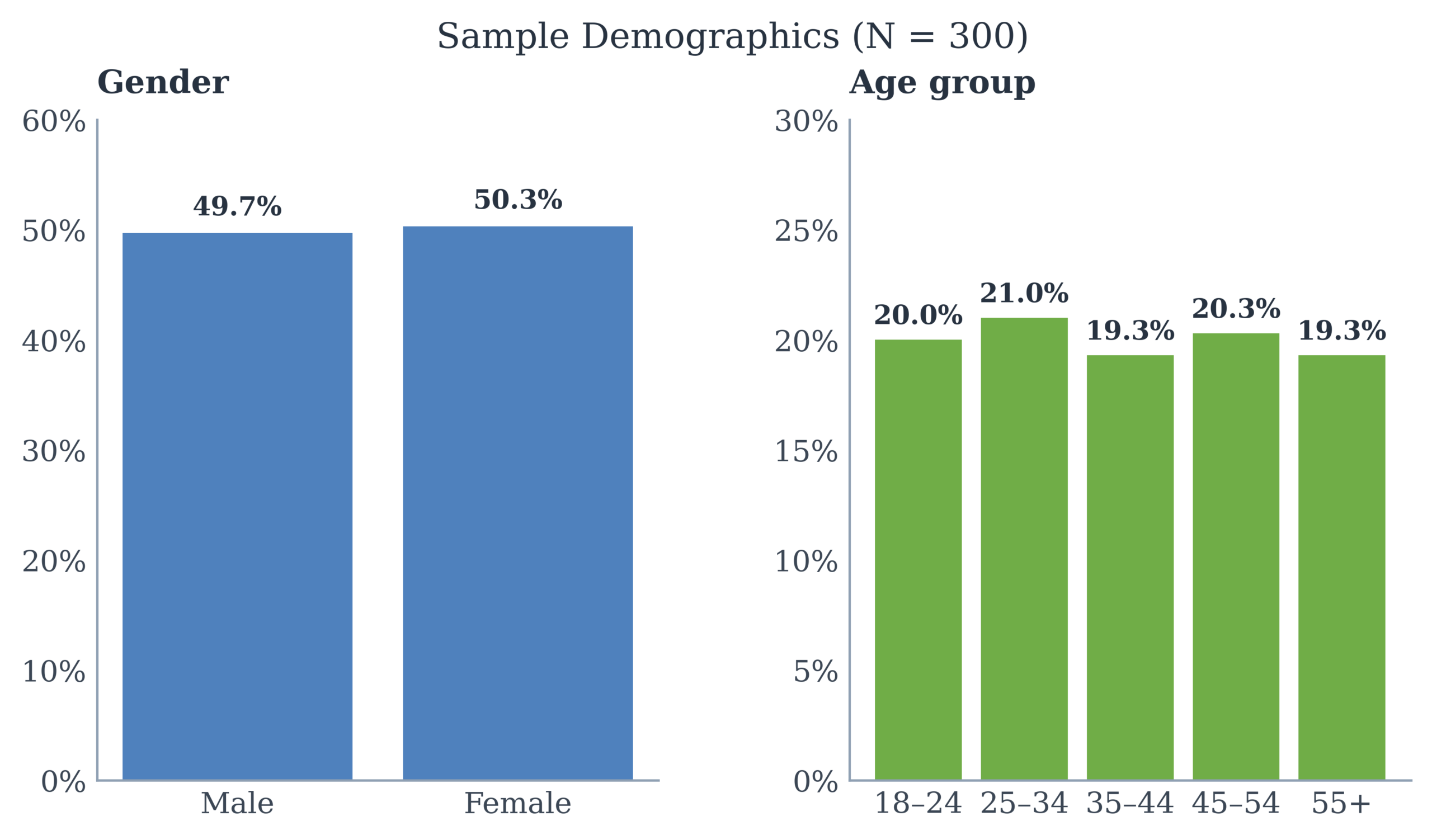
The final dataset consists of 149 male respondents (49.7%) and 151 female respondents (50.3%). Age was also evenly distributed among five categories of respondents aged between 18-24 years (n=60, 20.0%), 25-34 years (n=63, 21.0%), 35-44 years (n=58, 19.3%), 45-54 years (n=61, 20.3%), and 55 years old and above (n=58, 19.3%). In all, respondents selected in this survey are all adults and hence no respondent below 18 years of age.
| Group | Category | Sample Size (N) | Percentage distribution |
| Gender | Male | 149 | 49.7% |
| Female | 151 | 50.3% | |
| Age | 18–24 | 60 | 20.0% |
| 25–34 | 63 | 21.0% | |
| 35–44 | 58 | 19.3% | |
| 45–54 | 61 | 20.3% | |
| 55 and above | 58 | 19.3% | |
| Education | High school diploma (or equivalent) and below | 44 | 14.7% |
| Some college or university experience but no degree obtained. | 87 | 29.0% | |
| Bachelor’s degree | 112 | 37.3% | |
| Master’s degree | 47 | 15.7% | |
| Doctoral degree or higher | 10 | 3.3% | |
| Income | Under $30,000 | 50 | 16.7% |
| $30,000–$60,000 | 84 | 28.0% | |
| $60,001–$100,000 | 73 | 24.3% | |
| Over $100,000 | 93 | 31.0% |
Data Collection
Survey data was gathered using a questionnaire with U.S. Adult participants through Prolific. The Excel file shows all 300 answers collected on June 11 2026 with times from 10:30 to 11:46. The questionnaire had 26 questions. All responses were kept private. The questions asked about personal information, sports and workout habits ideas about being a man the good things about sports and views on fairness between men and women. The data that was available did not have any information about payment, for the platform screening details reasons people were not included or how long it took to finish the survey. These points were not. Will be mentioned in the limitations part.
Variables and Measurements
The questionnaire had 26 questions that were grouped into the following sections: demographics, sports participation, masculinity pressure, inclusive masculinity, benefits of sports and attitudes toward gender equality. Items 9 through 26 were measured on a five‑point Likert scale with 1 meaning Disagree and 5 meaning Strongly Agree. The questionnaire scores were calculated by taking the average of the items, in each section, which made it possible to look at the data using statistics, correlation analysis and regression analysis.
The survey questions were based on the theories discussed in this study. Masculinity Pressure mainly emphasized toughness, emotional control, and pressure to follow traditional norms. While Inclusive Masculinity focused on emotional openness and other different ways of expressing masculinity. Besides, the Sports Benefits and Gender Equality sections were used to examine how these attitudes correlated to inclusion and equality in sport.
Masculinity Pressure: the expectations that men should be emotionally strong, hide their vulnerability, be tough and conform to traditional masculine norms.
Inclusive Masculinity: acceptance of different ways of expressing masculinity, including more emotional openness and views.
Sports Benefits: respondents’ views of how sport contributes or helps cultivate confidence, social connections, leadership, and personal growth.
Gender Equality Attitudes: support for gender equality in sport by having fewer gender stereotypes, advocating for equal recognition and more inclusion.
The survey measures were designed based on the theoratical literature. they were not taken from previous scales. Before analyzing the relationships between variables. Cronbach’s alpha was used to check the consistency within each measure. Since the measures were not externally validated, this should be a limitation of the study.
Procedure and Bias Controls
Participants filled out the questionnaire on their own and without any names. The dataset had no identifying information and had no missing values, in the Likert items used in the analysis. Bias control was included in the sampling strategy by setting quotas for gender and age which lowered overrepresentation in those two dimensions. However because the questionnaire did not have an attention‑check item all 300 responses were kept. The lack of attention checks is seen as a response‑quality limitation so interpretations avoid claims that would need bias controls.
The interviewees participated in the survey independently. The dataset had no personal information and no missing values in the Likert items used for the analysis. Quotas were added to the sampling plan for gender and age to prevent an excess of people from these groups. However, as the available questionnaire did not have a separate attention-check item, all 300 responses were included. The absence of attention checks is considered a defect in the quality of response, so the interpretation does not need to be biased.
Ethical Considerations
Participants were all voluntary. The introduction of the survey clearly stated that all responses would remain confidential and would be only used for academic research purposes. All respondents were adults as determined by the age groups included in the survey instrument. There were no participants under the age of 18, and no personal information was recorded other than academic uses. No IRB number or course ethics protocol number was included either.
Analytical Procedure
The analysis was divided in four stages. Descriptive statistics were used first to show the sample characteristics and how people participate in sports. Cronbach’s alpha was calculated secondly to test how consistent each measure was. Thirdly, Pearson correlations were computed to examine if there are bivariate relationships among the four measures. Fourth ordinary least squares (OLS) multiple linear regression was run in Stata to see if Masculinity Pressure, Inclusive Masculinity and Sports Benefits have a relation to Gender Equality Attitudes. Ŷᵢ (Gender Equality Attitudes) = β₀ + β₁ (Masculinity Pressureᵢ) + β₂ (Inclusive Masculinityᵢ) + β₃ (Sports Benefitsᵢ) + εᵢ is used as the regression model in Stata. All results should be perceived as associations because the cross-sectional data.
Results
Descriptive Profile of the Sample
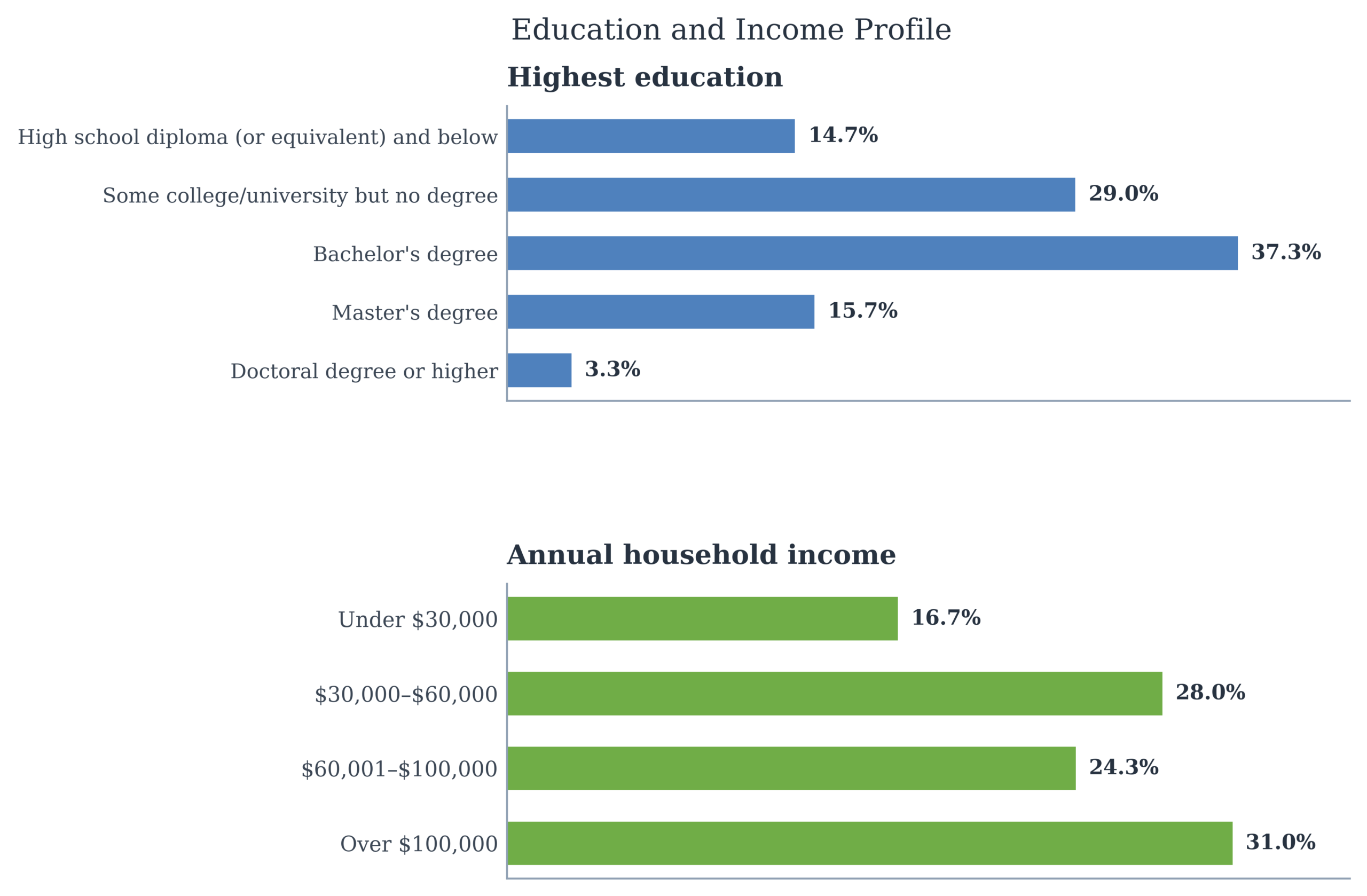
The sample included an approximate 50/50 gender ratio and a broad range of adult ages. Educational levels tended to focus on the two extremes of holding a baccalaureate degree and having attended some college/university. Household income ranged over four separate levels. In total, these distribution patterns provided more solid ground for analysis compared to the previous sample data tables.
Descriptive Analysis
Reliability Analysis
Reliability analysis showed that three measures met the exploratory standards. Gender Equality Attitude was slightly below 0.70, which indicates that any findings need to be perceived with caution.
| Scale | Items | Cronbach’s alpha |
| Masculinity Pressure | 5 | .797 |
| Inclusive Masculinity | 5 | .747 |
| Sports Benefits | 4 | .861 |
| Gender Equality Attitudes | 4 | .690 |
Descriptive Statistics of Major Constructs
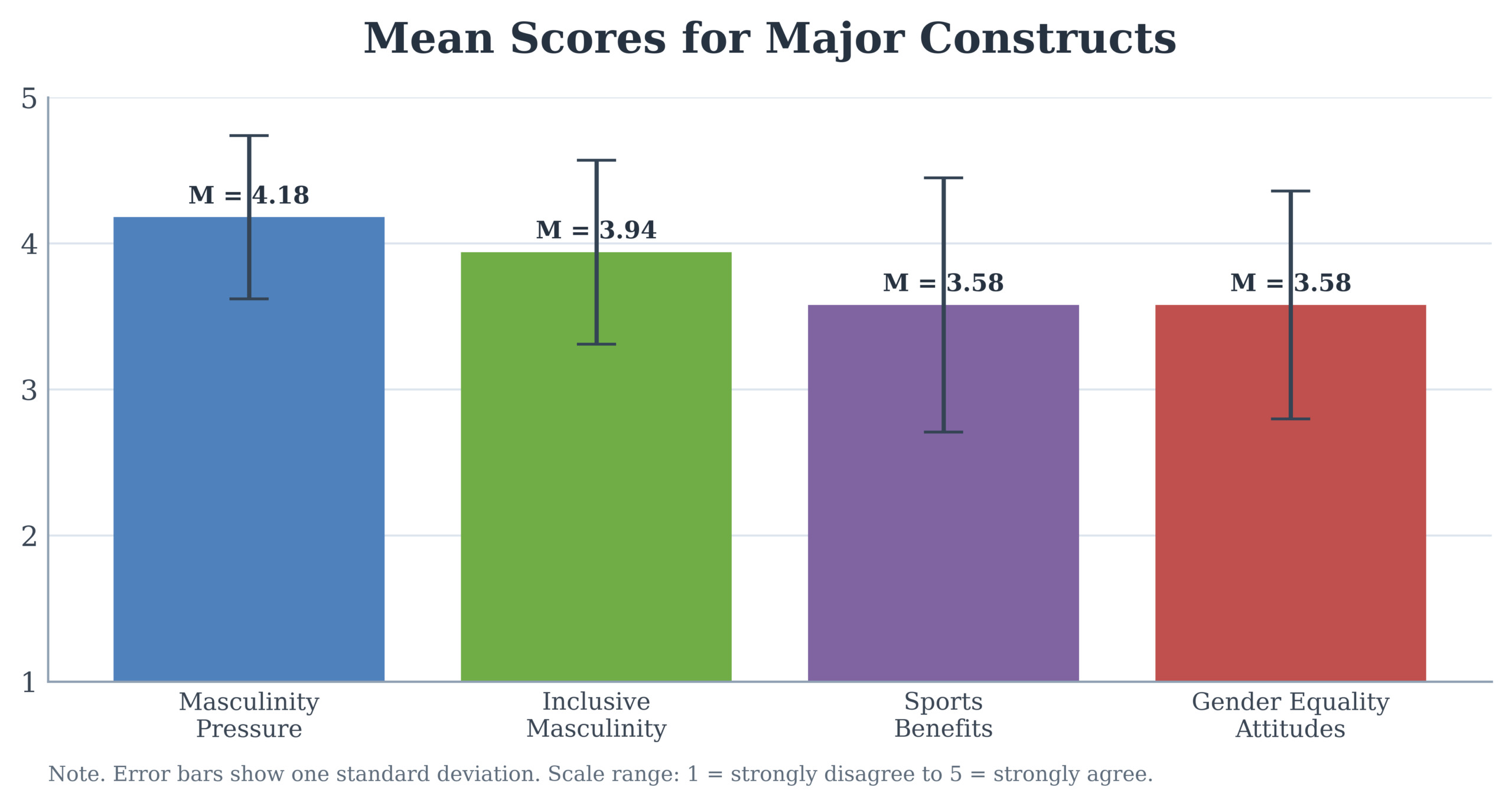
The respondents reported experiencing a high level of Masculinity Pressure (mean M = 4.18, SD = 0.56), together with moderate levels of Inclusive Masculinity (M = 3.94, SD = 0.63). There was no difference between the mean scores of Sports Benefits and Gender Equality Attitudes, both equaling 3.58. Thus, no opposition can be shown between them.
| Variable | Mean | Std. Dev. | Minimum | Maximum |
| Masculinity Pressure | 4.18 | 0.56 | 1.80 | 5.00 |
| Inclusive Masculinity | 3.94 | 0.63 | 1.40 | 5.00 |
| Sports Benefits | 3.58 | 0.87 | 1.00 | 5.00 |
| Gender Equality Attitudes | 3.58 | 0.78 | 1.00 | 5.00 |
Sports Participation Patterns
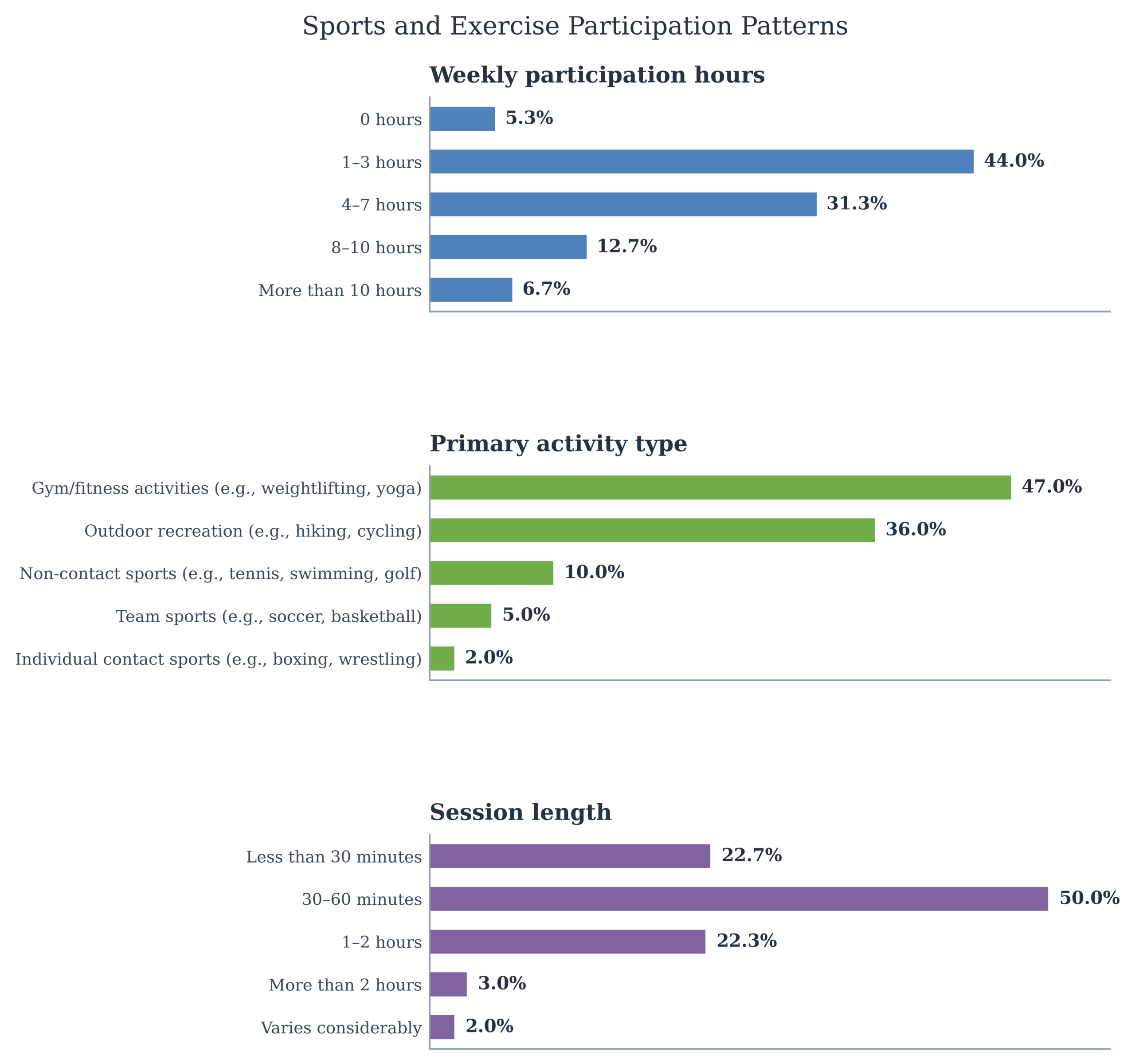
Nevertheless, the majority was active to some degree on a regular basis, though at relatively moderate levels. The highest percentage spent 1-3 hours weekly (44.0%), followed by 4-7 hours (31.3%). In addition, the most common form of primary activity among the participants was working out in the gym (47.0%), while outdoor activity came second (36.0%).
| Domain | Category | Sample Size | Percentage Distribution |
| Weekly exercise | 0 hours | 16 | 5.3% |
| 1–3 hours | 132 | 44.0% | |
| 4–7 hours | 94 | 31.3% | |
| 8–10 hours | 38 | 12.7% | |
| More than 10 hours | 20 | 6.7% | |
| Session length | Less than 30 minutes | 68 | 22.7% |
| 30–60 minutes | 150 | 50.0% | |
| 1–2 hours | 67 | 22.3% | |
| More than 2 hours | 9 | 3.0% | |
| Varies considerably | 6 | 2.0% | |
| Primary activity | Gym/fitness activities (e.g., weightlifting, yoga) | 141 | 47.0% |
| Outdoor recreation (e.g., hiking, cycling) | 108 | 36.0% | |
| Non-contact sports (e.g., tennis, swimming, golf) | 30 | 10.0% | |
| Team sports (e.g., soccer, basketball) | 15 | 5.0% | |
| Individual contact sports (e.g., boxing, wrestling) | 6 | 2.0% | |
| Habits changed | Yes | 185 | 61.7% |
| No | 115 | 38.3% |
Correlation Analysis
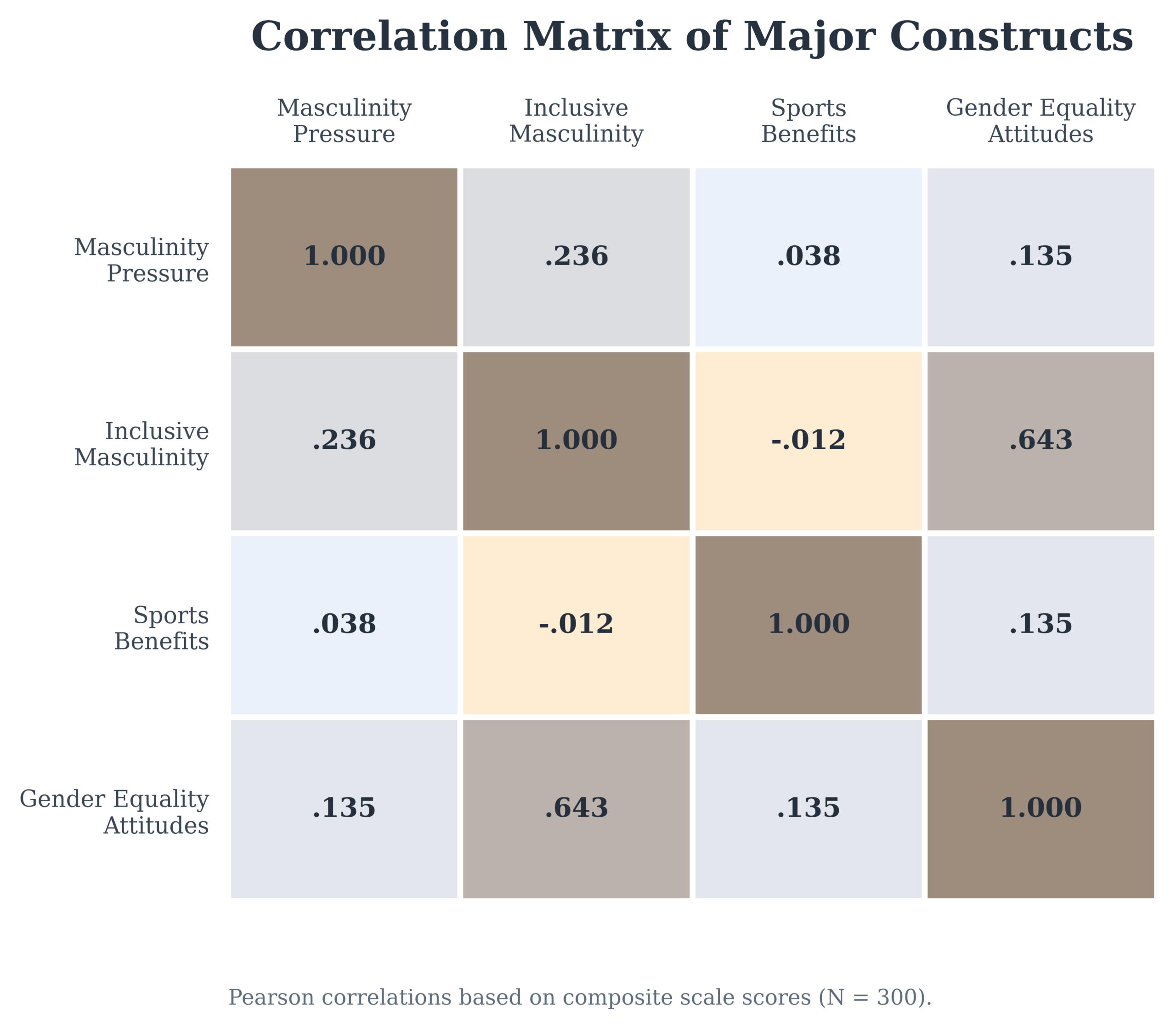
Based on the Pearson correlation results, Inclusive Masculinity has the highest correlation with Gender Equality Attitudes (r = .643, p < .001). The relatively high positive correlation implies that people who accept different types of masculinity are the ones that actively promote gender equality in the sports. A positive correlation between Inclusive Masculinity and Masculinity Pressure (r = .236, p < .001) and another positive correlation between Gender Equality Attitudes and Masculinity Pressure (r = .135, p = .020) are present. Therefore, the acceptance of masculine pressure does not mean that gender equality attitudes will be denied. Furthermore, there is a positive correlation between Sports Benefits and Gender Equality Attitudes (r = .135, p = .020), and no significant correlation between Inclusive Masculinity and Sports Benefits (r = -.012, p = .838) is observed. All these correlations point to the fact that regression analysis is the right choice to establish the significance of the relationships between constructs.
| Variable | 1 | 2 | 3 | 4 |
| Masculinity Pressure | 1.000 | |||
| Inclusive Masculinity | .236 | 1.000 | ||
| Sports Benefits | .038 | -.012 | 1.000 | |
| Gender Equality Attitudes | .135 | .643 | .135 | 1.000 |
Multiple Regression Analysis
To explore the correlation between Gender Equality Attitudes, Masculinity Pressure, Inclusive Masculinity and Benefits from Sports, the regression model was specified as follows:
Ŷᵢ = β₀ + β₁(Masculinity Pressureᵢ) + β₂(Inclusive Masculinityᵢ) + β₃(Sports Benefitsᵢ) + εᵢ
In this model:
Ŷᵢ represents the predicted Gender Equality Attitudes score for respondent i;
β₀ is the intercept while β₁, β₂, and β₃ are the estimated coefficients;
εᵢ represents the residual error term.
The Stata regression results showed that the overall model was statistically significant, F(3, 296) = 75.64, p < .001, R² = .434, adjusted R² = .428. Inclusive Masculinity was the strongest predictor of Gender Equality Attitudes (B = .806, SE = .056, t = 14.45, p < .001). Sports Benefits also had a relatively small positive association (B = .130, SE = .040, t = 3.27, p = .001). Masculinity Pressure was not a statistically significant independent predictor after the other variables were included (B = -.034, SE = .064, t = -0.54, p = .591).
| Predictor | B | SE | t | p |
| Masculinity Pressure | -0.034 | 0.064 | -0.54 | .591 |
| Inclusive Masculinity | 0.806 | 0.056 | 14.45 | < .001 |
| Sports Benefits | 0.130 | 0.040 | 3.27 | .001 |
Discussion
The results neither disprove nor reject the theories of masculinities but instead refine their discussion. The findings about pressure towards traditional masculinity in sport correspond to hegemonic masculinity theory and previous research on toughness, emotional control, and institutional gender hierarchy in sport. At the same time, the respondents also demonstrated considerable approval of inclusive masculinity. Such a situation provides support to the hypothesis of the possibility of coexisting with both traditional masculine standards and more inclusive gender standards.
It corresponds to the scientific knowledge about the uneven and situational shift in the perceptions of masculinities and gender roles. Top-class football players can demonstrate closeness in emotional relationship with others while being influenced by the institutional culture of the academy, and the Canadian male athletes can hold relatively progressive attitudes while showing toughness, emotional control, and self-reliance. Therefore, the fact that Masculinity Pressure and Inclusive Masculinity scales were both high cannot be used as an indicator of the invalidity of one of them.
The most important empirical finding of this research is the correlation between Inclusive Masculinity scale and Gender Equality Attitudes scale. It does not mean that inclusive masculinity causes egalitarian attitudes, but it means that people who accept more inclusive masculinity also approve of the equal treatment of gender issues in sport. This is in agreement with inclusive masculinity theory but does not contradict the limitations of cross-sectional survey research.
The fact of non-significant regression coefficient of Masculinity Pressure scale also has practical meaning. The perception of pressure to be tough independently did not predict less developed gender equality attitudes when Inclusive Masculinity and Sports Benefits scales were taken into account. Therefore, the awareness of masculine pressure in sport does not mean its acceptance.
Fitness Culture, Feminist Interpretation, and Economic Context
Since the study was dominated by gym/fitness and recreational activities as opposed to organized contact sport, then the focus on women’s fitness culture is an important factor in terms of interpretation. Feminist theory of fitness argues that spaces of fitness empower women by enabling them to build strength, competence, confidence and bodily agency in the traditionally masculinized spaces9,10,23. On the other hand, such spaces reinforce gender hierarchy through evaluation of women’s participation in terms of appearance, thinness, sexual visibility or the requirement to be fit and not muscular9,10,23.
Such contradiction is important for this research because it draws the link between masculine sport culture and the lived body experience of women. Qualitative research in recent years indicates that the mentioned contradiction can be produced through both social interaction and physical space. Divisions in gyms along gender lines can impact the kind of activities that the user considers appropriate and what parts of the facility one feels free to use17. As a result, women can face barriers such as weights-area segregation, inappropriate equipment, intimidation and scrutiny18, while at the same time having an opportunity to gain autonomy, connections and development in the process of resistance training19. Since this survey focused on measuring the perceived benefits rather than such barriers, the positive scores on Sports Benefits variable can not be interpreted as indication of gender neutrality of access to these benefits.
According to objectification theory, women can be encouraged to view their bodies from the outsider’s perspective, thus making exercise regime a self-monitoring practice rather than a practice of self-improvement24,25. Similarly, qualitative studies show that in certain fitness environments there is an increase of the pressures related to self-objectification and body image, especially in cases when culture of the facility focuses on visible bodily transformation rather than skill, health or social belonging11,26.
Therefore, entering the strength training spaces can mean facing a double bind for women – building strength can contradict the assumption that femininity is small, fragile and passive, and at the same time women can be under pressure to restrain their muscularity so that their bodies remain socially acceptable. Dworkin’s9 notion of women ‘holding back’ in strength training is particularly relevant in this case, since it demonstrates that gender norms can not only affect whether women engage in the activity or not, but also how far they allow themselves to go with it. Furthermore, Salvatore and Marecek12 indicate that in the gym evaluation concerns can become a barrier to women’s weight lifting, making the gym a place where empowerment and surveillance exist at the same time.
Such feminist insights provide deeper understanding of gender-equality findings in this survey. The positive relationship between Inclusive Masculinity and Gender Equality Attitudes implies that individuals who accept wider range of masculine norms also tend to support equality of recognition and inclusion. This finding is relevant for women’s fitness since inclusive sport culture does not only involve letting men express their vulnerabilities, but also involves reduction of the gender scrutiny preventing women from building strength, confidence and social recognition as athletes. Thus, in this way the feminist contribution of the study is in revealing the reason for gender influence on women through the norms of masculinity.
The economic dimension of the analysis can enrich the feminist interpretation of the findings. Individual motivations are not the only variable that create access to fitness speces. Other factors like membership fees, transport, time, childcare obligations, social capital and the gendered marketing of the fitness services can also impact participation.15,16 The income variable is only included in descriptive analysis rather than the regression analysis, it can not show any causation between economic status and masculinity norms or gendered-equality attitudes. It is possible, however, to identify economic access as an important factor for the feminist research of sport and fitness culture.
This survey did not measure women’s gym experiences, harassment and body surveillance, so this section is to be understood as a theoretically informed interpretation of the pattern of findings rather than the empirical evidence about women’s experience in the gym. In order to prove the significance of the latter, future studies will need to develop feminist-informed survey questions on appearance pressure, confidence, intimidation, strength training, facility culture and inclusion.
Conclusion
From this study, there seems to be clear indication that adults perceive a strong sense of masculinity pressure within sports activities and at the same time a relatively high level of inclusive masculinity. Statistically, the most interesting finding is the positive relationship between Inclusive Masculinity and Gender Equality Attitudes, but no significant predictive power for Masculinity Pressure when all constructs are controlled for. This study provides an answer to the research question listed earlier that it masculine tradition and inclusive attitudes can coexist.
This study contributes to the existing knowledge by incorporating all three theories (hegemonic masculinity theory, inclusive masculinity theory and feminist approaches to fitness culture) into one single survey-based study. On the practical side, the results of the study can be be used to emphasize the reduction on masculinity pressure and toughness steretypes, and at the same time promote more inclusivity. However, this study include some limitations that it is completely online-based, self-reporting, and cross-sectional data may need more platform data. Furthermore, future research needs to use more validated measures and control the quality of responses to examine the patterns taking place in different sport settings.
Implications and Recommendations
Sports and fitness clubs need to include measures on harassment as part of the culture of their environment, where emotions are expressed openly, non-contact activities are available, and multiple masculinities can emerge. Coaches and trainers cannot link masculinity with toughness and dominance. The findings show that inclusive masculinity is significantly linked to gender equality as opposed to masculine pressure. An evaluation of the programs offered by fitness clubs is required in order to understand if there are any barriers on the basis of gender and class in terms of marketing, price, and culture of the program.
Limitations
The sample consisted of U.S. respondents and was not a probability sample, so the findings cannot be generalized to all sports participants or all U.S. adults.
The study considered the topic in terms of male versus female binary genders for the sake of convenience in sampling. This approach might have missed how the LGBTQ+ community understands the ideas of masculinity and gender equality.
The self-reported data were used, which may be affected by social desirability and response bias.
There was no attention-check item, completion time variable, payment verification, or metadata in the prescreen included in the data set for this revision.
The Cronbach’s alpha value of the Gender Equality Attitudes scale was.690 which is below the cut‑off point of.70. Although this value is close to what many researchers consider acceptable for surveys it suggests that the Gender Equality Attitudes scale may not fully capture the construct. Future studies would benefit from improving this scale by validating its items and refining the wording of the Gender Equality Attitudes scale.
The study design was cross‑sectional. Consequently the results provide evidence of associations. Do not support claims about causality, development or long‑term change. The cross‑sectional design limits the ability to draw conclusions.
The questionnaire did not contain measures of race, sexuality, disability or cultural background. The survey therefore omitted questions about race, sexuality, disability or cultural background.
Feminist theory and academic literature helped strengthen the focus on womens fitness in the study. However the survey did not measure womens experiences, in the gym, body surveillance or harassment. Feminist theory underpinned the study. The survey did not include questions about women’s experiences in gyms, body surveillance, or the harassment of women.
Appendix: Survey Instrument
Sports Participation, Masculinity, and Gender Attitudes Survey
Introduction
Thank you for taking the time to participate in this survey.
This research looks at how being involved in sports connects to ideas about masculinity, personal growth and views, on gender equality.
Your answers will remain completely anonymous. Will only be used for academic study.
It should take about 4 to 6 minutes to complete.
Section 1: Demographics
1. What is your gender?
- Male
- Female
2. What is your age group?
- 18–24
- 25–34
- 35–44
- 45–54
- 55+
- Prefer not to say
3. What is your highest level of education?
- High school diploma or equivalent
- Some college/university
- Bachelor’s degree
- Master’s degree
- Doctoral degree
4. What is your approximate annual household income?
- Under $30,000
- $30,000–$60,000
- $60,001–$100,000
- Over $100,000
Section 2: Sports Participation
5. How many hours do you participate in sports or physical exercise per week?
- 0 hours
- 1–3 hours
- 4–7 hours
- 8–10 hours
- More than 10 hours
6. On average, how long does each exercise or sports session last?
- Less than 30 minutes
- 30–60 minutes
- 1–2 hours
- More than 2 hours
- Varies considerably
7. Which types of sports or physical activities do you engage in most often? Team sports (e.g., soccer, basketball)
- Individual contact sports (e.g., boxing, wrestling)
- Non-contact sports (e.g., tennis, swimming, golf)
- Gym/fitness activities (e.g., weightlifting, yoga)
- Outdoor recreation (e.g., hiking, cycling)
8. Did your sports habits change to a large extent during the past five years?
- Yes
- No
Section 3: Masculinity Pressure in Sports
9. Men are expected to appear emotionally strong in sports settings.
- 1 = Strongly Disagree
- 2 = Disagree
- 3 = Neutral
- 4 = Agree
- 5 = Strongly Agree
10. Athletes often feel pressure to hide vulnerability.
- 1 = Strongly Disagree
- 2 = Disagree
- 3 = Neutral
- 4 = Agree
- 5 = Strongly Agree
11. Sports culture rewards displays of toughness.
- 1 = Strongly Disagree
- 2 = Disagree
- 3 = Neutral
- 4 = Agree
- 5 = Strongly Agree
12. Male athletes face expectations to conform to traditional masculine norms.
- 1 = Strongly Disagree
- 2 = Disagree
- 3 = Neutral
- 4 = Agree
- 5 = Strongly Agree
13. Competitive sports encourage toughness and competitiveness as signs of masculinity.
- 1 = Strongly Disagree
- 2 = Disagree
- 3 = Neutral
- 4 = Agree
- 5 = Strongly Agree
Section 4: Inclusive Masculinity
14. Sports should allow multiple ways of expressing masculinity.
- 1 = Strongly Disagree
- 2 = Disagree
- 3 = Neutral
- 4 = Agree
- 5 = Strongly Agree
15. Athletes should feel comfortable expressing emotions openly.
- 1 = Strongly Disagree
- 2 = Disagree
- 3 = Neutral
- 4 = Agree
- 5 = Strongly Agree
16. Non-contact sports can be just as masculine as contact sports.
- 1 = Strongly Disagree
- 2 = Disagree
- 3 = Neutral
- 4 = Agree
- 5 = Strongly Agree
17. Traditional masculine expectations in sports are becoming less important.
- 1 = Strongly Disagree
- 2 = Disagree
- 3 = Neutral
- 4 = Agree
- 5 = Strongly Agree
18. Sports environments should support diverse expressions of masculinity.
- 1 = Strongly Disagree
- 2 = Disagree
- 3 = Neutral
- 4 = Agree
- 5 = Strongly Agree
Section 5: Benefits of Sports Participation
19. Participation in sports has increased my self-confidence.
- 1 = Strongly Disagree
- 2 = Disagree
- 3 = Neutral
- 4 = Agree
- 5 = Strongly Agree
20. Sports participation has helped me build valuable social connections.
- 1 = Strongly Disagree
- 2 = Disagree
- 3 = Neutral
- 4 = Agree
- 5 = Strongly Agree
21. Sports participation has improved my leadership or communication skills.
- 1 = Strongly Disagree
- 2 = Disagree
- 3 = Neutral
- 4 = Agree
- 5 = Strongly Agree
22. Participation in sports has contributed positively to my personal growth.
- 1 = Strongly Disagree
- 2 = Disagree
- 3 = Neutral
- 4 = Agree
- 5 = Strongly Agree
Section 6: Gender Equality and Sports
23. Sports contribute positively to gender equality.
- 1 = Strongly Disagree
- 2 = Disagree
- 3 = Neutral
- 4 = Agree
- 5 = Strongly Agree
24. Sports can challenge harmful gender stereotypes.
- 1 = Strongly Disagree
- 2 = Disagree
- 3 = Neutral
- 4 = Agree
- 5 = Strongly Agree
25. Male and female athletes should receive equal recognition and opportunities.
- 1 = Strongly Disagree
- 2 = Disagree
- 3 = Neutral
- 4 = Agree
- 5 = Strongly Agree
26. Sports organizations should actively promote gender inclusion.
- 1 = Strongly Disagree
- 2 = Disagree
- 3 = Neutral
- 4 = Agree
- 5 = Strongly Agree
Thank you for participating in this survey.
References
- R. W. Connell. Masculinities. Polity Press (1995). [↩] [↩]
- R. W. Connell, J. W. Messerschmidt. Hegemonic masculinity: Rethinking the concept. Gender & Society 19, 829–859 (2005). [↩] [↩] [↩]
- M. A. Messner. When bodies are weapons: Masculinity and violence in sport. International Review for the Sociology of Sport 25, 203–220 (1990). [↩] [↩]
- N. Trujillo. Hegemonic masculinity on the mound: Media representations of Nolan Ryan and American sports culture. Critical Studies in Mass Communication 8, 290–308 (1991). [↩] [↩]
- R. Light, D. Kirk. High school rugby, the body and the reproduction of hegemonic masculinity. Sport, Education and Society 5, 163–176 (2000). [↩]
- A. Adams, E. Anderson, M. McCormack. Establishing and challenging masculinity: The influence of gendered discourses in organized sport. Journal of Language and Social Psychology 29, 278–300 (2010). [↩] [↩]
- E. Anderson. I used to think women were weak: Orthodox masculinity, gender segregation, and sport. Sociological Forum 23, 257–280 (2008). [↩] [↩]
- A. Channon, C. R. Matthews. It is what it is: Masculinity, homosexuality, and inclusive discourse in mixed martial arts. Journal of Homosexuality 62, 936–956 (2015). [↩]
- S. L. Dworkin. Holding back: Negotiating a glass ceiling on women’s muscular strength. Sociological Perspectives 44, 333–350 (2001). [↩] [↩] [↩] [↩]
- P. Markula. Firm but shapely, fit but sexy, strong but thin: The postmodern aerobicizing female bodies. Sociology of Sport Journal 12, 424–453 (1995). [↩] [↩] [↩]
- I. Prichard, M. Tiggemann. Relations among exercise type, self-objectification, and body image in the fitness centre environment. Psychology of Sport and Exercise 9, 855–866 (2008). [↩] [↩]
- J. Salvatore, J. Marecek. Gender in the gym: Evaluation concerns as barriers to women’s weight lifting. Sex Roles 63, 556–567 (2010). [↩] [↩]
- R. Spaaij. Sport and social exclusion: A global perspective. International Review for the Sociology of Sport 50, 593–597 (2015). [↩]
- D. Young, K. Block, L. Gibbs. Developing social capital through sport? The case for an intersectional lens. International Review for the Sociology of Sport 60, 634–649 (2025). [↩]
- P. Bourdieu. The forms of capital. In J. Richardson (Ed.), Handbook of theory and research for the sociology of education, 241–258. Greenwood Press (1986). [↩] [↩]
- S. Darcy, T. Taylor, A. Murphy. More than a sport and volunteer organisation: Investigating social capital development in a sporting organisation. Sport Management Review 17, 395–406 (2014). [↩] [↩]
- S. E. Coen, M. W. Rosenberg, J. Davidson. “It’s gym, like g-y-m not J-i-m”: Exploring the role of place in the gendering of physical activity. Social Science & Medicine 196, 29–36 (2018). [↩] [↩] [↩]
- L. A. Turnock. “There’s a difference between tolerance and acceptance”: Exploring women’s experiences of barriers to access in UK gyms. Wellbeing, Space and Society 2, 100049 (2021). [↩] [↩] [↩]
- F. C. Hall, R. J. Noonan. A qualitative study of how and why gym-based resistance training may benefit women’s mental health and wellbeing. Performance Enhancement & Health 11, 100254 (2023). [↩] [↩] [↩]
- M. Pape. Gender segregation and trajectories of organizational change: The underrepresentation of women in sports leadership. Gender & Society 34, 81–105 (2020). [↩] [↩]
- A. B. Evans, G. U. Pfister. Women in sports leadership: A systematic narrative review. International Review for the Sociology of Sport 56, 317–342 (2021). [↩]
- C. Cooky, L. D. Council, M. A. Mears, M. A. Messner. One and done: The long eclipse of women’s televised sports, 1989–2019. Communication & Sport 9, 347–371 (2021). [↩] [↩]
- V. Krane, P. Y. L. Choi, S. M. Baird, C. M. Aimar, K. J. Kauer. Living the paradox: Female athletes negotiate femininity and muscularity. Sex Roles 50, 315–329 (2004). [↩] [↩]
- B. L. Fredrickson, T.-A. Roberts. Objectification theory: Toward understanding women’s lived experiences and mental health risks. Psychology of Women Quarterly 21, 173–206 (1997). [↩]
- B. Moradi, Y.-P. Huang. Objectification theory and psychology of women: A decade of advances and future directions. Psychology of Women Quarterly 32, 377–398 (2008). [↩]
- M. Tiggemann, M. Zaccardo. Exercise to be fit, not skinny: The effect of fitspiration imagery on women’s body image. Body Image 15, 61–67 (2015). [↩]