Abstract
The fast fashion industry currently faces growing criticism for its detrimental practices associated with its environmental and social impacts. Among these, we can distinguish water and land contamination, greenhouse gas emissions, fabric waste, profligate water usage, and poor labor conditions of factory workers. Lately, sustainability in this field has been widely acknowledged: many customers have grown aware of the most substantial challenge. Subsequently, contemporary apparel producers have shifted their strategies in response to the public’s demand for sustainable fashion. Unfortunately, the extent of consumer awareness and response on the manufacturing side is insufficiently developed to account for the destruction induced by the industry. This issue has only recently gained recognition and is beginning to penetrate public consciousness, highlighting the need for more extensive engagement and intervention. This paper offers an interdisciplinary, stakeholder-driven analysis of the key environmental concerns, sustainability narratives, and practices within the U.S. fast fashion industry. This study argues that, to achieve amelioration in the field, it is essential to facilitate collaboration from all stakeholders involved in the dispute. By examining the viewpoints of various parties, including consumers, producers, and policymakers, through interviews, literature review, and content analysis, this paper provides a comprehensive overview of the challenges and barriers hindering sustainability in the field and potential directions for future inquiry.
Keywords: sustainability, fashion industry, fast fashion, consumer behaviour, producers’ perspective, environmental solutions.
Introduction
As the fashion industry progresses, its negative social and environmental impacts become increasingly apparent. One of the tendencies that majorly contributes to the compounding of the dispute is fast fashion. This production approach can be defined as the rapid manufacturing of low-cost clothing collections mimicking current luxury fashion trends1, which is subsequently followed by inferior apparel quality, rapid trend changes, and low corporate responsibility2.
Such an inclination has caused a profound shift in consumer perception toward attire consumption and the sector. The garments are increasingly perceived as disposable due to the high costs and diminishing quality. Consequently, purchasing frequency has escalated, concurrently with apparel lifespan decreasing severely, prompting the vast majority of those garments to end up in landfills. Approximately 85% of the clothing purchased in the United States, equivalent to 3.8 billion pounds annually, is being discarded3. Ergo, this treatment brings along a wide range of environmental issues, the most eminent of which are ocean and land pollution4.
Garment dismissal is not the sole catalyst of environmental issues associated with the field. Another crucial stage, considerably impacting the dispute, is production, acting as the inducement of chemical water contamination by toxic dyes and pesticides, water overconsumption, requiring 79 billion cubic meters of water, and responsible for 1.7 billion tons of CO2 emissions each year5. In addition to environmental concerns, the industry is tied to numerous social issues. Among these, we can distinguish child labor, poor working conditions, prompting various health complications, and minimum remuneration standards for factory workers6. Outsourcing manufacturing processes to developing countries enables these detrimental practices to evade rigorous labor regulations.
In light of this, the current research on the precinct emphasizes the most pivotal concerns in lawmaking, customer behavior, manufacturing fallacies, and potential directions for upcoming inquiry, though resolving the most prominent implications. However, the challenge has been that the vast majority of the population is still unaware of the temporal impact of fast fashion and how it has evolved in the United States. Alternatively, understanding the perception of sustainability regarding the fast fashion industry has been a pertinent question. And while prior studies have examined specific facets of the industry, such as consumer perceptions (e.g., Bick et al., 2018)3, producer practices (e.g., Claudio, 2007)6, corporate social responsibility initiatives (e.g., Joy et al., 2012)7, and policy dimensions (e.g., Pedersen, 2019), these investigations often approach sustainability as an isolated issue confined to individual stakeholder groups or specific operational aspects. Very few of them have integrated these perspectives into a comprehensive, multi-stakeholder framework; Thus, they often lack a nuanced understanding of how these factors intersect. This fragmented approach limits the ability to fully grasp the complex, interconnected nature of sustainability challenges within the fast fashion industry. It underscores the need for research that examines the dynamic interactions among all relevant actors and their perceptions.
However, to understand the holistic perspective of sustainability in fast fashion, we need to study it from different stakeholders’ points of view, namely: consumer, governmental, and producers. Therefore, it is crucial to examine the correlation between those perspectives by showcasing the influence of each side on the other ones. We need to investigate how the manufacturing strategies impacted consumer views and vice versa. Additionally, it is vital to examine stakeholder collaboration in this context. For instance, collaborative approaches, such as public-private partnerships, playare pivotalfostering systemic change by leveraging diverse stakeholders’ strengths, resources, and expertise8. Joint projects that promote circular economy models—like recycling initiatives, sustainable material development, and closed-loop supply chains—require active participation from industry players and governmental agencies to establish effective frameworks and regulations9. Moreover, public awareness campaigns involving multiple stakeholders can facilitate consumer behavioral change, encouraging more sustainable consumption patterns10.
The present study aims to answer the questions: “What are the current interpretations and challenges of sustainability in the fast fashion industry in the US? What are the future directions towards addressing the current challenges and navigating the actions for the fast fashion brands and the customers?” by examining the interlinkages between all the circuit positions. This will be achieved by exploring the issues caused by the fashion industry, showcasing the historical context of the issue, and advising an outline of possible solutions that may contribute to resolving these challenges. The paper will demonstrate three perspectives on the issue: consumer, governmental, and producers.
To explore the question, the study will use a literature review, widespread press reports, articles, brand campaigns, and structured interviews with industry consumers. This will allow us to gather the historical and social context of the issues and how companies publicly acknowledge and approach the problems. This paper seeks to fill in some of the existing body of knowledge on the topic. We distinguish the connection of the past with the future and provide an overview of the problem from all stakeholders’ perspectives.
Additionally, one of the main ways this paper contributes to the existing body of knowledge is by providing a historical context of the dispute’s development. By doing so, the research offers a social environment built around the industry, thus helping to develop a comprehensive matrix of the grounds and preconditions of current tendencies in the field. The other distinctive feature of this paper is the discussion of feasible perspectives for future exploration in the area by slowly moving from the past toward the future.
Alongside the paper is implemented with the analysis of the modern media, which is essential in the industry. It allows us to see how brands treat and advertise environmental concerns and how it affects their consumers, which will enable us to capture the producer’s perspective partially. To capture the consumer point of view, this paper will include multiple interviews that will showcase the social environment around the issue.
Methodology
The methodology will be based upon three main principles: literature review, interviews, and case study content analysis. These combined methods will provide a broad overview of all stakeholders’ perspectives and showcase the interrelation between those parties. Additionally, an extensive timeline will follow from the emergence of fast fashion to future directions toward improvement in the area.
This paper’s scope will focus on a specific country, industry price range, and designated period. The United States was chosen as the primary study region due to its prominent position in the fashion industry, being recognized as the largest clothing market (Sohn et al. 2021). Most of the fast fashion brands, which will be analyzed, are primarily based in the US. Furthermore, the medium price range was chosen on account because it showcased the most prominent representatives of fast fashion. Fast fashion itself serves as the central catalyst of the discussed issue.
Several interviews will be conducted to gain consumer insights into sustainability issues in this context. Interview questions were developed based on themes emerging from the literature review, including consumer awareness, perceptions of greenwashing, issues of affordability, and confidence in brands’ claims to sustainability (e.g., Joy et al., 2012; McNeill & Moore, 2015)7,11. Piloting interview protocol with two participants before formal data collection was undertaken to test relevance and clarity. Backwash from this pilot highlighted minor question wording and sequence adjustments to optimize flow and comprehension.
Interview participants were randomly selected, though due to logistical constraints such as geographical isolation, the sample predominantly consisted of female undergraduate students. Ethical standards were upheld rigorously in this process: all the participants were well informed about the purpose of carrying out the research and the fate of their data; responses were anonymized to protect privacy; and volunteering was voluntary.
Interview responses were coded manually due to the limited availability of qualitative analysis software during this research phase. A systematic manual coding process was achieved through the use of spreadsheet matrices. Answers were coded for emergent themes among respondents—e.g., awareness levels, perceptions of greenwashing, trust in brand claims of sustainability, and consumption behavior for sustainability—and coded accordingly (Braun & Clarke, 2006). Thematic analysis entailed pattern recognition in responses through iterative reading and coding. Responses were read and interpreted contextually to identify underlying attitudes or misconceptions around sustainability for fast fashion.
Furthermore, content analysis of the media generated by companies, which assert their commitment to sustainability through tangible actions and sustainability as their primary marketing virtue, provides valuable insights into these organizations’ perspectives, including their standpoint and influence on consumers. Moreover, this analysis allows for a comprehensive grasp of the public distinction of ecological concerns among the manufacturers and the public, since advertising ecological leverage can be employed solely for attracting customers, particularly involved in the realm.
In addition, most of the study will be built upon qualitative analysis of the existing knowledge on the dispute. A literature review will allow us to capture the scientific community’s approach to the dispute and doctrine information. The chosen methods of topic exploration will be best suited for the current paper to capture extensive data on the dispute and interrelations between all the stakeholders and present frameworks.
Literature Review
This study aims to synthesize the existing research on the ecological and social issues tied to fashion, particularly focusing on the fast fashion industry. It intends to provide an overview of the subject from multiple perspectives. Drawing upon the existing scholarly work, this analysis will establish the interrelations between the past historical context, the contemporary framework, and potential future directions in addressing the existing concerns.
The review covers essential topics such as the preconditions to the emergence of current trends in apparel production, the most significant concerns facing the industry today and their impact on the U. S. market, and the producers’ perception of the topic. As well as examining consumer cognition toward the subject and exploring feasible approaches to resolving the dispute, grounded in technological advances, strategic convergences, modifications to law-making policies, or behavior alterations. The discussion is structured chronologically, tracing the evolution of the views on the industry, from historical viewpoints to prospective areas of advancement. Table 1 shows the selected literature review findings related to the topic.
| Study | Research Objective | Factors | Findings |
|---|---|---|---|
| Claudio (2007) | Overview of the social and environmental issues created by fast fashion. |
|
|
| Haidar (2021) | Historical perspectives and the emergence of the concept of sustainability in organizations. |
|
|
| Ren (2023) | Influence of social media on fast fashion: negative and positive outcomes and future directions. |
|
|
| Bhardwaj & Fairhurst (2009) | Review of major fashion-market changes since the 1990s and the emergence of fast fashion. |
|
|
| Csanák (2023) | Historical overview of sustainability’s development in the fashion industry. |
|
|
| Brick et al. (2018) | Human and environmental risks associated with fast fashion and the global environmental-justice dilemma. |
|
|
| Centobelli et al. (2022) | Current trends highlight circular and slow-fashion values. |
|
|
| Jin and Shin (2021) | Reinforcements of the Fourth Industrial Revolution. |
|
|
| Jacometti (2019) | Pathways for the fashion industry’s transition to a circular economy. |
|
|
| Pero et al. (2020) | Presenting diverse issues in sustainable fashion strategies and management. |
|
|
After the industrial revolution numerous technological advances have found their way into the fashion industry12. The textile industry’s pivotal role in machinery development is not emphasized enough. Those advances allowed for manufacturing mechanization to occur. Thus, involving many people in apparel production was no longer necessary. This allowed for more effective use of human labor, meaning that now garments were produced at higher rates, though at decreased costs12. This process came as the first step to mass production. Around that same period first ways of outsourcing began to occur13. Bigger producers would hire third parties to complete parts of the manufacturing process, which were usually done within the company to reduce labor costs, tax payoff, and take on more lenient labor laws and regulations.
By the 1960s, the public began to grow concerned about the environmental tendencies of the fashion industry, leading the first ecological movements to launch. The most well-known of them were hippies and punks. By that period, thrift stores and secondhand shops had already firmly established their popularity not just as ways to save up, but as new fashion agents. Before 1920, challenging stigma was attached to thrifting, which has begun to vanish. Fast-forward to the 1970s, and the industry becomes one of the key tools for environmentalists. In 1972, the term sustainability was first developed and defined as “meeting the needs of the present generation without compromising the ability of future generations to meet their own needs14.
In the mid-80s, we witnessed a shift in the approach to fashion design. Fashion imports led to a change in consumer interest toward more fashionable and unique styles. Thus, toward the 1990s, fashion started being perceived as an ever-changing cyclical phenomenon adopted by consumers for a particular time, which implies a short lifespan of fashion.
On the wave of the demand for more variety in fashion in the 1990s, retailers started expanding their product lines to make the industry seem more live and dynamic. This goal was supported by increasing the number of collections per season and dividing the current season into phases. Now, instead of two annual collections some brands had up to six, which increased revenues by making customers believe a new set of items should be purchased each season. During that period, the primary source of inspiration for garments of all price ranges was high-fashion runways, which were only available to high-end brand designers and buyers. By the end of the 1990s, however, the looks straight from the runway began to be noticed by the broader public through photographers and fashion magazines. As a result, mass-market brands, in an attempt to satisfy their consumers, began to draw inspiration from increasingly popular catwalks. This tendency acted as a catalyzer in launching the fast fashion cycle. The end of the 1990s has officially marked the emergence of fast fashion.
By the turn of the millennium, the fast fashion model had firmly taken root, characterized by its accelerated production cycles and emphasis on mass-market accessibility. This shift was significantly supported by advancements in modern media, which facilitated immediate access to information and enabled trends to evolve and be set at an increasingly rapid pace. The emergence of the first fashion websites, for instance Vogue.com, in the mid-1990s marked the beginning of the digital transformation. By the early 2000s, these platforms became notably more professional15. Owing to this shift, consumers gained access to much fashion-related information daily. Around 2009, social media platforms such as Twitter were embraced by fashion businesses as a vital tool for distributing information about the “latest trends”–a term that was gaining popularity at the time, further fueling the rapid tempo of fashion cycles. The introduction of the first digital magazine in 2011 further intensified this trend, as the timestamps on each posting accentuated the relevance and currency of the publications, laying the principal value of an article in its rapid publication.
Based on this digital revolution, growth in the fashion industry has yet further accelerated by additional technology breakthroughs and shifting consumer behaviors. The explosion in the usage of social media platforms such as Instagram, TikTok, and Pinterest transformed the production and dissemination of trends15. These platforms enabled the emergence of micro-trends, trends that last for a short while, gaining popularity through viral posts and influencer support. Consumers now actively contribute to trend development instead of simply following established fashion cycles. Influencers and content creators were also crucial in determining consumer trends, setting trends that brands soon tried to emulate. This democratization trend meant that fashion was no longer in the hands of designers or season runs but was more and more driven by user content and peer-to-peer influence. Brands, in turn, fought back by adopting agile production models such as ultra-fast fashion that leverage data analytics to produce new collections in days, many fewer than the conventional seasonal cycles7. The speed cycle has greatly shortened product longevity and exacerbated consumer disposability. Therefore, the company today operates in a world where media technologies accelerate trend transmission and allow consumers to influence what is in style in real time, radically altering fashion creation, promotion, and use.
However, the rapid rise of fast fashion came at a significant cost. While it democratized access to trendy clothing, it also introduced a range of challenges that have had profound social and environmental repercussions. The systems that made fast fashion a global success—outsourced production, high-volume manufacturing, and reliance on synthetic materials—have also become its most critical vulnerabilities.
The current research highlights multiple contemporary issues associated with the industry, including: poor labor conditions, water and land contamination, energy and water overuse, CO2 emissions, and fabric waste.
Based on the lone results of the literature examined, one can observe that the intersection of social and environmental factors is increasingly being viewed as central to understanding sustainability in the fashion industry. For instance, Claudio (2007)6 highlights the exploitation of labor and hazardous working conditions, primarily in the developing world, that are directly against the social equity component of sustainability. Conversely, Haidar (2021)16 emphasizes the need to integrate social responsibility into business models of sustainability, since ethical work is not an ancillary matter but the foundation of sustainable brand legitimacy and stakeholder confidence. This alignment represents a burgeoning scholarly consensus that resolving concerns for labor rights and social justice is a part of the solution to achieving ultimate sustainability, rather than compartmentalizing them as separate challenges. Besides, recent trends reflect a trend towards holistic strategies coupling sustainable materials and responsible sourcing practices, a growing conversation that considers the interconnectedness of environmental and social issues5,17. By synthesizing these perspectives, the review here underscores the necessity for an inclusive paradigm—one that considers both ecological impacts and social justice—to more efficiently direct sustainable practice in the fashion industry. This is also in line with increasing calls for supply chain transparency and accountability, demanding that true sustainability means having numerous interrelated dimensions rather than a solitary independent initiative18,19.
Starting with production, we can point out labor conditions issues due to outsourcing of production to developing countries, which labor controlling policies are less strict: factory workers oftentimes work 12-14 hours a day, for less than minimum wage, with poor lighting, which causes eyesight problems, temperature which are too low or too high, and being in close contact with dangerous chemicals and pesticides, which can cause cancer and other diseases. Most of the workers in such sweatshops are children and women, who are forced to do this job. Such labor practices are often called “modern-day slavery”20. At this point, about 21 million people are victims of forced labor (Harris 2015). Of all factory workers in the industry 80% are female between the ages of 18 and 2417.
Aside from human rights violations, the fashion production process engenders other issues, including water waste and contamination. The fashion industry accounts for 20% of all global water waste, annually deploying about 79 trillion liters of water.21. During the producing and usage phases the water is used for agricultural cultivation to produce natural materials, such as cotton, feeding animals for leather and fur yield, dying and laundering processes, consequently being either irreversibly diminished or contaminated by toxic dyes and pesticides. Furthermore, the greenhouse gas emissions engendered by the field comprise 8% of the global CO2 emissions.
Additionally, after the existing production and consumption practices, one of the issues is an abnormal amount of landfill waste. An average American consumer discards nearly 70 pounds of clothing and other textile products each year22. Furthermore, most of the world’s fashion waste is in landfills, with only about 15% of the post-consumer apparel being recycled or upcycled, leaving 85% to be sent to landfills23.
Content Analysis
This paper analyses the top 20 companies in the fast fashion industry to determine the extent of their consideration of sustainability concerns and the industry’s potential for development in a sustainable manner. The brands were selected based on several factors, including their impact in the international market, recognition of the brand, and relevance in the fast fashion industry, as identified by secondary market reports and industry rankings24,25. Specifically, the companies were picked based on their effective presence in the international market, impact on consumer behavior, and other companies operating in the industry. In addition to reinforcing this decision, quantitative metrics such as market share percentages, revenue levels, and sustainability pledges were added where present. Examples include H&M’s pledge to use 100% recycled or sustainably sourced material by 203026 and Zara’s aim to utilise sustainable textiles for 50% of collections by 202527, serving as a gauge of their sector leadership and commitment to sustainability initiatives. These figures make explaining why these particular brands were selected easier and provide a more objective basis for analysis.
Data collection methods included gathering primary information from official brand websites, campaigns, sustainability reports, and publicly available environmental and social responsibility initiatives. Additionally, the information from these sources was complemented by academic studies’ reports to ensure a comprehensive understanding of each brand’s approach to sustainability. The framework of the study captured parameters such as the company’s name, country of origin, sustainability focus, potential for sustainable development, specific sustainability measures, notable environmental campaigns, and measurable outcomes of those efforts. By analyzing this data systematically, the research identifies primary patterns and themes related to how extensively these brands recognize and address environmental concerns within their operations. A table containing a detailed case study with an in-depth inspection of these issues can be found in the appendix.
This approach is created to make an evident and strict assessment of each company’s commitment towards sustainability in the fast fashion industry. Including quantitative factors enhances the transparency of brand decisions, comparison to more substantial comparisons of companies’ obligations and performances toward adopting sustainable approaches to be more significant . In general, this methodology enables analysis to be founded on both qualitative results and measurable point data, thereby improving the validity of subsequent findings.
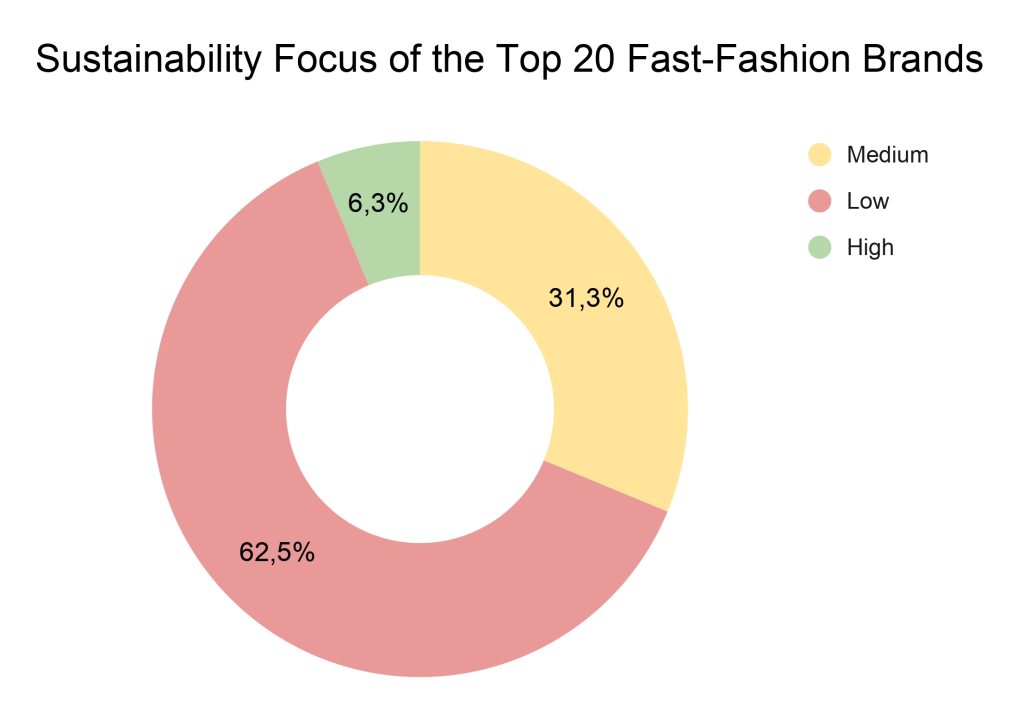
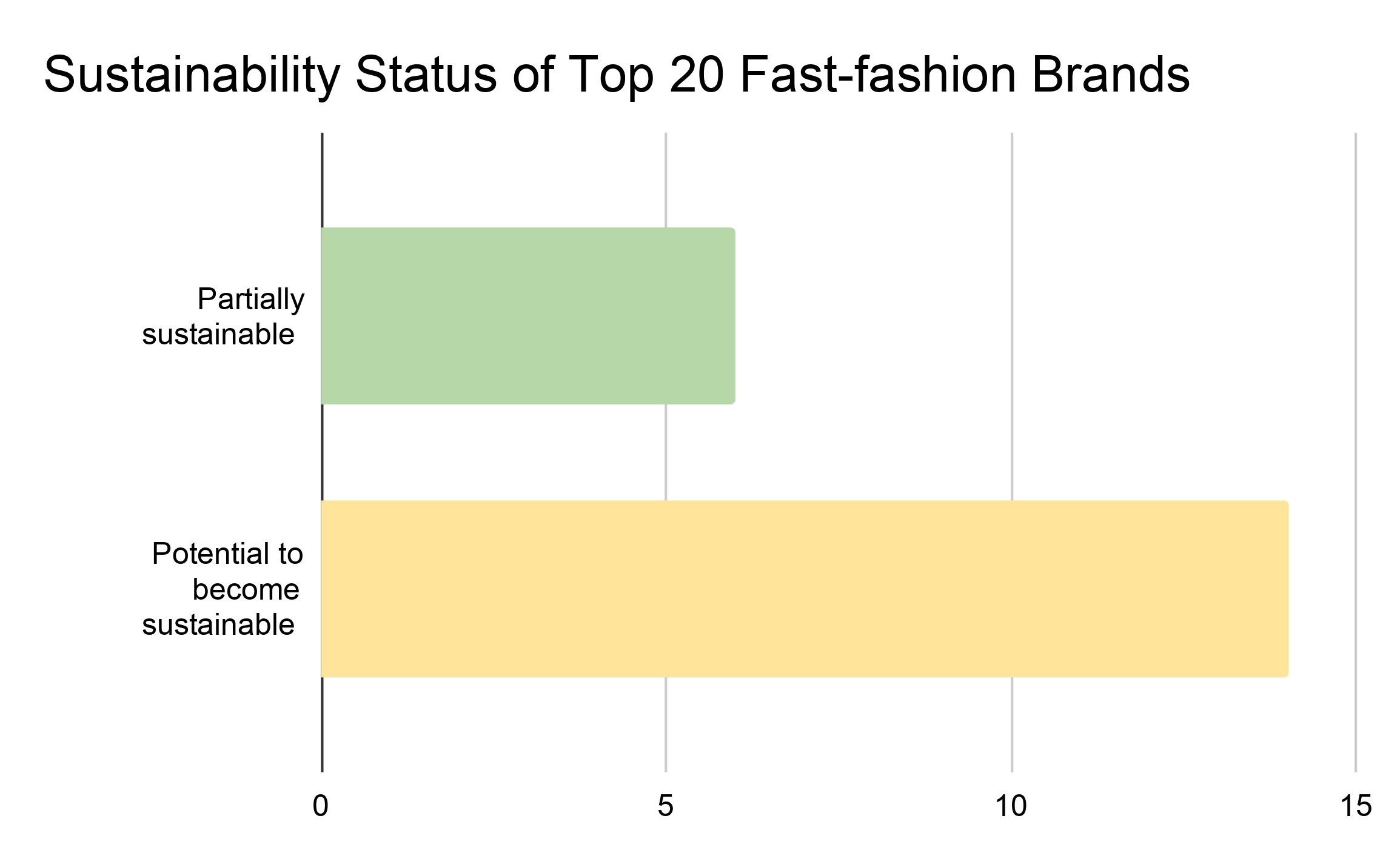
The current content analysis reveals varied approaches among the top fast fashion brands: some, among others Zara, H&M and Bershka, have taken notable steps toward integrating sustainable practices into their operations (Seuring, Stefan, and Martin Müller. “From a literature review to a conceptual framework for sustainable supply chain management.” Journal of Cleaner Production 16.15 (2008): 1699-1710). Specifically, incorporating garment collection programs, eco-friendly product lines, and commitments to employing sustainable product materials within specified time frames. H&M’s “Conscious Collection” and Zara’s “Join Life” can serve as examples of crusades, utilizing those practices. The enterprises indicate their endeavors to satiate environmentally conscious consumers by initiating these pursuits.
However, these initiatives’ tangible impact varies, with companies such as Forever 21 and Topshop still on their way to gauge practical effects from their campaigns, constituted mainly by eco-friendly collections28. Additionally, mid-tier performers like Primark and Uniqlo exhibit potential for substantial improvement, driven by programs such as Primark’s Sustainable Cotton Programme and Uniqlo’s recycling initiatives. Inauspiciously, their progress remains incremental, requiring a substantive amount of time to quantify the results. On the other hand, brands such as Fashion Nova still lag in implementing robust sustainability measures. While these brands have launched numerous programs regarding transparency enhancement efforts and resale platforms, they continue to leverage their ethically and environmentally perilous approaches. This discrepancy attracts a notable amount of public discontent, accentuating the challenge in counterbalancing rapid trend production with genuine sustainability (Tokatli 2007).
A significant limitation in all the reported sustainability initiatives is the absence of explicit outcome data, which does not allow them to be comprehensively assessed for their actual environmental impact. While firms like Primark and Uniqlo have made inputs like the number of farmers trained or garments collected, there is often limited publicly reported data on quantitative outputs like yield improvement, pesticide reduction, or diversion rate. For instance, Primark’s Sustainable Cotton Programme claims it has certified over 300,000 farmers; however, evidence of subsequent yield increases or pesticide and water usage decreases is still scarce29. Similarly, Uniqlo’s garment collection recycling efforts claim to collect millions of items but fail to disclose detailed transparency on the amount successfully recycled into new products versus downcycling or incineration30. This disconnect reflects a broader issue throughout the industry: brands tend to concentrate more on input metrics than outcome metrics that reflect actual environmental benefit. Without independent measurement and transparent reporting, comparing improvement and holding companies accountable is impossible31. In the future, developing standardized measurements and opening up to third-party audits could make sustainability claims more verifiable and comparable in the fast fashion business.
Moreover, local differentiation in sustainability focus also significantly influences business practices within this industry. Interestingly, Western fashion retailers like Zara also exhibit a “medium” concern about sustainability compared to most U.S.-based companies with lower involvement intensity. This difference can be attributed to several factors: EU policies like the EU Strategy for Sustainable and Circular Textiles impose more stringent transparency and environmental responsibility demands on European companies32. These guidelines create external pressure for compliance and promote more aggressive sustainability strategies among European businesses. Moreover, European consumers place greater expectations on environmental accountability; they are more aware and expectant regarding sustainable behavior than their American counterparts10. Differences are also value-driven from a corporate culture perspective; firms originating from Spain or Sweden are more in tune with stakeholder capitalism values, prioritizing long-term sustainability over short-term returns33. Thus, regional regulatory environment and cultural factors significantly contribute to why brands like Zara engage with a “medium” focus on sustainability relative to some U.S.-based competitors.
In this context, it is imperative to examine the claims of brands such as Shein critically. While Shein has taken steps such as its resale platform, Shein Exchange, which promotes recycling and extends product lifecycles, these measures can be viewed as superficial in light of its production volume. Shein is reported to release 6,000 new items daily24, which speaks volumes of an ultra-fast manufacturing system that works inherently against sustainability laws. Bringing in resale platforms or eco-friendly collections by brands such as these can become a greenwashing trend—reputation management tactics, rather than genuine initiatives towards reducing environmental impact31. The disconnect between these token efforts and continuous mass production makes one wonder whether they are sincere or helpful in environment-related matters. This comparison points to how volume of output can be a telltale sign of insincerity in business claims to sustainability, where shallow campaigns are employed to cover up underlying activities that remain intent on quick trend turnover at the expense of environmental responsibility.
This comparative analysis reveals that while many top fast fashion brands have initiated sustainability efforts, the scale of these initiatives often remains limited relative to their overall production volumes. For instance, eco-friendly product lines such as H&M’s Conscious Collection and Zara’s Join Life constitute approximately 5–12% of their total collections, which, given their massive output—H&M producing hundreds of millions of garments annually and Zara exceeding 500 million—translate into a relatively small environmental footprint. Similarly, revenue contributions from these sustainable lines are often minimal; for example, H&M reports that only about 3–4% of its total revenue derives from its conscious collections. This suggests that despite visible marketing campaigns and pledges, the tangible impact on reducing environmental harm remains constrained unless these proportions are significantly increased. Moreover, initiatives like resale platforms or recycling programs—such as Shein Exchange—operate at a negligible scale compared to the brands’ overall production volumes, raising questions about their effectiveness in driving meaningful change. These comparisons indicate that many efforts may serve more as symbolic gestures or branding tools than substantive solutions capable of transforming industry-wide sustainability. Without substantial scaling and transparent reporting on environmental impact reductions, such initiatives risk being perceived as superficial.
Furthermore, the prevalence of superficial sustainability indicators in brand league tables has a tendency to obscure significant social issues such as workers’ pay and working conditions. The 93% of brands that are paying below living wages, as established by the 2023 Fashion Checker Report, are indicative of a significant gap in current measurement systems, which primarily account for environmental action such as recycling and sustainable collections34. This inconsistency is a necessary flaw: sustainability rankings tend to prioritize superficial environmental actions to the neglect of inherent social elements present in authentic sustainability. Therefore, firms may become seen as green while they do not attempt to transform deeper labour rights abuses in the system, thereby reinforcing a compartmentalized view of sustainability that dismisses its social justice component. In order to bridge this gap, future research and content analyses should consider composite frameworks such as the Sustainable Development Goals or multi-criteria evaluation models that combine both environmental and social indicators33,35. These techniques would enable a more comprehensive evaluation of corporate sustainability performance, ensuring accountability along several dimensions and encouraging brands to pursue more integrative strategies that truly advance ecological integrity and social justice.
The key insight of the present analysis is the recognition of growing consumer awareness of the dissent and the subsequent demand for sustainable fashion as a significant driving force for a potential shift within the industry toward ecologically conscious development36. Initiatives targeted toward transparency, sustainable sourcing, and recycling are emerging as essential components of brand strategies, indicating a distinctive metamorphosis in consumer expectations and corporate responsibility. Regardless of the positive reorientation across the sector, the challenges persist, marking a substantial number of complications to further address.
Interviews
The interviews conducted as part of the study aim to investigate consumer behavior within the field. Understanding consumer attitudes is essential for this paper, as consumers play a pivotal role in the fast fashion cycle; their preferences motivate companies’ production practices and reinforce tendencies established by producers. The interviews were conducted over a month and involved eight participants, affecting people of various ages, incomes, and background. However, it is notable that interviewees primarily represented college students or other frontmen of the post-millennial generation.
The interview questions were designed to distinguish the public’s perspective on the industry’s issues, as well as the underlying causes and basis for their behavior as consumers in the sphere. It was crucial to gather information derived directly from the involved agents rather than reprocessed data from existing bodies of knowledge. This approach facilitates a clearer understanding of motives, which drive the consumer’s side within the field.
The primary inclination of the questionnaire questions was to gauge the public’s overall awareness of the issue. Understanding this informational context is vital for evaluating potential solutions in this sphere. Another perspective of those in-person appraisals was adjudicating on motives influencing customer attitude and demeanor. This information could help establish the factors, the destructive processes discussed, thus providing a foundation for developing implicit solutions. During the interviewing process, multiple ethical considerations needed to be addressed. Firstly, all information, concluded from one-on-one interactions, remained completely anonymous. None of the interviewees’ names or identifiable characteristics will be disclosed in this paper. In addition, the questionnaire was specifically structured to avoid blaming respondents for their customer habits.
Table 2 shows the questions were built to elicit maximum honesty by employing soft, yet definite phrasing and careful order. The initial queries addressed the broader issues, followed by inquiries about associated habits, and culminated with implicating their synthesis.
| Interview Questions | Selected Verbatims | Factors |
|---|---|---|
| 1. How aware are you of the environmental and social issues associated with the fashion industry? For example, pollution, waste, and labor conditions? |
“I know that many people, especially of my age group, purchase clothing that they know was made in an unethical manner.” (P1, Female, 20 yrs) “I have heard of the existence of sweatshops, I know brands that are associated with it. I am also aware of some of the incidents in factories of that kind.” (P5, Male, 19 yrs) “I have heard about many of the concerns associated with the fast fashion industry, from labour issues, to the poor recycling system.” (P6, Female, 21 yrs) |
|
| 2. What comes to mind when you hear the term “fast fashion”? How would you define it? |
“Fast fashion can be defined as trends that move very rapidly, oftentimes faster than the seasons.” (P8, Female, 19 yrs) “Lower quality clothes, produced in the countries where that can be done, marketed for potentially one season.” (P5, Male, 19 yrs) “Those are the things people buy to feel that they are stylish; once this first feeling vanishes and the trends change, the clothing is left behind.” (P6, Female, 21 yrs) |
|
| 3. Is the environmental impact of clothing one of the factors you consider before making a purchase? Please, explain. |
“I feel that fast fashion items are much more accessible, so I mostly opt for them, despite knowing the environmental impact.” (P1, Female, 20 yrs) “Nowadays, yes. Because I have a hard time parting with my clothing. That is why I opt for sustainable clothes, which often implies better quality.” (P7, Female, 39 yrs) “I try to opt for natural materials when it comes to clothing, because of their impact on my health as well as the environment.” (P8, Female, 19 yrs) |
|
| 4. How do you feel about brands that promote sustainability in their marketing? Does it influence your decision to buy their products? |
“I do not think that I am actively looking for sustainable items, but if I see environmentally friendly branding, it appeals to me more.” (P4, Female, 22 yrs) “For me, quality is essential, thus I could only consider purchasing a sustainable item if it holds the quality plank, which is rare.” (P6, Female, 21 yrs) “I am familiar with the term ‘greenwashing’ and I know that many companies are trying to market their products as sustainable even though it might not be true.” (P8, Female, 19 yrs) |
|
| 5. Would you spend more on clothing if you knew it was sustainably produced? Why or why not? |
“I would be willing to spend 50% more.” (P7, Female, 39 yrs) “I would be willing to spend more. However, if I weren’t in a strong financial position, I would be less interested.” (P4, Female, 22 yrs) “I would be open to paying more for a sustainable item if it managed to maintain the quality standard.” (P6, Female, 21 yrs) |
|
| 6. What barriers, if any, prevent you from making more sustainable fashion choices? (e.g., cost, convenience, brand options) |
“The biggest element is price: fast fashion is usually way cheaper. Aside from that, accessibility is also an issue when it comes to looking for sustainable clothing.” (P1, Female, 20 yrs) “The fact that many brands move toward sustainability only to satisfy their customers, rather than making an impact, leads to thinking that most of the sustainable initiatives in the industry are simply greenwashing.” (P4, Female, 22 yrs) “90% of the clothing you see is fast fashion, and oftentimes it is hard to determine whether a certain piece is sustainable or not. Also, finding sustainable pieces is generally more challenging.” (P8, Female, 19 yrs) |
|
| 7. What could the fashion industry do to make sustainable choices easier for consumers? |
“I think that we need strong campaigns to educate people on these environmental issues, shopping second-hand clothes, about creating clothes swaps. We need to raise awareness about it among the public.” (P7, Female, 39 yrs) “I think we need to impose tag regulations, so that consumers could see right away whether a piece is sustainable or made according to their beliefs.” (P8, Female, 19 yrs) |
|
| 8. Which stakeholder in the industry carries more responsibility—the government, the companies, or the consumers? |
“I think the government is most responsible for the issue and its resolution.” (P3, Female, 17 yrs) “I am convinced that consumers are most responsible for the issue, because demand drives supply; producers are only answering the market request.” (P6, Female, 21 yrs) “At the end of the day, a business’s purpose is to make money, so ethics is often neglected in those kinds of circumstances.” (P4, Female, 22 yrs) |
|
| 9. What do you think consumers play in contributing to or solving these issues? |
“I think it is hard for the issue to be solved solely by consumers.” (P1, Female, 20 yrs) “The simplest solution would be for consumers to be more conscious of what they buy and how they use and dispose of their garments.” (P6, Female, 21 yrs) “I think the biggest way consumers address the issue is by not knowing and not caring about it. Many people think about it, so they continue unconsciously consuming the products they are being sold.” (P4, Female, 22 yrs) |
|
| 10. Where do you see the future of fashion in terms of sustainability? Will fast fashion remain popular, or will we shift toward more sustainable practices? |
“I do think that the fashion industry has a long future; it comes down to producers improving in that area.” (P2, Female, 17 yrs) “I do not see any reason for fast fashion to stop unless society changes its perspective on it.” (P7, Female, 39 yrs) “As long as the planet is so overpopulated, fast fashion will keep thriving.” (P6, Female, 21 yrs) |
|
| 11. Have you personally changed your shopping habits after learning about the fashion industry’s impact? If so, how? |
“For now, I found that thrifting is the best way out for me. It allows sustainable purchases through reusing clothing, while staying within a certain price range.” (P3, Female, 17 yrs) “It did not make an impact on my purchasing habits, but I try to be more conscious about discarding my clothing by donating it or holding on to it as much as I can.” (P6, Female, 21 yrs) |
|
The following insights from the interviews highlight consumers’ take on purchasing garments and the public’s opinion toward the causes and possible resolutions for the dispute. The overall level of awareness can be identified as the pivotal finding from the interviews, as it allows us to identify potential paths for development in the field. It can be inferred that all of the interviewees were somewhat aware of the issue. Every participant was able to identify and tell about the main concerns associated with the fashion industry and give a relatively specific definition of the term “fast fashion”. However, the knowledge doesn’t cover the extent of the issue and comprehension of its full impact.
Despite this awareness, the majority of interview respondents either do not consider the environmental impact at the time of purchase or are unable to convert concern into buying behavior. There are several reasons for this gap. First, low availability remains a significant barrier to those willing to go out of their way to purchase environmentally friendly products. Most identifiable brands are fast fashion versions, and there is a similarly small market for actually sustainable brands, especially in particular geographic or socioeconomic conditions. There is a paradox: consumers say they would pay more to be sustainable—up to 50% more in some cases—yet end up going to fast fashion due to unavailability or unaffordability37.
In consumer behavior theory, this is the “values-behavior gap,” where individuals’ stated values are not necessarily fulfilled in related behavior38. One respondent, for instance, indicated that they would pay higher prices for sustainable apparel and continue to shop at Zara, reflecting how convenience, habit, and perceived value for money influence purchase behavior despite stated preference. Geographic and socioeconomic factors also contribute to this gap; urban residents in cities like New York may be more likely to be exposed to sustainable brands or secondhand markets than low-income shoppers in rural regions like parts of Texas. Limited access to sustainable options in rural or low-income areas prevents consumers from acting according to their environmental values, thus continuing to use fast fashion stores that dominate high-street shopping districts.
Another obstacle every environmentally concerned purchaser faces is pricing. Despite being willing to pay up to 50% more for sustainably produced items, staying within a desired price range may be challenging. In those cases thrifting can be a way out; however, it cannot be considered a complete analogue of brand new apparel because of specific design and limited v, variety not personalised for the customer. Additionally, one of the factors that affects consumer behaviour is of trust in producers’ advertising campaigns because of greenwashing and commonly unsubstantiated claims. It gets progressively harder to identify whether a particular brand is truly eco-friendly or simply eager to attract new customers because of the popularity of environmental concerns. To better understand this discrepancy, a thematic analysis reveals recurring patterns such as “green fatigue,” where consumers become skeptical or weary of green claims due to repeated exposure to greenwashing.Participants’ distrust often stems from previous experiences with misleading sustainability claims and limited transparency from brands about their actual practices (TerraChoice, 2010). This skepticism makes it increasingly difficult for consumers to verify whether an item is genuinely eco-friendly or simply marketed as such for commercial gain.
The opinions on the stakeholder which carries the most responsibility vary drastically. The governments, the consumers, and the producers were all blamed for being the catalysts of the raised issue. However, leading onto the potential solutions, most of the participants mentioned that raising awareness of the extent of the problem may impact the public’s mind and encourage consumers to change their behaviours after knowing the exact environmental impact, implicated by fast fashion. In turn, producers will have to react to the rising moods of sustainability demand and adjust their production. Additionally, governments can contribute by adjusting policies aimed at ecological and human right regulations, however, only to a limited extent.
Discussion
The scope of the study was compiled by combining the collection of insights from each contributor involved in the matter and supporting each perspective with insights from the previous body of knowledge, represented by formerly written scholarly articles. The study showcases the insights from literature review, content analysis, and interviews. In particular, by specifically developing questions utilized for the interviews, analysing the incentives of the campaigns executed by the institutions in the scope, and studying the legal regulations aimed at the area’s concerns. The diagram below showcases various stakeholders who contribute to the issue, which implies that all of them could potentially employ strategies of addressing the issue.
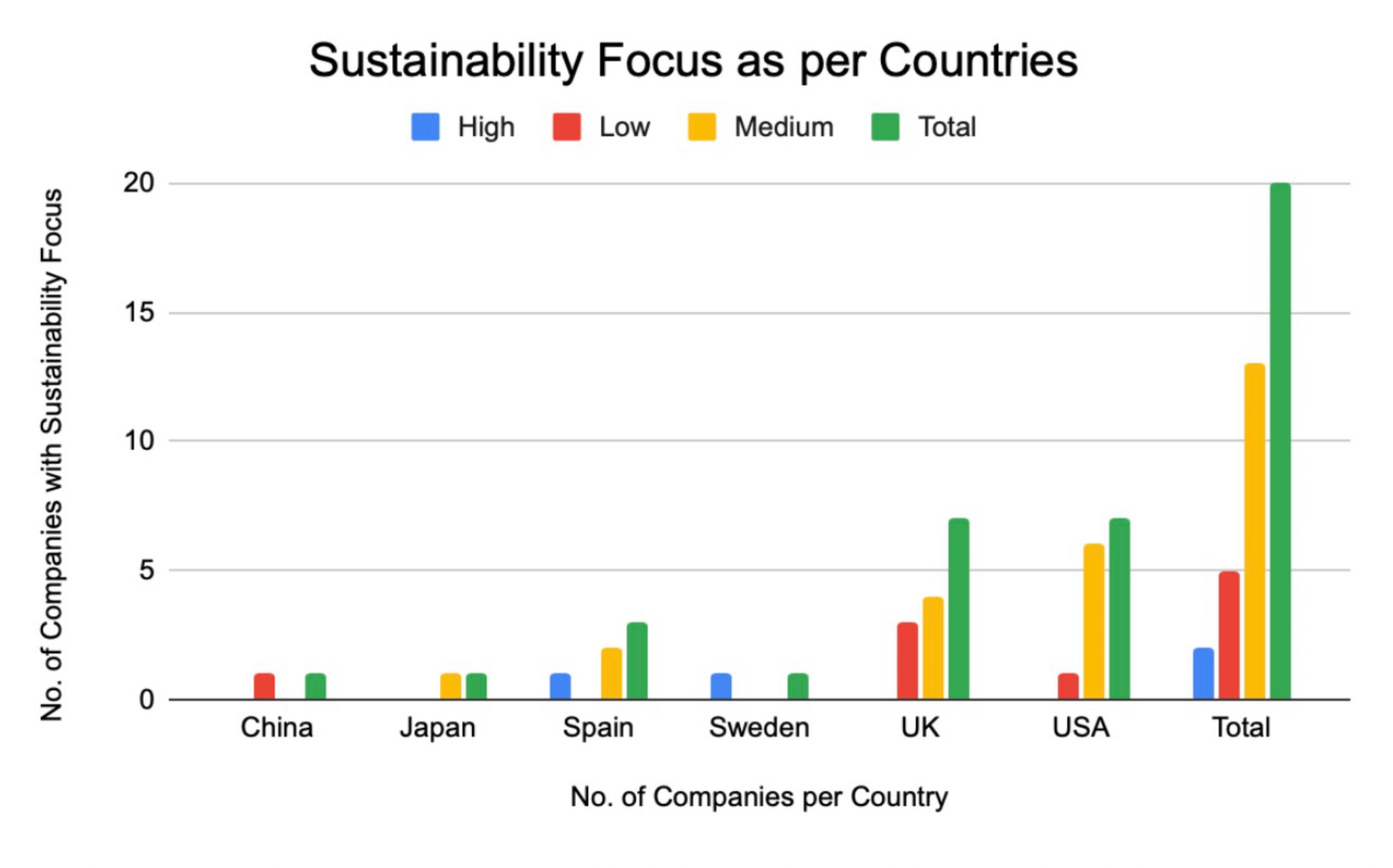
The diagram above reveals how much representation by the top fast fashion brands is done by the countries of their headquarters. It describes the overall trends among the mid-tier companies in the fashion market. Such a framework was developed by identifying the leading enterprises and further analysing their actions based on various factors. Those factors include country of origin, sustainability practices, most prominent sustainability campaigns, and the potential to become environmentally sound. A detailed overview of these factors can be found in the content analysis part of this paper. The graph represents the amalgamation of these factors and allocates them according to the country, which a specific corporation originates. Such segmentation allows us to trace the most pivotal markets in the global trade and determine the factors influencing their policies and measures.
According to the earlier referenced chart, the predominance of the specified organisations originates from the UK and the USA. Additionally, none of the represented institutions from those countries have a high level of sustainability focus. As indicated by the total ratio of sustainability focus, most companies fall into the medium sustainability focus, which identifies that there has been an evident shift within the organisations toward environmentally conscious practices, especially in regions such as Spain and Sweden. This newly emerged incline identifies the consumer-driven alterations incorporated by brands, targeting ecologically conscious consumers. Conversely, other brands, in particular Shien, fall short on, executing modifications penetrating to their environmental footprint. It is manifested in either complete lack of sustainability campaigns and endeavors or enchanting ones, which fall under greenwashing.
This regional contrast demonstrates how regulatory environments abroad shape business operations in sustainable fashion behaviors. Companies such as the European company Mango are faced with stringent policies such as the EU Green Deal and the Strategy for Sustainable and Circular Textiles. Such policies require adherence to environmental design criteria, extended producer responsibility, and enhanced supply chain transparency, and thus compel brands to adopt greener behaviors. In contrast, United States-based companies operate under mostly voluntary regulatory systems, where sustainability is achieved more through consumer pressure and corporate social awareness than law. European companies are driven towards integrating sustainability into their core operations due to outside compliance issues, while many American corporations just adopt such practices selectively or as part of promotional strategies aimed at green-conscious customers. Such divergence impacts their current sustainability programs and influences future strategic designs in each region’s industry context. A realization of such divergent regulatory environments provides a more accurate picture of why certain brands have uneven levels of commitment to environmental responsibility across different jurisdictions.
Furthermore, the stakeholder interviews and content analysis reveal a complex relationship between corporate sustainability initiatives and consumer perceptions. Many brands—such as Zara, H&M, Primark, and Uniqlo—have launched eco-friendly collections and recycling programs; however, their environmental impact remains limited relative to their large-scale production39. Content analysis indicates that sustainable product lines constitute only about 5–12% of offerings and generate minimal revenue, suggesting that many corporate efforts are more about branding than genuine environmental impact10. Brands like Shein and Fashion Nova lag further behind in meaningful sustainability efforts; their superficial greenwashing strategies risk eroding public trust3. On the consumer side, interviews highlight a general awareness of environmental issues but also reveal a persistent “values-behavior gap”—consumers express willingness to pay more for sustainable products but face barriers such as limited availability, higher prices, and skepticism toward green claims40. This underscores the need for greater transparency and authentic, sustainable options in the market.
Overall, while progress has been made in raising awareness among consumers and encouraging some brands to adopt greener practices, significant gaps remain before true industry-wide change can be achieved. Regulatory environments play a crucial role in shaping corporate strategies across regions; however, voluntary efforts alone are insufficient without more vigorous enforcement and transparency. Moving forward, aligning corporate initiatives with genuine sustainability goals—and ensuring consumers have access to trustworthy information—will be essential for fostering meaningful progress in sustainable fashion practices worldwide.
Implications
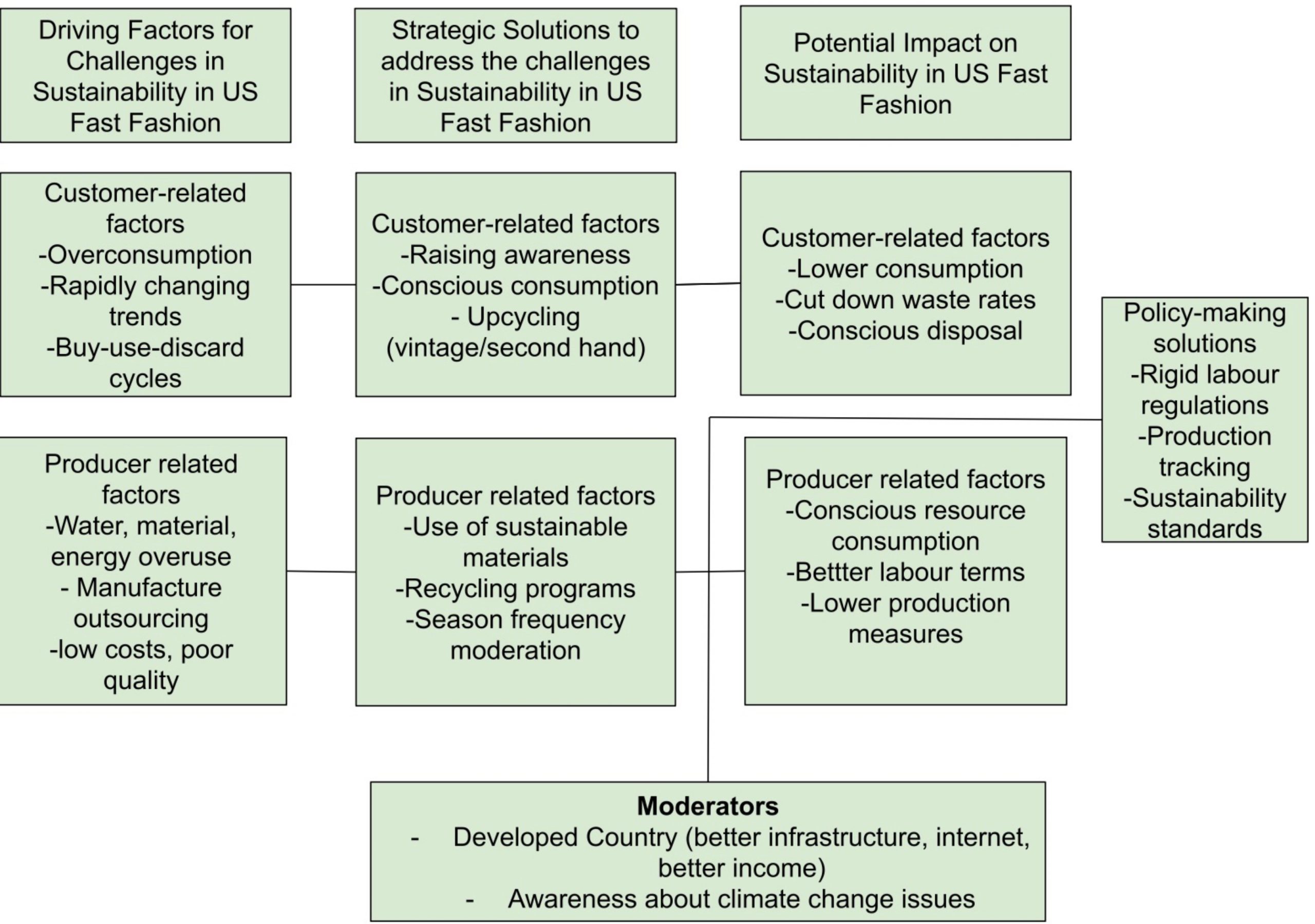
This study highlights the complex interplay among stakeholders—policymakers, producers, and consumers—in achieving sustainability in the fast fashion industry. The findings underscore the urgent need for collaboration to navigate significant challenges such as environmental degradation, labor issues, and consumer overconsumption. That is because within such an interconnected domain any minor alteration to one of its facets triggers a series of structural adjustments, influencing the dynamics of all the affected parties. Additionally, numerous high-impact initiatives–namely, circular economy models or public campaigns–are predicated on collaborative efforts and necessitate coordinated actions and active engagement from all relevant stakeholders. Additionally, independent changes also assume a significant role, and can be embodied by each relevant party involved.
Policymakers can facilitate better labor conditions in developing countries by implementing tiered regulations that balance economic stability and ethical production. Producers can adopt sustainable practices, such as reducing collection frequency and utilizing natural materials, while launching campaigns promoting eco-conscious consumption. Meanwhile, consumers must be educated about the specific challenges within the industry to make informed purchasing decisions. By encouraging vintage and secondhand shopping, consumers can contribute to a circular economy. Below, we discuss
the implications of the findings from this exploration for the policymakers, producers of fast fashion brands and consumers.
Policy makers
Policy makers act as indirect partakers in the dispute, not being in a position to forthrightly impact the field, however, being capable of affecting the principal contributors. Pertaining productions, the most pivotal concern, in need of addressing, is manufacturing outsourcing. One of the ways to enable it is through stricter labor regulations in developing countries41. Such an approach would allow outsourcing to remain more profitable, compared to establishing factories in developed countries, thus allowing the economies, held up by apparel production, to persist, concurrently improving employment and labor limitations for factory workers. Consequently, this shift would forcefully increase production and retail costs, thereafter affecting the social environment around the fast fashion industry, coercing customers and retailers to introduce changes into their approaches to mid-tier segment apparel. On the consumers’ side, those changes would include purchasing frequency reduction and shift in garment engagement. Additionally, the price-policy changes potentially act as an encouragement to transition to vintage and secondhand shopping. Furthermore, mechanisms driving apparel producers to prioritize sustainability reporting5 and make the supply chain more transparent41 need to be facilitated to achieve more diligent environmental and outsourcing regulations.
Moreover, the previous body of research recognizes consumer education on environmental impacts of the fashion industry as an essential part of addressing the most pivotal concerns in the field42. According to the assessment conducted for this paper in addition to prior research on the subject, despite the growing awareness among the population, where people seem to grasp the environmental issues related to clothing production, the social and economic implications, as well as the scale of the ecological repercussions, are often being neglected. In this way, campaigns encouraging responsible apparel consumption must be launched, supplying customers with information, strengthening their attitude toward environmental fashion and conscious consumption (HO et al., 2020). Those campaigns should include data on topics such as growing restriction of access to natural resources43, clothing care practices, environmentally-friendly alternatives to fast fashion, and the above mentioned dimensions44,45. In this context, policy interventions can be crucial in shaping industry practices and consumer behavior.
The European Union’s Sustainable and Circular Textiles Strategy can be an excellent example of how the entire spectrum of policy solutions can transform industry through green design mandates, compulsory supply chain transparency, and extended producer responsibility32. Implemented in the United States, these policies would have a catastrophic effect on the fast fashion business as usual by increasing compliance costs on brands that disregard sustainability. This type of legislation would spur businesses to invest in durable, recyclable materials and fair-sourcing methods and stimulate a move toward greener business models. This policy shake-up could also enable smaller brands to compete on their sustainability commitment, while unsettling the grip the ultra-fast fashion retailers have on consumers through unbridled speed and quantity. But implementation of such policies in the U.S. faces many obstacles, including lobbying resistance industry playerstries and a heterogeneous regulatory system for both federal and state governments39. Despite these obstacles, growing consumer awareness and consumer demand for more openness can serve as catalysts to policy change, ultimately leading to industry-wide shifts towards more sustainable consumption and production patterns.
Producers
Manufacturers play a fundamental role in inducing numerous concerns associated with the fashion industry. According to the series of interviews conducted for the current research, as well as the previous fieldwork on the realm, the trends set up by apparel producing companies have a pivotal leverage on consumer habits. The fashion industry is a field driven by trends and movements, which are often set on the production side. Therefore, by introducing changes into apparel production and distribution practices, we could achieve meaningful improvements46.
One approach to advancing sustainability in the field is the implementation of sustainable design practices. This approach entails the creation of garments that can be easily reused or recycled41. It involves improving product design and selecting materials that can be recycled without the necessity for separation. By adopting this strategy, the potential for garment recycling and salvage can be significantly enhanced, thus making these practices more accessible to customers. Furthermore, this methodology could reduce costs and time expenditures associated with attire repurposing.
In the realm of construction practices, the incorporation of innovative technologies is essential for achieving ecological balance in the garment industry—a notable example of such a switch from wet to dry processing. Damp processing, characterized by extensive use of water and energy during dying, bleaching, painting, and finishing procedures, is a highly resource-intensive approach. In contrast, it can be substituted by alternative technologies, such as laser dying47 and utilization of CO2 as a dying medium5. Companies can employ several strategies to mitigate the ecological impact of materials exploited in garment production, however, a significant constraint is the limited pool of sustainable materials, which is insufficient to satisfy the demands of the contemporary fashion industry. This shortfall underscores the need for investment in the development of novel eco-friendly fibers, which can reduce the environmental footprint of production and disposal processes41. Some attributes that characterise sustainable materials are reduced pesticide and fertilizer usage and utilization of improved farming practices, such as targeted spreading48. Organic cotton can serve as an example of such, as its production doesn’t involve pesticides49.
Moreover, the implementation of systemic innovation and technology is central to achieving significant sustainability in the fashion supply chain. While incremental steps towards better designs and manufacturing practices are valuable, disruptive breakthroughs such as chemical recycling, waterless dyeing technologies, and the introduction of sustainable fibers can significantly revolutionize supply chains5. Firms like Colorful Standard and Circ are a good case study of how emerging strategies can significantly reduce environmental impacts through the use of sustainable materials and the most advanced recycling methods50,51. Not only are these advancements enhancing resource efficiency, but they also make scalability across the industry possible, beyond mere superficially green claims47. As highlighted by market experts, framing such systemic innovations is essential to transition to a circular economy model where waste is minimized and materials are cycled back for reuse48. Therefore, support for research and investment in such innovative technologies needs to be strengthened to effect an actual transition to sustainable fashion culture on an industrial level.
Alongside the shift in product design, reevaluating quality standards is essential to enhance garment sustainability. Quality plays a pivotal role in garment disposal. Factors such as colour fastness, rip strength, and the integrity of zippers and seams being commonly cited as primary for consumer textile discardment5. Therefore, improving the quality of final garments is expected to contribute to the reduction of apparel waste by extending the textile life cycle through refined durability and increased number of possibilities for its reuse and repair. Consequently, this strategic repositioning could lead to decreased customer consumption rates. Overtime, raising quality standards is anticipated to require price increases in a selection of sectors. The use of higher-quality materials as well as the implementation of more professional production practices often necessitates increased financing, which must be reflected in elevated retail prices. Such amendments are expected to transform the attire trade industry mindset among manufacturers and consumers. As a result of increased costs, garments are perceived as more valuable, leading to a reduction in consumption and disposal rates on both sides of the dispute.
In addition to implementing changes in production practices, companies can initiate social campaigns promoting conscious consumption, thereby creating a shopping experience for customers, which would be associated with social and environmental commitment52. Such programs may encompass various recycling campaigns, including those focused on the collection and repurposing of clothing and footwear41; garment life extension campaigns, such as offering repair services to customers53,54; and upcycling initiatives. Upcycling involves the transformation of discarded objects into a product of higher functionality, often resulting in a more environmentally friendly outcome compared to traditional recycling, which oftentimes involves a chemical reconstruction of materials to create entirely new items55. Furthermore, alternative distribution models present viable counterparts to such programs. One prominent example is the product-as-a-service strategy, frequently utilized for special occasions. This model addresses the issue of garments that, if purchased, once used would be thrown away or, in any case, no longer worn and destined to become waste5. On top of that, custom-made and made-to-order production methods can offer further solutions by emphasizing superior quality and personalized design, which allows for enhanced attire longevity and reduced likelihood of such items ending up in landfills56.
One high-profile example of successful implementation of circular practices is Patagonia’s Worn Wear initiative reselling over 100,000 used products annually and restoring approximately 50,000 pieces of clothing each year57. This is evidence that if companies have sufficient resources, facilities, and corporate values centered on sustainability, they can effectively extend the lifetimes of products without losing customer trust and loyalty to their brands. These strategies not only reduce textile waste but also create a culture of longevity and sustainable use. Nevertheless, its adoption in fast fashion businesses is a considerable challenge. Major barriers are the lack of established reverse logistics infrastructure needed for collecting, reviving, and redistributing volumes of garments58. Fast fashion business models are inherently constructed on rapid turnover and low margins; thus, adding repair or resale services goes against their very profit motives that prioritize selling new products7. Additionally, economic incentives for fast fashion companies clash with circularity; repair and upcycling extend product lifecycles but typically reduce sales volume and short-term revenue streams39. Thus, structural constraints—i.e., technical capability for reverse logistics, weak consumer demand for second-hand clothes in some markets, and shareholder pressures for quick returns—constrain waves of adoption of circular behaviors within this sector. These systemic constraints are addressed by re-arranging business models for extracting long-term value generation over short-term profits and designing scalable infrastructure to support best practices in a sustainable way without compromising profitability59.
Consumers
According to environmental solutions to fast fashion research, altering consumer consumption practices and behavior can significantly reduce the industry’s environmental impact, particularly at the purchase and use phase60. These actions must be complemented by increased awareness and willingness among consumers to make environmentally conscious choices. Ad campaigns are also key here; for example, Patagonia’s “Don’t Buy This Jacket” campaign is the prime example of how businesses can make consumers green through advertising61. It works because it applies behavioral framing—i.e., focusing on what will become of the environment if individuals overconsume—and is genuine and consistent with overall corporate social responsibility at Patagonia. Such messaging not only generates awareness but also disrupts consumer culture regarding consumption, promoting a sense of responsibility as well as trust. Education has to extend beyond awareness generation to include practical strategies facilitating responsible consumption.
Future steps would involve cooperation with schools to incorporate studies on sustainability in the coursework or with opinion leaders to promote green behavior37. Additionally, using consumer labeling schemes that give details regarding the environmental effect of products can allow customers to make conscious choices62. Shifting fashion consumption patterns towards diversification—such as promoting vintage shopping, thrifting, second-hand markets, and rental services—can contribute to furthering sustainable patterns of consumption63. Making clothing care and repair practices easier through consciousness-raising campaigns can extend the lifecycle of products and reduce waste by reducing discard rates and water use during the washing cycle64.
Limitations and Future Directions
Acknowledging the limitations of the current paper is essential to fully comprehend this study’s relevance to the industry’s current market. Recognizing potential flaws present in this body of knowledge will allow us to assess which markets, audiences, and contexts the findings can be applied to more efficiently. Furthermore, identifying the existing limitations helps to recognize the gaps in the existing data, which need to be addressed in future scholarly work.
To begin with, throughout the process of carrying out the interview stage of this study, numerous limitations were faced in the selection of participants. One of the main challenges was reaching out to interviewees from a different country. As the research deals with consumers in America, it became imperative to form connections specifically with American respondents. In this manner, conducting the study across geographical distances brought along certain logistical restraints. Additionally, compiling a representative sample with a diverse base in age, education, gender, and region presented a challenge. Time constraints on both ends also made it complicated to arrange interviews. Most respondents were currently busy with their work or studies, making it particularly difficult to arrange interviews at the busy mid-fall season.
Hence, under these limitations, it must be noted that the sample was predominantly composed of young adults and students, which might have circumscribed the range of views expressed in this study. Overrepresentation in this age bracket overlooks significant generation differences—such as varying consumer shopping behavior and sustainability attitudes among older customers10. To overcome this gap, future research should strive for a more diverse participant sample reflecting diverse ages, socio-economic levels, and shopping behaviors. This approach would enable a more comprehensive understanding of consumer attitudes across different age groups and enhance the generalizability of conclusions to sustainability perceptions and fast fashion consumption patterns11. Having multi-generational data could also reveal longitudinal attitude shifts towards sustainability and brand loyalty, thereby enriching the overall analysis.
Additionally, searching on such a broad topic, which encompasses numerous agents, a wider matrix of participants needs to be involved to accurately characterize the issue. Consumer behavior is not the only aspect of the topic which could be enhanced with interviews. Engaging with industry agents on the producer’s side could yield valuable insights. However, conducting those kinds of interviews requires specific cautiousness, as it is undeniable that the information gathered could potentially disadvantage the manufacturer. Thus, they may be reluctant to disclose crucial information during those discussions.
The scope of the study is primarily attributed to its focus on the United States fashion market. Future research could benefit from moving on to the analysis of compatible markets, or instead going deeper into examining this market in the developing countries. Inspecting those paths could provide a comprehensive understanding of the global trends and dynamics, therefore facilitating the identification of potential solutions, specifically designed for a thorough and global approach. Furthermore, the main focus of this research is fast fashion; thus luxury and other segments of the market can not be taken into consideration. Consequently, exploring the overlooked segments is one of the future directions.
While this paper addresses a broad array of dimensions related to the topic-such as historical context, stakeholder perspectives, and potential future the in-depth exploration of each of these topics is not feasible. Therefore, specific details must be prioritized or renounced to ensure maximum quality of the overall data. A more thorough exploration of each aspect separately would provide a more complex and global matrix of knowledge, allowing for a richer and more comprehensive understanding of the subject.
The findings of this particular paper are valid solely within its framework. It can be firmly inferred that the present data can exclusively apply to the market in the US and its impact on other countries is mentioned. However, we cannot declare that this industry functions similarly in compatible regions. Further, this study primarily concentrates on the fast fashion segment, thereby limiting the applicability of its conclusions to other price ranges within the industry.
Conclusion
The study’s primary aim was to determine the most prominent concerns in the field, employing an all-around perspective, regarding various stakeholders in the field. Additionally, this study sought to analyse feasible paths toward addressing the issues present within the industry. Through a series of interviews as well as brands’ campaign analysis and literature review, this study has compiled a comprehensive matrix of knowledge, answering the following questions: “What are the current interpretations and challenges of sustainability in the fast fashion industry in the US? What are the future directions towards addressing the current challenges and navigating the actions for the fast fashion brands and the customers?”.
The findings indicate a growing awareness among consumers regarding the detrimental effects of fast fashion, yet this awareness often falls short of translating into significant behavioral changes. Many consumers acknowledge the environmental implications of their purchasing habits but frequently cite barriers such as cost, convenience, and the prevalence of greenwashing as obstacles to adopting more sustainable practices. The interviews revealed a mixed perception of brands’ commitments to sustainability, further complicated by doubts about the authenticity of their environmental claims. Moreover, the analysis of industry practices highlighted a notable disparity among fast fashion brands regarding their sustainability initiatives. While some brands have made remarkable steps toward integrating sustainable practices, others lag behind, maintaining their reliance on environmentally harmful models. However, the existing attempts toward sustainable practices, though not contributing sufficiently to the necessary refining of the industry, indicate a distinguished shift in the mindset around the field.
Furthermore, to attain meaningful change, it is essential to achieve collaboration from all standpoints in the dispute. Policymakers, from their perspective, can enforce stricter standards and regulation while consumers may shift their purchasing habits toward sustainable trade, thus calling for changes on the production side. Manufacturers, on their part, should strive to adopt sustainable practices, which not only mitigate environmental harm but also ensure fair labor conditions.
Future research must broaden its coverage beyond US fast fashion and incorporate global retail analysis, emphasizing the interrelations between various markets. Additionally, deeper inquiries into the perspectives of producers and policymakers could provide a more thorough grasp of the potential pathways toward sustainability.
Appendix
| Company Name | Country of Origin | Sustainable Fast Fashion Focus | Sustainability Status | Sustainability Measures | Notable Sustainability Campaigns | Impact of Sustainability Initiatives |
|---|---|---|---|---|---|---|
| H&M | Sweden | High | Partially sustainable |
|
|
|
| Zara | Spain | Medium | Potential to become sustainable |
|
“Join Life” collection (eco-friendly materials) |
|
| Shein | China | Low | Potential to become sustainable |
|
“Shein Exchange” resale program |
|
| Forever 21 | USA | Medium | Potential to become sustainable |
|
“Forever Green” collection |
|
| Uniqlo | Japan | Medium | Partially sustainable |
|
“Re.Uniqlo” recycling program |
|
| Boohoo | UK | Low | Potential to become sustainable |
|
“For the Future” strategy |
|
| ASOS | UK | Medium | Partially sustainable |
|
“Responsible Edit” (sustainable products) |
|
| Fashion Nova | USA | Low | Potential to become sustainable |
|
No major campaigns to date |
|
| GAP | USA | Medium | Partially sustainable |
|
“Gap for Good” initiative |
|
| Primark | Ireland | Medium | Potential to become sustainable |
|
“Primark Cares” (product, planet, people) |
|
| Mango | Spain | Medium | Partially sustainable |
|
“Committed” collection |
|
| Topshop | UK | Medium | Potential to become sustainable |
|
“Considered” collection (eco-friendly materials) |
|
| Urban Outfitters | USA | Medium | Potential to become sustainable |
|
“Urban Renewal” |
|
| Express | USA | Medium | Potential to become sustainable |
|
“Express Eco” collection |
|
| Misguided | UK | Low | Potential to become sustainable |
|
No major campaigns to date |
|
| PrettyLittleThing | UK | Low | Potential to become sustainable |
|
No major campaigns to date |
|
| New Look | UK | Medium | Potential to become sustainable |
|
“New Look Kind” collection |
|
| Abercrombie & Fitch | USA | Medium | Potential to become sustainable |
|
“Abercrombie Cares” initiative |
|
| American Eagle Outfitters | USA | Medium | Potential to become sustainable |
|
“Real Good” collection |
|
References
- Joy, Annamma, et al. “Fast fashion, sustainability, and the ethical appeal of luxury brands.” Fashion Theory 16.3 (2012): 273-295. [↩]
- Palm, C. “Sustainable fashion: to define, or not to define, that is not the question.” Sustainability: Science, Practice and Policy 19.1 (2023). [↩]
- Bick, Rachel, Erika Halsey, and Christine C. Ekenga. “The global environmental injustice of fast fashion.” Environmental Health 17 (2018): 1-4 [↩] [↩] [↩]
- Ren, Xiaoxiao. “Analysis on the development of fast fashion-based on the influence of new media.” Journal of Education, Humanities and Social Sciences 8 (2023): 2537-2542 [↩]
- Centobelli, Piera, et al. “Slowing the fast fashion industry: An all-round perspective.” Current Opinion in Green and Sustainable Chemistry 38 (2022): 100684 [↩] [↩] [↩] [↩] [↩] [↩] [↩]
- Claudio, Luz. “Waste couture: Environmental impact of the clothing industry.” (2007): A449-A454 [↩] [↩] [↩]
- Joy, Annamma, et al. “Fast fashion, sustainability, and the ethical appeal of luxury brands.” Fashion Theory 16.3 (2012): 273-295 [↩] [↩] [↩] [↩]
- Selsky, J. W., & Parker, B. “Platforms for cross-sector social partnership: Perspectives on an emerging concept.” Journal of Management 31.6 (2005): 849-873 [↩]
- Geissdoerfer, M., Savaget, P., Bocken, N. M., & Hultink, E. J. “The Circular Economy – A new sustainability paradigm?” Journal of Cleaner Production 143 (2017): 757-768 [↩]
- Niinimäki, Kirsi, et al. “The environmental price of fast fashion.” Nature Reviews Earth & Environment 1.4 (2020): 189-200 [↩] [↩] [↩] [↩]
- McNeill, L., & Moore, R. “Sustainable fashion consumption: Complexities influencing buying behaviour.” International Journal of Consumer Studies 39.3 (2015): 212–222 [↩] [↩]
- Linden, Annie Radner. “An analysis of the fast fashion industry.” (2016). [↩] [↩]
- Mullin, Rick. “Managing the outsourced enterprise.” Journal of Business Strategy 17.4 (1996): 28-37 [↩]
- Kidd, Charles V. “The evolution of sustainability.” Journal of Agricultural and Environmental Ethics 5 (1992): 1-26 [↩]
- Rocamora, Agnès. “New fashion times: Fashion and digital media.” The handbook of fashion studies (2013): 61-77 [↩] [↩]
- Haidar, Hassan Mousa. “Historical perspectives and the emergence of the sustainability concept in organizations.” Open Journal of Business and Management 9.5 (2021): 2277-2298 [↩]
- Pero, Margherita, Elisa Arrigo, and Antoinette Fionda-Douglas. “Sustainability in fashion brands.” Sustainability 12.14 (2020): 5843 [↩] [↩]
- Jin, Byoungho Ellie, and Daeun Chloe Shin. “The power of the 4th industrial revolution in the fashion industry: what, why, and how has the industry changed?.” Fashion and Textiles 8.1 (2021): 31 [↩]
- Jacometti, Valentina. “Circular economy and waste in the fashion industry.” Laws 8.4 (2019): 27 [↩]
- Dickson, Marsha, and Hayley Warren. “A look at labour issues in the manufacturing of fashion through the perspective of human trafficking and modern-day slavery.” The Dangers of Fashion: Towards Ethical and Sustainable Solutions (2020): 103-124 [↩]
- Bailey, Kerrice, Aman Basu, and Sapna Sharma. “The environmental impacts of fast fashion on water quality: a systematic review.” Water 14.7 (2022): 1073 [↩]
- Council for Textile Recycling. Annual Report on Textile Recycling and Circular Economy 2020. Council for Textile Recycling, 2020 [↩]
- Cobbing, Madeleine, and Yannick Vicaire. “Timeout for fast fashion.” Greenpeace: Hamburg, Germany (2016). [↩]
- FashionUnited. “The Latest Trends in Sustainable Fashion 2023.” FashionUnited, 2023 [↩] [↩]
- Statista. “Market Share of Sustainable Fashion in Europe 2023.” Statista, 2023 [↩]
- H&M Group. Sustainability Report 2021. H&M Group, 2021 [↩]
- Inditex. Annual Sustainability Report 2022. Inditex, 2022 [↩]
- Brewer, Mark K. “Slow fashion in a fast fashion world: Promoting sustainability and responsibility.” Laws 8.4 (2019): 24 [↩]
- Primark. Primark Sustainable Cotton Program Report 2022. Primark, 2022 [↩]
- Uniqlo. Uniqlo Sustainability Initiatives Overview 2023. Fast Retailing Co., Ltd., 2023 [↩]
- Furlow, Nicole E., and Christina Rinaldi. “Greenwashing in the Fashion Industry: A Case Study.” Journal of Business Ethics 104.2 (2011): 1–15 [↩] [↩]
- European Commission. Circular Economy Action Plan for a Cleaner and More Competitive Europe. Publications Office of the European Union, 2022 [↩] [↩]
- Hahn, Timo, et al. “Sustainability in the Textile Value Chain: From Transparency to Action.” Journal of Cleaner Production 107 (2015): 137-148 [↩] [↩]
- FashionChecker. “Transparency Report on Global Fashion Brands.” FashionChecker, 2023 [↩]
- United Nations. Transforming Our World: The 2030 Agenda for Sustainable Development. United Nations, 2015 [↩]
- Barnes, Liz, and Gaynor Lea‐Greenwood. “Fast fashioning the supply chain: shaping the research agenda.” Journal of Fashion Marketing and Management: An International Journal 10.3 (2006): 259-271 [↩]
- Kunchamboo, Vimala, Christina KC Lee, and Jan Brace-Govan. “Nature as extended-self: Sacred nature relationship and implications for responsible consumption behaviour.” Journal of Business Research 74 (2017): 126-132 [↩] [↩]
- Luchs, M.G., et al. “Values-driven consumer behaviour: The paradoxes of sustainability.” Journal of Business Ethics 95.4 (2010): 583-599 [↩]
- Fletcher, K., & Tham, M. Fashion & Sustainability: Design for Change. Laurence King Publishing, 2019 [↩] [↩] [↩]
- White, Andrea, et al. Consumer Attitudes Toward Sustainable Fashion: Insights and Trends. Sustainable Fashion Institute, 2019 [↩]
- Nguyen, Hoang Tien, et al. “Enhancing sustainability in the contemporary model of CSR: a case of the fast fashion industry in developing countries.” Social Responsibility Journal 17.4 (2021): 578-591 [↩] [↩] [↩] [↩] [↩]
- Colasante, Annarita, and Idiano D’Adamo. “The circular economy and bioeconomy in the fashion sector: Emergence of a ‘sustainability bias’.” Journal of Cleaner Production 329 (2021): 129774 [↩]
- Stiglitz, Joseph E. “On the irrelevance of corporate financial policy.” The American Economic Review 64.6 (1974): 851-866 [↩]
- Atalay Onur, Duygu. “Integrating circular economy, collaboration and craft practice in fashion design education in developing countries: a case from Turkey.” Fashion Practice 12.1 (2020): 55-77 [↩]
- Papahristou, Evridiki, and Nikolaos Bilalis. “Should the fashion industry confront the sustainability challenge with 3D prototyping technology.” International Journal of Sustainable Engineering 10.4-5 (2017): 207-214 [↩]
- Abreu, Monica Cavalcanti Sa de, et al. “Collaboration in achieving sustainable solutions in the textile industry.” Journal of Business & Industrial Marketing 36.9 (2021): 1614-1626 [↩]
- Wren, Brianna. “Sustainable supply chain management in the fast fashion industry: A comparative study of current efforts and best practices to address the climate crisis.” Cleaner Logistics and Supply Chain 4 (2022): 100032 [↩] [↩]
- Chopin, Pierre, et al. “Avenues for improving farming sustainability assessment with upgraded tools, sustainability framing and indicators. A review.” Agronomy for Sustainable Development 41 (2021): 1-20 [↩] [↩]
- Fifita, Ilaisaane ME, et al. “Fashioning organics: Wellbeing, sustainability, and status consumption practices.” Journal of Business Research 117 (2020): 664-671 [↩]
- Colorful Standard. “Sustainable Basics: The Colorful Standard Brand Manifesto.” Colorful Standard, 2023 [↩]
- Circ. Circular Economy in the Fashion Industry: 2022 Report. Circ GmbH, 2022 [↩]
- Ozdamar Ertekin, Zeynep, Deniz Atik, and Jeff B. Murray. “The logic of sustainability: Institutional transformation towards a new culture of fashion.” Journal of Marketing Management 36.15-16 (2020): 1447-1480 [↩]
- Remy, Nathalie, Eveline Speelman, and Steven Swartz. Sustainable style: A new fast-fashion formula. McKinsey Global Institute, 2016 [↩]
- Chavero, Susana Toboso. “The unsustainability of fast fashion.” Datatèxtil 36 (2017): 56-62 [↩]
- Green Empowerment 2016, https://greenempowerment.org/ [↩]
- Khandual, Asimananda, and Swikruti Pradhan. “Fashion brands and consumers’ approach towards sustainable fashion.” Fast fashion, fashion brands and sustainable consumption (2019): 37-54 [↩]
- Patagonia. “Our Commitment to the Environment.” Patagonia, 2023 [↩]
- Bocken, N.M.P., de Pauw, I., Bakker, C., & van der Grinten, B. “Product design and business model strategies for a circular economy.” Journal of Industrial Ecology 21.3 (2016): 603–614 [↩]
- Rizos, Vasileios, et al. “The Circular Economy: Barriers and Opportunities for SMEs.” Journal of Cleaner Production 142.3 (2017): 354-369 [↩]
- Caviglia-Harris, Jill L. “Sustainable agricultural practices in Rondonia, Brazil: Do local farmer organizations affect adoption rates?” Economic Development and Cultural Change 52.1 (2003): 23-49 [↩]
- Patagonia. “Environmental & Social Responsibility 2011 Report.” Patagonia, 2011 [↩]
- Thøgersen, John, and Yanan Zhou. “The Role of Consumer Ethics in Green Purchasing: Evidence from China.” Journal of Business Ethics 110.2 (2012): 155–167 [↩]
- Lang, Chunmin, and Cosette M. Joyner Armstrong. “Collaborative consumption: The influence of fashion leadership, need for uniqueness, and materialism on female consumers’ adoption of clothing renting and swapping.” Sustainable Production and Consumption 13 (2018): 37-47 [↩]
- Palacios-Chavarro, Janneth-Arley, Fernando Marroquín-Ciendúa, and Ricardo Bohórquez-Lazdhaluz. “Social campaigns to encourage responsible fashion consumption.” (2021). [↩]