

Abstract
Alzheimer’s disease (AD) and Parkinson’s disease (PD) are progressive brain disorders with no cure. In AD, there is the buildup of misfolded tau and amyloid-beta (Aβ) proteins. In PD, there is the buildup of misfolded alpha-synuclein proteins. These aggregates contribute to neuronal dysfunction, leading to cognitive and motor impairments. This review examines the role of Heat Shock Protein 70 (HSP70), a molecular chaperone involved in protein folding, aggregation prevention, and cellular stress protection. A targeted literature search was conducted using the PubMed database, including only peer-reviewed experimental studies evaluating the effects of HSP70 on protein aggregation, neuronal survival, or functional outcomes in animal or human cell models. Across 27 included studies, increased HSP70 activity was consistently associated with reduced protein aggregation and improved neuronal viability. Approximately 20 of 27 studies (~74%) reported decreased aggregation of tau, Aβ, or alpha-synuclein following HSP70 upregulation, while 12–14 studies (~44-52%) reported improvements in functional outcomes such as cognition, motor performance, or neuronal survival. In contrast, when HSP70 was blocked or reduced, protein aggregation increased and neuronal damage worsened. These findings provide a quantitative synthesis supporting a protective role for HSP70 in neurodegeneration. However, most evidence is derived from preclinical models, and variability across study designs introduces limitations, including potential publication bias. Further research in human populations is needed to validate HSP70 as a therapeutic target. Overall, this review shows that HSP70 is a promising target for future therapeutic development, although additional research is required to validate its clinical and biomarker potential in human populations.
Keywords: Heat Shock Protein 70 (HSP70), Neurodegenerative Diseases, Alzheimer’s Disease, Parkinson’s Disease, Tau Protein, Amyloid-Beta, Alpha-Synuclein, Protein Aggregation, Molecular Chaperones, Proteostasis, Therapeutic Targets, Protein Misfolding, Neuroprotection
Introduction
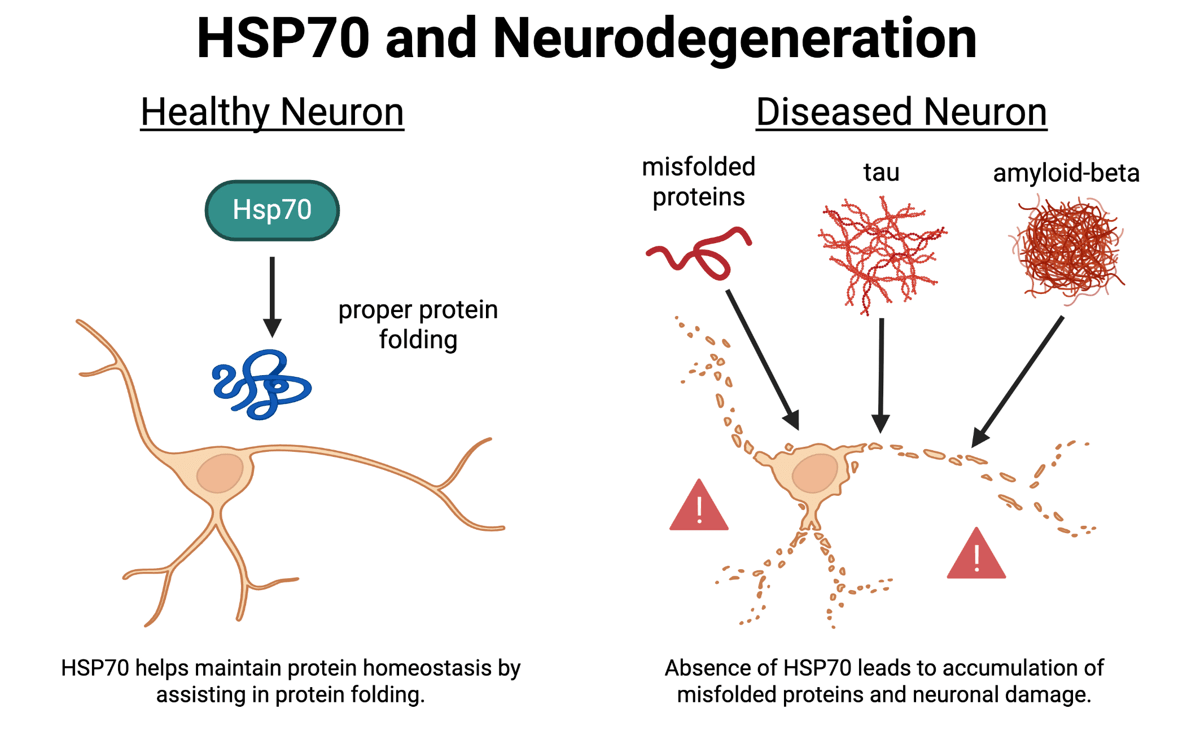
Neurodegenerative diseases such as Alzheimer’s (AD) and Parkinson’s (PD) affect one’s health both physically and neurologically due to the loss of neurons alongside the deterioration of protein structures, leading to misfolding and sequestration1,2. These chronic illnesses involve the accumulation of misfolded proteins. Specific proteins, tau and amyloid-beta in AD, and alpha-synuclein in PD play critical roles in the development and progression of these neurodegenerative disorders3,4,2. As the population of older adults increases, the burden of chronic diseases such as AD and PD will continue to escalate as well. This has sparked interest in identifying potential cellular-level therapeutics that could attenuate the progression of neurodegenerative diseases by targeting key pathological mechanisms5,6. While no cure currently exists for neurodegeneration, ongoing research continues to uncover promising therapeutic targets, offering hope for future treatments2,7. A particularly promising area of research involves heat shock proteins (HSPs), which assist in protein folding as well as help protect cells under stress8,9.
Among these, heat shock protein 70 (HSP70) stands out for its role as a molecular chaperone that interacts with misfolded or aggregated proteins implicated in neurodegenerative diseases10,11. As a key regulator of proteostasis, HSP70 can either refold damaged proteins or target them for degradation, thereby potentially mitigating the pathological processes underlying disorders such as Alzheimer’s and Parkinson’s disease6,9. Proteostasis refers to the cellular processes that regulate protein synthesis, folding, trafficking, and degradation to maintain functional protein balance8,9. The specific function of HSP70 in the etiology of neurodegenerative diseases continues to be unclear, despite increasing interest7. Some studies suggest that HSP70 assists in the clearance of aggregated proteins deemed harmful, while other reports hold that it impedes normal degradation processes4,7. Significant gaps in understanding HSP70’s function may stem from variations across disease models, the specific proteins studied, and the type of neurodegenerative disease being examined. This review aims to synthesize existing evidence and identify gaps by critically reviewing recent experimental work on HSP70’s interaction with tau, amyloid-beta, and alpha-synuclein in the context of neurodegenerative diseases.
This review is guided by a central question: Does HSP70 exert a neuroprotective effect by mitigating the aggregation of tau, amyloid-beta, and alpha-synuclein in neurodegenerative diseases? While HSP70 is widely regarded as protective, emerging evidence suggests its effects may vary depending on the disease context, model system, and stage of pathology. Current findings are examined to evaluate HSP70’s therapeutic potential and the factors that may influence its function. This analysis is based on the protein misfolding and aggregation hypothesis of neurodegeneration, which states that neurodegeneration occurs due to an accumulation of misfolded proteins10,9,4. These findings may support the HSP70 biomarker hypothesis that changes in HSP70 expression not only reflect disease processes but also provide a measurable indicator of neurodegeneration, and position HSP70 for consideration as a treatment in neurodegenerative diseases11,12. However, current evidence for HSP70 as a biomarker remains limited, with few studies evaluating diagnostic accuracy (e.g., sensitivity, specificity, or ROC analysis), and should therefore be considered preliminary. Ultimately, this work aims to clarify HSP70’s dual role in neurodegeneration and guide future research toward targeted therapeutic development, including the potential use of HSP70 as a biomarker or intervention strategy. This review will (1) determine the effects of HSP70 on protein aggregation and pathology in neurodegenerative disease models; (2) analyze the impact of HSP70’s action on tau, amyloid-beta, and alpha-synuclein separately; and (3) explore the therapeutic consequences of changing HSP70 activity.
Methods
This study was conducted as a structured narrative review rather than a formal systematic review. A targeted literature search was conducted using the PubMed database to identify original research studies examining the role of heat shock protein 70 (HSP70) in neurodegenerative diseases. The search utilized specific keywords including “HSP70 AND neurodegenerative disease,” “HSP70 AND Alzheimer’s disease,” “tau AND HSP70,” and “alpha-synuclein AND HSP70.” The search was conducted between 1993 and 2023. This review aimed to identify mechanistic insights while acknowledging that only the PubMed database was used, which may have excluded relevant studies indexed in Web of Science, Scopus, or Google Scholar. Only peer-reviewed, original experimental studies involving in vitro, in vivo, or human models were included. Studies were preferentially included if they directly manipulated HSP70 expression or activity (e.g., overexpression, inhibition, or pharmacological induction) and reported measurable effects on protein aggregation, neuronal survival, or functional outcomes. Systematic reviews, meta-analyses, and non-original works were excluded. Studies were selected based on their investigation into HSP70’s expression and functional effects, including its inhibition of neurodegenerative disease pathology, with inclusion criteria requiring measurable outcomes related to these aspects. Data extraction was performed using a standardized approach, documenting each study’s citation, title, research question, experimental model, analytical techniques, and key findings. Study selection was conducted by screening titles and abstracts followed by full-text review to ensure eligibility based on the inclusion criteria. While this structured approach improved the ability to compare findings across studies, differences in design, sample, and disease models posed limitations in drawing universal conclusions1,13.
Results
Quantitative Summary of Evidence
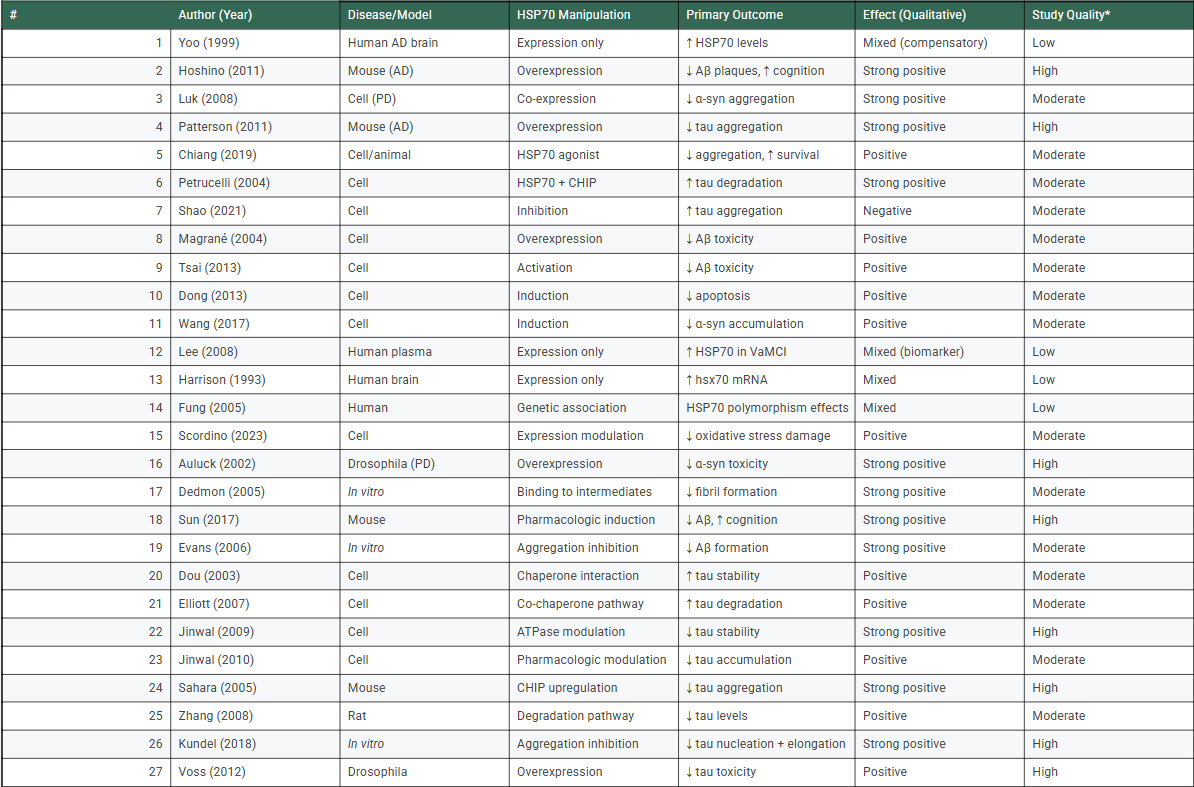
Across the 27 included studies, approximately 20 (~74%) reported that HSP70 upregulation reduced protein aggregation, while a smaller subset of studies demonstrated mixed or context-dependent effects. Additionally, approximately 12–14 studies (~44-52%) reported improvements in functional outcomes such as cognition, motor performance, or neuronal survival. Studies involving HSP70 inhibition consistently demonstrated increased aggregation and worsened neuronal outcomes, although the number of such studies remains limited. Effect sizes varied across models, with reductions in aggregation ranging qualitatively from modest (~20%) to substantial (>60%), depending on the experimental system and protein studied. These findings support a predominantly protective role of HSP70, although variability in experimental design, model systems, and measurement approaches introduces heterogeneity in outcomes. Importantly, several studies measured HSP70 expression (mRNA or protein levels) without directly assessing functional activity (e.g., ATPase function or substrate binding). Increased expression may reflect a compensatory stress response rather than effective neuroprotection and therefore should be interpreted cautiously. A structured summary of the included studies is presented in Table 1.
HSP70 Prevents Protein Misfolding and Aggregation in Neurodegenerative Diseases
From the reviewed literature, it is clear that HSP70 and associated proteins are differentially expressed in neurodegenerative diseases. This differential expression supports their potential utility as both biomarkers and therapeutic targets. Yoo et al. (1999) performed a postmortem study on the temporal cortex tissues of Alzheimer’s disease (AD) patients. They found that AD patients had significantly greater expression levels of HSP70 compared to age-matched controls (p < 0.05)1. This finding suggests activation of neuroprotective stress-response mechanisms in AD, particularly in response to protein misfolding and cellular stress. However, it may also reflect the severity of underlying proteostatic disruption or represent a complex role for HSP70 that is not uniformly beneficial across disease contexts. In a separate study, the role of HSP70-1 polymorphisms in the genetic susceptibility of dementia was explored, highlighting how genetic variation in the heat shock response may influence disease susceptibility and progression14.
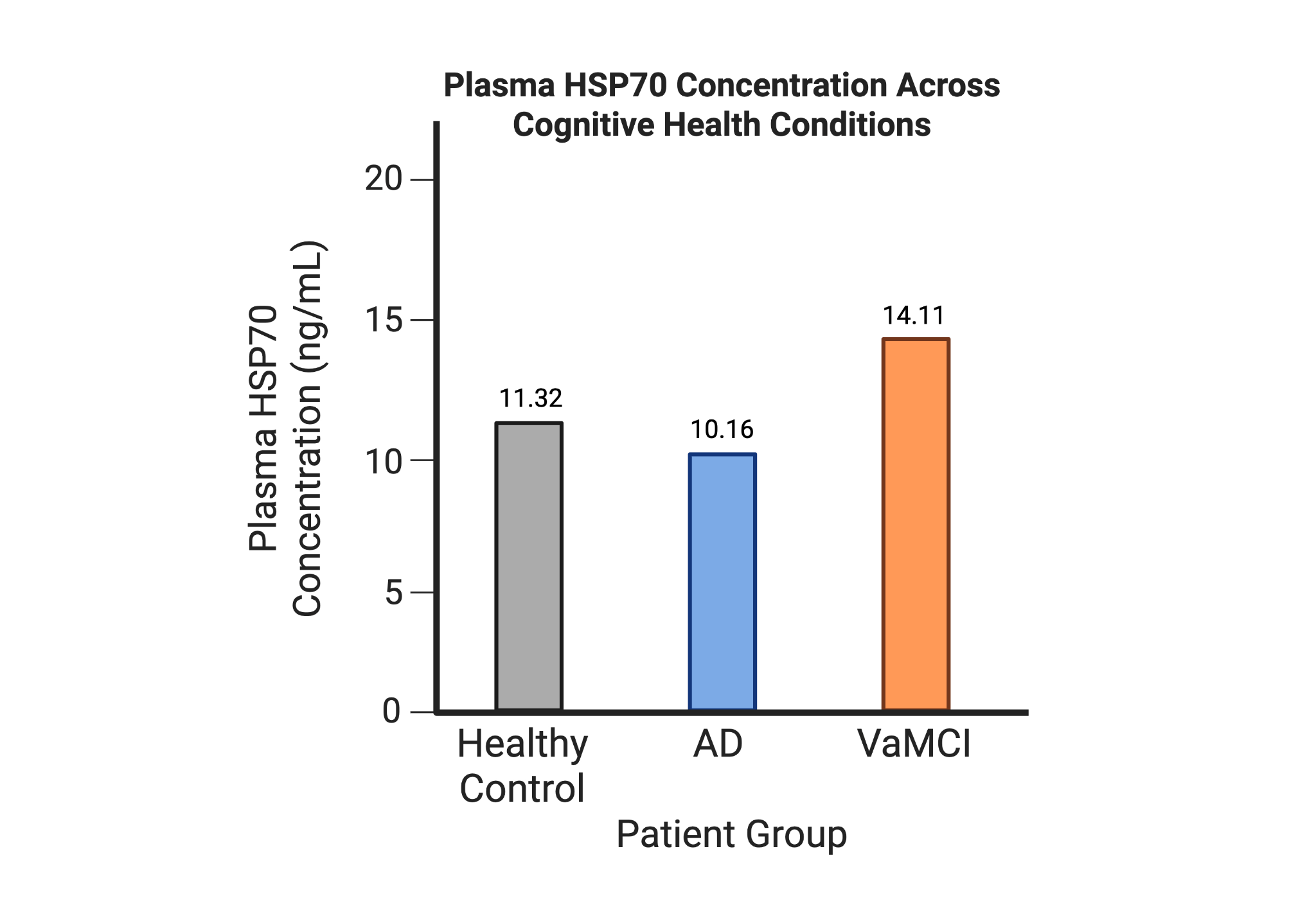
Differentiating between forms of dementia remains a clinical challenge, often leading to misdiagnosis. As a result, research has increasingly focused on identifying peripheral biomarkers that may aid in early and accurate detection. For example, Lee et al. (2008) examined plasma concentrations of HSP70 in healthy controls and individuals with vascular mild cognitive impairment (VaMCI), a condition marked by cognitive decline due to cerebrovascular dysfunction. Patients with VaMCI showed a significant increase in plasma HSP70 levels compared to those with AD and healthy controls, demonstrating its potential as a distinguishing biomarker between dementia subtypes12. Dong et al. (2013)’s study provided mechanistic evidence for HSP70’s cytoprotective role, showing that 17β-estradiol, a primary female sex hormone in the brain, inhibits apoptosis caused by DNA damage in SH-SY5Y neuroblastoma cells via HSP70 pathway signaling10. These findings further support the role of HSP70 in mediating cellular defense mechanisms under neurodegenerative stress conditions, even in in vitro models.
Beyond peripheral biomarkers, understanding the regional expression of HSP70 within the brain is essential for clarifying its functional role in neurodegenerative diseases. Using in situ hybridization histochemistry and Northern blotting techniques, Harrison et al. (1993) studied HSP70 mRNA expression in postmortem brain tissue. The investigation demonstrated high levels of hsx70 mRNA expression, generally termed as HSP70 mRNA expression, in the frontal cortex white matter compared to controls in patients with AD and non-AD dementia,while accounting for peri-mortem variables such as agonal state—the final stage before death, marked by severe physiological decline—temperature, coma duration and postmortem interval13. While poly(A)+ mRNAs were reduced in the grey matter of dementia cases, indicating loss of specific gene expression, upregulation of hsx70 mRNA expression indicates a gene-specific stress response. The presence of hsx70 in white matter and granule cell layers of the cerebellum while absent in Purkinje cells—large neurons in the cerebellum involved in motor coordination—suggests regionally selective cellular vulnerability to heat shock responses.
Collectively, these findings indicate that HSP70 family proteins, including hsx70, are persistently overexpressed in the context of neurodegenerative damage. Their functional role in modulating protein folding, degradation, and cellular stress responses distinguishes them from other heat shock proteins. The diagnostic and pathological significance of HSP70 lies in its central role in maintaining proteostasis and mitigating cellular stress. Additionally, variations in expression across brain regions, dementia subtypes, and experimental models—including human tissue, plasma, and in vitro systems—provide insight into HSP70’s complex contributions to neurodegenerative processes.
HSP70 Inhibits α-Synuclein Aggregation and Neurotoxicity in Parkinson’s Disease Models
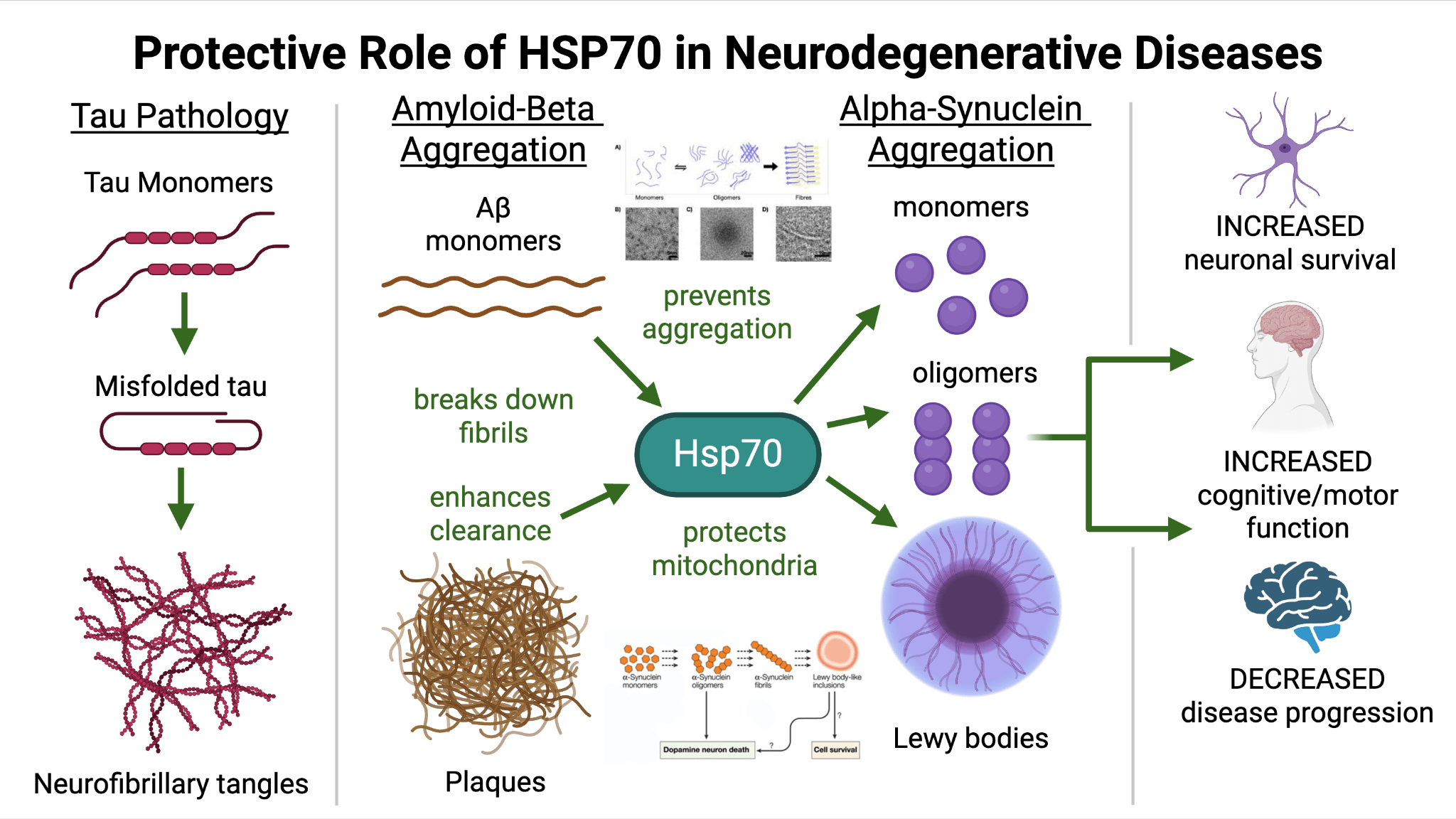
Multiple investigations have shown that HSP70 inhibits the aggregation of α-synuclein, a key pathological feature of Parkinson’s disease (PD). Molecular chaperones such as HSP70 are known to prevent the misfolding and accumulation of alpha synuclein through multiple mechanisms within the protein quality control system. Evidence supporting HSP70’s protective role against α-synuclein toxicity comes from diverse experimental approaches: animal models, human cell culture systems, and in vitro biopsychical and computational studies.
HSP70’s ability to inhibit alpha-synuclein fibril formation was first demonstrated by Luk et al (2008). The study reported that HSP70 co-expressed in a cellular model decreased the accumulation of detergent-insoluble alpha synuclein species. This observation provides evidence that HSP70 acts during early stages of aggregation, limiting the formation of toxic α-synuclein species3. These findings are further supported by in vitro studies demonstrating that HSP70 both inhibits fibril elongation and promotes the disassembly of existing aggregates.
Using Drosophila models, Chiang et al. (2019) extended these findings by examining in vivo effects. The researchers reported that overexpression of HSP70 resulted in a significant decrease in the alpha synuclein mediated neurotoxicity and neurodegenerative processes in dopaminergic neurons5. Strikingly, flies that expressed both alpha synuclein and HSP70 showed improved motor function and reduced neuronal loss compared to control groups, reinforcing the functional relevance of HSP70 upregulation. Wang et al. (2017) provided additional evidence that HSP70 can inhibit α-synuclein oligomerization in human neuroblastoma cells. The study observed that HSP70 diminished the cytotoxicity and mitochondrial damage caused by α-synuclein overexpression, indicating that HSP70 not only limits aggregation but also mitigates downstream cellular stress responses11.
Scordino et al. (2023) used in vitro spectroscopy in conjunction with computational modeling to analyze the biophysical interactions between HSP70 and α-synuclein. Their data showed that HSP70 preferentially binds to α-synuclein monomers and early oligomers, thus stabilizing non-aggregated forms and preventing the transition into β-sheet-rich fibrillar structures15. These findings provide mechanistic evidence that HSP70 regulates α-synuclein conformation during early aggregation under stress conditions.
Additional experimental evidence further strengthens the role of HSP70 in modulating α-synuclein aggregation. Auluck et al. (2002) demonstrated that overexpression of HSP70 suppresses α-synuclein toxicity in Drosophila models, leading to improved neuronal survival. Similarly, Dedmon et al. (2005) showed that HSP70 inhibits α-synuclein fibril formation by preferentially binding to early prefibrillar species, thereby preventing progression into toxic aggregates. These findings reinforce the concept that HSP70 acts at early stages of aggregation across multiple experimental systems16,17.
Collectively, these studies demonstrate that HSP70 suppresses α-synuclein oligomerization through direct binding, chaperone-induced conformational changes, and clearance mechanisms. Importantly, the consistency of these effects across cellular, animal, and in vitro models highlights HSP70’s role in early-stage aggregation control, although variability across experimental systems suggests that its therapeutic potential may depend on context and mode of activation.
HSP70 Reduces Amyloid-β Plaque Formation and Enhances Cognitive Function
A pathological hallmark of AD is the development of amyloid-β (Aβ) plaques within the brain, which are thought to be neurotoxic, disrupt synaptic transmission, and lead to a decline in cognitive abilities. Accordingly, a major focus in neurodegeneration research is understanding the cellular mechanisms responsible for Aβ aggregation. Out of all these mechanisms, HSP70 has emerged as a key molecular chaperone able to influence protein folding and aggregation processes. Numerous studies demonstrate that HSP70 can prevent, inhibit, and even reverse Aβ aggregation, thereby improving neuronal health.
Hoshino et al. (2011) showed that the overexpression of HSP70 in an in vivo mouse model mitigated Aβ plaque accumulation and cognitive deficits. Their findings suggest that HSP70 binds to misfolded Aβ peptides, stabilizing them in a non-toxic, soluble state and preventing aggregation2. Similarly, pharmacological upregulation of HSP70 in AD mouse models reduced Aβ oligomer levels and significantly improved learning and memory performance18. Together, these results indicate that HSP70 not only limits plaque formation but also preserves cognitive function.
Further supporting these findings, Dong et al. (2013) demonstrated that HSP70 directly inhibits the fibrillization of Aβ42 in vitro by binding to aggregation-prone sequences, thereby preventing the formation of β-sheet-rich structures characteristic of toxic amyloid fibrils10. Additionally, Tsai et al. (2013) showed that HSP70, together with its co-chaperones, can actively disaggregate pre-formed Aβ fibrils, highlighting its role in both preventing and reversing plaque formation9. Similarly, Magrané et al. (2004) highlighted the neuroprotective role of HSP70, showing that its overexpression in neuronal cultures reduced Aβ-induced cytotoxicity by preserving mitochondrial integrity and inhibiting apoptotic signaling pathways8.
Further supporting these findings, Evans et al. (2006) demonstrated that HSP70 inhibits early stages of amyloid-β aggregation by interfering with nucleation processes, thereby reducing the formation of toxic aggregates. This suggests that HSP70 acts at multiple stages of aggregation, consistent with its effects observed in tau and α-synuclein systems19.
Collectively, these studies underscore the multifaceted role of HSP70 in amyloid pathology. By directly interacting with Aβ peptides and enhancing cellular defense mechanisms, HSP70 demonstrates significant potential as a therapeutic target for slowing or preventing the progression of AD.
HSP70 Regulates Tau Protein Stability and Mitigates Neurofibrillary Tangle Formation
Tauopathies, including AD, are characterized by the misfolding and aggregation of tau, a microtubule-associated protein critical for maintaining neuronal stability. When tau accumulates, it forms neurofibrillary tangles that disrupt neuronal function and contribute to cognitive decline. HSP70 has emerged as a key molecular chaperone involved in preventing tau aggregation. Research indicates that HSP70 facilitates the clearance of misfolded tau and may serve as a potential therapeutic target for tau-related neurodegenerative diseases.
Patterson et al. (2011) found that increasing HSP70 expression in a transgenic mouse model expressing human tau significantly reduced tau aggregation. This intervention not only preserved neuronal integrity but also improved cognitive function, suggesting that HSP70 may play a critical role in modifying disease progression4. Similarly, Petrucelli et al. (2004) demonstrated that HSP70 promoted the degradation of tau via the ubiquitin-proteasome pathway in cellular models. Their work highlighted the dual role of HSP70 in stabilizing soluble tau to prevent aggregation while also promoting the clearance of misfolded tau species20.
Additional studies provide deeper mechanistic insight into HSP70’s regulation of tau dynamics. Dou et al. (2003) reported that chaperone systems enhance tau association with microtubules, stabilizing its functional conformation and reducing misfolding. Elliott et al. (2007) further demonstrated that HSP70-associated co-chaperones, including BAG-1, regulate tau degradation through proteasomal pathways, highlighting the importance of co-chaperone interactions in determining tau fate21,22.
Jinwal et al. (2009) showed that modulation of HSP70 ATPase activity directly affects tau stability, emphasizing that functional activity, rather than expression alone, is a key determinant of its protective effects. Complementing this, Jinwal et al. (2010) demonstrated that pharmacological modulation of HSP70 reduces tau accumulation, supporting its therapeutic relevance23,24.
Additional in vivo evidence from Sahara et al. (2005) demonstrated that upregulation of protein quality control pathways involving HSP70-associated mechanisms reduces tau aggregation, while Zhang et al. (2008) showed that chaperone-mediated degradation of tau can occur independently of phosphorylation state. More recently, Kundel et al. (2018) demonstrated that HSP70 inhibits both nucleation and elongation of tau fibrils while also sequestering aggregated species, indicating a multifaceted protective mechanism25,26,27.
Supporting this, Voss et al. (2012) explored the impact of enhancing HSP70 activity in Drosophila models of tauopathy. Their results showed that boosting HSP70 led to significant reductions in tau aggregates, improved neuronal survival, and better overall neuronal health28. These findings reinforce the idea that activating HSP70 can mitigate the toxic effects associated with tau misfolding. In contrast, Shao et al. (2021) explored what happens when HSP70 activity is inhibited, using small-molecule inhibitors targeting its ATPase domain. Their study demonstrated that inhibiting HSP70 increases tau aggregation and neuronal stress, further emphasizing its protective role in preventing tau-related damage7.
Collectively, these studies indicate that HSP70 is a critical regulator of tau dynamics. Whether through genetic upregulation or pharmacological activation, enhancing HSP70 function consistently reduces tau aggregation and improves neuronal health. These findings position HSP70 as both a key modulator of tauopathies and a promising target for therapeutic interventions in AD and related disorders.
Discussion
This review affirms the critical role of the chaperone protein HSP70 in the pathogenesis of neurodegenerative diseases10,11. Whether examining tau, amyloid-beta, or alpha-synuclein, upregulation of HSP70 was associated with favorable outcomes, while downregulation or inhibition correlated with increased neurodegeneration6,12,11,2. HSP70 consistently demonstrated neuroprotective effects across varied experimental models and protein targets. These effects were primarily observed through reductions in harmful protein aggregation, improvements in neuronal survival, and, in some studies, enhanced cognition or motor performance9,4,5,11.
Although most studies report neuroprotective effects of HSP70 upregulation, important heterogeneity and potential publication bias must be considered. Negative or null findings may be underreported, and variability in experimental design limits the strength of these conclusions.
The evidence supporting HSP70’s neuroprotective role across experimental systems is substantial. HSP70 consistently reduced toxic protein accumulation and improved cell survival across studies4,2,11. Most studies report neuroprotective effects of HSP70 upregulation; however, important heterogeneity and potential publication bias must be considered5,12. Negative or null findings may be underreported, and variability in experimental design limits the strength of conclusions. These findings suggest that HSP70 is not merely a passive responder to cellular stress but an active regulator of neurodegenerative processes10,9,11.
However, it is important to distinguish between HSP70 expression and functional activity. Several studies measured increased HSP70 levels without directly assessing its chaperone activity (e.g., ATPase function or substrate binding). In such cases, elevated expression may reflect a compensatory stress response rather than effective neuroprotection, and therefore should not be interpreted as definitive evidence of functional benefit.
The integration of additional studies further reinforces the importance of this distinction. While elevated expression is often observed in neurodegenerative conditions, studies demonstrate that ATPase activity and chaperone function are critical determinants of HSP70’s protective capacity. Moreover, interactions with co-chaperones such as BAG-1 and CHIP play a central role in directing protein degradation pathways, suggesting that HSP70 operates within a broader proteostasis network rather than acting independently23,24,22,25,26.
A protein such as HSP70, which can act as an effective modulator across three major disease-inducing pathways—protein misfolding, mitochondrial dysfunction, and neuroinflammation—holds significant promise for future therapeutic strategies9,2. By integrating findings across diverse experimental approaches, this review highlights HSP70 as a unifying factor underlying multiple disease mechanisms5,11.
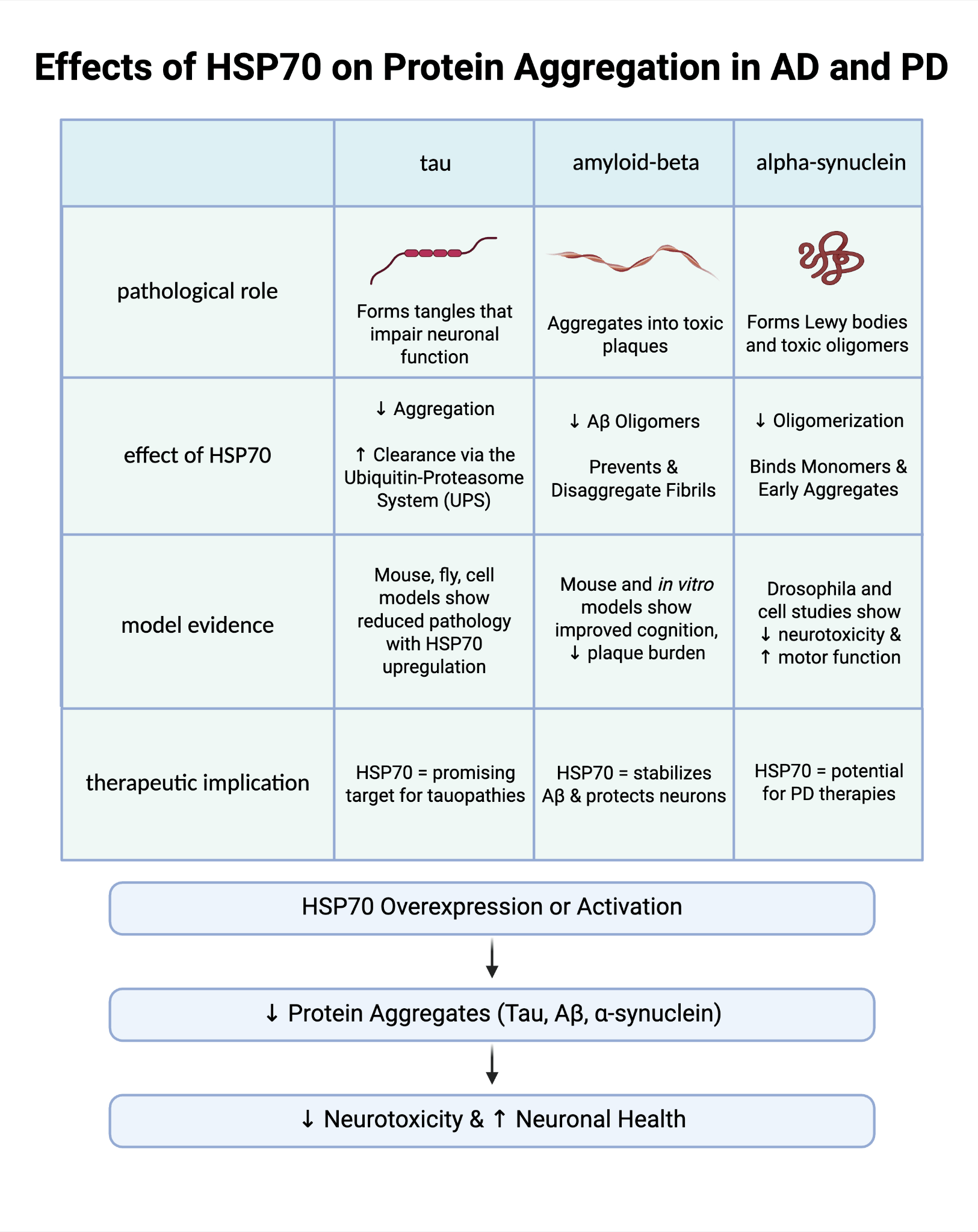
Although tau, amyloid-beta, and alpha-synuclein were discussed separately, HSP70 appears to act through shared mechanisms across these substrates. These include binding to exposed hydrophobic regions, preventing oligomerization, and promoting proteasomal or autophagic clearance. However, structural differences between these proteins—such as intrinsically disordered tau versus β-sheet–rich amyloid-beta—may influence binding affinity and therapeutic effectiveness.
Additional experimental evidence supports this shared mechanism across substrates. HSP70 has been shown to bind aggregation-prone intermediates, prevent oligomer formation, and promote clearance through proteasomal pathways. However, structural differences between tau, amyloid-beta, and alpha-synuclein may influence the efficiency of these interactions and the overall therapeutic impact16,17,27,19.
These findings also highlight that HSP70 does not operate in isolation, but rather as part of a dynamic and tightly regulated chaperone system that can produce different outcomes depending on cellular context and regulatory interactions. While most studies support a neuroprotective role for HSP70, its effects appear to be context-dependent. HSP70 may facilitate either protein refolding or degradation depending on co-chaperone interactions (e.g., Hsp40, Hsp90, CHIP) and cellular conditions. In some cases, increased HSP70 expression may represent a failed compensatory response rather than effective protection. Additionally, a U-shaped relationship may exist in which both insufficient and excessive HSP70 activity could be detrimental, depending on disease stage and cellular environment.
Studies included in this review utilized both genetic overexpression models and pharmacological approaches to modulate HSP70. These strategies differ significantly in translational relevance. Genetic overexpression provides mechanistic insight but is not feasible in clinical settings, whereas pharmacological induction (e.g., HSP70 agonists such as geranylgeranylacetone) offers more realistic therapeutic potential. However, drug-based approaches may be limited by factors such as blood–brain barrier penetration, off-target effects, and dose-dependent toxicity.
These findings also highlight several directions for future research, although they should be interpreted with caution. First, the development of targeted therapeutics that elevate or modulate HSP70 levels represents a promising but still exploratory approach to mitigating neurodegeneration12,9. Second, there is strong potential for HSP70 to serve as a biomarker for early detection or monitoring of disease progression11. However, biomarker validation requires rigorous evaluation, including sensitivity, specificity, receiver operating characteristic (ROC) analysis, and replication in independent human cohorts. Current evidence remains limited and should be considered preliminary. Third, clinical and longitudinal studies in human populations are necessary to determine whether these preclinical findings translate to clinical benefit. Together, these findings strengthen the conclusion that HSP70 functions as an active regulator of proteostasis across multiple neurodegenerative pathways, rather than merely a marker of cellular stress16,23,27.
Several limitations of this review should be acknowledged. First, only the PubMed database was used for literature search. Second, the inclusion criteria limited the review to English-language articles. Third, most of the studies included were preclinical in nature which limits generalizability because of the differences in physiological and disease complexity between animal models and humans6,7. Additionally, animal models often fail to replicate the complexity of human neurodegenerative diseases, including late onset, comorbidities, and heterogeneous progression. Differences in HSP70 isoforms and regulation between species further complicate translation to human systems.
Furthermore, HSP70 induction is typically regulated by heat shock factors (e.g., HSF1), which activate broader stress-response pathways involving multiple heat shock proteins. As a result, observed neuroprotective effects may not be attributable to HSP70 alone but rather to coordinated activation of the proteostasis network. Because HSP70 interacts with a wide range of cellular proteins, global upregulation may also produce unintended effects, such as stabilizing undesirable proteins or interfering with normal protein degradation. Future studies should investigate substrate selectivity using approaches such as proteomics to better understand potential off-target consequences. Additionally, the variability in study design presents challenges in making direct comparisons across studies1,13. Despite these limitations, the overall consistency of findings supports continued investigation into HSP70 as a biologically relevant target5,4,12.
Overall, HSP70 is not a passive participant in neurodegenerative disease progression; it is a dynamic and potentially therapeutic factor10,11. However, further investigation and clinical validation are required to translate these findings into effective HSP70-targeted interventions. If successfully translated, this molecular chaperone may represent a viable strategy for alleviating and potentially modifying neurodegenerative disease progression9,12,4.
Acknowledgements
I would like to express my sincere gratitude to Dr. Merci Best, whose expertise and feedback were instrumental in shaping the direction and clarity of my research. I am also grateful to my family for their constant encouragement. Finally, I would like to acknowledge the broader scientific community whose dedication to studying Alzheimer’s disease, Parkinson’s disease, and molecular chaperones made this review possible. Their research continues to inspire future generations of scientists, including myself.
References
- B. C. Yoo, R. Seidl, N. Cairns, G. Lubec. Heat-shock protein 70 levels in brain of patients with down syndrome and alzheimer’s disease. 1999, https://doi.org/10.1007/978-3-7091-6380-1_22. [↩] [↩] [↩] [↩]
- T. Hoshino, N. Murao, T. Namba, M. Takehara, H. Adachi, M. Katsuno, G. Sobue, T. Matsushima, T. Suzuki, T. Mizushima. Suppression of alzheimer’s disease-related phenotypes by expression of heat shock protein 70 in mice. Journal of Neuroscience. Vol. 31, pg. 5225-5234, 2011, https://doi.org/10.1523/jneurosci.5478-10.2011. [↩] [↩] [↩] [↩] [↩] [↩] [↩]
- K. C. Luk, I. P. Mills, J. Q. Trojanowski, V. M.-Y. Lee. Interactions between hsp70 and the hydrophobic core of α-synuclein inhibit fibril assembly. Biochemistry. Vol. 47, pg. 12614-12625, 2008, https://doi.org/10.1021/bi801475r. [↩] [↩]
- K. R. Patterson, S. M. Ward, B. Combs, K. Voss, N. M. Kanaan, G. Morfini, S. T. Brady, T. C. Gamblin, L. I. Binder. Heat shock protein 70 prevents both tau aggregation and the inhibitory effects of preexisting tau aggregates on fast axonal transport. Biochemistry. Vol. 50, pg. 10300-10310, 2011, https://doi.org/10.1021/bi2009147. [↩] [↩] [↩] [↩] [↩] [↩] [↩] [↩]
- A. N. Chiang, M. Liang, A. Dominguez-Meijide, C. Masaracchia, J. L. Goeckeler-Fried, C. S. Mazzone, D. W. Newhouse, N. M. Kendsersky, M. E. Yates, A. Manos-Turvey, P. G. Needham, T. F. Outeiro, P. Wipf, J. L. Brodsky. Synthesis and evaluation of esterified hsp70 agonists in cellular models of protein aggregation and folding. Bioorganic and Medicinal Chemistry. Vol. 27, pg. 79-91, 2019, https://doi.org/10.1016/j.bmc.2018.11.011. [↩] [↩] [↩] [↩] [↩] [↩]
- L. Petrucelli, D. Dickson, K. Kehoe, J. Taylor, H. Snyder, A. Grover, M. De Lucia, E. McGowan, J. Lewis, G. Prihar, J. Kim, W. H. Dillmann, S. E. Browne, A. Hall, R. Voellmy, Y. Tsuboi, T. M. Dawson, B. Wolozin, J. Hardy, M. Hutton. CHIP and hsp70 regulate tau ubiquitination, degradation and aggregation. Human Molecular Genetics. Vol. 13, pg. 703-714, 2004, https://doi.org/10.1093/hmg/ddh083. [↩] [↩] [↩] [↩]
- H. Shao, X. Li, S. Hayashi, J. L. Bertron, D. M. C. Schwarz, B. C. Tang, J. E. Gestwicki. Inhibitors of heat shock protein 70 (hsp70) with enhanced metabolic stability reduce tau levels. Bioorganic and Medicinal Chemistry Letters. Vol. 41, 2021, https://doi.org/10.1016/j.bmcl.2021.128025. [↩] [↩] [↩] [↩] [↩]
- J. Magrané, R. C. Smith, K. Walsh, H. W. Querfurth. Heat shock protein 70 participates in the neuroprotective response to intracellularly expressed β-amyloid in neurons. Journal of Neuroscience. Vol. 24, pg. 1700-1706, 2004, https://doi.org/10.1523/jneurosci.4330-03.2004. [↩] [↩] [↩]
- Y.C. Tsai, Y.-M. Lee, K.-K. Lam, J.-F. Lin, J.-J. Wang, M.-H. Yen, P.-Y. Cheng. The role of heat shock protein 70 in the protective effect of YC-1 on β-amyloid-induced toxicity in differentiated PC12 cells. PLOS ONE. Vol. 8, 2013, https://doi.org/10.1371/journal.pone.0069320. [↩] [↩] [↩] [↩] [↩] [↩] [↩] [↩] [↩] [↩]
- Y. Dong, Y. Wang, H. Yu, Y. Liu, N. Yang, P. Zuo. Involvement of heat shock protein 70 in the DNA protective effect from estrogen. American Journal of Alzheimer’s Disease and other Dementias. Vol. 28, pg. 269-277, 2013, https://doi.org/10.1177/1533317513481096. [↩] [↩] [↩] [↩] [↩] [↩] [↩]
- H. Wang, C. Tang, Z. Jiang, X. Zhou, J. Chen, M. Na, H. Shen, Z. Lin. Glutamine promotes hsp70 and inhibits α-synuclein accumulation in pheochromocytoma PC12 cells. Experimental and Therapeutic Medicine. Vol. 14, pg. 1253-1259, 2017, https://doi.org/10.3892/etm.2017.4580. [↩] [↩] [↩] [↩] [↩] [↩] [↩] [↩] [↩] [↩] [↩]
- K. S. Lee, J. H. Chung, B. H. Oh, C. H. Hong. Increased plasma levels of heat shock protein 70 in patients with vascular mild cognitive impairment. Neuroscience Letters. Vol. 436, pg. 223-226, 2008, https://doi.org/10.1016/j.neulet.2008.03.025. [↩] [↩] [↩] [↩] [↩] [↩] [↩]
- P. J. Harrison, A. W. Procter, T. Exworthy, G. W. Roberts, A. Najlerahim, A. J. L. Barton, R. C. A. Pearson. Heat shock protein (hsx70) mRNA expression in human brain: effects of neurodegenerative disease and agonal state. Neuropathology and Applied Neurobiology. Vol. 19, pg. 10-21, 1993, https://doi.org/10.1111/j.1365-2990.1993.tb00400.x. [↩] [↩] [↩]
- H. C. Fung, C. M. Chen, Y. R. Wu, W. C. Hsu, L. S. Ro, J. C. Lin, K. H. Chang, H. K. Wang, S. J. Lin, H. Chan, Y. Y. Lin, S. L. Wei, Y. Hsu, J. C. Hwang, L. C. Tung, G.-J. Lee-Chen. Heat shock protein 70 and tumor necrosis factor alpha in taiwanese patients with dementia. Dementia and Geriatric Cognitive Disorders. Vol. 20, pg. 1-7, 2005, https://doi.org/10.1159/000085067. [↩]
- M. Scordino, M. Frinchi, G. Urone, D. Nuzzo, G. Mudò, V. Di Liberto. Manipulation of HSP70-SOD1 expression modulates SH-SY5Y differentiation and susceptibility to oxidative stress-dependent cell damage: involvement in oxotremorine-m-mediated neuroprotective effects. Antioxidants. Vol. 12, 2023, https://doi.org/10.3390/antiox12030687. [↩]
- P. K. Auluck, H. Y. E. Chan, J. Q. Trojanowski, V. M.-Y. Lee, N. M. Bonini. Chaperone suppression of α-synuclein toxicity in a drosophila model for parkinson’s disease. 2002, https://doi.org/10.1126/science.1067389. [↩] [↩] [↩]
- M. M. Dedmon, J. Christodoulou, M. R. Wilson, C. M. Dobson. Heat shock protein 70 inhibits α-synuclein fibril formation via preferential binding to prefibrillar species. Journal of Biological Chemistry. Vol. 280, pg. 14733-14740, 2005, https://doi.org/10.1074/jbc.m413024200. [↩] [↩]
- Y. Sun, J.-R. Zhang, S. Chen. Suppression of alzheimer’s disease-related phenotypes by the heat shock protein 70 inducer, geranylgeranylacetone, in APP/PS1 transgenic mice via the ERK/p38 MAPK signaling pathway. Experimental and Therapeutic Medicine. Vol. 14, pg. 5267-5274, 2017, https://doi.org/10.3892/etm.2017.5253. [↩]
- C. G. Evans, S. Wisén, J. E. Gestwicki. Heat shock proteins 70 and 90 inhibit early stages of amyloid β-(1-42) aggregation in vitro. Journal of Biological Chemistry. Vol. 281, pg. 33182-33191, 2006, https://doi.org/10.1074/jbc.m606192200. [↩] [↩]
- L. Petrucelli, D. Dickson, K. Kehoe, J. Taylor, H. Snyder, A. Grover, M. De Lucia, E. McGowan, J. Lewis, G. Prihar, J. Kim, W. H. Dillmann, S. E. Browne, A. Hall, R. Voellmy, Y. Tsuboi, T. M. Dawson, B. Wolozin, J. Hardy, M. Hutton. CHIP and hsp70 regulate tau ubiquitination, degradation and aggregation. Human Molecular Genetics. Vol. 13, pg. 703-714, 2004, https://doi.org/10.1093/hmg/ddh083. [↩]
- F. Dou, W. J. Netzer, K. Tanemura, F. Li, F. U. Hartl, A. Takashima, G. K. Gouras, P. Greengard, H. Xu. Chaperones increase association of tau protein with microtubules. Proceedings of the National Academy of Sciences. Vol. 100, pg. 721-726, 2003, https://doi.org/10.1073/pnas.242720499. [↩]
- E. Elliott, P. Tsvetkov, I. Ginzburg. BAG-1 associates with hsc70·tau complex and regulates the proteasomal degradation of tau protein. Journal of Biological Chemistry. Vol. 282, pg. 37276-37284, 2007, https://doi.org/10.1074/jbc.m706379200. [↩] [↩]
- U. K. Jinwal, Y. Miyata, J. Koren III, J. R. Jones, J. H. Trotter, L. Chang, J. O’Leary, D. Morgan, D. C. Lee, C. L. Shults, A. Rousaki, E. J. Weeber, E. R. P. Zuiderweg, J. E. Gestwicki, C. A. Dickey. Chemical manipulation of hsp70 ATPase activity regulates tau stability. Journal of Neuroscience. Vol. 29, pg. 12079-12088, 2009, https://doi.org/10.1523/jneurosci.3345-09.2009. [↩] [↩] [↩]
- U. K. Jinwal, J. Koren III, J. C. O’Leary III, J. R. Jones, J. F. Abisambra, C. A. Dickey. Hsp70 ATPase modulators as therapeutics for alzheimer’s and other neurodegenerative diseases. 2010, https://pmc.ncbi.nlm.nih.gov/articles/PMC2879647/. [↩] [↩]
- N. Sahara, M. Murayama, T. Mizoroki, M. Urushitani, Y. Imai, R. Takahashi, S. Murata, K. Tanaka, A. Takashima. In vivo evidence of CHIP up-regulation attenuating tau aggregation. Journal of Neurochemistry. Vol. 94, pg. 1254-1263, 2005, https://doi.org/10.1111/j.1471-4159.2005.03272.x. [↩] [↩]
- Y.-J. Zhang, Y.-F. Xu, X.-H. Liu, D. Li, J. Yin, Y.-H. Liu, X.-Q. Chen, J.-Z. Wang. Carboxyl terminus of heat-shock cognate 70-interacting protein degrades tau regardless its phosphorylation status without affecting the spatial memory of the rats. Journal of Neural Transmission. Vol. 115, pg. 483-491, 2008, https://doi.org/10.1007/s00702-007-0857-7. [↩] [↩]
- F. Kundel, S. De, P. Flagmeier, M. H. Horrocks, M. Kjaergaard, S. L. Shammas, S. E. Jackson, C. M. Dobson, D. Klenerman. Hsp70 inhibits the nucleation and elongation of tau and sequesters tau aggregates with high affinity. ACS Chemical Biology. Vol. 13, pg. 636-646, 2018, https://doi.org/10.1021/acschembio.7b01039. [↩] [↩] [↩]
- K. Voss, B. Combs, K. R. Patterson, L. I. Binder, T. C. Gamblin. Hsp70 alters tau function and aggregation in an isoform specific manner. Biochemistry. Vol. 51, pg. 888-898, 2012, https://doi.org/10.1021/bi2018078. [↩]