

Abstract
Major depressive disorder (MDD) and substance use disorder (SUD) are two disorders that co-occur with each other during adolescence. Adolescents who have either of these disorders tend to experience more severe symptoms of the conditions than those without the condition, and are at risk of self-harming behaviors. The purpose of this review is to discuss the factors that contribute to the co-occurrence of these two disorders during adolescence. Such factors may include psychopathological models of adolescence, such as the dual-systems model of adolescence and the stress-diathesis model of adolescence. factors related to the brains of adolescents, as well as factors related to the lives of adolescents with these disorders, can help to explain why these disorders co-occur. Treatment strategies for adolescents with both disorders, as well as studies that investigate the long-term outcomes of adolescents with both disorders, can help provide an overview of the impact that these disorders can have on adolescence and adulthood. Lastly, suggestions for future studies on the topic can help indicate the direction of future research on adolescents with depressive and substance use disorders.
Keywords: adolescence; major depressive disorder; substance use disorder; comorbidity; developmental psychopathology; dual-systems model; stress-diathesis; integrated treatment
Introduction
Major depressive disorder (MDD) and substance use disorder (SUD) are among the most serious mental health concerns that impact adolescents. According to national survey data, there is a substantial minority of adolescents who have experienced at least one major depressive episode (MDE) in the past year. adolescents who have been diagnosed with depression have been found to show higher levels of risk associated with substance use than their peers without a diagnosis of depression1. In a clinical sample of adolescents who are diagnosed with depression, Marino et al. discovered that 16.9% of the patients reported problematic substance use2.
The comorbidity of depression and substance use disorders is clinically important due to the relationship between these conditions and more severe symptoms, functional impairments, safety concerns, and treatment needs compared to those with only depression or only substance use disorders alone3,2,4. adolescents who suffer from both depression and alcohol use problems into adulthood have been shown to have an increased risk of suffering from depression, anxiety, suicidality, and alcohol use disorder into adulthood compared to adolescents who suffer from depression but who do not have issues with alcohol use during their adolescence4.
While many research studies have focused upon both adolescent depression and substance use as separate domains of study, the literature on those two domains is relatively under-integrated. For example, the neurobiological studies on depression are often separate from those discussing the effects of family, peers, and traumatic experiences, and literature on treatment for depressive disorders often does not consider how those treatments relate to the developmental aspects of depression. A review of the literature that separates those discussions into different domains, yet also reviews the connections between those domains and distinctions between types of evidence, is presented herein.
One of the frameworks that can help to understand the relationship between depression and substance use is the framework of developmental psychopathology. Developmental psychopathology models the various mental health disorders as the result of the interactions between an individual’s genetic and biological makeup, their environment, and the processes that develop within the individual over time. The adolescent period of development, in particular, is recognized as one of sensitivity to mental health disorders due to the changes that are occurring in different aspects of the brain during that phase of development.
The dual-systems model provides one explanation for the vulnerability of adolescents to mental health disorders. While the systems related to rewarding behavior become more important during adolescence, the systems related to cognitive control are still maturing until the young adult years. As a result, adolescents may be more vulnerable to the influence of rewards or those around them during these years, especially if they are dealing with stress or depressive symptoms themselves. At the same time, the stress-diathesis model indicates that the vulnerabilities that adolescents may have in relation to mental health disorders may interact with the environmental risks to those adolescents.
Because the literature on these topics is varied and inconsistently conducted, no conclusions that cannot be supported by the literature are to be stated within this paper. Cross-sectional studies will be referred to as studies that indicate a relationship between the two variables; longitudinal studies will be referred to as prospective in that one variable precedes the other in time; and neurobiological studies will be referred to as those that indicate a plausible mechanism for the relationship between the two variables unless stated otherwise. For this reason, each of the mechanisms for the link between depression and substance use during adolescence is plausible but not definitively established for adolescents.
In this paper, reviews of the literature on the link between depression and substance use during adolescence will be integrated within psychopathological, dual-systems, and stress-diathesis models to provide an overview of the current knowledge on such a topic.
Methods
Narrative Review Design
This study is a narrative review of the co-existence of MDD and SUD during adolescence. A narrative review was selected for this literature review due to the nature of the topics covered by the included studies. A narrative review allowed for the integration of different types of studies under one review, to present the systematic review of these studies in a manner that is theory-driven yet transparent about the research process that went into performing such a review.
Search Strategy
A structured literature search was conducted using PubMed, PsycINFO, and Scopus. Searches focused on peer-reviewed English-language articles published between January 2000 and March 2026, with priority given to adolescent-stratified samples and recent studies from 2020-2026. Example search strings included:
(“adolescent” OR “teen” OR “youth”) AND (“major depressive disorder” OR “depression” OR “depressive symptoms”) AND (“substance use disorder” OR “substance use” OR “alcohol” OR “cannabis” OR “nicotine”)
(“adolescent” OR “youth”) AND “depression” AND “substance use” AND (“reward processing” OR “stress response” OR “neurobiology”)
(“adolescent” OR “teen”) AND “depression” AND “substance use” AND (“treatment” OR “CBT” OR “DBT” OR” motivational interviewing” OR “family therapy” OR “integrated care”)
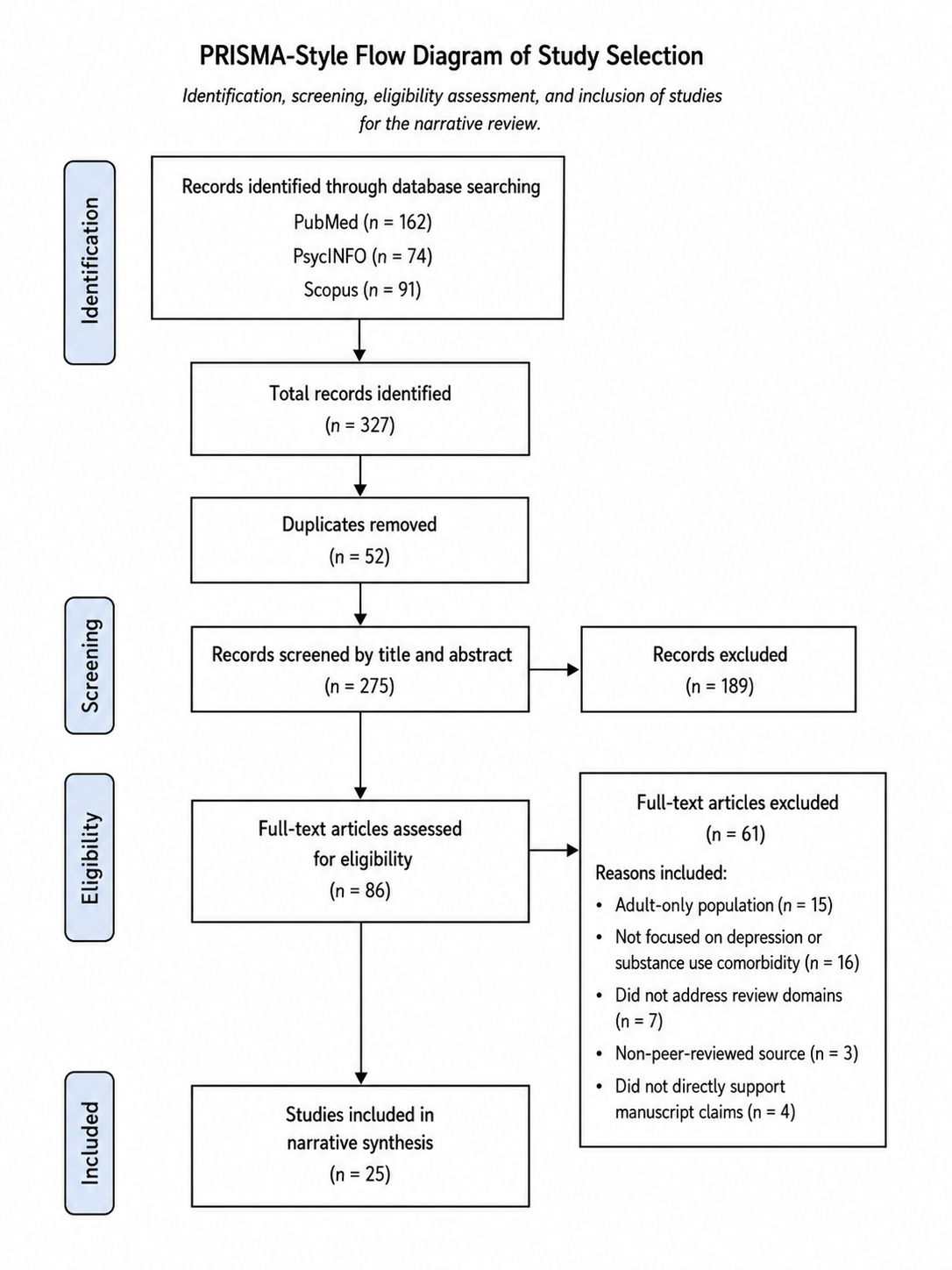
A total of 309 records were retrieved from the databases of PubMed, PsycINFO, and Scopus. Of these records, 54 were duplicates and were removed from the analysis. The titles and abstracts of the remaining 255 articles were screened, and 189 articles were excluded. The full text of 66 articles was assessed for eligibility for inclusion in the review, and 41 articles were excluded for the reasons illustrated in Figure 1. Twenty-five studies met the eligibility criteria and were included in this review. Figure 1 also illustrates the selection of studies for inclusion in the review.
Eligibility Criteria
Inclusion criteria for studies included requirements that they examine adolescents or adolescent findings, investigate topics related to depression, depressive symptoms, substance use, SUD, or co-occurrence, and publish within a peer-reviewed journal or a primary report from a national surveillance report. Editorials, blogs, feature articles that are published directly for the public, studies that exclude analyses of adolescents, and sources that do not support the cited claim within the article were all excluded from the review of scientific claims made within the article.
Selection and Synthesis
Articles were screened for eligibility based on their titles and abstracts. Following screening of titles and abstracts, the full text of the studies that remained potentially relevant was reviewed to determine eligibility. While formal procedures for PRISMA and dual screening of the studies were not used, the approach to screening is discussed within this article as a limitation of the current review. The four domains that were used to categorize the studies were determined before the initiation of the study and reflected a conceptual framework for the review. each of the included studies was categorized into one of these domains according to the focus of the study. Within each of these domains, the studies were ranked according to their relevance to the study questions and focus areas.
Evidence Appraisal Framework
The evidence was interpreted in accordance with the study design. Cross-sectional studies were used to establish associations between variables, while longitudinal studies were used to establish prospective findings. Neurobiological findings were used to establish mechanistic evidence or mechanistic plausibility. Evidence from national surveys and longitudinal cohort studies was used to determine prevalence, treatment-gap, and outcome-related claims. Peer-reviewed neuroscience studies were used to establish mechanistic claims. Finally, claims regarding treatments were made based on the results of clinical intervention studies and reviews of treatment protocols.
Thematic Synthesis
Epidemiology and Co-Occurrence
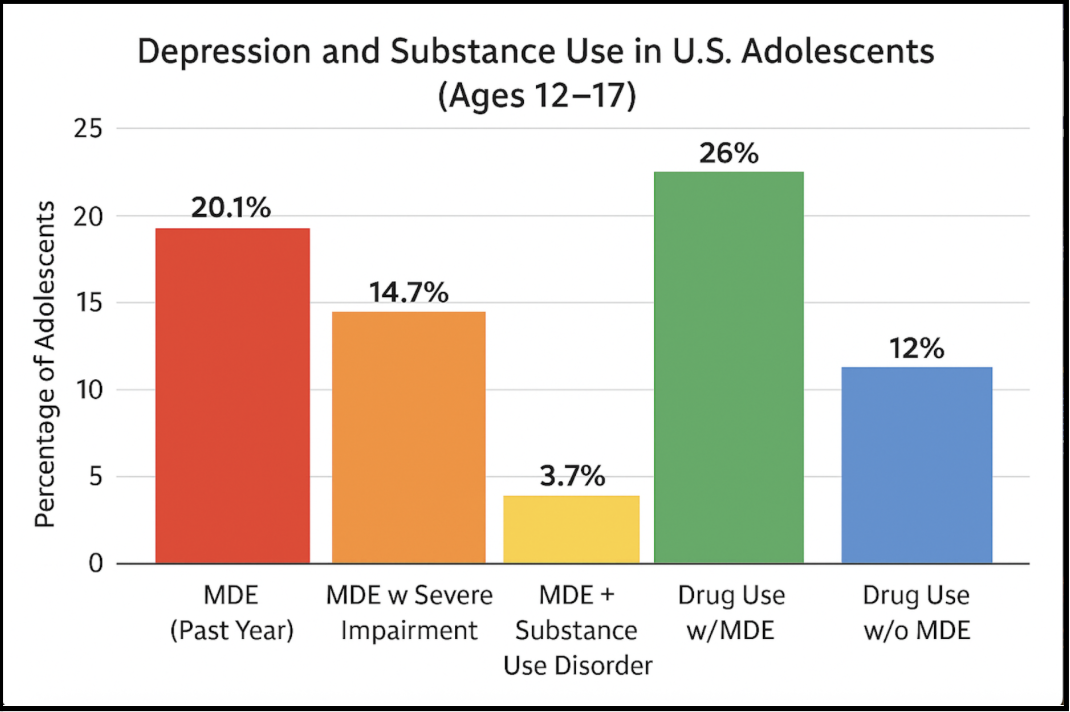
First, within Figure 2, we provide an overview of the epidemiology of MDE, SUD, and MDE-SUD comorbidity within the U.S. population of adolescents. Figure 2 also highlights the difference in past-year use of illicit drugs according to the MDE status of adolescents. While the data presented in this figure does not test any models of the potential mechanisms underlying the comorbidity of MDE and SUD, such a model is required to help explain the phenomenon of the co-occurrence of these conditions. this figure is provided as epidemiologic context for the remainder of the literature reviewed in this paper. At the same time, while the purpose of this figure is to provide context regarding the epidemiology of MDE and SUD comorbidity, it is not a representation of any potential causal relationship between these two conditions.
Shared Neurobiological Mechanisms
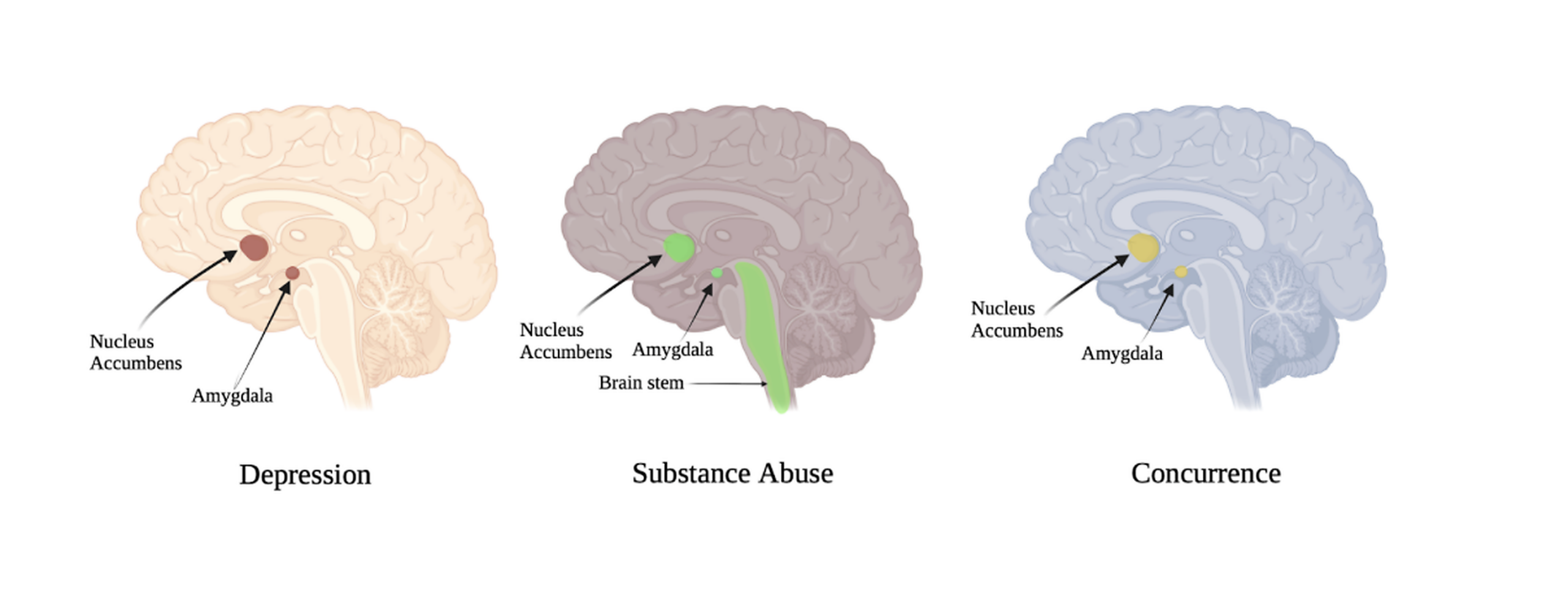
The neurobiological studies of depression and the use of various substances indicate that the two conditions impact similar systems within the brain. While the specific substances that have been studied can vary, the general results of these studies indicate that the brain systems related to reward, stress, and executive control are correlated with both depression and substance use during adolescence.
Reward Processing and Anhedonia
Neurobiological studies suggest a relationship between depression and substance use and the neural systems associated with reward processing, motivation, and the regulation of emotions. Individuals with depression often experience altered processing of rewards, which is associated with anhedonia. Likewise, individuals with a history of substance use experience neuroadaptations in the regions of the brain associated with reward, stress, and executive control5.
Studies specifically investigating adolescents and their relationship with substance use suggest some evidence for the relationship between depression and substance use. For example, Hubbard et al. revealed that adolescents who used cannabis showed slowed learning of instrumental rewards and altered connectivity between the striatum and the cortex6. Ford et al. discovered that adolescents with both a history of depression and substance use showed differences in the function of the regions of their brains associated with reward and executive control7. While these studies provide some evidence for a relationship between depression and substance use, they do not indicate a direct causal relationship between the two conditions.
In addition to the findings of the activation of the reward systems in adolescents who use various substances, other researchers, such as Bjork, have also suggested that the link between activation of reward systems outside of drug use and the development of addiction is not always found. Bjork notes, specifically, that most studies have found no link between activation of non-drug reward systems and addiction8. such findings indicate only the possible mechanisms behind addiction, rather than a definitive cause.
Overall, most of the existing studies on the brains of individuals addicted to substances are limited in that they are mostly cross-sectional studies with relatively small population samples. most studies have found that the brains of those addicted to different substances experience different changes than others, and those changes may also differ according to the individual studied.
Stress Response Systems
In addition to genetic influences, there are also biological influences on both depression and addiction use. For example, Rao et al. discovered that both the HPA system and the experiences of stress for adolescents with depression were related to adverse outcomes with substance use9. this study used a longitudinal design to show that these stress-related systems were associated with later substance use outcomes.
Another study that investigates the relationship between stress and addiction reveals that addiction itself is associated with stress-related pathways within the brain, such as the CRFSR (corticotropin-releasing factor systems in the extended amygdala)10,5. These stress-related pathways are correlated with the negative emotions experienced by those addicted to substances, as well as the compulsions that addicts have towards their substances of use. Still, the studies regarding these correlations are primarily based upon adults, rather than adolescents. any statements regarding the link between stress and addiction in the adolescent group are made with caution.
Neurotransmitter Systems: Moving Beyond Simple Deficiency Models
Beyond the idea that depression results from serotonin deficiency in the brain or that substance use results from the release of dopamine from the brain, many other models explain the neurobiology behind these disorders5.
The neurotransmitters dopamine and serotonin are actually involved with the neural networks in the brain that are responsible for reward, motivation, mood, and impulsivity. These neural networks interact with the environment and the individual’s development to contribute to the various outcomes of these conditions. While it is well known that dopamine and serotonin are involved with the development of depression and substance use disorders, the exact mechanisms of their contribution to these conditions during adolescence are not yet completely understood.
Psychosocial Risk Factors
While vulnerabilities to depression and substance use can be genetic, many psychosocial experiences can determine whether such genetic vulnerabilities appear as clinical depression, substance use, or both. Factors related to the family and social relationships in which an individual develops have been associated with increased risks of both depression and substance use. For instance, families that experience conflict, use discipline that adolescents do not expect from their parents, do not provide opportunities for the adolescents to express their emotions, or whose parents use substances are associated with increased risks of both depression and substance use by those adolescents. Yet, the opposite of these factors is also associated with decreased risks of these disorders. while most of the evidence regarding families and adolescents with depression or substance use is based upon observational studies, it is still possible to state that these family-related factors are associated with risks of the development of those disorders.
Peer Influences
The influences of peers are very important during adolescence. Exposure to peers who use alcohol or drugs is one of the most robust predictors of adolescent substance use. Beyond their influence over substance use, peers can also influence the emotional health of adolescents. For example, adolescents who have friends who use substances often experience depressive symptoms themselves11,12. One study specifically found that adolescents who experienced depressive symptoms had a weaker effect from those symptoms if their friends participated in prosocial behaviors towards others11. for adolescents who show depressive symptoms, their relationships with peers who use substances can lead to an increased likelihood of substance use itself, while relationships with prosocial peers can act as protective factors against such substance use. These findings, however, do not allow for the distinctions between the possible influence of peers upon adolescents to either amplify or reduce risk itself.
Trauma
Broader psychosocial stressors contribute as well. Studies have found that ACEs, such as experiences of abuse, neglect, or the death of a caregiver within the child’s lifetime, are correlated with both depression and substance misuse11,12. Each of these types of experiences can impact a child’s ability to regulate their emotions, leading to increased feelings of shame or despair, which can lead to substance misuse as a way of self-medication during adolescence. stressors like poverty, violence, and inadequate access to healthcare can further worsen the symptoms of depression.
The psychosocial problems that adolescents experience can lead to a reinforcing pattern of association between depressive symptoms and substance use. Adolescents who experience depression are at risk of developing substance-related problems later in their lives. Still, some studies also show that substance use can precede the development of depressive symptoms in adolescents as well. Although depressive symptoms can lead to school and social problems that lead to substance use, the use of substances like alcohol or cannabis can also precede the development of depressive symptoms in some adolescents as well.
Treatment Approaches
Adolescence presents challenges in treating depression and SUD symptoms together due to their interaction. Current research indicates that treating both conditions together is the best way to treat the symptoms without fragmenting the treatment for mental and substance use disorders3,2.
Prevention strategies exist to limit the development of depression and substance use symptoms. Conrod et al. showed that a prevention program targeted at specific personality traits in adolescents attending secondary schools delayed the onset of alcohol misuse and substance use disorders in high-risk adolescents13.
Further support for the effectiveness of personality-targeted interventions came from a five-year study conducted by Conrod et al. Conrod et al. found that adolescents who participated in these personality-focused interventions experienced a slower growth of substance use disorders than did the control groups of adolescents14.
In addition to the use of personality-targeted interventions, psychosocial interventions are also used. Cognitive Behavioral Therapy (CBT) can be used to target the cognitive thinking patterns of adolescents with depression. Motivational Interviewing and Motivational Enhancement Therapy can be used to encourage adolescents who are currently ambivalent about participating in treatment. At the same time, various forms of family-based therapy can be used to target aspects of the adolescent’s environment that may contribute to their substance use disorders15.
Further evidence of the effectiveness of treating adolescents with family-based interventions alongside their mental and substance use disorders is present in the study by Liddle et al.** The researchers conducted a randomized clinical trial that included 113 adolescents who were referred to residential treatment for their symptoms. However, those who underwent Multidimensional Family Therapy (MDFT) experienced reductions in their internalizing symptoms during the early stages of treatment, and those who received the MDFT experienced longer-term improvements in their substance use and delinquency issues compared to those who underwent residential treatment16.
Further support for the need for integrated approaches for adolescents with both substance use and psychiatric symptoms has emerged from intervention literature, as well. For example, Wolff et al. conducted a randomized trial of an intervention protocol that was integrated within the services provided to adolescents who were referred to the programs17. a scoping review of the literature regarding effective interventions for youths with both mental health and substance use disorders emerged in 2025, indicating that while various forms of integrated treatments are commonly recommended for these youths, the research behind those treatments is currently varied and developing guidelines for the best methods of treatment for those youth populations18. Taken together, the findings of both of these research efforts indicate support for integrated treatment for adolescents with substance use and psychiatric disorders, but also highlight the need for further research within this population with longer follow-up periods.
Pharmacotherapy may be appropriate for adolescents with depressive symptoms that are moderate to severe in intensity. Although SSRIs are effective in reducing depressive symptoms in some adolescents with depression19, there is limited efficacy in treating the substance-use behaviors and the effects that substance use has on the adolescents’ families19. pharmacotherapy is recognized as a treatment for depressive symptoms, but it is not a stand-alone treatment for the comorbid substance use disorder.
Another main issue regarding the treatment of adolescents with both depression and substance use disorders is the lack of treatment access for these adolescents. Few adolescents with both disorders receive treatment for both of their disorders3. there is a need for the development of treatment models and services that can effectively treat adolescents with both disorders.
Digital health intervention studies have also emerged as potential supplements to current treatment of adolescents with both mental and substance-use disorder symptoms. Adams et al., specifically, published a study that found that a mobile health application designed for adolescents with substance-use and mental health disorder symptoms was generally acceptable and feasible for those adolescents20. Although current evidence for the efficacy of such applications is still limited, these types of interventions may help supplement current treatment options for adolescents with both mental and substance-use disorders, though they should not be used as replacements for current forms of clinical treatment.
Long-Term Outcomes
A longitudinal study also indicates that adolescents with depression and substance-related problems experience adverse outcomes in adulthood, although not inevitably. Bohman et al. followed adolescents with depression and co-occurring alcohol use disorder and found that in adulthood, these adolescents showed higher rates of depression, anxiety, suicidality, and alcohol use disorder compared with adolescents with depression alone4.
In the same way, another research study also found that adolescents who show substance use and depressive symptoms into adulthood in the United States21. a longitudinal study also demonstrates the long-term consequences of substance use during adolescence. Silins et al. One of the studies that shows the adverse impacts of cannabis use is that by Silins et al. Silins et al. reported that adolescents who had used cannabis into adulthood had poorer mental health, educational attainment, and functional outcomes as adults22. More recent research, though, indicates that the relationship between the substances may be different for different classes of substances. Lawrence et al., specifically, investigated the relationship between alcohol use, cannabis use, and depressive symptoms measured at four different time points during adolescence23. Lawrence et al. found mixed support for simple self-medication or substance-induced models; cannabis showed stronger developmental continuity than alcohol use or depressive symptoms. this research indicates that it is inappropriate to treat alcohol, cannabis, nicotine, and polysubstance use as if they are the same in relation to developing mental health issues during adolescence. Along with the studies that demonstrated the link between depression and cannabis use in adolescents, other prospective research has similarly demonstrated the relationship between the two during these periods of adolescence and early adulthood. Authors Brown et al., for example, found that there were bidirectional relationships between cannabis use and depressive symptoms24. Although these studies indicate that adolescents with depression and cannabis use comorbidities are at elevated risk of developing these conditions over time, the presence of other potentially protective factors for those adolescents may help to avoid the development of these conditions altogether.
Another important consideration of these conditions is in relation to suicide. Depression is associated with suicidality, as are the effects of substance use on the brain. it is important to consider the potential impact of these disorders on suicidal thoughts and behaviors.
Discussion
It is clear from the review that depression and substance use are best understood as interacting developmental processes rather than separate disorders. The evidence for the epidemiological aspects of this comorbidity is strong. Still, the neurobiological evidence, while increasingly compelling, is not as strong as the epidemiological evidence due to the methodological issues inherent in neurobiological studies of adolescence. any conclusions regarding neurobiological mechanisms are to be made with caution.
The strength of the evidence for various aspects of the condition is not the same. The epidemiological evidence is strong for the association between depression and substance use. Yet, the longitudinal studies support this association even more strongly. By contrast, evidence for the neurobiological aspects of the relationship is more preliminary in its findings due to the study designs used in most of these studies. Accordingly, the neurobiological findings are less certain than the other findings regarding depression and substance use in adolescence.
An integrated model of depression and substance use among adolescents includes developmental psychopathology, the dual-systems model, and the stress-diathesis model of psychopathology. Depression can increase vulnerability to substance use due to symptoms like anhedonia, emotional distress, and social withdrawal. Conversely, substance use can contribute to depressive symptoms due to the negative consequences of substance use. These two conditions can worsen each other in adolescents.
Several moderators may influence the relationship between depression and substance use. Adolescents who have suffered from trauma, are of a certain sex, have used different types of substances, experience socioeconomic stress, have specific types of social or family relationships with others, and have access to care may be more likely to experience either the negative effects of one or the other of these conditions. Recognizing these moderators can prevent assuming a fixed relationship between the two conditions, and can help to develop individualized approaches to treating those affected adolescents.
Given these findings, it is important to incorporate screening for both depression and substance use in schools, primary care clinics, emergency departments, and behavioral health clinics. Because treating substance use or depression separately may fail to account for the relationship between the two conditions, treatment clinics may benefit from combining approaches to address both conditions.
Limitations
The following are some of the limitations of the current review. First, the present review is a narrative review of the existing literature rather than a systematic review of the literature on the topic. PRISMA guidelines, literature screening, and risk of bias assessments were not performed. Second, the majority of existing studies are observational studies. Third, the studies differ in their definitions of terms such as depression, SUD, the type of substance used, and the age of the adolescents in these populations. Fourth, neurobiological studies are inherently limited by small sample sizes and differences in the brain imaging techniques used among studies, as well as the lack of neurobiological studies of adolescents. Finally, publication bias may limit the literature to studies with statistically significant results.
Future Directions
Future research should investigate the link between reward and stress system markers and the development of comorbid depression and SUD later in life through longitudinal studies. Research studies on interventions for depression and SUD should run for longer periods to determine if the benefits seen during adolescence persist into adulthood. Future research should separate the effects of alcohol, cannabis, nicotine, opioids, and polysubstances. research studies should investigate how factors like trauma, sex, gender, socioeconomic and cultural status, and access to care may moderate the relationship between reward and stress systems and depression and SUD. Lastly, digital and mobile intervention tools should be studied in controlled trials before presenting them to adolescents as potential treatment options for comorbid depression and SUD.
Conclusion
Depression and substance use are two conditions that frequently co-occur within adolescence. Each of these conditions is associated with various risks to the adolescent. Although establishing causality for most of these risks is difficult, the evidence from epidemiological, longitudinal, neurobiological, psychosocial, and treatment studies indicates the need for intervention for adolescents with depression and substance use disorders. providing an integrated form of care for adolescents with depression and substance use disorders may reduce the long-term burden of those conditions.
| Citation | Design / Sample | Claim supported | Evidence type | Limitations |
|---|---|---|---|---|
| SAMHSA, 20231 | National NSDUH survey, adolescents 12-17 | Adolescent MDE prevalence and substance-use patterns by MDE status | Associative / surveillance | Cross-sectional survey estimates |
| SAMHSA, 202525 | National NSDUH surveillance, tracking data | Updated national youth epidemiology baseline estimates | Associative / surveillance | Cross-sectional public survey reporting timelines |
| Lu et al., 20213 | National survey trend analysis | Treatment gaps among adolescents with co-occurring MDE and SUD | Associative / treatment utilization | Self-reported treatment categories |
| Marino et al., 20242 | Clinical sample of depressed adolescents | Problematic substance use is common among depressed adolescents | Associative | Cross-sectional clinical sample |
| Bohman et al., 20254 | 15-year longitudinal cohort | Adolescent depression + AUD associated with worse adult outcomes | Prospective | Alcohol-focused comorbidity |
| Rao et al., 20099 | Longitudinal adolescent study | HPA activity and stress related to later substance-use vulnerability | Prospective/mechanistic | Modest sample size |
| Koob, 201510 | Peer-reviewed addiction neuroscience review | Stress-system involvement in addiction and negative affect | Mechanistic | Primarily adult/translational evidence |
| Volkow et al., 20165 | Peer-reviewed neuroscience review | Addiction involves reward, stress, and executive-control circuitry | Mechanistic | Review-level synthesis |
| Hubbard et al., 20236 | Adolescent cannabis neuroimaging study | Cannabis use related to instrumental learning and striatal-cortical connectivity | Mechanistic/associative | Adolescent cannabis-specific |
| Ford et al., 20147 | Youth neuroimaging study | Combined depression and substance-use histories show functional abnormalities | Mechanistic/associative | Small neuroimaging sample |
| Villar et al., 202411 | Longitudinal adolescent ACEs study | Depressive symptoms mediated ACEs and later cigarette/marijuana use | Prospective | Sample characteristics limit generalizability |
| Swedo et al., 202512 | National adolescent survey analysis | ACEs are associated with poor mental health and substance use | Associative / surveillance | Survey design limits causality |
| Marshall et al., 202518 | Scoping review of adolescent treatment literature | Integrated treatment strategies are optimal for concurrent conditions | Review-level intervention synthesis | Focuses on high-level intervention models rather than primary clinical trials |
| Adams et al., 202120 | Mixed-methods mHealth app development/testing | mHealth app acceptable for youth with SUDs and mental health needs | Adjunctive / feasibility | Not an efficacy trial |
| Rowe, 201215 | Family therapy literature review | Family-based approaches address core relational risk variables | Review-level intervention synthesis | Historical literature window restricted to 2003–2010 tracking |
| Cummings et al., 202119 | Clinical pediatric psychopharmacology review | SSRIs alleviate core depressive symptoms but do not directly treat SUD | Review-level clinical synthesis | General pediatric focus; does not independently evaluate comorbid cohorts |
| Xu et al., 202421 | U.S. longitudinal analysis | Adolescent substance use/depressive symptoms associated with adult MDD | Prospective | Residual confounding possible |
| Wolff et al., 202017 | Randomized trial, adolescents with co-occurring substance use and psychiatric symptoms receiving home-based services | Randomized trial, adolescents with co-occurring substance use and psychiatric symptoms receiving home-based services | Intervention / prospective | Limited follow-up; home-based sample may reduce generalizability |
| Lawrence et al., 202523 | Longitudinal adolescent cohort, four assessment waves | Alcohol use, cannabis use, and depressive symptoms demonstrate substance-specific bidirectional associations over time | Prospective longitudinal | Observational design; self-reported substance use |
| Bjork, 20208 | Developmental neuroscience review | Adolescent reward-system findings should be interpreted within a neurodevelopmental framework | Mechanistic / review | Review article; limited direct evidence on depression-SUD comorbidity |
| Conrod et al., 201313 | Cluster randomized trial of 2,643 secondary school adolescents | Personality-targeted prevention delayed alcohol misuse and reduced substance-use risk among high-risk adolescents | Randomized controlled trial | Conducted in school settings; may not generalize to clinical populations. |
| Conrod et al., 202514 | Five-year cluster randomized trial across 31 high schools | Personality-focused prevention reduced growth in adolescent substance use disorder over five years | Randomized controlled trial | Conducted in Canadian schools; effects on depression were less pronounced than effects on SUD. |
| Silins et al., 201422 | Prospective longitudinal cohort followed from adolescence into adulthood | Persistent adolescent cannabis use was associated with poorer mental health, educational, and functional outcomes in adulthood | Prospective longitudinal cohort | Observational design; residual confounding cannot be completely excluded. |
| Liddle et al., 201816 | Randomized clinical trial of 113 adolescents with substance use and co-occurring mental health disorders | Multidimensional Family Therapy reduced internalizing symptoms early and better maintained substance-use and delinquency improvements over follow-up | Randomized controlled trial | High-severity, predominantly male clinical sample may limit generalizability |
| Brown et al., 202324 | Prospective longitudinal cohort of 767 adolescents and young adults | Cannabis use and depressive symptoms demonstrated bidirectional prospective associations across adolescence and early adulthood | Prospective longitudinal | Observational design; cannot establish causality |
References
- Substance Abuse and Mental Health Services Administration. Key substance use and mental health indicators in the United States: results from the 2022 National Survey on Drug Use and Health. SAMHSA, 2023. [↩] [↩] [↩]
- E. N. Marino, M. K. Jha, A. Minhajuddin, et al. Problematic substance use in depressed adolescents: prevalence and clinical correlates. Addictive Behaviors Reports. Vol. 19, pg. 100539, 2024. [↩] [↩] [↩] [↩]
- W. Lu, M. Munoz-Laboy, N. Sohler, R. D. Goodwin. Trends and disparities in treatment for co-occurring major depression and substance use disorders among US adolescents, 2011–2019. JAMA Network Open. Vol. 4, pg. e2130280, 2021. [↩] [↩] [↩] [↩]
- H. Bohman, S. B. Laftman, I. Alaie, et al. Adult mental health outcomes of adolescent depression and co-occurring alcohol use disorder: a longitudinal cohort study. European Child and Adolescent Psychiatry. Vol. 34, pg. 1649–1659, 2025. [↩] [↩] [↩] [↩]
- N. D. Volkow, G. F. Koob, A. T. McLellan. Neurobiologic advances from the brain disease model of addiction. New England Journal of Medicine. Vol. 374, pg. 363–371, 2016. [↩] [↩] [↩] [↩]
- N. A. Hubbard, K. B. Miller, J. Aloi, et al. Evaluating instrumental learning and striatal-cortical functional connectivity in adolescent alcohol and cannabis use. Addiction Biology. Vol. 28, pg. e13258, 2023. [↩] [↩]
- K. A. Ford, J. A. Morris, et al. Unique functional abnormalities in youth with combined marijuana use and depression: an fMRI study. Frontiers in Psychiatry. Vol. 5, pg. 130, 2014. [↩] [↩]
- J. M. Bjork. The ups and downs of relating nondrug reward activation to substance use risk and consequences. Biological Psychiatry: Cognitive Neuroscience and Neuroimaging. Vol. 5, pg. 872–874, 2020, https://doi.org/10.1016/j.bpsc.2020.06.010. [↩] [↩]
- U. Rao, C. L. Hammen, R. E. Poland. Mechanisms underlying the comorbidity between depressive and addictive disorders in adolescents: interactions between stress and HPA activity. American Journal of Psychiatry. Vol. 166, pg. 361–369, 2009. [↩] [↩]
- G. F. Koob. The dark side of emotion: the addiction perspective. Neuropharmacology. Vol. 76, pg. 73–87, 2015. [↩] [↩]
- M. G. Villar, et al. Internalizing pathways to adolescent substance use from adverse childhood experiences. International Journal of Environmental Research and Public Health. Vol. 21, pg. 1408, 2024. [↩] [↩] [↩] [↩]
- E. A. Swedo, K. N. Anderson, G. Okwori, et al. Adolescents’ adverse childhood experiences, poor mental health, and substance use during the COVID-19 pandemic. Journal of Adolescent Health. Vol. 76, pg. 52–61, 2025. [↩] [↩] [↩]
- P. J. Conrod, M. O’Leary-Barrett, N. Newton, L. Topper, N. Castellanos-Ryan, C. Mackie, A. Girard. Effectiveness of a selective, personality-targeted prevention program for adolescent alcohol use and misuse: a cluster randomized controlled trial. JAMA Psychiatry. Vol. 70, pg. 334–342, 2013, https://doi.org/10.1001/jamapsychiatry.2013.651 [↩] [↩]
- P. J. Conrod, S. H. Stewart, J. Séguin, R. O. Pihl, B. Massé, S. Spinney, S. Lynch. Five-year outcomes of a personality-targeted intervention to reduce substance use disorder among high-risk adolescents. American Journal of Psychiatry. Vol. 182, pg. 473–482, 2025, https://doi.org/10.1176/appi.ajp.20240042 [↩] [↩]
- C. L. Rowe. Family therapy for drug abuse: review and updates 2003–2010. Journal of Marital and Family Therapy. Vol. 38, pg. 59–81, 2012. [↩] [↩]
- H. A. Liddle, G. A. Dakof, C. L. Rowe, C. Henderson, P. Greenbaum, W. Wang, L. Alberga. Multidimensional Family Therapy as a community-based alternative to residential treatment for adolescents with substance use and co-occurring mental health disorders. Journal of Substance Abuse Treatment. Vol. 90, pg. 47–56, 2018, https://doi.org/10.1016/j.jsat.2018.04.011 [↩] [↩]
- J. Wolff, A. Hogue, T. J. Ozechowski, et al. A randomized trial of an integrated cognitive behavioral treatment protocol for adolescents receiving home-based services for co-occurring substance use and psychiatric symptoms. Journal of Substance Abuse Treatment. Vol. 116, pg. 108055, 2020, https://doi.org/10.1016/j.jsat.2020.108055. [↩] [↩]
- T. Marshall, M. Reeson, A. Loverock, et al. Evidence-based interventions for youth with concurrent mental health and substance use disorders: a scoping review. Canadian Journal of Psychiatry. Vol. 70, pg. 347–371, 2025. [↩] [↩]
- A. Cummings, M. A. Fristad, E. A. Youngstrom. Pharmacological treatment of depression in children and adolescents. Journal of Clinical Child and Adolescent Psychology. Vol. 50, pg. 795–809, 2021. [↩] [↩] [↩]
- Z. W. Adams, et al. Acceptability of an mHealth app for youth with substance use and mental health needs: iterative, mixed methods design. JMIR Formative Research. Vol. 5, pg. e30268, 2021. [↩] [↩]
- C. Xu, S. Wang, B. B. Su, et al. Associations of adolescent substance use and depressive symptoms with adult major depressive disorder in the United States. Journal of Affective Disorders. Vol. 344, pg. 397–406, 2024. [↩] [↩]
- E. Silins, L. J. Horwood, G. C. Patton, D. M. Fergusson, C. A. Olsson, D. M. Hutchinson, E. Spry, J. W. Toumbourou, L. Degenhardt, W. Swift, C. Coffey, R. J. Tait, P. Letcher, J. Copeland, R. P. Mattick. Young adult sequelae of adolescent cannabis use: an integrative analysis. The Lancet Psychiatry. Vol. 1, pg. 286–293, 2014, https://doi.org/10.1016/S2215-0366(14)70307-4 [↩] [↩]
- T. I. Lawrence, E. Otto, D. Brown, A. Belle, B. Amador, M. Smith. Measuring the longitudinal and reciprocal associations of adolescent alcohol, cannabis use, and depressive symptoms across four time points. International Journal of Mental Health and Addiction. 2025, https://doi.org/10.1007/s11469-025-01562-7. [↩] [↩]
- S. A. Brown, A. S. Chung, K. M. Coyle, et al. Prospective associations between cannabis use and depressive symptoms across adolescence and early adulthood. Psychiatry Research. Vol. 327, pg. 115190, 2023, https://doi.org/10.1016/j.psychres.2023.115190 [↩] [↩]
- Substance Abuse and Mental Health Services Administration. Key substance use and mental health indicators in the United States: results from the 2024 National Survey on Drug Use and Health. SAMHSA, 2025. [↩]