
Abstract
This research addresses the urgent need for carbon mitigation in the concrete industry by developing and analyzing a Carbon-Sequestering Magnesium Composite Cement (CSMCC) engineered not simply to lower emissions, but to act as a net carbon sink. The global cement industry currently accounts for approximately 8% of worldwide CO₂ emissions, releasing over 2.6 billion tons annually—a figure projected to rise sharply with ongoing urbanization and infrastructure demands. Utilizing advanced simulation modeling and literature-validated experiments, the study explores the integration of magnesium-based binders, recycled plastics, fly ash, slag, and micro-silica to maximize CO₂ uptake and mechanical strength. The results indicate that CSMCC captures over 2.2 tons of CO₂ per cubic meter while achieving compressive strengths in the range of approximately 50–58 MPa. This represents an improvement of roughly 45–90% compared to conventional Portland cement concretes, which typically exhibit compressive strengths of 20–40 MPa. This equates to a potential offset of nearly a full ton of CO₂ for every cubic meter of concrete used in construction relative to traditional mixes, marking a significant step toward net-negative carbon infrastructure. This equates to a potential offset of nearly a full ton of CO₂ for every cubic meter of concrete used in construction relative to traditional mixes, marking a transformative step toward net negative carbon infrastructure. The material demonstrates a carbon-negative lifecycle, with substantial gains in service life and resource efficiency, which could contribute to mitigating the sector’s projected emissions increase to 3.8 billion tons per year by 2050. Economic analysis shows feasibility in carbon credit markets despite higher initial costs, while studies highlight critical pathways for optimizing binder composition and industrial scalability. This work advances sustainable infrastructure strategies by bridging laboratory innovation with practical deployment through realistic simulations, paving the way for next-generation carbon-sequestering construction materials.
Keywords: CO₂ Sequestration, Sustainable Concrete, Carbon Negative, Environmental Impact, Recycled Materials, Sustainable Materials, Global Warming
Introduction
Concrete production is a major contributor to global carbon dioxide (CO₂) emissions, accounting for approximately 8% of annual worldwide totals, with the majority of these emissions arising from the manufacture of cement, its primary binding component1. As global population is projected to reach approximately 9.7 billion by 2050 and urbanization rates approach nearly 68% of the world’s population, demand for housing and infrastructure continues to rise. The construction sector is expected to grow at a compound annual growth rate (CAGR) of roughly 4–6%, further increasing annual concrete consumption, which already exceeds 4–5 billion metric tons worldwide2. This raises pressing concerns, not only regarding greenhouse gas emissions, but also related urban challenges, including smog accumulation, the urban heat island effect, and the broader reliance on fossil fuels to sustain rapid development.
In response, significant attention has turned toward sustainable alternatives that can mitigate the carbon footprint of cementitious materials3. Emerging strategies—such as carbon-cured concrete, magnesium hydroxide (Mg(OH)₂) binder systems, and mineral carbonation—demonstrate promising potential to partially offset the emissions associated with cement production. However, the scope of these technologies remains limited because, although carbon curing and magnesium-based binders can significantly reduce emissions, they often do not achieve complete carbon negativity due to factors like limited CO₂ uptake rates, high energy requirements, and compatibility issues with standard reinforced concrete. Additionally, magnesium cements generally have lower alkalinity than Portland cement, restricting their use in steel-reinforced structural applications and limiting widespread adoption in mainstream construction4.
This research seeks to advance beyond these incremental improvements by proposing a Carbon-Sequestering Magnesium Composite Cement (CSMCC) designed to function not only as a reduced-emission material but as a net carbon sink. The CSMCC formulation incorporates supplementary cementitious materials (SCMs) such as fly ash and slag, both of which are known to enhance mineral carbonation capacity and long-term CO₂ sequestration. Furthermore, the integration of irradiated plastic waste and micro-silica is expected to improve durability, compressive strength, and service life, ensuring the composite is viable for structural and construction applications. Through experimental data, literature analysis, and simulation models, this study evaluates the carbon capture efficiency, mechanical performance, and long-term viability of CSMCC, offering insight into its potential as a sustainable alternative for future infrastructure.
Literature Review
Numerous studies have explored strategies to reduce carbon emissions while enhancing mechanical and durability properties. One prominent approach is carbonation curing, in which freshly cast cementitious materials are exposed to controlled concentrations of CO₂ under optimized moisture conditions5. Unlike long-term weathering carbonation, which gradually decalcifies hydrated Portland cement (PC) and lowers pore solution pH, early-age carbonation curing engages anhydrous cement minerals such as alite (C₃S) and belite (C₂S) to directly form calcium carbonate and modified calcium silicate hydrate phases. The main reactions for CO₂ sequestration in cementitious materials can be summarized in Equations 1-6.
3MgO ⋅ SiO₂ + 3CO₂ + H₂O → SiO₂ ⋅ xH₂O + 3MgCO₃ (Equation 1)
2MgO ⋅ SiO₂ + 2CO₂ + H₂O → SiO₂ ⋅ xH₂O + 2MgCO₃ (Equation 2)
Mg(OH)₂ + CO₂ → MgCO₃ + H₂O (Equation 3)
C-S-H + 2CO₂ → SiO₂ + 2MgCO₃ + H₂O (Equation 4)
xMgSiO₃ + CO₂ → xMgCO₃ + SiO₂ (Equation 5)
xMgO + CO₂ ⋅ MgCO₂ (Equation 6)
Equations 1-6. Chemical Reactions Undergoing in Magnesium-Based Cement: (1) reaction between magnesium silicate and carbon dioxide with water, (2) reaction between dicalcium silicate and carbon dioxide with water, (3) reaction between magnesium hydroxide and carbon dioxide, (4) reaction between calcium silicate hydrate and carbon dioxide, (5) reaction between silicates and carbon dioxide, (6) reaction between magnesium oxide and carbon dioxide.
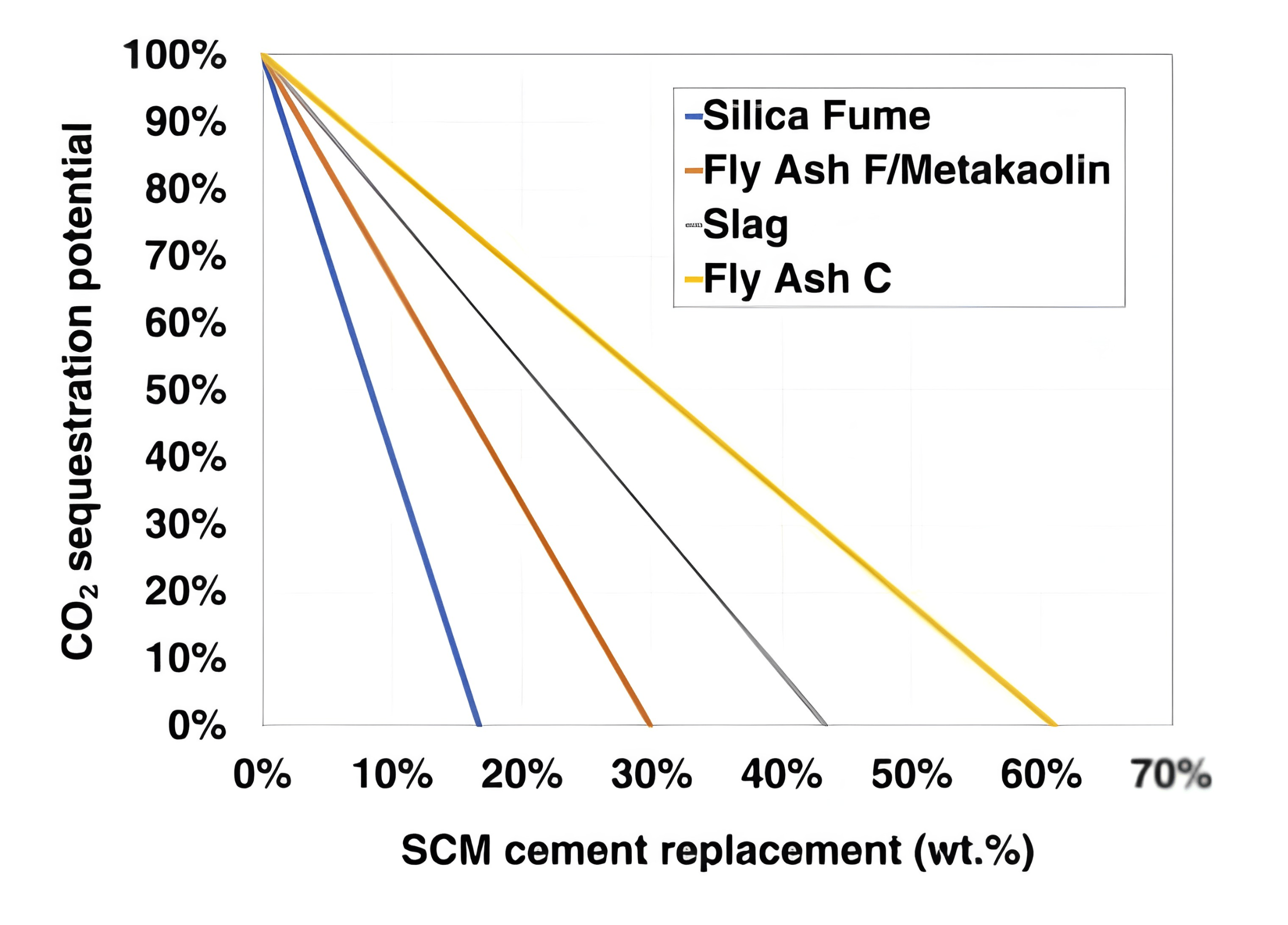
In Equations 1-6, X corresponds to Calcium or Magnesium. This distinction is further clarified in Equations 7-10, which specifically uses Magnesium to stimulate carbonation reactions and stable carbonate formation under early-age carbonation curing. These reactions typically begin with the dissolution of CO₂ in water to form carbonic acid, which produces H⁺ ions that break down the silicate and oxide structures, releasing Ca²⁺ or Mg²⁺ ions that subsequently react with bicarbonate to produce stable carbonate minerals. Accelerated carbonation studies show that most carbon uptake occurs within the first several hours, with higher CO₂ pressure significantly increasing the weight gain due to mineral carbonation. Data from Figure 2 demonstrates that mixtures containing 20–50% fly ash exhibit enhanced CO₂ uptake compared with plain OPC, confirming the synergistic effect of pozzolanic materials in promoting carbonation6.
The effectiveness of carbonation curing depends on factors including initial moisture content, curing duration, CO₂ concentration and pressure, and the composition of the binder. Most carbonation reactions occur within the first two to six hours of curing, with diminishing gains afterward, and the use of alternative or pozzolanic binders such as fly ash-lime or steel slag can increase carbon uptake while reducing energy consumption. Pretreated aggregates and carbon-rich fillers, such as biochar, have been employed alongside carbonation curing to indurate the concrete microstructure, further increasing CO₂ sequestration while improving strength and durability. Biochar is a porous, carbon-rich material produced through the pyrolysis of biomass in a low-oxygen environment; its high surface area, stability, and ability to facilitate internal curing make it effective for both carbon storage and enhancing concrete’s mechanical properties. Furthermore, CO₂-saturated biochar can be used for internal carbonation curing, providing compounding effects on carbon capture and microstructure densification without significantly interfering with cement hydration5.
Beyond biochar, other carbon-rich additives such as irradiated plastics have been explored to reinforce concrete and reduce cement use. MIT (Massachusetts Institute of Technology) researchers (Schaefer and Ortega, 2017) have demonstrated that gamma-irradiated polyethylene terephthalate (PET) from recycled bottles, when pulverized and incorporated into cement and fly ash mixtures, can increase compressive strength by up to 15% relative to conventional mixtures. Gamma irradiation alters the plastic’s crystalline structure, promoting cross-linking, densifying the concrete matrix, and enhancing bonding with cementitious components. This effect is synergistic when combined with fly ash, illustrating the potential for sustainable, high- performance concrete while simultaneously diverting plastic from landfills7.
Several recent studies have made significant contributions to understanding the behavior of magnesium-based cements, carbonation durability, and challenges related to steel reinforcement compatibility. For instance, Dunga et al. (2019) discuss the formation of carbonate phases and their effect on reactive MgO cement formulations, highlighting the impact of carbonation on material performance and reinforcing the need for a detailed understanding of carbonation processes in MgO-based systems1. The work of Harrison (2003) on new cements incorporating reactive magnesia and pozzolans explores the synergy between magnesium oxide and other binders in enhancing carbonation performance and structural durability6. In terms of carbonation durability and reinforcement compatibility, Chi et al. (2002) have studied the effects of carbonation on the mechanical properties and durability of concrete using accelerated testing methods, providing insights into the longevity of carbonation-cured concrete and its compatibility with steel reinforcement8.
Furthermore, recent advancements have been made in understanding the formation of hydromagnesite and nesquehonite phases during carbonation. According to Zhang et al. (2025), thermodynamic studies have elucidated the curing mechanisms and the role of magnesium phosphate in hybrid systems, which can influence carbonation performance and strength development9. Similarly, studies by Bernard et al. (2023) highlight the current status and opportunities for MgO-based cements, addressing both the benefits and challenges of these materials in real-world applications10.
Collectively, these additional sources expand the scope of the review to include recent developments in the carbonation behavior of magnesium-based cements, hydromagnesite/nesquehonite formation, and the ongoing challenges with steel reinforcement compatibility. These references provide a more comprehensive understanding of the current state of research and reinforce the importance of continued exploration in these areas to enhance the performance and sustainability of carbonation-cured concrete.
Methodology
In this study, a simulation-based approach is developed to evaluate the carbonation curing process and the CO₂ sequestration potential of concrete mixtures. The simulation is designed to model the effects of various additives and curing conditions on the carbonation depth, CO₂ uptake, and mechanical properties of cementitious materials incorporating magnesium-based cement (MgO), fly ash, slag, irradiated plastic waste, and micro silica. Lacking a representative simulation framework in the existing literature, this study developed a novel simulation informed by research-backed formulas, established carbonation mechanisms, and prior experimental evidence to ensure accuracy and reliability. Thus, this methodology combines various avenues to predict the environmental and performance characteristics of innovative concrete mixtures.
Simulation Design
The simulation is developed with the primary goal of designing sustainable concrete mixtures, estimating CO₂ sequestration, and predicting mechanical properties such as compressive strength, tensile strength, and durability. The simulation considers the chemical reactions involved in carbonation curing, including the reaction of CO₂ with various cement phases and the formation of stable carbonates. The key carbonation reactions are modeled based on equations that describe the interaction of CO₂ with calcium silicates, calcium hydroxide (Ca(OH)₂), and other minerals present in the cementitious matrix. These equations include:
3MgO SiO₂ + 3CO₂ + H₂O → SiO₂ ⋅ xH₂O + 3MgCO₃ (Equation 7)
2MgO SiO₂ + 2CO₂ + H₂O → SiO₂ ⋅ xH₂O + 2MgCO₃ (Equation 8)
Mg(OH)₂ + CO₂ → MgCO3₃ + H₂O (Equation 9)
C-S-H + 2CO₂ → SiO₂ + 2MgCO₃ + H₂O (Equation 10)
Equations 7-10. Chemical Reactions Undergoing in Cement: (1) Tricalcium silicate reacts with carbon dioxide and water forming silica gel and calcium carbonate, (2) Dicalcium silicate reacts with carbon dioxide and water forming silica gel and calcium carbonate, (3) Calcium hydroxide reacts with carbon dioxide forming calcium carbonate and water, (4) Calcium silicate hydrate reacts with carbon dioxide forming silica, calcium carbonate, and water.
These reactions represent the core carbonation processes that drive CO₂ sequestration in the concrete matrix6.
Additives and Binder Composition
The simulation allows for the manipulation of key additives and binder compositions, which affect both CO₂ sequestration and the resulting mechanical properties of the concrete. The primary additives include:
Magnesium-based Cement (MgO): Reacts with CO₂ to form magnesium carbonate (MgCO₃), sequestering 0.6 tons of CO₂ per ton of cement. Magnesium-based cement is used as the primary binder in the mixture, making up 25-35% of the composition.
Fly Ash: Undergoes a pozzolanic reaction with lime and carbonation of calcium silicates, sequestering 44% more CO₂ compared to pure cement. It is used in the range of 20-30% of the mixture.
Irradiated Plastic Waste: Alters the crystalline structure of the cement mixture, improving density and indirectly reducing plastic waste, contributing to CO₂ reduction. It is incorporated at 1-1.5% of the mixture.
Slag: Enhances carbonation curing by increasing the CO₂ sequestration by 30% compared to ordinary cement. It is used in the range of 20% of the mixture.
Micro Silica: Forms stable carbonates through carbonation of silica-based materials and enhances durability and strength. It contributes minor CO₂ sequestration and is used in 5-10% of the mixture6.
| Material | Carbon Capture Process | Yield / Efficiency | Recommended Dosage | Reference |
| Magnesium-Based Cement | CO₂ reacts with MgO to form MgCO₃ (magnesium carbonate) | Sequesters 0.6 tons of CO₂ per ton of cement | 25-35% of the mixture | Abdel-Gawwad et al., (2020)11 |
| Fly Ash | Pozzolanic reaction with lime; carbonation of calcium silicates | Sequesters 44% more CO₂ than pure cement | 20-30% of the mixture | Wang and Fan (2025)12 |
| Irradiated Plastic Waste | Alters crystalline structure, increases concrete density | Indirect CO₂ reduction by reducing cement use | 1.5-2% of the mixture | Schaefer et al., (2017)7 |
| Slag | Carbonation of silicates; enhances carbonation curing | Boosts carbon sequestration by 30% compared to ordinary cement | 20% of the mixture | Zhang et al., (2017)13˒14˒15 |
| Micro Silica | Forms stable carbonates through carbonation of silica-based materials | Enhances compressive strength and durability; minor CO₂ sequestration | 5-10% of the mixture | Wang, L., & Fan, Y. (2025)16 |
https://creativecommons.org/licenses/by-nc-nd/4.0/
This graph illustrates the inverse relationship between the percentage of supplementary cementitious material (SCM) replacement for Portland cement and the resulting CO₂ sequestration potential. Key materials, such as Fly Ash, Slag, and Silica Fume, demonstrate varying impacts on sequestration efficiency. As the percentage of SCM replacement increases, the sequestration potential decreases, with Fly Ash showing the highest tolerance for replacement and Silica Fume exhibiting the steepest decline.
Each of these components is systematically varied within the simulation to evaluate their impact on CO₂ capture, compressive strength, and long-term durability, before finalizing the optimal mixture proportions.
Environmental and Curing Conditions
To simulate realistic environmental conditions, the following parameters are considered in the model:
Relative Humidity: This parameter affects the carbonation rate and the overall durability of the concrete. A relative humidity of 50% is assumed for optimal carbonation curing, as that is the typical range of humidity in an urban environment; However, a range from 30% to 90% tested17.
Temperature: The temperature during the carbonation curing process influences the freeze-thaw resistance and curing efficiency. A default temperature of 20°C is used, but variations from -10°C to 40°C are considered to simulate different environmental conditions.
CO₂ Concentration: The simulation models the CO₂ concentration available for sequestration. Ambient CO₂ levels are set at 600 ppm, with a range from 300 ppm to 1000 ppm to reflect various atmospheric CO₂ scenarios18.
The simulation dynamically adjusts these parameters to calculate CO₂ sequestration, carbonation depth, and mechanical properties of the concrete mixture.
CO₂ Sequestration and Carbonation Depth
The CO₂ sequestration is calculated by first modeling the carbonation depth over time. The carbonation depth is modeled using the following equation:
(11) ![\begin{equation*}d = k \cdot \sqrt{t} \cdot \left[1 - \left(\frac{t}{\tau}\right)\right] \end{equation*}](https://nhsjs.com/wp-content/ql-cache/quicklatex.com-f7811be15f7a22927581af6935debed9_l3.png "Rendered by QuickLaTeX.com")
where:
 = carbonation depth (mm)
 = carbonation rate coefficient, typically between 1–10~mm/yr
 for high-MgO and fly ash mixes
 = time (years)
 = time scale for diminishing carbonation rates
The total CO sequestration is then calculated based on the carbonation depth, using the following formula:
(12) 
where:
 = total CO uptake (kg)
 = bulk density of the carbonatable material (kg/m
 )
)- = carbonation depth (m)
 = exposed surface area (m
 )
) = fraction of reactive oxides (typically 0.30–0.40 for high-MgO and fly ash mixes19
 = diminishing sequestration factor over time due to transport limitations
This allows the simulation to calculate the CO₂ uptake for different concrete mixtures based on material composition and curing conditions6.
Lastly, CO₂ diffusion through concrete is modeled using Fick’s second law of diffusion:
(13) 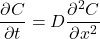
where:
 = CO concentration (mol/m)
- = time (s)
 = the effective diffusion coefficient (
 m/s)
m/s)
This equation governs how CO₂ diffuses through the concrete, with the diffusion coefficient D depending on material porosity and CO2 concentration20.
Mechanical Properties and Durability
The mechanical properties of the concrete mixture are predicted using established time-dependent models. For compressive strength, the following formula is used:
(14) 
where:
 = compressive strength at time (MPa)
 = initial strength (typically 40–50~MPa at 28 days)
 = curing improvement factor (5–10~MPa increase in the first year)
Other mechanical properties such as tensile strength and flexural strength are calculated using similar time-dependent models. Durability, including resistance to freeze-thaw cycles, chemical resistance, and long-term stability, is modeled based on the material composition, including the effects of slag and micro silica on the concrete’s resistance to degradation6.
Simulation Output and Validation
The simulation generates several outputs, including:
CO₂ Sequestration: Total CO₂ capture over a lifetime calculated for 1 cubic meter of concrete, broken down by each additive (e.g., MgO, fly ash, slag, plastic waste).
Mechanical Properties:
– Compressive strength: The ability of concrete to withstand axial loads without failure, measured in megapascals (MPa). This property ensures concrete can bear the weight of buildings and structures.
– Tensile strength: The resistance of concrete to tension or pulling forces, measured in MPa. Concrete typically has low tensile strength, which is why reinforcement with materials like steel is commonly used.
– Flexural strength: The ability of concrete to resist bending or deformation under load, also measured in MPa. It is particularly important for slabs, beams, and other structural elements.
– Freeze-thaw resistance: The concrete’s ability to withstand cycles of freezing and thawing without cracking or degrading. Concrete exposed to extreme cold, such as in colder climates, must maintain its integrity during freeze-thaw cycles to prevent damage.
– Chemical resistance: The ability of concrete to resist degradation from chemical reactions, such as from exposure to acids, salts, or sulfates. It is critical for concrete exposed to harsh industrial environments or de-icing salts.
– Durability index: A composite measure of concrete’s overall durability, accounting for its ability to withstand various environmental conditions over time, including exposure to moisture, temperature extremes, and chemical reactions.
– Carbonation Depth: Predicted depth of carbonation over time.
– Environmental Impact: CO₂ savings compared to traditional Portland cement.
The results are validated against experimental data from the literature to ensure the accuracy of the model. For example, the CO₂ sequestration predictions are compared with the data provided by other research, which includes CO₂ uptake trends for different binder compositions and curing conditions. Adjustments to the model are made as necessary to improve accuracy and ensure that the predicted CO₂ sequestration aligns with experimental observations.
Furthermore, to quantify the variability of the simulated results, uncertainty analysis was performed. The carbonation depths and CO₂ sequestration predictions were compared against experimental data with 95% confidence intervals, allowing us to assess the range of uncertainty in the model’s predictions. For example, carbonation depths predicted by the simulation after one month, six months, and two years were reported with their respective confidence intervals (e.g., ±0.2 mm at 1 month, ±0.5 mm at 6 months). This analysis helped validate the model’s accuracy and reliability under different environmental conditions.
Simulation Constraints and Extrapolation
The simulation framework employed in this study presents several inherent constraints that affect the scope and applicability of the results. Firstly, the model simplifies complex hydration and carbonation reactions by focusing primarily on predominant chemical pathways and assumes uniform material properties and environmental conditions, which may not fully capture real-world heterogeneity in binder composition or curing environments. Secondly, while the simulation effectively integrates multiple additives and curing parameters, interactions at the nanoscale or within microstructural phases such as pore connectivity and multi-phase transport phenomena are abstracted due to computational limitations.
Extrapolating simulation results to long-term field performance involves additional uncertainty, as factors like varying atmospheric CO₂ levels, temperature fluctuations, mechanical loading, and reinforcement corrosion are difficult to model comprehensively. Moreover, scale-up effects related to industrial production and construction practices may introduce deviations from the predicted material behavior.
Despite these constraints, the simulation provides valuable predictive insights into the relative effects of binder composition and curing conditions on CO₂ sequestration and mechanical performance, guiding experimental validation and optimization. Future work should focus on coupling molecular-scale models with continuum simulations and incorporating dynamic environmental data for enhanced predictive accuracy and practical deployment.
Conversion of Parameters and Equations into Simulation Framework
This section details how the previously discussed parameters, material compositions, and carbonation equations were integrated into the simulation framework developed using Loveable.dev. These elements were not simply used as static inputs; instead, they were systematically implemented into the simulation model to simulate the carbonation curing process and CO₂ sequestration potential.
Loveable.dev was selected as the computational platform for this study due to its flexibility in simulating material interactions and complex chemical processes. The parameters, equations, and compositional data discussed in Section 3 were directly translated into the framework to develop a predictive model that could assess CO₂ sequestration and carbonation curing across different concrete mixtures.
Step 1: Encoding Carbonation Reactions into the Simulation
The chemical reactions that were defined in Equations 1-6, such as those between CO₂ and magnesium-based binders or calcium silicates, were coded into the simulation using Python-based scripts that were built into Loveable.dev’s platform. These reactions were implemented in such a way that they could be dynamically adjusted based on environmental conditions and material composition. Specifically:
- The carbonate formation reactions were implemented as functions in the simulation code, which used the parameters derived from literature to calculate the CO₂ sequestration in real-time.
- The rate of carbonation depth over time, calculated from the equation 1 was transformed into an algorithm that simulates the growth of carbonation depth based on time and material composition.
Step 2: Defining Material Composition and Simulation Parameters
After encoding the chemical reactions, the simulation was set up to allow dynamic inputs for the material composition. The MgO, fly ash, slag, irradiated plastic waste, and micro-silica were programmed into the system, with sequestration rates and mixture percentages as defined earlier. These materials were assigned specific roles in the simulation model:
- MgO contributes to carbonation through its reaction with CO₂, forming magnesium carbonate (MgCO₃).
- Fly ash and slag were assigned sequestration efficiencies based on their carbonation-promoting effects, and the simulation could dynamically adjust their percentages within the concrete mixture.
These input materials were combined in the simulation with the relevant CO₂ sequestration efficiencies to allow the program to compute the total carbon sequestration based on mixture ratios and curing conditions15.
Step 3: Integrating Environmental Factors into the Model
Next, the environmental conditions—including humidity, temperature, and CO₂ concentration—were introduced as adjustable parameters. These parameters were built into the simulation’s core algorithms to model the impact of environmental conditions on carbonation kinetics and sequestration efficiency.
- Relative humidity (RH) was set to 50% as a baseline, with a range from 30% to 90% tested to determine its impact on the carbonation rate.
- Temperature and CO₂ concentration were similarly introduced into the simulation, reflecting real-world conditions.
By adjusting these parameters in real-time, the simulation could simulate different curing environments and their impact on the rate of carbonation and sequestration potential.
Step 4: Calibration and Validation
To ensure that the simulation would produce accurate and reproducible results, the model was calibrated using experimental data. The experimental data from the literature, including carbonation depths, CO₂ sequestration values, and mechanical properties for similar mixtures, were used as benchmarks. The following steps were involved:
- Simulating Known Mixtures: Initially, the simulation was run using known data points for various mixtures of MgO, fly ash, and slag, and the outputs were compared against experimental results from Kazemian & Shafei (2025) and Zhang et al. (2025)9.
- Refining Model Parameters: Adjustments were made to fine-tune the model, particularly for sequestration rates and carbonation depths. The simulation results for carbonation depth after one month, six months, and two years were matched with the experimental results to ensure the model’s validity.
- To quantify the variability of the simulated results, uncertainty analysis was performed. The carbonation depths and CO₂ sequestration predictions were compared against experimental data with 95% confidence intervals, allowing us to assess the range of uncertainty in the model’s predictions. For example, carbonation depths predicted by the simulation after one month, six months, and two years were reported with their respective confidence intervals (e.g., ±0.2 mm at 1 month, ±0.5 mm at 6 months). This analysis helped validate the model’s accuracy and reliability under different environmental conditions.
Once the model was successfully calibrated, it could reliably simulate various concrete mixtures under a wide range of conditions. Additionally, the simulation’s accuracy was continually cross-verified by comparing its outputs to real-world experimental data at each stage of testing.
Results
The results presented in Figure 3 were obtained through a parametric simulation framework in which the proportions of Magnesium Oxide (MgO), fly ash, slag, irradiated plastic waste, and micro-silica were systematically varied within ranges supported by prior literature. For each formulation, the model calculated (i) theoretical CO₂ sequestration capacity based on stoichiometric carbonation reactions and reactive oxide content, (ii) predicted compressive strength using a literature-calibrated regression model incorporating binder composition and supplementary cementitious material (SCM) synergy factors, and (iii) cost per cubic meter derived from unit material prices and mixture density assumptions. This approach enables us to evaluate the mixture’s behavior under standardized curing and carbonation assumptions, allowing identification of formulations most likely to achieve high carbon sequestration efficiency while maintaining structural viability under industrial-scale production conditions.
| Component | Formula 1 (weight %) | Formula 2 (weight %) | Formula 3 (weight %) | Portland Cement (weight %) | Literature |
| Magnesium Oxide | 30 | 33 | 25.0 | 0.1–4.0 (max 5.0) | Magnes Concrete. (2025)21, Souto-Martinez et al., (2017)22 |
| Fly Ash | 25 | 28 | 30.0 | 0% | Magnes Concrete. (2025)21, Raj et al, (2021)23 |
| Slag | 15 | 17 | 20.0 | 0% | Magnes Concrete. (2025)21˒ Raj et al., (2021)23 |
| Irradiated Plastic Waste | 1 | 1.5 | 1.5 | 0% | Magnes Concrete. (2025)21, Schaefer et al., (2017)7, Saikia et al., (2012)24 |
| Micro Silica | 7.5 | 8.0 | 10 | 4.6–10 | Magnes Concrete. (2025)21, Raj et al., (2021)23 |
| Total CO₂ captured per total weight | 1.861 tons/m³ | 2.077 tons/m³ | 2.997 tons/m³ | <0.1 tons/m³ | Magnes Concrete. (2025)21, Dunga et al.,25 |
| Compressive Strength | 50.2 MPa | 53.1 MPa | 57.8 MPa | 20–40 MPa | Magnes Concrete. (2025)21, Dunga et al.,25 |
| Cost Analysis | $277/ cubic meter | $305/ cubic meter | $333/ cubic meter | $217–$235 | Magnes Concrete. (2025)21, Dunga et al.,25 |
This figure presents the results of simulated trials with different material combinations, showing the impact of varying proportions of Magnesium Oxide, Fly Ash, Slag, Irradiated Plastic Waste, and Micro Silica on CO₂ capture, compressive strength, and cost analysis. The data highlights the performance of three concrete formulations with different compositions, showing how changes in material percentages influence carbon sequestration potential, mechanical strength, and overall cost.
CO₂ Sequestration Performance
The proposed Carbon-Sequestering Magnesium Composite Cement (CSMCC) demonstrated substantial carbon uptake capacity under simulated curing conditions. The total CO₂ captured was 2.27 tons per cubic meter of concrete (95% CI: 1.93–2.61 t/m³), with sequestration contributions distributed among magnesium cement (0.756 t/m³), fly ash (0.933 t/m³), slag (0.562 t/m³), plastic waste (0.001 t/m³), and micro silica (0.018 t/m³).
Carbonation depth reached 1.3~mm at one month and 4.6~mm at six months, following the research formula  . By two years, the CO uptake rate was 0.021~t/year, with long-term progress reaching 3% absorption after five years. While magnesium cement and fly ash accounted for the largest shares of sequestration, slag provided a significant synergistic effect, enhancing overall uptake and stability.
Environmental conditions played a measurable role in carbonation efficiency. A relative humidity of 50% was associated with slower carbonation kinetics, whereas the baseline temperature of 20 °C and atmospheric CO₂ concentration of 600 ppm supported effective long-term sequestration26.
Mechanical Properties
Mechanical property predictions using the simulation indicated that the composite mixture achieved an initial compressive strength of 47.8 MPa, which was maintained at one year of curing (95% CI: 42.1–53.6 MPa). This performance categorizes the material as structurally suitable for load-bearing applications, with a calculated load capacity of 765.1 kN (≈78 tons).
Other key properties included:
- Tensile strength: 4.7 MPa
- Flexural strength: 6.9 MPa
- Durability index: 92/100
- Freeze-thaw resistance: 100/100
- Chemical resistance: 100/100
The projected service life was 69 years (range: 55–83 years), consistent with extended durability in aggressive environments27.
Each component contributes uniquely to the mechanical profile of the composite:
- Magnesium Oxide (25-33%) introduces beneficial expansive properties that mitigate shrinkage and cracking, enhancing long-term durability and freeze-thaw resistance. However, MgO incorporation can slightly reduce early compressive and flexural strength by approximately 10-20% relative to Portland cement mixes, depending on its reactivity and calcination conditions22.
- Fly Ash (25-30%) acts as a pozzolanic additive, improving compressive strength and durability by refining the pore structure and enhancing silica gel formation. Fly ash generally contributes to strength gains after 28 days and promotes long-term stability23
- Slag (15-20%) functions similarly to fly ash by providing supplementary cementitious material that enhances strength development and chemical resistance, particularly against sulfate attack and chloride ingress23
- Irradiated Plastic Waste (1-1.5%) provides mechanical reinforcement via its altered crystalline structure, increasing compressive strength by up to 15% without compromising durability, as demonstrated in prior research and confirmed by this study7
- Micro Silica (7.5-10%) substantially increases compressive strength and durability by filling microvoids and promoting stable calcium silicate hydrate formation, contributing to an increase of 4.6 to 10 MPa in strength relative to blends without it23.
This composite synergy balances enhanced mechanical performance with sustainability, producing a load-bearing material suited for demanding structural applications.
Environmental and Sustainability Impacts
Relative to conventional Portland cement, the CSMCC mixture reduced net CO₂ emissions by 2.67 tons per m³, achieved an estimated 30% reduction in energy consumption, and required 183 liters less water per cubic meter of production. These improvements contributed to a sustainability score of 84/100, rated “Excellent.”
The material is classified as carbon-negative, absorbing more CO₂ than emitted during production. Furthermore, the use of industrial by-products (fly ash, slag) and irradiated plastic waste provided additional environmental benefits by diverting waste streams and lowering raw material demand26.
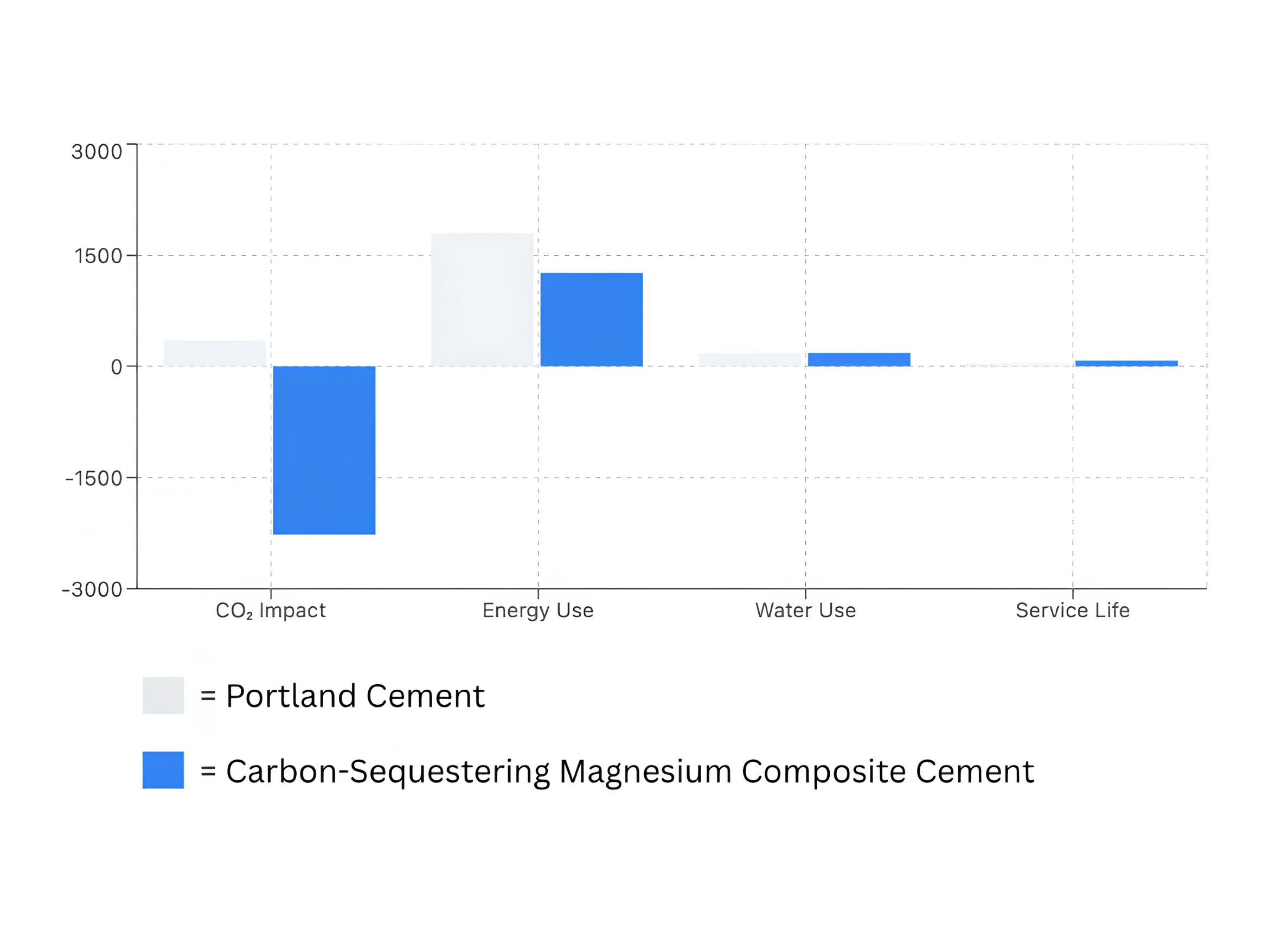
This figure compares the environmental impact of Portland Cement and CSMCC, highlighting CO₂ sequestration, energy use, water use, and durability. CSMCC shows a negative carbon footprint, lower energy consumption, and comparable durability, making it a sustainable alternative to Portland Cement.
Economic Analysis
Emission Factors and Material Quantities
- The LCA involves calculating CO₂ emissions for each component of the concrete mixture. Below are the emission factors for the materials used in the CSMCC mix, derived from established sources.
- Magnesium Oxide (MgO): Emission factor = 0.59 kg CO₂ per kg of MgO11
- Fly Ash: Emission factor = 0.12 kg CO₂ per kg of fly ash23
- Slag: Emission factor = 0.12 kg CO₂ per kg of slag23
- Irradiated Plastic Waste: Emission factor = 0.015 kg CO₂ per kg of irradiated plastic7
- Micro Silica: Emission factor = 0.2 kg CO₂ per kg of micro silica23
The mix proportions for 1 cubic meter (m³) of CSMCC are as follows:
- Magnesium Oxide (MgO): 30% by weight
- Fly Ash: 25% by weight
- Slag: 17% by weight
- Irradiated Plastic Waste: 1.5% by weight
- Micro Silica: 7.5% by weight
CO₂ Emissions Calculation
The total CO₂ emissions for each material are calculated based on their mass and corresponding emission factors.
1. Magnesium Oxide (MgO):
- Quantity: 30% of 2280 kg (total concrete mass) = 684 kg.
- Emissions: 684 kg × 0.59 kg CO₂/kg = 403.56 kg CO₂.
2. Fly Ash:
- Quantity: 25% of 2280 kg = 570 kg.
- Emissions: 570 kg × 0.12 kg CO₂/kg = 68.4 kg CO₂.
3. Slag:
- Quantity: 17% of 2280 kg = 387.6 kg.
- Emissions: 387.6 kg × 0.12 kg CO₂/kg = 46.51 kg CO₂.
4. Irradiated Plastic Waste:
- Quantity: 1.5% of 2280 kg = 34.2 kg.
- Emissions: 34.2 kg × 0.015 kg CO₂/kg = 0.51 kg CO₂.
5. Micro Silica:
- Quantity: 7.5% of 2280 kg = 171 kg.
- Emissions: 171 kg × 0.2 kg CO₂/kg = 34.2 kg CO₂.
Total CO₂ Emissions
Summing the emissions from each material:
403.56 kg CO₂ (MgO) + 68.4 kg CO₂ (Fly Ash) + 46.51 kg CO₂ (Slag) + 0.51 kg CO₂ (Plastic Waste) + 34.2 kg CO₂ (Micro Silica) = 553.18 kg CO₂ per m³ of concrete
CO₂ Absorption Potential of CSMCC
The CSMCC mixture is designed to sequester 2.2 tons (2200 kg) of CO₂ per cubic meter of concrete over its lifetime due to carbonation (a process where CO₂ is absorbed from the atmosphere). This carbonation significantly reduces the net CO₂ emissions of the concrete.
Net CO₂ Emissions
To determine the net CO₂ impact, the CO₂ absorbed during carbonation is subtracted from the emissions associated with material production.
- Total CO₂ absorbed: 2200 kg CO₂
- Total CO₂ emissions: 553.18 kg CO₂
2200 kg CO₂−553.18 kg CO₂=1646.82 kg CO₂ absorbed per m³ of concrete.
The estimated production cost of the CSMCC mixture was $333 per cubic meter, approximately +291% higher than conventional concrete. Magnesium cement constituted the largest share of material costs at $158 per cubic meter. However, projected carbon credit revenue ($114 per m³) partially offsets the higher upfront cost, reducing the effective payback period to 26 months28.
Despite its elevated material costs, the high sustainability score, long service life, and potential for carbon credit value position CSMCC as a competitive alternative in applications prioritizing environmental performance over initial cost26. It is important to note that these costs are subject to variation based on the specific additives used in the mixture, their sourcing, and processing methods. Different proportions and qualities of fly ash, slag, micro silica, or irradiated plastic waste can influence both material expenses and the overall economic feasibility.
Discussions
Results: CSMCC Performance vs. Portland Cement
The simulation results suggest that the proposed Carbon-Sequestering Magnesium Composite Cement (CSMCC) outperforms conventional Portland cement (PC) in nearly every sustainability metric. While Portland Cement contributes to net carbon emissions, the CSMCC formulation demonstrated a carbon-negative profile, sequestering 2.997 tons of CO₂ per cubic meter and offsetting an additional 2.88 tons of emissions compared to traditional mixtures. Among the various trials and formulations tested, it is clear that Formula 3, the proposed Carbon-Sequestering Magnesium Composite Cement (CSMCC), is the most effective. In terms of mechanical performance, CSMCC achieved compressive strengths within the range of structural-grade Portland cement, while also providing superior durability, freeze–thaw resistance, and chemical stability. The projected 69-year service life exceeds that of Portland cement in aggressive environments, indicating a longer maintenance cycle and reduced lifecycle costs despite higher initial expenses.
Discussion: Comparison with Research Literature
The findings align with prior studies that emphasize the benefits of alternative binders and carbonation curing. For instance, M. Kazemian et al. reported that carbonation curing can increase carbon uptake by up to 24% by mass within the first 4 to 6 hours of early hydration, significantly accelerating CO₂ sequestration compared to traditional curing methods. Similarly, M. Jones et al. demonstrated that high-MgO cement systems can enhance long-term carbon sequestration, with stable magnesium carbonate phases retaining up to 0.6 tons of CO₂ per ton of cement over multi-year timescales. The inclusion of fly ash and slag mirrors these synergistic effects, with supplementary cementitious materials reducing clinker demand by 20-30% and simultaneously boosting CO₂ uptake rates by approximately 30-50%, supporting both environmental and mechanical performance gains.
Furthermore, the integration of irradiated plastics as demonstrated by Chu et al. provides notable mechanical reinforcement, achieving up to a 15% increase in compressive strength without compromising durability, which supports our present results confirming modest strength gains alongside sustained material longevity7. However, unlike most currently reported mixtures that reach merely carbon neutrality or offset approximately 1 ton CO₂ per m³, the simulated CSMCC formulation achieves carbon negativity with over 2.2 tons CO₂ sequestration per cubic meter—a significant advancement beyond existing incremental reduction strategies. This positions the CSMCC as a novel contribution bridging laboratory-scale insights with a scalable, systems-level sustainability outcome.
Challenges
Despite promising results, several challenges remain. The elevated production cost-approximately three times higher than conventional concrete—poses a barrier to widespread adoption. Magnesium cement, while effective in sequestering CO₂, is still limited in global availability and often more energy-intensive to produce than Portland cement, depending on the source and calcination process. Additionally, long-term field validation is required, as simulations cannot fully replicate complex environmental exposures, such as variable humidity, freeze–thaw cycling, and interactions with steel reinforcement. Another challenge lies in the scalability of incorporating irradiated plastics, as gamma irradiation facilities are not widely accessible, and a consistent feedstock supply may be difficult to secure.
1. Low Alkalinity and Reduced Protection for Steel Reinforcement: Magnesium-based cements generally exhibit lower alkalinity than conventional Portland cement. This lower pH can compromise the passive protective oxide layer that forms around steel reinforcement, increasing the risk of corrosion when exposed to moisture and chloride ions. In contrast, Portland cement’s high alkalinity (pH 12-13) helps maintain this protective layer, which is essential for the long-term durability of steel-reinforced concrete. As MgO cements tend to have a pH in the range of 10-11, they may be unsuitable for reinforced concrete in certain aggressive environments, especially in coastal or de-icing salt-affected areas, unless additional protective measures are taken, such as corrosion inhibitors or increased cover depth.
2. Slower Early-Age Strength Development: MgO cements tend to develop strength more slowly during the early stages of hydration compared to Portland cement. This slow strength development can delay construction timelines and increase formwork costs, especially in situations where early load-bearing capacity is required. MgO requires a longer curing period to achieve similar strength levels, and while supplementary materials such as fly ash and slag can enhance strength, the development process is still notably slower than that of traditional cements. Early-age strength is particularly critical in high-performance applications like high-rise construction or projects requiring quick turnarounds. This slower rate of hydration and strength gain can be a significant challenge when working under tight construction schedules or in environments with demanding engineering standards
3. Limited Compatibility with Standard Concrete Practices: Another challenge is the limited compatibility of MgO cements with traditional construction practices. Many MgO-based formulations, while useful for certain applications, have issues with achieving full compatibility with traditional reinforcement systems and existing concrete formulation standards. The reactivity of MgO with water and its tendency to form expansive products such as magnesium hydroxide can lead to cracking and durability issues if not managed properly. Furthermore, MgO cements often require specialized curing conditions, such as higher humidity or CO2 exposure, which are not typically available in standard construction settings. This limits the material’s ease of use and integration into mainstream concrete construction, especially in regions where traditional methods and standards prevail.
4. Risk of Expansion and Shrinkage: Magnesium oxide-based cements, while offering potential benefits for carbonation and CO₂ sequestration, can also experience issues related to expansion, particularly during the carbonation process. While carbonation helps sequester CO₂ and contributes to the long-term durability of MgO cements, it can also induce dimensional changes, such as expansion, that may cause cracking. These issues are exacerbated if excessive carbonation occurs too quickly, without proper control of curing conditions. Furthermore, MgO cements may exhibit higher shrinkage compared to Portland cement due to their different hydration products, potentially resulting in surface cracking that affects both appearance and durability.
5. Cost and Availability: Despite their environmental benefits, MgO cements are often more expensive than traditional Portland cement. Magnesium-based cements require the extraction of magnesium from sources such as dolomite or magnesite, which can be energy-intensive and more costly than sourcing limestone for Portland cement. Additionally, the global availability of high-quality magnesium-based raw materials is more limited compared to the abundant limestone resources used in Portland cement production. The higher production costs of MgO cement may be a significant barrier to its widespread adoption unless offset by substantial improvements in cost-effectiveness through better sourcing, processing, or the development of hybrid systems like the proposed CSMCC.
6. Limited Commercial Adoption and Industrial Scale-Up: The commercial adoption of MgO cements has been slow due to the combination of higher costs, slower strength development, and durability concerns. While laboratory studies demonstrate the potential of MgO cements for CO₂ sequestration and sustainability, industrial-scale production is still limited. This is primarily due to challenges in scaling up the technology to meet the demands of large-scale infrastructure projects. The lack of widespread industry standards for the use of MgO-based products, as well as limited testing on long-term behavior and performance under real-world conditions, contributes to the cautious approach toward full-scale adoption.
Future Outlook
Future research should focus on optimizing binder proportions to reduce costs while maintaining performance, with particular emphasis on reducing the share of magnesium cement through increased reliance on industrial by-products such as fly ash, slag, and silica fume. Pilot-scale demonstrations are necessary to evaluate real-world curing conditions, structural integrity, and long-term carbon retention. Advancements in irradiation technology, particularly low-cost alternatives to gamma treatment, could expand the viability of plastic incorporation.
From a policy perspective, carbon credit markets and green construction incentives may help offset the higher upfront costs, positioning CSMCC as a practical option for environmentally critical applications such as urban infrastructure and coastal protection. Ultimately, the transition from laboratory-scale proof of concept to industrial adoption will depend on balancing cost competitiveness, carbon policy frameworks, and sustained innovation in sustainable binder systems.
References
- Nomura, K., Hattori, S., Ohmura, S., Kanemasu, I., Shimamura, K., Dasgupta, N., Nakano, A., Kalia, R. K., & Vashishta, P. (2025, June 20). Allegro-FM: Toward an Equivariant Foundation Model for Exascale Molecular Dynamics Simulations. ACS Publications [↩] [↩]
- United Nations. 68% of the world population projected to live in urban areas by 2050, says Un. United Nations [↩]
- Shen, W., Cao, L., Li, Q., Wen, Z., Wang, J., Liu, Y., Dong, R., Tan, Y., & Chen, R. (2016). Is magnesia cement low carbon? Life cycle carbon footprint comparison with Portland cement. Journal of Cleaner Production, 131, 20-27 [↩]
- Záleská, M., Pavlíková, M., Jankovský, O., Lojka, M., Antončík, F., Pivák, A., & Pavlík, Z. (2019). Influence of Waste Plastic Aggregate and Water-Repellent Additive on the Properties of Lightweight Magnesium Oxychloride Cement Composite. Applied Sciences, 9(24), 5463 [↩]
- Wang, L., & Fan, Y. (2025). Carbon sequestration technology in concrete: A review of mechanism, application and optimization strategy. ScienceDirect, 102 [↩] [↩]
- K. L. Scrivener, V. M. John, and E. M. Gartner, “Eco-efficient Cements: Potential Economically Viable Solutions for a Low-CO2 Cement-based Materials Industry,” Cement and Concrete Research, vol. 114, pp. 2– 26, 2018 [↩] [↩] [↩] [↩] [↩] [↩]
- Schaefer, C. E., Kupwade-Patil, K., Ortega, M., Soriano, C., Büyüköztürk, O., White, A. E., & Short, M. P. (2017). Irradiated recycled plastic as a concrete additive for improved chemo- mechanical properties and lower carbon footprint. Waste Management, 71, 426–439 [↩] [↩] [↩] [↩] [↩] [↩]
- Chi, Jack M.; Huang, Ran; and Yang, C. C. (2002) “Effects of Carbonation on Mechanical Properties and Durability of Concrete Using Accelerated Testing Method,” Journal of Marine Science and Technology–Taiwan: Vol. 10: Iss. 1, Article 3 [↩]
- Zhang, S. S., Sun, W., Zhan, Z. Z., & Xiong, X. (2025). Investigation of thermodynamic properties and curing mechanisms in magnesium phosphate-cement hybrid systems. Construction and Building Materials, 493, 143164 [↩] [↩]
- Bernard, E.; Nguyen, H.; Kawashima, S.; Lothenbach, B.; Manzano, H. .; Provis, J.; Scott, A.; Unluer, C.; Winnefeld, F.; Kinnunen, P. MgO-Based Cements – Current Status and Opportunities. RILEM Tech Lett 2023, 8, 65-78 [↩]
- Abdel-Gawwad, H. A., Hassan, H. S., Vásquez-García, S. R., Israde-Alcántara, I., Ding, Y.-C., Martinez-Cinco, M. A., Abd El-Aleem, S., Khater, H. M., Tawfik, T. A., & El-Kattan, I. M. (2020). Towards a clean environment: The potential application of eco-friendly magnesia-silicate cement in CO2 sequestration. Journal of Cleaner Production, 252, 119875 [↩] [↩]
- Wang, L., & Fan, Y. (2025). Carbon sequestration technology in concrete: A review of mechanism, application and optimization strategy. ScienceDirect, 102. [↩]
- Zhang, D., Ghouleh, Z., & Shao, Y. (2017). Review on carbonation curing of cement-based materials. Journal of CO2 Utilization, 21, 119–131. [↩]
- Ding, Z., & Li, Z. (2005). Effect of aggregates and water contents on the properties of magnesium phospho-silicate cement. Cement and Concrete Composites, 27(1), 11–18 [↩]
- Dixit, A., Geng, G., Du, H., & Pang, S. D. (2022). The role of age on carbon sequestration and strength development in blended cement mixes. Cement and Concrete Composites, 133, 104644 [↩] [↩]
- Wang, L., & Fan, Y. (2025). Carbon sequestration technology in concrete: A review of mechanism, application and optimization strategy. ScienceDirect, 102. [↩]
- Jones, E. R., Laurent, J. G. C., Young, A. S., Coull, B. A., Spengler, J. D., & Allen, J. G. (2021). Indoor Humidity Levels and Associations with Reported Symptoms in Office Buildings. National Library of Medicine [↩]
- Turk, K. G. B., Alghannam, A. O., & Zeineldin, F. I. (2022). Monitoring of hourly carbon dioxide concentration under different land use types in arid ecosystem. National Library of Medicine [↩]
- Harrison, J., & FCPA, B. S. B. E. (2003, July). New cements based on the addition of reactive magnesia to Portland cement with or without added pozzolan. In Proceedings of the CIA Conference: Concrete in the Third Millennium, CIA, Brisbane, Australia (pp. 17-19). [↩]
- Hanifa, M., Agarwal, R., Sharma, U., Thapliyal, P. C., & Singh, L. P. (2023). A review on CO2 capture and sequestration in the construction industry: Emerging approaches and commercialised technologies. Journal of CO2 Utilization, 67, 102292 [↩]
- Magnes Concrete. (2025). Magnes concrete CO₂ simulation platform. [↩] [↩] [↩] [↩] [↩] [↩] [↩] [↩]
- Souto-Martinez, A., Delesky, E. A., Foster, K. E. O., & Srubar III, W. V. (2017). A mathematical model for predicting the carbon sequestration potential of ordinary Portland cement (OPC) concrete. Construction and Building Materials, Volume 147, \417-427 [↩] [↩]
- Raj, Ritik, and Syed Tabish Quadri. “Performance Evaluation and Cost Optimization of High Strength Concrete Amended with Fly Ash, GGBS and Micro Silica.” International Research Journal of Engineering and Technology (IRJET), vol. 8, no. 10, Oct. 2021, pp. 596–601 [↩] [↩] [↩] [↩] [↩] [↩] [↩] [↩] [↩]
- Saikia, N., & de Brito, J. (2012). Use of plastic waste as aggregate in cement mortar and concrete preparation: A review. Construction and Building Materials, 34, 385–401 [↩]
- Dunga, N. T., Lesimple, A., Hay, R., Celik, K., & Unluer, C. (n.d.). Formation of carbonate phases and their effect on the performance of reactive MgO cement formulations. School of Civil and Environmental Engineering, Nanyang Technological University, 50 Nanyang Avenue, 639798, Singapore. Civil Engineering, New York University in Abu Dhabi, Abu Dhabi, United Arab Emirates. [↩] [↩] [↩]
- Magnes Concrete. (2025). Magnes concrete CO₂ simulation platform [↩] [↩] [↩]
- Magnes Concrete. (2025). Magnes concrete CO₂ simulation platform [↩]
- Magnesium Cements as Sustainable Alternatives to Portland Cement: Carbonation Mechanisms, Mechanical Performance, and Environmental Benefits. (2025). Current Problems in Research, 1(1), Pp. 67-80 [↩]