Abstract
The ages of 0-5 are a critical stage of neurodevelopment. During this period, neuroplasticity, among other factors, helps shape children’s language, cognitive, and emotional health. This thematic literature review synthesizes X amount of studies published between 2000 and 2025 that primarily investigate how music interventions affect children. The relevant studies were grouped into three domains: language and auditory development, emotional regulation, and temporal processing. Across all three domains, music intervention was generally associated with speeding up neural responses, enhancing auditory functions, and strengthening emotional regulation. While the methodological diversity strengthens these findings, there are still multiple gaps in knowledge. Numerous studies focused on specific populations, such as preterm infants, to make a narrower point. Few went beyond short-term intervention and monitoring results on a long-term basis, leaving data on long-term effects weak. This review highlights the body of evidence demonstrating that music supports neurodevelopment and identifies future directions, including long-term follow-up studies and broader population investigations.
Introduction
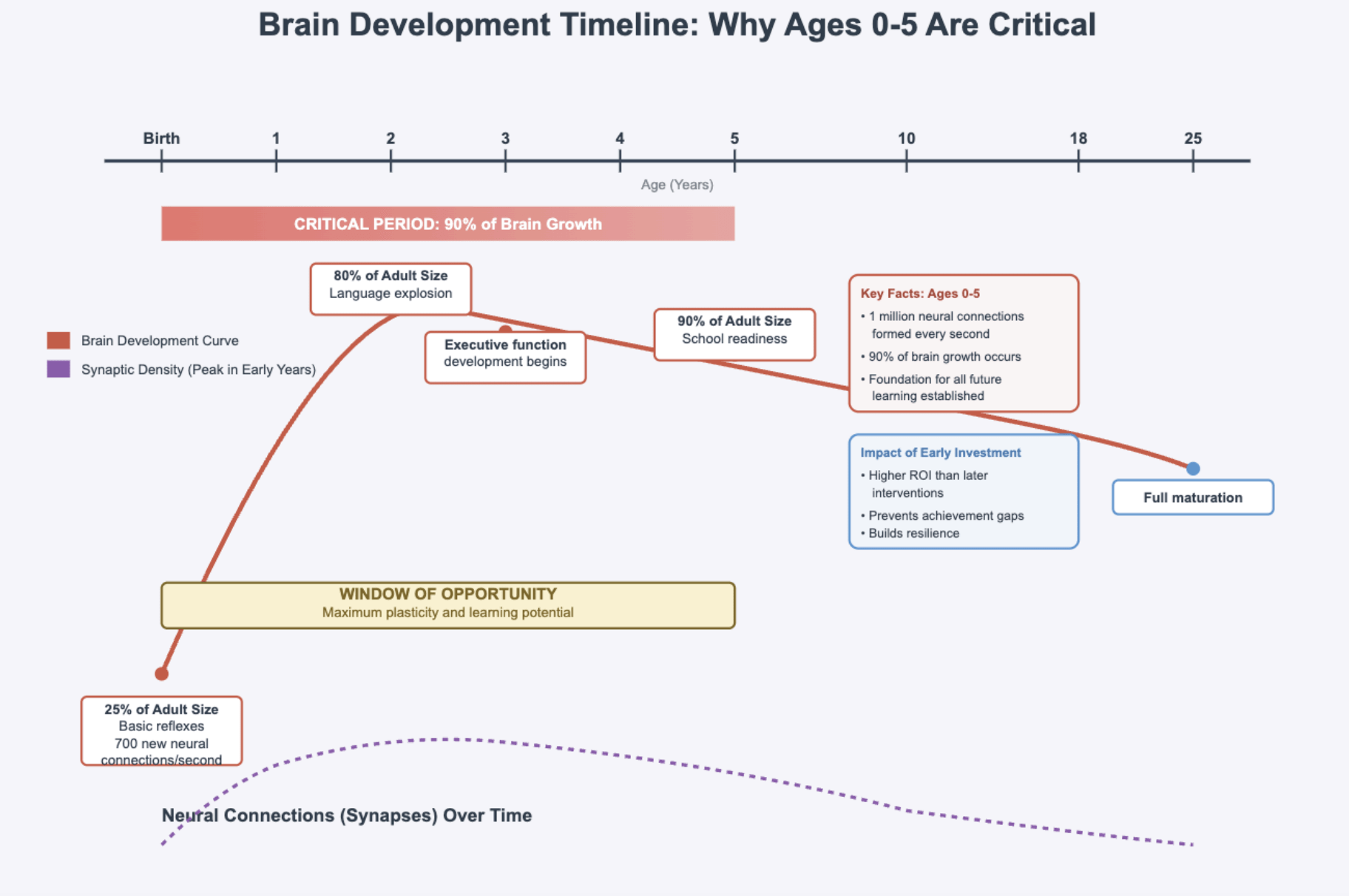
The most critical stage of neurodevelopment occurs between ages 0 and 5, because by age 5, 90% of a child’s brain has developed. A simplified overview of early brain development is illustrated in Figure 1. In the first year of life, around a million synapses are formed every second. After around one year, language skills become important for children to learn. At this time, pruning, the process of strengthening certain synapses, becomes essential. By age five, approximately 90% of the brain’s structural growth occurs, as well as millions of synapses forming each second during infancy1. During this stage, neural circuits in language, cognition, and emotional processing are shaped by environmental input, making early childhood a critical window for development.
Neuroplasticity, which peaks between ages 0-6, plays a critical role in allowing children to absorb information easily2. Sensory input plays a critical role in this process, particularly
auditory stimulation, which is closely linked to the development of language and communication. The auditory cortex also matures during infancy and early childhood, which supports sound discrimination, speech perception, and early linguistic learning3. Researchers have hypothesized that musical exposure during periods of heightened neuroplasticity may support multiple aspects of neurodevelopment in young children.
Although a growing body of research has examined music-based interventions in early childhood, existing studies vary widely in methodology, population, and outcome. Many investigations focus on specific clinical groups, such as preterm infants, or examine short-term effects. As a result, findings remain spread across domains. This review will illustrate how the role of music in neurodevelopment is important to understand for researchers, parents, and educators alike. The literature argues for the importance of early music integration by bridging gaps among studies that use diverse methodologies but ultimately reach the same conclusion. Reviewing these studies allows us to identify gaps and discuss how to bridge them. Filling knowledge gaps is important to form a more holistic understanding of music’s role in neurodevelopment.
Several factors motivate a review on this topic. Firstly, the chosen age range was 0-5, because 90% of a child’s brain is developed by age 5, capturing the most critical stage of neuroplasticity1. This increased sensitivity to environmental factors is associated with a higher impact of music on neurodevelopment. For example, early intervention is associated with improvements in learning abilities. There have been many early foundational studies on this topic, including neuroimaging and clinical studies. However, there are many more clinical studies than reviews on this topic, and the studies must be compared and validated further. Moreover, recent technological developments necessitate a review of research advances in this field from 2020 onward. The objective of this thematic literature review is to synthesize current evidence regarding the impact of music-based interventions on the neurodevelopment of children ages 0-5. Specifically, this review seeks to answer how musical activities influence language and auditory development, emotional regulation, and temporal processing, and what methodological gaps exist in current literature that may weaken a holistic understanding of the long-term effects.
Methodology
This review followed PRISMA-informed principles for literature searching and screening, but was neither preregistered nor did it record exclusion counts. A thematic synthesis approach was used to integrate findings from a diverse range of methodologies, including randomized controlled trials, longitudinal neuroimaging studies, and systematic reviews. This design was selected in order to provide a comprehensive overview of the current state of knowledge, while identifying methodological gaps in the literature. Additionally, studies that included a music-based auditory intervention were included. Studies were included if the participants were aged 0–5 years (including both the general pediatric population and specific clinical groups), but studies of older children were sometimes found helpful. Studies that implemented music-based interventions (defined as structured musical play, instrument training, or music therapy) included a clear control and test group and reported qualitative and quantitative neurodevelopmental outcomes. Additionally, studies were excluded if they focused exclusively on adults, lacked a music-based intervention, or were non-peer-reviewed commentaries. This literature review was conducted by finding research in PubMed, Nature, Cochrane, ResearchGate, and the National Library of Medicine to look primarily for studies published between the years 2000 and 2025, with a study taken outside this range to provide the necessary historical context for the initial Mozart Effect hypothesis4. The following search terms were used: development, neurodevelopment, music intervention, children 0-5, auditory, language, emotional regulation, temporal processing, preschool, toddler, and infant. Literature was screened by first evaluating the abstract and title for relevance to the inclusion criteria, and then assessing the rest of the study for eligibility. Evidence quality was regarded based on study design, with RCTs and longitudinal neuroimaging weighted more than theoretical reviews. There was a noted potential for bias in studies with small sample sizes or those that did not account for home music exposure. The studies found (shown in Table 1) were grouped into three thematic sections by results: language and auditory development, emotional regulation, and temporal processing. Given the heterogeneity of the designs, the findings were integrated using a thematic synthesis in which the results were first summarized by the three categories (language and auditory development, emotional regulation, and temporal processing), and finally compared to identify trends and conflicting evidence. These trends and conflicting evidence were further analyzed to identify gaps in the current literature that could guide future studies.
| Author | Population (Age, n) | Study Design | Music Intervention | Outcome Domain | Key Findings | Evidence Type |
| Strait et al. (2013)5 | Preschool Children (ages 3-5, n≈40) | Randomized controlled trial | Preschool music classes over six months | Language and auditory development | Music trained children showed faster neural responses and improved speech-in-noi se perception | RCT |
| Zhao & Kuhl (2016)6 | Infants (9 months, n=39) | Experimental neuroimaging study (EEG) | Structured musical play sessions | Auditory and Temporal Processing | Enhanced mismatch responses (MMR) to musical and speech temporal structure | Experimental |
| Moreno et al. (2011)7 | Children (ages 4-6, n=48) | Randomized controlled trial | Computerize d music training (20 days) | Language and executive function | Increased verbal intelligence and executive function compared to visual arts training | RCT |
| Fujioka et al. (2006) 8 | Young Children (ages 4-6, n=15) | Longitudinal neuroimaging study (MEG) | One year of musical instrument training | Auditory and temporal processing | Enhanced auditory cortical responses and timing sensitivity | Longitudinal |
| Lejeune et al. (2019)9 | Preterm infants (n=82) | Longitudinal intervention study | NICU-based music therapy | Emotional Regulation | Improved emotional processing at 12 and 24 months | Longitudinal |
| Bieleninik et al. (2024)10 | Preterm infants (n=295) | Multicenter randomized controlled test | Music therapy during infancy | Global Neurodevelo pment | No significant group differences in standardized neurodevelop mental outcomes | RCT |
| Haslbeck et al. (2023)11 | Preterm infants | Systematic review | Music and vocal interventions | Global Neurodevelopment | Mixed and inconsistent effects across studies; evidence quality variable | Systematic Review |
| Jiang et al. (2025) 12 | Pediatric population (0-6 years) | Systematic review and meta-analysis | Various music- based interventions | Language, motor, and cognitive development | Modest improvements in language and motor outcomes, depending on the assessment scale | Meta Analysis |
| Moore & Hanson-Abro meit (2015)13 | Preschool Children | Theoretical review | Structured music-based emotional interventions | Emotional Regulation | Music may support emotion recognition and regulation through structured engagement | Theoretical |
| Selmani (2024)14 | Children (early childhood) | Narrative theoretical review | Music exposure and engagement | Emotional and Social Development | Music is associated with enhanced emotional expression and self-control | Theortetical |
| Lu et al. (2025)15 | Preschool children | Systematic review and | Music Training | Executive and | Small-to moderate | Meta Analysis |
| (ages 3-6) | meta-analysis | Programs | inhibitory control | improvements in executive function outcomes |
Results: Language and Auditory Development
Across the literature, early childhood music exposure is generally associated with improved auditory processing and potentially enhanced language-related outcomes. Although methodologies vary from neuroimaging to behavioral assessment, many studies converge on the finding that musical activities may support children’s ability to perceive speech, process sound, and develop verbal skills. All three domains discussed in this review have been studied widely. Studies have focused on different areas where music affects neurodevelopment in children, and one of those domains is language and auditory development, and have also found that musically trained children have faster neural responses, both in toddlers and infants. Four of the eleven studies included in this review specifically addressed outcomes related to language and auditory development, utilizing a range of designs, including RCTs and experimental neuroimaging, with sample sizes ranging from n=15 to n=48. Across literature, music exposure in children ages 0-5 is generally associated with improved auditory processing and potentially enhanced language-related outcomes. Although methodologies vary widely, many studies converge on the result that musical activities may support children’s ability to perceive speech and sound and develop verbal skills.
Auditory Discrimination
In a study involving preschool-aged children, the musically trained group demonstrated a greater improvement in formant transitions than the control (non-musical) group, thereby improving speech perception abilities 5. These children were given music lessons for six months, and the musically trained group showed faster neural responses in noisy environments, possibly suggesting music’s beneficial effect on auditory discrimination. Additionally, a neuroimaging study supporting the idea that musically trained children have faster neural responses showed that a music intervention in infants appeared to enhance speech and music skills, as well as auditory cortex function, as evidenced by a larger MMR in the music intervention group than in the control group6. This study did not specify language environment or home music exposure, only specifying factors such as age. This study, however, did not specify demographics such as medical history, and only specified age. This introduced potential confounding variables and affected the results, as some children may have developmental delays that were not analyzed in the study, potentially leading to misleading results. This study contributed to the literature by suggesting that learning music can improve speech-in-noise perception. This indicates the study may have factors such as children having different levels of home music exposure or different languages spoken at home, which could distort results. This study contributes to the literature because it provides evidence for music-related enhancement of speech processing.
Verbal Development
Relating to the study above about noise environments, evidence suggests that music supports verbal skills, as well as cognitive skills6. Children ages 4-6 were tested on their motor, perceptual, and cognitive skills7 . Using a controlled experimental design, the children were randomly assigned to one of two computerized training programs: music or visual arts. When comparing the groups of children, those with music intervention showed an increase in scores on a vocabulary test and a test in which the children were asked to use blocks to create pictures. This further indicates how music training may enhance language, specifically verbal, development. This study found that twenty days of music listening was associated with higher verbal intelligence scores.
Further evidence supporting verbal development comes from a recent systematic review and meta-analysis12. It was described how these improvements come from the rhythm and melody in the music because of its similarities to spoken words. In this study, the authors searched for pediatric studies using different neurodevelopmental scales (such as Bayley – III or Gesell) to assess music’s effect on neurodevelopment, and conducted a meta-analysis to analyze each study’s quality. Some scales (such as the Gesell scale) provided evidence for cognitive improvement, while others (such as the Bayley-III) showed no change, overall showing benefits of language and motor skills. The study also hypothesized that, because of the shown benefits, music may also positively affect memory, which could be useful for future clinical trials.
Discussion of Language and Auditory Development
Across the synthesized literature, there is evidence that music intervention in the ages 0-5 is associated with improved speech perception and verbal intelligence. The convergence of behavioral data, such as the vocabulary scores, and neuroimaging data such as neural timing, provides a preliminary argument for music’s role in strengthening the area of the brain responsible for language acquisition. The evidence that supports music’s effects on auditory processing is most substantial in experimental neuroimaging studies and randomized controlled trials, which consistently report enhanced neural responses to speech and sound following music-based intervention. The findings are similar across multiple studies that use EEG and MEG methodologies. However, behavioral language outcomes, such as vocabulary or verbal intelligence scores, show more variable results and are primarily supported by smaller and shorter-term interventions. The diversity of methodologies, ranging from neuroscans to intelligence tests, allows the studies to support or dispute their peers’ theories with a fresh perspective. Overall, the literature generally agrees that music is associated with language and auditory development. Different tests, such as using a neuroscan, the WPPSI-III intelligence test, or MEG tests, were used in all studies, as well as various subsections of language or auditory development being analyzed. All studies resulted in a common conclusion that music enhances language and auditory development.
In addition to strengths, multiple gaps were noted. While the findings consistently support the role of music, the certainty of evidence is influenced by several factors with a risk of bias. Many studies, such as Zhao & Kuhl (2016) do not control baseline music exposure, which may act as a confounding variable. Additionally, the review by Jiang et al. (2025) notes that the magnitude of the effect varied depending on the neurodevelopmental scale used. Despite the multitude of studies showing music’s benefits on neurodevelopment, a few studies showed no consistent results. Firstly, one study evaluated music therapy for children10. The results of this study found no significant differences between children with music intervention and the control group. Additionally, a systematic review on randomized controlled trials discussing music intervention in preterm infants showed little results11. The study did not find improvement based on music intervention that was consistent in preterm infants. However, despite a lack of measurable results, both studies still concluded that music may be important, highlighting methodological issues, such as small sample sizes and short intervention periods. Overall, children were noted to have positive responses to music intervention, and the studies concluded that music is still important to support children’s neurodevelopment.
Another limitation within the literature is that many studies focus on specific components of language development, or different environments that affect language development, such as speech development, executive function, or different noise environments. As a result, language and auditory development are often not examined holistically. In addition, some conclusions are based on broader human and animal research demonstrating music-related changes in the auditory cortex, which are sometimes speculated to benefit other populations without direct evidence10 . This suggests that while existing findings are promising, further research would clarify the scope of music’s effects on early language and auditory development.
Results: Emotional Regulation
In addition to benefiting language and auditory development, music also has the ability to help young children learn how to regulate their emotions. Most studies examining music and emotional development suggest that musical engagement may support children’s ability to recognize, express, and regulate emotions. A consistent trend indicates that music intervention may play a role in the development of early emotional skills. Across three studies, a common theme expressed is how music allows children to recognize and express their emotions, which is a key step to learning to regulate emotions13 . These records consist of a longitudinal intervention study with a population of n=82, and two theoretical reviews that synthesize clinical observations of music-based intervention. A study used a worksheet to show how different musical elements are linked to a deliberate intervention plan for children after birth13. This study implied that the structure of music may facilitate either soothed or stimulated responses in children, showing emotional manipulation, which is also a step to learning how to regulate emotion.
Inhibition Control
A more narrow focus in the broad category of emotional regulation is inhibition control, which is the control of automatic behaviors, including emotional and verbal impulses. A theoretical study suggested that music has a moderate to strong effect on children’s inhibition control, which directly relates to controlling, or regulating, emotions16. Overall, this study presented evidence that music is positively associated with inhibition control and cognitive processing. This study overall shows that music may play a more meaningful role than many other techniques for inhibition control or emotional regulation.
Despite this being clearly stated in only a few studies, there are multiple studies that describe music’s positive effect on inhibition control, however, with different target groups of children, such as school-aged children or children with ADHD. Another theoretical study analyzed empirical studies, organizing and synthesizing different perspectives of previous studies14. This study’s focus on theoretical data rather than empirical data introduces a bias due to the many ways to interpret literature. Despite this, the study concluded that music interventions engage the self-control center of the brain, as well as enhance communication, which shows the potential of early music exposure.
Long-Term Benefits
Adding on to the short-term benefits, one longitudinal study examined the long-term benefits of music interventions on emotional processing and regulation17. This longitudinal study did not record data on music exposure at home or after discharge, and also focuses specifically on preterm infants, showing significant improvements in emotional processing and regulation from infants who receive music therapy in the NICU. However, the lack of data of music exposure after discharge presents differences in the children’s neurodevelopment. Additionally, this is the first long-term study in this category. More long-term studies in this field would be beneficial to learning more about music’s effect on children’s development, especially after the most significant stages of neurodevelopment.
Social Benefits
In addition to emotional regulation, music can also help improve social skills for young children. Music may help foster social bonding, allowing children to learn to listen, as well as requiring mutual regulation13. When emotional regulation is strengthened, it can be beneficial in social contexts as well. Additionally, inhibition control relates to children’s ability to follow rules and manage conflict, which is important for developing social communication and control in group settings16,15. These studies show that music’s effects on emotional regulation can affect children’s social skills, underscoring the relevance of music to neurodevelopment in children ages 0-5.
Discussion of Emotional Regulation
Compared to auditory outcomes, the evidence that links music and emotional regulation comes from more theoretical frameworks, observational studies, and small interventions. While the associations between music and emotional processing are reported across multiple studies, few randomized controlled trials directly test these theories in children ages 0-5. Synthesized findings indicate that music may enhance inhibition control and emotional processing. However, the reliance on theoretical models is a primary limitation. The certainty of evidence for the emotional regulation domain is moderate, due to a significant portion of the evidence coming from narrative and theoretical reviews, rather than large-scale RCTs. Additionally, there is missing background data as noted by Bella et al. (2024), and the method of reporting is easily subjective due to the reports often being from simply behavioral observations. Despite these studies showing evidence of music’s beneficial effect on emotional regulation, much of it is theoretical, with a smaller amount of data backing up these theories. Music may be particularly effective for supporting emotional regulation in early childhood because it provides repeated opportunities to experience and modulate emotional arousal. Music engagement allows children to practice regulating through tempo, intensity, repetition, and processes that mirror physiological regulation systems. This may explain why studies frequently report associations between musical engagement and inhibition control. Additionally, some studies did not report participant background, such as music training, which may limit the interpretability of the results due to a difference in exposure16. Many studies propose hypotheses supported by evidence, these ideas have not been empirically tested yet. In the future, testing these ideas could be beneficial to solidifying understanding of music and the correlation of emotional regulation.
Results: Temporal Processing
In addition to emotional regulation and auditory and language development, music therapy is associated with the enhancement of the structure and function of the brain, including the temporal area. Temporal processing is essential because it helps with rhythm perception and speech timing, among other things8 . While specific mechanisms differ across studies, findings commonly point to enhanced neural responsiveness to temporal structure among children involved in music. This is essential for core cognitive functions such as attention and memory18. Music allows children to strengthen their sense of timing through multiple domains.
The Mozart Effect
In the year 1993, a study published results that specifically Mozart’s music will make students “smarter”19. This historical claim was that Mozart’s music increased spatial intelligence for about fifteen minutes. Current evidence has indicated that these effects are short-lived spatial reasoning improvements and do not represent a generalized increase in IQ20. Modern research has begun investigating long-term neuroplasticity through active engagement. Temporal processing is the processing of time intervals. Music can affect children’s temporal skills, especially children trained in music with complex rhythms, such as triple meter music like a waltz.
Neuroplasticity
Across neuroimaging studies, music exposure in early childhood is associated with enhanced neural sensitivity to temporal and rhythmic structure, which reflects changes in neuroplasticity rather than generalized cognitive development. Evidence for these effects is strongest in studies that measure neural responses to timing and rhythm. Experimental studies in infants demonstrate that exposure to structured musical input enhances neural processing of temporal patterns in both music and speech. Using MMR, one study found that music exposure improved infants’ ability to predict upcoming events, which indicated enhanced neural responsiveness to complex auditory input6. Similarly, neuroimaging research in young children showed that musical training is associated with strengthened auditory responses. A study showed that children receiving Suzuki training demonstrated neural responses to auditory stimuli that were not observed in the control group, which was not trained in Suzuki. This suggested changes in neuroplasticity that were related to music8.
Additional neuroimaging evidence supports the role of rhythm as the most important factor in these effects. Children’s engagement with music was shown to stimulate frontotemporal brain circuits involved in perceptual and temporal processing, rhythm being identified as a defining factor that contributes to changes in neural structure and functions18. A broader synthesis of neuroimaging studies indicates that music training is associated with improvements in memory, temporal processing, and rhythm perception in tasks that require sequential processing18. These findings overall suggest that music-related neuroplasticity may be linked to processing timed sequences, which is essential in both music and cognitive tasks.
Temporal Processing Discussion
Evidence suggests that music training in early childhood is associated with refined neural timing as well as rhythm perception, which support language and executive function. The certainty of evidence for temporal processing is high for neural sensitivity but low for generalized cognitive transfer. The small sample sizes in imaging studies, such as n=15, limit the generalizability of the results across the broader pediatric population. Additionally, temporal processing is often correlated to motor skill development, which creates difficulties in isolating music’s effect on timing alone. Support for music-related enhancement of temporal processing is strongest in neuroimaging studies that measure neural sensitivity to rhythm and timing. These findings are replicated across experimental and longitudinal studies. However, evidence for transfer to broader cognitive or behavioral outcomes is limited, which indicates that the support is currently strongest for specific neural mechanisms, and not as much for generalized cognitive gains. Similar to language and auditory development and emotional regulation, music has been suggested to aid temporal processing. While researching temporal processing, however, a lot of studies examined motor skills as well as temporal skills, which makes it difficult to isolate music-specific effects on solely temporal processing6,18. These findings suggest that motor skills and temporal processing are related, and their development stems from the same area of the brain. Additionally, a variation in intervention was found, and since there was a broader range of methodologies for similar results, the overall claim is stronger. Despite this variability, the findings are relatively consistent across different methodologies of music intervention, durations, and participant groups, which supports the idea that music positively affects temporal processing. Much of the strongest evidence comes from neuroimaging rather than long-term behavioral outcomes, suggesting that while music-related changes in temporal processing are supported, further research is needed to determine if the early neural effects are sustained over time.
Special Population: Preterm Infants
The effect of music on preterm infants has been heavily studied compared to other subgroups of children. Preterm infants’ brains are still undergoing development: they are still forming blood vessels and white matter (Fillipa et al., 2024). Their brains have heightened risks of disruption in multiple stages of development, such as emotional regulation, language development, and temporal processing. However, music intervention can be used to allow for more typical development. Preterm infants showed improvement in emotional processing and cognitive development when exposed to postnatal music, as well as cognitive development (Lejune et al., 2019). Additionally, music stimulation at birth enhanced the auditory cortex, allowing for heightened auditory development in preterm infants (Di et al., 2024). This demonstrates music’s ability to strengthen language-related brain regions in preterm infants. Despite the positive outcomes of multiple results, evidence is still limited due to small sample sizes (Haslbeck et al., 2023). All of these studies, as well as dozens more done in the past years, show enhanced neurodevelopment in areas such as emotional regulation and auditory development. This enhanced neurodevelopment is especially important due to the immature brain of a preterm infant, allowing them to have a more typical developmental trajectory.
Specific Case
In a randomized controlled study, preterm infants received music intervention at 33 weeks gestational age (Filippa et al., 2024). The music intervention was specifically designed for them. After a few months, the children in the music group had reduced fear reactivity as well as positive motor behaviors. This suggested improved emotional processing in preterm infants. This shows how early music exposure can benefit preterm infants.
Discussion
This paper reviewed multiple neuroimaging, review, and clinical trial studies that collectively agreed on music’s benefits in neurodevelopment. Taken together, the converging findings across the thre domains studied suggest that across a range of clinical studies done on both preschool-aged children and infants, music is associated with an increase in neuroplasticity and enhancement in self-control, among other benefits. No study reported adverse neurodevelopmental effects associated with music exposure, despite a couple of studies showing no effect on neurodevelopment11. Understanding10 these patterns allows for evaluation of both what the studies show and how consistently the outcomes appear across differing methods. One possible explanation for these findings is that music strengthens predictive timing mechanisms that are essential for speech processing. Language acquisition in early childhood depends on the ability to anticipate timing and segment speech. Musical rhythm shares these temporal features, which may explain why enhanced neural responses to musical structure often coincide with improvements in speech perception and early verbal skills. The consistent patterns observed across auditory and language, emotional, and temporal domains in children’s brains may reflect the way that music is thought to engage the neural systems responsible for timing, prediction, attention, and sensory integration. Music activates frontotemporal networks, which are involved in speech processing, emotional regulation, and executive function in children ages 0-5. Because of the high neuroplasticity between ages 0-5, especially in these networks, repeated exposure may contribute to the strengthening of neural pathways, such as those that support language learning, inhibitory control, and temporal processing. This mechanistic overlap allows for an explanation as to why diverse studies all report similar developmental benefits. Across reviewed literature, language and auditory processing, emotional regulation, and temporal skills all appear interconnected rather than independent. Perception of rhythm support timing and prediction abilities, which support speech segmentation and emotional recognition. Thus, music influences multiple developmental pathways at once because the different neural systems rely on overlapping timing-based neural processes.
Strengths
Each study used different methodologies, such as different age groups, study sizes, or testing methods. Variability across studies’ results is expected given the differences between sample’s characteristics, the musical environments, and the lengths of intervention. For example, neural enhancements are more consistently detected in studies using an EEG or MEG, which are methods to capture auditory prediction responses. However, behavioral studies use brief music interventions to show smaller effects. The methodological differences explain the reason that studies report strong associations with music, while others find less association. Despite this, there was nearly always an association, which indicates that, despite age (infants versus preschool age) or testing method, all studies resulted in a similar outcome and came to the same general conclusion, strengthening the claim that music may enhance neurodevelopment. Methodological diversity is important because multiple approaches to studies can cause a change in results, and similar results show the strength of the claim. Even the studies that had no results or changes between the control and music intervention group of children still stated that music is important for neurodevelopment. Consistency shows that music’s beneficial effect on neurodevelopment is widely recognized. While these converging mechanisms offer a plausible explanation for benefits, the strength of evidence varies across domains and study designs, and must be acknowledged.
Limitations and Gaps
Despite the strengths in research, there are also multiple limitations and gaps. The majority of research has focused on specific groups of children, such as children with autism spectrum disorder or preterm infants. There are many studies focusing on these specific groups of people because, specifically with preterm infants, there can be disruption of normal brain development, especially in areas of the brain crucial to motor skills, emotional regulation, and cognitive development, which music can be helpful for. However, music may also benefit the general pediatric population. Recognizing these limitations helps clarify which areas of research could lead to future studies, and how they can make meaningful contributions to neurodevelopment.
Future Direction
In the future, conducting studies on young children or infants as a whole may also be beneficial to gaining more insight into child neurodevelopment. It is also beneficial that music may support neurodevelopment in the general pediatric population because music supporting brain development can further conclude effects on memory, reasoning, and processing, which can be affected throughout a lifespan. Additionally, studies that compare different kinds of music, such as lullabies, pop songs, and classical music, could be beneficial in knowing which type of music enhances neurodevelopment the most. Future research could prioritize larger sample sizes, keeping the studies with the general pediatric population, and using standard definitions of music intervention to solidify evidence and understanding. Taken together, these directions highlight the importance of designing studies that can definitively test mechanisms suggested by current evidence.
Conclusion
This review presents the current, and growing, literature and evidence showing the positive effects of music on children ages 0-5’s neurodevelopment. The evidence reviewed across auditory and language, emotional, and temporal domains suggests that musical engagement in children ages 0-5 is associated with positive neurodevelopmental outcomes. Neuroimaging studies and behavioral studies point to possible enhancements in auditory discrimination, emotional regulation, and rhythm processing. Even though there were rare yet inconclusive cases, there were no negative cases, further supporting music’s beneficial effect. Despite these benefits, there are still limitations in current literature, such as small sample sizes, the lack of long-term studies, and a focus on specific areas in each category rather than holistically. For these reasons, future research should focus on the young pediatric population as a whole, rather than specific groups such as preterm infants or autism spectrum disorder (which is where there is a large number of studies). Comparative studies that evaluate different types of musical experiences might also clarify which parts of music, such as rhythm, are most developmentally important. These directions will strengthen neurodevelopment’s ability to test these mechanisms and determine the broader developmental role that music may play. Studies that track music’s benefits on neurodevelopment over time would contribute to an important topic to be covered in the future, because neurodevelopment is a long process, and it will determine whether effects are sustained over a long period21. The existing literature provides a compelling, yet preliminary, picture that musical engagement in childhood between ages 0-5 may support many aspects of neurodevelopment, yet clearer answers will depend on more comprehensive research. Understanding these relationships has the potential not only to refine clinical and educational practices, but also to deepen understanding of how intervention in children 0-5 is able to shape the brain long term.
Administrative Information
This review was not formally registered, and no formal review protocol was prepared prior to starting this review. This review does not declare conflicts of interest with respect to research or publication of this article. All data analyzed during this study are included in this article. The searches used are provided in the Methodology section.
References
- Johnson, M. Functional brain development in humans. Nature Reviews Neuroscience. Vol. 2, pg 475–483, 2001, https://doi.org/10.1038/35081509 [↩] [↩] [↩]
- P. Marzola, T. Melzer, E. Pavesi, J. Gil-Mohapel, P. S. Brocardo. Exploring the role of neuroplasticity in development, aging, and neurodegeneration. Brain Sciences. pg. 1–32, 2023, https://doi.org/10.3390/brainsci13121610 [↩] [↩]
- J. M. Di Fiore, G. Liu, K. A. Loparo, C. F. Bearer. The effect of early postnatal auditory stimulation on outcomes in preterm infants. Pediatric Research. 2024,
https://doi.org/10.1038/s41390-024-03329-7 [↩] - F. H. Rauscher, G. L. Shaw, C. N. Ky. Music and spatial task performance. Nature. Vol. 365, pg. 611, 1993, https://doi.org/10.1038/365611a0 [↩]
- D. L. Strait, A. Parbery-Clark, S. O’Connell, N. Kraus. Biological impact of preschool music classes on processing speech in noise. Developmental Cognitive Neuroscience. Vol. 6, pg. 51–60, 2013, https://doi.org/10.1016/j.dcn.2013.06.003 [↩]
- T. C. Zhao, P. K. Kuhl. Musical intervention enhances infants’ neural processing of temporal structure in music and speech. Proceedings of the National Academy of Sciences. Vol. 113, pg. 5212–5217, 2016, https://doi.org/10.1073/pnas.1603984113 [↩] [↩] [↩] [↩]
- S. Moreno, E. Bialystok, R. Barac, E. G. Schellenberg, N. J. Cepeda, T. Chau. Short-term music training enhances verbal intelligence and executive function. Psychological Science. Vol. 22, pg. 1425–1433, 2011, https://doi.org/10.1177/0956797611416999 [↩] [↩]
- T. Fujioka. One year of musical training affects development of auditory cortical-evoked fields in young children. Brain. Vol. 129, pg. 2593–2608, 2006, https://doi.org/10.1093/brain/awl247 [↩] [↩] [↩]
- F. Lejeune, L. Lordier, M. P. Pittet, L. Schoenhals, D. Grandjean, P. S. Hüppi, M. Filippa, C. Borradori Tolsa. Effects of an early postnatal music intervention on cognitive and emotional development in preterm children at 12 and 24 months: preliminary findings. Frontiers in Psychology. Vol. 10, 2019, https://doi.org/10.3389/fpsyg.2019.00494 [↩]
- Ł. Bieleninik, I. Kvestad, C. Gold, A.S. Stordal, J. Assmus, S. Arnon, C. Elefant, M. Ettenberger, T. S. Gaden, D. Haar-Shamir, T. Håvardstun, M. Lichtensztejn, J. Mangersnes, A. M. N. Wiborg, B. J. Vederhus, C. M. Ghetti. Music therapy in infancy and neurodevelopmental outcomes in preterm children: A secondary analysis of the LongSTEP Randomized Clinical Trial. JAMA Network Open. Vol. 7, pg. e2410721–e2410721, 2024, ttps://doi.org/10.1001/jamanetworkopen.2024.10721 [↩] [↩] [↩] [↩]
- F. Haslbeck, K. Mueller, T. Karen, J. Loewy, J. Meerphol, D. Bassler. Can music and vocal interventions benefit preterm infants and their parents? Cochrane. 2023, https://www.cochrane.org/evidence/CD013472_can-music-and-vocal-interventions-benefit -preterm-infants-and-their-parents [↩] [↩] [↩]
- D. Jiang, X. Liu, Q. Lin, G. Wang, G. Wang, D. Zhang. Music intervention for neurodevelopment in the pediatric population: a systematic review and meta-analysis. Scientific Reports. Vol. 15, pg. 1–8, 2015, https://doi.org/10.1038/s41598-025-93795-8 [↩] [↩]
- K. S. Moore, D. Hanson-Abromeit. Theory-guided therapeutic function of music to facilitate emotion regulation development in preschool-aged children. Frontiers in Human Neuroscience. Vol. 9, 2015, https://doi.org/10.3389/fnhum.2015.00572 [↩] [↩] [↩] [↩]
- T. A. Selmani. The influence of music on the development of a child: perspectives on the influence of music on child development. EIKI Journal of Effective Teaching Methods. Vol. 2, 2024, https:/www.researchgate.netpublication 380648541_The_Influence_of_Music_on_The_Development_of_a_Child_Perspectives_on_the_influence_of_music_on_child_development [↩] [↩]
- Y. Lu, L. Shi, A. F. Musib. Effects of music training on executive functions in preschool children aged 3–6 years: systematic review and meta-analysis. Frontiers in Psychology. Vol. 15, 2025, https://doi.org/10.3389/fpsyg.2024.1522962 [↩] [↩]
- K. Jamey, N. E. V. Foster, K. L. Hyde, S. D. Bella. Does music training improve inhibition control in children? A systematic review and meta-analysis. BioRxiv. 2024, https://www.biorxiv.org/content/10.1101/2023.02.08.527718v3.full [↩] [↩] [↩]
- F. Lejeune, L. Lordier, M. P. Pittet, L. Schoenhals, D. Grandjean, P. S. Hüppi, M. Filippa, C. Borradori Tolsa. Effects of an early postnatal music intervention on cognitive and emotional development in preterm children at 12 and 24 months: preliminary findings. Frontiers in Psychology. Vol. 10, 2019, https://doi.org/10.3389/fpsyg.2019.00494 [↩]
- E. A. Miendlarzewska, W. J. Trost. How musical training affects cognitive development: rhythm, reward and other modulating variables. Frontiers in Neuroscience. Vol. 7, pg. 1–18, 2014, https://doi.org/10.3389/fnins.2013.00279 [↩] [↩] [↩] [↩]
- F. H. Rauscher, G. L. Shaw, C. N. Ky. Music and spatial task performance. Nature. Vol. 365, pg. 611, 1993, https://doi.org/10.1038/365611a0 [↩]
- J. S. Jenkins. The mozart effect. Journal of the Royal Society of Medicine. Vol. 94, pg. 170–172, 2001, https://doi.org/10.1177/014107680109400404 [↩]
- G. Li, L.Wang, F. Shi, A. E. Lyall, W. Lin, J. H. Gilmore, D. Shen. Mapping longitudinal development of local cortical gyrification in infants from birth to 2 years of age. The Journal of Neuroscience: The Official Journal of the Society for Neuroscience. Vol. 34, pg. 4228–4238, 2014, https://doi.org/10.1523/JNEUROSCI.3976-13.2014 [↩]