Abstract
Swimming is a low-impact exercise, so it is well suited for people who cannot tolerate high-impact activity. However, there is currently limited evidence to support its use as a structured rehabilitation method. This cross-sectional community study aimed to investigate this gap by examining whether frequent swimming is associated with lower self-reported musculoskeletal pain. To do so, a survey that assessed age, swimming habits and history, presence of musculoskeletal conditions and corresponding pain levels, and surgical history was conducted to complement the existing literature on aquatic therapy (specifically swimming). Twenty-five people completed this survey through online swimming forums, social media groups, and personal networks. The participants’ responses were first analyzed using visual trends from graphs, and then with statistical tests (exact tests and Kruskal-Wallis tests) to see if there were any statistically significant associations between swimming frequency, age, and self-reported musculoskeletal pain (on a scale from 1 to 10). Swimming frequency was not significantly associated with pain (p = 0.931). However, swimming frequency and age group were significantly associated (p = 0.042), but the groups were very small, so this result should be treated with caution. Descriptively, musculoskeletal conditions generally became more common with age (0 of 6 aged 1-19 had a condition, compared with 3 of 4 aged 50-59). With only twenty-five participants and twelve pain ratings, and a self-selected sample, these results can describe patterns in this group, but cannot show whether swimming affects pain. Future studies should have a larger group of participants with more comparison groups (like land-based therapy patients) and follow the same people over time (a longitudinal design) to evaluate whether swimming actually lowers pain, or whether people with less pain are simply more able to swim often.
Keywords: Swimming; Rehabilitation; Musculoskeletal pain; Surgical recovery; Low-impact exercise; Physical therapy
Introduction
Recovery after surgery is a long process that mainly relies on physical therapy and a medication schedule. These methods are effective, but their cost and limited accessibility highlight a need for alternatives. Aquatic therapy is one such option, but research on its role in modern rehabilitation is limited compared to land-based rehabilitation methods (like physical therapy). Rehabilitation usually has two goals: rebuilding muscle and joint strength by putting controlled stress on muscles and joints so they get stronger, and supporting mental and social well-being. Because swimming is whole-body and low impact, it may help with both goals, which is why I made swimming the focus of the study.
Currently, post-surgical recovery generally involves a regimen of physical therapy and medications: opioid analgesics remain a common component of post-surgical pain management, and physiotherapy aims to assist patients in recovering after an injury or surgery, or manage symptoms from a health condition that affects movement1,2. Traditional physiotherapy is a series of land-based exercises that are designed to help patients regain functional ability and movement. While recovery duration varies by injury type, post-surgical physical therapy outcomes are commonly assessed at twelve-week and longer intervals, showing the gradual nature of functional recovery3. While this routine is somewhat effective, it poses numerous disadvantages that make post-surgical recovery difficult. For example, some negatives are that therapy sessions are expensive, patients skip taking medication because of cost, and opioids carry risks of addiction and overdose, highlighting a need for safer and more accessible rehabilitation options.
Aquatic therapy offers a safer and potentially more cost-effective alternative to traditional methods. One benefit of aquatic therapy is buoyancy: due to buoyancy, patients experience less joint stress while still gaining improvements in balance, gait, quality of life, and reduced fear of falling4.
Swimming may help some patients manage various medical conditions well enough that they can even delay surgery. Some general benefits of swimming include that it improves cardiorespiratory function, benefits patients with chronic diseases, and aids in motor development5. Specifically, swimming may help patients with chronic diseases such as osteoporosis by increasing bone mineral density in postmenopausal women when practiced for three to six hours weekly6. Additionally, swimming can benefit musculoskeletal conditions by minimizing joint stress and promoting muscle relaxation7. These examples matter since symptom severity influences whether patients choose surgery. One study indicates that patients are more likely to opt for surgery for musculoskeletal disorders when they experience greater levels of symptoms or dysfunction8. In a randomized trial of patients with hip osteoarthritis, those who received exercise therapy with education compared to those who received education only had a 44% lower risk of needing hip replacement surgery over six years9. Similarly, a study of more than 55,000 people with hip or knee osteoarthritis found that those who became unwilling to have surgery after an exercise and education program were about 20% less likely to have joint replacement within five years than those who stayed willing10. Although these studies examined land-based exercise, swimming is a low-impact form of exercise, so it may offer a similar benefit for delaying surgery. However, this has not been studied directly.
Swimming is also beneficial after surgery due to its gentle, low-impact nature and its ability to engage multiple muscle groups. For example, swimming builds muscle strength, endurance, and joint mobility through water resistance11. For breast cancer patients after mastectomy, an aquatic exercise program that included swimming improved upper limb function, with buoyancy and hydrostatic pressure identified as contributing mechanisms12. An important thing to note is that the effectiveness of swimming in post-surgical recovery does vary depending on the body part affected. Swimming shows more promising results for certain musculoskeletal conditions compared to others. For example, in a small trial of 20 people, patients who did their rehab exercises in water after ACL reconstruction had less knee swelling and better self-reported function than those who exercised on land13. Adding on, in patients with knee osteoarthritis, aquatic therapy improved pain, physical function, knee extension strength, and walking ability14.
Swimming offers benefits to a wide range of ages and demographics. Swimming is particularly useful for patients with movement challenges, such as those who are overweight or older. A University of Michigan poll on healthy aging found that 70 percent of adults aged 50 to 80 reported joint pain15. In water, buoyancy reduces the weight joints have to carry, so people of different ages and body types can move more easily16,17,18,19. However, one study found that men may need a longer recovery period than women after shoulder and knee surgery20.
This study uses the biopsychosocial model of rehabilitation, which says recovery involves the body, the mind, and a person’s social life at the same time. Swimming fits this model because it supports physical rehabilitation, offers mental health benefits, and is often cheaper than other therapies.
Swimming is a broad exercise that has many different techniques and strokes, and some are more beneficial than others. Freestyle and backstroke were proposed for rehabilitation after hip and knee surgery21. By contrast, butterfly and breaststroke can be more harmful due to their higher musculoskeletal load and risk of injury22. Overuse injuries, such as lower back pain, may also arise if swimming techniques and biomechanics are not carefully managed22. Early aquatic therapy after orthopedic surgery improved function and did not increase wound complications, but starting after about 14 days may be safer23,24. To avoid further complications, patients are advised to wait until wounds heal, and begin with shallow-water movements before progressing to full strokes.
The study explores the physical benefits of swimming for recovery, but it is also important to highlight the psychological and emotional benefits. Even a brief 50-meter swim can improve core affect in both freestyle and breaststroke, regardless of tempo25. Swimming also reduces stress, increases endorphins, improves self-esteem, and promotes better sleep26. Outdoor open-water swimmers report improved well-being, emotional regulation, and pain relief27.
Although swimming has been examined in structured clinical trials for specific conditions, fewer studies have looked at how self-directed swimming frequency impacts musculoskeletal pain across different age groups in the general community. This study uses survey data to explore that gap. I wanted to find out whether people who swim more often report less musculoskeletal pain, and whether that relationship differs across age groups.
Methodology
I conducted an observational, cross-sectional survey using a Google Form to look at how swimming frequency related to musculoskeletal conditions and pain. The survey had eight questions, which are listed in Table 1 with their response options and purpose.
| # | Question | Response options | Purpose |
|---|---|---|---|
| 1 | What is your age? | 1–19; 20–29; 30–39; 40–49; 50–59; 60–69; 70–79; 80–89; 90–99 | Musculoskeletal conditions become more common as people get older |
| 2 | How often do you swim? | Almost every day of the week; 1–3 times a week; One time per month; Less than once a month/rarely | To examine how swimming frequency relates to pain |
| 3 | Have you ever had proper training (e.g., by a coach) for swimming? | Yes; No | Proper technique lowers the risk of injury |
| 4 | Do you have any current musculoskeletal conditions or issues (e.g., arthritis)? | Yes; No | To see whether swimming helps or hurts these conditions |
| 5 | If so, how would you rate the pain on a scale of 1 to 10? | 1 (least painful) to 10 (most painful) | Current level of musculoskeletal pain |
| 6 | Have you ever had to have surgery? | Yes, for a current musculoskeletal condition; Yes, for a past musculoskeletal condition; Yes, for a different condition; Never | Past surgeries can affect pain and recovery |
| 7 | How do you think swimming affects your pain, whether it be related/unrelated to a previous condition? | Less painful; No difference; More pain | Participants’ own view of how swimming affects their pain |
| 8 | Anything else you would like me to know about? | Open response | Open space for additional information |
Note. Question 5 was intended for participants who reported a current condition or issue; two participants who reported no condition also gave a rating. Not all participants answered Questions 7 and 8.
I first emailed local physical and aquatic therapy centers, but I got no responses. I then went to Reddit, where some subreddits blocked my survey, but r/swimming allowed it. This forum provided about twenty participants, ranging in age from 1-19 to 50-59. I also shared the survey in Discord and Facebook groups, where some communities blocked my posts once again, and through personal networks (friends and family). In total, twenty-five responses were collected between April 5, 2025, and May 12, 2025. Four of these responses came in April, with the other twenty-one coming in May.
The Google Form started with a short passage that introduced me as a high school student researching swimming in recovery. I also included that the survey would take under five minutes, and that responses were anonymous. Participation in the survey was voluntary, and submitting the form was taken as consent. Additionally, I collected no names, emails, or other identifying information, and the survey involved no medical intervention.
Responses from the survey were exported from Google Forms to Google Sheets and summarized with bar graphs and box plots. Because only three participants selected “one time per month” or “less than once a month/rarely,” these two categories were combined into one group for analysis. Twelve out of the twenty-five participants gave pain ratings, including two who reported no current musculoskeletal condition; all were included in the pain analyses. Eleven out of the twenty-five participants reported a past surgery (ten for a different condition, one for their current condition), which was too few to compare pain by surgery history.
I also conducted statistical tests to check whether the patterns in the graphs could be due to chance. I used Fisher-Freeman-Halton exact tests for swimming frequency × age and musculoskeletal condition × age because all combinations had expected counts below five. I used Kruskal-Wallis tests for pain across age and frequency groups because pain ratings were ranked, not evenly spaced, and the groups were small. These tests were run in Python (SciPy) at a significance level of 0.05, and no correction for multiple comparisons was applied.
The survey received fewer responses than expected, especially from older adults. I had hoped for about fifty responses, including more from people sixty and over. Other recruitment methods –like going in person to parks, gyms, and therapy centers, or contacting facilities outside of the local area– would likely have allowed me to get more and more varied participants.
In the survey, I did not collect baseline health, athletic history, pool access, past treatment, condition severity and duration, or time since surgery. Without these variables, I could not control for confounders, so the results show associations, not cause and effect.
Results
Age vs Swimming Frequency
Age vs Pain Level
Age vs Musculoskeletal Conditions
Swimming Frequency vs Pain Level
| Test | Variables | Statistic | df | p value | n |
|---|---|---|---|---|---|
| Fisher-Freeman-Halton exact | Swimming frequency × age group | — | — | 0.042 | 25 |
| Fisher-Freeman-Halton exact | Musculoskeletal condition × age group | — | — | 0.129 | 25 |
| Kruskal-Wallis | Pain × age group | H = 4.18 | 4 | 0.382 | 12 |
| Kruskal-Wallis | Pain × swimming frequency | H = 0.14 | 2 | 0.931 | 12 |
Note. Exact tests were used because expected cell counts were below 5. Only the association between swimming frequency and age group reached significance at the 0.05 level, before correction for multiple comparisons; it would not remain significant after a Bonferroni correction for four tests (threshold 0.0125) and should be interpreted with caution given the small group sizes. Kruskal-Wallis tests include the 12 participants who reported pain values.
Discussion
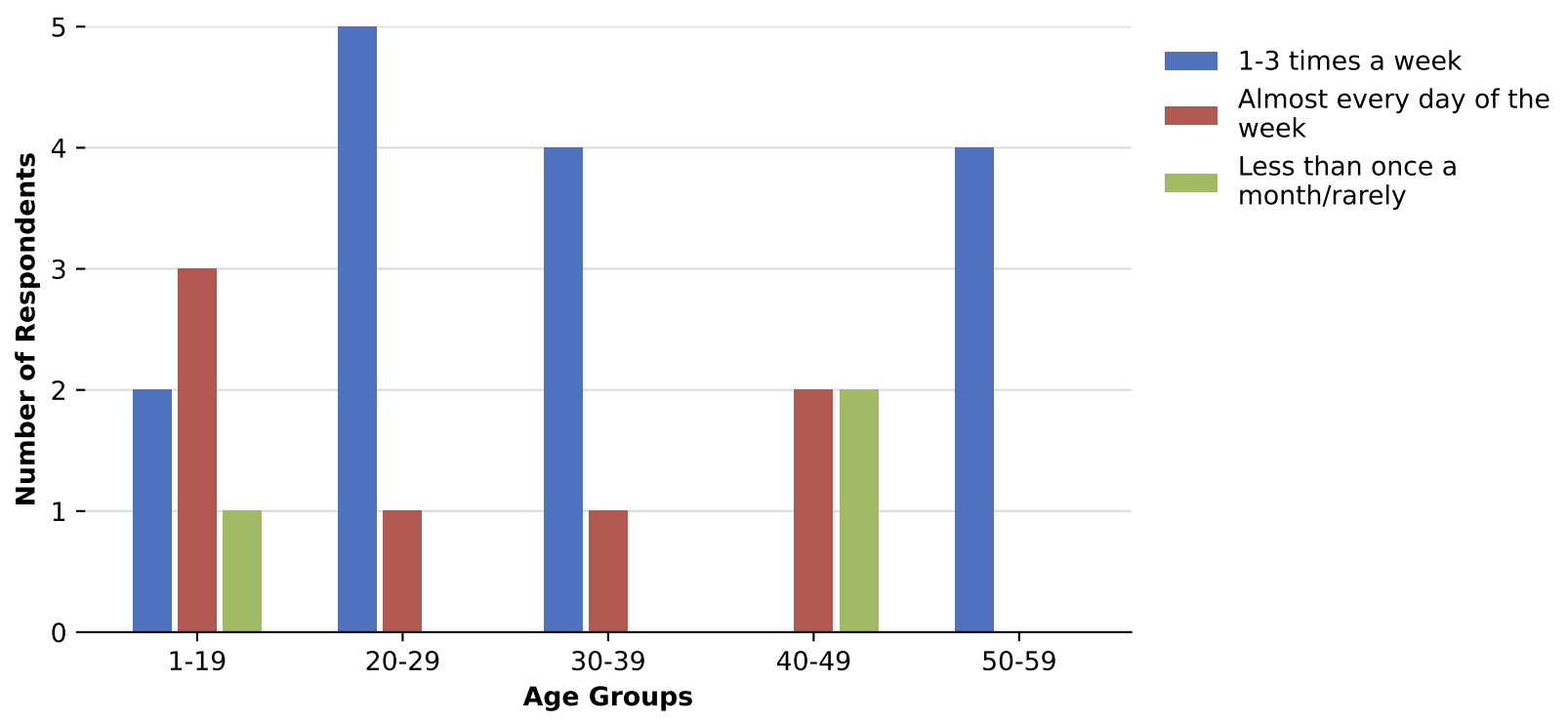
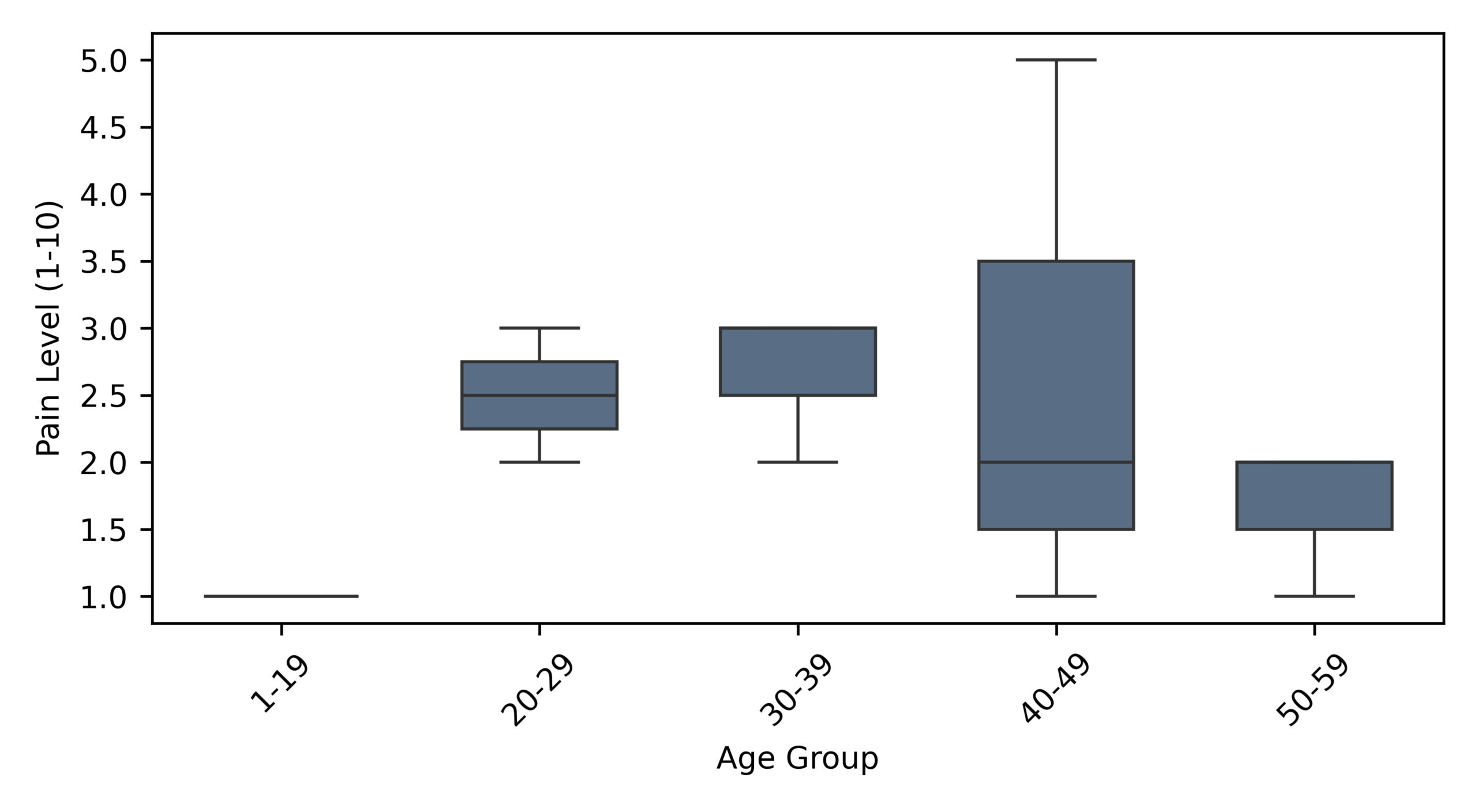
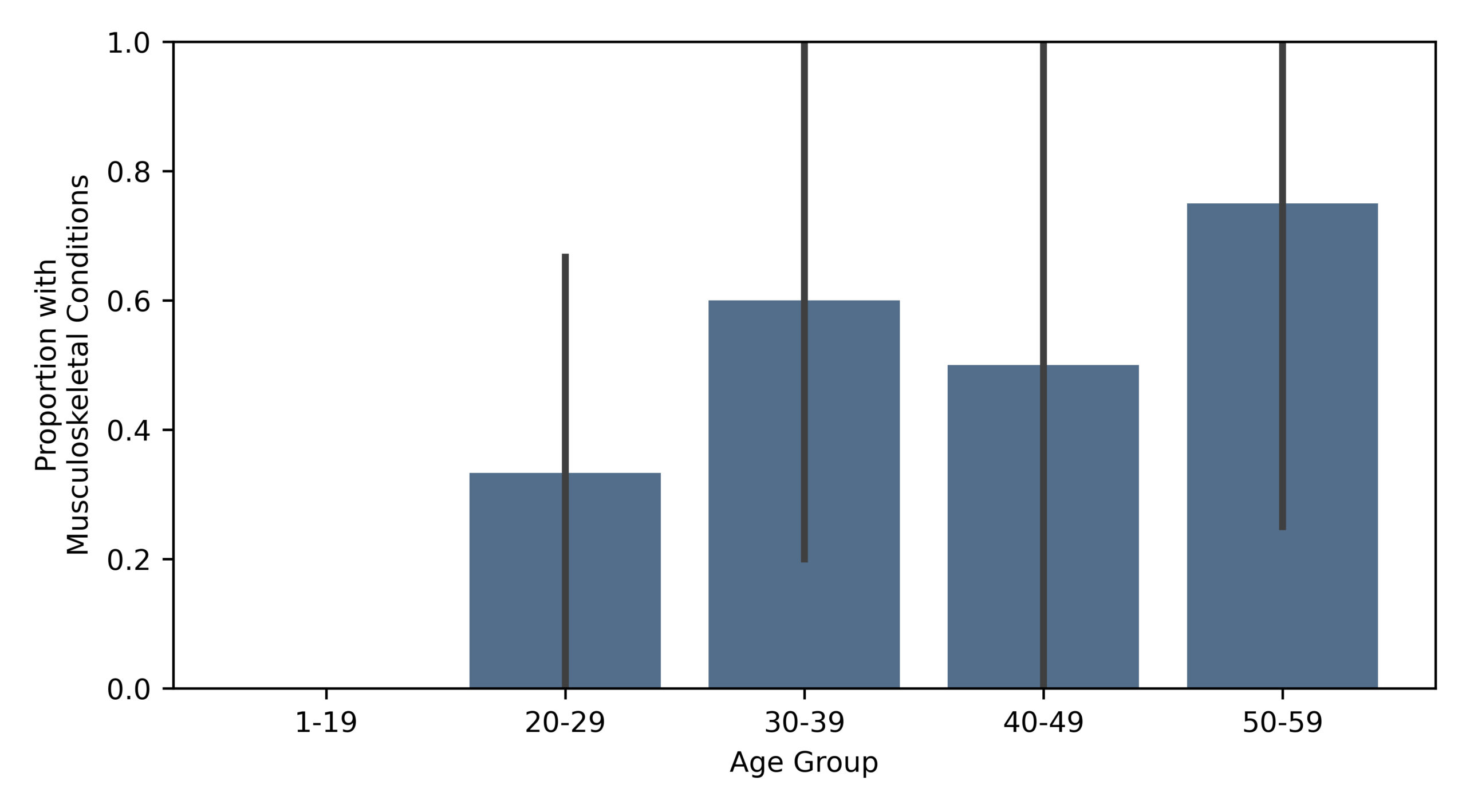
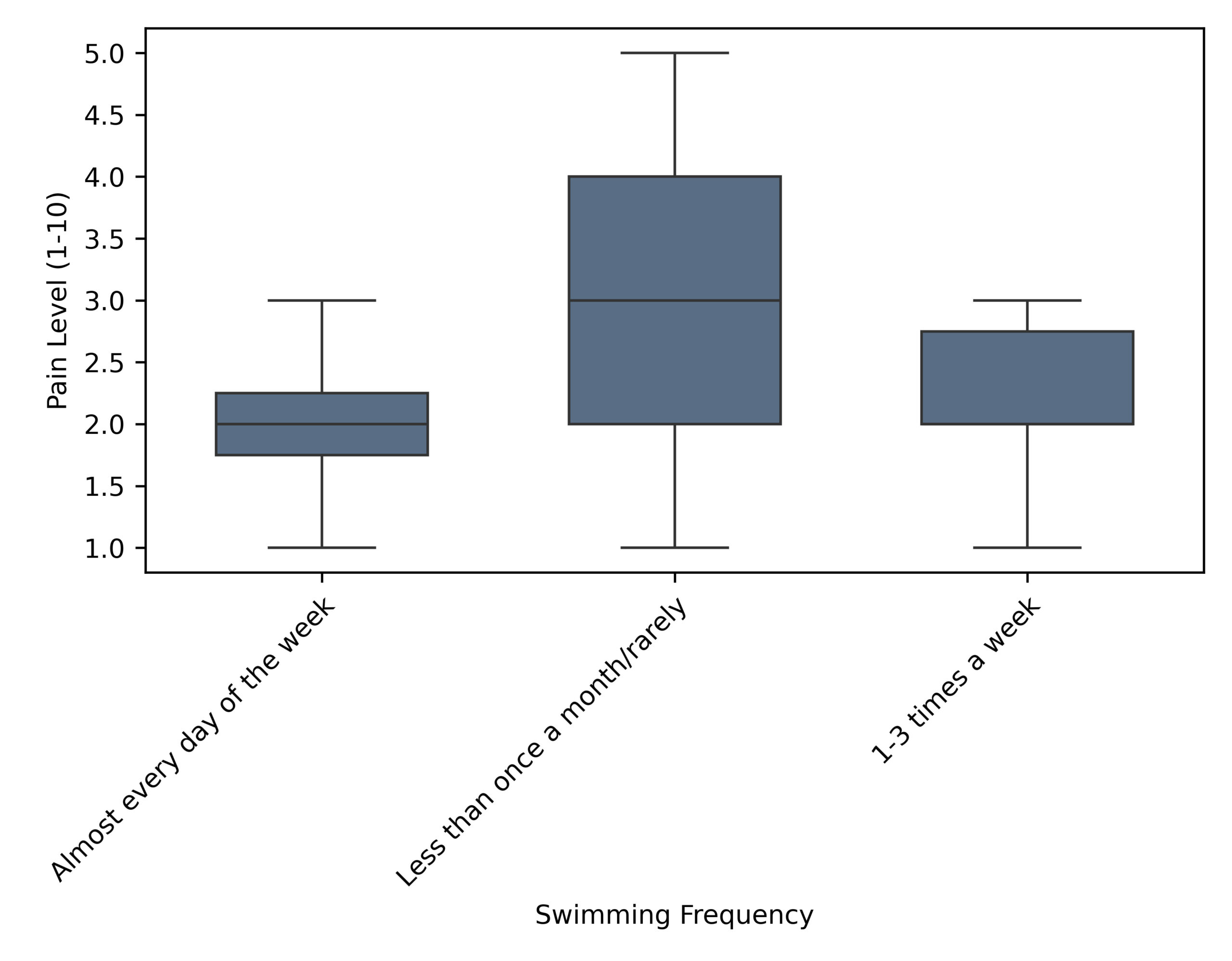
This study examined swimming frequency, age, and self-reported musculoskeletal pain in 25 people, and 12 of them gave pain ratings. People who swam almost daily and 1-3 times a week had the same median pain value of 2, while those who swam less than once a month/rarely had a slightly higher value of 3. However, it is worth noting that this group only included 2 people. Additionally, musculoskeletal conditions were generally more common in older groups, from 0 of 6 people in the 1-19 group to 3 of 4 people in the 50-59 group. This aligns with the University of Michigan poll, which found that 70% of adults aged 50 to 80 reported joint pain15. However, because of the small number of pain ratings, these pain results can neither support nor contradict the earlier findings that swimming may reduce joint pain.
Swimming frequency was not significantly associated with self-reported pain (Kruskal-Wallis, H(2) = 0.14, p = 0.931), and neither was age group (Kruskal-Wallis, H(4) = 4.18, p = 0.382). Having a musculoskeletal condition also did not differ significantly across age groups (Fisher-Freeman-Halton exact test, p = 0.129), although the proportion showed that 0 of 6 people aged 1-19 had a condition compared with 3 of 4 aged 50-59. The only significant result was an association between swimming frequency and age group (Fisher-Freeman-Halton exact test, p = 0.042). However, the 40-49 age group was split between almost daily (2) and rarely (2), while most other groups mostly swam 1-3 times a week. Because most age-group/frequency combinations had 0 to 2 people, one or two people answering differently could change the result. Only 12 of 25 participants gave pain ratings, because most participants were healthy swimmers, and the pain question only applied to people with a condition. With only 2 to 6 people per frequency group, there is no way to tell whether swimming frequency relates to pain. The link between age and swimming frequency (p = 0.042) depended mostly on the four people aged 40-49, so it needs to be checked in a larger sample of people.
If I repeated this study, I would recruit people who currently have a musculoskeletal condition or are recovering from surgery. To do this, I would reach them in person at physical therapy centers, because most participants were healthy swimmers from r/swimming, so only 10 of 25 had a condition, and emailing therapy centers got no responses. I would also include people with similar conditions who do not swim and people doing land-based physical therapy, since only three participants swam rarely. One question my survey could not answer is whether swimming definitively lowers pain or whether people with less pain are just more able to swim often. Following the same people over time would help illustrate which comes first: swimming more or lower pain.
Implications for Future Research
The following considerations are drawn from existing literature rather than the present data and are intended to inform hypotheses for future research.
The studies reviewed in the Introduction suggest that swimming and aquatic therapy may help with relieving pain, gaining strength, and also recovery after some surgeries, but this research has gaps that need to be looked into further. Specifically, most of these studies study general patient groups and do not look at how swimming affects people of different races and income levels. We also know little about how pool access and cultural attitudes toward swimming can affect the types of people that get this care, and how they recover. Currently, research has focused on musculoskeletal surgery, rather than cardiac or neurological surgery. Future trials should include more diverse participants and a wider range of surgeries.
Based on the studies reviewed in the Introduction, swimming and other water-based exercise may be a useful addition to recovery plans for older adults and people with joint problems4,14. Freestyle and backstroke were proposed for rehabilitation after hip and knee surgery, while butterfly and breaststroke kicks put higher loads on the lower back21,22. As noted earlier, infection from open wounds and overexertion can occur while swimming, so patients should wait until wounds heal and start with walking in water before swimming full strokes.
Conclusion
This study examined swimming frequency, age, and self-reported musculoskeletal pain in 25 community respondents. In the graphs, musculoskeletal conditions were generally more common in older groups; daily and weekly swimmers had the same median pain; and pain did not clearly differ by swimming frequency. The only significant result was between swimming frequency and age group (p = 0.042), and it came from very small groups. Overall, the findings from this study should be treated as descriptive patterns within a self-selected sample rather than evidence of swimming’s clinical effectiveness as a rehabilitation method. This study is a first look at swimming habits and pain across age groups in a community sample, and the next study should test, in a larger group, whether swimming frequency is related to pain before and after surgery.
Acknowledgments
I would like to thank my mentor Aditya Joshi, a medical student at Duke, for providing feedback and assisting with the data collection.
References
- Z. Zhang, J. J. Wang, Z. G. Ping, X. G. Jin, J. J. Yang, Y. Wang, Q. J. Chu. The impact of opioid-sparing analgesia on postoperative pain and recovery: a systematic review and meta-analysis of randomized controlled trials. Pain and Therapy. Vol. 14, pg. 1473–1497, 2025, https://doi.org/10.1007/s40122-025-00762-2. [↩]
- V. Wylde, N. Artz, E. Marques, E. Lenguerrand, S. Dixon, A. D. Beswick, A. Burston, J. Murray, T. Parwez, A. W. Blom, R. Gooberman-Hill. Effectiveness and cost-effectiveness of outpatient physiotherapy after knee replacement for osteoarthritis: study protocol for a randomised controlled trial. Trials. Vol. 17, pg. 289, 2016, https://doi.org/10.1186/s13063-016-1418-x. [↩]
- A. Ruffilli, M. Manzetti, A. Cargeli, G. Viroli, M. Ialuna, M. Traversari, F. Vita, I. S. Giannini, C. Faldini. Unveiling timetable for physical therapy after single-level lumbar surgery for degenerative disc disease: insights from a systematic review and meta-analysis. Journal of Clinical Medicine. Vol. 13, pg. 2553, 2024, https://doi.org/10.3390/jcm13092553. [↩]
- R. S. Melo, C. S. F. Cardeira, D. S. A. Rezende, V. J. Guimarães-do-Carmo, A. Lemos, A. G. de Moura-Filho. Effectiveness of the aquatic physical therapy exercises to improve balance, gait, quality of life and reduce fall-related outcomes in healthy community-dwelling older adults: a systematic review and meta-analysis. PLOS ONE. Vol. 18, pg. e0291193, 2023, https://doi.org/10.1371/journal.pone.0291193. [↩] [↩]
- J. Wróblewski, W. Kawecka, W. Wróblewski, P. Zalewski, J. Biłogras. The impact of swimming and other aquatics on human development, physiology, and the course of some diseases. Quality in Sport. Vol. 16, pg. 52504, 2024, https://doi.org/10.12775/QS.2024.16.52504. [↩]
- Y. Su, Z. Chen, W. Xie. Swimming as treatment for osteoporosis: a systematic review and meta-analysis. BioMed Research International. 2020, https://doi.org/10.1155/2020/6210201. [↩]
- W. M. Altowairqi, M. A. Alshanbari, N. T. Attiah, M. H. Radwan, T. M. A. Jassas, O. H. Mathkoor, T. M. Alsufyani, F. M. Alsufyani, F. A. Alzhrany. Evaluating the effectiveness of aquatic therapy in musculoskeletal conditions. Journal of Population Therapeutics and Clinical Pharmacology. Vol. 29, pg. 3159–3164, 2022, https://doi.org/10.53555/jptcp.v29i04.5812. [↩]
- S. Healy, E. Dorflinger, Z. A. Michaleff, D. Marks. Patient preferences and decision-making when considering surgery for musculoskeletal disorders: a mixed methods systematic review. Musculoskeletal Care. Vol. 21, pg. 312–337, 2023, https://doi.org/10.1002/msc.1705. [↩]
- I. Svege, L. Nordsletten, L. Fernandes, M. A. Risberg. Exercise therapy may postpone total hip replacement surgery in patients with hip osteoarthritis: a long-term follow-up of a randomised trial. Annals of the Rheumatic Diseases. Vol. 74, pg. 164–169, 2015, https://doi.org/10.1136/annrheumdis-2013-203628. [↩]
- B. J. Lawford, A. Kiadaliri, M. Englund, K. L. Bennell, R. S. Hinman, M. Hall, A. Dell’Isola. Change in willingness for surgery and risk of joint replacement after an education and exercise program for hip/knee osteoarthritis: a longitudinal cohort study of 55,059 people. PLOS Medicine. Vol. 22, pg. e1004577, 2025, https://doi.org/10.1371/journal.pmed.1004577. [↩]
- V. L. Nazaruk, A. M. Kravchenko. Features of health and rehabilitation swimming. Medsestrynstvo (Nursing). (1), 12–14, 2023, https://doi.org/10.11603/2411-1597.2023.1.13874. [↩]
- O. M. Baltag, A. I. Singuran, M. Apostu, R. El-Bsat. The contribution of hydrotherapy and swimming to post-mastectomy functional rehabilitation. Discobolul – Physical Education, Sport and Kinetotherapy Journal. Vol. 62, pg. 70–84, 2023, https://doi.org/10.35189/dpeskj.2023.62.1.6. [↩]
- B. J. Tovin, S. L. Wolf, B. H. Greenfield, J. Crouse, B. A. Woodfin. Comparison of the effects of exercise in water and on land on the rehabilitation of patients with intra-articular anterior cruciate ligament reconstructions. Physical Therapy. Vol. 74, pg. 710–719, 1994. https://doi.org/10.1093/ptj/74.8.710. [↩]
- J. Ma, X. Chen, J. Xin, X. Niu, Z. Liu, Q. Zhao. Overall treatment effects of aquatic physical therapy in knee osteoarthritis: a systematic review and meta-analysis. Journal of Orthopaedic Surgery and Research. Vol. 17, pg. 190, 2022, https://doi.org/10.1186/s13018-022-03069-6. [↩] [↩]
- B. Wallace, P. Malani, J. Kullgren, E. Solway, D. Singer, M. Kirch, E. Smith, L. Hutchens. National poll on healthy aging: arthritis and joint pain. University of Michigan Library, 2022, https://doi.org/10.7302/6410. [↩] [↩]
- B. E. Becker. Aquatic therapy: scientific foundations and clinical rehabilitation applications. PM&R. Vol. 1, pg. 859–872, 2009. https://doi.org/10.1016/j.pmrj.2009.05.017. [↩]
- M. Yaghoubi, P. W. Fink, W. H. Page, A. Heydari, S. P. Shultz. Kinematic comparison of aquatic- and land-based stationary exercises in overweight and normal weight children. Pediatric Exercise Science. Vol. 31, pg. 314–321, 2019, https://doi.org/10.1123/pes.2018-0188. [↩]
- S. E. Nosrani, B. Tartibian, R. Eslami, C. Farinha, J. Serrano, J. P. Ferreira, A. M. Teixeira. The effects of combined aquatic exercise on physical performance and metabolic indices in overweight healthy older adults. International Journal of Exercise Science. Vol. 16, pg. 1499–1513, 2024, https://doi.org/10.70252/SOQT4818. [↩]
- H. Yen, D. D. Allen, D. I. Anderson. Effects of early aquatic experience on motor and physiological outcomes in infants and children under 36 months: a systematic review and meta-analysis. The Journal of Aquatic Physical Therapy. Vol. 31, pg. 68–76, 2023, https://doi.org/10.1097/pxt.0000000000000030. [↩]
- A. Weaver, K. Kellar, W. H. Miears, R. Butler, A. Ashraf, A. Woolridge, A. Dasaraju, J. Chappa, M. Ferguson, G. Brindley, P. Watkins, M. Zumwalt. Gender and ethnic differences in seeking healthcare plus time of recovery from procedures for shoulder and knee conditions. Journal of Musculoskeletal Disorders and Treatment. Vol. 6, 2020, https://doi.org/10.23937/2572-3243.1510071. [↩]
- Z. Gojković, T. Ivancevic, B. Jovanovic. Biomechanical model of swimming rehabilitation after hip and knee surgery. Journal of Biomechanics. Vol. 94, pg. 165–169, 2019, https://doi.org/10.1016/j.jbiomech.2019.07.035. [↩] [↩]
- C. Hsu, B. Krabak, B. Cunningham, J. Borg-Stein. Swimming anatomy and lower back injuries in competitive swimmers: a narrative review. Sports Health. Vol. 16, pg. 971–981, 2024, https://doi.org/10.1177/19417381231225213. [↩] [↩] [↩]
- E. M. Villalta, C. L. Peiris. Early aquatic physical therapy improves function and does not increase risk of wound-related adverse events for adults after orthopedic surgery: a systematic review and meta-analysis. Archives of Physical Medicine and Rehabilitation. Vol. 94, pg. 138–148, 2013. https://doi.org/10.1016/j.apmr.2012.07.020. [↩]
- J. H. V. M. Centurião, K. Obara, C. T. Silva, L. Paixão, M. F. Silva, J. M. Dias, J. R. Cardoso. Effects of aquatic exercises in patients after total hip arthroplasty: a systematic review. Physiotherapy Research International. Vol. 29, pg. e2043, 2024. https://doi.org/10.1002/pri.2043. [↩]
- K. Ábel, A. Szabó Rausz, A. Szabo. Psychological effects of 50-meter swimming: does tempo manipulation matter? German Journal of Exercise and Sport Research. Vol. 52, pg. 331–340, 2022, https://doi.org/10.1007/s12662-022-00829-8. [↩]
- O. Cherevichko, K. Smirnov. The effect of swimming on psychological 392 state during recovery from prolonged stress. Scientific Journal of National 393 Pedagogical Dragomanov University. Series 15. Scientific and Pedagogical Problems of Physical Culture (Physical Culture and Sports). 4(190), 395 207–210, 2025. https://doi.org/10.31392/udu-nc.seri 396 es15.2025.04(190).42. [↩]
- H. Dawe, M. C. Ruiz, T. J. Devonport. It’s in the water: a qualitative exploration of the perceived effects of outdoor open-water swimming on swimmers’ psychological well-being. Psychology of Sport and Exercise. Vol. 79, pg. 102838, 2025, https://doi.org/10.1016/j.psychsport.2025.102838. [↩]