
Abstract
Offshore wind farms (OWFs) offer several advantages over land-based turbines as a climate change intervention, including greater scale, access to more consistent wind, and reduced conflicts with other land-based infrastructure. Thus, they are among the most efficient forms of wind energy. However, OWFs affect marine animals, especially invertebrates that live on or in the seabed and in reefs. OWFs affect aquatic invertebrates in different ways through sound, electromagnetic fields (EMFs), sediment disturbance, artificial reef creation, and trawling. This manuscript draws on peer-reviewed literature, government reports, and scientific studies to analyze several key interactions between OWFs and marine invertebrates. Case studies elaborate on the key impacts and describe ways to mitigate negative impacts and enhance positive ones. The review finds a wide array of positive and negative impacts on marine invertebrates affected by OWFs, ranging from ecosystem benefits to life-threatening effects. While sound, electromagnetic fields, and sediment disturbance can negatively affect some organisms, artificial reefs and trawling restrictions can benefit them. Still, information on OWFs and their relationships with invertebrates remains insufficient to develop fully concrete strategies. Major areas in need of further research are identified and clearly described, specifying which solutions make the most sense given the current state of science on OWFs and their impact on marine invertebrates.
Keywords: Offshore wind farms; marine invertebrates; artificial reefs; renewable energy; wind turbines; marine ecology
Introduction
Climate and Renewable Energy Context
Renewable energy is necessary to address the climate crisis, but each technology, including offshore wind, can negatively affect local ecosystems. The climate crisis is an ongoing issue caused by the continued use of fossil fuels to meet energy needs. When burned, these fossil fuels release carbon dioxide and other compounds, which, in turn, increase the greenhouse effect in the atmosphere. A higher concentration of these chemicals helps absorb heat from the sun and release it in all directions, rather than just back into space, thereby reabsorbing more heat in the atmosphere and oceans and contributing to global warming1. This affects many ecosystems and contributes to extreme weather events.
Why Offshore Wind
To reduce the chemical concentration in the atmosphere, one key approach is to significantly reduce reliance on fossil fuels by switching to renewable energy sources. Among these are geothermal, solar, and wind energy, three of the most prominent renewable technologies. Geothermal energy uses heat from beneath Earth’s surface to generate electricity. It is usually highly restricted to specific locations, primarily near volcanoes and areas with high geothermal activity. Any country without access to these sources has to dig deep to find alternatives for heating2. Solar energy can be harnessed in most locations. Still, it is not available at night and is less efficient and less cost-effective than fossil fuels in terms of availability and production price3.
Wind energy captured by turbines can be collected at different times throughout the day, but it is also very unpredictable. Thus, the most efficient turbines are typically located in areas with consistent wind levels4. They also occupy a lot of space, which is inconvenient and undesirable for tightly packed urban areas5. For example, a research study, based on a review of 62 companies, found that community opposition is the biggest challenge to wind turbine projects6. Due to community pressure and urban/rural distribution, Offshore Wind Farms (OWFs) have become increasingly prominent. OWFs are wind turbines placed offshore in areas with ample wind and space. Wind energy is considered more efficient and offers long-term economic benefits, especially offshore; in general, it produces 11 grams of CO2 per kilowatt-hour of electricity7, while coal produces 980 grams8 and natural gas produces 465 grams9. Coal’s footprint is 90 times larger than that of a wind turbine, and natural gas is more than 40 times larger. Wind generation also has a $99/MWh social benefit and a $37/MWh health benefit10. In fact, 91% of new renewable energy projects were found to be more cost-effective than fossil fuel alternatives. One reason is that the cost of battery storage declined by 93% from 2010 to 2024, largely due to the adoption of optimized production techniques11.
OWFs typically spin their turbines faster than onshore turbines because of larger, more consistent wind speeds. Offshore wind turbines can reach speeds of up to 9 m/s because their capacity factors exceed 50%, while onshore turbines operate at lower wind speeds around 5-8 m/s and have capacity factors of 30-40%12. Coastal areas usually require more energy because 40% of the U.S. population lives in coastal cities, underscoring the need for these OWFs13. However, OWFs also have disadvantages, such as greater maintenance requirements. For example, it is challenging to build strong turbines in waters deeper than 200 feet. Those closer to the shore, in shallower waters, may see lower property values because wind farms appear unappealing, similar to wind turbines on land. Offshore wind farms also have the disadvantage of being more susceptible to destruction by tropical storms and waves. They also affect marine animals, particularly fish, mammals, and invertebrates14.
Research Questions
Offshore wind farms may influence marine invertebrates and the ecosystems they support, raising two central questions: how these installations affect invertebrate behavior, survival, and habitat dynamics, and which approaches can reduce negative impacts while strengthening potential ecological benefits.
The Biology/Taxonomy of Invertebrates
Invertebrates are animals without backbones. Some are sessile (they cannot move), while others are not. However, the majority are found on the ocean floor and are therefore most disturbed during OWF construction. They are also commonly found in reefs. Invertebrates play a crucial role in human society as a food source and are vital to the overall functioning of the food web. They also provide essential ecosystem services, including water filtration, organic matter processing, habitat creation, carbon sequestration, and nutrient cycling15. Invertebrates use sound to detect predators and prey, employ electromagnetism to migrate, navigate, and detect predators and food, and rely on instincts and habitual behavior16.
OWFs Impact Pathways Relevant to Invertebrates
Studies show examples of OWF effects on invertebrates; however, research in this area remains limited. Even so, OWFs are generally known to have a few major impacts on marine organisms. First, OWFs create underwater acoustics, which can be detrimental to many organisms at higher frequencies. Second, OWFs create artificial reefs, a possible benefit for invertebrates. These reefs can foster growth in areas where sediment disturbance or the destruction of existing reefs has occurred due to turbine installation. Many countries already create artificial reefs, and OWFs could expand this practice to foster protected environments for marine fauna. Artificial reefs from turbines are protected because trawling, a significant factor in the decline in invertebrate biodiversity, is generally not permitted in OWFs worldwide. However, funneling may increase the frequency of trawling elsewhere. Because wind turbines generate electricity, they may create electromagnetic disturbances that hinder invertebrate migration routes or affect other bodily functions. Lastly, when turbines are placed on the seafloor, sediment disturbance affects many animals, including sessile species14,17.
Methods
This manuscript uses a targeted narrative review to synthesize evidence on the effects of offshore wind farms (OWFs) on marine invertebrates and to identify mitigation and enhancement strategies. Sources were selected to represent key OWF impact pathways relevant to invertebrates, including construction and operational noise, electromagnetic fields (EMF) associated with subsea cables, seabed disturbance from foundations/anchoring and cable burial, artificial reef colonization on turbine infrastructure, and indirect effects mediated through fisheries displacement and trawling restrictions.
Evidence was drawn from peer-reviewed empirical studies, government-funded studies, meta-analyses, and OWF monitoring reports. Findings were organized by impact pathway and by project phase (siting/design, construction, operation), and mitigation strategies were evaluated in relation to the mechanisms they target and the feasibility of implementation.
The literature search was conducted using Google Scholar and Google Search. Search terms used were primarily based on the different impact pathways OWFs have on invertebrates. For example, “Floating offshore wind farm marine invertebrate effects” or “Artificial sound effects on marine invertebrates.” Additional relevant studies were taken from the reference lists of other papers. The criteria for inclusion were peer-reviewed papers; government-funded original research, when primary source data was sparse; or publications that directly address offshore wind farms and their effects on invertebrates, all of which were evaluated on their relevance to the topic, methodological clarity, and whether their findings were directly or closely correlated to offshore wind farm impacts. Sources were excluded if they were not relevant to offshore wind farms. Study-level details about study type, life stage, exposure source, setting, sample size, control, measured outcome, and evidence provenance are provided in Supplementary Table 1.
Results: Effects and Mitigation Options by Impact Pathway
Sounds and Vibrations
Pile driving is the most common method for installing turbines in water. It is used to place not only turbines, but also wharves, bridges, gas and oil rigs, and other large marine structures. Once a single pile has sunk to the seafloor, it is then struck by a hydraulic hammer many times, sometimes up to 5,000, before being driven into the seafloor. For OWFs, this is repeated until every turbine is under the seafloor, near bedrock. A study finds that between the area of impact and 2km away, impacts can create between 2 and 100KHz of sound18. This method has obvious repercussions, but the primary one is the impact on sound and vibrations. Studies conducted in an isolated chamber were performed to determine how many pile-driving strikes are required to damage a fish’s swim bladder. Even if fish are exposed to just eight strikes, damage is dealt to them through damage to tissues, hair cells, and swim bladders. The higher this number gets, the more damage the fish gets19,20. This is an analogous example of how pile-driving strikes can damage fish. As invertebrates do not have swim bladders, more studies are needed to determine which parts of invertebrates may be damaged and to what extent.
Vibro piling is similar to conventional pile driving in that it uses a constant but smaller force applied through vibration to drive a turbine into the sediment. Still, it cannot penetrate as deeply as pile driving. There is little data on the effects of vibro piling on marine animals and invertebrates21. Given the lack of studies specifically investigating vibro piling, we can look to analogous examples of disturbances caused by human activity and heavy machinery.
One meta-evaluation paper summarizes 473 data points from the literature on the effects of acoustic stimuli on marine invertebrates. It specifically addresses ship noise and seismic surveys, finding that noise from shipping routes has severely affected many invertebrate species. Specifically, shipping noise altered the foraging and antipredator behaviors of marine invertebrates, especially Cephalopoda and Malacostraca. Cuttlefish changed color and raised their arms more frequently, and shore crabs were disrupted in feeding and were slow to find shelter. In terms of seismic surveys, the overall health and stress levels of the invertebrates increased. This was determined by measuring hemocyte counts in invertebrates, a reliable indicator of stress. Shipping, seismic surveys, and offshore wind farms are similar in that they all involve large amounts of anthropogenic sound21. If pile driving can cause physical damage to fish and shipping noise can negatively affect invertebrate behavior and increase stress, a probable conclusion may be that pile driving and vibro piling over a long period could negatively affect invertebrate behavior.
There are many alternatives to pile driving, but they are not used because they are expensive. For example, gravity-based foundations are turbines that are only weighed down at their base and not driven into the seabed. A study was conducted off the coast of Blyth, Northumberland, using cetacean echolocation recorders over three years: the year preceding installation, the year of installation, and the year following installation. It was found that porpoises and dolphins were not as affected by these gravity-based foundations and were only temporarily deterred from approaching them during construction22. This study’s results could be applied to marine invertebrates, through gravity-based foundations lessening the sound-based impacts of OWF construction, but more research is needed. Another type of foundation is the suction foundation, which uses varying amounts of suction buckets, with water being pumped out of the buckets. The pressure difference pulls the foundation into the soil. This creates very little noise, unlike gravity-based foundations, but few OWFs currently use suction-based foundations23. The foundation that could produce the least underwater noise, however, is the floating foundation because most of it is above sea level.
The second source of noise that turbines create is from their operation. Operational noise is considerably lower than construction noise but is constant throughout the turbine’s lifespan. In the future, a study finds that wind farms will switch from multiple smaller turbines to fewer larger ones24. Even if this reduces sound detected from houses or cities, it will affect ocean invertebrates much more. A study of 48 different wind turbines with electrical power up to 3.6MW finds that larger turbines emit lower-frequency noise, which is more associated with vibrations and sound resonance25. These lower frequencies are the primary ones that affect the behaviors of ocean invertebrates. More specifically, large OWFs can create as much, if not more, noise than a large cargo ship26.
For example, a lab study that tracked the activities of three bioturbators in artificially noise-polluted areas on the North Atlantic Coast tested marine invertebrates, particularly Corophium volutator, Arenicola marina, and Limicola balthica, on their burrowing activities when exposed to low-frequency noise around 100-200 Hz for six days. C. volutator was the only species out of these three to have been negatively affected by the anthropogenic noise compared to its control group. However, this study did not measure particle motion, an important aspect of marine invertebrate noise detection. C. volutator contributes to sediment reworking and disturbances necessary for the ecosystem to thrive. If they cannot distribute nutrients in the sediment, this may lead to eutrophication later27. A meta-analysis on the effects of sound on marine invertebrates concludes that anthropogenic noise impairs many physical and behavioral processes in various species. Yet results vary based on numerous factors such as species, frequency, and exposure type, and many different response types were observed. Overall, anthropogenic noise had negative effects on marine invertebrates, whereas environmental noise had a positive effect28. Another study shows that when exposed to continuous noise at 1000 Hz, a sea slug species, Onchidium reevesii, can have its righting reflex impaired29. A fourth study finds that 18-month-old oysters also transiently close their valves at frequencies between 10 and less than 1000 Hz, with the highest results between 10-200 Hz. This study did not examine water particle motion, but it did examine oyster shell acceleration. They found that at 10-80 Hz, if the shell accelerated around 0.02 m/s2, 30% of oysters closed their valves. So, the more the shell vibrated, corresponding to the strength of exposure, the more likely the oyster was to close its valves, with the frequency being the same30. A meta-study, covering many reports and papers on the subject, finds that the underwater noise a turbine produces during operation is below 1 kHz26. Since many of the fauna mentioned above can detect noises at or below this acoustic level, depending on level and exposure, all of these fauna and more may be affected by turbines, but more experimentation and research using different kinds of exposure and different species is necessary to come to concrete conclusions, as acoustic frequency matching doesn’t always mean there will be the same level of impact. Overall, there are many ways to deploy turbines, but those placed on the seafloor usually generate significant noise.
Electromagnetism
Numerous precautions already mitigate the risks posed by electromagnetic fields from wind turbines. For example, wind turbine cables are covered and shielded and are sometimes even buried31. The grounded metallic covering on the cables absorbs much of the electric field but does not affect the magnetic field. Typically, these cables are buried 3-6 feet beneath the seafloor32.
Generally, marine fauna use magnetic fields for direction and orientation, and some predators use electric fields to sense prey, while prey also use electric fields to sense predators14. The main impacts of cables would be creating an electric field that attracts predators or repels prey, disrupting navigation by affecting the magnetic field, and affecting fauna growth. A study finds that when skates and lobsters were exposed to varying electromagnetic fields, their movements changed. Specifically, the skates exhibited an unnatural increase in foraging behavior, while the lobsters showed a more subtle increase. This study was conducted along the Cross Sound Cable between Connecticut and Long Island and at the Neptune Cable between New Jersey and Long Island33. Another study that measured nuclear abnormalities in the blood of rainbow trout, ragworms, and Baltic clams found that rainbow trout hatched a day earlier after exposure to magnetic fields. However, the trout also showed faster growth, stronger immunity, and greater disease resistance. There was no effect on the mortality rate of the trout as well. Benthic organisms were also found to be affected at the cellular level by high levels of electromagnetic radiation34. However, this research doesn’t show whether these changes are necessarily harmful to marine invertebrates; it only shows a few examples of invertebrates that may be affected and change their behavior as a result.
Sediment Disruption
As mentioned in the sound section, placing wind turbines on the seafloor has numerous repercussions. Other than sound, though, its main impact is on the sediment structure. Generally, ocean sediment is in constant motion, changing from day to day as ocean currents and marine life disturb it. Thus, often, disturbed sediment returns to its natural position. In a study of six turbine foundations in the Belgian part of the North Sea, recovery was rapid the year after gravity-based foundations were placed; however, benthic species and ecosystems need longer to recover and may be massively shifted in certain situations35. A study of the Block Island Wind Farm found that construction marks were still present at the first turbine, while the other two didn’t have any, showing that benthic disruption impacts are different between OWFs. Recovery in soft-bottomed areas may be faster, but the number of species affected may be larger36. Ecosystem recovery is not always represented by recovery of topography and may recover at a different rate than topography recovery, and may be permanently altered.
Among installation types, pile driving and other techniques that involve pushing the turbine into the sediment usually cause minimal sediment disturbance35. This technique, however, may cause the death of benthic fauna through crushing and smothering17. Gravity-based foundations could disturb much more because they require a flat surface for the turbines, created by dredging35. However, in another study at a dredge site in the southern North Sea, researchers found that dredging had a limited overall impact on benthic organisms37. When installed, OWF cables are buried by digging a large trench in the sand, extending from the shore to the turbine. This can create a disturbance of 2 to 8 meters between the two sides of the cables, thereby displacing a significant amount of sediment38. However, if OWF installers do not bury the cables, they would increase electromagnetic pollution, creating a trade-off between sediment disturbance and magnetic disturbance31. Sediment disturbance usually resolves itself, but the extra magnetic field persists; further research is needed on the overall impacts of burying OWF cables. Sediment suspended in the water column from digging can also clog the gills of suspension-feeding organisms as well as bio-irrigation systems in Lanice conchilega, according to two different studies35,39.
Trawling
Offshore wind farms stop trawling to an extent, as fishing is, in many countries and locations, not allowed in offshore wind farms. There can even be a 500m buffer around the OWFs where trawling is not allowed, similar to the regulations in Belgium14. This may also explain why biodiversity around offshore wind artificial reefs is so high. However, much of the current research focuses on fish species rather than invertebrates like lobsters, and on their impact in reducing trawling around OWFs40. A study monitoring 6 OWFs in the Eastern Irish Sea found that, in many of them, the fauna population numbers increased when trawling restrictions were present. For example, the Robin Rigg Offshore Wind Farm saw increases in fish and lobster numbers after construction, compared with other locations and the area before construction. An OWF named Walney 1 off the Northwest coast of England also experienced decreases in the catch rates of a particular species of lobster. However, this doesn’t necessarily reflect biodiversity changes, given the decreases in catches and increases in fish and lobster numbers. It may have simply been a fluctuation that was unrelated to trawling restrictions41.
Artificial Reefs
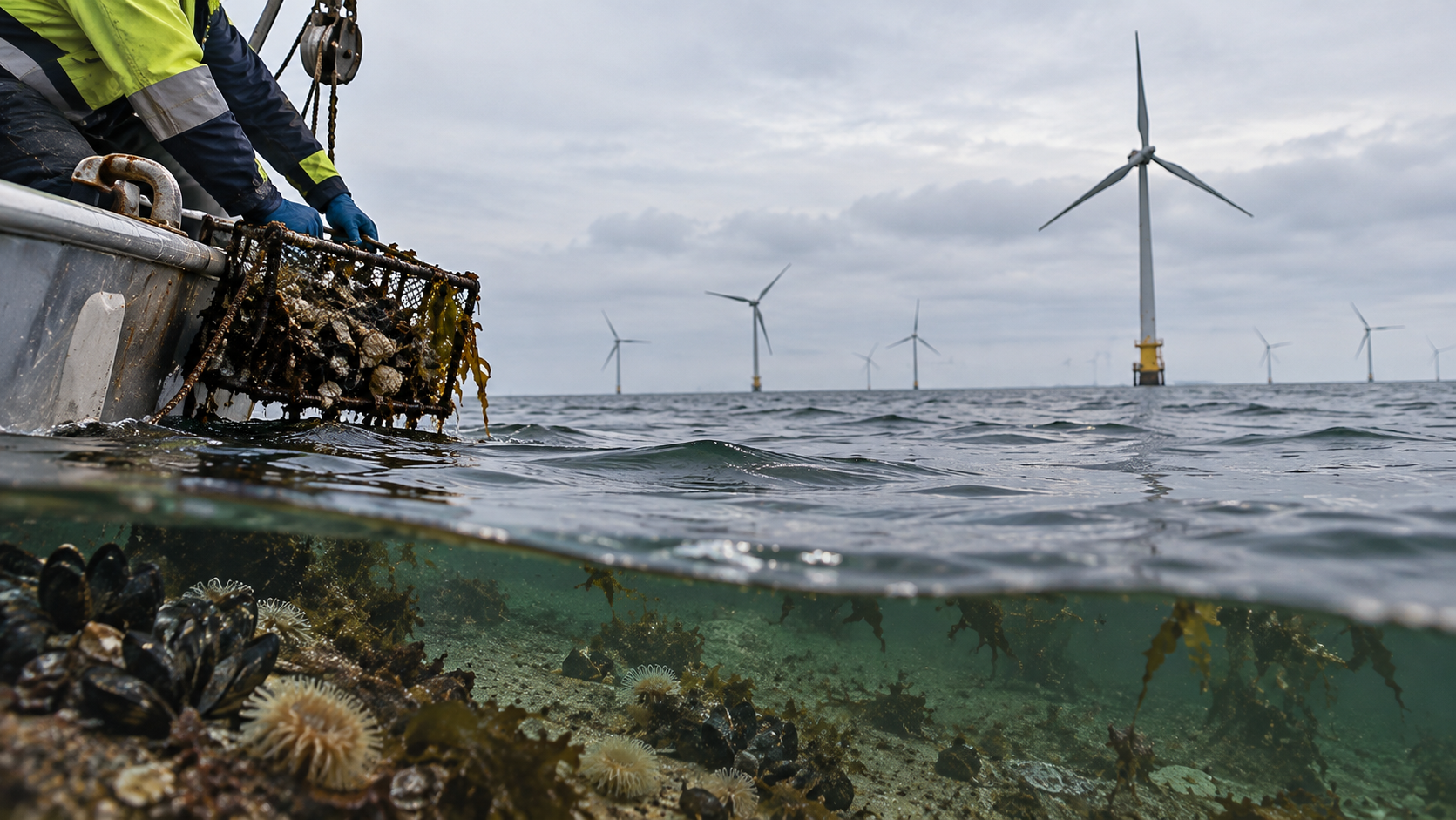
For thousands of years, humans have created bamboo and leaf structures to attract fish to catch. Now, many countries worldwide create artificial reefs using modern technologies to restore their environments42. Now, OWFs can use their base or any appendages on their base to foster the growth of artificial reefs. OWFs can use their hard bases to create surfaces for benthic organisms to grow on, prompting growth of a habitat and ecosystem in the location that wasn’t there previously. A study found that blue mussels had 7-18 times the biomass on OWF turbine pillars than at the bottom of the turbine, showing that turbines can promote growth of certain invertebrates like mussels in certain locations. The study also found that this mussel biomass created “hot spots” of biological activity. This is because they consume plankton and excrete feces, enriching the sediment and altering the local ecosystem. However, the mussels could also promote oxygen deficiency under certain conditions43.
Artificial reefs created by OWFs also have potential negatives for invertebrates. One substantial negative impact is colonization by non-native species. A study reviewing various offshore wind farms and the presence of non-native species found that the data analyzed did not support the claim that OWFs are expanding the occupancy and numbers of non-native species. A few were present at certain OWFs, but overall, more research is needed to draw a safe conclusion about OWFs and non-native species44. Another negative impact could be that artificial reefs can harbor species that usually wouldn’t live in a location due to its sandy bottom and lack of hard surfaces. For example, in a study, echinoderms were often found to be on wind farms regardless of location40. Artificial reefs may have more negative impacts, but more invertebrate-specific research is necessary.
Food Web Interactions with Invertebrates
Invertebrates comprise more than 95% of all animal species on Earth45. Because there are so many of these organisms, they are very important to the environment. Additionally, many invertebrates have high reproductive rates, allowing them to quickly recover population levels after losses from unexpected events, such as human activities or extreme weather. Even though offshore wind farms do not have too significant an impact on invertebrates, they can still have a significant impact on large areas of the seabed. This could affect ecosystem equilibrium, leading to decreased biodiversity46.
Once invertebrates are affected, their decline will affect other animals, such as fish or mammals that eat them, or the plants and nutrients they consume will experience an explosion in population. The loss of all invertebrates in any ecosystem will cause the entire food web to collapse. Yet strong artificial reefs and anti-trawling laws can significantly mitigate this47,40. Additionally, as discussed above, OWFs do not destroy entire invertebrate populations and, at most, affect only a few species.
Discussion
Mitigation and Enhancement Strategies
Marine invertebrates are essential to ecosystem health; therefore, the negative impacts of offshore wind on them must be mitigated. They are an integral part of the food chain, and some may be keystone species48. However, this manuscript also proposes solutions in the following sections and focuses on a few possible positive impacts that OWFs could have on marine invertebrate communities. First, a positive impact could be artificial reef creation. For noise, using vibro piling or drilled foundations instead of pile driving may help reduce sound. For electromagnetism, better shielding for cables may help. To reduce sediment disruption, it may be best to use floating turbines. For trawling, additional regulations or policies will be needed to address overfishing at sites adjacent to OWFs. When considering the three negatives first proposed in this review, floating turbines could be a viable option for mitigating them; however, beyond these negatives, floating turbines may create other issues that this review did not focus on.
Sounds and Vibrations
Aside from using vibro piling or drilled foundations, one possible method for an OWF to not create constructional noise is through floating turbines, due to floating turbines having only one smaller piece of contact with the seafloor, weights/anchors that keep it in place, and only requiring weights to keep the turbine from moving away due to the ocean currents49.
Electromagnetism
In terms of mitigation, a study finds that one of the most effective ways to reduce electromagnetic pollution is to systematically regulate the types of cables and electronics used in wind turbines, thereby preventing faulty equipment or other leaks50. For example, EMC (Electromagnetic Compatibility) approval is required by law in the EU and in many countries, including the US, China, and Canada51. Although EMC doesn’t have ecological goals, methods countries use, such as shielding or other control measures, could also mitigate effects on nearby invertebrates. Additionally, further improvements in electrical equipment will help mitigate these effects, especially as wind turbines become more widespread and create additional electromagnetic fields and pollution50. Because electromagnetic field strength depends on distance from the cable, running multiple cables in parallel could reduce the magnetic field area and make the diminishing effects of distance more pronounced52. Another possible way to mitigate electromagnetic effects is to use floating turbines with inter-array cables. These cables are in the pelagic zone, rather than the benthic zone, which could affect a completely separate group of fauna. This could mitigate impacts on benthic organisms but would affect an entirely new group of surface fauna16.
Sediment Disruption
Overall, sediment topography impacts, such as sediment clouds, are usually temporary over a few years. In certain environments, recovery can be quicker, as shown by the six turbine foundations in the Belgian Sea, which returned to their original topography 2 years after construction, as well as the Block Island Wind Farm’s construction marks35,36. However, one way to mitigate these impacts is to use floating wind turbines. Sediment disturbance would still be present, but would be substantially mitigated, and would only come from, firstly, dropped anchors or moorings, which require less sediment disruption to install and would have a smaller impact than pile driving or gravity-based foundations53. Second, floating turbines also use floating and undersea cables, reducing the need to dig as many trenches to bury cables; however, undersea cables may still be necessary in some situations. An analysis study on floating turbines finds that, overall, they have reduced seabed impact compared to fixed-bottom wind farms54.
Trawling
In terms of solutions, few policies and agreements exist between offshore wind farms and the fishing industry, leaving this area relatively under-researched and under-addressed. There is a wealth of content specifically on the fishing industry, as well as regulations that could restrict trawling. Floating wind turbines also do not alter trawling restrictions, and trawling is usually restricted near them as well, though there can be exceptions14. For example, the Hywind floating offshore wind farm in Scotland has designated fishing areas at least 200m from the turbines. They tested this through a fishing trial, assessing how fishing would work around the turbines, and found it successful in the designated fishing zones55. It is also important to note that if fishing is restricted near turbines, it may be redirected more strongly to other areas, possibly creating larger ecological impacts there. Overall, more policy clarity and more research are necessary when discussing the impact of OWFs.
Artificial Reefs
A strong strategy to encourage the creation of artificial reefs is to create more surfaces for sessile organisms, such as mollusks, plants, and mussels. Multiple guidelines should be followed for effective implementation. First, they should not be made out of brittle, non-durable materials and should not be small, unsecured structures. When creating artificial reefs, the reefs should be: stable in normal to large storms; made from long-lasting, solid, and non-toxic materials56; designed to have texture for the recruitment of corals, sponges, and other organisms; designed to provide a high amount of structural complexity; and designed to blend in with natural reefs42.
To meet these criteria, any artificial reef created under offshore wind farms could include additional appendages on each turbine, thereby maximizing the surface area for sessile organisms, such as coral, to grow. In terms of materials, steel, steel rebar, concrete, or cement would be best56. Mineral accretion devices, which primarily consist of steel rebar with low-voltage electricity passed through them, can expedite coral growth through electrolysis. This process prevents the steel from corroding or rusting and causes minerals to attach to the metal. This creates optimal conditions for coral to grow and withstand disturbances more effectively. Pairing artificial reef substrates with devices like these would help sites thrive57.
One drawback of adding artificial reefs to offshore wind farms is cost. The process of sinking a ship to create an artificial reef can cost up to $2 million, depending on the ship’s size. A ship sunk in Australia to create an artificial reef required AU$200,000 in annual maintenance for 10 years47. If an artificial reef were created under an OWF, it would not be on this scale, but the turbines themselves would already provide some form of surface for coral to grow on. An OWF, unless it is floating, would already have a large artificial reef base that is perfect for organisms to grow on. Typically, when an artificial reef is created, it becomes a tourist destination, with revenue helping offset the upfront cost and maintenance. However, that liberty is absent from offshore wind farms, which are typically not marketed as tourist destinations unless they are located relatively close to shore.
Specifically, a study in France that used questionnaires, surveys, and interviews finds that offshore wind farms can increase tourism when located close to shore and when related tourist activities are present. Between 5 km and 12 km offshore, tourism revenue decreases because coastal aesthetics are impaired. However, beyond 12km, tourists were minimally affected by the OWF and did not seem to notice it. However, the study also found that if the wind farm is located about 5 km offshore and is accompanied by a strong environmental policy and associated recreational activities, there would be no loss of tourism revenue, but rather a gain. Thus, installing artificial reefs in offshore wind farms closer to shore will increase revenue and, consequently, reduce costs, whereas installing them more than 5 km offshore will increase costs58.
Thus, artificial reefs will require substantial funding to maintain if added to offshore wind farms far from shore. Even if artificial reefs are used to mitigate damage to the seafloor caused by turbines, they still support unique food webs and ecosystems. Since turbines are vertical, organisms that grow well on vertical surfaces, such as mussels, will likely dominate. This could influence food webs and other environmental factors59. This highlights the need to create flatter, horizontal appendage surfaces on offshore wind farms, raising questions about manufacturing and maintenance costs. In an ideal scenario that fully emphasizes the benefits of artificial reefs while keeping costs as low as possible, every turbine would include horizontal appendages made from an easily manufactured yet very hardy material. There would be enough appendages to simulate a healthy reef without any single species dominating, yet not so complex as to be prohibitively expensive. If this cost is too high, implementing artificial reefs in OWFs near shore will still be affordable, given tourism.
Cumulative Impacts
These impacts could be synergistic in ways that change the effects on marine invertebrates. For example, different placement methods for the base of offshore wind turbines, such as pile driving or vibro piling, can affect both noise and sediment disruption at the same time. During pile driving, noise is extremely loud and highly disruptive to seabed sediments, creating a period during construction when noise levels are high and sediment disruption is also very high, where both work together to affect marine invertebrates. Changing how the base is constructed also affects its shape, which changes the surface area available to create artificial reefs. Also, burying cables can mitigate the immediate electrical field they create, but it can also disturb sediment, making this an either-or situation where attempts to mitigate EMF impacts disturb sediment. Artificial reef effects may also be affected by the severity of trawling restrictions around the turbines, as less severe trawling restrictions may impact the biodiversity or ecosystem balance of the artificial reefs. Evaluating each impact individually does not capture the full extent of the impacts OWFs can have.
Floating Turbines
One of the most practical solutions to address, or at least partially mitigate, the problems listed above is a floating offshore wind farm. There are four main types. The spar-buoy type has a single turbine mounted on a thin tower, attached to multiple moorings in all directions. The tension-leg platform type features a floating platform that supports the wind turbine, similar to an oil rig. The semi-submersible type has several upright tubes connected by horizontal tubes60,61. Lastly, the pontoon type is a large pontoon carrying multiple structures and wind turbines. It can almost be called a man-made island. Floating OWFs are mainly above the water, unlike fixed-bottom turbines, which are mainly underwater, so they have less underwater surface area; because they have less impact underwater, they contribute less to potential benefits such as artificial reefs61.
Floating turbines use mooring lines as well as anchors to stay in the same location in the sea, and also have wires under the water to move electricity, creating other possible problems that fixed-bottom turbines wouldn’t normally create. However, because they require less pile driving and other seabed-driving work, there will be less construction noise and less sediment disruption. In terms of operational noise, they create the same amount of noise as turbines fixed to the seabed close by, but since they are farther up from the surface, the fauna under the water could be less affected. Many more electric cables would also be pelagic and thus would disturb fewer invertebrates on the seabed, instead shifting possible impacts mainly to animals in the water column. They would also dig fewer trenches for the cables, disturbing less sediment. Trawling laws around floating turbines would probably be similar to those for fixed-bottom OWFs. Because there are far fewer floating turbines than fixed-bottom turbines, more research is needed on current and future floating turbines to gather more concrete experimental data on the positives and negatives of floating wind farms compared to fixed-bottom wind farms. Therefore, floating wind turbines could be a possible way to mitigate negative effects, but currently there isn’t enough data to make a fully conclusive claim about concrete mitigation.
| Impact Pathway | Affected Invertebrate Groups | Magnitude of Effect | Duration | Mitigation Options | Evidence Quality |
| Sound | Cephalopods, Gastropods, Bivalves, Crustaceans | Variable; Behavioral Changes; Stress; Some Species Show No Response | Highly Variable; Construction Noise is Usually Temporary; Low-Frequency Noise From Operation Impacts are Long-Term | Floating Turbines; Different Methods of Stabilizing Base | Moderate; Multiple Laboratory Experiments; Multiple Meta-Analyses; Many Analogous Examples (Mainly in Construction Impacts) |
| EMFs | Crustaceans; Bivalves; Polychaetes | Variable; Behavioral Changes; Not All Impacts Negative | Long-Term; Depends on Proximity | Floating Turbines Due to Pelagic Cables; Burying Cables; Shielding Cables; Cable Configuration | Low – Moderate; Some Field Studies and Experiments; Some Analogous Examples; Vast Majority of Responses Uncertain; Little to No Experimental Data Specific to Wind Farms |
| Sediment Disruption | Benthic Invertebrates; Specifically Mentioned Polychaetes | Variable; Crushing; Smothering; Immediate Mortality; Visibility Impairment; Responses Depend on Construction Method and Speed | Topography Changes are Short Term; Ecosystem Recovery May be Long Term; Duration Varies by Site | Floating Turbines; Different Methods of Stabilizing Base | Moderate; Many Studies on Topography Change, Few Studies on Specific Invertebrate Responses |
| Trawling | Commercially Fished Crustaceans | Variable; Potential Population Increase; Potential Environmental Protection | Long-term Depending on Specific Site Regulations | Clearer Policies; Additional Regulations | Low-Moderate; Some Field Surveys; Few Studies Specifically on Invertebrates; Causal Effect Very Uncertain |
| Artificial Reefs | Sessile Invertebrates; Bivalves; Corals | Variable; Generally Positive; Increased Abundance of Invertebrates and Biodiversity; May Have Invasive Species Introduction; Varies by Size | Long-Term | Increased Surface Area; Material Type; Mineral Accretion Devices; Tourism | Moderate-High; Multiple Generalized Field Studies; Multitude of Direct OWF Evidence; Lack of Evidence Specific to OWFs and Invertebrates Combined |
Conclusion and Future Directions
In conclusion, OWFs can have numerous impacts on invertebrates. Impacts include, but aren’t limited to: sound, EMFs, sediment disturbance, trawling, and artificial reefs. Each of these has varying effects on marine invertebrates, yet comprehensive research on each impact for specific invertebrate species is scarce. Many studies and experiments focus on fish and other fauna, but fewer on invertebrates, making it difficult to draw concrete conclusions. In terms of mitigation, floating turbines could also address the first four negatives of offshore fixed-bottom turbines, but more research is needed to support this claim. Many research gaps remain, particularly on OWF installation methods and their effects on invertebrates, as well as the direct effects they could have on benthic invertebrates beneath the sediment. Data on floating wind turbines are also limited, especially regarding their effects on invertebrates.
Wind energy remains a viable option for addressing the significant problem of climate change. At this point, it is best to weigh the severity of climate change impacts against those of offshore wind farms on invertebrates (and other fauna). However, this weighing of impacts is not fully feasible due to a lack of data on OWFs, especially floating OWFs. A possible method to gather data is to conduct surveys across all OWFs before, during, and after construction, and to deploy various cameras and radars to monitor changes or consequences. Additionally, further testing will be required to investigate each of the five impacts mentioned above and their specific relationship with marine invertebrates. More lab data on specific species and their reactions to EMFs, sound, and sediment disruption should also be prioritized, along with the physical surveys and studies done at OWFs.
Acknowledgements
The author thanks Kieren Rudge and the Solomon Admissions editors for their valuable feedback and suggestions during the development of this manuscript.
Supplementary Material
References
- J. Houghton. Global warming. Reports on Progress in Physics. Vol. 68, pg. 1343–1403, 2005, https://doi.org/10.1088/0034-4885/68/6/R02. [↩]
- E. Jolie, S. Scott, J. Faulds, I. Chambefort, G. Axelsson, L. C. Gutiérrez-Negrín, S. Regenspurg, M. Ziegler, B. Ayling, A. Richter, M. T. Zemedkun. Geological controls on geothermal resources for power generation. Nature Reviews Earth & Environment. Vol. 2, pg. 324–339, 2021, https://doi.org/10.1038/s43017-021-00154-y. [↩]
- A. M. Soomar, A. Hakeem, M. Messaoudi, P. Musznicki, A. Iqbal, S. Czapp. Solar photovoltaic energy optimization and challenges. Frontiers in Energy Research. Vol. 10, pg. 879985, 2022, https://doi.org/10.3389/fenrg.2022.879985. [↩]
- P. Veers, K. Dykes, E. Lantz, S. Barth, C. L. Bottasso, O. Carlson, A. Clifton, J. Green, P. Green, H. Holttinen, D. Laird, V. Lehtomäki, J. K. Lundquist, J. Manwell, M. Marquis, C. Meneveau, P. Moriarty, X. Munduate, M. Muskulus, J. Naughton, L. Pao, J. Paquette, J. Peinke, A. Robertson, J. Sanz Rodrigo, A. M. Sempreviva, J. C. Smith, A. Tuohy, R. Wiser. Grand challenges in the science of wind energy. Science. Vol. 366, pg. eaau2027, 2019, https://doi.org/10.1126/science.aau2027. [↩]
- G. Rediske, H. P. Burin, P. D. Rigo, C. B. Rosa, L. Michels, J. C. M. Siluk. Wind power plant site selection: A systematic review. Renewable and Sustainable Energy Reviews. Vol. 148, pg. 111293, 2021, https://doi.org/10.1016/j.rser.2021.111293. [↩]
- R. Nilson, J. Rand, B. Hoen, S. Elmallah. Halfway up the ladder: Developer practices and perspectives on community engagement for utility-scale renewable energy in the United States. Energy Research & Social Science. Vol. 117, pg. 103706, 2024, https://doi.org/10.1016/j.erss.2024.103706. [↩]
- S. L. Dolan, G. A. Heath. Life cycle greenhouse gas emissions of utility-scale wind power: Systematic review and harmonization. Journal of Industrial Ecology. Vol. 16, pg. S136–S154, 2012, https://doi.org/10.1111/j.1530-9290.2012.00464.x. [↩]
- M. Whitaker, G. A. Heath, P. O’Donoughue, M. Vorum. Life cycle greenhouse gas emissions of coal-fired electricity generation: Systematic review and harmonization. Journal of Industrial Ecology. Vol. 16, pg. S53–S72, 2012, https://doi.org/10.1111/j.1530-9290.2012.00465.x. [↩]
- P. R. O’Donoughue, G. A. Heath, S. L. Dolan, M. Vorum. Life cycle greenhouse gas emissions of electricity generated from conventionally produced natural gas: Systematic review and harmonization. Journal of Industrial Ecology. Vol. 18, pg. 125–144, 2014, https://doi.org/10.1111/jiec.12084. [↩]
- R. Wiser, D. Millstein, B. Hoen, M. Bolinger, W. Gorman, J. Rand, G. Barbose, A. Cheyette, N. Darghouth, S. Jeong, J. M. Kemp, E. O’Shaughnessy, B. Paulos, J. Seel. Land-based wind market report: 2024 edition. Lawrence Berkeley National Laboratory. 2024, https://doi.org/10.2172/2434282. [↩]
- S. Dardour, D. Ayres, L. Zamora. Renewable power generation costs in 2024. International Renewable Energy Agency. 2025, https://www.irena.org/Publications/2025/Jun/Renewable-Power-Generation-Costs-in-2024. [↩]
- M. S. Tanvir, A. Etminan. Comparative analysis of offshore and onshore wind turbines: Efficiency, design, and environmental impact. Wind Engineering. Vol. 50, pg. 200–215, 2026, https://doi.org/10.1177/0309524X251386646. [↩]
- M. E. Hauer, R. K. Saunders, D. Shtob. Research note: Demographic change on the United States coast, 2020–2100. Demography. Vol. 59, pg. 1221–1232, 2022, https://doi.org/10.1215/00703370-10127418. [↩]
- A. B. Gill, S. Degraer, A. Lipsky, N. Mavraki, E. Methratta, R. Brabant. Setting the context for offshore wind development effects on fish and fisheries. Oceanography. Vol. 33, pg. 118–127, 2020, https://doi.org/10.5670/oceanog.2020.411. [↩] [↩] [↩] [↩] [↩]
- E. Chen. Often overlooked: Understanding and meeting the current challenges of marine invertebrate conservation. Frontiers in Marine Science. Vol. 8, pg. 690704, 2021, https://doi.org/10.3389/fmars.2021.690704. [↩]
- Z. L. Hutchison, D. H. Secor, A. B. Gill. The interaction between resource species and electromagnetic fields associated with electricity production by offshore wind farms. Oceanography. Vol. 33, pg. 96–107, 2020, https://doi.org/10.5670/oceanog.2020.409. [↩] [↩]
- J. K. Petersen, T. Malm. Offshore windmill farms: Threats to or possibilities for the marine environment. AMBIO: A Journal of the Human Environment. Vol. 35, pg. 75–80, 2006, https://doi.org/10.1579/0044-7447(2006)35%5B75:OWFTTO%5D2.0.CO%3B2. [↩] [↩]
- H. Bailey, B. Senior, D. Simmons, J. Rusin, G. Picken, P. M. Thompson. Assessing underwater noise levels during pile-driving at an offshore windfarm and its potential effects on marine mammals. Marine Pollution Bulletin. Vol. 60, pg. 888–897, 2010, https://doi.org/10.1016/j.marpolbul.2010.01.003. [↩]
- M. B. Halvorsen, B. M. Casper, C. M. Woodley, T. J. Carlson, A. N. Popper. Threshold for onset of injury in Chinook salmon from exposure to impulsive pile driving sounds. PLOS ONE. Vol. 7, pg. e38968, 2012, https://doi.org/10.1371/journal.pone.0038968. [↩]
- B. M. Casper, M. E. Smith, M. B. Halvorsen, H. Sun, T. J. Carlson, A. N. Popper. Effects of exposure to pile driving sounds on fish inner ear tissues. Comparative Biochemistry and Physiology Part A: Molecular & Integrative Physiology. Vol. 166, pg. 352–360, 2013, https://doi.org/10.1016/j.cbpa.2013.07.008. [↩]
- K. A. Murchy, H. Davies, H. Shafer, K. Cox, K. Nikolich, F. Juanes. Impacts of noise on the behavior and physiology of marine invertebrates: A meta-analysis. Proceedings of Meetings on Acoustics. Vol. 37, pg. 040002, 2019, https://doi.org/10.1121/2.0001217. [↩] [↩]
- K. M. Potlock, A. J. Temple, P. Berggren. Offshore construction using gravity-base foundations indicates no long-term impacts on dolphins and harbour porpoise. Marine Biology. Vol. 170, pg. 92, 2023, https://doi.org/10.1007/s00227-023-04240-1. [↩]
- X. Wang, X. Zeng, J. Li, X. Yang, H. Wang. A review on recent advancements of substructures for offshore wind turbines. Energy Conversion and Management. Vol. 158, pg. 103–119, 2018, https://doi.org/10.1016/j.enconman.2017.12.061. [↩]
- B. Hoen, R. Darlow, R. Haac, J. Rand, K. Kaliski. Effects of land-based wind turbine upsizing on community sound levels and power and energy density. Applied Energy. Vol. 338, pg. 120856, 2023, https://doi.org/10.1016/j.apenergy.2023.120856. [↩]
- H. Møller, C. S. Pedersen. Low-frequency noise from large wind turbines. The Journal of the Acoustical Society of America. Vol. 129, pg. 3727–3744, 2011, https://doi.org/10.1121/1.3543957. [↩]
- J. Tougaard, L. Hermannsen, P. T. Madsen. How loud is the underwater noise from operating offshore wind turbines? The Journal of the Acoustical Society of America. Vol. 148, pg. 2885–2893, 2020, https://doi.org/10.1121/10.0002453. [↩] [↩]
- S. V. Wang, A. Wrede, N. Tremblay, J. Beermann. Low-frequency noise pollution impairs burrowing activities of marine benthic invertebrates. Environmental Pollution. Vol. 310, pg. 119899, 2022, https://doi.org/10.1016/j.envpol.2022.119899. [↩]
- H. L. Davies, K. D. Cox, K. A. Murchy, H. M. Shafer, A. Looby, F. Juanes. Marine and freshwater sounds impact invertebrate behavior and physiology: A meta-analysis. Global Change Biology. Vol. 30, pg. e17593, 2024, https://doi.org/10.1111/gcb.17593. [↩]
- Z. Tu, L. Tang, F. U. Khan, M. Hu, H. Shen, Y. Wang. Low-frequency noise impairs righting reflex behavior by disrupting central nervous system in the sea slug Onchidium reevesii. Science of The Total Environment. Vol. 918, pg. 170552, 2024, https://doi.org/10.1016/j.scitotenv.2024.170552. [↩]
- M. Charifi, M. Sow, P. Ciret, S. Benomar, J.-C. Massabuau. The sense of hearing in the Pacific oyster, Magallana gigas. PLOS ONE. Vol. 12, pg. e0185353, 2017, https://doi.org/10.1371/journal.pone.0185353. [↩]
- Z. L. Hutchison, A. B. Gill, P. Sigray, H. He, J. W. King. A modelling evaluation of electromagnetic fields emitted by buried subsea power cables and encountered by marine animals: Considerations for marine renewable energy development. Renewable Energy. Vol. 177, pg. 72–81, 2021, https://doi.org/10.1016/j.renene.2021.05.041. [↩] [↩]
- M. Sharples. Offshore electrical cable burial for wind farms: State of the art; standards and guidance; acceptable burial depths and separation distances; and sand wave effects. Bureau of Safety and Environmental Enforcement. 2011, https://www.bsee.gov/research-record/tap-671-offshore-electrical-cable-burial-wind-farms-state-art-standards-and-guidance. [↩]
- Z. L. Hutchison, A. B. Gill, P. Sigray, H. He, J. W. King. Anthropogenic electromagnetic fields (EMF) influence the behaviour of bottom-dwelling marine species. Scientific Reports. Vol. 10, pg. 4219, 2020, https://doi.org/10.1038/s41598-020-60793-x. [↩]
- M. Stankevičiūtė, M. Jakubowska, J. Pažusienė, T. Makaras, Z. Otremba, B. Urban-Malinga, D. P. Fey, M. Greszkiewicz, G. Sauliutė, J. Baršienė, E. Andrulewicz. Genotoxic and cytotoxic effects of 50 Hz 1 mT electromagnetic field on larval rainbow trout (Oncorhynchus mykiss), Baltic clam (Limecola balthica) and common ragworm (Hediste diversicolor). Aquatic Toxicology. Vol. 208, pg. 109–117, 2019, https://doi.org/10.1016/j.aquatox.2018.12.023. [↩]
- D. A. Coates, G. van Hoey, L. Colson, M. Vincx, J. Vanaverbeke. Rapid macrobenthic recovery after dredging activities in an offshore wind farm in the Belgian part of the North Sea. Hydrobiologia. Vol. 756, pg. 3–18, 2015, https://doi.org/10.1007/s10750-014-2103-2. [↩] [↩] [↩] [↩] [↩]
- Z. L. Hutchison, M. LaFrance Bartley, S. Degraer, P. English, A. Khan, J. Livermore, B. Rumes, J. W. King. Offshore wind energy and benthic habitat changes: Lessons from Block Island Wind Farm. Oceanography. Vol. 33, pg. 58–69, 2020, https://doi.org/10.5670/oceanog.2020.406. [↩] [↩]
- J. E. Robinson, R. C. Newell, L. J. Seiderer, N. M. Simpson. Impacts of aggregate dredging on sediment composition and associated benthic fauna at an offshore dredge site in the southern North Sea. Marine Environmental Research. Vol. 60, pg. 51–68, 2005, https://doi.org/10.1016/j.marenvres.2004.09.001. [↩]
- A. R. Benn, P. P. Weaver, D. S. M. Billett, S. van den Hove, A. P. Murdock, G. B. Doneghan, T. Le Bas. Human activities on the deep seafloor in the North East Atlantic: An assessment of spatial extent. PLOS ONE. Vol. 5, pg. e12730, 2010, https://doi.org/10.1371/journal.pone.0012730. [↩]
- S. Mestdagh, T. Ysebaert, T. Moens, C. Van Colen. Dredging-induced turbid plumes affect bio-irrigation and biogeochemistry in sediments inhabited by Lanice conchilega (Pallas, 1766). ICES Journal of Marine Science. Vol. 77, pg. 1219–1226, 2020, https://doi.org/10.1093/icesjms/fsy122. [↩]
- A. H. Knorrn, T. Teder, A. Kaasik, R. Kreitsberg. Beneath the blades: Marine wind farms support parts of local biodiversity – a systematic review. Science of The Total Environment. Vol. 935, pg. 173241, 2024, https://doi.org/10.1016/j.scitotenv.2024.173241. [↩] [↩] [↩]
- M. Gray, P.-L. Stromberg, D. Rodmell. Changes to fishing practices around the UK as a result of the development of offshore windfarms – Phase 1 (revised). 2016. https://www.datocms-assets.com/136653/1720791273-final-published-ow-fishing-revised-aug-2016-clean.pdf. [↩]
- E. Riera, B. Mauroy, P. Francour, C. Hubas. Establishing complexity targets to enhance artificial reef designs. Scientific Reports. Vol. 14, pg. 22060, 2024, https://doi.org/10.1038/s41598-024-72227-z. [↩] [↩]
- M. Maar, K. Bolding, J. K. Petersen, J. L. S. Hansen, K. Timmermann. Local effects of blue mussels around turbine foundations in an ecosystem model of Nysted off-shore wind farm, Denmark. Journal of Sea Research. Vol. 62, pg. 159–174, 2009, https://doi.org/10.1016/j.seares.2009.01.008. [↩]
- J.-C. Dauvin. Do offshore wind farms promote the expansion and proliferation of non-indigenous invertebrate species? Marine Pollution Bulletin. Vol. 206, pg. 116802, 2024, https://doi.org/10.1016/j.marpolbul.2024.116802. [↩]
- M. A. Titley, J. L. Snaddon, E. C. Turner. Scientific research on animal biodiversity is systematically biased towards vertebrates and temperate regions. PLOS ONE. Vol. 12, pg. e0189577, 2017, https://doi.org/10.1371/journal.pone.0189577. [↩]
- D. S. Clare, F. Culhane, L. A. Robinson. Secondary production increases with species richness but decreases with species evenness of benthic invertebrates. Oikos. Vol. 2022, pg. e08629, 2022, https://doi.org/10.1111/oik.08629. [↩]
- M. S. A. Ammar. Coral reef restoration and artificial reef management, future and economic. The Open Environmental Engineering Journal. Vol. 2, pg. 37–49, 2009, https://doi.org/10.2174/1874829500902010037. [↩] [↩]
- T. D. Eddy, H. K. Lotze, E. A. Fulton, M. Coll, C. H. Ainsworth, J. Neves de Araújo, C. M. Bulman, A. Bundy, V. Christensen, J. C. Field, N. A. Gribble, M. Hasan, S. Mackinson, H. Townsend. Ecosystem effects of invertebrate fisheries. Fish and Fisheries. Vol. 18, pg. 40–53, 2017, https://doi.org/10.1111/faf.12165. [↩]
- Z. Jiang. Mooring design for floating wind turbines: A review. Renewable and Sustainable Energy Reviews. Vol. 212, pg. 115231, 2025, https://doi.org/10.1016/j.rser.2024.115231. [↩]
- E. Karpat, F. Karpat. Electromagnetic compatibility (EMC) in wind turbines. Proceedings of the 68th IIER International Conference. pg. 3–6, 2016, https://www.worldresearchlibrary.org/up_proc/pdf/259-14613828143-6.pdf. [↩] [↩]
- European Union. Directive 2014/30/EU of the European Parliament and of the Council of 26 February 2014 on the harmonisation of the laws of the Member States relating to electromagnetic compatibility (recast). 2014. https://eurlex.europa.eu/eli/dir/2014/30/oj/eng. [↩]
- Normandeau Associates, Inc., Exponent, Inc., T. Tricas, A. Gill. Effects of EMFs from undersea power cables on elasmobranchs and other marine species. Bureau of Ocean Energy Management. Report No. BOEMRE 2011-09, 2011, https://tethys.pnnl.gov/publications/effects-emfs-undersea-power-cables-elasmobranchs-other-marine-species. [↩]
- C. Li, B. Steubing, J. Morpurgo, A. Tukker, J. M. Mogollón. Optimal environmental siting of future wind turbines in the North Sea. Environmental Science & Technology. Vol. 58, pg. 22944–22952, 2024, https://doi.org/10.1021/acs.est.4c03861. [↩]
- M. A. Koondhar, S. K. Afridi, T. R. Alsenani, I. Mahariq, H. Zeinoddini-Meymand, F. Shahnia, E. Touti. A structured techno-economic and socio-regulatory comparison of onshore, fixed-bottom offshore, and floating offshore wind energy systems. International Journal of Energy Research. Vol. 2026, pg. 9999516, 2026, https://doi.org/10.1155/er/9999516. [↩]
- K. Wright, J. Mair, R. Watret, J. Drewery. Static fishing gear trials at the Hywind floating offshore wind farm. Marine Directorate, Scottish Government. 2023, https://cdn.equinor.com/files/h61q9gi9/global/f4acf4706c8b0ab0a270a1950e12cefb38361b6c.pdf. [↩]
- F. Cruz, I. B. Valente, F. Monteiro, D. Maslov, T. Miranda, E. B. Pereira. Development and characterization of structural connections for modular artificial reefs. Ocean Engineering. Vol. 320, pg. 120311, 2025, https://doi.org/10.1016/j.oceaneng.2025.120311. [↩] [↩]
- S. M. Strömberg, T. Lundälv, T. J. Goreau. Suitability of mineral accretion as a rehabilitation method for cold-water coral reefs. Journal of Experimental Marine Biology and Ecology. Vol. 395, pg. 153–161, 2010, https://doi.org/10.1016/j.jembe.2010.08.028. [↩]
- V. Westerberg, J. B. Jacobsen, R. Lifran. The case for offshore wind farms, artificial reefs and sustainable tourism in the French Mediterranean. Tourism Management. Vol. 34, pg. 172–183, 2013, https://doi.org/10.1016/j.tourman.2012.04.008. [↩]
- S. Degraer, D. A. Carey, J. W. P. Coolen, Z. L. Hutchison, F. Kerckhof, B. Rumes, J. Vanaverbeke. Offshore wind farm artificial reefs affect ecosystem structure and functioning: A synthesis. Oceanography. Vol. 33, pg. 48–57, 2020, https://doi.org/10.5670/OCEANOG.2020.405. [↩]
- E. C. Edwards, A. Holcombe, S. Brown, E. Ransley, M. Hann, D. Greaves. Evolution of floating offshore wind platforms: A review of at-sea devices. Renewable and Sustainable Energy Reviews. Vol. 183, pg. 113416, 2023, https://doi.org/10.1016/j.rser.2023.113416. [↩]
- C. M. Wang, T. Utsunomiya, S. C. Wee, Y. S. Choo. Research on floating wind turbines: A literature survey. The IES Journal Part A: Civil & Structural Engineering. Vol. 3, pg. 267–277, 2010, https://doi.org/10.1080/19373260.2010.517395. [↩] [↩]