
Abstract
Chemical leaks and contamination of the atmosphere are serious hazards in enclosed industrial areas if not detected. In the world, the failure to identify toxic gases and local hot spots directly leads to avoidable deaths in the workplace and to widespread damage of infrastructure. A multi-modal hazard detection system was designed to be semi-autonomous and mobile to detect hazards in real-time in high-risk facilities. The system uses a Raspberry Pi 4 as the main computational unit for visual monitoring and thermal mapping using an infrared sensor. To prevent resource contention and guarantee deterministic execution, a secondary microcontroller is used to split low-level analogue data acquisition from an electrochemical sensor array for measuring methane, ammonia, carbon dioxide and volatile organic compounds. The mobile chassis is based on ultrasonic ranging algorithms for local and real-time obstacle avoidance. The network layer is implemented using WebSocket for low-latency data streaming in both directions. The software packages sensor data and multiplexes video streams to a remote server, providing stable throughput and low packet loss over wireless networks. A controlled pilot test in a corporate office was also conducted in order to help establish the baseline environmental conditions and also assess the integrated operation of the sensing, mobility and communication systems. Based on the analysis of 100 consecutive sensor readings collected at 10-second intervals, the temperature range was found to be 22.5 to 25.5 °C (mean 24.0 °C), and the relative humidity range was determined to be 45 to 60% (mean 52.3%). The average CO2 concentration was 922 ppm on average, and the recommended limit for indoor air quality was only exceeded in a few observations, with a maximum of 1197 ppm, indicating some poor ventilation. Hazardous gases monitored, including methane (≤5 ppm), ammonia (≤3 ppm), and hydrogen sulphide (≤1 ppm), were well below the occupational exposure limits, and thermal mapping recorded localized hotspots, with a maximum temperature of 34.7°C during the office pilot, demonstrating the platform’s ability to detect anomalies in the environment promptly. Deploying mobile edge-computing platforms, thus, provides a scalable method to identify and isolate industrial hazards prior to critical failure.
Keywords: Edge computing, industrial safety, autonomous monitoring, gas detection, embedded systems.
Introduction
Monitoring of atmospheric pollutants is crucial for occupational health and the reduction of industrial risks. According to the International Labour Organization (ILO) report in October 2025, roughly 2.93 million workers die from work-related causes annually, and exposure to hazardous working environments accounts for a substantial share of these deaths1. Moreover, the cost to the economy of these occurrences is significant. This leads to an estimated 6 per cent loss of the global gross domestic product (GDP) as a result of work-related injuries and illnesses2. The National Disaster Management Authority (NDMA) has also identified more than 1,861 major accident hazard units (MAHUs) in the Indian industrial sector3. These statistics therefore indicate that there is a need for continuous and precise monitoring of the atmosphere to ensure the safety of the personnel and infrastructure against atmospheric threats4.
The cited chemical-sensor review3 does not substantiate the numerical claim about Indian major accident hazard units in the preceding paragraph. That figure requires a direct NDMA source before it can be used as evidence for this study.
Indoor and semi-controlled industrial environments may be filled with various toxic and combustible gases such as methane (CH₄), ammonia (NH₃), hydrogen sulphide (H₂S), carbon dioxide (CO₂) and volatile organic compounds (VOCs)5. These gases can have very small safety margins, such as the case of CH₄, which is highly combustible and has a high explosion risk when present in air at concentrations of 5 to 15 per cent6. At the same time, H₂S is a strong neurotoxin that can cause olfactory paralysis and make it impossible for humans to smell it before it reaches lethal levels7. Furthermore, CO₂ and complex VOCs may build up in enclosed areas and have been associated with chronic respiratory issues and damage to various organs8.
In spite of these risks, most of the conventional safety architectures are based on static wireless sensor networks. While stationary sensors can give a reliable point-based sample, they are assuming spatial uniformity, which is not always true in the real world of gas dispersion. Many industrial gases are spatially heterogeneous; for example, H₂S has a vapour density of around 1.19 relative to air and will pool in low-lying areas. These ground-level plumes, however, often escape detection by stationary detectors, which can result in a vertical blind spot and delayed or even undetected detection of the hazardous event9.
Mobile robotic systems therefore provide a strategic benefit in the sense that they enable distributed sensing, allowing atmospheric sampling to be an active exploratory process at a much lower cost than that of a dense array of stationary sensors throughout the plant. Unlike fixed nodes, mobile platforms can access hazardous or restricted areas that are not safe for human entry and offer flexibility. A robotic agent can monitor gas concentrations across the operating environment in real time and identify areas requiring further inspection, therefore allowing for the identification of potentially hazardous areas with a high spatial resolution by traversing an environment10.
These systems are further improved by the integration of multiple sensors. This is because, although each metal oxide semiconductor (MOS) sensor may be sensitive to more than one gas, multiple sensors can be used in an array, and the pattern of their responses can be used to identify complex chemical signatures11. Moreover, chemical detection and thermal and visual sensing can be used to cross-verify threats. An increase in concentration level can be related to thermal anomalies (such as overheating pipeline joints), which greatly enhances the reliability of hazard detection and decreases false alarm rates.
The advent of the Internet of Things (IoT) has also enabled the architecture to collect real-time data and present it globally. Distributed communication protocols can enable mobile robots to share a continuous stream of telemetry and visual data with remote dashboards, allowing safety managers and emergency responders to have real-time situational awareness. There remains, however, a significant gap in the current literature, since most of the current research is either on stationary networks or on mobile systems that are designed to detect one parameter, such as methane-only or fire-only. This means that no single platform exists to monitor multiple chemical and thermal parameters simultaneously in a mobile base.
An integrated mobile robotic platform for the real-time monitoring of multiple gases as well as temperature may be of interest to overcome these limitations. This system is equipped with a large sensor array which includes the MQ-4 sensor for CH₄, the MQ-137 sensor for NH₃, the MQ-136 sensor for H₂S and the MQ-3 sensor for organic vapours12. The image is fused using an MLX90640 thermal array, which provides an image mapping of the fused image, helping to identify heat signatures that are not visible by normal cameras, and the ambient conditions are monitored by a DHT22 module.
Hence, it can be applied and is designed for a wide range of applications such as industrial safety, smart infrastructure, environmental monitoring and emergency response in a wide range of scenarios, from chemical plant inspection to food spoilage monitoring in warehouses to disaster response. Thus, this work aims to advance toward more adaptive and context-aware environmental monitoring solutions, suited to the complexities of real-world conditions, by bringing together mobility, multi-parameter sensing, and real-time connectivity.
The objective of this study is to assemble a low-cost mobile platform that simultaneously displays multiple gas-sensor outputs, ambient conditions, RGB video and thermal images, and to check their concurrent operation during a short indoor patrol. Its contribution is system integration and a preliminary office demonstration. It does not establish that integrated mobile gas-and-thermal platforms are unprecedented, nor does it test gas-source localization, industrial hazard detection or quantitative sensing accuracy.
Literature Review
In recent years, the development of gas sensing technologies has made great strides, with the integration of intelligent sensor architectures and Internet of Things (IoT) platforms to enhance the precision and reliability of real-time environmental monitoring. However, the drawbacks of electrochemical and metal oxide semiconductor (MOS) sensors were identified in a systematic review, which were sensor drift, cross-sensitivity, and environmental changes, and the requirement for synchronized multi-sensor acquisition, machine learning algorithms, and drift compensation techniques for long-term performance13. Likewise, intelligent gas sensing systems have been demonstrated to attain high sensitivity for VOC detection using sensor arrays and platforms with IoT and pattern recognition algorithms, even in wearable devices for complex environments14. In addition, it has been demonstrated that low-cost MQ-4 methane sensors can be optimally calibrated with logarithmic conversion models and suitable load resistor selection to achieve a high degree of measurement accuracy while keeping the sensor cost and scalability for large-scale monitoring applications15.
Mobile robotic sensing platforms have been found to be a successful solution to the traditional fixed monitoring systems, as they offer dynamic coverage of the environment and enhanced source localization. Robotic platforms with electronic noses have proven to be effective in creating high-resolution gas distribution maps, which enable efficient leak detection and identification of gas emission sources and take advantage of long-range communication technologies like LoRaWAN16. In turn, an intelligent quadruped robot based on multispectral imaging, gas sensors, temperature sensing and edge computing was able to detect flames with an accuracy of 98.3% and a response time of less than 2 s, highlighting the advantages of autonomous event-driven monitoring in complex environments17. Moreover, deep learning-based gas source localization methods based on simultaneous localization and mapping (SLAM) and U-Net architectures have shown great potential for source identification in environments with obstacles, by integrating topographical information into the autonomous navigation strategies18.
Today’s environmental monitoring systems have even more capabilities thanks to the era of IoT, edge computing and cloud-based analytics. The use of sensor fusion based on edge artificial intelligence (AI) and visual verification by cameras was found to substantially decrease false alarms and improve emergency response through remote monitoring by a fire and gas leakage detection system using IoT technology19. Similarly, the AIMNET digital twin framework integrated real-time gas plume prediction and anomaly detection capabilities based on continuous IoT sensing and physics-based gas transport models and enabled real-time distributed data processing techniques20. The latest reviews also indicated the increasing adoption of monitoring platforms, cloud services, and AI-driven analytics powered by ESP32 and Raspberry Pi, as well as the reliability of sensors and energy efficiency as the main challenges for long-term deployment21. A long-range communication system is required to continuously monitor hazardous gases in harsh environments, which was demonstrated to be a successful solution using the ESP32 architecture with MQ-series and NDIR sensors and LoRa communication in underground mines22. Mobile gas-source localization is more directly relevant than generic remote gas monitoring. Lilienthal and Duckett generated concentration grid maps from position-associated robot measurements and examined the effect of exploration strategy and slow sensor response23. More recent systems combine localization and gas-distribution mapping with a graphene-based sensor24, select informative sampling locations to reduce mapping effort25, or estimate a source using probabilistic mapping and online dispersion simulation26. Multi-robot three-dimensional mapping further shows that the vehicle itself can disturb a plume27. In contrast, the present platform has no recorded position-linked gas map, airflow measurement, plume reconstruction, or source-location estimate. Its ultrasonic obstacle response should therefore be compared as a mobility feature, not as a localization result.
| Study | Sensors Used | Robot Mobility | Real-Time Monitoring | IoT Enabled | Limitations |
| Autonomous Hazardous Gas Detection Systems13 | Electrochemical, MOS | N/A | Yes | No | Accuracy drift, cross-sensitivity to solvent vapours. |
| Intelligent Gas Sensors14 | Diverse sensor arrays | N/A | Yes | Yes | Reliability in complex chemical backgrounds. |
| Real-time determination of enteric methane15 | Heated-electrode (MQ-4 derivative) | N/A | Yes | No | Sensor non-linearity requires precise load resistor matching. |
| Robotic Systems for Environmental Monitoring16 | Electronic noses | Wheeled, tracked, aerial | Yes | No (uses LoRaWAN) | Restricted spatial resolution of fixed stations. |
| Intelligent flame monitoring system17 | Multispectral, temp, combustible gas | Quadruped (robot dog) | Yes | No | Fixed monitoring bottlenecks in complex buildings. |
| Topography-Aware Gas Source Localization18 | Gas sensors, SLAM | Mobile robot | Yes | No | Navigating obstacle-ridden environments. |
| Intelligent IoT-Based Fire/Gas Detection19 | Sensor fusion, camera module | N/A | Yes | Yes | High false alarm rates in standard systems. |
| AIMNET: Digital Twin Framework20 | Continuous sensing network | N/A | Yes | Yes | Data corruption and high computational demand. |
| Ammonia Monitoring Systems (Review)21 | Various (ESP32/Raspberry Pi) | N/A | Yes | Yes | Sensor reliability, energy efficiency. |
| RTEPMS (Underground Mines)22 | MQ-series, NDIR | N/A | Yes | Yes | Infrastructure limitations in underground settings. |
Table 1 compares sensing modality, platform mobility, remote monitoring and reported limitations across heterogeneous studies; its rows are contextual examples rather than a controlled comparison of localization accuracy or hazard-detection performance. Review articles and stationary IoT systems cannot provide performance baselines equivalent to mobile source-localization experiments.
Hardware Components
Mobile Robot Chassis
Wheel Configuration: A metal chassis kit for a robot car (4WD configuration, aluminium alloy, procured from Amazon.in) was used as the base mobile platform to ensure maximum direction stability and continuous traction in various indoor facility environments.
Motor Drivers: Dual H-bridge motor driver modules (model: L298N; maximum current: 2A per channel; procurement: STMicroelectronics) were implemented to achieve direct current motor activation and pulse-width modulation speed control for the drivetrain.
Navigation Mechanism: An ultrasonic distance sensor (model: HC-SR04; range: 2 cm to 400 cm; procurement: Robu.in) was integrated for obstacle detection and ranging to allow semi-autonomous navigation without collisions.
The four-wheel chassis was selected for a flat indoor route and sufficient mounting area for the distributed sensors. The L298N supports direction and pulse-width-modulated speed control for the chosen small DC motors; its voltage drop and heat dissipation must be checked under measured motor load. The HC-SR04 provides a simple short-range obstacle cue, but a single forward-looking range measurement cannot provide odometry, a spatial map or reliable navigation around transparent, absorbent or irregular surfaces.
Processing Unit
Primary Processor: The primary processor used was a single-board computer (Raspberry Pi 4 Model B, 8GB RAM, purchased from Robu.in). The hardware was chosen because it has a high computational power to run machine learning algorithms, a high number of simultaneous gas-sensing logic and a high number of socket connections.
Gas Sensors
Methane Sensor: A gas sensor module (model: MQ-4; detection range: 200 to 10000 ppm; procurement: Robu.in) was used to detect natural gas or compressed natural gas leaks based on surface conductivity resistance reduction.
Ammonia Sensor: A gas sensor module (model: MQ-137; detection range: 5 to 500 ppm; procurement: Robu.in) was integrated to detect ammonia leaks from refrigeration systems or biological waste.
Carbon Dioxide Sensor: A non-dispersive infrared sensor (model: MH-Z19; detection range: 0 to 5000 ppm; procurement: Robu.in) was chosen for carbon dioxide concentration monitoring due to its high specificity and zero vulnerability to cross-gas poisoning.
Air Quality Sensor: A detector module (model: MQ-135; detection range: 10 to 1000 ppm; procurement: Robu.in) was utilized to measure volatile organic compounds, smoke, and general air pollutants.
Hydrogen Sulphide Sensor: A gas sensor (model: MQ-136; detection range: 1 to 200 ppm; procurement: Robu.in) was targeted for the detection of sewer gas or decomposition odours associated with food spoilage.
Alcohol Sensor: A gas sensor module (model: MQ-3; detection range: 25 to 500 ppm; procurement: Robu.in) was selected to detect ethanol vapours, indicating food spoilage or fermentation leaks.
The sensors were selected to cover several nominal target analytes using inexpensive, readily available modules, while the MH-Z19 provides a gas-specific infrared measurement channel for CO₂. The MQ devices are cross-sensitive metal-oxide sensors and need individual characterization before their outputs can be treated as selective concentrations. The DHT22 records ambient conditions relevant to drift; the MLX90640 supplies a low-resolution temperature field rather than an aligned or fused RGB-thermal detection model.
Temperature and Humidity Sensor
A digital temperature and humidity sensor (DHT22/AM2302, operating range: -40°C to 80°C and 0% to 100% RH, procurement: Robu.in) was used to monitor ambient conditions continuously, which are important for safety and for the preservation of the quality of the products. A module of infrared thermometer (model: MLX90640; procurement: Robu.in) was integrated to be able to locate the hot spots and detect overheating industrial equipment.
Communication Module
Wireless Interface: The integrated dual-band Wi-Fi interface natively built into the Raspberry Pi 4 was utilized to establish a persistent WebSocket protocol. This ensured real-time streaming of binary JPEG camera frames and JSON telemetry arrays to a virtual private server.
A persistent WebSocket connection is suitable here because the described dashboard receives frequent telemetry and camera updates and can also send commands over the same connection. This is an architectural rationale, not a measured advantage over MQTT or HTTP/2: no protocol comparison, end-to-end latency distribution, throughput benchmark or packet-loss test is reported.
Cellular Backup: A GSM/GPRS module (model: SIM800L; procurement: Robu.in) was included to provide remote connectivity and alert capabilities in environments lacking stable local wireless networks.
Power Management
Battery Power: Three lithium-ion rechargeable battery cells (type: 18650; capacity: 2000 to 3000 mAh per cell; nominal voltage: 3.7V) were linked in series to create an approximate 11.1V power supply for the mobile platform.
Charging Module: A lithium-ion balance charging module (input: Type-C; current: 3A; procurement: Robu.in) was selected to ensure safe recharging and provide essential protection circuitry against overcurrent and deep discharge.
Voltage Regulation: A universal battery eliminator circuit regulator (output: 5V and 3A) was used to reduce the primary battery voltage. This component was required to provide a stable 5V power supply for the Raspberry Pi 4 and the sensor array as well as to separate the sensitive digital logic from the high-frequency motor noise.
Three series-connected cells rated at 2,000–3,000 mAh correspond to a nominal pack energy of approximately 22.2–33.3 Wh (11.1 V multiplied by 2–3 Ah). This is a capacity estimate, not a measured runtime. The 5 V, 3 A regulator has a nominal 15 W output rating, while motors, heated gas sensors, the Pi, camera, communications and conversion losses contribute to total draw. Full-system current, peak motor current, regulator margin, battery cutoff behavior and operating duration were not measured or reported, so no endurance claim can be established from the component list.
Bill of Materials and System Cost: To ensure practical deployment viability and democratization of workplace safety, the system architecture was designed around cost-effective commercial off-the-shelf components. While high-end proprietary industrial safety monitoring rigs often require prohibitive capital expenditures, the complete mobile monitoring platform developed in this study was assembled for a total prototype hardware cost of approximately ₹20,000 (under US$215). A consolidated Bill of Materials (BOM) categorized by subsystem is presented in Table 2.
| Subsystem / Component | Primary Model / Specification | Approx. Cost (INR) | Approx. Cost (USD) |
| Primary Computing | Raspberry Pi 4 Model B (8GB) | ₹7,000 | $75 |
| Secondary Processing | ESP32 Development Board | ₹450 | $5 |
| Chassis & Drivetrain | 4WD Aluminium Alloy Kit + Motors + L298N Driver | ₹2,000 | $20 |
| Vision & Thermal Array | MLX90640 IR Thermal Array + RGB Camera | ₹5,500 | $55 |
| Chemical Sensor Suite | MQ-4, MQ-137, MQ-136, MQ-135, MQ-3, MH-Z19 | ₹2,500 | $25 |
| Ranging & Environment | HC-SR04 Ultrasonic + DHT22 Temp/Humidity | ₹350 | $5 |
| Cellular Backup | SIM800L GSM/GPRS Module | ₹400 | $5 |
| Power Management | 3x 18650 Li-ion Cells + Type-C BMS + 5V/3A UBEC | ₹1,300 | $15 |
| Miscellaneous | Prototyping PCBs, Wiring, Fasteners & Mounting | ₹500 | $5 |
| Total Estimated Cost | ~₹20,000 | ~$215 |
System Design, Assembly, and Integration
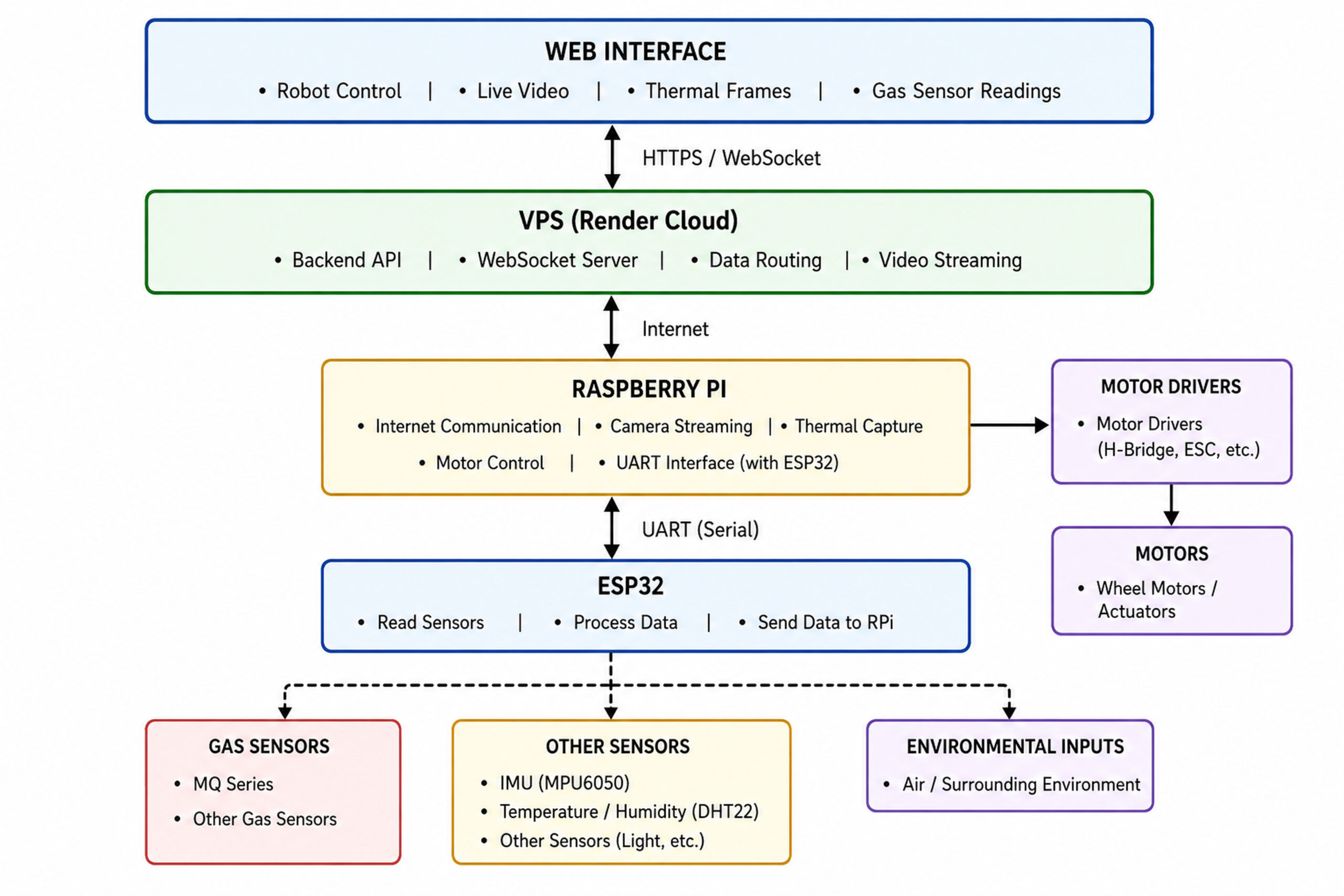
The integrated mobile monitoring robot was designed in a systematic engineering process that included hardware design, mechanical assembly, embedded system integration, visual and thermal monitoring, and field testing. The overall architecture of the system is shown in figure 1, where the interaction of the sensing, processing, communication and locomotion subsystems are shown.
System Architecture
The robotic platform was developed as a modular environmental monitoring system that can detect hazardous gases, thermal anomalies and the defects of the infrastructure at the same time. The system was divided into three main layers: (i) sensing, (ii) processing and decision-making, and (iii) communication and actuation.
The sensing layer consisted of several gas sensors, a thermal imaging module, an RGB camera, and an ultrasonic sensor for obstacle avoidance. The ESP32 microcontroller was used to collect sensor data, and the computationally demanding image processing was performed on a Raspberry Pi 4 (8 GB). The wireless communication was achieved using Wi-Fi technology between the environmental data and the system status, which are sent to the web-based monitoring dashboard.
Mechanical Design and Robot Assembly
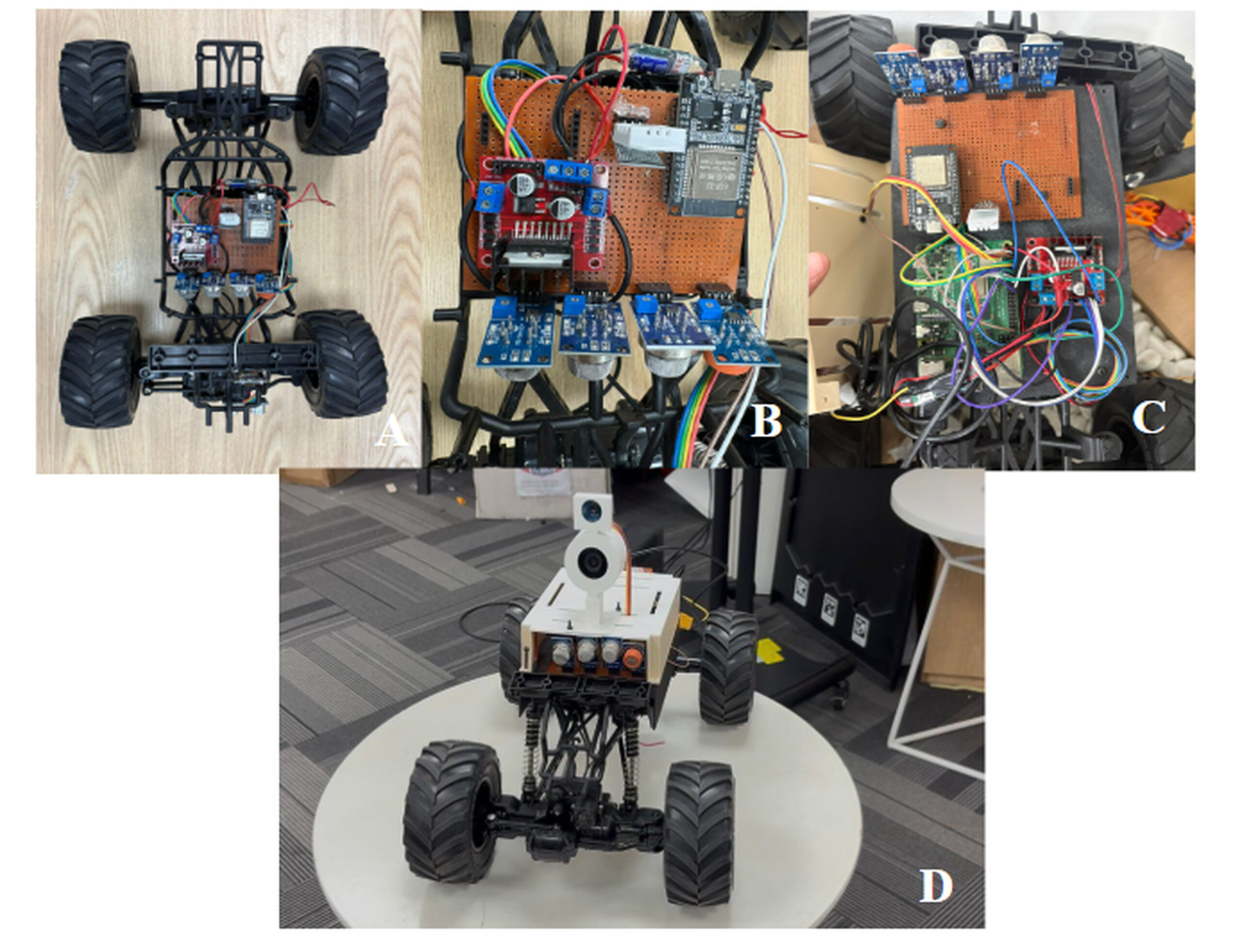
The four-wheel differential-drive chassis was chosen to enable stable indoor mobility and adequate payload capacity for onboard sensors and computing hardware. The placement of components was optimized to achieve a balanced weight distribution, sensor accessibility and minimum interference between the sensing modules.
The assembly process was carried out in the following order: assembly of the chassis and installation of DC drive motors, followed by installation of the battery pack and power distribution electronics, fitting of the ESP32 microcontroller, Raspberry Pi 4 and motor driver module, integration of the gas sensors, thermal imaging array, RGB camera and ultrasonic sensor, electrical wiring and checking of all signal/power connections, and finally system-level integration and operational testing.
Figure 2 illustrates the component layout and the progressive assembly stages of the robot.
Electronic Integration and Circuit Design
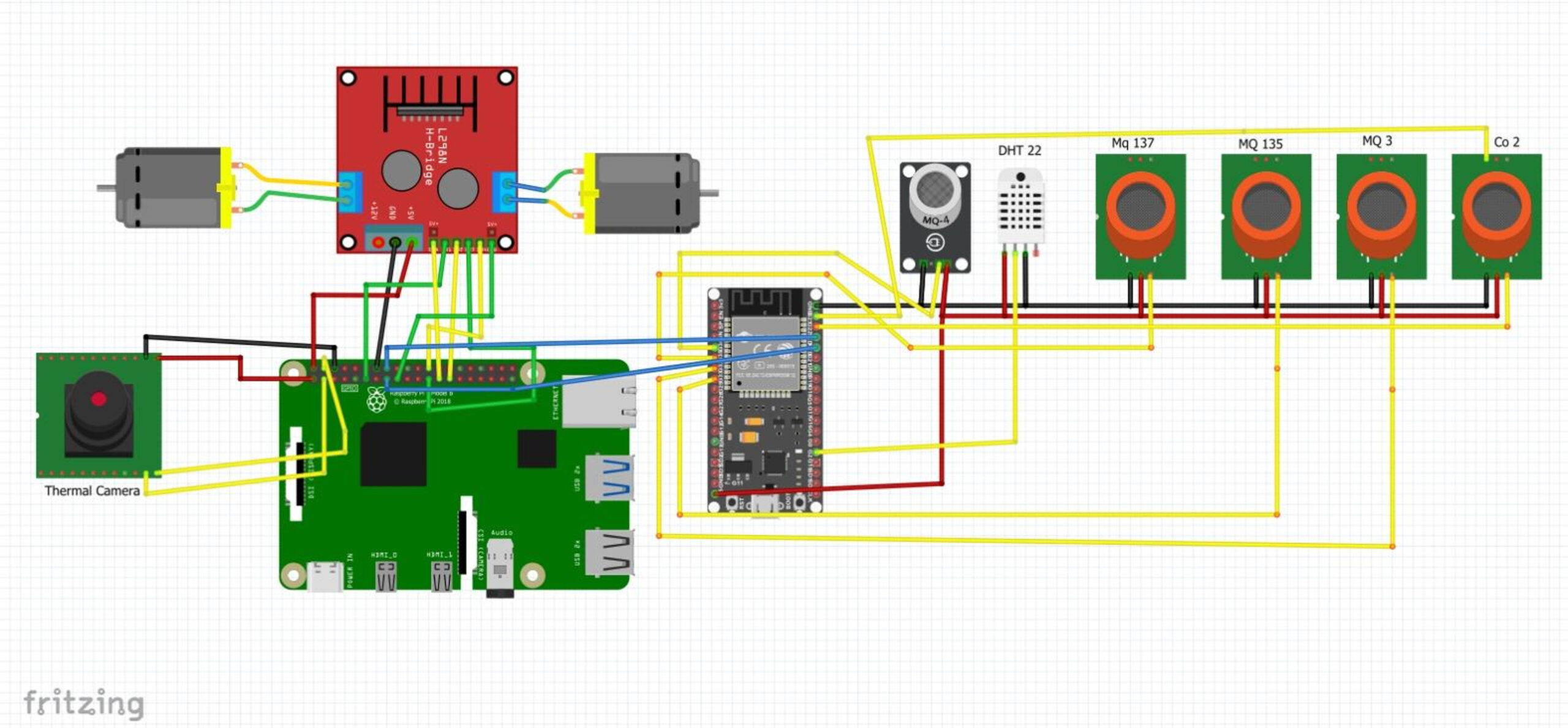
The electronic subsystem was designed to enable reliable communication between sensing, processing and actuation components. The ESP32 microcontroller was connected to gas sensors, thermal modules and auxiliary sensors via analogue and digital inputs. A dedicated motor driver was used to control the drive motors with pulse width modulation (PWM) signals to achieve motor control.
The Raspberry Pi was the main edge computing platform used for the processing of the visual data and the thermal images. All electronic subsystems were supplied with a stable voltage using power regulation circuitry, which compensated for the variations in battery output.
A detailed wiring diagram is shown in Figure 3.
Embedded Software and Dashboard Development
The firmware was written with the Arduino framework for the ESP32 microcontroller. The software was designed to incorporate modules for collecting sensor data, obstacle avoidance, motor control, wireless communication, hazard detection, and integration with the dashboard.
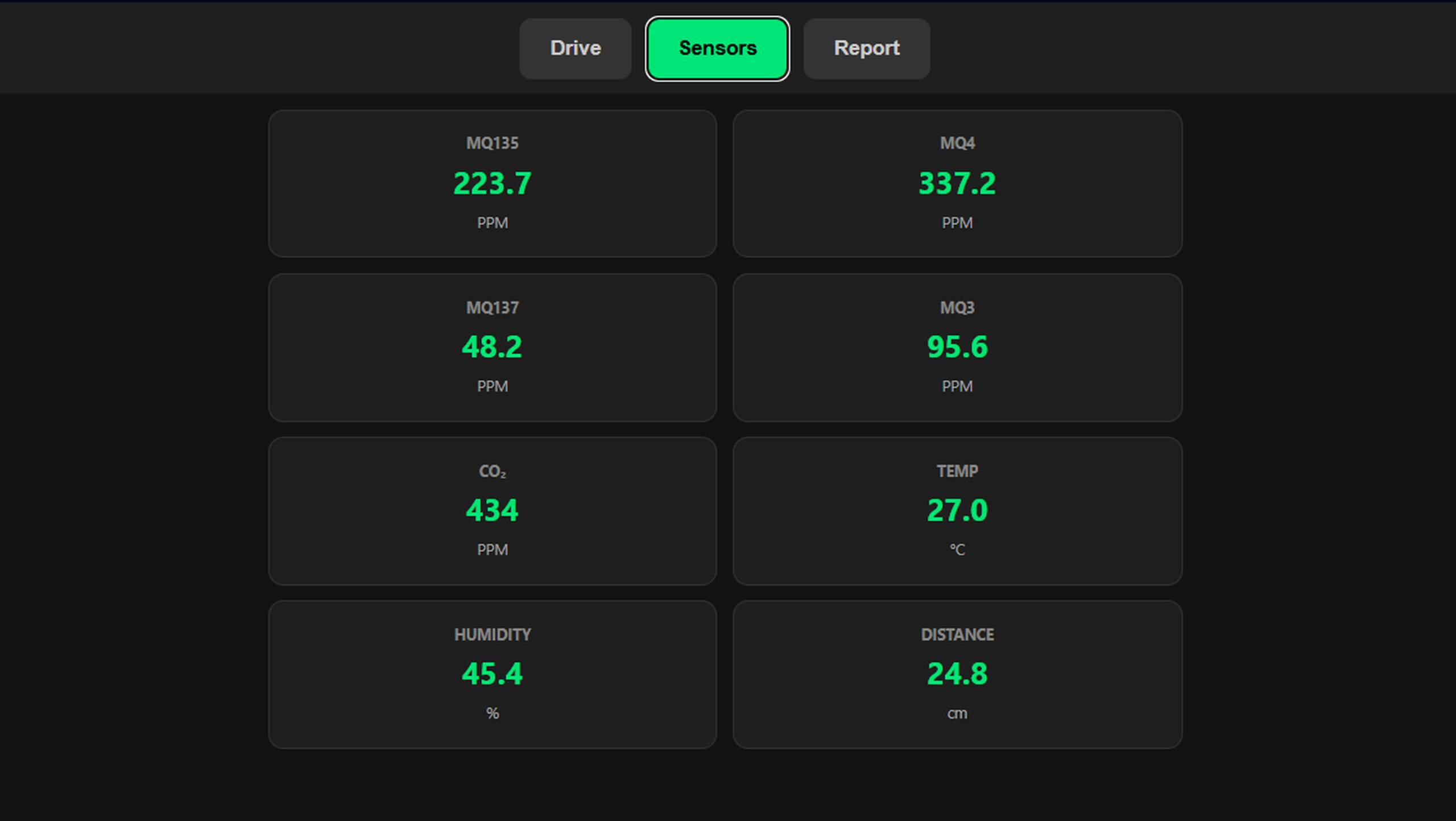
The sensor measurements were sampled periodically and sent to a locally hosted web dashboard via Wi-Fi access point mode. The dashboard was developed using HTML, CSS and JavaScript, providing real-time visualization of environmental parameters, thermal alerts and robot status.
All the sensors were individually validated prior to the integration of the whole system. The stable operation of the three subsystems (sensing, communication, and locomotion) under realistic operating conditions was verified after a baseline characterisation. Figure 4 shows a typical dashboard interface.
Thermal Monitoring Integration
A visual camera was integrated into the platform to provide RGB images of the surrounding environment for visual inspection. A low-resolution thermal imaging array (MLX90640) was incorporated to measure temperature across its sensing area and provide a colour-mapped thermal image. This allows the operator to observe the surrounding environment through the RGB camera and also identify areas with higher surface temperatures by using the thermal image.
The RGB and thermal outputs thus provide complementary information during monitoring. The RGB camera provides visual information about the surroundings, while the thermal array provides temperature information that can help indicate localised heating. Viewing the two outputs together therefore allows the operator to relate the visible features in the environment to their corresponding thermal conditions. In addition to this, automated visual object detection and more advanced thermal-RGB fusion can be also considered in future development of the platform.
Calibration and Performance Evaluation
After the assembly and software integration, the robot was calibrated and tested for performance. Baseline environmental measurements were used to calibrate gas sensors, and controlled exposure to representative target gases was used to further calibrate the gas sensors. The responses of the sensors were converted to estimated concentration values with the help of sensitivity curves and calibration references provided by the manufacturers.
The available record does not specify a certified gas standard, carrier gas, exposure chamber, flow rate, exposure or purge time, sensor preconditioning, fitted calibration curve, replicate number, temperature/humidity correction or reference analyzer for any gas channel. Nor does it provide the installed load resistances and unit-specific R₀ values needed to reproduce the conversion. For an MQ sensor, the manufacturer gives RS = (Vc/VRL − 1)RL and plots RS/RO against concentration; applying a generic sensitivity curve without these measured terms is insufficient for a traceable ppm estimate. Winsen specifies at least 48 hours of preheating for the MQ-4 and more than 48 hours for the MQ-13728,29. The pilot gas outputs should therefore be treated as indicative sensor responses, not validated absolute concentrations.
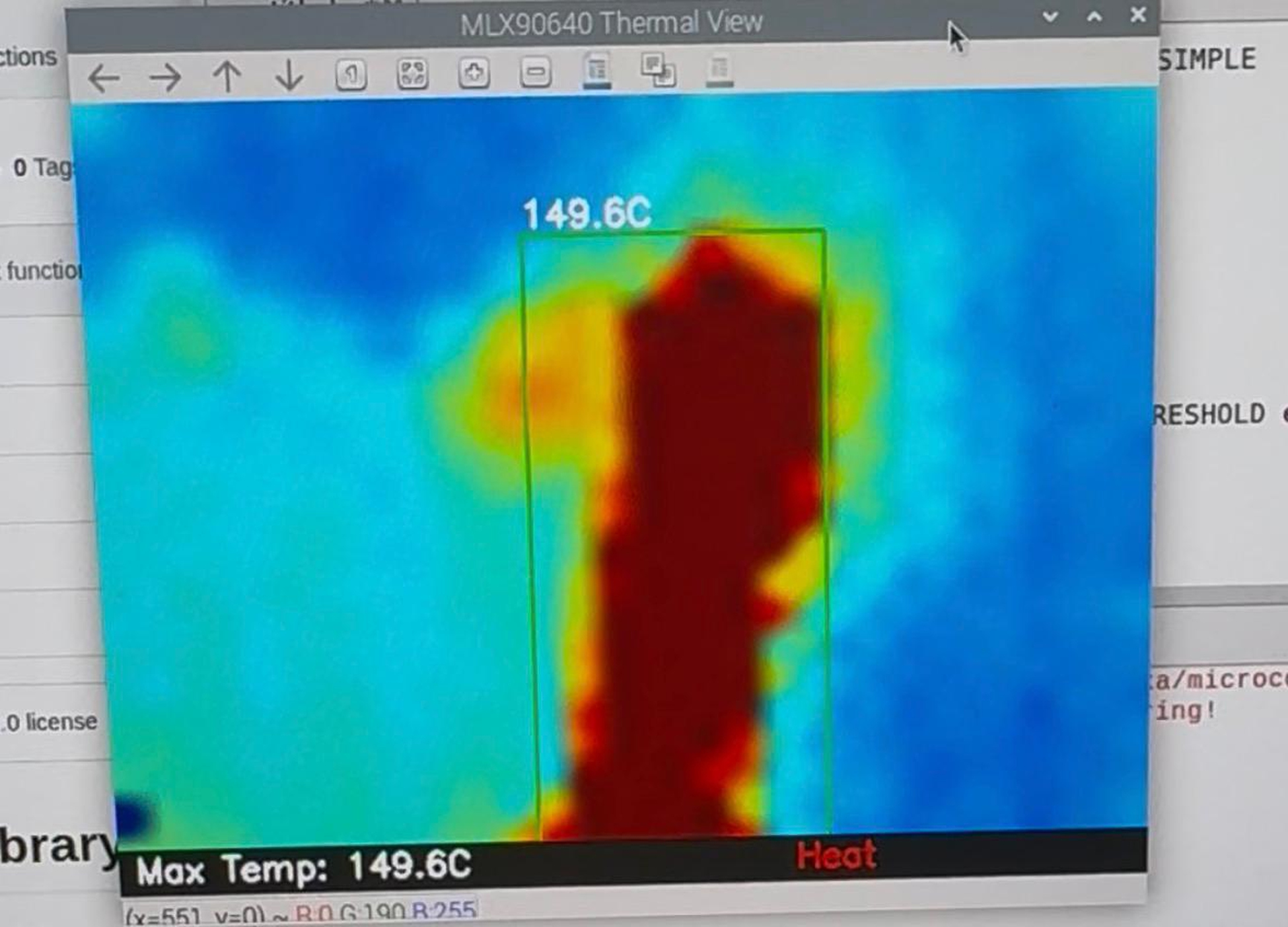
Controlled environmental hazards such as methane sources, carbon dioxide emissions, volatile organic compound emitters and thermal targets were used for functional testing. The thermal target test was conducted separately and was used to help demonstrate the response of the MLX90640 to a high-temperature source. The thermal value shown in Figure 5 is therefore a result of this functional testing. Obstacle avoidance performance was evaluated by navigating a series of predetermined routes with static obstacles placed in the way.
To minimize measurement noise and enhance system robustness, signal conditioning techniques such as moving-average filtering and threshold optimization were used.
No pump, fan, flow controller, tubing or sampling chamber is identified in the described hardware or bill of materials. Consequently, the available build description supports exposure of the sensors to local ambient air, not a quantified active air-sampling flow. Controlled gas challenges, any sampling apparatus actually used, and the underlying calibration records must be documented before the stated calibration and active-sampling procedures can be reproduced.
Discussion
A pilot use case was set up to deploy and test the mobile monitoring platform in a corporate office to simulate the baseline atmospheric conditions of a semi-enclosed commercial workspace. The office environment was chosen as a safe baseline environment to ensure that the sensing, mobility, communication and thermal monitoring systems are working simultaneously before they are deployed in hazardous industrial environments. The testing protocol involved the robot performing a patrol around a set area and collecting environmental data at all times using the Raspberry Pi 4. Data was taken every 10 seconds, giving a continuous set of 100 consecutive readings, which represent a continuous time series. The active sampling system during the deployment pulled air through the integrated sensor array, and the infrared module was used to take local peak temperatures. The telemetry arrays were designed as a JSON payload and sent over the WebSocket protocol to the remote Virtual Private Server for real-time visualization and data logging. This was a procedure that helped an initial check of the concurrent execution of the sensing logic, wireless transmission, the temporal behaviour of the sensors, and the reliability of the hardware in continuous load.
The recorded data was then collated and averaged to determine the baseline environmental data for the test area. The following table displays the results of the 100 sequential measurements, based on the field deployment data.
The experimental unit is one office patrol of approximately 16.7 minutes; its 100 readings at ten-second spacing are serial observations, not 100 independent trials. Timestamped raw measurements, position or trajectory data, repeat patrols, matched no-release controls and reference-instrument readings are not supplied. Means from this single trace cannot estimate between-run variability, measurement error, industrial reliability or sensitivity to a known gas release.
| Parameter | Target Sensor | Mean Recorded Value | Unit |
| Temperature | DHT22 | 24.04 | °C |
| Relative Humidity | DHT22 | 52.32 | % |
| Carbon Dioxide (CO₂) | MH-Z19 | 921.97 | ppm |
| Volatile Organic Compounds | MQ-135 | 148.26 | Index |
| Methane (CH₄) | MQ-4 | ≤ 5 | ppm |
| Ammonia (NH₃) | MQ-137 | ≤ 3 | ppm |
| Alcohol Vapours | MQ-3 | 0.94 | ppm |
| Hydrogen Sulphide (H₂S) | MQ-136 | ≤ 1 | ppm |
| Thermal Hotspot | MLX90640 | 29.74 | °C |
The reported gas values were interpreted within the detection range of the respective sensors, and thus the low-level values reported during the pilot are presented as upper-bound values and not as precision measurements.
In particular, a displayed value below a sensor’s specified detection range cannot establish a numerical upper bound at that value. The MQ-4 manufacturer lists 300–10,000 ppm methane and the MQ-137 lists 5–500 ppm ammonia28,29. Thus the manuscript’s ≤5 ppm methane and ≤3 ppm ammonia figures cannot be interpreted as measured ambient concentrations; the sub-range alcohol and H₂S figures also need verification against their installed modules and calibrated ranges. No occupational exposure comparison or assertion of a safe background follows from these unvalidated readings.
The ambient temperature and relative humidity data provide a baseline for a stable environment for the monitored area. This stability is also required for accurate data collection from the metal-oxide-semiconductor sensors, because of the possibility for baseline drift with fluctuation in heat and moisture. Carbon dioxide levels and VOC index are used to confirm typical VOCs in the air. Neither reading had extreme high or low peaks; indicating a fairly stable general air quality profile for the period recorded.
The gas sensors, which were specially developed, were able to identify small concentrations of methane, ammonia, alcohol vapours, and hydrogen sulphide. But these concentrations are low for all four parameters and indicate that low levels of emission or accumulation have occurred on a patchy scale rather than a major chemical release or biological buildup. However, ongoing studies along the same lines will determine if these low concentrations are a stable background level or short-term releases from the materials in the vicinity.
The thermal imaging data is used to give spatial context to the ambient readings. During the office pilot, the mean thermal hotspot peak was 29.74°C and the highest recorded temperature was 34.7°C. These values were higher than the average ambient temperature and indicate the presence of localized warmer regions within the monitored area. The separate controlled thermal-target test, shown in Figure 5, demonstrated that the MLX90640 could also record substantially higher temperatures. Thus, this combination of this local thermal data and the rest of the ambient gases provides a more robust way to distinguish between changes in the environment and distinct local events.
Further validation would require repeated trials across independent environments, controlled hazard-release experiments and comparison with calibrated reference instruments. Such testing would allow for the measurement of error, repeatability and hazard-detection performance to be assessed quantitatively.
The pilot demonstrates that the described channels could be viewed together during one benign indoor run, but it does not establish repeatability, calibrated gas accuracy or discrimination of true hazards from false alarms. The thermal image of a separate high-temperature target shows sensor response only; the office temperatures do not demonstrate automated anomaly classification. Likewise, reactive obstacle avoidance was described without a route map, trial count, collisions or completion times. Industrial airflow, floor roughness, sensor poisons and radio interference remain untested. A subsequent validation should archive raw time-stamped signals and trajectory, document gas standards and preheating, repeat independent runs, and compare each channel with a reference instrument under known releases and matched controls.
Conclusion
This work described the design, assembly and empirical evaluation of a semi-autonomous multi-modal mobile robotic platform specifically optimized for real-time hazard detection in confined industrial environments. The system overcomes the spatial blind spots and latency of static wireless sensor networks by combining a four-wheel differential-drive chassis with active air sampling and edge-based computational hardware in a highly scalable prototype that costs less than ₹20,000 (US$215) per unit. The secondary microcontroller was deployed in the field to verify that it could acquire and digitize low-level analogue signals from a diverse array of electrochemical and non-dispersive infrared sensors without resource contention and still maintain steady measurements of methane (≤5 ppm), ammonia (≤3 ppm), carbon dioxide (mean 922 ppm), and volatile organic compounds. These observations thus indicate that no elevated hazardous-gas condition was observed during the pilot. At the same time, the main edge-computing unit was used to handle the visual and thermal monitoring data, with the RGB camera providing visual information and the MLX90640 thermal array providing temperature measurements for identifying localised heat sources. A continuous low-latency transport of JSON telemetry payloads and visual streaming to a centralized monitoring server was realized with the implementation of a persistent WebSocket protocol.
In addition to commercial workspaces, the potential uses of an integrated mobile sensing base are vast in industries that have small atmospheric safety margins. The platform is used in petrochemical refinery and chemical production applications to continuously sample high-pressure manifolds and storage tanks where heavier-than-air toxic plumes such as hydrogen sulphide are found near the ground level outside the range of ceiling-mounted detectors. In agriculture, the active sampling array is used to detect the presence of ethanol vapours at the beginning of the contamination process and to identify the presence of trace ammonia leakage from refrigeration systems in enclosed cold-storage facilities, enabling facility managers to identify the source of food spoilage or mechanical issues before the entire facility is contaminated. In addition, the robot’s visual monitoring system can be compared with thermal and chemical data, thus directly applying it to the maintenance of underground utilities, including municipal sewer maintenance or deep-shaft mining, where workers are at serious risk from the accumulation of explosive gases and structural fatigue.
As a proof-of-concept system to prove feasibility, the system is limited by a number of specific hardware and environmental constraints that have been shown to exist during pilot patrols. The major analytical limitation is the native sensing principle of the metal oxide semiconductor detectors, which have fast response times but are sensitive to baseline resistance drift with time and are cross-sensitive to complex and fluctuating industrial solvent vapors and ambient humidity. The aluminium alloy differential-drive chassis offers good traction on flat industrial floors, but its rigid suspension and fixed ground clearance restrict the ability of the robot to move semi-autonomously on uneven terrain, on piping ledges, or through thick floor debris. Additionally, the power consumption of continuously processing visual and thermal data on the device, while simultaneously performing active vacuum sampling, consumes significant power, which limits the continuous operating time of the 11.1 V onboard lithium-ion power pack. Last, the thermal array MLX90640 has coarse spatial resolution, requiring conservative thresholds for data fusion to avoid false alarm detection of defects due to benign ambient temperature changes.
Future versions of this platform should be aimed at changing the navigation system from reactive ultrasonic ranging to autonomous Simultaneous Localization and Mapping (SLAM). The mobile base will be able to build dynamic topological occupancy maps and generate high-resolution spatial distribution profiles of chemical dispersion in complex floor plans by incorporating 2D LiDAR and depth-sensing cameras. To overcome sensor non-linearity and cross-sensitivity, future firmware needs to integrate machine learning-based drift compensation algorithms and multi-sensor pattern recognition directly onto the secondary microcontroller, thus allowing the array to deconvolute complex chemical backgrounds with near single-source specificity. Lastly, bidirectional communication between the remote telemetry server and the centralized building management system will help to shift the platform from an exploratory diagnostic tool to an active fail-safe, which could automatically trigger industrial exhaust ventilation or emergency shut-off valves in case of exceedances of critical thresholds.
The demonstrated contribution is an integrated, low-cost robot and dashboard exercised in one short office patrol. Quantitative gas calibration, active sampling hardware, mapped source localization and deployment in hazardous industrial conditions remain to be demonstrated. The source code and firmware used for this study are not included with the submitted materials; a reproducible release would need the exact versions, configuration, sensor-conversion code and dashboard files.
References
- International Labour Organization, “National Practices in Occupational Safety and Health Statistics,” Technical Working Group on Occupational Safety and Health (TWG-OSH), Geneva, Switzerland, Nov. 2025. [Online]. Available: https://www.ilo.org/sites/default/files/2025-11/TWG_OSH_National_Practices_Report_2025_11_03.pdf [↩]
- “ILO Press Conference: Impacts of climate on occupational safety and health – 22 April 2024,” UN Geneva – Multimedia Newsroom, Apr. 22, 2024. https://www.unognewsroom.org/story/en/2145/ilo-press-conference-impacts-of-climate-on-occupational-safety-and-health-22-april-2024 [↩]
- S. A. Alavi-Borazjani and M. N. Shafique, “Chemical sensors for hazardous substances: advances in design, materials, and applications in environmental monitoring,” Environmental Monitoring and Assessment, 2026. https://link.springer.com/article/10.1007/s10661-025-14838-1 [↩] [↩]
- L. Mahmood, M. Ghommem, and Z. Bahroun, “Smart gas sensors: materials, technologies, practical applications, and use of machine learning,” Journal of Applied and Computational Mechanics, 2023. https://jacm.scu.ac.ir/article_18013.html [↩]
- R. J. Rath, S. Farajikhah, and F. Oveissi, “Chemiresistive sensor arrays for gas/volatile organic compounds monitoring: a review,” Advanced Engineering Materials, 2023. https://advanced.onlinelibrary.wiley.com/doi/10.1002/adem.202200830 [↩]
- W. Ma, X. Ji, L. Ding, S. X. Yang, K. Guo, and Q. Li, “Automatic monitoring methods for greenhouse and hazardous gases emitted from ruminant production systems: A review,” Sensors, vol. 24, no. 13, p. 4423, 2024. https://www.mdpi.com/1424-8220/24/13/4423 [↩]
- G. Meléndez-Plata and J. R. A. Mastrogiacomo, “Malodorous gases in aquatic environments: A comprehensive review,” Processes, vol. 13, no. 4, p. 1077, 2025. https://www.mdpi.com/2227-9717/13/4/1077 [↩]
- E. N. Tanggono and A. A. Mokhtarzadeh, “Presence-gated VOC sensing for urban search and rescue applications,” Scientific Reports, 2026. https://www.nature.com/articles/s41598-026-40990-w [↩]
- J. G. Monroy, “Advances in gas sensing and mapping for mobile robotics,” 2013. https://riuma.uma.es/rest/api/core/bitstreams/bd2d427d-01c2-449e-a65e-64c5d93d5850/content [↩]
- M. F. R. Al-Okby, S. Neubert, T. Röddelkoppf, and K. Thurow, “Mobile detection and alarming systems for hazardous gases and volatile chemicals in laboratories and industrial locations,” Sensors, vol. 21, no. 23, p. 8128, 2021. https://www.mdpi.com/1424-8220/21/23/8128 [↩]
- M. A. Z. Chowdhury and M. A. Oehlschlaeger, “Artificial intelligence in gas sensing: a review,” ACS Sensors, 2025. https://pubs.acs.org/doi/10.1021/acssensors.4c02272 [↩]
- A. H. M. C. da Silva, M. K. da Silva, and A. Santos, “A systematic review for ammonia monitoring systems based on the Internet of Things,” IoT, vol. 6, no. 4, p. 66, 2025. https://www.mdpi.com/2624-831X/6/4/66 [↩]
- B.-K. Chew, A. Mahmud, and H. Singh, “Autonomous Hazardous Gas Detection Systems: A Systematic Review,” Sensors, vol. 25, no. 21, art. no. 6618, 2025. [Online]. Available: https://doi.org/10.3390/s25216618 [↩] [↩]
- J. Wei, Q. Peng, Y. Xie, and Y. Chen, “Intelligent Gas Sensors: From mechanism to applications,” Sensors, vol. 25, no. 20, p. 6321, Oct. 2025. Available: https://doi.org/10.3390/s25206321 [↩] [↩]
- F. Liu, Z. Liu, X. Zhang, Z. Liu, and Y. Liu, “Machine learning-enhanced metal oxide gas sensor arrays: a review of selectivity and performance improvements,” Sensor Review, vol. 46, no. 4, pp. 629–647, Dec. 2025. Available: https://doi.org/10.1108/sr-08-2025-0639 [↩] [↩]
- D. M. G. Preethichandra, L. Piyathilaka, and U. Izhar, “Review on Robotic Systems for Environmental Monitoring,” IEEE Open Journal of Instrumentation and Measurement, vol. 3, 2024. [Online]. Available: https://doi.org/10.1109/OJIM.2024.3493875 [↩] [↩]
- “Intelligent flame monitoring system on the robotic dog platform,” in Proc. 2026 IEEE International Conference on Robotics and Automation (ICRA), 2026. [Online]. Available: https://ieeexplore.ieee.org/abstract/document/11452281/ [↩] [↩]
- “Development of Olfaction based Mobile Robot,” in Proc. 2023 IEEE International Conference on Sensors and Nanotechnology (SENNANO), 2023. [Online]. Available: https://ieeexplore.ieee.org/document/10352565/ [↩] [↩]
- “Intelligent IoT-Based Fire and Gas Leakage Detection System: Integrating Sensor Fusion, Edge AI, and Visual Verification,” International Journal of Engineering Research & Technology, vol. 15, no. 4, 2025. [Online]. Available: https://www.ijert.org/intelligent-iot-based-fire-and-gas-leakage-detection-system-integrating-sensor-fusion-edge-ai-and-visual-verification-ijertv15is041584 [↩] [↩]
- L. Zhou et al., “AIMNET: A Digital Twin Framework for Gas Plume Monitoring,” IEEE Internet of Things Journal, 2026. [Online]. Available: https://twister.caps.ou.edu/papers/ZhouEtal_IoT2026.pdf [↩] [↩]
- A. H. M. C. da Silva, M. K. da Silva, A. Santos, and L. A. Gómez-Malagón, “A Systematic Review for Ammonia Monitoring Systems Based on the Internet of Things,” IoT, vol. 6, no. 4, p. 66, 2025. [Online]. Available: https://doi.org/10.3390/iot6040066 [↩] [↩]
- “HPD13A LoRa based Real Time Environmental Parameters Monitoring System (RTEPMS),” IEEE IoT Journal, 2024. [Online]. Available: https://ieeexplore.ieee.org/iel7/6287639/10380310/10381705.pdf [↩] [↩]
- A. J. Lilienthal and T. Duckett, ‘Building gas concentration gridmaps with a mobile robot,’ Robotics and Autonomous Systems, vol. 48, no. 1, 2004, doi: 10.1016/j.robot.2004.05.002 [↩]
- W. A. S. Norzam et al., ‘Mobile Robot Gas Source Localization Using SLAM-GDM with a Graphene-Based Gas Sensor,’ Electronics, vol. 12, no. 1, art. 171, 2023, doi: 10.3390/electronics12010171 [↩]
- A. Gongora, J. Monroy, F. Rahbar, C. Ercolani, J. Gonzalez-Jimenez, and A. Martinoli, ‘Information-Driven Gas Distribution Mapping for Autonomous Mobile Robots,’ Sensors, vol. 23, no. 12, art. 5387, 2023, doi: 10.3390/s23125387 [↩]
- P. Ojeda, J. Monroy, and J. Gonzalez-Jimenez, ‘Robotic Gas Source Localization With Probabilistic Mapping and Online Dispersion Simulation,’ IEEE Transactions on Robotics, 2024, doi: 10.1109/TRO.2024.3426368 [↩]
- C. Ercolani, W. Jin, and A. Martinoli, ‘3D Gas Sensing with Multiple Nano Aerial Vehicles: Interference Analysis, Algorithms and Experimental Validation,’ Sensors, vol. 23, no. 20, art. 8512, 2023, doi: 10.3390/s23208512. [↩]
- Zhengzhou Winsen Electronics Technology Co., Ltd., ‘MQ-4 Semiconductor Sensor for Flammable Gas,’ manual, ver. 1.7, 2024. https://www.winsen-sensor.com/d/files/manual/mq-4.pdf [↩] [↩]
- Zhengzhou Winsen Electronics Technology Co., Ltd., ‘MQ137 Ammonia Gas Sensor,’ manual, ver. 1.6, 2021. https://www.winsen-sensor.com/d/files/manual/mq137.pdf [↩] [↩]