

Abstract
Asthma and obesity have each been associated with adverse COVID-19 outcomes, yet evidence regarding their combined effects remains limited. Using nationally representative data from a cross-sectional survey, the National Health Interview Survey (NHIS), this study examined whether obesity modifies COVID-19 risk among adults with asthma. Sample Adult data from 2020, 2021, and 2022 were analyzed separately by year and pooled to increase statistical power, using survey-weighted methods. Asthma status and obesity, defined as body mass index ≥ 30 kg/m², were identified using standardized NHIS variables. The COVID-19 outcomes assessed in this study were self-reported, not clinical/hospitalization-based COVID-19 diagnosis or positive test and severe COVID-19 symptoms among infected individuals, derived from an ordinal symptom severity measure. Weighted descriptive analyses were performed according to asthma and obesity status, followed by pooled multivariable logistic regression models containing an interaction term for the two conditions. In descriptive analyses, adults with both asthma and obesity had the highest prevalence of COVID-19 in each study year compared to those without these conditions; in adjusted regression models, asthma and obesity were each associated with severe COVID-19 symptoms in pooled analyses adjusted for survey year and adults with both conditions showed the highest absolute risk, though no statistical evidence was found for multiplicative or additive interaction, and findings were robust to confounder adjustment. These results highlight the importance of considering combined chronic conditions in population level risk assessment.
Keywords: asthma; obesity; COVID-19; effect modification; National Health Interview Survey (NHIS); chronic disease comorbidity
Introduction
Asthma and obesity are prevalent, chronic conditions that have independently been associated with adverse COVID-19 outcomes. The development and progression of chronic diseases are increasingly recognized as the result of complex interactions among biological, behavioral, environmental, and social determinants1. Asthma affects millions of individuals worldwide2 and is characterized by chronic airway inflammation and reduced respiratory reserve, while obesity is associated with systemic inflammation, immune dysregulation, and impaired pulmonary mechanics. During the COVID-19 pandemic, both conditions have been identified as risk factors for increased disease severity. However, they are usually examined in isolation rather than as interrelated components of broader health pathways. Mechanistically, obesity may modify asthma’s COVID-19 relationship because both independently impair lung mechanics and promote systemic inflammation, potentially compounding reduced respiratory reserve with heightened cytokine activity. A central question of this study is whether the association between asthma and severe COVID-19 symptoms differs according to obesity status. Because interaction can depend on the statistical scale used, this study evaluates both multiplicative and additive interaction.
Asthma prevalence and severity are also shaped by environmental and psychosocial factors, including traffic-related air pollution and psychological stress, that are conceptually linked to obesity through shared behavioral and socioeconomic pathways, though these upstream factors were not directly tested in this study.
Asthma is a chronic inflammatory airway disease defined by airway hyperresponsiveness and altered immune regulation. Since the emergence of the COVID-19 pandemic, numerous studies have reported whether patients with asthma have increased risk for severe outcomes of COVID-19, conflicting results were presented. Population-based studies have demonstrated limited association between asthma and COVID-19 severity, while others have reported increased risk in specific asthma phenotypes. Similarly, Broadhurst et al.3 suggested that asthma may have been overestimated as an independent risk factor for COVID-19 hospitalization, emphasizing that differences in patient characteristics and comorbid conditions should be considered when interpreting observed associations. Peters et al.4 examined SARS-CoV-2-related gene expression (ACE2, TMPRSS2) in airway cells of patients with asthma and found no significant overall difference compared with healthy participants, though expression varied by asthma phenotype and corticosteroid use, suggesting a more nuanced relationship than a clear biological pathway toward increased risk.
The broader literature on asthma and COVID-19 severity is genuinely mixed. A systematic review and meta-analysis of case series and cohort studies concluded that individual studies have reported conflicting results on whether people with asthma face higher risk of SARS-CoV-2 infection, hospitalization, or mortality5. In a large single-health-system U.S. cohort, asthma prevalence among COVID-19 patients was comparable to background population prevalence6, and the study’s authors concluded that the asthma-COVID-19 association “has not been well-established.” A United Kingdom (UK) population-based study further showed that risk is not uniform across the disease: only more severe asthma phenotypes (e.g., those on multiple controller medications) showed an elevated risk of COVID-19-related outcomes, while milder, well-controlled asthma did not7. Consistent with this severity-dependent pattern, a large UK primary care cohort of over 17 million adults found that severe asthma specifically, rather than asthma overall, was independently associated with COVID-19-related death8. Taken together, these studies suggest that much of the apparent inconsistency in the asthma-COVID-19 literature reflects heterogeneity in asthma severity and phenotype across study populations, rather than a true absence of association; population-based surveys such as NHIS, which do not capture asthma severity or control, may therefore understate the risk concentrated among the subset of adults with more severe disease.
Obesity has demonstrated a more consistent association with COVID-19 severity. Globally, people with obesity are at higher risk of hospitalization, admission to intensive care units (ICU), and mortality in the event of infection with COVID-199,10. A large U.S. CDC-led study of nearly 150,000 adults similarly found a graded, dose-response relationship between BMI and COVID-19 severity, with risk of hospitalization and death rising progressively above a BMI near 25 kg/m²11. Potential mechanisms include impaired innate and adaptive immune responses, chronic low-grade persistent systemic inflammation, decreased lung compliance as well as altered respiratory mechanics that may increase the severity of respiratory viral infections.
Beyond COVID-19, obesity has long been established as an important modifier of asthma severity and disease control. Comparison of adults with both obesity and asthma to those without obesity indicates that these adults have more symptoms, less controlled asthma, and lower response to standard therapy12. A comprehensive review has similarly characterized obesity as both a risk factor for incident asthma and a modifier of existing asthma severity and treatment response, implicating mechanical (reduced lung volumes, altered airway mechanics) and inflammatory (adipose-derived cytokines) pathways13. High consumption of ultra processed foods, one of the dietary patterns associated with obesity, has also been correlated with increases in asthma severity and airway inflammation14,15. Complementing these findings, more environmental and societal conditions such as urbanization and exposure to air pollution related to traffic can contribute to the prevalence and severity of asthma, emphasizing the multifactorial attributes associated with disease burden in relation to asthma16.
These hypothesized pathways draw on prior epidemiological and mechanistic studies suggesting how asthma and obesity may co-occur. These upstream determinants (urbanization, diet, psychosocial stress) were not directly measured in the NHIS dataset and were therefore not included in the statistical analysis. Accordingly, they should be interpreted as theoretical context for the study hypothesis rather than as relationships evaluated in the present study.
Despite this awareness, limited population-based studies have evaluated how coexisting asthma and obesity jointly influence COVID-19 severity, especially with nationally representative data. These cumulative effects are important for recognizing high-risk subgroups as well as informing targeted public health strategies during respiratory pandemics. Interaction can be evaluated on different statistical scales. Multiplicative interaction assesses whether joint associations depart from multiplicativity, whereas additive interaction assesses whether joint risks depart from additivity17. The current study addresses this gap using nationally representative data from the National Health Interview Survey (NHIS) to examine the independent and joint associations of asthma and obesity with COVID-19 outcomes across multiple COVID-19 pandemic years. By combining descriptive comparisons, multiplicative-scale regression, and additive-scale interaction measures within one nationally representative dataset, this study aims to give a fuller picture of how these two common chronic conditions relate to severe COVID-19, both separately and together, than any single approach alone could provide.
Methods
Study Design and Data Source
This study is a cross-sectional observational epidemiological study. It primarily uses public microdata from the annual National Health Interview Survey (NHIS) run by the National Center for Health Statistics (NCHS), a sub-agency of the U.S. Centers for Disease Control and Prevention (CDC). NHIS is a nationally representative sampling survey targeting the non-institutionalized civilian population of the United States, and it collects data on health status, health behaviors, and sociodemographic characteristics through in-person and telephone interviews. This study selected adult samples from the 2020, 2021, and 2022 survey rounds. Separate analyses were completed for each survey year to evaluate year-specific patterns across different phases of the COVID-19 pandemic on a year-by-year basis, pooled data from the three years to improve statistical power and assessed overall trends across the full study period. NHIS is well-suited to this question as one of few surveys collecting both chronic-condition history and COVID-19 experience in the same nationally representative sample.
Study Population
The unweighted analytic sample consisted of 30,816 adults in 2020, 28,732 adults in 2021, and 27,001 adults in 2022, for a pooled analytic sample of 86,549 respondents (out of 88,701 total respondents surveyed across the three years). Respondents were eligible for inclusion if they were 18 years of age or older. To ensure valid exposure and outcome classification, individuals with missing or implausible values for asthma status, obesity status, or COVID-19 outcome variables were excluded from the analytic dataset.
Across the three survey years, 2020 had 31,568 total respondents, of whom 29 were excluded for missing or invalid asthma status and 729 for missing or invalid obesity status (BMICAT_A), leaving a final analytic sample of 30,816. Of these, 626 reported a COVID-19 diagnosis, of whom 624 had valid severity data. 2021 had 29,482 total respondents (24 excluded for asthma, 733 for obesity; final analytic sample = 28,732); of these, 3,417 reported COVID-19, of whom 3,413 had valid severity data. 2022 had 27,651 total respondents (29 excluded for asthma, 626 for obesity; final analytic sample = 27,001); of these, 7,645 reported COVID-19, of whom 7,638 had valid severity data.
All analyses incorporated the NHIS Sample Adult survey weight (WTFA_A) to adjust for the complex multistage sampling design, differential nonresponse, and post-stratification adjustments. Data were weighted to allow the results to be generalized to the U.S. non-institutionalized adult population, which is more than 250 million adults nationwide.
Exposure and Outcome Definitions
Respondents with implausible, refused, or top-coded height or weight values (or with BMICAT_A itself missing) were excluded from BMI-based analyses. Obesity was defined as BMI of ≥ 30 kg/m², consistent with CDC guidelines.18
COVID-19 experience was defined as self-reported history of a COVID-19 diagnosis or a positive COVID-19 test (CVDDIAG_A = 1 vs. 2); responses coded as refused, not ascertained, don’t know, or module-not-administered were treated as missing rather than as “No,” which matters particularly for 2020, when the COVID-19 module was only administered to respondents interviewed after it was added mid-year (approximately 44% of the 2020 sample was not asked). COVID-19 symptom severity was assessed using the NHIS ordinal severity variable (CVDSEV_A), which captures symptom severity at the respondent’s worst point during infection, ranging from asymptomatic to severe. For this analysis, a binary outcome indicating severe COVID-19 symptoms was derived by classifying respondents reporting the highest severity category (severe) as cases, while all lower severity categories were classified as non-severe. Analyses of symptom severity were restricted to respondents reporting COVID-19 infection. This approach follows NHIS’s own standard derivation of CVDSEV_A. It captures respondent reported peak symptom burden rather than a clinical severity index (e.g., hospitalization or ICU admission), which NHIS does not collect for all COVID-19 cases; we have not independently verified how many, if any, prior published studies used this exact derivation, so we do not claim precedent beyond NHIS’s own variable documentation.
Statistical Analysis
Survey-weighted descriptive analyses were conducted to estimate the national prevalence of asthma, obesity, COVID-19 experience, and severe COVID-19 symptoms. Prevalence estimates were compared across survey years and stratified by asthma and obesity status to evaluate temporal patterns and subgroup differences.
Multivariable survey-weighted logistic regression models were fitted to assess the associations between asthma, obesity, and severe COVID-19 symptoms among respondents with COVID-19 infection. Models included main effects for asthma and obesity, an asthma × obesity interaction term, and survey year indicators.
Where p represents the probability of severe COVID-19 symptoms and  represents the interaction effect between asthma and obesity.
Analyses were conducted separately for each survey year and for the pooled dataset, with indicator variables included to adjust for survey year in pooled models. Odds ratios (ORs) and 95% confidence intervals (CIs) were estimated using survey-weighted methods, with cluster-robust (sandwich) standard errors clustered on the NHIS primary sampling unit (PPSU), nested within survey year, to better approximate the variance expected under NHIS’s complex multistage sample design than a simple weighted point estimate alone; this does not incorporate the full Taylor-series/replicate-weight design (which also accounts for stratification via PSTRAT), so reported CIs are a reasonable approximation rather than the exact design-based estimate.
Due to sparse cell counts in year-specific severe COVID-19 symptom categories, interaction effects from logistic regression models are reported qualitatively rather than as precise numerical estimates in year-stratified analyses. All statistical analyses were performed using Python (version 3.12, with statsmodels 0.14 and pandas 3.0).
Survey weights (WTFA_A) were applied at the person level for each year; pooled models used survey-year indicators rather than rescaled weights, which does not affect the weighted percentages and odds ratios reported here (both are invariant to uniform weight rescaling). The 2019 NHIS questionnaire redesign was in effect for all three study years, so no cross-year discontinuity applies. Interaction significance was assessed via the Wald test; multicollinearity was checked via variance inflation factors (all VIF < 5; asthma×obesity r = 0.645, as expected for a product term).
To assess whether these associations reflect confounding, we fitted models with progressively broader adjustment: first for age and sex, then also for race/ethnicity, poverty ratio, smoking, insurance, and the comorbidities above (Table 5). A further sensitivity analysis, restricted to 2021-2022 (when NHIS collected vaccination status), added COVID-19 vaccination to the fully adjusted model. Figure 1 shows this confounder-selection strategy, depicting the pre-specified relationships among the exposures, outcome, and confounders in the fully adjusted model.
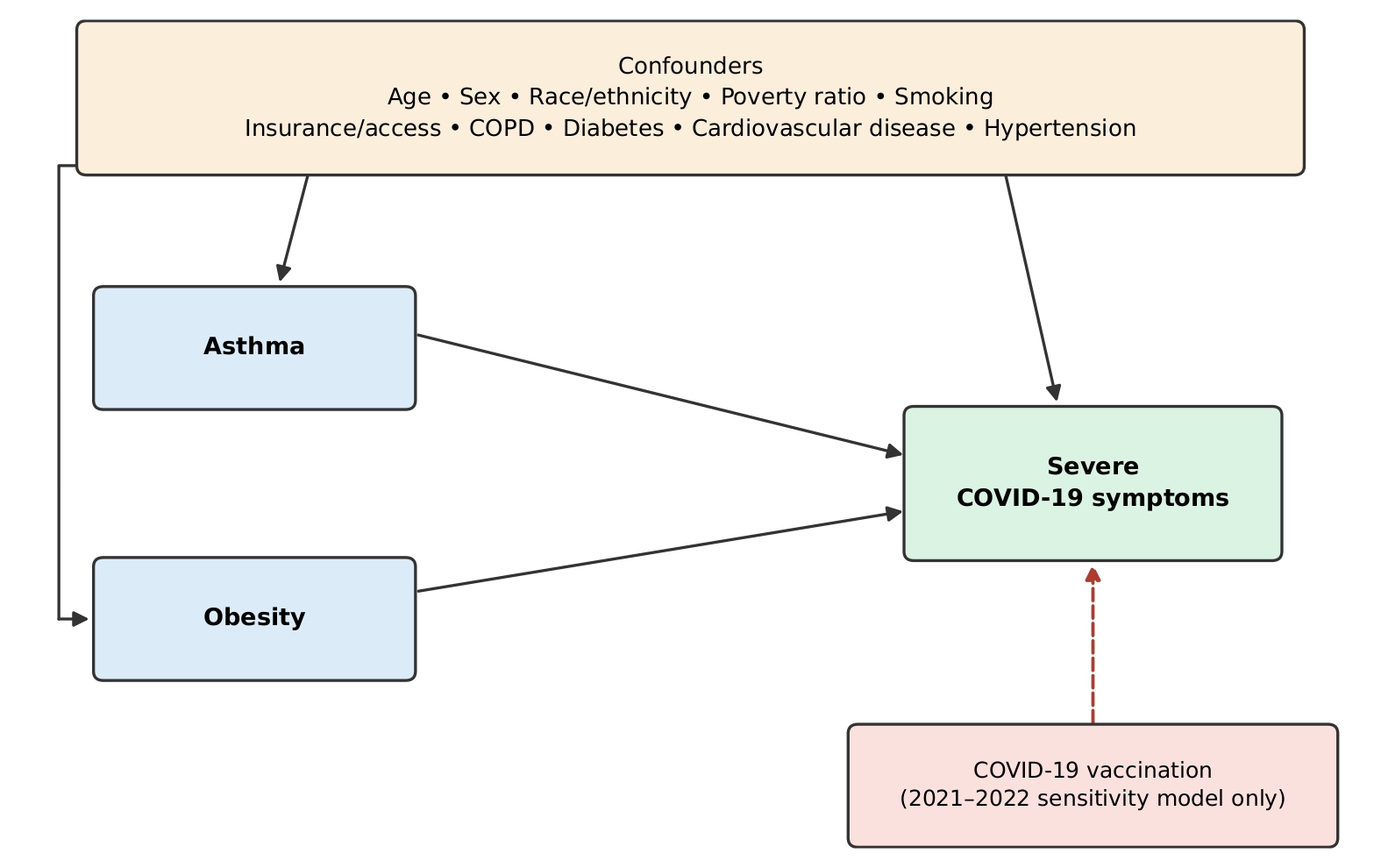
The DAG of the pre-specified confounder-selection strategy used in the fully adjusted model (Model 3, Table 5). The exposures were asthma and obesity, with their interaction tested; the outcome was severe COVID-19 symptoms; and the confounders were age, sex, race/ethnicity, poverty ratio, smoking, insurance/access, COPD, diabetes, cardiovascular disease, and hypertension. COVID-19 vaccination (dashed arrow) was included only in the 2021–2022 sensitivity model, as NHIS did not collect vaccination status in 2020.
To further characterize the joint effect of asthma and obesity, we estimated the predicted marginal probability of severe COVID-19 symptoms for each of the four exposure groups and calculated four additive-interaction measures: the risk difference (RD), relative excess risk due to interaction (RERI), attributable proportion (AP), and synergy index (SI), each from Model 1 with 95% confidence intervals from a 500-replicate cluster bootstrap (Table 6).
| Year | N (Total) | Asthma (%) | Obesity (%) | COVID-19 Diagnosis (%) | Severe COVID-19 (%) |
| 2020 | 31,568 | 14.23% (95% CI: 13.72-14.73) | 33.02% (95% CI: 32.34-33.71) | 4.22% (95% CI: 3.82-4.62) | 19.31% (95% CI: 15.25-23.37) |
| 2021 | 29,482 | 13.68% (95% CI: 13.20-14.15) | 32.81% (95% CI: 32.16-33.46) | 13.58% (95% CI: 13.11-14.05) | 18.84% (95% CI: 17.27-20.41) |
| 2022 | 27,651 | 14.51% (95% CI: 14.02-15.01) | 33.14% (95% CI: 32.48-33.80) | 30.82% (95% CI: 30.17-31.47) | 16.89% (95% CI: 15.91-17.87) |
| Pooled | 88,701 | 14.0% (95% CI: 13.85-14.42) | 32.99% (95% CI: 32.61-33.38) | 18.65% (95% CI: 18.31-19.00) | 17.56% (95% CI: 16.75-18.38) |
Notes:
- Percentages are weighted using NHIS Sample Adult weights (WTFA_A).
- Severe COVID-19 is defined as respondents reporting severe symptoms on the CVDSEV_A scale (coded as 4).
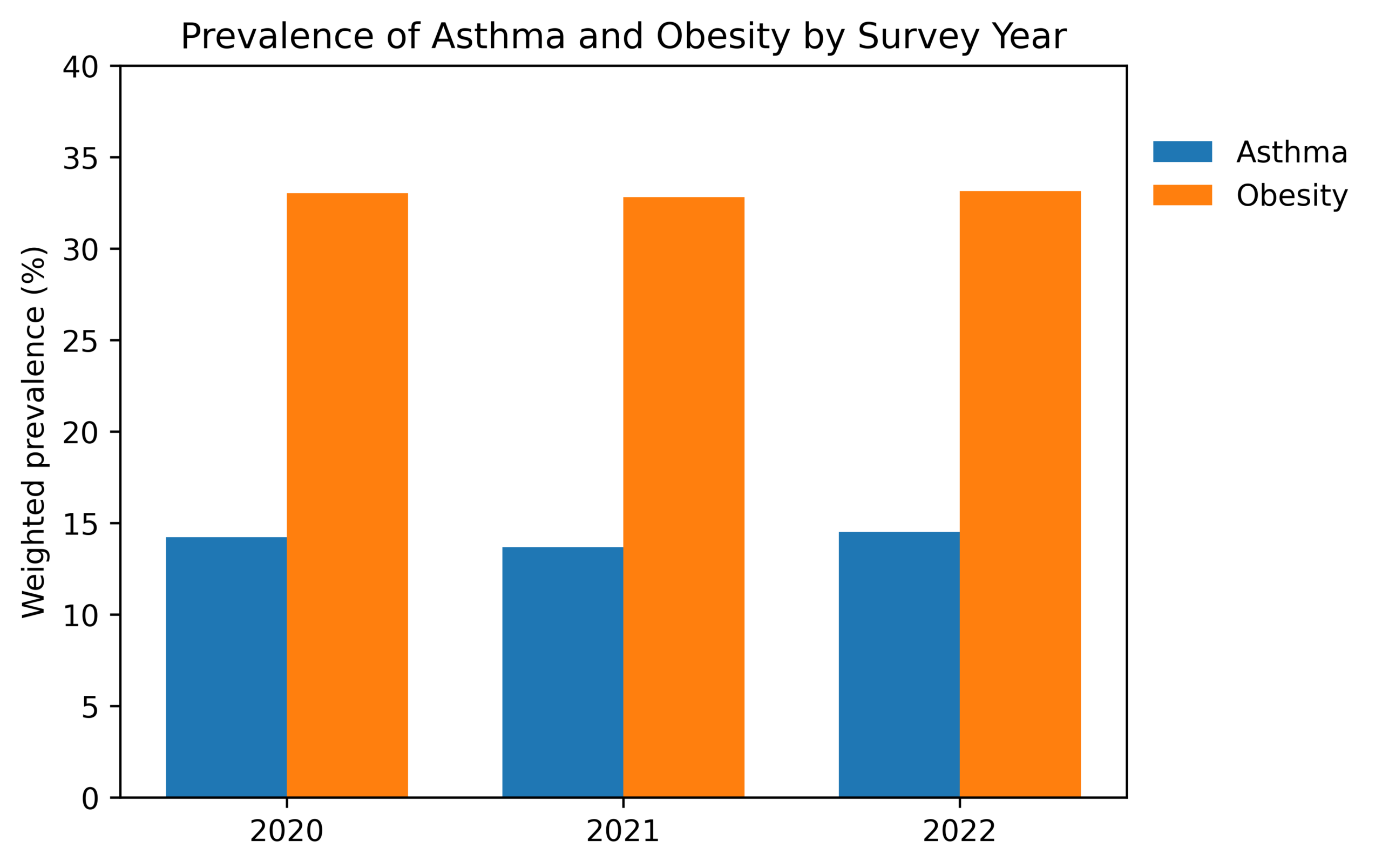
Figure 2 shows the weighted prevalence of asthma and obesity across the years 2020, 2021, and 2022, using data from the National Health Interview Survey (NHIS) Sample Adult files. Asthma and obesity were determined using standardized NHIS variables. Asthma was defined as ever having a physician diagnosis, and obesity was defined as body mass index (BMI) ≥ 30 kg/m². The prevalence rates were adjusted for survey weights to ensure national representativeness of the U.S. adult population.
Survey-weighted descriptive analyses were conducted to estimate the prevalence of severe COVID-19 symptoms by asthma and obesity status across survey years. These descriptive comparisons were used to characterize subgroup differences and to inform subsequent regression-based analyses evaluating adjusted associations.
Results
Prevalence of Asthma, Obesity, and COVID-19 Outcomes
The analyses in Tables 4-6 show asthma (OR≈1.33) and obesity (OR≈1.51) were each associated with severe symptoms, while the interaction term was not statistically significant and the combined group showed a 13.5 percentage point higher absolute risk than the reference group.
Weighted descriptive analyses showed that the national prevalence of asthma and obesity remained relatively stable across survey years (Figure 2). Asthma prevalence ranged from approximately 13-15% between 2020 and 2022, while obesity prevalence remained consistently above 32% across all three years (using NHIS’s official BMI category variable, BMICAT_A). In contrast, the prevalence of reported COVID-19 experience increased substantially over time, reflecting broader population exposure as the pandemic progressed.
Among respondents reporting COVID-19 infection, the proportion experiencing severe symptoms remained relatively stable across survey years, with approximately 17-19% of infected adults reporting severe symptoms (Table 2).
| Characteristic | 2020 (%) | 2021 (%) | 2022 (%) |
| Ever asthma | 14.23 (13.72-14.73) | 13.68 (13.20-14.15) | 14.51 (14.02-15.01) |
| Obesity (BMI ≥ 30) | 33.02 (32.34-33.71) | 32.81 (32.16-33.46) | 33.14 (32.48-33.80) |
| COVID-19 experience | 4.22 (3.82-4.62) | 13.58 (13.11-14.05) | 30.82 (30.17-31.47) |
| Severe COVID-19 symptoms* | 19.31 (15.25-23.37) | 18.84 (17.27-20.41) | 16.89 (15.91-17.87) |
| *Severe symptoms calculated among respondents with COVID-19 only. | |||
Severe COVID-19 Symptoms by Asthma and Obesity Status
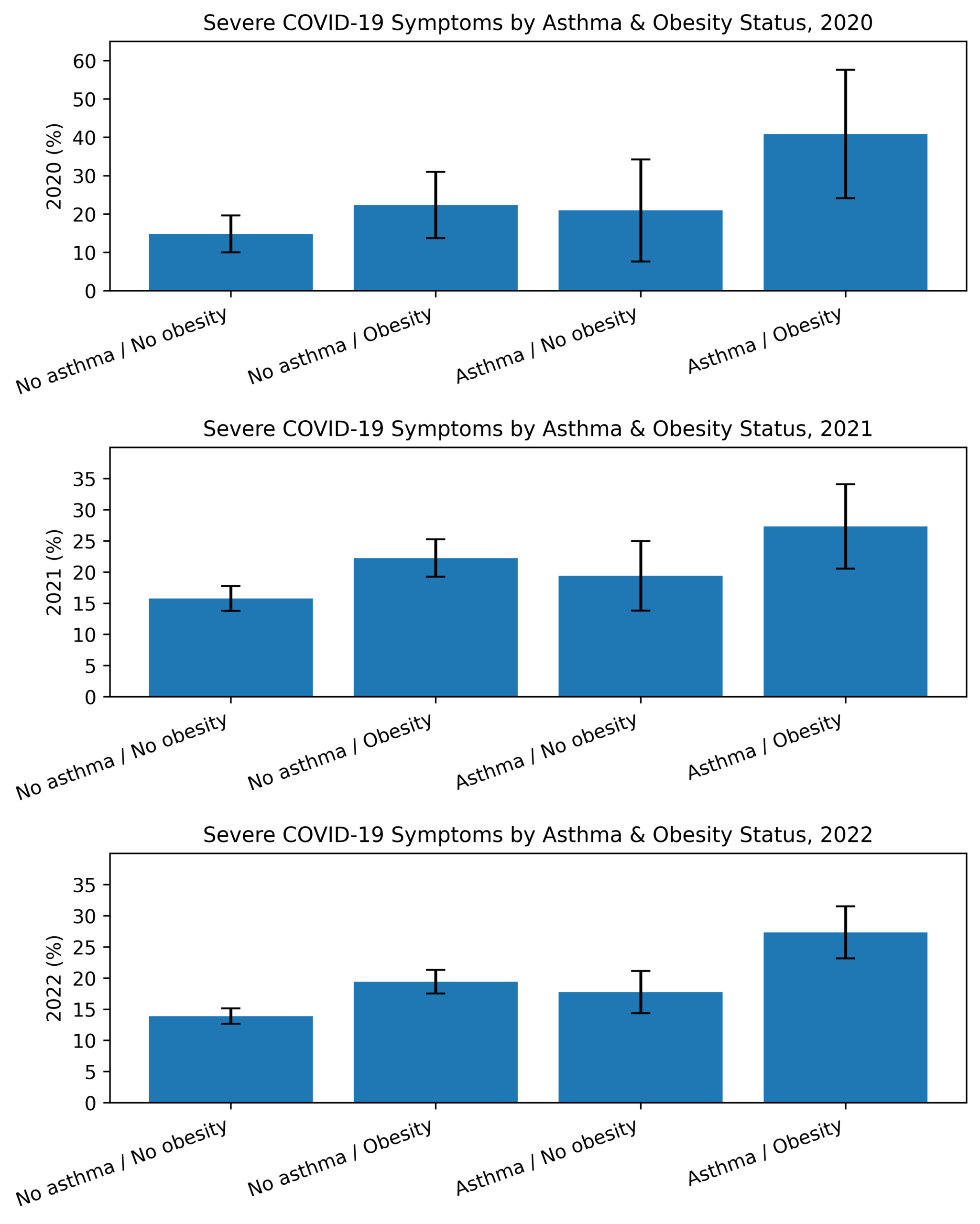
Figure 3 presents the survey-weighted prevalence of severe COVID-19 symptoms by asthma and obesity status across the 2020, 2021, and 2022 survey years.
Across all survey years, the prevalence of severe COVID-19 symptoms differed markedly by asthma and obesity status (Figure 3). In each year, adults with both asthma and obesity consistently exhibited the highest prevalence of severe COVID-19 symptoms, whereas those with neither condition showed the lowest prevalence.
This pattern was observed in 2020, 2021, and 2022, suggesting that the combined presence of asthma and obesity was associated with elevated risk of severe COVID-19 symptoms throughout the pandemic period. The consistency of this gradient across years supports the robustness of the observed subgroup differences. However, as noted in Methods, the 2020 asthma-and-obesity subgroup is based on a small cell count (n=54); year specific estimates, especially for 2020, should therefore be interpreted with caution and are less stable than the pooled estimate. Table 3 shows severe COVID-19 symptom prevalence further stratified by asthma and obesity status to assess combined effects.
| Asthma | Obesity | 2020 (%) | 2021 (%) | 2022 (%) |
| No | No | 14.79 (9.97-19.61, n=350) | 15.77 (13.78-17.76, n=1863) | 13.89 (12.65-15.13, n=4127) |
| No | Yes | 22.34 (13.70-30.98, n=167) | 22.25 (19.25-25.24, n=1024) | 19.40 (17.51-21.30, n=2217) |
| Yes | No | 20.93 (7.62-34.24, n=55) | 19.39 (13.82-24.97, n=279) | 17.75 (14.37-21.12, n=710) |
| Yes | Yes | 40.84 (24.10-57.58, n=54) | 27.31 (20.53-34.09, n=251) | 27.33 (23.14-31.52, n=591) |
Adjusted Associations Between Asthma, Obesity, and Severe COVID-19 Symptoms
In pooled analyses restricted to respondents with COVID-19 infection, weighted logistic regression models demonstrated that asthma and obesity were each associated with higher odds of severe COVID-19 symptoms (Figure 4). Compared with adults with neither asthma nor obesity, individuals with obesity alone and those with asthma alone showed elevated odds of severe symptoms.
Adults with both asthma and obesity had the highest adjusted odds of severe COVID-19 symptoms relative to the reference group. Although interaction effects were limited by sparse cell counts in year-specific analyses, pooled models suggested that adults with both asthma and obesity experienced the highest adjusted odds of severe COVID-19 symptoms, although the formal interaction term was not statistically significant (p = 0.381).
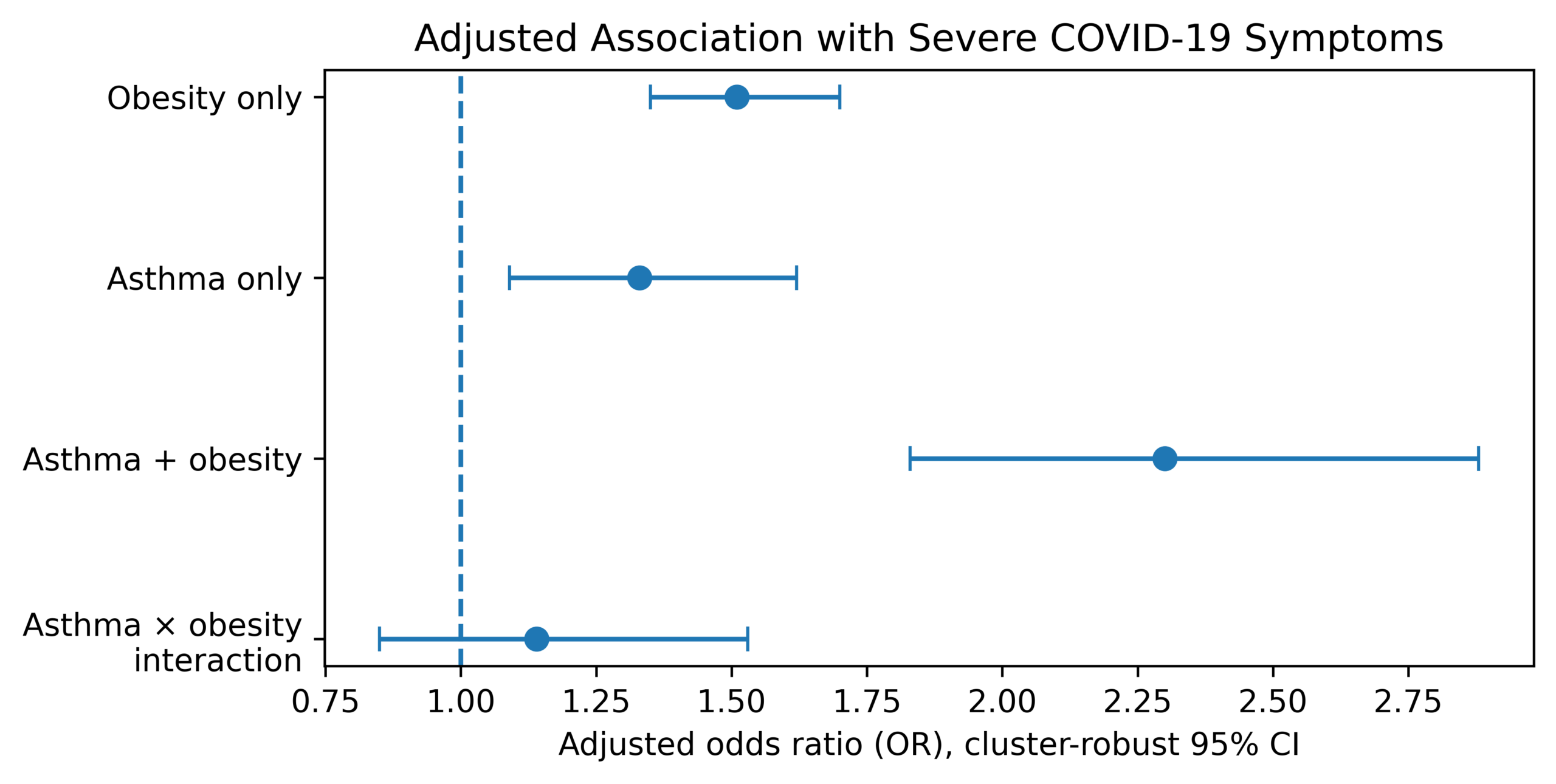
Figure 4 presents the adjusted odds ratios (ORs) for severe COVID-19 symptoms among individuals with asthma and obesity. The odds ratios were estimated using weighted logistic regression models, adjusting for year of survey participation and including an interaction term between asthma and obesity. The reference group was individuals with neither asthma nor obesity. The model showed that asthma and obesity were each associated with increased odds of severe COVID-19 symptoms after adjustment for survey year. Adults with both asthma and obesity had the highest adjusted odds, while the asthma × obesity interaction term was positive but not statistically significant.
In pooled survey-weighted logistic regression analyses restricted to respondents with COVID-19 infection, obesity alone was associated with higher odds of severe COVID-19 symptoms (OR = 1.51, 95% CI: 1.35-1.70, p < 0.001), and asthma alone was also associated with higher odds (OR = 1.33, 95% CI: 1.09-1.62, p = 0.004). Adults with both asthma and obesity had the highest adjusted odds of severe symptoms (OR = 2.30, 95% CI: 1.83-2.88). The asthma × obesity interaction term was positive but not statistically significant (OR = 1.14, 95% CI: 0.85-1.53, p = 0.381).
Outcome: Severe COVID-19 symptoms (among respondents with COVID-19 infection)
Reference group: No asthma and no obesity
| Asthma | Obesity | Adjusted OR | 95% CI | p-value | Interpretation |
| No | No | 1.00 | Reference | Reference | Reference group |
| No | Yes | 1.51 | 1.35-1.70 | <0.001 | Obesity alone was associated with higher adjusted odds. |
| Yes | No | 1.33 | 1.09-1.62 | 0.004 | Asthma alone was associated with higher adjusted odds. |
| Yes | Yes | 2.30 | 1.83-2.88 | — | Adults with both asthma and obesity had the highest adjusted odds. |
| Asthma × Obesity | Interaction term | 1.14 | 0.85-1.53 | 0.381 | Positive but not statistically significant. |
Notes:
Adjusted odds ratios were estimated using survey-weighted logistic regression models including survey year indicators. Severe COVID-19 symptoms were assessed among respondents reporting COVID-19 infection only.
| Model | N | Asthma OR | Obesity OR | Interaction OR (p) |
| 1: Base model | 11,675 | 1.33 (1.09-1.62) | 1.51 (1.35-1.70) | 1.14 (p=0.381) |
| 2: +age, sex | 11,663 | 1.43 (1.17-1.74) | 1.49 (1.33-1.68) | 1.07 (p=0.662) |
| 3: Fully adj.* | 10,666 | 1.31 (1.08-1.60) | 1.29 (1.13-1.47) | 1.19 (p=0.301) |
*Age, sex, race/ethnicity, poverty ratio, smoking, insurance, COPD, diabetes, cardiovascular disease, hypertension, and survey year.
Associations were consistent across all three models; obesity’s estimate attenuated modestly after full adjustment (from 1.51 to 1.29), while asthma remained stable, and the interaction stayed non-significant throughout. A 2021-2022 only sensitivity model adding vaccination gave materially identical results (asthma OR=1.33, obesity OR=1.50, interaction p=0.658; vaccination itself was protective, OR=0.74, p<0.001). We retain the base model (Model 1) as primary for consistency with the descriptive tables, with Table 5 as confirmatory evidence against confounding.
| Group / Measure | Estimate (95% CI) |
| Predicted probability of severe COVID-19 symptoms | |
| No asthma / No obesity (reference) | 14.5% (13.4-15.4) |
| No asthma / Obesity | 20.4% (18.8-22.0) |
| Asthma / No obesity | 18.4% (15.8-21.3) |
| Asthma / Obesity | 28.0% (24.0-31.9) |
| Additive-scale interaction measures (Asthma/Obesity vs. reference) | |
| Risk difference (RD) | 13.5 pts (9.2-17.9)* |
| Relative excess risk due to interaction (RERI) | 0.256 (-0.142-0.596) |
| Attributable proportion (AP) | 0.132 (-0.079-0.280) |
| Synergy index (SI) | 1.378 (0.836-2.204) |
*Statistically significant (CI excludes 0); RERI/AP/SI were not significant.
We interpret these findings as showing that asthma and obesity were each associated with higher risk, while their combination had the highest absolute burden, without statistical evidence of synergistic interaction on either the multiplicative or additive scale.
Discussion
This epidemiological study focuses on the association between comorbid asthma and obesity and severe COVID-19 symptoms among the US adult population. The analysis draws on 2020–2022 data from the National Health Interview Survey (NHIS), a nationally representative US health survey, to systematically test the independent and joint effects of these two chronic conditions on severe COVID-19. Multiple prior studies have confirmed a clear link between obesity and adverse COVID-19 outcomes including hospitalization, intensive care unit (ICU) admission, and death9,19,20. However, findings on the association between asthma and severe COVID-19 have remained inconsistent4,21.
A global multi-cohort study of asthma patients found that comorbidity burden, including obesity, was a stronger predictor of COVID-19 hospitalization risk than asthma diagnosis alone. This suggests that the co-occurrence of asthma and obesity specifically, rather than either condition in isolation, may be where the clearest signal for severe COVID-19 risk lies22. This finding directly motivates the joint interaction approach taken in the present study.
It is worth noting, however, that the obesity-COVID-19 literature is not entirely uniform either. A 2023 Cochrane systematic review and meta-analysis of over 12 million participants found that, compared with normal weight individuals, those in lower obesity classes (class I-II, BMI 30-40 kg/m²) were not significantly associated with increased mortality, with clearer risk elevation concentrated in higher obesity classes23; this suggests that obesity’s relationship with COVID-19 severity may itself be threshold or dose dependent rather than uniform across the whole obese range, a nuance this study’s binary BMI ≥ 30 kg/m² definition cannot capture.
Furthermore, relatively few population-based studies using nationally representative data have evaluated the independent and joint associations of asthma and obesity with severe COVID-19 outcomes. Through descriptive analysis and survey-weighted logistic regression analysis, this study found that across the three-year survey period, people living with both asthma and obesity consistently had the highest prevalence of severe COVID-19, while people with neither of the two chronic conditions had the lowest prevalence. This study extends the existing literature by demonstrating these associations in a nationally representative U.S. adult population and by emphasizing the importance of evaluating asthma and obesity jointly rather than in isolation.
At the biological level, asthma triggers chronic airway inflammation and impaired respiratory reserve, while obesity leads to systemic inflammation, metabolic disorders, and abnormal immune regulation. In addition, obesity exacerbates poor asthma control and the progression of airway inflammation12,14. Recent evidence also suggests that uncontrolled asthma itself may increase the risk of severe COVID-19 outcomes, further supporting the importance of asthma severity in pandemic risk assessment24. The overlapping pathological pathways of the two chronic conditions may jointly contribute to greater vulnerability to severe respiratory infection, providing biological plausibility for the observed associations. Methodologically, this study applied an interaction framework to evaluate whether the association between asthma and severe COVID-19 differed according to obesity status, which aligns with the core value of interaction analysis in epidemiology17.
The obesity odds ratio (1.51) is consistent with prior estimates19,11, and the asthma odds ratio (1.33) falls within the range reported previously21, although phenotype-specific studies7,3suggest this estimate may understate risk in severe-asthma subgroups that NHIS cannot identify. No prior study appears to have directly tested this interaction. It is also worth distinguishing epidemiological interaction (a statistical departure from a null model, as tested here) from biological interaction (shared disease mechanisms): a non-significant statistical interaction does not rule out shared biology, nor does biological plausibility guarantee statistical detectability at this sample size.
However, this study also has limitations. Both COVID-19 diagnosis and symptom severity relied on self-reported data, which carries a risk of recall or reporting bias, and the precision of stratified interaction estimates for some study years was limited by sparse data cells, meaning only the conclusions from the pooled, combined analysis remain fully reliable. More broadly, the cross-sectional design of the National Health Interview Survey (NHIS) cannot support causal inference or establish temporal order between exposures and outcomes; the primary reported model adjusts only for survey year, so residual confounding from unmeasured factors could bias the point estimates, though a fully adjusted model (Table 5) yielded consistent conclusions; the small sample size of the severe-symptom subgroup restricts subgroup analysis; and although cluster-robust standard errors clustered on primary sampling unit approximate NHIS’s complex survey design, they do not fully replicate NHIS’s recommended Taylor-series/replicate-weight variance estimation (which also accounts for sampling stratification), so reported confidence intervals should be interpreted as reasonable approximations rather than exact design-based estimates. However, this study has two core strengths: NHIS is a large, nationally representative sample covering US adults, and after applying survey weights, the study’s conclusions can be generalized to a broader population. The multi-year survey data included in this analysis also improves the robustness of the observed patterns, preventing the limitation that conclusions only apply to a single phase of the COVID-19 pandemic. The analytic approach also included multiple robustness checks: associations were tested for robustness across three levels of confounder adjustment with a pre-specified, diagrammed adjustment strategy (Figure 1, Table 5), and the joint effect of asthma and obesity was evaluated on both the multiplicative and additive scales using bootstrap-based confidence intervals (Table 6) rather than relying on a single interaction term, giving a more complete picture than a single-model analysis would provide.
A few additional, more specific limitations are also worth noting. Obesity was based on self-reported height and weight, which tend to under-report body weight relative to measured values. NHIS does not capture asthma severity, control, or treatment/medication use, so this study cannot distinguish well-controlled from poorly controlled asthma. COVID-19 vaccination status was not included and is only available in NHIS for 2021-2022 (not 2020), which limits its use in a pooled 2020-2022 model. Relatedly, the survey-year indicator only coarsely proxies for shifts in dominant variants, antiviral availability, and testing behavior across 2020-2022. The primary model adjusts only for survey year, though Table 5 shows consistent results after full adjustment, and residual confounding cannot be fully excluded. Obesity was defined by using a single BMI threshold rather than by obesity class or central adiposity; the Cochrane review discussed in the Introduction suggests risk may concentrate in higher obesity classes, a distinction this binary measure cannot capture. Formal power calculations for the interaction term were not performed; given modest cell sizes (n=54-251), this study was likely underpowered to detect a small-to-moderate interaction, which should temper interpretation of the null finding.
Because this is a cross-sectional, associative study, these findings should be interpreted as hypothesis-generating rather than conclusive evidence for practice. With that caveat, risk assessment for large-scale respiratory pandemics may benefit from considering combinations of chronic diseases rather than single diseases in isolation. Joint assessment of asthma and obesity may help identify high-risk groups to support targeted prevention and control. Future research also needs to explore the biological, behavioral, and environmental mechanisms underlying this interaction, and verify whether this finding applies to other combinations of respiratory infections and chronic diseases. Specifically, cohorts with spirometry-confirmed asthma severity could test whether the interaction becomes significant when severity is captured directly, and the additive-interaction framework used here (Table 6) could extend to other chronic-disease pairs.
Consistent with the descriptive and regression findings above, this study supports the importance of evaluating asthma and obesity jointly when identifying high-risk subgroups, even though the formal interaction term was not statistically significant. This joint evaluation, which combines nationally representative data with both multiplicative and additive interaction analysis, can help inform population-level risk stratification and the development of targeted prevention strategies. Taken together, this study’s main contribution is methodological as much as substantive: testing the asthma-obesity-COVID-19 relationship across multiple confounder-adjustment levels and on both scales offers a more complete and cautious picture than a single-model analysis would and illustrates how publicly available survey data can support this kind of layered, reproducible chronic-disease research. Future research is still needed to explore the multi-dimensional mechanisms underlying this relationship and to verify similar risk patterns in other contexts, particularly as nationally representative surveillance data become increasingly valuable for understanding disease patterns during public health emergencies25.
References
- H. Rutter, N. Savona, K. Glonti, J. Bibby, S. Cummins, D. T. Finegood, F. Greaves, L. Harper, P. Hawe, L. Moore, M. Petticrew, E. Rehfuess, A. Shiell, J. Thomas, M. White. The need for a complex systems model of evidence for public health. The Lancet. Vol. 390, pg. 2602-2604, 2017, https://doi.org/10.1016/S0140-6736(17)31267-9. [↩]
- M. I. Asher, L. García-Marcos, N. E. Pearce, D. P. Strachan. Trends in worldwide asthma prevalence. European Respiratory Journal. Vol. 56, pg. 2002094, 2020, https://doi.org/10.1183/13993003.02094-2020. [↩]
- R. Broadhurst, R. Peterson, J. P. Wisnivesky, A. Federman, S. M. Zimmer, S. Sharma, M. Wechsler, F. Holguin. Asthma in covid-19 hospitalizations: an overestimated risk factor? Annals of the American Thoracic Society. Vol. 17, pg. 1645-1648, 2020, https://doi.org/10.1513/AnnalsATS.202006-613RL. [↩] [↩]
- M. C. Peters, S. Sajuthi, P. Deford, S. Christenson, C. L. Rios, M. T. Montgomery, P. G. Woodruff, D. T. Mauger, S. C. Erzurum, M. W. Johansson, L. C. Denlinger, N. N. Jarjour, M. Castro, A. T. Hastie, W. Moore, V. E. Ortega, E. R. Bleecker, S. E. Wenzel, E. Israel, B. D. Levy, M. A. Seibold, J. V. Fahy. Covid-19–related genes in sputum cells in asthma. American Journal of Respiratory and Critical Care Medicine. Vol. 202, pg. 83-90, 2020, https://doi.org/10.1164/rccm.202003-0821OC. [↩] [↩]
- A. P. Sunjaya, S. M. Allida, G. L. Di Tanna, C. R. Jenkins. Asthma and COVID-19 risk: a systematic review and meta-analysis. European Respiratory Journal. Vol. 59, pg. 2101209, 2022, https://doi.org/10.1183/13993003.01209-2021. [↩]
- K. D. Chhiba, G. B. Patel, T. H. T. Vu, M. M. Chen, A. Guo, E. Kudlaty, Q. Mai, C. Yeh, L. N. Muhammad, K. E. Harris, B. S. Bochner, L. C. Grammer, P. A. Greenberger, R. Kalhan, F. L. Kuang, C. A. Saltoun, R. P. Schleimer, W. W. Stevens, A. T. Peters. Prevalence and characterization of asthma in hospitalized and nonhospitalized patients with COVID-19. Journal of Allergy and Clinical Immunology. Vol. 146, pg. 307-314, 2020, https://doi.org/10.1016/j.jaci.2020.06.010. [↩]
- C. I. Bloom, P. Cullinan, J. A. Wedzicha. Asthma phenotypes and COVID-19 risk: a population-based observational study. American Journal of Respiratory and Critical Care Medicine. Vol. 205, pg. 36-45, 2022, https://doi.org/10.1164/rccm.202107-1704OC. [↩] [↩]
- E. J. Williamson, A. J. Walker, K. Bhaskaran, S. Bacon, C. Bates, C. E. Morton, H. J. Curtis, A. Mehrkar, D. Evans, P. Inglesby, J. Cockburn, H. I. McDonald, B. MacKenna, L. Tomlinson, I. J. Douglas, C. T. Rentsch, R. Mathur, A. Y. S. Wong, R. Grieve, D. Harrison, H. Forbes, A. Schultze, R. Croker, J. Parry, F. Hester, S. Harper, R. Perera, S. J. W. Evans, L. Smeeth, B. Goldacre. Factors associated with COVID-19-related death using OpenSAFELY. Nature. Vol. 584, pg. 430-436, 2020, https://doi.org/10.1038/s41586-020-2521-4. [↩]
- B. M. Popkin, S. Du, W. D. Green, M. A. Beck, T. Algaith, C. H. Herbst, R. F. Alsukait, M. Alluhidan, N. Alazemi, M. Shekar. Individuals with obesity and covid-19: A global perspective on epidemiology and biological relationships. Obesity Reviews. Vol. 21, pg. e13128, 2020, https://doi.org/10.1111/obr.13128. [↩] [↩]
- N. Sattar, I. B. McInnes, J. J. V. McMurray. Obesity is a risk factor for severe covid-19 infection: multiple potential mechanisms. Circulation. Vol. 142, pg. 4-6, 2020, https://doi.org/10.1161/CIRCULATIONAHA.120.047659. [↩]
- L. Kompaniyets, A. B. Goodman, B. Belay, D. S. Freedman, M. S. Sucosky, S. J. Lange, A. V. Gundlapalli, T. K. Boehmer, H. M. Blanck. Body mass index and risk for COVID-19-related hospitalization, intensive care unit admission, invasive mechanical ventilation, and death – United States, March-December 2020. MMWR Morbidity and Mortality Weekly Report. Vol. 70, pg. 355-361, 2021, https://doi.org/10.15585/mmwr.mm7010e4. [↩] [↩]
- M. Schatz, R. S. Zeiger, S. J. Yang, W. Chen, S. Sajjan, F. Allen-Ramey. Prospective study on the relationship of obesity to asthma impairment and risk. Journal of Allergy and Clinical Immunology: In Practice. Vol. 3, pg. 560-565, 2015, https://doi.org/10.1016/j.jaip.2015.03.017. [↩] [↩]
- U. Peters, A. E. Dixon, E. Forno. Obesity and asthma. Journal of Allergy and Clinical Immunology. Vol. 141, pg. 1169-1179, 2018, https://doi.org/10.1016/j.jaci.2018.02.004. [↩]
- L. G. Wood. Diet, obesity, and asthma. Annals of the American Thoracic Society, Volume 14, Issue Supplement_5, November 2017, Pages S332-S338, https://doi.org/10.1513/annalsats.201702-124aw. [↩] [↩]
- R. M. Andrianasolo, E. Kesse-Guyot, M. Adjibade, S. Hercberg, P. Galan, R. Varraso. Associations between dietary scores with asthma symptoms and asthma control in adults. European Respiratory Journal. Vol. 52, pg. 1702572, 2018, https://doi.org/10.1183/13993003.02572-2017. [↩]
- A. I. Tiotiu, P. Novakova, D. Nedeva, H. J. Chong-Neto, S. Novakova, P. Steiropoulos, K. Kowal. Impact of air pollution on asthma outcomes. International Journal of Environmental Research and Public Health. Vol. 17, pg. 6212, 2020, https://doi.org/10.3390/ijerph17176212. [↩]
- T. J. VanderWeele, M. J. Knol. A tutorial on interaction. Epidemiologic Methods. Vol. 3, pg. 33-72, 2014, https://doi.org/10.1515/em-2013-0005. [↩] [↩]
- Centers for Disease Control and Prevention. National health interview survey (NHIS) public-use data files, 2020-2022. National Center for Health Statistics (NCHS). https://www.cdc.gov/nchs/nhis/index.htm 2023. [↩]
- M. Gao, C. Piernas, N. M. Astbury, J. Hippisley-Cox, S. O’Rahilly, P. Aveyard, S. A. Jebb. Associations between body-mass index and covid-19 severity in 6.9 million people in england: a prospective, community-based cohort study. The Lancet Diabetes & Endocrinology. Vol. 9, pg. 350-359, 2021, https://doi.org/10.1016/S2213-8587(21)00089-9. [↩] [↩]
- J. Yang, C. Tian, Y. Chen, C. Zhu, H. Chi, J. Li. Obesity aggravates covid-19: an updated systematic review and meta-analysis. Journal of Medical Virology. Vol. 93, pg. 2662-2674, 2021, https://doi.org/10.1002/jmv.26677. [↩]
- L. B. Robinson, X. Fu, I. V. Bassett, V. A. Triant, A. S. Foulkes, Y. Zhang, C. A. Camargo Jr., K. G. Blumenthal. Covid-19 severity in hospitalized patients with asthma: a matched cohort study. Journal of Allergy and Clinical Immunology: In Practice. Vol. 9, pg. 497-500, 2021, https://doi.org/10.1016/j.jaip.2020.10.021. [↩] [↩]
- C. Skevaki, R. S. Chinthrajah, D. Fomina, et al. Comorbidity defines asthmatic patients’ risk of COVID-19 hospitalization: a global perspective. Journal of Allergy and Clinical Immunology. Vol. 151, pg. 110-117, 2023, https://doi.org/10.1016/j.jaci.2022.09.039. [↩]
- B. Tadayon Najafabadi, D. G. Rayner, K. Shokraee, K. Shokraie, P. Panahi, P. Rastgou, F. Seirafianpour, F. Momeni Landi, P. Alinia, N. Parnianfard, et al. Obesity as an independent risk factor for COVID-19 severity and mortality. Cochrane Database of Systematic Reviews. Vol. 2023, pg. CD015201, 2023, https://doi.org/10.1002/14651858.CD015201. [↩]
- S. Selberg, J. Karlsson Sundbaum, J. R. Konradsen, H. Backman, L. Hedman, A. Lindberg, C. Stridsman. Multiple manifestations of uncontrolled asthma increase the risk of severe covid-19. Respiratory Medicine. Vol. 216, pg. 107308, 2023, https://doi.org/10.1016/j.rmed.2023.107308. [↩]
- W. E. Allen, H. Altae-Tran, J. Briggs, X. Jin, G. McGee, A. Shi, R. Raghavan, M. Kamariza, N. Nova, A. Pereta, C. Danford, A. Kamel, P. Gothe, E. Milam, J. Aurambault, T. Primke, W. Li, J. Inkenbrandt, T. Huynh, E. Chen, C. Lee, M. Croatto, H. Bentley, W. Lu, R. Murray, M. Travassos, B. A. Coull, J. Openshaw, C. S. Greene, O. Shalem, G. King, R. Probasco, D. R. Cheng, B. Silbermann, F. Zhang, X. Lin. Population-scale longitudinal mapping of covid-19 symptoms, behaviour and testing. Nature Human Behaviour. Vol. 4, pg. 972-982, 2020, https://doi.org/10.1038/s41562-020-00944-2. [↩]