
Abstract
Particulate matter (PM), volatile organic compounds (VOCs) and toxic gases are among the major air pollutants influencing global air quality and are associated with respiratory, cardiovascular diseases, and other health risks. To reduce air pollution’s impact on public health, three common strategies including source control, ventilation dilution and engineering technologies for pollutants removal are commonly adopted. Among the engineering approaches, metal-organic frameworks (MOFs) based air filters have drawn increasing attention because of their exceptionally high specific surface areas, tunable pore structures and sizes, and versatile chemical functionalities, which enable efficient physical and chemical adsorption of various pollutants. Over the past decade, increasing research efforts have focused on the design, fabrication, and application of MOF-based filters for removing PM, VOCs, and toxic gases. This review summarizes recent advances in the past 10 years in preparing MOF-based air filters, with emphasis on MOF synthesis, immobilization of MOFs onto different substrates, and their performance in pollutants removal. A remarkable example is E-MOFilters, which realize simultaneous and highly efficient removal of PM and VOCs with low air pressure drop. This review also discusses key considerations in selecting MOFs, substrate types, fabrication strategies, and application scenarios. Finally, several challenges, including moisture sensitivity, scalability, regeneration, and safety are briefly analyzed, and some suggestions for future research are proposed.
Keywords: Chemistry, Metal-organic Frameworks (MOFs), Air Filter, Particulate Matter, Volatile Organic Compounds (VOCs), Toxic gases
Introduction
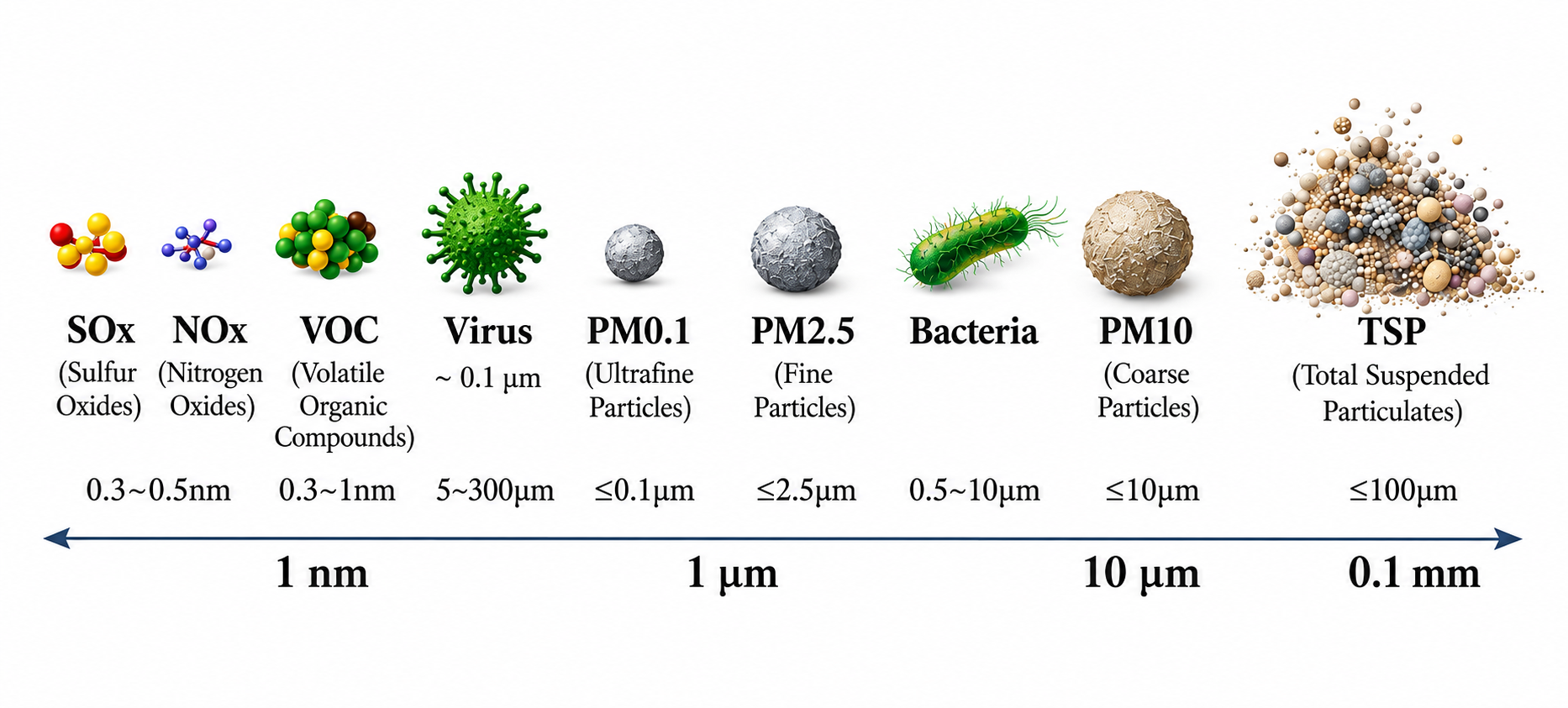
According to the World Health Organization’s (WHO) published data, approximately 99% of the global population is affected by air pollution. Air pollution may not only trigger chronic or acute respiratory and cardiovascular diseases in residents but also damage agriculture and ecosystems (e.g. acid rain) and threaten biodiversity. Common air pollutants include particulate matter (PM), volatile organic compounds (VOCs), toxic gases (e.g. NOx, SOx), and bioaerosols (e.g. bacteria and viruses). The average sizes of different air pollutants are shown in Figure 1. Particulate matter (PM) is a complex mixture and one of the main sources of air pollution1,2,3, and can be generated by both natural sources and human activities. The natural sources include pollen, soil dust, sandstorm, volcanic eruption, sea spray, naturally ignited grassland, forest fire, etc. Human activities such as mining work, quarrying activities, open-air combustion of agricultural, household and industrial wastes, coal burning in power plants, incomplete fossil fuel-related combustion, industrial and household heating and vehicle exhaust may also contribute to significant PM generation4,5,6,7. When a large amount of PM is released into the air, it would form an atmospheric phenomenon known as haze, which could not only cause durable threat to public health from days to months, but also may change the regions’ climates and have detrimental impacts on ecosystems. Many countries like India, China, Indonesia, Singapore, Mexico, USA and Australia frequently face severe and recurrent haze problems. Based on the aerodynamic equivalent diameter (dp), particulate matter is classified into total suspended particulates (TSP, dp ≤ 100 µm), inhalable particles (PM10, dp ≤ 10 µm), fine particles (PM2.5, dp ≤ 2.5 µm), also known as respirable particles, and ultrafine particles (PM0.1, dp ≤ 0.1 µm)8. Due to the inertial effects, particles larger than 10 µm can be easily expelled by the nasal cavity and respiratory tract mucosa. However, smaller particles, including PM10, PM2.5 and PM0.1, can enter the lungs and bloodstream through respiration, causing significant respiratory, cardiovascular, neuro and reproduction related diseases, such as asthma, lung cancer, Parkinson’s disease and birth defects. It has been reported that these smaller particles are responsible for about 6.7 million premature deaths annually1.
Besides PM, a second type of common pollutants with significant threat to human health is volatile organic compounds (VOCs). They are frequently present in both indoor and outdoor environments and may originate from building materials, furniture, household chemicals, personal care products, paints, colorants, vehicle exhaust, smoking, cooking and barbeques. Laboratories, chemical plants and coating workshops that frequently deal with organic solvents may also release large amounts of VOCs. Some common VOCs include formaldehyde, benzene and its derivatives, polycyclic aromatic hydrocarbons (PAHs), polychlorinated biphenyls (PCBs), etc. Depending on different boiling points, such chemicals can be generally categorized into volatile organic compounds (VOCs) and semi-volatile organic compounds (SVOCs). They can be easily breathed in and accumulated in the lungs and even the bloodstream circulation systems (due to very small sizes, typically in nano scale), causing chronic or even acute symptoms or reactions, including coughing, wheezing, chest pain, memory loss, leukemia, cardiovascular diseases, disruption of endocrine functions and increased risks of cancer. Identifying and mitigating the adverse effects of VOCs on human health has become a major focus of modern research9,10,11,12,13,14,15.
A third type of common pollutants is toxic gases. Examples include sulfur oxide (SOx), nitrogen oxide (NOₓ), carbon monoxide (CO), hydrogen sulfide (H₂S), ammonia (NH₃), ozone (O₃) and radon gas (Rn). These gases can be generated both by natural sources, such as volcano, wetland, wildfire, radioactive decay of rocks or soils (releasing radon gas), and human activities, such as combustion of coal, wood and solid wastes, chemical synthesis and production, decomposition of biomass, fireworks, etc. Most of them have strong odors and may irritate or damage lungs and respiratory tracts, while some others may be odorless but could increase cancer risk after long-time exposure. Their toxicity varies, and their threat to human health depends on their concentration in the air and exposure degree and time.
Traditional strategies for mitigating air pollutants can be categorized into source control, ventilation dilution and engineering technologies8,16,17. Engineering technologies include adsorption, filtration, photocatalytic oxidation (PCO)18, plasma catalysis19, electrostatic precipitation20, wet scrubbing21, etc. Among these technologies, adsorption and filtration based on various materials are commonly used due to their high filtration efficiency, simple working mechanisms and structures, versatile performance, and improved safety and convenience. Through the development of various adsorbents and filters, a lot of mature air purification devices have been commercialized. However, most of them still have the following common disadvantages: 1) most conventional filter materials, such as cotton, polymer fibers, and polymer membranes, have relatively lower specific surface areas, which can limit the available sites for PM deposition and adsorption; 2) with the accumulation of captured PM particles, the filters’ porosity is reduced, which leads to a significant increase of pressure drop, and thus cause reduced PM removal efficiency and higher energy consumption; 3) most of the adsorbents and filters cannot be conveniently cleaned or recycled, and require frequent replacement of new ones; 4) few air filters can simultaneously capture PM, VOCs and toxic gases22,23,24.
Since the first paper on the application of Metal-Organic Frameworks (MOFs) in the simultaneous removal of both PM and VOCs was published in 201625, the interest in developing advanced materials based on MOFs for air purification has grown rapidly, and many promising research outcomes have been reported in recent literature. Although there have been some review papers on the MOF-based air filters, the fast increase of published papers has generated a need to reassess their practical applicability. Besides, as a distinction from previous reviews, key considerations in selecting MOFs, substrate types, fabrication strategies, and application scenarios were introduced and the most balanced system, namely E-MOFilter, was discussed. Finally, facing several challenges, suggestions for future research work are provided. It is hoped that this review could provide some new reference and guidance for future research work.
Methods
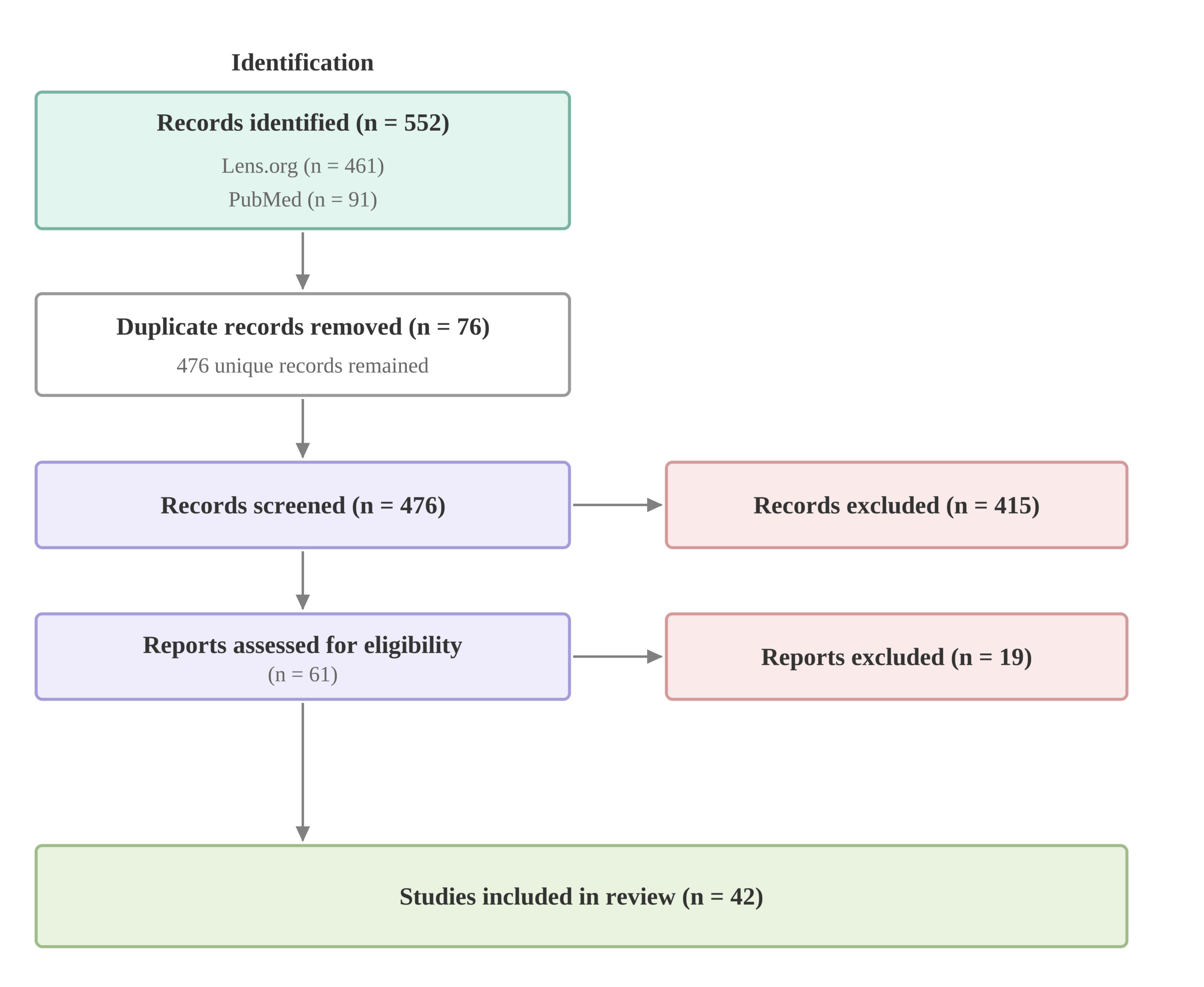
This review gathered information and data from recent information and studies regarding MOFs for capturing PM, VOCs and toxic gases. Specifically, the search was restricted to English-language studies that were selected from sites including lens.org and PubMed in the years from 2016 to 2026 with a query combining 3 concept blocks: MOF material (MOF, metal-organic framework, zeolitic imidazolate framework), air-pollution (air filter, air filtration, air purification, air pollution, particulate matter, PM2.5), and filtration-medium (face mask, respirator, filter media, nanofiber, fabric, textile, nonwoven). An initial search with the query produced 552 studies (461 from lens.org and 91 from PubMed), and from that, 76 duplicates were removed. In addition, studies before 2016 and other significant studies were selected doing a backward and forward citation search.
Inclusion and exclusion criteria were imposed: studies were included if they conducted an original experiment with MOF in air filtration, with at least one quantitative gas metric being provided for the adsorption of PM, VOC or toxic gases. Studies were excluded if they are computation-only MOF studies, MOF-derived materials, reported antibacterial endpoint only, MOFs for gas storage only or have an ineligible document type.
After the initial search, screening and data extraction were performed. First, titles and abstracts were examined to eliminate clearly irrelevant studies. 476 studies were screened based on their titles and abstracts which resulted in 415 studies being excluded and 61 being included. Full text examination of the remaining studies was then performed to determine the final 42 studies used for this review (Figure 2).
Data were then extracted and verified based on full text examination and the following values or characteristics of the MOF in the studies were recorded: maximum adsorption capacity (mg/g), filtration efficacy (%), pressure drop (Pa), quality factor, MOF loading rate (%), synthesis method, metal node type, organic ligand type, solvent type, and substrate type for immobilizing MOFs.
The gathered data were synthesized and organized based on their synthesis methods, their immobilization methods, and relative significance.
Qualities of the included studies were assessed based on their controls of the experiment, protocol reporting, test condition completeness, replication, material characterization (PXRD, BET etc.) and measurement type (dynamic or static equilibrium uptake).
Discussion
Methods to evaluate pollutants removal performance
Recently, researchers have established and adopted several parameters to evaluate the pollutants removal performance of air filters.
Maximum adsorption capacity
Maximum adsorption capacity typically has a unit of mg/g. It is used to quantify a material’s ability to absorb or capture PM, VOCs and/or toxic gases from the air. Its value is primarily decided by the air filters’ effective specific surface area, concentration of pollutants, and the interactions between the pollutants and the filters.
Filtration efficiency (E)
The filtration efficiency is defined as:
Where C0 and C1 are the concentration of pollutants before and after the filtration, respectively26, and can be either number concentration (m-3) or mass concentration (µg∙m-3). E is one of the most important evaluation parameters to evaluate the performance of filters.
Pressure drop (ΔP)
The pressure drop can be expressed as:
Where P0 (Pa) and P1 (Pa) are the pressures before and after the pollutant filtration. It indicates the resistance of air flow when passing the filters. Generally, the greater values, the higher energy consumption and higher costs; for small filtration devices like face masks, it directly influences the breathability and personal comfort of wearers. Usually, excellent air filters should achieve very low values of ΔP.
Quality factor (QF)
The quality factor (QF) has been recently put forward as a new parameter to evaluate the performance of filtration, which is defined as
Where E and ΔP refer to filtration efficiency and pressure drop, respectively27. It is decided by E and ΔP together, the larger value, the better filtration performance.
Capacity retention after repeated usage
Where q0 is the initial adsorption capacity and qn is the capacity after the nth regeneration cycle. If a filter can be washed or cleaned for regeneration, it may be reused and subjected to repeated tests. After each test, its removal efficiency and adsorption are measured and evaluated. Alternatively, capacity retention together with the number of regeneration cycles can be used to evaluate the reusability of air filters.
Metal-organic frameworks (MOFs)
Metal-organic frameworks (MOFs) are a class of highly porous, crystalline hybrid materials. MOFs are prepared by reactions between metal ions or clusters (serving as nodes, also called secondary building units (SBUs)) and organic ligands (serving as linkers) via coordination chemistry, forming stable one-, two-, or three-dimensional structures that are characterized by high porosity and large specific surface areas. The first concept of metal-organic frameworks was put forward by Hoskins and Robson in 198928, which laid the groundwork of the subsequent growth of this new research area. Over the next 3 decades, the great potential of MOFs in various applications like gas storage, selective gas separation, atmospheric water harvesting, carbon capture, catalysis and controlled drug release have been further developed by hundreds of laboratories around the world. The remarkable scientific significance of this research field has been further recognized by the 2025 Nobel Prize in Chemistry, which was awarded to Richard Robson (University of Melbourne, Australia), Susumu Kitagawa (Kyoto University, Japan) and Omar M. Yaghi (University of California, Berkeley, USA) for their pioneering contributions to the development of MOFs.
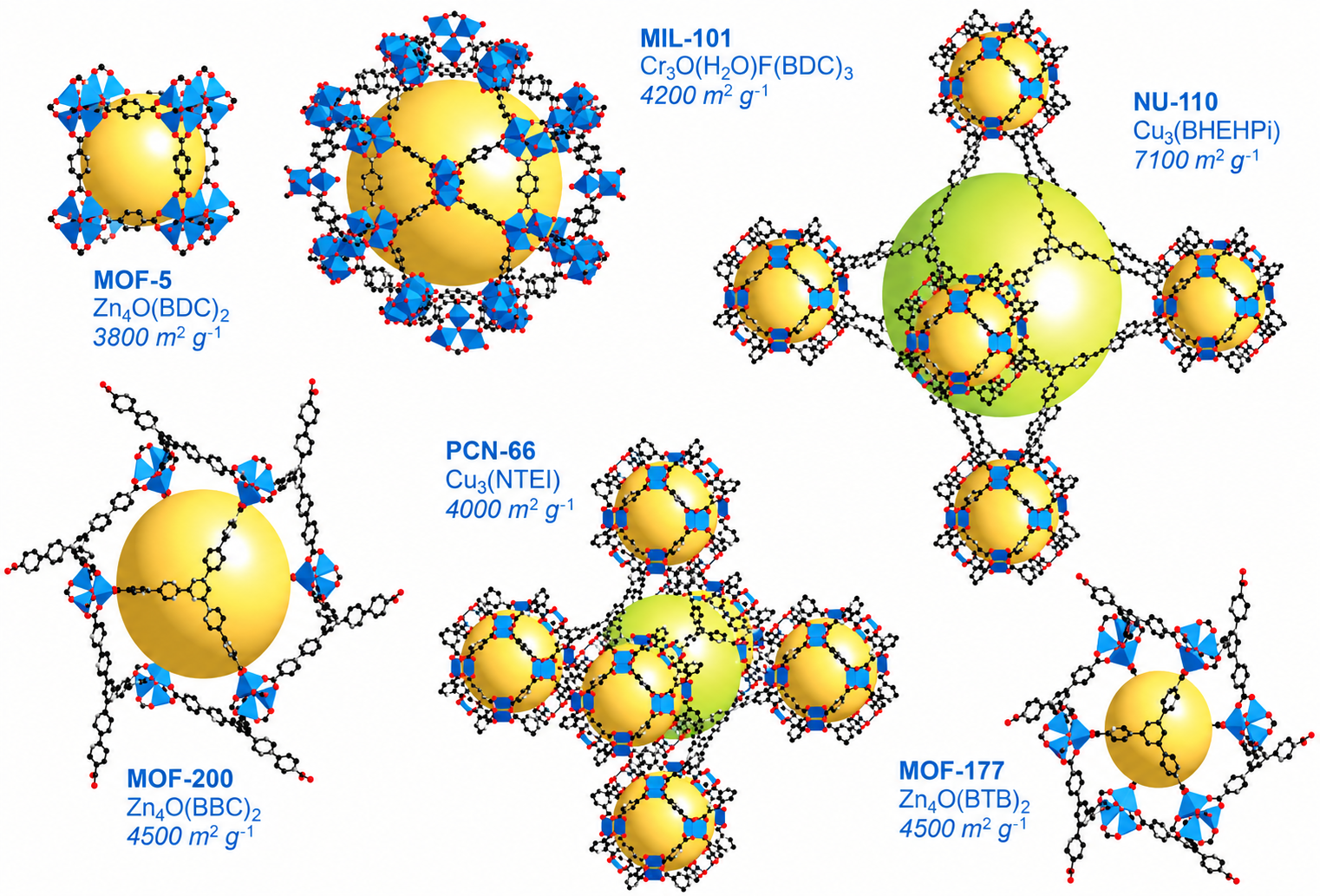
MOFs have several unique characteristics that other conventional porous materials cannot rival. First, MOFs have an extremely high porosity and a very high specific surface area29,30,31,32,33. Recent literature shows that the specific surface area of MOFs could be in a range of 3000 to 7,000 m2/g (see Figure 3), or even higher than 14,000 m2/g33. This property enables MOFs to have a much higher adsorbing capacity for gas molecules or nano-scale particles than other porous materials such as zeolites and mesoporous silica. Second, MOFs have great designability and versatility. Given the vast range of metal ions and organic ligands, the structural diversity of MOFs is virtually unlimited30. By altering the metal nodes or the organic ligands, a great number of MOFs with different pore sizes, space morphologies, thermal stability and chemical stability can be prepared. Third, MOFs have unique chemistry versatility. By intentionally selecting organic ligands with specific functional groups, the adsorption properties of MOFs can be tailored to form stronger and more selective interactions with the target pollutants, including hydrogen bonding and π-π interactions. And in some cases, covalent bonds can be formed between MOFs and the adsorbates, resulting in chemisorption. This feature not only improves the selectivity for capturing substances but also improves the adsorption efficiency. Due to these reasons, MOFs could serve as highly customizable platforms for a broad range of applications, as was mentioned above.
Metal nodes selection. Metal nodes serve as the central coordination points in MOFs, linking organic ligands to form the porous structures. The type of metal nodes may directly influence the structural, physical, chemical, and thermal stability of MOFs. Main group metals (including Mg, Ca, Al, In, etc), fourth period transition metals (including Ti, Cr, Fe, Co, Ni, Cu, Zn, etc), fifth-period transition metals (notably Zr, Cd, etc), and lanthanide methods are frequently employed as metal nodes34.
Organic ligands selection. Organic Ligands connect to the metal nodes via coordination chemistry reactions. The selection of organic ligands directly influences the MOFs’ architecture, porosity, chemical stability, and chemical functionality, which has decisive roles in the applications of MOFs. They are usually selected from carboxylates, phosphonates, imidazolates, pyrazoles, triazoles, sulphates, and heterocyclic compounds35,36.
Solvents selection. Solvent serves as the reaction medium in which the metal nodes and organic ligands dissolve and react together to form new coordination bonds (also known as dative covalent bonds). The selection of the appropriate solvent is critical for MOFs’ preparation process, which may influence the reaction speed, crystallization process, morphology, homogeneity and mechanical properties (rigidity and flexibility for example). Examples of commonly used solvents include water, methanol, ethanol, N,N-dimethylformamide (DMF), N,N-dimethylacetamide (DMA), chloroform, etc37,38.
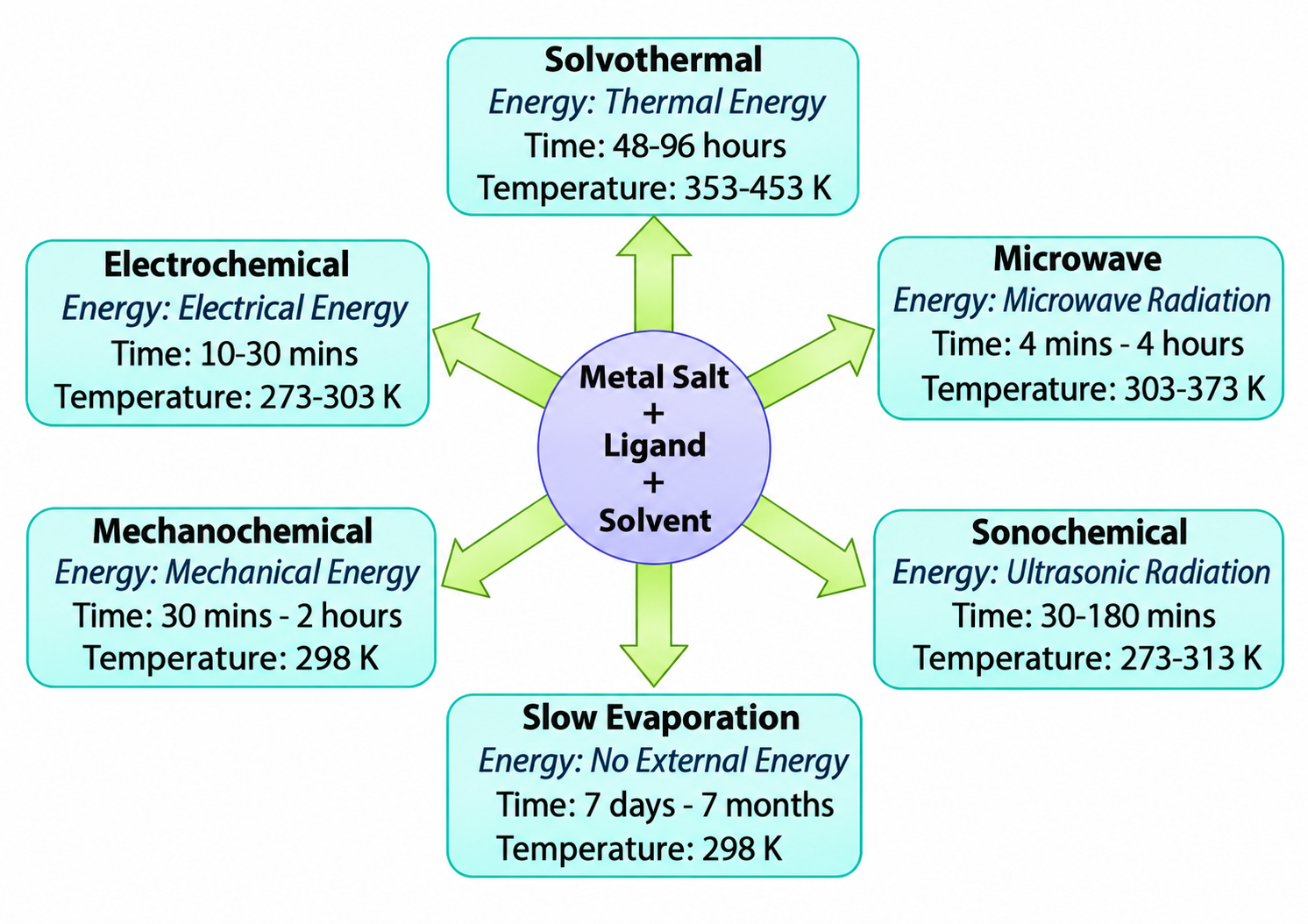
Synthesis methods of MOFs. MOFs can be synthesized through a variety of approaches, including solvothermal synthesis, microwave assisted synthesis, sonochemical synthesis, slow evaporation technique, mechanochemical synthesis, as well as electrochemical synthesis (Figure 4 and Table 1)39. Among the various synthetic approaches, solvothermal synthesis is one of the most widely used methods as it enables controlled crystallization of highly crystalline frameworks under elevated temperature and autogenous pressure. A landmark research work using the solvothermal synthesis was reported by Omar M. Yaghi and his team in 1999, which involved heating a mixture of zinc salt and an organic linker in an organic solvent to form colorless cubic crystals, which is known as MOF-540. Note that hydrothermal synthesis is a special case of solvothermal synthesis, when the solvent adopted is not organic solvent but water.
| Synthesis Method | Selection Basis | Typical Application |
| Solvothermal &Slow evaporation | High crystallinity, controlled morphology | Gas storage, separation, and catalysis |
| Microwave-assisted | Rapid synthesis, smaller particle sizes | Drug delivery, sensors |
| Mechanochemical | Solvent-free, green, fast | Large-scale synthesis, eco-friendly production |
| Electrochemical | Thin-film deposition, low temperature | Electronics, membranes |
| Sonochemical | Uniform nucleation, nanostructures | Biomedical applications |
MOFs have emerged as multifunctional air-purification materials because they can interact with three chemically distinct pollutant categories – PM, VOC and toxic gases – through different but complementary mechanisms. PM removal is driven mainly by surface interactions between the particles and the MOF layer, namely van der Waals forces and electrostatic (dipole/charge) interaction arising from the polarity of the MOF surface. Coordinatively unsaturated metal sites and framework defects create localized charged and polar sites that enhance this electrostatic capture through charge separation, thereby improving PM-removal efficiency, while the high surface area and surface roughness of the MOF coating provide abundant contact sites. VOC and toxic-gas removal, by contrast, depend on internal pore chemistry – pore-filling, open metal sites, functional groups, and in some cases catalytic degradation. Because the pores of many MOFs are large enough to admit VOC and toxic gas molecules, these pollutants can be captured not only at the external surface but also throughout the internal pore network. Uptake proceeds through the classical adsorption sequence of mass-transfer and binding steps: (1) external diffusion, in which molecules are carried from the bulk air across the boundary layer to the adsorbent surface by convection and diffusion along the concentration gradient; (2) interparticle (internal) diffusion, in which molecules migrate from the outer surface into the interior driven by the concentration difference, progressing from macropores through mesopores to micropores; (3) adsorption at active sites, where the molecules are ultimately bound by pore-filling, coordination to open metal sites, interaction with functional groups, or catalytic conversion.
There are several key MOFs, which are very effective for VOCs and toxic gases removal, and when they are incorporated with suitable substrate materials, the PM, VOC and toxic gas removal efficiency can also be enhanced through additional roughness, surface chemistry, fiber geometry and functional groups attached on MOFs as compared with pure substrate materials:
ZIF-8 (also known as MAF-4, composed of Zn (II) ions and 2-methylimidazole linkers), was independently reported by Chen’s group42 (Sun Yat-Sen University, China, named as MAF-4) and Yaghi’s group43 (then at UCLA, USA, named as ZIF-8) in 2006. It is known for exceptional thermal stability, chemical stability and high surface area. And because of its high affinity with some organic and inorganic gas molecules, ZIF-8 has shown excellent performance in VOC adsorption (formaldehyde, toluene, etc) and toxic gases removal (SO2, H2S, NH3, etc), especially when integrated into filters. In Addition, it is readily grown on nanofibers, cellulose, and textiles for combined PM capture and antibacterial action, making it a versatile, robust building block for multifunctional air filters.
UiO-66 and its derivative UiO-66-NH2 (composed of Zirconium oxo metal clusters and 1,4-benzenedicarboxylic acid (BDC) or 2-amino-1,4-benzenedicarboxylic acid (BDC-NH2) linkers): first developed by Lillerud’s group (University of Oslo, Norway) around 2008-2010. Both are highly robust MOFs that can withstand harsh conditions due to outstanding water, thermal and chemical stability – the single most important requirement for real-air operation. The difference between UiO-66 and UiO-66-NH2 is that: UiO-66 itself does not contain pendant functional groups on the aromatic rings of the BDC linkers. It just contains carboxylate groups that coordinate the zirconium clusters and hydroxyl groups associated with the inorganic nodes. By comparison, UiO-66-NH2 has additional pendant amino functional groups(–NH₂), which provide additional chemically active and polar sites, which may not only increase the polarity of the pore environment but may also promote stronger and more selective interactions with specific adsorbates44,45. UiO-66-NH2 has demonstrated particularly strong performance for VOC capture (formaldehyde). Thus, it is a promising candidate when selective capture of chemically reactive or polar VOCs is desired.
MIL-101(Cr), MIL-101(Fe) and MIL-125-NH2 (Ti): they were firstly developed by Gérard Férey’s group and Dan-Hardi’s group (Materials of Institute Lavoisier, France) during 2005 and 2011. MIL-101(Cr) was synthesized via a hydrothermal method using Cr(NO3)3∙9H2O and terephthalic acid (H2BDC) with hydrofluoric acid (HF) as a crucial mineralizer; MIL-101(Fe) was a non-toxic alternative, using a solvothermal method with FeCl3∙6H2O and H2BDC in N,N-dimethylformamide (DMF) as solvent; and NH2-MIL-125(Ti) was prepared by using a solvothermal method with Titanium (IV) isopropoxide and 2-aminoterephthalic acid (NH2-H2BDC) in a DMF/methanol mixture as solvent. All of them are known for superior filtration when integrated into carriers like cellulose-based foams, maintaining high efficiency over long-term (30+ day) tests. The high surface area and porous structure (mesoporous cages) allow them to act as filter aids that adsorb fine particles while simultaneously removing gaseous VOC pollutants, a feature beneficial for air purification46,47,48.
MOF-74 (also known as M-MOF-74, M2(dobdc), or CPO-27) is an isostructural family consisting of divalent metal cations (M) (M2+ = Zn2+, Mg2+, Co2+, Cd2+, Mn2+, Fe2+, or Ni2+) and the organic ligand dobdc4− (2,5-dioxido-1,4-benzenedicarboxylate, also known as dhtp4−, the tetraanion of 2,5-dihydroxyterephthalaic acid): firstly developed by Yaghi’s group (then at University of Michigan, USA) in 2005. These MOFs are highly effective in capturing both VOCs (e.g., toluene, formaldehyde, etc) and toxic gases (e.g. NH3, SO2, NOx, etc) via strong electrostatic interactions and chemical adsorptions, and when incorporated into functional materials, they show superior (>99.5%) filtration efficiency for particulate matter (PM0.3)49.
HKUST-1 (composed of copper dimer paddlewheel unit [Cu2(O2CR)4], where R is an aromatic ring, and benzene-1,3,5-tricarboxylate (TMA) in the solvent mixture of water, ethanol and DMF): also known as MOF-199, it was first reported by Williams’ research group (Hong Kong University of Science and Technology, China) in 1999 via solvothermal synthesis method. As one of the most representative MOFs, it is one of the few metal–organic frameworks that have been commercially produced (by BASF under the Basolite ® C300 name) and can be used for VOC removal. After the first metal Cu2+ ion was used in 1999, a number of other metal ions were also used to build similar structures of HKUST-1 in the next 10 years50. Nowadays, HKUST-1 series MOFs have become a new alternative used as an ideal platform for gas adsorption and PM & VOCs removal due to their open metal sites inside the structure with the large adsorption capacity and chemical tunability.
BUT-66 (composed of Zirconium-based (Zr6) clusters and long and angular ligands 4,4’-(benzene-1,3-diyl)dibenzoate (BDB2-)): first reported by Li’s group (Beijing University of Technology, China) in 2018. It has two-fold interpenetrated three-dimensional (3D) primitive cubic (pcu)-type frameworks with small pore size, high porosity, hydrophobic pore and crystal surfaces, and excellent capture capacities toward aromatic VOCs. It was worth pointing out that BUT-66 shows higher benzene adsorption capacity at high temperature and low pressure, outperforming several other benchmark MOFs including MIL-101(Cr), ZIF-8, MCM-41, PAF-1 and commercial carbon molecular sieve Carboxen 100051. Although the primary function or the goal of BUT-66 is VOC adsorption, its application as “MOF filters” for trapping PM could be extended by incorporating it with other substrates like fibers through mechanical and electrostatic interception.
Immobilization of MOFs onto different substrates for PM / VOCs / toxic gases removal
MOFs generally appear as a fine, white-colored, crystalline powder form, which look very similar to baby powder. Because of this amorphous and loose nature, pristine MOFs face a lot of limitations when being directly used and thus require to be incorporated on suitable substrates – including polymers, membranes, carbon materials, nano- or microfibers, glass, metals, etc – to enhance their stability, prevent aggregation, facilitate recovery, and more importantly, exhibit the required sufficient performances in different application conditions.
It is remarkable that the pioneering work of developing MOFs as air filters was done by Wang et al. in 201625. In their work, 4 different MOF nanocrystals (including ZIF-8, Mg-MOF-74, UiO-66-NH2 and MOF-199) were incorporated into electrospun nanofibrous mats, with MOF loading rate of up to wt60%. The “MOF filters” showed an ability to achieve up to 88.33% PM2.5 and 89.67% PM10 removal efficiency. In addition, such materials exhibited selective capturing of toxic gas of SO2 from a mixture of SO2 and N2. Among the different MOFilters, UiO-66-NH2/PAN shows the highest SO2 adsorption capacity (~0.019 g/g). The hierarchical nanostructure enables higher air permeability with low pressure drop < 20 Pa and the performance could remain stable for 48 hours.
In 2018, Chen’s group from the Chinese University of Hong Kong reported their new research results, using MOFs incorporated into nanofibers to adsorb both PM2.5 and formaldehyde. The PM2.5 filtration efficiency increased from 74.5% to 87.2% after integrating ZIF-67 into the electrospun PAN nanofibers. Moreover, the PM2.5 filtration efficiency remains at over 99% during a long-term test over 30 days. On the other hand, the ZIF-67@PAN filter also achieved a formaldehyde removal efficiency of 84%52.
In 2018, Zhang’s group from Chengdu Institute of Biology, Chinese Academy of Sciences reported their ZIF-8 and UiO-66-OH MOFs incorporated into γ-cyclodextrin (γ-CD) as excellent formaldehyde adsorbents. This adsorption capacity and speed of the new γ-CD-MOF-K are both about 9 times higher than those of activated carbon53. However, this paper had not reported any work on PM removal.
In 2019, Zhong’s group from Nanjing Tech University reported a composite membrane by incorporating ZIF-8 MOFs into SiO2 nanofiber membrane. This material was fabricated by electrospinning method, while ZIF-8 nanocrystals were grown on the nanofibers by controlling the crystallization by contra-diffusion. The resultant ZIF-8@SiO2 composite membrane showed high removal efficiency of 99.96% for incense smoke due to the large surface area of ZIF-8 and the electrostatic interaction between beaded ZIF-8 nanocrystals and PM particles. Moreover, the membrane material showed enhanced formaldehyde adsorption efficiency to 79.53% in 2 hours54.
In 2020, Jhung’s group from Kyungpook National University reported that Zr-MOF-NO2 coating on cotton showed a very high increase in the performance of PM2.5 removal: QF (quality factors) and RE (removal efficiencies) of Zr-MOF-NO2/cotton were 4.6 times and 6.2 times of bare cotton, respectively. And the pressure drop in PM2.5 removal was only 3 Pa or less55.
In 2020, Zhong’s group from Nanjing Tech University developed a membrane based on ZIF-67 incorporated in polystyrene hierarchical porous nanofiber (ZIF-67/PS HPNFM) for both PM and SO2 filtration. This membrane has high gas permeance of 1489 m3∙m-2∙h-1∙kPa-1 and a low pressure drop of 91Pa. It shows very high PM0.3 removal efficiency of 99.921%. SO2 adsorption capacity of 1362 mg∙g-1 at room temperature and humidity of 55%56.
In 2021, Kim’s group from Seoul National University tried incorporating ZIF-8 MOFs into polylactic acid (PLA) fibers. PLA fibers with controlled surface pores were electrospun using water vapor-induced phase separation, and the fiber surface was uniformly coated with ZIF-8 crystals via an in-situ growth method. Next, the corona charging process was applied to the ZIF-8 grown webs, which enabled the new materials to show an enhanced PM and SO2 capture ability, both in the static and dynamic air flow states57. According to the testing results, air pressure drop was between 5 and 24 Pa for 1 layer and 4 layers respectively, PM filtration efficiency was up to 50%, QF (quality factor) was between 0.08-0.12 Pa-1, and the SO2 static removal efficiency could reach over 99%. The SO2 static adsorption amount (Qs) of the ZIF-8-grown web was about 34 times higher than that of PLA webs, where the static adsorption amounts for ZIF@PLA-NP and ZIF@PLA-P were 6.5 × 10⁻³ and 7.4 × 10⁻³ mmol, respectively. The SO2 dynamic adsorption (Qd) and dynamic adsorption capacity (Cd) for one-layer ZIF@PLA-P were 4.2×10⁻³ mmol and 169 ×10-3 mmol/g, respectively.
In 2021, both Wang’s group and Chen’s group from Virginia Commonwealth University used two electret media, MERV 13 and MERV 17 (labeled as “HEPA”) to immobilize 3 different MOFs (MIL-125-NH2, UiO-66-NH2 and ZIF-67) to form new E-MOFilters for the simultaneous removal of PM2.5 and VOCs. 3 different levels of MOF coating were investigated, 5, 10 and 25% wt of the mass of the MERV 13 and HEPA media to figure out which level is the most appropriate in terms of low increase of air resistance, low charge degradation, and sufficient VOC removal efficiency and adsorption capacity. It was found that MOF particles deposited in MERV 13 media more uniformly than that of HEPA media. In addition, the HEPA filter showed lower holding capacity for PM and small pore size resulted in clogging during the MOF coating. Therefore, using MERV 13 as the coating substrate is more desirable. In the PM filtration tests, the E-MOFilter gained only a few Pa of air resistance compared with clean electret media. In addition, the E-MOFilter with MIL-125-NH2 particle coating not only had a decent toluene removal efficiency (>80%) but also maintained its original PM2.5 holding capacity58.
In 2023, Zheng’s group from Nanjing Forestry University conducted their study on immobilization of UiO-66-NH2 into bacterial cellulose (BC) aerogels for the application of PM removal. The UiO-66-NH2@BC aerogel has a specific surface area of 103 m2/g, with a PM2.5 removal efficiency of 96.9%, much higher than the pristine BC aerogels (RE was only 50.6%)59. As the MOFs have amine function groups, it was suggested that the system is also capable of adsorbing VOCs.
In 2023, Lee’s group from Korea Institute of Industrial Technology (KITECH) incorporated ZIF-8 MOFs into cellulose acetate nanofibers (NFs) via electrospinning method to form a composite membrane material. At the optimal thickness of the NF layer, the QF was 18.8×10⁻² Pa-1with a filtration efficiency of 93.1%, air permeability of 19.0 cm3/cm2/s, and pressure drop of 14.2 Pa, the membrane also exhibited outstanding gas adsorption efficiencies (>99%) for H2S, formaldehyde and NH3. Moreover, after 45 days under standard test conditions, the weight loss was 62.5%, indicating a reliable and sustainable material platform for removing toxic gases and particulate matter simultaneously60.
In 2025, Feng’s group from Nanjing Tech University reported a multifunctional ZIF-8/Polystyrene (PS) nanofiber membrane (NFM) composite material, which was efficient for both PM capture and SO2 adsorption. The incorporation of ZIF-8 nanoparticles into PS nanofibers enhanced the BET surface area (51 to 175 m2∙g-1), porosity (0.148 to 0.190 m2∙g-1) and tensile strength (0.24 to 1.45 MPa). This material has RE (removal efficiencies) of 99.73% (PM0.3) and 99.96% (PM2.5), with low pressure drop (83Pa and 27Pa, respectively). In terms of SO2 adsorption, it has the adsorption capacity of 1370 mg∙g-1 at 55% relative humidity61. It was noticed that the performance of this composite material was closer to the ZIF-67/PS HPNFM, which was developed by Zhong’s group of the same university, which was mentioned above56.
MOF Immobilization methods
As of now, several different methods for MOF immobilization into different substrates have been reported62, and a comparison of their advantages and disadvantages is provided in Table 2.
| Method | Principles | Advantages | Disadvantages | Ref |
| In-situ Synthesis | Growth of MOF crystals directly on a functionalized substrate in a precursor solution (solvothermal / hydrothermal) | High loading capacity; Strong covalent bonding between MOF and substrate; Tailorable MOF orientation | Time-consuming; Requires hazardous solvents/high temperatures; Potential for non-uniform growth | Y. Cheng, et al., 202263 |
| Electro-spinning | Using a high voltage electric field to stretch a polymer solution containing dispersed MOF particles into fine, solid-state nanofibers | High scalability; Good flexibility; High MOF exposure; Excellent breathability/porosity | Requires specialized equipment; Solvent usage might be cytotoxic; Potential aggregation of MOF in fibers | Y. Dou, et al., 202064 |
| Hot Pressing | Heat and pressure are applied to fuse MOF powders into or onto a substrate, often thermoplastic, through melting | Facile and fast; High mechanical strength and stability | Only suitable for thermally stable substrates/MOFs; Potential for pore blockage due to high pressure | Y. Chen, et al., 201665 |
| Vacuum Filtration | Passing a MOF suspension through a fibrous substrate, forming a dense, uniform MOF layer via suction | Simple and reproducible; High-density coverage; Easy to control thickness | Weak adhesion (mostly physical adsorption); High-density loading can limit mass transfer | D. Hao, et al., 202566 |
| Self-assembly | Spontaneous formation of ordered MOF layers on substrate surfaces via surface modification (SAMs) | Highly controlled, uniform, and oriented coatings | Complex process; Usually time-consuming; Requires surface modification to succeed | F. Xie, et al., 201967 |
| Templated Freeze Drying | Freezing a mixture of MOF and substrate (e.g., polymer) followed by sublimation to create porous structures | Produces highly porous, ordered, and flexible monolithic composites | Energy-intensive and slow process | Y. Chen, et al., 201768 |
| Filtration-assisted Gelation | Similar to filtration, but involves forming a gel network (e.g., chitosan) around MOF particles on the substrate | Excellent binding strength; High entrapment efficiency of nanoparticles | Complex preparation of the gelation solution | X. Zhao, et al., 201969 |
| Sonogashira Coupling | Covalent attachment of MOFs using palladium-catalyzed coupling reactions to link functional groups | Extremely strong, irreversible covalent bonding | Costly; Requires harsh functionalization; Not suitable for large-scale applications | C. W. Kang, et al., 201970 |
| Spray-Coating | MOF suspension is atomized and sprayed onto the substrate, followed by drying | Rapid, suitable for large surfaces, and cost-effective | Potential for uneven coverage; requires careful optimization of spray parameters | M. Z. Hasan, et al., 202571 |
- In-situ synthesis in the presence of a substrate: this is a popular method where the MOF is grown directly on the substrate, ensuring high loading and superior adherence, but it may require optimization to avoid clogging the MOF pores.
- Electrospinning: this technique creates porous membrane mats with high surface areas, ideal for water harvesting or gas filtration, but often requires specific polymer/MOF ratios for stability.
- Hot pressing: a relatively new, environmentally friendly (solvent-free) approach that uses mechanical force to embed MOF crystals into polymers.
- Vacuum filtration: a simple, direct method to form a membrane layer, though it can suffer from poor adhesion if binders are not used.
- Self-assembly: used for creating uniform coatings or oriented monolayers, often utilizing covalent bonding between the surface and the MOF.
- Templated freeze-drying: a method to create hierarchically structured porous materials by removing solvent to create a scaffold.
- Filtration-assisted gelation: a hybrid method that creates a gel phase on a filter, which is then dried to form a composite, providing strong, homogeneous coatings.
- Sonogashira coupling: a specific, covalent approach used to chemically attach organic ligand-based MOFs to surfaces for specialized applications.
- Spray-Coating: a fine mist of MOF suspension is sprayed onto the target surface using pressurized air.
Choosing the appropriate method to immobilize MOFs for PM, VOCs and toxic gases removal requires balancing the structural integrity of the MOFs, the physical traits of the substrate, and the final environmental operating conditions (like temperature, pressure, air flow speed). Therefore, there are several key considerations:
Substrate nature and surface chemistry: substrates like fibrous air filters (e.g., MERV 13) favor methods that retain fiber charge, such as physical coating. In contrast, metal surfaces might allow for stronger, direct covalent anchoring.
Adhesion stability: for industrial applications where continuous air flow is high, methods like in-situ growth or covalent coupling (e.g., Sonogashira coupling) ensure strong chemical binding and prevent MOF detachment (delamination).
Pore structure and mass transfer: the immobilization technique should not block the porous structure of the MOF, ensuring that gaseous pollutants can access active sites for VOC adsorption. Templated freeze drying or electrospinning can be used to engineer porosity.
Uniformity and dispersion: to avoid aggregation and maximize efficiency, techniques that produce high-dispersion, such as electrospinning or spray coating, are preferred over methods that lead to dense, inhomogeneous films.
Pressure drop and airflow resistance: for air purification, the method should not create a dense film that causes high pressure drops. Filtration-assisted methods and specific coating methods (e.g., on electrostatic filters) help keep air resistance low.
Scaling potential (economic cost): for high-volume manufacturing (e.g., mask filters or HVAC), spray coating or vacuum filtration are more cost-effective and scalable than laboratory-scale in-situ growth.
Type of pollutants: if removing VOCs, hydrophobicity must be considered (e.g., using Zr-based MOFs like UiO-66), while PM removal relies more on the filter substrate’s fiber diameter.
The most balanced MOF-substrate composite air filters with promising performance
In the past decade, a number of promising MOF-substrate composite materials have been developed. Some of them not only demonstrated simultaneous removal of PM, VOCs and toxic gases, but also very high removal efficiency (> 99%)72,73. As different research papers reported different substances of PM, VOC and toxic gases as adsorbates, and the testing conditions varied a lot, it is difficult to conclude which system has the best air filtration performance. However, this paper tried to find out the most balanced MOF-substrate composite air filter based on the following criteria:
- the system achieved a higher PM removal efficiency and also higher VOCs and toxic gas removal capacity based on dynamic testing methods;
- the system realized a lower pressure drop after capturing the adsorbates;
- the MOF immobilization method is relatively simple and technically feasible for scaled up production;
- the reported results can be backed up by additional tests;
- the system can be regenerated for repeated usage.
After comparing all the reported composite air filters, E-MOFilter which was reported by Wang’s group and Chen’s group in 202158 was considered as the most balanced system. They found the best performing E-MOFilter was prepared by coating MIL-125-NH2 MOFs on commercial electret HVAC filter named MERV 13. Note that MERV stands for Minimum Efficiency Reporting Value, and the value from 1 to 20 was developed by the American Society of Heating, Refrigerating and Air-Conditioning Engineers (ASHRAE). The electret substrate material itself already shows high efficiency in PM removal. MOFs in principle may add additional surface roughness and may enhance the interaction with target adsorbates.
PM adsorbing capacity: The clean MERV 13 filter has a PM adsorbing capacity of 19.1 g/m2. Surprisingly, when it was coated with low (5% by weight of the MERV 13 filter), medium (10% by weight of the MERV 13 filter) and high amount (25% by weight of the MERV 13 filter) of MIL-125-NH2, the PM adsorbing capacity would drop to 17.2 g/m2, 14.1 g/m2 and 9.9 g/m2, respectively. Thus, to retain efficient PM adsorption capacity, it would be best to use low and medium coating.
PM removal efficiency: the value was found greater than 80% for E-MOFilters with low and medium MOFs coating amount but was less than 80% for high MOF coating amount.
Pressure drop: When the composite air filters were compared with pristine air filters, there was only 1.5 and 3.7 Pa increase for low and medium coating levels, which becomes another remarkable advantage.
VOC removal efficiency: E-MOFilter is remarkable for its outstanding performance in capturing VOCs, such as toluene and formaldehyde. The initial toluene removal efficiency of the MERV 13 E-MOFilters coated with MIL-125-NH2 reaches 74% and 85% for the low and medium coating levels, respectively.
MOFs’ immobilization method: the authors developed a filtration method to fabricate the E-MOFilter. The required devices included a peristaltic pump, a magnetic stirrer and a filter holder. The whole process seemed simple and energy efficient.
Recyclability: Unfortunately, the authors haven’t done any further studies, and it remains unclear how the E-MOFilters can withstand multiple cycles of cleaning and reusages.
Conclusion and outlook
A lot of advances in developing MOFs-substrate composite as air filters and adsorbents for PM VOCs, and toxic gases removal have been achieved in the past 10 years. However, several challenges still remain unresolved. First, most MOFs may easily absorb moisture when they are used in high humidity environments. Excessive moisture uptake may result in reduced mechanical strength for MOFs and even a collapse of the structure, thus their filtration efficiency will degrade. Therefore, a water-stable composite system needs to be developed. Possible solutions could be: 1) using stronger metal nodes like Zr, Al, Ti to replace weaker ones like Zn and Fe; 2) introducing hydrophobic functional groups to the ligands in such a way that moisture will be hard to enter the porous structures of MOFs; 3) selecting more robust substrate materials that are insensitive to moisture and can provide better protection to the MOFs after they are embedded into them. Second, scalability is still a bottleneck for most existing technologies. Most of the research activities are still limited in lab scale due to expensive costs of raw materials, synthetic equipment and demanding process controlling conditions. More efforts should be made in the future to make the MOFs-substrate composite air filters cheaper and more affordable, so that commercial production of them may become possible. This needs extensive collaboration between the research labs and the manufacturing industries. Third, the binding force between MOFs and the substrates needs to be further enhanced. Ideally, when MOFs are embedded in a substrate, their original structures, porosity and mechanical strength should not be altered, and they should be firmly combined with the substrate. Only by satisfying these requirements, the composite materials can be applied in various challenging environments (e.g. a wide temperature and humidity range, high wind velocity) and can be well recycled for repeated usage. Fourth, the safety and comfort of MOF-based air filters are not well addressed. It’s worth putting more effort into embedding MOFs in wearable devices, such as facial masks, clothes, etc., providing health protection without feeling uncomfortable. Besides conventional air pollutants like PM, VOCs and toxic gases, harmful viruses are another big threat to the people. Although MERV 17-20 air filters have been commercialized to remove viruses and other small particles down to 0.3 µm for clean rooms and hospitals, with > 99% removal efficiency, they can hardly remove viruses smaller than this size limit. Therefore, there is still some improvement space for MERV air filters. In addition to physical interception, chemical and biological functionality from novel MOFs could be considered.
Supplementary Information
References
- World Health Organization, Ambient (outdoor) air pollution, 24 October 2024, https://www.who.int/news-room/fact-sheets/detail/ambient-(outdoor)-air-quality-and-health [↩] [↩]
- S. Zhang, Q. Ren, H. Qi, S. Liu, Y. Liu. Adverse effects of fine-particle exposure on joints and their surrounding cells and microenvironment. ACS Nano 13, 2729-2748 (2019), https://pubs.acs.org/doi/10.1021/acsnano.8b08517 [↩]
- F. Karagulian, C. A. Belis, C. F. C. Dora, A. M. Prüss-Ustün, S. Bonjour, H. Adair-Rohani, M. Amann. Contributions to cities’ ambient particulate matter (PM): a systematic review of local source contributions at global level. Atmospheric Environment 120, 475-483 (2015), https://doi.org/10.1016/j.atmosenv.2015.08.087 [↩]
- H. J. Lee, W. S. Choi. 2D and 3D bulk materials for environmental remediation: air filtration and oil/water separation. Materials 13, 5714 (2020), https://doi.org/10.3390/ma13245714 [↩]
- J. Gao, A. Woodward, S. Vardoulakis, S. Kovats, P. Wilkinson, L. Li, L. Xu, J. Li, J. Yang, J. Li, L. Cao, X. Liu, H. Wu, Q. Liu. Haze, public health and mitigation measures in China: a review of the current evidence for further policy response. Science of the Total Environment 578, 148-157 (2017), https://doi.org/10.1016/j.scitotenv.2016.10.231 [↩]
- S. Han, J. Kim, S. H. Ko. Advances in air filtration technologies: structure-based and interaction-based approaches. Materials Today Advances 9, 100134 (2021), https://doi.org/10.1016/j.mtadv.2021.100134 [↩]
- A. Hartmann, M. Kriegel. The influence of air ions on the particle concentration in indoor environments – a systematic literature review. Results in Engineering 15, 100528 (2022), https://doi.org/10.1016/j.rineng.2022.100528 [↩]
- Y. Chao, N. Deng, Z. Zhou. A review of recent advances in metal-organic frameworks materials for zero-energy passive adsorption of chemical pollutants in indoor environments. Science of The Total Environment 953, 175926 (2024), https://doi.org/10.1016/j.scitotenv.2024.175926 [↩] [↩]
- J. Huang, Y. Lu, B. Zhang, S. Yang, Q. Zhang, H. Cui, X. Lu, Y. Zhao, X. Yang, R. Li. Antagonistic effect of epigallocatechin-3-gallate on neurotoxicity induced by formaldehyde. Toxicology 412, 29-36 (2019), https://doi.org/10.1016/j.tox.2018.10.022 [↩]
- R. M. Shallis, J. J. Weiss, N. C. Deziel, S. D. Gore. A clandestine culprit with critical consequences: Benzene and acute myeloid leukemia. Blood Reviews 47, 100736 (2021), https://doi.org/10.1016/j.blre.2020.100736 [↩]
- X. Yue, N. L. Ma, C. Sonne, R. Guan, S. S. Lam, Q.V. Le, X. Chen, Y. Yang, H. Gu, J. Rinklebe, W. Peng. Mitigation of indoor air pollution: a review of recent advances in adsorption materials and catalytic oxidation. Journal of Hazardous Materials 405, 124138 (2021), https://doi.org/10.1016/j.jhazmat.2020.124138 [↩]
- T. Mille, P. H. Graindorge, C. Morel, J. Paoli, E. Lichtfouse, H. Schroeder, N. Grova. The overlooked toxicity of non-carcinogenic polycyclic aromatic hydrocarbons. Environmental Chemistry Letters 22, 1563-1567 (2024), https://doi.org/10.1007/s10311-024-01719-1 [↩]
- D. Baskaran, D. Dhamodharan, U. S. Behera, H. S. Byun. A comprehensive review and perspective research in technology integration for the treatment of gaseous volatile organic compounds. Environmental Research 251, 118472 (2024), https://doi.org/10.1016/j.envres.2024.118472 [↩]
- L. Deen, A. Clark, K. S. Hougaard, K. U. Petersen, M. Frederiksen, L. A. Wise, A. K. Wesselink, H. W. Meyer, J. P. Bonde, S. S. Tøttenborg. Exposure to airborne polychlorinated biphenyls and type 2 diabetes in a Danish cohort. Environmental Research, 237, 117000 (2023), https://doi.org/10.1016/j.envres.2023.117000 [↩]
- R. Bhoonah, M. Mendez, A. Maury-Micolier. Human health impacts and indoor chemical reactions of VOCs from cleaning products and occupants. Atmospheric Environment 338, 120846 (2024), https://doi.org/10.1016/j.atmosenv.2024.120846 [↩]
- J. Zhang, J. Liu, Z. Deng, S. Liu. Ventilation systems balancing rapid pollutants removal and energy efficiency in the post-pandemic era: a literature review. Renewable and Sustainable Energy Reviews 225, 116175 (2026), https://doi.org/10.1016/j.rser.2025.116175 [↩]
- Y. Wang, J. Wang, W. Yao, J. Ren, L. Chen, Q. Ban. Ventilation and indoor air quality management in operation rooms: a systematic review of pollutants sources, transmission, and control techniques. Journal of Building Engineering 120, 115427 (2026), https://doi.org/10.1016/j.jobe.2026.115427 [↩]
- V. Parasuraman, P. P. Sekar, H. Lee, M. Sheraz, H. N. Ly, G. A. B. Azizar, J. W. Hong, W. R. Lee, S. Kim. Photocatalytic self-cleaning eco-friendly paint: a unique approach for efficient indoor air pollutants removal and surface disinfection. Construction and Building Materials 412, 134671 (2024), https://doi.org/10.1016/j.conbuildmat.2023.134671 [↩]
- W. Zhao, H. Shen, H. Zhang, B. Li, R. Zhang, Y. Tan, R. Sun. Non-thermal plasma and modified catalysts: a synergistic approach to air purification. Chemical Engineering Journal Advances 22, 100748 (2025), https://doi.org/10.1016/j.ceja.2025.100748 [↩]
- A. Jaworek, K. Adamiak. Recent progress in research on electrostatic precipitation. Journal of Electrostatics 137, 104064 (2025), https://doi.org/10.1016/j.elstat.2025.104064 [↩]
- S. Mukherjee, H. Siddiqi, P. Maiti, P. Parmar, B. C. Meikap. A comprehensive analysis of removal of hazardous dust particulates from chemical and process industries off gases by advanced wet scrubbing techniques – a review. Journal of Loss Prevention in the Process Industries 91, 105406 (2024), https://doi.org/10.1016/j.jlp.2024.105406 [↩]
- R. Amalia, A. Noviyanto, L. A. Rahma, Merita, A. Labanni, M. Fahroji, S. Purwajanti, D. A. Hapidin, A. Zulfi. PVC waste-derived nanofiber: simple fabrication with high potential performance for PM removal in air filtration. Sustainable Materials and Technologies 40, e00928 (2024), https://doi.org/10.1016/j.susmat.2024.e00928 [↩]
- Y. Wang, Y. Su, L. Yang, M. Su, Y. Niu, Y. Liu, H. Sun, Z. Zhu, W. Liang, A. Li. Highly efficient removal of PM and VOCs from air by a self-supporting bifunctional conjugated microporous polymers membrane. Journal of Membrane Science 659, 120728 (2022), https://doi.org/10.1016/j.memsci.2022.120728 [↩]
- R. Scaffaro, E. F. Gulino, M. C. Citarrella. Sandwich-structured bimodal polymeric fiber/waste wool fiber bio-composite membrane for high-performance and eco-friendly air filtration. Separation and Purification Technology 380, 135543 (2026), https://doi.org/10.1016/j.seppur.2025.135543 [↩]
- Y. Zhang, S. Yuan, X. Feng, H. Li, J. Zhou, B. Wang. Preparation of nanofibrous Metal-Organic Framework filters for efficient air pollution control. Journal of American Chemical Society 138, 5785-5788 (2016), https://doi.org/10.1021/jacs.6b02553 [↩] [↩]
- C. Y. Chen. Filtration of aerosols by fibrous media. Chemical Review 55, 595-623 (1955), https://doi.org/10.1021/cr50003a004 [↩]
- J. Xiao, J. Liang, C. Zhang, Y. Tao, G. Ling, Q. Yang. Advanced materials for capturing particulate matter: progress and perspectives. Small Methods 2, 1800012 (2018), https://doi.org/10.1002/smtd.201800012 [↩]
- B. F. Hoskins, R. Robson. Infinite polymeric frameworks consisting of three dimensionally linked rod-like segments, Journal of the American Chemistry Society 111, 5962-5964 (1989), https://doi.org/10.1021/ja00197a079 [↩]
- A. Alshammari, Z. Jiang, K. E. Cordova. Metal organic frameworks as emerging photocatalysts. Semiconductor Photocatalysis – Materials, Mechanisms and Applications. InTech (2016), https://doi.org/10.5772/63489 [↩] [↩]
- H. Furukawa, K. E. Cordova, M. O’Keeffe, O.M. Yaghi. The chemistry and applications of metal-organic frameworks. Science 341, 1230444 (2013), http://dx.doi.org/10.1126/science.1230444 [↩] [↩] [↩]
- H. Zhou, J. R. Long, O. M. Yaghi. Introduction to Metal-Organic Frameworks. Chemical Reviews 112, 673-674 (2012), https://doi.org/10.1021/cr300014x [↩]
- O. M. Yaghi, M. O’Keeffe, N. W. Ockwig, H. K. Chae, M. Eddaoudi, J. Kim. Reticular synthesis and the design of new materials. Nature 423, 705-714 (2003), https://doi.org/10.1038/nature01650 [↩]
- O. K. Farha, I. Eryazici, N. C Joeong, B. G. Hauser, C. E. Wilmer, A. A. Sarjeant, R. Q. Snurr, S. T. Nguyen, A. Ӧ. Yazaydin, J. T. Hupp. Metal-organic framework materials with ultrahigh surface area: is the sky the limit. Journal of the American Chemistry Society 134, 15016-15021 (2012), https://doi.org/10.1021/ja3055639 [↩] [↩]
- Z. Han, Y. Yang, J. Rushlow, J. Huo, Z. Liu, Y. Hsu, R. Yin, M. Wang, R. Liang, K. Wang, H. Zhou. Development of the design and synthesis of metal-organic frameworks (MOFs) – from large scale attempts, functional oriented modifications, to artificial intelligence (AI) predictions. Chemical Society Review 54, 367-369 (2025), https://doi.org/10.1039/D4CS00432A [↩]
- Z. Han, Y. Yang, J. Rushlow, J. Huo, Z. Liu, Y. Hsu, R. Yin, M. Wang, R. Liang, K. Wang, H. Zhou. Development of the design and synthesis of metal-organic frameworks (MOFs) – from large scale attempts, functional oriented modifications, to artificial intelligence (AI) predictions. Chemical Society Review 54, 367-369 (2025), https://doi.org/10.1039/D4CS00432A [↩]
- Y. Shi, Y. Yang, S. Ge, M. Wu, J. Jiang, W. Fan, D. P. Debecker, M. Rezakazemi, Z. Zhang. Progress in advanced MOF-derived materials for the removal of organic and inorganic pollutants. Coordination Chemistry Reviews 530, 216474 (2025), 10.1016/j.ccr.2025.216474 [↩]
- G. Alatrista, A. E. Hanandeh. Toward greener MOFs in phosphate adsorption: a performance-based approach to green MOF selection. Environmental Research 283, 122185 (2025), https://doi.org/10.1016/j.envres.2025.122185 [↩]
- M. H. Alzard, R. H. Alzard, M. Abdellah. Elaborating the knowledge structure and emerging research in the utilization of metal-organic formwork in engineering applications: a scientometric analysis from 2004 to 2024. Cleaner Materials 16, 100314 (2025), https://doi.org/10.1016/j.clema.2025.100314 [↩] [↩]
- M. H. Alzard, R. H. Alzard, M. Abdellah. Elaborating the knowledge structure and emerging research in the utilization of metal-organic formwork in engineering applications: a scientometric analysis from 2004 to 2024. Cleaner Materials 16, 100314 (2025), https://doi.org/10.1016/j.clema.2025.100314 [↩]
- H. Li, M. Eddaoudi, M. O’Keeffe, O. M. Yaghi. Design and synthesis of an exceptionally stable and highly porous metal-organic framework. Nature 402, 276-279 (1999), https://doi.org/10.1038/46248 [↩]
- C. Dey, T. Kundu, B. P. Biswal, A. Mallick, R. Banerjee. Crystalline metal-organic frameworks (MOFs): synthesis, structure and function. Acta Crystallographica Section B, Structural Science, Crystal Engineering, and Materials B70, 3-10 (2014), https://doi.org/10.1107/S2052520613029557 [↩]
- X. Huang, Y. Lin, J. Zhang, X. Chen. Ligand-directed strategy for Zeolite-type metal-organic frameworks: Zinc(II) imidazolates with unusual Zeolitic topologies. Angewandte Chemie International Edition 45, 1557-1559 (2006), https://doi.org/10.1002/anie.200503778 [↩]
- K. S. Park, Z. Ni, A. P. Côté, J. Y. Choi, R. Huang, F. J. Uribe-Romo, H. K. Chae, M. O’Keeffe, O.M. Yaghi. Exceptional chemical and thermal stability of zeolitic imidazolate frameworks. Proceedings of the National Academy of Sciences (U.S.A.) 103, 10186-10191 (2006), https://doi.org/10.1073/pnas.0602439103 [↩]
- J. H. Cavka, S. Jakobsen, U. Olsbye, N. Guillou, C. Lamberti, S. Bordiga, K. P. Lillerud. A new zirconium inorganic building brick forming metal organic frameworks with exceptional stability. Journal of the American Chemistry Society 130, 13850-13851 (2008), https://doi.org/10.1021/ja8057953 [↩]
- M. Kandiah, M. H. Nilsen, S. Usseglio, S. Jakobsen, U. Olsbye, M. Tilset, C. Larabi, E. A. Quadrelli, F. Bonino, K. P. Lillerud. Synthesis and stability of tagged UiO-66 Zr-MOFs. Chemistry of Materials 22, 6632-6640 (2010), https://doi.org/10.1021/cm102601v [↩]
- G. Férey, C. Mellot-Draznieks, C, Serre, F. Millange, J. Dutour, S. Surblé, I. Margiolaki. A chromium Terephthalate-based solid with unually large pore volumes and surface area. Science 309, 2040-2042 (2005), DOI: 10.1126/science.1116275 [↩]
- S. H. Jhung, J. H. Lee, J. W. Yoon, C. Serre, G. Férey, J. S. Chang. Microwave synthesis of chromium terephthalate MIL-101 and its benzene sorption ability. Advanced Materials 19, 121-124 (2007), https://doi.org/10.1002/adma.200601604 [↩]
- M. Dan-Hardi, C. Serre, T. Frot, L. Rozes, G. Maurin, C. Sanchez, G. Férey. A new photoactive crystalline highly porous Titanium (IV) dicarboxylate. Journal of the American Chemical Society 131, 10857-10859 (2009), https://doi.org/10.1021/ja903726m [↩]
- N. L. Rosi, J. Kim, M. Eddaoudi, B. Chen, M. O’Keeffe, O. M. Yaghi. Rod packings and metal-organic frameworks constructed from rod-shaped secondary building units. Journal of the American Chemistry Society, 127, 1504-1518 (2005), https://doi.org/10.1021/ja045123o [↩]
- S. S. Y. Chui, S. M. F. Lo, J. P. H. Charmant, A. G. Orpen, I. Williams. A chemically functionalizable nanoporous material [Cu3(TMA)2(H2O)3]n. Science 283, 1148-1150 (1999), DOI:10.1126/science.283.5405.1148 [↩]
- L. Xie, X. Liu, T. He, J. Li. Metal-organic frameworks for the capture of trace aromatic volatile organic compounds. Chem 4, 1911-1927 (2018), https://doi.org/10.1016/j.chempr.2018.05.017 [↩]
- Y. Bian, R. Wang, S. Wang, C. Yao, W. Ren, C. Chen, L. Zhang. Metal-organic framework-based nanofiber filters for effective indoor air quality control. Journal of Materials Chemistry A 6, 15807-15814 (2018), https://doi.org/10.1039/C8TA04539A [↩]
- L. Wang, X. Liang, Z. Chang, L. Ding, S. Zhang, B. Li. Effective formaldehyde capture by green cyclodextrin-based metal-organic framework. ACS Applied Materials & Interfaces 10, 42-46 (2018), https://doi.org/10.1021/acsami.7b16520 [↩]
- Q. Zhu, X. Tang, S. Feng, Z. Zhong, J. Yao, Z. Yao. ZIF-8@SiO2 composite nanofiber membrane with bioinspired spider web-like structure for efficient air pollution control. Journal of Membrane Science 581, 252-261 (2019), https://doi.org/10.1016/j.memsci.2019.03.075 [↩]
- H. Woo, D. K. Yoo, S. H. Jhung. Highly improved performance of cotton air filters in particulate matter removal by the incorporation of metal-organic frameworks with functional groups capable of large charge separation. ACS Applied Materials & Interfaces 12, 28885-28893 (2020), https://doi.org/10.1021/acsami.0c07123 [↩]
- M. Hu, L. Yin, N. Low, D. Ji, Y. Liu, J. Yao, Z. Zhong, W. Xing. Zeolitic-imidazolate-framework filled hierarchical porous nanofiber membrane for air cleaning. Journal of Membrane Science 594, 117467 (2020), https://doi.org/10.1016/j.memsci.2019.117467 [↩] [↩]
- J. Lee, S. Jung, H. Park, J. Kim. Bifunctional ZIF-8 grown webs for advanced filtration of particulate and gaseous matters: effect of charging process on the electrostatic capture of nanoparticles and sulfur dioxide. ACS Applied Materials & Interfaces 13, 50401-50410 (2021), https://doi.org/10.1021/acsami.1c15734 [↩]
- Y. Zhang, X. He, Z. Zhu, W. Wang, S. Chen. Simultaneous removal of VOCs and PM2.5 by metal-organic framework coated electret filter media. Journal of Membrane Science 618, 118629 (2021), https://doi.org/10.1016/j.memsci.2020.118629 [↩] [↩]
- Q. Dai, J. Liu, J. Zheng, B. Fu. Immobilization of UiO-66-NH2 into bacterial cellulose aerogels for efficient particulate matter filtration. Sustainability 15, 13382 (2023), https://doi.org/10.3390/su151813382 [↩]
- S. Ryu, D. Kim, H. Lee, Y. Kim, Y. Lee, M. Kim, H. Lee, H. Lee. Biodegradable nanofiber / metal-organic framework/cotton air filtration membranes enabling simultaneous removal of toxic gases and particulate matter. Polymers (Basel) 15, 3965 (2023), https://doi.org/10.3390/polym15193965 [↩]
- M. Li, X. Zhu, L. Yin, S. Feng, Z. Zhong, W. Xing. Multifunctional ZIF-8/PS nanofiber membranes with hierarchical porous structure for simultaneous SO2 capture and PM removal. Chemical Engineering Journal 524, 168899 (2025), https://doi.org/10.1016/j.cej.2025.168899 [↩]
- D. K. Yoo, H. C. Woo, S. H Jhung. Removal of particulate matter with metal-organic framework-incorporated materials. Coordination Chemistry Reviews 422, 213477 (2020), https://doi.org/10.1016/j.ccr.2020.213477 [↩]
- Y. Cheng, W. Wang, R. Yu, S. Liu, J. Shi, M. Shan, H. Shi, Z. Xu, H. Deng. Construction of ultra-stable polypropylene membrane by in-situ growth of nano-metal-organic frameworks for air filtration. Separation and Purification Technology 282, 120030 (2022), https://doi.org/10.1016/j.seppur.2021.120030 [↩]
- Y. Dou, W. Zhang, A. Kaiser. Electrospinning of metal-organic frameworks for energy and environmental applications. Advanced Science (Weinh) 7, 1902590 (2020), doi: 10.1002/advs.201902590 [↩]
- Y. Chen, S. Li, X. Pei, J. Zhou, X. Feng, S. Zhang, Y. Cheng, H. Li, R. Han, B. Wang. A solvent-free hot-pressing method for preparing metal-organic-framework coatings. Angewandte Chemie International Edition 55, 3419 (2016), https://doi.org/10.1002/anie.201511063 [↩]
- D. Hao, B. Yu, T. Zhao, M. Chen. A study on the filtration performance of NH2-MIL-53/chitosan-modified paper-based functional materials against airborne particulate matter. ACS Omega 10, 57830-57838 (2025), https://doi.org/10.1021/acsomega.5c11106 [↩]
- F. Xie, N. Zhang, L. Zhuo, P. Qin, S. Chen, Y. Wang, Z. Lu. “MOF-cloth” formed via supramolecular assembly of NH2-MIL-101(Cr) crystals on dopamine modified polyimide fiber for high temperature fume paper-based filer. Composites Part B: Engineering 168, 406-412 (2019), https://doi.org/10.1016/j.compositesb.2019.03.048 [↩]
- Y. Chen, F. Chen, S. Zhang, Y. Cai, S. Cao, S. Li, W. Zhao, S. Yuan, X. Feng, A. Cao, X. Ma, B. Wang. Facile fabrication of multifunctional metal-organic framework hollow tubes to trap pollutants. Journal of the American Chemical Society 139, 16482-16485 (2017), https://doi.org/10.1021/jacs.7b10265 [↩]
- X. Zhao, L. Chen, Y. Guo, X. Ma, Z. Li, W. Ying, X. Peng. Porous cellulose nanofiber stringed HKUST-1 polyhedron membrane for air purification. Applied Materials Today 14, 96-101 (2019), https://doi.org/10.1016/j.apmt.2018.11.012 [↩]
- C. W. Kang, J. Jin, Y. Ko, S. M. Lee, H. J. Kim, S. U. Son. Nanoporous organic network coating of nanostructured polymer films with enhanced adsorption performance toward particulate matter. ACS Applied Materials & Interfaces 2, 1748-1753 (2019), https://doi.org/10.1021/acsami.8b18300 [↩]
- M.Z. Hasan, T.T. Dipti, L. Liu, C. Wan, L. Feng, Z. Yang. Coating metal-organic frameworks (MOFs) and associated composites on electrodes, thin film polymeric materials, and glass surfaces. Nanomaterials 15, 1187 (2025), https://doi.org/10.3390/nano15151187 [↩]
- M. Hu, L. Yin, N. Low, D. Ji, Y. Liu, J. Yao, Z. Zhong, W. Xing. Zeolitic-imidazolate-framework filled hierarchical porous nanofiber membrane for air cleaning. Journal of Membrane Science 594, 117467 (2020), https://doi.org/10.1016/j.memsci.2019.117467 [↩]
- M. Li, X. Zhu, L. Yin, S. Feng, Z. Zhong, W. Xing. Multifunctional ZIF-8/PS nanofiber membranes with hierarchical porous structure for simultaneous SO2 capture and PM removal. Chemical Engineering Journal 524, 168899 (2025), https://doi.org/10.1016/j.cej.2025.168899 [↩]