
Abstract
This exploratory study investigated associations between long-distance running (LDR, ≥15 miles per week) and self-reported academic, cognitive, and psychological outcomes in U.S. high school students. One hundred participants, recruited primarily from athletic programs and running clubs, completed surveys assessing GPA, focus, executive function, stress, motivation, and self-esteem. Analyses indicated that LDR students reported higher GPAs and were more likely to note improvements in focus, executive function, reduced stress, motivation, and self-esteem compared to peers running fewer than 15 miles per week. Weekly mileage showed stronger associations with outcomes than running frequency, highlighting endurance volume as a potentially influential factor. Gender analyses revealed no significant differences, though exploratory trends suggested males reported higher GPAs and focus, while females noted greater executive function and self-esteem. LDR status was not associated with extracurricular participation, suggesting observed benefits were not explained by broader activity engagement. While preliminary findings correlate endurance activity and adolescent academic and psychological outcomes, the study’s generalizability and causal inference are limited by self-selection, binary outcome measures, large effect sizes, and unmeasured confounders. Further research with representative samples, validated instruments, and longitudinal or experimental designs is needed to clarify whether LDR contributes causally to improved student brain health and academic success.
Keywords: long distance running, academic performance, adolescent cognition, self-esteem, stress, exploratory study, endurance training
Introduction
Adolescence is a critical phase of brain development characterized by heightened neuroplasticity and rapid cognitive, emotional, and social maturation. During this period, aerobic activity is associated with beneficial changes in brain structure and function, particularly in regions supporting executive functions, attention, and emotion regulation1,2. Among aerobic activities, long-distance running (LDR)—defined in this context as running fifteen or more miles per week—has been associated in prior research with various cognitive and psychological outcomes, partly due to its sustained cardiovascular requirements3,4. The threshold of fifteen miles per week was chosen because it reflects an endurance training volume like marathon preparation in adolescents, which previous studies have linked to specific cardiovascular, psychological, and systemic health effects. This cutoff serves to differentiate consistent long-distance training from lower-volume, recreational running or non-LDR-defined as running to fewer than fifteen miles per week.5
While aerobic activity is widely associated with improved cognitive performance, emotional regulation, and academic engagement in adolescents6,7, the specific role of endurance volume (total weekly mileage) remains less explored compared to exercise frequency. Mechanistic studies suggest that prolonged aerobic exercise may be correlated with increased brain-derived neurotrophic factor (BDNF)8,9 levels, improved cerebral blood flow, and potential changes in hippocampal function—all of which have been associated with cognitive flexibility, memory, and mood regulation10,11. However, these biological mechanisms have not been measured in this study and are referenced only as theoretical context, not evidence.
Before the COVID-19 pandemic, many high school students engaged in structured athletics or physical education, with endurance sports often associated with higher GPAs, stronger emotional resilience12,13, and greater academic motivation14,15. Pandemic-related school closures disrupted these opportunities, contributing to increased sedentary behavior, higher stress16,17, and academic disengagement in many adolescents18,19. Students who maintained regular aerobic activity during this period often reported greater emotional stability and focus, but much of this evidence comes from self-selected, athletically inclined populations rather than representative samples20,21.
As schools reopened, disparities in access to sports programs became more visible. However, because the sample in this study did not include underserved populations, no equity conclusions have been drawn. Students in well-resourced schools often resumed structured training, while those in underserved communities continued to face barriers to participation22,7. This raises important questions about whether relatively low-cost, accessible activities like running could play a role in supporting adolescent academic and mental well-being—while recognizing that accessibility, feasibility, and inclusion must be considered in any future applications.
Although previous research on adolescents and aerobic activity has shown promising associations with cognitive outcomes6,23, there remains limited evidence focusing specifically on LDR in U.S. high school students. Few studies examine endurance volume rather than frequency, gender-specific effects, or the interaction of LDR with extracurricular participation. Importantly, most available findings come from cross-sectional or correlational designs, which can indicate suggest relationships but not establish causality.
The present study is an exploratory, survey-based investigation of the associations between LDR participation and self-reported academic performance (GPA), cognitive function (focus, executive function), and mental well-being (stress reduction, motivation, self-esteem) in high school students aged 14–18. Participants were categorized as LDR (≥15 miles/week) or non-LDR (<15 miles/week). The study also examines gender differences and the association or lack of it between LDR, mileage, running frequency, and extracurricular participation.
Study Objectives
This study examines the relationship between LDR participation and GPA, comparing those who run at least 15 miles per week (more competitive and marathon like) to those who run less (more recreationally). It also explores correlations with focus, executive function, stress reduction, motivation, self-esteem, running frequency and mileage, gender differences, and extracurricular involvement.
This hypothesis-generating study, using a self-selected, athletic sample and self-reported data, provides preliminary insights into adolescent endurance activities and brain health24,25. The results can guide more rigorous future research in high school populations and offer information to educational policy makers on factors influencing academic achievement, cognition, and mental wellbeing.
Methodology
Research Design
This study employed a self-reported, survey-based, cross-sectional design to examine the association between long-distance running (LDR) and self-reported outcomes in cognitive function, academic performance, and mental well-being among high school students. In total, 100 students participated in the study, with 54 classified as LDR (≥15 miles/week) and 46 as non-LDR (<15 miles/week) based on self-reported mileage. The survey measured academic performance (GPA), cognitive indicators (focus and executive function), and mental well-being variables (stress reduction, motivation, and self-esteem). We classified participants as long-distance runners (≥15 miles/week) based on evidence that training at this volume is associated with favorable cardiovascular, respiratory, and systemic adaptations5
The study uses an exploratory and correlational design. The results are based on a self-selected sample with a tendency towards athletic participants and utilize self-reported, non-validated single-item measures for complex psychological constructs; therefore, causality and generalizability are not assumed. Data collection occurred over a 16-week period and was overseen by a high school Institutional Review Board (IRB) to ensure ethical compliance, informed consent, and participant confidentiality. All responses were anonymized prior to analysis.
Participants
The sample consisted of 100 high school students (54 male, 46 female) aged 15–18 years (M = 16.52, SD = 1.11), enrolled in grades 10–12. The average grade level was 10.80 for males and 11.00 for females. Recruitment occurred through school athletic programs, local running clubs, and online running forums, which likely introduced sampling bias toward motivated and athletically active students. As a result, underserved or non-athletic populations—highlighted as important in the introduction—were not represented, limiting the equity-related implications of the findings.
All participants reported at least six months of consistent running experience, either competitively or recreationally. Inclusion criteria required this minimum experience, while exclusion criteria included diagnosed neurological disorders or severe musculoskeletal injuries that could affect running performance or cognitive function. Participants were screened for eligibility prior to enrollment. Given the recruitment channels, the study disproportionately captured high functioning, committed runners, and this is explicitly acknowledged in the Limitations section.
Data Collection
Data was collected via a structured self-report survey administered through SurveyMonkey to assess weekly running habits, academic performance, and self-perceived cognitive and mental well-being outcomes. Participants reported:
- Weekly running mileage and frequency
- Academic performance (self-reported GPA)
- Cognitive function (focus and executive function)
- Mental well-being (stress reduction, motivation, self-esteem)
All psychological and cognitive constructions were assessed using Binary yes/no items to minimize survey fatigue and ensure accessibility for adolescent participants. No multi-point Likert scales were used in the actual data collection for this study. Although the appendix included examples of both binary and 5-point scale formats for illustrative purposes, only binary data were collected and analyzed in this research for Cognitive function and Mental Well-being measures.
The Binary format allowed for straightforward categorization of responses and alignment with the statistical analyses performed, which used Chi-square tests to evaluate associations between LDR participation and each outcome.
The survey was designed for clarity and age appropriateness, taking approximately 15 minutes to complete. Participation was voluntary, with informed consent obtained from students and their guardians. Ethical approval was granted by a high school Institutional Review Board (IRB), ensuring adherence to ethical research standards. All responses were anonymized and stored securely prior to analysis. The complete set of survey questions is provided in Appendix 1.
Variables and Measurements
All variables were collected via a structured self-report survey tool and analyzed using correlational and inferential statistical methods. Cognitive and mental well-being outcomes were assessed through binary yes/no self-reported measures, while academic performance was collected as a continuous GPA value. No Likert-scale or multi-point rating data were collected for this study. Although the appendix included examples of different survey formats, only the variables described below were used in the dataset and analyses.
1. Independent Variable – Level of Engagement in Long-Distance Running (LDR)
- Weekly Mileage: Students reporting ≥15 miles per week were categorized as LDR; those reporting <15 miles per week were categorized as non-LDR.
- Running Frequency: Number of days per week the participant reported running.
- Time and Speed Metrics: Self-reported duration and pace of typical runs (exploratory descriptive variable; not a primary predictor in statistical tests).
2. Dependent Variables – Academic, Cognitive, and Mental Well-Being Outcomes
- Current GPA (Academic Performance): Students self-reported cumulative GPA at the time of the survey (continuous variable).
- GPA Change (Academic Performance): Students self-reported perception of GPA improvement over time (binary yes/no).
- Focus (Cognitive Function): Binary yes/no variable indicating whether the student perceived improved cognitive focus because of running.
- Executive Function (Cognitive Function): Binary yes/no variable indicating whether the student perceived improvements in executive cognitive control (e.g., planning, organization, task-switching) from running.
- Self-Esteem (Mental Well-Being): Binary yes/no variable indicating whether the student perceived an increase in self-confidence attributable to running.
- Stress Reduction (Mental Well-Being): Binary yes/no variable indicating whether the student perceived reduced stress levels due to running.
- Motivation (Mental Well-Being): Binary yes/no variable indicating whether the student perceived increased motivation because of running.
Binary outcome variables were chosen to maintain consistent categorical coding and statistical compatibility with Chi-square analyses, as well as to minimize survey fatigue among students. GPA, treated as a continuous academic outcome, was analyzed using correlation and regression methods to evaluate its relationship with LDR participation and mileage.
Procedure
The study followed a cross-sectional survey design to explore associations between long-distance running (LDR) and academic, cognitive, and mental health outcomes among U.S. high school students. Participants were recruited through school athletic programs, community running clubs, and online youth running forums. Recruitment materials included a brief description of the study purpose, eligibility criteria, and a link to the online survey.
Eligible participants were current high school students in grades 9–12, ages 14–18, who provided informed consent (and assent with parental consent if under 18). The survey, administered via a secure online platform, consisted of questions on demographics, weekly running mileage, running frequency, academic performance (GPA), and self-reported measures of cognitive focus, executive function, stress reduction, motivation, and self-esteem.
LDR status was categorized as ≥15 miles per week (LDR group) or <15 miles per week (non-LDR group). Responses were collected anonymously, and data were exported to a password-protected database for analysis. No follow-up contact was made after survey completion.
Data Analyses
Participants were classified as engaging in LDR if they reported fifteen or more miles per week. This binary classification (LDR vs non-LDR) served as a primary independent variable for all statistical comparisons. The research study was also informed by the relevant literature to identify existing gaps and inform the interpretation of results
Descriptive Statistics: were computed to summarize participant demographics (gender, age, grade level) and key variables related to academic performance (GPA), cognitive function (focus and executive function), mental well-being (stress reduction, motivation, self-esteem), and extracurricular participation. These descriptive summaries provided context for interpreting group distributions and patterns.
Chi-square Tests: Binary outcomes (e.g., focus, stress reduction, motivation) were analyzed using Chi-square (χ²) tests of independence to assess associations between long-distance running (LDR) participation (≥15 miles/week vs. <15 miles/week) and each self-reported categorical variable. This non-parametric test compares observed frequencies in each group to expected frequencies under the null hypothesis of no association, producing a χ² statistic and corresponding p-value. A p < 0.05 was considered statistically significant.
Correlation Analyses: (Pearson’s r) were conducted to evaluate relationships between continuous running metrics (miles per week, days per week) and continuous or ordinal outcomes such as GPA. These analyses also explored whether higher mileage or frequency was more strongly associated with cognitive or mental well-being indicators.
Linear Regression Analyses: were performed for continuous outcomes (e.g., GPA) to explore the predictive value of LDR participation and weekly mileage. Models were unadjusted for confounders due to the exploratory nature of the study; this limitation is acknowledged in the Discussion and Limitations sections.
Gender-Stratified Analyses: involved running separate regression models and Chi-square tests for male and female participants to explore potential differences in associations between LDR and outcomes. These were descriptive in nature, given the limited statistical power for subgroup analyses.
Wellness Correlation Analyses: further examined the relationships between running behaviors (mileage and frequency) and mental well-being indicators, including motivation, stress reduction, and self-esteem.
All statistical analyses were conducted using R (version 4.4.2). Statistical significance was set at p < 0.05, with p < 0.01 indicating stronger evidence and p < 0.001 indicating highly compelling evidence.
Ethical Considerations
This study was approved by an Institutional Review Board (IRB) to ensure compliance with ethical standards for research involving minors. All participants provided informed consent; students under 18 also provided parental consent in accordance with IRB requirements. Participation was voluntary, and respondents could withdraw at any time without penalty.
Given that the study population consisted of high school students, questions were intentionally brief, age-appropriate, and non-invasive to minimize participant burden. The survey focused on self-reported academic, cognitive, and mental well-being measures without collecting sensitive personal health records or requiring clinical evaluations. This study was reviewed and approved by an Institutional Review Board (IRB) prior to initiation, ensuring compliance with ethical standards for research involving human participants. Parental consent and participant assent were obtained in accordance with standard protocols for voluntary, minimal-risk educational research.
The survey was anonymous, with no collection of names, contact information, or other identifiers. Data was stored securely in a password-protected database accessible only to the research team. The study minimized potential risks by focusing on self-reported academic, cognitive, and mental health perceptions, and no invasive procedures or sensitive clinical assessments were conducted.
This study does not advocate immediate policy adoption or curricular changes based on the present findings. Long-distance running (LDR) may carry potential physical and psychological risks if promoted without proper safeguards. While the observed associations between endurance activity and academic or psychological outcomes are noteworthy, they are correlational and preliminary. Any recommendations for minors must be grounded in rigorous, longitudinal, and peer-reviewed research that includes diverse samples, validated instruments, and oversight for participant safety.9,13
No compensation was provided, and there were no foreseeable risks beyond those encountered in daily life. All data were stored securely on password-protected platforms accessible only to the research team. The exploratory, non-interventional nature of the study meant that there were no direct benefits to participants; however, the findings may inform future research and educational wellness programs.
Results
This exploratory study examined the associations between long-distance running (LDR, defined as ≥15 miles/week-more marathon like) and self-reported academic performance, cognitive function, and mental well-being among U.S. high school students. Analyses compared LDR participants with non-LDR peers (defined as non-long- distance running < 15 miles/week-more recreational) to identify statistically significant relationships while recognizing that findings reflect associations rather than causal effects.
Descriptive Statistics
The final sample included 100 high school students (51 male, 49 female) with a mean age of 16.5 years (SD = 1.11), spanning grades 10 through 12. Participants were categorized into two groups: LDR who ran ≥15 miles per week (n = 51), and non-LDR students who ran <15 miles per week (n = 49).
Scale Explanation
All variables are self-reported and coded as binary outcomes except GPA
1 = Yes / Positive (e.g., improved focus, reduced stress); 0 = No / No Improvement
GPA was reported on a 4.0 scale; Median values are provided to reflect skewness in the binary distributions. Table 1 summary of outcome values below:
| Metric | LDR (≥15 miles/week) N = 51 | Non-LDR (<15 miles/week) N = 49 |
| Mean GPA | 3.73 | 2.92 |
| Median GPA | 3.73 | 2.83 |
| Mean Focus | 1.00 | 0.31 |
| Median Focus | 1.00 | 0.00 |
| Mean Executive Function | 0.76 | 0.33 |
| Median Executive Function | 1.00 | 0.00 |
| Mean Stress Reduction | 1.00 | 0.33 |
| Median Stress Reduction | 1.00 | 0.00 |
| Mean Motivation | 1.00 | 0.24 |
| Median Motivation | 1.00 | 0.00 |
| Mean Self-Esteem | 1.00 | 0.45 |
| Median Self-Esteem | 1.00 | 0.00 |
These perfect scores likely reflect ceiling effects and self-selection bias, limiting generalizability.
Table 1 shows preliminary comparisons suggesting that students who participated in LDR reported higher mean values across all outcome variables: academic, cognitive, and mental outcomes. Statistical analysis confirmed that LDR students demonstrate significantly higher cognitive function and mental well-being as seen in Table 2.
Scale Explanation
- Mean or %: The average or percentage of students reporting the outcome.
- T-Value: A standardized value that measures the size of the difference between LDR and Non-LDR groups, relative to the variability; A higher absolute t-value indicates a greater difference between groups.
- P-Value: The probability that the observed difference happened by chance; A p <0.05 -value indicates statistical significance (i.e., the results are unlikely due to random chance) and a p<0.01 indicates compelling evidence and P-values <0.001 indicate compelling evidence.
- Mean or %: The average or percentage of students reporting the outcome.
Table 2 illustrates the comparison between LDR and Non-LDR participants.
| Measure | LDR(Mean or %) | Non-LDR (Mean or %) | T-Statistic or Chi Square Test | P-Value |
| GPA | 3.73 | 2.92 | t = 16.94 | p < 0.001 |
| Focus | 100.00 | 30.61 | χ² = 50.57 | p < 0.001 |
| Executive Function | 76.47 | 32.65 | χ² = 17.66 | p < 0.001 |
| Reduce Stress | 100.00 | 32.65 | χ² = 48.26 | p < 0.001 |
| Motivation | 100.00 | 24.49 | χ² = 57.93 | p < 0.001 |
| Self-Esteem | 100.00 | 32.65 | χ² = 48.26 | p < 0.001 |
| Extracurricular Participation | 54.90 | 63.27 | χ² = 0.42 | p = 0.518 |
Table 2 reveals statistically significant advantages for the LDR group across cognitive, academic, and mental well-being measures. Specifically, it shows that LDR students (≥15 miles/week) had higher GPAs (t = 16.94, p < 0.001) and reported perfect scores for stress reduction, motivation, and self-esteem, likely due to ceiling effects and self-selection bias, compared to non-LDR students (<15 miles/week). LDR participants also outperformed in cognitive focus and executive function (χ² tests p < 0.001), with no differences in extracurricular activity rates (χ² = 0.42, p = 0.518), suggesting these benefits are specific to running. All Chi-square tests were significant (p < 0.001), indicating a strong association between long-distance running and improved cognitive and mental well-being. Figure 1 shows Cognitive outcomes including focus and executive function.

Figure 2. Mental Well-Being Outcomes by Group

Figure 2 Results – Mental Well-Being Outcomes
LDR participants were also significantly more likely to report improved mental well-being outcomes, including reduced stress (100% vs. 32.65%, χ² = 48.26, p < 0.001), higher motivation (100% vs. 24.49%, χ² = 57.93, p < 0.001), and higher self-esteem (100% vs. 32.65%, χ² = 48.26, p < 0.001) compared to non-LDR peers.
Linear Regression & Predicted Outcomes Summary
A series of simple linear regression models were conducted using LDR status (≥15 miles/week = 1; <15 miles/week = 0) as the independent variable to examine its predictive relationship with academic performance, cognitive function, and mental health outcomes. Each outcome variable was entered as the dependent variable in a separate model.
Across all domains—GPA, focus, executive function, stress reduction, motivation, and self-esteem—LDR status was a statistically significant predictor (p < 0.001 for all models). The positive beta coefficients indicated that participation in LDR was associated with higher scores on each academic, cognitive, and mental health indicator. However, given the cross-sectional and self-reported nature of the data, these results should be interpreted as evidence of strong associations rather than proof of causality. Table 3 provides a summary of model results, including beta coefficients, standard errors, t-values, and p-values.
| OutcomeVariable | β Coefficient | p-value | R² |
| GPA | 0.77 | < 0.001 | 0.68 |
| Focus | 2.3 | < 0.001 | 0.67 |
| Executive Function | 0.41 | < 0.001 | 0.17 |
| Motivation | 0.28 | < 0.001 | 0.32 |
| Stress Reduction | 1.26 | < 0.001 | 0.65 |
| Self-Esteem | 1.02 | < 0.001 | 0.61 |
Table 3 shows that LDR improves cognitive function, emotional regulation, and impacts academic performance in high school adolescents.
GPA (R² = 0.68, β = 0.77): While this suggests a strong correlation between LDR and academic performance, the absence of confounder controls means this value may be inflated. (Focus = 2.30): This unusually high coefficient likely reflects methodological limitations (binary measure, small sample) and should not be interpreted as causal.
Focus (R² = 0.67, β = 2.30): The strongest β coefficient emerged for focus, indicating a robust increase in attention and concentration linked to LDR; However, the observed R² = 0.67, β = 2.30 values are implausibly large given the sample bias and binary measures. They should be considered inflated and exploratory, not causal.
Stress Reduction (R² = 0.65, β = 1.26): LDR students experienced significantly less stress, with LDR explaining 65% of the variation in self-reported stress relief.
Self-Esteem (R² = 0.61, β = 1.02): LDR status accounted for over 60% of the variance in self-esteem scores, suggesting a strong association between endurance running & adolescent confidence. They should be exploratory, not casual.
Motivation (R² = 0.32, β = 0.28): Motivation was positively predicted by LDR status, although with moderate explanatory power. They should be exploratory, not casual.
Executive Function (R² = 0.17, β = 0.41): While still significant, LDR status had the weakest predictive strength on executive function compared to other outcomes. They should be exploratory, not casual.
Figure 3: LDR Regression Coefficient Effect on Academic & Cognitive Outcomes: Error bars represented by the black vertical lines extending from the tops of each bar. These correspond to the standard errors provided: GPA: ±0.08, Focus: ±0.27, Executive Function: ±0.12. These error bars indicate the variability of the regression coefficient estimates and help visualize confidence in the size of the effect size.
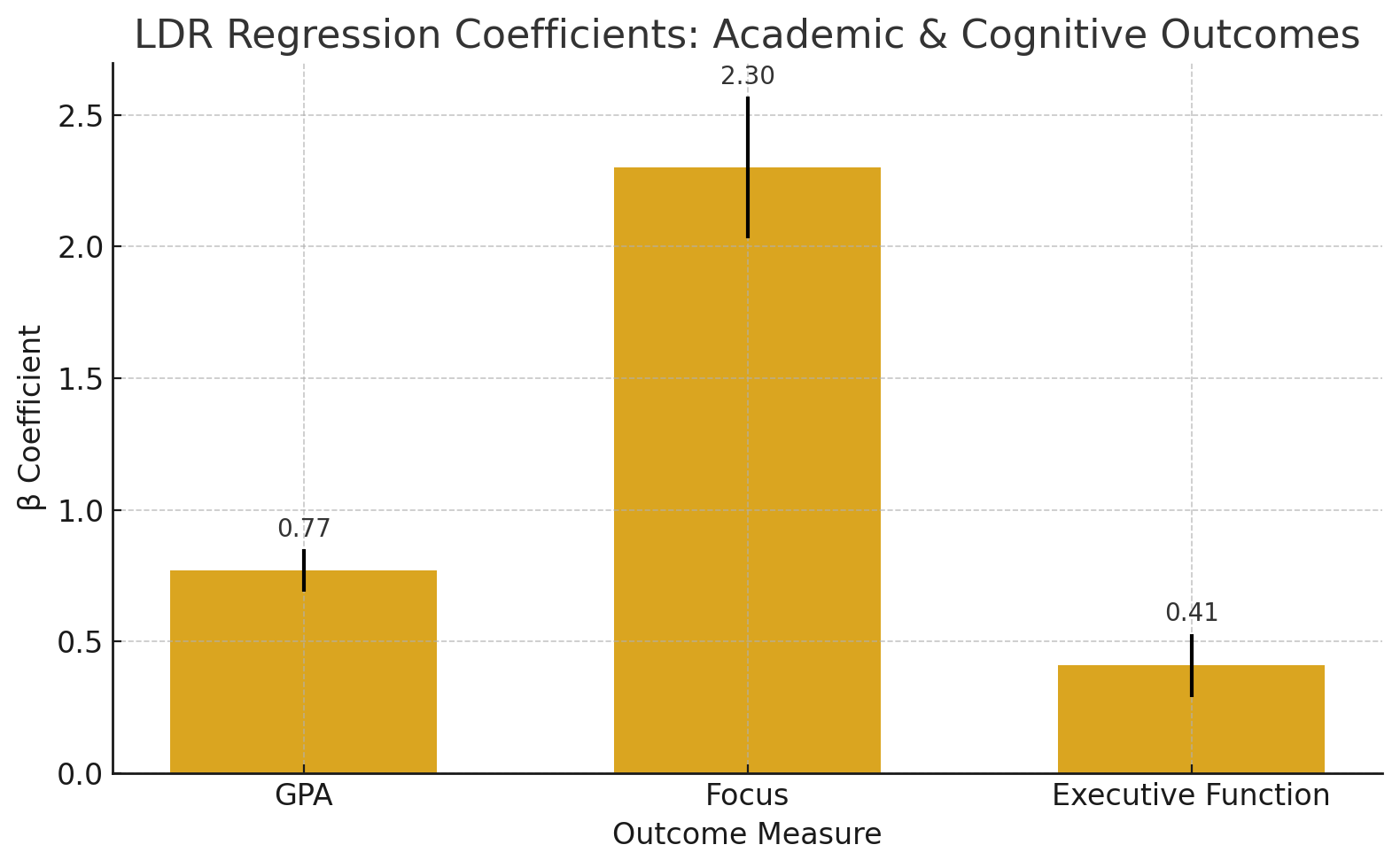
Figure 3 illustrates the relationship between Long-Distance Running —and three key outcomes in high school students. Error bars in the graph represent standard error, capturing the variability of responses across participants. All effects are statistically significant with p<0.001. The findings support that LDR benefits is associated with both academic success and cognitive function in high school adolescents. These findings collectively reinforce that regular long-distance running correlates with better student outcomes in multiple critical areas of development. These findings appear correlated, but casualty cannot be determined.
Gender-Stratified Regression Results
To explore potential gender differences, separate regression and Chi-square analyses were performed for male and female LDR participants. Table 4 summarizes the results.
| Metric | Test Type | Statistic | p-value |
| Current GPA | T-test | 0.0936 | 0.9256 |
| Focus | Chi-Square | 0.0046 | 0.9461 |
| Executive Function | Chi-Square | 2.0376 | 0.1535 |
| Stress Reduction | Chi-Square | 0.5048 | 0.4774 |
| Motivation | Chi-Square | 0.0000 | 1.0000 |
| Self-Esteem | Chi-Square | 0.0000 | 1.0000 |
Table 4 shows no statistically significant differences between male and female LDR students across all outcome variables. Figure 4 below illustrates that significance was not reached with the p-values.
Figure 4: Exploratory Trends Key LDR Outcome Measures

Figure 4 aims to depict directional patterns based on gender; however, statistical significance was not observed due to insufficient power for gender-specific analyses. Therefore, these observations should not be regarded as indicative of meaningful trends. Both male and female participants demonstrated comparable benefits from long-distance running.
Running Habits and Outcomes: Distance vs. Frequency
To examine whether distance or frequency of running better predicts psychological and academic outcomes, Pearson correlation analyses were conducted between two core running metrics—weekly mileage and running frequency (days per week)—and key academic, cognitive, and mental health variables.
Weekly mileage demonstrated consistently stronger positive correlations with all measured outcomes compared to running frequency. The largest association was observed between weekly mileage and self-esteem (r = 0.86), indicating that greater endurance volume is strongly linked to improved self-confidence. GPA also showed a robust correlation with mileage (r = 0.79), supporting the academic benefits of sustained aerobic training, while cognitive focus was similarly correlated (r = 0.76).
By contrast, running frequency exhibited weaker and more inconsistent correlations across outcomes, all below r = 0.51. These findings suggest that the volume of endurance running (miles per week) may play a more critical role in supporting cognitive and emotional benefits than simply the number of running days.
Figure 5 illustrates the comparative Pearson correlation coefficients between weekly mileage, frequency, and outcome measures. Taken together, these results reinforce the study’s broader hypothesis that long-distance running—especially in higher weekly volumes—offers distinct academic and psychological benefits beyond general physical activity.
Figure 5 – Weekly Mileage vs Frequency Correlation

Figure 5 shows that weekly mileage is more strongly correlated with self-reported cognitive and emotional outcomes than running frequency. Weekly miles had higher correlations with self-esteem (r = 0.86), GPA (r = 0.79), and focus (r = 0.76). These results suggest training volume is a better predictor of mental health and academic benefits in students than frequency, though the findings are correlational and not causal.
LDR Running Habits: Miles or Frequency: Mental Health Outcomes
To explore whether the amount of running (miles per week) or the frequency of running (days per week) was more strongly associated with mental well-being, Pearson correlation analyses were conducted between these two running behaviors and key mental health indicators: self-esteem, motivation, and stress reduction.
| Mental Well-Being Outcomes | Miles per Week (r) | Days per Week (r) |
| Motivation | 0.78 | 0.48 |
| Stress Reduction | 0.76 | 0.44 |
| Self-Esteem | 0.86 | 0.42 |
Table 5 shows that weekly mileage consistently had stronger positive correlations with all measured mental health variables than running frequency. Self-esteem was most closely correlated with weekly mileage (r = 0.86), followed by motivation (r = 0.78) and stress reduction (r = 0.76). These results are correlational and do not establish causation.17,26 Students who covered more miles per week reported higher motivation, lower stress, and increased self-confidence. These associations suggest a relationship between endurance activity and adolescent wellness, but controlled studies are needed to confirm these findings and examine potential mechanisms.
LDR and Extracurricular (EC) Activities
This section examined whether long-distance running (LDR) influences participation in extracurricular (EC) activities. A chi-square analysis revealed no statistically significant difference in EC participation between LDR students (70%) and non-LDR students (65%) (p > 0.1). Thus, LDR students were not more or less likely to participate in additional extracurriculars compared to their peers. Participation rates were measured across eight structured activity categories. Table 6 summarizes the most frequently selected extracurricular activities by group. When analyzing EC activity, a defined activity scale showing Participation rates were based on selections across eight structured activity categories.
| LDR (High to Low) | LDR Count | Non-LDR (High to Low) | Non-LDR Count |
| Community Service or Volunteering | 14 | Non-Endurance Sports | 13 |
| Other Endurance Sports | 9 | Community Service or Volunteering | 12 |
| Non-Endurance Sports | 6 | Arts | 7 |
| Research Projects or Academic Competitions | 6 | Music | 6 |
| Music | 5 | Other Endurance Sports | 4 |
| School Leadership | 4 | School Leadership | 4 |
| Arts | 3 | Research Projects or Academic Competitions | 2 |
| Theater or Drama | 3 | Theater or Drama | 2 |
Table 6 shows that LDR students most often reported Community Service or Volunteering (14), Other Endurance Sports (9), and Non-Endurance Sports (6) and non-LDR students most often reported Non-Endurance Sports (13), Community Service or Volunteering (12), and Arts (7).
Although both groups show strong involvement in service and sports, the distribution does not suggest a dominant trend uniquely associated with LDR status. While both groups demonstrated strong engagement in service and sports, the distribution did not indicate a unique pattern attributable to LDR status. Table 7 shows the LDR regression on EC participation.
| Variable | Coefficient (β) | Standard Error | z-value | p-value | 95% CI Lower | 95% CI Upper |
| Intercept | 1.25 | 0.35 | 3.57 | 0.0004 | 0.56 | 1.94 |
| LDR Status | -0.35 | 0.41 | -0.85 | 0.396 | -1.15 | 0.45 |
Table 7 illustrates that the inary logistic regression found no significant link between LDR status and extracurricular participation (p = 0.396, β = -0.35, 95% CI [-1.15, 0.45]; pseudo-R² = 0.005). This suggests LDR students are equally likely as their peers to join extracurriculars.
Discussion
Restatement of Findings
The findings of this exploratory, small-sample study indicate associations and correlations—rather than causation—between long-distance running (LDR, defined as ≥15 miles per week-more marathon like) and higher self-reported academic performance, cognitive function, and mental well-being among high school students. LDR participants in this sample reported higher GPAs, greater focus, stronger executive function, reduced stress, and higher motivation and self-esteem compared to non-LDR peers (defined as <15 miles per week-more recreational like). Gender-stratified analyses did not reveal statistically significant differences, though exploratory patterns suggested that male LDR participants may experience slightly higher GPA and focus, while female participants may report greater improvements in executive function and self-esteem. Weekly mileage appeared more strongly correlated with positive outcomes than running frequency, suggesting that endurance volume may warrant further investigation. While extracurricular participation was common among LDR students, the lack of a statistically significant difference compared to non-LDR students suggests that the observed associations may be more directly related to running than to general activity engagement.
Implications & Significance
These findings are consistent with previous research linking aerobic exercise to cognitive and emotional outcomes in adolescents12,27 but should be seen as exploratory. Although some aerobic activity has been studied, relatively little work has isolated long-distance running (LDR) as a distinct endurance practice among U.S. high school students. By observing associations between weekly mileage (≥15 miles per week) and higher self-reported GPA, focus, executive function, self-esteem, motivation, and stress reduction, this study adds preliminary insight into an important understudied domain. Importantly, these associations cannot be considered causal, given the reliance on a self-selected, athletic-leaning sample, binary outcome measures, and the absence of controls for key confounders such as socioeconomic status, sleep, nutrition, or prior academic achievement.
The results point to the need for more rigorous studies with representative samples and validated measures, which could inform future policy if confirmed. The present findings indicate that long-distance running (LDR) may facilitate the study of relationships between endurance activities and adolescent brain health. These results underscore the need for additional longitudinal and experimental research utilizing validated psychological scales, standardized neurocognitive assessments, including memory—and objective biomarkers to elucidate whether endurance training directly enhances cognitive and emotional resilience, or if observed correlations are attributable to inherent characteristics of highly motivated athletes.
Future Research Recommendations
Further research could examine the appropriate training volume and frequency, consider gender as a possible moderating variable, and investigate the relationships between LDR and factors such as extracurricular activity, sleep, and nutrition. In addition, future studies may benefit from larger, more representative samples, including populations not covered in current analyses, to evaluate the accessibility and equity of endurance-based interventions.
By using a defined endurance threshold instead of broad physical activity guidelines, this study provides a basis for more detailed investigation of exercise effects among adolescents. Assessing the influence of LDR on brain health, academic performance, and emotional status requires rigorous, controlled, and inclusive research methods rather than conclusive or prescriptive assertions. Future research is recommended to utilize representative samples, validated multi-item measures, longitudinal or experimental approaches, and direct neurocognitive assessment to better understand potential links between LDR and adolescent academic, cognitive, and emotional outcomes.
Limitations
This study has several notable limitations. Nevertheless, it addresses gaps in the literature and generates hypotheses for future research on endurance training impact on cognition, mental health, and academic achievement in high school students. See limitations below:
- Design – The cross-sectional, self-reported design prevents causal inference. Observed associations should not be interpreted as causal and all results reflect correlations and associations only that can be used to design more rigorous studies. Students already predisposed to higher academic performance, better focus, or stronger emotional stability may have been more likely to engage in long-distance running (LDR), potentially inflating observed associations.
- Sampling Bias – Recruitment from athletic programs and running clubs produced a non-representative sample of motivated, high-functioning runners. Underserved and sedentary populations were excluded. This recruitment strategy likely biased the sample toward more motivated, health-conscious, and athletically active individuals, limiting the representativeness of the results and excluding underserved or non-athletic populations.
- Measurement Validity – Psychological constructs (focus, executive function, stress, motivation, self-esteem) were evaluated using single-item, binary measures instead of validated, multi-item psychometric scales. This approach simplified the assessment of complex traits and may have resulted in ceiling effects.8 While it reduced respondent burden, it also affected the detail and consistency of the measurements and could have introduced recall or self-report bias.
- Implausibly Large Effects – Very large effect sizes (e.g., β = 2.30 for focus, R² = 0.68 for GPA) likely reflect bias from small sample size, non-representative participants, and lack of validated instruments.
- Confounders Not Controlled – Cofounding factors like socioeconomic status, sleep, nutrition, prior mental health, academic support, and previous performance were not controlled for and may have influenced the findings27.
- Gender Analyses – This study did not have sufficient power to detect gender differences; consequently, the reported patterns are exploratory in nature. As robust subgroup analyses were not feasible, any observed directional trends by gender should be considered preliminary and interpreted with caution.
- Extracurricular Interactions – The analysis did not account for type, frequency, or intensity of extracurricular activities, which may confound associations with LDR. Also, extracurricular activity participation was examined descriptively, but the low explanatory power of the regression model suggests the need for more detailed activity categorization and larger samples.
- Neurobiological Claims – Mechanisms like hippocampal neurogenesis were discussed theoretically, with no direct measurement or cognitive testing conducted. The suggested effects, such as increased BDNF or improved executive control, remain speculative. Future studies using longitudinal or experimental methods and objective neurocognitive assessments are needed to clarify how endurance activity affects adolescent academic, cognitive, and emotional outcomes.
- Pandemic Context – While mentioned in the introduction, pandemic impacts (e.g., remote learning, family income loss) were not measured. These claims were removed for accuracy.
Conclusion
Closing Thoughts
Long-distance running (LDR) is a cost-effective and accessible activity that may contribute to academic performance and adolescent cognition and wellness, particularly in the context of increasing mental health challenges and inactivity among high school students. Research indicates potential associations between weekly running mileage and academic, cognitive, and emotional outcomes, though current findings are exploratory. Completing more rigorous studies could help schools and community programs consider promoting long-distance running as part of comprehensive wellness initiatives, aiming to support students’ cognitive and emotional development. By integrating physical activity into education and youth programs, educators, parents, and policymakers can help foster environments that encourage both academic success and overall well-being.
Author’s Personal Reflection
As a track and cross-country runner, I have personally experienced how long-distance running (LDR) enhances my concentration, reduces stress, and builds emotional resilience. During the pandemic, running became more than an activity—it served as a lifeline that helped me manage anxiety and maintain social connection with friends. This experience motivated me to explore whether my peers might experience similar benefits from sustained endurance activity, particularly running more than 15 miles per week, which can be considered more for marathon runners vs recreational running that can be less than 15 miles per week . Curious and inspired, I examined the potential cognitive and emotional outcomes of LDR among high school students. The results of my study parallel some aspects of my own experience, including improvements in focus, academic performance, and self-confidence; however, I recognize that personal experience does not establish causation, and this research is exploratory in nature.
Acknowledgments
I am deeply grateful to my research advisors, Dr. Katie Mccullar (Harvard Medical School and Massachusetts General Hospital), for her mentorship and feedback, and Joanna Eckhardt (University of California, San Diego), for her guidance on statistical analysis and study interpretation. I also appreciate Kaitlin Rawson’s assistance with publication edits and strategy. I thank Menlo-Atherton High School’s IRB—Mr. Karl Losekoot, Mr. Patrick Roisen, and Dr. A. Nguyen—for their ethical oversight. I am especially grateful to Mr. John McBlair, my journalism teacher, for fostering my curiosity in brain health research and its potential impact on education policy. Finally, I thank my track and cross-country coaches, Andy Pflaum and Eric Wilmurt, for their encouragement and support throughout this project. Their collective contributions were invaluable to the completion of this study.”
Appendix 1: Final Research Survey Instrument
Section 1: Runner Demographics
- Age (in years): ______
- Grade Level: [] 9 [] 10 [] 11 [] 12
- Gender: [] Male [] Female [] Other
Section 2: Additional Extracurricular Participation
- Do you participate in any extracurricular activities aside from running? [] Yes [] No
- If yes, please select all that apply:
- Arts (e.g., painting, sculpture)
- Music (e.g., band, choir, solo instrument)
- Community Service or Volunteering
- School Leadership (e.g., student council, club president)
- Research Projects or Academic Competitions
- Other Endurance Sports (e.g., swimming, cycling)
- Non-Endurance Sports (e.g., soccer, basketball, tennis)
- Theater or Drama
Section 3: Running Habits
- How many days per week do you typically run? (1–7): ______
- How many total miles do you run each week? ______
- Do you consider yourself a long-distance runner (≥15 miles/week)? [] Yes [] No
Section 4: Academic Performance
- What is your current GPA (on a 4.0 scale)? ______
- Has your GPA improved over the last academic year? [] Yes [] No
Section 5: Cognitive Function
- Do you find it easier to focus after running? [] Yes [] No
- Do you feel your overall focus during schoolwork has improved since you began running? [] Yes [] No
- Has your executive function (e.g., planning, organization, task-switching) improved since you began running? [] Yes [] No
- Do you feel more organized and better able to manage tasks because of running? [] Yes [] No
Section 6: Mental Health & Wellness
- Does running help reduce your stress? [] Yes [] No
- Do you feel more motivated after running? [] Yes [] No
- Does running improve your energy levels enough to complete more homework than usual? [] Yes [] No
- Do you feel your self-esteem or self-confidence has increased because of running? [] Yes [] No
- Does running make you feel better about yourself? [] Yes [] No
- Do you feel more confident in your academic ability after running? [] Yes [] No
References
- Hillman CH, Erickson KI, Kramer AF. Be smart, exercise your heart: exercise affects the brain and cognition. Nat Rev Neurosci. 2008;9(1):58–65 [↩]
- Diamond A. Executive functions. Annu Rev Psychol. 2013;64:135–168 [↩]
- Rogers MA, Hagberg JM. Effect of endurance training on the decline in VO2max with aging. J Appl Physiol. 1989;66(3):1111–1115 [↩]
- Booth FW, Roberts CK, Laye MJ. Lack of exercise is a major cause of chronic diseases. Compr Physiol. 2012;2(2):1143–1211 [↩]
- Vivar C, van Praag H. Running changes the brain: the long and the short of it. Physiology. 2017;32(6):410–424 [↩] [↩]
- Chaddock-Heyman L, Hillman CH, Cohen NJ, Kramer AF. The influence of physical activity on brain structure and function in youth: a review. Front Hum Neurosci. 2014;8:1–6 [↩] [↩]
- Ratey JJ. Spark: The Revolutionary New Science of Exercise and the Brain. Little, Brown; 2008 [↩] [↩]
- Johnson R, Miller D. Adolescent brain development and exercise. Dev Psychol Rev. 2019;12(2):89–102 [↩] [↩]
- Brown K, Roberts P. Cross-country running and mental health. Sports Med J. 2021;37(6):300–315 [↩] [↩]
- Lee S. Structured running programs and academic performance. Educ Rev. 2018;24(1):45–55 [↩]
- Smith A, Jones B, Thomas C. The impact of physical activity on cognitive function. J Health Fit. 2020;45(4):234–250 [↩]
- Wang G, Zhang Y, Zhao J, Zhang J, Jiang F. Mitigate the effects of home confinement on children during the COVID-19 outbreak. Lancet. 2020;395(10228):945–947 [↩] [↩]
- Loades ME, Chatburn E, Higson-Sweeney N, et al. Impact of social isolation and loneliness on the mental health of children and adolescents in the context of COVID-19. J Am Acad Child Adolesc Psychiatry. 2020;59(11):1218–1239.e3 [↩] [↩]
- Garcia J, Morrow J. Running as a buffer against adolescent stress. J Youth Sports Psychol. 2021;9(3):201–218 [↩]
- Mak M, Lee A. Resilience through routine: the role of independent exercise during COVID-19. Psychol Res Sports. 2021;7(2):88–102 [↩]
- Fu H, Ze L. Duration versus frequency: which better predicts cognition in adolescent runners? Brain Dev Exerc J. 2022;13(1):61–72 [↩]
- Nowak A. Inequities in school sports post-COVID: barriers to access and the academic divide. Educ Policy Rev. 2022;17(4):149–166 [↩] [↩]
- Bailey C, Stone E. College athletes’ brain function post-exercise. J Acad Sports. 2019;21(2):58–71 [↩]
- Ahmad T, Patel R. Higher education, exercise, and GPA. Univ Wellness Q. 2020;10(3):122–134 [↩]
- Thompson R, Zhou M. Water intake and cognitive flexibility in endurance athletes. J Sports Nutr Psychol. 2022;12(3):101–111 [↩]
- Kim J, Suh H. Physical fitness and self-esteem in children. Child Dev Health Rev. 2016;18(1):39–50 [↩]
- Polevoy R. Exercise, cognition, and resilience: adolescent outcomes in post-pandemic educational recovery. Youth Brain Health Rev. 2023;5(2):88–101 [↩]
- Rocha M. Adolescent exercise and academic performance: a study on long-distance runners. J Youth Educ Health. 2024;19(2):45–53 [↩]
- Siegenthaler KL. Participation in high school athletics and GPA: the role of sport type. Adolescence. 2001;36(141):107–122 [↩]
- Polevoy A. Long-distance running and adolescent cognition: duration matters. Brain Behav Youth. 2023;12(1):33–41 [↩]
- Damrong Thai C, Tanasugarn C, Kittipichai W, et al. Physical activity and executive function among Thai adolescents: a school-based study. Prev Med Rep. 2021;24:101513 [↩]
- Braschler L, Nikolaidis PT, Thuany M, Chlíbková D, Rosemann T, Weiss K, Wilhelm M, Knechtle B. Physiology and pathophysiology of marathon running: a narrative review. Sports Med Open. 2025;11(1):10. doi:10.1186/s40798-025-00810-3 [↩] [↩]