
Abstract
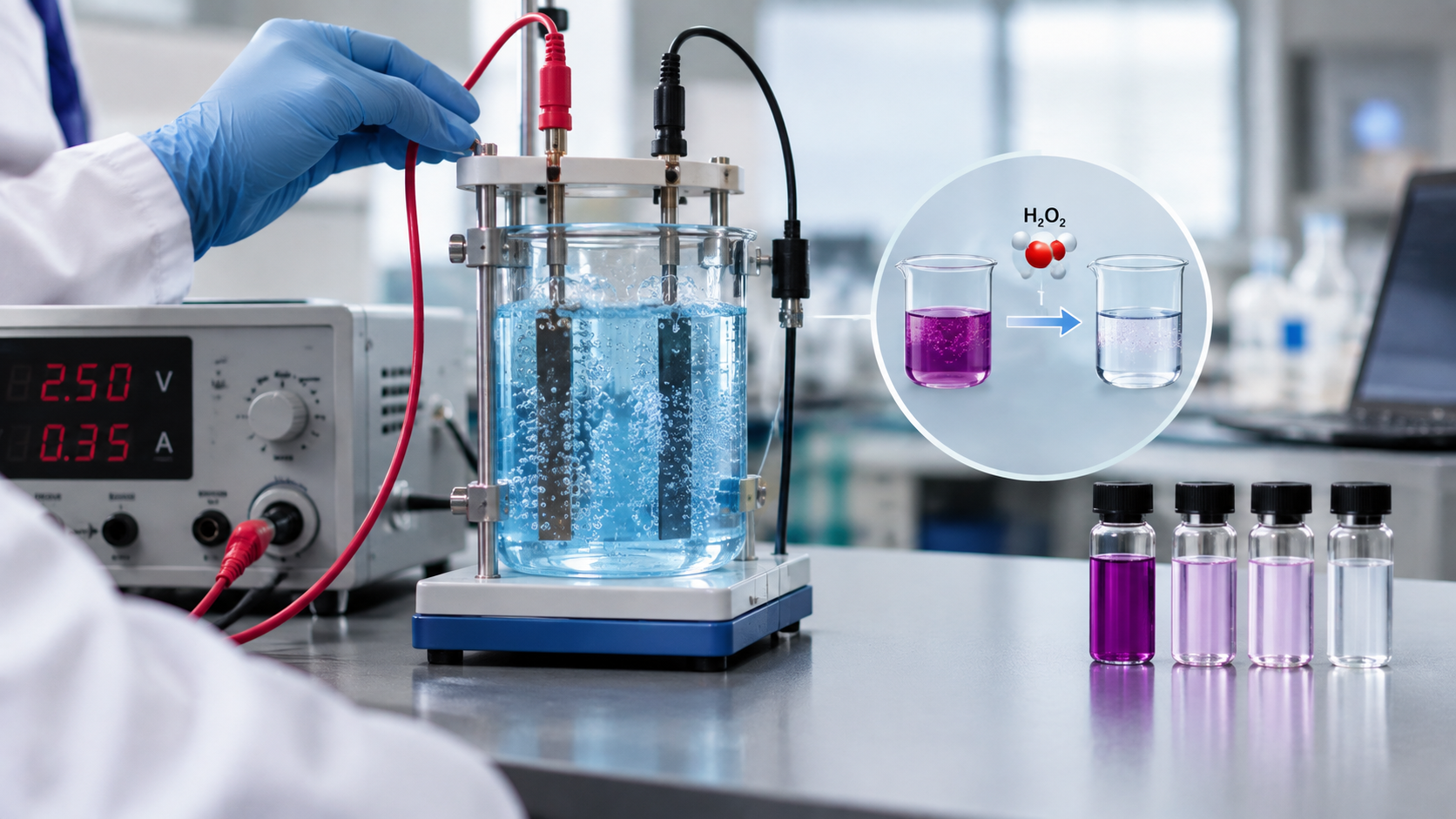
The treatment of organic wastewater remains a serious issue in sustainable development due to the presence of various persistent and toxic compounds. Currently, the advanced oxidation process, especially the Fenton reaction, is a promising method to redress this issue. However, this process needs a continuous addition of external H2O2, which is not only costly but also raises safety hazards during transportation. Therefore, this study aims to investigate the possibility of utilizing electrochemically generated H2O2 to the Fenton system for dye decolorization. In particular, a customized flow cell was built and the commercial 39BB carbon fiber paper was employed as the catalyst for the production of H2O2 via the two-electron oxygen reduction reaction pathway under varied current densities. The concentration of the generated H2O2 was then quantified using standard spectrophotometric analysis, with the sample exhibiting the highest Faradaic efficiency selected and applied to the model dye systems containing the organic dye (methyl orange and methylene blue) and ferrous ions. The results showed rapid decolorization for both dyes, underscoring that the proposed route is viable and has the potential to act as an alternative to conventional dye treatment processes.
Keywords: Hydrogen peroxide, Electrochemical oxygen reduction reaction, Fenton reactions, Decolorization of organic dyes
Introduction
Nowadays, the treatment of organic wastewater has been a critical issue in sustainable development due to the presence of various persistent and toxic compounds. These substances are often non-degradable by conventional treatment processes, posing severe risks to eco-systems and human health1. In order to tackle this problem, researchers have been continuously searching for other methods of water treatment. In the past two decades, the advanced oxidation process (AOP) has been extensively researched and was considered one of the most promising ways of decontaminating wastewater. Specifically, AOP involves the in-situ generation of high concentrations of strong oxidizing species, such as hydroxyl radicals (·OH), that could cause bond cleavage and degrade organic dyes2,3. Currently, there are various types of AOPs that are being developed, including ozonation technology, photocatalytic oxidation, UV/chlorine advanced oxidation, and Fenton oxidation4,5,6,7,8.
Compared to other AOPs, Fenton reactions stand out as a promising alternative due to its simple reaction requirements. The reaction can be conducted under room temperature and pressure without the need of complicated machines or extra energy input9,10. Moreover, Fenton reactions are highly sustainable as H2O2, one of the key reactants involved in the process, can gradually decompose into non-toxic oxygen and water overtime. This characteristic minimizes pollution and environmental impact9. The mechanism of the Fenton reaction involves the generation of highly reactive ·OH radicals from H2O2 and ferrous iron ions (Fe2+). These free radicals possess a high oxidation potential (E° = 2.80 V vs. normal hydrogen electrode (NHE)), which can rapidly degrade organic compounds11,12. However, the practical application of the Fenton reaction is severely hindered by the need of continuous addition of H2O2, which not only makes the whole process expensive but also raises safety concerns during transportation and storage12. Together, these factors make the large-scale application of the process physically and economically challenging.
To address this limitation, increasing attention has been given to Fenton and Fenton-like systems that utilize in-situ production of H2O2 through the activation of O2 to minimize transportation and storage risks as well as reducing operational costs13,14. Based on the electron donation pathway, in-situ production of H2O2 can be broadly divided into electrochemical and photochemical routes for O2 activation. Among these methods, the electrochemical route is considered particularly promising because it enables controllable and sustainable H2O2 production under mild conditions15.
In this study, we aim to investigate the possibility of utilizing electrochemically generated H2O2 to the Fenton system for dye decolorization. It is hypothesized that the H2O2 produced via the two-electron oxygen reduction reaction (2e⁻ ORR) pathway can be directly employed to a Fenton system, generating highly reactive free radicals that lead to dye decolorization. In order to justify the hypothesis, H2O2 was produced in a customized flow cell using the commercial 39BB carbon fiber paper as the ORR catalyst. Electrolysis was conducted at different current densities for 40 minutes, and the concentration of H2O2 was determined using the ferrous oxidation-xylenol orange (FOX) colorimetric method combined with UV-vis spectrophotometry. The Faradaic efficiency (FE) and corresponding H2O2 concentration was then calculated according to the given absorbance intensity, with the sample showcasing the highest FE chosen and employed into the model dye systems containing organic dyes (methyl orange and methylene blue) and Fe2+. After mixing, significant decolorization was observed for both dye solutions, highlighting the system’s potential to serve as an alternative for conventional water treatment processes.
Results
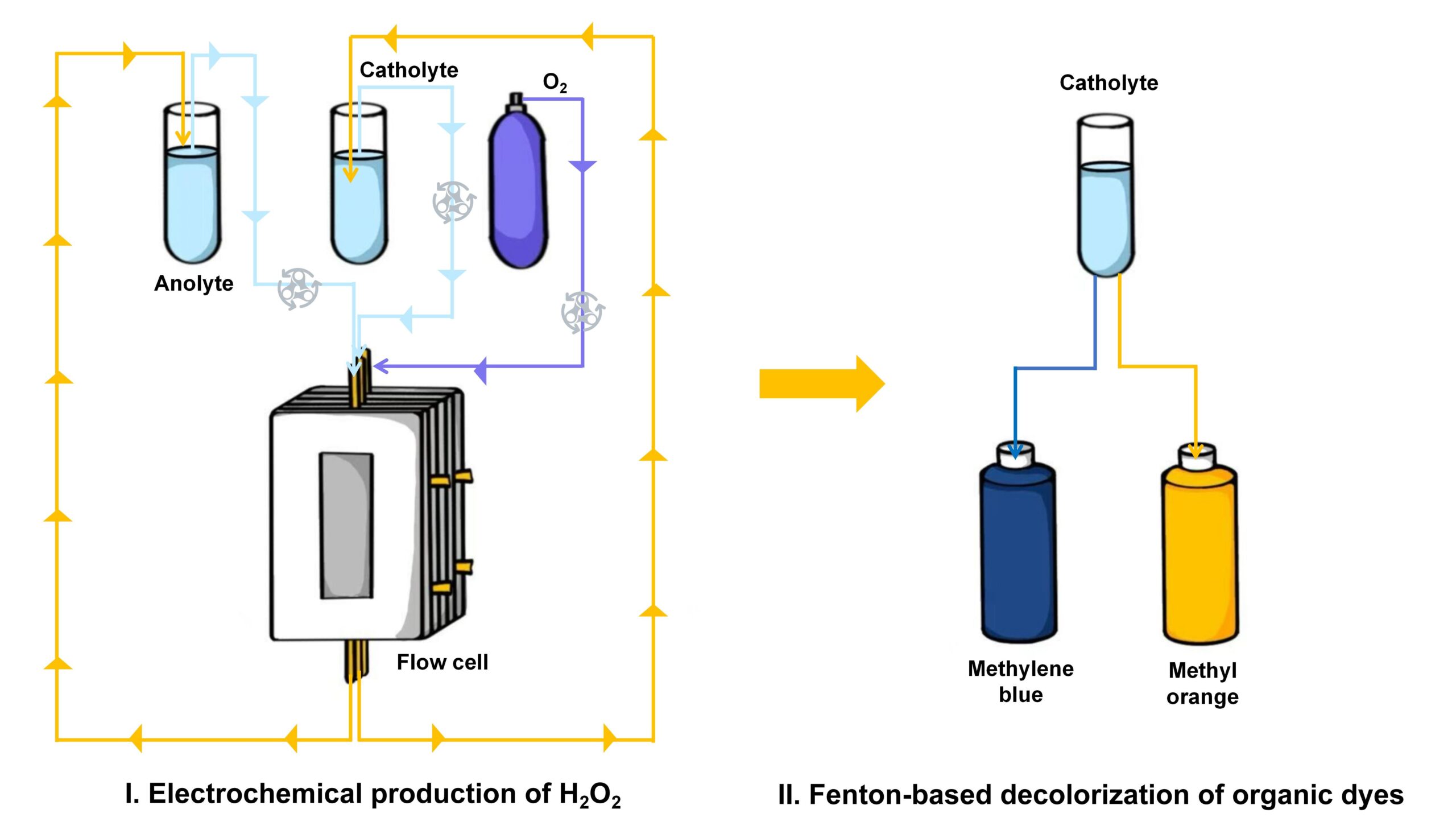
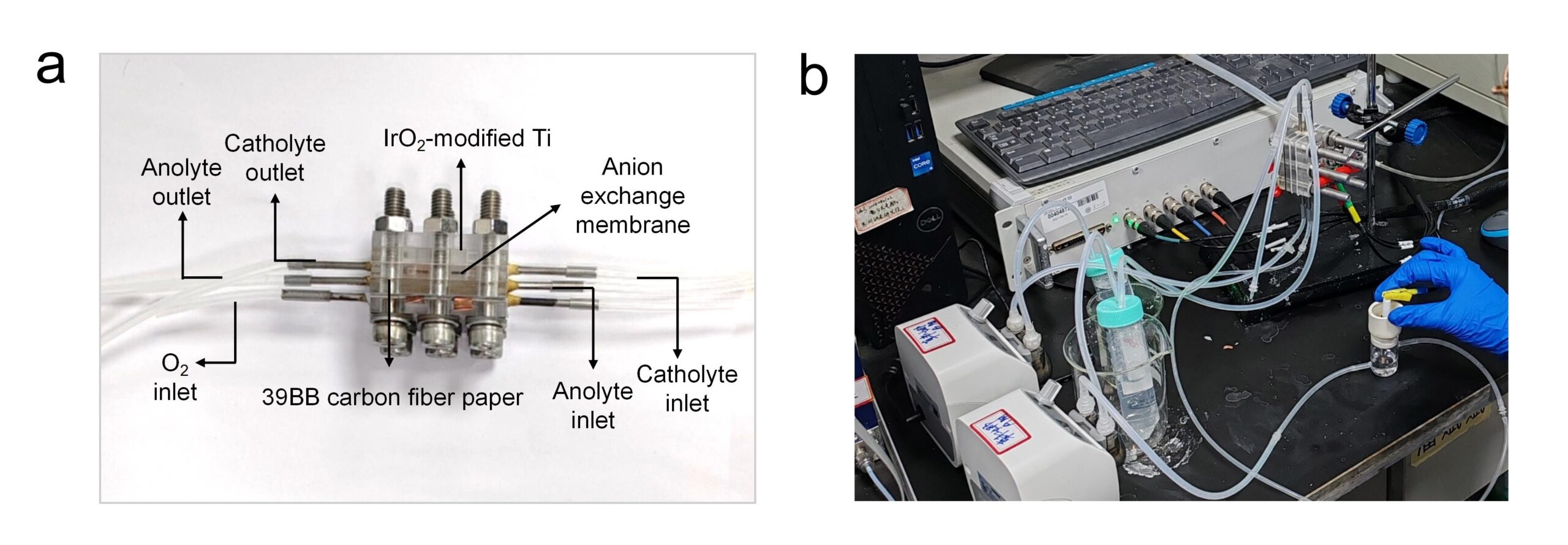
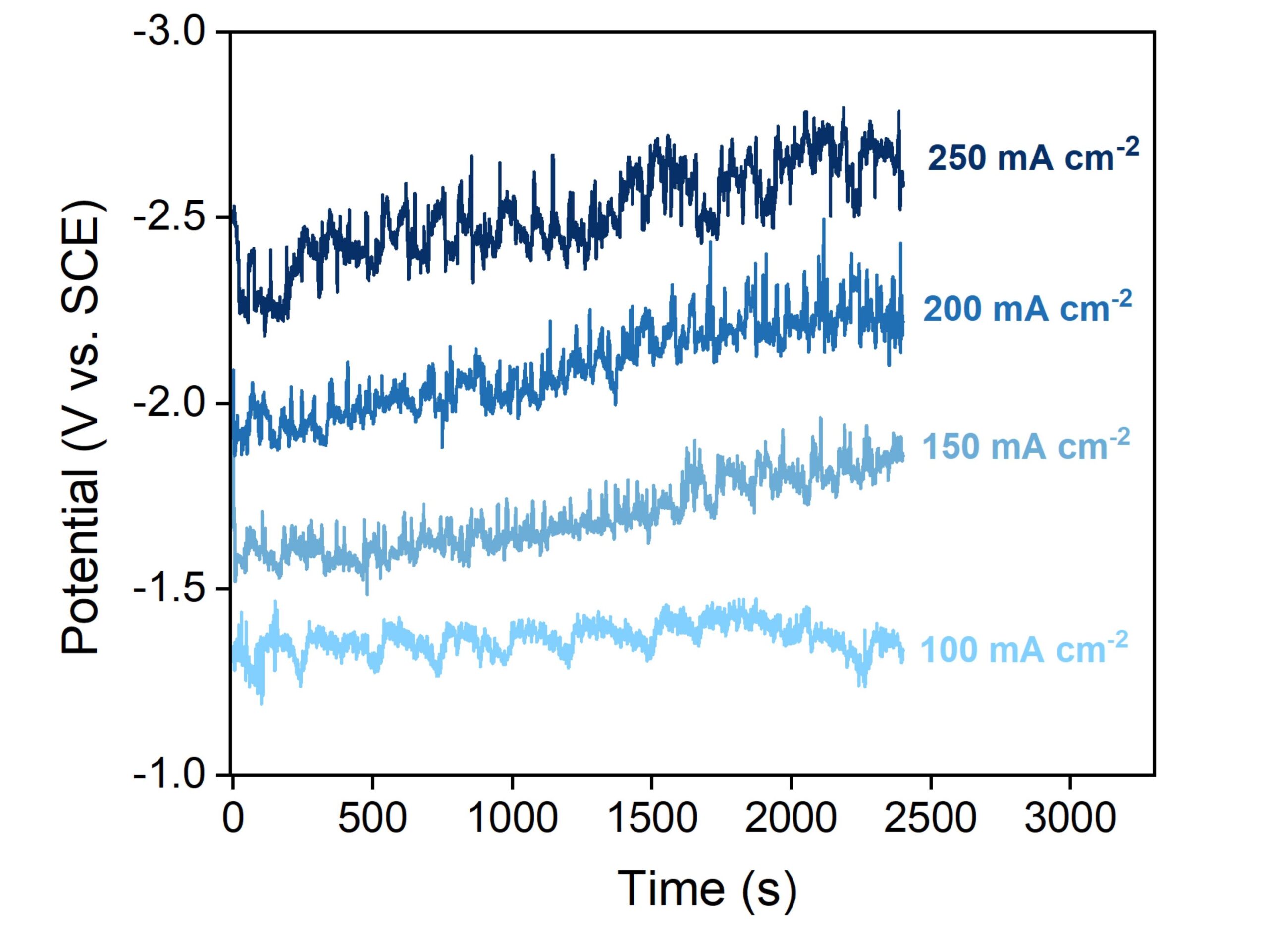
A schematic illustration of the overall experimental workflow, including electrochemical H2O2 generation and its subsequent application in Fenton-based dye treatment, is provided in Figure 1. In this study, H2O2 was produced via the two-electron ORR pathway using a custom-built three-compartment flow cell (Figure 2). Within the structure, a piece of commercial 39BB carbon fiber paper was used as the ORR catalyst. To evaluate the short-term operational stability of the system, chronopotentiometry tests were conducted for 40 minutes at four different constant current densities of 100, 150, 200, and 250 mA cm-2 (Figure 3). The results demonstrated stable operation throughout the testing period. The corresponding working potentials were recorded as 1.30, 1.65, 1.90, and 2.35 V versus a saturated calomel electrode (SCE) at current densities 100, 150, 200, and 250 mA cm-2, respectively. However, potential fluctuations were observed at all current densities, which may be attributed to the formation and transport of gas bubbles within the flow channels of the reactor16.
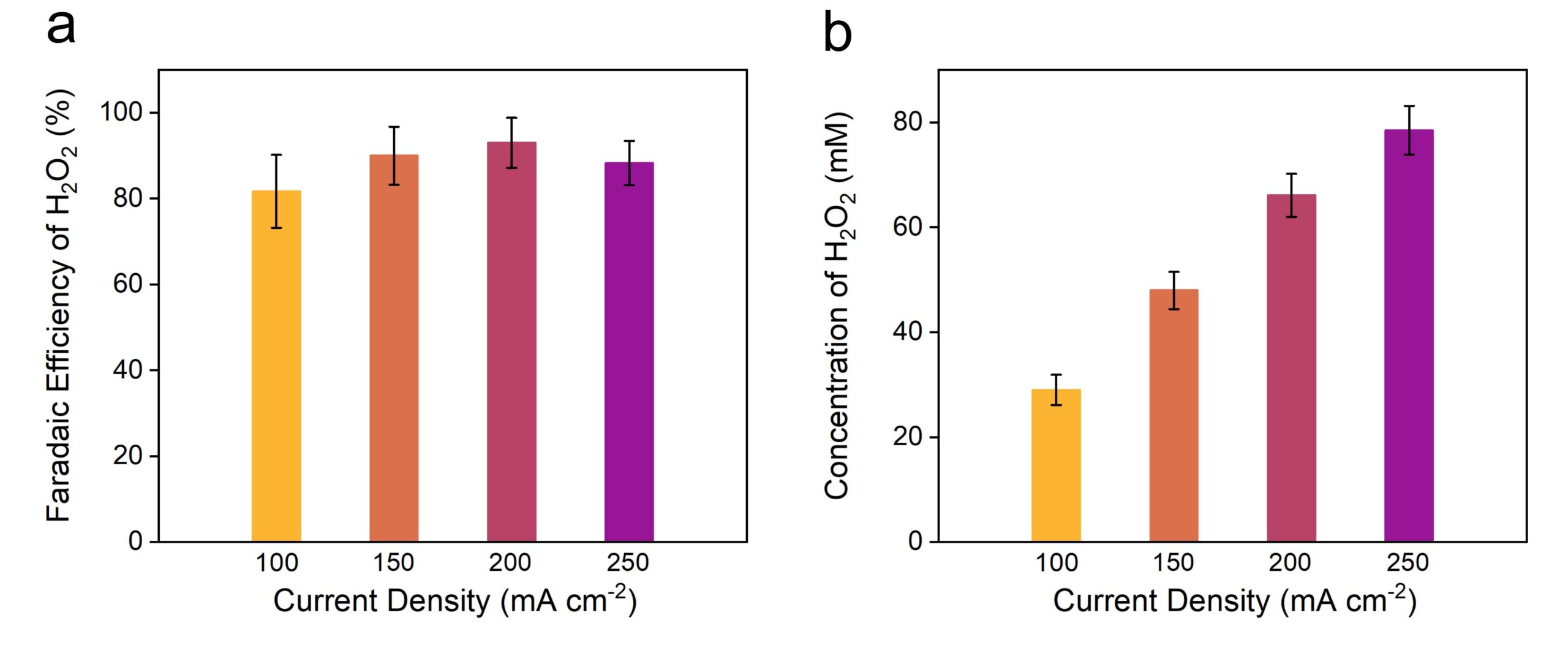
To further quantify H2O2 generated via ORR at different applied current densities, the post-reaction electrolytes were converted into colorimetric assay solutions and analyzed by UV-vis absorption spectroscopy. The FE and the corresponding H2O2 concentration were calculated based on the measured absorbance intensities (Figure 4). The FE remained consistently high across the investigated current density range of 100 to 250 mA cm-2, with values generally above 80% (Figure 4a). A maximum FE of 95% was achieved at 200 mA cm-2, indicating highly selective H2O2 formation via the 2e⁻ ORR pathway. At higher current densities, a decline in FE was observed, which can be associated with the increased contribution of the 4e⁻ ORR pathway or the partial decomposition of the accumulated H2O217. Moreover, the H2O2 concentration increased with increasing current density, indicating enhanced H2O2 generation under higher current inputs (Figure 4b).
To further evaluate the long-term stability of the flow cell, a stability test was conducted over a period of 5 h (Figure S1). During the operation, the potential remained relatively stable between -1.1 V to -1.5 V vs. SCE. Notably, a large fluctuation was evident between 2.1 h and 3.5 h, which can be attributed to the dynamic changes within the gas-liquid-solid interface. The restoration of the potential to approximately -1.4 V after 3.5 h indicates that the change is reversible and is not caused by severe catalyst degradation. The FE, on the other hand, showed a gradual, continuous decrease from 95% to 80%. This could be caused by the accumulation of H2O2 overtime, where it undergoes partial decomposition, which reduces the amount of H2O2 retained in the electrolyte. Nevertheless, the relatively stable potential and a FE maintained above 80% demonstrated that the system is capable of supporting long-term operations, highlighting its real-world potential for large-scale applications.
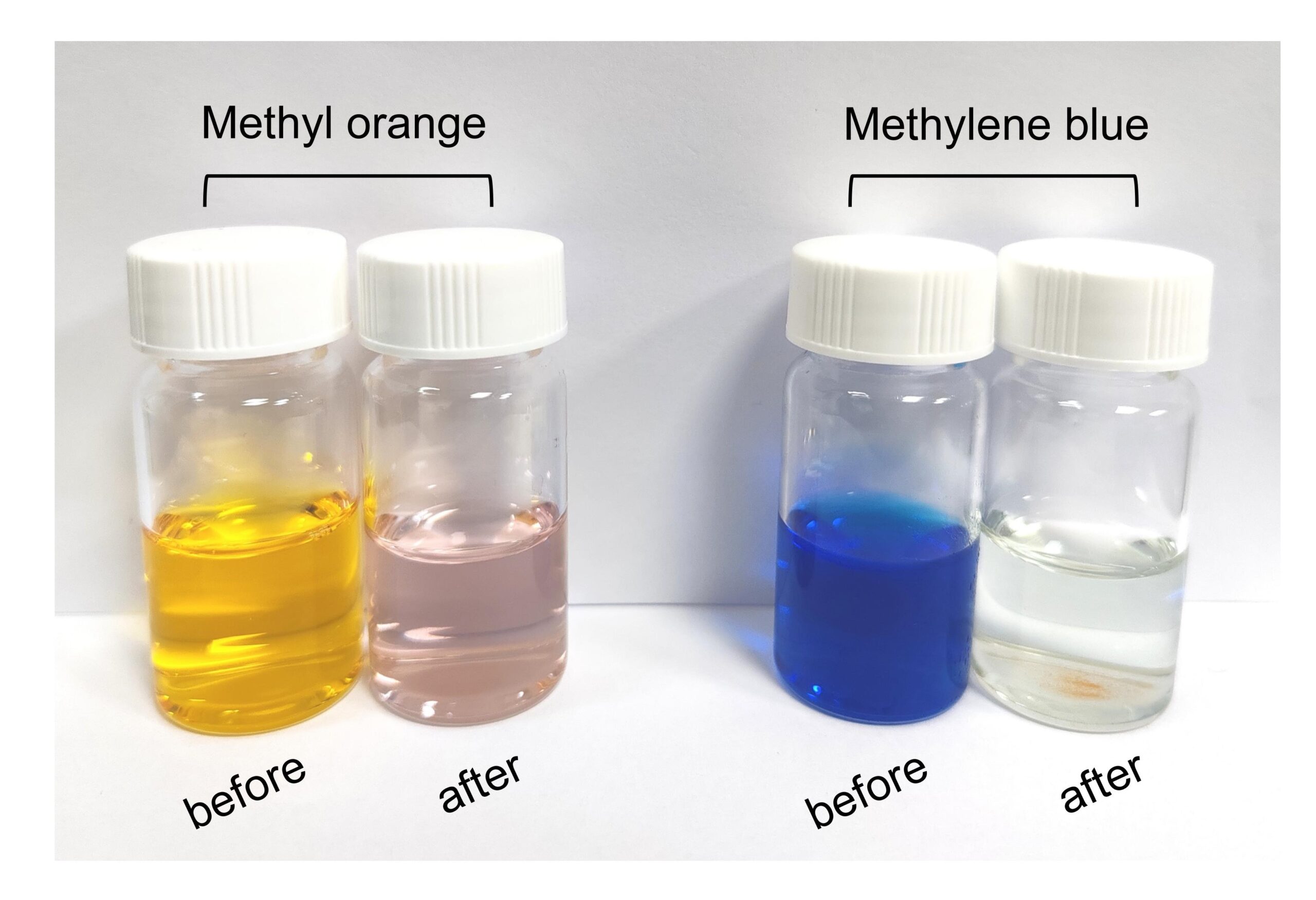
Ultimately, dye decolorization experiments were conducted to evaluate the practical applicability of the electrochemically generated H2O2 in water treatment. In this experiment, methyl orange and methylene blue with a concentration of 100 ppm was used as the model dyes to simulate wastewater. The catholyte under a current density of 200 mA cm-2 was employed as the source of H2O2 as it showed the highest FE, ensuring sufficient H2O2 selectivity and production. After mixing the catholyte with the dye solution in a 1:1 ratio, the pH of the solution is approximately 2.8, which fits into the optimal pH for Fenton reactions (pH 2-3)18,19. Significant decolorization was observed in both dye solutions (Figure 5), attributing to the reactive species generated by H2O2 and Fe2+. These results indicate that electrochemically generated H2O2 via the 2e⁻ ORR can be utilized as a method of color removal for dye solutions.
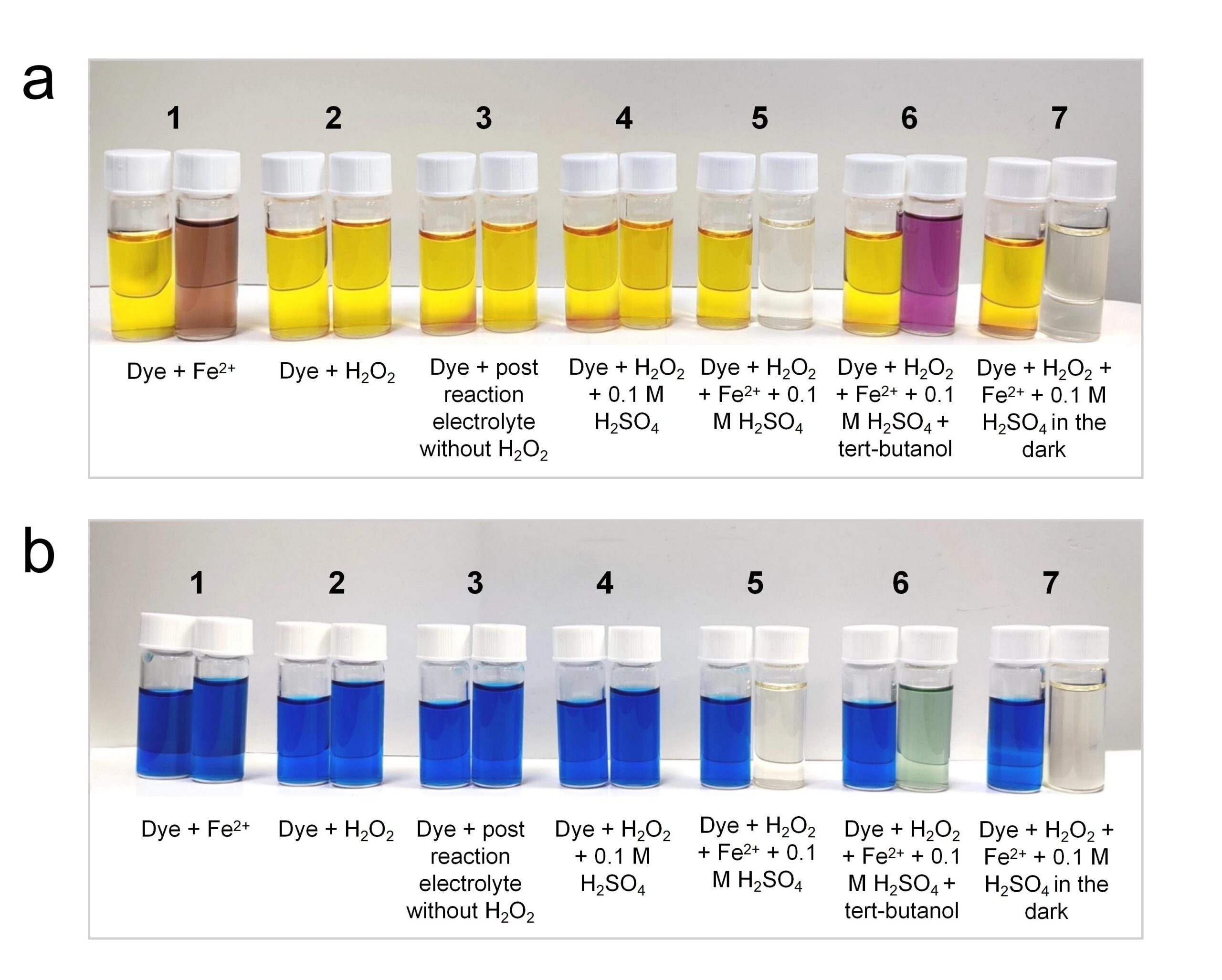
In order to validate the contribution of the Fenton process and to rule out the contribution of other possible reactions, a series of control experiments were performed (Figure 6). An evident color change was observed in the dye solution containing Fe2+ alone (Group 1), which is likely caused by the intrinsic color of the Fe2+ rather than dye removal. On the other hand, dye solutions with H2O2 alone (Group 2), the post-electrolyte with H2O2 removed (Group 3), and acidic H2O2 (Group 4) showed no significant color changes, indicating that merely these factors are insufficient to trigger dye decolorization.
As expected, both dye systems containing Fe2+ and H2O2 under acidic conditions undergone significant decolorization due to the Fenton reaction (Group 5). Similar phenomena were observed under dark conditions (Group 7). This result rules out the possibility of light irradiation as a cause of color removal. In addition, a free-radical quenching experiment was conducted to validate the role of ·OH. Tert-butanol was added as the free-radical scavenger to the acidic dye solution containing Fe2+ and H2O2 (Group 6). After thorough mixing, a color change was evident in both dye systems, yet the color was much darker compared with the Fe2+/H2O2 system without the scavenger (Group 5). This suggests that tert-butanol substantially inhibited dye decolorization, and the remaining color change is likely caused by the intrinsic color of Fe2+ ions, consistent with the result of Group 1. These results demonstrate that hydroxyl radicals generated through Fenton oxidation play a critical role in promoting dye decolorization.
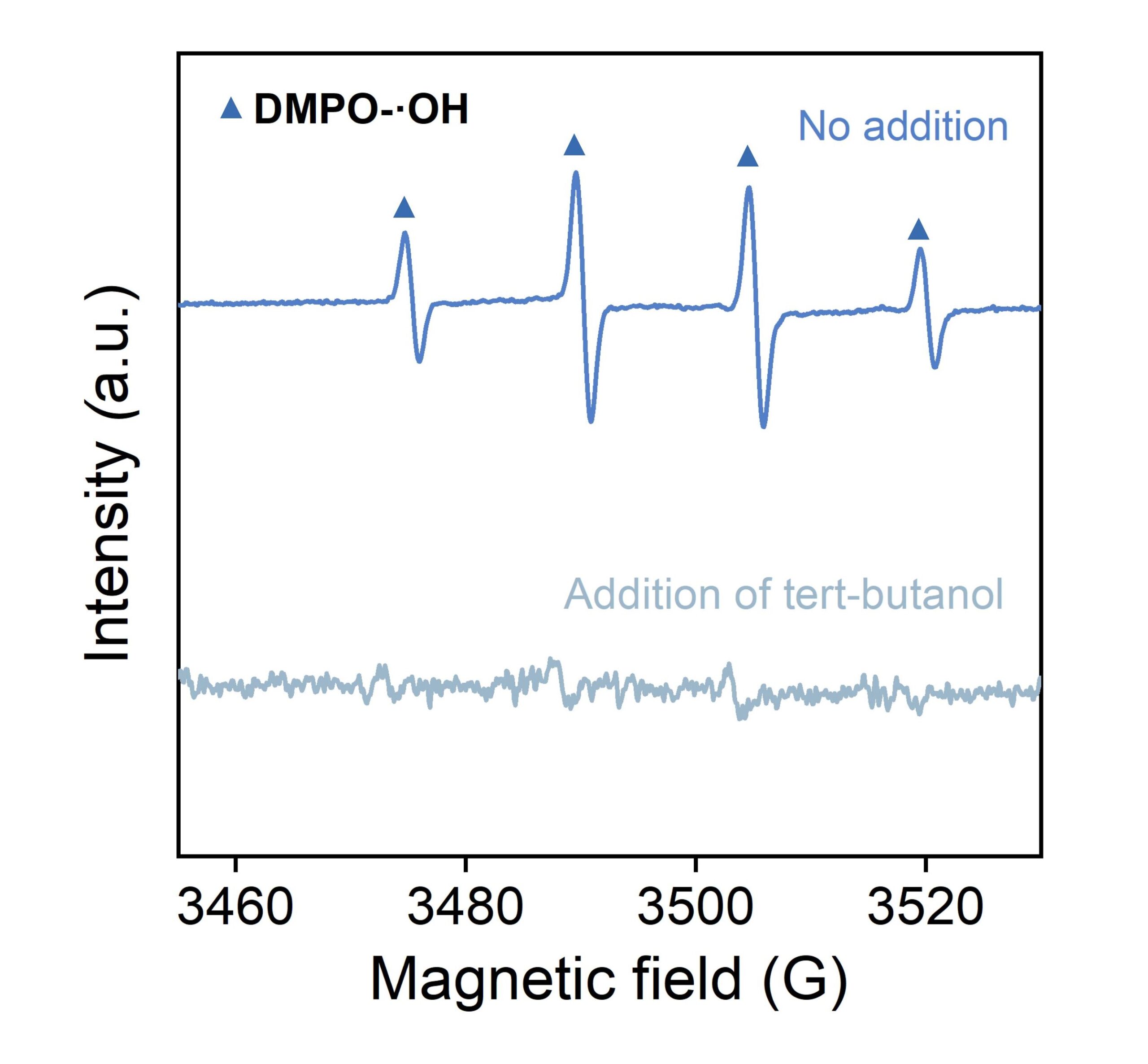
An electron paramagnetic resonance (EPR) spin-trapping was performed in addition to the control experiments to further identify the reactive species involved in the Fenton reaction (Figure 7). DMPO was used as a spin-trapping agent to identify the reactive oxygen species generated during the Fenton reaction. As shown by the diagram, the Fe2+/H2O2 system exhibited a characteristic four-line DMPO-OH signal, while the signals were substantially suppressed after the addition of tert-butanol, a well-known scavenger for hydroxyl radicals. These results provide further evidence that ·OH is the dominant reactive species generated in the Fenton reaction and is responsible for the dye decolorization.
Discussion
The results of this study demonstrate that H2O2 can be efficiently produced through the electrochemical 2e⁻ ORR in a flow cell configuration. The developed system exhibited favorable electrochemical performance, achieving a high H2O2 production rate compared with previously reported electro-Fenton systems (Table S1)20,21,22. These results indicate the effective 2e⁻ ORR selectivity of the electrode toward H2O2 generation, enabling a continuous and efficient supply of H2O2 for subsequent oxidation processes.
It is worth noting that the favorable 2e⁻ ORR performance observed in this study is attributed to the use of commercial carbon fiber paper (39BB), which provides a well-developed porous structure and high electrical conductivity favorable for oxygen reduction and H2O2 generation. Since the primary objective of the study is to demonstrate the viability of employing in-situ generated H2O2 into the Fenton system for dye decolorization, catalyst synthesis and optimization was not the main focus of this work. Therefore, a commercial carbon fiber paper was chosen as the cathode material instead. Further optimization of the ORR catalyst, including active site engineering and heteroatom incorporation, is one important aspect where future studies could focus in order to enhance the system’s overall productivity and efficiency.
The dye decolorization experiment was performed to further evaluate the feasibility of using electrochemically generated H2O2 for color removal. The successful decolorization of both dye solutions suggests that the system has the potential to be applied to real-world situations. However, it is important to recognize that decolorization alone does not necessarily indicate degradation. The disappearance of color may also arise from changes in the dye structure or the formation of colorless intermediates. Previous studies have already shown that the Fe2+/H2O2 system can lead to significant dye degradation due to the generation of highly reactive ·OH, which can attack the chromophore structures responsible for dye color12,23. Nevertheless, further characterization, including total organic carbon (TOC), chemical oxygen demand (COD), and high-performance liquid chromatography (HPLC) would be needed to confirm whether complete mineralization has occurred. Therefore, the results presented by this study should be considered as evidence supporting the feasibility of the electro-Fenton path for dye color removal, while additional studies are needed to fully evaluate the extent of mineralization.
Meanwhile, several limitations associated with the current system should also be considered. First, a relatively high Fe2+ concentration was used in this study to achieve rapid Fenton reactions. However, excessive Fe2+ addition may increase the iron sludge generation and post-treatment requirements23. Future studies will focus on optimizing the Fe2+ dosage to balance reaction efficiency and environmental sustainability. Second, this study only evaluated the system using two model dye solutions, which represents a simplified scenario compared with real wastewater. Actual wastewater typically contains a complex mixture of contaminants, such as heavy metals, pharmaceuticals, and other organic pollutants, which may interfere with the Fenton reaction and influence its overall performance. Therefore, the results obtained from model dyes may not fully reflect the behavior of the system under practical conditions. In addition, the scalability of this electro-Fenton system requires further investigation. Key factors, including energy consumption, operational stability, and the ability to achieve higher H2O2 concentrations, remain to be optimized. Consequently, future studies should focus on testing actual wastewater matrices, lowering the cell voltage for higher energy utilization rate, and exploring other alternatives for the production of highly concentrated H2O2. These efforts would help further improve the practicality and scalability of this approach.
So far, the anthraquinone process remains the mainstream method for producing H2O2 due to its mature technology and large-scale applicability. However, this approach involves multiple processing steps and the use of organic solvents, resulting in increased costs and potential environmental concerns24,25. Electrochemical H2O2 generation provides an alternative pathway by enabling on-site and on-demand production, reducing the need for centralized manufacturing, transportation, and storage of highly concentrated H2O226,27,28. This feature not only improves the sustainability of H2O2 utilization but also reduces potential safety risks associated with its handling and storage. Moreover, as demonstrated in this study, combining electrochemical H2O2 generation with the Fenton reaction enables effective dye decolorization. Together, these advantages suggest that electrochemical H2O2 production together with Fenton oxidation represents is a promising strategy for developing more sustainable and decentralized water treatment technologies in the future.
Methods
This study aims to investigate the possibility of integrating the electrochemically generated H2O2 with the Fenton system for dye decolorization. Specifically, H2O2 was generated via the 2e⁻ ORR pathway using a customized flow cell under varied current densities. The concentration of the H2O2 produced after 40 min was quantified using the FOX colorimetric method29. Absorbance measurements were obtained using the UV-vis spectrophotometer, and the resulting FE and corresponding H2O2 concentration were then calculated according to the maximum absorbance intensity. Subsequently, dye decolorization experiments were conducted using methyl orange and methylene as the two model dyes. The sample with the highest FE was added to the solution and any color change was observed. Finally, a series of control experiments and an EPR spinning-trapping were performed to confirm the contribution of the Fenton reaction and the role of hydroxyl radicals during decolorization.
Electrochemical Production of H2O2
The electrochemical production of H2O2 was conducted in a custom-built flow cell reactor comprising a gas chamber, a cathodic GDE (39BB carbon paper), a catholyte chamber, a cation exchange membrane (Nafion 117), an anolyte chamber, and an IrO2-loaded Ti plate anode. Both the catholyte and anolyte chambers were supplied with 0.1 M H2SO4 and 0.1 M K2SO4, circulated at a flow rate of 20 mL min-1 using peristaltic pumps. Meanwhile, O2 was continuously delivered to the gas chamber at the rate of 40 sccm using a digital mass flow controller. All potentials were referenced to SCE and corrected for 90% of the ohmic drop. Chronopotentiometric electrolysis was conducted under galvanostatic conditions at constant currents ranging from 100 to 250 mA cm-2 for 2400 s. For each current density, the measurements were repeated for 3 times, and its corresponding standard deviation and 95% confidence interval were calculated.
Determination of H2O2 Concentration
The H2O2 concentration was determined using spectrophotometric analysis. Specifically, a ferrous ion oxidation xylenol orange (FOX) solution was prepared by dissolving Fe(NH4)2(SO4)2 · 6H2O (19.61 mg), D-sorbitol (3.644 mg), and xylenol orange (XO) (14.33 mg) in deionized water (200 mL) added with ethanol (2 mL) and H2SO4 (98%, 272 μL). D-sorbitol was intentionally included in the FOX reagent as it enhances the sensitivity of the assay by increasing the apparent molar absorptivity of the Fe3+-xylenol orange complex formed during H2O2 quantification30.
For spectrophotometric analysis, 50 μL of the electrolyte was mixed with 10 mL of the freshly prepared xylenol orange/Fe2+ colorimetric solution. After standing for 15 min, the absorbance at 550 nm was measured using a UV-vis spectrophotometer according to the calibration curve using a series of standard H2O2 solution. Its FE was calculated as follows:
where n (= 2) is the number of electron transfer to form one molecule of H2O2, c is the molar concentration of H2O2 in the electrolyte, Vca is the volume of the catholyte, F (= 96485 C mol-1) is the Faraday constant, and Qtotal is the total charge passed.
Dye decolorization experiments
Methylene blue and methyl orange were chosen as representative organic dyes for the decolorization experiments in a Fenton system. In the experiment, a stock solution containing the dye (100 ppm) and 6 mM FeSO4 was prepared, and its pH value was adjusted to 3.0 using diluted H2SO4. Subsequently, 2 mL of the post-reaction electrolyte solution was added to 2 mL of the above-mentioned dye solution. After mixing, the theoretical Fe2+ concentration was halved to 3 mM due to the dilution effect.
7 control experiments were conducted to verify the contribution of the Fenton system. The reaction conditions are listed as follows: (1) dye + 200 μL Fe2+ alone, (2) dye + 200 μL H2O2 alone, (3) dye + 200 μL post-reaction electrolyte after H2O2 is removed, (4) dye + 200 μL H2O2 + 0.1 M H2SO4, (5) dye + 200 μL Fe2+ + 200 μL H2O2 + 0.1 M H2SO4, (6) dye + 200 μL Fe2+ + 200 μL H2O2 + 0.1 M H2SO4 + 200 μL tert-butanol, (7) dye + 200 μL Fe2+ + 200 μL H2O2 + 0.1 M H2SO4 in the dark.
EPR analysis was conducted using DMPO as spin-trapping agents. Typically, 45 μL of a freshly prepared solution containing 6 mM Fe2+ and 65 mM of H2O2 was transferred into a 100 μL capillary tube and immediately mixed with 5 μL of 1.0 M DMPO (for ·OH detection). The tube was then placed in the EPR resonant cavity for signal acquisition. Afterwards, 45 μL of solution containing 6 mM Fe2+, 65.4 mM of H2O2, and 10 mM tert-butanol (·OH scavenger) was transferred into a 100 μL capillary tube and mixed with 5 μL of 1.0 M DMPO. The tube was again placed in the EPR resonant cavity for signal acquisition. All EPR spectra were recorded on a Bruker E500-10/12 EPR spectrometer
Supplementary Material
References
- G. Crini, E. Lichtfouse. Advantages and disadvantages of techniques used for wastewater treatment. Environmental Chemistry Letters. Vol. 17, pg. 145-155, 2019, https://doi.org/10.1007/s10311-018-0785-9. [↩]
- Y. Deng, R. Zhao. Advanced oxidation processes (AOPs) in wastewater treatment. Current Pollution Reports. Vol. 1, pg. 167-176, 2015, https://doi.org/10.1007/s40726-015-0015-z. [↩]
- D. B. Miklos, C. Remy, M. Jekel, K. G. Linden, J. E. Drewes, U. Hübner. Evaluation of advanced oxidation processes for water and wastewater treatment–a critical review. Water Research. Vol. 139, pg. 118-131, 2018, https://doi.org/10.1016/j.watres.2018.03.042. [↩]
- A. Sharma, J. Ahmad, S. Flora. Application of advanced oxidation processes and toxicity assessment of transformation products. Environmental Research. Vol. 167, pg. 223-233, 2018, https://doi.org/10.1016/j.envres.2018.07.010. [↩]
- A. D. Bokare, W. Choi. Review of iron-free Fenton-like systems for activating H2O2 in advanced oxidation processes. Journal of Hazardous Materials. Vol. 275, pg. 121-135, 2014, https://doi.org/10.1016/j.jhazmat.2014.04.054. [↩]
- S. Guerra-Rodríguez, E. Rodríguez, D. N. Singh, J. Rodríguez-Chueca. Assessment of sulfate radical-based advanced oxidation processes for water and wastewater treatment: A review. Water. Vol. 10, pg. 1828, 2018, https://www.mdpi.com/2073-4441/10/12/1828. [↩]
- P. Y. Chan, M. G. El-Din, J. R. Bolton. A solar-driven UV/Chlorine advanced oxidation process. Water Research. Vol. 46, pg. 5672-5682, 2012, https://doi.org/10.1016/j.watres.2012.07.047. [↩]
- S. Garcia-Segura, E. Brillas. Applied photoelectrocatalysis on the degradation of organic pollutants in wastewaters. Journal of Photochemistry and Photobiology C: Photochemistry Reviews. Vol. 31, pg. 1-35, 2017, https://doi.org/10.1016/j.jphotochemrev.2017.01.005. [↩]
- P. Bautista, A. Mohedano, J. A. Casas, J. Zazo, J. Rodriguez. An overview of the application of fenton oxidation to industrial wastewaters treatment. Journal of Chemical Technology & Biotechnology: International Research in Process, Environmental & Clean Technology. Vol. 83, pg. 1323-1338, 2008, https://doi.org/10.1002/jctb.1988. [↩] [↩]
- B. Jain, A. K. Singh, H. Kim, E. Lichtfouse, V. K. Sharma. Treatment of organic pollutants by homogeneous and heterogeneous fenton reaction processes. Environmental Chemistry Letters. Vol. 16, pg. 947-967, 2018, https://doi.org/10.1007/s10311-018-0738-3. [↩]
- X. Wang, L. Zhang. Kinetic study of hydroxyl radical formation in a continuous hydroxyl generation system. RSC Advances. Vol. 8, pg. 40632-40638, 2018, https://doi.org/10.1039/c8ra08511k. [↩]
- Y. Liu, Y. Zhao, J. Wang. Fenton/Fenton-like processes with in-situ production of hydrogen peroxide/hydroxyl radical for degradation of emerging contaminants: Advances and prospects. Journal of Hazardous Materials. Vol. 404, pg. 124191, 2021, https://doi.org/10.1016/j.jhazmat.2020.124191. [↩] [↩] [↩]
- Y. Ni, C. Zhou, M. Xing, Y. Zhou. Oxidation of emerging organic contaminants by in-situ H2O2 fenton system. Green Energy & Environment. Vol. 9, pg. 417-434, 2024, https://doi.org/10.1016/j.gee.2023.01.003. [↩]
- P. V. Nidheesh, R. Gandhimathi. Trends in electro-fenton process for water and wastewater treatment: An overview. Desalination. Vol. 299, pg. 1-15, 2012, https://doi.org/10.1016/j.desal.2012.05.011. [↩]
- Q. Wang, L. Ren, J. Zhang, X. Chen, C. Chen, F. Zhang, S. Wang, J. Chen, J. Wei. Recent progress on the catalysts and device designs for (photo) electrochemical on-site H2O2 production. Advanced Energy Materials. Vol. 13, pg. 2301543, 2023, https://doi.org/10.1002/aenm.202301543. [↩]
- A. Angulo, P. van der Linde, H. Gardeniers, M. Modestino, D. F. Rivas. Influence of bubbles on the energy conversion efficiency of electrochemical reactors. Joule. Vol. 4, pg. 555-579, 2020, https://doi.org/10.1016/j.joule.2020.01.005. [↩]
- X. Zhang, X. Zhao, P. Zhu, Z. Adler, Z.-Y. Wu, Y. Liu, H. Wang. Electrochemical oxygen reduction to hydrogen peroxide at practical rates in strong acidic media. Nature Communications. Vol. 13, pg. 2880, 2022, https://doi.org/10.1038/s41467-022-30337-0. [↩]
- P. V. Nidheesh, C. Trellu, H. O. Vargas, E. Mousset, S. O. Ganiyu, M. A. Oturan. Electro-fenton process in combination with other advanced oxidation processes: Challenges and opportunities. Current Opinion in Electrochemistry. Vol. 37, pg. 101171, 2023, https://doi.org/10.1016/j.coelec.2022.101171. [↩]
- Z. Heidari, R. Pelalak, M. Zhou. A critical review on the recent progress in application of electro-fenton process for decontamination of wastewater at near-neutral pH. Chemical Engineering Journal. Vol. 474, pg. 145741, 2023, https://doi.org/10.1016/j.cej.2023.145741. [↩]
- F. Yu, M. Zhou, L. Zhou, R. Peng. A novel electro-fenton process with H2O2 generation in a rotating disk reactor for organic pollutant degradation. Environmental Science & Technology Letters. Vol. 1, pg. 320-324, 2014, https://doi.org/10.1021/ez500178p. [↩]
- M. Zarei, D. Salari, A. Niaei, A. Khataee. Peroxi-coagulation degradation of ci basic yellow 2 based on carbon-PTFE and carbon nanotube-PTFE electrodes as cathode. Electrochimica Acta. Vol. 54, pg. 6651-6660, 2009, https://doi.org/10.1016/j.electacta.2009.06.060. [↩]
- Y. Sheng, S. Song, X. Wang, L. Song, C. Wang, H. Sun, X. Niu. Electrogeneration of hydrogen peroxide on a novel highly effective acetylene black-ptfe cathode with PTFE film. Electrochimica Acta. Vol. 56, pg. 8651-8656, 2011, https://doi.org/10.1016/j.electacta.2011.07.069. [↩]
- E. Brillas, C. A. Martínez-Huitle. Decontamination of wastewaters containing synthetic organic dyes by electrochemical methods. An updated review. Applied catalysis b: environmental. Vol. 166, pg. 603-643, 2015, https://doi.org/10.1016/j.psep.2019.03.028. [↩] [↩]
- J. M. Campos‐Martin, G. Blanco‐Brieva, J. L. Fierro. Hydrogen peroxide synthesis: An outlook beyond the anthraquinone process. Angewandte Chemie International Edition. Vol. 45, pg. 6962-6984, 2006, https://doi.org/10.1002/anie.200503779. [↩]
- G. Gao, Y. Tian, X. Gong, Z. Pan, K. Yang, B. Zong. Advances in the production technology of hydrogen peroxide. Chinese Journal of Catalysis. Vol. 41, pg. 1039-1047, 2020, https://doi.org/10.1016/S1872-2067(20)63562-8. [↩]
- S. C. Perry, D. Pangotra, L. Vieira, L.-I. Csepei, V. Sieber, L. Wang, C. Ponce de León, F. C. Walsh. Electrochemical synthesis of hydrogen peroxide from water and oxygen. Nature Reviews Chemistry. Vol. 3, pg. 442-458, 2019, https://doi.org/10.1038/s41570-019-0110-6. [↩]
- Y. Jiang, P. Ni, C. Chen, Y. Lu, P. Yang, B. Kong, A. Fisher, X. Wang. Selective electrochemical H2O2 production through two-electron oxygen electrochemistry. Advanced Energy Materials. Vol. 8, pg. 1801909, 2018, https://doi.org/10.1016/j.watres.2012.07.047. [↩]
- Z. Deng, S. J. Choi, G. Li, X. Wang. Advancing H2O2 electrosynthesis: Enhancing electrochemical systems, unveiling emerging applications, and seizing opportunities. Chemical Society Reviews. Vol. 53, pg. 8137-8181, 2024, https://doi.org/10.1039/d4cs00412d. [↩]
- R. Bou, R. Codony, A. Tres, E. A. Decker, F. Guardiola. Determination of hydroperoxides in foods and biological samples by the ferrous oxidation–xylenol orange method: A review of the factors that influence the method’s performance. Analytical Biochemistry. Vol. 377, pg. 1-15, 2008, https://doi.org/10.1016/j.ab.2008.02.029. [↩]
- C. Gay, J. M. Gebicki. A critical evaluation of the effect of sorbitol on the ferric–xylenol orange hydroperoxide assay. Analytical biochemistry. Vol. 284, pg. 217-220, 2000, https://doi.org/10.1006/abio.2000.4696. [↩]