
Abstract
Under what conditions have U.S. tariff policies protected domestic industries without consumer welfare losses? In this paper, we will evaluate each policy based on the extent to which it achieved its stated goal. Policy success will be measured using the specific metrics identified in the policy’s stated rationale, allowing us to assess whether the conditions the policy was intended to change changed. In these cases, the explanatory variables would be the conditions prior to implementation that helped make the policy efficient. On the one hand, tariffs could provide economic stabilization and independence, whereas free trade promotes economic benefits, high-quality products, and global prosperity. This paper, however, argues that the optimal policy for these practices is situational rather than universal. Across different contexts, economic insecurity varies by place, calling for a wide range of economic policies. Additionally, ideological components shape tariff decision-making: those who prioritize national needs tend to favor a more closed-off, protectionist policy, whereas those who value global prosperity typically see greater benefits in an open trade agreement. Numerous economists and politicians claim to have identified a secret formula for determining which system is better. This paper provides a stable context, analysis, and framework for understanding the literature and geopolitical pretenses in relation to policy implications.
Introduction
The U.S. is one of the world’s superpowers and therefore has economic interests and ties in every region. However, the trade deficit is a persistent feature of modern U.S. trade practices. This paper treats the deficit as contextual, rather than inherently harmful. This is because no single country would have both the labor pool and the resources to produce all goods and services. Additionally, some countries have a comparative advantage over others in producing certain goods due to factors such as climate, demand, or a proven skill set from historical use. In this case, it would make no sense for a country to compete against this to simply fix a deficit. Therefore, most countries need to rely on globalist markets to adequately supply their citizens with the right products, thereby accepting a trade deficit1.
Therefore, in response to trade deficits, some countries are more inclined to resort to protectionism, since they prioritize national success. Others, though, seek alternative solutions, such as free trade agreements, global free markets, and trading blocs. This is an ideological difference, as liberal countries typically place greater value on egalitarianism and prioritize global prosperity. By contrast, more recently, China and Russia have moved away from hardline communism and have begun to embrace more moderate socialism, introducing elements of marketization. This facilitated access to capital for the trading partnership and the introduction of new goods and services in these countries2.
Thus, the important thing about tariffs is that they are situational. Each geopolitical context calls for a different policy-making response, and tariffs cannot be judged through all contexts. Rather, this paper will clearly outline, through situational analysis, the right and wrong conditions for implementation, so the reader and policymakers can judge the current climate and assess the appropriate response system3. This paper is unique in that it examines numerous contexts for tariff- or non-tariff-based barriers and assesses them without claiming to have a perfect formula. This gives both policymakers and voters equal knowledge to judge their specific situation and determine appropriate policy.
Literature
Berry, Levinsohn, & Pakes (1999) agree that protectionism helps each individual country protect its interests and that U.S. protectionism helped address international competition with Japan in automobile production4. However, Nikos-Rose (2025) argues that, specifically under the Trump administration, the negative effects of hindering economic globalization outweigh the benefits of tariffs5. Specifically, the weakening of relationships between nations and the costs of tariffs for Americans keep tariffs from being an effective policy for addressing economic or commercial disputes.
Analysis
This paper analyzes three angles (sectoral distribution, infant industries, and governmental procedures) as appropriate analytical lenses for the situation at hand, helping to frame the argumentation surrounding protectionism in the United States. Sectoral distribution is a major factor as the US shifts from agriculture and industry towards a service-based economy; infant industries are important to study, as they provide a pretext for implementing protectionist policies; and understanding governmental procedures is necessary because they reveal the steps required to implement a policy decision. This allows the reader to assess the likelihood of implementation and, in turn, evaluate policymakers based on their participation in and influence over the process.
Methods
This paper relies primarily on data analysis and a literature review to identify patterns in the correlations between protectionism and various economic responses. It does this by using comparative historical case analysis, supplemented by descriptive trade statistics, to incorporate both qualitative case-study analysis and quantitative contextualization. Rather than exploring a causal relationship, this paper illustrates how different historical patterns can be used to identify key insights that support or refute the ideologies of tariffs and protectionism.
Data Analysis
As previously mentioned, the purpose of the data collected was to provide substantial, informative patterns of economic trends in response to tariff implementation and to justify hypotheses and predictions regarding that implementation. This paper consistently employs comparative case studies to effectively conduct a systematic review. By doing this, the paper succeeds in synthesizing past evidence and historical context to provide secondary analysis of the issue.
The responsibility of the data collector is to produce honest, relevant data to support a hypothesis, with an understanding of nuance. We do this by using data selected based on criteria: recency, intellectual sources, and unbiased presentation. The goal is to identify information that is neither outdated nor irrelevant, but current and applicable to the publication’s content and data. The sources used are chosen for their objectivity and reliability so that they represent the underlying data accurately, not haphazardly, but with the aim of presenting a clear picture of the economics of the context. To ensure validity in measuring the weight of observed patterns, this paper uses certain macroeconomic control variables, such as trade volume, market share, and GDP, to reflect changes over the same chronology as the policy being discussed. Although data availability starts in different years for the observations, the differing coverage does not affect the harmony of the analysis, since they all continue to the present; therefore, the data can be used on a more recent timeline.
| Variable | Source | Data Availability |
| Economic Policy Uncertainty Index6 | policyuncertainty.com | Monthly, from January 2006 |
| US Trade Exports & Imports7 | bea.gov | Monthly, from January 2023 |
| Average Tariff Rate8 | worldbank.org | Annually, from 1988 |
| Breakdown of Sectors (% of total GDP)8 | worldbank.org | Annually, from 1997 |
| Trade Volume by Country7 | bea.gov | Monthly, from October 2025 |
| US Trade by Commodity7 | bea.gov | Monthly, from October 2025 |
Literature Survey
The literature review uses a structured search strategy to identify relevant scholarly research on tariffs, protectionism, international trade, and their economic effects. Searches were conducted using combinations of primary terms, including “tariff,” “trade,” and “protectionism,” with secondary terms such as “taxes,” “subsidy,” “capital,” “labor,” “production,” “industry,” “competition,” and “law,” as well as case-specific terms related to the historical examples examined in this paper.
Sources were selected based on relevance to the research question, scholarly reliability, quality of evidence, and methodological support. Peer-reviewed research was prioritized for analytical claims, while government publications and primary sources were used for authoritative data and historical evidence. Sources were screened for relevance and evidence quality, with opinion-based or insufficiently supported sources excluded from the core analysis. The resulting literature was organized by topic and historical case to facilitate comparison across different forms of protectionist policy.
| Primary terms | General secondary terms |
| Tariff | Taxes |
| Trade | Funds |
| Protectionism | Subsidy |
| Capital | |
| Labor | |
| Production | |
| Industry | |
| Competition | |
| Law |
Literature Review
The literature examined in this review comprises five categories: peer-reviewed, advocacy, think-tank pieces, journalism, and primary governmental sources. Understanding which category each source falls into can help readers weigh the evidence. In this paper, Juhász (2018), Firooz, Leduc, & Liu (2025), Berry, Levinsohn, & Pakes (1999), Mitchener & O’Rourke (2022), Grossman & Helpman (1994), and Kol (1995) are all peer-reviewed work4,9,10,11,12,13; Global Insights Center (2025) is a think-tank piece14; McGillis (2024) is an advocacy paper15; Leinbach (2026) is an example of journalism and secondary reporting16; and The Trump Team (2025) and Fernández-Villaverde (2024) are both primary governmental and academic sources17,18.
History of Protectionism
One of the major historical outcomes of protectionism for domestic industries is the formation of trade agreements. Berry, Levinsohn, & Pakes (1999) present historical evidence of this through U.S. diplomatic advances in Japan during the 1980s, focusing on the automotive industry’s balance of power4. When U.S. President Ronald Reagan threatened protection of the “Big Three” in the United States — Chrysler, Ford, and General Motors — the Japanese government agreed to Voluntary Export Restraints (VERs) on their domestically produced cars to help build up manufacturing in the United States.
The United States International Trade Commission (1985) highlights the effects: ~1.68 million cars restricted per year and around 44,000 jobs gained by the U.S. This makes sense for a couple of reasons: protectionism creates leverage, and trade deals are easier to sustain than trade wars. Thus, countries like Japan would rather see an estimated 10% reduction in automobile market share than risk bad relations with the United States19.
Protectionism is often invoked, especially when countries must accommodate other nations’ needs under conditions of hegemony or coercion. It is one instance in which economically weaker, and therefore less self-sufficient, countries must accommodate the domestic industries of more economically powerful countries. Not every country is sufficiently prepared or powerful to withstand a trade war with another developed and powerful nation, thereby creating an incentive to sign trade agreements they would not otherwise prefer20.
However, this is not always the case. When countries can, the reaction may be more aggressive, preventing the opposing nation from enforcing its will through the threat of protectionist measures. For example, when the United States passed the Smoot-Hawley Tariff in 1930, there were intense retaliatory measures that severely strained relations worldwide. In fact, Mitchener & O’Rourke (2022) find that these retaliatory efforts reduced US exports into these countries from a range of 28-32%11. This fits with the course of this paper, as we have already affirmed that the effects of protectionism (specifically tariff-based) are situational, so they will yield different results at different times.
Additionally, the literature agrees that protectionism leads each country to believe it is meeting its own needs. As noted, Berry, Levinsohn, & Pakes (1999) argue that U.S. protectionism helped address international competition from Japan in automobile production4. Therefore, protectionism enabled the U.S. government to increase domestic production by pressuring the Japanese government to sign Voluntary Export Restraints (VERs) in the face of the threat of outright trade barriers.
The VERs supported domestic production by reducing foreign supply; with the same demand and less foreign supply, prices rose, or new manufacturing methods were adopted. The Global Insights Center (2025) states that, since many countries trade with the U.S., they can leverage that relationship to achieve their objectives14.
Protectionism is also viewed favorably when foreign companies are perceived as a threat to domestic security, economic prosperity, and unity. According to Grossman & Helpman (1994), the ideals of protectionism can persist because of special-interest groups and political incentives, with the aim of maximizing growth and sales12. Additionally, McGillis (2024) cites Japanese automobile companies as a foreign threat and a justification for trade barriers and U.S. protectionism15. The ongoing push toward globalization, which began in the postwar period, seeks to counter realpolitik (national self-interest) in economic policy. By creating an international geopolitical and economic environment that incentivizes global trade, we are seeing the effects of lower global tariff rates2.
Beneficiaries of Protectionism
The major beneficiary of the government’s protectionism is domestic industry. Firooz, Leduc, & Liu (2025) demonstrate that trade-policy uncertainty creates incentives for firms to reshore their production, mainly by investing in and increasing funding for manufacturing, which may be the future dominant market share10. This is consequential, especially now, because, according to Leinbach (2026), protectionism can still work even amid the massive push for globalization and free global markets, which have driven much of the manufacturing to Southeast Asia and South America16.
More specifically, infant industries will benefit substantially, as discussed in the Infant Industries Analysis. Juhász (2018) explains that Napoleon, during the Napoleonic Wars, used protectionism to ensure that France’s infant industries — industries less developed than those of its foreign competitors — could compete with Britain’s, since the two nations were at war9. This occurred during an 1806 blockade, which helped French textile industries grow and is a prime example of the protectionist argument (to protect and develop a nation’s infant industries) being used to tangible effect21.
Fernández-Villaverde (2024) also addresses this topic by discussing the views of the Founding Fathers, particularly Alexander Hamilton, who was skeptical of open free trade. Hamilton, unlike Jefferson, did not believe in the country’s ‘agrarian character’ and instead saw opportunities for development and prosperity in the industrial sector18. This is similar to today’s discussions, which primarily concern Trump’s efforts to bring back industrial jobs and end the outsourcing of labor to China, per The Trump Team17. This suggests he values the industrial sector of production over the sector that dominates U.S. production today — services (Figure 6) — which itself relies on outsourcing labor to other countries. Another main reason was that the United States was still a new country and thus lacked adequate access to capital, entrepreneurial innovation, opportunities, and foreign resources. This meant that it would not have been advisable to introduce these industries into the global free market, but rather to allow them to develop first.
This is why, at present, Kol (1995) explains that the highest-tariff nations are developing countries13. Developing countries lack the productive capacity to compete with foreign giants and industry leaders. Thus, high tariff rates have continued to foster the development of domestic industries worldwide.
Context
Figure 1 shows trade volume comparisons, with export volumes matched to import volumes. This is noteworthy because it highlights a major deficit in U.S. trade, which has led to protectionist practices. The idea of a deficit is not necessarily “bad” for a country; however, it is advantageous to have higher exports than imports, as this enhances national and economic security. However, economists such as Thomas Sowell argue that the gains a country could realize from a trade deficit may outweigh the costs it imposes. For example, if a country is able to acquire goods significantly cheaper when imported rather than domestically produced (usually because of some comparative advantage), it would be economically disadvantageous and naive to believe that it is in that country’s best interest to reverse the effect and domestically manufacture instead.
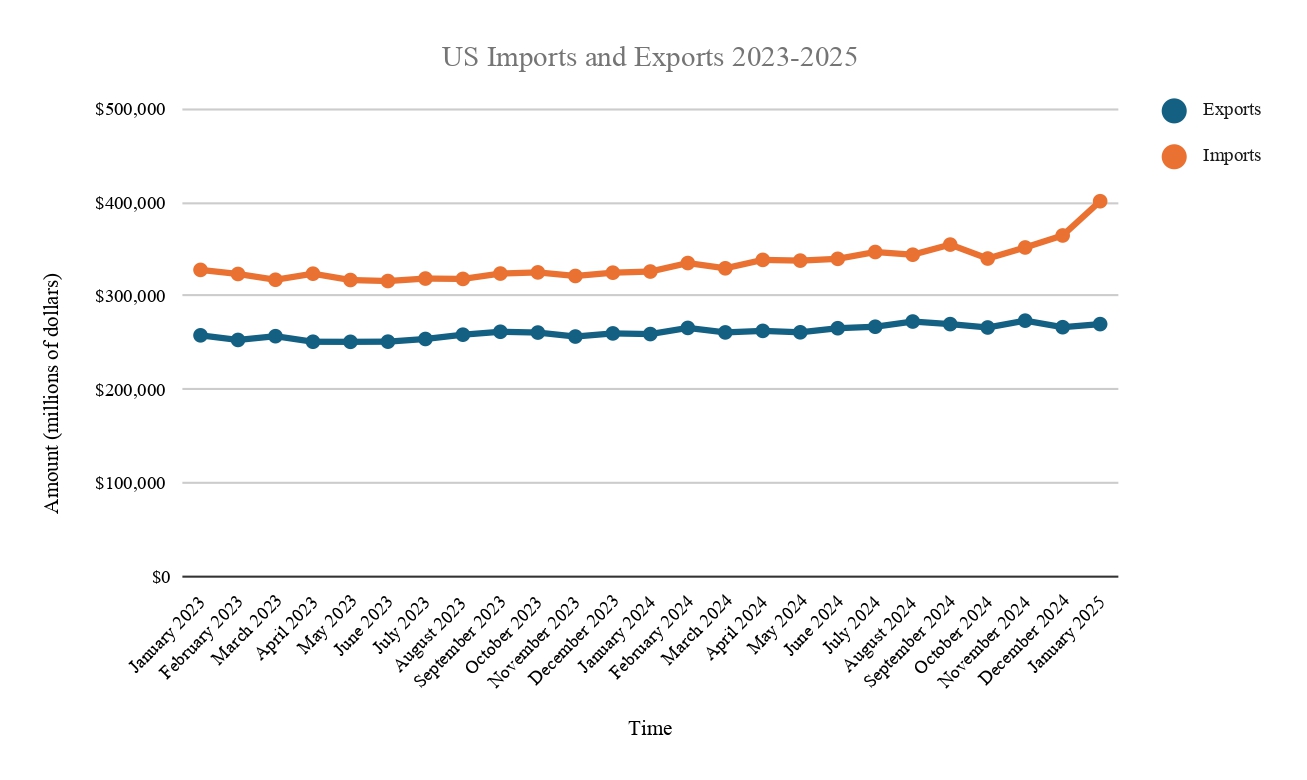
One of the major focal points of this Figure is that the trade deficit (the imbalance between export and import volumes, with imports higher) is a recurring pattern in modern US trade practice. As stated previously, the trade deficit is not necessarily bad if the resources obtained through this trade imbalance can offset the lack of exports.
A prime example of showing how trade deficits are not inherently bad would be to explain that you are in a deficit with your grocery store. Since the grocery store provides more materials to you than you provide to it, that means that the grocery store is in a surplus imbalance, while you are in a deficit imbalance. However, we continue this practice because reliance on grocery stores is not a significant issue. Just as a household runs a permanent trade deficit with its grocery store without being worse off, a nation’s trade deficit isn’t inherently bad if it reflects an ongoing beneficial exchange. Since we know grocery stores are consistent providers, and that this trade relationship is healthy and natural, a deficit at your grocery store is not a pressing matter. The problem has become more evident recently when it poses a direct threat to a country’s sovereignty and security. For example, an industry such as military equipment should be domestically industrialized and manufactured, since reliance on another country in this sector is an inherent disadvantage.
Another major component of trade data is the trade balances for different materials. Import tariffs are usually not imposed as a blanket measure; they do not apply to all goods. Usually, tariffs are strategically imposed on certain goods in industries that need help or fixing. This is why Figure 2 shows the goods with the largest surpluses and deficits, and therefore the goods to monitor when identifying common patterns of protectionist policy.
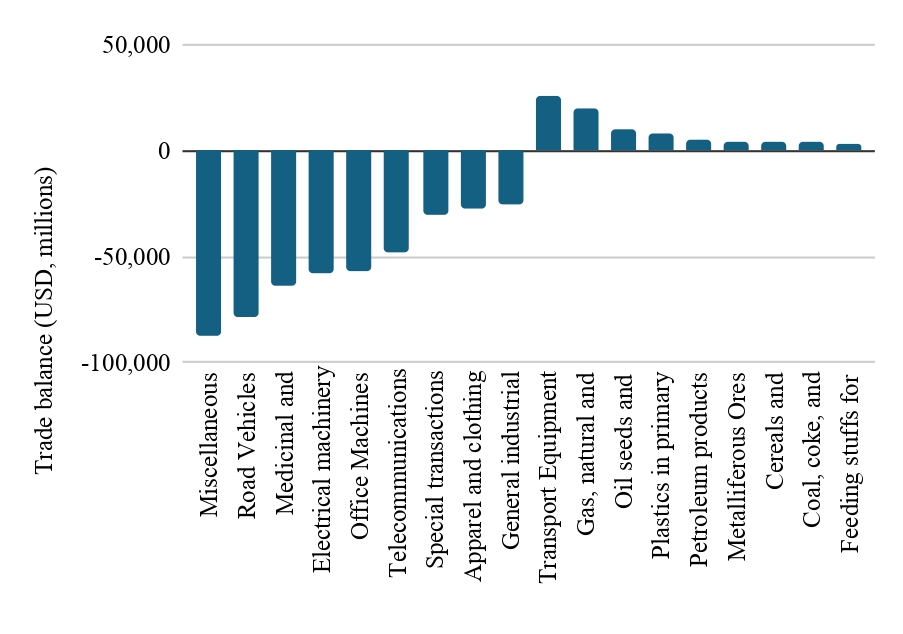
Figure 3 shows that the US mainly trades with Mexico (15.7% of total trade), Canada (15.0% of total trade), and China (12.0% of total trade). This reflects American policy on commerce. For example, the US has historically maintained free trade agreements with Mexico and Canada (whether under NAFTA from 1994 to 2020 or under the USMCA from 2020 to the present), and has usually sought to maintain economic relations with China as a hedge against a breakdown in geopolitical relations.
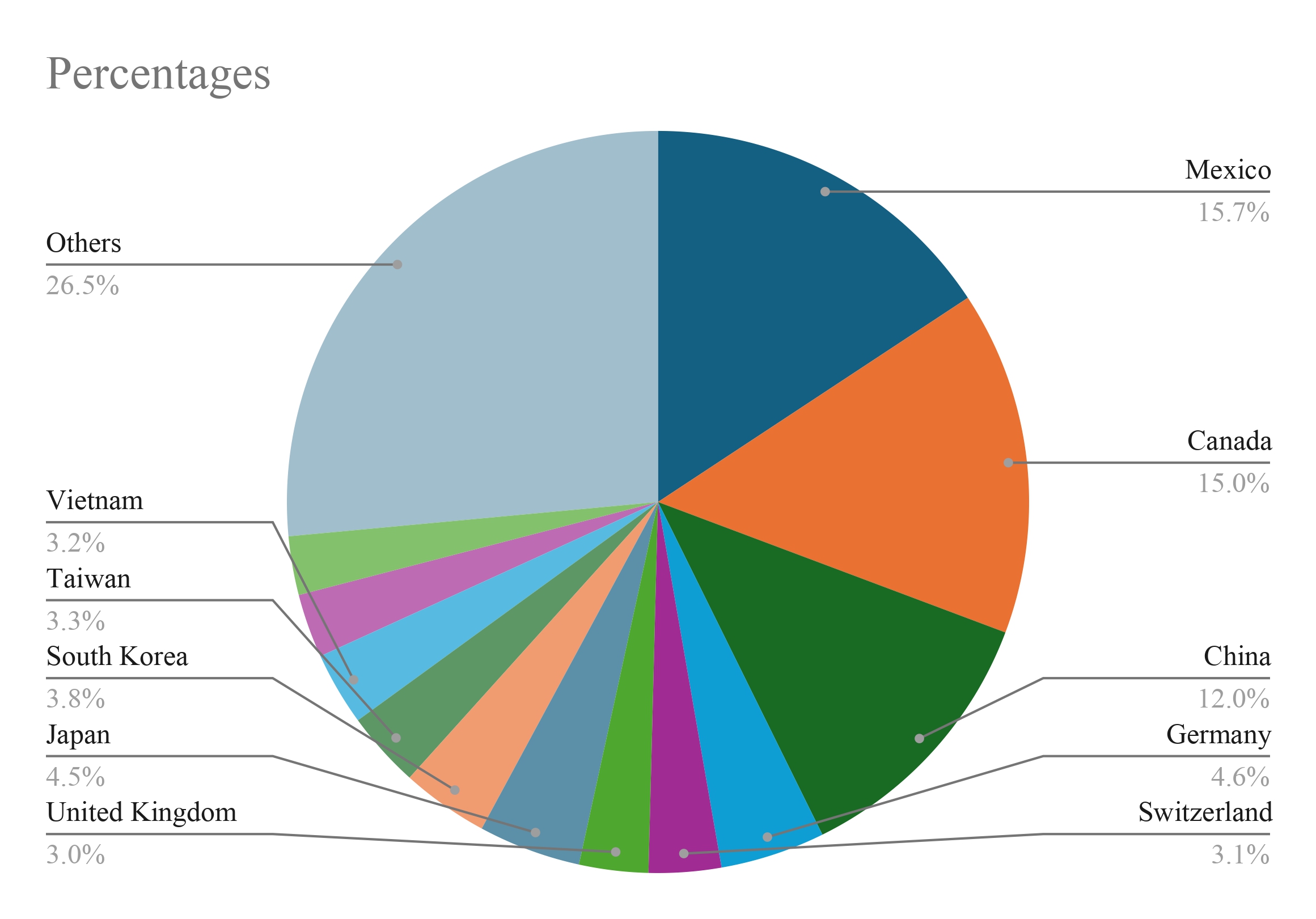
When protectionism is understood in its fullest sense, trading partners are a good indicator of which policies to introduce. Some of the countries with which we trade the most are the countries with which we have the most ideological differences. That is why it is important to note that heavy trading does not necessarily translate into good relations or an alliance; it is simply a measurement of what each nation contributes to our economy and geopolitics.
However, policy is somewhat the opposite with China, mainly due to concerns about the manufacturing strength of Chinese labor and economic power. This dependence on Chinese labor has led to the outsourcing of domestic manufacturing to obtain lower-priced goods for American consumers, according to Rosalsky (2024)23. The benefits and drawbacks of this idea shape the debate on whether protectionism is necessary for certain industries.
Another central point of the US data on trading partners is the degree of ideological similarity between each major trading partner and the U.S. Countries including Ireland, Canada, South Korea, Japan, the UK, Taiwan, Switzerland, Germany, and India are Western-style democracies like the US (these countries account for 9 of the 12 major trading partners, with Mexico, China, and Vietnam as exceptions). This makes sense, as the inverse of a trade relationship is economic sanctions and embargoes, which the US would impose only on adversaries.
Therefore, it could be argued that the US deliberately selects its trading partners in hopes of allying with favorable countries and, consequently, rewarding them economically for aligning with a particular ideological camp. However, this ideological tribalism in commerce does not override the economic necessity of certain trade practices. Otherwise, communist China and Vietnam would not enjoy the high trade status they have relative to the US economy. This concept is illuminated and carefully considered when making stylized policy decisions to cover a wide range of needs. This decision often feels impossible, given that the very intent of protectionism is to provide security, yet it could, at the same time, lead to significant insecurity (see Figure 4).
While the trading partners’ percentages are important for understanding the moves surrounding US commerce-related policies, they aren’t the whole story. That is why the Trade Policy Uncertainty Index (TPUI) was created — to ensure a complete understanding of not only the what, but also the why. Highlighting experts’ uncertainty about U.S. trade policy is a useful way to demonstrate its perception nationally and internationally. When comparing TPUI over the years, one can observe clear fluctuations that reflect ongoing geopolitical and international events. Uncertainty is not a random occurrence; studying it is therefore directly related to the study of world order and the global commercial and geopolitical landscape. As shown in Figure 4, certain points are the highest on the TPUI chart and therefore have the greatest uncertainty surrounding US trade policy.
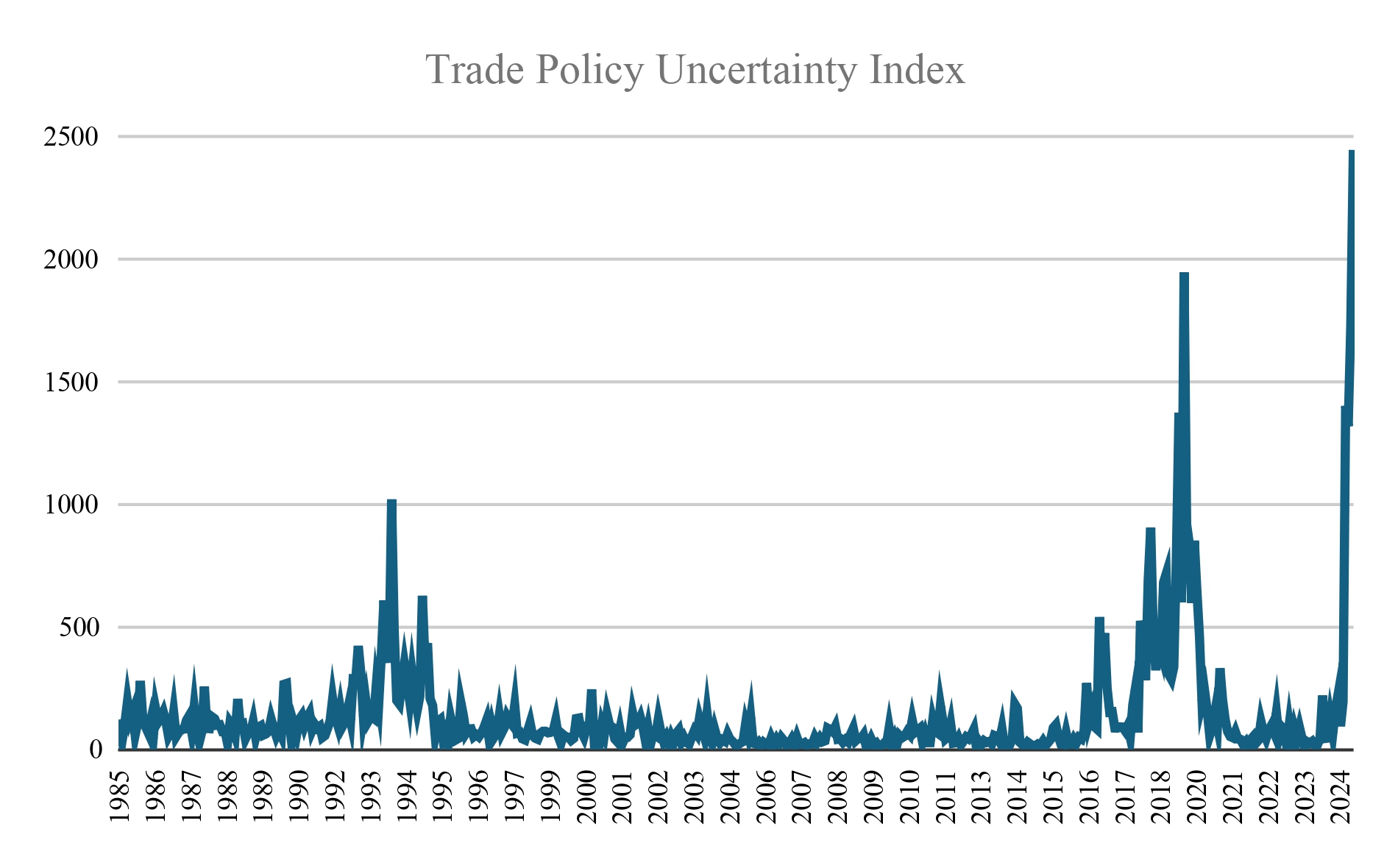
A step toward understanding the lessons of the TPUI is to identify where and why peaks in trade uncertainty occur. An important distinction, however, is that the peaks are only temporally associated with the events occurring and provide no evidence of a causal relationship. Studying the events can still give the reader good insight into the data without implicit bias.
The five peaks are November 1993 (the formal establishment of the EU and the signing of NAFTA), November 2016 (Trump’s election on a platform of high U.S. protectionism), July 2018 (the Brexit crisis in the UK and Trump’s controversial meeting with Putin), August 2019 (escalation in Hong Kong, a 10% U.S. tariff on Chinese goods, and the end of the Intermediate-Range Nuclear Forces treaty), and February 2025 (the U.S. statement in Munich, alongside new uncertainty surrounding Trump’s tariffs and stock market instability).
Another step is to understand the pattern in the peaks, which tend to spike during Donald Trump’s presidency. This is primarily due to his enthusiastic support for U.S. economic nationalism, self-sufficiency, and extreme protectionism. Additionally, his controversial policies and public persona leave many uncertain while he is in office. For that reason, we observe numerous spikes during his presidency, with the most recent occurring as the tariff and protectionism dispute has intensified. As stated previously, the TPUI did spike during these events and therefore policy-related news coverage also spiked, but that does not signal that Donald Trump himself caused these spikes.
Let us move on to Figure 5, which presents tariff data for different demographic groups, including BRICS, the United States, and the G7 countries (excluding the US). The significance is that many protectionist policies are responsive, or retaliatory, meaning that tariff policies are a reaction to other countries imposing tariff (or non-tariff) barriers on that country first. Another key factor to remember is the difference in how countries with separate levels of protectionism treat their domestic industries.
The demographics clearly shown in this Figure are the BRICS nations, which tend to have more anti-Western, authoritarian governments, and the G7 nations, which tend to have more Westernized, liberal governments. Since the G7 countries prioritize free markets and individual freedoms over state success, is this reflected in their tariff policies? It seems evident that it is.
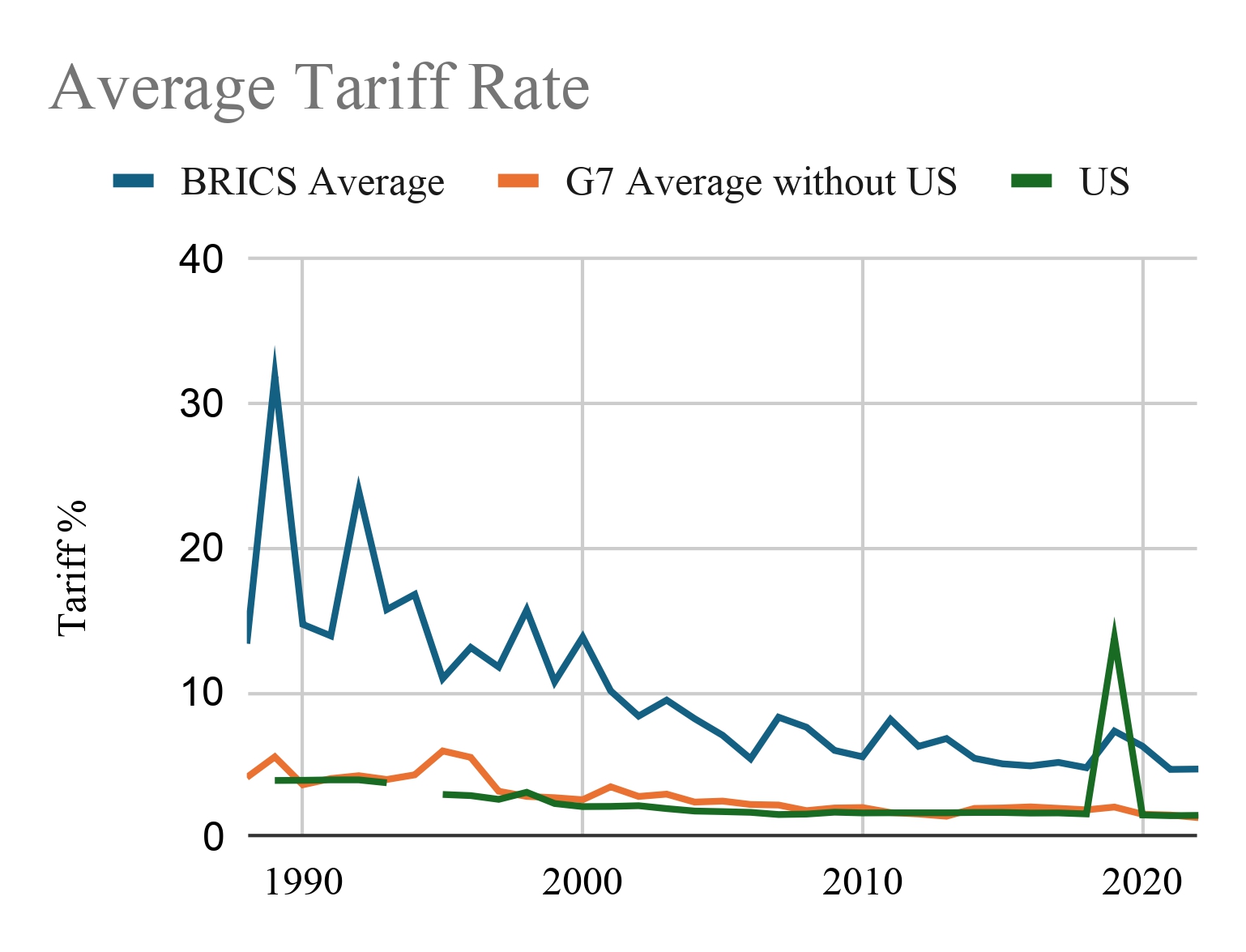
One notable feature of this Figure is the substantial decrease in average tariff rates for BRICS member nations. This is because it became highly economically beneficial for these countries to open and commercialize their economies. Two of the main examples were China and Russia, which moved away from hard-line communism, adopting more moderate forms or abandoning it altogether and introducing limited free markets. This facilitated access to capital for the trading partnership and the introduction of new goods and services in these countries.
Another point is that the G7 countries have consistently maintained low tariff rates. This is due to the globalization efforts undertaken both during and after the Cold War, when G7 countries pursued economic planning aimed at connecting the world economically and commercially by not restricting trade to certain places and by liberalizing import and general trade regulations. This is important to remember, as Trump, in 2019, set the US apart from the rest of the G7 member nations by pushing for a more extreme form of protectionism in the United States, due to certain manufacturing and dependency concerns.
Analysis
To fully understand the depth of the topics surrounding both the decision-making that leads to protectionism and the broader context in which such a decision may be necessary, we must analyze all relevant facts. First, we will examine the sectoral distribution of the United States’ GDP. Figure 6 examines the influence and impact of each industry in U.S. production on the country’s total income. Next, we will discuss the impact of infant industries — new modes of production and products seeking to become international competitors — on the process of protectionism, and whether subsidizing and protecting these industries provide sufficient justification for the drastic and consequential implementation of tariffs. Finally, we will discuss how the structure of government determines the implementation of tariffs, both domestically and internationally.
Sectoral Distribution
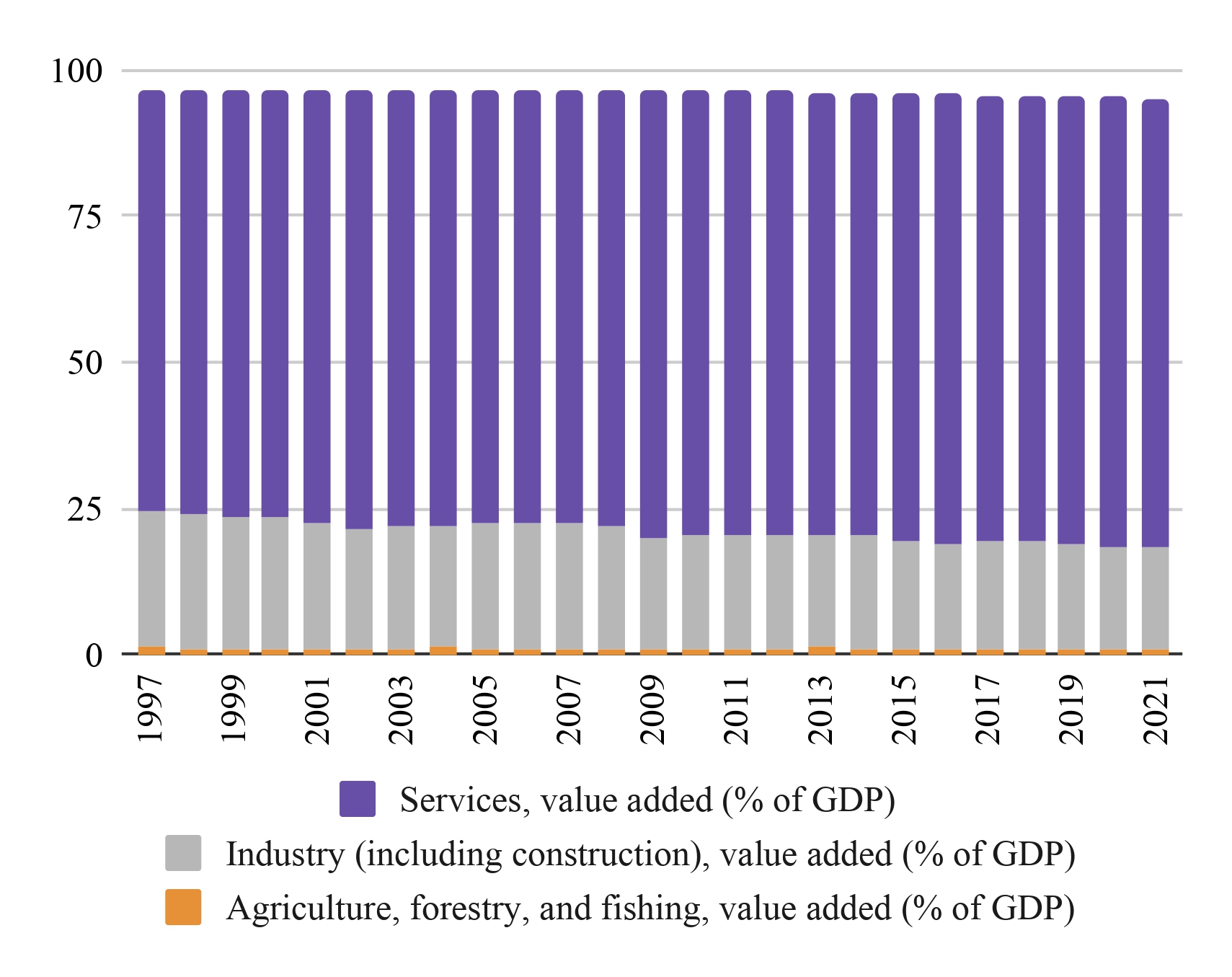
A major position in the pro-protectionist camp is the idea that tariffs help infant industries compete more effectively against foreign companies; as national infant industries prosper, a nation’s companies rise in foreign markets. Each sector is subject to different tariffs: industry faces the highest tariffs, agriculture the lowest, and services almost none. This is because tariffs are applied to goods, not services, and industry is the sector that provides the most goods for commission.
Some non-tariff barriers are placed specifically on agriculture, including sanitary measures, packaging and labeling requirements, import quotas, and, most importantly, subsidies. This is how the agricultural sector can grow domestically without requiring specific tax measures. But do we even need these tariffs, given the current state of the economy? To answer this, we need to address two topics: the current state of the economy, and how tariffs would affect it.
The American economy is multifaceted, with services accounting for the largest share of economic activity. According to the Bureau of Economic Analysis, in 2024, private services-producing industries accounted for 72.0% of U.S. GDP, compared with 16.7% for private goods-producing industries. Manufacturing alone represented 10.0% of GDP, while agriculture, forestry, fishing, and hunting accounted for 0.9%. Finance, insurance, real estate, rental, and leasing accounted for another 21.2% of GDP, further demonstrating the significant role of service-based industries in the U.S. economy.
Two observations follow from this. First, the U.S. economy is not primarily industrial or agricultural, but rather a service economy. This is because, since the globalization efforts of the 1990s, the economy has shifted from a manufacturing economy (producing goods and being paid by other countries to buy them) to a knowledge economy (where prosperity is based on access to information and research rather than production levels). Second, the U.S. is no longer close to being an agriculturally based economy. The significance is that some of the historical protectionist justifications no longer apply with the same logic, including Alexander Hamilton’s Report on Manufactures, which encouraged the United States to shift from an agricultural to an industrial economy.
An important distinction that this paper must address for the reader is the difference between Hamilton’s specific policy requests (which would be obsolete in today’s geopolitical and economic climate) and the logical sequential progression that supports protectionism. For example, the idea of shifting away from an agricultural-based economy would not work the same way today, as the agricultural sector accounts for only a small share of U.S. GDP. However, the philosophy underlying protectionism remains unchanged: if the U.S. government were to adopt a fully protectionist view today, the application would simply target a different sector.
The reason sectoral distribution matters is that the economy is constantly shifting, and to adjust our domestic production accordingly, we must understand the status quo — not only to see how to change it, but to make an honest judgment about whether changing it is in our interest. Domestic production must adapt to both support international supply and demand and meet the needs of national leadership. Is the country at war? Then production must focus there. Is the international market shifting toward electronic markets? Then AI and technological infrastructure production must increase. Thus, we must analyze current infant industries to determine appropriate protection mechanisms and understand how such industries have historically been protected.
Infant Industries and Protection vs. Promotion
There are many examples of infant industries that may be or have been protected by government policy. One prominent example is the U.S. steel industry during the American Gilded Age. During this period, the McKinley Tariff of 1890 enabled Andrew Carnegie to expand his Steel Corporation into one of the world’s largest corporations. He leveraged tariff protection to adopt the Bessemer process for steel production, which significantly increased the potential for mass production while reducing costs and time.
Another example of an infant industry that benefited from protectionism is calico cloth in the United Kingdom during the early eighteenth century. The British government passed the Calico Acts of 1721, which forbade the importation of most varieties of cotton calico cloth — an extreme example of protectionism. This, in turn, helped propel the cotton textile industry in the United Kingdom, which kick-started the Industrial Revolution and drove greater enslavement in cotton-growing regions, especially the southern United States. This is an extremely important human cost of governmental protectionism that cannot be overlooked. At what cost do we allow for industrial success? Certainly, nobody would argue that the greater enslavement of humans would be a valuable sacrifice for greater industrialism.
For a more recent example of this same trend, we can analyze South Korea in the 1960s. Here, the South Korean automobile industry was still in its infancy, but with extensive industrial protectionism, it developed into a globally competitive industry. In other words, Truett & Truett (2014) explain that during the 1960s, the South Korean government protected its producers from additional competition while addressing consumer needs and growing the industry into one of the world’s largest automobile production sectors26.
There are many infant industries today that could benefit from certain forms of protectionism, including U.S. AI manufacturing and lithium batteries. The AI industry could benefit from this protection, as Piore (2015) notes that the National Science Foundation, DARPA, and the Department of Energy are already awarding grants for AI research27. Additionally, the government has collaborated with companies and private institutions, including universities, to further AI research and development (including the National AI Research Institutes). Finally, the CHIPS (Creating Helpful Incentives to Produce Semiconductors) and Science Act of 2022 furthered AI research and workforce development, as noted by Kurilla (2024)28. Given that the federal government already supports the AI industry through federal grants, public-private partnerships, and legislative initiatives, protectionism could be the next step toward encouraging domestic AI infrastructure and new companies.
Another major industry that may require protection from the U.S. federal government is the production and export of domestically manufactured lithium batteries. According to Castor (2008), U.S. rare-earth production has faced longstanding constraints, including competition from Chinese producers and environmental restrictions; these factors contributed to a substantial decline in Mountain Pass sales after 199829. Torri (2025) shows that lithium extraction in South America’s Lithium Triangle and battery production more broadly have been heavily dominated by China30. There has been a push to support American-made lithium battery companies, including the Inflation Reduction Act (which provides economic incentives for consumers purchasing electric vehicles that use lithium batteries) and LI-Bridge, a public alliance seeking to strengthen the lithium battery supply chain in North America.
To analyze whether the tariff-based protectionist policies were effective in achieving their stated goals, this paper will assess them using a cost-benefit analysis. This would mean weighing the gains of the protected industry against the costs of protectionism. For the first example, the U.S. Census Bureau (1895) reports that the government collected around $868,776 in steel duties in 1890 and $721,383 in 189131. However, Carnegie Steel netted a total of $33 million in profit change during this period. Thus, we can assume that the tariff on steel worked in the cost-benefit analysis methodology. The next example is the calico cloth industry; however, the use of prohibitions cannot be assessed on a cost-benefit analysis since prohibitions are not tariffs paid by importers. Rather, we can assess it through a profitability analysis, and Swingen (2024) says with great confidence that the 1720’s Calico Acts improved manufacturers’ profitability by capturing textile markets through the use of imported raw cotton to produce finished textile products, leaving British textile manufacturers much more profitable on the other end32.
There have been other forms of protectionism throughout history. One is the use of subsidies — a sum of money provided by the government to support a specific industry — as China does for its shipbuilding industry. Funaiole (2025) claims that the growth of the Chinese government’s power over recent decades mirrors its shipbuilding sector, as entry, protection, and investment subsidies amount to nearly a trillion RMB (roughly 145 billion USD). While this did grow the industry, it also did not yield high industrial profits, as excessive subsidization led to inefficient producers, reduced productivity, and excess capacity with no commensurate returns33.
Another example of an industry subsidy is the agricultural subsidies farmers receive from the United States government, including direct payments, crop insurance, and price guarantees for corn. This subsidization stems from recognition of corn’s importance to the livestock and processed food industries, and from the belief that subsidizing this industry ensures high yields and crop productivity.
It is also important to understand the distinctions that help governments determine whether to promote or protect an industry — in other words, whether to subsidize it or employ protectionist measures. Historically, subsidies were used primarily for national defense and strategic interests, since subsidizing one sector at a time carried political risk given resentment among other sectors, taxpayer frustration over the use of public funds, and the strain on already overextended government budgets. Protectionism and outright bans were therefore easier to implement.
There are additional considerations today. If an industry is not mature enough to compete internationally, a subsidy would be unwise; tariffs should be used instead to support the industry. However, if an industry cannot be taxed easily — AI, for example — subsidizing it is preferable to imposing non-tariff barriers. Finally, the role each industry plays for the government matters: cotton, a consumer staple already well developed domestically, is subsidized, while shipbuilding, a strategic industry that must be shielded from foreign dominance, is taxed.
Tariff Legislation Procedures in the US
Each government has a different structure and therefore a different process for enacting laws and tariffs. The U.S. government operates one of the most complex systems in the world for enacting, amending, and imposing tariffs. Sanderson (2025) argues that this complexity reflects a historical aversion to British tyranny and continues to shape modern American politics34.
A major disadvantage of the American process is the influence of lobbyists on tariff rates and on which tariffs are enacted. These are primarily business and industry lobbyists who use their influence to help corporations, trade associations, and foreign governments secure tariff decisions that benefit their clients rather than the U.S. government or its broader economy, according to Johnson (2024). This is a notable flaw in the system: when tariff policy is shaped to benefit groups that hire lobbyists rather than the public interest, the system may need reform35.
The US also has structural flaws in how Congress is structured, including Senate gridlock, in which major legislation can pass only when one party holds a clear majority. A prominent example is the gridlock that has repeatedly impeded infrastructure legislation: Naylor (2019)36 reports that President Trump had to negotiate heavily with Congressional Democrats to reach an agreement on an infrastructure bill, which nonetheless failed to become law due to persistent disagreement. This slowdown is costly because the U.S. government often loses the “first-mover advantage” — it fails to reap the benefits of being first to protect or promote a domestic industry against foreign competition. The 2025 government shutdown has further raised questions about whether the U.S. government can remain effective and efficient, as partisanship continues to exacerbate slowdowns through shutdowns and filibustering.
When government slowdown becomes apparent, presidents and world leaders often seek to bypass the system to obtain results more quickly. A major example is President Trump’s use of blanket tariffs, particularly during his second term, which stemmed from post-election gridlock and the pursuit of a first-mover advantage. This approach carries drawbacks: broad tariffs covering wide swaths of goods are harder to legitimize internationally and therefore face greater legal and political turmoil. Nunn & Trefler (2010) argue that blanket tariffs are usually less effective at achieving their intended purpose and often harm the economy more than they help it, since the primary purpose of tariffs is to target specific industries for domestic support — a goal that blanket tariffs undermine by taxing imports broadly, without a clear rationale or objective37.
Additionally, the United States, like other governments worldwide, is subject to the authority of the World Trade Organization (WTO), a forum through which nations resolve economic and trade disputes via diplomacy. When a nation joins the WTO, it assumes responsibility for being subject to its jurisdiction. Several developments since the WTO’s creation have expanded its global influence, including bound tariffs (the highest import tax a given product can face, as set by the WTO) and the organization’s dispute settlement mechanisms, which provide security and stability within the international economic order. Countries turn to the WTO to address disputes over unfair or bad-faith trade practices, and the WTO can authorize affected nations to retaliate with tariffs of their own as a remedy.
Discussion
Whether or not to use tariffs is a significant policy decision for national governments. It not only determines different levels of funding but also balances the needs of domestic industries with the benefits of free international trade. The effects of international trade may vary according to the level and form of a government’s tariff policy. The political implications extend beyond the international level to the domestic level as well: when a branch of government proposes these policies, people within the country are affected differently.
Specifically, for tariff-based barriers, importing companies bear the direct cost of the tariff, while businesses in competing domestic industries may experience increased demand or reduced foreign competition. For example, the Associated Press (2025) reports that tariffs imposed on fruits and produce have hurt importers bringing these products into the United States from Latin America and Africa, while U.S. farmers competing against production from those same countries stand to benefit substantially38. Thus, the allocation of effects alone does not determine effectivity; rather, effectiveness can be assessed by its effects on different sectors of the market economy: consumers, producers, and governments.
This divide was recently evident in Dong (2025)’s report on the public split between pro-tariff Republicans and anti-tariff Democrats39. During the 2024 election, Democrats argued that Trump’s tariff proposals would hurt consumers by inflating prices and that Americans would pay more for foreign goods without a cheaper domestic alternative. Democratic candidates, here, are generally emphasizing the potential effects of tariffs on prices, while Republicans, led by Trump, were more likely to emphasize their potential effects on domestic production and employment, arguing that existing trade arrangements were inconsistent with the administration’s ‘America First’ economic agenda.
Tariffs are also politically important because they shape the future of global geopolitical relations. Zhao & Liu (2010) argue that the economic interdependence between China and the US creates incentives for cooperation, such that disruptions to the trade relationship could affect the broader U.S.-China diplomatic relationship40. Without an economic incentive to cooperate, both countries and their allies could move more aggressively to outperform one another, potentially heightening geopolitical tensions and altering the strategic relationship between them.
Additionally, through various forms of price control, tariffs can influence where companies choose to manufacture and sell their goods, as well as where consumers choose to purchase them. Because changes in tariffs alter the relative prices of imported and domestically produced goods, they can influence purchasing and production decisions; tariffs that shift prices for certain goods also can alter the allocation of production and consumption and the behaviors surrounding them. In this way, micro-level economic policies can have macro-level effects on consumerism, trade, and business practice.
To assess the policy implications, this discussion examines three relevant actors: the government, major banks, and corporations. For each actor, this discussion considers the policy lever affecting them, the immediate economic effects, the actor’s behavioral response patterns, and the resulting economic effects. These effects are then evaluated through measurable outcomes, including changes in government revenue, access to capital, domestic production, profitability, and trade flows.
The government sets trade policy, especially tariff rates, which increases or decreases the country’s overall level of protectionism. It also determines with whom the country trades and which products are targeted by protectionist measures versus free trade. Additionally, the government can use diplomacy to secure trade agreements, such as NAFTA, the USMCA, and arrangements involving the BRICS bloc, thereby changing the legal and geopolitical frameworks that inform trade policy. Finally, the government raises revenue from the public and allocates it — some toward federal grants and the promotion of industries through subsidization. Together, these levers show how government can use its granted authority to shape the degree and structure of protectionism within the economy41.
Major banks hold different forms of power that also affect economic trends. The provision of loans and the Federal Reserve’s actions determine who can obtain funding and affect interest rates and, consequently, liquidity. This liquidity helps develop domestic production, meaning that decisions made by major banks can affect the level of domestic production and, in turn, the need for protectionist policy in the first place. Additionally, interest rates directly affect the cost of borrowing and, in turn, influence the pace of business expansion, consumer spending, and demand42.
The final relevant actor is corporations. The policy implications of major business decisions and management create the conditions that may influence demand for protectionist policies: where to manufacture, how much to produce in different locations, pricing, innovation, the balance between international marketing and consumption, and which industries to establish domestically. Corporations’ actions in using tariff and non-tariff barriers have an indirect but significant effect, as these business decisions create economic activity within and outside the United States and, consequently, broader economic and geopolitical dynamics.
Conclusion
The sections of analysis in this paper were selected to examine the effects of tariffs and to assess whether those effects are positive or negative, depending on factors such as timing, international geopolitical conditions, prior trade agreements, governmental processes, and a nation’s level of industry development. The three sections of the Analysis— Sectoral Distribution, Infant Industries, and Tariff Legislation Procedures in the US — help reveal the background and context behind the need for protection, the procedures required to enact such legislation, and how these two factors combine to help predict whether a given tariff would succeed at its intended goal.
The angle that matters most in the Analysis is the Sectoral Distribution. This section lays the groundwork for the paper’s argument by examining the current distribution of economic production across sectors and asking whether any sector requires a boost. This analysis helps break down the components considered when assessing whether the U.S. economy requires protectionism and reframes the discussion around the necessity of a service-based economy within a Hamiltonian framework that originally prioritized industrial development. Additionally, historical precedents for tariffs, including the McKinley Tariff and the Smoot-Hawley Tariff, should not be applied to today’s context without adjustment, given clear differences in both the global political and economic order and the domestic structure of the American economy43.
It is important to note that the generality of the research question, in its current form, leaves room for the topic to be addressed from multiple angles (economic, political, or social and cultural). The main emphasis of this paper is on how tariff-based protectionism positions the United States within a particular type of global, political, and economic system. This situation can be predicted, to a degree, through philosophical arguments for and against the use of tariffs, as well as through the historical context, patterns, and effects of the tariffs being implemented. This paper examines both the historical and contemporary context of tariff use, assessing whether current global and national circumstances align with the conditions under which tariffs are most effective.
This paper addresses the question in a specific manner, emphasizing the United States and tariff-based protectionism. These particulars also mark the paper’s limitations: the effects of tariffs alone do not fully capture the broader philosophy of protectionism, and the discussion of subsidies in the Infant Industries section does not give equal weight to other non-tariff barriers, such as quotas, import licenses, and technical standards. Therefore, it is critical to understand that this paper’s conclusions examine the contexts in which tariff-based protectionism would primarily work within a single-country scope. The general limitation of this paper is the absence of a causal design and the use of temporal association to mark effects of protectionism. For this reason, this paper reads more like a systematic review, as its conclusions are drawn from existing literature and research.
The specificity of this paper therefore leaves some aspects of the broader topic underexplored, and readers should consider these findings with that scope in mind. The emphasis on the United States yields a similarly narrow lens; the hope is that economists and policymakers alike can use this analysis to help navigate the nuances across different schools of thought. In sum, this paper has examined the nuances of protectionism and its underlying philosophy. The central takeaway is that the issue is multifaceted and requires careful, case-by-case consideration — tariffs are not easy to understand and must be implemented with specific goals in mind. Tariffs are best understood, historically and in public discourse, as a tool to help developing domestic industries compete with established foreign ones, rather than as a mechanism to further consolidate economic power.
References
- J. Ricz, A. Éltető. Rules for sale: autocratic forbearance, as a new industrial policy tool to promote the hungarian battery hub. Journal of Economic Policy Reform. Vol. 29, pg. 238–266, 2026 https://doi.org/10.1080/17487870.2026.2680291 [↩]
- C. H. Ramirez. The post-war evolution of globalisation and international order: from liberal to neoliberal international order. Global Society. Vol. 40, pg. 44–72, 2026 https://doi.org/10.1080/13600826.2025.2470838 [↩] [↩]
- D. J. Zhang, S. S. Dabadghao, M. Udenio. Global sourcing under tariffs: a perspective of time series analysis. International Journal of Production Economics. Vol. 280, pg. 109473, 2025 https://doi.org/10.1016/j.ijpe.2024.109473 [↩]
- S. Berry, J. Levinsohn, A. Pakes. Voluntary export restraints on automobiles: evaluating a trade policy. American Economic Review. Vol. 89, pg. 400–430, 1999 https://doi.org/10.1257/aer.89.3.400 [↩] [↩] [↩] [↩]
- K. M. Nikos-Rose. Tariffs can improve u.s. economy, but global trade realities, retaliation, could offset gains. UC Davis https://www.ucdavis.edu/news/tariffs-can-improve-us-economy-global-trade-realities-retaliation-could-offset-gains 2025 [↩]
- Economic policy uncertainty index. https://policyuncertainty.com/ [↩]
- U.s. bureau of economic analysis (bea). https://bea.gov/ [↩] [↩] [↩]
- WorldBank. World bank group – international development, poverty and sustainability. https://www.worldbank.org/ext/en/home [↩] [↩]
- R. Juhász. Temporary protection and technology adoption: evidence from the napoleonic blockade. American Economic Review. Vol. 108, pg. 3339–3376, 2018 https://doi.org/10.1257/aer.20151730 [↩] [↩]
- H. Firooz, S. Leduc, Z. Liu. Reshoring, automation, and labor markets under trade uncertainty. Journal of International Economics. Vol. 156, pg. 104091, 2025 https://doi.org/10.1016/j.jinteco.2025.104091 [↩] [↩]
- K. J. Mitchener, K. H. O’Rourke, K. Wandschneider. The smoot-hawley trade war. The Economic Journal. Vol. 132, pg. 2500–2533, 2022 https://doi.org/10.1093/ej/ueac006 [↩] [↩]
- G. M. Grossman, E. Helpman. Protection for sale. The American Economic Review. Vol. 84, pg. 833–850, 1994 [↩] [↩]
- J. Kol. Extent and evaluation of protection in developing countries. Open Economies Review. Vol. 6, pg. 81–104, 1995 https://doi.org/10.1007/BF00999045 [↩] [↩]
- Global insights center: monthly newsletter. The Hartford https://www.thehartford.com/insights-center/business-resilience/gic-monthly-newsletter [↩] [↩]
- J. McGillis. Lessons from protectionism past. City Journal https://www.city-journal.org/article/lessons-from-protectionism-past 2024 [↩] [↩]
- T. R. Leinbach. Southeast asia | map, islands, countries, culture, & facts | britannica. https://www.britannica.com/place/Southeast-Asia 2026 [↩] [↩]
- President trump’s america first priorities. The White House https://www.whitehouse.gov/briefings-statements/2025/01/president-trumps-america-first-priorities/ 2025 [↩] [↩]
- J. Fernández-Villaverde. Jesús fernández-villaverde | university of pennsylvania. https://www.sas.upenn.edu/~jesusfv/teaching.html 2024 [↩] [↩]
- A. B. Laffer, V. A. Canto, R. V. Eastin, C. W. Kadlec. A high road for the american automobile industry. The World Economy. Vol. 8, pg. 267–286, 1985 https://doi.org/10.1111/j.1467-9701.1985.tb00388.x [↩]
- D. B. Yoffie. The newly industrializing countries and the political economy of protectionism. International Studies Quarterly. Vol. 25, pg. 569–599, 1981 https://doi.org/10.2307/2600513 [↩]
- T. Smith. Testing the infant-industry argument. https://www.aeaweb.org/research/infant-industry-napoleonic-blockade 2018 [↩]
- GDP by industry | u.s. bureau of economic analysis (bea). https://www.bea.gov/data/gdp/gdp-industry [↩] [↩] [↩]
- G. Rosalsky. How we got to ‘made in china’. NPR 2024 [↩]
- S. R. Baker, N. Bloom, S. J. Davis. Measuring economic policy uncertainty. The Quarterly Journal of Economics. Vol. 131, pg. 1593–1636, 2016 https://doi.org/10.1093/qje/qjw024 [↩]
- World development indicators | databank. https://databank.worldbank.org/source/world-development-indicators [↩]
- L. J. Truett, D. B. Truett. The south korean auto industry’s path to maturity. International Review of Economics & Finance. Vol. 31, pg. 86–94, 2014 https://doi.org/10.1016/j.iref.2014.01.002 [↩]
- M. J. Piore, P. Colatat, E. Beck Reynolds. 3. nsf and darpa as models for research funding: an institutional analysis. pg. 45–76, 2020 https://doi.org/10.11647/obp.0184.03 [↩]
- M. Kurilla. What is the chips act? | council on foreign relations. https://www.cfr.org/articles/what-chips-act 2024 [↩]
- S. B. Castor. Rare earth deposits of north america. Resource Geology. Vol. 58, pg. 337–347, 2008 https://doi.org/10.1111/j.1751-3928.2008.00068.x [↩]
- F. Torri, M. N. Fernández. China’s expanding footprint in south america’s lithium triangle. Undisciplined Environments https://undisciplinedenvironments.org/2025/03/11/chinas-expanding-footprint-in-south-americas-lithium-triangle/ 2025 [↩]
- U. C. Bureau. Statistical abstract of the united states: 1895. Census.gov https://www.census.gov/library/publications/1896/compendia/statab/18ed.html [↩]
- A. L. Swingen. Calico madams and south sea cheats: global trade, finance, and popular protest in early hanoverian england. Journal of British Studies. Vol. 63, pg. 114–138, 2024 https://doi.org/10.1017/jbr.2023.74 [↩]
- M. P. Funaiole, B. Hart, A. Powers-Riggs. China dominates the shipbuilding industry. CSIS https://www.csis.org/analysis/china-dominates-shipbuilding-industry 2025 [↩]
- D. Sanderson. The constitution as a barrier to tyranny and constitution. planksip® https://www.planksip.org/the-constitution-as-a-barrier-to-tyranny-and-constitution-1763584645023/ 2025 [↩]
- S. Johnson. Trump’s proposed tariffs are a gift to the rich. Project Syndicate https://www.project-syndicate.org/commentary/trump-tariffs-would-tax-the-middle-class-benefit-the-richest-by-simon-johnson-2024-10 2024 [↩]
- B. Naylor. Trump and democrats agree on $2 trillion for infrastructure, but not on how to pay. NPR 2019 [↩]
- N. Nunn, D. Trefler. The structure of tariffs and long-term growth. American Economic Journal: Macroeconomics. Vol. 2, pg. 158–194, 2010 https://doi.org/10.1257/mac.2.4.158 [↩]
- W. GRANTHAM-PHILIPS. Trump launched global tariff wars in 2025. here’s a recap of his trade actions this year | ap news. https://apnews.com/article/trump-tariffs-timeline-economy-2b10860dfdb2a5d9c3c4527136314992 2025 [↩]
- S. Dong, K. Friedhoff. Americans support free trade agreements but deeply divided on tariffs. https://globalaffairs.org/research/public-opinion-survey/americans-support-free-trade-agreements-deeply-divided-tariffs 2025 [↩]
- Q. Zhao, G. Liu. Managing the challenges of complex interdependence: china and the united states in the era of globalization. Asian Politics & Policy. Vol. 2, pg. 1–23, 2010 https://doi.org/10.1111/j.1943-0787.2009.01164.x [↩]
- A. B. Duche-Pérez, A. R. M. R. Plata, O. A. Gutiérrez-Aguilar, C. Y. Vera-Revilla. Evaluating the impact of u.s. protectionist trade policies. JIPD. Vol. 8, pg. 7066, 2024 https://doi.org/10.24294/jipd.v8i10.7066 [↩]
- H. N. Q. Le, T. V. H. Nguyen, C. Schinckus. Bank lending behaviour and macroeconomic factors: a study from strategic interaction perspective. Heliyon. Vol. 8, 2022 https://doi.org/10.1016/j.heliyon.2022.e11906 [↩]
- K. Skivington, L. Matthews, S. A. Simpson, S. Simpson, P. Craig, J. Baird, J. M. Blazeby, J. Blazeby, K. A. Boyd, K. Boyd, N. Craig, D. P. French, D. French, E. McIntosh, M. Petticrew, J. Rycroft-Malone, M. White, L. Moore. Framework for the development and evaluation of complex interventions: gap analysis, workshop and consultation-informed update. Health Technology Assessment. Vol. 25, pg. 1–132, 2021 https://doi.org/10.3310/hta25570 [↩]