Abstract
The use of waste-based carbon materials as potentially more environmentally friendly adsorbent systems for treating water is a developing area of research; however, their effectiveness depends significantly upon the type of waste used to produce them and the parameters of the production process. The purpose of this investigation was to compare the ability of five different types of agricultural and food waste based carbon materials to remove methylene blue (MB) and to evaluate whether either thermal treatment or microwave activation would improve the effectiveness of the two most effective materials. Five different agricultural and food waste materials were used: coffee grounds, corn husks, banana peels, rice husks and peanut shells. All five samples were thermally treated and exposed to 10mg/L MB solutions. Changes in MB concentration were monitored via colorimetric analysis at 635 nm and analyzed using the normalized concentration ratio (Ct/C0). Between the five thermally treated materials, banana peel and corn husk materials demonstrated the largest reductions in Ct/C0 while the peanut shell material showed little change in Ct/C0 under these experimental conditions. Consequently, banana peel and corn husk materials were chosen for further evaluation through activation. Following activation, both banana peel and corn husk materials exhibited larger decreases in Ct/C0 than their respective un-activated thermally treated counterparts. The banana peel material was shown to exhibit the greatest overall reduction in normalized MB concentration under the test conditions. These results demonstrate that the choice of waste feedstocks and the extent of activation both had an impact upon MB removals observed within this investigation. Due to the fact that no independent replicates, material characterization, verification of equilibrium and record retention for raw concentration and volume of sample collected existed for this project, these preliminary results are subject to future refinement.
Keywords: methylene blue; biomass-derived carbon; adsorption; agricultural waste; potassium hydroxide activation; water treatment
Introduction
Water contamination by dyes and other organic compounds has encouraged research into adsorption-based treatment using biomass-derived carbon materials1,2,3. Agricultural and other waste-derived adsorbents have also been investigated for methylene blue removal4,5,6. Adsorption can remove dissolved compounds from water, but its effectiveness depends on the properties of the adsorbent and the experimental conditions1,2,7,8,5. Carbon-rich adsorbents have been prepared from fruit waste, bamboo-containing feedstocks, and corncobs for methylene blue removal9,10,11. Other studies have investigated distillers grains, rape straw, and rice husks as precursors for methylene blue adsorption materials12,13,14.
Methylene blue (MB) is a cationic dye that can be measured by visible-light colorimetry and is frequently used as a model compound in laboratory adsorption studies15,1,2,7. Previous studies have investigated MB removal using biochar and other biomass-derived carbon materials prepared from fruit wastes, sewage sludge, bamboo, and corncobs9,2,1,11,3. Other studies have evaluated MB removal using materials derived from microalgae, rice husks, corn straw, and other agricultural residues4,14,16,6,17. Recent primary studies have also examined MB adsorption using food-waste digestate, oil-palm biomass, and coffee-derived residues, further illustrating the diversity of waste feedstocks being evaluated for dye-removal applications18,19,20,21. MB is useful for controlled adsorption comparisons, but its behavior cannot be assumed to represent that of chemically different contaminants.
Observed removal performance can vary with feedstock, thermal-treatment conditions, pore structure, surface functional groups, adsorbent dosage, contact time, solution pH, and initial contaminant concentration1,2,7,5,21. Chemical or alkali activation has been used to modify biomass-derived carbon and alter adsorption properties22,13,23,16,20. Microwave-assisted processing has also been used during preparation or activation of porous carbonaceous materials24.
Studies employing BET surface-area analysis, microscopy, FTIR, XPS, and related techniques demonstrate the importance of material characterization when attempting to connect adsorption performance with structural or chemical properties1,23,8,16. Consequently, improved removal following activation should not be attributed to a specific mechanism unless the material has been appropriately characterized.
Because feedstock composition and processing conditions differ across published studies, a controlled within-study comparison of multiple waste-derived materials can provide a useful preliminary screen for selecting candidates for more rigorous adsorption experiments12,25,26,21. The purpose of the present study was therefore to compare five agricultural and food-waste feedstocks under the same recorded MB test conditions and then evaluate whether KOH and microwave activation changed the observed concentration profiles of the two best-performing materials.
The present study addressed two questions: (1) how does observed MB removal differ among thermally treated materials derived from coffee grounds, corn husks, banana peels, rice husks, and peanut shells under the same laboratory conditions; and (2) does combined KOH and microwave activation decrease Ct/C0 for the two best-performing feedstocks? It was hypothesized that observed MB removal would differ among feedstocks and that activation would decrease Ct/C0 over time for the selected materials.
The study was limited to a single initial MB concentration and the tested aqueous conditions. It did not include independent experimental replicates, detailed material characterization, verified equilibrium experiments, adsorption isotherms, regeneration tests, or direct testing of other contaminants. Accordingly, the results are interpreted as a preliminary descriptive comparison rather than evidence of full-scale water-treatment performance.
Materials and Methods
Research Design and Materials
A two-stage laboratory experiment was carried out. In stage 1, a variety of carbon-based materials made from five different feedstocks: banana peels, coffee grounds, corn husks, peanut shells and rice husks, were assessed using an identical MB solution concentration and the same sampling protocol. In Stage 2, of these five, banana peels and corn husks showed the greatest reduction in MB concentrations and thus were chosen to compare activated vs. non-activated versions that had been thermally treated.
During thermal treatment and KOH activation procedures, potassium hydroxide (KOH; Samjeon Pure Chemical Co. Ltd.; 95 % pure), along with deionized water, were utilized. The medical grade MB used in this research was not documented by the vendor regarding manufacturer, purity or product catalog number. A single sample set for each type of feedstock material was prepared and a single adsorption reactor for each of the experimental conditions was tested.
Biomass Preparation and Thermal Treatment
Five different biomass materials (banana peels, coffee grounds, corn husks, peanut shells, rice husks) were first dried and then pulverized with a mortar and pestle. Each of ten grams of each of these five materials were individually encased in aluminum foil and then heated for four hours inside a nitrogen tunnel oven at 230 C° while under low oxygen conditions. The materials were cooled to ambient temperatures after being removed from the oven.
Approximate loss on dry weight of 20-40% percent was noted in laboratory records, which would indicate that the total mass yield was about 60%-80%. Final masses and yields for each of the original five biomass materials however were not quantified or reported; therefore they cannot be estimated retrospectively. The same applies to initial moisture content, nitrogen gas flow rates, heating rates, and oven models used during the thermal treatment process.
The majority of the resulting products from the thermal treatment process appeared to be black; while the resulting corn husk product was dark brown. Due to lack of material characterization, the products will be referred to as “thermally treated biomass-derived carbon” rather than specifically identified as biochar when appropriate.
MB Calibration and Measurement
A commercially prepared 1 % methylene blue stock solution was diluted in distilled/de-ionized water to obtain a 10mg/L working methylene blue solution. Unfortunately, it was not possible to confirm or validate the stated 1% concentration for this stock solution.
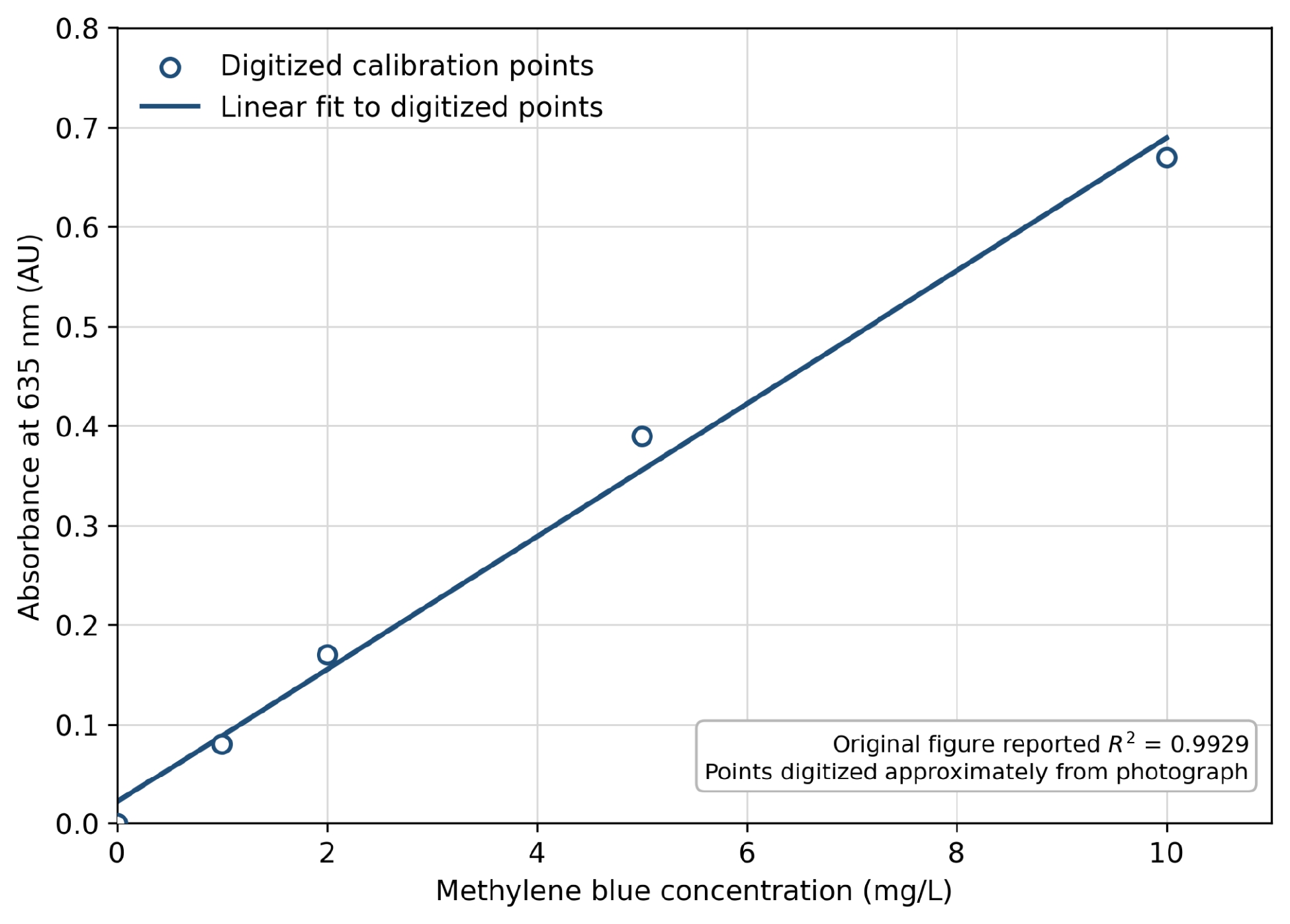
Five calibration standards; 0, 1, 2, 5 and 10 mg/L methylene blue were measured at a wavelength of 635nm by use of a Vernier Colorimeter interfaced to a LabQuest 2. By applying linear regression to the calibration standards the R² was 0.9929. This R² value only relates to the methylene blue calibration relationship and is not a measure of the kinetics of adsorption.
All information relevant to the original regression equation, the number of readings taken from each calibration standard, the procedures adopted for blank correction and the dilutions applied have been lost and cannot now be recreated retrospectively. The calibration curve was utilized to determine the concentration of methylene blue based on the absorption reading.
Screening Procedure
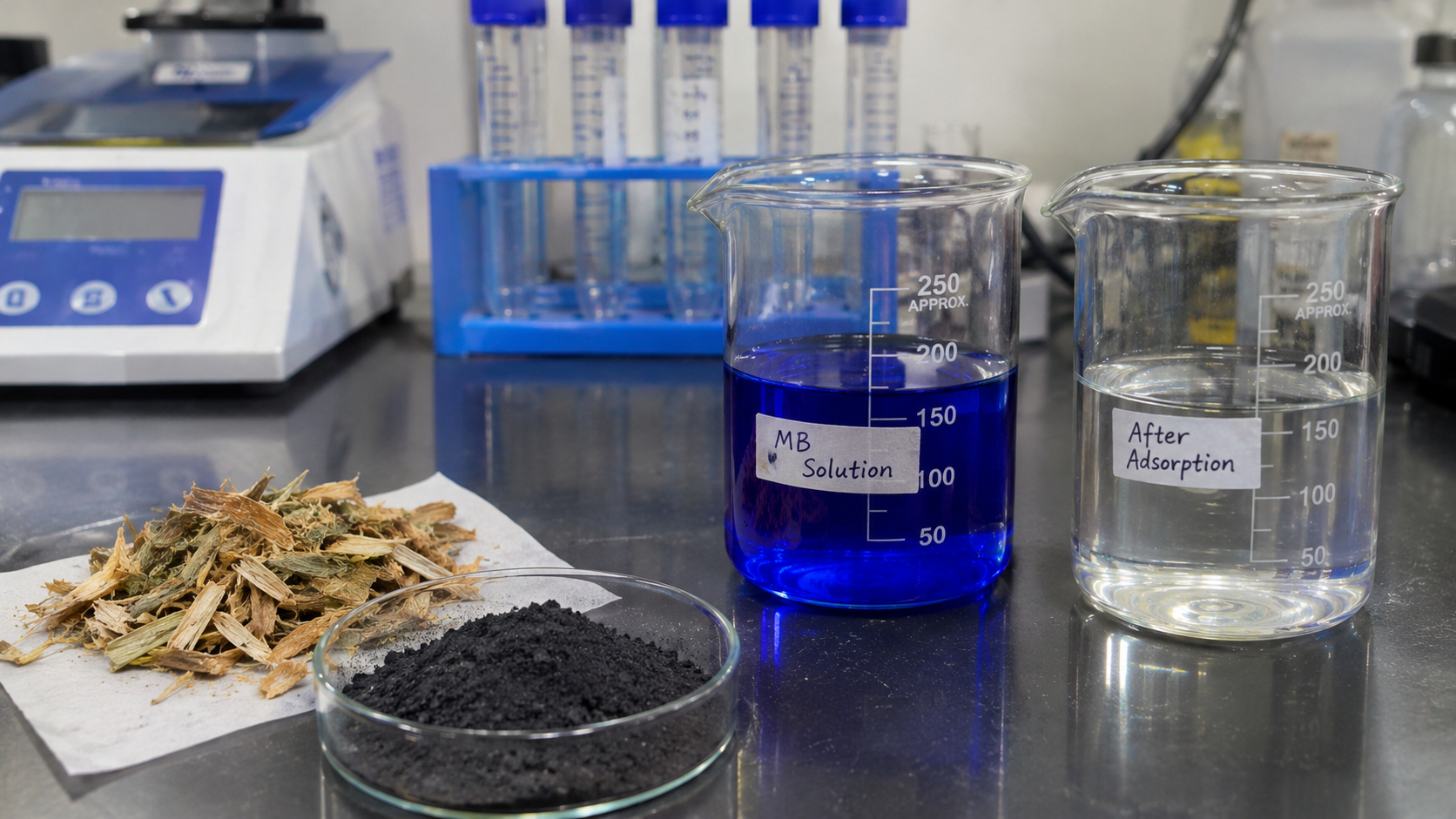
For the initial screening experiment, 1.00 grams of each biomass-based thermal treatment was combined with 200 mL of a 10 mg/L MB (methylene blue) aqueous solution into two different beakers. The mixtures were then placed on a magnetic stirrer at 50 rpm. Liquid samples from these beakers were taken at various times during the course of a four hour study to track changes in the concentration of MB. A portion of the data collected shows the concentration of MB as it changed throughout the study; unfortunately, due to lack of retention of the full time-point data record, the timing of the interim samplings cannot be provided. Also, absorbance readings were made at a wavelength of 635 nm and transformed back into concentrations of MB using a previously developed calibration curve.
The sample volume removed at each time point, filtration or centrifugation procedure, replacement of sampled liquid, solution pH, solution temperature, and magnetic-stir-bar size were not recorded. In addition, no documentation exists regarding the presence of an adsorbent free control. Therefore, any adjustments required for changes in solution volume resulting from repeated sampling were unable to be either confirmed or retroactively calculated.
Activation and Final Comparison
Banana peel and corn husk materials were chosen for the purpose of activation based on the amount of MB that changed in the initial screening test. Each material was combined with KOH at a biomass-to-KOH mass ratio of 1:4. Then, KOH was dissolved in 100 ml of deionized water and then added to the biomass-derived material. Afterward, the mixture was placed in an oven at 100°C for 2 cycles of 30 minutes each, microwaved using a 1000W microwave unit at 100% power output for 5 minutes, and heated to 230°C for 6 hours.
Each product was washed using a 100ml portion of deionized water through a coffee filter, left to dry at room temperature, and crushed to a powder. To compare the effect of the non-activated versus activated biomass materials, 0.200 grams of each was added separately to a 200mL portion of a 10mg/L MB solution. The final pH and conductivity readings of each wash as well as the type/model/mode of operation used for both microwaving and drying were not documented.
Data Analysis
The changes in MB concentrations were assessed using a normalized concentration ratio Ct/C0, where Ct is the concentration of MB found at time t and C0 is the concentration of MB at the beginning of the testA Ct/C0 value of 1 represents the initial concentration. Values below 1 indicate a decrease in measured MB concentration relative to the initial value; lower Ct/C0 values therefore indicate greater observed MB removal under the tested conditions.
The Ct/C0 values for the five different thermally treated materials were compared at the same time to assess how well they performed during the first screening experiment. In addition, the performance of the activated banana peel and corn husk materials in terms of Ct/Co values obtained over time during the second experiment were compared to the unactivated versions of these two materials.
Since only one run was made for each condition studied (n = 1), all comparisons were descriptive. Statistical significance was not evaluated or inferred. No complete set of data containing concentrations and volume of samples used for testing were preserved so as to allow verification of adsorption capacity and as such are not presented here.
Ethical Considerations
This laboratory materials study involved no human participants, animals, or identifiable personal data; therefore, human- or animal-subject ethics review was not applicable. Standard chemical safety procedures were followed when handling KOH and MB.
Results
Screening of Thermally Treated Materials
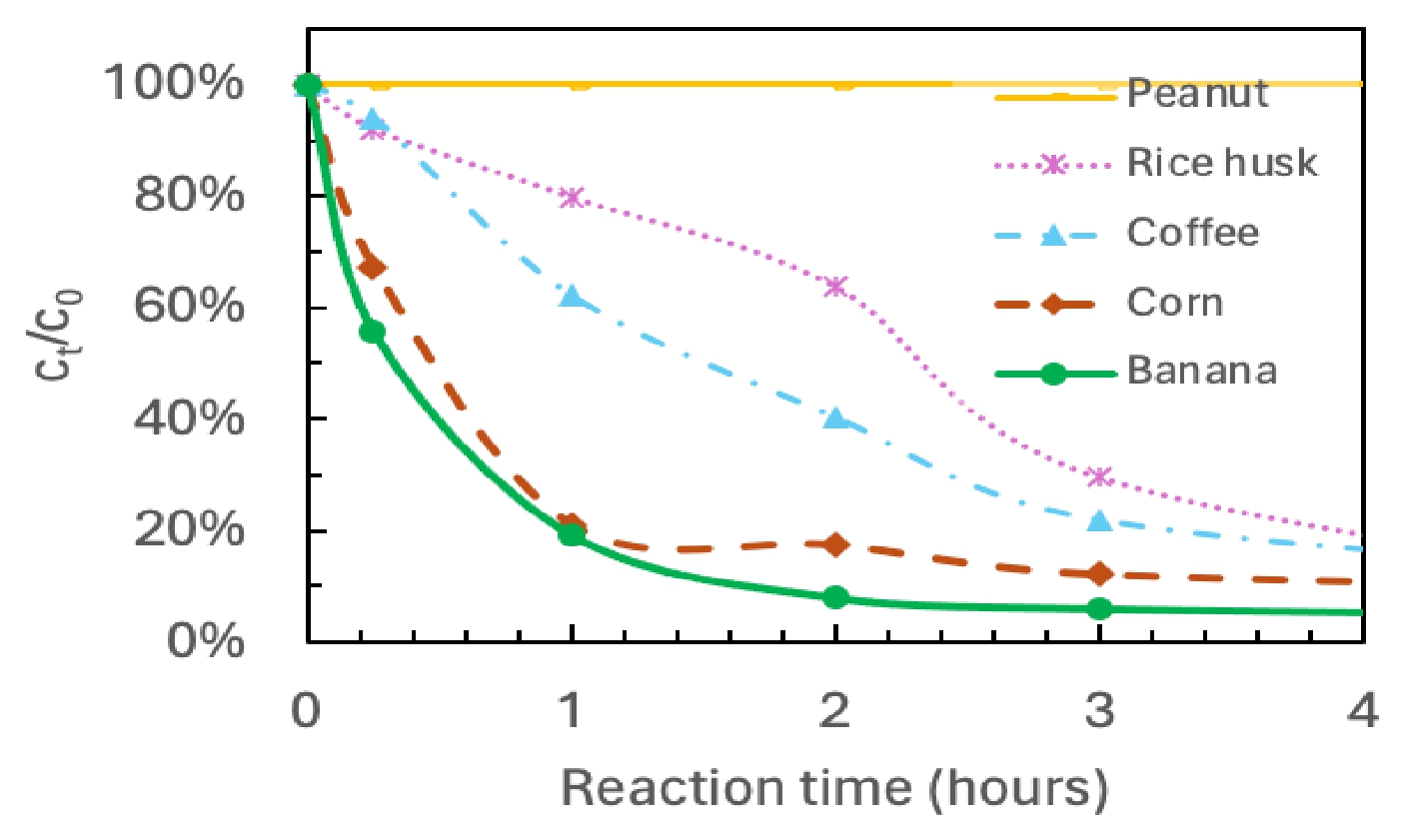
The results show that the five biomass-based materials exposed to heat exhibited varying degrees of decrease in Ct/C0 during the experimental period (Figure 2). Overall, banana peel and corn husk samples showed the largest reductions in normalized concentrations of MB compared with all other five tested samples. While coffee ground and rice husk samples showed reductions in MB concentrations they were significantly less than those observed from banana peel and corn husk samples. No significant reduction in Ct/C0 values were observed from the peanut shell sample under the experimental test conditions.
Therefore, based on observed Ct/C0 changes, banana peel and corn husk samples were selected for the subsequent activation experiments. As a result of being tested only one time, the differences observed are qualitative rather than quantitative differences between feedstocks and therefore should not be considered as statistical differences.
Effect of Activation
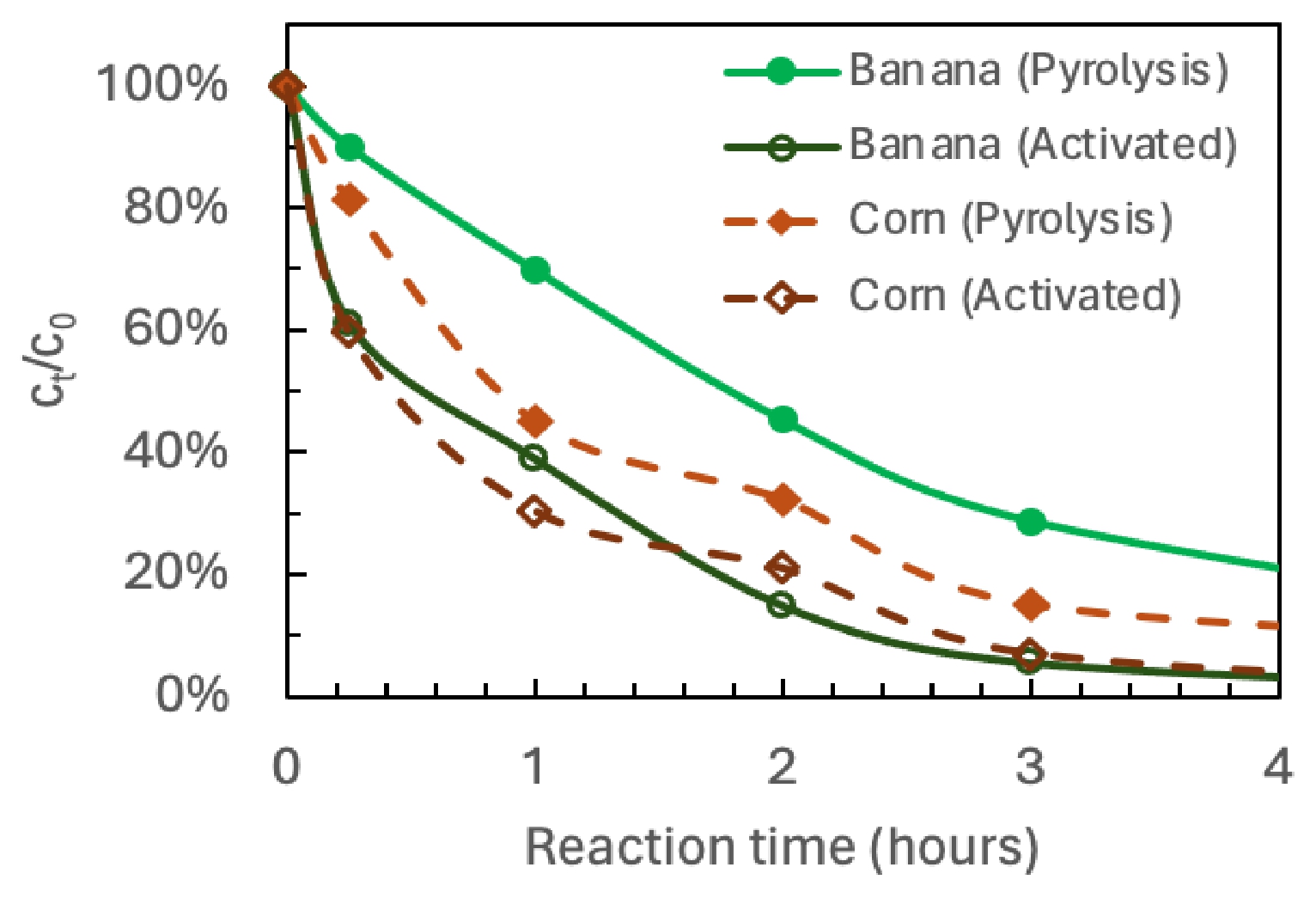
Activation resulted in distinct observed Ct/C0 trends when comparing both banana peel and corn husk feedstock material (Figure 3). Ct/C0 decreased significantly more for activated versus non-activated samples for all feedstocks. The difference in the decrease of Ct/C0 between activated vs. non-activated was most evident for banana peel. The greatest Ct/C0 decrease occurred from banana peel that had been activated compared to all other samples used to compare activated vs. non-activated. Corn husk activated samples produced the lowest Ct/C0 values for the four samples used to make the activated/non-activated comparison. These comparisons were made on a single test basis; therefore, they should be viewed as qualitative rather than quantitative and do not represent statistically valid results.
Discussion
Screening results show that feedstock selected impacted removal of MB from wastewater based on tested parameters. Observed Ct/C0 reductions were highest for banana peel and corn husk as compared to coffee ground and rice husk and least for peanut shells. These findings are in line with literature regarding the adsorptive properties of MB onto carbonaceous materials which shows a significant impact from both the type of biomass used and how it was prepared to form those carbons.12,25,26,21.
Activation showed a correlation to lower Ct/C0 values than both of the respective unactivated control samples. This association was most evident in the activated banana peel sample, however due to lack of independent batches and replicate adsorption vessels, these observed associations may also include variability in the methods used for preparing the materials, the sampling procedures, the environmental conditions of the solutions utilized and/or variability in the measurements taken.
Previous research has documented changes in MB sorption as a result of either thermal or chemical modification to various forms of biomass-based activated carbon. Examples include KOH activated bamboo, chemically modified rape straw biochar, agricultural waste composite materials, alkali modified corn straw biochar, and KOH treated oil palm biochar.1,13,23,16,20. Other studies have examined modified or composite biochars for MB removal, including iron-oxide composites, Fe3O4-loaded biochar, magnetic biochar, and food-waste-derived materials27,28,25,19. Although the described study establishes possible literature-supported hypotheses for how activation can influence the removal of contaminants from the media studied, it does not directly assign an effect to the properties of the materials used in this study. Therefore, BET surface area determinations, pore size analyses, microscopic examinations, elemental composition determinations, FTIR, Raman spectra studies, and X-ray Photoelectron Spectroscopies (XPS) were not conducted on the materials in this study. Therefore, we cannot definitively attribute the observed increase in contaminant removal after activation to a specific physical/chemical property.
Ct/C0 data is a qualitative measure of change in MB concentration resulting from testing under the defined experimental parameters. However, Ct/C0 measures alone do not establish adsorption capacities, equilibrium adsorption behaviors or adsorption mechanisms. In addition, our ability to quantitatively interpret Ct/C0 data was reduced due to lack of all raw concentration and sampling volume data and lack of documentation of a blank (adsorbent free).
Since no evidence was collected experimentally indicating when equilibrium had been reached in terms of adsorption capacity, additional experiments will need to be designed to verify equilibrium. Verification of equilibrium requires demonstration of two sequential identical readings. Multiple initial contaminant concentration experiments will allow investigation into equilibrium adsorption behavior and selection of suitable isotherm models.
As mentioned above, this study only evaluated one contaminant concentration (10 mg/L MB), in a very controlled deionized-water matrix. This study’s conditions have a wide range of practical water treatment applications which include varying contaminant concentrations, pH levels, ionic strength, presence of natural organic matter and other competitive ions. Additionally, since MB is considered a model cationic dye, its behavior should not be assumed to simulate chemically different contaminants.
Within the constraints of this study, it has provided an initial comparison of potential waste derived carbons and has identified banana peels and corn husks as good candidate materials for future MB removal studies. However, based upon the constraints listed above, there is no basis established here for concluding that these materials are economically viable at large scales, better than commercially available activated carbon or capable of removing chemically disparate contaminants. To determine whether such claims hold merit, subsequent performance testing, material characterization, benchmark controls, regeneration experiments, realistic water matrices, and quantitative cost analysis.
Conclusion
Among the five thermally treated waste-derived materials evaluated using MB, banana peel and corn husk had the largest decrease in Ct/C0 and therefore were chosen to continue as activated materials. The coffee ground and rice husk materials were less active in decreasing Ct/C0, while the peanut shell material had very little activity toward reducing Ct/C0 under the same testing conditions.
After each treatment process, banana peel and corn husk materials decreased more in Ct/C0 than did the untreated versions of these materials. Additionally, after activating by KOH followed by microwave treatments, the banana peel exhibited a larger absolute decline in normalized MB concentrations compared to all other treatments.
Overall, it appears both the type of organic waste feedstocks selected, as well as whether or not they are activated before application can significantly affect MB percentage removed when measured under similar experimental conditions as those described in the study. However, the data is too limited to make definitive conclusions based on preliminary results since no independent replicate experiments have been completed, nor has equilibrium been demonstrated, the maximum capacity for adsorption cannot be verified due to incomplete record keeping of total mass values for adsorbed media, nor was there documentation of a control sample containing no adsorbent.
References
- Q. Ge, P. Li, M. Liu, G. Xiao, Z. Xiao, J. Mao, X. Gai. Removal of methylene blue by porous biochar obtained by KOH activation from bamboo biochar. Bioresources and Bioprocessing. Vol. 10, pg. 51, 2023, https://doi.org/10.1186/s40643-023-00671-2. [↩] [↩] [↩] [↩] [↩] [↩] [↩]
- S. Fan, Y. Wang, Z. Wang, J. Tang, J. Tang, X. Li. Removal of methylene blue from aqueous solution by sewage-sludge-derived biochar: adsorption kinetics, equilibrium, thermodynamics and mechanism. Journal of Environmental Chemical Engineering. Vol. 5, pg. 601-611, 2017, https://doi.org/10.1016/j.jece.2016.12.019. [↩] [↩] [↩] [↩] [↩]
- K. Sonu, M. Sogani, Z. Syed, A. Dongre, G. Sharma. Enhanced decolorization and treatment of textile dye wastewater through adsorption on acid modified corncob derived biochar. ChemistrySelect. Vol. 5, pg. 12287-12297, 2020, https://doi.org/10.1002/slct.202003156. [↩] [↩]
- K. L. Yu, X. J. Lee, H. C. Ong, W. Chen, J. Chang, C. Lin, P. L. Show, T. C. Ling. Adsorptive removal of cationic methylene blue and anionic Congo red dyes using wet-torrefied microalgal biochar: equilibrium, kinetic and mechanism modeling. Environmental Pollution. Vol. 272, pg. 115986, 2021, https://doi.org/10.1016/j.envpol.2020.115986. [↩] [↩]
- S. Yetgin, M. Amlani. Agricultural low-cost waste adsorption of methylene blue and modelling linear isotherm method versus nonlinear prediction. Clean Technologies and Environmental Policy. Vol. 27, pg. 1205-1225, 2025, https://doi.org/10.1007/s10098-024-02928-6. [↩] [↩] [↩]
- H. Sawalha, A. Bader, J. Sarsour, M. Al-Jabari, E. R. Rene. Removal of dye (methylene blue) from wastewater using bio-char derived from agricultural residues in Palestine: performance and isotherm analysis. Processes. Vol. 10, pg. 2039, 2022, https://doi.org/10.3390/pr10102039. [↩] [↩]
- S. Kohzadi, N. Marzban, K. Godini, N. Amini, A. Maleki. Effect of hydrochar modification on the adsorption of methylene blue from aqueous solution: an experimental study followed by intelligent modeling. Water. Vol. 15, pg. 3220, 2023, https://doi.org/10.3390/w15183220. [↩] [↩] [↩]
- W. I. Mortada, M. M. Ghaith, N. E. Khedr, M. I. Ellethy, A. W. Mohsen, A. L. Shafik. Mesoporous magnetic biochar derived from common reed (Phragmites australis) for rapid and efficient removal of methylene blue from aqueous media. Environmental Science and Pollution Research. Vol. 31, pg. 42330-42341, 2024, https://doi.org/10.1007/s11356-024-33860-3. [↩] [↩]
- F. A. Solih, A. Buthiyappan, N. Z. Mohd Azmi, A. A. Abdul Raman. Hydrothermal carbonisation of fruit waste for sustainable remediation of methylene blue from aqueous solution: a zero-waste approach. Journal of Molecular Liquids. Vol. 433, pg. 127844, 2025, https://doi.org/10.1016/j.molliq.2025.127844. [↩] [↩]
- H. Li, Y. Zhang, J. Guo, J. Lv, W. Huan, B. Li. Preparation of hydrochar with high adsorption performance for methylene blue by co-hydrothermal carbonization of polyvinyl chloride and bamboo. Bioresource Technology. Vol. 337, pg. 125442, 2021, https://doi.org/10.1016/j.biortech.2021.125442. [↩]
- N. S. Pinky, M. B. Mobarak, S. Mustafi, M. Z. Rahman, A. Nahar, T. Saha, N. M. Bahadur. Facile preparation of micro-porous biochar from Bangladeshi sprouted agricultural waste (corncob) via in-house built heating chamber for cationic dye removal. Arabian Journal of Chemistry. Vol. 16, pg. 105080, 2023, https://doi.org/10.1016/j.arabjc.2023.105080. [↩] [↩]
- Q. Xu, T. Liu, L. Li, B. Liu, X. Wang, S. Zhang, L. Li, B. Wang, A. R. Zimmerman, B. Gao. Hydrothermal carbonization of distillers grains with clay minerals for enhanced adsorption of phosphate and methylene blue. Bioresource Technology. Vol. 340, pg. 125725, 2021, https://doi.org/10.1016/j.biortech.2021.125725. [↩] [↩] [↩]
- J. Chen, C. Tang, X. Li, J. Sun, Y. Liu, W. Huang, A. Wang, Y. Lu. Preparation and modification of rape straw biochar and its adsorption characteristics for methylene blue in water. Water. Vol. 14, pg. 3761, 2022, https://doi.org/10.3390/w14223761. [↩] [↩] [↩]
- H. Sukmana, M. Radojčin, T. Gyulavári, G. Kozma, Z. Kónya, C. Hodúr. Utilization of rice husks as effective bioadsorbents for methylene blue removal from wastewater: characterization, adsorption performance, and regeneration studies. Applied Water Science. Vol. 15, pg. 148, 2025, https://doi.org/10.1007/s13201-025-02511-4. [↩] [↩]
- J. Doble, G. Wilson, J. W. Wainman. Kinetic and thermodynamic analysis of the adsorption of methylene blue onto biochar. Journal of Chemical Education. Vol. 100, pg. 4040-4046, 2023, https://doi.org/10.1021/acs.jchemed.3c00518. [↩]
- H. Yu, Y. Zhang, L. Wang, Y. Tuo, S. Yan, J. Ma, X. Zhang, Y. Shen, H. Guo, L. Han. Experimental and DFT insights into the adsorption mechanism of methylene blue by alkali-modified corn straw biochar. RSC Advances. Vol. 14, pg. 1854-1865, 2024, https://doi.org/10.1039/D3RA05964B. [↩] [↩] [↩] [↩]
- H. Roy, M. S. Islam, M. T. Arifin, et al. Chitosan-ZnO-decorated Moringa oleifera seed biochar for sequestration of methylene blue: isotherms, kinetics, and response-surface analysis. Environmental Nanotechnology, Monitoring & Management. Vol. 18, pg. 100752, 2022, https://doi.org/10.1016/j.enmm.2022.100752. [↩]
- K. Wystalska, A. Kwarciak-Kozłowska. Utilization of digestate from agricultural and food waste for the production of biochar used to remove methylene blue. Sustainability. Vol. 15, pg. 14723, 2023, https://doi.org/10.3390/su152014723. [↩]
- C. Yang, H. Wu, M. Cai, Y. Li, C. Guo, Y. Han, Y. Zhang, B. Song. Valorization of food waste digestate to ash and biochar composites for high performance adsorption of methylene blue. Journal of Cleaner Production. Vol. 397, pg. 136612, 2023, https://doi.org/10.1016/j.jclepro.2023.136612. [↩] [↩]
- K. Tohdee, S. Semmad, A. Jotisankasa, B. Jongsomjit, T. Somsiripan, A. Ullah. Sustainable adsorption of methylene blue onto biochar-based adsorbents derived from oil palm empty fruit branch: performance and reusability analysis. Bioresource Technology Reports. Vol. 25, pg. 101755, 2024, https://doi.org/10.1016/j.biteb.2023.101755. [↩] [↩] [↩]
- N. N. R. do Nascimento, A. L. M. da T. Silva, W. L. Silva, M. G. F. Rodrigues. Valorization of coffee agro-industrial residue for biochar production: use as adsorbent for methylene blue removal. Desalination and Water Treatment. Vol. 320, pg. 100767, 2024, https://doi.org/10.1016/j.dwt.2024.100767. [↩] [↩] [↩] [↩]
- Z. Li, B. Xing, Y. Ding, Y. Li, S. Wang. A high-performance biochar produced from bamboo pyrolysis with in-situ nitrogen doping and activation for adsorption of phenol and methylene blue. Chinese Journal of Chemical Engineering. Vol. 28, pg. 2872-2880, 2020, https://doi.org/10.1016/j.cjche.2020.03.031. [↩]
- H. Liu, J. Zhu, Q. Li, L. Li, Y. Huang, Y. Wang, G. Fan, L. Zhang. Adsorption performance of methylene blue by KOH/FeCl3 modified biochar/alginate composite beads derived from agricultural waste. Molecules. Vol. 28, pg. 2507, 2023, https://doi.org/10.3390/molecules28062507. [↩] [↩] [↩]
- S. Cui, Y. Zhao, Y. Liu, R. Huang, J. Pan. Preparation of straw porous biochars by microwave-assisted KOH activation for removal of gaseous H2S. Energy & Fuels. Vol. 35, pg. 18592-18603, 2021, https://doi.org/10.1021/acs.energyfuels.1c02241. [↩]
- N. Yan, B. Hu, Z. Zheng, H. Lu, J. Chen, X. Zhang, X. Jiang, Y. Wu, J. Dolfing, L. Xu. Twice-milled magnetic biochar: a recyclable material for efficient removal of methylene blue from wastewater. Bioresource Technology. Vol. 372, pg. 128663, 2023, https://doi.org/10.1016/j.biortech.2023.128663. [↩] [↩] [↩]
- M. Luo, L. Wang, H. Li, Y. Bu, Y. Zhao, J. Cai. Hierarchical porous biochar from kelp: insight into self-template effect and highly efficient removal of methylene blue from water. Bioresource Technology. Vol. 372, pg. 128676, 2023, https://doi.org/10.1016/j.biortech.2023.128676. [↩] [↩]
- P. Zhang, D. O’Connor, Y. Wang, L. Jiang, T. Xia, L. Wang, D. C. W. Tsang, Y. S. Ok, D. Hou. A green biochar/iron oxide composite for methylene blue removal. Journal of Hazardous Materials. Vol. 384, pg. 121286, 2020, https://doi.org/10.1016/j.jhazmat.2019.121286. [↩]
- J. Xie, R. Lin, Z. Liang, Z. Zhao, C. Yang, F. Cui. Effect of cations on the enhanced adsorption of cationic dye in Fe3O4-loaded biochar and mechanism. Journal of Environmental Chemical Engineering. Vol. 9, pg. 105744, 2021, https://doi.org/10.1016/j.jece.2021.105744. [↩]