
Abstract
Radiation has become an emerging issue within space exploration and cancer biology. High-energy particles, including cosmic rays, can deeply penetrate biological tissue, and on a molecular level, induce damage to DNA. This paper presents a narrative literature review of how radiation damages DNA and how this impacts cancer. It reviews existing literature reporting strand breaks, mutations, and halted cell repair mechanisms resulting from radiation. The literature suggests increased genomic instability, which is associated with cancer development and may influence the sensitivity of cancer cells to certain drugs.
Introduction
In 1912, the balloon experiments of Victor Hess led to the discovery of cosmic rays – high-energy particles entering Earth’s atmosphere from outer space. These rays are mainly composed of protons, about 85%; alpha particles or helium nuclei, around 14%; and a small fraction of heavier atomic nuclei, such as iron (Fe⁵⁶) and silicon (Si²⁸) nuclei1. These cosmic rays collide with atmospheric molecules to form secondary particles like muons, electrons, and neutrinos. On Earth, these are mostly harmless because our atmosphere and magnetic field serve as shields. However, deep in space, far from these protective layers, astronauts would be directly exposed to these high-energy particles2.
Space radiation is mainly produced by two sources: galactic cosmic rays, which originate from outside the heliosphere, and solar particle events, comprising protons that are emitted in huge quantities during solar flares. Of these two types of radiation, galactic cosmic rays hold the greatest danger owing to their high-energy and heavy ion content3,4. These particles can easily travel through several centimeters of human tissue, creating a trail of high-density ionization capable of breaking atomic and molecular bonds within cells. This effect is largely influenced by the way radiation deposits energy along its path, which plays a critical role in determining the extent of biological damage.
While cosmic radiation travels through the human body, it will damage cells in many ways: it breaks chemical bonds in DNA, which generates single- and double-strand breaks; it produces reactive oxygen species, leading to oxidation of lipids, proteins, and nucleic acids; and it can also interfere with the cytoskeleton, the protein framework responsible for cell shape, division, and transport. As such, over time, all these disruptions lead to genomic instability, mutations, and epigenetic changes-each tightly linked to the initiation and development of cancer.
Radiation damage is not restricted to space. Even on Earth, ionizing radiation from medical imaging and radiotherapy can cause similar damage to DNA. Basically, radiation may lead to two kinds of cellular damage:1 direct-the radiation strikes DNA molecules directly, breaking strands or altering bases, and1 indirect-the radiation interacts with water molecules, producing free radicals and reactive oxygen species that later attack DNA and other biomolecules. The accumulation of either type of effect can overwhelm a cell’s natural defense and repair systems.
Cells have developed several repair pathways, most notably non-homologous end joining and homologous recombination, to repair such damage. These systems detect DNA breaks and attempt to restore normal sequences5. In cancer cells, however, these mechanisms are often defective or unregulated. Radiation can further this instability by causing more mutations than the cell can repair6,3, accelerating tumor progression7,8. It can also cause impairment to the cytoskeleton responsible for the movement of cells which may lead to a gain-of-function division, making the cancer cells more aggressive and likely to spread.9
Therefore, this paper seeks to bridge this knowledge gap by analysis of how radiation-induced DNA damage affects cancer cell behavior under conditions of chronic exposure and microgravity. In order to give a comprehensive review, the paper will be structured according to the following main themes:
- Molecular Pathways of DNA Damage and Repair
- Medical vs. Space-Borne Radiation Exposure
- Synergic Cellular Consequences
- Epigenetics and Carcinogenic Risk Factors.
- Mitigation Approaches and Next Steps
Literature review
Radiation has both fascinated and frightened scientists over the past century. In simple terms, radiation can be defined as the emission of particles or electromagnetic waves, which corresponds to the release of their energies. Non-ionizing radiation typically does not have enough energy to ionize atoms, but some types, particularly UV and very intense sources, can still cause biological damage through other means.1
Types and Sources of Ionizing Radiation
Ionizing radiation takes many forms, such as alpha particles, beta particles, gamma rays, X-rays, and cosmic rays. Each of these varies in the way it interacts with biological materials. Alpha particles are charged with low penetrating power, while gamma rays and X-rays consist of high penetrating powers of electromagnetic nature. On the other hand, cosmic rays possess high energy levels as they come from outer space, consisting of mainly protons as well as heavier ions like iron (Fe⁵⁶) and silicon (Si²⁸)2.
The main types and sources of space radiation are Galactic Cosmic Rays (GCR) and Solar Particle Events (SPE). galactic cosmic rays are produced outside the solar system and have very high energies, while Solar Particle Events (SPE) are bursts of protons that are released from the Sun during solar flares and solar coronal mass ejections10. These particles have high energies and can traverse spacecraft and biological tissue, leaving paths of ionization in their tracks in which there is a high concentration of molecules11.
If these charged particles collide with human tissue, they can directly or indirectly damage human cells. Direct cell damage occurs because radiation can collide with DNA molecules, causing the separation of nucleotide molecules by breaking the bonds that link nucleotides within the DNA strand, resulting in strand breaks.
Mechanisms of DNA Damage
DNA, which stores genetic information, is especially sensitive to ionizing radiation. Durante (2002) identified the main types of damage caused by radiation as single-strand breaks (SSBs), double-strand breaks (DSBs), base modifications, and cross-linking12. Double Strand Breaks are considered the most dangerous because incorrect repair can cause chromosomal rearrangements or deletions.
The level of damage and the degree of complexity of this damage also depend not only on the type of radiation, but also on the manner in which the energy is deposited in the DNA. This is referred to as Linear Energy Transfer (LET), and it is the measurement of the energy deposited by the radiation in the tissue in which it travels. High-Light Energy Transfer radiation, like the heavy ions in cosmic rays, has the ability to deposit energy in dense amounts over short distances, leading to complex DNA damage that is difficult for the cell to repair in any accurate manner. Low-Light Energy Transfer radiation, like X-rays and gamma rays, tends to have less complex DNA damage.
When DNA is damaged, the cell activates a defense network known as the DNA damage response (DDR). Proteins such as ATM (ataxia-telangiectasia mutated), ATR (ataxia-telangiectasia and RAD3 mutated), and p53 detect the damage and either initiate repair or trigger apoptosis (programmed cell death) if the damage is too severe13. However, radiation can overwhelm these systems. If a double stand break is repaired incorrectly through an error-prone process like non-homologous end joining (NHEJ), mutations may form in genes that control cell growth and division. Over time, these mutations can accumulate and lead to carcinogenesis, the process by which normal cells become cancerous5,14.
Collectively, these studies have shown that DNA double-strand breaks are the most important form of radiation-induced damage due to their potential for misrepair. Yet while some studies have focused more on the direct effect of DNA breaks as the main mechanism of radiation-induced carcinogenesis, others have focused more on the indirect effect of radiation-induced carcinogenesis. This implies that radiation-induced carcinogenesis is a result of a combination of both direct and indirect effects of radiation, although the extent of each effect in space radiation is still unknown.
Radiation and the Cytoskeleton
In addition to the damage in DNA, there are effects on other cellular components. The cytoskeleton refers to a protein filament structure comprised of microtubules, actin filaments, and intermediate filaments. Its purpose is to provide structure to cells and coordinate cell migration and division. Research by Maalouf et al. in 2011 demonstrated that high levels of ionizing radiation can induce changes in the cytoskeleton. This may lead to disordered actin filaments and a reduction in microtubules15.
In cancer cells that already have abnormal cytoskeletal dynamics, irradiation could have the effect of increasing or decreasing malignancy16. Certain literature findings have it that low-dose irradiation enhances the migratory properties of cancer cells that could result in the onset of metastasis8,17. On the other hand, high doses can result in the destruction of the cytoskeletal system altogether9.
The results show that radiation has a twofold effect on cancer growth, where low doses may have a tendency to enhance metastatic potential but high doses are generally destructive. However, there is limited consensus on the doses where radiation may change its effect from being metastasis-promoting to metastasis-inhibiting.
Oxidative Stress and Cellular Signaling
One of the major secondary effects of radiation and exposure to radiation could be the generation of reactive oxygen species (ROS). reactive oxygen species could exceed the level of antioxidants present in the cell. It has been shown that reactive oxygen species could activate pathways such as NF-κB and MAPK that are involved in regulating inflammation and cellular growth18. Activation of such pathways could lead to chronic inflammation that could be one of the factors for the development of cancer.
Moreover, there is impairment of oxidative functions of mitochondria, which is actually a mechanism by which cells generate energy. When these mitochondria are harmed, their production of reactive oxygen species gets stimulated, giving rise to a vicious cycle3. In space, because of both radiation and microgravity, this condition gets aggravated.
Although radiation may lead to direct oxidative damage, the special conditions of space travel add to the susceptibility of cells to various biological abnormalities. Based on the available data obtained during real space flight (RS) and simulated microgravity (SM), the effect of microgravity is considered to be a physical stressor that impedes DNA repair capacity. For example, there is evidence of suppression of certain repair genes, including Non-Homologous End Joining pathway, which makes the repair of radiation-induced double-stranded breaks difficult14,15.
As for other physiological changes, immune dysregulation induced by microgravity is observed independently from the aforementioned genetic abnormalities. Mechanical unloading of cells leads to impaired proliferation and activation of T lymphocytes and cytokine activity, making the immunological surveillance of cells more difficult19. Thus, compromised genome structure along with a suppressed immune system creates favorable conditions for development of cancer under oxidative stress.
Taken collectively, these studies all point to the role of reactive oxygen species as the major factor in radiation-induced damage. While the role of inflammatory signaling is well established, the role of these pathways in cancer development and progression is less well characterized and warrants further study.
Epigenetic Changes and Long-Term Effects
Recent findings also reveal that ionizing radiation not only leads to changes in DNA sequences but also impacts epigenetics, including gene function alterations20, independent of changes in DNA sequence. Kennedy et al. (2018) also found that galactic cosmic irradiation of human lung cells led to persistent epigenetics alterations, including DNA methylation and histone modification. Such alterations can potentially lead to the silencing of tumor suppressor genes or activation of oncogenes, potentially contributing to malignancy21.
In contrast to direct damage to DNA, epigenetics-based changes can be long-term, spanning several generations of cells. Such a “memory” of radiation exposure indicates that cells can be predisposed to cancer, even after their DNA has been repaired, since their gene expression profile changes. Such long-term effects of radiation need to be studied to properly understand astronaut health and to optimize radiation treatments. Each form of cancer also varies with regards to radio-resistance. Glioblastoma cells, for instance, exhibit higher levels of repair, and gene expression levels in breast cancer cells differ based on repair gene expression22.
It is evident that these studies have collectively demonstrated the role of epigenetic changes in the long-term effects of radiation exposure. While DNA damage can be repaired, epigenetic changes are not easily reversed. The stability of these changes in the context of space is not well understood.
Cancer Cell Response to Radiation
Cancer cells behave differently under radiation exposure as normal cells. They are more sensitive to radiation-induced cell death due to their mutation and ineffective repair mechanisms. But in other cases, cancer cells could be resistant to radiation and continue to adapt and survive. In a study published in the International Journal of Radiation Oncology, it was suggested that this could be due to effective DNA repair mechanisms, overexpression of antioxidant enzymes, and/or mutations in certain genes involved in apoptosis.
It is also possible for “bystander effects”(radiation-induced effect whereby non-irradiated cells show signs of damage in response to chemicals secreted by adjacent cells that had been subjected to radiation treatment) to occur in radiation, where non-irradiated cells23
neighboring the irradiated cells display signs of DNA damage and stress responses, as a result of signals from the irradiated cells20,23. This makes radiation therapy more challenging since the healthy tissue is also affected.
Overall, the literature provides a complex picture of the response of cancer cells to radiation therapy. However, it has been agreed that the response of cancer cells to radiation therapy varies significantly from one form of cancer to another. In some cancers, the cells become more sensitive to radiation, while in others, resistance to radiation is observed.
Mitigation and Protective Strategies
The understanding of how radiation damages DNA and how cancer cells respond is important ultimately-to protect astronauts-but also to develop better treatments against cancer on Earth. With all the research into the interaction of cosmic and terrestrial radiation with biological systems, scientists are producing better shielding materials, radioprotective drugs, and targeted therapies that reduce harm while enhancing therapeutic effectiveness24.
Against all radiation dangers in space and on Earth, scientists searched for means of reducing the damage. Physical shielding is the most complete protection. Hydrogen-rich materials such as polyethylene or water are being evaluated for spacecraft because they are efficient blockers of protons and light ions.
Biological protection includes antioxidants such as vitamin C, N-acetylcysteine (NAC), and melatonin, which help reduce reactive oxygen species damage. Some studies suggest that radioprotective drugs like amifostine can protect healthy cells during cancer treatment without shielding tumors15.
At the genetic level, researchers are developing DNA repair enhancement techniques by activating repair-related genes or using CRISPR tools to correct mutations that may cause radio-sensitivity. Personalized medicine approaches, such as screening for radiation-sensitive genetic profiles, can help identify astronauts or patients at greater risk.
Research Gap
Although there has been significant attention given to the mechanisms of DNA damage, such as strand breaks and the generation of oxidative damage, there is still a lot to be learned about the specific mechanisms by which such events impact the behavior of cells prone to cancer over a longer period of time. There has been a focus to date of research efforts either being conducted in the area of DNA damage in normal cells or in the impact of radiation exposure over the shorter term.
Methodology
This analytical approach has been used in the research paper to show how radiation may cause DNA damage and influence cancerous cells. It does not present any laboratory experimentation. Rather, it has collated the information from peer-reviewed scientific journals, NASA archives, and academic databases such as PubMed, ScienceDirect, and Nature Portfolio.
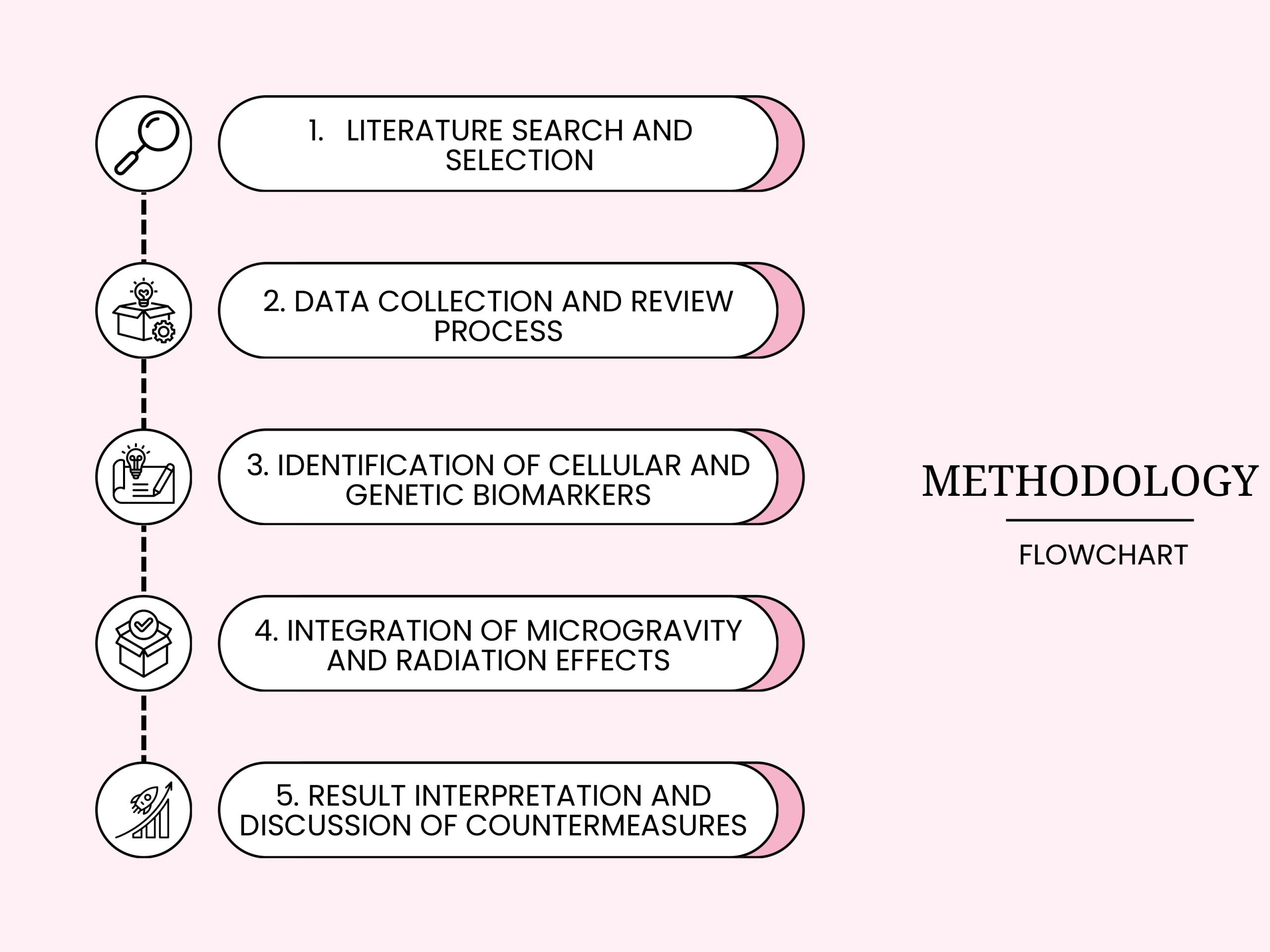
Literature Search and Selection
A thorough literature search was conducted through the use of key words such as “Radiation-Induced DNA Damage,” “Cosmic Radiation,” “Galactic Cosmic Rays,” “Reactive Oxygen Species,” “DNA Repair,” “Cancer Cells,” and “Space Radiation Biology.” Both classical and contemporary scientific studies were included in this selection to provide a broad spectrum of available data concerning the topic of interest.The databases PubMed, Google Scholar, and ScienceDirect were used.The search focused on peer-reviewed studies published between January 2000 and December 2025.
A multistage selection methodology was adopted for choosing the most pertinent literature. In total, after a series of filters were applied to 45 potential sources, the following list of 26 studies was finally chosen as the core body of evidence to be reviewed using the following criteria:
Inclusion Criteria:
- English-language scientific literature written during the 2000-2025 period.
- Studies that focus on cellular and molecular aspects of space radiation exposure such as strand breaks, oxidative stress, epigenetic changes, etc.
- Studies which investigate Real Spaceflight (RS) environments (for example, ISS missions) or valid Simulated Microgravity (SM) systems (e.g., Random Positioning Machines or Rotating Wall Vessels).
- Studies whose abstract directly addressed the issue of radiation effects in association with gravitational unloading.
Exclusion Criteria:
- Non-scientific literature or material from non-peer-reviewed media (news, advertisements, blogs, etc.).
- Duplicate material or identical data sets.
- Irrelevant thematic focus (studies devoted only to geologic or engineering problems).
- Insufficient data regarding experimental results or gravity parameters.
The selection was mainly guided by factors such as the quality of methodology involved and the relevance of biological endpoints to the study. Though the impact of the citation was used to highlight landmark articles, it played an instrumental role only in providing context and not in the final selection process since the analysis had to be conducted based on the experiment findings.
Data Collection and Review Process
Data was extracted from all papers used in the literature review concerning:
- Types of radiation and their biological impact: Galactic Cosmic Rays (GCR), Solar Particle Event (SPE), x-rays, and gamma rays.
- Methods by which DNA is damaged: strand breaks, oxidative stress, and base modification.
- Processes involved in the repair of DNA damage: Non-Homologous End Joining (NHEJ) and Homologous Recombination (HR).
- Immune system response and immunosurveillance: Modifications to the process of T-cell activation and cytokine signaling in microgravity.
- Consequences for cells: mutation rate, apoptosis, and epigenetic changes.
- Comparison studies: Differences between normal and tumor cells when subjected to ionizing radiation.
NASA documents from the Space Radiation Analysis Group (SRAG) were also consulted for understanding radiation exposure and biological responses in astronauts. Some important documents reviewed include the NASA Human Research Program (Radiation Element) and NASA Biological and Physical Sciences Research on Space Radiation.
Analytical Framework
Three key themes came out of the data gathered:
- Mechanisms of Radiation-Induced DNA Damage: Discovering the ways in which radiation may cause DNA damage.
- Cellular Repair and Mutation Processes: Understanding how repair mechanisms (such as NHEJ) affected by microgravity vary between healthy and cancer cells.
- Biological Implications: Considering how the accumulation of DNA damage and immune dysfunction results in cancer formation.
Each theme was analyzed for correlations and areas where more research is needed. Figures and data analyses from sources reviewed were provided in qualitative form to preserve the conceptual nature of the discussion. The analysis process adopted in analyzing the gathered information is shown in Figure 1, where three main themes arose:
Limitations
This paper relies exclusively on secondary data and published studies; as a result, no laboratory or experimental data were gathered. The subject area is therefore restricted by the level of available literature. Certain radiation data from NASA and the ESA are either classified or not readily provided; as a result, the data on astronauts’ health effects are restricted. Additionally, most of the current literature explores the effects of simulated short-term exposure to radiation; as a result, understanding the long-term effects is uncertain. Notwithstanding these issues, the current state of synthesis provides a reliable summary on the effects of radiation on DNA and cancerous cells. Table 1.1 provides a summary of radiation induced damage mechanisms.
| Type of Radiation Damage | Mechanism | Impact on Normal Cells | Impact on Cancer Cells |
| Direct damage | Radiation hits DNA directly, breaking chemical bonds | May cause DNA strand breaks and cell death | May increase mutations and genomic instability |
| Indirect damage | Radiation generates reactive oxygen species that damage biomolecules | Leads to oxidative stress and protein/lipid damage | Can enhance mutation rates and resistance mechanisms |
| Cytoskeletal disruption | Ionization alters protein structure | Affects cell division and repair | Promotes invasive or metastatic behavior |
Synthesis and Discussion
Effects of Radiation-Induced DNA Damage
The collected literature suggests that ionizing radiation may cause considerable harm to the DNA molecule, as well as several biological responses. This is due to the action of the high energy particles that are able to damage DNA by either damaging the molecules directly by causing DNA breaks or by producing reactive oxygen species (ROS) that cause harm to the DNA molecule and the sugar-phosphate backbone1,2. One example is the creation of 8-oxo guanine13,18.
In order to fix this type of damage caused, NHEJ and HR are two mechanisms utilized by the cell under normal circumstances. In cases where the damage caused by the exposure to radiation occurs often, it could be possible for the cells to overload in terms of fixing the damage, causing misrepair or incomplete repair10.
The differences should be made clear between cancer formation due to radiation and the reaction of pre-existing cancer cells. With pre-existing cancer, the reactions of cancer cells to radiation are quite diverse. Cancer cells tend to be sensitive to radiation since the cancerous cells are unstable genetically and have failed repair systems. Radiation can lead to selective pressure on clones. The survival advantage will favor cells that can tolerate radiation better, such as by repairing DNA and antioxidants. This means that although radiation could kill most cancer cells, it can also make remaining cells more resistant to treatment11. In some cases, radiation could even cause cancer cells to become resistant to other treatments like chemotherapy25.
Space radiation vs Earth based medical radiation
Even though both cosmic radiation in space and medical radiation on Earth are composed of ionizing particles, there are many differences between the two. Space radiation consists of high-energy protons and heavy ions that generate highly ionized tracks, leading to complex DNA damage13,26. Medical radiation, which includes X-rays and gamma rays, is considered to be low-LET radiation and has the ability to cause both SSBs and DSBs, especially at higher doses. However, in contrast to space radiation, which contains high-LET radiation like heavy ions that cause densely ionizing radiation, low-LET radiation has less localized damage26, which is easier for the cell to repair. Radiation from both space and medical radiation sources induces DNA damage and oxidative stress and triggers the development of cancer.
Effects on Cellular Processes & Cytoskeleton
Besides DNA, radiation influences other vital cellular mechanisms. The cytoskeleton, composed of microtubules, actin filaments, and intermediate filaments, plays a role in cell division, mechanical support, and transport within the cell. There have been observations that the disruption of actin filament rearrangement caused by cosmic radiation affects the functionality of cell movement and communication12. This physical stress can disrupt the process of attaching and dividing cells, eventually leading to mitoses that have irregularities. Since this occurs in cancerous cells, it will further disrupt the fragile architecture of these cells, eventually leading to uncontrollable growth and metastasis13.
In addition, there is oxidative stress caused by radiation, which damages the pathways of signaling in the cell, particularly the protein p53, which has the capacity to recognize damage to the genome and initiate apoptosis. In fact, mutations caused by radiation to the gene p53 can be related to the prevention of apoptosis as well as the proliferation of damaged cells5.
Long-Term Biological Implications
Exposure to the space environment over a prolonged period causes permanent changes to DNA sequences and epigenetics. It has been found that exposure to cosmic rays may cause long-lasting changes in DNA methylation, the chemical modification of DNA which affects gene expression without changing its genetic code7. The epigenetic changes show mitotic inheritance, which implies that they are sustained during multiple consecutive divisions of cells from a particular somatic cell line16. Although the changes reflect a history of exposure to cosmic irradiation, they are limited only to the individual exposed and do not constitute transgenerational inheritance.
In the long run, these continuous epigenetic instabilities, in conjunction with acquired genetic mutations, may generate an environment conducive to cancer development. One must be careful not to confuse these two processes, because whereas genetic mutations are changes in the structure of the genetic material itself, epigenetics is concerned with alterations in gene function. Both of these processes may lead to the formation of pre-cancerous cells, even in the absence of any further radiation stress.
Additional research carried out by NASA on the effects on astronauts during prolonged missions in space indicates increased levels of biomarkers associated with DNA double-strand breaks, continued oxidative stress, and greater incidence rates of chromosomal abnormalities9. Such combined factors, although initially seemingly minor, could imply a greater likelihood of developing certain diseases over time4, such as specific types of cancer or neurodegeneration. This poses a significant challenge to be overcome when undertaking missions in deep space.
Mitigation Measures and Future Prospects
Despite the dangers involved, various approaches are also being considered to counter DNA and cell damage caused by radiation.
Physical Shielding: Conventional materials used in spacecraft design, such as aluminum, are not very effective against high-energy cosmic rays because they produce secondary radiation when affected by cosmic rays. The use of hydrogen materials such as polyethylene, boron nitride nanotubes, which are more radiation-resistant and do not produce secondary particles when intercepted by radiation, has currently been pursued by researchers18. Water shielding systems to provide protection as well as storage for life-support systems are also being pursued by NASA3.
Biological Countermeasures: Pharmacological agents are being developed to protect cells at a molecular level. Antioxidants such as vitamin E, coenzyme Q10, and melatonin have potential in protecting cells from reactive oxygen species. Some substances have been identified, known as radioprotectors, like amifostine, which have the potential to protect normal cells either by promoting enzymes for cell repair or by scavenging free radicals. Radiomitigators represent another area of research, which include drugs used to repair tissue even after radiation exposure.
Genetic and Epigenetic Approach: Recently, researchers found genetic markers that can confer greater resistance to radiation to some people. In the future, astronauts may need to undergo genetic testing to choose the individuals with better DNA repair mechanisms or who are less prone to cancer. Moreover, modulation of TET enzymes, a protein family that removes the methyl group from DNA to control the expression of genes, can prevent deleterious epigenetic modifications.
Microgravity and Radiation Combined Studies
Several ongoing projects, including those being conducted through NASA’s GeneLab initiative, are examining the interactions between radiation exposure and microgravity conditions, as both play roles in DNA repair and the cytoskeleton. These factors will be critical in understanding future countermeasure development17. Thus, essentially, radiation impacts life at a very basic level by reprogramming the genetic code of our DNA and disrupting the cellular structures in our bodies. Even though the effects of radiation can be very deadly, science is working towards a brighter tomorrow when these effects can be mitigated by shielding, biological defense, and genetic knowledge. The better we comprehend the effects of radiation caused by cancer in our DNA, the nearer we are to protecting space travelers and patients on planet Earth.
Future Research Directions
It would be important for future research to investigate the effects of exposure to cosmic rays on human cells at a molecular level. It would be possible to use organoid models of organisms to test the effects of exposure to deep-space radiation on biological systems. It might be possible to improve the accuracy of cancer risk calculations by incorporating artificial intelligence into radiation models.
Conclusion
Radiation is indeed one of the most intriguing forces in the biological sciences. It has the potential to be both lifesaving and life-threatening, depending on the way in which it affects the DNA. In the course of this paper, the way in which exposure to radiation, particularly ionizing radiation such as gamma rays and cosmic rays, can be harmful to the genetic material of an individual was discussed. Such disturbances, if not repaired, result in mutations or even cancer.
Radiation is a double-edged sword in the treatment of cancer. It is employed in cancer therapy to target and kill cancerous cells. Yet, most cancers often find ways to counter through Radiation augmentation of DNA repair and antioxidants. It is this fine line between beneficial and detrimental that makes radiation research an intricate area of study. Radiation is an ever-threatening factor in space travel. In addition to cosmic radiation, microgravity conditions can impair the capability of the body’s DNA to restore and repair itself.
By reviewing past research, this research illustrates the biological impact of radiation, as well as how these biological impacts might be mitigated by current methods involving radioprotective agents, adaptive responses, through to novel methods involving the inhibition of PARPs. However, despite the current level of understanding, there is clearly a great deal that is not yet fully understood regarding the biological effect of low-dose radiation, particularly outside of Earth’s environment.
In reality, understanding the effects of radiation on DNA is not merely an issue of scientific research, as it represents an intersection of science, medicine, cancer, and space biology. Results of studies on radiation will not only provide relief to space travelers traversing to deep space, as humans are poised to venture out from our planet to space, but will play an important role in improving cancer treatment on planet Earth.
References
- Maalouf, M. A., Durante, M., & Foray, N. (2011). Biological effects of space radiation on human cells: History, advances, and outcomes. Journal of Radiation Research, 52(2), 126–146. https://doi.org/10.1269/jrr.10128 [↩] [↩] [↩] [↩] [↩] [↩]
- Durante, M. (2002). Biological effects of cosmic radiation in low-Earth orbit. International Journal of Modern Physics A, 17(12), 1713–1721. https://doi.org/10.1142/9789812776808_0013 [↩] [↩] [↩]
- Cucinotta, F. A., & Durante, M. (2006). Cancer risk from exposure to galactic cosmic rays: Implications for space exploration by human beings. The Lancet Oncology, 7(5), 431–435. https://doi.org/10.1016/S1470-2045(06)70695-7 [↩] [↩] [↩] [↩]
- Cucinotta, F. A., et al. (2017). Space radiation cancer risk projections for 1-year missions. Life Sciences in Space Research, 12, 1–10. https://doi.org/10.1016/j.lssr.2017.01.005 [↩] [↩]
- Goodhead, D. T. (1994). Initial events in the cellular effects of ionizing radiations: Clustered damage in DNA. International Journal of Radiation Biology, 65(1), 7–17. https://doi.org/10.1080/09553009414550021 [↩] [↩] [↩]
- Schiestl, R. H., et al. (2016). Impact of space radiation on the human genome. Mutation Research, 770(1), 223–232. https://doi.org/10.1016/j.mrfmmm.2014.12.0 [↩]
- Chatterjee, A., & Holley, W. R. (1992). Microdosimetric structure of heavy ion tracks in tissue. Radiation and Environmental Biophysics, 31(3), 233–243. https://doi.org/10.1007/BF01330766 [↩] [↩]
- Barcellos-Hoff, M. H., et al. (2015). The biology of radiation-induced carcinogenesis. Nature Reviews Cancer, 15(3), 155–167. https://doi.org/10.1038/nrc3897 [↩] [↩] [↩]
- Norbury, J. W., et al. (2022). NASA’s radiation biology research for human space exploration: From discovery to risk mitigation. Life Sciences in Space Research, 33, 1–10. https://doi.org/10.1016/j.lssr.2022.01.001 [↩] [↩] [↩]
- White, R. J., & Averner, M. (2001). Humans in space. Nature, 409(6823), 1115–1118. https://doi.org/10.1038/35059243 [↩] [↩]
- Kennedy, E. M., et al. (2018). Galactic cosmic radiation induces persistent epigenome alterations relevant to human lung cancer. Scientific Reports, 8(1), 6709. https://doi.org/10.1038/s41598-018-25165-3 [↩] [↩]
- Little, M. P. (2013). A review of non-cancer effects, especially circulatory and ocular diseases. Radiation and Environmental Biophysics, 52(4), 435–449. https://doi.org/10.1007/s00411-013-0484-7 [↩] [↩]
- Sage, E., & Shikazono, N. (2017). Radiation-induced clustered DNA lesions: Repair and mutagenesis. Free Radical Biology and Medicine, 107, 125–135. https://doi.org/10.1016/j.freeradbiomed.2016.12.008 [↩] [↩] [↩] [↩]
- Moreno-Villanueva, M., et al. (2017). DNA damage and repair in microgravity. npj Microgravity, 3(1), 1–9. https://doi.org/10.1038/s41526-017-0019-7 [↩] [↩] [↩]
- Lu, T., et al. (2017). The combined effects of microgravity and radiation on DNA damage and repair. International Journal of Molecular Sciences, 18(9), 1890. https://doi.org/10.3390/ijms18091890 [↩] [↩] [↩]
- Overbey, E. G., et al. (2023). Mice exposed to combined radiation and simulated microgravity. Scientific Data, 10(1), 322. https://doi.org/10.1038/s41597-023-02235-9 [↩] [↩]
- Huang, L., et al. (2021). Microgravity and space radiation: Synergistic effects on biological systems. International Journal of Molecular Sciences, 22(19), 10428. https://doi.org/10.1186/s12979-024-00449-w [↩] [↩] [↩]
- Wuttke, K., Riehl, N., & Fliedner, T. M. (2001). Radiation-induced DNA damage and repair mechanisms. Mutation Research, 480–481(1), 1–2. https://doi.org/10.1016/S0027-5107(01)00203-2 [↩] [↩] [↩]
- Crucian, B. E., et al. (2018). Galactic cosmic radiation and microgravity synergies on the immune system. Life Sciences in Space Research, 16, 69–76. https://doi.org/10.1016/j.lssr.2018.01.001 [↩]
- Kadhim, M. A., et al. (2013). Non-targeted effects of ionizing radiation; implications for risk assessment. International Journal of Radiation Biology, 89(9), 668–689. https://doi.org/10.3109/09553002.2013.791508 [↩] [↩]
- Costes, S. V., et al. (2022). Space radiation and the epigenome: A roadmap for future research. Frontiers in Genetics, 13, 853011. https://doi.org/10.3389/fgene.2022.853011 [↩]
- Beheshti, A., et al. (2020). Multi-omics analysis of samples from the ISS reveals mitochondrial dysfunction. Cell, 183(5), 1185–1201. https://doi.org/10.1016/j.cell.2020.10.047 [↩]
- Blyth, B. J., & Sykes, P. J. (2011). Radiation-induced bystander effects: What are they, and how relevant are they? Radiation Research, 176(2), 139–157. https://doi.org/10.1667/RR2548.1 [↩] [↩]
- Nelson, G. A. (2016). Space radiation and our future in space: Strategies and challenges. Radiation Research, 185(6), 569–577. https://doi.org/10.1667/RR4415.1 [↩]
- Cucinotta, F. A., Kim, M. H., & Chappell, L. J. (2013). Space radiation cancer risk projections and uncertainties, 2012. NASA Technical Paper 2013–217375. [↩]
- Zhang, Y., et al. (2019). Cellular responses to heavy-ion radiation: A review of recent space biology findings. BioMed Research International, 2019, 5328203. https://doi.org/10.1155/2019/5328203 [↩] [↩]