
Abstract
Radiotherapy is a treatment used to control localized tumors. Immunotherapy is effective only in a subset of patients, as many tumors are “cold,” meaning they are not immunosensitive characterized by limited pre-existing antitumor immune activity, often associated with low T-cell infiltration, reduced antigen presentation, weak inflammatory signaling, or an immunosuppressive microenvironment. Radiation can combat this reduced immunosensitivity by activating cold tumors and making them responsive to immunotherapy increase immune visibility in some cold tumors and may improve responsiveness to immunotherapy. However, using radiotherapy to increase tumor sensitivity to immunotherapy could solve this problem help address this limitation in selected settings. Clinical evidence was needed to determine whether radiation-induced immune activation could improve systemic responses to immunotherapy, as prior evidence was largely preclinical or anecdotal. Combination therapy significantly improves survival outcomes as radiation can be used as systemic disease control in conjunction with immunotherapy, rather than just a local treatment. Evidence from clinical studies of selected patient populations suggests that radiotherapy may prime the immune system and improve clinical outcomes when combined with immunotherapy. Specifically, outcomes in patients with unresectable stage III non-small cell lung cancer who received immunotherapy after chemoradiotherapy were associated with improvements in progression free survival and overall survival. Increasing evidence suggests that radiotherapy possesses important immune-modulating properties that may complement immunotherapy. However, the results depend on the type of tumor, the treatment order, the doses, and individual traits. Further research is needed before making general conclusions about all the tumors.
Keywords: Biomedical and Health Sciences: Immunology; Cellular Immunology; Disease Treatment and Therapies; Cancer Treatment; Radiotherapy; Immunotherapy
Introduction
Radiation therapy has shown great progress in the case of localized malignancies. Ever since it was discovered by accident in Vienna in 1896, this method has been used as a form of local treatment for tumors1. Radiotherapy was traditionally understood to eliminate tumor cells through direct DNA damage. In 1953, Robin Mole described an effect that was later named the abscopal effect, in which irradiation of one tumor site was associated with regression of distant, nonirradiated tumors due to a possible immune mediated response2. The idea of distant tumor shrinkage questioned the assumption that radiation acted only by cytotoxic mechanisms and suggested that the immune system might play a role in systemic tumor control. The abscopal effect was not well understood for many years, but new developments in immunotherapy have led scientists to become more interested in how radiation affects the immune system. Clinical reports later demonstrated that combining radiotherapy with immune checkpoint inhibitors such as ipilimumab could result in systemic tumor regression in some patients with metastatic disease, providing evidence that radiation may help to stimulate antitumor immune responses and improve treatment efficacy.
Interest in attaining the immune system’s power to treat cancer has been sparked by increased knowledge and success of cell cycle checkpoint inhibitors, Antigen Receptor T-cell therapy (CAR-T) Chimeric Antigen Receptor (CAR) T-cell therapy, and cancer vaccines. Even though these have transformed treatment, immunotherapy still only benefits some patients. Many tumors are able to avoid the immune system because they do not have enough antigens for the immune system to recognize or enough immune cells entering the tumor. Many tumors remain immunologically “cold,” meaning they possess limited pre-existing antitumor immune activity and are often characterized by low T-cell infiltration, reduced antigen presentation, weak interferon signaling, low inflammatory activity, or an immunosuppressive microenvironment. This can happen for different reasons, such as having fewer mutations, lower levels of MHC-I, or too many cells that suppress the immune system, like regulatory T cells3. Because of this, scientists are looking for ways to make these difficult-to-treat tumors easier for the immune system to recognize and fight. Increasingly, studies are showing that radiation may be a unique solution to perform this conversion.
Preclinical studies have shown that radiotherapy increases tumor antigens and enhances the sensitivity to Programmed Cell Death Protein 1 (PD-1) blockade, an immunotherapy that inhibits the progression of cancer by preventing cancer cells from “turning off” T cells, restoring the ability of the immune system to attack the tumor cell4. Another study demonstrated that radiation reversed exhaustion of T-cells, allowing checkpoint inhibitors to function more effectively, improving therefore the efficacy of immunotherapy. Beyond these experiments, researchers believe that radiotherapy may not only kill cancer cells but also change the area around the tumor, which could help immunotherapy work better5.
One way radiotherapy may activate the immune system is through a process called the cGAS-STING pathway.Radiation-induced DNA damage can generate cytosolic DNA fragments that activate cGAS-STING signaling, leading to increased type I interferon production, dendritic cell activation, antigen cross-presentation, and CD8+ T-cell priming. However, evidence also suggests that very high single-fraction radiation doses could induce the exonuclease TREX1 that degrades cytosolic DNA and can reduce cGAS-STING-mediated immune activation, and these findings suggest that radiation-induced immune stimulation could be complicated and could depend on the treatment dose and fractionation.
Clinical evidence continues to accumulate and grow in this possibility supporting this possibility. The PACIFIC Trial is one of the most recognised in this field6. This study found that patients with stage III non-small cell lung cancer had reduced disease progression and increased overall patient survival when treated with the Programmed Death-Ligand 1 (PD-L1) inhibitor durvalumab after chemoradiation. This trial is a strong demonstration of improved patient outcomes by integrating radiation and immunotherapy. This study looked at whether patients with stage III non-small cell lung cancer that could not be removed with surgery lived longer without their cancer getting worse after receiving the drug durvalumab following chemotherapy and radiation. Later follow-up results also showed that these patients had improved overall survival. More importantly, PACIFIC evaluated consolidation durvalumab following chemoradiotherapy and did not directly test radiation as a universal immune primer across multiple cancer types. Additional studies reported enhanced response rates when immune checkpoint inhibitors are combined with ablative radiotherapy for metastatic diseases7. Converging clinical data have shifted radiation from being seen as a local treatment to being able to prime and amplify immune responses.
More research is supporting the use of immunotherapy together, but scientists still have many questions about how to use these treatments. They are still trying to figure out the best radiation dose, timing, and order of treatments when combined with immunotherapy. Studies show that radiation can affect the immune system differently depending on how much radiation is used and how it is given. This suggests that some radiation treatments may be better at activating the immune system than others8. Researchers also look at other factors, such as the type of tumor, the area around the tumor, the number of mutations, and how the immune system reacts9.
Overall, radiation does not always cause the same immune response in every patient. While radiation may increase antigen presentation and T-cell activation, it can also induce immunosuppressive pathways, including PD-L1 upregulation, recruitment of regulatory T cells, expansion of myeloid-derived suppressor cells, lymphopenia, vascular damage, and antigen-loss escape. As a result, radiotherapy can simultaneously trigger antitumor immunity and inhibit antitumor immunity; therefore, the sequence and combinations are critical.
Even with this information, scientists still do not know how well these treatments will work for every patient. Combining radiation therapy with immunotherapy also requires specific treatment plans for each patient.
Considering the existing knowledge, clinical treatments, opportunities, radiotherapy and immunotherapy, and limitations, it will be possible to improve cancer treatment outcomes. Research, clinical trials, and other studies will help understand the interaction between radiation and the immune system, assess benefits and limitations, and identify problems to be solved to make immunoradiotherapy a successful cancer treatment option. By synthesizing preclinical mechanisms and landmark clinical data, this research evaluates how radiotherapy can be strategically utilized as an immune-modulating primer to overcome “cold” tumor resistance, thereby defining the specific biological and procedural conditions, including timing, dosing, and biomarker expression, required to maximize the efficacy of combined immunoradiotherapy.
The main objective of this narrative literature review is to evaluate how the combination of radiotherapy and immunotherapy may improve treatment outcomes in selected cancer settings, especially focusing on biological mechanisms that allow therapies to work, clinical effectiveness, and addressing challenges in implementing this combined approach9. This research acknowledges how existing scientific and clinical evidence demonstrate the benefit evaluates how existing scientific and clinical evidence support the potential benefit of using radiotherapy and immunotherapy together, and under what conditions its efficacy can be maximized.
Methods
This study uses a literature-based research design as a narrative literature review, using previously published scientific sources rather than experiments, clinical trials, patient recruitment, and laboratory procedures.
This work is a narrative literature review that synthesizes previously published scientific literature rather than generating new experimental, clinical, or laboratory data. This study brings together information from different journal articles, clinical trials, reviews, and research studies. Instead of collecting new information, this study looks at research that has already been done to better understand the topic. The current study can also be considered as including different types of studies, such as preclinical, translational, and clinical. All of these sources help get a well-rounded understanding of immunoradiotherapy.
I retrieved all of my data for this research from online academic databases or reliable sources, such as websites. For this research, I used sources such as PubMed, ScienceDirect, and NEJM. Some of the search terms I used were “radiotherapy immune response,” “immunotherapy radiation synergy combination,” “abscopal effect,” “checkpoint inhibitors,” “PD-1 inhibitor radiotherapy,” and “combined modality cancer treatment.” I used the Boolean words AND and OR to combine these terms and find articles about how radiotherapy and immunotherapy work together, how they affect the immune system, the abscopal effect, immune checkpoint inhibitors, and the results of these treatments in patients.
| Database | Search Terms | Date Searched | Results Retrieved | Studies Screened | Studies Included | Reason for Inclusion |
| PubMed5 | Immunotherapy and radiotherapy | 2/12/26 | Increased survival rates when therapies are used synergistically | 52 | 6 | Focused on solid tumors |
| ScienceDirect4 | Immuno and radiotherapy | 3/1/26 | Possible synergistic effects | 125 | 2 | Most relevant and showed a broad range of evidence |
| NEJM6 | Durvalumab | 2/17/26 | Durvalumab after chemoradiotherapy survival | 41 | 3 | Regarded as stage III NSCLC |
Complete Boolean Search Strings
The searches used Boolean operators (OR, AND) to find all articles that studied the interaction of radiotherapy with immunotherapy. The searches also found articles about how radiotherapy activates the immune system, the abscopal effect, how checkpoint inhibitors work with radiotherapy, and what the clinical results are when combining both therapies.
Examples of the search terms include:
● radiotherapy/radiation therapy; immunotherapy
● Abscopal Effect; Cancer
● PD-1/PD-L1; Radiotherapy
● Radiation; Immune Checkpoint Inhibitor
● Tumor Microenvironment; Radiotherapy
● cGAS-STING; Radiation
Only peer-reviewed studies were considered for inclusion if they were written after 1990 and before 2025. Only studies were selected based on direct relevance to Immunology/Radiation-Induced Immunity, Clinical Findings regarding Combined Therapy, and Methodological Clarity Supported By Evidence. Studies of relevance were selected by screening titles, abstracts, and reviewing full texts. Mechanistic studies, preclinical research, systemic reviews, and clinical trials evaluating combined modality (radiation therapy & immunotherapy) were reviewed with high priority. Studies addressing immune-radiation interaction indirectly, without adequate methodology details, or solely examining different treatments were eliminated.
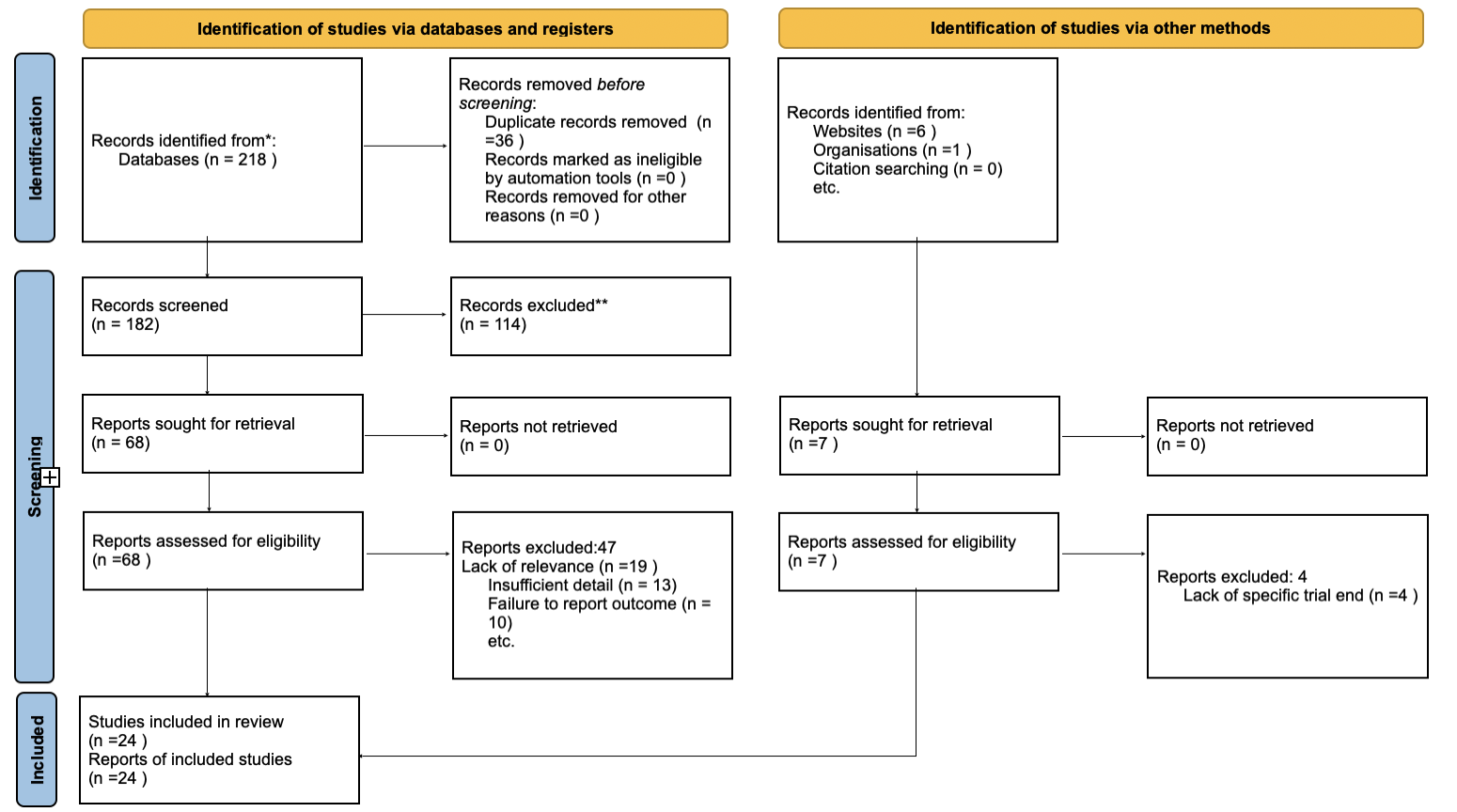
A total of 218 records were found through database searches. After screening, 182 records were reviewed. Then, 68 full-text articles were checked to see if they met the requirements. In the end, 24 studies were included in the review.
Some studies were excluded because they were duplicates, were not related to immunoradiotherapy, did not provide enough information about how the research was done, were not peer-reviewed, or did not include useful information about how the treatments affected the immune system or patients.
Quality Assessment and Risk of Bias
High-quality studies are defined as randomized clinical trials that evaluate drug efficacy and safety. These include studies like the one conducted by Antonia et al. (2017) where patients with stage III non-small cell lung cancer received chemotherapy/radiation therapy plus durvalumab; and combination checkpoint blockage studies that demonstrated synergy in activating an immune response (Twymn-St Victor et al., 2015). Moderate-quality studies include observational studies and translational studies with small sample sizes. Low-quality studies are typically pre-clinical/hypothesis generating mechanistic studies but are included in this analysis for context. All clinical studies were stratified by: trial phase; patient population/cancer type; sample size; primary endpoint; and level of evidence. Because the objective of mechanistic studies/preclinical studies is different than clinical trials, they were also analyzed independently.
Bias was assessed across three areas:
• Funding sources;
• Sample selection;
• Reporting transparency.
• Clinical studies with unclear methods/outcome
Studies based on clinical trials were also grouped as per their stage, participant numbers, the kind of cancer they studied, the primary purpose of the study, and degree of evidence. As these studies had different goals, mechanistic/laboratory studies were assessed independently of the studies that evaluated the effectiveness of treatments in humans.
Reviewer Screening Process
One reviewer screened each study independently. Another reviewer then reviewed the studies for validation to confirm consistency between reviewers and reduce the potential for selection bias. Any time there was an inconsistency between reviewers as to whether a particular study included/excluded data based upon the established inclusion/exclusion criteria, it was then evaluated independently by both reviewers.
There was no need for permission to conduct this review because it did not involve the use of people or animals. All material was obtained from published journal references so the requirements for informed consent, Institutional Review Board (IRB) approval, and other confidentiality provisions of the Health Insurance Portability and Accountability Act (HIPAA), etc. do not apply. It should be noted that the researcher’s responsibility includes providing accurate representations of what has already been published, proper citation of the authors of the work reviewed, and not misrepresenting or generalizing the conclusions drawn from those studies.
The purpose of this study was to examine the current body of knowledge regarding immunoradiotherapy. This will allow for the development of a greater understanding of how immunoradiotherapy operates as well as its possible advantages. In addition, areas requiring additional evidence or further investigation were identified.
| Evidence Category | Examples of Included Sources |
| Mechanistic Studies | Twyman-Saint Victor et al., 20155, Schaue et al., 20127, Dovedi et al., 20144 |
| Preclinical Animal Studies | Herrera et al., 20218, Kim et al., 202510, Rodriguez et al., 202411 |
| Phase I/II Clinical Trials | Kang et al., 201612, Hsieh et al., 202313 |
| Randomized Clinical Trials | Antonia et al., 20176, Torres-Saavedra et al., 202414 |
| Biomarker Studies | Huang et al., 202515, Morris et al., 202516 |
| Reviews and Commentaries | Mondini et al., 202017, van Limbergen et al., 201718, Jiang et al., 20219 |
Thematic Findings
Evidence from Mechanisms: The Tumor Microenvironment
Traditional views of radiotherapy and immunotherapy have emphasized their roles as separate strategies to treat cancer. Radiotherapy has generally been seen as a local method for killing malignant cells whereas systemic therapies using immunotherapy have sought to enhance the host’s immune response against the tumor. Research conducted in recent years, however, has demonstrated that radiation can significantly influence an individual’s ability to respond to immunotherapies through various mechanisms including enhancing responsiveness to these therapies and enabling the host to recognize the tumor more effectively.
In fact, several reviewers now consider radiotherapy to represent a biological “after-treatment” for improving the effectiveness of immunotherapeutic agents — particularly immune checkpoint inhibitors16,12. Studies suggest that radiation-induced apoptosis of tumor cells is usually associated with an active immune response, releasing tumor-associated antigens, danger signals (danger-associated molecular patterns/DAMPs), and pro-inflammatory cytokines that stimulate dendritic cell maturation/activation and T-cell priming7,17. These mechanistic pathways served as the foundation for the application of radiotherapy and immunotherapy together in both preclinical and clinical settings in an integrated manner20,10. Therefore, radiotherapy serves to alter the tumor microenvironment in a way that enhances susceptibility to immune-mediated attack.
A variety of studies have demonstrated that exposure of tumors to ionizing radiation results in upregulation of antigens presented via MHC-I on tumor cells, enhancing the recognition of these antigens by lymphocytes18. Cytotoxic T lymphocytes (CTLs) are one of the key types of immune effector cells that would most likely benefit from improved antigen processing/presentation since increased expression of MHC-I provides a means by which CTLs can more easily recognize tumor-specific antigens. Radiation also induces changes within the vasculature of tumors leading to normalization and facilitating immune cell entry into tumor tissue19.
One significant mechanism linking radiation to immune activation is the cGAS-STING pathway. Ionizing radiation-induced DNA damage generates cytosolic double-stranded DNA fragments that serve as ligands activating cGAS-STING signaling. Activation of cGAS-STING leads to the induction of Type I IFNs that subsequently activate dendritic cells, enhance cross-presented antigens and lead to priming of CD8+ T-cells. These actions may convert some previously “cold,” non-immunogenic tumors into ones that are more amenable to immune surveillance. However, there is evidence suggesting that very high dose fractions (>20 Gy) of radiation may induce TREX1, an enzyme capable of degrading cytoplasmic DNA thus inhibiting cGAS-STING activated innate immunity. Therefore, the immune-modulating effects of radiation seem to depend upon factors including treatment delivery strategy and/or dose/fractionation schedules21.
Radiation treatment has been shown to help the effectiveness of various types of cancer immunotherapies. However, research indicates that radiation can potentially interfere with the development of cancer immunity by increasing the expression of PD-L1. Once PD-L1 is expressed at high levels by tumors and immune cells, the immune system loses its ability to recognize and eliminate cancerous cells. Regulatory T-cells (Tregs) and myeloid-derived suppressor cells are also expanded due to radiation exposure22. In addition, radiation creates a form of lymphopenia and vascular damage that interferes with the generation of anti-tumor immunity. Therefore, these studies show that radiation plays two conflicting roles; it stimulates the immune system when used in conjunction with immunotherapy and it suppresses the immune system12.
| Immune-Stimulating Effects | Immune-Suppressive Effects |
| Increased antigen presentation | PD-L1 upregulation |
| Dendritic cell activation | Regulatory T-cell recruitment |
| CD8+ T-cell priming | Myeloid-derived suppressor cell expansion |
| Increased interferon signaling | Lymphopenia |
| Enhanced immune infiltration | Antigen-loss escape |
| Vascular normalization | Potential vascular damage |
Preclinical Animal Evidence
The preclinical studies performed on animals offer great optimism regarding the future success of combining radiation therapy with immunotherapy. Many mouse studies have illustrated that the use of both local radiation and a checkpoint inhibitor provide improved local control of tumors and increased long-term survival rates compared to the single modalities. Additionally, all of these studies have illustrated that the amount of immune activation was significantly greater while the level of suppression of the immune system was lower than that seen with the single modalities23,24. All of these studies have demonstrated increased populations of CD8+ T cells and decreased populations of immunosuppressive cells within the tumor microenvironment. These studies illustrate that radiation may create a biological environment where immunotherapy may be effective.
It is critical to determine the optimal amount of radiation to administer, how the radiation should be fractioned among treatments, and how such treatments will impact the immune response of the tumor. Some data suggest that moderate hypofractionation may produce an optimal balance between generating an immune response and inducing minimal tissue damage and immune exhaustion7.
Important to note many of the findings discussed above were produced utilizing animal models; therefore, the best method to utilize in terms of radiation dose and schedule for treating human patients remains unknown.
Radiation dose schedules and their effectiveness depend upon many factors, including cancer-type, immune landscape, sequence of treatments, and the intended clinical outcome; therefore additional clinical-trials would need to be conducted to provide any meaningful recommendations regarding radiation schedules.
| Study | Tumor Model | Radiation Dose/Fractionation | Immune Readout | Main Finding |
| Dovedi et al., 20144 | Preclinical solid tumor model (murine carcinoma) | Fractionated radiotherapy (clinically relevant multi-dose schedule) | PD-L1 expression, tumor growth delay, T-cell activation | Radiotherapy induces adaptive immune resistance via PD-L1 upregulation, which can be reversed with concurrent PD-L1 blockade |
| Twyman-Saint Victor et al., 20155 | B16 melanoma murine model | Localized radiation (single or fractionated tumor-directed RT) | CD8+ T-cell infiltration, systemic immune response, tumor regression (abscopal effect) | Radiation combined with dual checkpoint blockade activates non-redundant immune pathways and enhances systemic tumor control |
| Schaue et al., 20127 | Preclinical tumor models (various murine systems) | Fractionated radiation (low to moderate doses over multiple sessions) | T-cell response balance (effector vs regulatory T-cells), tumor immunogenicity | Fractionated radiation optimizes anti-tumor immunity by enhancing effector T-cell responses while reducing immunosuppression |
| Herrera et al., 20218 | Murine “cold tumor” model (immune-desert tumors) | Low-dose radiotherapy (localized tumor RT) | T-cell infiltration, immune activation markers, tumor microenvironment remodeling | Low-dose radiotherapy converts immune-resistant “cold” tumors into immunologically active tumors, improving response to immunotherapy |
| Antonia et al., 20176 | Stage III non-small cell lung cancer (human clinical trial) | Chemoradiotherapy followed by durvalumab (post-RT immunotherapy) | Progression-free survival, overall survival, and PD-L1-related response outcomes | Durvalumab after chemoradiotherapy significantly improves survival outcomes in stage III NSCLC patients |
| Antonia et al., 20176 | Clinical trial + preclinical translational models (multiple cancers) | External beam radiotherapy combined with immunotherapy (varied dosing across trials) | Clinical response rates, immune activation, tumor control outcomes | A combination of radiotherapy and immunotherapy shows promising synergistic effects in ongoing clinical trials, with improved tumor response signals |
| Radiation Approach | Potential Immune Advantages | Potential Immune Risks |
| Conventional Fractionation | Sustained immune stimulation | Lymphocyte depletion |
| Hypofractionation | Enhanced antigen release and T-cell activation | Toxicity varies by tumor type |
| Stereotactic Body Radiotherapy (SBRT) | Strong local immune activation | Potential tissue toxicity |
| Very High Single-Dose Radiation | Rapid tumor destruction | TREX1 induction and reduced cGAS-STING signaling |
Current evidence does not support a universally optimal radiation schedule. Instead, the effectiveness of a given fractionation strategy likely depends on tumor type, immune landscape, treatment sequencing, and desired clinical endpoint. Additional clinical trials are required before definitive recommendations can be made.
Clinical Trial Evidence
While laboratory experiments demonstrate the potential of combining radiotherapy and immunotherapy, clinical trials must determine whether these results translate into benefits for patients. Positive results were seen in early trials where both radiotherapy and immunotherapy were administered, leading to the investigation of this modality in larger populations of patients. However, the effectiveness of combining these modalities has varied among studies based on the specific cancer being treated (cancer-type), the treatment plan utilized by the treating physician(s) and the individual patient’s characteristics.
Perhaps one of the most significant clinical trials demonstrating the value of combining radiotherapy and immunotherapy in oncology is the PACIFIC Trial6. The PACIFIC Trial investigated whether or not the administration of durvalumab after completion of concurrent chemoradiotherapy could enhance immune activation and improve survival rates in patients diagnosed with unresectable stage III non-small cell lung cancer.
Results from the first analysis of data indicated that patients receiving durvalumab after completing chemotherapy and radiation experienced improved progression-free survival compared to those patients not receiving durvalumab after chemotherapy and radiation6. Subsequent analyses demonstrated that patients receiving durvalumab after chemotherapy and radiation experienced improved overall survival as well. These results provided further evidence that the utilization of immunotherapies immediately following chemotherapy and radiation could result in improved outcomes for patients diagnosed with unresectable stage III NSCLC. Importantly, however, the PACIFIC Trial did not investigate radiotherapy as a universal immune activator across all cancer types. Because chemotherapy was administered in conjunction with radiation prior to the administration of durvalumab, the findings of the PACIFIC Trial should be viewed as providing evidence to support the use of consolidation immunotherapy immediately after concurrent chemoradiotherapy, rather than as evidence to support the contention that radiation alone enhances systemic immune activity.
In addition to the PACIFIC Trial, several other clinical trials investigating the combination of radiation therapy with immune checkpoint inhibitors have produced encouraging results25,13. Some clinical trials have demonstrated increased numbers of responders to the treatment, prolonged disease-free intervals and prolonged time-to-disease-progression. However, these findings are not generalizable to all cancer-types and have limitations due to differences in treatment regimens, small sample-sizes and/or lack of long term follow up14.
Data indicate that the combination of radiotherapy and immunotherapy may result in improved outcomes for certain subpopulations of cancer patients. Larger-scale clinical trials are necessary to elucidate which subpopulations are most likely to derive benefit from this treatment modality.
| Trial | Cancer Type | Trial Phase | Sample Size | Primary Endpoint | Key Findings |
| PACIFIC (Antonia et al., 2017)6 | Stage III NSCLC | Phase III | 713 patients | Progression-Free Survival | Improved PFS after durvalumab following chemoradiotherapy |
| NRG-HN004 (Torres-Saavedra et al., 2024)14 | Locoregionally advanced head and neck cancer | Phase II/III | ~Noted multicenter randomized cohort | Safety and treatment efficacy in cisplatin-ineligible patients | Radiotherapy combined with cetuximab or durvalumab provided a viable alternative treatment with clinical response signals |
| Kang et al., 2016 (JITC clinical trials report)12 | Multiple solid tumors (trial landscape analysis) | Phase I/II | Variable across included trials | Safety, immune response, tumor control | Early clinical trials show synergistic potential between radiotherapy and immune checkpoint inhibitors |
| Hsieh et al., 202313 | Non-small cell lung cancer | Phase II (reviewed clinical application context) | Not specified (review-based clinical synthesis) | Treatment response and immunotherapy synergy | Radiotherapy combined with immunotherapy enhances tumor control and immune activation in NSCLC |
| ASTRO limited-stage SCLC study (ASTRO, 2024)26 | Limited-stage small cell lung cancer | Phase II/III (clinical guideline-supported trial data) | Multi-institutional cohort | Timing of chemoradiation + immunotherapy | The timing of immunotherapy with chemoradiation significantly influences survival outcomes and treatment efficacy |
The Abscopal Effect
An intriguing phenomenon observed when radiotherapy is employed is known as the abscopal effect. The abscopal effect occurs when a tumor located outside of the area that has been exposed to radiotherapy experiences regression. Investigators hypothesize that the abscopal effect may occur due to an immune-mediated response against distant tumors2. Historically, most descriptions of the abscopal effect have arisen from case-report studies and small scale investigations. Due to the infrequent occurrence of the abscopal effect, investigators have struggled to develop a comprehensive understanding of its mechanism.
Recent investigations have suggested that radiation-induced release of antigens and activation of T-cells within the irradiated tumor environment may facilitate immune responses against metastatic lesions present throughout the body²².
Investigations utilizing combinations of radiotherapy and immunotherapy may lead to increased incidence rates of abscopal effects. Some studies suggest that employing radiotherapy in combination with immunotherapy may increase the likelihood of an abscopal response. However, this phenomenon remains relatively rare in clinical practice, and investigators remain uncertain as to how frequently it occurs. Most documented instances of the abscopal effect have originated from case-study reports or retrospective reviews examining historical cases rather than prospective clinical trials. As such, although the abscopal effect presents a theoretically appealing concept, investigators continue to experience difficulty in defining it clearly and establishing definitively whether it will occur with each combination treatment regimen.
Toxicity, Resistance, and Biomarkers
As exciting as the results are for immunoradiotherapy (the combination of radiotherapy and immunotherapy), there are still several obstacles that need to be overcome before this new approach is widely adopted. First and foremost is toxicity from treatment. Because both immunotherapy and radiotherapy stimulate immune responses, combining these therapies could lead to excessive inflammation, which can lead to additional side effects (e.g., pneumonitis, dermatitis, colitis). In addition to toxicity concerns, another issue is drug resistance)6. Radiation therapy can help enhance immune system activation by increasing the presentation of antigens and subsequent immune recognition. However, the body can respond to such stimulation with many different adaptive mechanisms22,12. The literature contains reports of increased expression of programmed death-ligand-1 (PD-L1) on tumor cells post-radiation; recruitment of regulatory T cells; expansion of myeloid-derived suppressor cells; loss of tumor antigens after radiation; etc. All of these adaptive mechanisms may eventually result in reduced efficacy over time due to continued proliferation of residual tumor cells and/or progression of the disease despite an initial positive response27.
| Biomarker | Potential Clinical Utility | Current Limitations |
| PD-L1 Expression | Predict response to checkpoint inhibitors | Variable predictive value |
| Tumor Mutational Burden | Estimate neoantigen availability | Not predictive in all cancers |
| CD8+ T-cell Infiltration | Assess immune activity | Tumor heterogeneity |
| Gene Expression Signatures | Characterize immune environment | Lack of standardization |
| Circulating Biomarkers | Noninvasive monitoring | Validation required |
Research is ongoing to identify new biomarkers that could help predict whether or not a particular type of cancer would be responsive to treatment. To date, however, no single biomarker has been identified that accurately predicts the success of treatment across all types of cancer. The discovery of such biomarkers could improve patient selection and facilitate optimization of treatment sequencing and radiation dosing. Until such biomarkers are validated, identifying which patients are most likely to benefit from immunoradiotherapy continues to pose challenges.
Evidence Hierarchy and Interpretation of Findings
One of the primary limitations of the existing body of research on immunoradiotherapy is variability in study design and thus in study quality. As a consequence, while a mechanistic study, an animal model, a case report, an early phase clinical trial and a randomized clinical trial provide various forms of evidence and thus cannot be evaluated equivalently, the present review will evaluate mechanistic conclusions based upon pre-clinical studies and human clinical trial data supporting conclusions related to survival outcomes and clinical efficacy. Delineating these two forms of evidence is essential since promising biological mechanisms do not necessarily translate into clinical benefit.
| Evidence Category | Contribution to Current Understanding |
| Mechanistic Studies | Explain biological pathways and immune interactions |
| Preclinical Animal Studies | Demonstrate proof-of-concept efficacy |
| Phase I/II Clinical Trials | Evaluate safety and feasibility |
| Randomized Clinical Trials | Assess efficacy and survival outcomes |
| Biomarker Studies | Identify predictors of response |
| Reviews/Commentaries | Synthesize existing evidence |
In summary, the current literature supports continued evaluation of combined radioimmunotherapy. Some studies have demonstrated favorable outcomes using in vitro experiments, animal studies, and clinical trials; however, numerous questions remain unanswered including optimal timing for administration of each modality, appropriate dose of radiation, optimal patient selection, potential toxicities, etc., as well as duration of therapeutic benefit.
Discussion
While the mechanisms behind how radiation generates an anti-tumor response are being studied, one thing is evident: radiation has potential roles beyond local tumor control, and it appears to be able to influence or modulate the immune system’s response to cancer28. The evidence suggests that when used alone (without other treatments), radiation therapy does not produce a long-term anti-cancer effect, but when combined with other forms of cancer treatment such as chemotherapy or surgery, it often produces improved survival rates. In fact, some types of cancer are cured with combinations of therapies3. This finding led researchers to investigate whether radiation might work synergistically with newer cancer treatments that are designed to harness the body’s own defenses against cancer (immunotherapies)4,5. Specifically, they investigated if radiation could generate or augment a type of immune reaction known as an “adaptive” anti-tumor response. An adaptive anti-tumor response occurs when cancer-specific T-cells develop from naive precursors, recognize their target tumor cells, and kill them. This process involves two basic steps6. First, T-cells (a type of white blood cell) need to be activated and then educated about what their target looks like so that they do not mistakenly attack normal tissues. Second, once educated and activated, these T-cells need to traffic into the tumor where they can find and destroy the target cells25. Both steps require signals or stimuli. A number of factors could potentially impact the effects of RT on local and regional lymph nodes. For example, radiation-induced DNA breaks in the tumor cells could potentially trigger cGAS-STING-mediated IFN-β release and thus enhance the tumor’s ability to stimulate anti-tumor immune activity. However, if there was excessive damage caused by the radiation (such as DNA fragmentation), TREX1 levels could rise, leading to reduced cGAS-STING-mediated immune stimulation. Therefore, the timing of treatments and the total dose administered during each treatment session could have a significant impact on how effectively the cancer stimulates the immune system to fight against it7,17,18.
RT combined with IT has been shown to improve both tumor control and survival in animal models of cancer in numerous preclinical studies. Many of these studies have found that the addition of IT increases CD8+ T cell infiltration and decreases numbers of suppressive immune cells within the tumor microenvironment. Despite providing solid mechanistic evidence in favor of combining RT with IT, caution must be taken when translating results from animal models to human clinical outcomes. This is because there are likely to be biologic differences between model systems and human tumors which would limit direct translation. While there are limited clinical studies evaluating RT/IT combinations, they continue to show promise in improving patient outcomes in certain disease settings. For instance, the PACIFIC trial provided one of the largest bodies of evidence demonstrating improved PFS and OS when consolidative durvalumab was given post-concurrent CRT for patients with unresectable Stage III NSCLC. The use of RT as an “immune primer”across all cancer types cannot be inferred based upon this single trial since the PACIFIC trial examined whether consolidation durvalumab after CRT could provide additional benefits to those achieved with CRT alone. Similarly, while many clinical studies have also demonstrated positive outcomes using RT/IT combinations, the effectiveness of these therapies varies widely depending upon the specific cancer type treated, treatment protocols used, and patient characteristics. One of the most compelling examples demonstrating that RT can modulate systemic immunity involves the phenomenon known as the abscopal effect. However, despite its potential as a rationale for using RT as part of IT combinations, evidence supports that abscopal responses occur infrequently and are generally reported as individual cases or small group analyses. Combining RT with IT may increase the likelihood of observing abscopal responses; however, at present the available evidence does not allow us to conclude that abscopal responses occur reliably or dependably. There are several limitations associated with this review. Because it is a narrative literature review, the quality and availability of previous publications were utilized to identify relevant studies. The variability in study designs, patient populations, treatment protocols, and end-points makes comparisons among studies difficult.
In addition, many promising findings identified in this review originated from pre-clinical studies which require subsequent validation prior to being tested in larger-scale clinical trials. The need for future prospective research utilizing well-designed randomized trials emphasizes the importance of continuing to investigate and optimize treatment protocols in order to maximize beneficial effects on cancer-related outcomes. Future research should seek to identify optimal treatment schedules, validate predictive biomarkers, clarify patient selection criteria, and understand the underlying biologic mechanisms that govern treatment responses.
Conclusion
The purpose of the literature review was to support the argument that when used together, there is a considerable amount of potential for both radiotherapy and immunotherapy to positively influence the outcome of cancer. The reason for this is because radiotherapy has been shown to enhance immune activation and reduce immune resistance, which would result in more long-lasting immunotherapy results29. Evidence from preclinical experiments and clinical trials show that combining radiotherapy with immunotherapy produces consistent evidence of enhanced anti-tumor effects and survival in specific subpopulations of patients; however, it is also evident that radioimmunotherapy does not produce equivalent benefit in all patients or all types of tumors, and therefore benefits significantly depend upon several factors such as how the radiation is delivered, what type of immunotherapy is being administered, the inherent biological characteristics of the tumor cells, and the host’s immune environment. Although the evidence shows that using radiotherapy in combination with immunotherapy has great promise in terms of producing a positive therapeutic effect, it is equally apparent that identifying the appropriate treatment parameters for each individual patient and defining the best candidates for use of this combined modality is critical to successful implementation.
The focus of future research must be to investigate the optimal radiation dose and fractionation schedule that will allow us to maximize our ability to activate the patient’s immune system as opposed to simply maximizing the amount of tumor cells we kill. In addition, clinical trials that incorporate immune biomarkers will need to be developed to identify which patients are likely to respond best to treatment and how to tailor each patient’s treatment protocol based upon their individual molecular characteristics. The role of radiotherapy (i.e., the timing and sequence) relative to immunotherapy also needs to be explored further; in particular, the goal of such research should be to minimize toxicity while maintaining effectiveness. Further, future combination studies should explore new immunotherapeutic strategies such as using vaccines or targeted therapies that can be used in conjunction with RIT. Ultimately, before these approaches can become widely accepted standards in oncology, they will require development of standardized treatment protocols as well as methodologies for continued assessment of toxicity throughout the duration of therapy.
Acknowledgements
I would like to express my sincere gratitude to Dr. Kate Wilwohl for her invaluable guidance and insights into the synergistic mechanisms of radiotherapy and immunotherapy. Her expertise helped shape the direction of this research. I also wish to thank the faculty of Gifted Gabber for providing the resources necessary to conduct this literature review. Special thanks to Jan Nesvia Rosete for her assistance in proofreading and technical support.
References
- H. D. Kogelnik. The history and evolution of radiotherapy and radiation oncology in Austria. International Journal of Radiation Oncology Biology Physics. Vol. 35, pg. 219–226, 1996. [↩]
- National Cancer Institute. Investigating the abscopal effect as a treatment for cancer. https://www.cancer.gov/news-events/cancer-currents-blog/2020/cancer-abscopal-effect-radiation-immunotherapy, 2020. [↩] [↩]
- Cancer Research Institute. Immunotherapy facts. https://www.cancerresearch.org/immunotherapy-facts, 2020. [↩] [↩]
- S. J. Dovedi, A. L. Adlard, G. Lipowska-Bhalla, et al. Acquired resistance to fractionated radiotherapy can be overcome by concurrent PD-L1 blockade. Cancer Research. Vol. 74, pg. 5458–5468, 2014. [↩] [↩] [↩] [↩] [↩]
- C. Twyman-Saint Victor, A. J. Rech, A. Maity, et al. Radiation and dual checkpoint blockade activate non-redundant immune mechanisms in cancer. Nature. Vol. 520, pg. 373–377, 2015. [↩] [↩] [↩] [↩] [↩]
- S. J. Antonia, A. Villegas, D. Daniel, et al. Durvalumab after chemoradiotherapy in stage III non–small-cell lung cancer. New England Journal of Medicine. Vol. 377, pg. 1919–1929, 2017. [↩] [↩] [↩] [↩] [↩] [↩] [↩] [↩] [↩] [↩]
- D. Schaue, J. A. Ratikan, K. S. Iwamoto, W. H. McBride. Maximizing tumor immunity with fractionated radiation. International Journal of Radiation Oncology Biology Physics. Vol. 83, pg. 1306–1310, 2012. [↩] [↩] [↩] [↩] [↩] [↩]
- F. G. Herrera, C. Ronet, M. Ochoa de Olza, et al. Low-dose radiotherapy reverses tumor immune desertification and resistance to immunotherapy. Cancer Discovery. Vol. 12, pg. 108–133, 2021. [↩] [↩] [↩]
- D. J. Robinson, H. B. Barsoumian, A. P. Nalin, et al. Real-world guide for delivering immunotherapy with radiation therapy. Practical Radiation Oncology. Year 2025, DOI: 10.1016/j.prro.2025.06.013. [↩] [↩]
- W. Kim, H. Kim, W. I. Jang, M. S. Kim, S. H. Bae. Radiotherapy combined with immune checkpoint inhibitor on murine fibrosarcoma and a narrative review of clinical studies. Current Issues in Molecular Biology. Vol. 48, pg. 20, 2025. [↩] [↩]
- C. Rodriguez, S. M. Sarrett, J. Sebastiano, et al. Exploring the interplay between radioimmunoconjugates and Fcγ receptors in genetically engineered mouse models of cancer. ACS Pharmacology and Translational Science. Year 2024, DOI: 10.1021/acsptsci.4c00275. [↩]
- J. Kang, S. Demaria, S. Formenti. Current clinical trials testing the combination of immunotherapy with radiotherapy. Journal for ImmunoTherapy of Cancer. Vol. 4, pg. 51, 2016. [↩] [↩] [↩] [↩] [↩]
- K. Hsieh, D. R. Dickstein, J. Runnels, et al. Radiotherapy and immunotherapy in lung cancer. Biomedicines. Vol. 11, pg. 1642, 2023. [↩] [↩] [↩]
- A. Torres-Saavedra, B. Bank, T. Liu, et al. Radiotherapy with cetuximab or durvalumab for locoregionally advanced head and neck cancer in patients with a contraindication to cisplatin (NRG-HN004): an open-label, multicentre, parallel-group, randomised, phase 2/3 trial. Lancet Oncology. Vol. 25, pg. 112–124, 2024. [↩] [↩] [↩]
- J. Huang, W. S. M. E. Theelen, Z. Belcaid, et al. Combination of pembrolizumab and radiotherapy induces systemic antitumor immune responses in immunologically cold non-small cell lung cancer. Nature Cancer. Year 2025, DOI: 10.1038/s43018-025-01018-w. [↩]
- Z. S. Morris, S. Demaria, A. M. Monjazeb, et al. Proceedings of the National Cancer Institute workshop on combining immunotherapy with radiotherapy: challenges and opportunities for clinical translation. Lancet Oncology. Vol. 26, pg. e152–e170, 2025. [↩] [↩]
- M. Mondini, A. Levy, L. Meziani, F. Milliat, E. Deutsch. Radiotherapy–immunotherapy combinations – perspectives and challenges. Molecular Oncology. Vol. 14, pg. 1529–1537, 2020. [↩] [↩] [↩]
- E. J. van Limbergen, D. De Ruysscher, V. M. Pimentel, et al. Combining radiotherapy with immunotherapy: the past, the present and the future. British Journal of Radiology. Vol. 90, pg. 20170157, 2017. [↩] [↩] [↩]
- J. Jiang, H. Li, Q. Ma, et al. Synergies between radiotherapy and immunotherapy: a systematic review from mechanism to clinical application. Frontiers in Immunology. Vol. 16, pg. 1554499, 2025. [↩] [↩]
- S. Yu, Y. Wang, P. He, et al. Effective combinations of immunotherapy and radiotherapy for cancer treatment. Frontiers in Oncology. Vol. 12, pg. 809304, 2022. [↩]
- NewYork-Presbyterian. Combination radiation with immunotherapy shows promise against cold breast cancer tumors. https://www.nyp.org/news/combination-radiation-with-immunotherapy-shows-promise-against-cold-breast-cancer-tumors, 2023. [↩]
- V. Voronova, A. Vislobokova, K. Mutig, et al. Combination of immune checkpoint inhibitors with radiation therapy in cancer: a hammer breaking the wall of resistance. Frontiers in Oncology. Vol. 12, pg. 1035884, 2022. [↩] [↩]
- T. R. Cushman, D. Gomez, R. Kumar, et al. Combining radiation plus immunotherapy to improve systemic immune response. Journal of Thoracic Disease. Vol. 10, pg. S468–S479, 2018. [↩]
- F. Fan. Evaluating cancer therapies combining radiotherapy with immunotherapy or inhibitors of the DNA damage response. Proceedings of the American Association for Cancer Research Annual Meeting 2022. Philadelphia, PA, 2022, Abstract nr 5428. [↩]
- S. Theurich, S. I. Rothschild, M. Hoffmann, et al. Local tumor treatment in combination with systemic ipilimumab immunotherapy prolongs overall survival in patients with advanced malignant melanoma. Cancer Immunology Research. Vol. 4, pg. 744–754, 2016. [↩] [↩]
- American Society for Radiation Oncology (ASTRO). Timing matters when adding immunotherapy to chemoradiation for patients with limited-stage small cell lung cancer. https://www.astro.org/news-and-publications/news-and-media-center/news-releases/2024/astro24higgins, 2024. [↩]
- M. P. MacManus, F. Hegi-Johnson. How should we combine radiotherapy and immunotherapy in advanced non-small cell lung cancer? AME Clinical Trials Review. Vol. 2, pg. 6, 2024. [↩]
- Johns Hopkins Medicine. Radiation therapy overcomes immunotherapy resistance in some cancers. https://www.hopkinsmedicine.org/news/newsroom/news-releases/2025/07/radiation-therapy-overcomes-immunotherapy-resistance-in-some-cancers, 2025. [↩]
- Netherlands Cancer Institute. Radiotherapy overcomes immunotherapy resistance in some lung cancers. https://www.nki.nl/news-events/news/radiotherapy-overcomes-immunotherapy-resistance-in-some-lung-cancers, Year not listed. [↩]