
Abstract
Background: Training, instrumental learning, and behavioral control are often described as developing from goal-directed to habitual stimulus-response (S-R). This classical, linear narrative however, neglects the interaction of these systems with a modulatory system that adjusts the habit-goal balance, and the underlying neural processes. This manuscript reviews the evidence for an alternative, interactive account of training, learning, and behavioral control. Focusing on dopaminergic circuits of the dorsomedial and dorsolateral striatum, the narrative describes the computational process that supports the emergence of competing, non-exclusive forms of behavioral control. It further examines the validity of this account in clinical disorders of addiction and obsessive compulsive disorder.
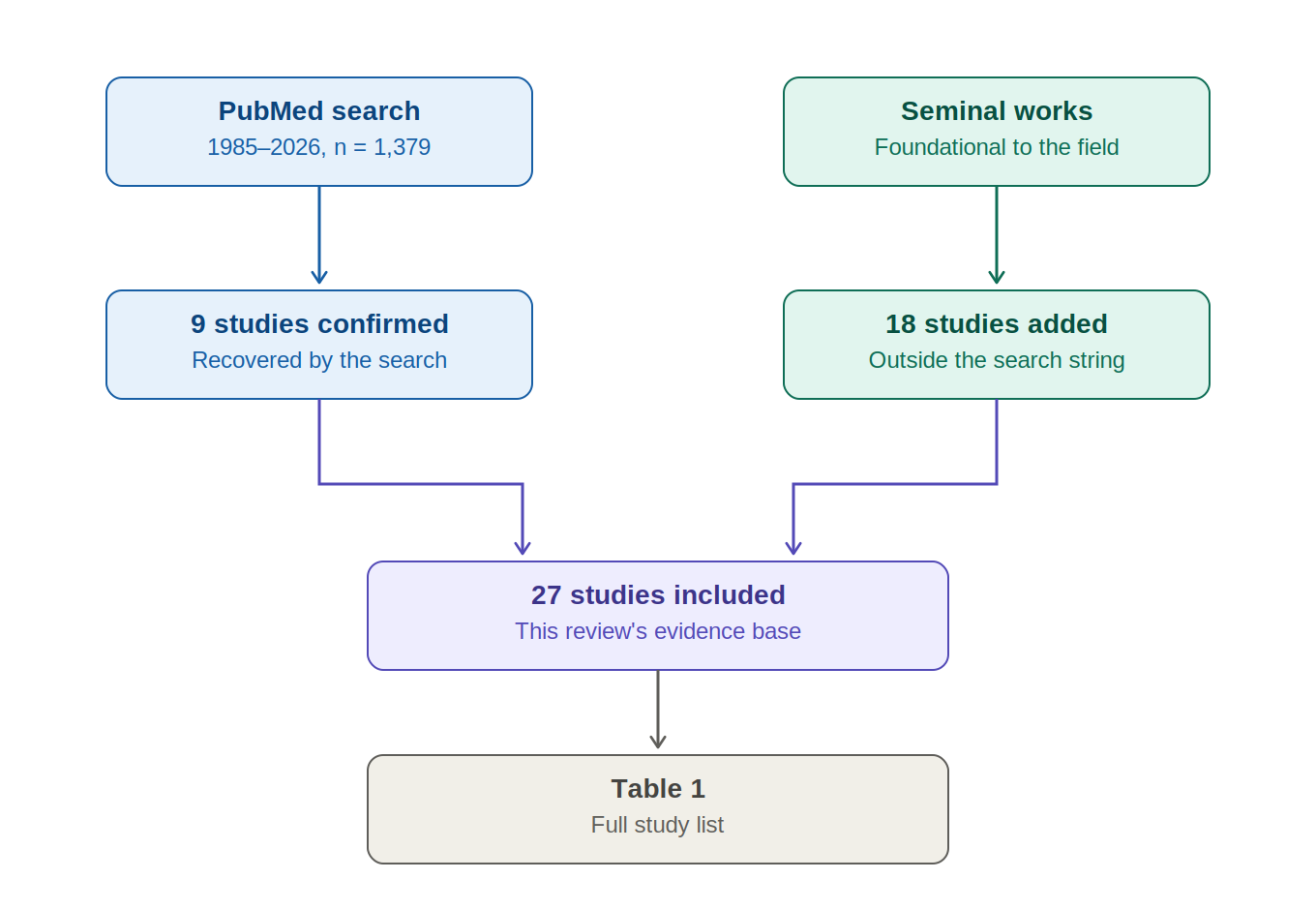
Methods: The review takes a narrative approach built upon 27 studies reporting results of dopamine signaling and habit-goal control balance. The PubMed search (1985-2026) resulted in 1379 hits. Nine of the 27 included studies were also recovered independently by the PubMed search. The other 18 studies are fundamental works, already known in the field and included on that basis. Importantly, an alternative, interactive, account describes behavioral control as a competition, not a sequence. The conceptual shift from sequence to competition is significant, for the mechanism and clinical implications.
Results: The corticostriatal circuits learn together, driven by reward prediction errors signaled by dopaminergic neurons, not shifted from one to the other. Goal-directed behavior relies on dopaminergic input to the dorsomedial striatum and prefrontal cortex, whereas habitual outcome-insensitive responses are served by the dorsolateral striatum. Clinically, this produces observable changes: as drug use becomes compulsive, drug-seeking shifts to being controlled by the dorsolateral striatum. The same is seen in OCD, where patients show a bias toward habitual over goal-directed responding, tied to corticostriatal dysfunction.
Conclusions: The results do not support a sequential shift from goal-directed to habitual control. Both systems are governed by dopaminergic signaling through prediction error encoding and receptor-specific plasticity, not one system replacing the other. The end result is diminished behavioral flexibility in SUD and OCD. However, the distinct roles of D1/D2 receptors are still unclear, which will require longitudinal, receptor-specific PET and pharmacological studies to conclude.
Keywords: dopamine, habit formation, goal-directed behavior, corticostriatal circuits, reward prediction error, dorsomedial striatum, substance use disorder, obsessive-compulsive disorder, D1/D2 receptors
Introduction
Background and Context
Habits are a defining characteristic across many species, ranging from routine actions to compulsion, and can shape a large part of daily behavior. Scientifically, habits are defined as automatic behaviors carried out largely regardless of outcome value. Goal-directed actions use the same underlying circuits, but compete for control rather than operating independently. How the brain differentiates the two mechanisms is critical for understanding learning, decision-making, and many psychiatric disorders.
Dopamine is a key factor driving that distinction and travels mainly through the mesolimbic and nigrostriatal pathways. In those areas, reward prediction error, the difference between expected outcome and actual outcome, strengthens the connections between cues, actions, and outcomes.1 Its reach into learning, reinforcement, and action selection is broad enough to identify dopamine as the central focus in research on both habitual and goal-directed control. This review specifically asks how dopamine coordinates activity across goal-directed and habitual circuits concurrently rather than sequentially.
Problem Statement and Rationale
How the brain selects between goal-directed and habitual control still lacks clarity. Early accounts of the process described it as a successive transition where extended training shifts control from prefrontal goal-directed circuits to dorsolateral striatal habitual circuits.2 Later research tends to disagree, finding that both systems remain active throughout learning and compete rather than replace one another.3,4 Until lesion studies offered an answer, how dopaminergic signaling governed the competition remained unclear. Reducing nigrostriatal dopamine pathways prevented the transition to outcome-insensitive, habitual reactions after training, demonstrating that dopamine is needed for habit formation.5
Significance and Purpose
Dopamine lies at the center of the disruption of the balance between goal-directed and habitual control, often seen in several psychiatric conditions. Substance use disorder and obsessive-compulsive disorder both show an overreliance on stimulus-response circuits in the dorsal striatum through persistent outcome-insensitive behaviors.2,6 Explaining and understanding the mechanism can facilitate new therapeutic approaches. The clinical relevance expands to human models from animal ones. As habitual behavior develops, neuroimaging confirms a shift towards posterior dorsolateral striatal activation.7 Reduced striatal D2 receptor availability corresponds with the imbalance seen in substance use disorder as demonstrated in PET research.8
Objectives
This review asks the question: how does dopamine signaling shape the balance between goal-directed and habitual behavioral control? It is organized to first discuss the neural mechanisms behind each system before analysing the causal and correlational evidence linking dopamine to learning. Following that is an account of how dopamine governs the competition between the two circuits and the clinical meaning of that competition.
Scope and Limitations
The review focuses on peer-reviewed studies that measure or manipulate dopaminergic signaling in the context of instrumental learning. Studies that examine only Pavlovian conditioning without instrumental conditioning elements are mentioned only when relevant. The review does not cover dopaminergic contributions to working memory, motor control, or reward valuation outside the context of action selection. Although direct mapping between rodent and primate striatal regions has limitations, cross-species comparisons are addressed where corresponding circuits have been identified.
Theoretical Framework
This review is embedded in the dual-system theories of behavioral control, which separate goal-directed systems encoding action-outcome conditions from habitual systems encoding stimulus-response connections.3 In this framework, dopamine functions as a reinforcement signal that regulates plasticity in both systems through reward prediction error encoding.1 The ventral-to-dorsal striatal spiral model suggested by Haber and colleagues provides the anatomical basis to understand how reinforcement signaling disperses across corticostriatal loops.9
The review mentions three terms to be defined. Parallel operation signifies both systems are concurrently available, not that one replaces the other. Competition refers to the continuous process by which the influence of each system shifts, without switching either off. Dynamic interaction refers to how that balance shifts with context and training. Human evidence for this framework originates from structural connectivity studies showing that individual variation in corticostriatal white-matter predicts the balance between habitual and goal-directed control, which supports the view that both systems are anatomically separable within a single individual instead of sequential stages.10
Methodology Overview
The review contains two types of evidence which extend to three methods. In animal work, fast-scan voltammetry and fiber photometry detect electrophysiological and neurochemical activity directly. Lesion and pharmacological studies work using instrumental conditioning and outcome-devaluation tasks to test whether specific circuits or receptors are necessary for habitual or goal-directed control. In human studies, fMRI and PET scans with dopamine-sensitive radioligands extend the evidence to cover what the animal studies cannot reach. The claims in this review are connected to the underlying methods, with correlational and causal evidence kept separate throughout.
Methods
Search Strategy
The review was built around 27 core studies selected for direct significance to dopaminergic signaling and the balance between habitual and goal-directed control. A PubMed search was conducted covering peer-reviewed publications from 1985 to 2026 to verify the extent to which the selection was independently recoverable through a specific search. It combined dopamine-related and clinical terms (dopamine, dopaminergic, dopamine signaling, substance use disorder, addiction, obsessive-compulsive disorder, OCD, compulsivity), behavioral terms (habit, habit formation, goal-directed, goal-directed action, instrumental), and circuit terms (striatum, dorsolateral striatum, dorsomedial striatum, prediction error, basal ganglia, corticostriatal, orbitofrontal, nucleus accumbens), joined with AND across groups and OR within each. The search returned 1,379 results and recovered nine of the 27 studies. The remaining 18 foundational works were added based on their importance in the field rather than through the search itself.
Inclusion Criteria
Each of the 27 included studies met one of two criteria: measuring or manipulating dopaminergic signaling through methods such as electrophysiology, voltammetry, fiber photometry, pharmacology, optogenetics, lesion methods, and human neuroimaging using fMRI or PET. The other criterion was clinical with studies targeting substance use disorder or obsessive-compulsive disorder, where corticostriatal dopaminergic dysregulation plays a direct role.
Data Extraction
All studies were monitored identically, noting authors and year, species and sample details, the experimental paradigm used, the specific dopaminergic technique, which striatal region was targeted, the behavioral outcome measured, and how the findings involved goal-directed or habitual control. Table 1 organizes all 27 studies by evidence domain and pertinent details.
Synthesis Method
Evidence in this narrative details dopamine’s role in goal-directed control, its role in habitual control, or the circuit-level mechanisms that govern how the two interact. Causal evidence such as optogenetic and chemogenetic circuit manipulations carry the most weight since they demonstrate the strongest causal inference. Lesion and pharmacological studies show the next greatest strength, followed by observational electrophysiological and voltammetry recordings. Human neuroimaging studies carry the least strength due to their correlational nature.
Quality Assessment
Correlational studies were identified as such throughout the text while causal studies were evaluated on the strength and specificity of the causal role. Animal studies were evaluated based on use of validated behavioral procedures, inclusion of appropriate control groups, and use of established neurochemical or electrophysiological techniques. Human neuroimaging studies were evaluated based on sample size, task validity, and whether findings were analyzed within the constraints of their temporal and spatial resolution.
Results
Dopamine Signaling and Goal-Directed Behavioral Control
Midbrain dopaminergic neurons in the substantia nigra pars compacta (SNc) and ventral tegmental area (VTA) encode reward prediction errors. Recordings in non-human primates directly show neurons increasingly firing after an unexpected reward while pausing at the lack of the expected reward.1 Across repeated trials, phasic firing does not stay bound to the reward itself, but rather shifts earlier, eventually fixating onto the first cue that reliably predicts the reward. Tonic dopamine levels, in addition to phasic signaling, shape motivational vigor and behavioral activation. VTA and SNc dopaminergic subpopulations further complicate the mechanism, differing in projection target, receptor engagement, and functional role.11
Goal-directed behavior iterates through circuits that track action-outcome relationships. Rodents heavily rely on the dorsomedial striatum working alongside prefrontal cortical regions.4 Primates and humans rely on the caudate nucleus and its associated cortical networks. Cross-species mapping remains entirely approximate, though, and is complicated due to differences in cortical organization, task complexity, and available measurement tools.4
Dopaminergic projections into ventral and medial striatal regions assist animals in learning the action-outcome relationship, keeping behavior fluid to shifts in outcome value. As directly shown in instrumental conditioning studies in rodents and non-human primates, devaluing the outcome or changing the contingency results in the subjects scaling back their response. Human fMRI, though measuring a correlational signal rather than dopamine release, provided an additional angle, identifying ventral striatal activity during outcome evaluation and reward prediction.12 Further complicating the broader perspective through Pavlovian-to-instrumental transfer, these cues can bias goal-directed behavior even without any direct action-outcome information, showing that motivational cues alone can direct action selection.
D1-receptor-mediated plasticity facilitates action in direct-pathways striatal neurons while D2-receptor-mediated plasticity does the opposite by suppressing action in indirect-pathways neurons.13 Dopamine does not function as a single uniform reinforcement signal. Optogenetic works directly demonstrate independently activating direct-pathways and indirect-pathways striatal neurons producing opposite behavioral effects, verifying that D1- and D2-expressing neurons exert separate control over behavior.14
Habitual Behavioral Control
Habitual behavior is a stimulus-response behavior that persists regardless of outcome value. Rodent studies demonstrated this through outcome-devaluation procedures. After training, the reward is reduced in value by linking it with illness or by initiating sensory-specific satiety. The behavior is classified as habitual once responding continues despite devaluation.3
In rodents, habitual behaviors depend on the dorsolateral striatum and goal-directed responding on the dorsomedial striatum. In cross-species matching with humans and primates, the posterior putamen corresponds with the function of rodents’ dorsolateral striatum. As said previously, this correspondence is approximate. Dissimilarities in cortical organization and training duration across species complicate the comparison.4 The circuits do not replace each other and multiple corticostriatal systems remain active and compete for behavioral control, shifting relative control depending on training history and task structure.3,4
The role of dopamine is not as straightforward as directly building habits or encoding stimulus-response associations independently. Dopamine neuron recordings demonstrate prediction-error signaling related to reward expectation rather than habitual behavior expression. Phasic dopamine response shifts from reward delivery to predictive cues immediately after the cues reliably signal reward availability.1 This shift is consistent with reinforcement learning, not a neural marker of habitual control. Habitual behaviors develop from dorsolateral striatal circuit plasticity that are repeatedly engaged during overtrained actions.2,3
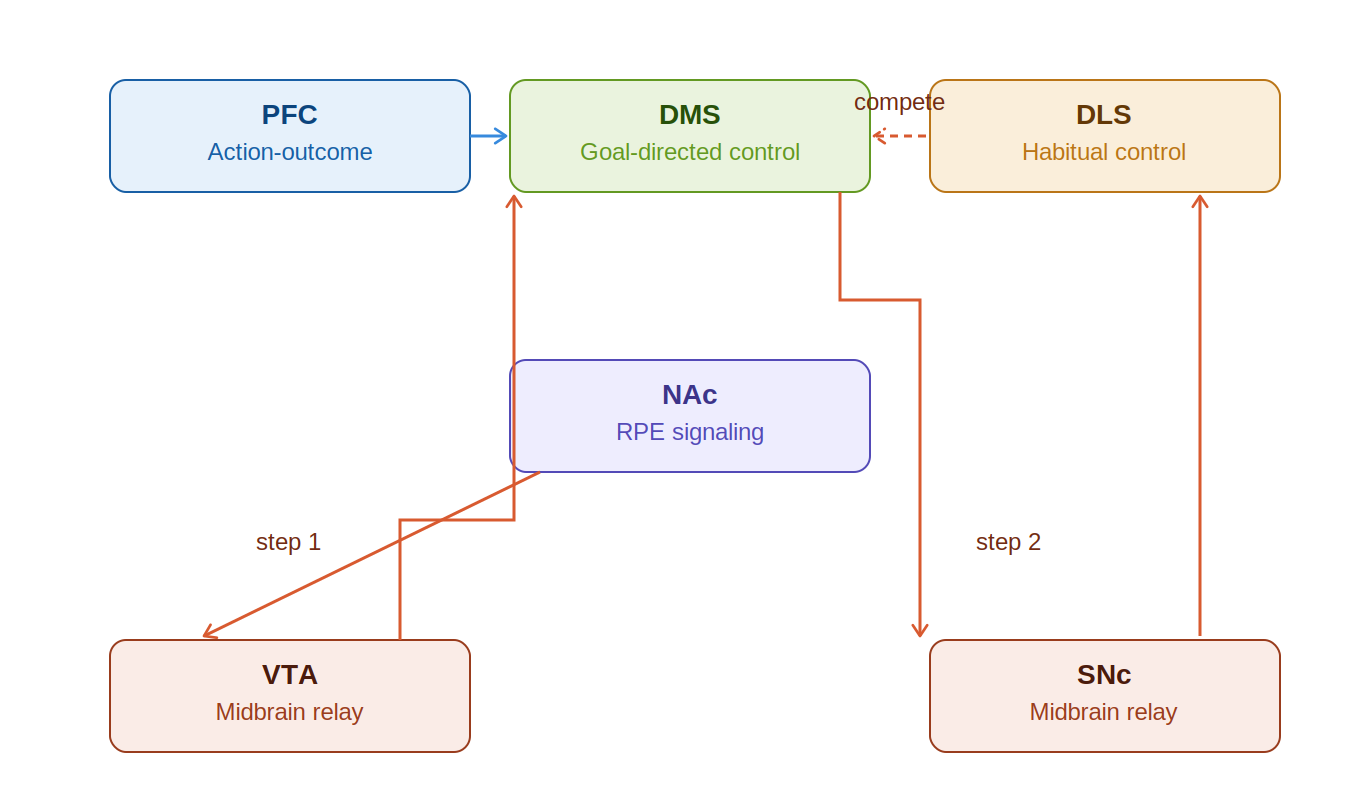
Dopaminergic projections connect ventral striatal regions with increasingly dorsal regions, producing a pathway through which reinforcement signals may influence multiple corticostriatal loops.9 Such findings suggest a mechanism where repeated reinforcement learning may alter plasticity and recruitment within existing striatal sections. They do not indicate the formation of new anatomical circuits or unidirectional shifts from goal-directed to involuntary behavior. Behavioral control reveals the interaction between parallel systems whose relative strength is contingent on context, training duration, and motivational state.
Circuit-Level Mechanisms and Frontostriatal Dynamics
Fast-scan cyclic voltammetry and fiber photometry appear throughout this literature. Fast-scan cyclic voltammetry tracks active dopamine concentrations in fractions of a second. Fiber photometry reads calcium activity across genetically targeted neurons carrying fluorescent indicators. Both are used to study dopaminergic activity in rodents during instrumental learning and allow for researchers to observe changes in dopaminergic signaling as learning progresses.
Voltammetry studies display that dopamine release in the nucleus accumbens follows reward prediction errors early in training. Phasic increases follow an unexpected reward. Once a cue can reliably predict the reward, the phasic response transfers to that cue.15,1 Dorsal striatal circuits, especially the dorsolateral striatum, become increasingly engaged in task performance as training progresses.3 The studies, however, do not show that dopaminergic signaling converts goal-directed action into habits. Instead, they are aligned with dopamine providing reinforcement signals across corticostriatal loops that remain active simultaneously throughout learning. Voltammetry recordings reveal a slowly progressive release of dopamine that varies with the proximity and magnitude of distant goals, indicating that striatal dopamine signaling exceeds brief phasic prediction errors to support sustained motivational drive.16
Tracing studies demonstrate overlapping projections linking the ventral striatum, midbrain dopamine neurons, and more dorsal striatal regions, creating a ventral-to-dorsal spiral organization (see Figure 2).9 This organization suggests that reinforcement signals originating in central circuits operating simultaneously may influence striatal loops, supporting simultaneous contributions from multiple corticostriatal systems.2
Steinberg et al. (2013)17 demonstrated a causal link between dopamine neuron activity and prediction-error-dependent learning using optigenetic stimulation. Gremel and Costa (2013)18 demonstrated that orbitofrontal cortex activity and dorsomedial striatal circuits causally support goal-directed responding, and dorsolateral striatal circuits support habit-expression. Subsequent work determined that deleting endocannabinoid CB1 receptors from orbitofrontal projections to the dorsal striatum prevents the regular shift toward habitual responding, indicating that endocannabinoid signaling within corticostriatal circuits regulates whether behavioral control transitions toward the habit system.19
Integration with Human Neuroimaging
Functional MRI scans detect changes in blood oxygenation associated with neural activity, but cannot measure direct dopamine release. Experiments using this technique with reinforcement-learning tasks have established ventral striatal and medial prefrontal activity as correlative with reward prediction errors during decision-making.12 In tasks comparing goal-directed and habitual responding, activation patterns often shift toward the posterior putamen as behavior becomes decreasingly sensitive to outcome value. These results, however, remain correlational and vary with task design and training duration.
PET studies using radioligands such as [11C]raclopride that bind to dopamine receptors or transporters provide more direct estimates of dopamine function in humans relative to fMRI. The radioligands allow researchers to estimate changes in endogenous dopamine levels because dopamine release competes with the tracer for receptor binding. Studies provide estimates of dopamine release through radioligand displacement, not through definitive dopamine measure. Pessiglione et al. (2006) paired levodopa with fMRI and computational reinforcement-learning task to show dopaminergic signal reinforcing prediction-error-driven learning in humans.20 Each method answers separate questions, failing to provide a complete overview.
Results across imaging studies do not support habitual control sequentially replacing goal-directed control. Ventral striatal and prefrontal activity often remains detectable after extensive practice, implying that goal-directed and stimulus-response processes operate concurrently. Recent human studies have additionally raised questions about whether overtraining paradigms obtained from rodent studies can reliably generate outcome-insensitive responding in humans, suggesting habit formation timelines may differ across species.4
Methodological Considerations
Many animal studies use overtraining paradigms that involve numerous trials under schedules designed to encourage automatic responding. These conditions may not demonstrate how habits naturally develop. Rather, they reliably produce outcome-insensitive behavior. Neural regions tied to habitual responding additionally shift across species. Researchers treat the rodent dorsolateral striatum and posterior putamen in primates and humans as roughly equivalent, although the match is only approximate. Cross-species comparison exposes many limits: different task complexity, different cortical organization, different training duration, and different measurement methods.
Electrophysiology and voltammetry measure rapid variations associated with prediction-error signaling. PET detects slower changes in receptor binding or dopamine concentration. Findings from animal recordings cannot be directly compared to human neuroimaging results as a result of the differences in temporal resolution. Furthermore, different causal methods provide different types and strengths of causal inferences. Lesion studies demonstrate necessity but lack temporal precision. Pharmacological manipulations are reversible but non-specific. Optogenetics provide circuit-specific manipulations with precision. Chemogenetics provides circuit-specific over extended timescales. Causal role claims are placed throughout the review to indicate the strength of the method involved.
Many experiments isolate specific behavioral states using precisely regulated training procedures. However, real behavior involves simultaneous contributions from multiple learning systems, including Pavlovian and instrumental processes. Understanding the interaction across different motivational and environmental conditions remains unresolved.
Synthesis
Dopaminergic prediction-error signals are consistent with reinforcement learning across multiple corticostriatal circuits. Electrophysiological recordings in non-human primates show that dopamine neurons increase firing immediately after unexpected reward delivery and shift their response to reliable predictive cues. 1 Rodent instrumental-learning experiments show that behavioral sensitivity to outcome value depends on the dorsomedial striatum and outcome-insensitive responding after extended training depends on the dorsolateral striatum, both confirmed by lesion studies showing that damage to either regions selectively impairs their respective form of behavioral control.21 These results demonstrate that separate striatal circuits have their separate contributions, rather than the dorsal striatum operating as a single system.
Outcome-insensitive responding does not imply that behavior becomes fixed or permanently automatic. Behavioral studies reveal that habits can return to goal-directed control when conditions alter or when animals are situated in conditions that emphasize outcome evaluation.22 Corticostriatal loops that link the prefrontal cortex, striatum, and thalamus contribute to action selection during instrumental tasks. The link allows behavioral control to shift with environmental demands. Dopaminergic input to these loops regulates synaptic plasticity through D1- and D2-receptor signaling, influencing the strength of action-outcome or stimulus-response associations.13
Conclusion
Restatement of Key Findings
Experimental findings in many studies support multiple consistent observations about dopamine and behavioral learning. In non-human primates, phasic response appears within milliseconds of reward delivery or a reward-predicting cue.1 Rodent lesion and pharmacological works identify that goal-directed learning requires dorsomedial striatal circuits to collaborate with the prefrontal cortex. After an appropriate amount of time, outcome-insensitive responding requires the dorsolateral striatum instead.21,3,2 Anatomical tracing reveals that corticostriatal loops link the ventral striatum, dorsal striatum, and midbrain dopamine neurons, deeply ingrained allowing reinforcement signals to likely reach several circuits simultaneously.9
Implications and Significance
The reviewed evidence is consistent with the model that dopaminergic prediction-error signals reinforce learning across multiple corticostriatal circuits concurrently. The model challenges simple accounts where goal-directed behavior is replaced by habitual behavior through extended training. It is important to differentiate this position from a claim that no circuit dominance shift occurs. The literature supports the two mutually non-exclusive positions of continued parallel availability of both systems and the experience-dependent changes in relative dominance or corticostriatal circuit recruitment.3,4
In SUD, patients continue seeking drugs despite negative outcomes which is consistent with an overreliance on stimulus-response processes in striatal circuits.2 Patients with OCD in outcome-devaluation studies show a reduced sensitivity to outcome value, consistent with altered goal-directed control.23,24 The habit-circuit model explains components of the conditions but not the entirety of it. Habitual and compulsive patterns remain a contributing characteristic of these disorders instead of the defining symptom.
Connection to Objectives
The neural mechanisms underlying goal-directed and habitual control reflected onto specific striatal subregions and cortical inputs. Causal evidence from lesion, pharmacological, and optogenetic studies determined that dopaminergic signaling is required for reinforcement learning within both systems, with a slightly indirect role in habitual expression. The ventral-to-dorsal spiral model provided an account on how dopamine regulates the interaction between circuits, seen directly in SUD and OCD with reduced behavioral flexibility.
Recommendations
The specific contributions of D1- versus D2-receptor signaling to learning under separate reinforcement schedules remain under-characterized in humans. Receptor-specific PET ligands, such as [11C]SCH23390 and [11C]raclopride for D1 receptor and D2/D3 receptors respectively, to separately index receptor availability during extended training are required to address the problem. Complementary evidence would be found through pharmacological challenge designs combining levodopa or D1/D2 agonists with fMRI-based-learning tasks. Translational paradigms utilizing identical task structures in rodents and humans would strengthen cross-species inferences. In addition, examining how the balance between goal-directed and habitual control shifts over time requires longitudinal designs that track neural responses over training sessions.
Limitations
Animal studies use overtraining models with a large number of trials under variable-interval schedules which may not reflect natural habit development. The projection of the rodent dorsolateral striatum onto the human posterior putamen is anatomically approximate. Comparisons with electrophysiological findings are challenging because human neuroimaging studies measure metabolic or receptor-binding density rather than neuronal firing. The review is built narratively and not as a quantitative synthesis which may introduce selection bias in the examined literature.
Closing Thought
The brain manages competing systems that shift control depending on the environment and does not automate behavior through repetition. Dopamine behaves as a reinforcement signal that can manipulate the balance of control between each system. Understanding how the balance is regulated and understanding the disruption in conditions such as SUD and OCD remains a critical unanswered question.
Table 1. Summary of Key Studies
| # | Authors (Year) | Species | Method | Region | Paradigm | Primary Finding |
| 1 | Schultz et al. (1997)1 | NHP | Electrophysiology | VTA/SNc | Pavlovian conditioning | DA neurons encode RPE; phasic activity shifts from reward to predictive cue |
| 2 | Yin et al. (2004)21 | Rodent | Lesion | DMS / DLS | Instrumental + devaluation | DLS lesions block habit formation; DMS lesions impair goal-directed control |
| 3 | Yin & Knowlton (2006)3 | Rodent | Lesion / review | DMS / DLS | Instrumental conditioning | DMS supports goal-directed; DLS supports habitual responding |
| 4 | Everitt & Robbins (2005)2 | Rodent / review | Pharmacological / review | DLS / nucleus accumbens | Drug self-administration | Action-to-habit progression in addiction involves dorsal striatal recruitment |
| 5 | Everitt & Robbins (2013)6 | Rodent / review | Review | Ventral → dorsal striatum | N/A | Devolving ventral-to-dorsal control in addiction |
| 6 | Haber et al. (2000)9 | NHP | Anatomical tracing | Ventral→dorsal striatum | N/A | Ventral-to-dorsal spiral organization of striatonigrostriatal projections |
| 7 | Hart et al. (2014)15 | Rodent | Voltammetry (FSCV) | Nucleus accumbens | Pavlovian conditioning | DA release shifts from reward to predictive cue with training |
| 8 | O’Doherty et al. (2004)12 | Human | fMRI | Ventral / dorsal striatum | Instrumental conditioning | Ventral striatum encodes action-outcome; dorsal striatum encodes stimulus-response |
| 9 | Pessiglione et al. (2006)20 | Human | fMRI + levodopa | Ventral striatum | Reinforcement learning task | Dopaminergic manipulation modulates prediction-error-driven learning |
| 10 | Dickinson (1985)22 | Rodent | Behavioral | N/A | Contingency degradation | Habit reversibility demonstrated: behavior returns to goal-directed control when contingencies change |
| 11 | Belin & Everitt (2008)25 | Rodent | Pharmacological / lesion | Ventral → dorsal striatum | Drug self-administration | Serial ventral-to-dorsal dopamine-dependent connectivity underlies cocaine-seeking habits |
| 12 | Belin et al. (2009)26 | Rodent / review | Review | Basal ganglia | N/A | Parallel and interactive basal ganglia learning processes relevant to addiction |
| 13 | Steinberg et al. (2013)17 | Rodent | Optogenetics | VTA | Instrumental conditioning | Causal link between DA neuron activation and RPE-dependent learning |
| 14 | Gremel & Costa (2013)18 | Rodent | Optogenetics | OFC / DMS / DLS | Instrumental + devaluation | OFC and DMS circuits causally support goal-directed; DLS circuits support habit expression |
| 15 | Stuber (2023)11 | Rodent/Review | Review | Lateral hypothalamus → VTA | N/A | Proposes framework where drive-specific circuits regulate VTA dopamine neurons to reinforce ongoing motivated actions |
| 16 | Balleine & O’Doherty (2010)4 | Human / rodent | Review (fMRI + behavioral) | Caudate / DMS | Instrumental conditioning | Goal-directed learning conserved across species; caudate supports action-outcome in humans |
| 17 | de Wit et al. (2012)27 | Human | Pharmacological (dopamine precursor depletion) | Striatum | Instrumental + devaluation | Dopamine depletion increases reliance on habits at the expense of goal-directed control |
| 18 | Gillan et al. (2011)23 | Human | Behavioral + fMRI | Caudate / putamen | Outcome devaluation | OCD associated with reduced goal-directed control in outcome-devaluation task |
| 19 | Voon et al. (2015)24 | Human | Behavioral | N/A | Habit slips / devaluation | Compulsive behavior across SUD and OCD linked to habit-learning abnormalities |
| 20 | Gerfen & Surmeier (2011)13 | Rodent | Electrophysiology / review | Striatum | N/A | D1 and D2 receptor mechanisms in direct and indirect pathways differentially regulate plasticity |
| 21 | Faure et al. (2005)5 | Rodent | Lesion (6-OHDA) | Nigrostriatal DA / DLS | Instrumental + overtraining | Nigrostriatal dopamine depletion disrupts stimulus-response habit formation |
| 22 | Tricomi et al. (2009)7 | Human | fMRI | Posterior dorsolateral striatum | Instrumental + devaluation | Shift toward posterior DLS engagement tracks development of outcome-insensitive responding in humans |
| 23 | de Wit et al. (2012b)10 | Human | DTI / VBM | Caudate / posterior putamen | Instrumental (slips-of-action) | White-matter connectivity predicts individual balance between habitual and goal-directed control |
| 24 | Kravitz et al. (2010)14 | Rodent | Optogenetics | Direct-/indirect-pathway MSNs | Motor behavior (parkinsonian model) | Direct- and indirect-pathway activation produce opposing behavioral effects, confirming pathway-specific causal roles |
| 25 | Gremel et al. (2016)19 | Rodent | CB1 receptor deletion (viral) | OFC → dorsal striatum | Instrumental + devaluation | Endocannabinoid signaling in OFC-striatal projections gates the shift to habitual responding |
| 26 | Howe et al. (2013)16 | Rodent | Voltammetry (FSCV) | Striatum | Spatial navigation to reward | Prolonged, ramping dopamine release scales with proximity and value of distant rewards |
| 27 | Volkow et al. (1993)8 | Human | PET ([11C]raclopride) | Striatum | N/A (cocaine dependence) | Reduced striatal D2 receptor availability associated with frontal hypometabolism in cocaine abusers |
NHP = non-human primate; DA = dopamine; RPE = reward prediction error; DMS = dorsomedial striatum; DLS = dorsolateral striatum; VTA = ventral tegmental area; SNc = substantia nigra pars compacta; FSCV = fast-scan cyclic voltammetry; OFC = orbitofrontal cortex; SUD = substance use disorder; OCD = obsessive-compulsive disorder.
Table 2. Conceptual Comparison of Goal-Directed and Habitual Control
| Dimension | Goal-Directed Control | Habitual Control | Competitive Arbitration |
| Behavioral definition | Sensitive to outcome value and action-outcome contingency | Persists after outcome devaluation; stimulus-response performance | Relative dominance determined by training history, context, and motivational state |
| Primary circuit | Dorsomedial striatum + prefrontal cortex (caudate in primates/humans) | Dorsolateral striatum (posterior putamen in primates/humans) | Both circuits remain active; relative recruitment shifts with experience |
| Dopamine mechanism | RPE signals in ventral/medial striatum support action-outcome learning; D1/D2 pathways modulate plasticity | DLS plasticity via repeated engagement; dopamine supports learning but does not directly encode S-R associations | Dopamine may influence arbitration via D1/D2 pathway balance across striatal subregions |
| Canonical paradigm | Outcome devaluation (sensitive responding); contingency degradation | Outcome devaluation (insensitive responding) after extended training | Transition task with graded training; dual-system computational models |
| Strongest evidence type | Rodent lesion (DMS); optogenetics (Gremel & Costa, 2013) | Rodent lesion (DLS); pharmacology (Everitt & Robbins, 2005) | Behavioral dissociation studies; human fMRI (O’Doherty et al., 2004) |
| Key limitation | Human caudate-DMS mapping approximate; cortical differences across species | Overtraining conditions may not reflect naturalistic habit formation | Arbitration mechanisms poorly characterized; human habit literature inconsistent |
RPE = reward prediction error; DMS = dorsomedial striatum; DLS = dorsolateral striatum; S-R = stimulus-response.
References
- W. Schultz, P. Dayan, P. R. Montague. A neural substrate of prediction and reward. Science. Vol. 275, pg. 1593–1599, 1997, https://doi.org/10.1126/science.275.5306.1593. [↩] [↩] [↩] [↩] [↩] [↩] [↩] [↩]
- B. J. Everitt, T. W. Robbins. Neural systems of reinforcement for drug addiction: From actions to habits to compulsion. Nature Neuroscience. Vol. 8, pg. 1481–1489, 2005, https://doi.org/10.1038/nn1579. [↩] [↩] [↩] [↩] [↩] [↩] [↩]
- H. H. Yin, B. J. Knowlton. The role of the basal ganglia in habit formation. Nature Reviews Neuroscience. Vol. 7, pg. 464–476, 2006, https://doi.org/10.1038/nrn1919. [↩] [↩] [↩] [↩] [↩] [↩] [↩] [↩] [↩]
- B. W. Balleine, J. P. O’Doherty. Human and rodent homologies in action control: Corticostriatal determinants of goal-directed and habitual action. Neuropsychopharmacology. Vol. 35, pg. 48–69, 2010, https://doi.org/10.1038/npp.2009.131. [↩] [↩] [↩] [↩] [↩] [↩] [↩] [↩]
- A. Faure, U. Haberland, F. Condé, N. El Massioui. Lesion to the nigrostriatal dopamine system disrupts stimulus-response habit formation. Journal of Neuroscience. Vol. 25, pg. 2771–2780, 2005, https://doi.org/10.1523/JNEUROSCI.3894-04.2005. [↩] [↩]
- B. J. Everitt, T. W. Robbins. From the ventral to the dorsal striatum: Devolving views of their roles in drug addiction. Neuroscience and Biobehavioral Reviews. Vol. 37, pg. 1946–1954, 2013, https://doi.org/10.1016/j.neubiorev.2013.02.010. [↩] [↩]
- E. Tricomi, B. W. Balleine, J. P. O’Doherty. A specific role for posterior dorsolateral striatum in human habit learning. European Journal of Neuroscience. Vol. 29, pg. 2225–2232, 2009, https://doi.org/10.1111/j.1460-9568.2009.06796.x. [↩] [↩]
- N. D. Volkow, J. S. Fowler, G. J. Wang, R. Hitzemann, J. Logan, D. J. Schlyer, S. L. Dewey, A. P. Wolf. Decreased dopamine D2 receptor availability is associated with reduced frontal metabolism in cocaine abusers. Synapse. Vol. 14, pg. 169–177, 1993, https://doi.org/10.1002/syn.890140210. [↩] [↩]
- S. N. Haber, J. L. Fudge, N. R. McFarland. Striatonigrostriatal pathways in primates form an ascending spiral from the shell to the dorsolateral striatum. Journal of Neuroscience. Vol. 20, pg. 2369–2382, 2000, https://doi.org/10.1523/JNEUROSCI.20-06-02369.2000. [↩] [↩] [↩] [↩] [↩]
- S. de Wit, P. Watson, H. A. Harsay, M. X. Cohen, I. van de Vijver, K. R. Ridderinkhof. Corticostriatal connectivity underlies individual differences in the balance between habitual and goal-directed action control. Journal of Neuroscience. Vol. 32, pg. 12066–12075, 2012, https://doi.org/10.1523/JNEUROSCI.1088-12.2012. [↩] [↩]
- G. D. Stuber. Neurocircuits for motivation. Science. Vol. 382, pg. 395–399, 2023, https://doi.org/10.1126/science.adh8287. [↩] [↩]
- J. P. O’Doherty, P. Dayan, J. Schultz, R. Deichmann, K. Friston, R. J. Dolan. Dissociable roles of ventral and dorsal striatum in instrumental conditioning. Science. Vol. 304, pg. 452–454, 2004, https://doi.org/10.1126/science.1094285. [↩] [↩] [↩]
- C. R. Gerfen, D. J. Surmeier. Modulation of striatal projection systems by dopamine. Annual Review of Neuroscience. Vol. 34, pg. 441–466, 2011, https://doi.org/10.1146/annurev-neuro-061010-113641. [↩] [↩] [↩]
- A. V. Kravitz, B. S. Freeze, P. R. L. Parker, K. Kay, M. T. Thwin, K. Deisseroth, A. C. Kreitzer. Regulation of parkinsonian motor behaviours by optogenetic control of basal ganglia circuitry. Nature. Vol. 466, pg. 622–626, 2010, https://doi.org/10.1038/nature09159. [↩] [↩]
- A. S. Hart, J. J. Clark, P. E. M. Phillips. Dynamic shaping of dopamine signals during probabilistic Pavlovian conditioning. Neurobiology of Learning and Memory. Vol. 117, pg. 84–92, 2014, https://doi.org/10.1016/j.nlm.2014.07.010. [↩] [↩]
- M. W. Howe, P. L. Tierney, S. G. Sandberg, P. E. M. Phillips, A. M. Graybiel. Prolonged dopamine signalling in striatum signals proximity and value of distant rewards. Nature. Vol. 500, pg. 575–579, 2013, https://doi.org/10.1038/nature12475. [↩] [↩]
- E. E. Steinberg, R. Keiflin, J. R. Boivin, I. B. Witten, K. Deisseroth, P. H. Janak. A causal link between prediction errors, dopamine neurons and learning. Nature Neuroscience. Vol. 16, pg. 966–973, 2013, https://doi.org/10.1038/nn.3413. [↩] [↩]
- C. M. Gremel, R. M. Costa. Orbitofrontal and striatal circuits dynamically encode the shift between goal-directed and habitual actions. Nature Communications. Vol. 4, pg. 2264, 2013, https://doi.org/10.1038/ncomms3264. [↩] [↩]
- C. M. Gremel, J. H. Chancey, B. K. Atwood, G. Luo, R. Neve, C. Ramakrishnan, K. Deisseroth, D. M. Lovinger, R. M. Costa. Endocannabinoid modulation of orbitostriatal circuits gates habit formation. Neuron. Vol. 90, pg. 1312–1324, 2016, https://doi.org/10.1016/j.neuron.2016.04.043. [↩] [↩]
- M. Pessiglione, B. Seymour, G. Flandin, R. J. Dolan, C. D. Frith. Dopamine-dependent prediction errors underpin reward-seeking behaviour in humans. Nature. Vol. 442, pg. 1042–1045, 2006, https://doi.org/10.1038/nature05051. [↩] [↩]
- H. H. Yin, B. J. Knowlton, B. W. Balleine. Lesions of dorsolateral striatum preserve outcome expectancy but disrupt habit formation in instrumental learning. European Journal of Neuroscience. Vol. 19, pg. 181–189, 2004, https://doi.org/10.1111/j.1460-9568.2004.03095.x. [↩] [↩] [↩]
- A. Dickinson. Actions and habits: The development of behavioural autonomy. Philosophical Transactions of the Royal Society B. Vol. 308, pg. 67–78, 1985, https://doi.org/10.1098/rstb.1985.0010. [↩] [↩]
- C. M. Gillan, M. Papmeyer, S. Morein-Zamir, B. J. Sahakian, N. A. Fineberg, T. W. Robbins, S. de Wit. Disruption in the balance between goal-directed behavior and habit learning in obsessive-compulsive disorder. American Journal of Psychiatry. Vol. 168, pg. 718–726, 2011, https://doi.org/10.1176/appi.ajp.2011.10071062. [↩] [↩]
- V. Voon, K. Derbyshire, C. Rück, M. A. Irvine, Y. Worbe, J. Enander, L. R. N. Schreiber, C. Gillan, N. A. Fineberg, B. J. Sahakian, T. W. Robbins, N. A. Harrison, J. Wood, N. D. Daw, P. Dayan, J. E. Grant, E. T. Bullmore. Disorders of compulsivity: a common bias towards learning habits. Molecular Psychiatry. Vol. 20, pg. 345–352, 2015, https://doi.org/10.1038/mp.2014.44. [↩] [↩]
- D. Belin, B. J. Everitt. Cocaine seeking habits depend upon dopamine-dependent serial connectivity linking the ventral with the dorsal striatum. Neuron. Vol. 57, pg. 432–441, 2008, https://doi.org/10.1016/j.neuron.2007.12.019. [↩]
- D. Belin, S. Jonkman, A. Dickinson, T. W. Robbins, B. J. Everitt. Parallel and interactive learning processes within the basal ganglia: Relevance for the understanding of addiction. Behavioural Brain Research. Vol. 199, pg. 89–102, 2009, https://doi.org/10.1016/j.bbr.2008.09.027. [↩]
- S. de Wit, H. R. Standing, E. E. DeVito, O. J. Robinson, T. W. Robbins, B. J. Sahakian. Reliance on habits at the expense of goal-directed control following dopamine precursor depletion. Psychopharmacology. Vol. 219, pg. 621–631, 2012, https://doi.org/10.1007/s00213-011-2563-2. [↩]