Abstract
Formaldehyde (HCHO) is a long-lasting contaminant that can be emitted by interior materials and causes irritation to the respiratory system and may lead to cancer. Normal wall coverings are unable to trap HCHO and can emit VOCs. There are substantial amounts of sawdust from wood processing and lignin-rich black liquor from the paper industry. Both are often treated as waste. In this study, we investigated whether pine sawdust can be converted into a cellulose membrane using soda pulping and bleaching, and whether this membrane can reduce airborne HCHO and resist ignition better than commercial wallpaper. Pine sawdust was treated with 10% NaOH at 120 °C to obtain cellulose pulp and black liquor. The pulp was bleached, and lignin was recovered by acidifying the black liquor to pH 1.5. Nine membrane formulations (C0–C8) were cast from cellulose pulp with polyvinyl alcohol (PVA) or polyvinylpyrrolidone (PVP) binders and a urea/ethylene-glycol HCHO-reactive solution. Five sodium-silicate coatings (P1–P5) were applied to selected membranes. In single-run, sealed-chamber screening tests, a coated membrane (C0-P5) reduced HCHO concentration from 0.165 to 0.084 mg/m³ within three hours (49.1%). An uncoated, remover-blended membrane (C3) reduced HCHO by 16.8%. Both endpoints were below the WHO 30-minute indoor guideline of 0.1 mg/m³, while the starting concentrations were above this value. In qualitative flame exposure, C0-P5 showed only surface blackening after ten minutes. The uncoated membrane developed a glowing combustion zone, and commercial wallpaper was visibly degraded within three minutes. These results indicate that sawdust-derived cellulose membranes could be used as low-cost, multifunctional interior materials. However, replication, standardized fire testing, and compositional characterization are needed before making general performance claims.
Keywords: cellulose, formaldehyde scavenging, flame retardant, soda pulping, lignin, biomass valorization
Introduction
Indoor air quality is a significant public health problem because the majority of people reside in buildings and spend most of their time in them. Formaldehyde (HCHO) is an indoor air pollutant, a volatile organic compound emitted from building materials such as wall coverings, adhesives, particle board, and plywood. Formaldehyde can cause eye and respiratory irritation. In 2004, the IARC determined that there is “sufficient evidence” of formaldehyde causing cancer in humans, specifically nasopharyngeal cancer1. This classification is more robust than previous assessments and emphasizes the importance of indoor exposure to HCHO. Commercial wallpaper testing has revealed that although some of the components of a wallpaper, such as formaldehyde and toluene, may be non-existent or present in concentrations well below regulatory limits, some wallpapers are found to exceed the total volatile organic compound (TVOC) emission limits. PVC-coated wallpapers tend to release the highest amount2. The same emission results have been obtained for other indoor building products, where the emissions of formaldehyde or VOCs are different depending on the product, and present even in products that have been marked as low-emission. Materials which would remove rather than add formaldehyde to indoor air could help to resolve this issue3.
Cellulose is a natural polysaccharide made of repeating D-glucose units. It has a network of hydroxyl groups and porous fibrillar structure, which enables it to adsorb gases and moisture. Chemical modification can be used to enhance this capacity. Cellulose aerogels with amine groups have demonstrated enhanced adsorption of formaldehyde compared with unmodified cellulose, because the amine groups react directly with HCHO in addition to physical adsorption4.
This approach has also been used in cellulose nanofibril–chitosan aerogels, which combine high formaldehyde uptake with a visible color change at saturation5. Urea is a widely available amine-containing reagent for this purpose. Under acidic or alkaline conditions, urea reacts with formaldehyde to form methylol-urea intermediates, which can further condense into methylene- and methylene-ether-linked products. This process converts free formaldehyde into a stable, non-volatile solid6. A similar mechanism, Schiff-base condensation between a primary amine and formaldehyde, is responsible for high-capacity formaldehyde capture in other amine-functionalized adsorbents7. In this manuscript, we refer to this as HCHO scavenging or chemical capture, and use adsorption for the physical uptake of gas onto a surface. Both mechanisms likely occur in our coated membranes, with cellulose and the silicate coating providing physical adsorption sites and urea acting as a chemical sink. Our current data do not allow us to separate their individual contributions (see Discussion). When heated, cellulose forms a carbon-rich char layer, which helps resist the spread of combustion and distinguishes its fire behavior from that of other organic solids8.
Soda pulping is an established industrial method for separating cellulose fiber from lignocellulosic biomass using sodium hydroxide. This process breaks down the lignin-carbohydrate matrix, dissolves hemicellulose and much of the lignin into a byproduct stream called black liquor, and leaves a cellulose-enriched solid fraction. The dissolved lignin can be recovered from black liquor by acidification, which allows it to be used as a co-product rather than as waste9. Alkaline pretreatment methods similar to the one used here have also been applied to pine sawdust to isolate cellulose nanofibrils and other biopolymer fractions. This shows that the treatment is effective on softwood sawdust as well as on wood chips or agricultural fibers10,11. Pine and other softwoods are suitable feedstocks because their fiber structure gives pulps with good mechanical properties. Pine sawdust is a low-cost, high-volume byproduct of sawmilling and woodworking that is often landfilled or burned. Its cellulose, hemicellulose, and lignin content, as well as its density and thermal decomposition behavior, have been characterized in comparative studies with other wood sawdust sources12. Compared with agricultural residues such as straw or bagasse, wood-derived sawdust provides a more consistent year-round supply from woodworking operations. This study did not compare the composition of alternative feedstocks directly, but this could be addressed in future work. Previous studies have used soda-pulped paper mainly for papermaking, with formaldehyde removal achieved by post-treatment coatings such as MnO2 nanoparticle layers on decorative paper13. The closest precedent for the HCHO-remover chemistry used here is Jung et al., who coated wallpaper with a urea-based HCHO remover (about 35% urea, 2% ethylene glycol) and tested its formaldehyde adsorption in a sealed chamber14. The urea/ethylene-glycol remover solutions and reaction scheme in this study follow that approach. This study differs from Jung et al. in three ways: the base membrane is made from sawdust-derived cellulose, a sodium-silicate flame-retardant coating is added with the HCHO remover, and lignin is recovered from the pulping byproduct. Other relevant comparators are amine-functionalized cellulose aerogels for HCHO capture4 and flame-retardant wood coatings for fire performance15. A dual-function coating with both flame retardancy and formaldehyde adsorption has also been reported, but it uses a bio-MOF-doped silicone acrylic system rather than a cellulose membrane from wood-processing waste. To our knowledge, no published study combines a sawdust-derived cellulose membrane, HCHO scavenging, and flame resistance in a single coated material produced directly from raw wood waste by soda pulping.
Sodium silicate (Na2SiO3) is a low-cost inorganic flame retardant. When heated, it melts and forms a glassy, oxygen-impermeable layer on the surface, which restricts oxygen access and delays ignition15. This mechanism improves fire resistance on cellulose-based substrates, including paper made from soda-pulped bagasse pulp, which is similar to the pulp used here16. Because the glassy layer is mildly alkaline and porous during formation, we combined sodium silicate with a urea-ethylene glycol HCHO-scavenging solution in a single surface coating. This approach was intended to provide both flame retardancy and formaldehyde capture in one step. A similar dual-function coating using a bio-MOF-doped silicone acrylic system has been reported17. In this study, a sodium silicate/urea coating was applied to a cellulose membrane produced from pine sawdust by soda pulping. The main difference is the use of a wood-waste-derived cellulose substrate with a dual-function coating based on sodium silicate and urea.
We hypothesized that cellulose extracted from pine sawdust by soda pulping could be formed into membranes that, when coated with a sodium silicate and urea-ethylene glycol solution, would reduce indoor formaldehyde concentration and resist ignition better than commercial wallpaper. This study had three main objectives. The first was to determine whether sawdust-derived cellulose membranes could be fabricated with adequate visual uniformity across different binder and HCHO-remover formulations. The second was to compare whether surface coating or direct blending of the HCHO-remover solution produced a larger reduction in chamber HCHO concentration under the same conditions. The third was to compare the qualitative fire behavior of coated and uncoated membranes with commercial wallpaper. In a single sealed-chamber test, a surface-coated membrane (C0-P5) reduced HCHO concentration by 49.1% over three hours and showed only surface blackening after ten minutes of direct heating. Commercial wallpaper was substantially degraded within three minutes. These results are from single, unreplicated runs using a consumer-grade sensor and a qualitative fire assessment. They provide preliminary evidence for the feasibility of this approach but do not represent validated performance claims. Limitations and follow-up testing are discussed in the Discussion section.
Materials and Methods
Raw material preparation
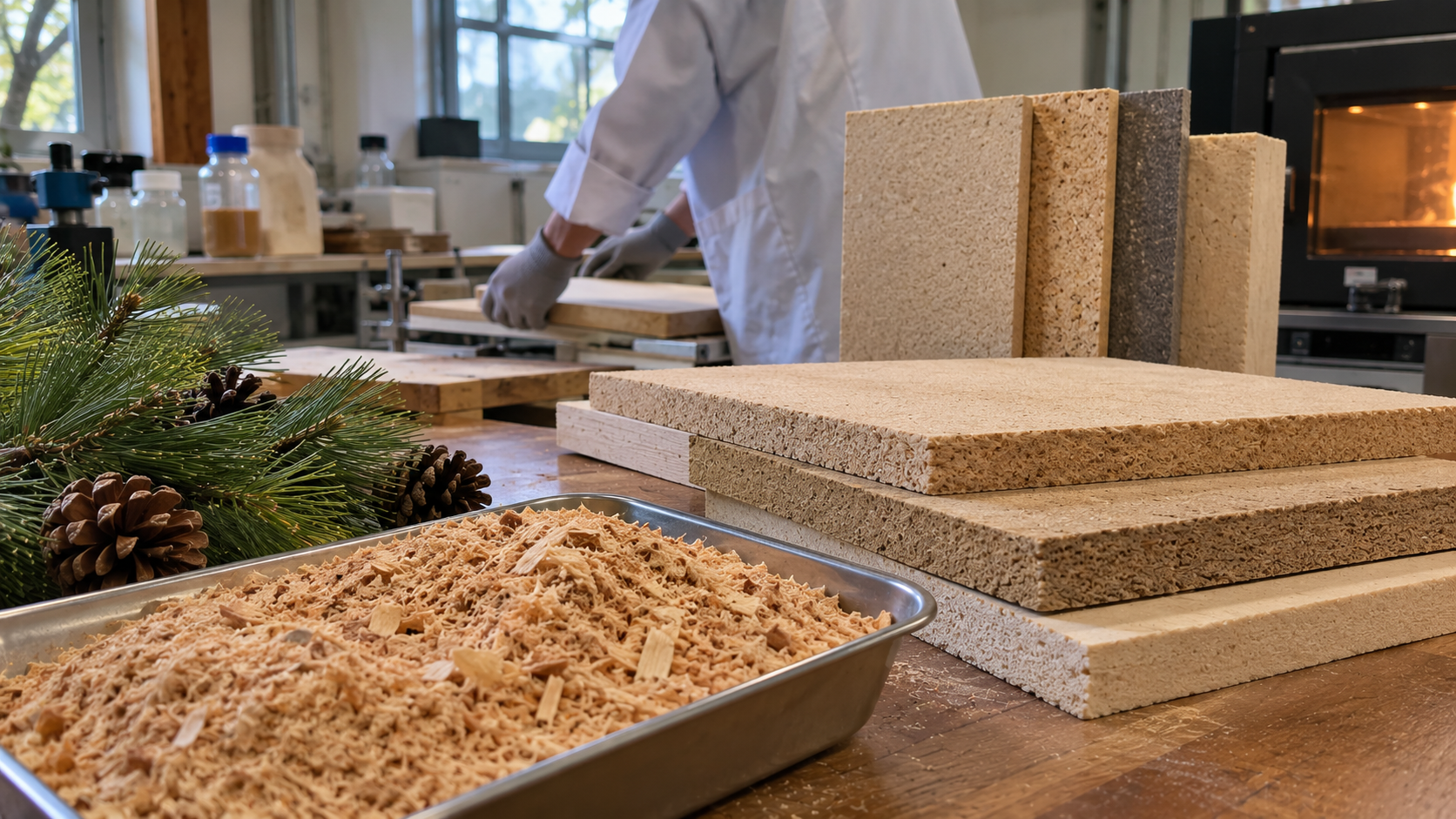
Pine sawdust was collected from a local woodworking workshop. It was ground to a particle size of about 1 mm using a laboratory blender. Coarse particles were removed by sieving. Pine sawdust was selected because it is a locally available woodworking byproduct. No formal feedstock screening was performed. The cellulose, hemicellulose, and lignin content of the sawdust was not measured. Reported compositional ranges for softwood in the pulping literature are included for context, but these do not replace direct measurement.
Soda pulping and lignin recovery
Several batches of soda-pulping of pine sawdust were made. Reactor capacity was limiting on the number of batches. A total of 450 g were processed. In each batch, approximately 200 g of ground pine sawdust was soaked in 1,600 g of 10% (w/v) NaOH solution. The ratio of solid to liquid was 1:8. Soaking was done for 72 hr at room temperature. The slurry mixture then was heated to 120 °C for 1 hour with stirring. Soaking was continued for a further 24 hours after heating. The treated material was sieved through stainless steel sieve of 200-mesh (74 µm) to get the solid fraction from the black liquor. The solid fraction was washed with distilled water until the pH was neutral and then oven dried at 60 °C for 24 hours. All batches of dried pulp were mixed together. The bleaching apparatus was not capable of doing this in a single batch, and the combined pulp was split into about 50 g of pulp to be bleached in each batch. Each batch was bleached by being immersed in 50 g of 1% sodium hydroxide, 250 g of distilled water, 25 g of 100% sodium silicate and 100 g of hydrogen peroxide (10%). The bleached batches were washed to neutral pH, dried at 60 °C for 48 hours, and then recombined. 400g of bleached pulp was recovered.
All black liquor was evaporated on a hot plate to concentrate it. Then it was acidified to 1.5 by the dropwise addition of 1 M HCl with stirring. The lignin precipitate was vacuum filtered, washed with distilled water pH 2 and dried at 60 °C for 24 hours.
The concentration of NaOH and duration of soaking were selected according to the standard soda-pulping method for lignocellulosic biomass. Other concentrations of NaOH, temperatures, or soaks were not tried. The values listed here are for one condition of work, and not optimized. This restriction is further discussed in the Discussion.
HCHO remover solutions
Two HCHO remover solutions were prepared by dissolving urea and ethylene glycol in distilled water at different ratios. HCHO 1 (35 g urea, 2 g ethylene glycol, 63 g distilled water) follows the composition reported by Jung et al. for HCHO-adsorbing wallpaper14. HCHO 2 (40 g urea, 7 g ethylene glycol, 53 g distilled water) has higher urea and ethylene glycol content to test if increased remover content improves performance. Both solutions were stirred at room temperature until fully dissolved. Ethylene glycol was used as a humectant and plasticizer to prevent the urea-rich coating from becoming brittle. It was not intended to react directly with HCHO.
| Sample | Urea (g) | Ethylene glycol (g) | Distilled water (g) |
| HCHO 1 | 35 | 2 | 63 |
| HCHO 2 | 40 | 7 | 53 |
Cellulose membrane fabrication
A 10% (w/v) pulp suspension was prepared by dispersing bleached cellulose pulp in distilled water. Nine membrane formulations (C0 to C8) were prepared by combining the pulp suspension with a binder (either polyvinyl alcohol, PVA, or polyvinylpyrrolidone, PVP) and, for C1 to C8, one of the two HCHO remover solutions (Table 2). Each mixture was stirred magnetically at 90 °C for 60 minutes at 900 rpm to form a homogeneous suspension. The suspension was poured into rectangular molds at a loading density of 0.43 g/cm² and oven-dried at 60 °C for 24 hours to form free-standing films. For membranes designated as surface-coated (C0-Px), the base membrane C0 was first prepared without remover. After drying, five coating formulations (P1 to P5) comprising HCHO 2 solution, PVA, and Na2SiO3 at different ratios were applied to the membrane surface (Table 3). Coated membranes were returned to the oven at 60 °C for a further 24 hours.
| Sample | HCHO remover | Binder | Pulp suspension (10%) |
| C0 | 0 g | 17.50 g PVA | 33.30 g |
| C1 | 6.45 g HCHO 1 | 14.87 g PVA | 28.26 g |
| C2 | 6.45 g HCHO 1 | 14.87 g PVP | 28.26 g |
| C3 | 6.45 g HCHO 2 | 14.87 g PVA | 28.26 g |
| C4 | 6.45 g HCHO 2 | 14.87 g PVP | 28.26 g |
| C5 | 8.26 g HCHO 1 | 12.24 g PVA | 27.08 g |
| C6 | 8.26 g HCHO 1 | 12.24 g PVP | 27.08 g |
| C7 | 8.26 g HCHO 2 | 12.24 g PVA | 27.08 g |
| C8 | 8.26 g HCHO 2 | 12.24 g PVP | 27.08 g |
| Sample | HCHO 2 (g) | PVA (g) | Na₂SiO₃ | Result |
| P1 | 3 | 10 | 10 g Na₂SiO₃ 46% | Non-homogeneous |
| P2 | 3 | 6.67 | 13.34 g Na₂SiO₃ 46% | Non-homogeneous |
| P3 | 3 | 10 | 3 g pure Na₂SiO₃ | Homogeneous |
| P4 | 3 | 5 | 15 g Na₂SiO₃ 46% | Non-homogeneous |
| P5 | 6 | 0 | 20 g Na₂SiO₃ 46% | Homogeneous |
For membrane casting and appearance comparisons (Results 3.2), Formulation C0 is used as the control and contains binder but no HCHO remover. C0 was not tested in the HCHO chamber, so it is not possible to determine how much of the C0-P5 performance is due to the coated silicate/urea layer or the base membrane. This limitation and its relevance to the coating-versus-blending comparison are discussed in section 4.
Lignin-chitosan membrane fabrication
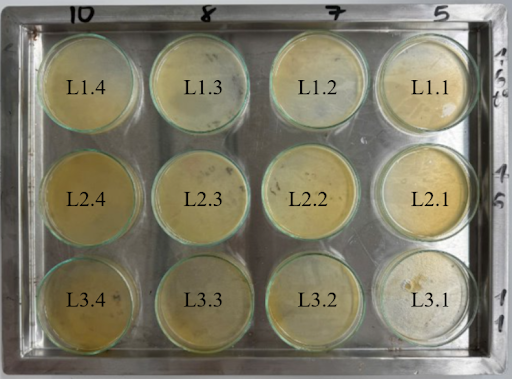
A 2% (w/v) chitosan solution was prepared by dissolving 2 g of chitosan in 100 mL of 1% acetic acid and stirring overnight. A 0.5% (w/v) lignin solution was prepared by dissolving 1 g of recovered dry lignin in 200 mL of 0.1 M NaOH. Lignin and chitosan solutions were mixed at two mass ratios, 1:1 (L:C) and 4:5 (L:C), then poured into Petri dishes of uniform size. Three sets of conditions were tested: 1:1 at 80 °C (L1 series), 4:5 at room temperature (L2 series), and 1:1 at room temperature (L3 series). Casting masses of 5, 7, 8, and 10 g per dish were used in each series (Table 4). All dishes were dried at 40 °C until free-standing films formed.
| Sample | Mass per membrane | Lignin:Chitosan ratio | Conditions |
| L1.1 | 5 g | 1:1 | 80°C |
| L1.2 | 7 g | 1:1 | 80°C |
| L1.3 | 8 g | 1:1 | 80°C |
| L1.4 | 10 g | 1:1 | 80°C |
| L2.1 | 5 g | 4:5 | Room temperature |
| L2.2 | 7 g | 4:5 | Room temperature |
| L2.3 | 8 g | 4:5 | Room temperature |
| L2.4 | 10 g | 4:5 | Room temperature |
| L3.1 | 5 g | 1:1 | Room temperature |
| L3.2 | 7 g | 1:1 | Room temperature |
| L3.3 | 8 g | 1:1 | Room temperature |
| L3.4 | 10 g | 1:1 | Room temperature |
Formaldehyde scavenging test
The HCHO-scavenging performance of membranes C3 and C0-P5 was tested in a sealed glass fish tank with internal dimensions of 12 × 24 × 17 cm (volume 4,896 cm³, about 4.9 L). Four strips of membrane (7 × 17 cm each, total area 472 cm², total mass 142.16 g) were attached to the two inner side walls. A cotton swatch (1 × 1 cm) with 0.05 mL of HCHO solution was placed on the base.
An indoor air quality monitor (Delixi) was installed at the center to measure HCHO concentration. The tank was placed upside down on a tray and sealed with modelling clay to prevent gas leakage. HCHO concentration was measured at 30 minutes (after equilibration) and at 3 hours by photographing the monitor. Scavenging performance was measured as the percentage decrease between these two readings.
Only one chamber was used for each formulation (C3 and C0-P5). This test was not repeated. Blank chamber, membrane without remover, and single-component coating controls were not used. The percentages shown are single-run screening results. These are descriptive only, not uncertainty estimates. The limitations of this design and the need for controlled and replicated experiments are discussed in section 4.
Delixi is an affordable electrochemical/photoionization air quality sensor designed for use in homes. Its accuracy does not meet analytical standards, and it was not validated against a reference analytical method before the study. Concentration values and percentage reductions are relative and approximate, not validated quantitative measurements.
Flame retardancy test
Four strips of C3, C3-P3, C3-P5 and commercial wallpaper (each 1 × 5 cm) were arranged side by side on an infrared heating plate at a constant temperature. The same conditions were used for all samples. Photographs were made every 10 seconds, 3 minutes, 5 minutes and 10 minutes. Qualitative evaluation of the samples was done for colour change, shrinkage, delamination, red-glow zones and structural integrity at all time points. There were no quantitative measurements (such as ignition time, mass loss, heat release rate, limiting oxygen index or standardized procedures). The commercial wallpaper was a standard PVC backed wallpaper. The material performance is not described as the fire-resistant additives, backing, and thickness of the material were not characterized.
Data analysis
The tests for HCHO-scavenging and flame-retardancy were performed once for each formulation only. No statistical analysis is performed and only a description is provided. It was not possible to replicate because of the termination of laboratory access. The reported differences between the measurements (e.g., 49.1% and 16.8% HCHO reduction) are the observed and not statistically supported measurements. Replication will be included as a priority for future work in Section 4.
Results
Soda pulping yielded bleached cellulose pulp and recovered lignin
The ground pine sawdust was pulped with soda, yielding a solid pulp fraction and a black liquor with a high lignin content. The unbleached pulp was brown, which is indicative of remaining lignin. The product obtained after bleaching using dilute NaOH, H2O2 and sodium silicate was yellow white. This colour change is a qualitative measure of chromophore removal; it is not a quantitative measure of the degree of delignification. The amount of lignin removed, however, would have to be confirmed by a kappa number determination or by a determination of the lignin and cellulose content, which were not done in this study. The lignin was then recovered from the black liquor after acidification to pH 1.5, which resulted in 4 g being recovered — a small but measurable recovery of this byproduct from the waste stream.
Table 5 reports the mass values available from the original laboratory records for this process. Soda pulping was carried out in multiple batches of approximately 200 g of sawdust each, following the procedure in section 2.2, to reach a cumulative total of 450 g processed over the course of the study. Bleaching was likewise carried out in multiple batches of approximately 50 g of pulp each, recombined and oven-dried afterward to give a total recovered bleached pulp mass of 400 g. The 50 g and 400 g figures describe a single batch and the recombined, dried total, respectively, rather than two conflicting measurements of the same quantity. A total recovered bleached pulp mass of 400 g from 450 g of pine sawdust is approximately 89% by mass, higher than the yields typically reported for soda pulping of wood, generally in the range of 30-45% depending on species and conditions9. This study was not designed to determine the specific factors responsible for this difference. The initial sawdust mass was recorded before any drying step and the final pulp mass after oven-drying, and the moisture content of the raw sawdust at the time of weighing was not measured. We do not propose a cause for the observed difference. Confirming one would require additional characterization, such as moisture content and compositional analysis, that was outside the scope of this study. Intermediate masses that would allow a complete stage-by-stage balance (wash losses, black liquor solids content, ash content, and final moisture content at each stage) were not recorded during the original runs and cannot be reconstructed after the fact, since laboratory access has ended.
| Process stage | Reported mass | Note |
| Total sawdust processed, all batches (cumulative) | 450 g | Recorded before drying; see Methods 2.2 |
| Sawdust processed per pulping batch | 200 g | Multiple batches were run. NaOH mass and ratio below apply per batch |
| NaOH solution used per pulping batch | 1,600 g at 1:8 solid-to-liquid ratio | Applies to each 200 g batch, not the 450 g cumulative total |
| Unbleached dried pulp, combined from all pulping batches | Not recorded | Combined before bleaching (section 2.2) |
| Pulp processed per bleaching batch | 50 g | Multiple bleaching batches were run and recombined after bleaching |
| Total recovered bleached pulp mass, all batches recombined (cumulative) | 400 g | Recorded after oven-drying; see Methods 2.2 |
| Black liquor solids content | Not recorded | |
| Wash losses (pulping and bleaching steps) | Not recorded | |
| Lignin precipitate recovered (pH 1.5 acidification) | 4 g | |
| Ash content of pulp or lignin | Not recorded | |
| Moisture content of raw sawdust at weighing | Not recorded |
Soda pulping and bleaching were each carried out in multiple batches (approximately 200 g of sawdust per pulping batch, approximately 50 g of pulp per bleaching batch), recombined after each step to give the cumulative totals shown (450 g sawdust, 400 g recovered bleached pulp mass). These per-batch and cumulative figures describe different stages of the same workflow and are not in conflict. A total recovered bleached pulp mass of 400 g from 450 g of sawdust is approximately 89% by mass, higher than typical soda-pulping yields for wood (30-45%). This study was not designed to determine the specific factors responsible for this difference. The sawdust mass was recorded before any drying step and the pulp mass after oven-drying, and the moisture content of the raw sawdust at weighing was not measured. We do not propose a cause for the observed difference; confirming one would require additional characterization outside the scope of this study. Rows marked “Not recorded” reflect masses that were not measured at the time of the original experiments and cannot be reconstructed retroactively.
PVA-bound membranes with moderate HCHO remover content produced the most uniform films
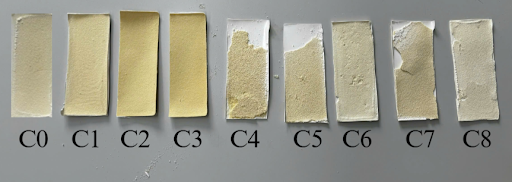
A total of nine formulations of the cellulose membrane (from C0 to C8) were prepared using different types of binder (PVA or PVP) and varying quantity of HCHO remover solution (Table 2). Visual inspection revealed that membranes C4 to C8 were delaminated or had uneven surfaces (Figure 1). A higher remover-to-binder ratio in samples C5 to C8 appeared to reduce the cohesiveness of the film, resulting in cracking and surface irregularity. Sample C4 used PVP as the binder. PVP is highly water-soluble and forms films easily, but polymer blends with PVP are generally reported to have lower mechanical durability and higher humidity sensitivity than similar PVA-based films. This is consistent with the film instability observed here18. PVA has been shown to be compatible with lignocellulose-derived components in composite films with hemicellulose and nanocellulose from agricultural straw, where PVA acts as the continuous, cohesive film-forming matrix around the biomass-derived filler19. This is consistent with PVA’s role as the more cohesive binder for our cellulose pulp. Samples C0, C2, and C3 had flat, uniform surfaces on visual inspection, so these three were selected for further functional testing. This selection was based only on qualitative visual assessment. No quantitative surface metrics or mechanical tests were performed for any formulation. This limits how precisely uniformity can be defined and is a limitation discussed in Section 4.
Lignin-chitosan membranes formed but lacked mechanical strength
The 4 g of recovered lignin was blended with chitosan at two mass ratios (1:1 and 4:5) and three conditions (1:1 at 80 °C, 4:5 at room temperature, and 1:1 at room temperature) to explore whether the recovered lignin could serve as a film-forming material (Figure 2, Table 4). Membranes formed in all twelve combinations, but all were brittle and tore easily when handled. The 1:1 ratio at 80 °C (L1 series) gave the most visually uniform films. None of the lignin-chitosan membranes achieved sufficient mechanical integrity for further property testing, so they were not carried forward into the HCHO or flame tests. Because these membranes were not functionally tested, this part of the study should be read as a preliminary feasibility screen for lignin valorization rather than as a characterized material. We discuss why we still consider the lignin-recovery step worthwhile despite this negative result in section 4.
Surface coating with P5 produced a larger single-run reduction in HCHO concentration than direct blending
Two strategies for delivering the HCHO remover were compared: blending it directly into the membrane during casting (C3), and applying it as a surface coating after the membrane was formed (C0-P5). For each strategy, HCHO concentration was recorded with the Delixi sensor inside the sealed 4.9 L glass chamber at 30 minutes and again at 3 hours after introducing 0.05 mL of HCHO solution onto a cotton swatch, in a single, unreplicated run per formulation.
The directly blended membrane C3 started at 0.197 mg/m³ and fell to 0.164 mg/m³ after 3 hours, a reduction of 16.8% (Table 6). The coated membrane C0-P5 started at 0.165 mg/m³ and dropped to 0.084 mg/m³ over the same period, a reduction of 49.1% (Table 6). For context, the WHO indoor air quality guideline for formaldehyde is 0.1 mg/m³ averaged over any 30-minute period20. Both starting concentrations in our chamber exceeded this guideline, while both 3-hour endpoints (0.164 and 0.084 mg/m³) approached or fell below it, with the coated membrane’s endpoint comfortably under the guideline and the blended membrane’s endpoint remaining just above it. We report this only as descriptive context for the magnitude of the concentrations involved in a small sealed chamber, not as evidence that either membrane would achieve a comparable result in a real, ventilated room, where air exchange, HCHO source strength, and material loading per unit air volume all differ substantially from our test conditions.
| Sample | After 30 min (mg/m3) | After 3 hrs (mg/m3) | Reduction (%) |
| C3 | 0.197 | 0.164 | 16.8 |
| C0-P5 | 0.165 | 0.084 | 49.1 |
In this single-run comparison, the surface-coated membrane outperformed the directly blended membrane by about three-fold. We propose as a hypothesis that this may reflect greater accessibility of reactive urea sites at the coating surface, compared with remover embedded inside the membrane matrix, where cellulose fibers and binder could shield some urea from incoming HCHO molecules. Distinguishing this explanation from other possibilities, such as differences in total urea loading between formulations or the contribution of the silicate layer, would require the single-component controls described in section 4.
C0-P5 coating showed less visible fire damage than uncoated membranes and commercial wallpaper in qualitative testing
Strips of C3, C3-P3, C3-P5, and commercial wallpaper were heated side by side on an infrared plate and photographed at 10 seconds, 3 minutes, 5 minutes, and 10 minutes (Table 7 summarizes the qualitative observations). Commercial wallpaper shrank visibly within 10 seconds and was almost completely decomposed by 3 minutes. All three cellulose membranes darkened progressively but remained structurally intact for longer. At 10 minutes, uncoated C3 developed a visible red-glowing zone, which we interpret as indicating that the material had reached a temperature sufficient to sustain active char oxidation8. C3-P3 also showed faint reddening. C3-P5, coated with the higher-silicate formulation P5, showed only surface blackening with no red glow. We interpret this pattern as consistent with the sodium silicate layer acting as an oxygen barrier that delayed ignition, but we emphasize that this is a qualitative, single-trial, four-sample comparison without replication, temperature measurement, or a standardized fire test, and the specific conclusions that can be drawn from it are correspondingly limited (see section 4).
| Sample | 10 seconds | 3 minutes | 5 minutes | 10 minutes |
| Commercial wallpaper | Visible shrinkage | Almost completely decomposed | Not separately described (already substantially decomposed by 3 min) | Not separately described (already substantially decomposed by 3 min) |
| C3 (uncoated, remover blended into matrix) | Progressive darkening (general trend reported for all three membranes) | Progressive darkening | Progressive darkening | Visible red-glowing combustion zone, structurally intact |
| C3-P3 (P3 surface coating) | Progressive darkening | Progressive darkening | Progressive darkening | Faint reddening, structurally intact |
| C3-P5 (P5 surface coating) | Progressive darkening | Progressive darkening | Progressive darkening | Surface blackening only, no red glow, structurally intact |
Entries reflect only what was explicitly described in the original observations. Time points not separately described for a given sample are marked accordingly rather than inferred. Standardized quantitative fire-testing metrics (ignition time, mass-loss rate, heat release rate, limiting oxygen index) were not measured (see Discussion).
Discussion
Our results show that pine sawdust, a low-value woodworking byproduct, can be converted into a cellulose membrane. In preliminary single-run tests, this membrane reduced chamber formaldehyde concentration and showed less visible fire damage than commercial wallpaper. The data indicate that the method of delivering the HCHO remover is important. Direct blending into the membrane produced a smaller single-run reduction (16.8%) than surface coating (49.1%). This difference is consistent with a surface-applied layer keeping reactive urea groups accessible at the air interface, where they can react with incoming formaldehyde to form stable methylol- and methylene-linked urea products6. When the reagent is embedded within the membrane, fewer urea groups may be in contact with the surrounding air. This explanation is based on the chemistry involved, but we did not directly demonstrate the mechanism. Surface-sensitive characterization such as FTIR or XPS before and after exposure would be needed, but this was not possible with the available equipment.
The flame-retardancy results are consistent with the interpretation that surface accessibility matters. Sodium silicate is an inorganic network-former that melts and spreads across a heated surface, forming a glassy barrier that restricts oxygen access and delays combustion onset15. The P5 coating had the highest concentration of Na2SiO3 (20 g of 46% solution) and no PVA. P3 combined a smaller amount of pure Na2SiO3 (3 g) with 10 g of PVA. This comparison confounds two variables: P5 differs from P3 in both silicate loading and the absence of the organic PVA binder, as well as in the urea/ethylene-glycol coating mass. The present data do not allow us to separate how much of C3-P5’s improved fire performance is due to higher silicate content versus removal of the organic binder. A controlled follow-up should vary silicate content at fixed PVA content, and vice versa, to isolate each variable’s effect. This is a specific design change for future testing, not a flaw in the qualitative observation.
Binder selection affected membrane quality. PVA-bound membranes (C0, C1, C3, C5, C7) were smoother and more cohesive on visual inspection than PVP-bound membranes (C2, C4, C6, C8). This is consistent with published comparisons of PVA- and PVP-based polymer films, where PVP’s greater hygroscopicity is linked to reduced film cohesion and durability under humid conditions18. Humidity and moisture content were not measured directly – this is a qualitative observation, based on appearance. In a future HCHO chamber test, a direct comparison between C2 and C3 (same HCHO 1 remover but different binder) would be helpful to determine if functional performance is impacted by the selection of binder. In this study only C3 (PVA) was used for functional performance testing.
The results of this study have several limitations that limit the interpretation of its results. They are mentioned here as they have direct impact on the weight to be placed on the headline number (49.1% HCHO reduction, qualitative fire resistance).
The restrictions listed below apply to the various claims to differing extents, and are therefore separated out. Two comparative findings are reasonably well supported by the data. First, surface coating produced a much larger single-run HCHO reduction than direct blending (about a three-fold difference). This relative comparison is more resistant to instrument miscalibration than either absolute percentage alone. Secondly, the P5-coated membrane clearly exceeded the performance of the uncoated membrane as well as the lower silicate P3 coating in its qualitative fire resistance. The difference between active glowing combustion and blackening of the surface can be easily detected by sight, rather than instrumentation. The data do not justify and we do not claim to justify the exact size of these effects or their generalizability to settings other than this one single-run setup on a small chamber or the specific mechanisms suggested to explain these effects. All of these would need to be replicated, controlled and characterized as described below. We make this distinction throughout the limitations, rather than treating all findings as equally uncertain.
First, both the HCHO-scavenging and flame-retardancy tests were conducted as single, unreplicated runs per formulation. No formulation was tested in triplicate, so no error bars, standard deviations, or statistical comparisons can be calculated. The apparent three-fold difference between C3 and C0-P5, and the qualitative difference between C3-P3 and C3-P5, should be read as a single, internally consistent set of observations that motivate a properly replicated follow-up study, not as statistically established effects. Second, the HCHO chamber test lacked the controls needed to isolate which component of the coating was responsible for the observed reduction. An empty-chamber blank, a C0 no-remover membrane control, and single-component coatings (sodium-silicate-only, urea-only, ethylene-glycol-only) were not run. Without these, we cannot rule out that some of the measured reduction reflects HCHO loss to the chamber walls, cotton swatch, or ambient decay rather than the membrane itself. We also cannot attribute the coated membrane’s performance specifically to the urea groups as opposed to the silicate layer or the base cellulose membrane. This gap affects mechanistic attribution rather than the coating-versus-blending comparison. Both C3 and C0-P5 share the same underlying cellulose chemistry, so the observed difference between them reflects delivery method, not the contribution of cellulose versus urea. The HCHO-scavenging comparison uses C0 as the coated base membrane (C0-P5), while the flame-retardancy comparison uses C3 as the coated base membrane (C3-P5). These are not the same underlying material, so the two functional properties have not been demonstrated on a single, consistent formulation. Third, HCHO concentration was measured with a single consumer-grade sensor that was not validated against a reference analytical method such as HPLC or DNPH-based colorimetry. The absolute concentration values and the 49.1% value should be considered as order of magnitude values. This measurement uncertainty cannot be quantified with regards to the effect on the reported percentage. Fourth, only one adsorption time point after the 30 minute baseline (3 hours) was examined, which prevented adsorption kinetics, saturation point and longer term stability from being characterized. Fifth, the chamber had no active flow or environmental conditioning, and the results applied to one humidity/temperature condition, which is not the range of conditions that a real interior wall would experience.
Sixth, no compositional characterization of the pulp or membranes was performed. FTIR or XRD spectra, a kappa number, and lignin/cellulose content analysis were not obtained to confirm the extent of delignification.
We did not measure BET surface area or porosity, and we did not characterize the finished membranes by TGA/DTG, ash or moisture content, SEM imaging, fiber-size distribution, tensile strength, elongation, tear resistance, thickness, basis weight, or contact angle/water uptake. These measurements would be necessary to describe this material as fully characterized in a future study, rather than as a proof-of-concept screen. This gap limits fine-grained comparisons, such as ranking C0, C2, and C3 against each other, but is less important for the visually obvious distinction between those three formulations and the delaminated, cracked C4-C8 films. Seventh, the flame test was entirely qualitative. We compared visual appearance across four samples at four time points but did not measure ignition time, mass-loss rate, heat release rate, or limiting oxygen index, and we did not use a standardized protocol such as UL 94, ASTM D2863 (LOI), or cone calorimetry. These standardized methods would be required before any flame-retardancy claim suitable for regulatory or commercial purposes could be made21. This limits the study to a categorical, not quantitative, fire-performance claim. The categorical distinction (active combustion versus surface blackening only) does not require instrumentation. The commercial wallpaper benchmark was also not independently characterized for its own fire-retardant additives or construction, which limits how precisely the comparison can be attributed to our material’s chemistry rather than to differences in product construction.
Eighth, we did not evaluate humidity resistance, washability, aging stability, or binder-related VOC emissions for the coated membranes. These would need to be established before making claims about practical interior application. We consider our results a demonstration of technical feasibility under controlled, single-run laboratory conditions, not a validated product performance claim. Ninth, the pulping conditions (10% NaOH, extended soaking) were adopted from standard practice rather than optimized or benchmarked against alternatives. They fall within the range of NaOH concentrations and soak times commonly reported for soda pulping of woody biomass9. This supports treating the resulting cellulose as broadly representative of the process class, but does not establish that these conditions are optimal. The bleaching step (Methods 2.2) used alkaline hydrogen peroxide in a way consistent with other reported delignification procedures for lignocellulosic biomass22. Sodium silicate is commonly included in such formulations as a stabilizer that slows peroxide decomposition and buffers the bleaching solution. The same three-component combination used here (hydrogen peroxide, sodium hydroxide, and sodium silicate) has also been used as a pretreatment step ahead of forming fire-retardant lignocellulosic biocomposites, not only as a bleaching aid. This is consistent with our later use of sodium silicate in the surface coating23. As detailed in section 3.1, the recovered bleached pulp mass (about 89% of the initial sawdust mass) is well above typical soda-pulping yields for wood and has not been independently verified.
We view these limitations as defining the next phase of this work, not as undermining the value of the present screening study. In a single small-scale project without continued laboratory access, it was not possible to add replication, controls, or instrumental characterization to the existing dataset. Adding those measurements now would require fabricating data or overstating the confidence the current data can support. We have chosen to report the original single-run results transparently, with an explicit and detailed limitations discussion. This is the appropriate way to handle a data-collection constraint that arose after the experiments were completed. In summary, the comparative findings identified above (coating outperforming blending, and P5 outperforming less-silicate formulations) are established by this study. Their magnitudes, mechanisms, and generalizability remain open for future work.
The lignin-chitosan membranes did not achieve usable mechanical strength in any of the twelve formulations tested. This is consistent with the general difficulty of blending an aromatic, hydrophobic polymer (lignin) with a cationic polysaccharide (chitosan) in aqueous media, which tends to produce phase separation and brittle films unless compatibilizers or covalent cross-linkers are used24. Chitosan-lignin films have been explored elsewhere as biobased composites with useful functional properties such as antioxidant activity, which shows that the general strategy has value even where, as here, film cohesion remains a challenge25. Adding a cross-linking agent such as glutaraldehyde or citric acid, or applying heat-pressing after casting, are established strategies that could improve cohesion in follow-up work. Despite the negative mechanical result, the lignin-recovery step itself is worthwhile. Removing 4 g of lignin from the black liquor rather than discarding it reduces the organic load of the waste stream and shows that recovered lignin from this process is a real, isolable material, even though this particular chitosan-blending route did not yield a usable membrane. Other studies recovering lignin from black liquor by acid precipitation report yields that depend strongly on the precipitating agent and feedstock26. This supports that our 4 g recovery, though modest, reflects a genuine and reportable yield rather than an artifact of the acidification step used here. Chemically modified lignin has an established track record as a feedstock for biobased polymer applications beyond simple film-casting27. This suggests that alternative valorization routes, such as use as a filler, adhesive component, or crosslinking site, may be more productive directions than chitosan blending for this recovered lignin.
For a well-resourced follow-up study, the immediate priority is to repeat the HCHO chamber test three times with the entire control set described above (empty chamber, C0 no-remover membrane, and single-component coatings), but extending the test period beyond 3 hours and monitoring for saturation behavior, using a sensor which has been benchmarked against a reference method. Comparing C2 (HCHO 1 remover, PVP binder) with C3 (HCHO 1 remover, PVA binder), would help determine whether functional performance (as well as visual film quality) would be affected by binder choice. The real-world durability would be addressed by evaluating the P5 coating to see if it maintains its ability to scavenge HCHO after wash cycles or exposure to humidity. Standardized tests (LOI, UL 94 or cone calorimetry) of formulations with varying amounts of silicate and PVA, independent of each other, would remove the confound mentioned above and enable comparison of results with literature values of other flame-retardant treatments. This bench-scale study cannot answer the questions of pulp rheology and coating adhesion at larger dimensions that would be needed for scaling up from the Petri dish and cast films to a continuous paper-making process.
Conclusion
This study investigated whether pine soda pulping could convert sawdust, a low-value wood-processing residue, into a cellulose-based membrane that reduces indoor formaldehyde and resists ignition more effectively than commercial wallpaper. In single-run, screening-level tests, a membrane with a sodium silicate/urea-ethylene glycol coating (C0-P5) reduced chamber HCHO concentration by 49.1% over three hours. For comparison, a membrane with the same remover blended directly into the casting mixture reduced HCHO by 16.8%. The coated membrane showed only surface blackening under direct heating, while commercial wallpaper was substantially degraded within three minutes. Lignin was recovered from the black liquor byproduct, yielding 4 g in this batch. This result shows that soda pulping of sawdust can produce two usable material streams from a single waste feedstock, although the attempt to convert the recovered lignin into a chitosan-blended membrane did not succeed mechanically.
These findings indicate that it is feasible to convert wood-processing waste into a multifunctional interior material, although the performance has not yet been validated. The comparison between surface coating and direct blending suggests that keeping HCHO-reactive groups at the membrane surface, rather than embedding them in the bulk, may improve scavenging efficiency. This approach could be relevant for other cellulose-based coatings, but further replicated and controlled testing is needed. Replicated testing of the sensor in a chamber with complete controls is warranted, as is compositional and mechanical characterization of the membranes (including FTIR, kappa number, BET surface area, SEM, and tensile testing), the standardization of flame testing (such as LOI or UL 94) on formulations with varying levels of silicate and binder, and a repeat mass balance for the soda-pulping step. The reported recovered bleached pulp mass of 400 g from 450 g of sawdust, cumulative over several batches (about 89% of the sawdust mass) exceeds the average mass of bleached pulp obtained from wood soda pulping, and has not been verified independently (section 3.1).
The main limitation of this study is also its main finding. A single high-school-level research project, using consumer-grade instruments and without access to compositional or standardized fire-testing equipment, can identify a promising, low-cost design direction for waste-derived interior materials. However, it cannot validate that direction to a standard suitable for regulatory or commercial claims. This is a reasonable and transparent starting point for further testing.
References
- V. J. Cogliano, Y. Grosse, R. A. Baan, K. Straif, M. B. Secretan, F. El Ghissassi. Meeting report: summary of IARC monographs on formaldehyde, 2-butoxyethanol, and 1-tert-butoxy-2-propanol. Environmental Health Perspectives. Vol. 113, pg. 1205-1208, 2005, https://doi.org/10.1289/ehp.7542. [↩]
- J. Lim, S. Kim, A. Kim, W. Lee, J. Han, J.-S. Cha. Behavior of VOCs and carbonyl compounds emission from different types of wallpapers in Korea. International Journal of Environmental Research and Public Health. Vol. 11, pg. 4326-4339, 2014, https://doi.org/10.3390/ijerph110404326. [↩]
- M. Richter, W. Horn, E. Juritsch, A. Klinge, L. Radeljic, O. Jann. Natural building materials for interior fitting and refurbishment—what about indoor emissions? Materials. Vol. 14, pg. 234, 2021, https://doi.org/10.3390/ma14010234. [↩]
- J. Song, Z. Liu, Y. Li, C. Chi, Y. Zhang, G. Jiang. Preparation of amino cellulose aerogel and its formaldehyde adsorption properties. Industrial Crops and Products. Vol. 215, pg. 118630, 2024, https://doi.org/10.1016/j.indcrop.2024.118630. [↩] [↩]
- D. Huo, X. Zhang, J. Wei, J. Wang, Q. Zhang, Q. Yang, H. Zhu, F. Zhang, G. Fang, T. Wu. Preparation and characterization of cellulose nanofibril/chitosan aerogels with high-adsorbability and sensitive indication for indoor free formaldehyde. International Journal of Biological Macromolecules. Vol. 259, pg. 128891, 2024, https://doi.org/10.1016/j.ijbiomac.2023.128891. [↩]
- T. Li, M. Cao, J. Liang, X. Xie, G. Du. New mechanism proposed for the base-catalyzed urea–formaldehyde condensation reactions: a theoretical study. Polymers. Vol. 9, pg. 203, 2017, https://doi.org/10.3390/polym9060203. [↩] [↩]
- G. B. Baur, J. Spring, L. Kiwi-Minsker. Amine functionalized activated carbon fibers as effective structured adsorbents for formaldehyde removal. Adsorption. Vol. 24, pg. 725-732, 2018, https://doi.org/10.1007/s10450-018-9974-x. [↩]
- E. Ranucci, J. Alongi. Thermal decomposition of cellulosic materials: insights into mechanisms and product evolution. Polymer Degradation and Stability. Vol. 242, pg. 111629, 2025, https://doi.org/10.1016/j.polymdegradstab.2025.111629. [↩] [↩]
- S. Gao, G. Tian, Y. Fu, Z. Wang. Production of cellulose pulp and lignin from high-density apple wood waste by preimpregnation-assisted soda cooking. Polymers. Vol. 15, pg. 1693, 2023, https://doi.org/10.3390/polym15071693. [↩] [↩] [↩]
- X. Miao, W. Hua, Y. Li, F. Bian, T. Xiao. Extraction of cellulose nanofibrils from pine sawdust by integrated chemical pretreatment. Heliyon. Vol. 10, pg. e25355, 2024, https://doi.org/10.1016/j.heliyon.2024.e25355. [↩]
- R. Cárdenas-Zapata, D. Palma-Ramírez, A. I. Flores-Vela, M. A. Domínguez-Crespo, A. M. Torres-Huerta, H. Dorantes-Rosales, S. B. Brachetti-Sibaja. Valorization of sawdust biomass for biopolymer extraction via green method: comparison with conventional process. International Journal of Energy Research. Vol. 46, pg. 20279-20302, 2022, https://doi.org/10.1002/er.8112. [↩]
- C. Budiyantoro, F. Yudhanto. Comparative analysis of cellulose, hemicellulose and lignin on the physical and thermal properties of wood sawdust for bio-composite material fillers. Revue des Composites et des Matériaux Avancés. Vol. 34, pg. 109-116, 2024, https://doi.org/10.18280/rcma.340114. [↩]
- R. Liu, M. Liang, J. F. Xu, Y. H. Sun, L. Long, L. M. Zhu, B. Lv, B. H. Yang, Y. H. Ni. Preparation of a novel formaldehyde-free impregnated decorative paper containing MnO2 nanoparticles for highly efficient formaldehyde removal. ACS Applied Materials & Interfaces. Vol. 15, pg. 34941-34955, 2023, https://doi.org/10.1021/acsami.3c05791. [↩]
- C. Jung, N. Alqassimi, G. El Samanoudy. Evaluating the adsorption performance of functional building material with HCHO remover. Frontiers in Built Environment. Vol. 8, pg. 998872, 2022, https://doi.org/10.3389/fbuil.2022.998872. [↩] [↩]
- Y. Zou, Y. Zhang, P. Li, J. Qiao, Y. Wu, X. Li, Y. Zuo. Water-resistant, transparent, and highly efficient flame-retardant wood coating. Industrial Crops and Products. Vol. 223, pg. 120061, 2025, https://doi.org/10.1016/j.indcrop.2024.120061. [↩] [↩] [↩]
- S. Zaheri, A. Ghasemian, M. R. Dehghani Firouzabadi, G. Asadpur. Comparative study of the effect of sodium silicate and nanoclay coating treatments on the fire resistance and mechanical properties of paper made from soda bagasse pulp. Forest and Wood Products. Vol. 78, pg. 191-207, 2025, https://doi.org/10.22059/jfwp.2025.395287.1348. [↩]
- Y. C. Wang, X. F. Kou, J. P. Zhao, A. Xin. Three sources-in-one bio-MOFs doped silicone acrylic emulsion-based waterborne flame-retarding coatings with formaldehyde adsorption property. Progress in Organic Coatings. Vol. 175, pg. 107329, 2023, https://doi.org/10.1016/j.porgcoat.2022.107329. [↩]
- X. Tang, S. Alavi. Recent advances in starch, polyvinyl alcohol based polymer blends, nanocomposites and their biodegradability. Carbohydrate Polymers. Vol. 85, pg. 7-16, 2011, https://doi.org/10.1016/j.carbpol.2011.01.030. [↩] [↩]
- S. Xu, M. Jiang, Q. Lu, S. Gao, J. Feng, X. Wang, X. He, K. Chen, Y. Li, P. Ouyang. Properties of polyvinyl alcohol films composited with hemicellulose and nanocellulose extracted from Artemisia selengensis straw. Frontiers in Bioengineering and Biotechnology. Vol. 8, pg. 980, 2020, https://doi.org/10.3389/fbioe.2020.00980. [↩]
- World Health Organization. WHO guidelines for indoor air quality: selected pollutants. https://www.ncbi.nlm.nih.gov/books/NBK138711/, 2010. [↩]
- E. V. Bachtiar, K. Kurkowiak, L. Yan, B. Kasal, T. Kolb. Thermal stability, fire performance, and mechanical properties of natural fibre fabric-reinforced polymer composites with different fire retardants. Polymers. Vol. 11, pg. 699, 2019, https://doi.org/10.3390/polym11040699. [↩]
- J. S. Mun, S. P. Mun. Alkaline hydrogen peroxide delignification of three lignocellulosic biomass under atmospheric pressure. BioResources. Vol. 19, pg. 998-1009, 2024. [↩]
- Y. Yang, L. Zhang, J. Zhang, Y. Ren, H. Huo, X. Zhang, K. Huang, M. Rezakazemi, Z. Zhang. Fabrication of environmentally, high-strength, fire-retardant biocomposites from small-diameter wood lignin in situ reinforced cellulose matrix. Advanced Composites and Hybrid Materials. Vol. 6, pg. 140, 2023, https://doi.org/10.1007/s42114-023-00721-5. [↩]
- C. Thanh, N. Tuyết, N. Kiên, N. Thương, N. Thủy, L. Hương. Properties of biological waterproof films combination chitosan and lignin extracted from sugarcane bagasse. Vietnam Journal of Agricultural Sciences. Vol. 19, pg. 932-941, 2021. [↩]
- K. Crouvisier-Urion, P. R. Bodart, P. Winckler, J. Raya, R. D. Gougeon, P. Cayot, S. Domenek, F. Debeaufort, T. Karbowiak. Biobased composite films from chitosan and lignin: antioxidant activity related to structure and moisture. ACS Sustainable Chemistry & Engineering. Vol. 4, pg. 6371-6381, 2016, https://doi.org/10.1021/acssuschemeng.6b00956. [↩]
- E. Duret, L. C. R. de Moura, A. Morales, J. Labidi, E. Robles, F. Charrier-El Bouhtoury. Efficient lignin precipitation from softwood black liquor using organic acids for sustainable valorization. Polymers. Vol. 17, pg. 926, 2025, https://doi.org/10.3390/polym17070926. [↩]
- S. Laurichesse, L. Avérous. Chemical modification of lignins: towards biobased polymers. Progress in Polymer Science. Vol. 39, pg. 1266-1290, 2014, https://doi.org/10.1016/j.progpolymsci.2013.11.004. [↩]