
Abstract
Food deprivation is a physiological stressor in Caenorhabditis elegans in which DAF-16/FoxO contributes to survival. This study examined whether exposure to a 0.05% Beta vulgaris (beetroot) preparation altered cross-sectional live-population estimates during food deprivation in wild-type N2 and CF1038 daf-16(mu86) I worms. Three independent trials were conducted using the same four experimental groups and observation schedule. Across trials, CF1038 + beetroot populations had a mean estimated live-population percentage of 74.82% compared with 43.92% for CF1038 controls, a treatment-associated difference of 30.89 percentage points (95% CI, 23.59-38.20; paired t (2) = 18.20, p = 0.00301). N2 + beetroot populations averaged 61.31% compared with 53.65% for N2 controls, a difference of 7.66 percentage points (95% CI, 3.94-11.37; paired t (2) = 8.86, p = 0.01249). A trial-blocked two-factor analysis showed a significant genotype-by-treatment interaction (F (1, 6) = 196.16, p = 8.26 × 10⁻⁶), with the treatment-associated difference 23.24 percentage points larger in CF1038 than in N2 (95% CI, 12.25-34.22). Because reproduction continued and individual animals were not followed as a fixed cohort, these results are interpreted as cross-sectional population responses rather than lifespan or longevity measurements. The findings support a genotype-dependent association between beetroot exposure and population persistence during food deprivation while leaving the underlying mechanism unresolved.
Keywords: Beta vulgaris; Caenorhabditis elegans; DAF-16; food deprivation; population estimate; stress response
Introduction
DAF-16/ FOXO and food-deprivation responses
Insulin/IGF-like signaling regulates metabolism, development, and longevity in C. elegans1. Classic genetic studies showed that reduced daf-2 signaling can markedly extend lifespan and that this effect depends on daf-16, which encodes a Forkhead-family transcription factor2,1. DAF-16 also integrates environmental inputs that affect development, aging, and stress resistance3.
Food deprivation is directly relevant to DAF-16 biology. Henderson et al. showed that daf-16 protects C. elegans during food deprivation4, while Hibshman et al. demonstrated that DAF-16/FoxO promotes starvation survival through metabolic remodeling that includes gluconeogenesis and trehalose synthesis5. Nutrient deprivation can also induce an antioxidant response in C. elegans6. Separately, SKN-1/Nrf2 can promote oxidative-stress resistance and longevity through distinguishable mechanisms, and skn-1 expression can be regulated by DAF-16/FoxO7.
DAF-16 is a C. elegans Forkhead/FOXO homolog with more than one probable human orthologue, so it should not be treated as a one-to-one model of human FOXO31. Human FOXO3 variants have nevertheless been associated with exceptional longevity in independent cohorts8,9.
Plant-derived compounds, betalains, and C. elegans
Red beetroot contains multiple betalains, including betacyanins and betaxanthins, and its antioxidant capacity is positively associated with betalain content10. Guerrero-Rubio et al. demonstrated in vivo antioxidant and lifespan effects of purified betalains in C. elegans11 and later showed that several pure betalains extend lifespan through DAF-16/FOXO- and SKN-1/Nrf2-associated mechanisms12. Henarejos-Escudero et al. likewise found that the effect of a purified betaxanthin in C. elegans involved DAF-16 and insulin signaling13, while Büchter et al. found that myricetin-associated lifespan extension and reduction of reactive oxygen species were abolished in CF1038 daf-16(mu86) worms14. These results argue against assuming that an antioxidant compound can compensate for loss of DAF-16 without direct genetic evidence.
Other plant-derived compounds provide similarly direct examples of pathway-specific effects in C. elegans. Chlorogenic acid has been shown experimentally to extend lifespan through insulin/IGF-1 signaling with a major role for DAF-1615, and later work linked chlorogenic-acid responses to DAF-16 isoforms and SKN-1/Nrf2 regulation16. Blueberry extract prolonged lifespan and stress resistance through a DAF-16-dependent mechanism17, whereas Rhodiola extract and lentinan produced longevity or stress-resistance phenotypes involving both DAF-16 and SKN-118,19. Additional primary studies reinforce this pathway specificity: raspberry extract extended lifespan and stress tolerance through insulin/IGF signaling and DAF-1620; Hibiscus sabdariffa extract prolonged lifespan through effects that depended on both DAF-16 and SKN-121; and orange extract increased lifespan and resistance to thermal and UV-B stress while increasing expression of daf-16, skn-1, and related stress-response genes22. Together, these primary studies show that phytochemical effects can depend on specific stress-response regulators and therefore should not be assigned to a single antioxidant mechanism without direct testing.
Red beetroot contains both phenolic constituents and betacyanins23. Because composition and antioxidant capacity vary among beetroot varieties and root tissues10, results obtained with a commercial beetroot preparation should not be attributed to a single constituent unless that constituent is measured directly.
This study treats the beetroot powder as a complex preparation, not a purified betalain.
Research question and scope
The present study therefore asks a deliberately narrower question: does exposure to a 0.05% Beta vulgaris preparation alter cross-sectional live-population estimates and descriptive physiological observations during food deprivation in wild-type N2 and CF1038 DAF-16 (mu86) I C. elegans? The study was not designed to establish lifespan extension, direct oxidative-stress protection, or compensation for loss of DAF-16.
Methods
Experimental design
Three independent trials were conducted on separate dates using the same four experimental groups: N2 + beetroot, N2 control, CF1038 + beetroot, and CF1038 control. Each trial used twelve 100-mm Petri dishes, with 50 worms placed on each plate and equal starting numbers maintained across experimental groups. Worms were allocated based on availability rather than through formal randomization. The primary observer was aware of treatment identity, and observations were independently checked by a research mentor.
Synchronized L1 larvae were exposed to the treatment or control condition for four days. Adults were then transferred to unseeded NGM plates for food deprivation. Reproduction was allowed to proceed normally; FUdR was not used and adults were not repeatedly transferred to separate them from progeny. Because progeny were not excluded and individual animals were not followed longitudinally, the experiment was not analyzed as a fixed-cohort lifespan assay24.
Materials
Materials included Nitribeet Organic Beet Root Extract Powder (commercial food-grade powder), Nematode Growth Medium (NGM), Lysogeny Broth (LB), OP50 Escherichia coli, N2 and CF1038 DAF-16 (mu86) I C. elegans strains obtained from the Caenorhabditis Genetics Center, 100-mm sterile Petri dishes, micropipettes, centrifuge tubes, forceps, scalpels, Erlenmeyer flasks, magnetic stirrer, autoclave, laminar airflow cabinet, inverted microscope, incubators maintained at 20°C and 37°C, M9 buffer, calcium chloride, magnesium sulfate, potassium phosphate buffer (pH 6), deionized water, ethanol, bleach solution, and standard laboratory equipment. The beetroot powder was stored refrigerated.
Bacterial cultures and NGM plates
OP50 E. coli obtained from the Caenorhabditis Genetics Center were propagated in LB broth and incubated at 37°C for 12-16 hours. Bacterial growth was confirmed by turbidity. NGM was prepared using standard laboratory procedures, autoclaved, poured into 100-mm dishes under aseptic conditions, and stored at 4°C until use. Treatment-phase plates were seeded with 100 μL of OP50 and incubated overnight to establish bacterial lawns.
Maintenance and synchronization of C. elegans
N2 and CF1038 worms were maintained on OP50-seeded NGM plates at 20°C and transferred to fresh plates every 3-5 days. To synchronize populations, gravid adults were harvested in M9 buffer and treated with freshly prepared bleach solution to dissolve adults while preserving embryos. Embryos were washed three times with M9 buffer and placed on unseeded NGM until synchronized L1 larvae emerged.
Beetroot treatment
A 0.05% (w/ v) beetroot preparation was made by dissolving 0.25 g of Nitribeet Organic Beet Root Extract Powder in 500 mL of deionized water. The mixture was mixed thoroughly, allowed to stand for 15 minutes, and filtered using a glass vacuum-filtration apparatus. The resulting solution was applied as a surface layer onto prepared NGM treatment plates; it was not incorporated into molten agar. Control plates did not receive beetroot preparation. Because the treatment was layered onto agar, 0.05% refers to the prepared beetroot solution and should not be interpreted as a measured final concentration throughout the agar matrix.
Food-deprivation procedure and observation schedule
After four days of treatment exposure on OP50-seeded plates, adult worms were transferred directly to fresh, unseeded NGM plates without an M9 washing step. Food-deprivation plates contained no beetroot preparation. All four experimental groups were observed during the same sessions on Days 1, 2, 4, 5, 7, 9, 11, 13, 15, and 16. Plates were maintained at 20°C.
Cross-sectional population estimation
A transparent overlay divided each 100-mm dish into 28 equal grid sections. Multiple predetermined grid sections were counted at each observation, and the same standard grid positions were used throughout the experiment rather than selecting a visually representative field. Counts from the sampled sections were used to estimate the live population on each plate.
Population percentages were calculated relative to the maximum observed population for the corresponding experimental group. Because worms could clump and reproduction continued during food deprivation, the resulting percentages are treated as cross-sectional population estimates rather than longitudinal survival probabilities.
A worm displaying spontaneous movement was classified as alive. When a worm appeared motionless, it was touched to verify responsiveness before being classified as dead.
Qualitative physiological observations
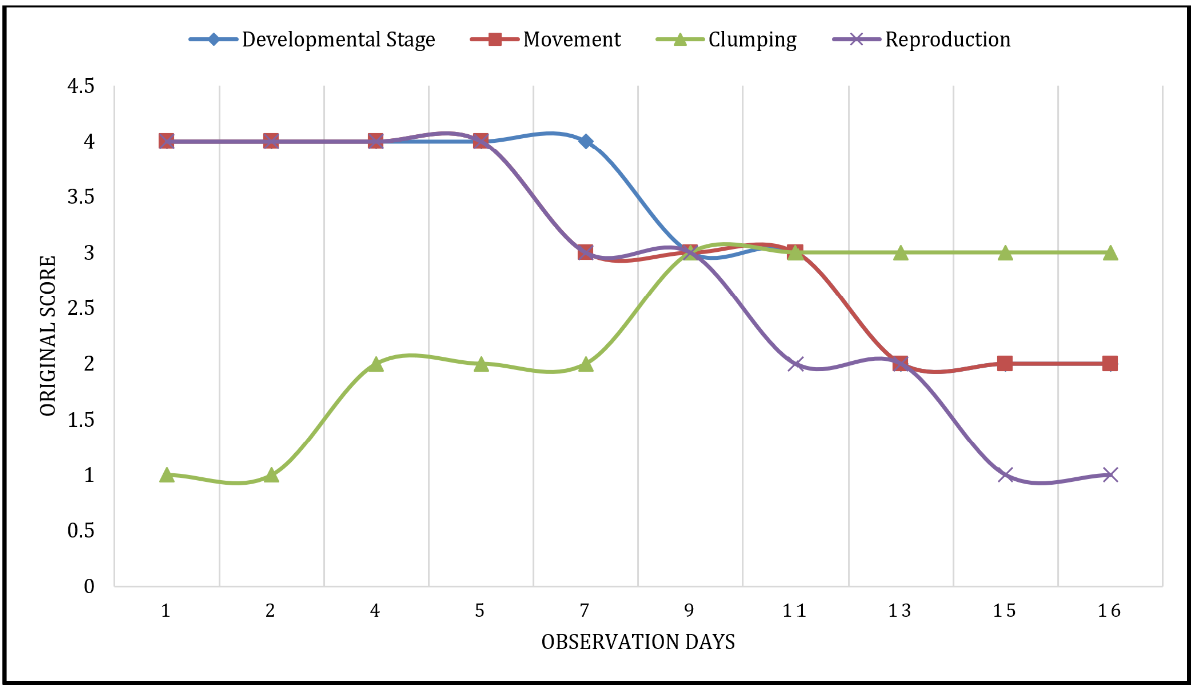
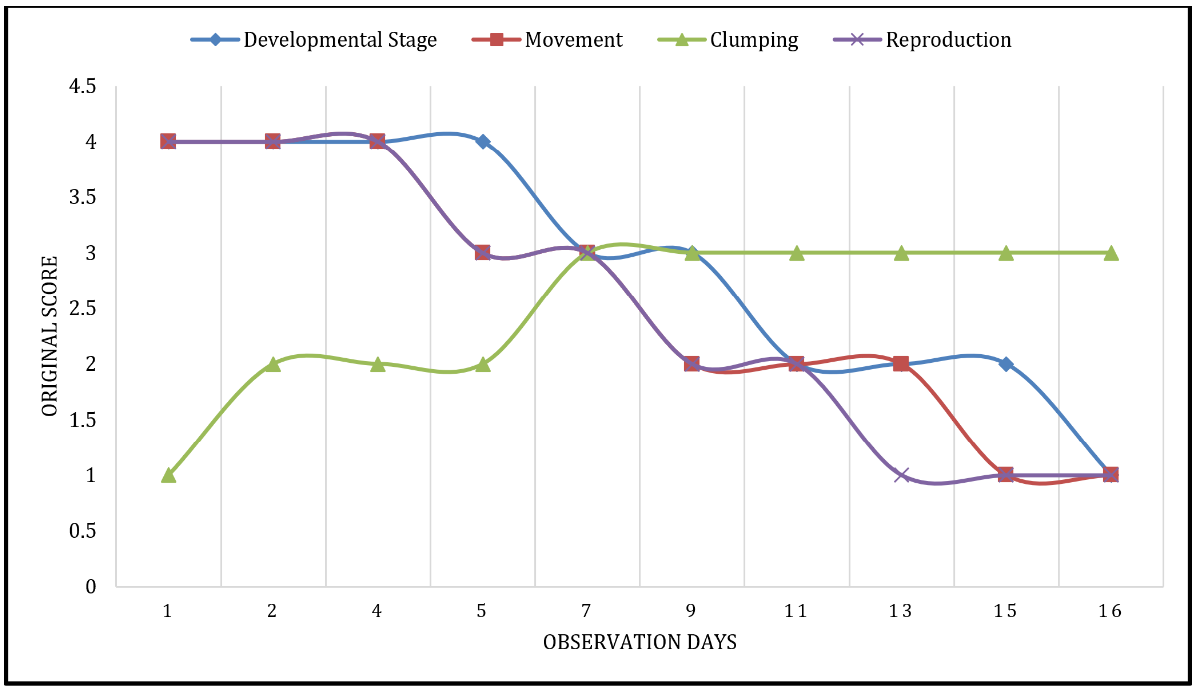
Developmental stage, locomotor activity, clumping, and reproductive activity were recorded using the ordinal categories in Table 1. The four variables are reported separately and do not constitute a validated composite stress score. Higher scores do not have a uniform biological meaning across variables. In particular, the Dauer category is retained only as part of the original developmental-stage rubric and is not interpreted as a monotonic stress endpoint in CF1038 DAF-16 (mu86), which is Dauer-defective.
| Score | Developmental Stage | Movement | Clumping | Reproduction Rate |
| 1 | L1 | None | Even | No eggs observed |
| 2 | L2-L3 | Very slow | Loose clusters | Few eggs |
| 3 | L4 | Moderate | Moderate | Moderate eggs |
| 4 | Mostly adults | Active, fast | Dense | High eggs |
| 5 | Dauer | N/ A | Scarce | Very high |
Note: The Dauer category is retained to document the original rubric but is not interpreted as a monotonic stress endpoint in CF1038 DAF-16 (mu86) I. Clumping also does not map monotonically onto physiological function.
Statistical analysis
To account for repeated observations from the same experimental units, measurements collected across observation days were not treated as independent replicates. Population estimates were evaluated across the three independent trials, with trial-level means calculated separately for each genotype and treatment condition. Within each genotype, beetroot and control conditions were compared across matched trials using paired t-tests, and 95% confidence intervals were calculated for the treatment-associated differences.
A trial-blocked two-factor analysis of variance was performed with genotype, treatment, and the genotype-by-treatment interaction as fixed effects and trial included as a blocking factor. Statistical significance was defined as p < 0.05. The genotype-by-treatment interaction was used to test directly whether the magnitude of the beetroot-associated response differed between CF1038 and N2 worms.
Results
Quantitative observations across three independent trials
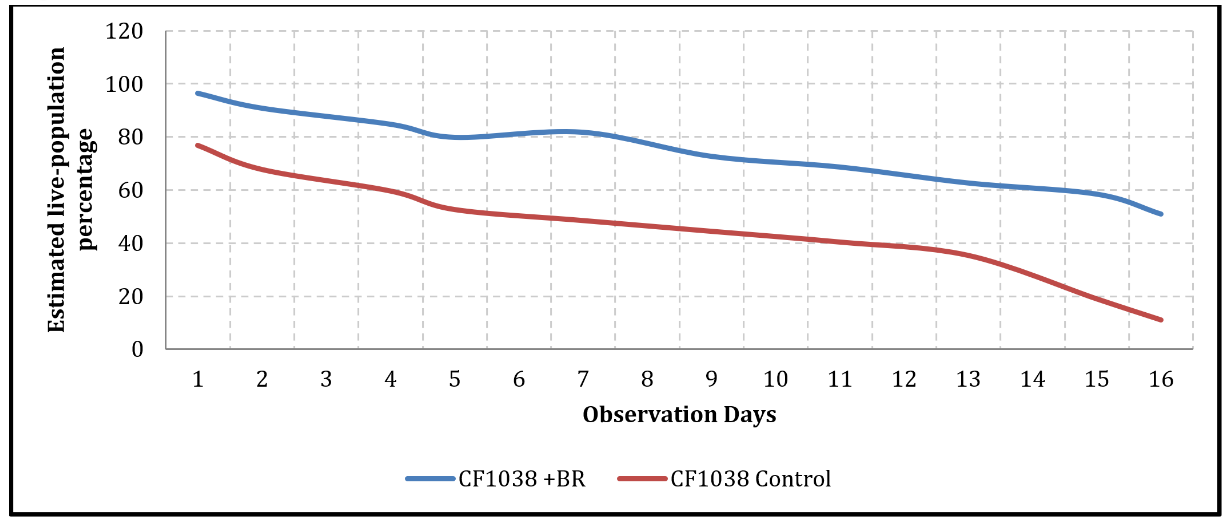
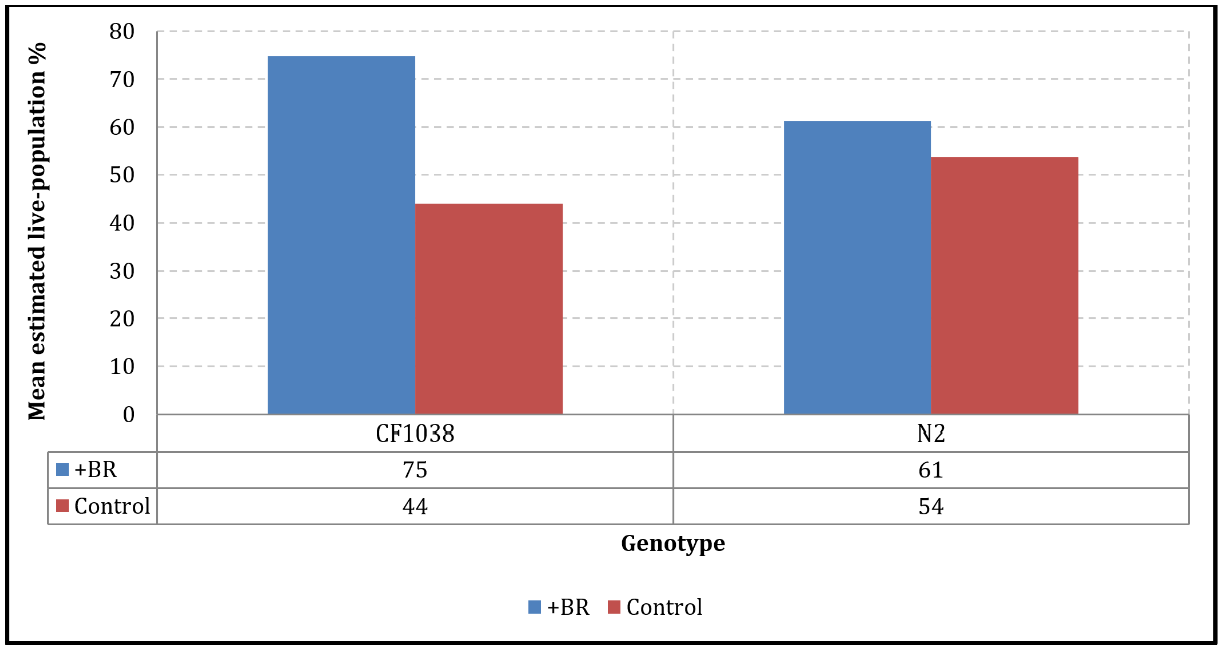
Across the three independent trials, the CF1038 + beetroot group had a mean estimated live-population percentage of 74.82%, compared with 43.92% for the CF1038 control. The mean treatment-associated difference was 30.89 percentage points (95% CI, 23.59-38.20). A paired comparison across the three trials was statistically significant (t (2) = 18.20, p = 0.00301).
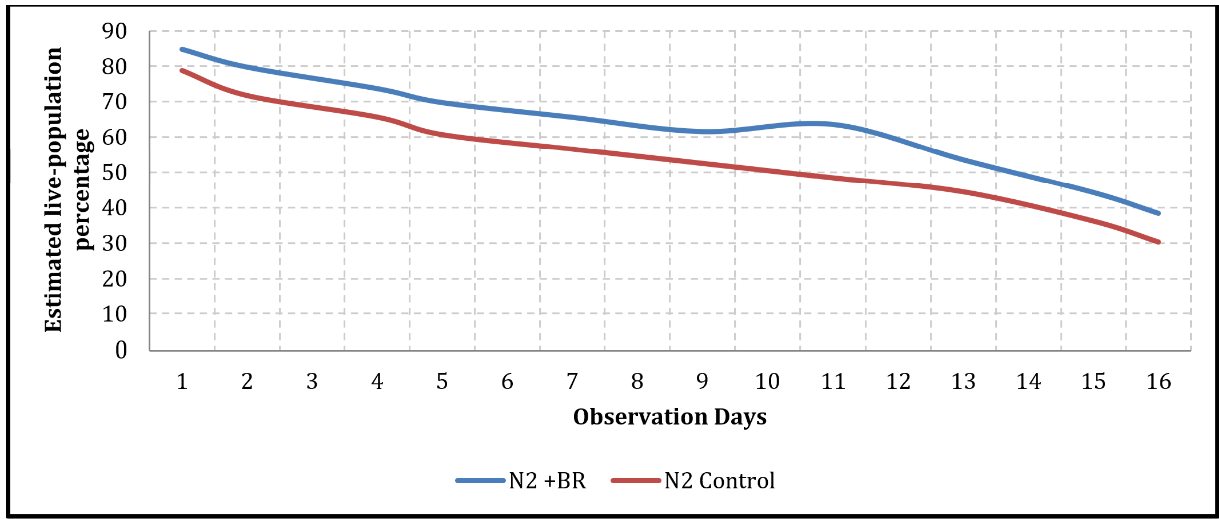
In N2 worms, the corresponding three-trial means were 61.31% for the beetroot group and 53.65% for the control, a difference of 7.66 percentage points (95% CI, 3.94-11.37; t (2) = 8.86, p = 0.01249). Thus, beetroot exposure was associated with higher mean cross-sectional population estimates in both genotypes, although the magnitude of the difference was substantially greater in CF1038.
The trial-blocked two-factor analysis confirmed that the treatment-associated difference depended on genotype. The genotype-by-treatment interaction was statistically significant (F (1, 6) = 196.16, p = 8.26 × 10⁻⁶). The interaction estimate was 23.24 percentage points (95% CI, 12.25-34.22), indicating that the beetroot-associated difference was approximately 23.24 percentage points larger in CF1038 than in N2.
The overall treatment effect was also significant (F (1, 6) = 539.92, p = 4.17 × 10⁻⁷). Trial-level mean population estimates for all four experimental groups are summarized in Table 2. Figures 1 and 2 show the temporal population-estimate profiles for CF1038 and N2, respectively. Figure 3 illustrates the genotype-by-treatment interaction by comparing the three-trial mean population estimates for beetroot-treated and control conditions in each genotype.
| Group | Trial 1 | Trial 2 | Trial 3 | 3-Trial Mean |
| CF1038 +BR | 74 | 71.73 | 78.71 | 74.81 |
| CF1038 Control | 45.1 | 42.22 | 44.44 | 43.92 |
| N2 +BR | 62.9 | 58.2 | 62.82 | 61.3 |
| N2 Control | 54 | 50.12 | 56.82 | 53.65 |
Qualitative observations
Qualitative observations for CF1038 + beetroot and CF1038 control are shown in Figures 4 and 5, respectively. Reproduction did not cease in every group: the CF1038 + beetroot observations include a reproduction score of 2 (“Few eggs”) on Days 13 and 15. Later observations also included younger larvae, confirming that reproduction introduced new individuals into the population.
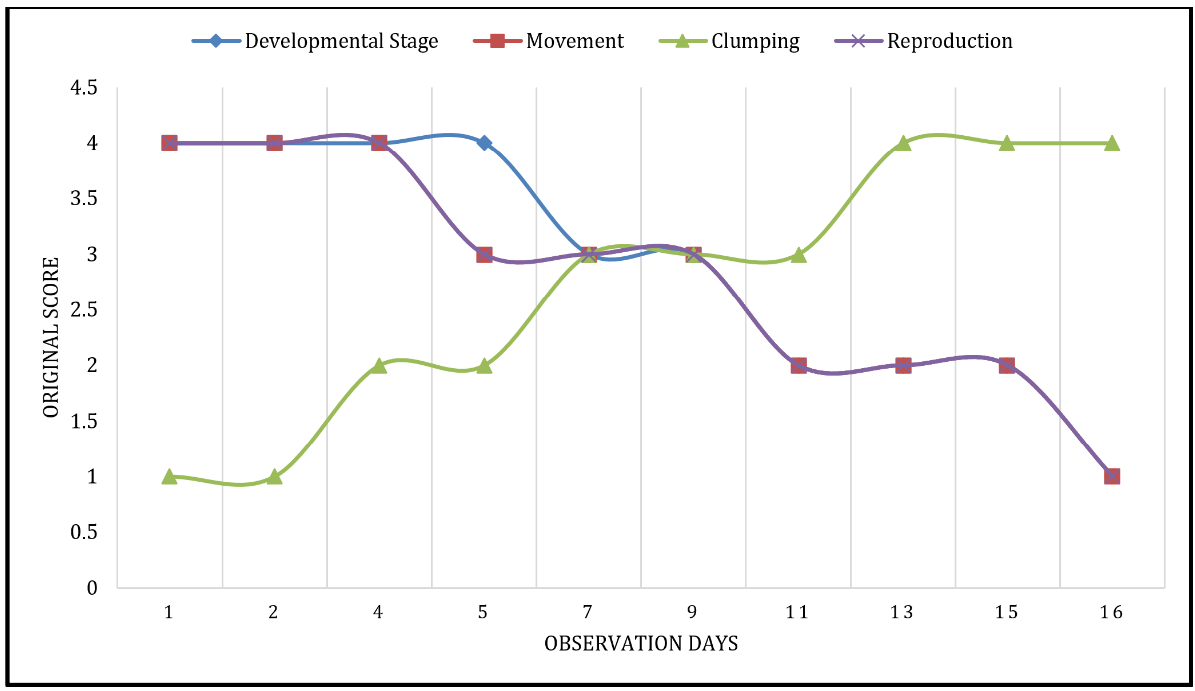
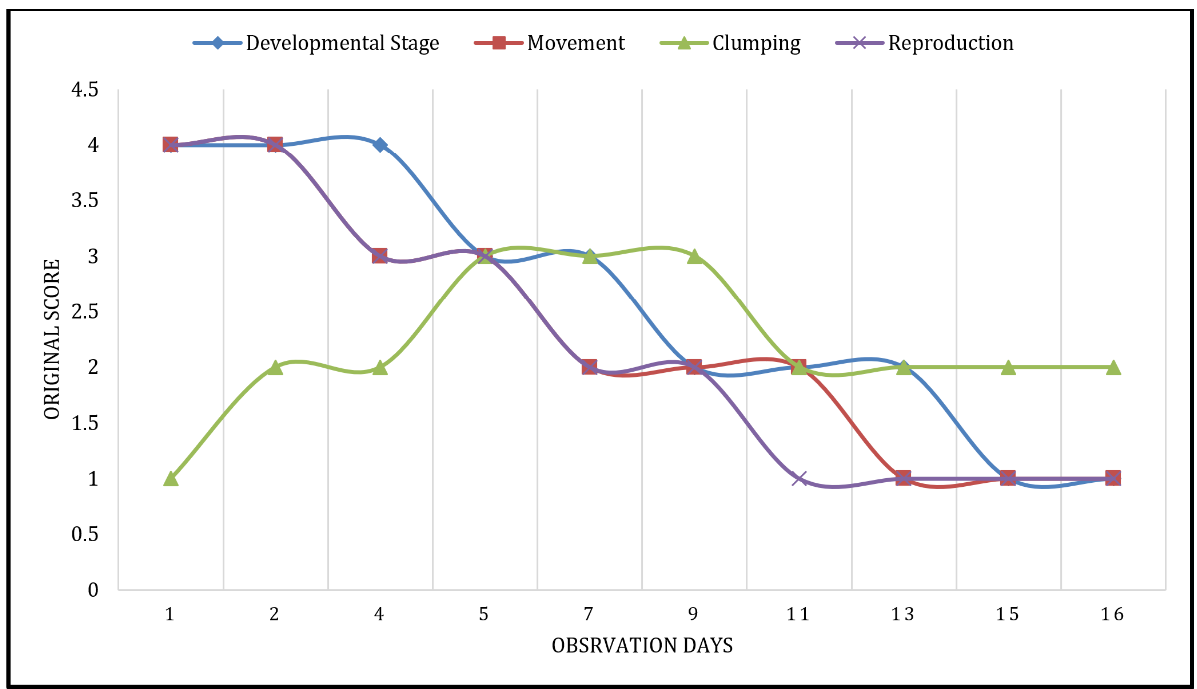
Clumping varied over time and did not consistently indicate reduced stress in beetroot-exposed animals. On Days 13 and 15, CF1038 + beetroot had a clumping score of 4 (“Dense”), whereas the CF1038 control had a score of 2 (“Loose clusters”). The corresponding qualitative observations for N2 + beetroot and N2 control are shown in Figures 6 and 7, respectively. The qualitative measures are therefore reported descriptively rather than combined into a single stress index.
Discussion
Across three independent trials, beetroot exposure was associated with higher cross-sectional live-population estimates during food deprivation in both CF1038 and N2 worms. The direct genotype-by-treatment interaction was significant: the treatment-associated difference was 30.89 percentage points in CF1038 but 7.66 percentage points in N2, producing an interaction estimate of 23.24 percentage points. This interaction directly tests whether the treatment-associated difference varied by genotype rather than inferring a genotype difference from significance in one strain and non-significance in the other.
Food deprivation was the experimental stressor in this study; ROS, oxidative damage, and responses to a defined oxidant were not measured. DAF-16 contributes to survival during food deprivation and starvation, including through metabolic programs involving gluconeogenesis and trehalose synthesis4,5. Nutrient deprivation can also engage an antioxidant response6, but that observation does not make food deprivation equivalent to a direct oxidative-stress assay. Consistent with this distinction, SKN-1-dependent oxidative-stress resistance and longevity can be experimentally dissociated7.
The significant interaction shows that genotype modified the observed response to beetroot exposure under these experimental conditions, but it does not establish a molecular mechanism. The data do not demonstrate that beetroot compounds compensate for loss of DAF-16, nor do they distinguish among DAF-16-independent signaling, altered feeding or bacterial metabolism, developmental effects, or actions of individual components within the commercial beetroot preparation. Purified betalains and myricetin show DAF-16-dependent longevity or stress-response effects in C. elegans12,14. Similar dependence on both DAF-16 and SKN-1 has been demonstrated for Rhodiola extract and lentinan18,19. Other phytochemicals show distinct pathway requirements. Chlorogenic acid involves DAF-16 isoforms and SKN-1, raspberry extract depends on insulin/IGF signaling and DAF-16, and Hibiscus sabdariffa depends on both DAF-16 and SKN-116,20,21. Accordingly, the present result is interpreted as a genotype-dependent phenotypic association that warrants mechanistic follow-up rather than proof of pathway compensation.
A further limitation is that beetroot was applied while worms were feeding on live OP50. Bacterial diet can substantially alter C. elegans development, reproduction, metabolism, gene expression, and lifespan-related phenotypes25. Therefore, a treatment-related change in OP50 metabolism or food quality could contribute to the observed worm response even if gross bacterial growth appeared normal. Because the worms were transferred directly rather than washed, residual bacteria or treatment-associated material could also have been carried to the food-deprivation plates. The starvation plates themselves contained neither OP50 nor beetroot. Future work should separate direct effects on the worm from indirect effects mediated through bacterial food.
The sampling procedure also warrants caution. Multiple fixed grid positions and touch confirmation of apparently immobile worms improve reproducibility relative to the description in the original manuscript. Nevertheless, extrapolating from sampled sectors can be biased when worms clump, and normalization to the maximum observed population is not equivalent to tracking survival of known individuals. Standard C. elegans lifespan protocols use age-matched cohorts, procedures that prevent progeny from entering the scored population, repeated scoring of the same cohort, and survival analysis with appropriate handling of censored animals24. A future fixed-cohort experiment should therefore use those features rather than infer survival from changing cross-sectional population estimates.
Existing primary studies do not support assuming that a dietary antioxidant can substitute for DAF-16. Purified betalain effects have been linked to DAF-16/FOXO and SKN-1/Nrf2 signaling12, a related betaxanthin phenotype involved DAF-16 and insulin signaling13, and myricetin-mediated lifespan extension and ROS reduction were abolished in CF1038 daf-16(mu86) worms14. The present findings should therefore be interpreted as a genotype-dependent response to a complex beetroot preparation, not as evidence that beetroot compensates for loss of DAF-16. Testing the causal pathway will require defined compounds, additional mutant comparisons, direct ROS or oxidative-damage measurements, and/or transcriptional reporters.
This study demonstrates a reproducible association between Beta vulgaris exposure and higher cross-sectional live-population estimates during food deprivation in both wild-type N2 and CF1038 daf-16(mu86) I C. elegans across three independent trials. CF1038 showed a 30.89-percentage-point treatment-associated difference, compared with 7.66 percentage points in N2, and the genotype-by-treatment interaction was statistically significant (F (1, 6) = 196.16, p = 8.26 × 10⁻⁶).
These findings indicate that the magnitude of the beetroot-associated response differed by genotype. Because reproduction continued and individual worms were not followed as a fixed cohort, the experiment does not establish lifespan extension or longevity; because ROS or oxidative damage were not directly measured, it does not establish an antioxidant mechanism.
The results nevertheless provide evidence that a beetroot preparation can differentially influence cross-sectional population estimates during food deprivation depending on daf-16 genotype and support further studies using fixed cohorts, defined oxidative challenges, and molecular pathway measurements.
Acknowledgements
The author gratefully acknowledges Dr. Nikki Malhotra and Dr. Vidya Kulkarni for their mentorship, guidance, and continuous support throughout the development of this research project. Appreciation is extended to the faculty and staff of The Center for Advanced Studies and Research at Thousand Oaks High School for providing access to laboratory facilities, equipment, materials, and research time that made this project possible.
References
- S. Ogg, S. Paradis, S. Gottlieb, G. I. Patterson, L. Lee, H. A. Tissenbaum, G. Ruvkun. The Fork head transcription factor DAF-16 transduces insulin-like metabolic and longevity signals in C. elegans. Nature. Vol. 389, pg. 994–999, 1997. https://doi.org/10.1038/40194. [↩] [↩] [↩]
- C. Kenyon, J. Chang, E. Gensch, A. Rudner, R. Tabtiang. A C. elegans mutant that lives twice as long as wild type. Nature. Vol. 366, pg. 461–464, 1993. https://doi.org/10.1038/366461a0. [↩]
- S. T. Henderson, T. E. Johnson. daf-16 integrates developmental and environmental inputs to mediate aging in the nematode Caenorhabditis elegans. Current Biology. Vol. 11, pg. 1975–1980, 2001. https://doi.org/10.1016/S0960-9822(01)00594-2. [↩]
- S. T. Henderson, M. Bonafè, T. E. Johnson. daf-16 protects the nematode Caenorhabditis elegans during food deprivation. The Journals of Gerontology: Series A. Vol. 61, pg. 444–460, 2006. https://doi.org/10.1093/gerona/61.5.444. [↩] [↩]
- J. D. Hibshman, A. E. Doan, B. T. Moore, R. E. Kaplan, A. Hung, A. K. Webster, D. P. Bhatt, R. Chitrakar, M. D. Hirschey, L. R. Baugh. daf-16/FoxO promotes gluconeogenesis and trehalose synthesis during starvation to support survival. eLife. Vol. 6, pg. e30057, 2017. https://doi.org/10.7554/eLife.30057. [↩] [↩]
- J. Tao, Q. Y. Wu, Y. C. Ma, Y. L. Chen, C. G. Zou. Antioxidant response is a protective mechanism against nutrient deprivation in C. elegans. Scientific Reports. Vol. 7, pg. 43547, 2017. https://doi.org/10.1038/srep43547. [↩] [↩]
- J. M. A. Tullet, J. W. Green, C. Au, A. Benedetto, M. A. Thompson, E. Clark, A. F. Gilliat, A. Young, K. Schmeisser, D. Gems. The SKN-1/Nrf2 transcription factor can protect against oxidative stress and increase lifespan in C. elegans by distinct mechanisms. Aging Cell. Vol. 16, pg. 1191–1194, 2017. https://doi.org/10.1111/acel.12627. [↩] [↩]
- B. J. Willcox, T. A. Donlon, Q. He, R. Chen, J. S. Grove, K. Yano, K. H. Masaki, D. C. Willcox, B. Rodriguez, J. D. Curb. FOXO3A genotype is strongly associated with human longevity. Proceedings of the National Academy of Sciences of the United States of America. Vol. 105, pg. 13987–13992, 2008. https://doi.org/10.1073/pnas.0801030105. [↩]
- H. Bae, A. Gurinovich, A. Malovini, G. Atzmon, S. L. Andersen, F. Villa, N. Barzilai, A. Puca, T. T. Perls, P. Sebastiani. Effects of FOXO3 polymorphisms on survival to extreme longevity in four centenarian studies. The Journals of Gerontology: Series A. Vol. 73, pg. 1439–1447, 2018. https://doi.org/10.1093/gerona/glx124. [↩]
- T. Sawicki, N. Bączek, W. Wiczkowski. Betalain profile, content and antioxidant capacity of red beetroot dependent on the genotype and root part. Journal of Functional Foods. Vol. 27, pg. 249–261, 2016. https://doi.org/10.1016/j.jff.2016.09.004. [↩] [↩]
- M. A. Guerrero-Rubio, S. Hernández-García, F. García-Carmona, F. Gandía-Herrero. Extension of life-span using a RNAi model and in vivo antioxidant effect of Opuntia fruit extracts and pure betalains in Caenorhabditis elegans. Food Chemistry. Vol. 274, pg. 840–847, 2019. https://doi.org/10.1016/j.foodchem.2018.09.067. [↩]
- M. A. Guerrero-Rubio, S. Hernández-García, J. Escribano, M. Jiménez-Atiénzar, J. Cabanes, F. García-Carmona, F. Gandía-Herrero. Betalain health-promoting effects after ingestion in Caenorhabditis elegans are mediated by DAF-16/FOXO and SKN-1/Nrf2 transcription factors. Food Chemistry. Vol. 330, pg. 127228, 2020. https://doi.org/10.1016/j.foodchem.2020.127228. [↩] [↩] [↩]
- P. Henarejos-Escudero, S. Hernández-García, M. A. Guerrero-Rubio, F. García-Carmona, F. Gandía-Herrero. Antitumoral drug potential of tryptophan-betaxanthin and related plant betalains in the Caenorhabditis elegans tumoral model. Antioxidants. Vol. 9, pg. 646, 2020. https://doi.org/10.3390/antiox9080646. [↩] [↩]
- C. Büchter, D. Ackermann, S. Havermann, S. Honnen, Y. Chovolou, G. Fritz, A. Kampkötter, W. Wätjen. Myricetin-mediated lifespan extension in Caenorhabditis elegans is modulated by DAF-16. International Journal of Molecular Sciences. Vol. 14, pg. 11895–11914, 2013. https://doi.org/10.3390/ijms140611895. [↩] [↩] [↩]
- S. Q. Zheng, X. B. Huang, T. K. Xing, A. J. Ding, G. S. Wu, H. R. Luo. Chlorogenic acid extends the lifespan of Caenorhabditis elegans via insulin/IGF-1 signaling pathway. The Journals of Gerontology: Series A. Vol. 72, pg. 464–472, 2017. https://doi.org/10.1093/gerona/glw105. [↩]
- F. M. Siswanto, R. Sakuma, A. Oguro, S. Imaoka. Chlorogenic acid activates Nrf2/SKN-1 and prolongs the lifespan of Caenorhabditis elegans via the Akt-FOXO3/DAF16a-DDB1 pathway and activation of DAF16f. The Journals of Gerontology: Series A. Vol. 77, pg. 1503–1516, 2022. https://doi.org/10.1093/gerona/glac062. [↩] [↩]
- H. Wang, J. Liu, T. Li, R. H. Liu. Blueberry extract promotes longevity and stress tolerance via DAF-16 in Caenorhabditis elegans. Food & Function. Vol. 9, pg. 5273–5282, 2018. https://doi.org/10.1039/C8FO01680A. [↩]
- S. Jiang, N. Deng, B. Zheng, T. Li, R. H. Liu. Rhodiola extract promotes longevity and stress resistance of Caenorhabditis elegans via DAF-16 and SKN-1. Food & Function. Vol. 12, pg. 4471–4483, 2021. https://doi.org/10.1039/D0FO02974B. [↩] [↩]
- H. Liu, Y. Wang, W. Zhang, W. Sun, X. Ji, S. Zhang, K. Qiao. Lentinan extends lifespan and increases oxidative stress resistance through DAF-16 and SKN-1 pathways in Caenorhabditis elegans. International Journal of Biological Macromolecules. Vol. 202, pg. 286–295, 2022. https://doi.org/10.1016/j.ijbiomac.2022.01.071. [↩] [↩]
- B. Song, B. Zheng, T. Li, R. H. Liu. Raspberry extract promoted longevity and stress tolerance via the insulin/IGF signaling pathway and DAF-16 in Caenorhabditis elegans. Food & Function. Vol. 11, pg. 3598–3609, 2020. https://doi.org/10.1039/C9FO02845E. [↩] [↩]
- K. Koch, N. Weldle, S. Baier, C. Büchter, W. Wätjen. Hibiscus sabdariffa L. extract prolongs lifespan and protects against amyloid-beta toxicity in Caenorhabditis elegans: involvement of the FoxO and Nrf2 orthologues DAF-16 and SKN-1. European Journal of Nutrition. Vol. 59, pg. 137–150, 2020. https://doi.org/10.1007/s00394-019-01894-w. [↩] [↩]
- J. Wang, N. Deng, H. Wang, T. Li, L. Chen, B. Zheng, R. H. Liu. Effects of orange extracts on longevity, healthspan, and stress resistance in Caenorhabditis elegans. Molecules. Vol. 25, pg. 351, 2020. https://doi.org/10.3390/molecules25020351. [↩]
- T. S. Kujala, J. M. Loponen, K. D. Klika, K. Pihlaja. Phenolics and betacyanins in red beetroot (Beta vulgaris) root: distribution and effect of cold storage on the content of total phenolics and three individual compounds. Journal of Agricultural and Food Chemistry. Vol. 48, pg. 5338–5342, 2000. https://doi.org/10.1021/jf000523q. [↩]
- F. R. G. Amrit, R. Ratnappan, S. A. Keith, A. Ghazi. The C. elegans lifespan assay toolkit. Methods. Vol. 68, pg. 465–475, 2014. https://doi.org/10.1016/j.ymeth.2014.04.002. [↩] [↩]
- N. L. Stuhr, S. P. Curran. Bacterial diets differentially alter lifespan and healthspan trajectories in C. elegans. Communications Biology. Vol. 3, pg. 653, 2020. https://doi.org/10.1038/s42003-020-01379-1. [↩]