

Abstract
Obesity is a growing global health crisis, affecting approximately one in eight individuals worldwide. Glucagon-like peptide-1 (GLP-1) receptor agonism is an established target in obesity therapy, but as monotherapy it has limitations such as loss of lean mass and a plateau in weight reduction. Combination strategies pairing GLP-1 receptor agonism with a second mechanism have therefore gained significance. In this narrative review we examine combinations of GLP-1 receptor agonism with mechanisms selected on a development-stage criterion, including glucose-dependent insulinotropic polypeptide (GIP) agonism, amylin agonism, and activin and myostatin inhibition. We report the clinical and preclinical efficacy of each combination as percent change in body weight from baseline. Several combinations achieved greater weight loss than the corresponding single agents, with reported reductions of 13.4% to 24.3%. We also asked whether the biochemical relationship between two paired mechanisms might help predict the efficacy of their combination. Using the KEGG pathway database, we determined the number of pathways shared by each pair and compared this count against reported clinical efficacy. We find that shared pathway count did not distinguish the more effective combinations from the less effective ones, although we acknowledge our limited data and the variability across studies. We discuss the need for further research to make combination therapies more effective and safer, including the development of tools to predict efficacy in advance.
Keywords: obesity, GLP-1 receptor agonist, combination therapy, KEGG pathway analysis, weight loss
Introduction
Obesity affects an estimated one in eight individuals worldwide and is associated with cardiovascular disease, type 2 diabetes, and other serious comorbidities1. Given the rapid increase in prevalence and severity of health risks caused by obesity, effective weight management strategies by pharmacotherapy are of high priority for healthcare providers, researchers and drug developers.
Glucagon-like peptide-1 (GLP-1), a gut hormone released from the intestine after meals, has emerged as a transformative therapeutic target in obesity intervention2. GLP-1 enhances glucose-dependent insulin secretion, slows gastric emptying and acts on appetite centers in the brain to reduce food intake, thereby driving weight loss3. These actions have been exploited therapeutically by GLP-1 receptor agonists. Semaglutide, the most effective of these, produces 15-17% weight loss in adults with obesity and was approved for obesity treatment in 20214. Success of semaglutide redirected the field toward additional hormonal and metabolic targets including the gut hormone GIP (glucose-dependent insulinotropic polypeptide), pancreatic hormones glucagon and amylin, and muscle-regulating ligands activin and myostatin5.
While monotherapies directed at individual mechanisms achieve moderate to substantial weight loss,they also have several limitations. These include failure to sustain long-term weight loss due to compensatory physiological responses, weight regain after drug discontinuation and dose-limiting side effects5. To overcome these limitations, obesity research is shifting toward combination therapy acting on multiple targets simultaneously6. Combination therapy is already an established method of treatment in other disease areas, including cancer and HIV7,8. Because obesity arises from imbalances across several physiological systems, the rationale for combination therapy is that targeting multiple targets or mechanisms will reduce or delay compensatory adaptations, improve efficacy and reduce adverse effects.
GLP-1 receptor agonists, with their established safety profile and proven efficacy, have become the backbone of combination strategy9. In this strategy, GLP-1 receptor agonist is paired with a second mechanism to achieve weight loss that is greater and/or better tolerated than either mechanism alone. Current GLP-1 combination approaches fall into two main categories: unimolecular multi-target agonists in which a single engineered molecule activates the GLP-1 receptor along with other target (s) and, multi-drug combination in which a GLP-1 receptor agonist such as semaglutide is co-administered with a separate molecule acting through a different mechanism. For this review, we consider both categories as combination therapy, since both engage more than one mechanism to enhance weight loss.
As the pipeline of GLP-1-based therapies expands, the number of possible pairings is increasing, and clinical evaluation is slow and costly. Any criterion that could prioritize combinations before trial would therefore have practical value. One such criterion might be the biochemical relationship between the two mechanisms. Mechanisms converging on shared downstream signaling might reinforce one another, whereas mechanisms acting through separate pathways might instead prove more effective, since they are less likely to engage the same compensatory responses that limit monotherapy. We asked whether the number of pathways shared by the two mechanisms in a combination predicts its efficacy. We used the Kyoto Encyclopedia of Genes and Genomes (KEGG), a curated database that assigns each target gene to defined biochemical pathways, to determine the number of pathways shared between GLP-1 receptor signaling and the partner mechanism in each combination. If pathway sharing carried predictive information, it would provide a low-cost criterion for prioritizing pairings that have not yet been evaluated.
In this narrative review, we examine GLP-1-based combination therapies for obesity, covering combinations that pair GLP-1 receptor activation with mechanisms independently regulating body mass, appetite or energy expenditure: GIP10, CB111, activin and myostatin12, amylin13, and GDF1514. For each, we summarize weight loss outcomes from clinical and preclinical studies as percent change in body weight from baseline. Applying KEGG pathway analysis to the assembled clinical dataset, we find that shared pathway count did not distinguish the more effective combinations from the less effective ones. Our analysis is preliminary, based on the limited human efficacy data available, but the underlying question of how to predict combination efficacy in advance remains an important one for the field. Finally, we consider the limitations of current GLP-1-based combinations and the questions that need to be addressed to advance obesity management and broaden the treatment options available to patients.
Methods
Selection of mechanisms and combination pairs: We selected mechanisms for review based on the level of active development in obesity pharmacotherapy, using Stifel’s 2024 obesity market review15. As per Stifel’s MOA crowding analysis, top ten mechanisms (excluding GLP-1 receptor agonism and microbe modulator), with three or more therapeutic programs in development (approved or in pipeline) are: GIP agonist, amylin, cannabinoid receptor 1 (CB1), G protein-coupled receptor 75 (GPR75) antagonist, G protein-coupled receptor 40 (GPR40) antagonist, GIP inhibitor, growth differentiation Factor 15 (GDF15) analogue, activin receptor inhibition, myostatin inhibitor, and lipase inhibitor. The mechanism of microbe modulator was excluded because of its non-specific and undefined nature of molecular targets16,17. These mechanisms span several biological levels, including receptor agonism and antagonism, hormone analogues, enzyme inhibition, and growth-factor pathway modulation. They were selected on a development-stage criterion rather than a mechanistic one. For the purpose of this review, we treat them as comparable units with respect to two defined properties rather than their upstream pharmacology: the weight loss produced when each is paired with GLP-1 receptor agonism, and the annotated
pathway membership of each mechanism’s primary target gene.
Combinations that pair one of these ten mechanisms with GLP-1 receptor agonism were studied for efficacy in clinical and pre-clinical settings. A combination was included if quantitative efficacy data were available from a published paper or a presented conference report. Of the ten mechanisms, six met the criterion and were carried forward for review. Four mechanisms, GPR40, GPR75, GIP inhibition and lipase inhibition, have no such study in combination with GLP-1 receptor agonist, and are not discussed further.
Literature search: literature search was conducted through searches of PubMed, Google scholar and Clinicaltrials.gov, using the search terms “obesity,” “weight loss”, “combination therapy”, “monotherapy”, “glucagon-like peptide-1 receptor agonist,” “glucagon-like peptide-1-based therapy”, “GLP-1R”, “semaglutide,” “tirzepatide,” “mechanisms of action”, as well as the name of each mechanism. Search period covered the years 2000-2026. Primary efficacy of each study is reported as percent change in body weight from baseline. All clinical results are from published papers, with the exception of clinical trial NCT06299098 (Table 1), for which efficacy data are taken from the completed 26-week results presented at the 61st Annual Meeting of the European Association for the Study of Diabetes (EASD) in September 2025, the company’s public release of those results, and the trial record on ClinicalTrials.gov.
Pathway mapping of mechanisms: We used the Kyoto Encyclopedia of Genes and Genomes (KEGG) Pathway Database18 to map the biochemical pathways associated with each mechanism. KEGG database was selected because it is publicly curated, applies uniformly across mechanisms of different classes, and requires no new experimental data. Pathway mapping was performed for GLP-1 and all ten mechanisms, including those without reported combination studies. The primary target gene of each mechanism was used to query the KEGG pathway database (organism: hsa). The mechanisms and their corresponding query genes are: GLP‑1 → glucagon‑like peptide 1 receptor (GLP1R); GIP → gastric inhibitory polypeptide receptor (GIPR); CB1 → cannabinoid receptor 1 (CNR1); GPR75 → G protein‑coupled receptor 75 (GPR75); GPR40 → free fatty acid receptor 1 (FFAR1); amylin → islet amyloid polypeptide (IAPP); GDF15 → growth differentiation factor 15 (GDF15); myostatin → myostatin (MSTN); activin → inhibin beta A (INHBA); lipase → lipase E (LIPE). We defined a shared pathway as the co-occurrence of two mechanisms’ target genes within the same annotated KEGG pathway. The mapping results were compiled into a pathway association table (Table 3) and the number of pathways shared between mechanisms in each combination is shown in Figure 1. Sharing was determined for GLP-1-anchored pairs only, since GLP-1 receptor agonism is the common component of every combination considered here.KEGG does not distinguish agonism from inhibition. Therefore, GIP agonism and GIP inhibition are both represented by GIPR and appear as single GIP column in Table 3 and a single bar in Figure 1.
Results
Of the ten mechanisms identified by the selection procedure (see Methods), six have been evaluated in combination with GLP-1 receptor agonism in clinical or preclinical studies. We summarize the reported weight loss for these combinations below (and in Table 1), beginning with clinical evaluations. Efficacy is reported throughout as mean percent change in body weight from baseline.
| GLP-1 combination | Agent(s) | Phase; Trial number | Dose | Duration | Efficacy (mean % change in body weight from baseline) | Ref |
| GLP-1 + GIP | tirzepatide | phase 3; NCT04184622 | tirzepatide: 5 mg, 10 mg, or 15 mg /week; | 72 weeks | tirzepatide (15 mg): -20.9%; placebo: -3% | A. M. Jastreboff et. al, (2022)19 |
| GLP-1 + Amylin | cagrilintide, semaglutide | phase 3a; NCT05567796 | cagrilintide: 2.4 mg; semaglutide: 2.4 mg; cagrilintide (2.4 mg) + semaglutide (2.4 mg); | 68 weeks | cagrilintide: -16.1%; semaglutide: -11.8%; cagrilintide + semaglutide: -20.4% | W. T. Garvey et al, (2025)20 |
| GLP-1 + Amylin | amycretin | phase 1b/2a; NCT06064006 | dose escalated weekly from 0.3 mg up to 60 mg (nine-step escalation); | 36 weeks | amycretin: -24.3%; placebo: -1.1% | K. Dahl et al., (2025)21 |
| GLP-1 + Activin | bimagrumab, semaglutide | phase 2b; NCT05616013 | bimagrumab: 10 mg/kg or 30 mg/kg per 12 weeks; semaglutide: 1.0 mg or 2.4 mg /week; bimagrumab + semaglutide: combinations of above; | 48 weeks or 72 weeks | bimagrumab (30 mg/kg): -9.7% at 48 weeks; -10.8% at 72 weeks; semaglutide (2.4 mg): -14.7% at 48 weeks; -15.7% at 72 weeks; bimagrumab (30 mg/kg) + semaglutide (2.4 mg): -20.2% at 48 weeks; -22.1% at 72 weeks | S. B. Heymsfield et al., (2026)22 |
| GLP-1 + Myostatin + Activin | trevogrumab, garetosmab, semaglutide | phase 2; NCT06299098 | semaglutide 2.4 mg /week; semaglutide 2.4 mg + trevogrumab 200 mg /week; semaglutide 2.4 mg + trevogrumab 400 mg /week; semaglutide 2.4 mg + trevogrumab 400 mg + garetosmab 10 mg/kg per week; | 26 weeks | semaglutide: -10.6%; semaglutide + trevogrumab (400 mg): -11.1%; semaglutide + trevogrumab (400 mg) + garetosmab: -13.4% | Regeneron Pharmaceuticals23, ClinicalTrials24 |
Clinical efficacy of GLP-1-based combination therapies
GLP-1/GIP dual agonism: GIP is an incretin hormone that, like GLP-1, is released from the gut after meals and enhances glucose-dependent insulin secretion10. Tirzepatide is a single-molecule dual agonist that activates both GLP-1 and GIP receptors19. In the SURMOUNT-1 phase 3 trial in adult patients with obesity, once-weekly tirzepatide for 72 weeks achieved mean body weight loss of 15%, 19.5% and 20.9% from baseline with the 5 mg, 10mg, and 15 mg doses respectively, compared with a 3% reduction in the placebo group19. 57% of participants in 15-mg group had a reduction in body weight of 20% or more, as compared with 3% in the placebo group. Tirzepatide received FDA approval for chronic weight management in 2023, becoming the first approved GLP-1 based combination therapy for obesity. The dose-dependent increase in weight loss across the three arms indicates that efficacy was not limited by tolerability at the doses tested, distinguishing this combination from GLP-1 monotherapy.
GLP-1/amylin combinations: Amylin, a pancreatic hormone with metabolic actions complementary to GLP-125 has been evaluated using both multi-drug and unimolecular approaches. In the dual drug strategy, termed CagriSema, cagrilintide an amylin analogue, was co-administered with semaglutide20. In a 68-week phase 3 trial, weekly CagriSema, (2.4 mg of each agent) achieved 20.4 % weight loss in adults with obesity, compared with 11.8% for semaglutide alone, 16.1 % for cagrilintide alone, and 3% for placebo. In the unimolecular strategy, bioactive domains of GLP-1 and amylin were engineered into a single molecule, amycretin21. In a phase 1b/2a trial dose escalation study (0.3-60mg), the highest dose of amycretin produced 24.3% weight loss over 36 weeks, compared with 1.1% in the placebo group21.
GLP-1 with activin and myostatin inhibition: Activin and myostatin are TGF‑β superfamily ligands that regulate skeletal muscle growth12. Their inhibition has been combined with GLP-1 receptor agonism with the aim of preserving lean mass during weight loss. In a phase 2b trial, bimagrumab, a monoclonal antibody blocking activin type II receptors, was assessed alone and in combination with semaglutide. Participants were administered bimagrumab (10 mg/kg or 30 mg/kg) or semaglutide (1.0 mg or 2.4 mg) and combinations thereof22. Patients receiving the high dose combination of bimagrumab (30mg/kg) and semaglutide (2.4 mg) achieved the greatest weight reduction (22.1% from baseline at 72 weeks) compared to semaglutide alone (15.7%) or bimagrumab alone (10.8%)22. The combination also produced a more favorable body composition, with 92.8% of total weight lost coming from fat mass and lean mass declining by only 2.6% compared with 7.9% on semaglutide alone. Another antibody-based strategy evaluated garetosmab and trevogrumab, monoclonal antibodies that inhibit activin A and myostatin respectively. In a phase2 trial, adults with obesity received semaglutide alone (2.4 mg), semaglutide plus trevogrumab (200 mg or 400 mg), or a triple combination of semaglutide, trevogrumab (400 mg) and garetosmab (10 mg/kg)26,27. Semaglutide alone produced 10.6% weight loss, and semaglutide plus trevogrumab (400 mg) produced a modest increase to 11.1%. The triplet combination achieved a reduction of 13.4% from baseline. The triplet combination also shifted the composition of weight lost, increasing fat loss relative to semaglutide alone while preserving a substantial proportion of the lean mass that semaglutide treatment would otherwise have removed.
| GLP-1 combination | Agent(s) | Animal | Duration | Dose | Efficacy (mean % change in body weight from baseline) | Ref |
| GLP-1 + Amylin | Amycretin | DIO mice | 21 days | 2 nmoles/kg or 10 nmoles/kg; | Amycretin 2 nmoles/kg: -15.8%; Amycretin 10 nmoles/kg: -21.3%; Vehicle: 0% | R. E. Kuhre et al., (2025)28 |
| GLP-1 + GDF15 | QL1005, Semaglutide | DIO mice | 22 days | QL1005: 10 nmol/kg or 30 nmol/kg; Semaglutide: 30 nmol/kg; | QL1005 (10 nmol/kg): -25%; QL1005 (30 nmol/kg): -35%; Semaglutide: -20% | Y. Zhang et al., (2023)29 |
| GLP-1 + GDF15 | QL1005 | obese cynomolgus monkey | 62 days | QL1005: 1 nmol/kg, 3 nmol/kg or 10 nmol/kg; | QL1005 (1 nmol/kg): -7%; QL1005 (3 nmol/kg): -14%; QL1005 (10 nmol/kg): -18%; Vehicle: -1% | Y. Zhang et al., (2023)29 |
| GLP-1 + CB1 | JD-5037, IUB48 | DIO mice | 15 days | JD-5037: 1 mg/kg; IUB48: 100 nmol/kg; | IUB48: -5%; JD-5037: -25%; JD-5037 + IUB48: -35% | P. Zizzari, et al., (2021)30 |
| GLP-1 + Activin | Bimagrumab, Semaglutide | DIO mice | 14 days | Bimagrumab: 20 mg/kg; Semaglutide: 120 µg/kg; Bimagrumab (20 mg/kg) + Semaglutide (120 µg/kg); | Bimagrumab: -5%; Semaglutide: -25%; Bimagrumab + Semaglutide: -25% | E. Nunn et al., (2024)31 |
| GLP-1 + Myostatin + Activin | Trevogrumab, Garetosmab, Semaglutide | DIO mice | 28 days | Semaglutide: 7 µg; Trevogrumab (10 mg/kg) + Garetosmab (10 mg/kg); Semaglutide (7 µg) + Trevogrumab (10 mg/kg) + Garetosmab (10 mg/kg); | Semaglutide: -15%; Trevogrumab + Garetosmab: -5%; Semaglutide + Trevogrumab + Garetosmab: -18% | J. W. Mastaitis et al., (2025)32 |
| GLP-1 + Myostatin + Activin | Trevogrumab, Garetosmab, Semaglutide | obese cynomolgus monkey | 20 weeks | Semaglutide: 10 µg/kg; Trevogrumab (50 mg/kg) + Garetosmab (50 mg/kg); Semaglutide (10 µg/kg) + Trevogrumab (50 mg/kg) + Garetosmab (50 mg/kg); | Semaglutide: -10%; Trevogrumab + Garetosmab: -1%; Semaglutide + Trevogrumab + Garetosmab: -10% | J. W. Mastaitis et al., (2025)32 |
Preclinical efficacy of GLP-1-based combination therapies
Comparison of preclinical and clinical outcomes: Preclinical findings provide mechanistic context for GLP‑1–based combination therapies (summarized in Table 2) and, in several cases, closely mirror the clinical outcomes described above. Amycretin produced a 21.3% reduction in body weight in diet-induced obese mice (DIO) compared with minimal change in vehicle‑treated controls28, consistent with the 24.3% reduction observed clinically21.
A similar concordance is seen in bimagrumab/semaglutide combination. In DIO mice, semaglutide (120µg/kg), bimagrumab (20mg/kg), or their combination were administered and weight loss and body composition were assessed31. Semaglutide alone and the combination each produced 25% weight loss. The combination nevertheless yielded superior body composition, reducing fat mass by 70% compared with 50% for semaglutide alone, while preserving lean mass. These results aligned with clinical observations in which combination produced 92.8% fat mass loss as a proportion of total weight loss22.
The triple combination of semaglutide with trevogrumab and garetosmab has also been evaluated preclinically in DIO mice and in obese cynomolgus monkeys33. In both species, total weight loss with the triple combination was similar to that with semaglutide alone (Table 2). However, the composition of the weight lost differed. Semaglutide alone reduced lean mass, whereas the triple combination preserved and modestly increased it. Fat loss was approximately twice in triple combination than semaglutide alone. Lean mass moderately increased in triple combination, while it reduced in semuglutide only. The same pattern appeared in monkeys treated for 20 weeks32. This is consistent with the clinical finding for the same combination, in which the triple combination shifted the composition of weight lost toward fat while preserving a substantial proportion of lean mass34,27.
Emerging combinations not yet in clinical testing: Beyond combinations already evaluated clinically, several GLP-1 based combinations show promising preclinical efficacy. GDF15 is a regulator of appetite and body weight14. GDF15 has been explored in combination with GLP-1 through a dual-agonist engineered fusion protein QL100529. In DIO mice, QL1005 induced dose-dependent weight reductions of 25% and 35% at 10 and 30 nmol/kg after 22 days, exceeding the 20% reduction achieved by semaglutide at the equivalent 30 nmol/kg dose. In obese cynomolgus monkeys, QL1005 produced 7%, 14%, and 18% weight loss at 1, 3, and 10 nmol/kg, respectively, compared with 1% in vehicle-treated animals. QL1005 also lowered plasma triglycerides, cholesterol, and insulin levels, indicating metabolic benefit extends beyond weight reduction.
Cannabinoid receptor type 1 (CB1R) antagonism has also been combined with GLP‑1 receptor activation. JD‑5037, a peripherally restricted CB1R inhibitor, reduces body weight in DIO mice35. When co‑administered with the GLP‑1 agonist IUB48, JD‑5037 (1 mg/kg) and IUB48 (100 nmol/kg) produced a 35% reduction in body weight over 15 days, greater than JD‑5037 alone (25%) or IUB48 alone (5%).
Pathway sharing and efficacy of combination therapy
KEGG pathway mapping across mechanisms: Having assembled the efficacy data above, we next examined whether the mechanisms in each combination share downstream pathways. Pathway sharing was mapped using the KEGG database (see Methods) and is summarized in Table 3, with the number of pathways shared between mechanisms in each combination shown in Figure 1. Mapping was applied to all ten selected mechanisms rather than only those with reported combination studies. A gene’s KEGG annotations do not depend on whether a combination has been tested, so the mapping was performed independently of the efficacy data. This also provides a shared-pathway count for the four mechanisms not yet paired with a GLP-1 agonist.
| Pathways (Kegg Pathway ID) | Mechanisms (gene name for pathway extraction) | ||||||||||
| GLP-1 (GLP1R) | GIP (GIPR) | CB1 (CNR1) | GPR75 (GPR75) | GPR40 (FFAR1) | Amylin (IAPP) | GDF15 (GDF15) | Myostatin (MSTN) | Activin (INHBA) | Lipase (LIPE) | ||
| Insulin secretion (hsa04911) | ✓ | ✓ | NA | NA | ✓ | NA | NA | NA | NA | ✓ | |
| Hormone Signaling (hsa04081) | ✓ | ✓ | NA | NA | NA | ✓ | NA | NA | NA | NA | |
| Neuroactive ligand-receptor interaction (hsa04080) | ✓ | ✓ | ✓ | NA | NA | ✓ | NA | NA | NA | NA | |
| cAMP signaling (hsa04024) | ✓ | ✓ | ✓ | NA | NA | NA | NA | NA | NA | ✓ | |
| Cytokine-cytokine receptor interaction (hsa04060) | NA | NA | NA | NA | NA | NA | ✓ | ✓ | ✓ | NA | |
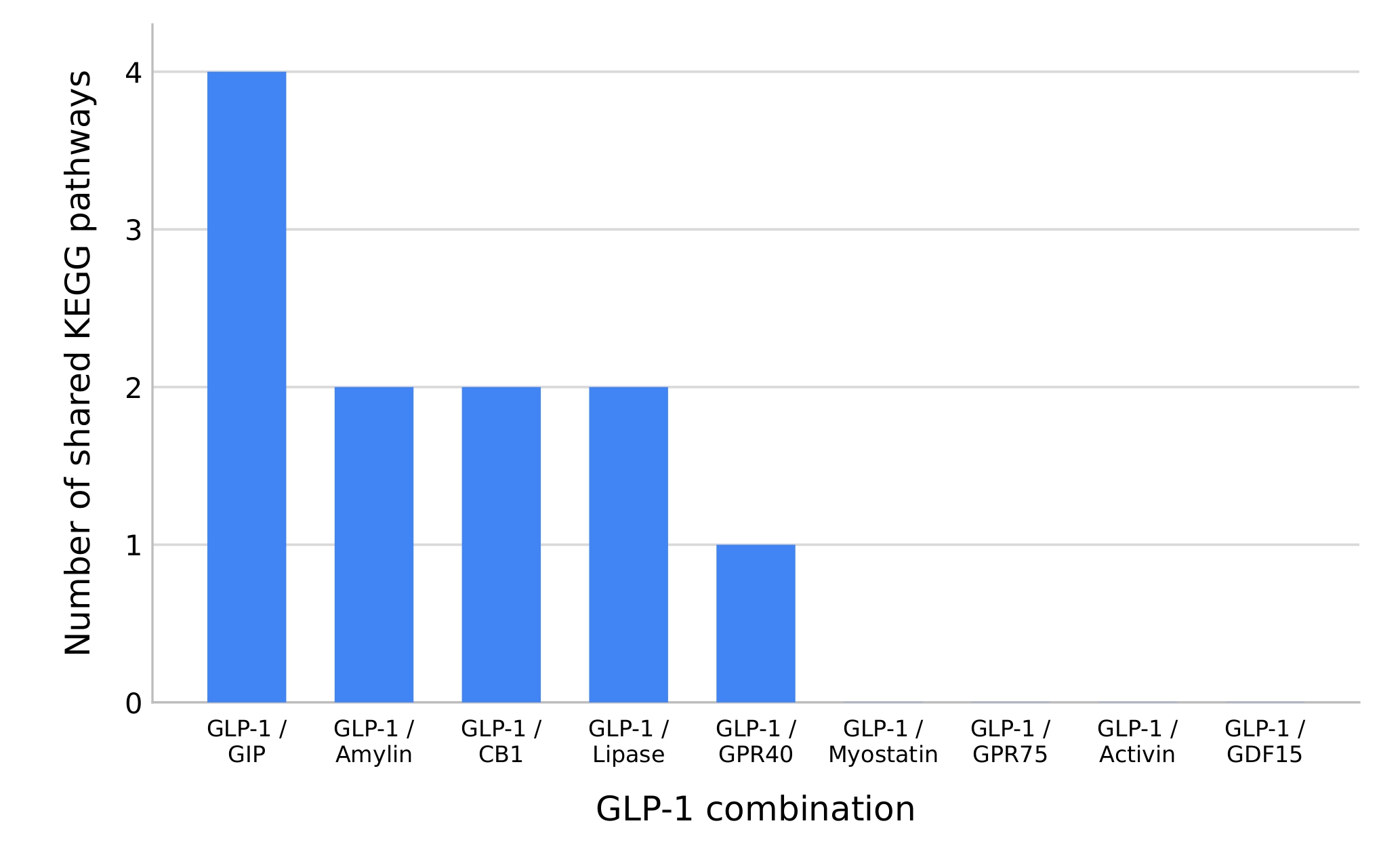
Relationship between pathway sharing and reported efficacy: We compared the number of shared pathways for each combination against its reported clinical efficacy (Table 4), restricting the analysis to combinations for which human efficacy data were available. Across the combinations examined, those sharing one or more pathways achieved weight loss within the same range as those sharing none. The lowest reported value came from a combination sharing no pathways, but that trial ran for 26 weeks compared with 36 to 72 weeks for the others, and semaglutide alone in that trial produced correspondingly lower weight loss than in longer studies. Variation between combinations with the same shared pathway count was as large as variation across counts, and the combination with the highest count did not produce the greatest weight loss. Pathway sharing alone therefore did not differentiate efficacy in the dataset tested. This analysis comes with important caveats. KEGG is a static, annotation-based resource, and the pathways it records may not capture the dynamic signaling interactions that determine energy balance in vivo. The small number of combinations with human efficacy data also limits how strongly any relationship, or its absence, can be interpreted. Addressing the question will require transcriptomic or proteomic profiling together with a larger set of combinations.
| GLP-1 combination | Shared KEGG pathways with GLP-1R (n)* | Efficacy# | Evidence tier |
| GLP-1 + GIP (tirzepatide) | 4 | 21% | Clinical, phase 3 |
| GLP-1 + amylin (CagriSema) | 2 | 20.4% | Clinical, phase 3 |
| GLP-1 + amylin (amycretin) | 2 | 24.3% | Clinical, phase 1b/2a |
| GLP-1 + activin (bimagrumab + semaglutide) | 0 | 22.1% | Clinical, phase 2b |
| GLP-1 + myostatin/activin (trevogrumab/garetosmab + semaglutide) | 0 | 13.4% | Clinical, phase 2 |
tested.”
Discussion
This review examined GLP-1-based combination therapies for obesity. In trials that included monotherapy comparators, pairing GLP-1 receptor agonism with a second mechanism produced greater weight loss than either component alone. Tirzepatide is the only one of the combinations that has been approved. for obesity .Several further combinations are in the clinical pipeline (Table 1). The GLP-1/amylin combination amycretin is notable because it delivers both activities in a single molecule and so offers the simplicity of one drug. The combinations pairing GLP-1 with activin and myostatin inhibition are encouraging on a second measure, namely where the weight loss comes from. Bimagrumab with semaglutide produced weight loss comparable to the other combinations, and 92.8% of that weight came from fat, with lean mass falling by only 2.6% compared with 7.9% on semaglutide alone22. Likewise, the trevogrumab/garetosmab combination also shifted weight loss toward fat34,27,32. Since loss of lean mass is a recognized drawback of GLP-1 treatment, a combination that removes fat while sparing muscle offers something that greater weight loss alone does not.
The preclinical data largely supports these clinical observations. Weight loss and body composition changes with amycretin36 and with bimagrumab plus semaglutide in DIO mice37 were consistent with the outcomes later seen in patients. Translation from animal models to patients cannot be assumed. Even so, the GLP-1 combinations with GDF15 and CB138,30, tested so far only in animal models, produced substantial weight reduction and warrant advancing to clinical testing.
While GLP-1 combinations offer new therapeutic options, they have limitations that must be addressed. The most common adverse events remain mild to moderate gastrointestinal symptoms including nausea, vomiting, and diarrhea39. As strategies involving higher doses and multiple targets advance, these effects will require careful monitoring and dedicated safety studies. Longer study trials (>2 years) are needed to assess long term safety and efficacy. Extended data may also show whether they overcome the weight-loss plateau seen with current obesity medications. Head-to-head trials are also needed, since cross-trial comparisons cannot establish which strategy is better.
These constraints make the choice of which combinations to pursue an important one. The number of possible GLP-1 pairings is growing faster than can be tested. Each clinical trial takes years and is costly. We set out to ask whether pathway overlap between two paired mechanisms could help predict how well a combination will work. Pathway relatedness seemed a good candidate because it can be computed before any experiment is run, it draws on data that already exist, and it applies equally to mechanisms of different kinds. Using the KEGG database and the clinical efficacy data assembled here, we found that pathway sharing did not serve this purpose. Amylin combinations, which share annotated KEGG pathways with GLP-1, and activin or myostatin combinations, which share none, produced overlapping ranges of weight loss (Table 4). Only five combinations had human efficacy data, so this analysis is preliminary. A conclusive test would need more combinations with reported efficacy. Another possible reason the prediction failed is that database annotation is a poor substitute for real signaling, and that a direct measurement of the molecular response is needed. Transcriptomic or proteomic profiling of each mechanism given alone would provide such a signature, and the overlap between any two signatures could then be computed for combinations that have not been tested.
This review has several limitations to consider. Due to its narrative nature, it lacks systematic control for multiple biases and the statistical power of a meta-analysis. The comparisons presented here are therefore descriptive rather than quantitative syntheses. It spans studies with heterogeneous datasets and non-aligned phases of development. The mechanisms considered were drawn from a commercial pipeline analysis. This reflects where development activity is currently concentrated and may not correspond to where the strongest biological rationale lies. Mechanisms with fewer active programs were not evaluated. Percent body weight loss from baseline is used as the primary efficacy metric, but this alone is not sufficient to standardize outcomes across studies or establish a comparative scoring framework. Additional efficacy measures, such as changes in metabolic parameters or biomarkers, and adverse-effect profiles were kept outside the scope of this review. KEGG pathway mapping provided a workable first approach to the question, but it may not represent the dynamic physiological interactions that determine energy balance in obesity. The pathway analysis was further limited by the small number of combinations with human efficacy data.
GLP-1-based combination therapy has moved the field well beyond what monotherapy achieved. Given that obesity arises from imbalances across appetite regulation, energy expenditure and body composition, a single mechanism was never likely to address it fully, and this direction is unlikely to reverse. As the number of candidate pairings grows, deciding which to pursue is becoming as important as the pairings themselves, and a range of computational and experimental approaches are being developed to guide that choice. As those methods mature and the open questions of durability and long-term safety are answered, the next generation of obesity therapies should offer weight loss that is not only greater, but better tolerated and more lasting.
References
- World Health Organization. WHO European regional obesity report 2022. World Health Organization Regional Office for Europe, 2022. [↩]
- D. J. Drucker. Mechanisms of action and therapeutic application of glucagon-like peptide-1. Cell Metabolism. Vol. 27, pg. 740–756, 2018, https://doi.org/10.1016/j.cmet.2018.03.001. [↩]
- D. J. Drucker. Mechanisms of action and therapeutic application of glucagon-like peptide-1. Cell Metabolism. Vol. 27, pg. 740–756, 2018, https://doi.org/10.1016/j.cmet.2018.03.001. [↩]
- J. P. H. Wilding, R. L. Batterham, S. Calanna, M. Davies, L. F. Van Gaal, I. Lingvay, B. M. McGowan, J. Rosenstock, M. T. D. Tran, T. A. Wadden, S. Wharton, K. Yokote, N. Zeuthen, R. F. Kushner. Once-weekly semaglutide in adults with overweight or obesity. New England Journal of Medicine. Vol. 384, pg. 989–1002, 2021, https://doi.org/10.1056/NEJMoa2032183. [↩]
- T. D. Müller, M. Blüher, M. H. Tschöp, R. D. DiMarchi. Anti-obesity drug discovery: advances and challenges. Nature Reviews Drug Discovery. Vol. 21, pg. 201–223, 2022, https://doi.org/10.1038/s41573-021-00337-8. [↩] [↩]
- C. Park, Y. Kim, S. Raygani, E. Grunvald. A glimpse into the pipeline of anti-obesity medication development: combining multiple receptor pathways. Frontiers in Endocrinology. Vol. 16, pg. 1630199, 2025, https://doi.org/10.3389/fendo.2025.1630199. [↩]
- B. Al-Lazikani, U. Banerji, P. Workman. Combinatorial drug therapy for cancer in the post-genomic era. Nature Biotechnology. Vol. 30, pg. 679–692, 2012, https://doi.org/10.1038/nbt.2284. [↩]
- H. F. Günthard, M. S. Saag, C. A. Benson, C. del Rio, J. J. Eron, J. E. Gallant, J. F. Hoy, M. J. Mugavero, P. E. Sax, M. A. Thompson, R. T. Gandhi, R. J. Landovitz, D. M. Smith, D. M. Jacobsen, P. A. Volberding. Antiretroviral drugs for treatment and prevention of HIV infection in adults: 2016 recommendations of the International Antiviral Society-USA panel. JAMA. Vol. 316, pg. 191–210, 2016, https://doi.org/10.1001/jama.2016.8900. [↩]
- X. Wang, R. Lin, Q. Sun, X. Xin, Q. Feng. GLP-1-based combination strategies for weight loss: multi-target agents and combination therapies. Pharmacological Research. 2026. https://doi.org/10.1016/j.phrs.2026.108331. [↩]
- I. Zandvakili, D. Perez-Tilve. The unexpected role of GIP in transforming obesity treatment. Trends in Endocrinology & Metabolism. Vol. 36, pg. 330–338, 2025, https://doi.org/10.1016/j.tem.2024.07.022. [↩] [↩]
- C. Silvestri, V. Di Marzo. The endocannabinoid system in energy homeostasis and the etiopathology of metabolic disorders. Cell Metabolism. Vol. 17, pg. 475–490, 2013, https://doi.org/10.1016/j.cmet.2013.03.001. [↩]
- J. L. Chen, K. L. Walton, S. L. Al-Musawi, E. K. Kelly, H. Qian, M. La, L. Lu, G. Lovrecz, M. Ziemann, R. Lazarus, A. El-Osta, P. Gregorevic, C. A. Harrison. Development of novel activin-targeted therapeutics. Molecular Therapy. Vol. 23, pg. 434–444, 2015, https://doi.org/10.1038/mt.2014.221. [↩] [↩]
- D. L. Hay, S. Chen, T. A. Lutz, D. G. Parkes, J. D. Roth. Amylin: pharmacology, physiology, and clinical potential. Pharmacological Reviews. Vol. 67, pg. 564–600, 2015, https://doi.org/10.1124/pr.115.010629. [↩]
- V. W. W. Tsai, Y. Husaini, A. Sainsbury, D. A. Brown, S. N. Breit. The MIC-1/GDF15-GFRAL pathway in energy homeostasis: implications for obesity, cachexia, and other associated diseases. Cell Metabolism. Vol. 28, pg. 353–368, 2018, https://doi.org/10.1016/j.cmet.2018.07.018. [↩] [↩]
- Stifel. Obesity market review: 2024 outlook and pipeline analysis. Stifel Research, 2024. [↩]
- H. Mao, X. Wang, Y. Pang, et al. The gut microbiome-endocrine axis in obesity: mechanisms and therapeutics. Journal of Gastroenterology and Hepatology, 2026, https://doi.org/10.1111/jgh.70511. [↩]
- M. Ali, N. Iqbal, M. A. Rakib, K. A. Lee, M. H. Lee, Y. S. Kim. Microbiome, potential therapeutic agents: new players of obesity treatment. Journal of Microbiology and Biotechnology. Vol. 35, pg. e2501024, 2025, https://doi.org/10.4014/jmb.2501.01024. [↩]
- Kanehisa Laboratories. KEGG pathway database. https://www.genome.jp/kegg/pathway.html [↩]
- A. M. Jastreboff, L. J. Aronne, N. N. Ahmad, S. Wharton, L. Connery, B. Alves, A. Kiyosue, S. Zhang, B. Liu, M. C. Bunck, A. Stefanski. Tirzepatide once weekly for the treatment of obesity. New England Journal of Medicine. Vol. 387, pg. 205–216, 2022, https://doi.org/10.1056/NEJMoa2206038. [↩] [↩] [↩]
- W. T. Garvey, M. Blüher, C. K. Osorto Contreras, M. J. Davies, E. Winning Lehmann, K. H. Pietiläinen, D. Rubino, P. Sbraccia, T. Wadden, N. Zeuthen, J. P. H. Wilding. Coadministered cagrilintide and semaglutide in adults with overweight or obesity. New England Journal of Medicine. Vol. 393, pg. 635–647, 2025, https://doi.org/10.1056/NEJMoa2502081. [↩] [↩]
- K. Dahl, S. Toubro, S. Dey, R. Duque do Vale, A. Flint, A. Gasiorek, A. Heydorn, A. M. Jastreboff, C. Key, S. B. Petersen, A. Vegge, K. Adelborg. Amycretin, a novel, unimolecular GLP-1 and amylin receptor agonist administered subcutaneously: results from a phase 1b/2a randomised controlled study. The Lancet. Vol. 406, pg. 149–162, 2025, https://doi.org/10.1016/S0140-6736(25)01185-7. [↩] [↩] [↩] [↩]
- S. B. Heymsfield, L. J. Aronne, P. Montgomery, L. B. Klickstein, L. A. Coleman, K. Dole, L. Mindeholm, S. Spruill, X. Li, K. M. Attie. Bimagrumab plus semaglutide alone or in combination for the treatment of obesity: a randomized phase 2 trial. Nature Medicine. Vol. 32, pg. 869–882, 2026, https://doi.org/10.1038/s41591-026-04204-0. [↩] [↩] [↩] [↩] [↩]
- Regeneron Pharmaceuticals. Results from phase 2 COURAGE trial demonstrating potential to improve quality of GLP-1 receptor agonist-induced weight loss by preserving lean mass, presented at EASD. https://investor.regeneron.com/news-releases/news-release-details/results-phase-2-courage-trial-demonstrating-potential-improve. 2026. [↩]
- National Library of Medicine (US). A study to test if trevogrumab or trevogrumab with garetosmab when taken with semaglutide is safe and how well they work in adult patients with obesity for weight loss, fat loss, and lean mass preservation (COURAGE). ClinicalTrials.gov identifier NCT06299098. https://clinicaltrials.gov/study/NCT06299098. 2026. [↩]
- D. L. Hay, S. Chen, T. A. Lutz, D. G. Parkes, J. D. Roth. Amylin: pharmacology, physiology, and clinical potential. Pharmacological Reviews. Vol. 67, pg. 564–600, 2015, https://doi.org/10.1124/pr.115.010629. [↩]
- Regeneron Pharmaceuticals. Results from phase 2 COURAGE trial demonstrating potential to improve quality of GLP-1 receptor agonist-induced weight loss by preserving lean mass, presented at EASD. https://investor.regeneron.com/news-releases/news-release-details/results-phase-2-courage-trial-demonstrating-potential-improve. 2026 [↩]
- National Library of Medicine (US). A study to test if trevogrumab or trevogrumab with garetosmab when taken with semaglutide is safe and how well they work in adult patients with obesity for weight loss, fat loss, and lean mass preservation (COURAGE). ClinicalTrials.gov identifier NCT06299098. https://clinicaltrials.gov/study/NCT06299098. 2026. [↩] [↩] [↩]
- R. E. Kuhre, B. Ballarín-González, C. L. Brand, T. Glendorf, K. G. Madsen, K. R. Hjøllund, W. F. J. Hogendorf, D. H. Ipsen, S. Lundh, T. Kruse, S. B. Petersen, A. Secher, A. Vegge, K. Raun. The effect of amycretin, a unimolecular glucagon-like peptide-1 and amylin receptor agonist, on body weight and metabolic dysfunction in mice and rats. EBioMedicine. Vol. 118, pg. 105862, 2025, https://doi.org/10.1016/j.ebiom.2025.105862. [↩] [↩]
- Y. Zhang, X. Zhao, X. Dong, Y. Zhang, H. Zou, Y. Jin, W. Guo, P. Zhai, X. Chen, A. Kharitonenkov. Activity-balanced GLP-1/GDF15 dual agonist reduces body weight and metabolic disorder in mice and non-human primates. Cell Metabolism. Vol. 35, pg. 287–298, 2023, https://doi.org/10.1016/j.cmet.2023.01.001. [↩] [↩] [↩]
- P. Zizzari, R. He, S. Falk, L. Bellocchio, C. Allard, S. Clark, T. Lesté-Lasserre, G. Marsicano, C. Clemmensen, D. Perez-Tilve, B. Finan, D. Cota, C. Quarta. CB1 and GLP-1 receptors cross talk provides new therapies for obesity. Diabetes. Vol. 70, pg. 415–422, 2021, https://doi.org/10.2337/db20-0162. [↩] [↩]
- E. Nunn, N. Jaiswal, M. Gavin, K. Uehara, M. Stefkovich, K. Drareni, R. Calhoun, M. Lee, C. D. Holman, J. A. Baur, P. Seale, P. M. Titchenell. Antibody blockade of activin type II receptors preserves skeletal muscle mass and enhances fat loss during GLP-1 receptor agonism. Molecular Metabolism. Vol. 80, pg. 101880, 2024, https://doi.org/10.1016/j.molmet.2024.101880. [↩] [↩]
- J. W. Mastaitis, D. Gomez, J. G. Raya, D. Li, S. Min, M. Stec, S. Kleiner, T. McWilliams, J. Y. Altarejos, A. J. Murphy, G. D. Yancopoulos, M. W. Sleeman. GDF8 and activin A blockade protects against GLP-1-induced muscle loss while enhancing fat loss in obese male mice and non-human primates. Nature Communications. Vol. 16, pg. 4377, 2025, https://doi.org/10.1038/s41467-025-59485-9. [↩] [↩] [↩] [↩]
- J. W. Mastaitis, D. Gomez, J. G. Raya, D. Li, S. Min, M. Stec, S. Kleiner, T. McWilliams, J. Y. Altarejos, A. J. Murphy, G. D. Yancopoulos, M. W. Sleeman. GDF8 and activin A blockade protects against GLP-1-induced muscle loss while enhancing fat loss in obese male mice and non-human primates. Nature Communications. Vol. 16, pg. 4377, 2025, https://doi.org/10.1038/s41467-025-59485-9. [↩]
- Regeneron Pharmaceuticals. Results from phase 2 COURAGE trial demonstrating potential to improve quality of GLP-1 receptor agonist-induced weight loss by preserving lean mass, presented at EASD. https://investor.regeneron.com/news-releases/news-release-details/results-phase-2-courage-trial-demonstrating-potential-improve. 2026. [↩] [↩]
- J. Tam, R. Cinar, J. Liu, G. Godlewski, D. Wesley, T. Jourdan, G. Szanda, B. Mukhopadhyay, L. Chedester, J. S. Liow, R. B. Innis, K. Cheng, K. C. Rice, J. R. Deschamps, R. J. Chorvat, J. F. McElroy, G. Kunos. Peripheral cannabinoid-1 receptor inverse agonism reduces obesity by reversing leptin resistance. Cell Metabolism. Vol. 16, pg. 167–179, 2012, https://doi.org/10.1016/j.cmet.2012.07.002. [↩]
- R. E. Kuhre, B. Ballarín-González, C. L. Brand, T. Glendorf, K. G. Madsen, K. R. Hjøllund, W. F. J. Hogendorf, D. H. Ipsen, S. Lundh, T. Kruse, S. B. Petersen, A. Secher, A. Vegge, K. Raun. The effect of amycretin, a unimolecular glucagon-like peptide-1 and amylin receptor agonist, on body weight and metabolic dysfunction in mice and rats. EBioMedicine. Vol. 118, pg. 105862, 2025, https://doi.org/10.1016/j.ebiom.2025.105862. [↩]
- E. Nunn, N. Jaiswal, M. Gavin, K. Uehara, M. Stefkovich, K. Drareni, R. Calhoun, M. Lee, C. D. Holman, J. A. Baur, P. Seale, P. M. Titchenell. Antibody blockade of activin type II receptors preserves skeletal muscle mass and enhances fat loss during GLP-1 receptor agonism. Molecular Metabolism. Vol. 80, pg. 101880, 2024, https://doi.org/10.1016/j.molmet.2024.101880. [↩]
- Y. Zhang, X. Zhao, X. Dong, Y. Zhang, H. Zou, Y. Jin, W. Guo, P. Zhai, X. Chen, A. Kharitonenkov. Activity-balanced GLP-1/GDF15 dual agonist reduces body weight and metabolic disorder in mice and non-human primates. Cell Metabolism. Vol. 35, pg. 287–298, 2023, https://doi.org/10.1016/j.cmet.2023.01.001. [↩]
- X. Wang, R. Lin, Q. Sun, X. Xin, Q. Feng. GLP-1-based combination strategies for weight loss: multi-target agents and combination therapies. Pharmacological Research. 2026. https://doi.org/10.1016/j.phrs.2026.108331. [↩]