
Abstract
Taekwondo is not a single, unified entity, but it is composed of complex components such as poomsae, sparring, and so on. To attribute cognitive outcomes to poomsae training, two conditions should be met: intervention reporting and comparison designs. Thus, the core question posed by this narrative review is to what extent the child and adolescent taekwondo studies provide the two conditions to attribute reported cognitive outcomes specifically to poomsae. The search procedure was conducted via Google Scholar, ScienceDirect and three Korean databases which are DBpia, KCI, and RISS. Among the results, 24 papers were reviewed, and 10 of these were selected. This study reviewed present literature based on questions regarding the duration of poomsae and whether poomsae was separated from other comparisons. Total duration was calculated by adding the durations of the data including the terms poomsae or forms. Cognitive outcomes were divided into performance-based cognitive outcomes and rating-based self-regulatory. This study was conducted based on ten prior studies published between 2013 and 2026, whose sample size ranged from 30 to 240 participants and were conducted in five nations. The participants were children and adolescents aged 7 to 18. An et al. (2017), Kadri et al. (2019), and Cho et al. (2017b) reported session structures, each reporting 66.7%, 60%, and 16.7% of taekwondo sessions. However, all three studies do not isolate poomsae, and none of the studies stated that the program did not include poomsae. Allocation procedures were fully described in two studies. In conclusion, cognitive outcomes reported in the studies in this review cannot be attributed specifically to poomsae with confidence. Component-level reporting is therefore necessary but not sufficient; component-isolating comparisons are also required.
Keywords: Poomsae, cognitive function, executive function, component-level attribution, intervention reporting, comparison design
Introduction
Defining the Boundaries of Poomsae
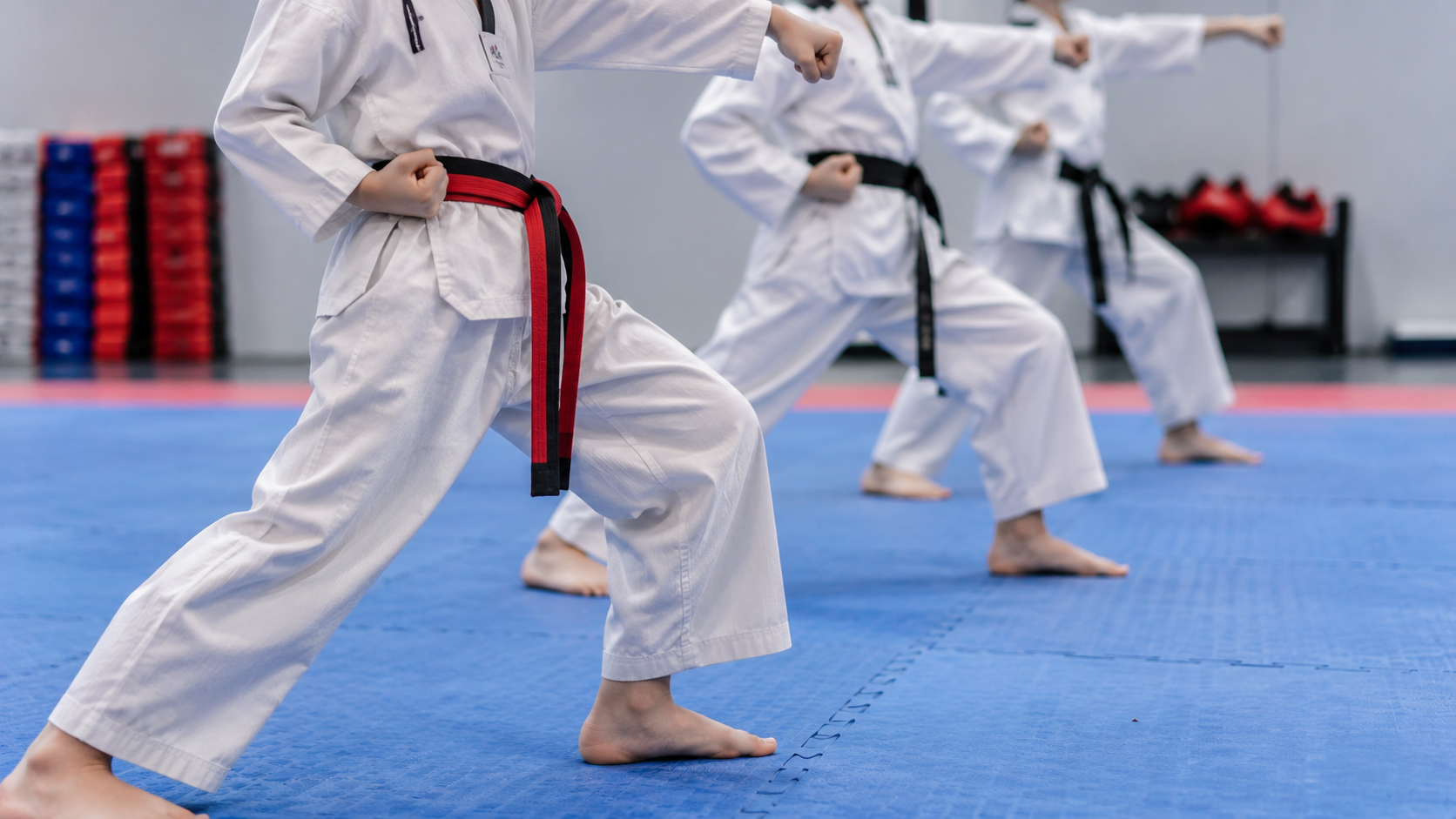
Poomsae, a form, is a training method or competition in which basic offensive and defensive techniques are arranged and combined in a specific sequence to practice sparring against an imaginary opponent. Poomsae is well recognized as a component of taekwondo training, but its operational boundaries differ across publications. In one intervention report, the activity labelled poomsae occupied 10 of 60 minutes, whereas basic movements and taekwondo gymnastics together accounted for a further 20 minutes; whether these fall within the poomsae category therefore changes the figure substantially1.
A systematic review2 of poomsae training treated the officially recognized forms, the basic movements from which forms are constructed; however, music poomsae and taekwondo gymnastics were counted within the poomsae category, while individual intervention reports frequently list basic movements and taekwondo gymnastics as separate session components. Therefore, to prevent such confusion and keep analytical rigor, any assessment of how much poomsae a program delivered therefore depends on a stated coding rule.
Two Conditions for Attributing Cognitive Outcomes to a Component
The overall effect observed in each study does not guarantee components of poomsae specifically improved working memory and executive functions. Even if the program provides significant results, it is difficult to clearly distinguish which specific components or materials drove those outcomes. Therefore, addressing this issue requires two fundamental conditions.
First, the intervention components included in the program must be described and reported transparently and in detail. Reporting guidelines address this directly: the TIDieR checklist specifies that intervention procedures and their dose should be described in sufficient detail for replication, and that for complex interventions this detail is required for each component3. Second, comparison conditions must be constructed to evaluate the presence or absence of specific components. Without such comparisons, it is difficult to demonstrate the independent effectiveness of particular components. Executive functions continue to strengthen significantly throughout childhood and adolescence, and the components vary in their developmental trajectory. Rather than evaluating the program’s effectiveness through a single, aggregated method, it is necessary to determine how specific, distinct components differentially contribute to cognitive domains with varying developmental characteristics.
Prior Reviews and the Present Research Question
Research on physical activity and executive function in children and adolescents has accumulated steadily. Korean studies using Stroop-based measures of attention and inhibitory control have reported improvements following a range of programs4,5,6,7,8 Studies using memory and cognitive-flexibility measures report a similar pattern9,10,11,12,13, as do international trials14,15. The results, however, have not been entirely consistent.
In relevant research literature, martial arts have been treated as a distinct category, and studies utilizing karate and judo have reported on their effects—specifically regarding sustained attention, task-switching ability, and working memory—in both typically developing children and children with ADHD or autism spectrum disorder16,17,18,19,20. These studies show the program as a whole rather than individually identifying the contributions of specific single components, which is the key issue addressed in this review.
A previous systematic review focused on the effects of taekwondo poomsae training on body composition, the physical fitness, and physiological effects of children and adolescents rather than cognitive outcomes2. A separate systematic review examined cognitive and physical outcomes of taekwondo more broadly, but did not assess whether the reported outcomes could be attributed to poomsae as a component21. A meta-analysis of common self-regulation-based interventions synthesized a wide range of programs including taekwondo, but component-level attribution within taekwondo was outside the scope of that review22.
For cognitive evidence to inform educational program design, studies should clarify what component was delivered, establish whether the result can be ascribed to that component, and describe the developmental and training context of children or adolescents who received it.
To what extent do the child and adolescent taekwondo studies examined provide the intervention reporting and comparison designs required to attribute reported cognitive outcomes specifically to poomsae?
Methods
Search Strategy and Study Selection
A literature search was conducted on October 9 across international databases (Google Scholar, ScienceDirect) and Korean databases (DBpia, KCI, RISS). The search strategy crossed an intervention set (Taekwondo, Poomsae, Reverse Poomsae, Taekwondo gymnastics) with an outcome set (cognitive function, elementary students’ cognition, attention, children’s concentration, working memory, memory, executive function, frontal lobe, brainwaves, brain, children with ADHD). Across these combinations, 13 targeted searches were conducted in each database. In total, 140,213 records were identified across the databases (Google Scholar: 134,638, Science Direct:1,979, DBpia: 1,781, KCI: 288, RISS: 1,527). Records retrieved from more than one database were counted once. For the international database, the number of search terms exceeded 1,000, so only the top 100 were read, whereas for the Korean database, all search terms were read. Following title and abstract screening, 140,189 records were excluded, leaving 24 reports assessed for full text reading. Of the reports screened at the full-text stage, 14 were excluded, a total of 10 empirical studies met all criteria and were synthesized in this narrative review. Studies were included if they reported an empirical taekwondo or poomsae intervention, enrolled participants aged 7 to 18, measured at least one cognitive, executive-function or self-regulatory outcome, and were published as peer-reviewed journal articles in English or Korean. Studies were excluded if the intervention contained no taekwondo or poomsae component, if the sample fell outside this age range, if cognitive or self-regulatory outcome was not measured, if the design did not provide pre-post or between-group data, or if the report was a review, conference abstract or thesis. This review was carried out as a narrative review rather than a systematic review, and no research proposal was planned. Consequently, the distribution of studies across the analysis should be interpreted as applying only to the studies examined and not as an exhaustive estimate of the field.
Reporting and Comparison Dimensions
For each study, the duration of poomsae practice and the specific element isolated for comparison were recorded. The reporting dimension was informed by the TIDieR items what procedure and when and how much which specify that intervention procedures and their dose should be described in sufficient detail for replication, and that for complex interventions this detail is required for each component23. The comparison dimension was developed for the present review, and classifies whether a study distinguishes taekwondo with non-takewondo sports, one form of poomsae with another form, or the presence of poomsae with its absence. This review included variations on how the two groups were divided, whether the analysis actually compared the two groups or was limited within a single group, and contextual variables including age and prior experience of taekwondo or poomsae. Performance-based cognitive outcomes formed the review’s primary evidence set. Rating-based self-regulatory, behavioral and educational outcomes were examined separately and were not treated as equivalent measures of cognition. Methodological quality was assessed using the nine-item tool developed by Zou et al. (2018) for martial arts intervention studies, which scores randomization, presence of a control group, isolation of the martial arts intervention, pre-post design, retention of at least 70 percent, baseline similarity, management of missing data, power analysis, and the validity and reliability of the primary cognitive measures24. Each item was scored one when the criterion was met and zero otherwise, giving a total out of nine. The comparison dimension used alongside this tool was developed for the present review and has not been independently validated.
Coding and Time Calculation Procedures
To ensure the accuracy of the data analysis process, only data including the precise terms ‘poomsae’ or ‘forms’ were extracted and recorded, and the final total poomsae time was then calculated by summing the durations of the items meeting these criteria. Within-session poomsae proportion was calculated as explicitly reported poomsae time divided by total session duration. When session frequency and intervention duration were reported together, cumulative scheduled time was calculated from those figures without consideration of attendance or adherence. While this review adopted the existing trial classification system, it clearly distinguished, based on the researcher’s own judgment, whether each trial item was performance-based or rating-based for the purpose of the analysis.
Throughout this review, only activities explicitly labelled poomsae or forms were counted. Basic movements, applied movements, taekwondo gymnastics and music poomsae were excluded from the count even where they may overlap conceptually with poomsae practice. This is an analytical convention adopted to keep the denominator comparable across reports, not an estimate of participants’ true poomsae exposure. Because operational definitions differ across publications, the values reported here should be read as the minimum explicitly documented poomsae time rather than as the actual amount practised.
Decision Rules for Classification
To evaluate the extent to which the included studies isolated the cognitive enhancements of poomsae, interventions and study designs were categorized across two conditions: intervention reporting and comparison design.
Intervention reporting was classified into four exclusive categories: (1) time quantified, where the exact duration or percentage of session allocated specifically to poomsae was explicitly reported; (2) present but time unreported, where poomsae was named as curriculum element but without specific time distribution; (3) status unclear, where poomsae was not clearly mentioned, leaving its inclusion indeterminate; and (4) documented as absent, where poomsae was explicitly removed from the intervention.
Comparison designs were categorized by capacity to isolate poomsae: (1) contrast poomsae removal (a poomsae containing program vs. an identical program with poomsae removed); (2) contrast poomsae forms, (direct comparisons between different poomsae, such as normal poomsae vs. reverse poomsae); (3) normal poomsae vs. poomsae with additional components; (4) taekwondo vs. modified taekwondo; (5) taekwondo vs. non-taekwondo activities; (6) taekwondo vs. passive or no-contact control groups.
To minimize errors of classification in borderline cases, additional decision rules were applied. Some activities, such as taekwondo aerobics or musical poomsae that deviated from official poomsae sequences, were combined taekwondo activities rather than formal poomsae. Repetitions of stances, blocks, or strikes without sequence were classified as basic movements and distinguished from poomsae. Finally, when poomsae techniques were mixed into sparring training or general fitness without time intervals, they were classified as either present but time unreported or status unclear, depending on the explicit curriculum description.
A two-dimensional classification grid (Table 1) was created by combining these two conditions, comparison type on rows and intervention reporting on columns. In this grid, positions toward the top and left represent ideal study designs that effectively confirm the independent effects of poomsae. This grid highlights the design limitations and gaps in existing studies.
| Comparison type \ report status | Time quantified | Present but time unreported | Status unclear | Documented as absent |
| Contrast poomsae removal | (empty) | (empty) | (empty) | (empty) |
| Contrast poomsae form | An 2017 | |||
| Normal poomsae v. poomsae with additional components | Ku 2012 | |||
| Taekwondo v. modified taekwondo | Koh 2018 | |||
| Taekwondo v. non-taekwondo activities | Kadri 2019 | Lakes 2013 | Ng-Knight 2022, Song 2026 | |
| Taekwondo v. passive or no-contact control groups | Cho 2017b | Kim 2015 | Cho 2017a |
The nine-item tool does not distinguish between studies that tested a group-by-time interaction and those that reported within-group change only. We therefore recorded the analysis type separately for each extracted outcome, following the four categories specified in review.
Table 1 demonstrates that the nine-item tool does not distinguish between studies that tested a group-by-time interaction and those that reported within-group change only. We therefore recorded the analysis type separately for each extracted outcome, following the four categories specified in review.
| Study | 1. Random | 2. Control | 3. Isolated MA | 4. Pre-Post | 5. Retention ≥70% | 6. Baseline | 7. Missing | 8. Power | 9. Valid Tool | Total Score (/9) |
| An et al. (2017)25 | 0 | 1 | 1 | 1 | 1 | 0 | 0 | 0 | 1 | 5 |
| Cho et al. (2017a)26 | 0 | 1 | 1 | 1 | 1 | 1 | 0 | 0 | 1 | 6 |
| Cho et al. (2017b)1 | 1 | 1 | 1 | 1 | 1 | 1 | 1 | 0 | 1 | 8 |
| Kim et al. (2015)27 | 0 | 1 | 0 | 1 | 1 | 1 | 0 | 0 | 1 | 5 |
| Lakes et al. (2013)28 | 1 | 1 | 1 | 1 | 1 | 0 | 1 | 0 | 1 | 7 |
| Ng-Knight et al. (2022)29 | 1 | 1 | 1 | 1 | 1 | 1 | 1 | 1 | 1 | 9 |
| Song et al. (2026)30 | 1 | 1 | 1 | 1 | 1 | 1 | 0 | 0 | 1 | 7 |
| Kadri et al. (2019)31 | 1 | 1 | 1 | 1 | 0 | 1 | 0 | 0 | 1 | 6 |
| Koh et al. (2018)32 | 1 | 1 | 0 | 1 | 1 | 1 | 0 | 1 | 1 | 7 |
| Ku & Choi (2012)33 | 0 | 1 | 1 | 1 | N/A | N/A | N/A | 0 | 0 | 2/6 |
NA = not assessed; the full text of this report could not be obtained and these items could not be verified.
Zou et al. applied an isolation criterion at the level of the discipline, scoring a study zero where martial arts practice was combined with other forms of exercise24. The present review extends the same logic one level further, to components within a single discipline.
Quality scores ranged from 5 to 9 of 9, with a median of 7. Points were most often lost for power analysis, which two studies reported, and for the management of missing data, which three described.
Results
Overview of the Studies Examined
This study was conducted based on a total of ten prior studies published between 2013 and 2026. The sample sizes of the analyzed studies ranged from 30 to 240 participants, and the research was conducted in South Korea, the United States, the United Kingdom, China and Tunisia.The participants were children and adolescents aged 7 to 18, and nine articles account for typically developing children (Table 3) while one article focuses on attention deficit hyperactivity disorder(ADHD) children31. Among those ten articles, Cho et al. (2017a) showed within-group gains while other studies showed significant cognitive improvements compared to control groups26. An overview of ten studies on the effects of Taekwondo training is shown in <Table 3>.
| Study / sample | Design and allocation | Intervention and poomsae reporting | Comparison | Outcomes and findings | Attribution limits | Analysis Type |
| An et al. (2017) 40 boys, grades 4–5, ≥12 mo experience; Korea; TD25 | Two-group pre–post; allocation not reported | 12 wk, 3×/wk, 60 min; poomsae 40 min (66.7% within-session); 1,440 min scheduled | Standard poomsae | Performance-based: backward digit span, digit-span total and CCTT-2 favored reverse poomsae; forward digit span and CCTT-1 n.s. | Poomsae in both arms; allocation not reported; baseline height and weight differed; male only; two sites | Adjusted between-group difference (ANCOVA) |
| Cho et al. (2017a)35 children (17/18); Korea; TD26 | Two-group pre–post; participants “randomly selected”; allocation not reported | 16 wk, 5×/wk; poomsae not reported | No training | Performance-based: Stroop increased within taekwondo group Rating-based: academic self-efficacy increased within group | No between-group estimates; no-treatment comparison | Within-group change |
| Cho et al. (2017b) 30 children, grades 4 and 6 (15/15); Korea1 | RCT; randomly assigned, procedure not described; baseline comparable | 16 wk, 5×/wk, 60 min Poomsae 10 min (16.7% of session); 800 min scheduled | Control; condition not described | Performance-based: Stroop Color-Word interaction significant; Word and Color n.s. Neurophysiological: BDNF, VEGF, IGF-1 | Comparison does not isolate poomsae; control not described; small single-site sample | Group × time interaction |
| Kim et al. (2015) 30 boys, grade 5 (15/15); Korea; TD27 | Two-group pre–post; simple random sampling; allocation unclear | 12 wk, 5×/wk, 60 min; music poomsae in 3 of 6 blocks; time not reported | Comparison group | Performance-based: no interaction on any digit-span index Neurophysiological: BDNF, NGF | Component times not reported; allocation unclear | Group × time interaction |
| Lakes et al. (2013) 98 enrolled, 81 evaluated, 60 consented; EF task n=27, parent ratings n=22; USA; TD28 | Two intact classes randomly assigned (2 clusters) | 9 mo; forms labelled, time not reported; sparring documented as absent | 5 PE/wk vs 3 PE + 2 taekwondo | Performance-based: congruent trial differed; incongruent and mixed n.s. Rating-based: parent-rated behavioral control differed | Two clusters; baseline ratings differed; task post-trial only; partial consent | Adjusted between-group difference |
| Ng-Knight et al. (2022) 240 children aged 7–11; UK; TD29 | RCT; randomized at participant level within classes | 11 wk, 2×/wk, 45 min; poomsae not reported in main text | Business-as-usual PE | Performance-based: flanker differed; verbal working memory, switching, response inhibition n.s. Rating-based: attentional focusing and conduct problems differed; others n.s. | Poomsae not reported; control activities varied by year group; teachers not blinded | Adjusted between-group difference |
| Song et al. (2026) 40 children aged 7–8 (20/20); China; TD30 | RCT; computer-generated randomization | 8 wk, 3×/wk, 45 min; described by attentional target rather than component; poomsae not mentioned | Regular PE; MVPA matched | Performance-based: attention stability and shifting differed; allocation time effect only; breadth n.s. | Poomsae status unclear; retrospectively registered | Group × time interaction |
| Kadri et al. (2019) 40 adolescents with ADHD (20/20), mean age 14.2–14.5; Tunisia; clinical31 | RCT (NCT03678844); randomly allocated, procedure not described | 18 mo, 2×/wk, 50 min + 10 min warm-up and recovery; poomsae 30 min; ~4,680 min scheduled | School PE 2×/wk | Performance-based: between-group differences on all Stroop and Ruff 2 and 7 measures; large global effect sizes in absolute terms (|ES| = 1.68–4.75; signed values ranged from −4.75 to 4.28, with negative values indicating inversely scored outcomes such as error counts and total search speed) | Control group scores declined; baseline comparisons differ between abstract and table; no attrition reported; session denominator ambiguous | Group × time interaction |
| Koh et al. (2018) 36 elementary school students aged first grade-fourth grade; Korea;32 | Three-group pre–post; random allocation | 12 wk, 5×/wk, 50 min total (warm-up 10 min; main phase 35 min comprising basic movements 10 min and applied movements 25 min; cool-down 5 min); poomsae named in the general taekwondo arm but time not reported | Maintain usual lifestyle habits without any special treatment | Performance-based: K-WISC-Ⅲ, Digit Span Test, RPM | Not reported | Group × time interaction |
| Ku & Choi (2012) 37 elementary school students33 | Three-group pre-post | 12wk | No performance based Neurophysiological: Brainwave | Not reported | Group × time interaction |
TD = typically developing
However, for studies comparing and analyzing the effects of different poomsae training methods, a minimum of one year of taekwondo training experience was established as a selection criteria. Table 1 demonstrates the results of identifying the extent to which each study compares poomsae and whether it specifies the duration, enabling an overview of the limitations and gaps in existing research.
Table 1 demonstrates that among the ten examined studies, only three studies reported within-session poomsae duration, documenting 66.7% (An et al., 2017), 60.0% (Kadri et al., 2019), and 16.7% (Cho et al., 2017b) of the session respectively25,31,1. Four further studies named poomsae as an intervention component without reporting its specific duration27,28,32,33, and the remaining four did not document poomsae within their main program descriptions26,29,30. Total training exposure across the three studies that clarified poomsae duration ranged from 800 minutes over 16 weeks to approximately 4,680 minutes over 18 months.
Allocation procedures were described in full in only two studies29,30, stated without procedural detail in three31,1,28, and remained unclear or unreported in the remaining five25,26,27,32,33. Furthermore, none of the studies compared a program containing poomsae with an otherwise matched program from which poomsae had been removed, leaving the independent contribution of poomsae unisolated across all designs.
Cognitive outcomes were evaluated across three distinct analytical frameworks and cannot be directly contrasted on an equivalent statistical plane. Nine studies evaluated between-group differences using either baseline-adjusted models or repeated-measures interactions, while one, Cho et al. (2017a) reported within-group change only26
Among the three studies evaluating adjusted between-group differences25,28,29, after adjustment for baseline scores, the between-group difference was significant for working memory and cognitive switching in An et al. (2017)25, executive attention on the Flanker task in Ng-Knight et al. (2022)29, and congruent trials alongside parent ratings in Lakes et al. (2013)28, whereas verbal span, response inhibition, and incongruent trials were non-significant. Among the six studies testing interaction models, a group-by-time interaction was significant for Stroop Color-Word performance in Cho et al. (2017b)1, for all Stroop and Ruff 2 and 7 metrics in Kadri et al. (2019)31, and for attentional stability and switching in Song et al. (2026)30, but non-significant across digit span indices in Kim et al. (2015)27, with Koh et al. (2018) reporting. Finally, in Cho et al. (2017a), within-group pre-post analysis showed significant increases in Stroop performance and academic self-efficacy within the taekwondo arm, but the lack of between-group estimation precluded causal attribution26.
Discussion
Why Inconsistent Findings Cannot Be Resolved by the Current Designs
To interpret the current reviews, three distinct questions must be distinguished. First, the question of whether general taekwondo training improves cognitive outcomes falls outside the scope of this review. Previous systematic reviews have already addressed it, reporting beneficial effects on some selected aspects of cognition while noting that a definitive conclusion remains difficult given the small number of randomised controlled trials21,24. Second, whether programs containing poomsae yield cognitive improvements, yields inconsistent evidence when evaluated. Because within-group improvements cannot distinguish intervention effects from maturation or practice effects, evaluating efficacy requires between-group comparisons. Among the nine studies employing between-group analyses, findings diverge: Kim et al. (2015) reported null effects across all three digit-span measures27, whereas Song et al. (2026) found significant group-by-time interactions on only two of four attention indicators30. Third, the question of whether poomsae itself independently causes cognitive improvements cannot be answered by the available literature, because none of those studies isolated poomsae from other training components.
Executive functions continue to strengthen throughout childhood and adolescence, and their components vary in developmental trajectory. Against this background, the studies examined show inconsistent and complex results regarding the effects of taekwondo training on cognitive function and self-regulation. While some studies including An et al. (2017) based on adjusted between-group differences25, and Cho et al. (2017b), a group-by-time interaction, report significant improvements on some cognitive measures1, other studies based on a group-by-time interaction31,27,30,32,33 including Kim et al. (2015)27 and Ng-Knight et al. (2022)29 did not observe significant changes on certain measures of executive function, such as verbal working memory and inhibitory control.
This inconsistency cannot be resolved by the designs examined, because none of them isolated the independent contribution of poomsae. The attribution problem is visible within the primary reports themselves. One included study, which named poomsae among its components but allocated session time only to basic and applied movements, nevertheless attributed its observed memory gains to the memorization of poomsae forms. The inference is plausible, but the study provides no component-level dose against which it could be tested. Designs that remove poomsae from other taekwondo activities exist in Korean literature. One two-group study allocated thirty children to poomsae training and thirty to general taekwondo training over twelve weeks34, but its results were stability of stances and functional movement rather than cognition. Therefore, the limitation shown in this review is not that a component-isolating design is unavailable, but that such a design has not yet been combined with performance-based cognitive outcomes. As most studies delivered programs comprising a combination of elements — such as poomsae, basic movements, sparring, and taekwondo gymnastics — the observed changes cannot be attributed solely to the poomsae component. The comparison that came closest to isolating poomsae contrasted two forms of poomsae rather than its presence with its absence, and poomsae was delivered in both arms; when a component is present in both arms of a comparison, that comparison provides no estimate of its independent contribution.
Authors of the included studies also recognized this limitation. Cho et al. (2017b) noted that because the study was conducted at a single institution with a small sample, it was difficult to clarify whether the changes observed were due to the effect of general exercise or to taekwondo training specifically1. The present review extends the same question one level further, to components within taekwondo.
Furthermore, although the actual cognitive and learning tasks may differ depending on participants’ developmental stage and prior training experience, none of the studies examined directly tested these differences. Participants ranged from approximately 7 to 18 years of age, and a beginner learning a sequence for the first time and an experienced practitioner reversing an established one may not be performing the same cognitive task, even where the same segment is labelled poomsae.
The two gaps identified are complementary but not equivalent. A poomsae-presence contrast would estimate the component’s independent contribution. A clearly documented non-poomsae taekwondo program could test whether poomsae is necessary for a particular outcome, but would not estimate its marginal effect.
The Gap Between Reporting Duration and Demonstrating Independent Effects
Among the ten studies reviewed, only three, including An et al. (2017)25; Cho et al. (2017b)1; Kadri et al. (2019)31, quantitatively reported the duration of Poomsae training within a session. It corresponds with the observation by Hoffmann et al. (2013)23 that only 39% (53 out of 137) of studies evaluating medical and health interventions adequately described the intervention content and materials. The reporting of the specific components and duration of training is either lacking or incomplete, thereby limiting the replication of the research and the verification of its effects. The risks of incomplete reports are clearly illustrated by the study of Song et al. (2026)30 Although the study30 demonstrated significant improvement of attention stability and shifting, it described the intervention program merely as drills heading to specific attentional aspects rather than the structural components of taekwondo, and failed to report the specific time distributed to poomsae practice. It is difficult to precisely determine how much poomsae actually contributed to the observed improvements in executive functions. Consequently, even the three studies that reported training duration failed to design poomsae as an independent intervention variable completely distinct from other exercise components25,31,1. Reporting intervention duration and specific composition is just a necessary condition for ensuring research transparency, not a sufficient condition for demonstrating the independent cognitive effects of poomsae training.
Implications for Instructors and Program Design
Instructors in schools and taekwondo schools are not just decision-makers regarding whether or not to conduct an activity. Rather, they design and implement the content and methods of a given class session. However, the studies examined in this review fail to specify the exact measured time allocation and detailed components of poomsae training. This does not prevent instructors from making decisions about taekwondo programmes based on evidence. It means that the current evidence cannot explain whether poomsae itself is responsible for reported cognitive benefits, nor identify the best poomsae workload.
Therefore, the specification of training time by component proposed in this study does not demand proof of effectiveness. Instead, it asks researchers and academic journals to provide an actual record of the intervention content. This is not only a formal requirement, but a complete report of the intervention process is required to safely and effectively standardize and replicate the intervention.
Even though evidence from an ADHD sample (Kadri et al., 2019)31 broadens the developmental relevance of this literature but does not establish that poomsae is the active component of that taekwondo or poomsae is an effective intervention for ADHD symptoms31,35. Moreover, long-term follow-up research is required to verify effects of taekwondo training on actual academic outcomes within schools, since various factors, such as developmental and environmental variables, operate complicatedly.
Limitations of the Studies Examined and of This Review
The literature examined has several limitations. Poomsae time was reported in only three of the ten studies25,31,1. Most samples were small, and allocation procedures were frequently unclear or unreported. Two studies used no-treatment comparisons26,27, one did not present between-group estimates26, one allocated only two intact classes28, and one reported large group differences alongside a decline in its comparison group31. Outcome measured also varied substantially across studies.
The present review has additional limitations. As a narrative review, no protocol was registered, and the search and data extraction were carried out by a single reviewer. Quality assessment was carried out by a single reviewer without duplicate scoring. The conclusions therefore apply to the studies examined rather than to the broader taekwondo literature.
The search covered Google Scholar, ScienceDirect, DBpia, KCI and RISS. Google Scholar results are not fully reproducible, and the screening and extraction were carried out by a single reviewer without a registered protocol. The full text of one included Korean report 10 could not be obtained, and the items that depend on it were recorded as not assessed.
Original construct labels were retained, but classifying outcomes as performance-based cognitive measures or rating-based self-regulatory measures involved reviewer judgment. The comparison dimension developed for this review has also not been independently validated.
Recommendations for Future Research
To estimate the marginal contribution of poomsae, intervention arms should be matched for total session duration, exercise intensity, instructor contact time, expectancy, and the remaining taekwondo components, with poomsae practice replaced in the comparison arm by an activity of equivalent duration and intensity. Such designs are already feasible within taekwondo research. One Korean two-group study allocated thirty children to poomsae training and thirty to general taekwondo training over twelve weeks34; and a second, included in the present review, matched two taekwondo arms at fifty minutes, five sessions per week for twelve weeks, differing only in cognitive emphasis32. Future reports must transparently state the duration of each intervention component in order to overcome the limitation of omitted training durations. Outside taekwondo, comparable component-level contrasts have been conducted under matched aerobic load, with one trial reporting selective gains in shifting and a larger cluster-randomized trial reporting no group differences36,19. What the present literature lacks is therefore not a feasible design but the pairing of such a design with performance-based cognitive outcomes.
Conclusion
This narrative review examined whether ten child and adolescent taekwondo studies provide the intervention reporting and comparison designs required to attribute cognitive outcomes specifically to poomsae. Three studies quantified within-session poomsae time, fournamed poomsae without reporting its duration, and three did not document poomsae at all; none compared a poomsae-containing program with an otherwise matched program from which poomsae had been removed. The cognitive outcomes reported in these studies therefore cannot be attributed to poomsae as a component. Because the review was narrative rather than systematic, these conclusions describe the studies examined rather than the taekwondo literature as a whole.
References
- S.-Y. Cho, W.-Y. So, H.-T. Roh. (2017b) The effects of taekwondo training on peripheral neuroplasticity-related growth factors, cerebral blood flow velocity, and cognitive functions in healthy children: a randomized controlled trial. International Journal of Environmental Research and Public Health. Vol. 14, pg. 454, 2017 https://doi.org/10.3390/ijerph14050454. [↩] [↩] [↩] [↩] [↩] [↩] [↩] [↩] [↩] [↩] [↩]
- Y. Lei, H. Jun, Does taekwondo poomsae training impact on body composition, physical fitness, and blood composition in children and adolescents? a systematic review. Exercise Science. Vol. 31, pg. 11–25, 2022 https://doi.org/10.15857/ksep.2021.00591. [↩] [↩]
- T. C. Hoffmann, P. P. Glasziou, I. Boutron, R. Milne, R. Perera, D. Moher, D. G. Altman, V. Barbour, H. Macdonald, M. Johnston, S. E. Lamb, M. Dixon-Woods, P. McCulloch, J. C. Wyatt, A.-W. Chan, S. Michie. Better reporting of interventions: template for intervention description and replication (TIDieR) checklist and guide. BMJ. Vol. 348, pg. g1687, 2014, https://doi.org/10.1136/bmj.g1687. [↩]
- J. Y. Choi, K. L. Kim. The effect of hiit program on self-control and prefrontal executive function in middle school male students. The Journal of Learner-Centered Curriculum and Instruction. Vol. 18, pg. 1237–1254, 2018, https://doi.org/10.22251/jlcci.2018.18.24.1237. [↩]
- S. Y. Jin, K. L. Kim. The effect of hiit program on the prefrontal executive function and stress in obese children. The Journal of Learner-Centered Curriculum and Instruction. Vol. 24, pg. 1041–1055, 2024, https://doi.org/10.22251/jlcci.2024.24.4.1041. [↩]
- H. C. Kim, K. L. Kim. The impact of classfit training on physical fitness and prefrontal executive function in children. The Journal of Learner-Centered Curriculum and Instruction. Vol. 23, pg. 745–756, 2023, https://doi.org/10.22251/jlcci.2023.23.1.745. [↩]
- S.-I. Kim, S.-H. Park, J.-K. Byeon. The effects of sports rhythm training on student health, physical fitness and cognitive function in middle school girls. Journal of Korean Physical Education Association for Girls and Women. Vol. 34, pg. 141–153, 2020, https://doi.org/10.16915/jkapesgw.2020.12.34.4.141. [↩]
- Y.-H. Noh, Y.-M. Seo, K. L. Kim. Effects of 12-week play-type physical activity on health related fitness and prefrontal executive function in elementary school students. Journal of Korean Society for Rhythmic Exercises. Vol. 18, pg. 27–36, 2025, https://doi.org/10.34270/JKSRE.2025.18.2.27. [↩]
- J. W. Baek, M. G. Lee, J. S. Park. The effect of kumdo training on body-composition, active physical fitness and cognitive flexibility function in schoolchildren. Arts, Humanities, and Social Sciences Convergence Multimedia Journal. Vol. 7, pg. 897–906, 2017, https://doi.org/10.35873/ajmahs.2017.7.4.085. [↩]
- H.-S. Jung. Effects of increased physical activity on physical fitness and cognitive function in elementary school children. The Korean Journal of Sport. Vol. 23, pg. 255–260, 2025, https://doi.org/10.46669/kss.2025.23.4.020. [↩]
- I. S. Kang, H. J. Lee. Effects of exercise on executive functions in korean preschool children. THE KOREAN JOURNAL OF DEVELOPMENTAL PSYCHOLOGY. Vol. 28, pg. 209–226, 2015,. [↩]
- J.-H. Kim, W. Song, I.-S. Song, H.-J. Kim, B.-G. Lim, J.-Y. Hur. Effects of brain spinning program on cognitive function, body composition, and health related fitness of children and adolescents. Journal of The Korean Society of Integrative Medicine. Vol. 12, pg. 83–96, 2024, https://doi.org/10.15268/ksim.2024.12.1.083. [↩]
- Y.-G. Jeon, K. Jae-Ho, C. Jaeil. The change of brain-derived neurotrophic factor(bdnf), insulin-like growth factor-1(igf-1) and working-memory in adolescents by aerobic exercise intensity for 12 weeks. The Korean Journal of Physical Education. Vol. 52, pg. 753–763, 2013,. [↩]
- X. Wang, H. Li. Effects of different traditional chinese mind-body exercises on learning abilities, executive functions, and brain connectivity in children with learning difficulties. Behavioral Sciences. Vol. 15, pg. 303, 2025, https://doi.org/10.3390/bs15030303. [↩]
- M. Zhang, H. Garnier, G. Qian, S. Li. Effect of 11 weeks of physical exercise on physical fitness and executive functions in children. Children. Vol. 10, pg. 485, 2023, https://doi.org/10.3390/children10030485. [↩]
- S. Ludyga, M. Mücke, R. Leuenberger, F. Bruggisser, U. Pühse, M. Gerber, A. Capone-Mori, C. Keutler, M. Brotzmann, P. Weber. Behavioral and neurocognitive effects of judo training on working memory capacity in children with adhd: a randomized controlled trial. NeuroImage: Clinical. Vol. 36, pg. 103156, 2022 https://doi.org/10.1016/j.nicl.2022.103156. [↩]
- F. Gökdere, E. Uylas, F. Çatıkkaş, E. Günay, H. İ. Ceylan, M. Özgören. Integrating kata training into school education: effects on sustained attention and cognitive performance in 8-9-year-old children. Children. Vol. 12, pg. 208, 2025, https://doi.org/10.3390/children12020208. [↩]
- G. Greco, R. Ronzi. Effect of karate training on social, emotional, and executive functioning in children with autism spectrum disorder. Journal of Physical Education and Sport. Vol. 20, pg. 1637–1645, 2020, https://doi.org/10.7752/jpes.2020.04223. [↩]
- W. L. A. Lo, Z. Liang, W. Li, S. Luo, Z. Zou, S. Chen, Q. Yu. The effect of judo training on set-shifting in school children. BioMed Research International. Vol. 2019, pg. 2572016, 2019, https://doi.org/10.1155/2019/2572016. [↩] [↩]
- S. Ludyga, M. Hanke, R. Leuenberger, F. Bruggisser, U. Pühse, M. Gerber, S. Lemola, A. Capone-Mori, C. Keutler, M. Brotzmann, P. Weber. Martial arts and cognitive control in children with attention-deficit hyperactivity disorder and children born very preterm: a combined analysis of two randomized controlled trials. Medicine and Science in Sports and Exercise. Vol. 55, pg. 777–786, 2023, https://doi.org/10.1249/MSS.0000000000003110. [↩]
- D. Gama. The effects of taekwondo practice on physical and cognitive variables in children and adolescents: a systematic review. European Journal of Human Movement. Vol. 49, 2022 https://doi.org/10.21134/eurjhm.2022.49.2 [↩] [↩]
- A. Pandey, D. Hale, S. Das, A.-L. Goddings, S.-J. Blakemore, R. M. Viner. Effectiveness of universal self-regulation-based interventions in children and adolescents: a systematic review and meta-analysis. JAMA Pediatrics. Vol. 172, pg. 566–575, 2018, https://doi.org/10.1001/jamapediatrics.2018.0232. [↩]
- T. C. Hoffmann, C. Erueti, P. P. Glasziou. Poor description of non-pharmacological interventions: analysis of consecutive samples of randomised trials. BMJ. Vol. 347, pg. f3755, 2013, https://doi.org/10.1136/bmj.f3755. [↩] [↩]
- L. Zou, T. Huang, T. Tsang, Z. Pan, C. Wang, Y. Liu, L. Sun, H. Wang. Hard martial arts for cognitive function across the lifespan: a systematic review. Archives of Budo. Vol. 14, pg. 41–58, 2018. [↩] [↩] [↩]
- H.-S. An, Y. Song, C.-H. Kim, B.-W. Kim, E.-B. Kang. Effects of taekwondo reverse poomsae training on basic physical fitness, working memory and switching ability of schoolchildren. Kukkiwon Taekwondo Research Institute. pg. 119–134, 2017 https://doi.org/10.24881/tjk.2017.8.3.119. [↩] [↩] [↩] [↩] [↩] [↩] [↩] [↩] [↩] [↩]
- S. Y. Cho, Y. I. Kim, H. T. Roh. (2017a) Effects of taekwondo intervention on cognitive function and academic self-efficacy in children. Journal of Physical Therapy Science. Vol. 29, pg. 713–715, 2017 https://doi.org/10.1589/jpts.29.713. [↩] [↩] [↩] [↩] [↩] [↩] [↩] [↩] [↩]
- H.-T. Kim, Y.-E. Song, E.-B. Kang, J.-Y. Cho, B.-W. Kim, C.-H. Kim. The effects of combined exercise on basic physical fitness, neurotrophic factors and working memory of elementary students. Exercise Science. Vol. 24, pg. 243–251, 2015. [↩] [↩] [↩] [↩] [↩] [↩] [↩] [↩] [↩]
- K. D. Lakes, T. Bryars, S. Sirisinahal, N. Salim, S. Arastoo, N. Emmerson, D. Kang, L. Shim, D. Wong, C. J. Kang. The healthy for life taekwondo pilot study: a preliminary evaluation of effects on executive function and bmi, feasibility, and acceptability. Mental Health and Physical Activity. Vol. 6, pg. 181–188, 2013 https://doi.org/10.1016/j.mhpa.2013.07.002. [↩] [↩] [↩] [↩] [↩] [↩] [↩]
- T. Ng-Knight, K. A. Gilligan-Lee, J. Massonnié, H. Gaspard, D. Gooch, D. Querstret, N. Johnstone. Does taekwondo improve children’s self-regulation? If so, how? a randomized field experiment. Developmental Psychology. Vol. 58, pg. 522–534, 2022 https://doi.org/10.1037/dev0001307. [↩] [↩] [↩] [↩] [↩] [↩] [↩]
- X. Song, D. Wang, D. Wang, C. Chen, Z. Wang. The effect of taekwondo structured training on attention in 7–8-year-old children: a randomized controlled trial. BMC Sports Science, Medicine and Rehabilitation. Vol. 18, pg. 130, 2026 https://doi.org/10.1186/s13102-026-01570-7. [↩] [↩] [↩] [↩] [↩] [↩] [↩] [↩] [↩]
- A. Kadri, M. Slimani, N. L. Bragazzi, D. Tod, F. Azaiez. Effect of taekwondo practice on cognitive function in adolescents with attention deficit hyperactivity disorder. International Journal of Environmental Research and Public Health. Vol. 16, pg. 204, 2019 https://doi.org/10.3390/ijerph16020204. [↩] [↩] [↩] [↩] [↩] [↩] [↩] [↩] [↩] [↩] [↩] [↩] [↩]
- Y.-J. Koh, W.-S. Jung, M.-G. Lee. Effects of the 12-weeks growth and cognition focused taekwondo program to fitness, growth, and cognitive function in elementary students. TAEKWONDO JOURNAL OF KUKKIWON. Vol. 9, pg. 199–220, 2018, https://doi.org/10.24881/tjk.2018.9.2.199. [↩] [↩] [↩] [↩] [↩] [↩]
- M.-J. Ku, M.-G. Choi. How taekwondo & image training affects the alpha rhythm of cerebral activation of lower grades in elementary school. The Korean Society of Sports Science. Vol. 21, pg. 583–594, 2012,. [↩] [↩] [↩] [↩] [↩]
- S. Dae-Won, P. J. Min. Effects of taekwondo poomsae training on posture stability and functional exercise performance abilities in elementary school children. The Journal of Learner-Centered Curriculum and Instruction. Vol. 17, pg. 459–475, 2017, https://doi.org/10.22251/jlcci.2017.17.12.459. [↩] [↩]
- B. Kim, B. Lee. Meta-analysis of the effects of physical activity on cognitive-behavioral factors in children and adolescents with adhd. Journal of Sport for All. pg. 203–214, 2022 https://doi.org/10.51979/KSSLS.2022.07.89.203. [↩]
- M. Schmidt, K. Jäger, F. Egger, C. M. Roebers, A. Conzelmann. Cognitively engaging chronic physical activity, but not aerobic exercise, affects executive functions in primary school children: a group-randomized controlled trial. Journal of Sport and Exercise Psychology Vol. 37, pg. 575–591, 2015 https://doi.org/10.1123/jsep.2015-0069. [↩]