

Abstract
Background: Sexual assault (SA) is a pervasive global issue with profound and long-lasting psychological sequelae for survivors. Beyond the well-documented psychological sequelae such as post-traumatic stress disorder (PTSD), depression, anxiety, and suicidal ideation, SA survivors frequently experience self-blame, shame, and guilt. These psychological constructs act as significant barriers to recovery. In spite of evidence suggesting a neurological basis for these constructs, no review has consolidated this literature within the context of SA survivorship. This scoping review addressed the research question: What is the extent of evidence on the neurobiological correlates of self-blame, shame, and guilt in sexual assault survivors?
Methods: Following Preferred Reporting Items for Systematic Reviews and Meta-Analyses Extension for Scoping Reviews (PRISMA-ScR) guidelines, Google Scholar, PubMed, and APA PsycNet were systematically searched for peer-reviewed studies published in English between 2000-2026 examining the neurobiological correlates of self-blame, shame, and guilt. The initial search produced 89 records. Following title, abstract, and full-text screening, 11 sources were included, consisting of eight task-based functional MRI studies, one structural and resting-state MRI study, one positron emission tomography study, and one systematic review.
Results: Neurobiological patterns emerged across all three constructs, with the prefrontal cortex, anterior cingulate cortex, and anterior temporal lobe most consistently implicated, alongside neural differences between the constructs.
Conclusions: Significant gaps exist in neurobiological research within SA populations. Understanding these correlates is critical for developing targeted interventions, and treatments to improve recovery outcomes for SA survivors. Future research should prioritize the neurobiology of self-blame, shame, and guilt within SA populations.
Keywords: sexual assault, shame, guilt, self-blame, neurobiology, PTSD, trauma
Background
Sexual assault (SA) can be defined as nonconsensual sexual experiences ranging from unwanted sexual contact to physically forced penetration1. It continues to be a critical and pervasive issue, with a nationally representative survey finding that the reported rates of sexual assault during early adulthood is 24.6%, while women are more than 2 times more likely to experience unwanted sexual contact, and 13 times more likely to be raped2
Experiencing sexual assault is a form of trauma that can lead to varied reactions in survivors including feelings of shock, anger, disbelief, fear, powerlessness, and a lack of control3. In the period distal to the trauma, survivors may also experience intrusive thoughts, dissociation, and nightmares3. While some survivors experience a decline in these symptoms over time, others continue to grapple with the long-term psychological effects of SA.
Multiple types of psychopathology are associated with the experience of SA survivors. Post-traumatic stress disorder (PTSD) stands out as one of the most common. and devastating consequences. Research has shown that PTSD is more prevalent in rape survivors compared to non-sexual trauma survivors4. In fact, SA survivors have a higher risk of developing PTSD compared to survivors of other trauma types, highlighting the profound psychological impact of SA5. Given the severity and persistence of PTSD in SA survivors, the two are widely viewed together in research and clinical contexts.
Beyond these psychological consequences, SA survivors experience self-blame, shame, and guilt. Existing research suggests that these constructs are not simply emotional, but involve changes in neural correlates6. In a population study of 4529 adults, severe violence exposures including child sexual abuse, and adult rape were associated with trauma-related shame, and guilt7. Self-blame was examined in a community sample of 1863 female adult SA survivors, and was linked to negative social reaction, and drinking8. Unlike broader post-traumatic outcomes like PTSD, depression, and suicidal ideation, these constructs are self-directed emotional responses that shape how survivors interpret the assault, and view themselves in its aftermath. These constructs are of relevance to SA survivorship, as victim-blaming attitudes, and stigmatizing social responses can be internalized by survivors impeding disclosure, and help-seeking behavior9. Because self-blame, shame, and guilt are distinct in their self-evaluative dimensions, they may implicate different neurobiological pathways. Treating them as interchangeable or subsuming them under general post-traumatic distress risks obscuring differences in their neural correlates.
Self-blame refers to the attribution of the cause of a traumatic event to one’s own actions, assuming the responsibility of the event, and hindering recovery10. Trauma survivors irrationally believe that they caused the events or they could have taken steps to avoid the suffering. This reinforces negative thoughts about one’s identity, trapping survivors in cycles of self-blame. Shame and guilt are self-conscious emotions arising from the awareness and evaluation of oneself against societal standards11. Shame functions as an internalized feeling of being damaged, and broken. Survivors feel worthless and tainted from the event. Shame becomes a negative evaluation of one’s entire self. It triggers behavioural changes like social isolation, and withdrawal driven by perceived rejection by others12. Guilt involves distress from a negative moral evaluation of a specific behavior, often perceived as a transgression or a failure, that had an impact on others or self13. Trauma survivors often experience significant guilt as they feel it is their own behavior and action that led to the event. Whereas feelings of guilt are confined to the event, becoming a judgement of one’s behavior in that event, feelings of shame overwhelm one’s entire identity.
Trauma-related self-schema refers to the set of beliefs through which SA survivors may interpret the assault and its consequences for their sense of self. This framing is consistent with the cognitive model of PTSD, which proposes that negative appraisals of trauma and its consequences contribute to a persistent sense of current threat14. Within this framework, self-blame reflects an attribution of responsibility to the self, whereas shame and guilt are commonly classified as self-conscious moral emotions. Under the widely used distinction between evaluations of the self and evaluations of behavior, shame involves a negative appraisal of the whole self, whereas guilt concerns a specific action or behavior11. Although all three constructs involve self-referential processing, their dominant appraisals differ: responsibility attribution in self-blame, global self-evaluation and perceived social evaluation in shame, and behavior-specific moral appraisal in guilt. At the neural level, self-referential processing has been linked to the default mode network, social cognition particularly to the medial prefrontal cortex and temporoparietal junction, and moral cognition to a distributed network that may contain distinguishable cognitive and affective components15,16,17. These general findings do not establish distinct neural patterns for self-blame, shame, and guilt in SA survivors. Instead, they provide a theoretical basis for examining whether these constructs have partially overlapping but distinguishable neurobiological correlates.
While neurobiological research on self-blame, shame, and guilt exists, it is predominantly in populations that do not include SA survivors. Moreover, the studies that examine these constructs in SA survivors simply focus on the psychological mechanisms rather than the neurobiological underpinnings. Understanding the neurobiology of these constructs would help to develop treatments that are better suited for treating SA victims, as these constructs only worsen recovery after the event.
Despite growing evidence suggesting the profound role of self-blame, shame, and guilt in SA recovery and the associated neurobiological correlates, consolidation of such literature in the context of sexual assault survivorship is yet to be seen. A scoping review was the most relevant methodology for this area since literature in this area is quite limited. This scoping review was conducted to systematically map existing research and identify existing gaps in this area. Therefore, the following research question was formulated: What is the extent of the evidence for the neurobiological correlates of self-blame, shame, and guilt relevant to sexual assault survivors.
Methods
The Preferred Reporting Items for Systematic Reviews and Meta-Analyses Extension for Scoping Reviews (PRISMA-ScR) framework was used as the methodological framework for this scoping review18. A scoping review was used to synthesize existing evidence, and identify current gaps in research within this field and topic.
A formal review protocol was not registered and does not exist for this research project since it was conducted as an independent student research project.
To be included in the review, articles needed to examine the psychological and/or neurobiological dimensions of shame, guilt, or self-blame as constructs. This included participants of any age, gender, or ethnicity, which includes both clinical groups such as sexual assault survivorship, PTSD populations, individuals with trauma-related disorders, as well as non-clinical/control populations used as healthy controls for neuroimaging. A broad range of populations were included due to the lack of ample existing literature encompassing solely sexual assault survivor populations. To be included, empirical studies had to examine self-blame, shame, or guilt as a clearly defined construct, either through a named measurement instrument or as an explicit experimental condition linked to a neurobiological outcome. Mention of a construct only in the introduction or discussion was not sufficient for inclusion. Studies were not required to use a validated measure, but the construct had to be a direct focus of the study. Peer-reviewed journal articles, including empirical studies, and systematic reviews, were included. Systematic reviews were included to map broader neurobiological patterns across a limited, and heterogenous evidence base. When systematic reviews, and primary studies had overlapping evidence, findings were interpreted accordingly to avoid double-counting. Studies published in the English language between 2000-2026 were included to ensure the feasibility of the review, and their relevance to modern neuroimaging methods.
Papers were excluded if they included non-human subjects such as animals to maintain relevance to human neurobiology. Papers were excluded if self-blame, shame, and guilt were not explicitly addressed. Studies that did not report or synthesize neurobiological evidence concerning self-blame, shame, or guilt were excluded. Editorials, opinion pieces, conference abstracts, case reports, government reports, books, preprints, unpublished theses, and dissertations were excluded to maintain credibility and high peer-review standards. Pre-2000 publications and non-English studies were also excluded. Studies were considered relevant to sexual assault survivorship if they examined the neurobiology of self-blame, shame, or guilt in sexual assault survivors or investigated the neurobiological correlates of one of these constructs in a clinical or healthy population.
The following electronic databases were searched: Google Scholar, PubMed, APA PsycNet. These databases were selected to ensure a comprehensive search of relevant and existing literature within the fields of neurobiology and trauma. Google Scholar served as the primary search platform because of its broad interdisciplinary coverage across psychology, neurobiology, and trauma. PubMed was utilized for its coverage of biomedical, neuroscience, and neuroimaging literature, while APA PsycNet was selected for its extensive coverage of psychological, and behavioral literature. These databases were searched systematically for relevant papers that were published between January 2000 and April 2026.
Comprehensive search strings were created for each database respectively to ensure precise and relevant search results. For Google Scholar a Boolean keyword search was conducted. For PubMed, Medical Search Headings (MeSH) and title/abstract tags (tiab) were employed. For APA PsycNet, descriptors (DE) and Boolean operators were used. Multiple search strings were created for each database and a filter was applied to only include studies published from 2000 onwards. The most recent search was conducted on April 6th 2026, and all articles collected up to that date were considered for inclusion.
| Search 1 | (“shame” OR “guilt” OR “self-blame”) AND (“neurobiology” OR “neuroimaging” OR “fMRI” OR “neural correlates”) |
| Search 2 | (“shame” OR “guilt” OR “self-blame”) AND (“neurobiological” OR “brain” OR “HPA axis” OR “cortisol” OR “amygdala”) |
| Search 3 | (“shame” OR “guilt” OR “self-blame”) AND (“neurobiology” OR “neural”) AND (“treatment” OR “therapy” OR “intervention”) |
| Search 4 | (“sexual assault” OR “sexual violence” OR “rape”) AND (“shame” OR “guilt” OR “self-blame”) AND (“neurobiology” OR “neuroimaging” OR “trauma”) |
| Search 5 | (“PTSD” OR “trauma survivors”) AND (“shame” OR “guilt” OR “self-blame”) AND (“neurobiology” OR “neural correlates” OR “fMRI”) |
| Search 6 | (“sexual assault survivors” OR “rape survivors”) AND (“shame” OR “guilt” OR “self-blame”) AND (“treatment” OR “recovery” OR “psychotherapy”) |
The selection of sources of evidence was conducted through a two-stage review process. Initially, by using the search strategy in the three databases, studies were included upon screening of the titles and abstracts. Studies that did not explore self-blame, shame, or guilt in any context at this point were excluded. The initial search resulted in the collection of 89 sources. In the second stage, the studies were screened based on the inclusion and exclusion criteria. The full texts were screened by excluding articles that did not meet the eligibility criteria or were not relevant to the research question. This final review resulted in a total of 11 papers which became the included studies for this review.
Data was charted independently. A data-charting form was developed on Excel to ensure systematic and organized data collection of all 11 sources. The data charting process was iterative being continuously updated along the process. Originally, six articles were charted as a pilot trial helping refine the categories of data collection. Due to there being no other reviewers, upon completion of the data charting I did an examination to ensure data accuracy.
Primary variables included study characteristics (author, year, and country) and population demographics (sample size and specific type of trauma exposure). The psychological focus was strictly categorized by the emotional construct investigated: shame, guilt, self-blame, or a combination of these constructs. Furthermore, data was sought regarding neurobiological correlates. In cases where specific biological data was unavailable, the primary psychological or social focus of the study was documented to ensure a comprehensive mapping of the existing literature. A quality assessment of the selected studies was not performed.
Results
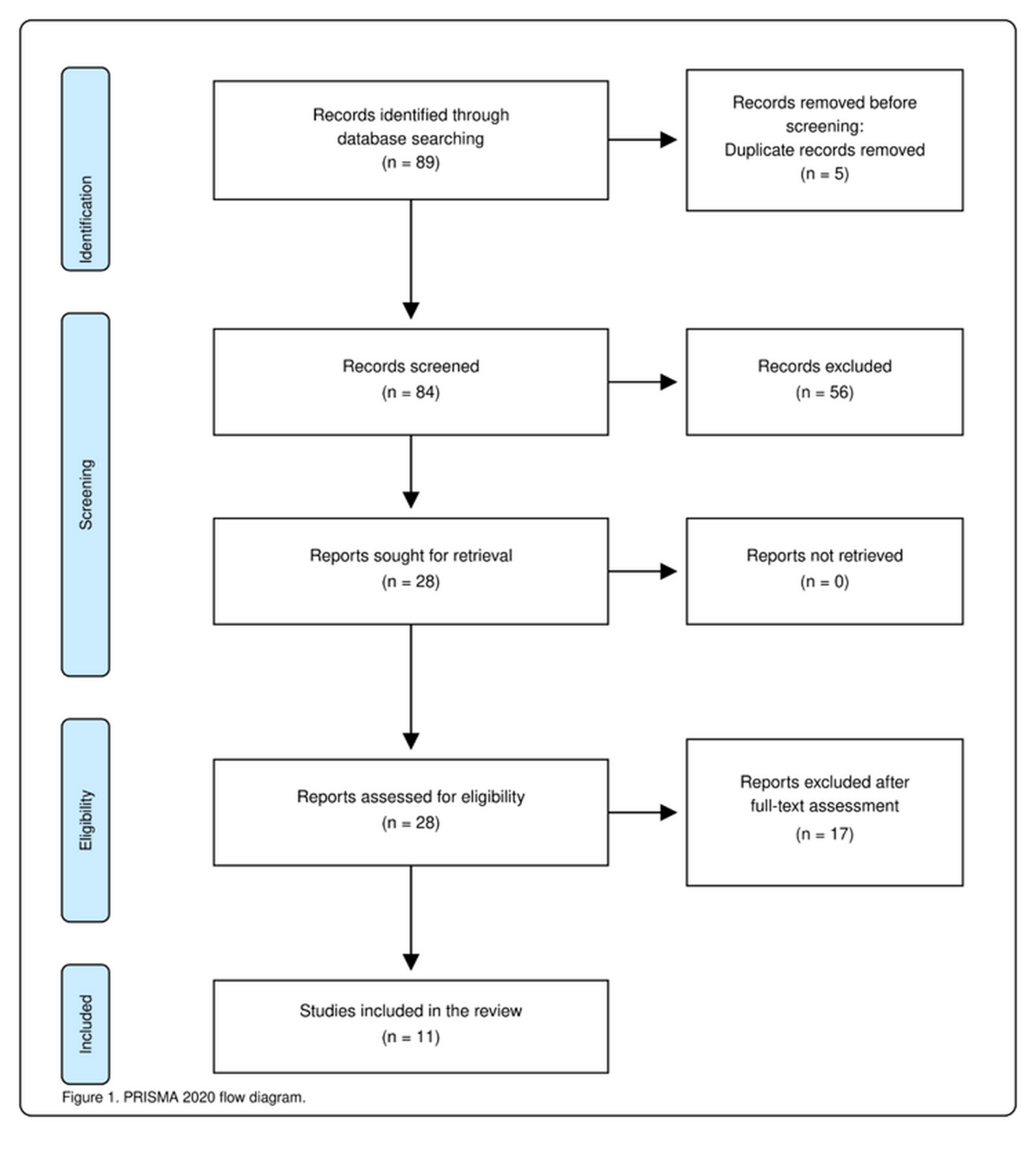
Among the 11 included evidence sources, 10 were empirical studies and one was a systematic review. Three sources examined self-blame, three examined shame, and five examined guilt. One study addressed both shame and guilt but was placed under the shame category to avoid duplicate counting19. Of the empirical studies, eight used task-based functional MRI, one used a combination of structural and resting-state MRI, and one used positron-emission tomography. Sample sizes ranged from 8 to 95 participants, with a median of 22, and the studies spanned seven countries. Only one empirical study directly examined a focal construct in sexual assault survivors20. One systematic review was treated as a secondary evidence source and its findings drawn from a primary study were not counted as independent evidence21.
| No. | Study and Setting | Design | Sample | Trauma Exposure | Construct | Measure/Induction | Modality | Threshold | Principal Neurobiological Findings | Limitations | Relevance to SA Survivorship |
| 1 | Berman et al. (2018)20 ; Israel | Cross-sectional neuroimaging | 62 women: 38 SA-exposed, 24 controls | Adult SA; with/without PTSD | Self-blame | SA self-blame ratings and trauma measures | Structural MRI (VBM); resting-state fMRI | p < .05 FDR; β = −.603, p < .001 | Higher self-blame associated with decreased bilateral lingual-gyrus and intracalcarine GMV. Lingual-gyrus connectivity with left anterior temporal fusiform differed by PTSD status; inversely linked to intrusion symptoms. | Cross-sectional; modest sample; women only; causality unclear | Direct: only study in adult SA survivors |
| 2 | Lythe et al. (2015)22 ; United Kingdom | Prospective cohort (~14-month) | 95 participants: 56 remitted MDD (31 stable, 25 recurrent), 39 controls | No trauma required | Self-blame | Moral-sentiment task: self-blame vs. other-blame | Task-based fMRI with PPI | p = .005 uncorrected; p = .05 FWE | Recurrent MDD showed increased connectivity between right superior ATL and subgenual cingulate/septal region, right TPJ, and ventral putamen during self-blame. Classification accuracy 75%. | MDD not SA; not assault-related; modest subgroups; classifier not validated | Indirect: self-blame connectivity may inform SA research |
| 3 | Lloyd et al. (2021)23 ; Canada | Cross-sectional clinical-control | 46 participants: 28 PTSD, 18 moral-injury controls | Moral injury; mixed trauma | Shame | Moral-injury recall with state/trait shame | Task-based fMRI; between-group | Cluster p < .05 FDR; min 10 voxels | PTSD group showed increased right posterior insula, dACC, left postcentral gyrus, and left dlPFC during recall. State shame negatively associated with dmPFC and right superior frontal activity. | Modest sample; mixed traumas; correlational; not SA-specific | Indirect: trauma-related shame; not SA-specific |
| 4 | Pulcu et al. (2014)24 ; United Kingdom | Cross-sectional case-control | 39 participants: 21 remitted MDD, 18 controls | No trauma required | Shame | Moral-sentiment task: shame and guilt | Task-based fMRI; shame vs. guilt | p = .005 uncorrected; p = .05 FWE | Remitted MDD showed increased right amygdala and right posterior insula responses to shame vs. guilt compared with controls. | Modest sample; MDD not SA; induced emotions may differ | Indirect: distinguishes shame from guilt neurally |
| 5 | Michl et al. (2014)19 ; Germany | Within-participant pilot | 14 healthy adults (7F, 7M) | No trauma required | Shame (primary); guilt also | Written scenarios: shame, guilt, neutral | Task-based fMRI; shame vs. neutral, guilt vs. neutral | p < .05 FDR; fixed-effects | Shame vs. neutral: increased ACC, parahippocampal, frontal activity. Guilt vs. neutral: increased fusiform, middle temporal, amygdala, insula. Partially distinguishable. | Very small sample; fixed-effects; not SA-specific | Indirect: compares shame/guilt patterns; not SA-specific |
| 6 | Takahashi et al. (2004)24 ; Japan | Within-participant experimental | 19 healthy adults (10M, 9F) | No trauma required | Guilt | Sentence-based judgments: guilt, embarrassment, neutral | Task-based fMRI; guilt+embarrassment vs. neutral | p < .001 uncorrected with extent criterion | Guilt+embarrassment vs. neutral: increased mPFC, left posterior STS, visual cortex. Embarrassment vs. guilt: increased right ATL, bilateral hippocampus, visual cortex. | Small sample; contrast confounded by embarrassment; uncorrected | Indirect: candidate guilt regions; not SA-specific |
| 7 | Green et al. (2010)25 ; United States | Within-participant connectivity | 25 healthy adults (12M, 13F) | No trauma required | Guilt | Written statements: guilt or indignation | Task-based fMRI with PPI; guilt vs. indignation | p = .01 uncorrected; p = .05 FWE | Guilt: increased connectivity between right superior ATL and subgenual cingulate/septal region. Indignation: connectivity between ATL and lateral orbitofrontal cortex. | Modest sample; imagined actions; not trauma-related | Indirect: guilt connectivity may guide SA research |
| 8 | Gilead et al. (2016)26 ; Israel | Within-participant autobiographical recall | 19 healthy adults (14F) | No trauma required | Guilt | Recall of guilt, pride, anger, joy events | Task-based fMRI; self-conscious vs. basic emotions | p < .001; min 74 voxels (p < .05 corrected) | Self-conscious emotions represented across mPFC-to-dACC and lateral dorsal prefrontal regions. Guilt represented more dorsally within mPFC than pride. | Small sample; combined contrasts; not SA-related | Indirect: neural organization of guilt; not SA-specific |
| 9 | Wagner et al. (2011)27 ; Switzerland | Within-participant autobiographical fMRI | 15 healthy women | No trauma required | Guilt | Autobiographical recall: guilt, shame, sadness, neutral | Task-based fMRI; guilt vs. shame and sadness | p < .001 uncorrected; min 10 voxels | Guilt vs. shame/sadness: increased right lateral orbitofrontal and paracingulate/dmPFC activity. Right OFC positively associated with trait guilt. | Small women-only sample; uncorrected; not SA-related | Indirect: distinguishes guilt from related emotions |
| 10 | Shin et al. (2000)28 ; United States | Within-participant PET study | 8 healthy men | No trauma required | Guilt | Personalized guilt-provoking script-driven imagery | PET measuring rCBF; guilt vs. neutral | Uncorrected voxelwise PET; no whole-brain correction | Guilt imagery: increased rCBF in bilateral anterior temporal poles, ACC, left anterior insula/IFG; decreased rCBF in posterior left insula. | Very small men-only sample; older PET; uncorrected | Indirect: early guilt evidence; limited SA applicability |
| 11 | Eder-Moreau et al. (2022)21 ; multiple settings | Systematic review | 56 MRI studies of women with PTSD | Mixed trauma including sexual | Self-blame (secondary) | Review: structural, task-based, diffusion, resting-state MRI | Systematic synthesis; no single comparison | N/A; thresholds varied | Reduced lingual-gyrus GMV associated with self-blame; increased mPFC during negative self-evaluation. Lingual-gyrus finding derived from Berman et al. (2018). | High heterogeneity; not pooled; lingual-gyrus not independent of Berman et al. | Secondary: broader PTSD context; no independent SA evidence |
Note. SA = sexual assault; fMRI = functional magnetic resonance imaging; MRI = magnetic resonance imaging; PET = positron emission tomography; PTSD = post-traumatic stress disorder; MDD = major depressive disorder; GMV = gray matter volume; VBM = voxel-based morphometry; PPI = psychophysiological interaction; FDR = false discovery rate; FWE = family-wise error; rCBF = regional cerebral blood flow; ACC = anterior cingulate cortex; dACC = dorsal ACC; dmPFC = dorsomedial prefrontal cortex; dlPFC = dorsolateral prefrontal cortex; mPFC = medial prefrontal cortex; OFC = orbitofrontal cortex; STS = superior temporal sulcus; TPJ = temporoparietal junction; ATL = anterior temporal lobe.
Self-blame
Lythe et al. (2015) conducted a functional magnetic resonance imaging(fMRI) study studying neural patterns of self-blame in major depressive disorder (MDD). The study showed that during self-blame relative to other blame connectivity between the right superior anterior temporal lobe(RSATL),subgenual cingulate cortex, and adjacent septal region (SCSR) was higher for recurring MDD participants than stable MDD. The hyperconnectivity of RSATL-SCSR was associated with the recurrence of depressive episodes22.
Berman et al. (2018) conducted a magnetic resonance imaging (MRI) study of the neural underpinnings of self-blame, and its association with PTSD in female SA survivors. Self-blame was negatively correlated with gray matter volume (GMV) in the lingual gyrus and adjacent intracalcarine cortex. Self-blame had a strong positive correlation with PTSD symptom severity20.
Eder-Moreau et al. (2022) conducted a systematic review to examine neurobiological changes in females with PTSD. Self-blame was correlated with reduced GMV in the lingual gyrus. Greater activation was observed in the medial prefrontal cortex when negatively viewing one’s own self and qualities21.
Shame
Lloyd et al.(2021) conducted an fMRI study of military and public safety-related PTSD compared to civilian moral injury (MI) exposed controls. The PTSD group showed increased activation in the right posterior insula, dorsal anterior cingulate cortex, and left dorsolateral prefrontal cortex during MI recall. Higher shame rating were negatively correlated with activity in the dorsomedial prefrontal cortex23.
Pulcu et al. (2014) conducted an FMRI study examining amygdala reactivity to shame in remitted major depressive disorder(MDD) patients relative to healthy controls. The remitted MDD population displayed greater amygdala and posterior insula activation to shame relative to guilt29.
Michl et al. (2014) conducted an fMRI study to observe functional brain activity for specific emotions within a healthy sample. Shame relative to neutral stimuli increased activation in the medial and inferior frontal gyrus of the frontal lobe, and the anterior cingulate cortex and parahippocampal gyrus in the temporal lobe19.
Guilt
An fMRI study conducted by Takahashi et al. (2004) used a healthy control to examine guilt, and embarrassment. Guilt relative to neutral stimuli activated the medial prefrontal cortex, orbitofrontal cortex, and anterior temporal lobe (ATL). These are all regions within the cerebral cortex in the forebrain, thus guilt may be seen to be frontally-mediated24.
Green et al. (2010) conducted an fMRI study examining guilt-specific connectivity patterns. They found selective functional integration between the right superior ATL and subgenual cingulate region when experiencing guilt. This was the first study to provide evidence of selective functional integration, observing a connectivity pattern unique to guilt. An fMRI study conducted by Gilead et al. (2016) investigated the neural correlates of self-conscious emotions like guilt, a negative self-conscious emotion. Guilt activated the medial prefrontal cortex, dorsal anterior cingulate cortex, dorsolateral prefrontal cortex, and dorsomedial prefrontal cortex26.
Wagner et al. (2011) carried out an fMRI study to examine prefrontal activation during guilt relative to shame, and sadness. Guilt produced greater activity in specific areas of the right orbitofrontal cortex and paracingulate dorsomedial prefrontal cortex. Brain regions implicated in emotional and social processing such as the retrosplenial cortex, left anterior insula, lingual gyri, and cerebellum were found to be guilt activated as well30.
Shin et al. (2000) used positron emission tomography, and script-driven imagery to induce guilt in the participants. Activation increased in anterior paralimbic structures: bilateral anterior temporal poles, and anterior cingulate gyrus. While activation decreased in the left insular cortex28.
Looking across the empirical studies, frontal and cingulate regions came up most consistently, though no single neural pattern held across all three constructs. For self-blame, findings pointed to anterior temporal and subgenual connectivity alongside lower GMV in the lingual and intracalcarine cortex. Shame was more associated with the posterior insula, amygdala, anterior cingulate cortex, and frontal regions, while guilt showed up more in medial, dorsomedial, and orbitofrontal areas, along with anterior temporal and subgenual connectivity. Beyond that, the findings differed quite a bit in terms of which specific regions were implicated, the direction of effects, and the imaging methods, populations, and comparison conditions used. Only one empirical study looked at a focal construct directly in sexual assault survivors, and none compared all three constructs in this population. The evidence remains limited and inconsistent across studies, and the patterns reported have not been replicated in sexual assault survivor samples.
Discussion
Throughout the included studies, self-blame had a neural correlate centered on the anterior temporal lobe, subgenual cingulate cortex, and lingual gyrus. In a functional MRI study by Lythe et al., there was a pattern between the RSATL and SCSR that found hyperconnectivity between these regions during self-blame relative to other blame. This can be associated with the recurrence of depressive episodes, implying self-blame employs a neurobiologically distinct circuit impacting long-term psychological outcomes22. Using Structural MRI, Berman et al. found a negative correlation between self-blame and GMV in the lingual gyrus20. While Eder-Moreau et al. was a systematic review of women with PTSD, and also found medial prefrontal cortex activation during self-blame21. Berman et al. directly examined female SA survivors, finding an association between assault-related self-blame, and lower GMV20. Across these studies, the implicated structures in self-blame processing are the RSATL, SCSR, and lingual gyrus. Notably, reduced GMV in the lingual gyrus was observed in the only study directly involving SA survivors.
Across the included studies, experiencing shame was associated with activity in the prefrontal cortex, anterior cingulate cortex, posterior insula, and amygdala. In a healthy sample, Michl et al. identified activity in the medial frontal gyrus, inferior frontal gyrus, anterior cingulate cortex, and parahippocampal gyrus19. Expanding on this, Lloyd et al. found that shame during MI recall in PTSD populations elicited increased activation in the right posterior insula and dorsal anterior cingulate cortex while state-shame ratings were negatively correlated with dorsomedial prefrontal cortex activity23. This may be relevant to theories of moral cognition and self-referential processing. Pulcu et al. showed increased amygdala and posterior insula activity as shame increased in remitted MDD patients29. Across these studies, the anterior cingulate cortex, and prefrontal regions were most implicated in shame-processing, while insula activity appeared in both PTSD, and remitted MDD samples, and amygdala activation was seen more specifically in remitted MDD populations.
Four of the guilt studies employed task-based functional MRI, while Shin et al. used positron emission tomography. Across the included studies, the key regions implicated during guilt were the medial prefrontal cortex, orbitofrontal cortex, anterior cingulate cortex, and anterior temporal lobe. Takahashi et al. established guilt as being frontally-mediated, as medial prefrontal cortex, orbitofrontal cortex, and anterior temporal lobe activation was found24. Wagner et al. established greater orbitofrontal cortex activation, and dorsomedial prefrontal activity during guilt relative to shame and sadness, highlighting these regions as neural markers of guilt30. This pattern was further corroborated by Gilead et al., additionally finding dorsolateral and dorsomedial prefrontal cortex activation, furthering the prefrontal network as central for guilt-processing26. In Wagner et al. the left anterior insula, lingual gyri, and cerebellum were found to be guilt-activated as well30. Shin et al. found anterior paralimbic activation, aligning with the prefrontal pattern observed throughout the studies and decreased activation in the left insular cortex28. Green et al.. identified connectivity between the RSATL and subgenual cingulate region, and adjacent septal region during guilt relative to indignation25. Thus, these findings suggest a frontally-mediated neurobiological pattern in the prefrontal cortex for guilt, although the studies did not establish a single guilt-specific neural marker
The clearest overlap across the three constructs was in frontal and cingulate regions, though what exactly was implicated differed by construct. Self-blame was tied to anterior temporal and subgenual connectivity alongside lingual gyrus structure, shame came up more with the anterior cingulate cortex, insula, and amygdala, and guilt was more often linked to medial, dorsomedial, and orbitofrontal areas. Medial prefrontal findings could reflect self-referential processing within the default mode network15, and anterior temporal and temporoparietal findings may point to social cognition and moral emotion processing (Bzdok et al., 2012; Van Overwalle, 2008)16,17. Since the studies differed in population, task, and imaging method, these connections should be treated cautiously.
Sexual assault introduces factors that non-survivor studies simply cannot account for. Coercion, stigma, victim blaming, and negative social reactions can work their way into how survivors think about themselves14, feeding self-blame, deepening shame, and keeping guilt around long after the event. PTSD and dissociation can further disrupt how emotional and self-referential processing works. None of this can be confirmed from the current evidence though, since only Berman et al. actually examined a focal construct in sexual assault survivors. What was found in MDD, moral injury, PTSD, and healthy samples should not be read as standing in for what happens neurobiologically in this specific population.
Limitations
Several limitations of this review require consideration. No formal quality assessment of the included sources was conducted. As this review aimed to map the available evidence rather than evaluate it, included studies were not weighted by methodological quality or risk of bias. Screening, selection, and data extraction were carried out by a single reviewer, which raises the possibility of missed studies, extraction errors, or inconsistent eligibility decisions.
The evidence base was also limited and heterogeneous. Only 11 sources met the inclusion criteria, and just one empirical study directly examined a focal construct in sexual assault survivors. Variation in samples, neuroimaging methods, construct measurement, and statistical thresholds makes direct comparisons across studies difficult. The patterns identified should therefore be read as preliminary rather than definitive.
Much of the available evidence came from healthy participants or clinical populations not selected on the basis of sexual assault exposure, so extrapolating finding to SA survivorship while possible is limited, and should be treated with caution. Comparisons across these populations are possible because self-blame, shame, and guilt involve self-referential, social, and moral processing that is not exclusive to trauma contexts, and the included studies can therefore point to potentially relevant neural systems. That said, experimentally induced or general moral emotions may not capture what survivors experience following sexual assault, where trauma is shaped by coercion, stigma, victim blaming, post-traumatic stress, and dissociation. Differences in trauma history, diagnosis, sex and gender composition, medication use, and task design may all influence neural responses in ways the current evidence cannot account for. Findings from non-survivor populations can therefore inform future directions but should not be taken as direct representations of what occurs neurobiologically in sexual assault survivors.
Conclusion
This scoping review aimed to map and synthesize the extent of existing literature on the neurobiological correlates of self-blame, shame, and guilt relevant to SA survivors. The findings from this review illustrate indirect, heterogeneous evidence implicating prefrontal, cingulate, temporal, insular, and visual regions across mostly non-SA populations, with limited direct evidence in SA survivors. However, there are significant differences in brain regions from one construct to another. Despite growing research, significant gaps exist in neurobiology research for SA populations especially. Since these constructs hinder recovery, understanding these neural correlates may ultimately inform the development of targeted interventions. SA is a pervasive issue across the globe and the psychological consequences are severe and long-lasting. Future research needs to focus on these existing gaps of SA populations since understanding these neural correlates may ultimately inform the development of targeted interventions to help improve recovery for SA survivors.
References
- A. K. Gilmore, R. L. Schacht, W. H. George, K. C. Davis, J. Norris, J. R. Heiman. Verbal sexual coercion experiences, sexual risk, and substance use in women. Journal of Aggression, Maltreatment & Trauma. Vol. 23, pg. 725–739, 2014, https://doi.org/10.1080/10926771.2014.933462. [↩]
- E. A. Mumford, S. Potter, B. G. Taylor, J. Stapleton. Sexual harassment and sexual assault in early adulthood: national estimates for college and non-college students. Public Health Reports. Vol. 135, pg. 555–559, 2020, https://doi.org/10.1177/0033354920946014. [↩]
- E. Serrano-Rodríguez, V. Luque-Ribelles, V. Hervías-Parejo. Psychosocial consequences of sexual assault on women: a scoping review. Archives of Sexual Behavior. Vol. 54, pg. 231–258, 2025, https://doi.org/10.1007/s10508-024-03013-1. [↩] [↩]
- J. Nöthling, N. Abrahams, R. Jewkes, S. Mhlongo, C. Lombard, S. M. J. Hemmings, S. Seedat. Risk and protective factors affecting the symptom trajectory of posttraumatic stress disorder post-rape. Journal of Affective Disorders. Vol. 309, pg. 151–164, 2022, https://doi.org/10.1016/j.jad.2022.04.032. [↩]
- N. Breslau, J. P. Troost, K. Bohnert, Z. Luo. Influence of predispositions on post-traumatic stress disorder: does it vary by trauma severity? Psychological Medicine. Vol. 43, pg. 381–390, 2013, https://doi.org/10.1017/S0033291712001195. [↩]
- L. Piretti, E. Pappaianni, C. Garbin, R. I. Rumiati, R. Job, A. Grecucci. The neural signatures of shame, embarrassment, and guilt: a voxel-based meta-analysis on functional neuroimaging studies. Brain Sciences. Vol. 13, pg. 559, 2023, https://doi.org/10.3390/brainsci13040559. [↩]
- H. F. Aakvaag, S. Thoresen, T. Wentzel-Larsen, G. Dyb, E. Røysamb, M. Olff. Broken and guilty since it happened: a population study of trauma-related shame and guilt after violence and sexual abuse. Journal of Affective Disorders. Vol. 204, pg. 16–23, 2016, https://doi.org/10.1016/j.jad.2016.06.004. [↩]
- S. E. Ullman, L. C. Peter-Hagene, M. Relyea. Coping, emotion regulation, and self-blame as mediators of sexual abuse and psychological symptoms in adult sexual assault. Journal of Child Sexual Abuse. Vol. 23, pg. 10.1080/10538712.2014.864747, 2014, https://doi.org/10.1080/10538712.2014.864747. [↩]
- A. C. Kennedy, K. A. Prock. ‘I still feel like i am not normal’: a review of the role of stigma and stigmatization among female survivors of child sexual abuse, sexual assault, and intimate partner violence. Trauma, Violence & Abuse. Vol. 19, pg. 512–527, 2018, https://doi.org/10.1177/1524838016673601. [↩]
- G. Sáez, M. J. Ruiz, G. Delclós-López, F. Expósito, S. Fernández-Artamendi. The effect of prescription drugs and alcohol consumption on intimate partner violence victim blaming. International Journal of Environmental Research and Public Health. Vol. 17, pg. 4747, 2020, https://doi.org/10.3390/ijerph17134747. [↩]
- J. P. Tangney, J. Stuewig, D. J. Mashek. Moral emotions and moral behavior. Annual Review of Psychology. Vol. 58, pg. 345–372, 2007, https://doi.org/10.1146/annurev.psych.56.091103.070145. [↩] [↩]
- M. R. Leary. Emotional responses to interpersonal rejection. Dialogues in Clinical Neuroscience. Vol. 17, pg. 435–441, 2015, https://doi.org/10.31887/DCNS.2015.17.4/mleary. [↩]
- A. Kudinova, L. A. Brick, C. Barthelemy, H. A. MacPherson, G. Jenkins, L. DeYoung, A. Gilbert, P. Radoeva, K. Kim, M. Armey, D. Dickstein. Sex and age moderate the trajectory of guilt among children and adolescents with and without recent suicidal ideation. Cognition & Emotion. Vol. 36, pg. 512–526, 2022, https://doi.org/10.1080/02699931.2022.2029359. [↩]
- A. Ehlers, D. M. Clark. A cognitive model of posttraumatic stress disorder. Behaviour Research and Therapy. Vol. 38, pg. 319–345, 2000, https://doi.org/10.1016/S0005-7967(99)00123-0. [↩] [↩]
- R. A. Lanius, B. A. Terpou, M. C. McKinnon. The sense of self in the aftermath of trauma: lessons from the default mode network in posttraumatic stress disorder. European Journal of Psychotraumatology. Vol. 11, pg. 1807703, 2020, https://doi.org/10.1080/20008198.2020.1807703. [↩] [↩]
- F. Van Overwalle. Social cognition and the brain: a meta‐analysis. Human Brain Mapping. Vol. 30, pg. 829–858, 2008, https://doi.org/10.1002/hbm.20547. [↩]
- D. Bzdok, L. Schilbach, K. Vogeley, K. Schneider, A. R. Laird, R. Langner, S. B. Eickhoff. Parsing the neural correlates of moral cognition: ale meta-analysis on morality, theory of mind, and empathy. Brain Structure & Function. Vol. 217, pg. 783–796, 2012, https://doi.org/10.1007/s00429-012-0380-y. [↩]
- A. C. Tricco, E. Lillie, W. Zarin, K. K. O’Brien, H. Colquhoun, D. Levac, D. Moher, M. D. J. Peters, T. Horsley, L. Weeks, S. Hempel, E. A. Akl, C. Chang, J. McGowan, L. Stewart, L. Hartling, A. Aldcroft, M. G. Wilson, C. Garritty, S. Lewin, C. M. Godfrey, M. T. Macdonald, E. V. Langlois, K. Soares-Weiser, J. Moriarty, T. Clifford, Ö. Tunçalp, S. E. Straus. PRISMA extension for scoping reviews (prisma-scr): checklist and explanation. Annals of Internal Medicine. Vol. 169, pg. 467–473, 2018, https://doi.org/10.7326/M18-0850. [↩]
- P. Michl, T. Meindl, F. Meister, C. Born, R. R. Engel, M. Reiser, K. Hennig-Fast. Neurobiological underpinnings of shame and guilt: a pilot fmri study. Social Cognitive and Affective Neuroscience. Vol. 9, pg. 150–157, 2014, https://doi.org/10.1093/scan/nss114. [↩] [↩] [↩] [↩]
- Z. Berman, Y. Assaf, R. Tarrasch, D. Joel. Assault-related self-blame and its association with ptsd in sexually assaulted women: an mri inquiry. Social Cognitive and Affective Neuroscience. Vol. 13, pg. 775–784, 2018, https://doi.org/10.1093/scan/nsy044. [↩] [↩] [↩] [↩] [↩]
- E. Eder-Moreau, X. Zhu, C. T. Fisch, M. Bergman, Y. Neria, L. Helpman. Neurobiological alterations in females with ptsd: a systematic review. Frontiers in Psychiatry. Vol. 13, 2022, https://doi.org/10.3389/fpsyt.2022.862476. [↩] [↩] [↩] [↩]
- K. E. Lythe, J. Moll, J. A. Gethin, C. I. Workman, S. Green, M. A. Lambon Ralph, J. F. W. Deakin, R. Zahn. Self-blame–selective hyperconnectivity between anterior temporal and subgenual cortices and prediction of recurrent depressive episodes. JAMA Psychiatry. Vol. 72, pg. 1119–1126, 2015, https://doi.org/10.1001/jamapsychiatry.2015.1813. [↩] [↩] [↩]
- C. S. Lloyd, A. A. Nicholson, M. Densmore, J. Théberge, R. W. J. Neufeld, R. Jetly, M. C. McKinnon, R. A. Lanius. Shame on the brain: neural correlates of moral injury event recall in posttraumatic stress disorder. Depression and Anxiety. Vol. 38, pg. 596–605, 2021, https://doi.org/10.1002/da.23128. [↩] [↩] [↩]
- H. Takahashi, N. Yahata, M. Koeda, T. Matsuda, K. Asai, Y. Okubo. Brain activation associated with evaluative processes of guilt and embarrassment: an fmri study. NeuroImage. Vol. 23, pg. 967–974, 2004, https://doi.org/10.1016/j.neuroimage.2004.07.054. [↩] [↩] [↩]
- S. Green, M. A. Lambon Ralph, J. Moll, E. A. Stamatakis, J. Grafman, R. Zahn. Selective functional integration between anterior temporal and distinct fronto-mesolimbic regions during guilt and indignation. NeuroImage. Vol. 52, pg. 1720–1726, 2010, https://doi.org/10.1016/j.neuroimage.2010.05.038. [↩] [↩]
- M. Gilead, M. Katzir, T. Eyal, N. Liberman. Neural correlates of processing “self-conscious” vs. “basic” emotions. Neuropsychologia. Vol. 81, pg. 207–218, 2016, https://doi.org/10.1016/j.neuropsychologia.2015.12.009. [↩] [↩] [↩]
- U. Wagner, K. N’Diaye, T. Ethofer, P. Vuilleumier. Guilt-specific processing in the prefrontal cortex. Cerebral Cortex (New York, N.Y. : 1991). Vol. 21, pg. 2461–70, 2011, https://doi.org/10.1093/cercor/bhr016. [↩]
- L. M. Shin, D. D. Dougherty, S. P. Orr, R. K. Pitman, M. Lasko, M. L. Macklin, N. M. Alpert, A. J. Fischman, S. L. Rauch. Activation of anterior paralimbic structures during guilt-related script-driven imagery. Biological Psychiatry. Vol. 48, pg. 43–50, 2000, https://doi.org/10.1016/S0006-3223(00)00251-1. [↩] [↩] [↩]
- E. Pulcu, K. Lythe, R. Elliott, S. Green, J. Moll, J. F. W. Deakin, R. Zahn. Increased amygdala response to shame in remitted major depressive disorder. PLOS ONE. Vol. 9, pg. e86900, 2014, https://doi.org/10.1371/journal.pone.0086900. [↩] [↩]
- U. Wagner, K. N’Diaye, T. Ethofer, P. Vuilleumier. Guilt-specific processing in the prefrontal cortex. Cerebral Cortex (New York, N.Y. : 1991). Vol. 21, pg. 2461–70, 2011, https://doi.org/10.1093/cercor/bhr016. [↩] [↩] [↩]