
Abstract
Polyethylene Terephthalate (PET) is among the most widespread microplastic (MP) polymers in agricultural soils. Pleurotus ostreatus (oyster mushroom) produces Mn-peroxidase and laccase that oxidize and degrade PET. Our objective was to investigate how P. ostreatus mycoremediates PET and the impact on crops. Although MP effects on soil and plant health are studied, no study examines P. ostreatus remediation alongside soil and plant responses. The 15-week pot experiment tested three treatments (control, PET, and P. ostreatus + PET) on Phaseolus vulgaris L., Capsicum annuum Linn., and Solanum lycopersicum L. Soil health, plant growth, and yield were measured weekly. Microbial abundance and MP characteristics were determined by microscopy at baseline and harvest. Two-way ANOVA showed a significant effect of treatment on total MP abundance (p=0.0039). Across all crop systems, the P. ostreatus + PET treatments exhibited the lowest increase in MP abundance, with abundance reduced by approximately 48–57% compared to PET treatments. The P. ostreatus + PET treatment increased estimated microbiota abundance, with values 1.5–2.1 times higher than PET treatments, and relative soil moisture and fertility in pepper and bean systems (p<0.05). Of 11 observed MP color changes, a possible sign of polymer-alteration, 10 occurred in the pepper P. ostreatus + PET treatment. Plant height, yield, and chlorophyll varied across crops, suggesting PET did not impact plant health at the concentrations and timescale tested. These findings highlight P. ostreatus as a scalable, nature-based approach to mitigating PET in agricultural soils.
Keywords: Microbiology, Microplastics, Mycoremediation, Polyethylene Terephthalate, Pleurotus ostreatus.
Introduction
Microplastics (MP) have been identified in nearly every human organ and every ecosystem1. Rarely studied, terrestrial environments are estimated to contain 4-23 times more MPs than oceans2. Plants are the largest contributing source of nutrition to all species, including humans and livestock, making soil health critical to the well-being of all populations globally3. As of 2019, agricultural value chains globally used approximately 12.5 million metric tons of plastic products in plant and animal production4,5. Polyethylene Terephthalate (PET) is a major contributor to solid waste in landfills, with an annual production of 50 million tons6,7. PET is selected in this experiment because it is one of the most prevalent polymers found in agricultural soils8,9.
Depending on both plant species and polymer type, the effects of microplastics on plant and soil systems vary widely, including both beneficial and harmful outcomes8,10. PET poses a significant threat to plant and soil health, primarily through alteration of the soil habitat and the direct toxicological effects of nanoplastics; its resistance to degradation worsens this threat by allowing PET to accumulate over time7,11. Evidence shows MPs can modify physical and chemical properties of soil, including pH, soil aggregation, bulk density, and water holding capacity12,13. Microbiota play a vital role in soil carbon and nitrogen nutrient cycling14. MPs can disrupt microbial activity by interfering with communication, metabolism, and microbial abundance14,15. Additionally, pollutants and MPs can alter chlorophyll content and photosynthesis efficiency16,17. Moreover, MPs are now identified as vectors for agrichemicals, heavy metals, and pathogens within soil18,19. In specific crop species, including the common bean (Phaseolus vulgaris L.), sweet pepper (Capsicum annuum Linn.), and tomato (Solanum lycopersicum L.), MPs were found to negatively impact plant growth and yield, oxidative stress, and photo-pigment19,20,21. For this reason, we selected these three crops for the experiment.
Biodegradation is recognized by the United Nations Environmental Program as an important natural process for sustainable waste management and ecosystem restoration22. There is scientific evidence that certain organisms, such as insects, bacteria, fungi, algae, and plants, can biodegrade, immobilize, filter, and/or break down MPs23. These organisms produce enzymes that can bind to MPs, alter their shape, and induce erosion and discoloration23. Yoshida et al. isolated Ideonella sakaiensis 201-F6, which produces two enzymes that hydrolyze PET and its intermediate mono(2-hydroxyethyl) terephthalic acid into terephthalic acid and ethylene glycol24. Protein engineering has sped up the process, with an engineering PET hydrolase that achieves at least 90% depolymerization into monomers in 10 hours25. Some organisms, such as fungi, can even grow directly on the surface of MPs26. We chose to investigate the ability of Pleurotus ostreatus (oyster mushrooms) to degrade PET. P. ostreatus is advantageous due to its high yield, low cost, medicinal and nutritional properties, and ability to transform agricultural waste into useful resources22,27. Importantly, P. ostreatus can diversify microbial profiles, boost plant growth, and produce enzymes that facilitate nutrient uptake in plants28. P. ostreatus produces enzymes Mn-peroxidase and laccase that were shown to favor oxidation and degradation of MPs27,29. In a recent study, P. ostreatus demonstrated the highest degradation rate of polystyrene among five fungi species, with a mass loss of 16.17 ± 8.87 % after 50 days26. Additionally, changes in functional group intensity and the discoloration of PET flakes, associated with an increase in carboxyl-terminated species, indicate that enzymes secreted by P. ostreatus biodegraded PET22. P. ostreatus has been shown to degrade oxo-biodegradable plastic. Scanning electron microscopy revealed cracks and holes in colonized plastic strips after 45 days, and FTIR spectroscopy was used to characterize structural changes in the polymer30.
Although there is research on how MPs affect soil and plant health, no study has investigated the potential of P. ostreatus to remediate MPs while simultaneously analyzing effects on both soil and plant health. Evaluating effective solutions for MP remediation in agricultural production systems is a critical evidence gap that must be filled. The objective of this study is to investigate how P. ostreatus mycoremediates PET and the impact on three common crops: Phaseolus vulgaris L., Capsicum annuum Linn., and Solanum lycopersicum L. This knowledge is currently missing and is necessary to assess whether fungal treatment is a viable form of intervention for farmers. Our primary hypothesis is that P. ostreatus will oxidize and degrade PET in the soil, resulting in improved microbial activity, soil moisture and fertility, and crop height and yield, compared to the PET treatment in absence of P. ostreatus. In this study, we conducted a 15-week pot experiment testing three treatments (control, PET, and P. ostreatus + PET) in tomato, bean, and pepper systems. Soil health, plant growth, and yield were measured weekly. Microbial abundance and MP characteristics were determined by soil microscopy at baseline and harvest. We had two main limitations in this study. First, mushroom straw was used only in the P. ostreatus + PET treatments as a growing medium, but this may have influenced soil characteristic results independently of fungal activity. Additionally, our analysis of microplastics was limited to only microscopy and not spectroscopic techniques such as μ-FTIR or Raman spectroscopy, due to constraints on resources.
Methods
Experimental Set Up and Design
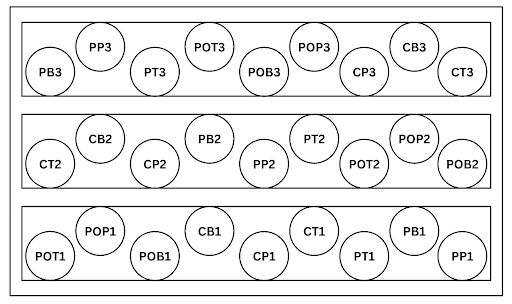
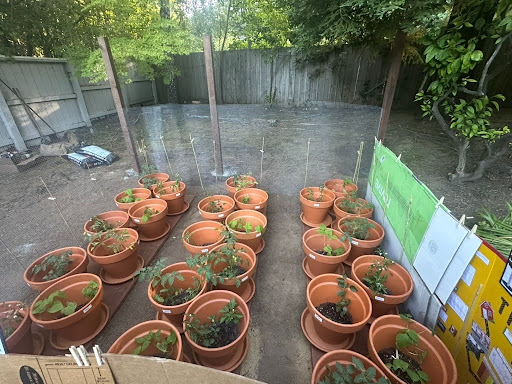
As seen in Figures 1a and 1b, this experiment included three treatments: (1) control, (2) PET, and (3) P. ostreatus + PET, across three plant species, with three replicates and two plants per pot, totaling 27 pots and 54 plants. The treatments differed in growing medium composition: the control contained 1116 g of soil, the PET treatment included 1051 g of soil uniformly mixed with 55 g of PET, and the P. ostreatus + PET treatment consisted of 110 g of mushroom straw evenly distributed at the base, 55 g of P. ostreatus spawn scattered over the straw, 886 g of soil layered above, and 55 g of PET mixed into the soil layer only. All treatments used Recipe 420 Potting Soil (E.B. Stone Organics), a commercially available organic potting mix. Soil texture and organic matter content were not specified by the manufacturer and were not independently characterized. Because the same soil mix was used across all 27 pots, initial soil properties were uniform across treatments. The PET used was Goodfellow PET Powder, a semi-crystalline polyester copolymer with a maximum particle size of 300 µm, crystallinity >50%, and an inherent viscosity of 0.80 dl/g. The material was supplied in its natural (uncolored) form with a specified maximum residual acetaldehyde content of 1 ppm. The PET concentration (55 g PET per ~1 kg soil substrate; ~5% w/w) was selected as an elevated exposure treatment to assess PET–P. ostreatus interactions within the experimental timeframe. This controlled stress condition was used to evaluate preliminary remediation potential and does not represent typical agricultural contamination levels. Mushroom straw was added exclusively to the P. ostreatus + PET treatment to provide a substrate for mycelial establishment. Although this may have influenced soil characteristics independently of fungal activity, it was required for fungal growth and is considered a limitation of the study.
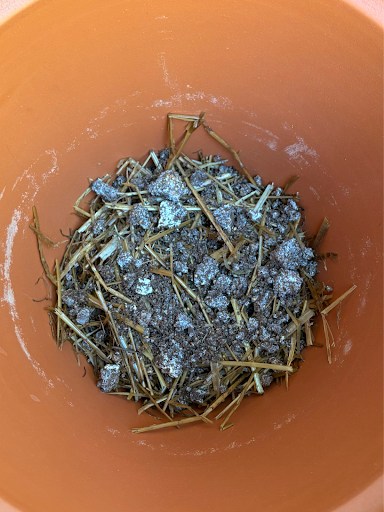
Figure 2 depicts the inoculation of Pleurotus ostreatus, showing P. ostreatus spawn scattered over a base layer of straw substrate.
6-gram soil samples were collected from each pot at baseline and harvest for the microscopy analysis. Plant height and root depth were measured to establish a baseline assessment of plant health. The experimental setup was completed within 36 hours, and the pots were arranged as shown in Figures 1a-b. Plastic usage was intentionally minimized by selecting equipment such as glass sample jars, rubber gloves, and terracotta pots. However, procedural and airborne blanks were not included; therefore, reported MP abundances represent observed counts that may include environmental background contamination. Macroplastic packaging from shipping was the only unavoidable source of contamination. The independent variables were treatment type (Control, PET, and P. ostreatus + PET) and crop species (Phaseolus vulgaris, Capsicum annuum, and Solanum lycopersicum). The dependent variables included plant growth (height, root depth, and yield), soil physicochemical properties (moisture, pH, fertility), and biological activity (chlorophyll, nitrogen content, foliar humidity, leaf temperature, and microbial abundance). The study followed a structured sequence beginning with pot preparation and collection of baseline soil samples, followed by a 15-week growth period with weekly standardized measurements of soil and plant parameters and periodic harvesting, after which final soil samples were collected for microscopy. Microscopy was processed through slurry and density separation methods, with all data subsequently compiled for comparative analysis across treatments and crop species.
Plant Maintenance
Plants were maintained for a 15-week period, from July to November, with weekly measurements and a consistent watering schedule to ensure all plants of the same type received equal amounts of water. The watering schedule varied depending on temperature, season, and precipitation, but watering time remained consistent at 7-9 p.m. Plants were grown outdoors in a fenced enclosure with an unwalled structure and a roof, exposing plants to outdoor temperature and airflow. Air temperature was recorded twice daily: mean morning temperature was 15.9°C, and mean afternoon temperature was 25.4°C. Because the experiment ran from July to November, temperature, day length, and light exposure declined over the study period. All 27 pots were exposed to these conditions simultaneously, so seasonal variation applied equally across treatments. The common bean (Phaseolus vulgaris L.), sweet pepper (Capsicum annuum Linn.), and tomato (Solanum lycopersicum L) were selected because they are common agricultural crops and were used in prior microplastics research, enabling comparison with existing findings. Seedlings were obtained from a commercial nursery and transplanted before the flowering stage. Every Sunday, all pots were weeded, and bamboo sticks were used to prop up all plants requiring additional support. Weekly harvest was also conducted on Sundays, during which fruits and vegetables were collected, and their mass and count were recorded. A final harvest was performed at the end of the 15-week experiment, during which all remaining vegetables/fruits were collected.
Data Collection
Every Sunday, multiple soil and plant health measurements were taken: soil moisture, fertility and pH, chlorophyll (SPAD), nitrogen content (mg/g), foliar humidity (%), leaf temperature (°C), and plant yield (g). In this study, soil health is defined as the combined status of four indicators we measured: soil moisture, soil fertility, pH, and soil microbiota abundance. Soil moisture is an indication of water retention. Soil fertility and pH are representative of nutrient levels and chemical suitability for root and microbial function. Abundance of fungi, protozoa, and organic matter indicate biological activity in the soil. The measurements for soil moisture, fertility, and pH were recorded by inserting the probe of the RYJNM Soil Moisture Meter halfway into the soil and waiting 30 seconds for a stabilized reading. To ensure accurate measurements, the probe was sterilized with isopropyl alcohol in between readings. Soil moisture and fertility were measured on the meter’s 1-9 scale rather than as absolute values, so these readings are relative comparisons across treatments. Chlorophyll, nitrogen content, foliar humidity, and leaf temperature measurements were recorded by calibrating the GOYOJO Chlorophyll Meter and applying it to the center of the healthiest leaf on the plant. Plant yield was recorded weekly by harvesting all ripened fruit, while immature fruit was left intact to continue developing. At each weekly harvest, the count of ripe produce was recorded, and the mass of yield was measured using an OHAUS Compass CX Scale. Plant height (cm) was measured every three weeks from the base to the highest point of the plant. Root depth (cm) was recorded at baseline and harvest from the base to the bottom of the roots.
Microscopy
For microscopic analysis, 6g soil samples were retrieved from each pot at baseline and harvest. Samples were stored in the freezer at -18°C, then transferred to a refrigerator 12 hours before being brought to room temperature. The samples were distributed evenly into 2 separate vials, one for the soil slurry and one for the NaCl solution. The soil slurry was prepared by adding 8 drops of distilled water to the soil sample. 8 drops of NaCl solution were added to each soil sample to facilitate density separation of MPs from organic matter. For each sample, three slide replicates were prepared by placing a drop of the slurry onto a glass slide. Methylene blue stain was added to enhance the visibility of microbial activity and organic material. Slides were examined under a Herwicm 40X-2500X Laboratory Microscope at magnifications up to 400×. Microbial abundance was quantified using a microscope grid-counting method, in which microorganisms observed within standardized grid fields were systematically counted across each slide. Microbiota and microplastic counts were recorded at both baseline and harvest, and reported values (in Results) represent the difference between the two. Three slide replicates were prepared from each of the soil slurry and NaCl fractions for every soil sample, resulting in six slide replicates per pot (three NaCl and three biotic). Observations and quantification of MP characteristics, organic matter; and microbial presence, including bacteria, fungi, and protozoa, were recorded through observations and photographs. Suspected microplastics were visually identified and classified as fibers or fragments based on morphology, color, and absence of visible cellular or organic structures, with particle counts and characteristics recorded systematically across each slide replicate
Statistical analysis
Statistical significance set at p < 0.05 in a two-way ANOVA (Crop × Treatment) was used to test for differences in total microplastic amount across crop types (tomato, bean, and pepper) and treatments (control, PET, and P. ostreatus + PET). One-way ANOVAs were performed to assess treatment effects on soil fertility, soil moisture, and microbiota abundance within individual crop groups. The experimental unit was the pot (n = 3 pots per treatment × crop combination). Analyses were performed on pot-level data. Block and repeated-measures effects were not explicitly modeled.
Ethical Considerations
The primary ethical consideration of this experiment was preventing environmental release of microplastics. Throughout the experiment, microplastics and contaminated soil were handled carefully to avoid spillover into the surrounding environment. At the end of the experiment, all the microplastic-contaminated soil was put into trash bags and disposed of as solid waste.
Results
Soil Health
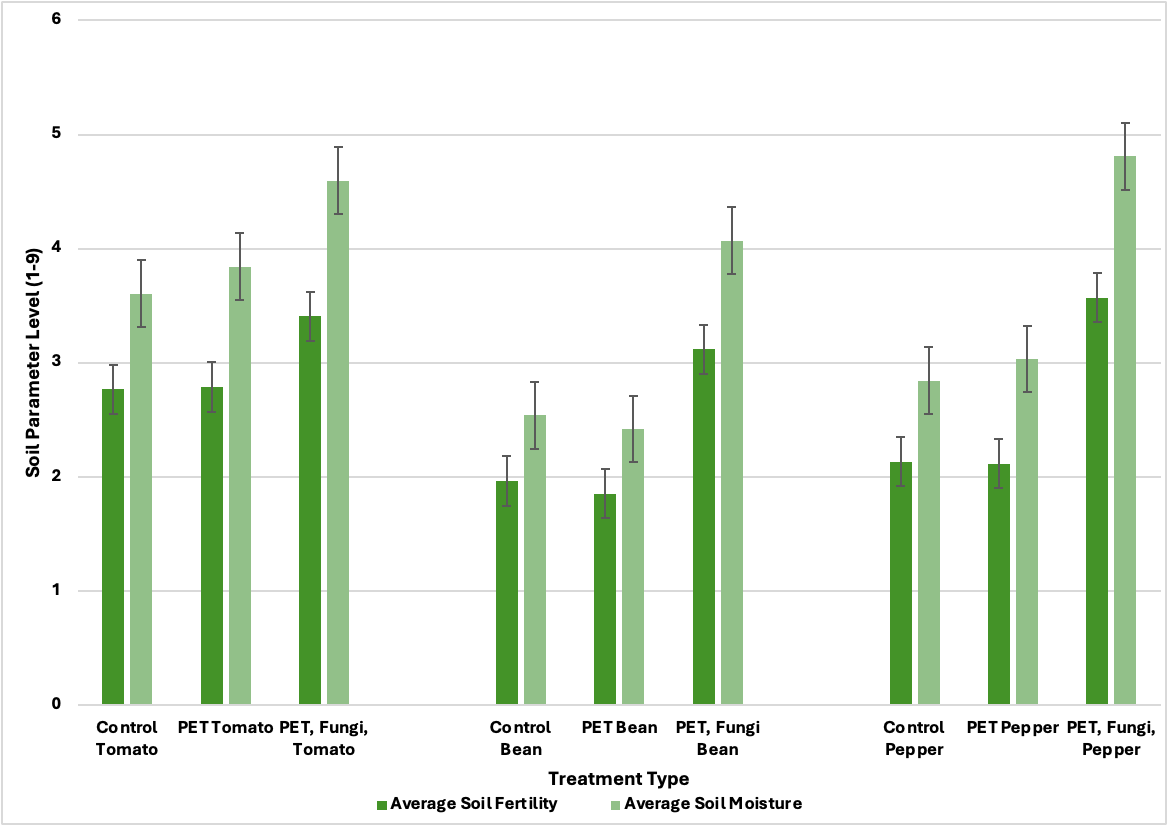
Figure 3 shows that, across all three plant treatments (tomato, bean, and pepper), average soil moisture and fertility were both highest in the P. ostreatus + PET treatment compared to the control and PET treatments. Values reflect the soil health meter’s relative 1–9 scale, so they indicate differences between treatments rather than absolute moisture content or nutrient concentrations. One-way ANOVA demonstrated a significant effect of treatment type on soil fertility and moisture in both pepper and bean systems (p < 0.05).
Microbial Abundance
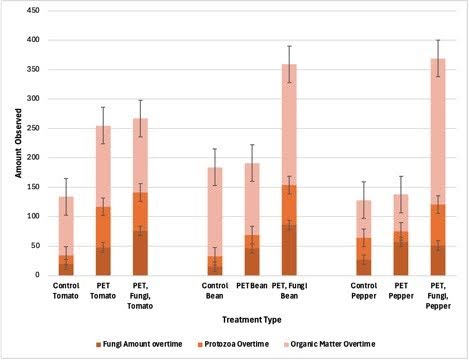
Figure 4 illustrates that, across all three plant treatments, the total increase in microbiota amount over time was highest in the P. ostreatus + PET treatment compared to the control and PET treatments. Significant differences in total biotic matter were observed among treatments using a one-way ANOVA (p = 0.0381). Higher values consistently occurred in the P. ostreatus + PET treatment relative to the PET and control groups, a trend most prominent in the pepper system.
Microplastic Characteristics
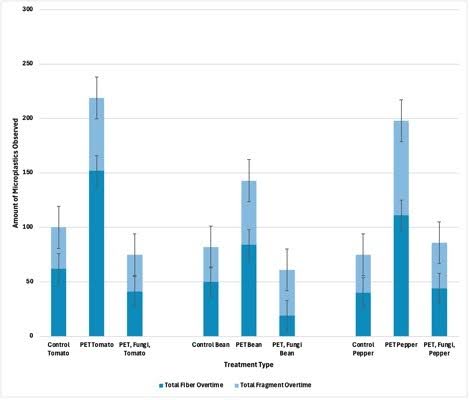
Figure 5 shows that, across all three plant treatments (tomato, bean, and pepper), the increase in total MP amount over time was lowest in the P. ostreatus + PET treatment, compared to the control and PET treatments. In the tomato, bean, and pepper systems, the P. ostreatus + PET treatment exhibited a smaller increase in MP abundance over time. A two-way ANOVA (Crop × Treatment) showed a significant treatment effect (p = 0.0039), while crop species had no significant effect. MPs in the control treatments are attributed to background microplastic contamination, which was present across all treatments. This means that the P. ostreatus + PET treatment is linked to fewer total microplastics overall, not just PET.
Baseline MP and organic matter observations were collected from every pot prior to treatment application. Values reported in Figures 4 and 5 represent the change in abundance from baseline to harvest, calculated by subtracting each pot’s baseline count from its harvest count, so that reported values reflect change within each pot.
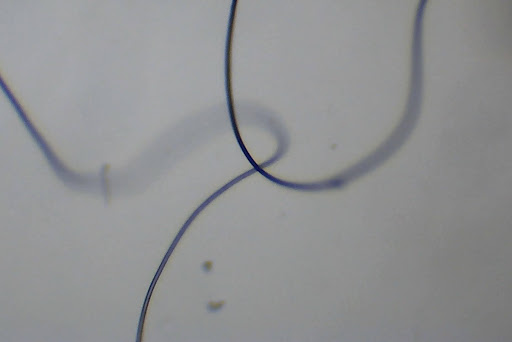
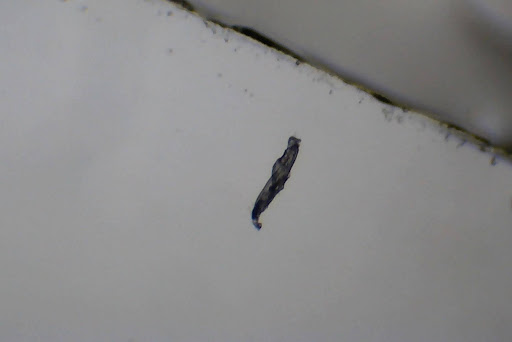
Figures 6 and 7 show MPs from the P. ostreatus + PET + pepper treatment at harvest, under the microscope. The added PET was a white powder, whereas the particles observed at harvest included a blue fiber (Figure 6) and a black fragment (Figure 7). Because Figures 6 and 7 differ in shape and color from the added PET, they more likely represent the background microplastic contamination rather than the added PET. Since polymer identity was not confirmed through spectroscopic techniques, individual MP particles could not be definitively attributed to the added PET or background sources. There were 11 color changes in the MPs from baseline to harvest, with 91% occurring in the P. ostreatus + PET + pepper treatment. Color change in MPs has been reported as a possible indicator of polymer alteration in plastics, but it is not diagnostic of degradation on its own31. Color change can also result from environmental exposure, such as light, from background contamination, or from the methylene blue stain applied during slide preparation. Because all treatments were maintained under the same condition, these factors would be expected to affect all treatments similarly, but we still cannot rule out this color change explanation. The higher frequency of color change observed in the P. ostreatus + PET treatment suggests a treatment-associated effect and a possible sign of transformation; further chemical analysis and spectroscopy would be required to confirm degradation.
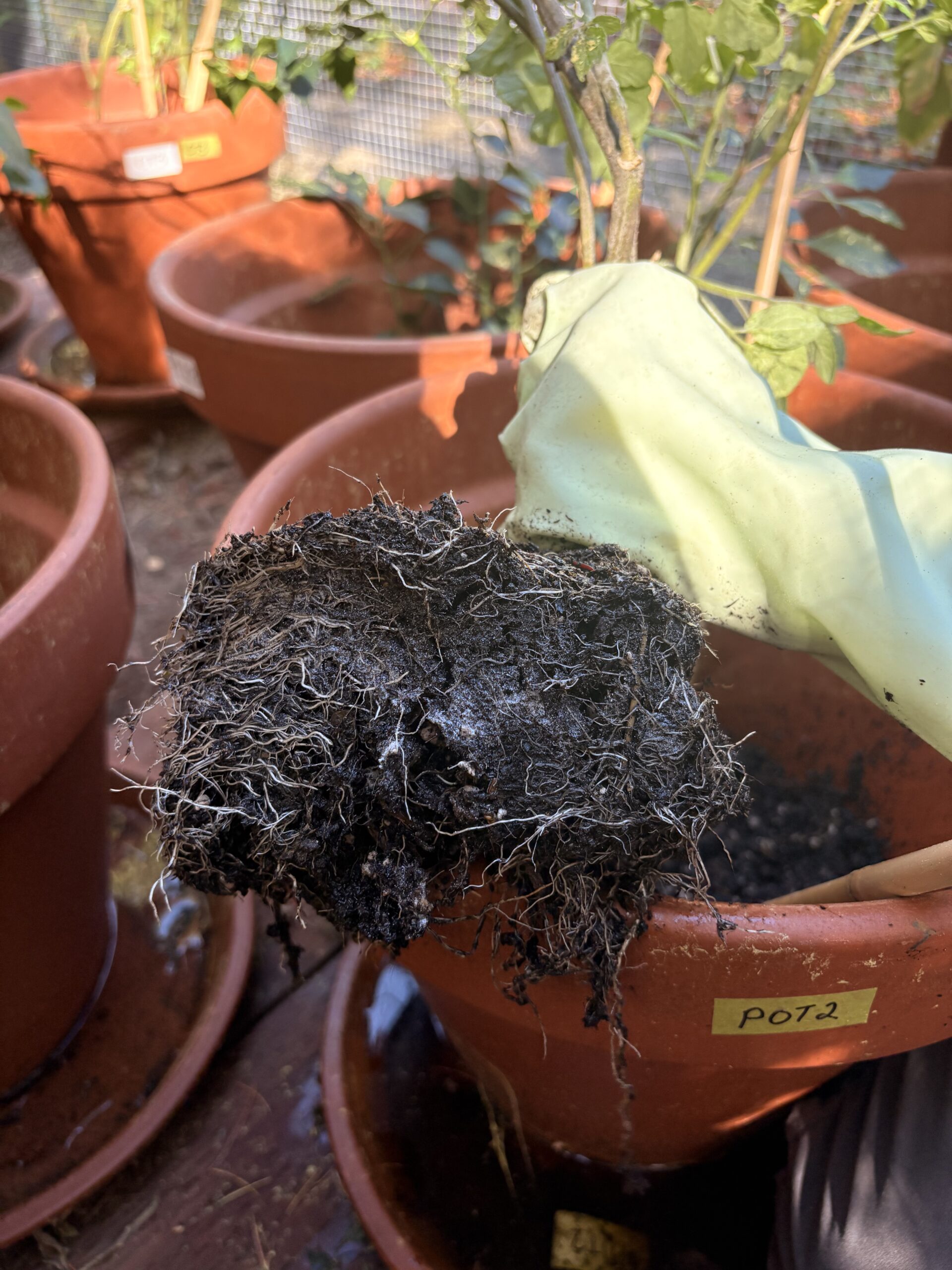
Figure 8 shows a higher concentration of MP in the roots, which could suggest the immobilization of PET. This is observational, however, as it was not confirmed by polymer identification.
Total MP & Microbiota Abundance
| Treatment Type | Estimated Total Microplastic Abundance(particles pot⁻¹) | Estimated Total Microbiota Abundance(particles pot⁻¹) | Total Average Yield (g pot⁻¹) |
| Control Tomato | 3,100 | 6,944 | 7.67 |
| PET Tomato | 6,789 | 11,284 | 7.00 |
| P. ostreatus + PET Tomato | 2,325 | 11,222 | 6.33 |
| Control Bean | 2,542 | 9,734 | 10.33 |
| PET Bean | 4,433 | 7,719 | 12.33 |
| P. ostreatus + PET Bean | 1,891 | 12,803 | 12.33 |
| Control Pepper | 2,325 | 7,750 | 8.00 |
| PET Pepper | 6,138 | 7,130 | 7.67 |
| P. ostreatus + PET Pepper | 2,666 | 15,128 | 10.00 |
MP and microbiota values in Table 1 represent estimated total abundance per pot (particles pot⁻¹ and microbial units pot⁻¹, respectively). These values were calculated using subsample microscopy data from 6 g soil samples per pot, with densities first calculated per gram of soil and then scaled to the total soil mass per pot (1116 g for control treatments, with adjustments made for PET and P. ostreatus + PET treatments) using the equation below.
This calculation assumes a spatially homogeneous distribution of MPs and microbiota within each pot, which introduces uncertainty due to potential heterogeneity in soil composition. Table 1 values represent estimated MP and microbiota abundance scaled from 6 g soil subsamples to total pot mass. These estimates may be influenced by spatial variability within pots and should be interpreted as approximate values. These estimates provide a reference point for potential MP abundance and microbiota distribution in potted crop systems with varying PET and P. ostreatus amendments. Crop-specific yield, plant height, root depth, and chlorophyll were analyzed across treatments. No significant treatment effects were detected (p > 0.05), indicating that PET and P. ostreatus + PET did not measurably affect crop performance within the 15-week study period. Specifically, at harvest, root depth (21.83 ± 1.03 cm), chlorophyll (42.57 ± 1.76 SPAD), soil pH (7.00 ± 0.00), nitrogen content (16.12 ± 0.56 mg/g), foliar humidity (64.49 ± 2.23%), and leaf temperature (17.83 ± 0.07°C), along with cumulative yield (24.64 ± 2.72 g plant⁻¹), showed no consistent treatment-related trends.
Discussion
This study’s research objective was met through analyzing the effects of three treatments (control, PET, and P. ostreatus + PET) on microplastic amount, soil health, and plant growth in tomato, bean, and pepper systems. Our hypothesis was supported in regard to soil health, microbiota abundance, and microplastic abundance, but not in regard to plant health, as plant height, yield, and chlorophyll varied across crops with no consistent treatment effect. P. ostreatus + PET treatments were associated with lower MP abundance over time compared to the PET treatment. Overall, P. ostreatus + PET treatments enhanced soil health, resulting in higher soil microbiota abundance, increased moisture retention, and improved fertility based on the 0-9 range on the soil health meter. Specifically, the P. ostreatus + PET + pepper treatment outperformed all treatments in microbiota amount, soil fertility, and moisture. One limitation is that the inclusion of straw may have contributed to the observed effects in addition to the presence of P. ostreatus. The P. ostreatus + PET treatment was also associated with changes in MP characteristics, including observed color variation. We report this as a possible sign of fungal-mediated transformation rather than evidence of degradation, since weathering, light exposure, background contamination, or staining artifacts from the methylene blue used during slide preparation are also viable explanations32. Approximately 91% of this color change occurred in the P. ostreatus + PET + pepper treatment. Our findings suggest that P. ostreatus may contribute to PET transformation or immobilization; however, PET degradation cannot be confirmed without polymer-specific analyses such as μ-FTIR or Raman spectroscopy33. There were some limitations in this study, including that detailed MP analysis was conducted solely through microscopy, limiting the identification of specific polymer types that could otherwise be characterized using spectroscopic techniques such as μ-FTIR or Raman spectroscopy34. Consequently, the ability to explain observed color changes was constrained. Additionally, the lower MP abundance observed in the P. ostreatus + PET treatment cannot be attributed to biodegradation alone, as particles may have been trapped in roots, bound to soil aggregates broken into pieces below the visual detection limit of light microscopy, or distributed unevenly within the pot such that our 6g samples didn’t capture them. The small sample size (three replicates per crop-treatment combination) may have limited statistical power to detect subtle effects, particularly for variable outcomes such as plant growth and yield. A limitation of this study is that PET recovery efficiency was not validated. The NaCl-based separation method may have underestimated PET abundance due to incomplete recovery of high-density particles; therefore, microscopy counts represent recovered rather than total PET abundance35. Future studies should incorporate higher-density separation methods, polymer identification, and recovery validation. The mushroom straw may have contributed to the observed improvements in soil properties independently of P. ostreatus. Therefore, fungal and substrate effects cannot be fully separated. Future studies should include substrate-only controls to distinguish these effects. Additionally, this study did not include an analysis of vegetables/fruit and fungal fruiting bodies for MP uptake, which limits conclusions about MP contamination and transfer. Finally, contamination from MPs could not be fully eliminated, as MPs are pervasive in the environment and were present in our control treatments. Decline in temperature and light across the July to November study period may have also influenced absolute rates of plant growth, microbial activity, and MP weathering. However, it applied equally across treatments since all pots were exposed to the same seasonal conditions throughout.
In future studies, plastic bottles could be used as a source of contamination to simulate real-world plastic pollution. Experiments could also focus on a single crop type, such as peppers, which demonstrated the most evident results, while utilizing varying amounts of PET and P. ostreatus. Additionally, similar studies could be conducted on different plant species to expand the applicability of these findings. Fungal viability, enzyme activity, and PET chemical changes were not directly measured; therefore, enzyme-mediated PET degradation cannot be confirmed and should be investigated in future studies.
This pot experiment suggests that P. ostreatus can contribute to reducing total microplastic abundance and supporting soil health across a variety of crop types. These findings highlight the potential of P. ostreatus to be developed into a field-applicable solution in agricultural systems. This is early evidence that fungal treatment is associated with healthier soil and fewer total microplastics. This is relevant for farmers, who could one day use oyster mushrooms in their fields to improve soil quality and reduce microplastic buildup without costly equipment or non-natural alternatives. Field implementation may be low-cost but requires consideration of scalability, labor, variable environmental conditions, and consistent remediation efficacy. Overall, these findings support further investigation of P. ostreatus as a nature-based approach for microplastic management and soil health in agricultural systems.
Acknowledgements
I would like to thank my family for supporting me throughout this process by funding my materials and equipment and allowing me to use our backyard for my research. I would also like to thank the Stanford Plastics & Health Working Group for providing valuable insight and feedback on my project.
References
- A. K. Priya, A. A. Jalil, K. Dutta, S. Rajendran, Y. Vasseghian, J. Qin, M. Soto-Moscoso. Microplastics in the environment: recent developments in characteristic, occurrence, identification and ecological risk. Chemosphere. Vol. 298, pg. 134161, 2022 https://doi.org/10.1016/j.chemosphere.2022.134161 [↩]
- E. Sakin, M. Dilekoğlu, İ. Yanardağ. Unseen threat: the devastating impact of microplastics on soil health in agricultural lands. Catena. 2025 https://doi.org/10.1016/j.catena.2025.108904 [↩]
- M. Knez, M. Ranić, M. Gurinović. Underutilized plants increase biodiversity, improve food and nutrition security, reduce malnutrition, and enhance human health and well-being. let’s put them back on the plate! Nutrition Reviews. Vol. 82, pg. 1111–1124, 2024 https://doi.org/10.1093/nutrit/nuad103 [↩]
- Food and Agriculture Organization of the United Nations. Assessment of agricultural plastics and their sustainability: a call for action. 2021 https://doi.org/10.4060/cb7856en [↩]
- T. Hofmann, S. Ghoshal, N. Tufenkji, J. F. Adamowski, S. Bayen, Q. Chen, P. Demokritou, M. Flury, T. Hüffer, N. Ivleva, R. Ji, R. Leask, M. Maric, D. Mitrano, M. Sander, S. Pahl, M. Rillig, T. Walker, J. White, K. Wilkinson. Plastics can be used more sustainably in agriculture. Communications Earth & Environment. Vol. 4, pg. 332, 2023 https://doi.org/10.1038/s43247-023-00982-4 [↩]
- Y.-H. V. Soong, M. Sobkowicz, D. Xie. Recent advances in biological recycling of polyethylene terephthalate (pet) plastic wastes. Bioengineering. Vol. 9, pg. 98, 2022 https://doi.org/10.3390/bioengineering9030098 [↩]
- Y. Cui, Y. Zhang, M. Guan, Y. Fu, X. Yang, M. Hu, R. Yang. The effect of polyethylene terephthalate (pet) microplastic stress on the composition and gene regulatory network of amino acid in capsicum annuum. Environmental and Experimental Botany. Vol. 228, pg. 106029, 2024 https://doi.org/10.1016/j.envexpbot.2024.106029 [↩] [↩]
- M. Dainelli, S. Pignattelli, N. Bazihizina, S. Falsini, A. Papini, I. Baccelli, S. Mancuso, A. Coppi, M. Castellani, I. Colzi, C. Gonnelli. Can microplastics threaten plant productivity and fruit quality? insights from micro-tom and micro-pet/pvc. Science of The Total Environment. Vol. 895, pg. 165119, 2023 https://doi.org/10.1016/j.scitotenv.2023.165119 [↩] [↩]
- I. Sa’adu, A. Farsang. Plastic contamination in agricultural soils: a review. Environmental Sciences Europe. Vol. 35, pg. 13, 2023 https://doi.org/10.1186/s12302-023-00720-9 [↩]
- Y. Zhang, C. Cai, Y. Gu, Y. Shi, X. Gao. Microplastics in plant-soil ecosystems: a meta-analysis. Environmental Pollution. Vol. 308, pg. 119718, 2022 https://doi.org/10.1016/j.envpol.2022.119718 [↩]
- I. A. Lakhiar, H. Yan, J. Zhang, G. Wang, S. Deng, R. Bao, C. Zhang, T. N. Syed, B. Wang, R. Zhou, X. Wang. Plastic pollution in agriculture as a threat to food security, the ecosystem, and the environment: an overview. Agronomy. Vol. 14, pg. 548, 2024 https://doi.org/10.3390/agronomy14030548 [↩]
- Y. Yu, A. Battu, T. Varga, A. Denny, T. Zahid, I. Chowdhury, M. Flury. Minimal impacts of microplastics on soil physical properties under environmentally relevant concentrations. Environmental Science & Technology. Vol. 57, pg. 5296–5304, 2023 https://doi.org/10.1021/acs.est.2c09822 [↩]
- J. Zhou, Y. Wen, M. Marshall, J. Zhao, H. Gui, Y. Yang, Z. Zeng, D. Jones, H. Zang. Microplastics as an emerging threat to plant and soil health in agroecosystems. Science of The Total Environment. Vol. 787, pg. 147444, 2021 https://doi.org/10.1016/j.scitotenv.2021.147444 [↩]
- Y. Yuan, M. Zu, R. Li, J. Zuo, J. Tao. Soil properties, microbial diversity, and changes in the functionality of saline-alkali soil are driven by microplastics. Journal of Hazardous Materials. Vol. 446, pg. 130712, 2023 https://doi.org/10.1016/j.jhazmat.2022.130712 [↩] [↩]
- A. Parsaeimehr, C. Miller, G. Ozbay. Microplastics and their interactions with microbiota. Heliyon. Vol. 9, pg. e15104, 2023 https://doi.org/https://doi.org/10.1016/j.heliyon.2023.e15104 [↩]
- H. Sun, Y. Shi, P. Zhao, G. Long, C. Li, J. Wang, D. Qiu, C. Lu, Y. Ding, L. Liu, S. He. Effects of polyethylene and biodegradable microplastics on photosynthesis, antioxidant defense systems, and arsenic accumulation in maize (zea mays l.) seedlings grown in arsenic-contaminated soils. Science of The Total Environment. Vol. 868, pg. 161557, 2023 https://doi.org/10.1016/j.scitotenv.2023.161557 [↩]
- X. Ren, J. Tang, L. Wang, Q. Liu. Microplastics in soil-plant system: effects of nano/microplastics on plant photosynthesis, rhizosphere microbes and soil properties in soil with different residues. Plant and Soil. Vol. 462, pg. 561–576, 2021 https://doi.org/10.1007/s11104-021-04869-1 [↩]
- S. Perković, C. Paul, F. Vasić, K. Helming. Human health and soil health risks from heavy metals, micro(nano)plastics, and antibiotic resistant bacteria in agricultural soils. Agronomy. Vol. 12, pg. 2945, 2022 https://doi.org/10.3390/agronomy12122945 [↩]
- F. Meng, X. Yang, M. Riksen, M. Xu, V. Geissen. Response of common bean (phaseolus vulgaris l.) growth to soil contaminated with microplastics. Science of The Total Environment. Vol. 755, pg. 142516, 2021 https://doi.org/10.1016/j.scitotenv.2020.142516 [↩] [↩]
- X. He, Q. Wang, Y. Qian, Z. Li, C. Feng. Microplastic accumulation and oxidative stress in sweet pepper (capsicum annuum linn.): role of the size effect. Environmental Pollution. Vol. 360, pg. 124652, 2024 https://doi.org/10.1016/j.envpol.2024.124652 [↩]
- N. Nei, U. Changmai, S. SK, N. Kumar, B. Borah, C. Chikkaputtaiah, R. Saikia, T. Phukan. Impact of polyvinyl chloride (pvc) microplastic on growth, photosynthesis and nutrient uptake of solanum lycopersicum l. (tomato). Environmental Pollution. Vol. 349, pg. 123994, 2024 https://doi.org/10.1016/j.envpol.2024.123994 [↩]
- C. Odigbo, C. Adenipekun, I. Oladosu, A. Ogunjobi. Polyethylene terephthalate (pet) biodegradation by pleurotus ostreatus and pleurotus pulmonarius. Environmental Monitoring and Assessment. Vol. 195, pg. 585, 2023 https://doi.org/10.1007/s10661-023-11153-5 [↩] [↩] [↩]
- H. Zahid, N. Afzal, M. M. Arif, M. Zahid, S. Nawab, M. M. Qasim, F. N. Alvi, S. Nazir, I. Perveen, N. Abbas, Y. Saleem, S. Mazhar, S. Nawaz, T. A. Faridi, H. Awan, Q. Syed, S. Abidi. Microorganism-mediated biodegradation for effective management and/or removal of micro-plastics from the environment: a comprehensive review. Archives of Microbiology. Vol. 206, pg. 198, 2024 https://doi.org/10.1007/s00203-024-03904-w [↩] [↩]
- S. Yoshida, K. Hiraga, T. Takehana, I. Taniguchi, H. Yamaji, Y. Maeda, K. Toyohara, K. Miyamoto, Y. Kimura, K. Oda. A bacterium that degrades and assimilates poly(ethylene terephthalate). Science. Vol. 351, pg. 1196–1199, 2016 https://doi.org/10.1126/science.aad6359 [↩]
- V. Tournier, C. M. Topham, A. Gilles, B. David, C. Folgoas, E. Moya-Leclair, E. Kamionka, M.-L. Desrousseaux, H. Texier, S. Gavalda, M. Cot, E. Guémard, M. Dalibey, J. Nomme, G. Cioci, S. Barbe, M. Chateau, I. André, S. Duquesne, A. Marty. An engineered pet depolymerase to break down and recycle plastic bottles. Nature. Vol. 580, pg. 216–219, 2020 https://doi.org/10.1038/s41586-020-2149-4 [↩]
- X. Yu, Y. Zhang, S. Chen, S. Chen, C. Wan, Y. Wang, L. Zou, L. Peng, L. Ye, Q. Li. Study on the degradation efficiency and mechanism of polystyrene microplastics by five kinds of edible fungi. Journal of Hazardous Materials. Vol. 492, pg. 138165, 2025 https://doi.org/10.1016/j.jhazmat.2025.138165 [↩] [↩]
- M. E. Alfonso, R. Mislang, J. Dela Cruz, C. Aguilar, C. Villafuerte, G. A. Dungca, L. Tapnio, A. David. Mycoremediation potential of pleurotus florida (oyster mushroom) mycelia to treat microplastic contaminated paddy soil. Current Research in Environmental & Applied Mycology. Vol. 14, pg. 388–405, 2024 https://doi.org/10.5943/cream/14/1/20 [↩] [↩]
- S. Khalil, P. Panda, F. Ghadamgahi, A. Barreiro, A. Rosberg, M. Karlsson, R. Vetukuri. Microbial potential of spent mushroom compost and oyster substrate in horticulture: diversity, function, and sustainable plant growth solutions. Journal of Environmental Management. Vol. 357, pg. 120654, 2024 https://doi.org/10.1016/j.jenvman.2024.120654 [↩]
- S. Akpasi, I. Anekwe, E. Tetteh, U. Amune, H. Shoyiga, T. Mahlangu, S. Kiambi. Mycoremediation as a potentially promising technology: current status and prospects—a review. Applied Sciences. Vol. 13, pg. 4978, 2023 https://doi.org/10.3390/app13084978 [↩]
- J. da Luz, S. Paes, M. Nunes, M. da Silva, M. Kasuya. Degradation of oxo-biodegradable plastic by pleurotus ostreatus. Vol. 8, pg. e69386, 2013 https://doi.org/10.1371/journal.pone.0069386 [↩]
- X. Zhao, J. Wang, K. Leung, F. Wu. Color: an important but overlooked factor for plastic photoaging and microplastic formation. Environmental Science & Technology. Vol. 56, pg. 9161–9173, 22 AD https://doi.org/10.1021/acs.est.2c02402 [↩]
- S. Solanki, S. Sinha, R. Singh. Myco-degradation of microplastics: an account of identified pathways and analytical methods for their determination. Vol. 33, pg. 529–556, 2022 https://doi.org/10.1007/s10532-022-10001-6 [↩]
- B. Das, S. Das, V. Kumar, S. Roy, A. Mitra, B. Mandal. Microplastics in ecosystems: ecotoxicological threats and strategies for mitigation and governance. Frontiers in Marine Science. Vol. 12, pg. 1672484, 2025 https://doi.org/10.3389/fmars.2025.1672484 [↩]
- Z. Zhang, Y. Geng, W. Zhou, X. Shao, H. Lin, Y. Zhou. Development of a multi-spectroscopy method coupling μ-ftir and μ-raman analysis for one-stop detection of microplastics in environmental and biological samples. Science of The Total Environment. Vol. 917, pg. 170396, 2024 https://doi.org/10.1016/j.scitotenv.2024.170396 [↩]
- R. Prantor, N. Absar, R. Karim, S. Islam, R. Hasan, G. Malafaia, M. Khan, G. Andaluri. From pollution to policy: a holistic review of microplastics in the environment of bangladesh. Human and Ecological Risk Assessment: An International Journal. Vol. 31, pg. 1408–1450, 2025 https://doi.org/10.1080/10807039.2025.2566077 [↩]