
Abstract
Adolescent sleep patterns are of significant importance for cognitive and emotional well-being but are often conflicting with social demands. Puberty leads to a natural shift in sleep timing, a reduction in slow-wave activity, and a change in sleep homeostasis. When combined with school start times and exposure to evening light, this results in sleep restriction and circadian desynchronization. However, the effect of sleep duration, circadian timing, and sleep structure on academic performance in adolescents is not well understood. This study aims to understand the sleep patterns, circadian desynchronization, and academic performance of a group of adolescents from around the world. There were a total of 87 subjects who participated in the study with 67% of them sleeping only 5-7 hours at night, less than the recommended time for their age group. Circadian mismatch showed a weak negative association with self-reported academic performance (Pearson r = −0.086, p = 0.430; Spearman ρ = −0.191, p = 0.077), although these associations did not reach statistical significance.. Additionally, 65% of the students experienced difficulties concentrating during early mornings whereas 49.4% of them had maximum cognitive alertness in late mornings. This paper contributes to existing literature by analyzing the association between sleep duration, circadian misalignment, and neurobehavioral outcomes based on the self-reported data of adolescents from around the world. The wide range of academic performance may be explained by individual differences in compensatory strategies and susceptibility to sleep deprivation. The findings highlight the importance of further investigating the relationship between school schedules and adolescent sleep behaviour. Further research should make use of objective assessments of circadian rhythms and larger sample sizes to examine the relationship between schools’ schedules and adolescents’ sleeping behavior.
Keywords: Neurobehavioral, Circadian rhythm, Sleep homeostasis, Circadian misalignment, Adolescent sleep, Academic performance
Introduction
Sleep is critical for brain development, cognition, and emotional health1. Adolescence is characterized by large developmental changes that include changes in sleep schedule and sleep patterns2. Despite widespread knowledge of the “sleep problem” in adolescents, recent surveys indicate that 73% of high school students in the United States get less than 8 hours of sleep per night on school days3. Deprived of sleep, teenagers are more likely to experience daytime drowsiness, behavioral problems, negative mood, and poor academic performance. In short, the sleep biology of critical developmental periods including adolescence is a high priority area of research for both developmental and public health sciences1. In order to comprehend the impacts of sleep disruption during adolescence, one must look at the physiological mechanisms that control sleep timing and organization. Adolescence is characterized by a distinct developmental stage where the development of the circadian rhythm and alteration of sleep organization leads to a shift towards later sleep and wake times4.
Sleep architecture refers to the patterns of non–rapid eye movement (NREM) and rapid eye movement (REM) sleep throughout the sleep period2. During adolescence there are a number of changes that occur, including a reduction in slow wave sleep (SWS) and slow wave activity (SWA) during the pubertal years. These changes are thought to reflect the process of synaptic elimination that accompanies the cortical reorganization and maturation of the brain4,5. Longitudinal EEG studies of adolescents have confirmed a decrease in delta power during NREM sleep. It has been associated with an increase in gray matter in the prefrontal cortex—a key cognitive area of the brain. There are also circadian changes during puberty that include a phase delay in melatonin release and alterations in sleep homeostasis. Therefore, adolescents experience a multitude of changes that all serve to promote a late sleep schedule and late wake time, but which are at odds with the early wake time required for school, resulting in a state of chronic circadian desynchronization and sleep loss3,6.
Sleep deprivation in adolescents impairs performance on tasks requiring attention, memory and speed7. According to neurobehavioral models of sleep, these effects are due to sleep-related changes in the functioning of the prefrontal cortex (PFC) that is critical for the control of many neurobehavioral functions including executive functions and emotional processing and thereby may contribute to increased risk for impulsive behavior and emotional difficulties1,4. Although much literature is available that focuses on the impact of the quantity of sleep and sleep deprivation on neurobehavioral functioning in adolescents, there is relatively less information on how sleep and circadian rhythm alterations together affect neurobehavioral function among adolescents2.
Based on self-reported data collected from an international sample of 87 students in secondary school, this study aims to explore the association between differences in sleep duration and circadian misalignment, cognitive alertness, focus, and academic outcomes. By examining both biological aspects of circadian regulation and behavioral outcomes, this study aims to provide a more complete understanding of how levels of misalignment between internal biological rhythms and external environmental schedules are associated with neurobehavioral outcomes in adolescents. Consequently, the present study is designed to examine the association between the amount of sleep, circadian misalignment, sleep characteristics, and academic performance among adolescents through self-report data in an international secondary school sample.
It was postulated that there will be an association between circadian misalignment, which is defined by the discrepancy between sleep timing on weekends and sleep requirement on weekdays to adhere to the school’s schedule, and reduced alertness, concentration problems, and poor academic performance among adolescents. Furthermore, we theorized that shortened sleep time correlates with lack of cognitive alertness and readiness for academics.
Background
Circadian Biology in Adolescents
Circadian rhythms in humans result from the activity of an endogenous molecular clock, which consists of almost every cell’s central oscillator, controlled by the suprachiasmatic nucleus (SCN) of the anterior hypothalamus8,9. They result from transcription-translation feedback loops of the central set of clock genes. The heterodimer of the CLOCK and BMAL1 proteins activate the transcription of PER (Period) and CRY (Cryptochrome) genes, which, upon the accumulation of PER and CRY proteins, inhibit the activity of the CLOCK-BMAL1 complex, thus producing a self-sustaining oscillation of approximately 24 hours. The timing of the oscillation is controlled by the phosphorylation-dependent degradation of the clock proteins, which allows the oscillations to be precise and adaptive.
The SCN ensures the synchronization of the peripheral oscillators through coordinated neural and endocrine outputs. The photic cues received from the intrinsically photosensitive retinal ganglion cells regulate the SCN to the environmental light/dark cycle and cause phase shifts in the clock gene expression in response to light exposure during critical circadian periods10. The primary behavioral output controlled by the SCN is the secretion of melatonin by the pineal gland11. Melatonin production is regulated during periods of dim light and is the physiological marker of the night period. The timing of the dim light melatonin onset (DLMO) is the most commonly used marker of the circadian timing in adolescents and adults11.
These molecular and neural systems provide the foundation for the regulation of the circadian timing during development. However, there is evidence of modulation in these systems during adolescence, leading to the characteristic shift in the circadian timing6.
Table 1 outlines the major biological mechanisms involved in the regulation of circadian rhythms and the sleep-wake cycle, with a focus on the role of the body’s internal clock in controlling physiological activities during the day. Each of the mechanisms is accompanied by a brief description of their role and impact on the sleep pattern of adolescents. The table, therefore, offers a clear overview of the mechanisms involved in the regulation of circadian rhythms and the sleep-wake cycle. Each row is supported by references addressing the specific molecular, neurological, or physiological mechanism stated, rather than literature concerning only the broader topic of adolescent sleep.
| Reference | Concept | Mechanism | Effect on Adolescents |
| 8 | CLOCK/BMAL1 feedback loop | Activates PER/CRY transcription, creating ~24-hour cycle | Provides foundation for circadian timing |
| 8 | PER/CRY negative feedback loop | PER/CRY proteins inhibit CLOCK/BMAL1 activity | Stabilizes circadian rhythm and sleep timing |
| 10 | Suprachiasmatic nucleus (SCN) | Hypothalamic master clock synchronizing body rhythms | Regulates sleep-wake cycle and daily physiology |
| 6,11 | Melatonin secretion | SCN signals pineal gland to release melatonin in darkness | Signals biological night; circadian timing shifts later during adolescence |
| 9,12 | Light-entrainment pathway | Retinal light signals reset SCN circadian clock | Evening light can suppress melatonin and delay circadian timing. |
| 13 | Core body temperature rhythm | Circadian regulation of daily temperature fluctuations | Lower night-time temperature supports sleep |
| 6 | Sleep-wake homeostasis | Sleep pressure builds with wakefulness and dissipates during sleep | Sleep deprivation causes fatigue and reduced focus |
| 4,6 | Circadian phase delay | Puberty shifts circadian timing later | Leads to later bedtimes and difficulty waking |
Circadian Shifts in Adolescence
The teenage years include a typical delay in circadian timing, which is demonstrated by sleep onset, wake up time, and melatonin production later than during the childhood period5,6. The above changes are believed to be caused by interactions of circadian and homeostatic processes related to sleep6. Studies have found that teenagers develop a slower accumulation of sleep homeostatic pressure and higher alertness in the evening compared to children, thus showing preference for late sleep6. Due to the above mentioned, teenagers are likely to suffer from a mismatch of their biological and social sleep time4,6.
Sensitivity to evening light exposure also enhances the effect of these changes. Light exposure during the evening hours results in reduced melatonin production and phase delay; adolescents have also shown significant sensitivity to light exposure during this developmental period11. An increase in artificial light exposure may contribute to the problem of circadian misalignment5.
There is no evidence that the intrinsic circadian period is lengthened during adolescence; however, changes in the phase relationship between melatonin production and sleep timing contribute to the behavioral changes observed during this period6. When the school day starts before the offset of endogenous melatonin production, adolescents experience chronic circadian misalignment and reduced total sleep time5.
There have been recent studies on the connection between chronotype and school timings in adolescence. The findings of Jongte et al. on chronotype, sleep quality, depressive symptoms, and academic achievement were carried out among secondary school students. Also, the work done by Dwivedi et al. showed considerable social jetlag and differences in chronotypes among Indian adolescents enrolled in schools14,15.
Sleep and Cognitive Performance
Memory Consolidation During Sleep
Sleep has a crucial role in memory consolidation, especially in the consolidation process of hippocampal–neocortical interactions in declarative memory16,17. Slow-wave sleep has a crucial role in the coordinated activity of neural oscillations that enhances the reactivation of memory traces that were recently consolidated and the redistribution to long-term storage in the cortex. Experimental enhancement of slow oscillations in sleep enhances performance in declarative memory, indicating a causal relationship between slow-wave sleep and learning performance.
Adolescence is also marked by a decrease in slow-wave activity, which is related to gray matter pruning in the cortex9. Longitudinal studies of electroencephalographic activity have found a decrease in delta band power during adolescence, which is related to the maturation of prefrontal cortex structures involved in executive function. SWS is closely related to synaptic plasticity and memory consolidation. Thus, changes in SWA during adolescence may have implications for the consolidation of memories during a period of high academic demands16.
Effects of Sleep Restriction on Neurocognitive Function
Sleep restriction studies using experimental sleep deprivation show a negative effect on neurobehavioral functioning in adolescence. Partial sleep deprivation impairs sustained attention, working memory capacity, and speed of processing in a controlled environment10. Accumulating impairments in vigilance occur over consecutive nights of sleep restriction without total sleep deprivation7.
Moreover, sleep deprivation tends to have a greater impact on the prefrontal cortical systems that control executive functioning, impulsivity, and goal-directed behaviors1,4. Since the prefrontal cortical systems continue to develop structurally and functionally during adolescence, they may be particularly susceptible to sleep deprivation.
Circadian misalignment further compounds cognitive effects. Neurobehavioral performance varies according to circadian phase; awakening during biological night is associated with reduced alertness and diminished executive efficiency6. When delayed circadian timing is combined with early-morning academic demands, adolescents may experience systematic decrements in cognitive functioning during school hours5.
Some of the latest school-based research has been conducted to find out whether delayed school start times were associated with any differences in sleep and daily activities. According to findings by Alfonsi et al., a one-hour delayed school start time resulted in longer sleep duration during school nights, enhanced sustained attention, increased attendance rates, and improved academic achievements. The same results were obtained by Borisenkov et al., who concluded that delayed school start times led to better sleep–wake cycle regulation and academic achievements as well. At the individual level, Yang et al. discovered that higher sleep-corrected social jetlag resulted in lower cognitive achievement and academic grades18,19,20.
Methods
Study Design
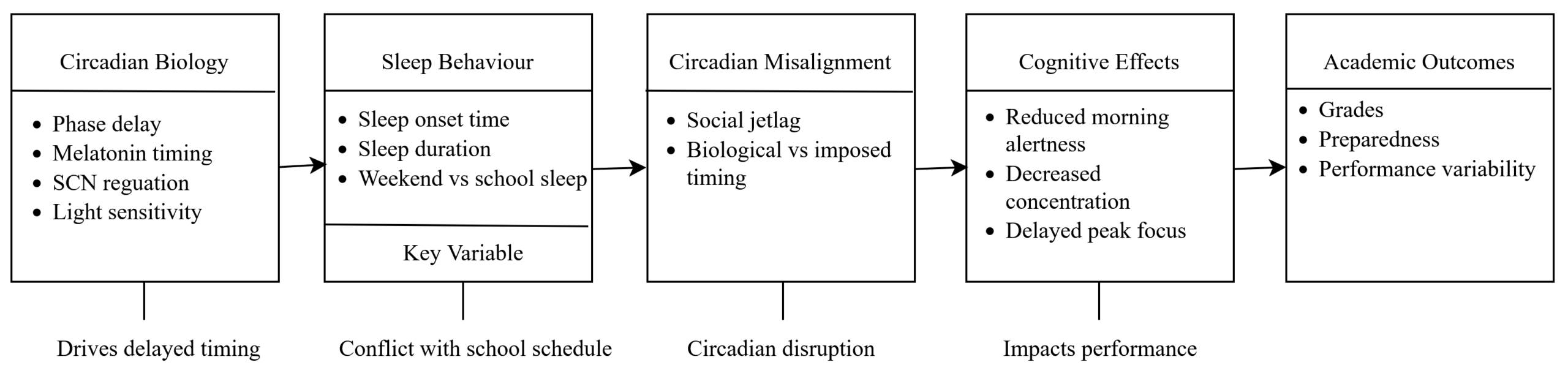
This study aimed to assess the relationship between sleep patterns and school schedules, as well as the effect of this relationship on academic performance, through a survey of adolescents. This study employed the cross-sectional observation method using anonymous self-administered questionnaires. The data collection was carried out among secondary school students for 2 months in order to identify links between sleep time, sleep timing, circadian mismatch, cognitive alertness, and academic-related factors. This research was carried out among an international sample of students representing different educational environments and thus enabling the identification of the sleeping patterns among adolescents in different environments.
Participants and Recruitment
A total of 87 adolescents from England, Germany, India, Luxembourg, and the United States, participated in this study. This diverse group of respondents from different educational settings was a significant contribution of this study. Recruitment process was done online through the use of social media and personally. Those involved were adolescent students attending secondary schools, who filled out the questionnaire willingly. The inclusion criteria include falling within the ages of 13-17 years, being secondary students, and giving their informed consent to participate. Those who failed to meet the inclusion criteria and gave incomplete answers were not included in the analysis.
Demographic Relevance
The demographic data obtained involved the age, gender, nation where the respondents lived, and the educational attainment of the participants. The sociodemographic characteristics were deemed crucial due to possible disparities between their school timetables, education system, and other aspects of their lifestyles that could affect their sleep behaviors.
Survey Development
This survey was designed for the current study to evaluate certain factors associated with adolescent sleep behavior, body clock timings, cognition alertness, and effects of inadequate sleep on academics. This study was informed by a specific framework that sought to identify the natural sleep patterns of the respondents, compare them to external school schedules, and then assess the effect of this comparison on the respondents’ performance. The study used a combination of time-entry, number-entry, Likert-scale, and multiple-choice questions.
The survey was composed of thirteen structured questions based on time, numerical, Likert scale, and multiple choice format responses. This survey was tailored for the exploratory research in order to obtain self-reports related to sleep timing, school schedule, morning alertness, perception of readiness for academics, and academic performance. No validated measure of chronotype or sleep was used. Rather, an unvalidated questionnaire was constructed that included school-specific variables such as earliest school start time and academic ramifications of sleep deprivation. Therefore, the measurements taken must be regarded as exploratory measures rather than validated measures of circadian phase or sleep physiology. To capture natural sleep timing and chronotype, participants were asked what time they naturally wake up on weekends without an alarm and what time they naturally fall asleep on weekends. Sleep duration and quality on school nights were assessed through questions on typical hours of sleep and frequency of nighttime awakenings. School-imposed circadian strain was measured by asking participants the earliest time they start school during a typical week, allowing comparison with their natural wake time. Cognitive functioning and alertness were assessed through questions on alertness during the first lesson of the day, time of peak mental focus, and frequency of difficulty concentrating in class. Finally, academic impact was captured by asking how many tests or major assignments participants felt underprepared for due to lack of sleep during the term.
The structured survey items asked participants to report: (1) natural weekend wake time without an alarm; (2) typical school-night sleep duration; (3) usual school-night bedtime; (4) current estimated overall average grade; (5) sleep-onset latency; (6) frequency of nighttime awakenings; (7) alertness during the first lesson; (8) time of peak mental focus; (9) frequency of being too tired to concentrate in class; (10) difficulty waking on school mornings; (11) earliest school start time during a typical week; (12) the number of tests or major assignments for which they felt underprepared because of insufficient sleep; and (13) natural weekend sleep-onset time.
Measured Variables
To identify the natural sleep patterns of the respondents, the study used measures of sleep and wake times on weekends or days without any obligations. The study chose this type of information because it does not involve any external influence, allowing respondents to display their natural circadian rhythm. The information gathered from this part of the study, as well as the school start time, allows for the identification of a circadian misalignment, also known as social jetlag.
In the current study, school-start misalignment was operationalized as the discrepancy, in terms of hours, between the individual’s natural wake-up time on weekends and the earliest school start time that was reported by the participant. If the value was positive, this meant that the individual naturally awoke later than the school start time, while a negative value suggested that the person awoke earlier than the school start time. It is important to note that this construct is unique to the current study and is not an indicator of either circadian rhythm or social jetlag.
The wake-up time during the weekends may also be affected by the need to recuperate from sleep deprivation that happens during the weekdays and is not solely based on chronotypes. The mismatch between school start times and sleep time variable may have been affected by factors such as sleep debt, catch-up sleep, habitual sleep timing, and school schedules.
The duration of sleep on school nights was also included as an important variable to determine whether students get enough rest on weeknights. This is an important factor in determining whether students get enough sleep due to structural factors, such as the start of school, rather than their personal choices. Moreover, the quality of sleep was also taken into account through the inclusion of variables on the frequency of nighttime awakenings.
The functional effects of students’ sleep habits on their academic life were also studied through the survey. For instance, students’ levels of alertness in the first lesson of the day and the frequency of difficulty concentrating in class were included to measure the effects of sleep on their cognitive functions, particularly in the early hours of the day. Moreover, the difficulty of waking up on school mornings was also used as an indicator of the effects of students’ sleep habits on their academic life.
To measure students’ cognitive functions, they were asked to specify the time of day they feel most mentally alert. This was used to compare the students’ peak cognitive functions with the time of day they are in school, thus determining whether they learn best at optimal times of the day.
The survey links sleep to academic outcomes by asking respondents how often they feel underprepared for tests or major assignments due to insufficiency of sleep. The results provided a solid measure of the influence of sleep-deprivation on performance, stepping beyond generic perceptions to particular academic results.
Academic performance and academic unpreparedness perceptions were considered distinct outcomes. Academic unpreparedness was gauged with the item, “How many tests or major assignments do you feel like you have been unprepared for due to lack of sleep in this term?” The item used to gauge academic performance was, “What is your current estimated GPA (average grade)?” This was a subjective measure that did not come from any official school records.
Participants selected an estimated grade range on a common 10 point scale. In terms of the quantitative analysis, the grade range was transformed to its midpoint; for instance, a 8-9 would be transformed to 8.5. Higher values denoted better self-reported academic performance. This item is termed “self-reported academic performance” in the entire manuscript as opposed to GPA.
The survey did not include any official transcript scores or country-specific grading equivalents. Rather, individuals from various school systems were asked to rate their performance on a common survey rating scale. This helped make it possible to conduct a preliminary pooled grade analysis, although it could not ensure equivalency across grading systems of different countries.
This survey was ultimately designed so that each question may contribute to a better understanding of how sleep behaviour and circadian biology, in hand with school structures, interact. By taking these factors into account, this study is not only limited to assessing whether students are sleep-deprived, rather how deprivation translates into measurable effects on apprehension and preparedness.
Ethical Consideration
Ethical issues have been considered during this study. Permission was sought for conducting the survey prior to collecting the data from the authority concerned in the school. The survey was conducted on a voluntary basis; moreover, the participants were made aware of the objective of the survey before filling out the survey questionnaire. Since the survey was being conducted on adolescents, the process of obtaining informed assent was followed in case of all the respondents; no parent/guardian consent was required for an anonymous and risk-free survey questionnaire.
Results
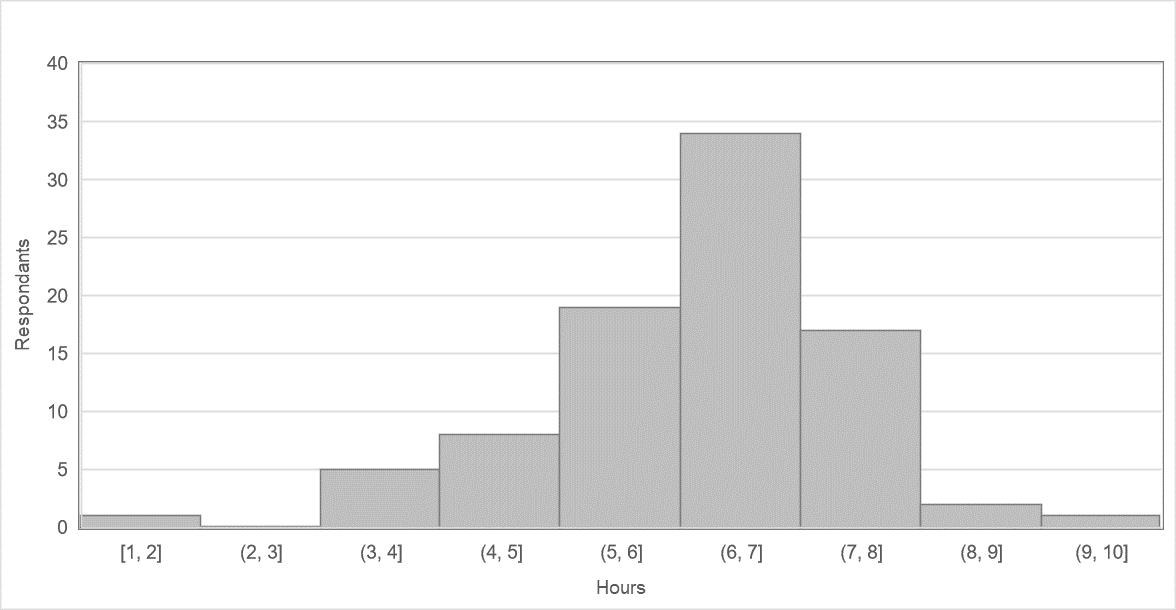
The following histogram indicates the sleep duration experienced by the respondents during school nights. The sleep duration is skewed towards fewer hours of sleep. The majority of the students are clustered in the sleep duration of 5-7 hours. Moreover, most students sleep for 6-7 hours. This indicates that the majority of the respondents are not getting the recommended sleep duration of 8-10 hours. The data also indicates variability beyond the main cluster, with some sleeping for ≤4 hours and only a minority sleeping for ≥8 hours. This implies that though sleep deprivation is widespread, it is not universal. Those sleeping for extremely low periods (1-2 hours) may be restricted due to academic or lifestyle demands, while those getting adequate sleep may have schedules closer to their biological rhythms. Individual variability in sleep is therefore significant despite the overall trend of insufficient sleep. This is an indication that the majority of the respondents are suffering from chronic sleep deprivation. This is similar to the larger studies conducted among the adolescent population with regards to sleep patterns. The studies indicated that the majority of the adolescent population is reducing the sleep duration. This can be explained by the fact that there are structural factors that biologically prepare the adolescent for later bedtimes. This means that the time for sleep is reduced due to the fixed time for waking up in the morning. This leads to the sleep duration itself being reduced. Overall, the data shows that sleep deprivation is a common phenomenon among the respondents. Descriptive analysis showed that participants reported a mean sleep duration of 6.62 ± 1.35 hours per school night (95% CI: 6.33–6.91 hours; n = 87). Overall, 67% of participants reported sleeping only 5–7 hours on school nights, supporting the observation that insufficient sleep was common within this sample.
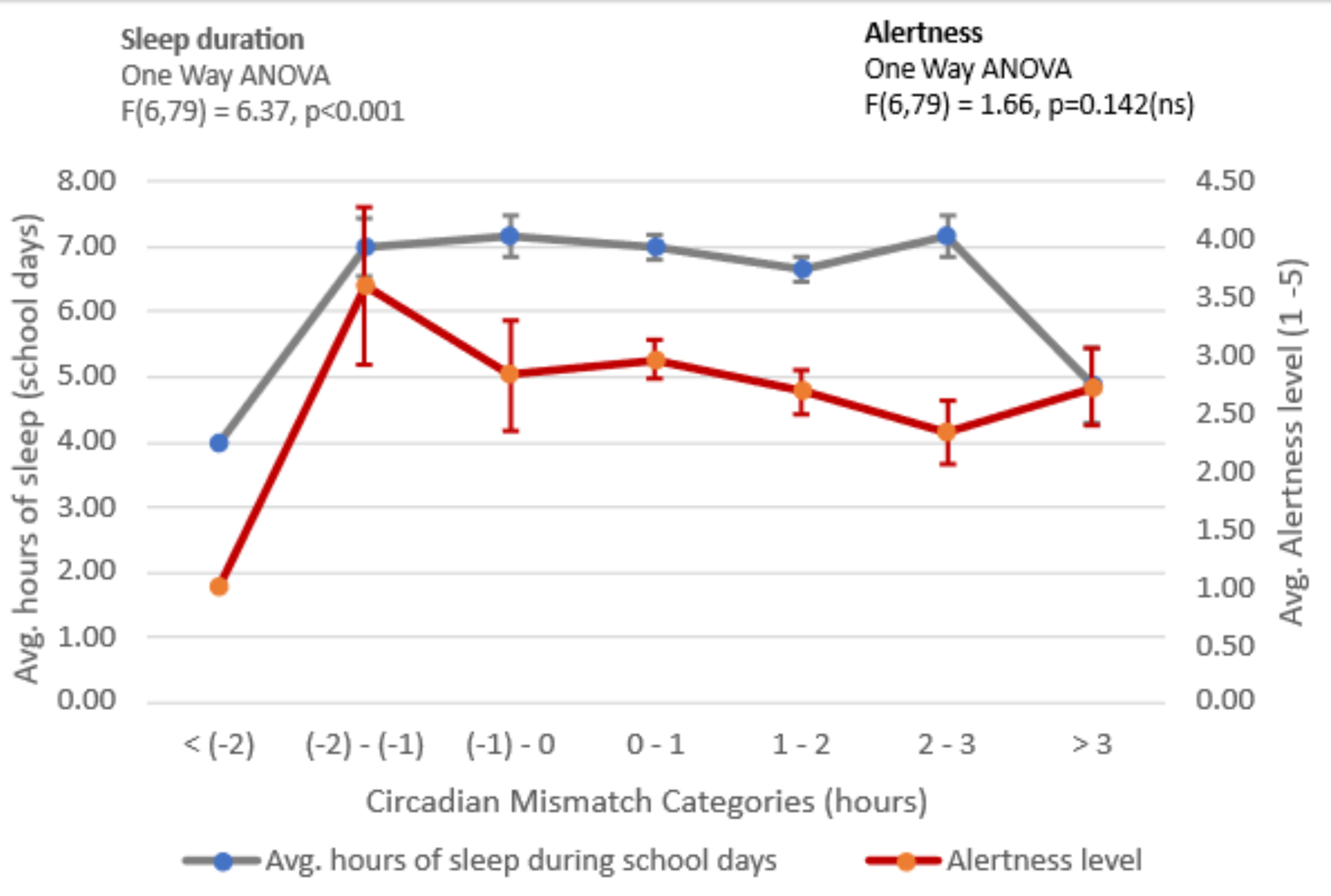
This figure shows average hours slept during school days and self-reported levels of alertness, where the scale ranges from 1 to 5. It is evident that sleep duration increases from the category with an extreme negative mismatch (< -2 hours) to the category where the mismatch ranges from -2 to -1. After this, the average sleep duration stabilizes, showing fluctuations around 6.5 to 7.2 hours. A decline in sleep duration is evident in the category with the highest mismatch (> 3 hours). Alertness levels, which range from 1 to 5, show a sharp increase from the lowest category up to the category where the mismatch ranges from -2 to -1. After this, a gradual decline is evident, with lower levels observed in the category where the mismatch ranges from -1 to 2. A slight increase is evident again in the category with the highest mismatch. This shows that the trend is not entirely consistent. It is evident that while the average sleep duration is consistent across all categories with moderate mismatch levels, the trend observed with the average levels of alertness is not consistent. This shows that while the body is not entirely affected by the mismatch, the level of alertness is.
Participants indicated that their average sleep duration was 6.62 ± 1.35 hours during school nights (95% CI: 6.33–6.91; n = 87). Mean self-reported academic performance was 7.83 ± 1.15 out of 10 (95% CI: 7.59-8.08), whereas mean circadian mismatch was 1.55 ± 2.15 hours (95% CI: 1.09-2.01 hours). The mean alertness at first lesson was 2.77 ± 1.03 out of 5 (95% CI: 2.55-2.99).
Whilst Figure 3 illustrates the relationship between circadian mismatch and sleep duration and alertness levels, Figure 4 examines how these variations may translate into differences in academic performance. Quantification of this relationship was done by conducting linear correlation analyses alongside the descriptive graph analyses. Pearson and Spearman correlation coefficient analyses were carried out to establish the relationship between increased circadian misalignment and poor academic performance. This scatter plot shows the distribution of the amount of circadian mismatch. The y-axis represents the average grade in academics, ranging from 1 to 10. Visual inspection suggests a slight negative association between circadian mismatch and self-reported academic performance. However, it does not follow a proportional trend. This may be due to various other reasons. When examining all mismatch categories, students with small negative or near-zero mismatch levels have higher average grades, whereas both extreme negative and positive mismatch levels have more fluctuating results. This is in accordance with existing literature about “social jet lag” due to circadian misalignment and its impact on cognitive functions. Previous research suggests that greater circadian misalignment may be associated with reduced sleep quality, attention, and executive functioning, which could contribute to lower academic performance. However, this non-linear trend may be due to various reasons such as the adaptability of students and studying and compensating for this by caffeine and/or sleep on weekends, which are not controlled in this survey21,22. In addition to visual inspection, inferential statistical analyses were conducted to determine whether circadian mismatch was significantly associated with academic performance. Linear regression analysis also confirmed the existence of a negative regression coefficient of circadian mismatch on academic performance; however, the correlation was not statistically significant (p > 0.05). Thus, even though there is some trend of poorer academic results with higher circadian mismatch observed from the descriptive data, in the current sample there is not enough statistical evidence to confirm this trend.
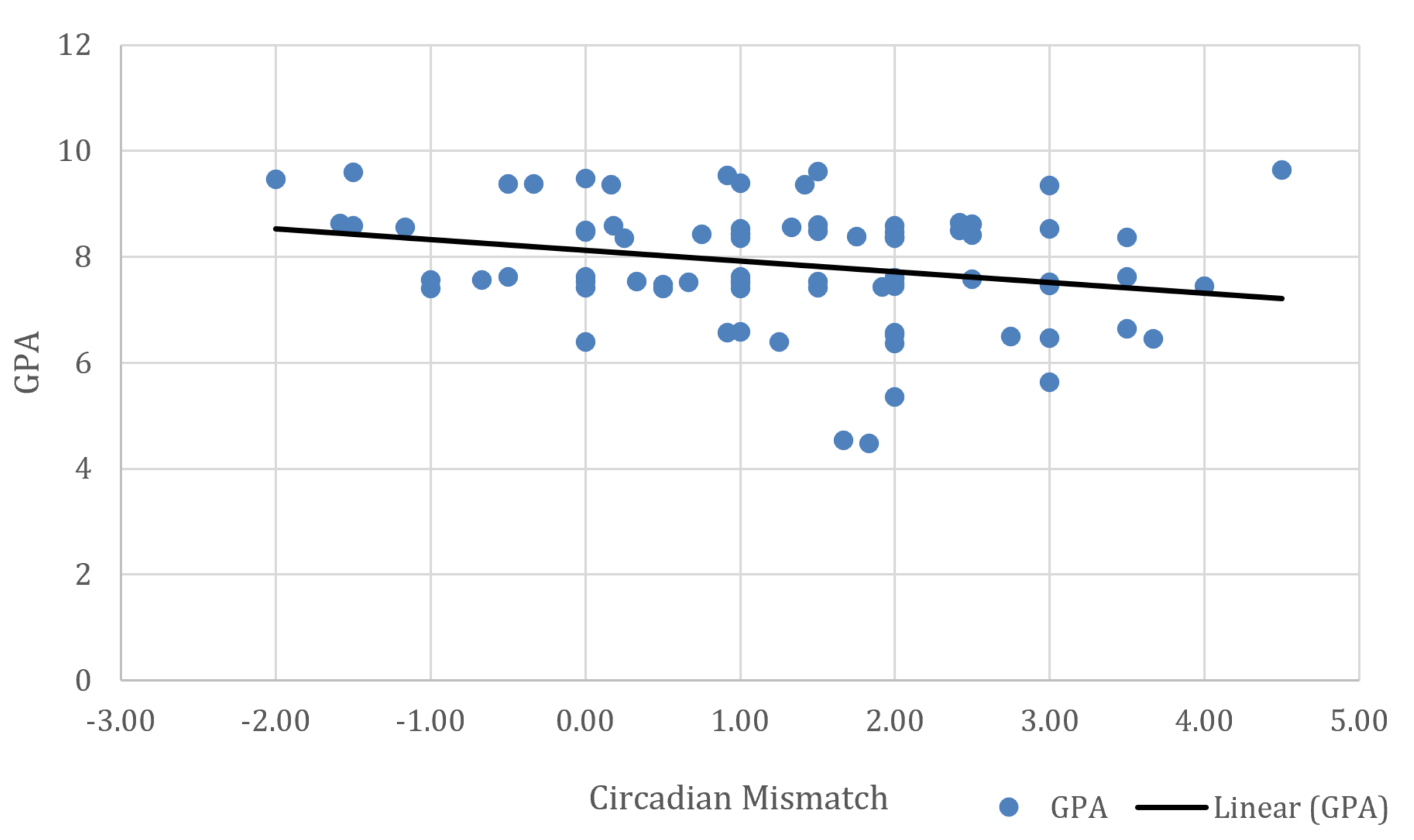
Statistical Summary of Circadian Mismatch and Academic Performance
To supplement the descriptive results, some formal tests were also conducted. According to Pearson’s correlation analysis, there is a weak negative correlation between circadian rhythm misalignment and academic achievement (r = −0.086, p = 0.430). In a similar way, according to the Spearman’s rank correlation analysis, there is a weak negative correlation (ρ = −0.191, p = 0.077). While both the analyses indicate the same association between the two variables seen from the descriptive results, they did not obtain statistical significance.
Simple linear regression analysis also demonstrated a weak negative relationship between circadian mismatch and academic performance (β = −0.046, 95% CI: −0.161 to 0.069, p = 0.430). Circadian mismatch explained only 0.7% of the variance in academic performance (R² = 0.007), indicating that it was not a significant independent predictor within this sample.
Discussion
The connection between the beginning of the school day and the academic performance of adolescents can be traced back to the conflict between the two. “Adolescents experience a phase delay in their circadian rhythm during puberty and develop ‘eveningness’ as a consequence of the later melatonin release”—this means that the wake-up call in the early morning is difficult for adolescents because their alertness peaks in the afternoons and evenings23,24.
The data collected in the present study indicates a striking biological incongruity in the population of 87 participants that were selected based on the global demographic distribution —from Central Europe, the UK, the US, and India. The majority of the participants (n = 58) need to wake up at 08:00 in order to go to school, while the peak wake-up time for the weekends is between 09:00 and 10:00. This may contribute to social jetlag in the participants’ lives, in which the participants need to concentrate on complex cognitive activities during the sleep phase, requiring participants to perform cognitively demanding activities at times that may not align with their preferred biological sleep–wake schedule11,18.
Previous research has shown differences in neural activity and attentional performance between early-morning and later-morning school hours. Showing a direct correlation to the level of attentiveness and the occurrence of “micro-sleeps”25. This is consistent with the findings of the present study, which show that 65% of the students experienced a certain level of difficulty concentrating in class, especially in the earliest hours of the school day. In addition, the absence of alertness in the early hours of the morning was identified as the major hindrance to the academic performance of the students. In the collected data, only a small percentage of the international students reported high levels of alertness in the first lesson of the school day, while almost half of the students (49.4%) identified “Late Morning” as the peak hours of their mental focus. This indicates that the initial 1-2 hours of the conventional school day might be instructionally inefficient for the majority of the student population.
Literature supports these findings and has stated that the school day starting before 08:30 compromises the ability to achieve the recommended 8-10 hours of sleep and that this sleep debt cannot be made up for over the weekend26.
The data collected through the results of the survey will also help to solidify the debt owed to such a phenomenon, as it is well understood that the vast majority of the students received 7 or fewer hours of sleep each night. This may contribute to reduced academic preparedness among students, as 67% of the participants confessed to a sense of unpreparedness concerning major assignments/exams due to lack of sleep. The observed mismatch between biological sleep timing and school schedules may be associated with reduced learning efficiency and academic preparedness through insufficient sleep and altered cognitive functioning23,25.
From the biological point of view, the results are consistent with properly established biological mechanisms of sleep and the body’s circadian rhythms. The natural lag in the sleep/wake timing of the internal biological rhythms of adolescents has been considered a factor that affects the sleep propensity patterns. This fact is associated with shorter sleep duration and physiological readiness in the early morning hours4. Previous research has suggested that early school days suppress melatonin levels in the morning, influencing the circadian rhythms of the body, supporting the role of social rhythms in influencing biological rhythms2. Moreover, sleep plays a huge role in consolidating memory; many studies have indicated that sleep, both REM and non-REM, play a role in the consolidation of new memories into long-term memory. Alterations in the pattern of sleep have been linked to cognition16. These biological mechanisms may help explain the lower levels of alertness and self-reported academic performance observed in the present study; however, the cross-sectional design does not permit causal inference.
Limitations
There are several limitations that need to be considered while evaluating the results obtained in this study. First of all, the research used self-reports for assessing participants’ sleep habits, circadian phase and academic achievements. This type of measurement can create problems related to the subjective nature of self-reports and the possible recall bias. Moreover, the fairly small sample size (n = 87) and the multinational convenience sampling make it hard to generalize the findings to the broader adolescent population. What is more, even though circadian misalignment was measured through the differences between natural sleep timing and school timing, no objective measures, such as dim-light melatonin onset (DLMO), actigraphy, and polysomnography were applied in the study. Thus, the results should be treated as the connection between sleep timing, perceived circadian misalignment, and academic outcomes, not causal relationship. Finally, there were several confounders in the research, such as screen exposure, caffeine consumption, mental wellbeing, SES, and academic load.
The questionnaire was not an instrument used for assessing sleep, chronotype or circadian phase. In addition, there was no DLMO testing, actigraphy, sleep logs, polysomnography, EEG, or assessment of REM sleep and SWS or other sleep architecture measures in the study. The weekend sleep time could also represent recovery sleep from accumulated sleep deficit on weekdays in addition to regular sleep time. Therefore, school start time misalignment should not be construed as real circadian misalignment or social jet lag based on MCTQ measure.
Because the participants belonged to different national education systems, their self-reports using the common 10-point rating scale may not have been comparable among nations. A nation-wise conversion or normalization was not possible, and future multinational studies need to obtain country and grading system information adequate for nation-wise standardization.
In addition, the observation design did not control important confounders like mental well-being, screen time, caffeine intake, commuting time, extracurricular activities, social class, schooling system, exam period, parental supervision, and previous academic performance. Therefore, causal interpretations of the current results are impossible to make.
Conclusion
In conclusion, the current study underscores the importance of sleep and circadian biology in determining neurocognitive/academic outcomes in adolescence. The study revealed that the majority of adolescents in the current study suffered from chronic sleep restriction, with most of them receiving only 5-7 hours of sleep on school nights, which is significantly less than the recommended duration of an overnight sleep period. This is due to both behavioral factors and biological changes, including a developmental delay in the human circadian phase, changes in sleep homeostasis, and slow-wave activity associated with cortical maturation27.
The results also indicate that greater school-start mismatch was associated with lower self-reported academic performance; however, the observed association was weak and did not reach statistical significance (Pearson r = −0.086, p = 0.430). Therefore, these findings should be interpreted as exploratory rather than confirmatory. The term ‘social jetlag’ is used to denote desynchronization of the circadian rhythms. It is also pertinent to mention here that there is no linear correlation. However, if the trend of this correlation is analyzed, it could be understood that with an increase in desynchronization of the endogenous and exogenous rhythms, there may be an association with reduced ability for concentration and memory consolidation27.
Additionally, the study reveals the disconnect that exists between the biological rhythms of teenagers and school. For example, the cognitive alertness of teenagers reaches a peak in the late morning, as compared to the academic demands that are expected of them in the early morning, implying that the academic hours of the day may not be optimal for learning24. This not only affects the learning time of the teenagers but also maintains the sleep debt, leading to academic unpreparedness and neurobehavioral impairment of the teenagers27.
The present findings provide preliminary evidence of an association between adolescent sleep behaviour, school-start mismatch, and neurobehavioral outcomes; however, these findings are based on self-reported data and should be interpreted cautiously. The disconnection between biological rhythms and societal demands, in fact, presents not only a scientific imperative but also a new opportunity for designing a learning environment that is appropriate for development and informed by biology24,28.
Future research should employ chronotype questionnaire-based assessment tools along with physiological methods like actigraphy and dim-light melatonin onset in combination with larger samples to examine sleep behavior in adolescents. Should such results be found, it will certainly help in future planning of educational timetables.
References
- Dahl, R. E., & Lewin, D. S. (2002). Pathways to adolescent health sleep regulation and behavior. Journal of Adolescent Health, 31(6), 175–184. https://doi.org/10.1016/s1054-139x(02)00506-2 [↩] [↩] [↩] [↩]
- Sj, C.; C, A.; Ma, C. Sleep, Circadian Rhythms, and Delayed Phase in Adolescence. Sleep medicine. https://pubmed.ncbi.nlm.nih.gov/17383934 [↩] [↩] [↩]
- Wheaton, A. G.; Jones, S. E.; Cooper, A. C.; Croft, J. B. Short Sleep Duration among Middle School and High School Students — United States, 2015. MMWR. Morbidity and Mortality Weekly Report 2018, 67 (3), 85–90. https://doi.org/10.15585/mmwr.mm6703a1 [↩] [↩]
- Carskadon, M. A. Sleep in Adolescents: The Perfect Storm. Pediatric Clinics of North America 2011, 58 (3), 637–647. https://doi.org/10.1016/j.pcl.2011.03.003 [↩] [↩] [↩] [↩] [↩] [↩] [↩]
- Campbell, I. G.; Feinberg, I. Longitudinal Trajectories of Non-Rapid Eye Movement Delta and Theta EEG as Indicators of Adolescent Brain Maturation. Proceedings of the National Academy of Sciences 2009, 106 (13), 5177–5180. https://doi.org/10.1073/pnas.0812947106 [↩] [↩] [↩] [↩] [↩]
- Hagenauer, M. H.; Perryman, J. I.; Lee, T. M.; Carskadon, M. A. Adolescent Changes in the Homeostatic and Circadian Regulation of Sleep. Developmental Neuroscience 2009, 31 (4), 276–284. https://doi.org/10.1159/000216538 [↩] [↩] [↩] [↩] [↩] [↩] [↩] [↩] [↩] [↩] [↩]
- Beebe, D. W.; Rose, D.; Amin, R. Attention, Learning, and Arousal of Experimentally Sleep-Restricted Adolescents in a Simulated Classroom. Journal of Adolescent Health 2010, 47 (5), 523–525. https://doi.org/10.1016/j.jadohealth.2010.03.005 [↩] [↩]
- Takahashi, J. S. Transcriptional Architecture of the Mammalian Circadian Clock. Nature Reviews Genetics 2016, 18 (3), 164–179. https://doi.org/10.1038/nrg.2016.150. [↩] [↩] [↩]
- Partch, C. L.; Green, C. B.; Takahashi, J. S. Molecular Architecture of the Mammalian Circadian Clock. Trends in Cell Biology 2014, 24 (2), 90–99. https://doi.org/10.1016/j.tcb.2013.07.002 [↩] [↩] [↩]
- Reppert, S. M.; Weaver, D. R. Coordination of Circadian Timing in Mammals. Nature 2002, 418 (6901), 935–941. https://doi.org/10.1038/nature00965 [↩] [↩] [↩]
- Arendt, J. Melatonin and Human Rhythms. Chronobiology International 2006, 23 (1-2), 21–37. https://doi.org/10.1080/07420520500464361 [↩] [↩] [↩] [↩] [↩]
- Crowley, S. J.; Cain, S. W.; Burns, A. C.; Acebo, C.; Carskadon, M. A. Increased Sensitivity of the Circadian System to Light in Early/Mid-Puberty. The Journal of Clinical Endocrinology & Metabolism 2015, 100 (11), 4067–4073. https://doi.org/10.1210/jc.2015-2775 [↩]
- Cagnacci, A.; Elliott, J. A.; Yen, S. S. Melatonin: A Major Regulator of the Circadian Rhythm of Core Temperature in Humans. The Journal of Clinical Endocrinology & Metabolism 1992, 75 (2), 447–452. https://doi.org/10.1210/jcem.75.2.1639946 [↩]
- Jongte, L.; Trivedi, A. K. Chronotype, Sleep Quality and Academic Performances among Mizo Students. Chronobiology International 2021, 39 (3), 398–408. https://doi.org/10.1080/07420528.2021.2002350 [↩]
- Dwivedi, A.; Malik, S.; Rani, S. Evaluation of Social Jetlag and Chronotypes in Indian School-Going Adolescents. Indian Journal of Psychiatry 2023, 65 (11), 1137–1142. https://doi.org/10.4103/indianjpsychiatry.indianjpsychiatry_72_23 [↩]
- Diekelmann, S.; Born, J. The Memory Function of Sleep. Nature Reviews Neuroscience 2010, 11 (11), 114–126. https://doi.org/10.1038/nrn2762 [↩] [↩] [↩]
- Rasch, B.; Born, J. About Sleep’s Role in Memory. Physiological Reviews 2013, 93 (2), 681–766. https://doi.org/10.1152/physrev.00032.2012 [↩]
- Alfonsi, V.; Palmizio, R.; Rubino, A.; Scarpelli, S.; Gorgoni, M.; D’Atri, A.; Pazzaglia, M.; Ferrara, M.; Giuliano, S.; Gennaro, L. De. The Association Between School Start Time and Sleep Duration, Sustained Attention, and Academic Performance. Nature and Science of Sleep 2020, 12 (2020), 1161–1173. https://doi.org/10.2147/NSS.S273875 [↩] [↩]
- Borisenkov, M. F.; Popov, S. V.; Smirnov, V. V.; Dorogina, O. I.; Pechеrkina, A. A.; Symaniuk, E. E. Later School Start Time Is Associated with Better Academic Performance, Sleep-Wake Rhythm Characteristics, and Eating Behavior. Chronobiology International: The Journal of Biological & Medical Rhythm Research 2022, 39 (11), 1444–1453. https://doi.org/10.1080/07420528.2022.21170500 [↩]
- Fan Nils Yang; Picchioni, D.; Duyn, J. H. Effects of Sleep-Corrected Social Jetlag on Measures of Mental Health, Cognitive Ability, and Brain Functional Connectivity in Early Adolescence. SLEEP 2023, 46 (12). https://doi.org/10.1093/sleep/zsad259 [↩]
- Wittmann, M.; Dinich, J.; Merrow, M.; Roenneberg, T. Social Jetlag: Misalignment of Biological and Social Time. Chronobiology International 2006, 23 (1-2), 497–509. https://doi.org/10.1080/07420520500545979 [↩]
- Li, A. R.; Thomas, M. L.; Gonzalez, M. R.; McCarthy, M. J.; Hasler, B. P.; Tapert, S. F.; Meruelo, A. D. Greater Social Jetlag Predicts Poorer NIH Toolbox Crystallized Cognitive and Academic Performance in the Adolescent Brain Cognitive Development (ABCD) Study. Chronobiology International 2024, 41 (6), 829–839. https://doi.org/10.1080/07420528.2024.2353848 [↩]
- Alfonsi, V.; Scarpelli, S.; D’Atri, A.; Stella, G.; De Gennaro, L. Later School Start Time: The Impact of Sleep on Academic Performance and Health in the Adolescent Population. International Journal of Environmental Research and Public Health 2020, 17 (7), 2574. https://doi.org/10.3390/ijerph17072574 [↩] [↩]
- Wheaton, A. G.; Chapman, D. P.; Croft, J. B. School Start Times, Sleep, Behavioral, Health, and Academic Outcomes: A Review of the Literature. Journal of School Health 2016, 86 (5), 363–381. https://doi.org/10.1111/josh.12388 [↩] [↩] [↩]
- Dikker, S.; Haegens, S.; Bevilacqua, D.; Davidesco, I.; Wan, L.; Kaggen, L.; McClintock, J.; Chaloner, K.; Ding, M.; West, T.; Poeppel, D. Morning Brain: Real-World Neural Evidence That High School Class Times Matter. Social Cognitive and Affective Neuroscience 2020, 15 (11), 1193–1202. https://doi.org/10.1093/scan/nsaa142 [↩] [↩]
- Watson, N. F.; Martin, J. L.; Wise, M. S.; Carden, K. A.; Kirsch, D. B.; Kristo, D. A.; Malhotra, R. K.; Olson, E. J.; Ramar, K.; Rosen, I. M.; Rowley, J. A.; Weaver, T. E.; Chervin, R. D. Delaying Middle School and High School Start Times Promotes Student Health and Performance: An American Academy of Sleep Medicine Position Statement. Journal of Clinical Sleep Medicine 2017, 13 (04), 623–625. https://doi.org/10.5664/jcsm.6558 [↩]
- Tarokh, L.; Saletin, J. M.; Carskadon, M. A. Sleep in Adolescence: Physiology, Cognition and Mental Health. Neuroscience & Biobehavioral Reviews 2016, 70 (1), 182–188. https://doi.org/10.1016/j.neubiorev.2016.08.008 [↩] [↩] [↩]
- Crowley, S. J.; Wolfson, A. R.; Tarokh, L.; Carskadon, M. A. An Update on Adolescent Sleep: New Evidence Informing the Perfect Storm Model. Journal of Adolescence 2018, 67 (67), 55–65. https://doi.org/10.1016/j.adolescence.2018.06.001 [↩]