
Abstract
A multicomponent reaction involves the combination of more than two reactants in a single “one-pot” process, where a new complex organic compound is synthesized. Multicomponent reactions provide an efficient and environmentally benign construction for many types of compounds. For the purpose of this study, a Montmorillonite K10 (Mont-K10) clay-catalyzed multicomponent reaction will be used to produce a methoxyaryl-substituted tetrahydropyran. The reaction of 4-methoxybenzaldehyde, toluene, and 3-buten-1-ol will be carried out under mild reflux conditions, with Mont-K10 as a heterogeneous acid catalyst. Thin-layer chromatography (TLC) will be used throughout the reaction to understand the rate at which the starting material is being consumed and the product material is being formed. Once the reaction is complete, the crude product mixture will be purified via column chromatography and concentrated using the rotary evaporator. Product formation will be verified through the use of infrared spectroscopy (IR) and proton nuclear magnetic resonance spectroscopy (1H NMR). This product will be characterized by TLC, IR, and 1H NMR analysis methods. The evidence for product formation includes the disappearance of the aldehyde proton signal, the existence of the aromatic signals, and multiple signals for the cyclic ether structure. This study’s findings help conclude that through Mont K10 clay-catalyzed multicomponent reactions, tetrahydropyran compounds can be synthesized. The advantages of this process include fewer reaction steps, easier purification, and the use of a low-toxicity catalyst. Overall, this study highlights the practicality and importance of multicomponent reactions in a high school laboratory environment.
Keywords: multicomponent reaction, tetrahydropyran, purification, Mont K10 clay, spectroscopy
Introduction
One of the most researched ideas within the chemistry field is the understanding of organic compound synthesis, mainly because it allows for the construction of complex molecules with various forms and properties. Chemical engineering, materials science, and pharmaceutical applications all benefit from the use of this idea within chemistry1. Classic organic chemistry research generally involves a series of step reactions which are all associated with large quantities of both solvent usage and energy usage2,3. That being said, in chemical reactions, there is often an abundance of waste materials combined with large energy consumptions, which has prompted the search for alternative solutions to provide environmental benefits4. Principles of this idea, known as green chemistry, also strive for the reduction of energy consumption and waste management3,5.
The first approach to address this challenge is the use of multicomponent reactions (MCRs). MCRs combine multiple molecules into a larger, more complex one in one reaction container, most commonly referred to as a “one-pot” process6,7. Since a larger number of reactants are combined, it is possible to avoid tedious purification, which in turn uses significantly less solvent in this reaction method8. MCRs have also found interesting uses in research labs due to environmental reasons and practical uses as well. However, the role of a catalyst in enhancing an MCR is also important to consider. For example, Mont-K10 clay is regarded as a sustainable heterogeneous acid catalyst, which shows many opportunities for substitution within MCRs in comparison to other catalysts9,10.
It is reported that Mont-K10 is non-toxic and has similar chemical reaction efficiencies when compared to traditional catalysts, which minimizes chemical hazards9,11. Mont-K10 is also a solid catalyst, so an easy filtration step allows for ease in carrying out product extraction for organic reaction mixtures, which therefore decreases chemical waste10. This catalyst has been successfully used in the synthesis of heterocyclic compounds as well, which showcase its wide applicability for reaction processes10,12.
In this work, the use of Mont-K10 clay as a catalyst in an MCR for the synthesis of tetrahydro-2-(4-methoxyphenyl)-4-tolyl-2H-pyran, a methoxyaryl-substituted tetrahydropyran, has been investigated13. This reaction combines 4-methoxybenzaldehyde, 3-buten-1-ol, and toluene under mild conditions in a single reaction process. The goal of this research is to evaluate the target tetrahydropyran to identify whether it can be synthesized in a high school laboratory setting. By characterizing the product through thin-layer chromatography, column chromatography, infrared spectroscopy, and proton nuclear magnetic resonance, this study focuses on showcasing the feasibility of synthesis using Mont-K10-clay-catalyzed multicomponent reactions.
Research Question and Hypothesis
In this study, it will be determined whether a one-pot multicomponent reaction can be used to synthesize a methoxyaryl-substituted tetrahydropyran with the use of Mont-K10 clay as a catalyst. The reaction of 4-methoxybenzaldehyde, toluene, and 3-buten-1-ol under reflux conditions will be performed to obtain the target methoxyaryl-substituted tetrahydropyran. It will also be investigated whether the product can be successfully purified and characterized using chromatographic and spectroscopic analysis techniques. It is hypothesized that the reaction between the specified reactants will form the desired tetrahydropyran product under the conditions mentioned with effective catalysis from Mont K10 clay, due to its acidic nature and larger surface area. The reaction is anticipated to take place under mild conditions and will synthesize a compound to be purified by means of column chromatography. The success of the synthesis will be measured by the disappearance of the starting aldehyde and by the appearance of a compound possessing the expected spectral features of a methoxyaryl-substituted tetrahydropyran. These are expected to appear as signals in proton nuclear magnetic resonance spectroscopy and functional group absorptions in infrared spectroscopy.
Methodology
Materials
Mont K10 clay (surface area 220 m2/g, from Sigma-Aldrich) was used as a heterogeneous acid catalyst as prepared, with no subsequent pre-activation, pretreatment, or prior modification. Drying and calcination of the clay before its usage were also not conducted. 4-Methoxybenzaldehyde (97%) and 3-Buten-1-ol (98%) have been commercially supplied from Sigma-Aldrich. Toluene (ACS reagent grade) served as both a reactant and the solvent in the reaction. Methanol (HPLC grade) served as a cosolvent to help dissolve the reactants in the multicomponent reaction. The toluene-to-methanol ratio was maintained to ensure mild reflux without significantly lowering the boiling point or preventing reactant dissolution. A 10:1 hexane:ethyl-acetate solution was used as an eluent with silica gel (60 Å, 230–400 mesh) as the stationary phase for the column chromatography filtration process. Deuterated chloroform (CDCl₃, 99.8 atom % D) was used as the solvent for nuclear magnetic resonance (NMR) analysis. All reactants and solvents were used as received, without prior purification.
Experimental Setup and Reaction Procedure
With Mont-K10 clay as the catalyst, the multicomponent reaction was carried out. First, 40 mL of toluene (376 mmol) and 2020 µL of methanol (49.9 mmol) were mixed in a round-bottom flask. Then, 1.36 g of 4-methoxybenzaldehyde (9.99 mmol) and 940 µL of 3-buten-1-ol (10.9 mmol) were added. Finally, 2.0 g of Mont K10 clay (5.55 mmol) was added to the flask. The reaction mixture was then heated with constant stirring at level 4 using a magnetic stirring bar on a Corning hot plate stirrer to allow for even dispersion of the catalyst. The reaction occurred at ambient atmospheric pressure under a laboratory fume hood with no use of an inert gas atmosphere.
The reaction was heated for 18 hours to approximately 150 °C at mild reflux conditions with continuous stirring to provide maximal contact of the catalyst with the dissolved compounds. Progression was tracked through thin-layer chromatography (TLC) in 6-hour interval time-periods. Capillary samples of the reaction mixture were collected periodically and applied as dots onto silica gel TLC plates. The plates were then developed using a 3:2 hexane-ethyl acetate solvent and visualized under ultraviolet light at 254 nm. No staining reagents were applied during visualization. The reaction was considered complete when no further starting material or aldehyde spots were detected and when new product spots appeared on the plate.
Crude Product Isolation
Following the 18-hour reaction time, the reaction mixture was cooled to room temperature and then filtered under a vacuum to isolate the clay catalyst. This was left on the filter and later collected and disposed of, while the filtrate, consisting of the crude product, was collected. Volatile solvents, including methanol and toluene, were evaporated using rotary evaporation, with a water bath of approximately 50 °C. This was conducted under a pressure range between 100 mbar and 150 mbar, until no further loss of solvent was observed and a concentrated crude product had been collected.
Purification by Column Chromatography
The crude product was then purified using silica gel column chromatography14. A glass chromatography column approximately 30 cm in height and 2.5 cm in diameter was prepared with a cotton plug at the base to prevent loss of the stationary phase, followed by a thin layer of sand to level the surface. Approximately 25 g of silica gel (230-400 mesh) was added using a wet-packing method with hexane as the packing solvent and a thin layer of sand above.
The crude product was loaded onto the column and eluted with a 10:1 hexane:ethyl-acetate solvent mixture. Approximately 100 mL of eluent was passed through the column, and fractions were collected sequentially into test tubes. TLC was used to analyze each fraction. Fractions were combined based on TLC analysis using a 3:2 hexane:ethyl acetate solvent system, selecting those displaying a single spot at Rf = 0.777 under UV light at 254 nm. Fractions containing additional spots or no UV-active material were discarded. The combined product fractions were concentrated by rotary evaporation, and the residual material was allowed to dry at room temperature under a laboratory fume hood for 6.5 hours. After reaching a constant weight, it was measured that 140 mg of purified product was retained, mainly as a light yellow/white solid. Based on this value, a theoretical yield was calculated from a diaryl-substituted tetrahydropyran product with the molecular formula C19H22O2 (M.W. 282.36 g/mol). The resulting product accounted for 4.96% of the theoretical yield.
Spectroscopic Characterization
The purified material was analyzed by infrared (IR) spectroscopy and proton nuclear magnetic resonance (¹H NMR) spectroscopy15. IR spectroscopy, a method used for identifying functional groups, was conducted using an ATR attachment on a Fourier transform infrared spectrometer. The sample was analyzed without further treatment through direct contact with the ATR crystal. Each spectrum was obtained over the range 4000-600 cm-1 at a resolution of 4 cm-1, with 32 signal-averaged scans being performed for each sample. The ATR crystal was also rinsed with methanol and wiped with lint-free wipes between analyses to reduce cross-contamination between samples. As expected, it was noticed that there were absorption bands typical of aromatic rings and ether functionalities, and the aldehyde band was also considerably less intensive that it was for the starting material.
¹H NMR spectroscopy was performed on a Nanaylsis 60 MHz benchtop NMR spectrometer, using CDCl₃ as the solvent. In order to obtain the NMR for the final product, 10-15 mg of material was dissolved in CDCl₃ and then pipetted into a standard 5 mm NMR tube. The chemical shifts were calibrated using the residual CDCl₃ solvent peak as the reference. The signal-to-noise ratio and the resolution were improved by averaging 16 scans per spectrum. The ¹H NMR spectrum was examined to investigate the presence of remaining aldehyde peaks, the identities of any functional groups, and the relative integrations of the different proton environments16. The lack of the aldehyde proton signal at 10 ppm was also indicative of the successful synthesis of the desired product.
Data Collection and Reproducibility
Reaction progress was monitored qualitatively through TLC at multiple 6-hour time intervals throughout the reaction period using a 3:2 hexane:ethyl-acetate solvent system. From the TLC results, representative Rf values for starting materials and product-associated spots were recorded. TLC analysis was also used during silica gel column chromatography to identify fractions exhibiting similar migration behavior for combination and purification17. Spectroscopic characterization of the isolated product fraction was performed using infrared (IR) spectroscopy with an ATR accessory and proton nuclear magnetic resonance (¹H NMR) spectroscopy.
Results
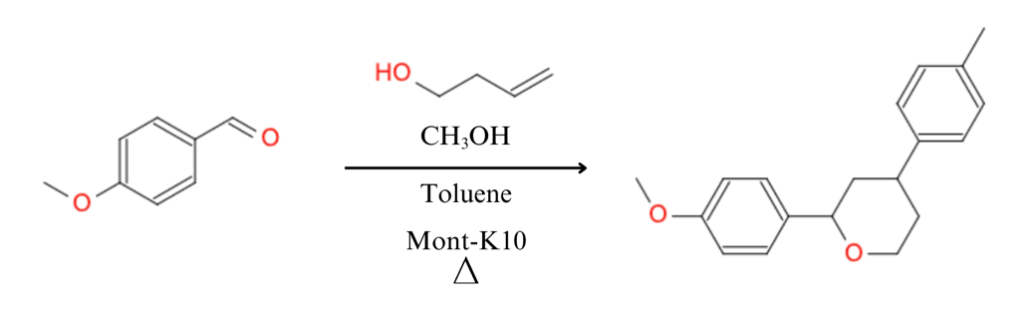
Figure 1 represents the Mont K10 clay-catalyzed multicomponent reaction (MCR) carried out to construct the methoxyaryl-substituted tetrahydropyran. In the Mont K10 clay-catalyzed MCR, 4-methoxybenzaldehyde and 3-buten-1-ol reacted with toluene to afford the methoxyaryl-substituted tetrahydropyran compound after 18 hours of reflux, as monitored using thin-layer chromatography (TLC).
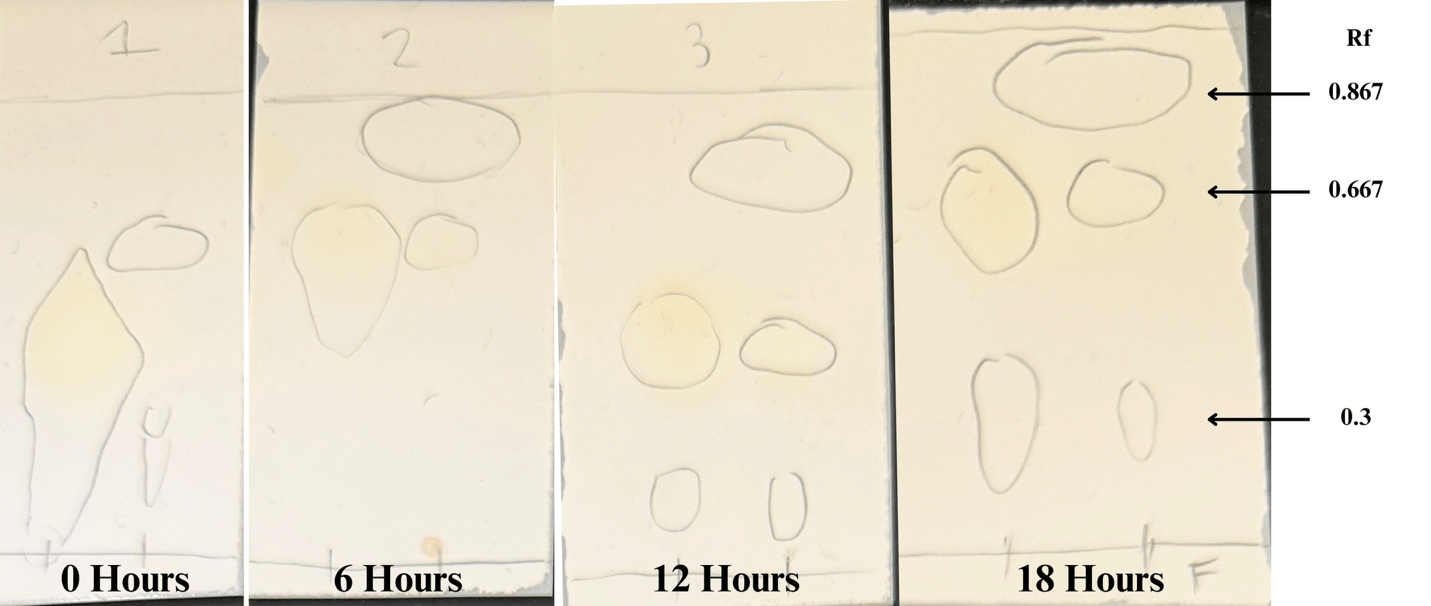
Following completion of the 18-hour reflux period, the reaction mixture was cooled to room temperature and filtered to remove the Mont K10 clay catalyst. Concentration of the filtrate in vacuum gave a light-yellow crude product. TLC analysis was performed qualitatively to monitor reaction status during the entire period of reflux at several time points. The analysis used a 3:2 hexane:ethyl-acetate solvent system (Figure 2A). Early reaction plates showed prominent starting-material spots with representative Rf values of 0.300 and 0.667, while later-stage plates demonstrated the appearance of a new product-associated spot with an Rf value of approximately 0.867. A final reaction-monitoring TLC comparison between the aldehyde starting material and the post-reaction mixture indicated a partial consumption of the starting material, with residual overlap observed at an Rf of approximately 0.667.
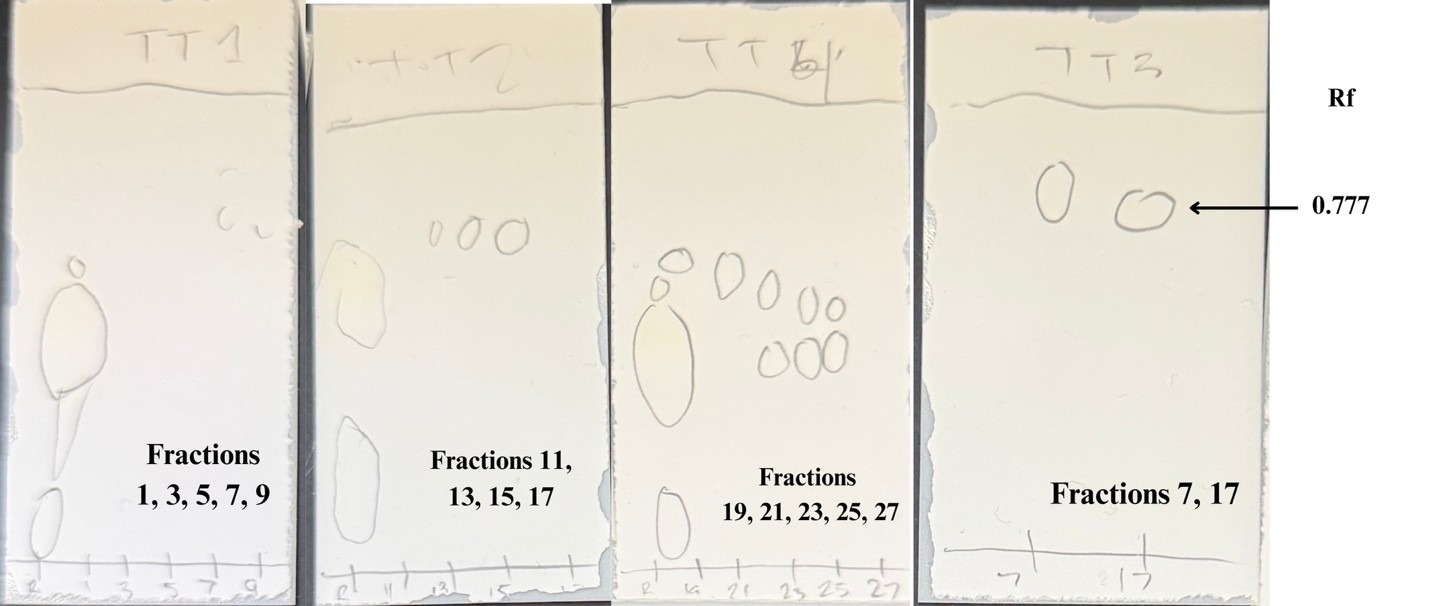
Purification was performed by silica gel column chromatography using 10:1 hexane:ethyl acetate as the eluent. TLC analysis of collected fractions (Figure 2B) was used to identify fractions exhibiting similar migration behavior, and fractions 7-17 were combined based on the presence of a dominant spot within an Rf value of approximately 0.777. Post-purification TLC analysis (Figure 2C) comparing the starting material and purified product fraction in a 3:1 hexane:ethyl-acetate solvent system showed a major product-associated spot with an Rf value of 0.788, although a secondary spot with an Rf of 0.5 remained detectable, indicating the presence of residual impurities.
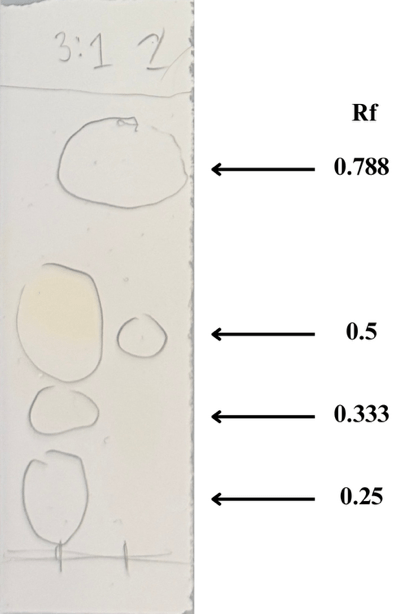
A total of 140 mg of the tetrahydropyran product was isolated after purification. The theoretical yield was calculated from a diaryl-substituted tetrahydropyran product with the molecular formula C19H22O2 (M. W. 282.36 g/mol), which is about 4.96% of the theoretical yield. The analytical data presented should be seen as suggestive of the reported product, not proof of reproducibility or quality due to the absence of replicated reactions, independent purity, and further analysis.
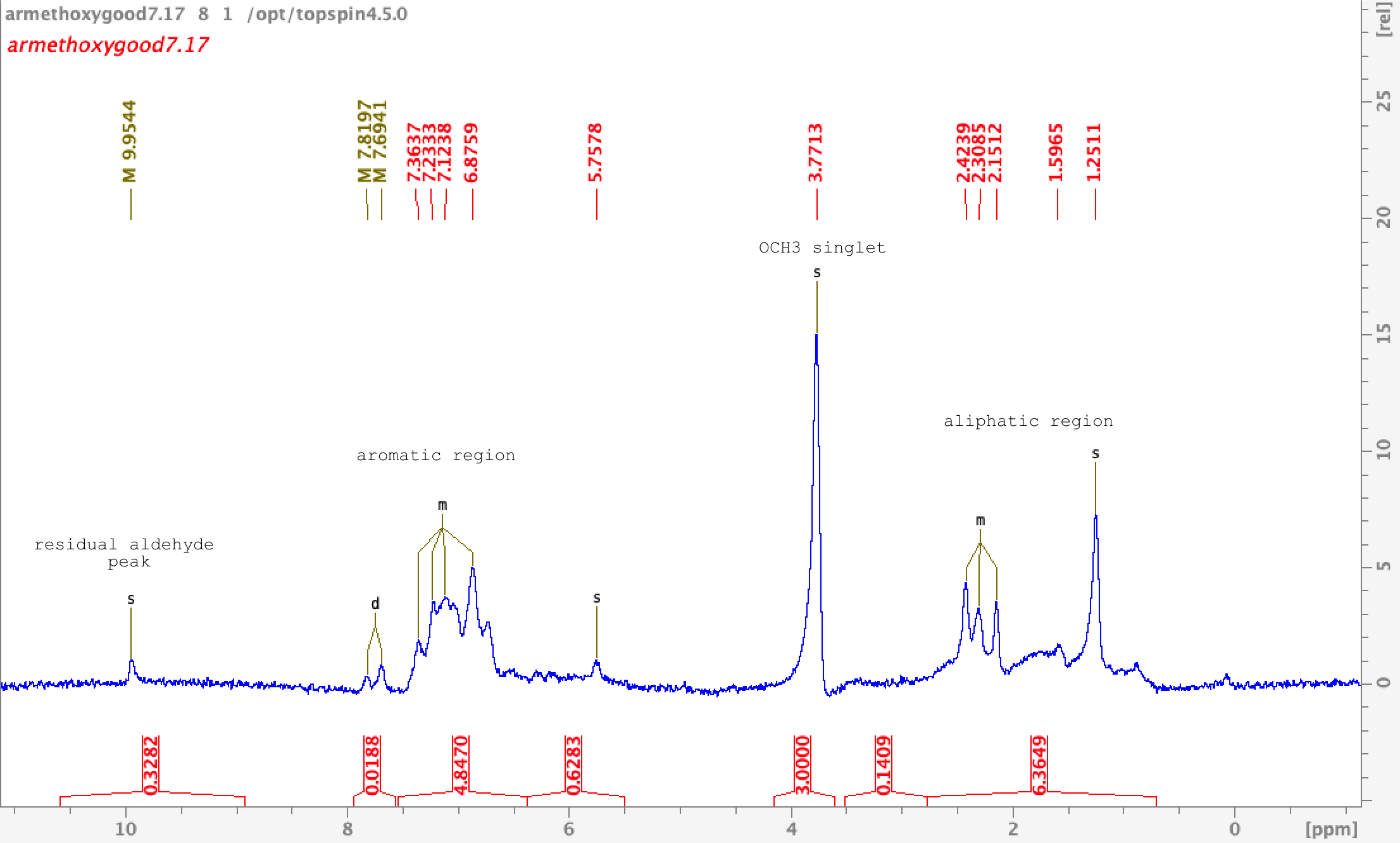
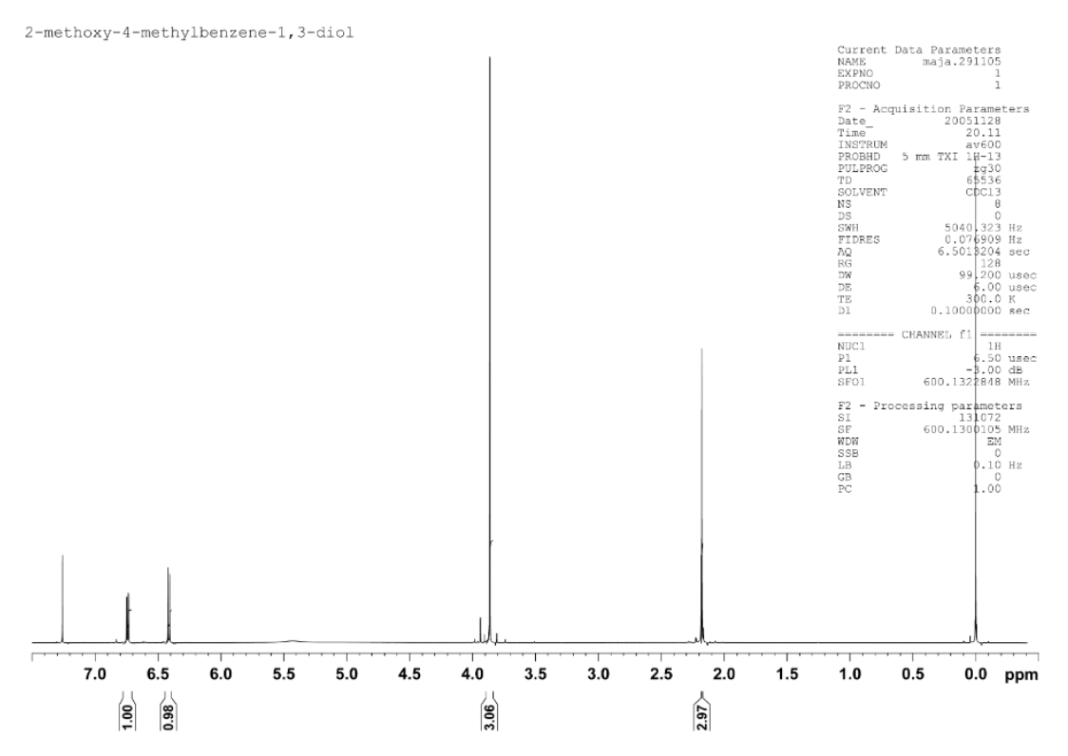
The proton nuclear magnetic resonance (¹H NMR) spectroscopy of the purified product is depicted in Figure 3 and reveals an array of signals that is indicative of the methoxyaryl-substituted tetrahydropyran. The spectral figure below is labeled to illustrate the characteristic chemical shift values, multiplicities, integration of protons, and the respective coupling constants of signals to allow for easier spectral interpretation19. Peaks between 6.88 and 7.82 ppm reflect numerous resonances associated with a substituted aromatic ring, such as a doublet at 7.76 ppm (J = 7.53 Hz), a quartet at 7.12 ppm (J = 9.74 Hz), and further complex multiplet peaks in the area around 7.36 to 6.88 ppm. Likewise, the singlet signal at 3.77 ppm can be identified as a methoxy substituent of an anisole-based aromatic ring20,21. This signal appears to be similar to that of a methoxy-substituted aromatic compound, observed in another similar literature structure of 2-methoxy-4-methylbenzene-1,3-diol (Figure 4), which contains a similar methoxy singlet at 3.86 ppm. The 1.25 and 2.42 ppm resonances likely belong to the aliphatic region and these correspond to the protons within a cyclic ether framework. A small singlet around 9.95 ppm resembles a residual aldehyde. As listed above, the full chemical shifts, multiplicities, coupling constants, integrations, and assignments for the individual protons of the proposed tetrahydropyran are listed in Table 1. These assignments were based on the annotated experimental spectrum and comparison with the literature-based methoxy-substituted aromatic spectrum. Although the observed spectral pattern was qualitatively consistent with methoxy-substituted tetrahydropyran-related systems reported in the literature, only preliminary ¹H NMR data were obtained. Therefore, the spectroscopic evidence should be interpreted as supportive of the proposed structure rather than as definite structural confirmation.
| Peak | δ (ppm) | Multiplicity | J (Hz) | Relative Integration | Tentative Assignment |
| 1 | 9.95 | s | — | 1H | Residual aldehyde proton |
| 2 | 7.82 | d | 7.53 | 1H | Aromatic proton |
| 3 | 7.69 | m | — | 1H | Aromatic proton |
| 4 | 7.36 | m | — | 1H | Aromatic proton |
| 5 | 7.23 | m | — | 1H | Aromatic proton |
| 6 | 7.12 | q | 9.74 | 1H | Aromatic proton |
| 7 | 6.88 | m | — | 1H | Aromatic proton |
| 8 | 5.76 | s | — | 1H | Proton associated with proposed cyclic ether framework |
| 9 | 3.77 | s | — | ~3H | Methoxy (OCH₃) substituent |
| 10 | 2.42 | m | — | 1H | Aliphatic proton |
| 11 | 2.31 | t | 8.17 | 1H | Aliphatic proton |
| 12 | 2.15 | m | — | 1H | Aliphatic proton |
| 13 | 1.60 | m | — | 1H | Aliphatic proton |
| 14 | 1.25 | s | — | 1H | Aliphatic proton |
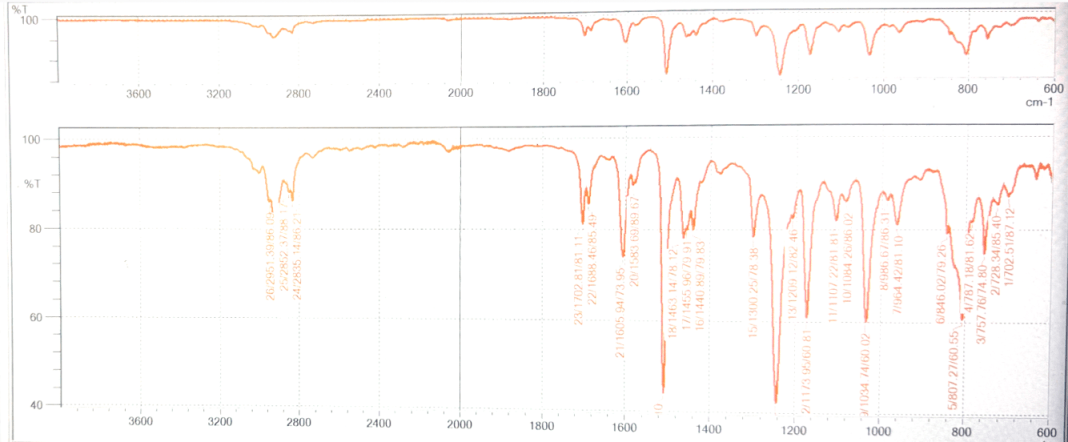
Infrared (IR) spectroscopy (Figure 5) further supported the structural assignment of the product25. The spectra were obtained with an Attenuated Total Reflectance (ATR) accessory. Notable absorption bands include 3060–3000 cm⁻¹ (aromatic C–H stretching), 1600–1450 cm⁻¹ (aromatic C=C stretching), and 1100–1050 cm⁻¹ (C–O stretching of the tetrahydropyran ring). In addition, the sample did exhibit a weak carbonyl absorption around 1725 cm-1. However, its low intensity relative to the product-associated bands suggests the presence of only trace amounts of the carbonyl-containing starting materials. Since IR Spectroscopy is not a quantitative technique, no definitive conversion or residual concentration was assigned based solely on this feature15. Final confirmation of product formation and purity was obtained through NMR and previous analytical data.
Overall TLC monitoring revealed a new product-associated spot at Rf 0.867 in conjunction with the starting material’s partial depletion; however, the spots associated with the starting material were never fully consumed during the course of the reaction and subsequent purification steps. Through purification via column chromatography, a product-enriched fraction was obtained and further characterized by both ¹H NMR and IR spectroscopy, yielding spectral data that corresponded to that which is expected for a methoxyaryl-substituted tetrahydropyran as depicted.
Discussion
Overall, in this study, the Mont K10 clay-catalyzed multicomponent reaction (MCR) successfully yielded the desired methoxyaryl-substituted tetrahydropyran product. Furthermore, two spectroscopic methods for analysis of the product confirm the predicted structure. The product’s IR spectrum displays absorption bands that can be attributed to C–H stretches of the aromatic region (3060–3000 cm⁻¹) and C–O stretch of the ether (1100–1050 cm⁻¹). The signal of the aldehyde’s carbonyl group at 1725 cm⁻¹ becomes weaker as well. As previously described, IR spectroscopy is not a quantitative analysis, so no conversion and residual concentration can be claimed from that one signal. However, the spectrum of ¹H NMR of combined purified fractions provided additional confirmation of the presence of the tetrahydropyran structure with signals of protons in the aromatic region (6.88–7.82 ppm), a methoxy singlet (3.77 ppm), and in the aliphatic region (1.25-2.42 ppm). The minor peak at 9.95 ppm indicates the presence of trace unreacted aldehyde, but does not significantly affect the overall success of the synthesis22.
It is important to note that the reaction conditions reported represent an initial, unoptimized experiment designed to understand the Mont K10 clay-catalyzed multicomponent reaction rather than to achieve maximum synthesis. The small amount of yield obtained under these conditions reflects the preliminary nature of the reaction, where structural validation is prioritized over optimization. In this context, the successful formation of the target tetrahydropyran framework, confirmed through spectroscopic methods, is the primary indicator of reaction success rather than the amount of yield.
Mont-K10 clay functioned effectively as a heterogeneous acid catalyst due to its solid, porous structure, which provides a large surface area to facilitate proton transferring23. Its solid nature also allows for simple separation from the reaction mixture by filtration, reducing the need for neutralization and therefore simplifying post-reaction workup24. Compared to traditional homogeneous acid catalysts, Mont-K10 clay avoids the handling of corrosive liquid acids, making it a more practical alternative for a small-scale laboratory synthesis, such as this one25.
The MCR approach was performed in a single reaction vessel, which enabled the direct formation of the target tetrahydropyran skeleton without isolation of intermediate steps or reactants. This “one-pot” process reduces the number of synthetic operations in comparison to other reactions reported in various literature; however, no quantitative assessment of waste reduction or efficiency was performed in this study. The reaction required 18 hours of heating under mild reflux in a mixed solvent system of toluene and methanol, where product purification was achieved through column chromatography methods. Therefore, broader claims regarding minimized waste or improved sustainability are not quantitatively substantiated here.
A trace amount of residual aldehyde was observed in the final product by two methods of spectroscopic analysis, indicating that the reaction conditions could be further optimized, such as by increasing reaction time, catalyst loading, or solvent choice, which may further improve conversion. However, no catalyst recycling experiments were performed in this study. Thus, claims regarding Mont K10 reusability or long-term recyclability are not supported by the current dataset and should not be inferred.
Conclusion
This study concludes that Mont-K10 clay is a feasible heterogeneous catalyst for a one-pot multicomponent synthesis of a methoxyaryl-substituted tetrahydropyran. All of the reaction mixtures were monitored using TLC analysis, and the structure of the product compound was analyzed using IR and ¹H NMR. The results from these analysis methods are accurate in comparison to the target product’s molecular skeleton. The reaction was run without modification from the mentioned conditions, and a small purified amount of the desired product was collected, showcasing the importance of the current results as a proof-of-concept idea. Nonetheless, it is shown that Mont-K10 can promote the reaction under small-scale experimental conditions. However, further investigations regarding the reaction conditions include investigating the recyclability of Mont-K10 as well as recovery, which are required to enhance the green chemistry benefits of this process.
References
- F. Auria-Luna, V. Fernández-Moreira, E. Marqués-López, M. C. Gimeno, R. P. Herrera. Ultrasound-assisted multicomponent synthesis of 4H-pyrans in water and DNA binding studies. Scientific Reports. Vol. 10, pg. 1, 2020, https://doi.org/10.1038/s41598-020-68076-1. [↩]
- C. Cimarelli. Multicomponent reactions. Molecules. Vol. 24, pg. 2372, 2019, https://doi.org/10.3390/molecules24132372. [↩]
- R. L. Mohlala, T. J. Rashamuse, E. M. Coyanis. Highlighting multicomponent reactions as an efficient and facile alternative route in the chemical synthesis of organic-based molecules: a tremendous growth in the past 5 years. Frontiers in Chemistry. Vol. 12, pg. 1469677, 2024, https://doi.org/10.3389/fchem.2024.1469677. [↩] [↩]
- J.D. Moseley; P. M. Murray. Rethinking one-pot and telescoping reactions. J. Chem. Technol. Biotechnol. Vol. 89, pg. 623–635, 2014. https://doi.org/10.1002/jctb.4315. [↩]
- P. T. Anastas; J. C. Warner. Green Chemistry: Theory and Practice. Oxford University Press, New York, 1998. [↩]
- M. Karrabi, M. Malmir, E. Shafiei Toran Poshti, M. M. Heravi, T. Hosseinnejad. A theoretical and experimental study on ecofriendly-one-pot synthesis of pyrazolopyranopyrimidines catalysed by CuO functionalized montmorillonite. Inorganic Chemistry Communications. Vol. 149, pg. 110367, 2023, https://doi.org/10.1016/j.inoche.2022.110367. [↩]
- Z. Malinowski. Recent advances in one-pot multicomponent reactions for the synthesis of substituted quinazolin-4(3H)-ones. Molecules. Vol. 30, pg. 3729, 2025, https://doi.org/10.3390/molecules30183729. [↩]
- A. Dömling; W. Wang; K. Wang. Chemistry and Biology of Multicomponent Reactions. Chem. Rev. Vol. 112, pg. 3083–3135, 2012. https://doi.org/10.1021/cr100233r. [↩]
- B. S. Kumar; A. Dhakshinamoorthy; K. Pitchumani. K10 montmorillonite clays as environmentally benign catalysts for organic reactions. Catal. Sci. Technol. Vol. 4, pg. 2378–2396, 2014. https://doi.org/10.1039/c4cy00112e. [↩] [↩]
- S. Bonacci; G. Iriti; S. Mancuso; P. Novelli; R. Paonessa; S. Tallarico; M. Nardi. Montmorillonite K10: An Efficient Organo-Heterogeneous Catalyst for Synthesis of Benzimidazole Derivatives. Catalysts. Vol. 10, pg. 845, 2020. https://doi.org/10.3390/catal10080845. [↩] [↩] [↩]
- N. Kaur; D. Kishore. Montmorillonite: An efficient, heterogeneous and green catalyst for organic synthesis. J. Chem. Pharm. Res. Vol. 4, pg. 991–1015, 2012. [↩]
- S. Bonacci; M. Nardi; P. Costanzo; A. De Nino; M. L. Di Gioia; M. Oliverio; A. Procopio. Montmorillonite K10-Catalyzed Solvent-Free Conversion of Furfural Into Cyclopentenones. Catalysts. Vol. 9, pg. 301, 2019. https://doi.org/10.3390/catal9040301. [↩]
- P. A. Clarke; W. H. C. Martin; J. M. Hargreaves; C. Wilson; A. J. Blake. The One-Pot, Multicomponent Construction of Highly Substituted Tetrahydropyran-4-ones Using the Maitland-Japp Reaction. Org. Biomol. Chem. Vol. 3, pg. 3763–3775, 2005. https://doi.org/10.1039/b508252h. [↩]
- W. C. Still; M. Kahn; A. Mitra. Rapid chromatographic technique for preparative separations with moderate resolution. J. Org. Chem. Vol. 43, pg. 2923–2925, 1978. https://doi.org/10.1021/jo00408a041. [↩]
- R. M. Silverstein; F. X. Webster; D. J. Kiemle; D. L. Bryce. Spectrometric Identification of Organic Compounds, 8th Ed. Wiley, Hoboken, 2014. [↩] [↩]
- R. J. Abraham; M. Mobli. Modelling 1H NMR spectra of organic compounds: Theory and applications. RSC Publishing, Cambridge, 2008. [↩]
- G. R. A. Wyllie; A. H. Johnson. Thin-Layer Chromatography: The “Eyes” of the Organic Chemist. J. Chem. Educ. Vol. 81, pg. 1023, 2004. https://doi.org/10.1021/ed081p1023. [↩]
- OpenOChem. Line-angle development [Software]. https://openochem.org, 2024. [↩]
- S. Hayashi; W. Nakanishi. A Compendium of NMR Spectra for Common Organic Compounds. Wiley-VCH, 2018. [↩]
- P. K. Agrawal; G. Blunden. Methoxy 13C NMR Chemical Shift as a Molecular Descriptor in the Structural Analysis of Flavonoids and Other Phenolic Compounds. Nat. Prod. Commun. Vol. 18, 2023. https://doi.org/10.1177/1934578X231171002. [↩]
- L. F. Silva; E. L. Bastos; A. C. Doriguetto; K. R. K. K. Reddy; I. M. L. Rosa. Iodine-Catalyzed Prins Cyclization of Homoallylic Alcohols and Aldehydes. Molecules. Vol. 18, pg. 11100–11130, 2013. https://doi.org/10.3390/molecules180911100. [↩]
- M. Lambert; L. Olsen; J. W. Jaroszewski. Stereoelectronic effects on ¹H nuclear magnetic resonance chemical shifts in methoxybenzenes. J. Org. Chem. Vol. 71, pg. 9449–9457, 2006. https://doi.org/10.1021/jo061757x. [↩]
- L. Castoldi; L. Ielo; L. De Luca; W. Holzer. Heterogeneous acidic catalysts for the tetrahydropyranylation of alcohols and phenols in green ethereal solvents. Eur. J. Org. Chem. pg. 2557–2564, 2018. https://doi.org/10.1002/ejoc.201800291. [↩]
- T. Fjelstad; A. Ghinet; B. Daïch; A. Waterlot. Sustainable synthesis using montmorillonite K10 clay in heterogeneous catalysis. Green Chem. Lett. Rev. Vol. 13, 2020. [↩]
- M. Hechelski; A. Ghinet; B. Louvel; P. Dufrenoy; B. Rigo; A. Daïch; C. Waterlot. From Conventional Lewis Acids to Heterogeneous Montmorillonite K10: Eco-Friendly Plant-Based Catalysts Used as Green Lewis Acids. ChemSusChem. Vol. 11, pg. 1249–1277, 2018. https://doi.org/10.1002/cssc.201702435. [↩]