

Abstract
Background: Type 2 diabetes mellitus (T2DM) is a condition that affects Indigenous peoples in the United States at a higher rate compared to others. Among Indigenous communities, rates of T2DM are 19%, which is significantly higher than the national average of 12.5%. Among Indigenous adults, the mortality rate of T2DM is 3.2 times more than adults of other racial groups. T2DM is a condition that can be managed through techniques such as dietary modifications, but other factors, such as culturally influenced diets and confidence in making such modifications, impact an individual’s ability to implement it. Understanding these factors is extremely important when forming culturally mindful educational tools when addressing cultural influences and self-confidence related to the management of T2DM.
Objective: The aim of this study is to understand how Indigenous communities perceive T2DM management strategies and confidence in utilizing aforementioned strategies. Specifically, the objectives were to recognize dietary approaches to T2DM management, assess the self-reported confidence levels of participants in implementing these approaches, and use our findings to help inform the creation of culturally mindful dietary education programs for managing T2DM.
Method: Participants in this study are affiliated with the Native Health Initiative and were surveyed from January 2025 through March 2025. The survey assessed how effective patients believed management strategies for T2DM. The survey consisted of multiple-choice questions, and observed confidence levels using the 5-point Likert scale (with 1 being not very confident to 5 being very confident). The data collected was organized using pie and bar charts.
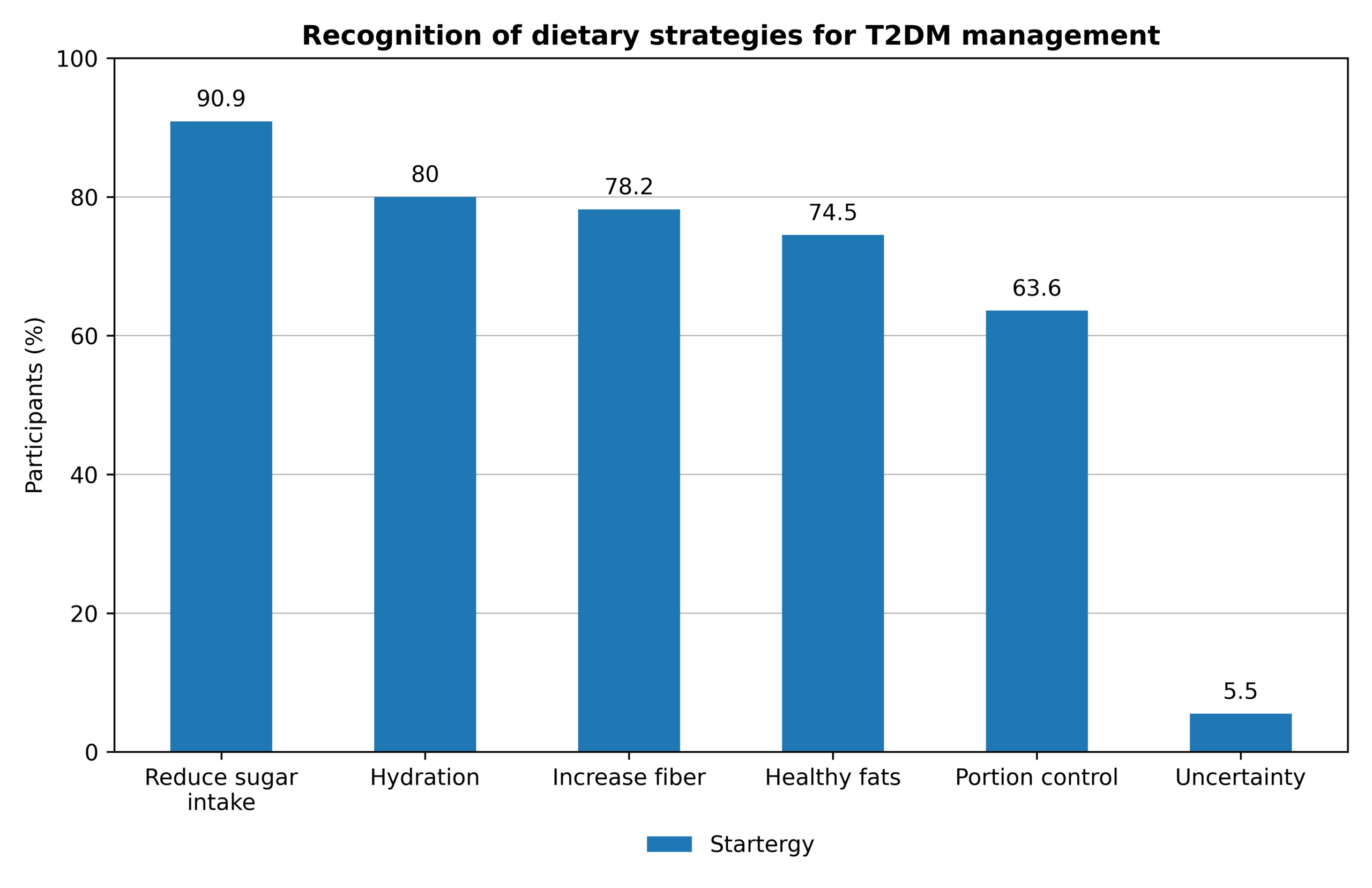
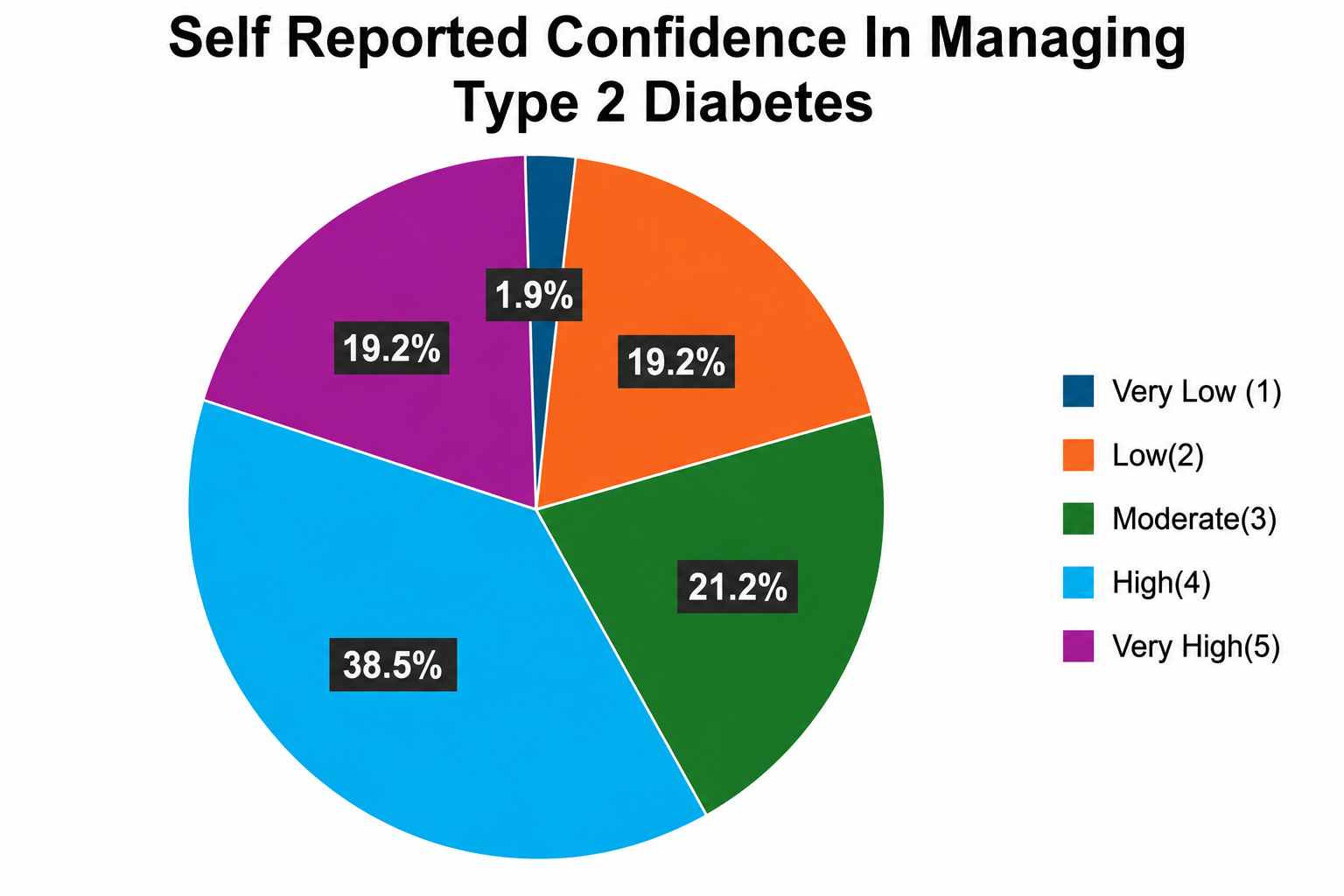
Results: 55 participants completed the survey. Many participants recognized several dietary approaches often used in the management of T2DM, which were: reducing added sugar and refined carbohydrates (90%); maintaining hydration (80%); consuming more fiber (78.2%); incorporating healthy fats into the diet (74.5%); and being aware of and managing portion sizes when eating (63.6%). Only 5.5% of participants reported uncertainty when it came to dietary approaches to managing T2DM. 52 participants completed the confidence assessment portion of the survey. 19.2% reported very high confidence, 38.5% reported high confidence, 21.2% reported moderate confidence, 19.2% of participants reported low confidence, and 1.9% of participants reported very low confidence.
Conclusion: The findings of this study show that identifying effective dietary approaches to managing T2DM may not fully explain the varying confidence levels reported by participants when asked about it in the survey. The results of this study emphasize the need for educational programs concerning T2DM to incorporate cultural aspects as well as practical skills, community support, and socioeconomic barriers that limit T2DM management. Community-based educational initiatives may better promote healthcare among Indigenous populations.
Keywords: Type 2 diabetes, Native American health, dietary knowledge, self-efficacy, health disparities, community-based research, diabetes self-management
Introduction
In the United States, diabetes mellitus is a significant public health challenge faced by people everywhere. About 12.5% of the population is affected by this condition.1. Those affected by the disease are not equally distributed among different ethnic and racial backgrounds. Rather, Native American and Alaskan Native (AI/AN) populations are disproportionately affected by the disease and the complications that come with it.2 When looking solely at Indigenous communities, T2DM has a prevalence of 19%, which is significantly higher than the national average. Even more concerning is that the mortality rate associated with T2DM in AI/AN populations is 3.2 times higher than any other racial group within the United States.2.
Among Indigenous populations, obesity tends to be more common. Indigenous adults are 50% more likely than adults of other races to be obese.3. Social determinants of health concerning Indigenous populations, including generational trauma, changes to Indigenous diets forced by external forces, food insecurity, and limited access to healthcare, add to disparities in obesity and T2DM rates among Indigenous populations.4,5.
Structural barriers, including limited fresh produce and expensive, nutritionally rich food options and easier access to less expensive, highly glycemic foods, are factors that influence the diets of many Indigenous communities.6. As indigenous communities are forced to transition away from a nutrient dense diet to a calorie dense, nutritionally poor diet, the rates of metabolic disease have been impacted.7.
Previous attempts at introducing management strategies concerning T2DM in Indigenous communities have varying degrees of effectiveness, which can be attributed to the fact that successful management goes beyond knowledge alone. Conventional educational attempts focus on aspects that may not be applicable in an Indigenous context, such as when cultural practices are not kept in mind and structural barriers are not considered.8
Successful educational attempts rely on using culturally relevant information, community-wide engagement, support socially, and approaches that respect and acknowledge the historical and socioeconomic realities of Indigenous peoples.9 Community-based participatory research puts an emphasis on the involvement of the community throughout the process of the research, and has been used to look at health disparities in underserved populations.
Dietary management is an important aspect of T2DM management, and is one of the more cost-effective strategies. However, implementing it successfully hinges on more than just a patient having a clinician suggest the method to them. Factors that are more behavioral and psychosocial play an important role in the adoption and implementation of dietary strategies.10
For the purpose of this study, the term understandingrefers to a person’s awareness or comprehension of diabetes management concepts. Beliefsrefer to personal, cultural, or experiential perceptions regarding illness, dietary practices, and the perceived relevance or effectiveness of treatment recommendations. Self-efficacy, defined as confidence in one’s ability to successfully perform and sustain recommended health behaviors, is a central construct within Social Cognitive Theory and has been shown to influence chronic disease self-management.11.
These behavioral concepts may be understood within established health behavior frameworks. Social Cognitive Theory emphasizes the role of self-efficacy in influencing behavioral adoption and maintenance, whereas the Health Belief Model highlights how perceived susceptibility, perceived benefits, and personal beliefs regarding illness and treatment may shape health-related decision-making.12. Although the present study was not designed to formally test these theoretical models, these frameworks provide useful context for understanding how dietary perceptions and confidence may influence diabetes self-management behaviors.
Dietary approaches and lifestyle changes remain important in the management of T2DM. Glycemic control, weight management, and other diabetes related outcomes among adults with T2DM can be improved by lifestyle changes and weight loss interventions, as shown by randomized trials and meta-analyses.13. Clinical guidelines consistently emphasize the importance of nutritional interventions, including reducing refined carbohydrates, increasing fiber intake, controlling portion sizes, and incorporating healthy fats.14
Though there are many evidence-based clinical guidelines, patient understanding, beliefs, self-efficacy, and the ability of them to incorporate dietary changes within the cultural and socioeconomic context they live in, are also important in successful diabetic management without relying on only clinical recommendations. Effectively incorporating approaches to manage T2DM in Indigenous communities requires the acknowledgment of the historical context and the implementation of culturally relevant dietary practices that honor traditional foods while discussing and contemporary health challenges.
Empirical studies have demonstrated that diabetes self-management behaviors within Indigenous and underserved communities are influenced by structural and psychosocial factors beyond clinical knowledge alone.15,16 Food insecurity and limited access to healthy foods have been associated with lower adherence to recommended dietary practices and poorer chronic disease management.15.
Similarly, culturally tailored and community-based interventions have demonstrated greater effectiveness than standard educational approaches in improving engagement and self-management behaviors.17,16. Self-efficacy has also been associated with improved adoption and maintenance of recommended health behaviors, including dietary modification and chronic disease self-management.18.
These studies suggest that diabetes-related behaviors may be influenced by social, cultural, behavioral, and environmental factors in addition to clinical recommendations.15,17,16.
However, many prior studies have focused on clinical outcomes, diabetes education programs, or validated self-management measures rather than brief community-based assessments of dietary perceptions and self-reported confidence.18,16.
Fewer studies have specifically explored how Native communities perceive dietary strategies commonly associated with diabetes management and how community members describe theirconfidence regarding diabetes management in local community settings.19,16. Accordingly, the present study was designed as an exploratory, descriptive community assessment intended to characterize dietary perceptions and self-reported confidence among Native Health Initiative participants rather than test a specific hypothesis or evaluate relationships between variables.
These studies demonstrate that factors such as food insecurity, access to healthy food, cultural relevance of T2DM education, social support, and self-efficacy influence diabetes management.15,20.
However, many prior studies have focused on clinical outcomes, generalized diabetes education, or validated knowledge assessments rather than brief community-based surveys assessing perceived dietary strategies and confidence in local community settings.18,16.
The present study does not seek to establish a new conceptual relationship or test a theoretical model; rather, it adds a descriptive community-based assessment of dietary perceptions and self-reported confidence among Native Health Initiative participants. Accordingly, this exploratory study aimed to characterize community perceptions among participants affiliated with the Native Health Initiative. Specifically, the objectives were to identify dietary approaches recognized as beneficial for managing Type 2 diabetes, assess self-reported confidence in diabetes self-management, and inform the development of culturally tailored diabetes education programs.21
Results
A total of 55 participants responded to the dietary strategies question, and 52 participants responded to the confidence assessment question. Participants frequently recognized dietary approaches commonly associated with Type 2 diabetes management. The most commonly endorsed nutritional approach was reducing added sugar and refined carbohydrates, selected by 90.9% (n=50) of participants, followed by maintaining adequate hydration (80%, n=44), increased fiber intake (78.2%, n=43), incorporating healthy fats (74.5%, n=41), and managing portion sizes (63.6%, n=35). Only 5.5% (n=3) of participants indicated uncertainty regarding dietary strategies, suggesting that the vast majority of respondents recognized at least some dietary approaches commonly associated with diabetes management. (Figure 1).
Analysis of the confidence assessment revealed considerable variability in participants’ self-reported confidence in managing Type 2 diabetes. 19.2%(n=10) reported very high confidence in managing Type 2 diabetes (selecting scale of 5), 38.5% (n=20) of participants reported high confidence in managing Type 2 diabetes (selecting scale values of 4), while 21.2% (n=11) reported moderate confidence (scale value 3). 19.2%(n=10) participants reported low confidence levels (scale values 2), and 1.9%(n=1) participant reported very low confidence (scale value 1). Recognition of dietary approaches commonly associated with Type 2 diabetes management was observed alongside variability in reported confidence levels. Because analyses were descriptive and respondent-level associations were not evaluated, these findings should be interpreted as descriptive observations rather than evidence of a tested relationship between dietary perceptions and confidence. (Figure 2).
Discussion
This community-based survey demonstrated strong recognition of evidence-based dietary strategies for Type 2 diabetes management among Native Health Initiative participants, with more than nine out of ten participants identifying that reduced amounts of added sugar and refined carbohydrates are beneficial. Recognition of additional T2DM management strategies, including adequate hydration, increased fiber intake, incorporation of healthy fats, and portion control, was also high. These findings suggest recognition of several dietary approaches commonly associated with diabetes management among survey participants; however, the survey evaluated community perceptions rather than objective diabetes knowledge. Despite recognition of these dietary approaches, confidence related to diabetes management varied across participants and reflects self-reported perceptions rather than actual self-management ability. When combining confidence levels 4 and 5, 57.7% of participants reported moderate-to-high confidence, whereas levels 1-2, 21.1% reported low or very low confidence.
Prior literature has identified self-efficacy as an important construct in chronic disease management and health-related behavior change. In the present study, recognition of dietary approaches commonly associated with diabetes management was observed alongside variability in self-reported confidence levels; however, causal or statistical relationships between these measures were not evaluated.11. Prior research has demonstrated that individuals with higher self-efficacy are more likely to adopt and maintain recommended behavioral changes, including dietary modifications.22.
Several factors may contribute to the variability in confidence levels despite recognition of favorable dietary approaches. Barriers including limited access to nutritionally rich food, difficulty accessing transport, and financial limits can make it more difficult to integrate dietary management practices.15.
Additionally, cultural, social, and environmental factors influence dietary behaviors and perceptions of disease management. Historical disruptions to traditional food systems and ongoing disparities in healthcare access may further affect both dietary practices and confidence in self-management.23.
These findings demonstrate the importance of going beyond giving patients knowledge about T2DM management, and to address the other barriers that may impact the implementation of these management strategies. Community based programs that place importance on dietary education that is culturally relevant, skill development, and foster long term support might be good tools for improving confidence and promoting behavioral change. Interventions that incorporate the aforementioned elements have shown promise when improving the outcomes of chronic disease in underserved populations.20.
This study has several important limitations. The sample size was modest and drawn from a single community-based organization, limiting generalizability. Survey responses were self-reported and may be subject to recall and social desirability bias. The anonymous design intentionally did not collect demographic or clinical variables including age, gender, educational level, diabetes diagnosis status, caregiver status, or HbA1c values. Consequently, subgroup analyses could not be performed.
Additionally, the survey instrument was developed as a community assessment tool and was not formally validated or pilot tested. Recruitment occurred through anonymous convenience sampling during community events, and denominator, participation rate, and recruitment flow could not be formally determined. Because no identifying information was collected, duplicate participation and missing-data mechanisms could not be formally assessed, which may limit assessment of representativeness and selection bias. The dietary question evaluated recognition of favorable dietary approaches rather than objective diabetes knowledge and did not include validated scoring methods or incorrect distractor responses.
Because analyses were descriptive and respondent-level linkage was not performed, relationships between confidence and dietary perceptions could not be statistically assessed. Findings should therefore be interpreted as descriptive observations rather than causal or clinical conclusions. Despite these limitations, this study provides insight into dietary perceptions and self-reported confidence levels in the context of an Indigenous community. The findings show the importance of culturally relevant interventions with a strong basis in the community that address educational and structural barriers to improve T2DM management and reduce disparities in health.20.
Methods
This study employed a cross-sectional survey design to assess dietary perceptions and self-management confidence among participants affiliated with the Native Health Initiative. Surveys were distributed during approximately four Native Health Initiative community events and educational activities conducted between January and March 2025. Eligible participants included adults aged 18 years and older attending these community events, educational sessions, and gatherings. No exclusion criteria based on diabetes diagnosis status were applied, as the survey aimed to assess the general community regarding dietary strategies and diabetes management rather than limiting responses to only those diagnosed with T2DM.
Participation was voluntary and anonymous. No personally identifiable information was collected to protect participant privacy and encourage candid responses. Participants received an introductory statement describing the survey purpose, emphasizing voluntary participation, and indicating that survey completion implied informed consent. Because the survey was designed as an anonymous community assessment, demographic and clinical variables—including age, gender, educational level, diabetes diagnosis status, and HbA1c values—were intentionally not collected.
The introductory survey statement and consent language shown to participants are provided in the appendix to improve transparency regarding participant information and voluntary consent procedures.
The survey instrument was developed as a brief community assessment tool in consultation with Native Health Initiative personnel to maximize feasibility during community events. Formal pilot testing, psychometric validation, reliability testing, and cognitive interviewing were not performed. The instrument was intended to evaluate community perceptions and recognition of dietary approaches. The survey included two primary components: (1) a multiple-choice question asking participants to select all dietary approaches they believed were helpful for managing Type 2 diabetes (reducing added sugar and refined carbohydrates, increasing fiber intake, incorporating healthy fats, managing portion sizes, maintaining adequate hydration, or not sure), and (2) a Likert scale question assessing confidence in managing Type 2 diabetes rated from 1 (not confident) to 5 (very confident). These response options were informed by current evidence-based dietary recommendations for diabetes management, including guidance from the American Diabetes Association regarding reduction of refined carbohydrates and added sugars, increased dietary fiber intake, and healthy dietary patterns. 10 The complete survey instrument, introductory participant statement, and exact item wording are provided in the appendix to improve transparency and reproducibility.
Surveys were administered on paper during community events and health education sessions. This exploratory community assessment used convenience sampling rather than formal participant recruitment targets or sample-size calculations. Surveys were offered to adult attendees present during Native Health Initiative community events, educational sessions, and community gatherings. Participation was voluntary and anonymous, and all interested eligible adults attending these activities were invited to participate when survey distribution occurred. Because surveys were distributed across multiple community activities and the total number of eligible attendees were not systematically recorded, a formal participation rate and recruitment flow could not be calculated. Because surveys were anonymous and no identifying information was collected, duplicate participation could not be formally assessed. However, surveys were distributed as single paper responses during community events, and participants were asked to complete only one survey. The difference between 55 responses to dietary items and 52 responses to confidence items reflected item-level missing responses rather than tracked participant withdrawal. Because surveys were anonymous and respondent linkage was not performed, missing-data mechanisms could not be formally evaluated. Completed surveys were collected in sealed boxes to maintain anonymity. Data were entered into a spreadsheet and analyzed using descriptive statistics. For the dietary perception question, frequencies and percentages were calculated for each response option. For the confidence question, responses were grouped into categories: Very low confidence (scale 1), low confidence (scale 2), moderate confidence (scale 3), high confidence (scale 4), and very high confidence (scale 5). Descriptive statistics including frequencies and percentages were used to summarize survey responses.
Because the survey was designed as an anonymous, exploratory community assessment without respondent-level linkage or validated composite scoring, inferential statistical analyses such as correlation or subgroup testing were not performed. This study involved an anonymous, voluntary community survey conducted through the Healers of Tomorrow (HOT)–Native Health Initiative for community assessment and educational purposes. Survey development and implementation were conducted collaboratively with HOT leadership and community mentors, who were informed of and supportive of the project objectives and survey activities, thereby providing community-level oversight and engagement during study implementation. No identifying information was collected, and participation was voluntary and anonymous.
Formal Institutional Review Board (IRB) review or exemption determination was not obtained because the project was initially designed as a community-based educational and program-development assessment rather than prospective human-subjects research intended for generalizable publication. We acknowledge that retrospective publication of community assessment findings raise important ethical considerations and that formal IRB review or exemption determination would strengthen ethical oversight for dissemination of research findings. Ethical principles including respect for persons, privacy protection, community collaboration, and voluntary participation guided study implementation. Future studies designed for research dissemination and publication should seek formal IRB review or exemption determination before initiation.
Conclusions
Participants affiliated with the Native Health Initiative demonstrated strong recognition of dietary approaches commonly associated with Type 2 diabetes management, with more than 90% identifying the importance of reducing refined carbohydrates and the majority recognizing additional approaches such as hydration, fiber intake, healthy fats, and portion control. Despite strong recognition of dietary approaches commonly associated with Type 2 diabetes management, confidence in managing diabetes varied across participants, with 57.7% reporting high or very high confidence and 21.1% reporting low or very low confidence.
These findings suggest variability between community perceptions regarding dietary strategies and confidence levels; however, interpretation should remain limited to descriptive observations obtained from this community survey.18. Some factors, such as limited access to nutritional food, cultural food practices, and socioeconomic limits, may affect how dietary recommendations are implemented in some communities, as suggested by previous findings24.
The findings in this study emphasize how important it is to have community-based interventions that go beyond education to incorporate culturally relevant approaches, skill-building, and support. Programs that include both self-efficacy and structural barriers may support the formation of recommended behaviors and culturally relevant diabetes education and broader community engagement related to healthy lifestyle practices.25.
Acknowledgements
The authors gratefully acknowledge the Healers of Tomorrow- Native Health Initiative and all participants who contributed their time and perspectives to this survey. We also acknowledge the community leaders and staff who facilitated survey distribution and supported this research. We recognize the strength and resilience of Native communities in addressing health challenges despite historical and ongoing structural barriers.
Funding
No external funding was received for this study
Conflicts of Interest
The authors declare no conflicts of interest.
Author Contributions
Anisha Sathish: Conceptualization, survey design, data collection, data analysis, manuscript drafting, manuscript revision, final approval
Kulothungan Gunasekaran: Supervision, conceptual guidance, interpretation of findings, manuscript review and editing, final approval
Data Availability Statement
The data that support the findings of this study are available from the corresponding author upon reasonable request, subject to protection of participant confidentiality and approval from the Native Health Initiative.
APPENDIX: Survey Instrument and Participant Information
Introductory Survey Statement / Consent Language
You are invited to participate in a voluntary and anonymous community survey conducted through the Native Health Initiative. The purpose of this survey is to better understand community perspectives regarding dietary approaches and confidence related to diabetes management in order to inform educational and community health activities. Participation is entirely voluntary, and you may choose not to answer any question. No identifying information will be collected, and responses will remain anonymous. Completion of this survey implies your consent to participate.
Survey Questions
Which of the following dietary approaches do you believe are helpful for managing Type 2 diabetes? (Select all that apply)
□ Reduce added sugar and refined carbohydrates
□ Increase fiber intake
□ Incorporate healthy fats
□ Manage portion sizes
□ Maintain adequate hydration
□ Not sure
How confident are you in managing Type 2 diabetes?
1 = Not confident
2 = Low confidence
3 = Moderate confidence
4 = High confidence
5 = Very confident
References
- Centers for Disease Control and Prevention. National diabetes statistics report. https://www.cdc.gov/, 2024. [↩]
- Lucero J. E., Roubideaux Y. Advancing Diabetes Prevention and Control in American Indians and Alaska Natives. Annual Review of Public Health. Vol. 43, pg. 461–475, 2022. https://doi.org/10.1146/annurev-publhealth-093019-010011. [↩] [↩]
- Centers for Disease Control and Prevention. Summary health statistics: national health interview survey, 2018. https://www.cdc.gov/, 2018 [↩]
- Bauer U. E., Briss P. A., Goodman R. A., Bowman B. A. Prevention of chronic disease in the 21st century: elimination of the leading preventable causes of premature death and disability in the USA. The Lancet. Vol. 384, pg. 45–52, 2014, https://doi.org/10.1016/S0140-6736(14)60648-6. [↩]
- Gone J. P., Trimble J. E. American Indian and Alaska Native mental health: diverse perspectives on enduring disparities. Annual Review of Clinical Psychology. Vol. 8, pg. 131–160, 2012, https://doi.org/10.1146/annurev-clinpsy-032511-143127. [↩]
- Jernigan V. B., Huyser K. R., Valdes J., Simonds V. W. Food insecurity among American Indians and Alaska Natives: a national profile using the current population survey–food security supplement. Journal of Hunger & Environmental Nutrition. Vol. 12, pg. 1–10, 2017, https://doi.org/10.1080/19320248.2016.1227750. [↩]
- Kuhnlein H. V., Receveur O. Dietary change and traditional food systems of indigenous peoples. Annual Review of Nutrition. Vol. 16, pg. 417–442, 1996 https://doi.org/10.1146/annurev.nu.16.070196.002221. [↩]
- Agurs-Collins T., Alvidrez J., Ferreira S. E., Evans M., Gibbs K., Kowtha B., Pratt C., Reedy J., Shams-White M., Brown A. G. Perspective: Nutrition Health Disparities Framework: A Model to Advance Health Equity. Advances in Nutrition. Vol. 15, Article 100194, 2024. https://doi.org/10.1016/j.advnut.2024.100194. [↩]
- Redvers N., Odugleh-Kolev A., Cordero J. P., Zerwas F., Zitoun N. M., Kamalabadi Y. M., Stevens A., Nagasivam A., Cheh P., Callon E., Aparicio-Reyes K., Kubota S. Relational Community Engagement Within Health Interventions at Varied Outcome Scales. PLOS Global Public Health. Vol. 4, Article e0003193, 2024. https://doi.org/10.1371/journal.pgph.0003193. [↩]
- Zwierczyk U., Sowada C., Duplaga M. Eating Choices—The Roles of Motivation and Health Literacy: A Cross-Sectional Study. Nutrients. Vol. 14, Article 4026, 2022. https://doi.org/10.3390/nu14194026. [↩]
- Bandura A. Self-efficacy: Toward a unifying theory of behavioral change. Psychological Review. Vol. 84, pg. 191–215, 1977, https://doi.org/10.1037/0033-295X.84.2.191. [↩] [↩]
- Rosenstock IM. Historical origins of the Health Belief Model. Health Education Monographs. Vol. 2, pg. 328–335, 1974, https://doi.org/10.1177/109019817400200403. [↩]
- Franz M. J., Boucher J. L., Rutten-Ramos S., VanWormer J. J. Lifestyle weight-loss intervention outcomes in overweight and obese adults with type 2 diabetes: a systematic review and meta-analysis of randomized clinical trials. Journal of the Academy of Nutrition and Dietetics. Vol. 115, pg. 1447–1463, 2015, https://doi.org/10.1016/j.jand.2015.02.031. [↩]
- ElSayed N. A., Aleppo G., Aroda V. R., Bannuru R. R., Brown F. M., Bruemmer D., Collins B. S., Hilliard M. E., Isaacs D., Johnson E. L., et al. Facilitating positive health behaviors and well-being to improve health outcomes: standards of care in diabetes—2023. Diabetes Care. Vol. 46, pg. S68–S96, 2023, https://doi.org/10.2337/dc23-S005. [↩]
- Walker R. E., Keane C. R., Burke J. G. Disparities and access to healthy food in the United States: a review of food deserts literature. Health & Place. Vol. 16, pg. 876–884, 2010, https://doi.org/10.1016/j.healthplace.2010.04.013. [↩] [↩] [↩] [↩] [↩]
- Wilson J., Stotz S. A., Rith-Najarian S., et al. Development of an American Indian diabetes education cultural supplement: a qualitative approach. Frontiers in Clinical Diabetes and Healthcare. Vol. 3, Article 814672, 2022, https://doi.org/10.3389/fcdhc.2022.814672. [↩] [↩] [↩] [↩] [↩] [↩]
- Wallerstein N., Duran B. Using community-based participatory research to address health disparities. Health Promotion Practice. Vol. 7, pg. 312–323, 2006, https://doi.org/10.1177/1524839906289376. [↩] [↩]
- Lorig K. R., Holman H. R. Self-management education: history, definition, outcomes, and mechanisms. Annals of Behavioral Medicine. Vol. 26, pg. 1–7, 2003, https://doi.org/10.1207/S15324796ABM2601_01. [↩] [↩] [↩] [↩]
- Schure M., Goins R. T., Jones J., Winchester B., Bradley V. Dietary Beliefs and Management of Older American Indians With Type 2 Diabetes. Journal of Nutrition Education and Beavior. Vol. 51, pg. 826–833, 2019. https://doi.org/10.1016/j.jneb.2018.11.007. [↩]
- Wallerstein N., Duran B. Using community-based participatory research to address health disparities. Health Promotion Practice. Vol. 7, pg. 312–323, 2006, https://doi.org/10.1177/1524839906289376. [↩] [↩] [↩]
- Schure M., Goins R. T., Jones J., Winchester B., Bradley V. Dietary Beliefs and Management of Older American Indians With Type 2 Diabetes. Journal of Nutrition Education and Behavior. Vol. 51, pg. 826–833, 2019. https://doi.org/10.1016/j.jneb.2018.11.007. [↩]
- Sarkar U., Fisher L., Schillinger D. Is self-efficacy associated with diabetes self-management across race/ethnicity and health literacy? Diabetes Care. Vol. 29, pg. 823–829, 2006, https://doi.org/10.2337/diacare.29.04.06.dc05-1615. [↩]
- Neff R. A., Palmer A. M., McKenzie S. E., Lawrence R. S. Food Systems and Public Health Disparities. Journal of Hunger & Environmental Nutrition. Vol. 4, pg. 282–314, 2009. https://doi.org/10.1080/19320240903337041. [↩]
- McCullough M. L., Chantaprasopsuk S., Islami F., Rees-Punia E., Um C. Y., Wang Y., Leach C. R., Sullivan K. R., Patel A. V. Association of Socioeconomic and Geographic Factors with Diet Quality in US Adults. JAMA Network Open. Vol. 5, Article e2216406, 2022. https://doi.org/10.1001/jamanetworkopen.2022.16406. [↩]
- Widiastuti L., Pahria T., Haroen H., Sofiatin Y. Culturally Tailored Education Interventions to Enhance Diabetes Self-Management: A Systematic Review of Randomised Controlled Trials. Journal of Multidisciplinary Healthcare. Vol. 19, Article 591652, 2026. https://doi.org/10.2147/JMDH.S591652. [↩]