
Abstract
Background/Objective: Dementia affects millions worldwide; however, pharmacological treatments still target its symptoms rather than slowing its alleviations. Music therapy has increasingly gained interest as a non-pharmacological complement that can enhance treatment by improving cognitive and psychological health. However, little evidence exists on the effects of culturally familiar music therapy for treatment in dementia. This paper will focus on the effect of familiar music on memory recall, emotional regulation, and social activities of the people who have been diagnosed with dementia.
Methods: In this qualitative survey, 39 respondents — including family members, caregivers, medical experts, cognitive scientists, and music therapy professionals — responded to both, open-ended and closed questions. Responses were analysed using a pre-determined thematic coding framework of nine domains.
Results: The use of music that is culturally familiar and personal leads to better memory recall ability, reduced levels of agitation and anxiety, social connection and non-verbal communication abilities. The stage of dementia is essential, with late-stage patients showing emotional responses and early and mid-stage patients showing more generalized cognitive benefits.
Conclusion: Personalized, culturally relevant music may be a strong intervention to enhance standard of living in dementia care and can be integrated into care routines with professional training to ensure intervention fidelity.
Keywords: dementia, Alzheimer’s disease, music therapy, caregiver perceptions, memory recall, emotional regulation, cultural familiarity, personalized playlist, dementia care
Introduction
Background and Context
Dementia is an umbrella term for a group of diseases that affect memory, cognition and behavior and have a significant impact on people’s ability to perform daily life tasks. These disruptions can manifest in a variety of ways: memory loss leads people to forget names and places; disorientation means they cannot find their way around their own homes; confused reasoning makes decisions that are made on a day-to-day basis a problem; personality changes can destroy long-term relationships. Similarly, emotional dysregulation is linked to dementia, so the patients are withdrawn, apathetic or prone to sudden agitation.
Alzheimer’s disease (AD), a form of Dementia, accounts for around 60-80% of all dementia cases worldwide. In 2019 it was estimated that 57 million people worldwide had dementia in 2019 and by 2050 the number was projected to rise to about 153 million1. This burden will fall especially hard on populations in low and middle-income countries, as they are rapidly aging and living in a society of rising socioeconomic pressure2.
The current pharmacological therapies, such as cholinesterase inhibitors (donepezil, galantamine, rivastigmine, memantine and other anti-amyloid antibodies) and many others are largely symptomatic and fail to slow down progression of the disease3. This points to the urgent need to develop additional non-pharmacological approaches to fight the disease, targeting patients’ emotional health and cognitive decline.
Problem Statement and Rationale
Music therapy is one such intervention that has been gaining a lot of interest across fields of geriatric medicine, psychology, and neurology. Recent studies indicate that music memory may likely be kept relatively preserved even in moderate Alzheimer’s disease and can therefore help patients come back to their sense of identity and emotions4. However, there is still much work that is yet to be done in the field of music therapy in how caregivers and professionals understand music therapeutics. Most clinical studies are focused on controlled neurological/behavioral outcomes with little consideration of how culturally familiar and autobiographically relevant music influences patient reactions from the perspective of those who are in daily care.
Significance and Purpose
Understanding how caregivers and professionals perceive music therapy and the current role it plays in treatment will help design affordable and effective interventions, identify areas where formal guidance is lacking and validate the lived experiences of those most intimately connected with patient well-being. This study contributes to that understanding by systematically collecting and analyzing caregiver and professional perceptions.
Objectives
This study seeks to investigate caregiver perceptions on: how familiar and personally meaningful music is perceived to affect memory recall across dementia stages; music’s role in regulating mood and reducing behavioral disturbances; cognitive and emotional responses of different music genres; cultural and autobiographical relevance in patient responses to treatment; and practical opportunities and limitations of using music in daily care routines.
Hypothesis
It is hypothesized that caregivers and professionals will report that music with strong cultural and autobiographical familiarity leads to a stronger perceived improvement in memory recall or emotional regulation in patients, and that the perceived benefits will be more pronounced in the later stages of the disease.
Scope and Limitations
The study comprises of self-reported perceptions of caregivers and professionals and does not consider any direct patient data or cognitive tests. Collected responses cover all dementia stages; however, participants are primarily from Western and South Asian care settings. Due to this, scope and generalizability is limited in aspects. The study does not seek to establish any causal relationship between music and patient outcomes, but rather to document and analyze how caregivers perceive and apply music therapy in dementia care.
Literature Review
Definitions
In this paper, we will refer to music therapy as the structured or semi-structured use of music by a trained therapist or caregiver in order to achieve therapeutic goals (e.g., emotional regulation, memory stimulation, and social engagement). Cognitive improvement refers to memory recall, verbal fluency, alertness, or orientation, either as observed or reported by caregivers and measured through formal assessment in cited studies. We have chosen to use the following definitions to make the literature review and survey results more consistent, and to note that the studies we have reviewed are not all the same in their use of these terms, from formal clinical interventions to informal caregiver-led music use.
Music and Memory
Alzheimer’s disease leads to progressive cognitive decline, with episodic memory impairment as a key early symptom. But musical memory appears to be relatively spared in moderate AD. Bahrami, Momtazmanesh, and Rezaei (2024) have observed that musical memory is functionally distinct from other memory processes, and that despite significant broader cognitive decline, AD patients still retain some musical recall5. Functional imaging studies confirm this dissociation. In fact, Slattery et al. (2019) found that AD patients were able to recognise familiar music at close to normal levels, and showed clear deficits in learning new melodies6. This is consistent with the general AD literature that episodic memory is severely impaired, while recalled memories that are usually stored as semantic memory may still be accessible. Familiar music could therefore be used as a retrieval cue that may re-activate stored semantic memories and their emotional context.
The clinical significance of this preservation is significant, because it gives patients a route to a sense of self that has not yet been lost to them in the face of this other cognitive deterioration. Music activates neural circuits related to emotion and reward that are still relatively functional later on than those that control declarative memory4. However, this framing that music unlocks preserved memory is more certain to be a theoretical one rather than experimental, and is not scientifically proven with data. A more realistic reading is that the patients who respond to music the most are people at lower levels of overall deterioration, and the responsiveness to melodies can represent preserved capacity rather than recovery itself. This does not at all diminish the clinical significance of the finding, but does suggest the mechanisms should be studied further.
Simmons-Stern, Budson, and Ally (2010) found in a controlled study of 13 patients with probable Alzheimer’s disease and 14 healthy controls that patients recalled lyrics better when sung rather than spoken, and that this may be a mnemonic advantage of musical encoding7. Given the small sample size of this study, this is not a generalizable result, and we cannot confirm these results on a large scale, so it is better to see this as proof-of-concept rather than definitive evidence. It is also unclear whether the effect is only related to music, and whether rhythmically structured presentation would have similar results. Raglio and Ghidoni (2013) undertook a six-week crossover study of 42 nursing home residents with moderate to severe dementia, with significant reductions in agitation and mood, and these findings are clinically promising8. However, the effect of increased caregiver attention during practice cannot be fully separated from that of music itself. Matziorinis and Koelsch (2022) found that autobiographical recall and verbal fluency improved after music therapy, suggesting that music might reactivate linguistic as well as mnemonic pathways9. This is a reasonable and theoretically consistent hypothesis, but it would be improved by active control conditions that separate music from structured engagement more broadly.
A common element among many of these studies is small sample sizes and short interventions, which limit the generalisation. There are also no active control conditions, so we cannot attribute any effect to music but to the broader benefits of social contact and structured activity. These are gaps in the literature, but not reasons to dismiss the intervention. Lin et al. (2023) point out that musical memory helps patients connect with personal identity and past experience, and keeps them connected to the same person in a state of loss— a concept which is theoretically valid but needs to be empirically substantiated10.
Music and Emotion
Damage to the frontal lobes, limbic system, and amygdala in AD can disrupt emotional regulation, which can lead to mood swings, agitation, anxiety, aggression, and impaired judgement. Yet Bahrami et al. (2024) note that even patients who can no longer communicate verbally still have the ability to respond to and experience music, and that affective processing via music is mediated differently from language5.
The emotional benefits of music therapy are the most commonly reported results. AD patients who receive music therapy show improved mood, lower depression and anxiety, and better overall well-being9. A meta-analysis by Ting et al. (2023) confirmed that music interventions significantly reduced anxiety and agitation across multiple dementia studies11, and passive listening to personalised music has been shown to lower agitation in dementia ward settings10.
Some methodological considerations are worth bearing in mind when interpreting this evidence. There are some methodological considerations to be noted when interpreting this data. Meta-analyses that use studies with different designs, populations, music types, and outcome measures can yield large effect sizes that hide differences in the underlying data. Many research studies measuring agitation rely on caregiver-rated behavioural scales, which can be affected by observer expectancy effect if caregivers receive the information of the intervention. Of course, these are limitations of the field, and not reasons to discount the findings, but they do suggest that reported effect sizes should be treated with care. The literature has also generally considered music to be a uniformly positive force, so this picture should be taken with a grain of salt. Music associated with grief, trauma, or painful personal memories can cause distress and not comfort to a person, and there are many studies that have shown that poorly matched music (music genre, familiarity, volume) can increase rather than reduce agitation5. The emotional effects of music therefore appear to be highly contingent on personalisation, context, and individual history. This does not mean that music is not beneficial to dementia management, but it indicates the need for careful selection of music and its tailored use.
Neuroscientific Perspectives
Like many other sensory stimuli, music works in multiple parts of the brain; specifically, in the areas of memory and emotional regulation. Researchers have shown that music stimulates neural networks and dopamine release, and may enhance neuroplasticity so that emotional centres are activated even when other cognitive pathways are compromised12,13.
As Bahrami et al. (2024) note, music involves extensive cortical-subcortical circuits, such as the medial prefrontal and orbitofrontal cortices, basal ganglia, nucleus accumbens, ventral tegmental area, hypothalamus, and cerebellum, all of which are less affected by Alzheimer’s pathology than medial temporal lobe memory centres5. Jacobsen et al. (2015) localized long-term musical memory to the supplementary motor area and anterior cingulate cortex, which have low levels of atrophy and amyloid deposition in AD, and so are more likely to maintain musical memory in earlier stages of the disease4. Together, these findings offer a plausible neurological basis for why music retains its capacity to engage patients even as other cognitive functions decline.
It is worth noting that such findings are based mainly on structural neuroimaging in early-to-moderate stage AD, and that their application to late-stage disease (when frontal and subcortical regions are also gradually impaired) is less clear. The relative sparing of musical circuits is also a population-level pattern, and may not be universal across dementia subtypes with different neurological profiles. The dopaminergic response to music has long been well documented in healthy populations13, and there is good reason to expect that similar reward mechanisms are present in AD patients, but neuroimaging evidence in this group is still poor. We are still working to fill this gap, and the indirect evidence is consistent with the general mechanistic picture.
Another area awaiting further systematic study is that of personal familiarity, cultural identity, and early musical exposure in these neurological responses. Most studies concentrate on music’s widespread neurological impact, but personal relevance may significantly enhance the therapeutic impact in ways that aggregate neuroimaging data may underestimate. Attention to individual characteristics of music may be crucial to both the understanding of the underlying mechanism and the sound selection of music in clinical practice.
Music and Social Connectivity
AD erodes semantic networks and, subsequently, causes difficulty in finding and understanding words, which is a condition known as anomia. Semantic networks can be seen as a connected map of concepts and their relations, and in AD that is weakened over time, leading to naming errors and semantic substitutions as the disease progresses14,15. These linguistic impairments can frustrate patients and hinder social interaction, the gradual loss of these abilities creating profound isolation as our relationships are founded on talking and recalling one another.
As such, music provides a means of communication that does not depend on verbal ability alone. Songs convey meaning, emotion, and personal narrative, allowing patients to express themselves even as language and neuronal proficieny declines16,17. Music brings a social connection with caregivers, family members, and peers, in addition to the sense that social engagement and emotional connection might otherwise be severed. Waters et al. (2022) explored how music is used in dementia care, and found that the interaction with music promoted engagement and responsiveness in a variety of settings18.
The evidence for social benefit is much stronger for mild-to-moderate disease than for severe disease, as the ability to actively respond to music through singing, movement, or response naturally diminishes with dementia19. It is also worth noting that few studies are able to reliably identify music’s contribution to the social context in which dementia care is usually delivered— caregiver presence, structured activity, and physical proximity may all support engagement. Music is therefore the best tool for maintaining social connection in dementia care, but its contribution to the relational context of its delivery is still a subject for future research.
Critical Synthesis
Current literature provides considerable support for music in memory conservation, emotion regulation and social connections in dementia care. Musical memory is functionally distinct from other memory systems and thus relatively spared in AD. The neurological basis for this is becoming better understood, and the emotional benefit of music therapy is one of the most frequently cited results in the field.
However, there are still several limitations that remain in this field of research. Most studies focus on small samples, short intervention durations and caregiver-rated outcomes that are subject to observer expectancy effects. Additionally, most have no active control conditions, which would allow music to be absent from the broader effect of structured engagement and caregiver attention. Existing literature has also tended to focus on general neurological and emotional impacts instead of the cultural, biographical and contextual factors contributing to individual responses, which is a gap that is what we aim to address in the present study.
The present review therefore considers the existing evidence promising and directionally consistent, not definitive. This study provides caregiver-reported perceptions of music’s effects in dementia care, and its findings should be interpreted as qualitative insight into how caregivers perceive and use music in practice, complementing rather than extending the clinical and neurological literature reviewed above.
Methodology
Research Design
This study provided a qualitative exploratory survey design on perceptions and experiences of caregivers, family members, and professionals regarding the perceived impacts of music on dementia. It is not designed as a caregiver and professional perception research for music interventions to establish any correlation with patients or outcomes of dementia, but to document and systematically investigate how well-educated professionals in dementia care perceive and respond to music to help them in treating dementia. This approach mirrors the clinical literature by reflecting on life in practice.
Participants
Participants were recruited through email and direct invitations, as well as through a dementia-centered online community. A total of 50 responses were received from those who gave informed consent and completed the survey. Participants included family members who care for relatives with dementia, professionals in residential and private care settings, medical experts (dementia physicians and cognitive scientists), and third-party observers who have experienced dementia care at close proximity. The respondents reported experiences in all stages of dementia.
Data Collection
The survey includes both closed and open-ended questions, and was able to collect categorical data (dementia stage, music use, genre) and qualitative narrative responses (observed outcomes, perceived mechanisms). Key questions included: the stage and duration of the respondent’s involvement in dementia care; how music was integrated into care routines; observed behavioral, emotional, or cognitive changes in response to music; types of music perceived as most effective; perceptions of music therapy as a formal treatment method; and reflections on the long-term role of music in dementia care. The full survey is available in Appendix A.
Variables and Measurements
Caregivers’ perceptions of music’s influence on memory recall, emotional regulation, behavioral management, and social connection; the autobiographic and cultural significance of the music to the patient; and the utilization of music by the caregivers in dementia care were some of the recorded variables of this research study. The measurements are self-reports of caregiver perceptions without any standardized or validated behavioral or cognitive scales used as parameters. Hence, this study cannot be termed as an objective clinical assessment.
Data Analysis
A thematic coding framework was developed before collecting any data. The codebook had nine domains: memory and cognition, emotional regulation, social connection and communication, behavioural regulation, music characteristics, personal and cultural relevance, dementia stage, practical use and caregiver perception, and perceived mechanisms.
Qualitative responses, mainly to open-ended questions, were analysed by an AI tool. The tool organized the codes and reduced interpretive inconsistency and bias. Ultimate coding decisions were made by the researcher and independently verified. When no new codes were detected, thematic saturation was considered reached. Coding of quantitative responses, mainly to closed-ended questions, was done descriptively, with percentages calculated using respective denominators.
Data analysis was carried out by a single researcher. No measure was used to ensure intercoder reliability, training protocol of the coder and adjudication procedure between coders in this analysis, which is considered a significant limitation. The full codebook with nine thematic domains, codes and their definition is provided in Appendix B.
Ethical Considerations
Participation was entirely voluntary with consent given by each respondent at the beginning of the survey. Since this study was an independent research project and was not directly involved with dementia patients, no formal review by any institutional ethics board was carried out. However, the study was ethical in nature with responses anonymized to protect participant privacy and allowing participants to opt out of the survey at any time durig the study’s course. It is acknowledged that caring for dementia patients has emotional weight, and the study has treated all responses with respect to the participants and the dementia patients they described.
Results
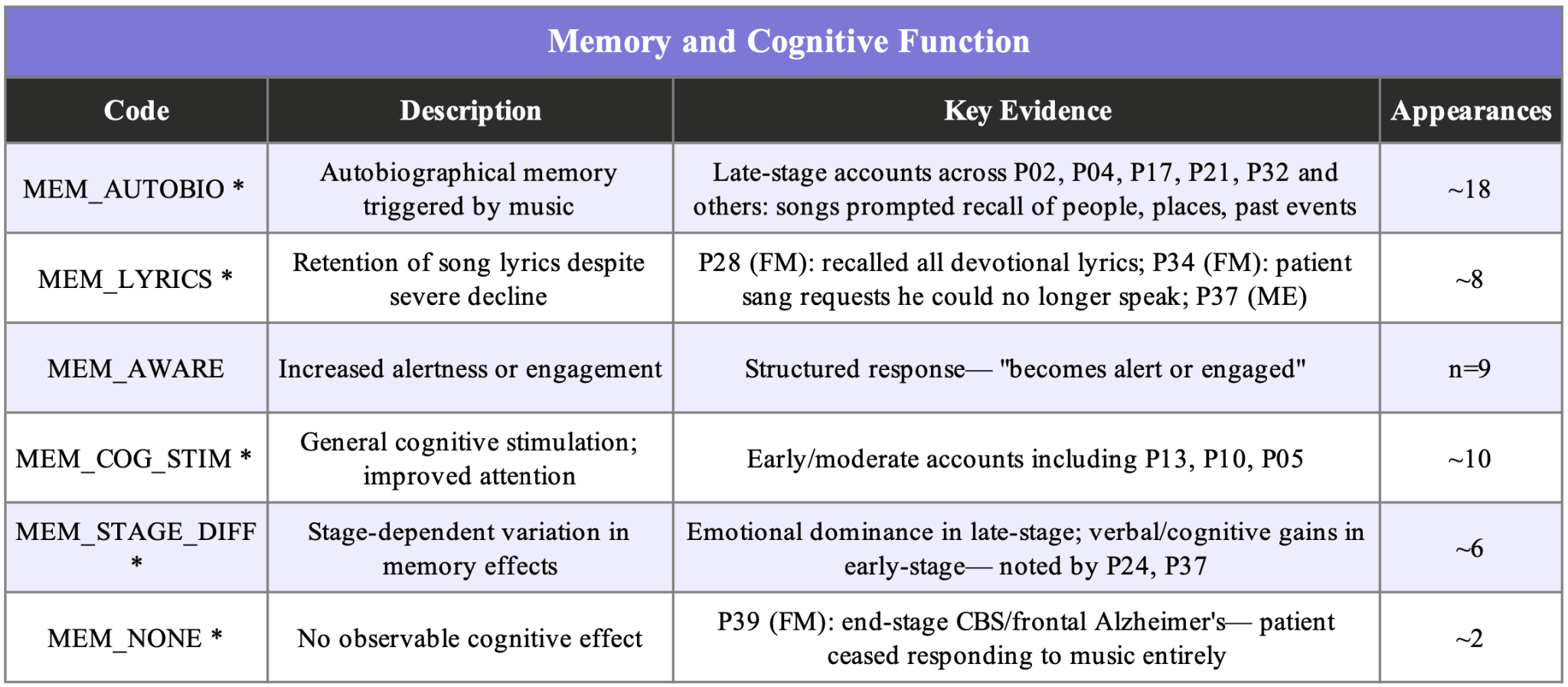
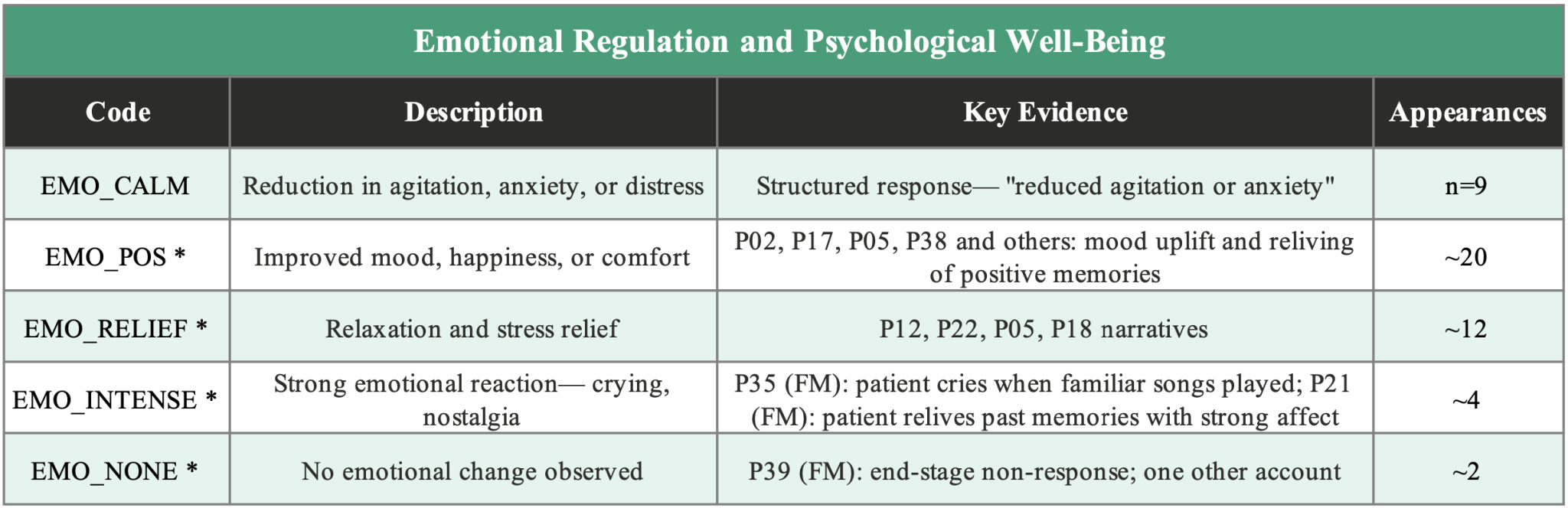
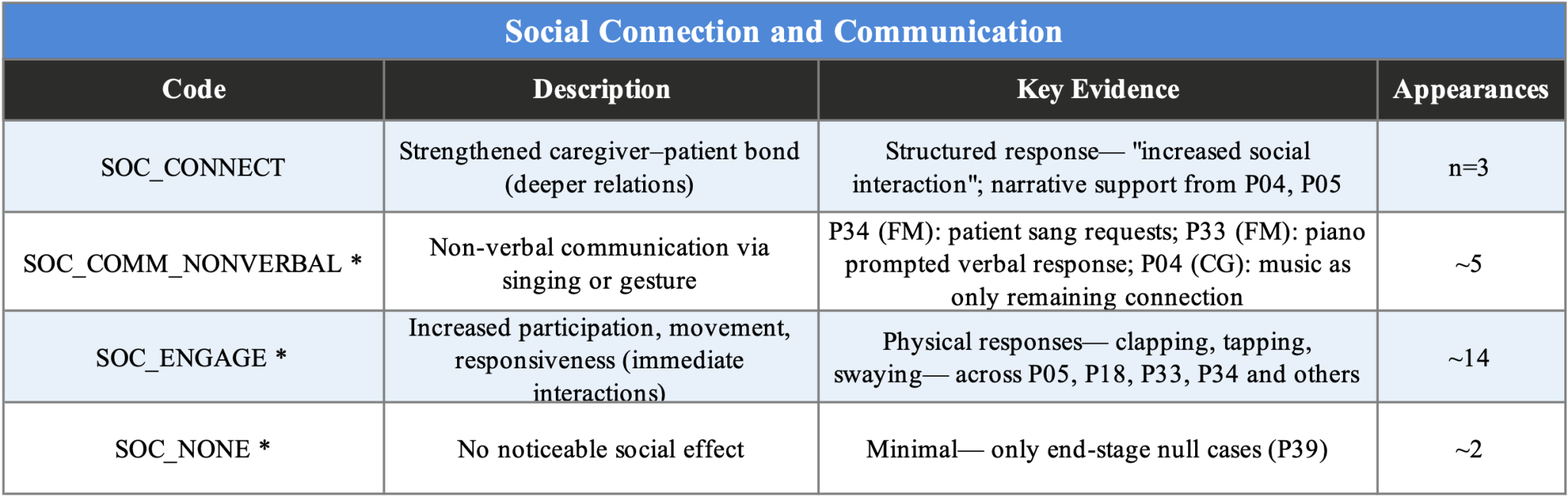
The results below are arranged by research question with corresponding thematic codes noted in parentheses. The percentages stated below mainly use 39 consenting participants as the denominator. However, few structured questions were answered by a subset and in those cases the new denominator is stated. The full frequency count and distribution of thematic code are presented in Appendix B.
Music and Memory Recall Across Dementia Stages
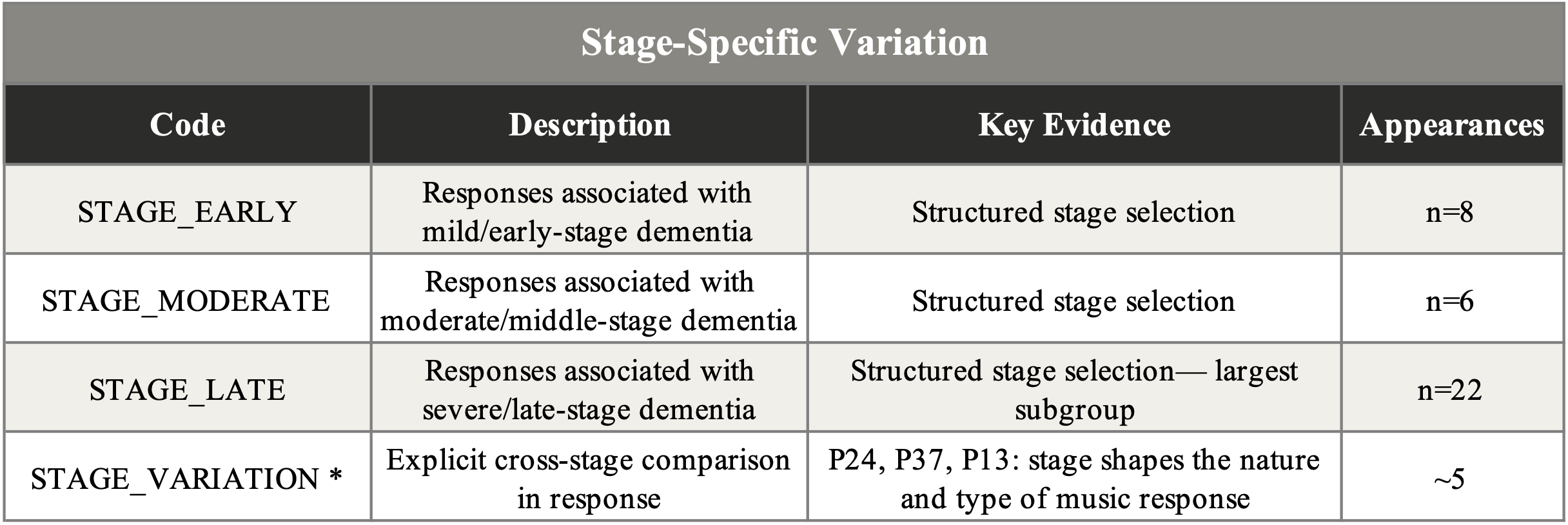
Of 39 participants, 22 (56.4%) reported experiences with severe late-stage patients, 8 (20.5%) with mild early-stage patients, 6 (15.4%) with moderate mid-stage patients, and 3 (7.7%) did not specify stage or reported ‘N/A’. Any stage-related differences in music responsiveness were seen clearly in narrative accounts (MEM_STAGE_DIFF).
In late-stage patients, the common pattern was that familiar music appeared to aid autobiographical recall and lyric retrieval even if verbal communication had otherwise failed (MEM_AUTOBIO, MEM_LYRICS). P28, a family member, described a patient who kept all of the lyrics to devotional hymns until very late in the disease course and was unable to be recognized by family members. P34, also a family member, said the patient communicated requests (such as physical needs) by singing when he could no longer communicate. These accounts hint that musical memory could last relatively long if other memory systems are still relatively intact.
Early and moderate-stage accounts more frequently mentioned broader cognitive gains such as increased alertness and verbal engagement (MEM_COG_STIM, MEM_AWARE). These stage-specific differences are in line with a pattern in which emotional and procedural engagement through music dominates in late stages, while cognitive and verbal benefits are more salient earlier in the disease course.
2 participants reported that music did not give them cognitive response (MEM_NONE). P39, a family member, described a patient with frontal Alzheimer’s and corticobasal syndrome who had stopped responding to music entirely at the end. These null observations help alleviate bias in the overall picture of positive caregiver report.
Music’s Role in Emotional Regulation and Behavioural Management
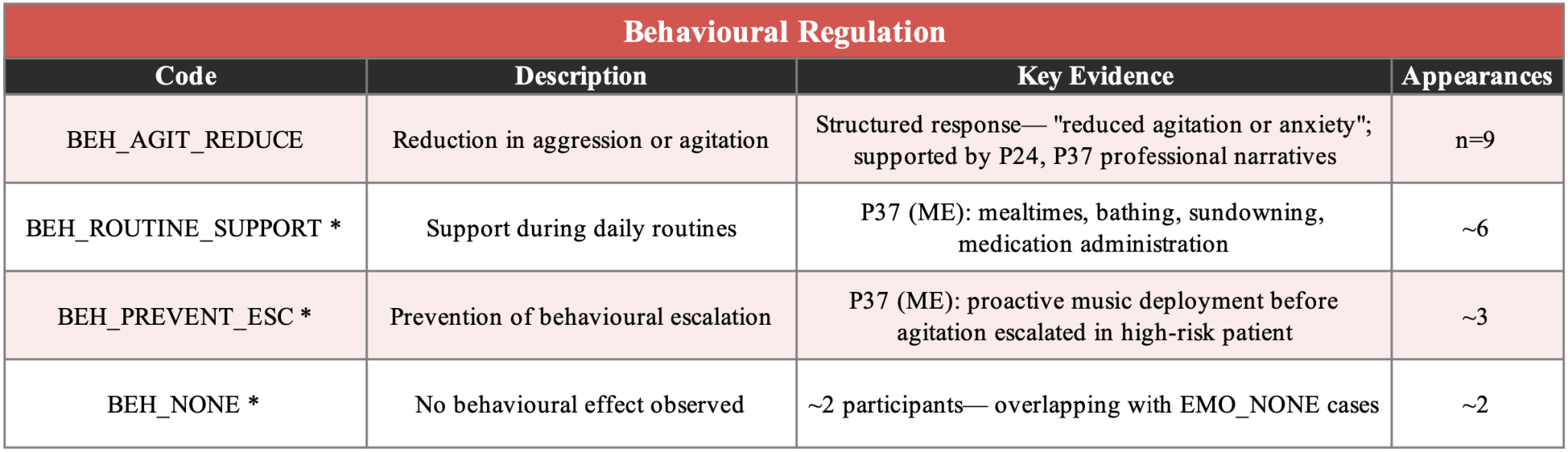
Of 26 respondents to the structured question about perceived long-term effects of music therapy, 9 (34.6%) reported that music reduced agitation or anxiety (EMO_CALM, BEH_AGIT_REDUCE), 9 (34.6%) reported patients becoming alert or engaged (MEM_AWARE, SOC_ENGAGE), and 3 (11.5%) observed increased social interaction (SOC_CONNECT). 3 (11.5%) gave qualitative descriptions of calming or activating effects, and 2 (7.7%) did not observe any effects (EMO_NONE).
Narrative accounts supported these trends. P37, a nurse manager with a specialization in dementia cases, shared that music was effectively used to prevent behavioural escalation. However, in order to be successful, staff had to know each patient’s preferences and how to approach them before their behaviors escalated to the point they were no longer receptive to distractions (BEH_PREVENT_ESC, BEH_AGIT_REDUCE). P24, a medical professional who has over 20 years of dementia unit management experience, agreed with this perspective and even stated that music therapy was more effective than as-needed medication in agitation management. Physical engagement such as clapping, swaying and tapping was also reported by several respondents (SOC_ENGAGE, BEH_ROUTINE_SUPPORT).
Of 26 respondents to the structured question about most effective treatment timings, 6 (23.1%) identified mornings , 6 (23.1%) identified evenings, 4 (15.4%) identified afternoons and 10 (38.5%) reported no particular time as more effective than others. Professionals suggested that timing is related to specific care transitions, and that meals, bathing times, and sundowning periods were the most relevant times when music was most helpful (BEH_ROUTINE_SUPPORT).
Responses to Different Music Genres
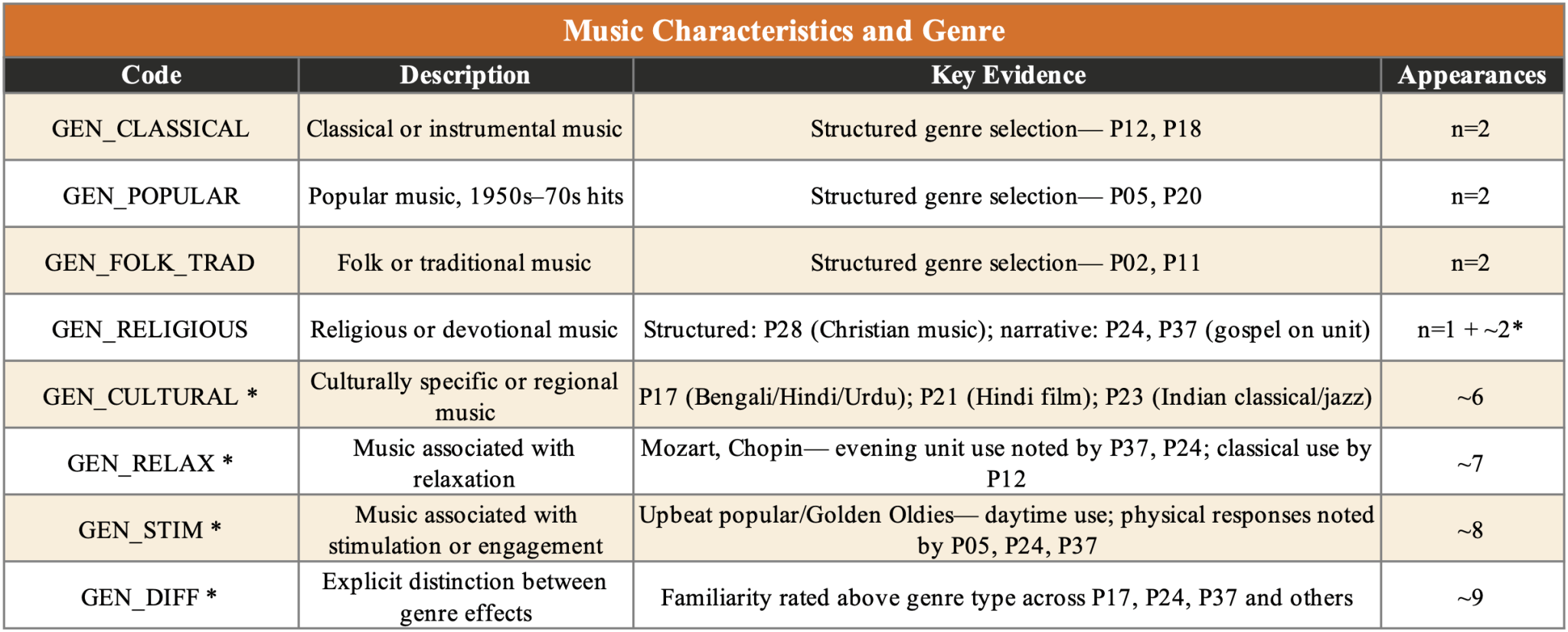
18 participants using music in care responded to this structured question. Music that was ‘Other’ or mixed was the most common type with 9 (50%) reports. This is because it included culturally specific music, religious music, custom playlists, and a variety of mixed music genres. 2 (11.1%) said classical or instrumental music was most effective; 2 (11.1%) said folk music, 2 (11.1%) said popular music from the 1950s–70s, and Christian, world, and Asian music each had 1 (5.6%) respondent each.
Across all 39 respondents, narrative accounts showed classical music to be relaxing and calming (GEN_CLASSICAL, GEN_RELAX), while upbeat popular music (especially songs from patients’ youth) stimulated physical engagement (GEN_POPULAR, GEN_STIM). P37 and P24 both recommended focusing on music that would have been popular during patients’ young adult years, as early-formed memories tend to be most intact (MEM_STAGE_DIFF, GEN_DIFF).
However, genre was not reported to be relevant. Respondents P17, P24, and P37 explicitly stated that personal and cultural familiarity was more important than genre classification (GEN_DIFF). No correlations can be drawn between genre and personal relevance, tempo, and delivery context; the patterns we have seen are representative of caregiver preference and informal observation.
Cultural and Autobiographical Relevance
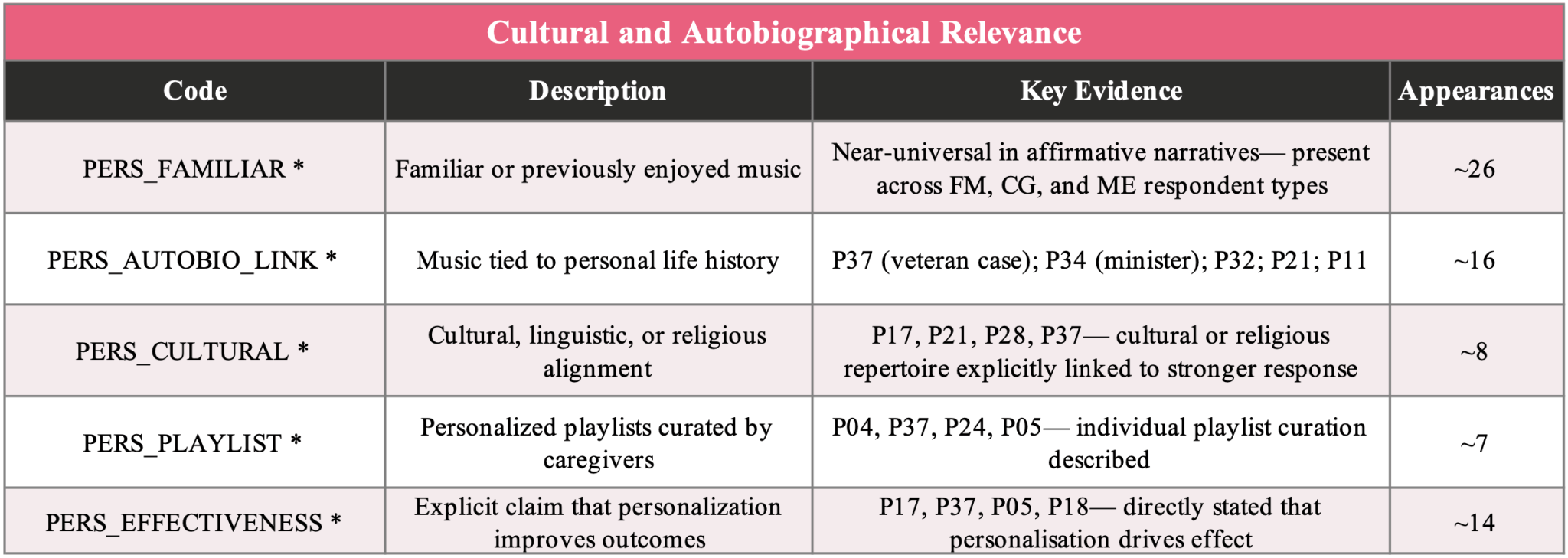
Cultural and autobiographical familiarity was the most consistently coded theme for qualitative narrative responses (PERS_FAMILIAR, PERS_AUTOBIO_LINK, PERS_CULTURAL, PERS_EFFECTIVENESS). All of the different relationship types— family members, professional caregivers, and third parties— agreed that music related to a patient’s early life , cultural background, or religious traditions produced an increased effect on emotional and cognitive responses than other music.
P37 described working with a person with PTSD and Lewy body dementia who had unpredictable combative episodes. Through a conversation with a family member, the respondent prescribed a playlist that had been personal to the patient for decades. A speaker with that music was put in the patient’s room, described as soothing during behavioural escalation. This ultimately contributed to improved staff safety when used proactively (PERS_EFFECTIVENESS, PERS_AUTOBIO_LINK, BEH_PREVENT_ESC).
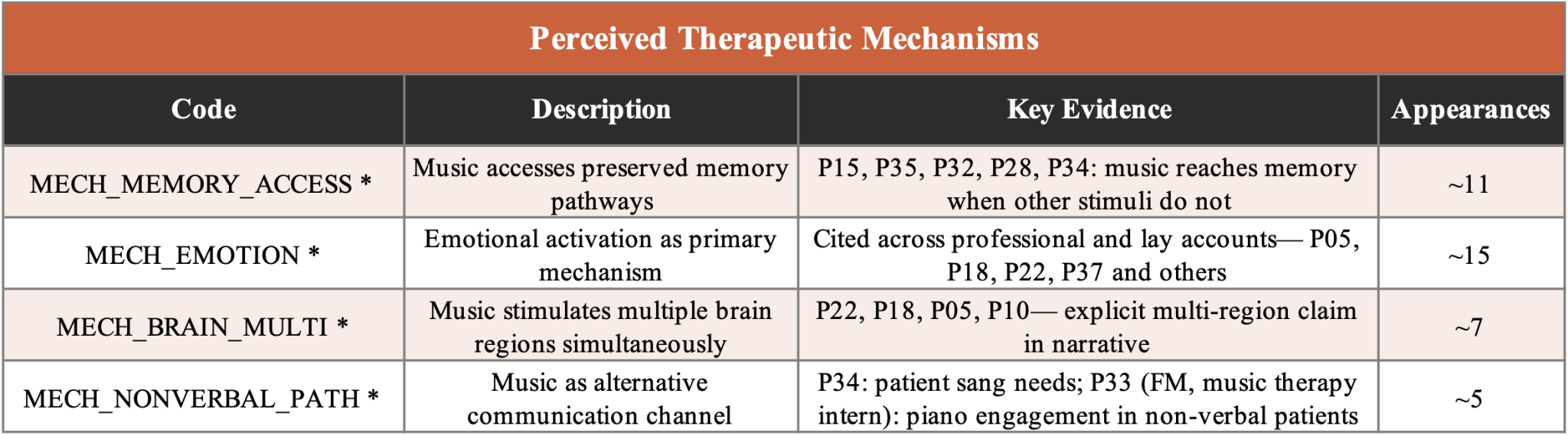
P17, a family member from South Asian cultural contexts, observed that a culturally specific playlist had a meaningful difference in effect as compared to one with generic music, and that selections related to the patient’s linguistic and cultural heritage led to stronger responses (PERS_CULTURAL). P34, a family member from Western cultural contexts, described a patient whose singing voice remained intact late into the disease course. This allowed the patient to communicate needs through song even when later stages of the disease left them non-verbal (MECH_NONVERBAL_PATH, MEM_LYRICS).
Personalised playlists curated by family members or caregivers who knew a patient’s history were reported by P04, P05, P24, and P37 to be the most effective way to implement music therapy (PERS_PLAYLIST). These together showcase the caregivers’ view that personalization in patient playlists to incorporate autobiographically- and culturally- significant music were at the centre of the interventions’ perceived impact.
Caregiver Perceptions and Practical Integration
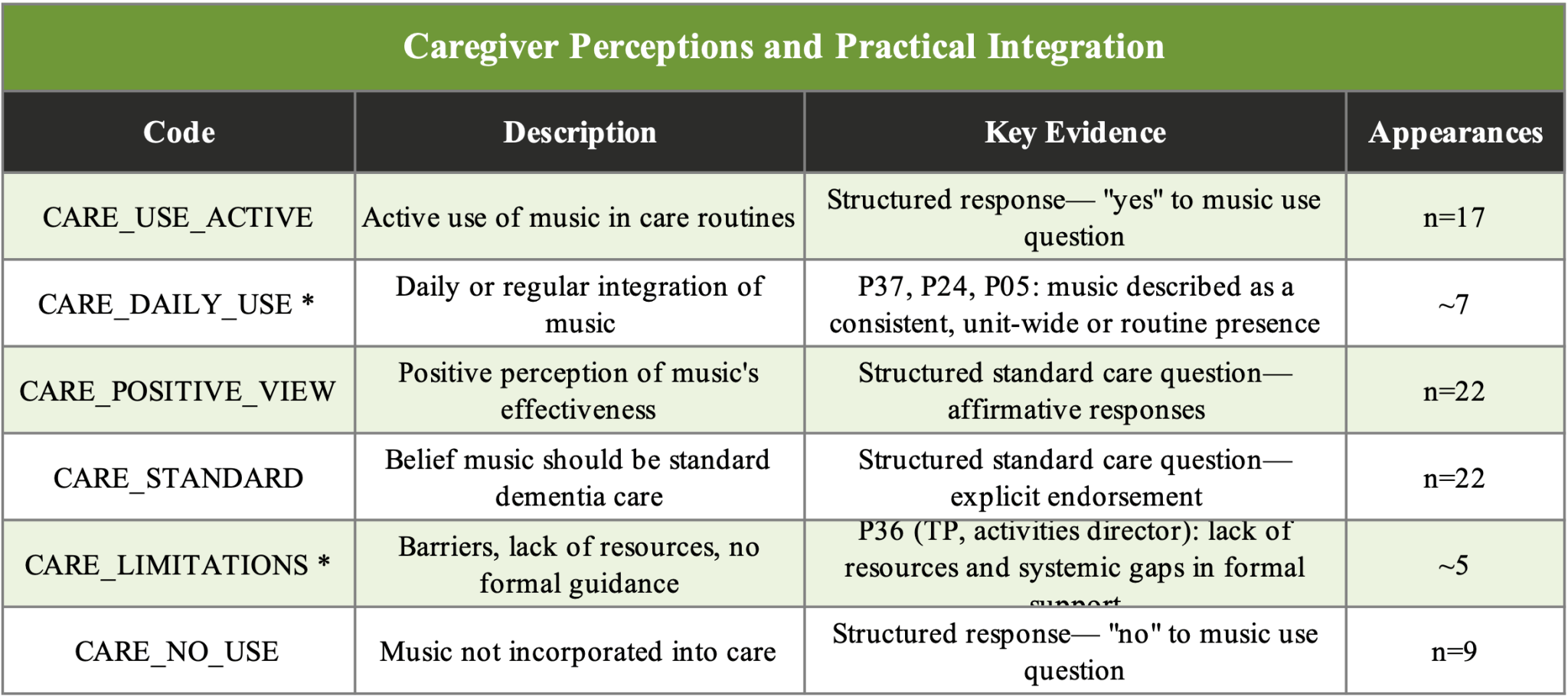
Of 26 respondents to the structured question about use of music in care, 22 (84.6%) used it at least once. Further qualitative responses provided explanations of its cognitive, emotional, and social benefits (CARE_STANDARD, CARE_POSITIVE_VIEW). Music was routinely used in 17 of these 22 cases (CARE_USE_ACTIVE, CARE_DAILY_USE). Medical experts such as P37 and P24 implied that effectiveness was determined by timely, individualised use of music rather than use of generic, background music.
P33, a family member who did a music therapy internship at a care centre, observed patients with severe dementia who could reportedly barely speak or move, become visibly engaged during live piano playing, and caregivers at the centre verified these perceptions to the respondent (SOC_ENGAGE, MECH_NONVERBAL_PATH). P04, a family member, observed that a patient could recall songs from family memories and even harmonize with them, but could not remember names of individuals in their family. This could be an indication that music sustains episodic memory even when semantic memory fails (SOC_CONNECT, MEM_LYRICS).
While reports remained largely positive, gaps in guided expertise and care networks were identified as major barriers to the treatment’s progress (CARE_LIMITATIONS), specifically seen in the qualitative response of P36, a former activities director in residential memory care. Additionally, caregivers’ views on ideal durations, frequencies and selection of interventions remained largely inconsistent, stemming from informal caregiver methods rather than a clinically verified framework.
2 respondents reported no effect was observed (EMO_NONE and BEH_NONE). P39 described a patient who had previously been musically responsive but stopped responding entirely in the late stage of a combination of frontal Alzheimer’s and corticobasal syndrome, which suggests that music responsiveness is not universal for all patients or all stages of disease progression. Several respondents indicated that unfamiliar and overstimulating music might increase agitation and not decrease it, underlining the importance of personalisation. Both qualifications are considered to be important limitations in the overall positive caregiver report.
Discussion
This study has documented caregiver and professional perceptions of music in dementia care, and has provided new insights on how music is related to stage-specific patterns, cultural relevance, and practical use. However, as a qualitative caregiver perception study, these findings cannot establish a causal relationship between music interventions and patient outcomes. They rather represent the opinions of the people who are most involved in everyday dementia care, and need to be interpreted as such.
The caregiver reports in this study are in general consistent with existing evidence that music can be a supportive non-pharmacological component of dementia care. The stage-dependent pattern— in which emotional engagement seems to be more common in late-stage cases and cognitive stimulation is more common in earlier stages— is consistent with the neuroscientific literature that emotionally encoded musical memories may be preserved longer than episodic or declarative memories in Alzheimer’s disease4,6,20,21.
Cultural and autobiographical relevance was the most consistently endorsed factor in caregivers’ accounts of music’s therapeutic effectiveness. This finding is consistent with a growing body of literature that indicates the therapeutic power of music in dementia is not a product of genre alone, but rather deeply personal association over a lifetime22. The personalised playlist accounts in this study (South Asian classical and devotional music to mid-century American country and rock) show that these associations are very diverse and individual. This has important practical implications: music integration in dementia care is likely to depend on a personalised assessment of each patient’s musical history rather than generic genre-based recommendations22.
The application to the daily life of caregivers is based on caregiver responses that music is most effective when it is integrated into daily routines, particularly during transition times such as early morning and evening. The use of music as a non-verbal communication channel by many respondents is consistent with theoretical ideas about music being used to maintain social connection when linguistic abilities are lost18. However, this study is unable to give specific values in terms of music duration, frequency, or volume, since these were not measured in detail, and evidence-based dosage guidance is a subject of future research23,24.
Importantly, this study also observed a minority of null and negative results in which music did not have an impact, and in which familiar or overly stimulating music increased agitation, as seen in Sakamoto et al. (2013) and Lin et al. (2011)25,26. These findings highlight that music interventions are not always successful, and that personalisation and timing are of critical importance to good results. The absence of negative results in much of the literature may partly reflect publication bias, and having them acknowledged here gives a more complete picture.
The hypothesis that caregivers would report stronger perceived effects for culturally- and autobiographically-specific music was generally supported by the data. Personal and cultural familiarity was the primary factor motivating perceived effectiveness, and late-stage cases were most likely to be emotional rather than cognitive in nature.
Limitations
To begin with, this study is based on caregivers’ perspectives which are subjective and may be affected by various biases including recall bias, social desirability bias due to the researchers’ emotional involvement with their patients and preconceived expectations about the effect of music.
Another limitation of this research is that there was no data directly obtained from patients, nor was any standardized cognitive assessment or behavioral measures used. This means that it is impossible to calculate the effect of any variables, reducing validity of the research.
Moreover, with 39 participants, the sample size is small and the findings lack external validity. The study is also ethnocentric as it mainly collects perceptions of Western and South Asian caregivers, and therefore is not generalisable to other cultural groups.
Another possible bias is attrition bias, as only 26 out of 39 participants who gave consent actually completed the structured survey questions and provided answers which could be analyzed, while the remaining 13 only provided open-ended responses or did not provide any coherent answer at all.
Finally, the thematic coding of the answers was conducted by a single researcher without any inter-rater reliability measure. Although an AI-assisted review tool organized codes and decreased interpretive inconsistency, the lack of a second researcher and an agreement measure meant that the thematic analysis cannot be confirmed statistically.
Conclusion
This study looked at the perceptions of 39 caregivers and professionals about music’s role in dementia care, and found that familiar, culturally meaningful music was perceived to be helpful for emotional regulation, memory recall, and social engagement across disease stages. It provides evidence for stage-specific patterns on a cultural and autobiographical level, and for the practical relevance of caregiver-led music integration. Personalised playlists and their incorporation into daily routine were found to be the key factors in attaining the greatest perceived benefit.
Music offers promise as an affordable and accessible non-pharmacological tool in dementia care, particularly in the context of maintaining emotional connection and non-verbal communication in its advanced stages. Even when other cognitive and linguistic skills have significantly declined, music is perceived to keep people emotionally present, able to communicate with others, and able to preserve their identity— and is therefore a personal therapeutic tool. As the study was qualitative and self-reported, however, these conclusions are preliminary, and the absence of standardized measurement limits the strength of claims that can be made.
The findings also show a clear gap: caregivers were passionate about music’s potential but found there was a lack of formal guidance, professional training, and structured procedures to help implement it effectively. Future research with caregiver insight, longitudinal studies, validated outcome measurement, and cross-cultural samples will be critical to move from perception to evidence-based practice. Music in dementia care will only be genuinely successful if there is sustained research and if it is integrated into the care structures in place for people living with the condition.
Appendix A: Survey
The following questions were administered to all participants via online survey. Questions marked with an asterisk (*) were mandatory.
1. Consent Confirmation*
Do you consent to participate in this study? Responses will be anonymized and used solely for academic research purposes.
2. Name and Email
3. What is your relationship with the patient?* (family member, professional caregiver, medical specialist, music therapist, researcher, other)
4. Based on the descriptions below, how severe is the patient’s dementia?*
Mild (Early Stage): Forgetfulness of recent events or conversations; difficulty with complex tasks; slight personality changes; Moderate (Middle Stage): Increased memory loss and confusion; difficulty recognizing family and friends; assistance needed with daily activities; Severe (Late Stage): Significant memory loss; inability to communicate effectively; loss of ability to perform daily tasks; may require full-time care.
5. How long have you been involved in the care of or research on dementia patients?*
6. In your professional or personal opinion, how does music affect the cognitive function of dementia patients?
7. What mechanisms, if any, do you believe are involved in music’s effect on dementia patients?
8. Can you share any studies or clinical experiences where music therapy was used for dementia patients? What were the outcomes?
9. Have you used music as part of the care routine for the dementia patient? If yes, what types of music or songs do you play? (Select all that apply: Classical, Pop, Folk, Christian/Religious, World, Music of Asia, Other) *
10. If you selected “Other” above, please specify the genre.
11. Have you heard of Music Therapy as a formal treatment method for dementia?*
12. In your opinion, what is the most important factor in treating dementia?
13. Do you notice any changes in behavior when music is played?*
14. Are there any specific times of day when music seems to be more effective?
15. Have you observed any long-term effects of music on the dementia patient’s well-being?
16. Do you believe that music should be a standard part of dementia care routines? Explain.
17. Would you be interested in participating in further research or discussions on this topic?
18. Please share any additional comments or insights regarding the use of music in dementia care.
Appendix B: Thematic Coding Framework and Results
Survey responses were analyzed using thematic coding to identify recurring patterns, meanings, and perceptions relating to the use of music in dementia care. Responses were coded inductively and deductively; initial codes were based on the research questions and hypothesis and a subsequent code was derived from the narrative of participants. The codes were further subdivided into more general thematic categories that we believed would be more relevant to the study goals. The framework involved nine major thematic domains and they were defined with sub-codes and frequency counts as described below.
AI-assisted qualitative analysis tools were used to improve the organization and structure of thematic codes. Our coding decisions, thematic interpretation, and final analysis conclusions were independently reviewed, and the researcher gave the final decision on coding. Coding was done by a single researcher, and no formal intercoder reliability metric was calculated, which was a limitation of the analysis.
Counts marked with an asterisk (*) were derived from open narrative responses and are therefore approximate. All other counts reflect structured survey responses. Codes appearing in both structured and narrative responses are noted accordingly.
Note on denominator: 39 participants consented to the study. Of these, 26 answered the structured closed-ended questions; the remaining 13 provided narrative responses only. Structured counts are out of 26; narrative-coded counts span all 39 where applicable.
References
- GBD 2019 Dementia Forecasting Collaborators. Estimation of the global prevalence of dementia in 2019 and forecasted prevalence in 2050: an analysis for the Global Burden of Disease Study 2019. The Lancet Public Health. Vol. 7, No. 2, pp. e105–e125, 2022, https://doi.org/10.1016/S2468-2667(21)00249-8. [↩]
- M. Alshahrani, S. Sabatini, D. Mohan, J. Brain, E. Pakpahan, E. Y. H. Tang, L. Robinson, M. Siervo, A. Naheed, B. C. M. Stephan. Dementia risk prediction modelling in low- and middle-income countries: current state of evidence. Frontiers in Epidemiology. Vol. 4, pg. 1397754, 2024, https://doi.org/10.3389/fepid.2024.1397754. [↩]
- L. Yashaeva, M. Montoya, J. Joshi, A. Stephens, O. McNulty, G. Kaur. Advancing Care in Alzheimer’s Disease: Current Treatments and Their Impact on Quality of Life. Cureus. Vol. 17(8), e90527, 2025, https://doi.org/10.7759/cureus.90527. [↩]
- J. H. Jacobsen, J. Stelzer, T. H. Fritz, G. Chételat, R. La Joie, R. Turner. Why musical memory can be preserved in advanced Alzheimer’s disease. Brain. Vol. 138, pg. 2438–2450, 2015, https://doi.org/10.1093/brain/awv135. [↩] [↩] [↩] [↩]
- S. Nikkhah Bahrami, S. Momtazmanesh, N. Rezaei. Music therapy for Alzheimer’s disease management: a narrative review. Egyptian Journal of Neurology, Psychiatry and Neurosurgery. Vol. 60, pg. 66, 2024, https://doi.org/10.1186/s41983-024-00836-6. [↩] [↩] [↩] [↩]
- C. F. Slattery, J. L. Agustus, R. W. Paterson, O. McCallion, A. J. M. Foulkes, K. Macpherson, et al. The functional neuroanatomy of musical memory in Alzheimer’s disease. Cortex. Vol. 115, pg. 357–370, 2019, https://doi.org/10.1016/j.cortex.2019.02.003. [↩] [↩]
- N. R. Simmons-Stern, A. E. Budson, B. A. Ally. Music as a memory enhancer in patients with Alzheimer’s disease. Neuropsychologia. Vol. 48, pg. 3164–3167, 2010, https://doi.org/10.1016/j.neuropsychologia.2010.04.033. [↩]
- A. Raglio, D. Bellandi, P. Baiardi, M. Gianotti, M. C. Ubezio, E. Granieri. Listening to music and active music therapy in behavioral disturbances in dementia: a crossover study. Journal of the American Geriatrics Society. Vol. 61, pg. 645–647, 2013, https://doi.org/10.1111/jgs.12187. [↩]
- A. M. Matziorinis, S. Koelsch. The promise of music therapy for Alzheimer’s disease: a review. Annals of the New York Academy of Sciences. Vol. 1516, pg. 11–17, 2022, https://doi.org/10.1111/nyas.14864. [↩] [↩]
- T. H. Lin, Y. C. Liao, K. W. Tam, L. Chan, T. H. Hsu. Effects of music therapy on cognition, quality of life, and neuropsychiatric symptoms of patients with dementia: a systematic review and meta-analysis of randomized controlled trials. Psychiatry Research. Vol. 329, pg. 115498, 2023, https://doi.org/10.1016/j.psychres.2023.115498. [↩] [↩]
- B. Ting, D. T. L. Chen, W. T. Hsu, C. S. Liang, I. A. Malau, W. C. Li, S. L. Lee, L. Jingling, K. P. Su. Does music intervention improve anxiety in dementia patients? a systematic review and meta-analysis of randomized controlled trials. Journal of Clinical Medicine. Vol. 12, pg. 5497, 2023, https://doi.org/10.3390/jcm12175497. [↩]
- M. T. Zaatar, K. Alhakim, M. Enayeh, R. Tamer. The transformative power of music: insights into neuroplasticity, health, and disease. Brain, Behavior, and Immunity – Health. Vol. 35, pg. 100716, 2023, https://doi.org/10.1016/j.bbih.2023.100716. [↩]
- L. Ferreri, E. Mas-Herrero, R. J. Zatorre, P. Ripollés, A. Gomez-Andres, H. Alicart, G. Olivé, J. Marco-Pallarés, R. M. Antonijoan, M. Valle, J. Riba, A. Rodriguez-Fornells. Dopamine modulates the reward experiences elicited by music. Proceedings of the National Academy of Sciences of the United States of America. Vol. 116, pg. 3793–3798, 2019, https://doi.org/10.1073/pnas.1811878116. [↩] [↩]
- H. Chertkow, D. Bub. Semantic memory loss in dementia of Alzheimer’s type: what do various measures measure? Brain. Vol. 113, pg. 397–417, 1990, https://doi.org/10.1093/brain/113.2.397. [↩]
- S. L. Rogers, R. B. Friedman. The underlying mechanisms of semantic memory loss in Alzheimer’s disease and semantic dementia. Neuropsychologia. Vol. 46, pg. 12–21, 2008, https://doi.org/10.1016/j.neuropsychologia.2007.08.010. [↩]
- O. Sacks. Musicophilia: Tales of music and the brain. Alfred A. Knopf, 2007. [↩]
- C. Tomaino. Meeting the complex needs of individuals with dementia through music therapy. Music and Medicine. Vol. 5, 2013, https://doi.org/10.1177/1943862113505775. [↩]
- B. Waters, L. Sousa, M. Orrell, O. McDermott. Analysing the use of music to facilitate social interaction in care home residents with dementia: narrative synthesis systematic review. Dementia. Vol. 21, pg. 2072–2094, 2022, https://doi.org/10.1177/14713012221100625. [↩] [↩]
- J. T. van der Steen, M. C. van Soest-Poortvliet, J. C. van der Wouden, M. S. Bruinsma, R. J. Scholten, A. C. Vink. Music-based therapeutic interventions for people with dementia. Cochrane Database of Systematic Reviews. Vol. 5, pg. CD003477, 2017, https://doi.org/10.1002/14651858.CD003477.pub3. [↩]
- M. Bleibel, A. El Cheikh, N. S. Sadier, L. Abou-Abbas. The effect of music therapy on cognitive functions in patients with Alzheimer’s disease: a systematic review of randomized controlled trials. Alzheimer’s Research & Therapy. Vol. 15, pg. 65, 2023, https://doi.org/10.1186/s13195-023-01214-9. [↩]
- J. C. Barlett, A. R. Halpern, W. J. Dowling. Recognition of familiar and unfamiliar melodies in normal aging and Alzheimer’s disease. Memory & Cognition. Vol. 23, pg. 531–546, 1995, https://doi.org/10.3758/bf03197255. [↩]
- N. Paraskevopoulos. Personalized music playlists and headphones in people with dementia: a literature review. Advances in Experimental Medicine and Biology. Vol. 1425, pg. 665–666, 2023, https://doi.org/10.1007/978-3-031-31986-0_65. [↩] [↩]
- J. H. Ford II, D. Dodds, J. Hyland, M. Potteiger. Evaluating the impact of Music & Memory’s personalized music and tablet engagement program in Wisconsin assisted living communities: pilot study. JMIR Aging. Vol. 2, pg. e11599, 2019, https://doi.org/10.2196/11599. [↩]
- J. Kwak, J. H. Ha, K. Britt. Statewide implementation of the Music & Memory program: facilitators, barriers, and lessons learned. Innovation in Aging. Vol. 4, pg. 59–60, 2020, https://doi.org/10.1093/geroni/igaa057.194. [↩]
- M. Sakamoto, H. Ando, A. Tsutou. Comparing the effects of different individualized music interventions for elderly individuals with severe dementia. International Psychogeriatrics. Vol. 25, pg. 775–784, 2013, https://doi.org/10.1017/S1041610212002256. [↩]
- Y. Lin, H. Chu, C. Y. Yang, C. H. Chen, S. G. Chen, H. J. Chang, C. J. Hsieh, K. R. Chou. Effectiveness of group music intervention against agitated behavior in elderly persons with dementia. International Journal of Geriatric Psychiatry. Vol. 26, pg. 670–678, 2011, https://doi.org/10.1002/gps.2580. [↩]