
Abstract
Background: Type 1 diabetes is a life-threatening, autoimmune disease commonly found in pediatric patients. Although schools are the prominent environments in which symptoms are exhibited, studies are predominantly about dealing with an established condition, not the discovery of this disease. This study fills an important research gap by examining the familiarity, knowledge, and training of middle schools, as well as high schools, in Southern California about T1D.
Methods: A quantitative cross-sectional survey was conducted among practicing school nurses in Southern California using Google Forms. Data were collected through 5-point Likert scales for demographics and self-reported levels of clinical knowledge, preparedness, recency of training, and particular reference practices pertaining to early recognition of type 1 diabetes.
Results: Thirty-six school nurses representing twenty districts took part in this study. Most of the respondents had a moderate to high level of comfort and knowledge with regard to recognizing warning signs. Respondents with more recent training reported higher levels of competency. Respondents reporting higher comfort also reported a greater number of recommendations. Nevertheless, despite their general level of comfort, many of the respondents reported their own T1D training to be minimal or outdated. The design of this study cannot prove causation as all of the data from respondents was self-reported.
Conclusions: The findings indicate that, although the school nurses self-reported they have the competency to recognize the early warning signs of T1D, the degree to which they are prepared to do so appears related to educational background, in other words, nurses with more recent training generally reported higher levels of competence.
Keywords: Type 1 diabetes, school nurses, early warning signs, training, comfortable, knowledgeable.
Introduction
According to the American Diabetes Association,1 there are approximately 304,000 children, teenagers, and adolescents in the United States that have type 1 diabetes (T1D). Type 1 diabetes is an autoimmune disease in which the body’s immune system attacks the insulin-producing beta cells in the pancreas. In type 1 diabetes, the pancreas no longer produces sufficient insulin that is necessary to move the sugar into the cells. About 1/300 people under the age of eighteen are diagnosed with this disease and there are approximately 18,000 new diagnoses of the disease in the United States every year. Because T1D often first appears in childhood, schools are an important setting for noticing early symptoms.The aim of this study is to assess the level of comfort and training of Southern California middle and high school nurses to recognize early warning signs and identify that the student is developing type 1 diabetes. The study’s results were tied to these few main research questions:
How is a nurses’ preparedness connected to career recommendation? How are nurses’ comfort levels connected to their career recommendation? Is there a connection between higher knowledge and more career recommendations? Is a higher likelihood of recognizing T1D connected to a higher number of career recommendations? How is training recency connected to career recommendation? Is comfort level linked to training recency? How is knowledge related to comfort levels?
Rationale for the Present Study
As school nurses interact with school age kids quite often, they play a crucial role in the recognizing of early warning signs and undiagnosed T1D because children spend much of their day at school, where early symptoms may first appear. If untreated, these children may develop ketoacidosis which can lead to hospitalization or death if not treated promptly. Previous research has primarily supported how school nurses support students already diagnosed with type 1 diabetes2 as well as the fact that school nurses’ have the knowledge and training to assist and help students manage their already diagnosed with type 1 diabetes3,4,5. Yet, far few studies have focused on nurse’s training or ability with recognizing early warning signs and identifying that the student has type 1 diabetes. Specifically, we are unsure about the comfort of school nurses as it pertains to early recognition and the current knowledge they have about the warning signs that might lead to early recognition. Adding to that, we don’t know how well prepared school nurses are from the training they have received to recognize these early warning signs and recommend additional evaluation. The convergence of systemic barriers, documented training and knowledge gaps, discrepancies between perceived and actual knowledge, and the demonstrated influence of training recency collectively motivated the design of the present study. These patterns suggest potential vulnerabilities in school nurses’ preparedness to recognize early warning signs of T1D. According to this perspective, the study investigated school nurses’ capabilities in recognizing early manifestations of T1D in Southern California. Notably, most of the existing literature has involved the management of the disease rather than the early recognition of the signs of T1D, and the potential study should, thus, contribute to the extension of the current literature to an important, yet relatively uncharted field. The study outcome can, hence, serve to guide other research, the learning institutions at varying levels, and the training programs designed to improve the early diagnosis of T1D.
Literature Review and Related Works
Existing literature on school nurses and type 1 diabetes (T1D) has largely focused on the care and support of students who have already been diagnosed, whereas there has been limited attention to early detection and recognition of warning signs. Patterns in the literature reveal key themes around management challenges, nurse competencies, training gaps, and the impact of school nurse interventions.
Management and Support of Students Diagnosed with Type 1 Diabetes
One concept that consistently appears in the literature is the systemic and institutional challenges faced by students already diagnosed with T1D. Studies have reported insufficient numbers of school nurses, limited availability of diabetes-related medical supplies, and constraints on students’ ability to self-manage their condition during school hours2,6,3. These limitations make it difficult for students to conduct essential diabetes-related tasks, such as fingerstick blood glucose tests and ketone measurements, both in classrooms and the nurses’ office. Inadequate procedures for testing blood glucose, urine, or ketone levels in school settings can increase the risk of hypoglycemia or hyperglycemia among children with diabetes2,7,8,3,4.
In addition, students may experience stigma or reduced academic support due to limited understanding of diabetes in educational environments, creating barriers to fostering a supportive learning environment2,3,9,10,11 Collectively, these studies highlight that systemic challenges play a critical role in the effectiveness of diabetes care delivery in schools.
Despite these obstacles, school nurses are instrumental in supporting students with T1D by providing both safe diabetes care and emotional support. Nurses act as critical facilitators in managing the child’s care at school, helping ensure safety and promoting emotional well-being8,12,13.
Research demonstrates that when adequate resources are available, children experience positive outcomes, reinforcing the importance of functional diabetes care frameworks in school settings10,2,14,13 specifically emphasizes the benefits of collaborative approaches between school nurses and local health systems, showing that empowering nurses through structured support networks improves the quality of diabetes management in schools.
Knowledge and Training Gaps Among School Nurses
In addition to systemic issues, knowledge and training gaps influence the capacity of school nurses to support students with T1D. While nurses generally report confidence in routine blood glucose monitoring, they show lower confidence and competence in performing urine ketone tests and recognizing less obvious symptoms3,4.These findings suggest that nurse competencies may vary depending on task complexity and prior training.
Studies highlight a critical need for ongoing T1D-related education, particularly regarding contemporary treatment methods and technology usage8,4,15,16,17
Recency of training is a key predictor of diabetes-specific knowledge: nurses who received training within the last six months demonstrate higher levels of competence compared to those trained over a year prior4,18,19 conducted a mixed-methods systematic review, finding that while school nurses generally demonstrate baseline competency, significant variability exists, especially in integrating technological diabetes devices into care plans.
Discrepancies Between Perceived and Actual Knowledge
A recurring theme is the discrepancy between perceived and actual knowledge, which has critical implications for clinical judgment and safety7 observed a negative relationship between nurses’ perceived confidence and their actual knowledge, a trend also noted in earlier studies of healthcare professionals20,19. Overconfidence without corresponding competence may delay recognition of early T1D signs, such as polydipsia, polyuria, unexplained weight loss, and fatigue. Aligning perceived confidence with actual competencies is therefore crucial for effective early identification and safe care provision in schools.
Diabetes Management Technology and School Nurse Impact
Recent literature emphasizes the growing role of technology in diabetes management19,21. Cangelosi et al.16 conducted a systematic review demonstrating that school nurses who are proficient in using insulin pumps, continuous glucose monitors (CGMs), and other devices significantly improve glycemic outcomes among students. Similarly, Moffitt (2025)15 found that device knowledge and confidence among nurses directly correlate with timely intervention and effective care planning. These findings underline the need for training programs that integrate both clinical and technological competencies.
Limited Research on Early Recognition of Type 1 Diabetes in School Settings
Although there is substantial research on diabetes management for diagnosed students, gaps remain in early symptom recognition. Few studies investigate whether school nurses are equipped to identify initial T1D signs, such as increased thirst, frequent urination, unexpected weight loss, and abnormal fatigue9.
Much of the existing literature focuses on supporting students after diagnosis rather than examining school nurses’ ability to recognize early symptoms that may lead to diagnosis, which is reflected in studies focusing on school-based diabetes management, nurse experiences, and support systems for students already diagnosed with T1D6,17,13,22,19.
Existing research has primarily focused on hospital or clinical settings rather than schools, leaving a gap in understanding the early recognition capacity of school nurses23,24 also emphasizes that nurse-to-student ratios and self-efficacy affect the ability to monitor and support early detection, suggesting that structural and educational interventions are necessary.
Viklund and Wikblad (2009)25 explored teenagers’ perspectives, highlighting that adolescents’ ability to self-manage T1D is influenced by the quality of school nurse support and guidance. Together with Uhm and Kim (2025) and Hastings (2026),18,14 these studies suggest that empowering school nurses through education, structured collaboration, and competency development can improve both early recognition and ongoing management of T1D in school settings.
Methods
Sample
The research question of this study was “How comfortable are Southern California Middle and High school nurses with recognizing early warning signs and identifying that the student is developing Type 1 Diabetes?”. To answer this question, surveys were sent out to nurses across Southern California.
Recruitment
The emails of the school nurses were obtained from their respective school websites, approximately 120 school nurses received the email and only about 36 responded to the survey. To be invited to participate in the study, respondents had to be practicing school nurses in middle and high schools, which means school nurses in colleges, preschools, or elementary schools were excluded as well as nurses that work in hospitals or clinics. The interface used for the survey was google forms. The relevance of the data collected improved as the participants were all licensed nurses with experience in the field of nursing and medicine for minors (students).
Data Analysis
Survey responses were analyzed using descriptive statistics only. For Likert-scale items (1–5), including knowledge scores and comfort levels, average scores were calculated for each question within each group. The average number of career recommendations was also calculated by group for the relevant survey item.Categorical variables (e.g., training recency, preparedness level) were summarized using frequencies and percentages. Missing responses were excluded on a per-question basis (i.e., analyses were conducted using available data for each item). No inferential statistical analyses were conducted.
Ethical Considerations
The participants were contacted by email and were given an explanation of the study’s purpose, procedures, time commitment, risks and benefits, and confidentiality protections. To ensure consent, all participants were required to print their names before continuing on to fill out the survey. This survey was completely voluntary and had possible self-selection bias with the responses. All personally identified information was kept confidential. After the publication of this survey, the online version of the personal information of the participants was deleted. This study was reviewed and approved by a human-subjects high-school IRB board following the federal guidelines. All materials were reviewed and approved prior to the conduction of this study.
Measures
Survey items were grouped into the following constructs: training and training recency, recognition, likelihood of diagnosis, knowledge, comfort, preparedness, and perceived importance.
Most items were measured using 5-point Likert scales, with higher values indicating greater levels of the construct (e.g., higher knowledge, comfort, or likelihood). For each Likert-scale item, responses ranged from 1 to 5 with anchors appropriate to the question (e.g., “not at all” to “very,” or “low likelihood” to “high likelihood”).
Training and Training Recency
Participants reported whether they had received formal training on recognizing early signs of undiagnosed Type 1 Diabetes (e.g., within the past 2 years, prior to 2023, never, or unsure). Additional items assessed perceived adequacy of training and resources.
Recognition
Recognition was assessed using items asking whether participants had ever identified or referred a student for possible undiagnosed Type 1 Diabetes (yes/no/unsure).
Likelihood of Diagnosis
Items measured how likely participants were to recommend further evaluation when students presented with symptoms (e.g., excessive thirst, weight loss), as well as how frequently they considered Type 1 Diabetes in relevant cases.
Knowledge, Comfort, Preparedness, and Importance
These constructs were each assessed using single-item Likert measures evaluating self-reported knowledge of early warning signs, comfort in recognizing symptoms, preparedness from prior training, and perceived importance of recognizing undiagnosed Type 1 Diabetes.
Open-Ended Responses
The survey also included open-ended questions asking participants to describe their experiences recommending evaluation, sources of knowledge, and resources that would improve their confidence or effectiveness in identifying potential cases.
Some of the questions in the survey involved demographics such as: the district they work in, the number of years they had been working as a school nurse, the number of students that attend their school and the number of students they interacted with on a daily basis. Other questions regarded their comfort with and their knowledge of warning signs of T1D, for example: their comfort level as it pertains to the recognition of the early warning signs of T1D, their knowledgeable with the warning signs, and if they believe their healthcare training has prepared them well for recognizing undiagnosed T1D. For each of these abstract topic of level of comfort, knowledge and preparedness, a scale from 1-5 was used, with five being “very” and one being “not at all”. These terms were also defined as comfortable would be feeling confident enough to undoubtedly recognize early warning signs, knowledgeable would be able to recognize the main four early warning signs to be aware of (frequent urination, excessive thirst, unexplained exhaustion, and unexplained weight loss), and preparedness would be whether or not they learned about the warning signs of T1D and what to look out for through different titles like Registered Nurse(RN) and Bachelor of Science in Nursing (BSN).
Other questions involved the kind of symptoms that may be a sign of diabetes, some of which included questions like: If a student came in presenting signs such as (excessive thirst, unexplained weight loss, abdominal pain and frequent urination) what is the likelihood you would recommend additional evaluation for students with undiagnosed type 1 diabetes, how many times in their career have they recommended additional evaluation due to them suspecting undiagnosed T1D, and how often they consider T1D when a student present general symptoms. To further evaluate their knowledge of the disease, the survey included questions about what other resources would expand their knowledge or reinforce it. Some of which we question along the lines of: What resources or training would increase your confidence in recognizing early signs of type 1 diabetes. If you are already confident, what resources would you recommend or would be beneficial to you, and is there anything else you’d like to share about recognizing or managing undiagnosed type 1 diabetes in your school setting. The data was then analyzed for common trends.
Results
General Demographic Information About Participants
The survey was filled out by thirty six school nurses, in twenty school districts across Southern California. On average, the participants interact with about thirty students per day. On average, the participants also have been working as school nurses for around eleven years, with some working as many as 23, 24, and 28, while others only 1, 2 or 4 years.The participants on average worked at schools with approximately 2800 students. There are about four or five participants who cover multiple sites (schools) or entire districts, and there are about 600, 1800 or 3800 students attending all of the schools they cover.
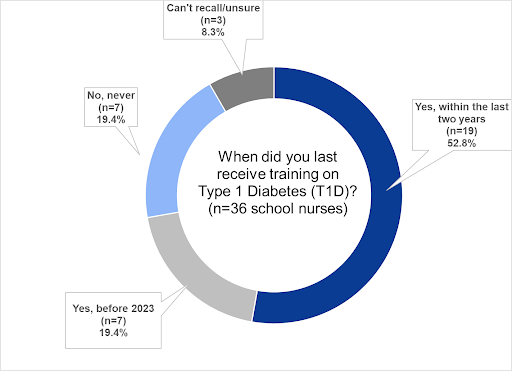
As can be seen from Figure 1, when asked if they have received any specific/formal training on recognizing the early warning signs of undiagnosed type 1 diabetes, fifty-three percent of school nurses said they had within the last two years. However, in the same graph, about nineteen percent said they have never received any training and another nineteen percent said they had but it was before 2023 (two years ago). Additionally, nine percent of participants answered with “unsure” or “can’t recall”. They were also asked questions involving their prior education. About 19.4 percent of participants have a MSN (Master of Science in Nursing), 13.9 percent have a BSN (Bachelor of Science in Nursing) with school nursing, another 13.9 percent have a master’s degree and 5.6 percent of participants have a doctoral level (D.N.P(Doctor of Nursing Practice) / M.D. (Doctor of Medicine).
Results From Data
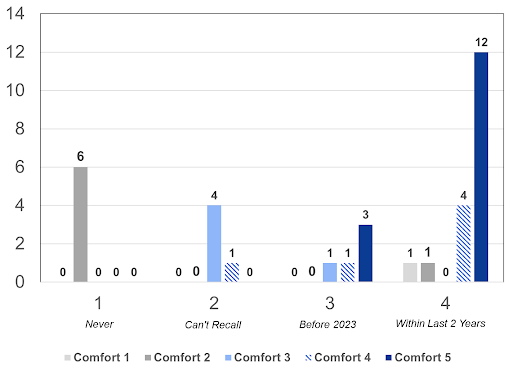
When asked whether they felt comfortable recognizing the early warning signs of type 1 diabetes, approximately thirty-nine percent of participants said they felt “very comfortable” and together, forty four percent said they were “comfortable or somewhat comfortable”. Figure 2 displays the level of comfort rating respondents felt about recognizing the early warning signs of T1D by the training recency whether that be within in the last two years, before that, never, or unsure. As can be seen from Figure 2, respondents with more recent training reported higher comfort levels. Figure 3 displays the median number of recommendations for further student evaluation, stratified by nurses’ self-reported comfort levels in recognizing early warning signs of type 1 diabetes. Higher comfort levels, i.e., levels 4 and 5, are generally associated with higher median recommendation counts.
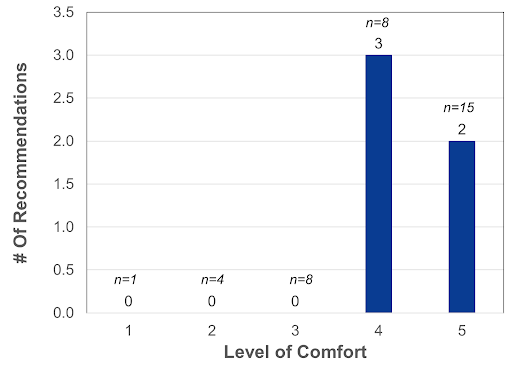
As can be seen in Figure 3, level of comfort rating and the median number of recommendations appears associated meaning nurses with a higher level of comfort may make more recommendations.
Figure 4 displays the average knowledge score respondents reported of the warning signs of T1D by the level of comfort rating which again represented nurses’ level of comfort for recognizing the warning signs. Respondents reporting higher comfort also reported higher knowledge scores (*These counts could also be influenced by a nurse’s years of experience and student exposure*).
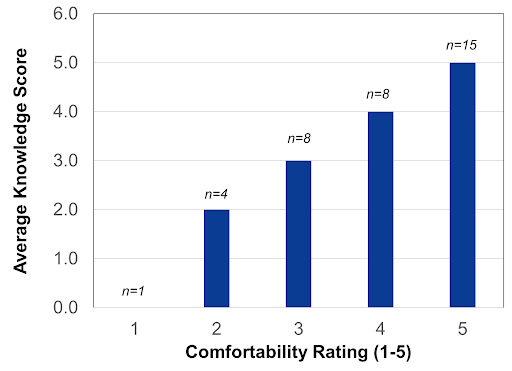
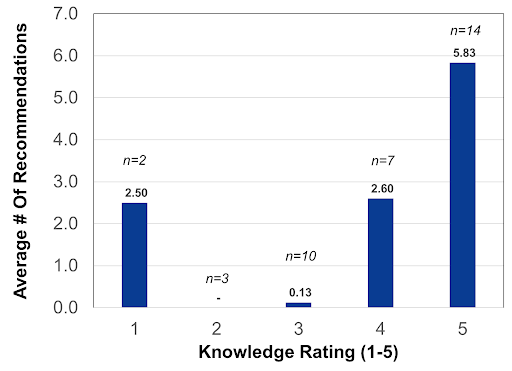
Figure 5 displays the knowledge rating by the average number of career recommendations, a self-reported number, that represents the number of times respondents have recognized the early warning signs of T1D and referred the student for additional evaluation. Again, we see that the number of career recommendations and the nurse’s knowledge appear associated with each other. It is equally important to consider the implication of those with greater self-perceived knowledge not necessarily having greater true knowledge or requiring further exploration to distinguish whether it is knowledge, confidence, or guidance systems associated with more paths.
Forty-three percent of school nurses responded to “How knowledgeable are you with the early warning signs of undiagnosed type 1 diabetes?” that they were somewhat knowledgeable or not very knowledgeable. To that same question, thirty-six percent that they were very knowledgeable with the early warning signs of T1D. Forty-three percent of school nurses responded to a question on how well prepared they felt from healthcare training for recognizing undiagnosed T1D with somewhat prepared, very or not prepared. Again, thirty-six percent said that they were very prepared to recognize undiagnosed T1D. Many school nurses do believe that it is important that they can recognize early warning signs, which can be seen with the fact that ninety-five percent said they thought it was “important or very important”.
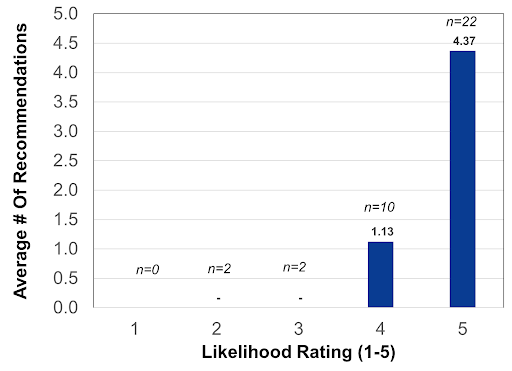
To specifically answer the research question, the participants were asked if a student of theirs presented signs of type 1 diabetes, what would be the likelihood of them recommending additional evaluation for undiagnosed type 1 diabetes. Figure 6 displays how likely the respondent felt they would recommend additional evaluation for undiagnosed T1D when a student came in presenting the warning signs, by the number of career recommendations the respondents had made. A higher likelihood generally indicates higher recommendation accounts.
Approximately sixty percent of school nurses said there would be a high likelihood they would recommend additional evaluation and about twenty-eight percent of the participants said that there was a moderate likelihood. This also generally hints that nurses again may feel comfortable recognizing early warning signs, and then refer the student for evaluation.
Participants were also asked how many times they have recommended additional evaluation after recognizing early warning signs. Forty-four point four percent of participants said they have never done it. About 8.6 percent also answered five times and another 8.6 percent answered two times. However, there were some anomalies. 2.9 percent answered they have done it approximately ten times, another said they had done it thirty times. Participants were also asked further questions about whether or not they were able to recognize early warning and connect that the student may have undiagnosed T1D. Specifically, when asked if a student presented general symptoms (that coincide with the warning signs of T1D) that could be mistaken for something else, forty-one percent said they would “often” consider it to be T1D. Furthermore, twenty-seven percent said they would sometimes consider it to be T1D. There were also questions that pertained to whether they felt the training and resources enabled them to better recognize the early warning signs of T1D. When asked, forty-seven percent answered with “yes” and fifty percent answered with “somewhat” or “no”.
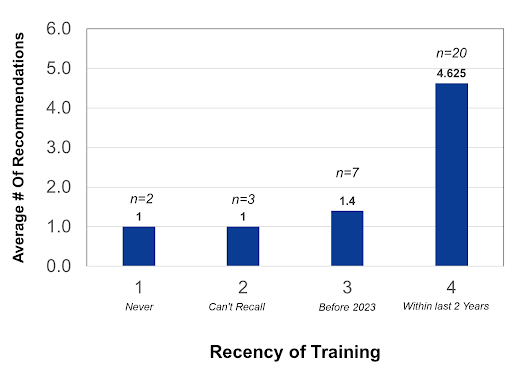
Figure 7 displays the training recency rating (training response) and the average number of recommendations made by respondents. Respondents with more recent training tended to report a higher average number of recommendations.
Qualitative Data from Survey
To further our understanding of this topic, participants were asked where them as school nurses had received the specific training or resources from. To sum up the responses, a couple of participants said they received it from BSN or RN programs, many answered nursing school in general, and the rest answered about experience from working in the field or from hospitals like CHOC (Children’s Hospital of Orange County) and diabetes-related or nurse conferences. If participants didn’t feel like they had been adequately trained to recognize the early warning signs of T1D or wanted to feel even more confident about it, the questionnaire asked what would further their confidence or what they would recommend to further other’s confidence. Answers to this question were derived as more recurring and frequent training that is easily accessible and collaboration with hospitals and other institutions for education and support. Other themes included: preference and recommendation of training formats like case-studies, simulations, seminars and conferences and other other training activities in collaboration with CHOC and PADRE (Pediatric Adolescent Diabetes Research and Education). Many participants also requested things like updated diabetes information and practical tools like handouts or checklists that outline the various warning signs of undiagnosed T1D. While the final question included any other information they would like to add about recognizing and/or managing T1D in a school setting, many of the responses coincided with the ones from the previous question. Responses restated the need for yearly or recurring training but also standardized training and the importance of recognizing the early warning signs. Further information included better communication with parents of student switch potential undiagnosed T1D as well as healthcare providers, as well as written materials for families and staff that explain symptoms and further steps to take. Many requested Spanish-language materials to serve the population.
Discussion
Key Takeaways
These trends don’t establish directionality between values nor the causation of certain trends. Across the measured domains, respondents reporting higher preparedness also reported more recommendations. Respondents who reported higher levels of comfort in considering type 1 diabetes when students presented with general or nonspecific symptoms demonstrated a higher average number of career recommendations compared to those reporting lower levels of comfort. Similarly, respondents with higher self-reported knowledge levels showed greater average numbers of recommendations, whereas those reporting lower knowledge levels rarely reported making recommendations (*These counts could also be influenced by a nurse’s years of experience and student exposure*). When evaluating likelihood of considering type 1 diabetes in the presence of warning signs, respondents selecting higher ratings again demonstrated the greatest average number of recommendations, suggesting a strong alignment between self-reported likelihood and clinical action. In addition, respondents who reported receiving training within the last two years demonstrated a substantially higher average number of career recommendations compared to those trained prior to 2023, those unable to recall their training, or those who reported never receiving training, however these counts could also be influenced by a nurse’s years of experience and student exposure. Collectively, these trends suggest, despite their self-reported and descriptive nature, that increased levels of comfort, knowledge, likelihood, and recent training are associated with greater identification and referral behaviors related to type 1 diabetes, though findings should be interpreted descriptively given variability in respondent distribution.
The findings of this study both extend and complicate prior research done in topics surrounding those discussed in this study. Many nurses lack the knowledge and training for diabetes-related tests, in this study, school nurses generally do have the knowledge and training to recognize early warning signs but not necessarily perform diabetes-related tests (Kobos et al., 2020; Stefanowicz-Bielska et al., 2022). It refutes the claim as school nurses do have the knowledge to recognize early warning signs, knowledge that is also not perceived as other studies (Kobos et al., 2020) claimed it would be. It does not directly support the claims concerning school nurses’ preparedness to carry out diabetes-related tests but rather focuses their ability to identify early warning signs, which has not been addressed previously in the literature. Prior work has also come to see that school nurses have perceived knowledge (Glassford, 2017; Wang et al., 2012; Kobos et al., 2020; Stefanowicz-Bielska et al., 2022; Drass et al., 1989). We can see through the data collected in this study that prior research is complicated, with the fact that 55% of the 36 respondents self-reported that they were either “knowledgeable” or ” quite knowledgeable” with the warning signs of T1D. As can be seen from Figure 1, school nurses that have been trained within the last two years have higher levels of comfort scores than those who had done it prior which somewhat extends previous findings as it leads to higher levels of comfort. Moreover, the higher the levels of comfort score, the higher the knowledge score answered by respondents, which can be found from the graph of Figure 3 which again corroborates the relationship between training recency versus knowledge made earlier.
Limitations and Weaknesses of the Study
The fact that all of the information represented in this study was subject to recall bias meaning that the respondents accuracy of their memory or feeling could be less accurate. Specifically, this bias could have affected aspects of levels of comfort, knowledge, training recency, and the number of recommendations. There was also no quantitative assessment of their knowledge or training, all of the questions given to the respondents was their perception of how they were in these different areas involving T1D warning signs and school nurses. A potential follow-up study in the model of a short quiz or case study could accurately inform the true knowledge of school nurses involving the warning signs of T1D. The number of recommendations by the respondents could have also been affected by the different variables like longevity of their career, the size of the school they work at, the number of students that both attend the school and how many students they interact with on a daily basis. The terms used in the survey could have also affected the data and responses given, things like: “comfortability”, “knowledge” and “adequate training” are all abstract and can be interpreted differently from respondent to respondent. This study was also limited to the geographical area of Southern California and didn’t include respondents from every single district. The data also might be different across different states and regions in California. All in all, recall bias and self-reported nature of this data are consequential to the interpretation as all findings were from the perception of the respondents and therefore it could inherently be an over or underestimation of their various skills and knowledge which could in turn potentially affect the accuracy of the data. Another consequential limitation was how ambiguous the survey terms were, many questions involved nurses self-reporting on various skills and knowledge with terms such as “comfortable” and “knowledgeable” which can be interpreted differently between respondents which makes comparing responses across districts more difficult. There were also other variables that weren’t accounted for in this study, such as the experience(number of years) respondents have been working as school nurses, the size of the school they work at, and nurse to student ratios all of which could have affected the number of recommendations and the potential likelihood of recognizing T1D due to experience working as a school nurse. Another potential factor affecting likelihood could also be their greater experience allowing them to have the prior experience recognize the early warning signs and recognize it again.
Potential Follow-Up Research Studies
Potential follow-up studies could use the same model as this study with the type of questions but apply it to other regions in California and other states in the U.S. Other studies could specifically test knowledge before, immediately after and a year or two after, to test the effect of training on the knowledge of school nurses and potentially the number of recommendations as well. While this study only focused on school nurses from middle and high schools, the levels of comfort, knowledge, number of recommendations, etc., could be evaluated for other institutions like colleges and elementary schools. Another aspect not evaluated in this study was the quality of the training school nurses are receiving and whether or not it is actually beneficial or just a formality. One abstract aspect of this study that was formally stated to the respondents was “self-reported recommendation” compared to documented referrals or diagnosis that were actually completed. Future studies could evaluate whether these referrals result in a diagnosis.
Appendix
Breakdown of Districts by Number of Respondents
District 1: 5 District 2: 4 District 3: 5 District 4: 1 District 5: 2 District 6: 1 District 7: 2 District 8: 1
District 9: 2 District 10: 1 District 11: 1 District 12: 1 District 13: 1 District 14: 2 District 15: 1
District 16: 1 District 17: 1 District 18: 1 District 19: 1 District 20: 1
Supplementary Analysis
The trends of different aspects of the early warning signs across different districts were evaluated by examining the relative distribution of responses within each district. Responses were then grouped by high responses (4s and 5s, indicating “quite” or “very”) and low ratings (1s and 2s, indicating “not at all” or “very little”) to allow for comparison even though there were a different number of responses from each district. In terms of levels of comfort, Districts 1, 2, 3 and 14 demonstrated the highest proportion of respondents that responded with 4s and 5s, whereas respondents from Districts 2, 5 and 9 displayed the greatest relative proportion of responses of 1s and 2s. Similar to the trend of levels of comfort, for knowledge, Districts 1, 2, 3 and 14 demonstrated the highest proportion of respondents that responded with 4s and 5s, while respondents from Districts 2, 3 and 9 exemplified higher proportions of 1s and 2s. In regard to the respondents’ preparedness to identify T1D, Districts 1,2 and 14 showed the strongest relative proportion of 4s and 5s, on the opposite side, Districts 1,2,3, 9 and 12 demonstrated the greatest relative frequency of low preparedness responses of 1s and 2s. After evaluating training adequacy and how adequate the resources were, Districts 1, 2 and 14 had the highest relative proportion of affirmative responses (“yes”s and “somewhat”s). While overall the reports of inadequate training or resources were infrequent, District 1, 3, 9, 12, 13 demonstrated the highest relative occurrence of “no” as the response. For questions related to identification, Districts 1, 2, 3, 7, and 14 demonstrated the highest relative confirmation of considering type 1 diabetes when faced with students that present warning signs or non-specific symptoms. On the other hand, lower relative confirmation patterns were most frequently observed in Districts 2 and 9.Trends in the number of times respondents have recommended additional evaluation for type 1 diabetes varied across districts, with Districts 1 and 2 reporting the highest cumulative number of recommendations. However, because recommendation counts reflect cumulative career experience and district sample sizes varied, these findings are interpreted as descriptive rather than directly comparative.
Full Survey
School Health Office Staff And Undiagnosed Type 1 Diabetes
DESCRIPTION: You are invited to participate in a research study aimed to understand nurses’ current knowledge and confidence in identifying early signs of Type 1 Diabetes in students. You will be asked to take a brief survey. Participation in this research is voluntary, and you are free to withdraw your consent at any time.
TIME INVOLVEMENT: Your participation will take approximately 8 minutes.
RISKS AND BENEFIT ANALYSIS: There are no physical risks to participating in this study. Some potential risks of participation are discomfort (e.g., feeling unsure, selfcritical, or judged based on knowledge gaps). Because the survey is designed to be anonymous, and no identifying information will be collected, the risk of loss of confidentiality is minimal.The expected benefits for the participants is the increase of awareness and potential education of the early warning signs of Type 1 Diabetes (T1D), which could help the nurses increase their knowledge and ability. The study may also contribute to improved screening and earlier recognition of undiagnosed T1D among students if findings are shared with the nursing or education community. While this is an exploratory study, its findings could inform future training efforts and potentially contribute to better student health outcomes over time.
CONFIDENTIALITY: Your individual privacy will be maintained during the research and in all published and written data resulting from the study. Study data will be stored securely, minimizing the risk of confidentiality breach.
QUESTIONS: If you have any questions, concerns or complaints about this research, its procedures, risks and benefits, contact the Protocol Director, Quinn Conroy, quinnmichaelconroy@gmail.com By clicking “Next”, I consent to participate in this study. 3/31/26, 7:19 AM School Health Office Staff And Undiagnosed Type 1 Diabetes
Background Questions:
Openended:
What district do you work in? How many years have you been working as a school health office staff in your career? Approximately how many students do you interact with on a daily basis? Approximately how many students attend your school? Are you a nurse at a middle or high school? What is your highest level of education?
Multiple Choice: Have you received any specific/formal training on recognizing the early warning signs of undiagnosed type 1 diabetes?
Yes, within the last 2 years Yes, before 2023 No, never Can’t recall/Unsure 8.
T1D Related Questions:
Multiple Choice:
How comfortable are you with recognizing early warning signs of undiagnosed Type 1 Diabetes?
(Not at all comfortable)1 2 3 4 5(Very comfortable)
How knowledgeable are you with the early warning signs of undiagnosed Type 1 Diabetes?
(Not knowledgeable at all) 1 2 3 4 5 (Very knowledgeable)
How well prepared has your healthcare training been for recognizing undiagnosed Type 1 Diabetes?
(Not prepared) 1 2 3 4 5 (Very prepared)
How important do you believe it is that school health office staff can recognize early warning signs of undiagnosed Type 1 Diabetes?
(Not important at all) 1 2 3 4 5 (Very important)
If a student came in presenting signs such as (excessive thirst, unexplained weight loss, abdominal pain and frequent urination) what is the likelihood you would recommend additional evaluation for students with undiagnosed Type 1 Diabetes?
(Low likelihood) 1 2 3 4 5 (High likelihood)
How often do you consider Type 1 Diabetes when a student presents with general symptoms like excessive thirst, frequent urination etc.?
(Never)1 2 3 4 5 (Often)
Have you ever identified a student with undiagnosed Type 1 Diabetes or referred a student for evaluation?
Yes, No, Not sure/can’t recall
Do you feel you have adequate resources or training to recognize early signs of Type 1 Diabetes?
Yes, Somewhat, No, Not sure
Open-ended:
How many times have you recommended additional evaluation for undiagnosed Type 1 Diabetes after recognizing early warning signs?
If you answered ‘Yes’ or ‘Somewhat’ on the last question(“Do you feel you have adequate resources or training……?”), where did you get your knowledge from?
What resources or training would increase your confidence in recognizing early signs of Type 1 Diabetes?
If you are already confident, what resources would you recommend or were beneficial to you?
Is there anything else you’d like to share about recognizing or managing undiagnosed Type 1 Diabetes in your school setting?
If you are willing to participate in a short follow-up phone interview, please write your name and phone number below
References
- Statistics about Diabetes. Diabetes in America: Prevalence, Statistics, and Economic Impact [↩]
- Nabors, L., Lehmkuhl, H., Christos, N., & Andreone, T. L. (2003). Children with diabetes: perceptions of supports for self-management at school. The Journal of school health, 73(6), 216–221 [↩] [↩] [↩] [↩] [↩]
- Wang, Y. L., & Volker, D. L. (2013). Caring for students with type 1 diabetes: school nurses’ experiences. The Journal of school nursing : the official publication of the National Association of School Nurses, 29(1), 31–38. [↩] [↩] [↩] [↩] [↩]
- Stefanowicz-Bielska, A., Słomion, M., & Rąpała, M. (2022). Knowledge of School Nurses on the Basic Principles of Type 1 Diabetes Mellitus Self-Control and Treatment in Children. International Journal of Environmental Research and Public Health, 19(24), 16576 [↩] [↩] [↩] [↩] [↩]
- Marks, A., Wilson, V., & Crisp, J. (2015). The management of children with type 1 diabetes in schools: A qualitative study of school nurses’ experiences. Journal of Child Health Care, 19(3), 364–376. [↩]
- Amillategui, B., Mora, E., Calle, J. R., & Giralt, P. (2009). Special needs of children with type 1 diabetes at primary school: Perceptions from parents, children, and teachers. Pediatric Diabetes, 10(1), 67–73. [↩] [↩]
- Kobos, E., Imiela, J., Kryczka, T., Szewczyk, A., & Knoff, B. (2020). Actual and perceived knowledge of type 1 diabetes mellitus among school nurses. Nurse education today, 87, 104304. [↩] [↩]
- Maughan, E. D., Cowell, J., Engelke, M. K., McCarthy, A. M., Bergren, M. D., Murphy, M. K., Barry, C., Krause-Parello, C. A., Luthy, K. B., Kintner, E. K., & Vessey, J. A. (2018). The vital role of school nurses in ensuring the health of our nation’s youth. Nursing outlook, 66(1), 94–96. [↩] [↩] [↩]
- Glassford, M. A. (2017). Recognizing type 1 diabetes mellitus in children & adolescents. The Nurse Practitioner, 42(6), 16-22. [↩] [↩]
- Kise, S. S., Hopkins, A., & Burke, S. (2017). Improving school experiences for adolescents with type 1 diabetes. Journal of School Health, 87(5), 363-375. [↩] [↩]
- Hellems, M. A., & Clarke, W. L. (2007). Safe at school: a Virginia experience. Diabetes Care, 30(6), 1396-1398. [↩]
- Dahling, S. E. (2020). School Nurse Influence on Adolescent Type 1 Diabetic Control [Masterʼs thesis, Bethel University]. Spark Repository. [↩]
- Thorstensson, S., Fröden, M., Vikström, V., & Andersson, S. (2016). School nurses’ experiences in supporting students with type 1 diabetes in the school environment. Scandinavian Journal of Caring Sciences, 30(1), 142–150. [↩] [↩] [↩]
- Hastings, A. (2026). Empowering School Nurses in Delaware: A Collaborative Approach to Improving Diabetes Management in Schools. NASN School Nurse, 41(1), 39-41. [↩] [↩]
- Moffitt, C. F. (2025). Diabetes Device Knowledge and Confidence Among School Nurses: A Mixed Methods Study. [↩] [↩]
- Cangelosi, G., Mancin, S., Morales Palomares, S., Pantanetti, P., Quinzi, E., Debernardi, G., & Petrelli, F. (2024). Impact of school nurse on managing pediatric type 1 diabetes with technological devices support: A systematic review. Diseases, 12(8), 173. [↩] [↩]
- Marks, A., Wilson, V., & Crisp, J. (2015). The management of children with type 1 diabetes in schools: A qualitative study of school nurses’ experiences. Journal of Child Health Care, 19(3), 364–376. [↩] [↩]
- Uhm, J. Y., & Kim, S. (2025). School nurses’ competency in supporting students with type 1 diabetes: A mixed methods systematic review. Nurse Education Today, 146, 106554 [↩] [↩]
- Nguyen, M., Raymond, J., Mason, K., et al. (2023). School nurses’ comfort with diabetes management and technology from 2012 to 2019. Pediatric Diabetes, 24(5), 701–709. [↩] [↩] [↩] [↩]
- Drass, J. A., Muir-Nash, J., Boykin, P. C., Turek, J. M., & Baker, K. L. (1989). Perceived and actual level of knowledge of diabetes mellitus among nurses. Diabetes Care, 12(5), 351-356 [↩]
- American Diabetes Association. (2024). Safe at School®: Advocacy and training resources for diabetes care in school settings. [↩]
- Tolbert, R. (2009). Managing type 1 diabetes at school: An integrative review. The Journal of School Nursing, 25(1), 55–61. [↩]
- Smith, L. B., Terry, A., Bollepalli, S., & Rechenberg, K. (2019). School-based management of pediatric type 1 diabetes: recommendations, advances, and gaps in knowledge. Current Diabetes Reports, 19(7), 37. [↩]
- Wilt, L. (2021). The relationships among school nurse to student ratios, self-efficacy, and glycemic control in adolescents with type 1 diabetes. The Journal of School Nursing, 37(4), 230-240. [↩]
- Viklund, G. and Wikblad, K. (2009), Teenagers’ perceptions of factors affecting decision-making competence in the management of type 1 diabetes. Journal of Clinical Nursing, 18: 3262-3270 [↩]