
Abstract
Background: Guillain-Barré syndrome is an acute autoimmune disorder characterized by rapid progressive weakness, autonomic dysfunction and possible respiratory failure. Even though intravenous immunoglobulin (IVIG) and plasma exchange are now the preferred therapies, these invasive, costly treatments are not individualized to specific immune effects. This article considers whether artificial intelligence might be capable of guiding personalized Vagus Nerve Stimulation (VNS), as a non-pharmacological intervention in Guillain-Barré syndrome by bridging the narrow gap between fixed-parameter neuromodulation and the disease’s broad, complex spectrum.
Methods: The search for literature was conducted in Pub Med, Science Direct and Google Scholar using a focused narrative synthesis by synthesizing literature related to the pathophysiology of Guillain- Barré syndrome, the inflammatory reflex, vagus nerve stimulation, closed-loop control and AI-enabled adaptive device. Neither patient data, animal models nor human subjects research were used to generate data; analysis consisted of narrative review and assessment of the clinical relevance and strength of support of the evidence for the defined claim.
Results: The literature supported biological plausibility for a supervisory closed-loop AI-VNS paradigm where the stimulation parameters would be automatically adjusted based on parameters derived from the patient’s heart rate and inflammatory marker signals. The hypothesized operational closed loop model has not been implemented as a real-time device, simulated in silico or validated against any Guillain-Barré syndrome patient data.
Conclusions: AI-guided VNS is a bioelectronic tool hypothesis rather than a therapeutic strategy. Validation of existing AI-based approaches will require disease-specific modeling, in silico testing, safety analyses, and prospective validation studies prior to translation to the clinical setting.
Keywords: Guillain-Barré syndrome; vagus nerve stimulation; artificial intelligence; closed-loop control; inflammatory reflex; bioelectronic medicine; personalized medicine.
Introduction
Guillain-Barré syndrome is a serious neurological emergency in which immune-mediated injury occurs to peripheral nerves and nerve roots. Patients can develop ascending weakness, depressed reflexes, pain, autonomic instability, and, in the most severe cases, respiratory failure that requires intensive care. With the myriad heterogeneous clinical presentations of this disease, recovery is often incomplete even with treatment. This is especially true in the setting of axonal variant disease syndromes or delays in therapy.
Vagus nerve stimulation is biologically relevant because the vagus nerve is a component of the autonomic system that is involved in the inflammatory reflex. This provides a plausible mechanistic framework for investigating the potential for vagal modulation to suppress inflammatory signaling in disease. There is also a second reason to take interest in this question:
The application of artificial intelligence to continuous adaptive decision-making offers a potentially powerful way to develop devices that are more controllable, reversible, and responsive to physiological stimuli. The following discussion explores the hypothesis of whether AI could enable an intrinsically safe, personalized approach to vagus nerve stimulation for Guillain-Barré syndrome.
This paper is deliberately theoretical. It does not argue that AI-guided VNS can treat Guillain-Barré syndrome, it simply aims to structure existing biological and engineering-based argument in a logical order. Its main hypothesis is that, in theory, a supervised closed loop AI VNS algorithm would achieve, at least theoretically, a more individually optimized stimulation for inflammation management in Guillain-Barré syndrome than fixed-parameter stimulation. This hypothesis remains untested, and should be tested in future disease-specific research and design studies.
Scope and Limitations
Due to the nature of the topic, this paper is limited to a literature review and theoretical synthesis. It analyzes existing published data on the Guillain-Barré syndrome pathophysiology and the cholinergic anti-inflammatory pathway, as well as the current use of AI-guided closed-loop neuromodulation technology in other medical areas, and synthesizes it into a conceptual framework of an AI-guided VNS architecture in Guillain-Barré syndrome. Original patient data, including animal experiments, computational models, and quantitative modelling in the scope of Guillain-Barré syndrome, are not part of this review; the work presented herein should not be treated as a therapeutic protocol.
The use of indirect evidence from other diseases such as epilepsy, rheumatoid arthritis, spinal cord injury, and diabetes is strictly meant as an analogy to argue for the feasibility of closed-loop bioelectronic control, not as evidence of actual efficacy in Guillain-Barré syndrome.
This review’s main limitation is the fact that it relies on cross-disease inference: as there are currently no dedicated closed-loop VNS studies in Guillain-Barré syndrome, certain aspects of the proposed framework are speculative and need to be experimentally verified before any clinical application can be proposed.
Theoretical Framework
The paper is structured along the lines of the described cholinergic anti-inflammatory pathway, or inflammatory reflex as outlined by Tracey et al. Vagal afferents detect distal inflammatory signals and interpret the signals to the brain stem which, in turn, actuates an efferent vagal arc that inhibits release of cytokines from macrophages via (1) acetylcholine and (2) the α7 receptor. Since the immunopathology of Guillain-Barré syndrome involves antibody- and complement-mediated inflammation of the PNS, this proposed pathway provides a plausible, mechanistically-based rationale for benefit from modulating vagal tone beyond the direct effect on pathogenic autoantibodies themselves.
This framework will be employed in the paper in two ways: first, as the basis for the interpretation of information from other inflammatory or neurological diseases and its relatedness to Guillain-Barré syndrome and second, as the physiological explanation for the candidate biomarkers proposed as control inputs to the closed-loop model that will be developed in the second part of the paper.
When the literature does not directly establish a relationship between the pathway and this disease specifically, this will be explicitly defined in the paper.
Methodology Overview
The review summarizes relevant publications from Pub Med, Science Direct and Google Scholar, pertaining to the pathophysiology of Guillain-Barré syndrome, the vagal anti-inflammatory pathways, and closed loop AI control of bioelectronic and biomedical devices in other applications. The evidence was assembled narratively according to the principles of the proposed model above, with Guillain-Barré syndrome-specific evidence being distinguished from analogical evidence obtained from other diseases, and clinical and mechanistic evidence being weighted more heavily than engineering simulation results when forming the argument to synthesize the claims into the proposed model. The detailed search strategy, inclusion criteria and data extraction procedures are described in the Methods.
Pathophysiology of Guillain-Barré Syndrome (GBS)
Definition and Clinical Overview of GBS
Guillain-Barré syndrome (GBS) is an immune mediated acute disease and the main cause of acute flaccid paralysis in adults. It occurs mainly as different variants: acute inflammatory demyelinating polyneuropathy (AIDP), acute motor axonal neuropathy (AMAN), acute motor-sensory axonal neuropathy (AMSAN), or the Miller–Fisher variant1. AIDP is characterized by a peripheral nerve demyelinating disorder with symptoms such as weakness with or without areflexia; whereas AMAN and AMSAN are the axonal form that may result in abrupt paralysis with only little sensory loss. GBS is a medical emergency affecting the nervous system due to the risk of respiratory failure and autonomic disturbances2.
Pathophysiology
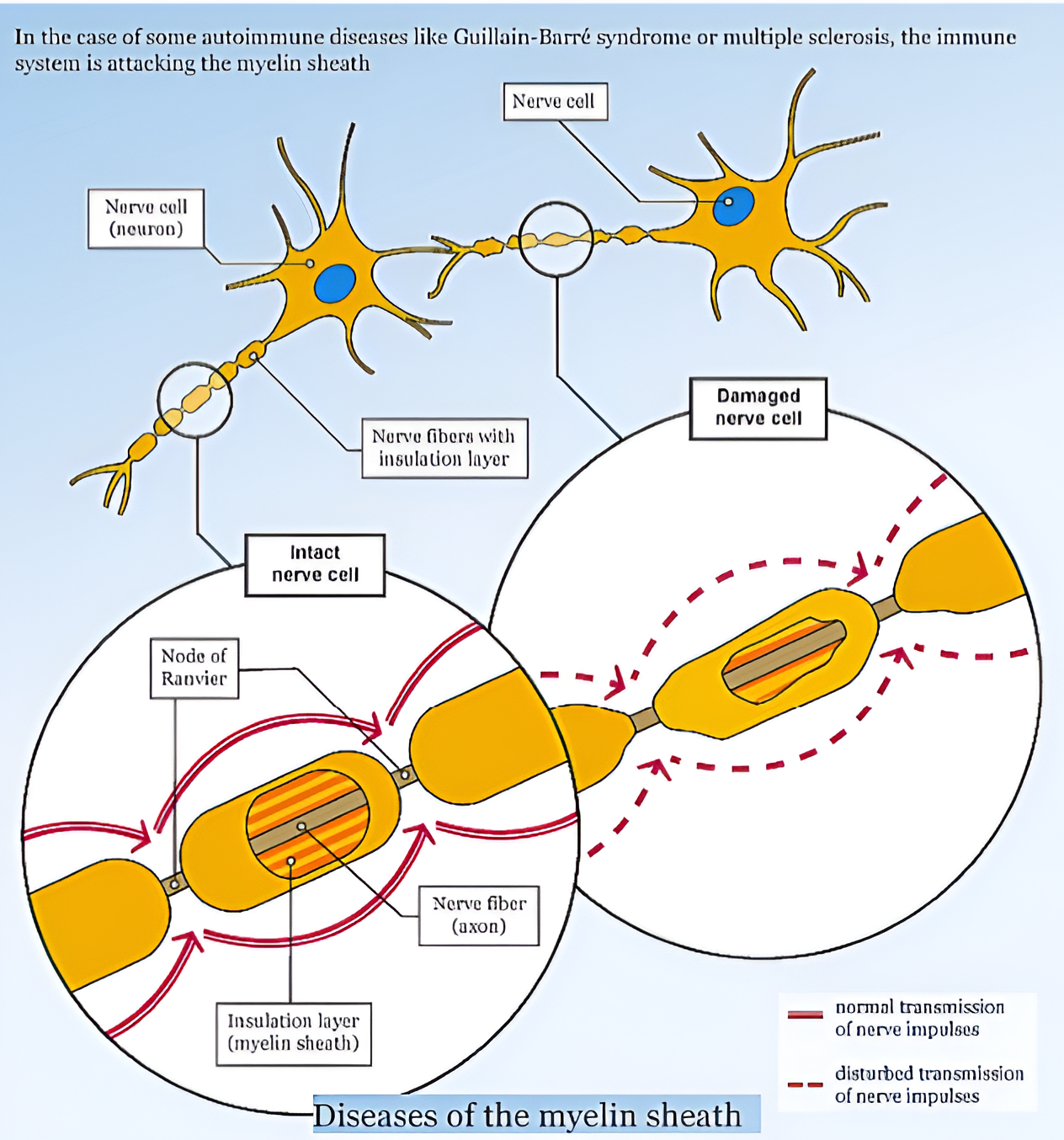
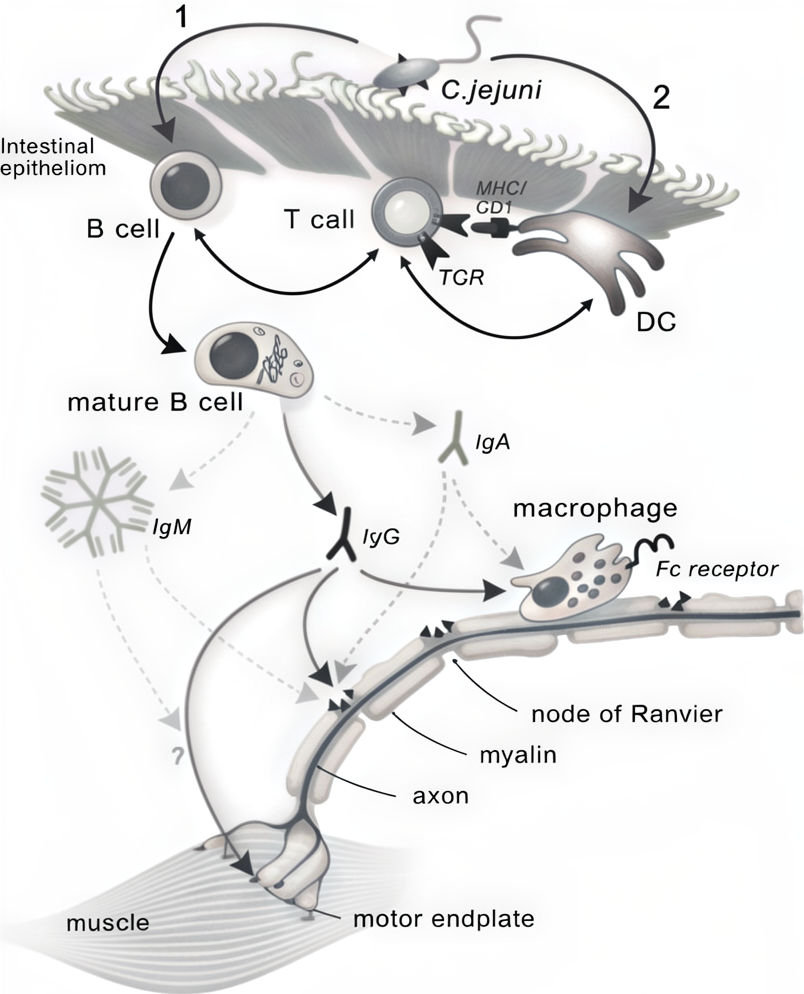
Mechanisms GBS is an autoimmune attack on the peripheral nerve with most cases following an antecedent event. Circulating brain self-reactive antibodies attack nerve structures by molecular mimicry (usually post-infectious), with the majority of patients expressing anti-ganglioside antibodies (including anti-GM1, anti-GD1a, and anti-GQ1b) that bind to nodal or axonal constituents, activating complement and immune cells3.
This leads to demyelination (AIDP) and/or direct axonal damage (AMAN/AMSAN), with blood-nerve-barrier breakdown, infiltration by lymphocytes/macrophages, and complement deposition, myelin stripping, and axonal degeneration1.
Mechanisms of Nerve and Immune System Involvement
Following immune activation and antigen recognition, autoreactive antibody and T cells are generated. This results in immune effector functions that involve assaulting peripheral nerve myelin or nodal and axonal antigens, recruiting complement and attracting macrophages which damage myelin and axons. This leads to conduction block, slowing of the conduction velocity or loss of axons, which causes weakness and loss of sensation along with mild loss of reflexes4. Autonomic fibers might be involved causing fluctuating blood pressure, ileus, urinary retention and many other features of autonomic dysfunction2. Recovery is achieved by remyelination and axonal regrowth, though in cases of severe axonal injury, this process can take years or may never be completed.
Aetiology and Risk Factors
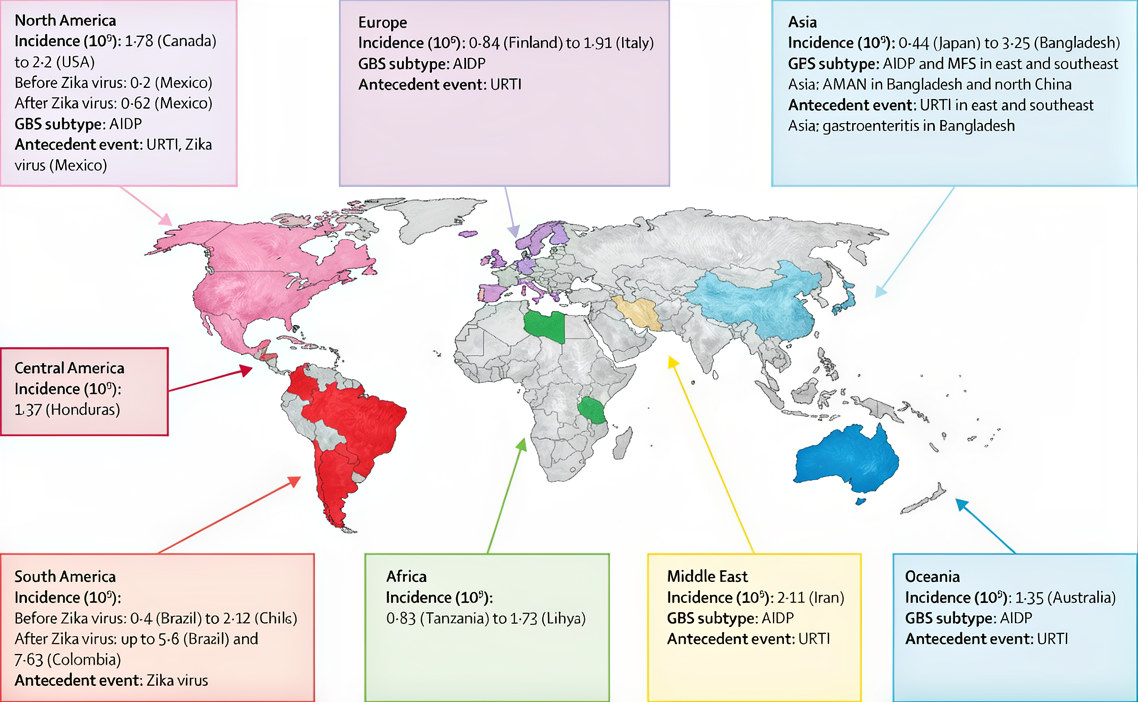
Viral and bacterial infections are the most common triggers for GBS, although the condition often occurs idiopathically. Infections in the respiratory or GI tracts are usually reported days to weeks prior to the initial GBS symptoms. The most common infectious trigger cited globally is Campylobacter jejuni and others include EBV, CMV, Mycoplasma pneumoniae, Zika, dengue, hepatitis and sometimes SARS-CoV-22. Other non-infective triggers may include trauma, surgery, malignancy and in some cases vaccination with vaccines such as rabies, and influenza. Risk factors for poor GBS prognosis include older age, the axonal subtypes, severe weakness, early ventilator requirement and the autonomic variant. A prospective analysis of three cohort studies also identified body mass index and waist circumference as independent risk factors for GBS, indicating the metabolic state of the individual alters the predisposition for GBS.5.
Signs and Symptoms and Impact on Quality of Life
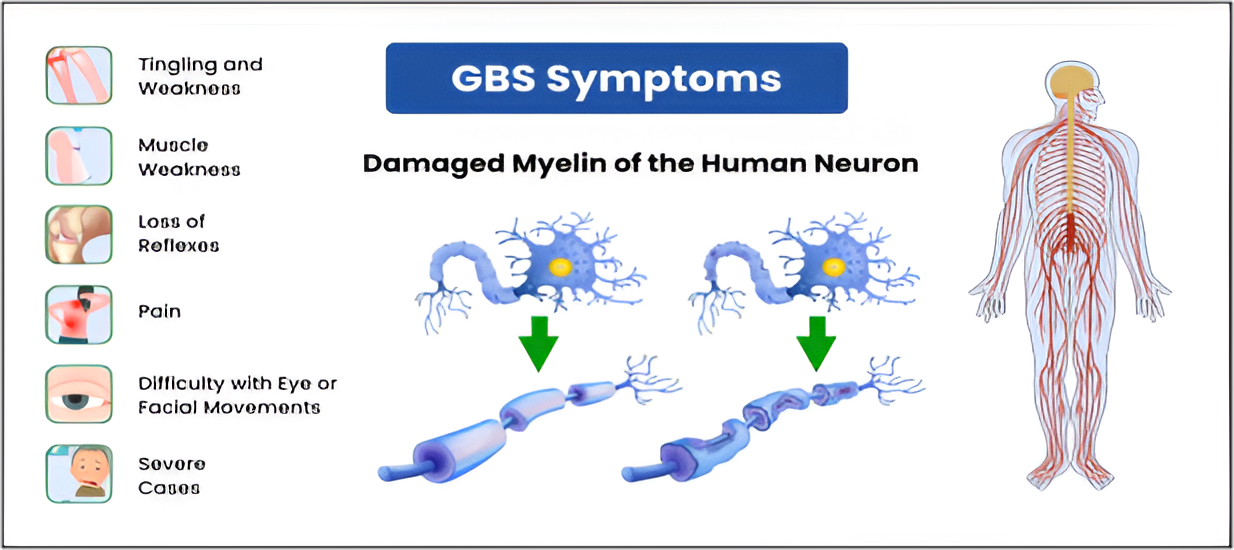
The typical initial presentation of Guillain-Barré syndrome is paresis (weakness) of the limbs and/or face, sensory deficits and areflexia (absence of reflexes). Generally, initial symptoms include paresthesias, and some patients have facial weakness. Symmetric weakness of the limbs (ascending paralysis) usually occurs over a period of a few days, along with sensation loss, areflexia, and weakness2. These symptoms may progress to paralysis requiring ventilation. Pain may be caused by radiculopathies or neuropathies; fatigue is common and may last for long periods. Although most patients improve at some point, a significant minority still has disability, pain, fatigue, or impaired quality of life at one year, with data showing that 10–30% of cases have ongoing deficits (depending on cohort). Rehabilitation and multidisciplinary care are therefore essential 2.
The symptoms of GBS may be summarized as follows:Reflexes are absent as the immune injury affects the nerves distally and therefore might slow the pace of transmission in the nerves so a knee-jerk normally, triggered by tapping the knee with a small hammer, might be reduced or absent. The sensation is abnormal as the damage to nerves affects their ability to transfer feeling the patient might experience numbness or altered sensation of the skin. Facial weakness may impair blinking and smiling while neuropathic pain persists when damaged nerves fire pain signals but no tissue damage present. Weakness that begins to ascend from the limbs when the patient initially notices limb weakness that progresses up through the head and neck area. Ophthalmoplegia is paralysis of the eye muscles, which affects eye mobility. Weakness of the respiratory muscles can affect breathing. Weakness of the bulbar muscles (which are involved in swallowing) might lead to difficulty in swallowing. Autonomic dysfunction can lead to fluctuating heart rate, blood pressure, sweating or disturbances of balance and coordination.
Impact on Quality of Life
Although most patients recover from GBS, a significant percentage remain affected by pain, fatigue, weakness, or limitations in function for months to a year or longer4. These may limit daily activities and mobility, work, social participation, and have emotional and self-esteem implications. For this reason, early rehabilitation and multidisciplinary follow-up is essential.2.
The Role of Inflammation in Making Symptoms Worse
Inflammation – It is a crucial component of the disease, as pro-inflammatory cytokines, macrophage infiltration, the activation of the complement and damages of the blood-nerve barrier further contribute to immune damage of the myelin and axons4,6. The extent and duration of the inflammatory state is related with the magnitude of demyelination or axonal loss, and thus with acute severity and prognosis. In this aspect, inflammation translates an immune insult into nerve damage. Accordingly, targeting pathogenic inflammation whilst maintaining host defense is a key therapeutic objective1.
Current Treatment Plans
Currently no cure exists that can immediately turn back nerve injury however evidenced- based therapies exist to decrease the immune attack whilst allowing the nerve to recover. Plasma exchange (plasmapheresis) which clears the blood of damaging antibodies and immune complexes significantly lowers immune attack upon the nerves.2,7 It is more effective if initiated early. In this procedure the blood is removed and plasma is separated from the blood and replaced with a plasma substitute such as albumin, and the blood is then returned to the patient. The procedure involves 4-6 sessions for 1–2 weeks through a central venous catheter. It is effective but it requires special equipment and skilled staff and may not be feasible in low resource settings.
Short term complications are hypotension, coagulation abnormalities, abnormal electrolyte balance and cath site infection Long term risks when safely performed are infrequent venous access complications. IVIG provides a concentrate of antibodies that can reduce damaging immune processes.2. Typically administered as a large dose infusion of 2 g/kg total over 2-5 days. IVIG is as efficacious as plasmapheresis, is simpler to give, does not need a central line and can be given to children and adults. On the downside IVIG is costly and becomes in short supply, it has short term side effects of headache, fever, allergic reactions, mild fluctuations in blood pressure, renal damage, thrombotic episodes and aseptic meningitis. Long term is generally safe with rare accumulation risks following repeated treatments.
Supportive care remains essential because it manages complications, maintains function, and promotes recovery2,7 Supportive care may involve respiratory care, intensive care support if necessary, autonomic monitoring, pain control, physiotherapy and nutrition. Supportive care decreases death rate, helps prevent secondary complications and hastens the recovery but also uses the resources of various disciplines. Long-term hospital stay may lead to bed sores, infections, deconditioning and delayed rehabilitation if the stay is very long. Some patients who are not supported by physiotherapy may take longer to recover and fatigue may be a persistent issue.
Limitations of Current Treatment Approaches
Existing treatments are effective but have major drawbacks. IVIG is costly and in short supply, and plasmapheresis requires specialized machinery and personnel. Plasmapheresis also necessitates vascular access and hemodynamic monitoring, whereas IVIG can cause significant IV volumes1,4.
Both are also associated with potential complications, such as renal failure, thromboembolic phenomena, aseptic meningitis, hypotension, infection, and coagulopathy. Similarly, a subgroup of patients do not recover fully with treatments based on guideline recommendations, particularly for those with axonal subtypes or those who receive treatment late. As GBS is biologically heterogeneous, one single mode of immune therapy may not be fully tailored to the immune profile of the patient1. These drawbacks create an urge for more safe, less invasive, affordable and more customizable approaches for immunomodulation6.
| Therapy Modality | Primary Immunological Mechanism | Key Clinical Administration Requirements | Primary Short-Term and Long-Term Safety Risks |
| Plasma Exchange (Plasmapheresis) | Removal of pathologic autoantibodies and immune complexes from blood.2 | Demands specialised apheresis equipment, trained nurses, central line and 4–6 serial visits over 1-2 weeks.2 | Hypotension, catheter-related infection, thromboembolism, electrolyte abnormalities, and complications associated with procedures or access to the bloodstream.8 |
| Intravenous Immunoglobulin (IVIG) | Autoantibody formation neutralization and systemic regulation of complement cascade/macrophages activity. | Intravenous infusion of high doses (generally 2 g/kg total), well titrated over two to five days. | Acute kidney dysfunction, aseptic meningitis, hyperviscosity/thrombosis, and supply/cost difficulties. |
| Proposed Closed-Loop AI-VNS Framework | Conceptual: Selective activation of the efferent cholinergic anti-inflammatory pathway for the inhibition of peripheral macrophage cytokine secretion.9 | Neural interface either non-invasive or minimally invasive, designed to be used with a clinically-supervised adaptive controller. | Hypothetical: Autonomic escape, possible stimulation-induced arrhythmias, sensor calibration failure, or data drop out during acute phase. |
Mechanisms of Vagus Nerve Stimulation (VNS)
Functions of the Vagus Nerve in the Human Body
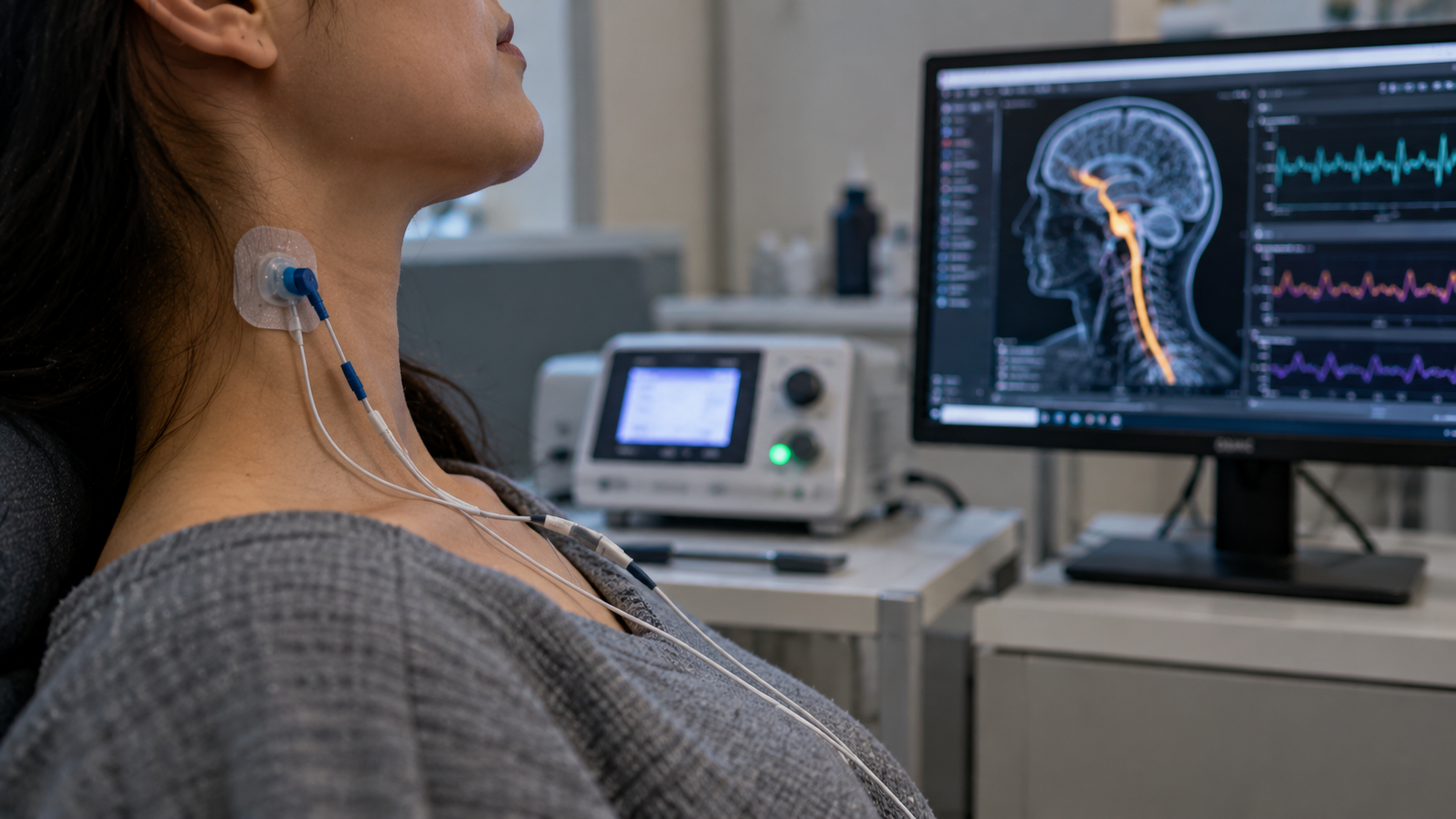
Vagus Nerve (Cranial Nerve X): It is the longest parasympathetic nerve, conveying afferent sensory information from many visceral organs to the brainstem, and efferent autonomic signals to the heart, lung, gut, and immune-related tissue. It helps to regulate heartbeat, respiratory and GI motility and secretion, and reflex actions such as coughing and swallowing. Vagal influence from central autonomic pathways also contributes to changes in arousal, mood, and inflammatory regulation.6,10.
Overview of Vagus Nerve Stimulation
- Vagus nerve stimulation (VNS) is a technique which stimulates the vagus nerve with electrical impulses. It can be delivered in an invasive manner, by means of a cervical cuff electrode attached to a pulse generator, or in a non-invasive manner, by means of a transcutaneous (through the skin) or auricular (through the ear) method. VNS is currently used clinically in drug-resistant epilepsy and treatment-resistant depression, and the auricular and transcutaneous approaches to VNS have been studied for migraine and cluster headache. These indications demonstrate that vagal stimulation can be delivered safely in suitable centres, but do not provide evidence of efficacy in Guillain-Barré.10, The initial randomized controlled trial of VNS effectiveness in epilepsy actually showed a 24.5% reduction in seizure frequency with high levels of stimulation versus a 6.1% reduction with low levels of stimulation there was no presumption that VNS could be safe or effective; this is direct clinical-trial evidence that chronic VNS can be safe and can have measurable effectiveness for a neurological indication.11
Mechanisms by Which VNS Modulates Inflammation
The main biological rationale for VNS is the inflammatory reflex (also referred to as the cholinergic anti-inflammatory pathway). The inflammatory reflex involves vagal afferent fibers sensing peripheral inflammatory signals and relaying information to brainstem circuits that, in turn, activate the efferent arm, which provides downstream immune modulation. Efferent signaling can inhibit pro-inflammatory cytokine production via acetylcholine-dependent pathways that involve interaction with α7 nicotinic acetylcholine receptors on macrophages. In both animal models and small clinical studies, VNS has demonstrated a reduction in inflammatory signaling and cytokine activity. This anti-inflammatory mechanism is the central reason why VNS is being explored as a treatment for autoimmune and inflammatory diseases.6,10,9.
Cross-Disease Evidence
- Correlation with other illnesses needs to be viewed as akin to circumstantial evidence, and not definitive support for GBS. The effect of VNS in epilepsy has been shown to decrease the number of seizures and enhance some patient results highlighting the potential to deliver clinically responsive neuromodulation.12 This is directly confirmed by the original blinded, randomized trial of chronic VNS for intractable epilepsy. A randomized controlled trial comparing high versus low level stimulation for drug-resistant epilepsy showed a greater reduction in seizure frequency with high level stimulation. This shows clinical evidence of VNS for epilepsy but not anti-inflammatory benefits or clinical value in GBS.11. In treatment-resistant depression, VNS causes slow, incremental clinical improvement, confirming that repeated stimulation of the vagus nerve can lead to sustained changes in the nervous system,12 In rheumatoid arthritis, human research indicates that vagal stimulation can suppress the disease’s inflammatory activity, a proof-of-concept that the mind-body interaction via the ANS can be manipulated in people13. However, it is an inflammatory disease, not an immediate neuropathy.
Other immune diseases like inflammatory bowel disease and lupus are also being considered as indications for VNS, but this remains in the early stages and the results are inconsistent1,4. Again, while these studies imply that bioelectronic anti-inflammatory therapy may have promise in the future, it does not show benefit in either acute peripheral neuropathy or GBS.
Potential Relevance to GBS
VNS could be relevant to GBS in principle since this disorder is characterized by immune-mediated inflammation, blood-nerve barrier breakdown, and peripheral nerve injury. Activation of the inflammatory reflex should be expected to decrease inflammatory cytokine signaling and prevent progressive tissue damage in principle. Though, to date, very little direct clinical evidence exists for the benefit of VNS in human GBS. The majority of the evidence available currently stems from mechanistic insights, animal studies of similar conditions, or translational logic from other autoimmune disorders.10.
Sources of Variability in VNS Response
Individual responses to VNS depend on the biology of the disorder, the timing of stimulation, the nerve anatomy and electrode placement, and the electrode design, parameters of stimulation. Symptom stage, species, concomitant medications and other variables all result in heterogeneity of the response10. Because there are differences between both the implanted and non-invasive stimulation modalities, and between species, benefit shown in animal studies can’t be safely presumed to apply to humans14. Those sources of heterogeneity are part of the reason why benefits seen in a research setting can’t be simply extrapolated to the clinical setting10.
Conclusion
VNS offers a novel bioelectronics approach as it interferes with the inflammatory reflex rather than dampening the entire immune system. Reports of vagal stimulation in other human inflammatory states, including rheumatoid arthritis, have hinted at the potential to manipulate immune responses. The evidence of efficacy is unproven in GBS. Appropriate studies are required to prove the optimal intervention time, stimulation parameters and clinical utility of VNS in acute neuropathies, and until then VNS cannot be promoted for that indication.
Methods
Study Design
This was a narrative review and conceptual synthesis. The review gathered literature on Guillain-Barré syndrome pathophysiology, the inflammatory reflex, vagus nerve stimulation, closed-loop control, and adaptive systems with AI. This paper is meant as a theoretical foundation and not as an original report of clinical or experimental findings.
Search Strategy and Literature Selection
Literature research was conducted by exploring Pub Med, Google Scholar and Science Direct using the following keywords: “Guillain-Barré syndrome”, “vagus nerve stimulation”, “inflammatory reflex”, “closed-loop neuromodulation”, “reinforcement learning” and “adaptive control”. In addition, since they discussed a key mechanistic aspect of the Guillain-Barré syndrome, older papers published before 2015 were included where necessary.
Inclusion Criteria
Studies were included if they were relevant to one or more of the following areas: Guillain-Barré syndrome pathophysiology, vagus nerve stimulation, inflammatory reflex mechanisms, AI-based adaptive control, or closed-loop biomedical devices. Priority was given to peer-reviewed clinical studies, mechanistic reviews, and engineering papers with direct relevance to the framework being proposed.
Data Extraction
Major data points extracted from the literature were disease mechanism, biomarkers, VNS impact, AI control approach, and safety issues. A narrative synthesis of the findings was used to create a conceptual model of a closed-loop AI VNS system for the treatment of GBS. As this is a conceptual review, no statistical meta-analysis was performed.
Synthesis Method
The literature obtained was synthesized using a narrative format, with the cholinergic anti-inflammatory pathway as the theoretical core. Within the literature, evidence from GBS-specific literature was separated from cross-disease analogical evidence, with each group weighted for argument strength, with respect to the validity of the putative AI-VNS model.
Quality Assessment
The evidence was rated according to the evidence’s applicability and its degree of support to the claim. Direct GBS evidence took precedence over cross-disease analogy and translational evidence from other diseases.
Proposed Conceptual Framework
Proposed AI-VNS Closed-Loop Model
This is a proposed theoretical framework based on literature review. No clinical trials, animal experiments, or models, but also no GBS quantitative analyses were performed for this study. The system elements and the anticipated consequences are therefore only hypothetical and used solely to conceptualize for future exploration.
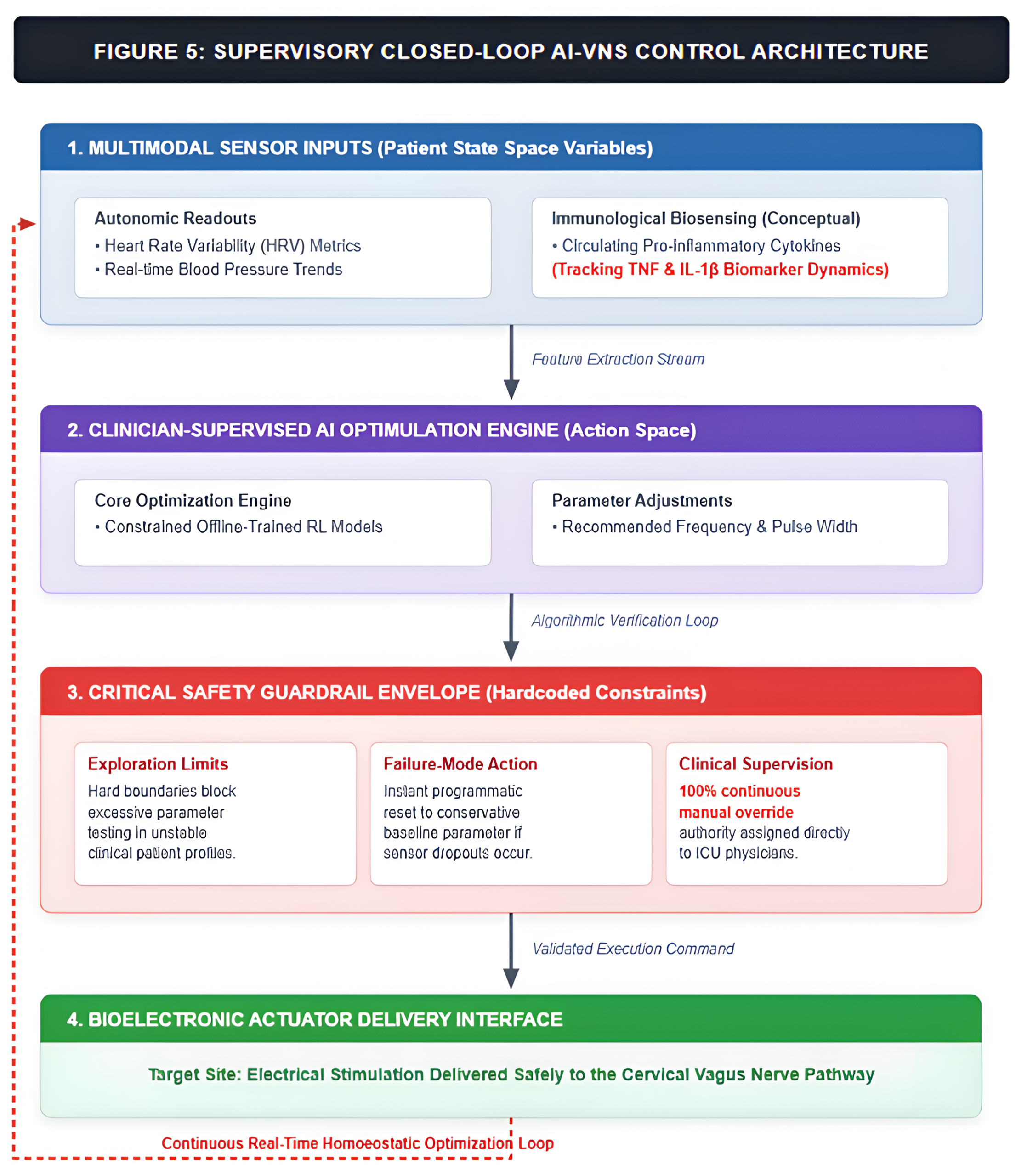
The paper’s primary contribution is the development of the closed-loop AI-VNS model that overcomes the shortcomings of open-loop stimulation. In existing VNS devices, stimulation is provided based on prespecified, preprogramed stimulation settings. The model proposed would provide stimulation based on continuous feedback, although at this stage it is not confirmed that stimulation would be able to closely follow the physiologic state, especially in Guillain- Barré.
Multimodal Sensor Integration and Feature Extraction
A combined physiological stream would then feed into the model, providing a patient state estimate. Potential autonomic signals are selected based on their ability to track autonomic state and their current not being pathophysiological markers of GBS disease activity. For example, blood pressure trends or heart rate variability may signal autonomic balancing; however, these signals are not specific to GBS disease activity and would need rigorous preclinical validation before clinical application. A recent randomized cross-over trial in healthy adults found that 1) the magnitude and direction of HRV change following taaVNS is dependent on stimulation frequency and pulse width and 2) that individuals’ baseline HRV may be indicative of subsequent inflammatory (TNF- a) and autonomic response to stimulation15,16. This validates the biophysical plausibility of HRV as a control input, but also emphasizes that stimulation-parameter and individual-baseline effects must be characterized in GBS before a clinical trial.
In the future, this system could also include electrophysiological measures if these become sufficiently sensor-valid. Currently, these inputs would need to remain in the realm of speculation and technical non-resolution, rather than conformance to a clinical norm.
- While the model also advances biomarker sensing at the blood-nerve interface for inflammatory mediators (e.g. TNF, IL-1β), true in vivo real-time direct sensing of these mediators at this interface is a future engineering target and not a clinical reality. Its inclusion in this model can provide a conceptual roadmap for future integration of such biosensors. Example – The ability of recent wearable biosensor platforms for non-invasive real-time sensing of TNF-α and IL-6 in sweat with high sensitivity in infectious and inflammatory bowel disease patient cohorts17,18, indicating that non-invasive inflammatory biomarker sensing is progressing faster than previously assumed, although validation at the blood-nerve interface specific to GBS remains unestablished.
Adaptive Control and Optimization Parameters
Reinforcement learning is presented as a candidate control method to be explored in future work and not as a validated clinical controller. In addition to19 the related computational and engineering efforts also have developed data-driven and state transition-based closed-loop VNS controllers for cardiovascular and other applications.20,21, broader physiological closed-loop control frameworks22, and general reinforcement-learning applications in healthcare23. Closed-loop neuromodulation has also restored network connectivity and motor control in other neurological contexts24, Other closed-loop VNS approaches have been suggested for cardiovascular disease management25, again underscoring that technical viability of the proposed supervisory architecture has been demonstrated (though none are applied in GBS). Specifically, the AI system can modulate the intensity, frequency, pulse width, and duty cycle of stimulation within safety limits, in an effort to determine whether patient- and condition-specific stimulation is feasible within conservative boundaries.
The controller should be supervisory rather than autonomous. It should generate parameter recommendations for clinician review, not independent treatment decisions. A defined safety envelope would constrain all outputs, and hard limits would prevent stimulation settings from exceeding conservative thresholds. If sensor failure, signal loss, or severe autonomic instability were detected, the system would revert to a pre-programmed conservative protocol and trigger immediate clinical review.
Clinician override must remain available at all times. Before any human use could be considered, the reinforcement learning component would require offline training, simulation-based testing, and extensive safety validation. Exploration should be highly constrained so that unsafe parameter combinations are never tested in critically ill patients.
Theoretical Relevance to GBS Management
Theoretically, an AI driven closed loop system could enable earlier identification of deteriorating physiology and more reactive adjustment of stimulation than a fixed-parameter device. But this is mere speculation. There is no evidence in this manuscript that such a device would improve time on ventilator, prevent demyelination or better long term recovery from GBS.
Thus any potential GBS benefit could be titled “just a suggestion”. The contribution of the model is only to specify a research agenda.
Results
The literature synthesis reveals that Guillain-Barré syndrome is an acute immune mediated neuropathy characterized by inflammatory damage, complement activation, and peripheral nerve dysfunction leading to weakness, sensory loss, and dysautonomia. The current standard therapies of intravenous immunoglobulin, plasma exchange, and supportive care, do not yet allow for treating the individual patient.
Literature reviewed provides strong evidence for the biological plausibility for AI-guided VNS as a modulator of the inflammatory reflex, as demonstrated in other inflammatory and neurological disease states as well as using closed-loop/adaptive VNS device designs. There is, however, no clinical evidence for AI-guided VNS in Guillain-Barré syndrome.
From this information, the paper suggests a supervised closed loop AI-VNS model that would guide stimulation via multimodal physiological inputs (e.g. HRV, inflammatory biomarkers) within a pre-defined safety window. It is, of course, important to note that this model is purely theoretical at this point and would need to be validated for each disease prior to any clinical use.
Discussion
Potential Value of AI-VNS
The one real potential benefit of AI-guided VNS is theoretical at this point. In a future system, the real-time tailoring would theoretically enable stimulation to be more adjustable than present fixed-parameter devices. That flexibility might be of benefit in a heterogeneous disease such as GBS but this remains a theoretical advantage.
Clinical Challenges and Risks
A few barriers still need to be overcome before any translation. The models rely on high quality and varied training data, with small training data sets having the potential to generate spurious recommendations. Furthermore, real-time monitoring may be technically demanding, regulatory intensive and, as with all connected devices, vulnerable to cyber-attacks. When dealing with a seriously ill population, the implications of an inaccurate prediction or over stimulation could be severe, and safety must be the priority.
Relation to Standard Care
AI-enabled VNS would not be a substitute for existing GBS therapies. Currently, the standards of care are plasma exchange, intravenous immunoglobulin, and supportive care. While the proposed approach may ultimately have some application as an adjunct, it would be inadequate to suggest this approach can obviate disease-specific immunotherapy.
Research Gaps
There are no existing clinical trials of AI-guided VNS in GBS. Major gaps include no validated real-time inflammatory biomarkers, no disease-specific computational models, no clarity regarding stimulation parameters, and unresolved safety issues in severe acute autonomic instability. As such, AI-VNS can only be described as an idea that has not yet been translated to the clinic.
Conclusion
Guillain-Barré syndrome is therefore a major neurological emergency, with significant unmet medical need. The concept of AI-guided vagus nerve stimulation is compelling as it integrates neuromodulation and adaptive decision making in the same device, but has not been demonstrated in Guillain-Barré syndrome. Consequently the current paper provides a concept-oriented hypothesis-generating model rather than evidence of success.
Significance This work is valuable in that it points towards a potential future of personalized neuroimmunology and delineates the most significant hurdles to be overcome to get there. Disease-specific modeling, biomarker validation, stimulation safety and prospective clinical testing will all be required before the AI-VNS approach can be tested as a clinically useful adjunct to the current standard of care.
Connection to Objectives
The objectives of this review are related to the aims of the paper as reported in section 2. The first aim was to investigate the biological plausibility of VNS as a non-pharmacological treatment for Guillain-Barré syndrome, and to suggest a conceptual AI-controlled closed-loop architecture for its administration. This aim is fulfilled for the first (to the extent that the published literature allows), because the inflammation reflex constitutes a plausible mechanism, and because control of bioelectronic feedback loops has been shown feasible in comparable systems for other pathologies. The second (a concept was proposed), because the architecture suggested has not been built, simulated or tested, for samples of Guillain-Barré syndrome data.
Recommendations
Future work should include (but not be limited to): disease-specific computational modeling of biomarker trajectories; in silico testing of the proposed control logic with simulated or retrospective patient data; and, (if applicable), a stepwise translational roadmap starting with supervisory/advisory decision support (not closed-loop autonomous control). None of this will be possible until neuroimmunologists, bioelectronic engineers, and intensive care physicians collaborate to determine the safety parameter space in terms of both safety envelope and clinician override, prior to any trials of closed-loop AI-VNS on Guillain-Barré syndrome patients.
Limitations
This review is limited by the use of a body of evidence relating to other diseases and technologies and not Guillain-Barré syndrome specific, by the lack of any experimental, animal or clinical testing of the framework, and by a number of under-specifications relating to the engineering of the framework in terms of sensor validation and safety limits under actual conditions of use. These limitations suggest the model presented should be interpreted as hypothesis-generating, not as a tested intervention.
References
- H. J. Willison, B. C. Jacobs, P. A. van Doorn. Guillain-barré syndrome: pathogenesis, diagnosis, treatment. Nature Reviews Neurology. Vol. 10, pg. 469–483, 2014, https://doi.org/10.1038/nrneurol.2014.121. [↩] [↩] [↩] [↩] [↩] [↩]
- H. J. Willison, B. C. Jacobs, P. A. van Doorn. Guillain-Barré syndrome. The Lancet. Vol. 388, pg. 717–727, 2016, https://doi.org/10.1016/S0140-6736(16)00339-1. [↩] [↩] [↩] [↩] [↩] [↩] [↩] [↩] [↩] [↩] [↩]
- S. Usuki, T.Ariga. Ganglioside molecular mimicry and its pathological roles in guillain-barré syndrome. Infection and Immunity. Vol. 74, pg. 501–510, 2006, https://doi.org/10.1128/IAI.74.9.501-510.2006 [↩]
- Adeoye. Autoimmune mechanisms in guillain-barré syndrome subtypes: a systematic review. Bulletin of the Faculty of Physical Therapy. Vol. 29, pg. 86, 2024, https://doi.org/10.1186/s43161-024-00258-8. [↩] [↩] [↩] [↩] [↩]
- M. Ding, A. Markon, B. Wolpert, J. E. Chavarro. Associations of body mass index and waist circumference with risk of Guillain-Barré syndrome in women and men: a prospective analysis of three cohort studies. PLoS One. Vol. 15, pg. e0239099, 2020, https://doi.org/10.1371/journal.pone.0239099. [↩]
- V.A. Pavlov, K. J. Tracey. The vagus nerve and the inflammatory reflex-linking immunity and metabolism. Nature Reviews Endocrinology. Vol. 8, pg. 743–754, 2012, https://doi.org/10.1038/nrendo.2012.189 [↩] [↩] [↩] [↩]
- Leonhard, S. E., Mandarakas, M. A., Gondim, F. A. A., Bateman, K., Ferreira, M. L. B., Cornblath, D. R., van Doorn, P. A., Jacobs, B. C., & van Toorn, A. Diagnosis and management of Guillain-Barré syndrome in ten steps. Nature Reviews Neurology, 15, 671–683 (2019). https://doi.org/10.1038/s41582-019-0250-9 [↩] [↩]
- K. H. Lee, H. J. Lee, S. H. Kim, et al. Prognostic factors and complication rates for double-filtration plasmapheresis in patients with Guillain-Barré syndrome. Journal of Clinical Apheresis, 30, 265–270 (2015). https://doi.org/10.1002/jca.21354 [↩]
- Borovikova, L. V., Ivanova, S., Zhang, M., Yang, H., Botchkina, G. I., Watkins, L. R., Wang, H., Abumrad, N., Eaton, J. W., & Tracey, K. J. Vagus nerve stimulation attenuates the systemic inflammatory response to endotoxin. Nature, 405, 458–462 (2000). https://doi.org/10.1038/35013070 [↩] [↩]
- A. Falvey. Vagus nerve stimulation and inflammation: expanding the scope beyond cytokines. Bioelectronic Medicine. Vol. 8, pg. 19, 2022, https://doi.org/10.1186/s42234-022-00100-3. [↩] [↩] [↩] [↩] [↩] [↩]
- The Vagus Nerve Stimulation Study Group. A randomized controlled trial of chronic vagus nerve stimulation for treatment of medically intractable seizures. Neurology. Vol. 45, pg. 224–230, 1995, https://pubmed.ncbi.nlm.nih.gov/7854516/. [↩] [↩]
- S. J. Schwid, S. D. Lawrence. Impact of closed-loop technology, machine learning, and artificial intelligence on patient safety and the future of anesthesia. Current Anesthesiology Reports. Vol. 12, pg. 135–142, 2022, https://doi.org/10.1007/s40140-022-00539-9 [↩] [↩]
- D. Marshall, C. Stinear. Non-invasive vagus nerve stimulation for rheumatoid arthritis: a proof of concept. The Lancet Rheumatology. Vol. 2, pg. E123–e130, 2020, https://doi.org/10.1016/S2665-9913(20)30425-2. [↩]
- S. S. Chavan, V. A. Pavlov, K. J. Tracey. Manipulation of the inflammatory reflex as a therapeutic strategy. Cell Reports Medicine. Vol. 3, pg. 100704, 2022, https://doi.org/10.1016/j.xcrm.2022.100704. [↩]
- C. Schiweck, M. Aichholzer, E. Brandt, et al. The heart knows best: baseline heart rate variability as guide to transcutaneous auricular vagus nerve stimulation in depression. Translational Psychiatry, 15, 521 (2025). https://doi.org/10.1038/s41398-025-03780-y [↩]
- P. Atanackov, J. Peterlin, M. Derlink, U. Kovačič, N. Kejžar, F. F. Bajrović. The acute effects of varying frequency and pulse width of transcutaneous auricular vagus nerve stimulation on heart rate variability in healthy adults: a randomized crossover-controlled trial. Biomedicines. Vol. 13, pg. 700, 2025, https://doi.org/10.3390/biomedicines13030700 [↩]
- P. Singh, A. Kumar, K. K. Mishra, K. C. Lin, S. Muthukumar, S. Prasad. Temporal profiling of cytokines in passively expressed sweat for detection of infection using the AWARE device. ACS Sensors. Vol. 10, pg. 5539–5549, 2025, https://doi.org/10.1021/acssensors.4c03728 [↩]
- R. P. Hirten, K. Lin, J. Whang, et al. Longitudinal assessment of sweat-based TNF-alpha in inflammatory bowel disease using a wearable device. Scientific Reports. Vol. 14, 2024, https://doi.org/10.1038/s41598-024-53522-1 [↩]
- P. Sarikhani, H. L. Hsu, M. Zeydabadinezhad, Y. Yao, M. Kothare, B. Mahmoudi. Reinforcement learning for closed-loop regulation of cardiovascular system with vagus nerve stimulation: a computational study. Journal of Neural Engineering. Vol. 21, pg. 036027, 2024, https://doi.org/10.1088/1741-2552/ad48bb [↩]
- A. Branen, Y. Yao, M. V. Kothare, B. Mahmoudi, G. Kumar. Data driven control of vagus nerve stimulation for the cardiovascular system: an in silico computational study. Frontiers in Physiology. Vol. 13, pg. 798157, 2022, https://doi.org/10.3389/fphys.2022.798157 [↩]
- H. M. Romero-Ugalde, V. Le Rolle, J. L. Bonnet, C. Henry, P. Mabo, G. Carrault, A. I. Hernandez. A novel controller based on state-transition models for closed-loop vagus nerve stimulation. IEEE Transactions on Biomedical Engineering. Vol. 65, pg. 1630–1638, 2018, https://doi.org/10.1109/TBME.2017.2759667. [↩]
- M. J. Khodaei, N. Candelino, A. Mehrvarz, N. Jalili. Physiological closed-loop control (pclc) systems: review of a modern frontier in automation. IEEE Access. Vol. 8, pg. 23965–24005, 2020, https://doi.org/10.1109/ACCESS.2020.2968440. [↩]
- A. A. Abdellatif, N. Mhaisen, Z. Chkirbene, A. Mohamed, A. Erbad, M. Guizani. Reinforcement learning for intelligent healthcare systems: a review of challenges, applications, and open research issues. IEEE Internet of Things Journal. Vol. 10, pg. 21982–22007, 2023, https://doi.org/10.1109/JIOT.2023.3288050. [↩]
- P. D. Ganzer, M. J. Darrow, R. S. Meyyappan, N. T. Solorzano, A. D. Alexander, J. B. Cassiaras, S. I. Ahmed, J. E. Heckman, N. M. Lloyd, A. K. Lane, N. J. S. Tarver, R. L. Rennaker, M. P. Kilgard, S. C. Cramer, J. L. Goldberg, R. J. Nudo, V. V. Edgerton, M. J. Lehmkuhle, J. R. Capra, P. S. Prudente. Closed-loop neuromodulation restores network connectivity and motor control after spinal cord injury. eLife. Vol. 7, pg. e32058, 2018, https://doi.org/10.7554/eLife.32058. [↩]
- M. M. Ottaviani, F. Vallone, S. Micera, F. A. Recchia. Closed-loop vagus nerve stimulation for the treatment of cardiovascular diseases: state of the art and future directions. Frontiers in Cardiovascular Medicine. Vol. 9, pg. 866957, 2022, https://doi.org/10.3389/fcvm.2022.866957. [↩]