

Abstract
Neurodegenerative diseases create long-term, unpredictable demands on informal caregivers who are often required to take responsibility for all aspects of the patient’s life. Biomedical research focuses on disease development and interventions, standard clinical protocols often overlook the impact of caregiving on carer’s health. This paper analyzes and synthesizes the findings of 25 peer reviewed empirical, longitudinal, and meta-analysis studies from PubMed and Google Scholar. The strict criteria for inclusion create a focus on caregivers responsible for patients with Alzheimer’s, Parkinson’s, ALS, Huntington’s, and other neurodegenerative disease. With the aim of developing clinical interventions to improve caregiver health, the narrative review examines how long-term caregiving impacts both physical and psychological well-being. It was found that caregiving responsibilities vary between type of disease, with caregivers facing disease-specific burdens and impacts on their physical and psychological health. Evidence also shows a significant correlation between the long-term health of the caregiver and the clinical outcome of the patient. Declining caregiver health correlates with faster patient decline. An underexplored aspect of this correlation is the influence of anticipatory grief and how family roles change as caregiving becomes a core function of relationships. Current treatments for the diseases included in this study often fail to integrate caregiver assessments and protocols for developing support. Both are essential to improve health outcomes for caregivers and patients.
Keywords: Caregiver burden, Neurodegenerative diseases, Informal Caregivers, Long Term Care
Introduction
Neurodegenerative diseases such as Alzheimer’s disease (AD), Parkinson’s disease (PD), amyotrophic lateral sclerosis (ALS), and Huntington’s disease (HD) are widely recognized as some of the most challenging disease diagnoses for any patient to hear. The diseases create progressive, irreversible loss of neural function, including impaired memory, movement, and cognition, at the same time as creating massive, rapid change for families across all aspects of their lives1. To treat and attempt to prevent these diseases, medical research has focused on understanding of molecular development of the diseases and their pathology. At the same time, a researchers have developed a growing literature on the impacts on the health of informal caregivers2. Caregiving, which is often the responsibility of close family members, requires emotional and medical support, and patient advocacy3. Increasing empirical evidence suggests that the responsibilities and burdens that caregiving creates has a significant impact on the psychological and physical well-being of the caregivers.
Investigating caregiver health is necessary because these neurodegenerative diseases develop across long-term and unpredictable paths, with caregivers required to support patients over years and decades2. As the diseases become more advanced, home care becomes more demanding. Stressors on the caregiver’s health can be identified and linked to specific stages of the patient’s disease development, as the requirements of the caregiver change. Often these changes prevent the caregiver seeking help for physiological or psychological recovery. Depression, anxiety, and chronic sleep issues are significantly more common among individuals who have a caregiver role compared to people of the same age who do not have that role4. Specifically, caregiver burden is an “important risk factor for anxiety” in caregivers5. Long-term caregiving can therefore be understood as an independent variable affecting caregiver health.
To evaluate these effects, clinical literature uses the concept of “caregiver burden.” Caregiver burden is defined as the emotional, physical, social, and financial stress experienced by an individual supervising a patient with a chronic, disabling illness4,6. The stressors are dynamic, becoming more intense as the diseases become more severe and caregiving requirements increase7.
However, a primary limitation evident in the literature is that a most of the current studies are cross-sectional observations, which prevents causal inferences of the direction of health decline. Furthermore, conflicting evidence exists regarding the relationships between specific diseases and the associated levels of stress and how they differ, with some arguing that increased burden is mostly related to cognitive and behavioral decline, while others emphasize physical and motor decline.
Summary of neurodegenerative diseases
Neurodegenerative diseases cause irreversible decline within the central nervous system, creating specific care needs. Over time, changes in memory, motor control, and cognition restrict patient functional autonomy and degrade overall well-being8. The extended duration and variable clinical paths of the diseases requires informal caregivers to sustain support across unpredictable and dynamic health decline2. Because patient symptoms evolve continuously, the demands placed on the home – how it functions and manages as a place of care but also as the family home – also change continuously.
Caregiver Burden
Unlike short-term caregiving scenarios, such as recovery after an operation, caregiving for neurodegenerative diseases can extend to decades. Caregiver burden is multidimensional and dynamic, thus caregivers may not perceive all aspects of burden at once and their perception of their burden may change over time9. Compared to caregivers of patients with physical illnesses, caregivers of patients with cognitive impairments report higher burden due to the “severity of neuropsychiatric symptoms, poorer cognitive performance, and longer hours of daily care”10.
Emerging research reveals an important and reciprocal effect: as a patient’s disease develops and symptoms become more challenging, the caregiver’s psychological status also influences the patient’s healthcare outcomes, including adhering to treatment and psychological stability11. Intense caregiver strain correlates with increased risk of patient adverse events and elevated rates of acute hospitalization as patients approach end-of-life stages12. This relationship suggests that integrating caregiver screening and support into standard clinical interventions may optimize patient medical management. Accordingly, this review addresses the following questions: How does long-term informal caregiving for patients diagnosed with neurodegenerative diseases impact caregiver physical and psychological well-being, and what clinical strategies are required to support caregiver health? By synthesizing current peer-reviewed evidence, this review evaluates the impacts on caregiver health, links these outcomes to patient health outcomes, and identifies implications for clinical management, policy design, and future research direction.
Methods
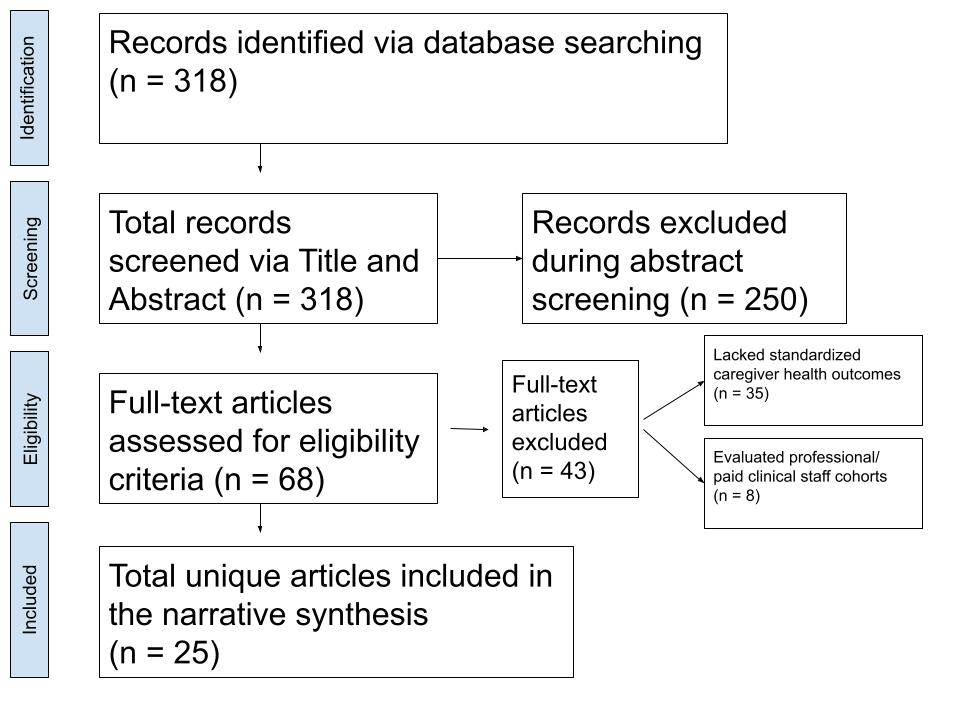
Literature searches were conducted on PubMed and Google Scholar for peer-reviewed English-language articles published between January 1, 1999 and August 31, 2026. The exact search string used was (“caregiver burden” OR “caregiving strain”) AND (“neurodegenerative diseases” OR “Alzheimer’s” OR “Parkinson’s” OR “ALS” OR “Huntington’s”) AND (“physical health” OR “psychological distress” OR “reciprocal” OR dyadic”). The initial database search led to 318 unique results, and titles and abstracts were screened using objective criteria. For inclusion, articles had to be peer-reviewed journal articles, focus exclusively on informal, unpaid, or family caregivers of adults diagnosed with a neurodegenerative disease, and provide a clinical measurement of caregiver health outcomes or dyadic clinical trajectories. Studies were excluded if they focused primarily on professional, paid, or institutional nursing staff, and consisted of gray literature, dissertations, or conference abstracts. During secondary screening, 250 articles were excluded based on title or abstract mismatches. Among the 68 full-text articles evaluated, 43 were excluded due to subjective or lack of standardization of health metrics, resulting in a total of 25 articles meeting all criteria for final narrative synthesis.
This study is structured as a narrative review. Extracted study data were categorized into predefined categories of: psychological outcome metrics, physiological biomarker and somatic tracking, disease-specific clinical comparisons, and reciprocal outcome trajectories. The analytical phase involved recording sample sizes, clinical staging characteristics, quantitative instruments or measurement methods used, and statistical effect sizes or qualitative themes.
| # | Author (Year) | Study Design | Population / Sample Size | Pathological Domain | Key Findings & Extracted Outcomes |
| 1 | Gao & Hong (2008)1 | Mechanistic Review | Cellular, animal, and clinical pathology models | General Neurodegeneration | Identifies that sustained central nervous system microglial activation and uncontrolled inflammation drive progressive neural death, establishing the biological backdrop for escalating care needs. |
| 2 | van den Kieboom et al. (2020)2 | Systematic Review | Family caregivers of individuals with dementia (Multi-study pooling) | Cognitive (Dementia / AD) | Maps the trajectory of caregiver burden across progressive dementia stages; validates that behavioral disturbances and neuropsychiatric symptoms are the strongest drivers of elevated ZBI scores. |
| 3 | Macchi et al. (2020)3 | Cross-Sectional Study | 175 patients and their family caregivers | Motor-Dominant (Parkinson’s Disease) | Demonstrates high somatic fatigue driven by physical transfer tracking and ambulatory assistance, noting that early integration of supportive palliative care preserves caregiver quality of life. |
| 4 | Liu et al. (2020)4 | Conceptual Analysis | Clarifying literature synthesis on international nursing data | General Chronic Illness | Formally operationalizes “caregiver burden” as a dynamic, multi-systemic construct spanning distinct emotional, physical, social, and financial dimensions triggered by chronic care tasks. |
| 5 | Del-Pino- Casado et al. (2021)5 | Meta-Analysis | 74 studies related to subjective caregiver burden and anxiety symptoms in informal caregivers | Cognitive (Anxiety) | There was a large, positive association between subjective caregiver burden and anxiety symptoms |
| 6 | Pinquart & Sörensen (2003)6 | Meta-Analysis | 84 empirical studies comparing caregivers vs. noncaregivers | General Caregiving Cohorts | Establishes quantified baseline deficits for informal caregivers, who present with significantly worse physical health indices and significantly higher psychological distress metrics than age-matched controls. |
| 7 | Lithin et al. (2020)7 | Cross-Sectional Study | Comprehensive clinical cohort evaluations (60 patient-caregiver dyads) | Multi-Pathology Neurodegenerative (Motor Neurone Disease and Parkinson’s disease) | Details the unmet supportive and palliative needs within specialized cohorts; correlates rapid functional decline with severe personal, physical, and financial strains on primary caregivers. |
| 8 | Todd (2020)8 | Neurobiology Review | Circadian rhythm disruption clinical models | Cognitive (Dementia / AD) | Outlines the neurological pathways behind patient “sundowning” behaviors and late-day aggression, showing how these nocturnal disruptions directly cause sleep fragmentation for home caregivers. |
| 9 | Chou (2000)9 | Conceptual Analysis | Conceptualization and operational definitions of caregiver burden. | General Caregiving Cohorts | Finds that caregiver burden is largely subjective. Additionally, depending on the degree of caregiving, burden could become impairment. However, the article does not include subjective feelings of caregivers, thus it describes how “burden” can take a variety of definitions. |
| 10 | Nucilli et al. (2026)10 | Cross-Sectional Study | 81 patient-caregiver pairs from a geriatric outpatient clinic | Patients with cognitive impairments vs physical disabilities | Caregivers of patients with cognitive impairments experience significantly higher burden than those caring for individuals with physical disability. Spousal and cohabiting caregivers represent the group at highest risk of strain, showing that the relationship of caregiver to patient is predictive of caregiver burden. |
| 11 | Gadikota et al. (2025)11 | Bibliometric Analysis | Analysis of 770 articles on Lewy Body Disease (LBD) | Cognitive & Motor (LBD) | Traces clinical data links showing that the complex intersection of cognitive deficits, vivid hallucinations, and parkinsonian motor features in LBD creates exceptionally high caregiver distress profiles. |
| 12 | Vick et al. (2019)12 | Longitudinal Study | 3422 dyads | Cognitive vs. Non-Cognitive | Documents caregiving changes near the end of life; confirms logistically compressed demands and acute stress peaks as patients experience progressive functional and mental decline. |
| 13 | de Araujo & Lacerda (2024)13 | Cross-Sectional Study | 49 female family caregivers of individuals with AD | Cognitive (Alzheimer’s) | Applies the Zarit Burden Interview to isolate financial toxicity and clinical stress, revealing that direct medical expenditures significantly accelerate caregiver social isolation. |
| 14 | Hughes et al. (1999)14 | Cross-Sectional Study | 1,594 caregivers of veterans identified to qualify for formal home care | General Caregiving Cohorts | This article finds that the relationship between patient and caregiver contributes to predicted caregiver burden. Financial issues are another predicting factor of caregiver burden. |
| 15 | Luca et al. (2026)15 | Cross-Sectional/ Observational Study | 238 caregiver/ patient pairs | Male vs female caregivers | Caregiver burden was associated with sleeping issues, but only among female caregivers. |
| 16 | Epstein-Lubow et al. (2008)16 | Prospective Cohort | 33 dementia caregivers | Cognitive (Dementia) | Proves direct clinical directionality; reveals that high baseline Zarit Burden Interview stress scores strongly predict the clinical onset of major depressive symptoms 12 months later. |
| 17 | Tsapanou et al. (2024)17 | Descriptive Study | 114 dementia caregivers, 72.8% women. | Cognitive (Dementia) | Provides precise tracking numbers for somatic depletion, reporting that 45.6% of caregivers get only 5 to 5.5 hours of sleep nightly, and 37.2% rarely or never feel rested upon waking. |
| 18 | Chang et al. (2010)18 | Cross-Sectional Study | 388 family caregivers tracking long-term hours | General Neurodegeneration | Uses the SF-36 health survey to confirm that a caregiver’s subjective perception of chronic mental burden acts as the primary statistical mediator of objective physical health decline. |
| 19 | Bastawrous et al. (2013)19 | Conceptual Analysis | Clarifying conceptualization of caregiver burden | General Caregiving Cohorts | Introduces ‘Role theory’ and ‘Stress theory’ frameworks to approach ‘caregiver burden’. The article also criticizes quantitative research on caregiver burden elaborating that it does not take every aspect of the caregiving experience into account. |
| 20 | Nelson Bialon et al. (2011)20 | Qualitative Study | Exploring causes and interventions for caregiver burden | Terminally Ill Patients | Many caregivers are not able to cope with their stress effectively and instead experience role conflict. Caregivers need more support from Hospice agencies and a wider general awareness of the duty of caregiving. |
| 21 | Bilić et al. (2022)21 | Qualitative Study | 8 spousal informal care partners managing home palliative care | Progressive End-of-Life | Isolates the phenomenon of anticipatory grief, demonstrating that mourning a partner’s identity prior to death generates deep guilt, driving emotional withdrawal and impacting care quality. |
| 22 | Van Houtven et al. (2026)22 | Longitudinal Prospective Cohort Study | Care partners from the national CARE-IDEAS study sample | Cognitive Impairment | Identifies that while immediate diagnostic imaging (amyloid-β PET status) does not change acute economic distress, long-term financial strain demands early family role adjustments. |
| 23 | Secinti et al. (2023)23 | Meta- Analysis | 90 records describing 50 randomized controlled trials (RCT) | Cancer Patients | The article showed that therapeutic counseling and skills training interventions have promising effects of alleviating caregiver burden. |
| 24 | Adelman et al. (2014)24 | Clinical Review of Cohort Studies and Meta-Analyses | Cohort studies examining the relation between demographic and social risk factors and adverse outcomes of caregiver burden | Cognitive (Dementia) | Risk factors for caregiver burden range from female sex to a lack of choice in being a caregiver. There are currently both psychosocial and pharmacological interventions. |
| 25 | Sullivan et al. (2023)25 | Cross-Sectional Study | Data extracted from longitudinal clinical cohorts | Cognitive (Dementia) | Proves that elevated caregiver stress profiles independently predict increased healthcare system utilization for the patient, including higher rates of overnight hospital stays and hospice use near the end of life. |
Methodological quality and risk of bias across the 25 articles were evaluated using standardized Joanna Briggs Institute (JBI) Critical Appraisal Checklists. Articles were evaluated across key domains—such as sample selection transparency, measurement accuracy, and confounding variables—to judge the strength of the evidence.
Results
Findings of the effects of caregiver burden
The data demonstrates that caregiver burden has distinct, interacting dimensions. The presentation of this burden depends heavily on the study design and assessment tools used in the research. Cross-sectional evidence consistently shows an association between high-density care hours and lifestyle disruptions. Specifically, a study documented using the Zarit Burden Interview (ZBI) revealed that financial stress caused by the requirement to buy medical equipment and inability to work are associated with severe social isolation13. Longitudinal cohort tracking provides deeper insight into these types of effects over the long-term. Pinquart and Sörensen showed that across 228 empirical entries informal caregivers experience significantly poorer physical health and higher psychological distress compared to non-caregiving control groups6. These data show that financial and logistical demands increase social withdrawal, which reduces the ability to cope with physical and psychological stress. Additionally, a model shows that the family relationship between the caregiver and the patient, and a low income, can be predicting factors of caregiver burden14. In addition, for middle to older-aged women, who make up the largest proportion of caregivers, age-related sleep changes, menopausal factors, and caregiver burden may all contribute to poorer overall health15.
Psychological effects
Psychological stress represents appears widely researched in the analyzed literature. Tracking by Epstein-Lubow and colleagues demonstrated that high baseline ZBI scores predicted the clinical onset of major depressive symptoms 12 months later, supporting the claim that caregiving stress can lead to clinical psychiatric illness16. The emotional strain is worsened by the unpredictability of disease progression, with times of stability followed by sudden decline. Over time, this leads to psychological degradation that can destroy caregivers’ coping capacities and contribute to burnout, a state of emotional stress that negatively affects both the caregiver’s and the patient’s overall health.
Physical effects
Rather than showing general fatigue, cross-sectional tracking by Tsapanou and colleagues using self-rated questionnaires demonstrated that 37.2% of caregivers in the sample reported rarely or never feeling rested after waking up17. Furthermore, it is also mentioned that 45.6% reported that they sleep for 5 to 5.5 hours on average, which is far below the recommended 8 hours for adults17. In addition, Chang and colleagues discovered that psychological distress stemming from long working hours was a primary cause of physiological decline18.
Disease-specific caregiver burden
The manifestations of caregiver strain vary across neurodegenerative conditions, reflecting differences in clinical symptoms and progression timelines. In cognitive-dominant conditions such as AD, caregivers encounter distinct psychiatric strain, and as validated by van den Kieboom and colleagues, neuropsychiatric disturbances, memory loss, and aggressive sun downing behaviors create intense psychological distress and emotional exhaustion scores on the ZBI2. In motor-dominant conditions like PD, caregivers face physical fatigue, and Macchi and colleagues demonstrated that assisting with physical activities, managing motor control, and addressing ambulatory instability cause high somatic fatigue3. Furthermore, Lewy Body Disease caregivers manage a unique combination of psychiatric symptoms such as hallucinations, agitation, apathy, and depression, and as Gadikota and colleagues noted, “these factors are strongly correlated with…the distress of the caregiver”11. From a stress theory perspective, the “degree of care provided and the types of deficits the care-recipient suffers from” are contributing factors to caregiver burden19. Because these two factors vary among different illnesses, it is important to refer to disease specific characteristics.
Discussion
Methodological context and conceptual gaps
This narrative synthesis clarifies key limitations and conceptual gaps within current caregiver literature. A major methodological limitation is that a majority of the analyzed studies utilize cross-sectional observational designs, which identify associations between caregiving demands and health declines but cannot establish direct causality. Furthermore, current literature exhibits a geographic and demographic bias, with most participants from urban, western medical systems, which limits the generalizability of these models to rural populations or diverse cultures where family networks and care differ.
Cyclical effects of caregiver burden
A key finding of this synthesis is the reciprocal correlation between caregiver well-being and patient clinical outcomes. The analyzed evidence correlates caregiver burden to mutual decline, showing that when a patient is nearing death, caregivers experience high stress levels12. These worsening patient symptoms increase the logistical and emotional demands on the caregiver, accelerating their distress and may lead to anticipatory grief “ [manifesting] itself as anxiety, depression, nervousness, restlessness, fear and tension, as well as difficulty remembering, concentrating, and accomplishing tasks”20. Importantly, this review extends this model by identifying the family ripple effects and the role of anticipatory grief as major contributors to this loop. Bilić and colleagues demonstrated that anticipatory grief—the process of mourning a loved one’s identity long before physical death—often leads to emotional withdrawal or severe guilt, and this psychological detachment can reduce care quality21. Evidence indicates that while immediate diagnostic measures (e.g. amyloid levels) may not immediately make economic pressure worse, financial strain like difficulty paying bills increases for all patients and care partners22. This shared trajectory correlates caregiver strain with patient decline, as evidenced by the mutual necessity to actively restructure family dynamics. Consequently, the economic demands of the patient’s condition force early role transitions and collective planning, shifting the burden from an individual caregiving spouse to a broader, interconnected family system.
Clinical and Theoretical Application
This review provides a thematic synthesis that clarifies how specific neurodegenerative symptoms lead to health risks for caregivers. Instead of viewing caregiving as a general source of stress, this framework describes how cognitive, motor, and rapid decline can be linked to psychological and physical outcomes for caregivers. This approach will allow interventions to improve caregiver health that are specific to the stressors given to them by caring for people with specific diseases and symptoms, optimizing both caregiver and patient overall health. This framework provides healthcare systems with a clear rationale to shift from patient-only treatment to an integrated approach where the caregiver and patient are assessed and managed together.
Review limitations
First, because the search strategy prioritized English-language articles indexed in major electronic databases over sixteen years, relevant studies published outside this timeline or in non-indexed international journals may be underrepresented. Second, narrative synthesis approaches do not mathematically pool effect sizes or perform meta-regressions. As a result, variations in caregiver health outcomes across small studies cannot be quantified with the statistical precision found in standard meta-analyses.
Future directions
To improve caregiver and patient health, it is necessary to accurately measure the connection between subjective stress and objective physical illness. Secondly, researchers should conduct comparative intervention studies to evaluate specific caregiving contexts that are non-Western or rural. Lastly, counseling, therapy, and skills training interventions seem effective, yet the long-term efficacy of these interventions need to be further researched to determine whether there are better alternatives23.
Recommendations
Clinicians and healthcare providers should implement standardized screening by integrating into healthcare plans for caregivers validated tools, such as the ZBI. This protocol ensures that caregivers experiencing high stress are immediately identified and referred to intervention programs. Furthermore, for rapidly progressive or complex conditions like PD, clinicians should offer palliative care referrals early in the clinical trajectory3,7. Furthermore, there should be a use of support groups and educational interventions for caregivers24. These early referrals help families arrange psychological support, genetic counseling, and home medical equipment coordination before acute caregiver burnout occurs.
For informal caregivers and families, it is important to use models that allocate tasks in ways that distribute administrative, financial, and physical responsibilities across multiple individuals, to stop primary caregiver physical exhaustion. Caregivers must also prioritize consistent rest and sleep by collaborating with clinical teams and relying on community resources or family rotations to protect sleep schedules and maintain their own health.
Finally, for healthcare policymakers, a critical recommendation is to expand subsidized respite care services by widening insurance coverage for both institutional and home-based temporary care provisions. Broadening access to these services provides families with affordable relief options that actively lower caregiver depression rates and reduce subsequent patient emergency hospitalizations25. Policymakers should also establish protected caregiver leave legislation that includes financial stipends, targeted tax credits, and job-protected family leave, formally recognizing informal caregivers as an essential segment of the public health workforce while reducing the financial strain that drives long-term social isolation13.
In summary, this narrative review is among the first to systematically map how specific neurodegenerative symptom profiles—ranging from cognitive and motor impairments to rapid-decline and genetic trajectories—directly dictate localized physical, psychological, and financial caregiver health outcomes. Findings suggest that informal caregivers facing these strains require targeted, profile-specific interventions and early clinical infrastructure to disrupt the cyclical feedback loop of mutual decline, particularly when navigating family role transitions and anticipatory grief. By establishing a model that bridges the gap between patient clinical status and caregiver health decline, this review offers healthcare systems and policymakers a clear rationale for implementing treatment frameworks that protect the caregiver-patient unit as a whole.
References
- H.-M. Gao, J.-S. Hong. Why neurodegenerative diseases are progressive: uncontrolled inflammation drives disease progression. Trends in Immunology. Vol. 29, pg. 357–365, 2008 https://doi.org/10.1016/j.it.2008.05.002 [↩] [↩]
- R. van den Kieboom, L. Snaphaan, R. Mark, I. Bongers. The trajectory of caregiver burden and risk factors in dementia progression: a systematic review. Journal of Alzheimer’s Disease. Vol. 77, pg. 1107–1115, 2020 https://doi.org/10.3233/JAD-200647 [↩] [↩] [↩] [↩] [↩]
- Z. A. Macchi, C. E. Koljack, J. M. Miyasaki, M. Katz, N. Galifianakis, L. P. Prizer, S. H. Sillau, B. M. Kluger. Patient and caregiver characteristics associated with caregiver burden in parkinson’s disease: a palliative care approach. Annals of Palliative Medicine. Vol. 9, pg. S24-S2S33, 2020 https://doi.org/10.21037/apm.2019.10.01 [↩] [↩] [↩] [↩]
- Z. Liu, C. Heffernan, J. Tan. Caregiver burden: a concept analysis. International Journal of Nursing Sciences. Vol. 7, pg. 438–445, 2020 https://doi.org/10.1016/j.ijnss.2020.07.012 [↩] [↩] [↩]
- R. Del-Pino-Casado, E. Priego-Cubero, C. López-Martínez, V. Orgeta. Subjective caregiver burden and anxiety in informal caregivers: a systematic review and meta-analysis. PloS One. Vol. 16, pg. e0247143, 2021 https://doi.org/10.1371/journal.pone.0247143 [↩] [↩]
- M. Pinquart, S. Sörensen. Differences between caregivers and noncaregivers in psychological health and physical health: a meta-analysis. Psychology and Aging. Vol. 18, pg. 250–267, 2003 https://doi.org/10.1037/0882-7974.18.2.250 [↩] [↩] [↩]
- Z. Lithin, P. T. Thomas, G. M. Warrier, A. Bhaskar, S. Nashi, S. Vengalil, K. Polavarapu, P. Kumar, R. Yadav, S. Alladi, N. Atchayaram, P. K. Pal. Palliative care needs and care giver burden in neurodegenerative diseases: a cross sectional study. Annals of Indian Academy of Neurology. Vol. 23, pg. 313, 2020 https://doi.org/10.4103/aian.AIAN_304_19 [↩] [↩] [↩]
- W. D. Todd. Potential pathways for circadian dysfunction and sundowning-related behavioral aggression in alzheimer’s disease and related dementias. Frontiers in Neuroscience. Vol. 14, pg. 910, 2020 https://doi.org/10.3389/fnins.2020.00910 [↩] [↩]
- K.-R. Chou. Caregiver burden: a concept analysis – sciencedirect. https://www.sciencedirect.com/science/article/pii/S0882596300788117?casa_token=uk1PW9lExRIAAAAA:ed_3AWs5keOhW7gcbWyh5pu-4k3yzYVLbNSM6oGtct-iekT_45tw1iC7IfGpAl-X6v9k1fuXNyo [↩] [↩]
- S. Nucilli, F. Corallo, A. Anselmo, I. Cappadona, M. Pagano, A. Nardozi, F. Russo, A. Laudisio. “Caregiver burden in geriatric care-recipients with cognitive vs. physical impairment: implications for screening and innovation” – sciencedirect. https://www.sciencedirect.com/science/article/abs/pii/S019745722600460X [↩] [↩]
- P. Gadikota, R. Haq, V. N. Reddy. Impact of neuropsychiatric symptoms on caregiver burden in major neurocognitive disorder due to lewy body disease: a bibliometric analysis. Academic Medicine & Surgery. 2025 https://doi.org/10.62186/001c.142969 [↩] [↩] [↩]
- J. B. Vick, K. A. Ornstein, S. L. Szanton, S. M. Dy, J. L. Wolff. Does caregiving strain increase as patients with and without dementia approach the end of life? Journal of Pain and Symptom Management. Vol. 57, pg. 199-208.e2, 2019 https://doi.org/10.1016/j.jpainsymman.2018.11.004 [↩] [↩] [↩]
- E. L. de Araujo, S. S. Lacerda. Psychosocial factors affected by burden in family caregivers of people with alzheimer’s disease. Dementia & Neuropsychologia. Vol. 18, pg. e20230115, 2024 https://doi.org/10.1590/1980-5764-DN-2023-0115 [↩] [↩] [↩]
- S. L. Hughes, A. Giobbie-Hurder, F. M. Weaver, J. D. Kubal, W. Henderson. Relationship between caregiver burden and health-related quality of life | the gerontologist | oxford academic. https://academic.oup.com/gerontologist/article-abstract/39/5/534/584513 [↩] [↩]
- A. Luca, T. Piccoli, S. Di Marco, A. Nicoletti, D. Lo Coco, E. Rolandi, S. L. Sensi, M. Russo, R. Ferri, P. Sucapane, A. C. Bruni, D. Perani, B. Guarnieri. Sleep quality and caregiver burden in alzheimer’s disease: focus on sex differences – sciencedirect. https://www.sciencedirect.com/science/article/pii/S1389945726004247 [↩] [↩]
- G. Epstein-Lubow, J. D. Davis, I. W. Miller, G. Tremont. Persisting burden predicts depressive symptoms in dementia caregivers. Journal of Geriatric Psychiatry and Neurology. Vol. 21, pg. 198–203, 2008 https://doi.org/10.1177/0891988708320972 [↩] [↩]
- A. Tsapanou, P. Zoi, P. Sakka. Sleep, diet, and exercise: how much dementia caregivers are affected? Brain Sciences. Vol. 14, pg. 826, 2024 https://doi.org/10.3390/brainsci14080826 [↩] [↩] [↩]
- H.-Y. Chang, C.-J. Chiou, N.-S. Chen. Impact of mental health and caregiver burden on family caregivers’ physical health. Archives of Gerontology and Geriatrics. Vol. 50, pg. 267–271, 2010 https://doi.org/10.1016/j.archger.2009.04.006 [↩] [↩]
- M. Bastawrous. Caregiver burden—a critical discussion – sciencedirect. https://www.sciencedirect.com/science/article/pii/S0020748912003367?casa_token=nnqZdlquNXQAAAAA:IWzo2ByAjTb5A1lBobqX5-RVWVPdXVh1ipXb-06VOfVKy82dJiaPeHkONFIDHuBA_FBCIvE4MP4 [↩] [↩]
- L. Nelson Bialon, S. Coke. A study on caregiver burden: stressors, challenges, and possible solutions. https://journals.sagepub.com/doi/full/10.1177/1049909111416494?casa_token=uUgQzjCacuYAAAAA%3AGnxk_BfzNvBWXYzsvYImXs4jY1MRJC3TD5wzESqZdLRmXvqcfz_7kiOBaJPkYPKCcnlDLe1rMjKN3w 2011 [↩] [↩]
- J. Bilić, L. Skokandić, L. Puljak. Anticipatory grief and experience of providing at-home palliative care among informal caregivers of spouses in croatia: a qualitative study. BMC Palliative Care. Vol. 21, pg. 199, 2022 https://doi.org/10.1186/s12904-022-01093-1 [↩] [↩]
- C. H. Van Houtven, C. B. Ford, E. Couch, M. Shepherd-Banigan, W. Zhang, E. Bélanger, B. L. Plassman, J. R. Burke, C. Sorenson, N. DePasquale, E. O’Brien, E. Jutkowitz, T. Wetle, V. A. Smith. Amyloid-β pet scans, economic strain and financial decision-making among persons with cognitive impairment and care partners: a mixed-methods analysis of the care-ideas study. Alzheimer’s Research & Therapy. Vol. 18, pg. 125, 2026 https://doi.org/https://doi.org/10.1186/s13195-026-02010-x [↩] [↩]
- E. Secinti, I. C. Fischer, E. A. Brennan, L. Christon, W. Balliet. The efficacy of psychosocial interventions for cancer caregiver burden: a systematic review and meta-analysis of randomized controlled trials – sciencedirect. https://www.sciencedirect.com/science/article/abs/pii/S0272735822001222 [↩] [↩]
- R. D. Adelman, L. L. Tmanova, D. Delgado. Caregiver burden: a clinical review | geriatrics | jama | jama network. https://jamanetwork.com/journals/jama/article-abstract/1840211?casa_token=hQeoLShzBYUAAAAA:rOWKNuTYUv2B1LiC3UjBUwm0vuz3Mw5MyYtzqJhKkpquAHcZTI22fFUfLfWGck2wHh4BUcW0V98&casa_token=UIphfQfW0OYAAAAA:3zI6xZQT3qyQCvbeKP73I7bTLvd9MmMbJPBz7WXAl8wWZGfPnPqkErpZywKIN7vm-OwEhGkDGhk 2014 https://doi.org/10.1001/jama.2014.304 [↩] [↩]
- S. S. Sullivan, C. de Rosa, C.-S. Li, Y.-P. Chang. Dementia caregiver burdens predict overnight hospitalization and hospice utilization. Palliative & Supportive Care. Vol. 21, pg. 1001–1015, 2023 https://doi.org/10.1017/S1478951522001249 [↩] [↩]