
Abstract
The increasing problems of intergenerational transfer and the decreasing interest of people in ICH are becoming a significant issue in the context of fast urbanizing societies. The question posed by this study is: what can digital technologies, structured as a demand-response system (i.e., a way to match digital product attributes with reported cultural needs of the population), do to facilitate the living transmission of ICH through multi-stakeholder cooperation? This question is explored in the research using the case study of the Chenzhou Paper-Cutting Digital Empowerment Project, which is a youth-led project that was executed between 2025 and 2026. A non-probability convenience survey (N=484) in various regions of China and qualitative data on stakeholder involvement, project reports, and official communications were used in an explanatory sequential mixed-methods design. Important descriptive results indicate that the sample respondents claimed high acceptance of the formats of digital innovation (overall M=4.31 on a 5-point scale), and that most of them indicated preferences towards craft experience and smart interaction modes. Based on these observed demand signals, the project team developed an AI-assisted learning platform, AR-based interactive applications, and co-created digital museum with 17 ICH inheritors. These findings provide initial and descriptive information about how a demand-responsive design approach can be applied to help preserve participatory ICH; the findings are based on samples and cannot be extrapolated to larger populations. The demand-response framework, outlined in Section 3, provides a valuable analytical tool that may be applied to future studies of ICH.
Keywords: Intangible Cultural Heritage, Digital Preservation, Augmented Reality, Artificial Intelligence, Youth-Led Initiative, Chenzhou Paper-Cutting
Introduction
Intangible Cultural Heritage (ICH) is a living cultural expression such as practices, knowledge and skills that communities identify as part of their culture1. In the context of rapid globalization and urbanization, many forms of ICH in China are encountering increasing difficulties regarding intergenerational transmission, public participation, and long-term sustainability2.Scholarly work on safeguarding practice suggests that effective ICH preservation requires moving beyond top-down documentation to community-centered, process-oriented approaches3.
The Chenzhou paper-cutting is a local art in the Hunan province that reflects the deep-rooted traditions of aesthetics and local culture. Although it was classified as an item of municipal level ICH in 2021, there are more demands on its traditional apprenticeship system and the population has different degrees of consciousness and involvement in the activity depending on the regions.
The recent literature indicates that the digital technologies, especially artificial intelligence (AI), augmented reality (AR) and 3D digitization, offer new channels of cross-regional ICH transmission, which improve the accessibility, interactivity and public engagement of traditional heritage4,5,6 . The existing research has concentrated on the use of a single technology in the preservation of ICH, including AR/VR-based storytelling or stand-alone digital archiving4,7,8. Nevertheless, few studies have been conducted to analyze integrated multi-technology ecosystems of ICH revitalization and large-scale mixed-methods studies on this subject are comparatively limited. Moreover, there is not yet an adequate theoretical insight into how digital technologies influence long-term public involvement and organized transfer of heritage. This paper fills these gaps in research by describing and exploring the potential role of AI, AR, and 3D digitization technologies in living transmission of ICH using a case study of Chenzhou paper-cutting as a youth-led demand-driven project.
The main research question that this study is based on is: What is the relationship between a youth-led digital intervention, which is structured by means of a demand-response model, and patterns of public engagement as well as multi-stakeholder collaboration in the preservation of Chenzhou paper-cutting? Sub-questions are as follows: (1) What are the documented signals of public demand captured using survey data? (2) How did the project team develop responses to these signals? (3) What types of multi-stakeholder cooperation were developed in the process of implementation? The demand response framework, presented below and further explained in Section 3, is a technique of matching the features of digital products and project priorities with the documented cultural needs of the population, which have been identified through systematic analysis of surveys.
Research Objectives
This paper will be able to: (1) create and explain a model of the ICH preservation that is based on a demand-response approach to digital technology; (2) in a descriptive way, how the interventions in the form of a digital tool can be used in cross-regional interactions with the population and its interaction with the ICH; (3) record the steps of forming a multi-stakeholder ecosystem between heritage workers, government agencies, youth groups, and the people.
This study adds to the theoretical work on digital heritage studies and to the practical application of participatory ICH preservation practices.
Methods
Ethics Statement
The research was voluntary and the participants were guided by the rules of international social science research. The project being a student one, it did not have IRB approval, but rather the following measures were taken to ensure that the participants and the cultural practitioners were not harmed. It is based on the guidelines in the Declaration of Helsinki as well as the UNESCO Ethical Principles regarding Protection of Intangible Cultural Heritage1.
This is an independent interdisciplinary study by secondary school students on the digital preservation and transmission of intangible cultural heritage. The study was supervised by a three-tier quality and integrity assurance system: (1) CTB (China Thinks Big) Global Youth Research & Innovation Conference academic integrity review (self-assessment, training in research ethics, and conformity of proposal); (2) endorsement from Chenzhou Arts and Crafts Association, a registered industry body, which attested to the conformity of the research design to the ethical norms of ICH protection; and (3) school supervising teacher who supervised the entire research process. No formal IRB approval was sought since this is a student-initiated informal academic project, although all procedures were designed to adhere to international ethical guidelines for social science research.
Before the data collection, all 484 survey respondents gave their informed consent using Wenjuanxing online survey platform. The information about consent was provided as a required pre-survey page explaining the purpose of the research, how the data will be used, anonymity assurance, principle of voluntary participation and right to withdraw at any time. All the participation was fully voluntary and anonymous. No personally identifiable information (PII) including names, ID numbers, contact details or exact addresses was collected in the survey. When participants clicked on the button of Confirm Participation, electronic informed consent was obtained which is in line with existing ethical guidelines of online survey research.
The 17 ICH inheritors who are to be a part of the project were invited by the research team in online form as well as through on-site visits. The participants were all given consent that they would have their works digitally documented, modelled with three dimensions and made publicly accessible via the internet. In cases when the inheritors lived in rural locations where it was impossible to use written documentation, the process of informed consent was applied in accordance with the standard procedures of the verbal informed consent, which is common practice in field research within the humanities and social sciences. All these consents were registered in the documents of the project communication (minutes of meetings and chats). The members of the project team did not make any use of cultural materials without the permission of the intellectual property rights of the inheritors, and the copyright law of the People’s Republic of China was followed.
In terms of data confidentiality and privacy, the survey was anonymous: no names, contact details, or other directly identifying information was collected. The survey platform automatically recorded only limited regional metadata (e.g., province or city), which was not used to identify any individual. The data were stored on an encrypted computer system accessible only to the researchers. The interviews were done under anonymous names, audio files and transcripts were kept in a secure way. 5 years will be spent keeping the research data (June 2026 – June 2031) after which the data will be destroyed by overwriting the information. In case of minors who are below the age of 18, the page of consent had special notification of guardian and the design of anonymity was maximized as far as possible to protect the rights of the minor participants.
This study received no external funding, and the authors declared no conflicts of interest.
Research Design
The research design is an explanatory sequential mixed method9, where the researcher first conducts a quantitative study to determine how the population of various regions in the country demands services and then qualitative studies are used to further analyze the situation on the ground and its implications9. The former was based on the cross-regional survey data (N=484) which was done during the quantitative stage whereas the latter was based on multi-source data collected by the heritage practitioners, government officials, project technical papers and official correspondence. This is because this design enables it to have a general picture of the preferences of the people as well as an analysis of the implementation procedures and the interactions between the stakeholders.
Case Study: Chenzhou Paper-Cutting Digital Empowerment Project
The team of researchers did a case study on the Chenzhou Paper-Cutting Digital Empowerment Project, which is a youth project and was conducted between 2025 and 2026. The research involved field work, internet-based content production, as well as the design of an AI and AR application, policy advocacy, and regional dissemination to the population. It has also been noted that young people have become more significant in cultural heritage restoration process and have offered their new ideas and technologies to restore the culture10 .
3D Digitization of Paper-Cutting Artifacts
To digitally document the Chenzhou paper-cutting artifacts, two-dimensional photographic images were transformed into three-dimensional mesh models through the IMAGEtoSTL platform. Image acquisition was done using smartphone cameras (about 12 megapixels) which are enough to capture hollowed-out details in millimeters and linear textures. The method proves that affordable and easily accessible equipment can be used to produce digitization outputs that are appropriate to use in engaging people in ICH outreach activities as it has been demonstrated by previous digital heritage studies4,11.
Figure 1 | presents the comparative analysis of algorithm optimization outcomes
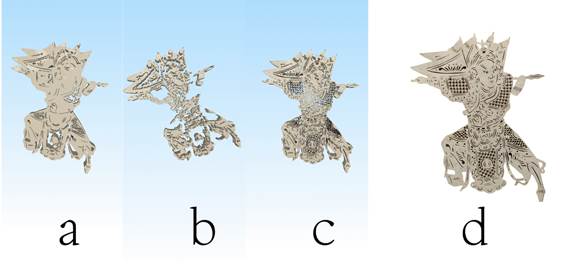
The reconstruction parameters were optimized in order to maintain the unique features of the paper-cutting art. The Extrude algorithm was not used, because it causes significant smoothing of the interior textures and the hollowed ones. Instead, Standard (Color) algorithm with High Detail mode was utilized to reconstruct the depth of relief as well as cutout designs by mapping pixel colors. Also, the Invert Output was not selected; when this feature is turned on, it results in an uneven surface like terrain which does not align with the flatness of the traditional paper-cutting. It has been proven that the approach is accurate, as indicated by the quality of the mesh, and a model can be represented with about 1.5 million triangles and 752900 vertices. The models created were saved in STL format and they were uploaded to Sketchfab where people could interact with them and even download them via QR code.
AI-Assisted Learning Platform The project created an AI-assisted learning platform to offer the users interactive Q&A and creative guidance capabilities in response to survey demand signals of intelligent interaction (M=4.24, Q9). It was constructed on Dify, an open-source LLM application development framework, with a large language model called Tongyi Qianwen developed by Alibaba Cloud. The system architecture is comprised of three elements: (1) knowledge base that is curated based on Chenzhou paper-cutting historical records, technique manuals, and stylistic pattern databases; (2) conversational interface based on the Tongyi Qianwen model, which is set up with a specific system prompt that defines the role of the platform as a digital heritage education assistant; and (3) web-based frontend implemented through the embedded widget provided by Dify, enabling users to access the platform via regular web browsers without any need to install extra software.
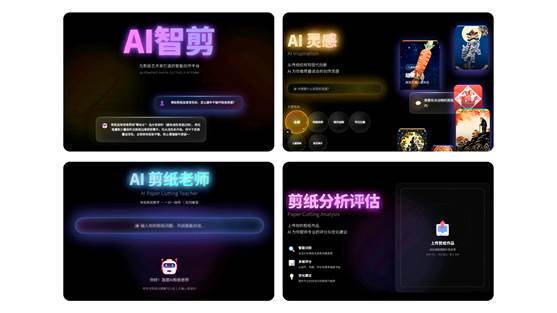
The platform was created as an additional teaching material to be used in the process of learning and not as a substitute to the master-apprentice method. The prototype nature of this element, as well as the third-party model APIs, does not allow providing the detailed technical architecture and performance metrics.
AR Interactive Application Design The AR application was designed in response to the survey (45.04% of people want to experience an immersive scene, Q14) that requires an interactive sample with a web-based platform of creating AR content (Kivicube). Previous studies have also shown that when it comes to the motivation of learning, the use of AR applications can be used to greatly boost the process of cultural heritage education12. The technical processing procedure comprised three steps: (1) preprocessing and separation of images into layers, i.e., original paper-cutting paintings were converted into digital ones, so as to divide them into layers of structure (e.g., foreground elements, background design, bordering) according to their color difference and the lines; (2) spatial depth assignment, which meant that after the separation of the layers, they were placed on the Z-axis at certain distances to provide the effect of parallax depth upon viewing through the AR, and X-Y plane was preserved to retain the two-dimensional structure of the composition; and (3) output integration, which means that the layered AR scenes were exported as a web-ready format and provided as QR codes to actual exhibition sites such as Chenzhou Guiyang Cultural Park.
The AR interaction enables the user to use his or her camera phone to scan a paper-cutting and then have it displayed as an animated three dimensional object. The users are able to adjust their view, zoom and change layers of visibility by using the touch gestures. The design of the implementation was focused on the availability of the browser (no specific app is required) and the low bandwidth optimization in order to ensure that the variable network conditions at rural exhibitions were met. This location-based deployment model is one of the emerging models of place-based AR cultural heritage communication13 whereby 10 samples of AR interactions were created and implemented with information about where they were deployed and who used them recorded in the project records.
Google Teachable Machine for Craft Evaluation
Besides the 3D digitization and AI-assisted learning platform mentioned above, the project used Google Teachable Machine as an independent tool to quickly compare the quality of paper-cutting craft inheritance. The problem that this tool solves is a practical one in ICH transmission: conventional methods of evaluating crafts are based on manual evaluation by experts, which is slow, subjective, and hard to scale. Image recognition tools based on AI have demonstrated potential in cultural heritage use cases to automate classification and quality analysis14 .
The essence of the system is that it is a Teachable Machine which is used to determine how much the new paper-cutting works are similar to the old original ones in terms of the fidelity of the craft and technique. It has three steps: (1) Model Training: The classic representative works of the master inheritors will be applied as the training data and an image feature recognition model will be trained. The set of training data contains the work of other inheritors of different styles of the Chenzhou paper-cutting. (2) Image Matching: In case of a new paper-cutting work, the program will take its features and compare them with the feature library of the trained model. (3) Score Output: The system produces a fidelity score of 0 to 100 where the higher the score the more alike the composition, line quality, hollowing, and style characteristics of the classical originals.
This tool has several practical values for ICH inheritance. Firstly, it provides inheritors and apprentices with fast and objective feedback on their work, so they can find the aspects of improvement in craft technique and the fidelity to style. Secondly, it saves the time cost and reduces the subjectivity of manual evaluation, thus making more frequent and regular assessment possible. Thirdly, it provides a light-weighted and standardised evaluation tool for ICH education and training, especially in the case of distance learning where the guidance of masters in person might be unavailable. Note that this tool is an auxiliary means of evaluation and cannot substitute expert judgement – the artistic and cultural value of paper-cutting works needs overall evaluation by professional inheritors.
Survey Design and Data Collection
The questionnaire was a survey that would help to determine the perception of the people, their preference and intentions to act in relation to the digital ICH activities. The last part of the questionnaires consisted of 15 questions with six dimensions as follows: (1) demographic characteristics, (2) frequency of contact with ICH in the past, (3) opinion on the commercial products related to paper-cutting, (4) opinion on the direction of digital innovation of ICH, (5) preferred forms of interaction with ICH, and (6) opinion on the promotion of culture and its inheritance.
To check the instrument of clarity, comprehensibility and face validity, the pilot participants were asked to complete the questionnaire in 20 samples. The sample size was 15 questionnaires which were completed by the participants who were then requested to find any questions that are ambiguous or confusing or hard to answer. According to their opinion, three items had been changed to make them clearer. As an example, the wording of the item Q9 (Do you agree with the digital innovations?) has been rephrased as follows: Please rate the acceptance of the following directions of the digital innovation (1 = very low, 5 = very high) and five particular directions have been mentioned. The pretest results did not become part of the final population (N=484). All the pretests responses were only applied towards refining the instrument.
Since the 15 items are used to measure six independent dimensions of preference and not several indicators of one latent construct, the overall questionnaire structure cannot be analyzed using traditional internal consistency reliability analysis (e.g., Cronbach’s ). Every item is regarded as a separate preference scale and all the analyses are confined to descriptive statistics. The methodological approach is suitable when it comes to surveys that are aimed at measuring various preference dimensions as opposed to one psychological construct.
The questionnaire was conducted on the basis of Wenjuanxing, a Chinese online surveying website in which the respondents were surveyed in September 2025 to January 2026. The research design followed the non-probability convenience sampling and it was focused on making sure that the sample was diverse in terms of age groups, occupations, geographical areas (Chenzhou, Beijing, Shanghai) and even a few foreigners. Altogether there were 484 valid answers; all of them were taken because there was no evident mistake of logic or too much missing information. These findings are based on this sample and can not be extrapolated to the rest of the population. In the Supplementary Appendix, the whole framework of the sampling process, the distribution of the regions and the inclusion criteria is given.
Qualitative Data Collection
In order to add qualitative data, it was necessary to have a multi-source of qualitative data in the form of: a deep study of the 17 ICH inheritors and semi-structured interviews with four representative members of the ICH; the documents of the official policy and formal communication of the government concerning the protection of Chenzhou paper-cutting; the complete project documentation and technical description of the AI system and AR applications; the notes on the field observation at the offline exhibitions and other events; and the agreements with the institutional partners (the association of arts and crafts in Chenzhou).
It is important to mention that the qualitative data are mainly based on project documents and few interviews. The sample size limited in-depth analysis of various stakeholder views, and all qualitative results can be interpreted as descriptive observations but not systematic analyses.
Data Analysis
In the case of quantitative data, there was a descriptive statistics and cross tabulation analysis done with the help of SPSS (Version 28.0) to explain the nature of demand patterns and preferences in terms of digital ICH interventions among the population. These analyses do not imply any inferential causality.
In the case of qualitative data, the analysis of content was done to code and to draw out the main themes of the interview transcripts, policy documents and project records. The quantitative surveys and qualitative information were cross-checked through triangulation in order to develop the demand-response correspondence framework as well as explain the trend of consistency between the given preferences and the results of the projects. The theoretical description was accomplished by translating the last empirical observations into the model of the theory.
Results
Sample Characteristics
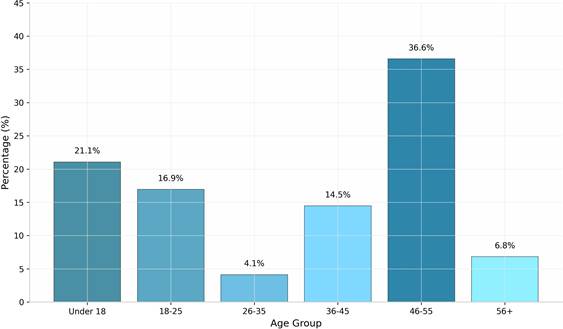
The last acceptable survey population (N=484) was characterized by the different age, location, and exposure to ICH. The highest percentage of people aged 46-55 (36.57%) is followed by under-18s (21.07%) and 18-25s (16.94%). It includes not only the traditional audiences that value their heritage but also the younger generation that might be interested in the transmission of ICH.
Figure 3 presents the age distribution of all 484 respondents
As to the frequency of contact with ICH in the past, 69.63% of respondents indicated that they had occasional contact with ICH and 25.41% said that they had never contacted ICH before. This is a descriptive finding which explains why it was difficult to engage people superficially with ICH as the project aimed at solving this problem.
Innovation Acceptance Analysis
The self-reported ratings of the public acceptance of the directions of digital innovation in Chenzhou Paper-Cutting were consistently high in all categories on a 5-point Likert scale (overall M=4.31). The most popular self-reported acceptance scores were achieved by Paper-cutting + Daily Necessities (M=4.39) and Paper-cutting + Fashion Design (M=4.37), then came AR Interactive Experience (M=4.31) and Digital Collections (M=4.23). Another high score was also recorded in the case of the acceptance rating of the Paper-cutting + Smart Interaction, which scored a high level of M=4.24.
Figure 4 presents mean acceptance scores for each digital innovation direction
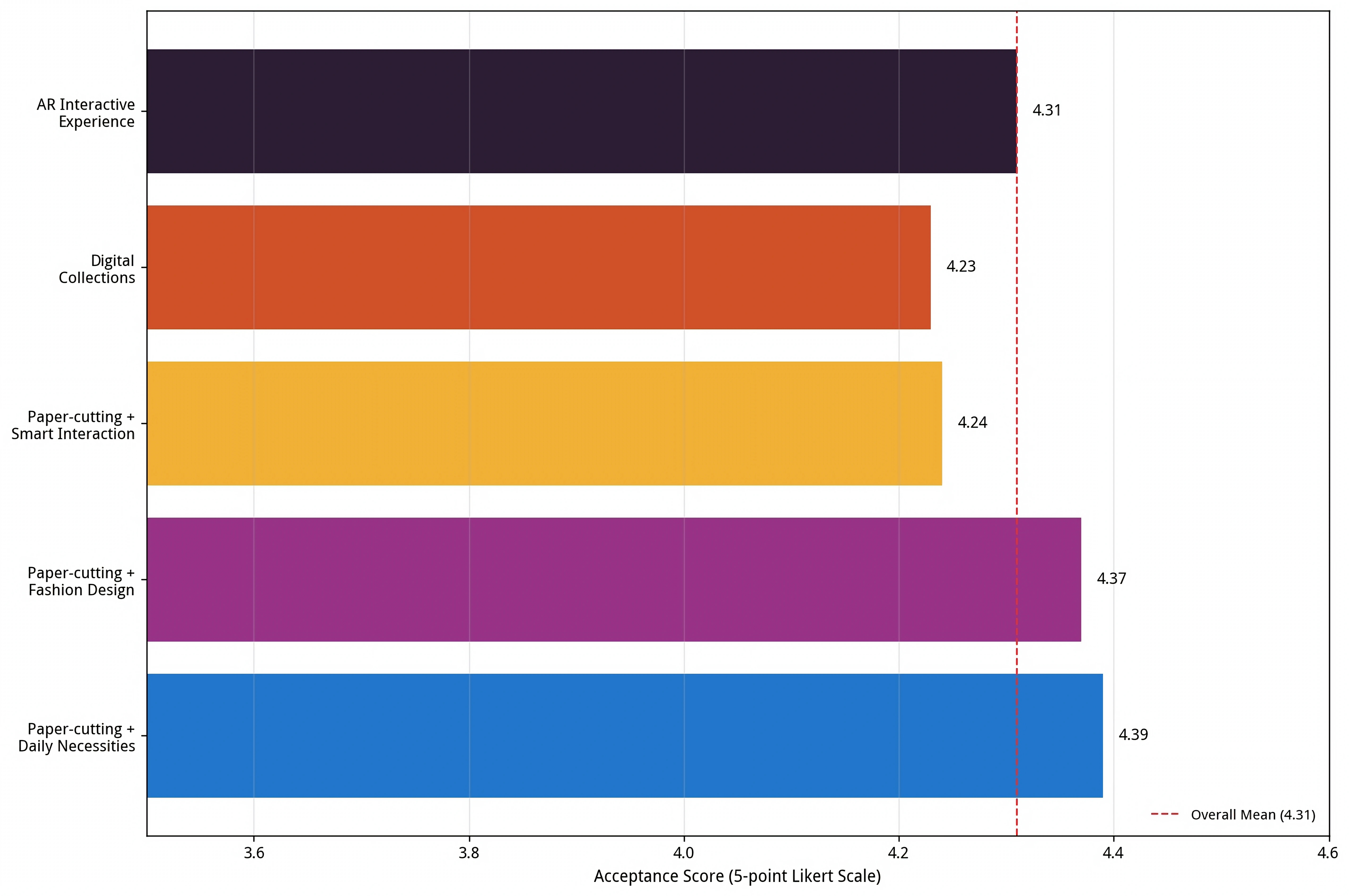
These results show that there is a strong expressed support in the sample towards the incorporation of digital technology and traditional heritage. The especially high expressed acceptance of daily-use integration and smart interaction are in line with the priorities of design of the project, such as its AI-assisted teaching platform and AR interaction products. These findings are based on self-reports of respondents and do not represent behavioral or market data.
Engagement Preference Analysis
The study of the expectations of the population concerning ICH promotion and engagement forms showed that the most popular offline engagement methods in the sample were as follows: Craft Experience Zone (M=4.38) and Study Tour Courses (M=4.22). In some interaction formats, the highest preference rates were recorded with respect to Craft Experience Course (71.69%), Customized Souvenirs (70.25%) and AR Scan Guide (45.04%) also had a significant level of stated interest.
Figure 5 shows the distribution of engagement preferences across offline formats and interaction modes
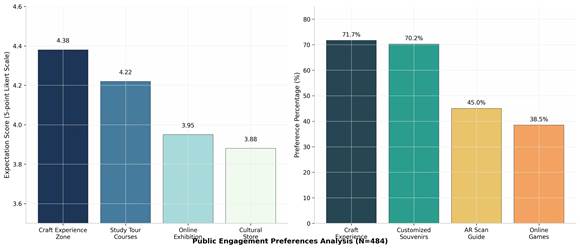
The results of the survey on the preference of a practical craft experience and AR interactive instructions are not surprising as the major products of the project were the exhibition of the AR interaction in Chenzhou Guiyang Cultural Park (based on the Kivicube platform, with the layer-separated depth mapping) and the web-based AI teaching system (developed by Dify, based on the Tongyi Qianwen).
Demand–Response Correspondence Analysis
The demand response framework (i.e., a tool to match the features of digital products with documented public cultural needs) is the central analytical prism of this paper. Table 1 identifies four demand signals that were identified in the survey data and explains what project action was taken in response to each of them. This correlation is found retrospectively, and it does not mean that the survey data guided all development decisions ahead of time, nor does it prove that the interventions made as a result enhanced learning outcomes, effectiveness of heritage transmission or behavioral engagement. It shows how the design decisions made by the project team are aligned with the preferences of the population expressed publicly.
| Demand Signal (Survey Data) | Key Evidence (Source) | Project Response (Action) | Theoretical Pathway (Descriptive) |
| Stated preference for intelligent interactive learning (M=4.24, Q9) | Survey data N=484, Q9 | Developed ‘AI Paper-cutting’ platform with Q&A and creative guidance functions | Cognitive Enhancement Path: AI platform aimed at supplementing oral transmission; initial observations by practitioners indicate more youth involvement in the studio. |
| Stated preference for immersive scene experience (‘AR Scan Guide’ 45.04%, Q14; ‘Craft Experience Zone’ M=4.38, Q13) | Survey data N=484, Q13–14 | Created 10 AR interaction samples; held offline physical exhibitions at Chenzhou Guiyang Cultural Park | Immersive Experience Path: AR technology superimposes digital models onto real scenes; exhibition audience feedback suggests positive interest. |
| Stated preference for cultural depth and authenticity (‘Traditional Craft’ 84.71%, ‘Cultural Stories’ 64.05%, Q8) | Survey data N=484, Q8 | Constructed digital museum archiving 500+ works; invited 17 heritage practitioners as co-creators | Value Co-Creation Path: Practitioner involvement and cooperation agreements support content authority and authentic cultural representation. |
| Stated expectation for policy support and systematic promotion (‘Study Tour Courses’ M=4.22, ‘Digital Exhibition’ M=4.12, Q13) | Survey data N=484, Q13 | Submitted formal policy proposal to Chenzhou government; received a written official response letter | Policy Engagement Path: youth-led advocacy generated a documented government response; this study did not follow up to determine if the response led to adopted policy.. |
Note: Q8, Q9, Q13, Q14 are item numbers in the survey instrument. The means of Likert scales represent self-reports by respondents and cannot be taken as behavioral or market evidence.
This is a demand response which is in line with the previous findings that AI generated cultural and creative content can be used to improve the sustainability of ICH by appealing to the perception of cultural value, but this study does not find it. It has been found that the given sample was very high on the acceptance of AR Interactive Experience (M=4.31) and Paper-cutting + Daily Necessities (M=4.39).
Qualitative Evidence from Stakeholder Engagement
The research team exchanged with the Director of Chenzhou Cultural Center and the Director of Chenzhou Museum during field investigations. Both were in favor of the digital preservation of Chenzhou paper-cutting. According to the Cultural Center Director, the use of digital technologies, especially 3D modeling and AR interaction would be able to overcome the problem of reaching younger audiences as he noticed that traditional craftsmanship requires new carriers to communicate with the next generation. The Museum Director stressed on systematic digital archiving as a long-term preservation tool and pointed out the significance of youth involvement in cultural heritage activities. Such qualitative observations are aligned with the survey results and assist in placing the approach of the project into context.
Policy Advocacy Pathway
The policy proposal was submitted to the Chenzhou municipal government. A letter of response, in writing, was sent to the project team (see Additional Material) where it was stated that: (1) they were going to bundle the Chenzhou paper-cutting to be used as a provincial ICH; (2) they would consider the special funds on the digitization of the municipal ICH; and (3) they would create scenic areas projects. The present study did not monitor the process of this official reply being turned into a real policy. Getting an official answer is one of the steps in the advocacy procedure; it does not prove that the policy has been changed. It can be seen that there are also some findings that the new policy framework of China in terms of the emerging ICH is proactive in its digital preservation efforts15 , but there is no evidence that the advocacy of this project led to the government promises.
Multi-Stakeholder Collaborative Ecosystem
The project developed a digital platform-based collaborative ecosystem between the heritage practitioners, government bodies, researchers and the population. This ecosystem allowed two-way interaction and resource exchange between various stakeholders and turned the conventional top-down heritage preservation into a more networked and collaborative approach16.
Figure 6 presents a schematic of the multi-stakeholder collaborative ecosystem
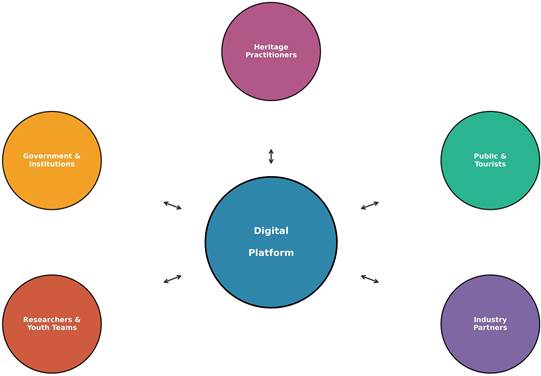
Value co-creation based on multi-stakeholder involvement has been found to be a significant mechanism in sustainable heritage management17 and it has also been demonstrated that digital platforms can support such collaborative processes in the context of cultural heritage18 .Recent literature further suggests that sustainable cultural heritage management should move away from passive participation of the public towards active co-creation approaches, where communities are viewed as equal stakeholders in decision-making, not recipients of expert-led conservation strategies17.
Discussion
Integration of Quantitative and Qualitative Findings
The current paper will be able to provide the results that are similar in terms of both quantitative and qualitative data analysis under the proposed demand-response model. The findings indicate that digital heritage projects that are initiated by youth can serve as a medium through which the documented demands of people are matched with particular technologies and programs. In comparison to the literature available on this topic, which is largely single-technological studies7, the present study presents an integrated research model where the AI, AR, and 3D technologies are combined. Moreover, it should also be noted that in the previous studies the user experience and the presentation of the content online have been the main focus of attention, whereas in the present study we have expanded the field of analysis to include the policy interaction and multi-stakeholder participation. These findings offer further explanatory details about how the use of technology may aid in sustainable transmission of intangible cultural assets.
In particular, the project team has already been able to receive signals of people in the form of smart communications (M=4.24), AR experience (45.04%) and cultural richness (84.71) (N=484); they have then made decisions based on these signals to create an AI platform, a sample of AR, and the digital museum. It is an example of how the demand-response mechanism works: the technology (AI, AR, 3D) can be considered as the neutral design; it will be more effective when it is implemented with accuracy in the context of the identified social-cultural demands. This view is opposed to conventional models of accepting technology (like the Technology Acceptance Model19 ) that consider technology as the main object of analysis, whereas the current study argues that the application of technology requires a prerequisite condition, which is demand-driven design.
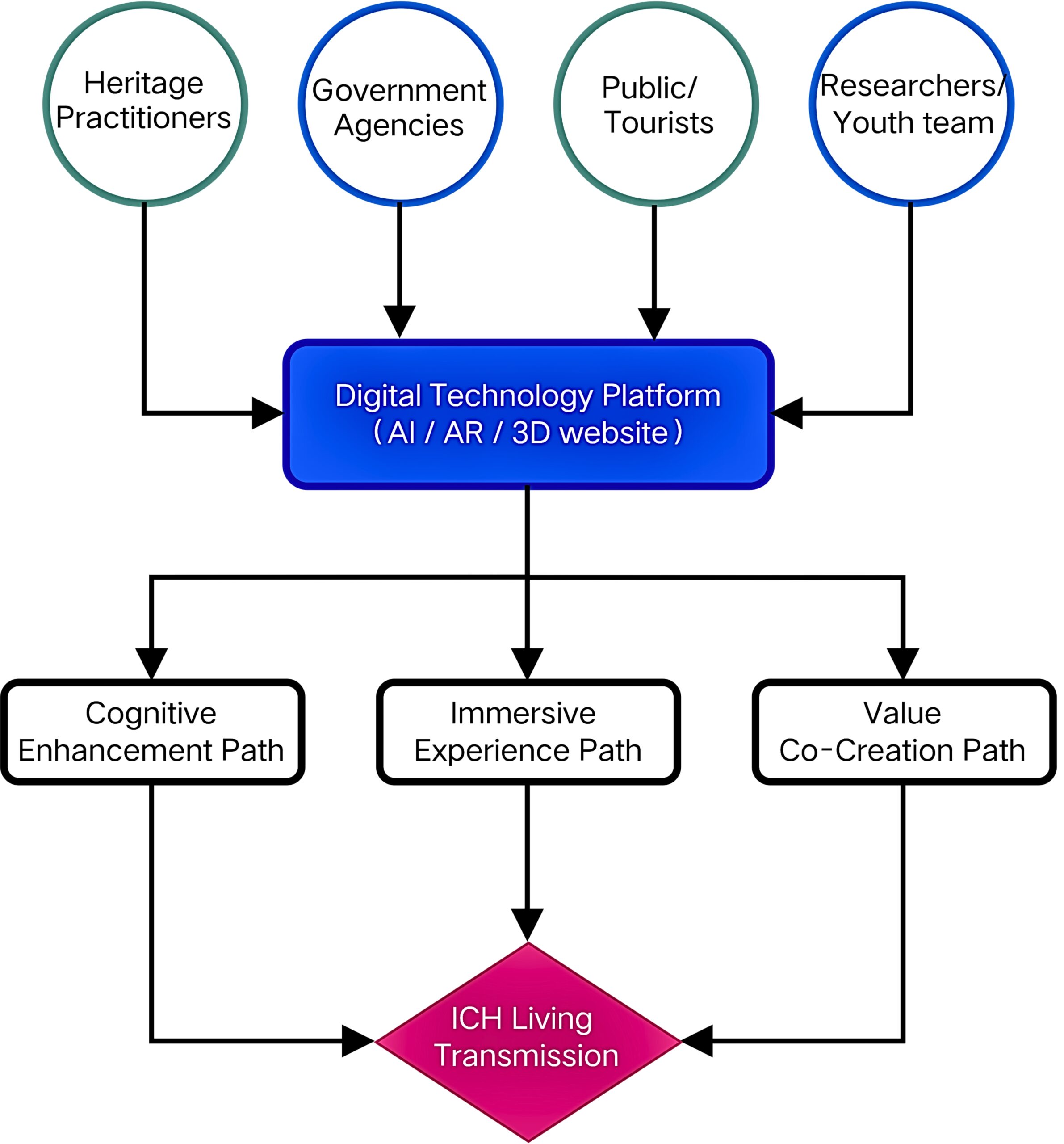
Figure 7. The demand-response model of the living transmission in ICH is theoretical. It maps three core platform-driven ways of analysis (Cognitive Enhancement, Immersive Experience, and Value Co-Creation) to the actions of projects, with Policy Engagement serving as an institutional enabler (see Table 1).
Theoretical Contributions
The first three theoretical contributions of this research are as follows. The first one is the expansion of TAM to ICH preservation situations6 where it was not possible to use the model in such a manner, and cultural authenticity and heritage immersion can be added as other dimensions of the situation. Second, it explains the possibility of technology as a mediator of ICH revitalization process that could be used by digital media to connect the practitioners of the heritage with the population. Thirdly, it adds to value co-creation theory20 as it records the fact that multi-stakeholder collaboration was established around a digital heritage platform within this case. Such additions are speculative and should be tested in more settings.
Practical Implications
Heritage Practitioners: The case implies the usefulness of adopting 3D digitization and AR to appeal to younger audiences (in line with gamification and AR results found in previous studies5 ) without losing cultural authenticity.
Government and Cultural Institutions: The creation of policies and funding schemes on youth-led projects can be fruitful; the experience in this project with regard to advocacy is one example15 .
Technology Developers: The emphasis on user-friendly, culturally sensitive design is in line with the high stated preferences of daily-use integration (M=4.39) that are reported in this sample, which is supported by AI-generated cultural product research21 .
Youth Teams and Researchers: The use of mixed methods and early stakeholder involvement (e.g., collaboration with the Chenzhou Arts and Crafts Association) can enhance research quality as well as project relevance, which is why the gap between practitioner-researcher collaboration that was observed in previous digital heritage research4 should be considered.
Comparison with Prior Research
In comparison to the current literature that mainly concentrates on the application of a single technology, including the global review of AR and VR adoption in cultural heritage7 by Bekele et al., this paper outlines an integrated technological platform that integrates AI (through Dify-integrated LLM platform), AR (through Kivicube web-based layer separation), and 3D digitization (through IMAGEtoSTL mesh reconstruction). This study goes beyond the analytical scope of Srdanovi et al. gamified AR/VR model of engaging with the heritage5 as it includes policy engagement and multi-stakeholder collaboration, aspects that are underemphasized in international literature. The demand-response framework can also provide a context-sensitive analytical lens of non-Western ICH which can be used to guide future comparative research.
The results are also consistent with the recent studies on platformed inheritance in Chinese digital heritage scenarios22, which focuses on the fact that digital heritage innovation is a socio-technical process encompassing practitioner knowledge, institutional power, interface design and participation of the people. The evidence of multi-stakeholder collaboration via online platforms in this study can be seen as an empirical support for this view
Implications for Youth-Led Digital Heritage Initiatives
This project affords several observations pertaining to youth-led digital heritage initiatives23, arising from the team’s interdisciplinary collaboration, iterative problem-solving, and social innovation approach. Youth participation is increasingly acknowledged as beneficial to cultural heritage management, contributing new perspectives and technological fluency10.
The group had both the technological knowledge (AI and AR development, 3D modeling), design knowledge (UI/UX, visual communication) as well as policy knowledge (proposal writing, government liaison) and cultural knowledge (documentation of heritage, interview with practitioners). This was an interdisciplinary team that allowed the solution of problems to be done in a way that is not easy to be replicated by single-discipline teams
There were a number of implementation issues that the team faced. The first prototypes in AR interaction design had problems with user experience in terms of gesture recognition accuracy. The interaction protocols were polished by the team after more than 30 rounds of iterative prototype revisions and discussions with professionals at cultural centers. Informal communication was not effective in government coordination; eventually, formal proposal submission through official channels resulted in a written government response. These experiences indicate that adaptive problem-solving is essential in complex social innovation projects.This practice-oriented approach to human-computer interaction research is an extension of the larger trend of turning to practice, which prioritizes situated, real-world problem-solving over abstract theoretical design24.
Limitations
The research has its limitations and they should be considered very seriously. To begin with, the data was gathered in China; this finding can only be used in other countries after some cross-cultural analysis is done to determine the applicability of the findings to the rest of the world. Second, there was no comparison group that did not use digital technology in the study; as a result, the effectiveness of using digital technology over non-digital one could not be shown by the study because it was not based on a comparative study. Thirdly, the information collected in the form of questionnaire surveys and interviews are self reports and cannot be compared to real behavior; the results achieved through the high scores of Likert scale obtained by a non-probability convenience sample cannot be regarded as the outcome of learning process, knowledge sharing or market performance. Fourth, the given study is just a short-term project, which means that the long-term effect of the digital interventions must be observed and examined in the future. Fifth, there was no systematic account of the cases where the case failed and the issues in implementation that were not reported voluntarily by the team. Sixth, causal inference is restricted by the cross-sectional survey design. Seventh, the qualitative information is mostly based on the documents of the projects rather than the independent analysis of the stakeholder perspective, which might restrict the scope of the analysis. Eighth, the reliability and validity of the questionnaire employed in the present study was refined in the pretest phase but was not subjected to the formal testing procedure of reliability and validity, which may reduce the accuracy of the measurement. Ninth, the sampling technique adopted here is convenience sampling whereby the recruitment process is not clearly defined and the response rate is not provided, therefore the representativeness of the samples cannot be guaranteed and the results should be interpreted as an illustration of the particular sample and not the overall population.Tenth, the technical solutions offered in the paper (AI platform, AR, 3D digitization) depend on third party platforms and APIs, which will make them less sustainable in the long run and unable to be replicated independently. The AI system will be able to produce the output relying on the training material and parameters of the model of the Tongyi Qianwen system, which is not controlled by the researchers of the AI system, which is the reason why the issue of the bias in the content of cultural heritage generated by the AI systems is also discussed in general25. The visual quality of the AR application is limited to the rendering engine of Kivicube platform and the resolution of photographic images being processed. It is necessary to take into consideration such dependencies when assessing the sustainability and scalability of the technical solution.
Future Research Directions
The future research areas are: the longitudinal studies of the long term impact of digital interventions in ICH; comparative study on various types of ICH (music, folklore, crafts); optimization of technology systems to suit different parts and age groups; larger number of samples of people who are heritage practitioners and government officials to increase the quality of the qualitative results; and finally the researchers will be able to assess the effectiveness of digital platforms used in the preservation of ICH as well as their sustainability. The question of the sustainability of ICHs in a digital environment (in terms of technical maintenance e.g., storage of data, ownership by local communities) is also important since there are examples of cases when it was found that the sustainability issue of such projects is a major concern2.
Conclusion
This paper is a descriptive, exploratory research on the development and implementation of a digital intervention to assist in living transmission of the Chenzhou paper-cutting which is an ICH at the municipal level. The study reports the results of a mixed-methods study where the correspondence between the preferences of the people that are observed and the decision-making process of designing the project is structured by a demand-response system. According to the results, it can be assumed that the youth-based digital heritage projects can become the middlemen between technological changes and the requirements of the local communities and institutionalization; however, this is only a description and does not provide any causal relationship with regard to the effects of the heritage.
The outcomes of the project that are recorded such as an AI teaching platform, samples of AR interaction, a co-developed digital museum with 17 heritage practitioners, and a formal government response to its policy advocacy are examples of how youth-led projects can follow participatory ICH preservation. These results will give some initial case observations to researchers, heritage professionals and policymakers who want to explore participatory and sustainable ICH preservation strategies.
References
- UNESCO. Convention for the Safeguarding of the Intangible Cultural Heritage. 2003. https://ich.unesco.org/en/convention. [↩] [↩]
- L. Yu. Digital sustainability of intangible cultural heritage: the example of the “Wu Leno” weaving technique in Suzhou, China. Sustainability. Vol. 15(12), pg. 9803, 2023, https://doi.org/10.3390/su15129803. [↩] [↩]
- M. L. Stefano. Practical considerations for safeguarding intangible cultural heritage. Routledge, 2021, https://doi.org/10.4324/9781003034216. [↩]
- W. Li, Q. Xie, J. Ao, H. Lin, S. Ji, M. Yang, J. Sun. Systematic review: a scientometric analysis of the status, trends and challenges in the application of digital technology to cultural heritage conservation (2019 – 2024). npj Heritage Science. Vol. 13, pg. 90, 2025, https://doi.org/10.1038/s40494-025-01636-8. [↩] [↩] [↩] [↩]
- P. Srdanović, T. Skala, M. Maričević. InHeritage—a gamified AR/VR app for cultural heritage in the Metaverse. Applied Sciences. Vol. 15, pg. 257, 2025, https://doi.org/10.3390/app15010257. [↩] [↩] [↩]
- Q. Tan, K. M. Kamarudin, S. S. Herman. Systematic review of empowering intangible cultural heritage with metaverse technology. ACM Journal on Computing and Cultural Heritage. Vol. 18(2), pg. 1-18, 2025, https://doi.org/10.1145/3723169. [↩]
- M. K. Bekele, R. Pierdicca, E. Frontoni, E. S. Malinverni, J. Gain. A survey of augmented, virtual, and mixed reality for cultural heritage. Journal on Computing and Cultural Heritage. Vol. 11, pg. 1-36, 2018, https://doi.org/10.1145/3145534. [↩] [↩] [↩]
- R. G. Boboc, E. Băutu, F. Gîrbacia, N. Popovici, D.-M. Popovici. Augmented reality in cultural heritage: an overview of the last decade of applications. Applied Sciences. Vol. 12(19), pg. 9859, 2022, https://doi.org/10.3390/app12199859. [↩]
- N. V. Ivankova, J. W. Creswell, S. L. Stick. Using mixed-methods sequential explanatory design: from theory to practice. Field Methods. Vol. 18(1), pg. 3-20, 2006, https://doi.org/10.1177/1525822X05282260. [↩] [↩]
- Y. Zhang, D. Ikiz Kaya, P. van Wesemael, B. Colenbrander. Youth participation in cultural heritage management: a conceptual framework. International Journal of Heritage Studies. Vol. 30(1), pg. 56-80, 2024, https://doi.org/10.1080/13527258.2023.2275261. [↩] [↩]
- M. Li, Y. Wang, Y.-Q. Xu. Computing for Chinese cultural heritage. Visual Informatics. Vol. 6(1), pg. 1-13, 2022, https://doi.org/10.1016/j.visinf.2021.12.006. [↩]
- J. C. González Vargas, R. Fabregat, A. Carrillo-Ramos, T. Jové. Survey: using augmented reality to improve learning motivation in cultural heritage studies. Applied Sciences. Vol. 10(3), pg. 897, 2020, https://doi.org/10.3390/app10030897. [↩]
- A. Kleftodimos, A. Evagelou, A. Triantafyllidou, M. Grigoriou, G. Lappas. Location-based augmented reality for cultural heritage communication and education: the Doltso district application. Sensors. Vol. 23(10), pg. 4963, 2023, https://doi.org/10.3390/s23104963. [↩]
- X. Wu, X. Yin, X. Chen, X. You, F. Zhang, Y. Xiao. Understanding regional and stylistic diversity in Chinese rural paper-cutting through convolutional neural network-based image classification. Applied Sciences. Vol. 16(7), pg. 3174, 2026, https://doi.org/10.3390/app16073174. [↩]
- Y. Xu, Y. Tao, B. Smith. China’s emerging legislative and policy framework for safeguarding intangible cultural heritage. International Journal of Cultural Policy. Vol. 28(5), pg. 566-580, 2022, https://doi.org/10.1080/10286632.2021.1993838. [↩] [↩]
- R. C. Smith, O. S. Iversen. Participatory heritage innovation: designing dialogic sites of engagement. Digital Creativity. Vol. 25(3), pg. 255-268, 2014, https://doi.org/10.1080/14626268.2014.904796. [↩]
- O. Grcheva, B. O. Vehbi. From public participation to co-creation in the cultural heritage management decision-making process. Sustainability. Vol. 13(16), pg. 9321, 2021, https://doi.org/10.3390/su13169321. [↩] [↩]
- D. Pesce, P. Neirotti, E. Paolucci. When culture meets digital platforms: value creation and stakeholders’ alignment in big data use. Current Issues in Tourism. Vol. 22(15), pg. 1883-1903, 2019, https://doi.org/10.1080/13683500.2019.1591354. [↩]
- F. D. Davis. Perceived usefulness, perceived ease of use, and user acceptance of information technology. MIS Quarterly. Vol. 13, pg. 319-340, 1989, https://doi.org/10.2307/249008. [↩]
- F. Iandolo, S. Cosimato, L. Carrubbo. Value co-creation mechanisms for the sustainability of a digitally-based museum ecosystem: a focus on F.A.I. (Fondo Ambiente Italiano). In F. Bifulco, M. Tregua (Eds.), Handbook of research on museum management in the digital era. IGI Global Scientific Publishing, pg. 99-120, 2022, https://doi.org/10.4018/978-1-7998-9656-2.ch006. [↩]
- B. Zhang, P. Cheng, L. Deng, N. H. Romainoor, J. Han, G. Luo, T. Gao. Can AI-generated art stimulate the sustainability of intangible cultural heritage? A quantitative research on cultural and creative products of New Year Prints generated by AI. Heliyon. Vol. 9(10), pg. e20477, 2023, https://doi.org/10.1016/j.heliyon.2023.e20477. [↩]
- H. Y. He, X. Y. He. Platformed inheritance: digital re-mediation, intangible cultural heritage, and innovative artistic expression in China. Research on Art Design. Vol. 2(2), pg. 33-45, 2026, https://doi.org/10.35534/rad.0202004. [↩]
- UNESCO. UNESCO operational strategy on youth 2014–2021. https://unesdoc.unesco.org/ark:/48223/pf0000227150, 2014. [↩]
- K. Kuutti, L. J. Bannon. The turn to practice in HCI: towards a research agenda. CHI ’14: Proceedings of the SIGCHI Conference on Human Factors in Computing Systems. pg. 3543-3552, 2014, https://doi.org/10.1145/2556288.2557111. [↩]
- A. Foka, G. Griffin. AI, cultural heritage, and bias: some key questions. Heritage. Vol. 7(11), pg. 6125-6136, 2024, https://doi.org/10.3390/heritage7110287. [↩]