

Abstract
Innovative space-saving solutions have gained popularity in response to global population growth and increasing urban downsizing, yet consumer demand for effective and accessible products continues to outpace current offerings. A review of prior research indicates a gap in our understanding of how these consumer needs can be addressed through effective business strategy by organisations in relevant industries. To address this gap, this paper examines how companies can more effectively address these challenges by drawing on consumer psychology, sociocultural factors, and emerging sustainability trends to inform their market strategy. The study adopts a qualitative approach, using primary interview data and thematic analysis to arrive at findings. Based on key findings, this paper proposes a framework for aligning product design with consumer priorities, and provides suggestions for improving both functionality and long-term effectiveness in the growing market for space-saving solutions. It contributes to prior research by empirically demonstrating how consumer psychology, sustainability expectations, and market-driven constraints jointly shape demand in growing urban markets.
Keywords: Small-space design, space optimization, space-saving solutions, living space design, architecture
Introduction
As the global population continues to rise and consumer needs shift in growing markets, the demand for space becomes increasingly urgent. In response to cities growing denser and housing becoming more compact, designers and planners have introduced space-efficient layouts, multifunctional furniture, and innovative home solutions to adapt to changing needs. As a result, the current market for the small space furniture market, which encompasses space saving products, is $6.681 billion USD in 2025, with a Compounded Annual Growth Rate of 6.2% from 2025 to 20351.
Previous research has examined space-saving solutions and their design, as well as the causes and effects of consumer demand for such solutions. Studies have found that while technical innovations for space saving continue to improve, their effectiveness often depends on the consumer and their response. Psychological factors such as habits, emotional attachment, and past experiences with scarcity can strongly influence whether someone adopts new space-saving solutions. This means that even well-designed products may fall short if they do not align with consumer behavior. Thus, companies need to address how their products align with growing consumer demands. One strong consumer demand is sustainability. Growing interest in sustainable living has encouraged habits that reduce waste, conserve energy, and use resources more efficiently. Although existing studies have examined space saving design strategies and consumer psychology separately, there is limited research that explains how these factors intersect within growing urban markets where demand is shaped by sustainability, cost, time, and effort constraints. Current literature also does not sufficiently address how companies balance functional design and consumer psychological responses when developing space optimizing solutions. As a result, there is an incomplete understanding of why some products succeed in meeting urban consumer demand while others fail despite technical effectiveness. This paper therefore asks: How can companies that design and manufacture space optimizing solutions effectively meet the needs of consumers in growing markets? The paper attempts to identify gaps in each part of the life-cycle of space-saving products. It also offers approaches and suggestions aimed at helping companies draw on the psychological and social factors that influence product design. The findings from this research offer empirical insight into how consumers frame space-optimizing products and how these frames shape adoption and perceived value.
Methodology
This study employed a qualitative approach to examine the effectiveness of space-saving products. Primary and secondary data were collected to understand how consumers, experts, and executives perceive these products. Interviews were conducted to understand perspectives of both consumers and businesses in regards to the effectiveness of such products. Interview data covered current strategies being implemented, consumer opinion regarding current space saving solutions, and areas where improvement could be addressed. Participants ranged from consumers, interior designers, and furniture company marketers. All participants were sent information about the project, and were given the details of the researcher. Informed consent was collected, and all personal identifiable information was anonymised. Participants signed a consent form in advance of their interview. Relevant archival data was collected and analysed. This secondary data helped to triangulate findings.
Literature Review
Small-Space Design Innovations
Previous research has examined a range of strategies to address spatial limitations in residential environments. For example, interior designers have shared expert tips regarding maximizing small spaces through key strategies such as using larger, fewer furniture pieces to reduce clutter, investing in multifunctional items like built-ins, daybeds, or modular sectionals; designers also emphasize proper furniture arrangement, thoughtful window treatments, and editing down decor to maintain a clean and spacious feel2. Designers have also looked into driving emotional engagement and creating the illusion of increased space visually, exploring how different finishes for floors, walls, and ceilings impact consumer perception3. Existing research in product innovation has pointed towards the importance of integrating emotional engagement, as findings reveal how it improves the user experience4.
Research conducted on small apartment design suggests utilizing horizontal and vertical strategies to further expand limited space5. These approaches reflect various product designs to address the issue of maximizing small spaces, exploring the aspect of design strategies6. Such designs are also found in research on high-density housing in Mumbai, where it shows how poor living conditions can be improved through modified designs. Suggestions include lowering floor area ratios, reducing building heights, and increasing sky view to enhance livability7. Improving product designs within households demonstrates the increase in one’s wellbeing, reflecting the existing solutions in overcoming physical obstacles8.
Product design strategies are also found to separately address sustainability, including the promotion of cross ventilation to improve airflow9. Other sustainable innovations include integrating technology into interior design for better efficiency and using eco-friendly materials. Engineered Living Materials, or ELM, are an emerging class of materials made from living cells embedded in self-regenerating structures that can grow, self-repair, and adapt to their surroundings. Research has found that such materials have been tested to be integrated in our lifestyle due to its capabilities10.
Researchers have also looked into other sustainable materials for interior design. Through utilizing finite element models to analyze optimized product size and thickness, researchers have identified plywood as a material that encompasses efficiency, sustainability, and cost-effectiveness11. These technological advancements demonstrate how sustainable solutions like ELM work towards addressing growing market demands, shaping consumer’s buying intents12.
Technological advancements have also furthered sustainability initiatives. Previous studies highlight the application of Artificial Intelligence in smart interior designs13. Grasshopper, a technology used to make interior designing more sustainable, was explored through functions to improve construction efficiency; the study displayed it being used to aid in manufacturing on-site14. Additionally, advances have been made in terms of utilizing 3D printing for modular furniture allowing for efficient material usage and minimal waste, further underscoring how technological advancements promote sustainability15. Experts have introduced the Building Information Modeling Analysis Framework that would educate designers on sustainable design through the use of green simulations during the design process16. Innovations have made it possible to address growing market demands of sustainability, but many of these do not incorporate consumer psychology and behavior in their development, design and launch.
Consumer Psychology & Space-Saving Technology
Research in consumer behavior has shown the importance of target audience segmentation, as different demographic and income groups prioritize different needs17. For the majority of urban consumers, consumer behavior plays a critical role in the effectiveness of space-saving products. With the urban population continuing to grow, downsizing has become both a strategy for high density areas, as well as a consequence due to the idea of cutting down on possessions deemed unnecessary for essential living18. In order to successfully downsize, dominant spatial norms need to be modified19. However, consumer behavior suggests that lifestyles often go beyond mere essentials20. Studies have found an increasing interest in accommodating diverse requirements of changed lifestyles to pursue creativity and individual pursuits21. In response, current designers have worked towards alternate solutions, such as placing emphasis on making the city the main experience and our homes just a place to live22. Yet, many people still wish that their small-space living areas have a space for hobbies23. This desire reinforces how consumer psychology is still not addressed when implementing new space saving strategies.
Studies have shown how sociocultural factors also impact the effectiveness of such products. Individuals from scarcity backgrounds often experience a psychological cycle that leads to overconsumption: scarcity triggers selfish tendencies, which reduce anticipated guilt over waste, ultimately increasing product usage24. The impact of scarcity within society also plays a role, where consumers’ impulse buying depends on other consumers’ follow-up behavior during emergency situations25. Those who have lived with less tend to overconsume as a psychological coping mechanism and not from a lack of value for resources.
Research conducted about overconsumption during the COVID-19 pandemic also detailed how overconsumption served as a coping mechanism for mental health issues, helping combat the stress and negative mood26. These behavioral patterns complicate how companies’ space saving products can effectively meet their needs. Further research on overconsumption shows that consumers frame their choices as bundles composed of different combinations of available items and activities, and the effectiveness of factors promoting consumption depends on the degree to which individuals are susceptible to the message: “consume more”. Overconsumption is driven by how individuals mentally frame their consumption choices rather than external factors like marketing pressure27. As a result, effective space saving products need to address the impact sociocultural factors have on consumers.
It is clear that while space-saving products and sustainable design strategies have been extensively researched, there is limited understanding of how these solutions become effective and accessible for consumers in real-world contexts. Specifically, although prior studies have examined consumer psychology, market trends such as downsizing, as well as sustainable space-saving design strategies individually, the interaction among these factors remains underexplored. This intersection is particularly important in rapidly urbanizing environments, where the demand for such solutions is high, yet consumers often struggle to adopt these products due to habitual behaviors, scarcity mindsets, or perceptions of effort and value. Understanding internal decision-making processes and the combined impact of design, consumer psychology, and market-driven demands is essential for companies to improve both the effectiveness of space-optimization products and the quality of urban living.
Qualitative Analysis & Findings
A thematic approach was taken, to carry out data analysis (see data table in Appendix-1). This helped explore and evaluate experts’ opinions. After collecting all responses, qualitative data from interviews and thematic analysis were organized and analyzed through an iterative coding process, where responses were categorized into broader second-order themes28, as below:
- Prioritization in aesthetics, affordability, and functionality;
- Intersection of emotional and sociocultural influence on spatial behavior;
- Misalignment and adaptation in company strategies;
- Spatial constraints driving downsizing and consumption behaviors; (and)
- Growing consumer emphasis on sustainability.
The frequency of concepts in data that informed second-order codes as mentioned by different participants was also analyzed, and is included as Figure 1. The second-order codes are explained in further detail in the following sections.
Key Findings
Prioritization in Aesthetics, Affordability, and Functionality
Interview data captured perspectives from everyday consumers (see appendix), interior designers, and company marketing managers, where they highlighted their preferences and priorities when choosing or designing space saving products. Collectively, evidence points towards key preferences, breaking down through first-order codes relating to visually appealing designs, affordable pricing, and purpose-driven designs.
Interior designer Source A, stated, “You don’t want to create another Swiss knife. The goal is to seamlessly integrate, a good design doesn’t scream out”, highlighting the importance of aesthetics in regards to design. Source B, a marketing lead of a product designing company highlights consumer trends, revealing, “generally style and price are the main drivers for adopting space saving solutions.” Consumers like Source U added on to the impact of design, mentioning, “White LED lights make me feel comfortable.” In accordance, these consumers and designers emphasize the impact pleasing aesthetics has for psychological purposes, creating a space that feels comfortable and doesn’t scream out. The study reveals consumer desires for visually appealing designs that are also affordable, identifying these factors as key preferences.
Many consumers and designers have also stated the preference in functionality. From the perspective of a regular day consumer, Source C added, “To improve the effectiveness or appeal of these space optimizing products, make it more functional.” Older consumers like Source V and X like products that save space through functionality, with one urging to “Design products that serve more than one purpose (e.g., furniture that folds into walls, desks that convert to shelves).”
Even beyond the aesthetics, Source A highlights the importance of functionality, saying, “When things get too complicated, it is hard to navigate. You need to have a design intention and purpose, identify what function is truly needed.” The study identifies a key preference in purpose-driven designs. Together, factors of visually appealing designs, affordable pricing, and purpose-driven designs group under what consumers and designers prioritizes when buying or creating space saving designs.
Intersection of Emotional and Sociocultural Influence on Spatial Behavior
Various psychological effects influence the effectiveness of space saving solutions, occurring through both past and current influences. The data can be broken down into categories of bringing emotions to designs, upbringing and childhood influence, and additional psychological effects within living/work space.
Companies and designers have already understood the importance of connecting with their target audience, and many have stated how bringing emotions to their designs have improved the living space. For example, when asked how to communicate the benefits of space-optimizing products to consumers who may be emotionally attached to their belongings, Source B answered, “It’s about touching people’s hearts first and then their minds. This means working with different types of messaging at the different stages of the purchase funnel. At the top of the funnel is awareness…From a furniture perspective this means communicating the benefits of a beautiful and functional home i.e. having more space, saving time, etc. Further down the purchase funnel, it’s about communicating in a more rational way the product features. i.e. extendable table that can sit 2,4 or 6 people.”
This is supported by other data, such as this exemplar quote from Source F: “Design in small spaces must go beyond functionality; it should touch the emotions, creating spaces that are not only efficient but also comforting and inspiring.” Thus, the study’s collection of experiences reveal current designer intentions in considering bringing emotion to designs to create emotional influence on spatial behavior.
Sociocultural factors that stem from upbringings or current livelihood also affect one’s living/work space. Source C stated, “I grew up in a suburban/rural area in Shanghai China. We had limited resources and my parents (especially my mom) always tried to preserve things. I learned from them and kept part of that as a habit”, which is a reason how clutter was introduced to his living space. Source A also added, “I grew up in Hong Kong in a 400 square foot home, a small space. I still use furniture, as long as it’s functionable and still continues to work”, highlighting how his background influenced how he sees space saving solutions. Through these upbringing factors, both consumers and designers voiced out building up habits of preserving and hoarding old furniture and resources. The study therefore shows upbringings as a core factor in people’s decisions.
Within one’s living space, various psychological effects also affect an experience. Source D recalled, “I remember this one couple in Amsterdam – both of them are on the autism spectrum – and they told me how, in their old home, the grey, sterile design made them feel disconnected. It didn’t feel like home. So when they moved, they decided to redesign the space themselves. They used a lot of color and thought deeply about how each element made them feel.” The color of the environment is key to the experience, adding onto the importance of aesthetics.
In addition, consumers have stated ideas they believe will improve their living/work space through psychological effects. Source W brings forth, “Use a wall mirror to make the small space feel larger. Avoid clutter and keep the area tidy. Use the space wisely.” Therefore, the study summarizes how current and potential design choices bring various psychological factors that contribute to a different experience.
Misalignment and Adaptation in Company Strategies
Through aspects of different perspectives, the study analyzed into groupings of what companies need to strategize, are currently identifying, and current strategies being implemented.
The study reveals what companies are currently missing. When asked what companies are currently struggling with to effectively meet consumer needs, Source A answered, “Low income needs the space saving, but they can’t afford those multifunctional products because it’s costly. And rich people don’t really care about multifunctionality, they care about aesthetics. Companies don’t identify their target audience.” In essence, Source A points out the problem that space saving products need to address a certain audience, especially if they shape their product to be focused around strong functionality or aesthetically pleasing design.
The study then draws experiences of what companies are currently identifying. When asked if companies understand consumer psychology and use that as a marketing tactic, Source B, a marketing lead, responded, “Brands are not here to judge how people live or consume. Brands responsibility is to design products that can be fixed or upcycled in order to keep those products in use as long as possible. Like IKEA cribs can turn into toddler beds and then into twin beds. IKEA also supports consumers to keep products in use for longer by offering a market place where customers can buy and sell IKEA products they no longer need.” As such, Source B reveals that current company focus isn’t on framing products to revolve around different sociocultural status, but simply to ensure the longevity of the product.
That said, IKEA has implemented strategies that have been effective in creating stronger emotional ties to the product. For example, Source M states, “It is known sometimes as the IKEA effect, which is that Kamprad, who’s the owner and founder of IKEA, believes that the fact that you assemble the furniture yourself contributes to its perceived value. In other words, you’ve committed something of yourself to its assembly and creation. You might also argue it de-stigmatizes low prices.” Ultimately, IKEA’s strategy is one of the reasons prices are low, but it builds consumer value to the product.
Spatial Constraints Driving Downsizing and Consumption Behaviors
High population density has led to several resulting effects, grouped into downsizing and overconsumption, lack of extra space, and further influences.
Downsizing has been a huge consequence due to the growing population. Notably, Source G mentions, “Thankfully, the latest compact architecture ensures you can find exactly what you’re looking for without sacrificing the everyday luxuries typically associated with more spacious properties.” According to Source O, overconsumption is a result of the shortage of available resources. Findings have shown how a scarcity experience leads one to be more selfishly oriented, thereby increasing usage amount, and how individuals frame their choices establishes the susceptibility to overconsume.
As a result, overconsumption has led to a lack of extra space. One key observation from Source D was, “Right now, especially in the West, we design homes that basically tell people where to eat, sleep, and cook – and that’s it. But people’s lives are more complex than that. What if we designed apartments with flexible layouts – movable walls or reconfigurable zones – so people could adapt the space to their needs?” Current home designs only tackle the essentials; however, a space for hobbies is rarely designed in homes. This study then identified how many urban designers view a home as only a place for essential needs, whereas the city provides the experience, offering one perspective that justifies small homes that focus solely on functionality.
Regarding how density influences perception, Source T finds, “design can do relatively little to change the acceptability of the density of developments in the suburbs. This is particularly true in the case of higher densities.” To summarize, design can only do so much to change the acceptability of higher density development.
Taken together, the above findings support the existence of spatial constraints that drive downsizing and consumption behavior.
Growing Consumer Emphasis on Sustainability
Sustainability has its appeal and importance, later influencing sustainable designs. This study analyzes different perspectives and current sustainable design being used.
Both consumers and designers have underscored the importance in sustainability designs. Source I reported, “A Tiny House requires fewer raw materials in the form of building materials and uses much less energy to heat…This results in a much lower environmental footprint” and later added “For sustainability reasons, I like to choose high-quality products and materials that last a long time.” Sharing that belief, Source X mentions, “Sustainability is crucial because I want durable, eco-friendly, non-toxic materials products. Prioritizing sustainability ensures longevity, reduces waste, and supports healthier living environments”, and Source V expresses, “Sustainability is important, because having too many things leads to waste and makes the room feel cramped. Therefore, when buying products, I try to choose simple, elegant styles with a long-lasting fashionable appeal.” From both consumer and designer perspectives, this study finds how sustainability is widely perceived to be important, following current market trends.
Different sustainable designs and solutions have been implemented, for example, manufacturing on site. In critiquing common approaches of redeveloping low-income settlements, which Source P reveals the harmful effects in large-scale demolishing existing buildings, they offer a modified plan that “requires minimal demolishment and demonstrates relatively better environmental performance”, thus improving sustainability.
| Second-Order Codes | Consumers | Experts |
| Prioritization in aesthetics, affordability, and functionality | 8 | 6 |
| Intersection of emotional and sociocultural influence on spatial behavior | 6 | 9 |
| Misalignment and adaptation in company strategies | 2 | 6 |
| Spatial constraints driving downsizing and consumption behaviors | 3 | 9 |
| Growing consumer emphasis on sustainability | 6 | 5 |
Discussion
While previous research has emphasized design strategies such as multifunctional furniture2, the findings of this study suggest that functionality alone is insufficient without emotional and aesthetic appeal. But, research on visual perception strategies such as finishes and spatial illusion is supported by consumer feedback, for example, Source W stating how using a wall mirror can make the small space feeling larger3. Thus, this study builds upon earlier research by showing that consumer psychology moderates the effectiveness of design strategies. In regards to emotional design, participants emphasized that design must “touch the heart first,” which aligns with research suggesting that downsizing requires modifying dominant spatial norms17. Furthermore, literature on lifestyle diversification indicates that individuals pursue creativity and personal expression within limited spaces19. The findings support this, as participants expressed the need for hobby space and emotionally meaningful environments. Space-saving products should not merely reduce possessions but must also preserve identity and expression. In this way, the study extends consumer behavior research18 by demonstrating that space-saving solutions must balance efficiency with psychological comfort. Ultimately, while architecture research6 addresses macro-level structural solutions, the study highlights micro-level adaptability and emotional design as critical components for improving urban living. Participants also described upbringing experiences that encouraged preservation and long-term use of objects, reflecting scarcity-driven behavioral patterns identified in existing literature29.
At the same time, findings also align with research on consumption framing25, suggesting that overconsumption is influenced by internal mental framing rather than purely marketing pressure. However, this study contributes new insight by showing how scarcity mindsets affect space-saving product adoption. While research focuses on materials and efficiency10, it does not fully address how psychological attachment and hoarding behaviors limit effectiveness. Therefore, this study bridges sociocultural theory22 with product design research25 by arguing that companies must account for psychological framing when marketing space-saving products.
The study partially supports prior research on high-density housing highlights structural and architectural strategies to improve livability6 and similarly, downsizing literature frames compact living as an urban necessity16. People acknowledged density and limited space, but they also expressed dissatisfaction with homes designed solely around essential functions. Regarding sustainability, the literature review identifies strong advancements in sustainable materials and technologies, including ELM9, AI-assisted design12, 3D printing14, and BIM frameworks15, a response justified from the findings in this study on how consumers value sustainability.
Implications for Theory & Practice
While space saving companies have already identified tying emotion to design is useful, they have largely overlooked the impact of psychological effects; sociocultural factors and causes within one’s workspace strongly influence how people consume and manage space, yet companies have not taken that step to integrate into their message. Executives note that firms avoid “judging” how people live, which disconnects them from fully considering consumer psychology. They solely focus on designing products that can be fixed and upcycled. As a result, space-saving solutions are not effectively reducing clutter.
Additionally, in relation to their strategies involving marketing, experts point towards such companies not clearly identified their target audiences. Multifunctional products often come at a high cost, which makes them inaccessible for low-income urban populations who need them most. On the other hand, wealthier consumers, who can afford such products, often prioritize aesthetics over functionality. In regards to the importance of sustainability, survey results show how the younger generation values sustainability more strongly.
The growth in population worldwide has led to downsizing and overconsumption. Combining qualitative data, the interview results from this study revealed two main consumer priorities: 1) core and purposeful functionality (i.e., without unnecessary complexity); and, 2) affordable pricing. Knowing these priorities, it is important for companies that design space saving products to address it, in order to fully meet consumer needs. Findings also support the importance of an aesthetically pleasing design.
Another factor previously discussed were sociocultural factors, and how it ties to the effectiveness of space saving products. With habits of scarcity-based overconsumption, people tend to hold onto things for a prolonged period of time. These results highlight the main barriers to adopting space-saving solutions and provide insight into how companies can better align their designs with consumer priorities.
While, as of now, results still show how comfort and design is prioritized above functionality, it is clear that younger generations of consumers have placed a stronger emphasis on better sustainability efforts. Thus, companies must turn towards integrating newer sustainable technology to aid in their production.
Based on the findings from analysis of primary and secondary data, and drawing on prior literature, this paper proposes a conceptual, values framework for small-space design.
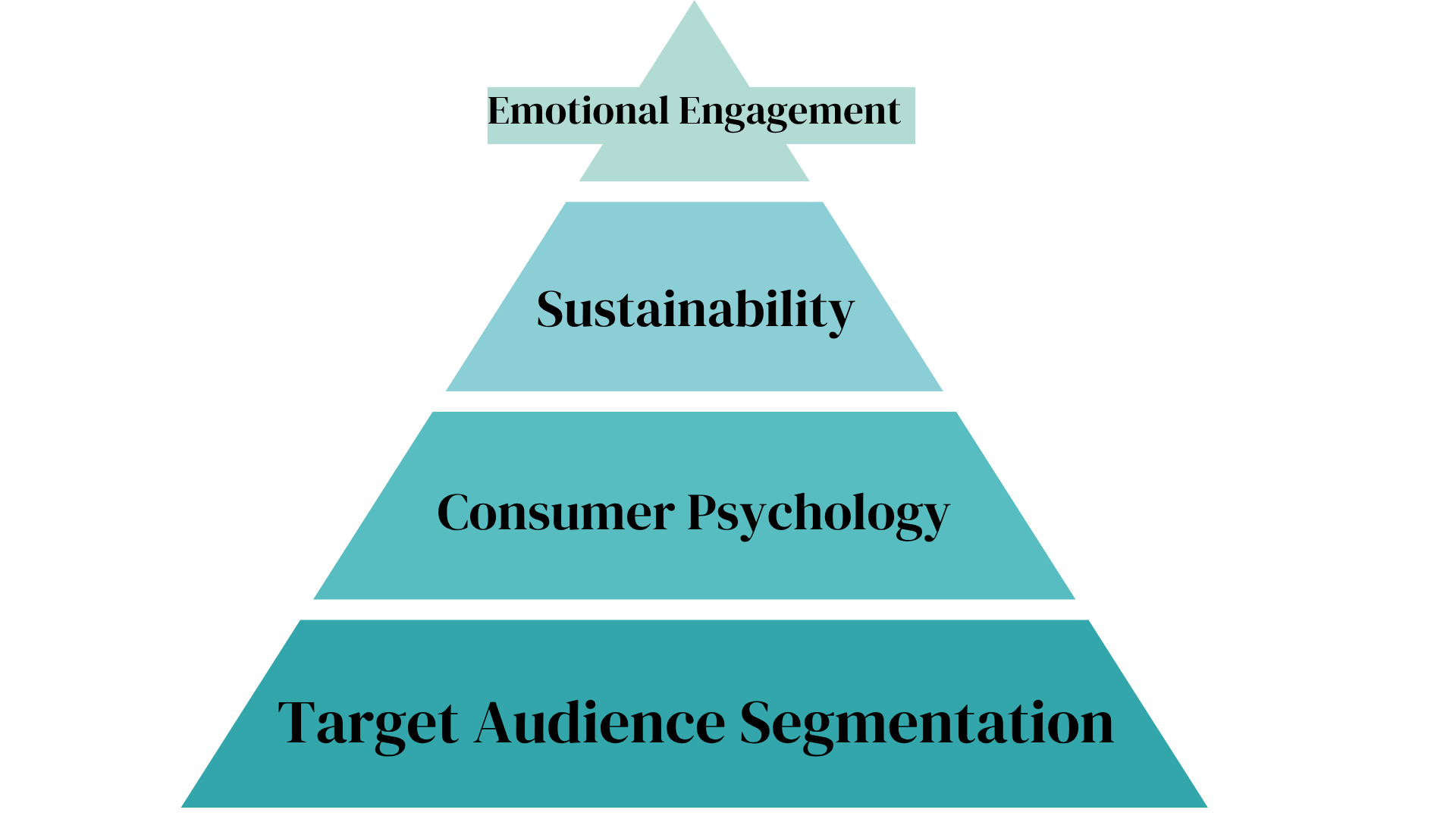
Starting with the foundations, the company must first identify the target audience they are serving, or intend to serve. For e.g., space-saving products are mostly in demand in urban areas, where people are often low-income living in smaller homes. Target audience segmentation15 is a gap highlighted in the study’s findings, and addressing this gap can help companies meet consumer demand more effectively. This will help them increase targeted sales.
This ties into designing the core purpose of the product. Rather than designing a solution that is “one-size-fits-all”, companies may need to consider the following:
- Low income consumers are likely to prioritize affordability and practicality
- High income consumers are likely to prioritize aesthetics and sustainability
Following these criteria help ensure that designs are purposeful.
Next, the framework highlights how companies can go beyond functionality and affordability by using consumer psychology research. Companies may find it most productive to focus on products that are multifunctional but also still maintain a clean and spacious feel2. For instance, the findings of this study suggest that aesthetics—such as color, form, and overall appearance—are strongly tied to psychological preference and play a major role in product adoption. At the same time, understanding sociocultural factors and the psychological reasons behind clutter and space use can guide companies in creating products that fit consumers’ real living environments.
The third tier of the pyramid addresses sustainability, as highlighted by primary and secondary data. With growing market trends emphasizing the importance of sustainability as shown through people’s perceptions in the findings, it is imperative to continue implementing new sustainable solutions into the designing process. Sustainable solutions like using more eco-friendly materials (like ELM) and using Grasshopper software to automatically manufacture components on-site have been explored9, and companies need to start integrating these sustainable solutions into creating and designing their products. This is especially important as it not only boosts the effectiveness in the sustainable purpose of the product, but also connects with the younger generation and builds long-term brand value.
Finally, the top step of the pyramid is emotional engagement. Engagement is crucial to how consumers may use the product, and is a method that has been shown in prior research to improve the user experience4. For example, IKEA has demonstrated significant success in building strong emotional engagement by allowing consumers to assemble their own furniture, which is now known as “the IKEA effect”. However, many companies appear to still miss the mark with creating emotional engagement. This means that they end up not fully promoting the effectiveness of the product.
Thus the proposed framework highlights the importance of strategies that make consumers emotionally attached. Findings from this study suggest that understanding consumer psychology will play a major role in building emotional engagement, as the overall design and appearance influence the perception of the product. Data shows that perception of the product often generates the strongest judgement. Tying marketing efforts to consumer clutter habits and sociocultural factors will further strengthen engagement. This can help more companies create engagement strategies, and achieve improved sales similar to successful players such as IKEA.
Thus, the strategic steps of the proposed pyramid framework highlight the key concepts that can help companies in the space-saving market grow, if implemented purposefully.
Limitations & Future Research Directions
This research examines the effectiveness of space-saving solutions in addressing the needs for urban consumers, with particular attention to the factors that influence decision-making, such as affordability, aesthetics, functionality, sustainability, and consumer psychology. Current company strategies are also evaluated. However, the study does not include the technical or engineering aspects of product design, such as material testing, manufacturing processes, or structural performance. The scope is further limited to urban consumers and does not attempt to represent all demographic groups globally, as the sample size and geographic scope are limited. Limitations of the study include small sample size and demographic reach, due to limited available resources. Respondent bias may have also influenced interview responses. Data conducted in the thematic analysis reflect perspectives available at that time, which may shift as consumer trends evolve.
Future research could address these limitations by including a larger and more diverse sample across age, culture, and income levels to better capture different consumer perspectives on space-saving products. Another direction would be to run experimental or longitudinal studies to see whether consumer behavior changes over time, especially with the growing emphasis on sustainability among younger generations. For example, building and selling to consumers different product designs (minimalist vs. multifunctional, or aesthetic vs. functional emphasis), and seeing how it influences purchasing decisions and long-term product retention could yield valuable insights. Further research into people’s hobbies and how they affect space-saving designs and overconsumption could be explored.
In practice, companies could also be studied more closely to evaluate how sustainable strategies, such as upcycling, local on-site production, or use of new eco-materials (like ELM), impact affordability, accessibility, and consumer adoption. This also goes for modern tiny house space saving solutions – while current solutions have been made available, the cost in producing such designs need to be addressed.
Conclusion
This study contributes to existing literature by critically examining the links between space-saving product design, consumer psychology, and sustainability within growing urban markets. As space becomes a growing concern in many parts of the world, understanding these intersections is critical. This research offers empirical insight into how consumers frame space-optimizing products and how these frames shape adoption and perceived value. It also offers approaches and suggestions aimed at helping companies draw on the psychological and social factors that influence product design. In doing so, the study advances academic discussions in design psychology and sustainable consumption, while providing actionable implications for firms seeking to improve adoption and support more effective, purposeful, and mentally supportive compact living environments.
Appendix-1: Data Table
| Representative Quote | First Order Code | Second Order Code |
| “You don’t want to create another swiss knife. The goal is to seamlessly integrate, a good design doesn’t scream out.” (Source A) | Prefers aesthetics and good pricing | Prioritization in Aesthetics, Affordability, and Functionality |
| “Designs need to be intuitive, minimal, and aesthetically pleasing while still serving clear purposes, because consumers mostly start looking at price tag, then the looks.” (Source A) | ||
| “One of the biggest realizations for me was that most people who live in small spaces – myself included – don’t necessarily choose to live small. It’s often because of budget constraints. Buying or renting a smaller place is more affordable, but hiring an architect to make it truly livable is often out of reach financially.” (Source D) | ||
| “Priorities depend on the furniture segment, but generally style and price are the main drivers for adopting space saving solutions. However on some segments like dinning tables or sofas quality is a bigger drivers.” (Source B) | ||
| “”White LED light makes my space feel comfortable.” (Source U) | ||
| “The main factor to adapting is money; people are too lazy to change or they don’t know enough.” (Source A) | ||
| “ I think the key is to keep organized and keep it super functional. Nice to have is to make it | ||
| look nice (color, decoration, etc). Often times, I would prefer a more functional small space than a bigger and less functional space.” (Source C) | Prefers functionality in a product | |
| “”Design products that serve more than one purpose (e.g., furniture that folds into walls, desks that convert to shelves).” (Source X) | ||
| “Space-optimized products require creativity to combine several pieces of furniture into one foldable design.” (Source W) | ||
| “To improve the effectiveness or appeal of these space optimizing products, make it more functional.” (Source C) | ||
| “I like products that save space. Whenever I have time, I try to get rid of or donate unwanted items to create more comfortable space.” |
| “Products need to have a multi-functional design, such as being able to perform 2-3 functions. The products should be simple and aesthetically pleasing; they don’t need particularly unusual styles to attract attention, but rather something that feels timeless and can be displayed for a long time.” | ||
| “When things get too complicated, it is hard to navigate. You need to have a design intention and purpose, identify what function is truly needed.” (Source A) | ||
| “It is a combination of urban densification and soaring house prices. As a result, people are turning to micro-homes, which are smaller, easier to tackle from a construction perspective, and easier to manage from a living perspective.” (Source H) | ||
| “Its about touching peoples hearts first and then their minds. This means working with different type of messaging at the different stages of the purchase funnel. At the top of the funnel is the awareness, its about making your consumers aware of your brand/product and the emotional value that you provide for them.. From a furniture prospective this means communicating the benefits of a beautiful and functional home i.e. having more space, saving time, etc. Further down the purchase funnel its about communicating in a more rational way the product features. i.e. extendable table that can sit 2,4 or 6 people.” (Source B) | Bringing emotion to design | Intersection of Emotional and Sociocultural Influence on Spatial Behavior |
| “Design in small spaces must go beyond functionality; it should touch the emotions, creating spaces that are not only efficient but also comforting and inspiring.” (Source F) | ||
| “Design needs to have emotions. It is necessary as functionality alone won’t create a comforting experience for consumers” (Source Y) | ||
| “We always try to keep the most important thing, and, in our buildings, the most important thing is the people that use them. The second most important thing is the nature surrounding the building. If you keep these two things front of mind, then you’ll make a good piece of architecture.” (Source J) | ||
| “Families increasingly make home in higher-density housing, a major transition for low-density suburban cities. Adjusting to everyday life in apartments requires distinctive material and emotional homemaking practices, particularly for families with children. Dominant cultural norms frame detached housing as more appropriate, with apartments merely transitional, or ‘unhomely’ and unsuitable for children.” (Source K) | Sociocultural factors | |
| “I grew up in a suburban/rural area in Shanghai China. We had limited resources and my |
| parents (especially my mom) always tried to preserve things. I learned from them and kept part of that as a habit.” (Source C) | ||
| “I am using traditional furniture products which are taking up space in the house.” (Source X) | ||
| “I grew up Hong Kong in a 400 square foot home, a small space. I still use furniture, as long as it’s functionable and still continues to work. (Source A) | ||
| “In general, keeping the space tidy makes me feel happy and organized. If that is not the case, I could feel stressed. The other thing is if something is not working (e.g. Fans in my home office stopped working for a while), it could produce some side-effect (e.g. stress).” (Source C) | Psychological effects within living/work space | |
| “Placing some plants or keeping pets can keep me comfortable.” (Source V) | ||
| “Use a wall mirror to make the small space feel larger. Avoid clutter and keep the area tidy. Use the space wisely.” (Source W) | ||
| “I remember this one couple in Amsterdam – both of them are on the autism spectrum – and they told me how, in their old home, the grey, sterile design made them feel disconnected. It didn’t feel like home. So when they moved, they decided to redesign the space themselves. They used a lot of color and thought deeply about how each element made them feel. ” (Source D) | ||
| “We accumulate clutter for various reasons: uncontrolled impulses, emotional sentiment, fear of the future, guilt, obligation, and more. In many ways, we perceive our belongings as extensions of ourselves. They represent our past memories, our present habits and routines, and our goals for the future. Because of these reasons, decluttering can be emotionally difficult. Add in the effort of going through years of dusty belongings, and it’s no surprise that clutter remains a widespread struggle. Our attachments to belongings, combined with the beliefs we hold about our own abilities and habits, weigh heavily on any resolution to let go.” (Source S) | ||
| “Behavioral effects include frustration, irritation, avoidance, and apathy. Cluttered environments can trigger unpleasant emotions that domino into behaviors. Clutter has been linked to two of the top five reasons for divorce: excessive arguments and financial problems. Studies show chaotic, noisy, crowded homes can undermine children’s ability to regulate |
| emotions and behavior.” (Source S) | ||
| “Clutter also causes distraction. It shifts our brains into multitasking mode, which actually decreases efficiency. Studies at Princeton and MIT show that as we add tasks, time and efficiency lost increase exponentially. Clutter competes for brain resources, preventing focus and limiting processing power. For children and adults with ADHD or ADD, this effect can be even more debilitating.” (Source S) | ||
| “The most obvious psychological effect of clutter is stress. Many studies show that physical stress responses correlate with cluttered environments. One study by UCLA observed 32 middle-class families and found that mothers’ stress hormones spiked while dealing with clutter. Saliva swabs revealed consistent increases in cortisol levels, the human stress hormone.” (Source S) | ||
| “Aesthetics is one thing that companies struggle with the most. Those multifunctional designs aren’t as aesthetic. (Source A) | Companies need to identify | |
| “Low income needs the space saving, but they can’t afford those multifunctional products because it’s costly. And rich people don’t really care about multifunctionality, they care about aesthetics. Companies don’t identify their target audience.” (Source A) | target audience | Spatial Constraints Driving Downsizing and Consumption Behaviors |
| “In general consumers buy home furnishings for a few reasons, the most common is to replace a broken piece or furniture. On the other hand the group that has more needs is the “new mover”; these are people that have just moved into a new home/apartment. The first 18 months after their move is when they will have the most needs and when they will spend more.” (Source B) | What companies are identifying now | |
| “Brands are not here to judge how people live or consume. Brands responsibility is to design products that can be fixed or upcycled in order to keep those products in use as long as possible. Like IKEA cribs that can turn into toddler beds and then into twin bed. IKEA also supports consumers to keep products in use for longer by offering a market place where customers can buy and sell IKEA products they no longer need.” (Source B) | ||
| “It is known sometimes as the IKEA effect, which is that Kamprad, who’s the owner and founder of IKEA, believes that the fact that you assemble the furniture yourself contributes to its perceived value. In other words, you’ve committed something of yourself to its assembly and creation. You might also argue it de-stigmatizes low prices. So I’ll give you an example of | Strategies used by space solution manufacturers (case: IKEA) |
| that. There’s a very big difference between cheap strawberries and pick-your-own strawberries.” (Source M) | ||
| “There’s a narrative as to why they’re cheap, which is: I put some of the effort into the harvesting of the things, and I have to go out into a field and pick them myself. Cheap strawberries, by contrast, may create some degree of uncertainty because you look at the market and go, “Well, if these strawberries were really good, why wouldn’t they charge full price for them? What’s wrong with this?” Sometimes you have to make things more expensive to make them trustworthy. Oddly, you can be too good to be true—consumers won’t necessarily trust something that’s cheap unless there’s a narrative around it explaining where the cost savings are made.” (Source M) | ||
| “IKEA’s store layout is a fixed-path design, which means there’s a designated route that all customers must follow, guiding you through the store in one direction. It’s not a “grab a carton of milk and get out” kind of store. It’s the opposite of that. It’s very much set up to spend a day, think about rooms you know, dream about what you really want your bedroom to look like.” (Source N) | ||
| “IKEA is famous for putting its customers to work. Unlike most furniture retailers that sell products pre-assembled, many of IKEA’s pieces have to be built by their customers. But why? As many couples—and their therapists—will know, building your own IKEA cabinet can be challenging. The big idea behind the IKEA effect is that consumers are more attached to, and have more positive feelings toward, objects or things that we’ve put effort into. And we actually think they’re more valuable because of that.” (Source N) | ||
| I think downsizing is the normal consequence of more and more people moving into an urban environment. It’s reinforced by [an awareness] of the shortage of available resources, and by the idea that cutting down on possessions doesn’t have to be a bad thing. (Source E) | Downsizing and Overconsumption | |
| “Humans are not blank slates. This paper argues that how individuals frame their choices establishes the susceptibility to overconsume. According to economic theory, consumers frame their options as bundles, composed of different combinations of the available items and activities. This leads to maximizing.” (Source L) | ||
| “Given that the matching law better describes how individuals choose than does maximizing, the mathematical models of widely used choice procedures help explain why efforts to increase consumption have been more influential than efforts to control consumption.” |
| (Source L) | ||
| A series of studies demonstrate that reminding consumers of a scarcity experience induces them to be more selfishly oriented and to experience less anticipated guilt of waste, thereby increasing their usage amount.” (Source O) | ||
| “Nowadays, there are plenty of reasons to downsize to a smaller home. Perhaps you’re in the market for a simpler way of life, or lower rent, or mortgage payments. Thankfully, the latest compact architecture ensures you can find exactly what you’re looking for without sacrificing the everyday luxuries typically associated with more spacious properties.” (Source G) | ||
| “We often assume the biggest issues in small apartments are things like storage or kitchen size. But when I ask our YouTube community what they struggle with most, I get very different answers. What a lot of people really miss is a space for hobbies – a place to do things that are “in progress.” Maybe it’s working on a craft project or building something. You don’t want to pack it all up every time, you just want a small corner where you can come back to it tomorrow. That’s a kind of space most modern floor plans don’t really allow for.” (Source D) | Lack of extra space for hobbies | |
| “One of the biggest lightbulb moments for me was realizing how much urban design impacts small space living, especially when you live in the city. Your apartment might be tiny, but the city becomes your backyard. So, how the city is designed plays a massive role in how comfortably you live in a small space.” (Source D) | ||
| “Tiny houses of the future should be more urban-based where we spend part of our time at home and a lot of our time out enjoying the city. The city becomes the library, dining room, etc. The tiny house is just a smaller plug-in space to a more urban place. Tiny houses are nice because they delineate the difference between wants and needs. Tiny houses are exactly what you need and not more than that. I think this is a good time for society to question what we really need.” (Source J) | ||
| “The Royal Parks commission, with our nine kiosks and Serpentine Coffee House, is important to me. Kiosks are one-off, the smallest structures you can get. But while small, they are important in daily life, whether it is grabbing a newspaper on the way to work, or a coffee at Paddington Station, or flowers for a loved one.” (Source H) |
| “Right now, especially in the West, we design homes that basically tell people where to eat, sleep, and cook – and that’s it. But people’s lives are more complex than that. What if we designed apartments with flexible layouts – movable walls or reconfigurable zones – so people could adapt the space to their needs? ” (Source D) | ||
| “To summarise, our findings indicate that by itself, design can do relatively little to change the acceptability of the density of developments in the suburbs. This is particularly true in the case of higher densities.” (Source T) | Influence of population density on people | |
| “Our starting point was that design was only one of many elements that would impact existing residents’ acceptance of or resistance to higher density development. Even with this in mind, our findings show that overall, design is likely to have only a limited impact with just a few treatments being significant. Starting positively, the low density option produced the most treatments that made a significant difference. This suggests that the incorporation of vernacular design offers possibilities to improve the acceptance of density and therefore design should be more attentive to local features.” (Source T) | ||
| “Sustainability is not the top priority but you may resonate if the vendor does a good job selling the sustainability message.” (Source C) | Perspectives about sustainability | Growing Consumer Emphasis on Sustainability |
| “Sustainability is crucial because I want durable, eco-friendly, non- toxic materials products. Prioritizing sustainability ensures longevity, reduces waste, and supports healthier living environments.” (Source X) | ||
| “Sustainability is a central theme of “Small Spaces.” The exhibition showcases how small living spaces can lead to more environmentally-friendly lifestyles. Many of the featured designs utilize natural or recycled materials, emphasising a philosophy of minimal waste. This focus resonates with a growing environmental consciousness among city residents.” (Source F) | ||
| “Sustainability is very important to me because I could use it more in the long term, which could reduce cost.” (Source U) | ||
| “Sustainability is important, because having too many things leads to waste and makes the room feel cramped. Therefore, when buying products, I try to choose simple, elegant styles with a long-lasting fashionable appeal.” (Source V) | ||
| “A Tiny House requires fewer raw materials in the form of building materials and uses much less energy to heat. In addition, Tiny Houses have less storage space than regular homes, which requires residents to make more conscious decisions when buying new items. This results in a much lower environmental footprint.” (Source I) | ||
| “For sustainability reasons, I like to choose high-quality products and materials that last a long time. Precisely because I need less space and resources, I can opt for high product and material quality and a luxurious design for my Tiny House.” (Source I) | ||
| “The study revealed that indirect density measures – building geometry factors and urban form parameters – are essential in affecting the ecological performance of housing. Considering these factors in design standards and policymaking for high-density redevelopment schemes can enable the “Goldilocks density” that significantly improves the quality of living while densifying the cities.” (Source P) | Sustainable solutions | |
| “Automatically manufactured components are installed on-site instead of manufactured, making the process more environmentally friendly and reducing the construction period. The results show that the application of this method in interior design helps improve design efficiency and quality and has cost-saving and sustainability advantages.” (Source Q) | ||
| “Redevelopment of low-income settlements by re-densifying cities is a common approach in the Global South to improve living conditions and tackle the housing shortage. However, the effectiveness of the housing design in redevelopment schemes remains to be questioned…The results indicated that the design performance of the redeveloped scheme is less preferable due to the unclean indoor air and inadequate daylighting conditions requiring large-scale demolition of the existing buildings. The modified plan requires minimal demolishment and demonstrates relatively better environmental performance. ” (Source P) | ||
| “Recent advances in synthetic biology and materials science have given rise to a new form of materials, namely engineered living materials (ELMs), which are composed of living matter or cell communities embedded in self-regenerating matrices of their own or artificial scaffolds…Currently, ELMs show promise for green energy production, bioremediation, disease treatment, and fabricating advanced smart materials. This review first introduces the dynamic features of natural living systems and their potential for developing novel materials.” (Source R) |
Appendix – 2: Table of Data Sources
| Source | Details |
| A | Interview #1 |
| B | Interview #2 |
| C | Interview #3 |
| D | Never Too Small: How Small Spaces Hold Big Lives. Gents Cafe. https://gentscafe.co/2025/06/27/never-too-small-how-small-spaces-hold-big-lives/ (2025). |
| E | D. Mosher. MHN interview: Micro apartment designer on living large in tiny spaces – multifamily real estate news. Multi-housing News. https://www.multihousingnews.com/mhn-interview-micro-apartment-designer-onliving-large-in-tiny-spaces/ (2013). |
| F | J. Beath. Small Spaces in the City, an interview with Clare Farrow. Never Too Small. https://www.nevertoosmall.com/post/small-spaces-in-the-city (2024). |
| G | L. Mather. How Architects Are Reimagining Small Space Living. Architectural Digest. https://www.architecturaldigest.com/story/small-houses-big-time-book-smal l-space-living (2016). |
| H | N.P. Walsh. Jonathan Mizzi on the Future of Tiny Architecture. ArchDaily. https://www.archdaily.com/923191/jonathan-mizzi-on-the-future-of-tiny-arc hitecture (2019). |
| I | Living on a small foot Marjolein Jonker on the appeal of the small space. Geberit. https://www.geberit-global.com/know-how/references/small-house-big-imp act/ (year). |
| J | An Interview With Architect Todd Saunders – The Jury of Tiny House 2022 Architecture Competition. Volume Zero Competitions. https://volumezerocompetitions.com/blog-view/an-interview-with-architect-todd-s aunders-the-jury-of-tiny-house-2022-architecture-competition (2024). |
| K | S. M. Kerr, N. Klocker, C. Gibson. From backyards to balconies: Cultural norms and parents’ experiences of home in higher-density housing. Housing studies, 36(3), 421-443 (2021). |
| L | G. M. Heyman. Overconsumption as a function of how individuals make choices: A paper in honor of Howard Rachlin’s contributions to psychology. Journal of the experimental analysis of behavior. 119(1), 91-103 (2023). |
| M | https://www.youtube.com/shorts/K9cr2mog0aU |
| N | https://www.youtube.com/watch?v=tkfq__rdoD0&pp=ygUVaWtlYSBtYXJ rZXRpbmcgdGFjdGlj |
| O | H. Tang, L. Li, S. Su. Experiencing less leads to the use of more: The effect of a scarcity mindset on product usage. Journal of Business Research. 149, 139-48 (2022). |
| P | R. Bardhan, J. Pan, S. Chen, T. Y. Cho. Breathing space in a compact city: Impacts of urban re-densification on Mumbai’s low-income housing environment. Habitat International. 149, 103098 (2024). |
| Q | J. Chen, Z. Shao, H. Zhu, Y. Chen, Y. Li, Z. Zeng, Y. Yang, J. Wu, B. Hu. Sustainable interior design: A new approach to intelligent design and automated manufacturing based on Grasshopper. Computers & Industrial Engineering. 183, 109509 (2023). |
| R | B. An, Y. Wang, Y. Huang, X. Wang, Y. Liu, D. Xun, G. M. Church, Z. Dai, X. Yi, T. C. Tang, C. Zhong. Engineered living materials for sustainability. Chemical Reviews. 123(5), 2349-419 (2022). |
| S | https://www.youtube.com/watch?v=dwsI-KTbUDQ&t=243s |
| T | P. Navarrete-Hernandez, A. Mace, J. Karlsson, N. Holman, D. A. Zorloni. Delivering higher density suburban development: The impact of building design and residents’ attitudes. Urban Studies. 59(13), 2801-2820 (2022). |
| U | Interview #4 |
| V | Interview #5 |
| W | Interview #6 |
| X | Interview #7 |
| Y | Interview #8 |
Appendix – 3: Exploratory Quantitative Analysis
A quantitative analysis was conducted through survey results. Figures below represent the demographic distribution of survey respondents.
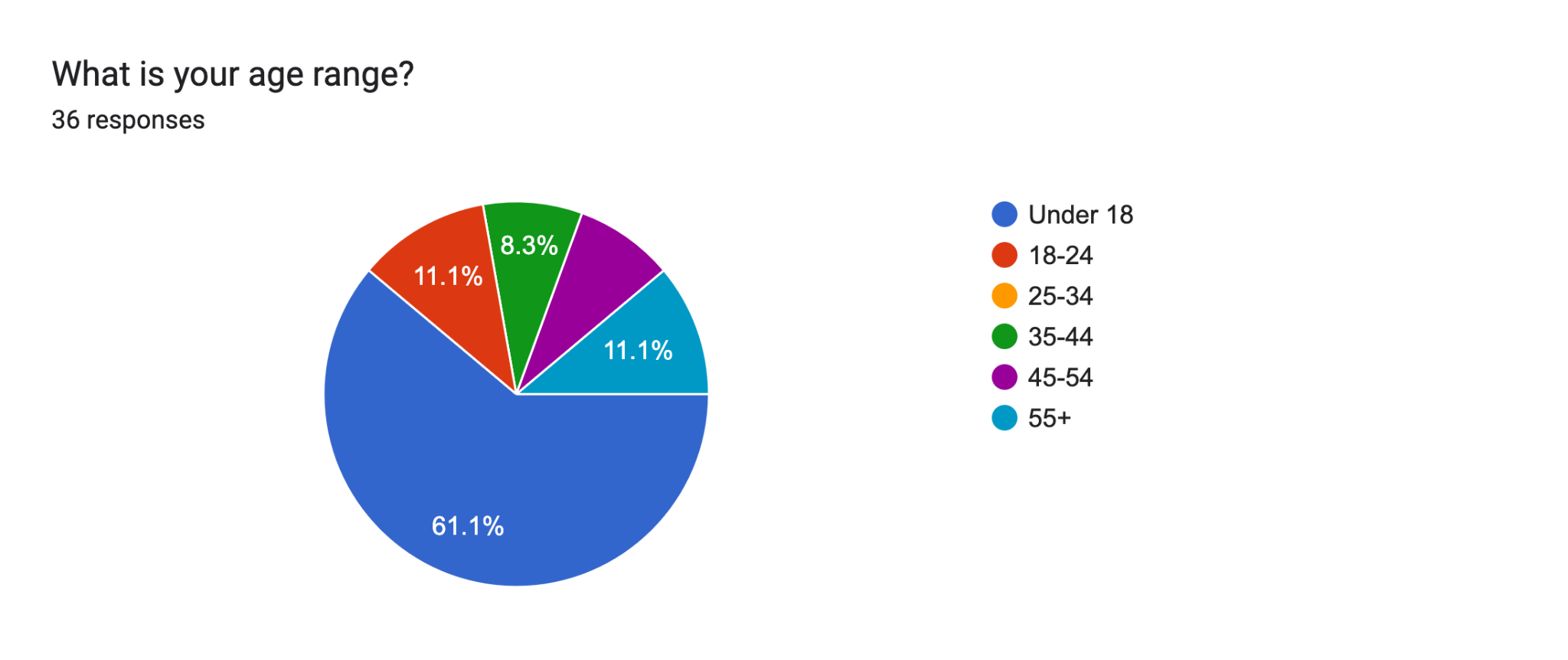
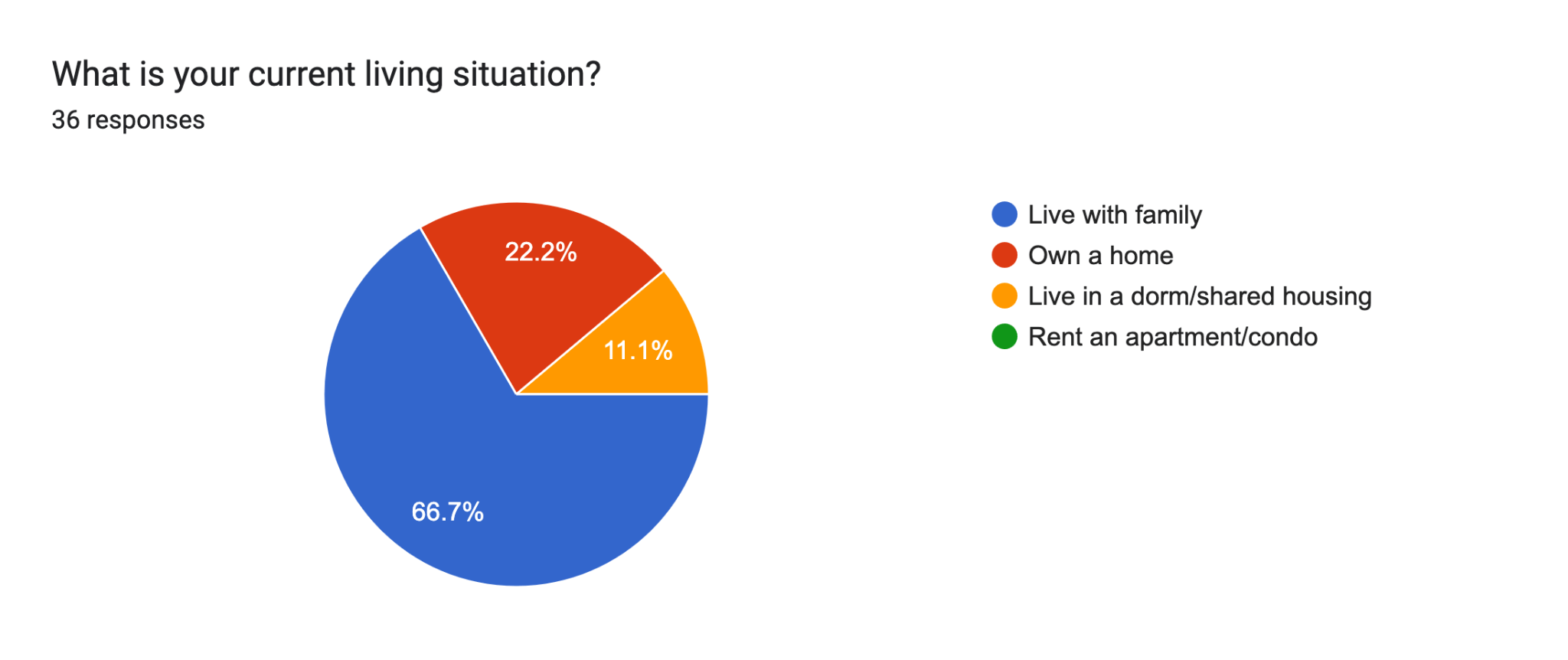
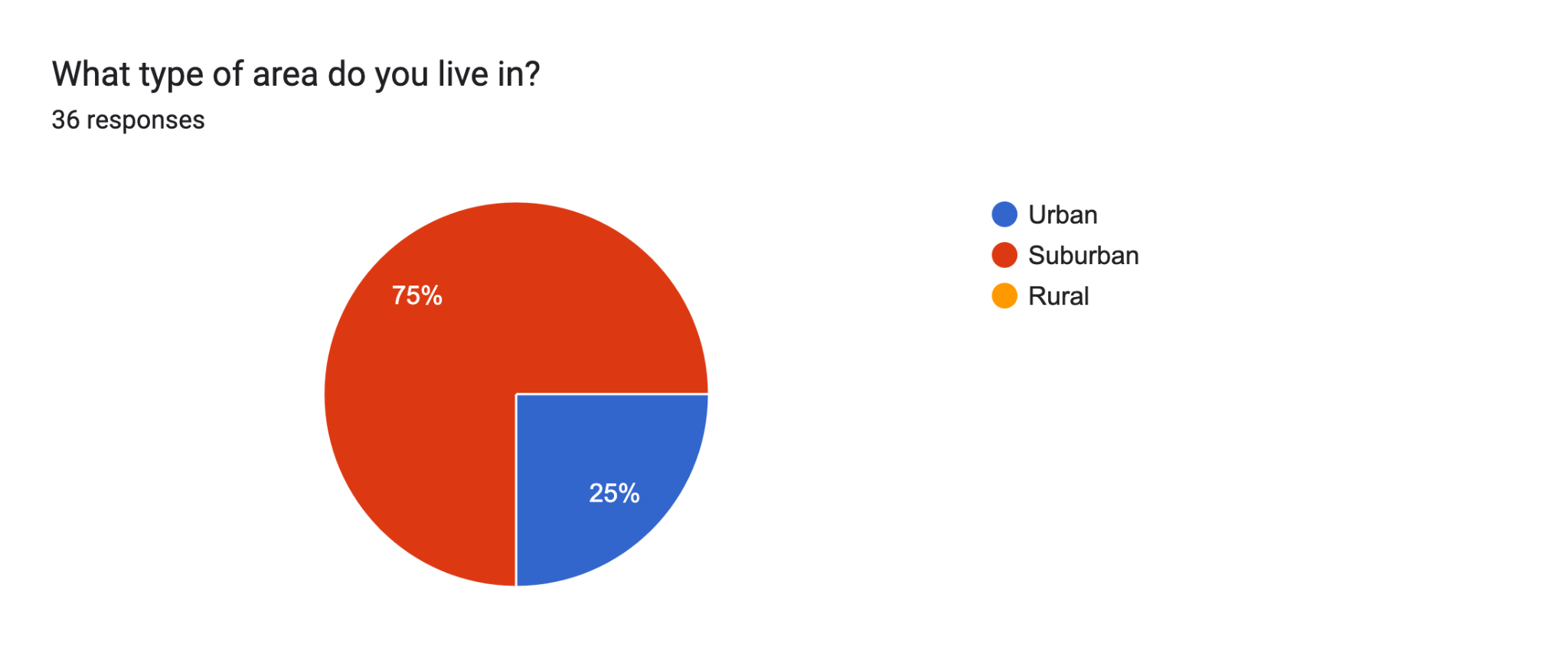
People of all ages except the range 25-34 have answered the survey, and the majority of respondents are under 18. The majority lives with family, with some owning a home and living in shared housing. The majority of respondents live in suburban regions, with some in urban regions.
| Prompts in the Survey | Distribution Shape | Insight | Avg. of 10-poin t Likert Scale |
| I often feel mentally stressed or overwhelmed by clutter. | Bimodal (peaks at low [1–3] and mid-high [7]) | Shows polarization: some feel little stress, others significant stress. Clutter is not a universal burden but divides people strongly. | 5.3 |
| I care about sustainability when purchasing household products. | Left-skewed (majority on 6–8, few on low end) | Most care about sustainability, with a small group indifferent. Indicates a norm of eco-consciousness. | 6.9 |
| I am emotionally attached to my current workspace/living space. | Fairly uniform (responses spread across scale) | Suggests attachment is not a dominant factor. Respondents are all over the map, meaning other barriers (money/time) likely matter more. | 5.3 |
| I or my family have experienced scarcity or resource limitations in the past. | Right-skewed (most low [1–3], fewer high [7–10]) | The majority haven’t felt scarcity, but a minority have strongly experienced it. Suggests socioeconomic diversity in respondents. | 4.6 |
| I am willing to make trade-offs for a sustainable lifestyle. | Left-skewed (most high [6–8]) | People lean positively toward trade-offs, though few are extreme (10). Indicates openness but some practical hesitations. | 6.3 |
| I don’t have the money to change my current workspace/living space. | Bimodal / right-leaning (clustered at 8–10, some low at 1–2) | Divided: some face clear financial limits, others don’t at all. Money is a situational barrier, not universal. | 5.9 |
| I feel consumer culture encourages me to buy more than I need. | Left-skewed (strong peaks at 7–10) | Most agree consumerism drives excess purchases. Indicates broad recognition of overconsumption pressures. | 6.5 |
| Comfort and design are more important than | Left-skewed (concentration at 6–8) | Many prioritize comfort/design, but sustainability is still important. Suggests balance rather than total | 6.6 |
| sustainability. | disregard for eco-values. | ||
| I don’t have the time and effort to change my workspace/living space. | Roughly uniform (peaks at 3, 5, and some high values) | Responses are mixed. Some see time as a real barrier, others not at all. Suggests it’s highly individual. | 5.7 |
| I try to keep my space minimal or optimized. | Left-skewed | Many practice some form of minimalism, but not extreme minimalists. Indicating aspiration for optimization is common. | 6.0 |
| My current workspace feels messy, cramped or disorganized. | Symmetrical | Most are in the middle, few at extremes. Suggests mild but not severe dissatisfaction with current space. | 5.2 |
Based on the average of the 10-point Likert Scale from 36 survey respondents, the majority agreed with all categories except for experiencing scarcity/resource limits. The average of all survey respondents agreed caring about sustainability in purchases and making trade-offs, and the majority agreed towards comfort and design being a greater need than sustainability. Consumer cultures play a part in overconsumption, where an average of 6.66 out of a 10-point Likert Scale agreed to the statement. The majority currently have a messy/cramped workspace and experience stress from the clutter, though the majority also tries to reduce clutter. When identifying challenges regarding adapting to a new living/work space, money was the biggest factor, followed by time/effort and emotional attachment.
From the distribution shapes, perceptions of clutter and financial barriers were bimodal, suggesting that some respondents experienced significant stress and limitations, while others report little to none. Responses related to sustainability, consumer culture, willingness to make trade-offs, and minimalism were consistently left-skewed, pointing towards a strong trend of eco-consciousness and space optimization among people. In regards to time/effort and emotional attachment, measures indicated an even distribution, implying that these barriers are highly individualized rather than collective. Perceptions of messiness remain clustered symmetrically, suggesting that disorganization is generally moderate among people.
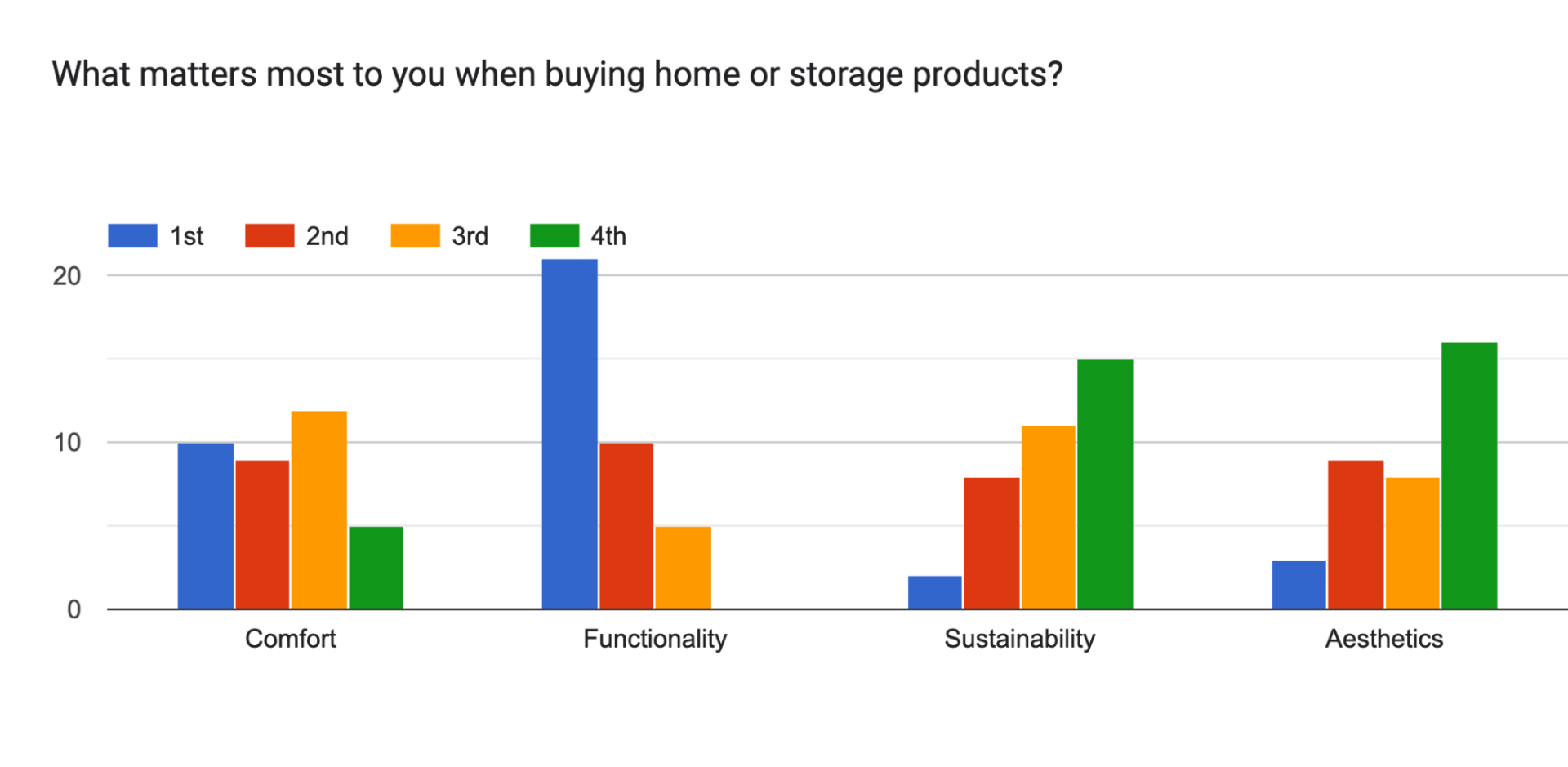
Lastly, when asked what matters most to a consumer when buying home or storage products, the number one factor is functionality. Comfort follows as a secondary condition, with many ranking it as the top three. Sustainability displayed a large portion assigning it moderate to high importance (2nd & 3rd place), indicating that while it is still a factor, it is not the main priority. Aesthetics was frequently ranked last, with the majority of respondents placing it as the least important factor when buying home or storage products.
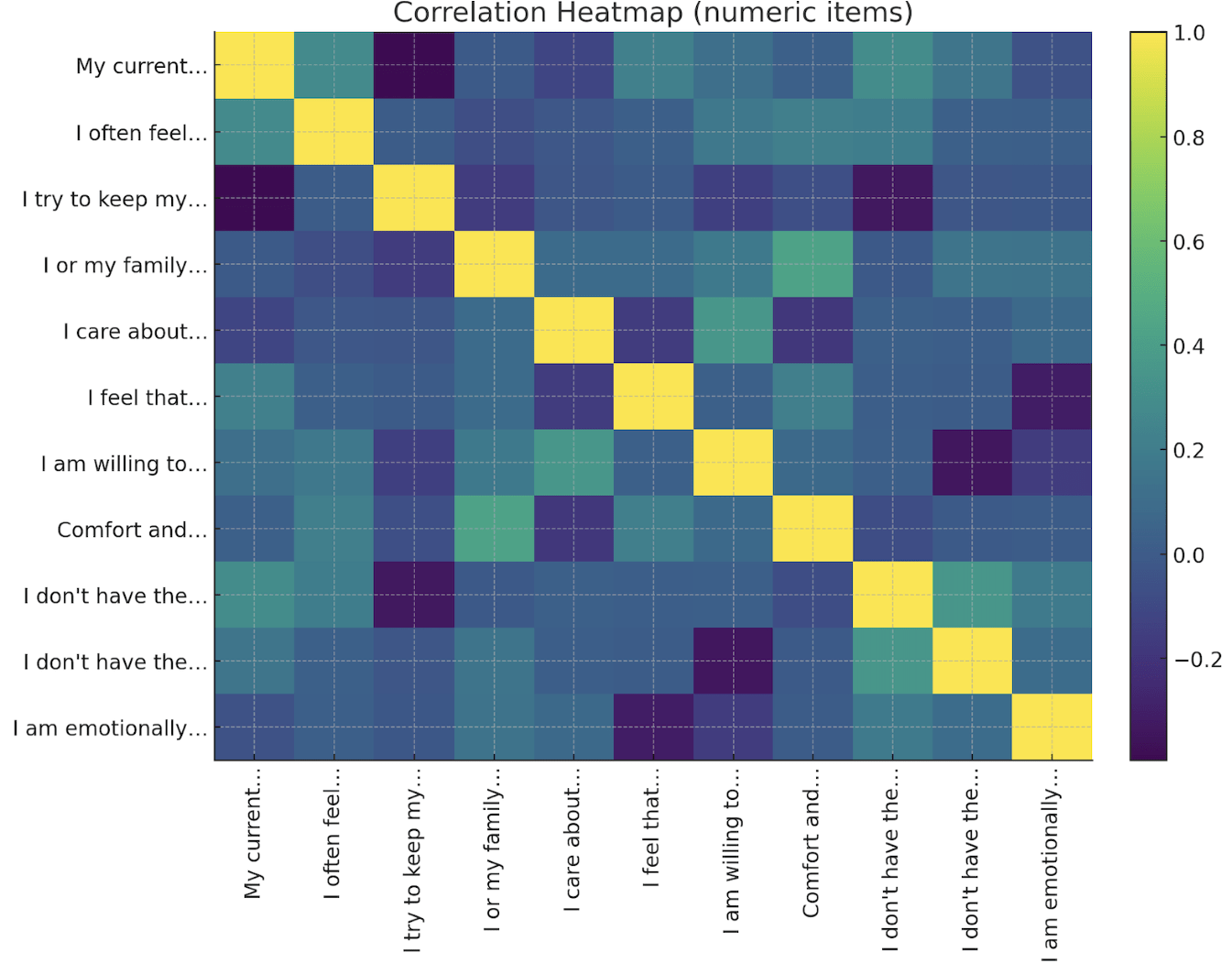
Based on patterns from the 10-point Likert Scale, there are several correlations between the prompts in the survey, as shown through the heatmap. In relation to clutter and stress, higher messy/cramped scores aligned with higher stress. Those who care more about sustainability values are also correlated to being more willing to pay/adjust habits. Participants that scored high on money as a barrier also tend to rank the priority of functionality higher. Participants under 18 reported more clutter and stress but also had higher sustainability concerns. 55+ homeowners reported less clutter time and higher sustainability care, but also strong financial/time barriers. Urban participants reported higher stress and clutter, though suburban participants reported more mixed answers.
References
- Small space furniture market size, trends & forecast 2025-2035. https://www.futuremarketinsights.com/reports/small-space-furniture-market [↩]
- Interior designers share their best small space ideas. https://www.forbes.com/sites/amandalauren/2020/01/26/interior-designers-share-their-best-small-space-ideas/ [↩] [↩] [↩]
- L. Rui, M. Firzan. Emotional design of interior spaces: exploring challenges and opportunities. Buildings. Vol. 15, pg. 153, 2025 https://doi.org/10.3390/buildings15020153 [↩] [↩]
- A. Ardjomandi. The role of narrative and storytelling in designing for long-term emotional engagement in product design. International Journal of Science and Research Archive. Vol. 15, pg. 1647–1655, 2025 https://doi.org/10.30574/ijsra.2025.15.1.1233 [↩] [↩]
- L. Wen. Research on small apartments design. Frontiers in Educational Research. Vol. 1, 2018 https://doi.org/10.25236/AJETS.030012 [↩]
- M. A. Simon, L. Toups. Innovation in deep space habitat interior design: lessons learned from small space design in terrestrial architecture. in AIAA SPACE 2014 Conference and Exposition American Institute of Aeronautics and Astronautics, 2014 https://doi.org/10.2514/6.2014-4474 [↩] [↩] [↩]
- R. Bardhan, J. Pan, S. Chen, T. Y. Cho. Breathing space in a compact city: impacts of urban re-densification on mumbai’s low-income housing environment. Habitat International. Vol. 149, pg. 103098, 2024 https://doi.org/10.1016/j.habitatint.2024.103098 [↩]
- A. Barton, M. Basham, C. Foy, K. Buckingham, M. Somerville. The watcombe housing study: the short term effect of improving housing conditions on the health of residents. Journal of Epidemiology & Community Health. Vol. 61, pg. 771–777, 2007 https://doi.org/10.1136/jech.2006.048462 [↩]
- K. M. Roufechaei, A. Hassan Abu Bakar, A. A. Tabassi. Energy-efficient design for sustainable housing development. Journal of Cleaner Production. Vol. 65, pg. 380–388, 2014 https://doi.org/10.1016/j.jclepro.2013.09.015 [↩] [↩] [↩]
- B. An, Y. Wang, Y. Huang, X. Wang, Y. Liu, D. Xun, G. M. Church, Z. Dai, X. Yi, T.-C. Tang, C. Zhong. Engineered living materials for sustainability. Chemical Reviews. Vol. 123, pg. 2349–2419, 2023 https://doi.org/10.1021/acs.chemrev.2c00512 [↩] [↩]
- P. Trucillo, F. Chaouali, F. P. A. Portioli. Sustainable material selection for interior design furniture: a simple procedure based on environmental analysis and structural optimization. Materials. Vol. 18, pg. 2023, 2025 https://doi.org/10.3390/ma18092023 [↩]
- C. N.-L. Tan, M. A. Fauzi, S. A. Harun. How does the rise of eco-consciousness shape consumers’ buying intent? exploring the moderated mediation model of nam-elm. Asia Pacific Journal of Marketing and Logistics. Vol. 37, pg. 2872–2895, 2025 https://doi.org/10.1108/APJML-08-2024-1169 [↩] [↩]
- A. Almusaed, I. Yitmen, A. Almssad. Enhancing smart home design with ai models: a case study of living spaces implementation review. Energies. Vol. 16, pg. 2636, 2023 https://doi.org/10.3390/en16062636 [↩]
- J. Chen, Z. Shao, H. Zhu, Y. Chen, Y. Li, Z. Zeng, Y. Yang, J. Wu, B. Hu. Sustainable interior design: a new approach to intelligent design and automated manufacturing based on grasshopper. Computers & Industrial Engineering. Vol. 183, pg. 109509, 2023 https://doi.org/10.1016/j.cie.2023.109509 [↩] [↩]
- Z. S. Nwokediegwu, A. O. Bankole, S. E. Okiye. Revolutionizing interior fit-out with gypsum-based 3d printed modular furniture: trends, materials, and challenges. International Journal of Multidisciplinary Research and Growth Evaluation. Vol. 2, pg. 641–658, 2021 https://doi.org/10.54660/.IJMRGE.2021.2.3.641-658 [↩] [↩] [↩]
- Y. S. Lee. Using building information modeling for green interior simulations and analyses. Journal of Interior Design. Vol. 37, pg. 35–50, 2012 https://doi.org/10.1111/j.1939-1668.2011.01069.x [↩] [↩]
- M. Toha, S. Supriyanto. Factors influencing the consumer research process: market target, purchasing behavior and market demand (literature review of consumer behavior). Danadyaksa: Post Modern Economy Journal. Vol. 1, pg. 1–17, 2023 https://doi.org/10.69965/danadyaksa.v1i1.5 [↩] [↩]
- D. Mosher. MHN interview: micro apartment designer on living large in tiny spaces. Multi-Housing News https://www.multihousingnews.com/mhn-interview-micro-apartment-designer-on-living-large-in-tiny-spaces/ 2013 [↩] [↩]
- M. Sandberg. Downsizing of housing: negotiating sufficiency and spatial norms. Journal of Macromarketing. Vol. 38, pg. 154–167, 2018 https://doi.org/10.1177/0276146717748355 [↩] [↩]
- H. Dittmar. Consumer culture, identity and well-being: the search for the ‘Good life’ and the ‘body perfect’. in 2007 [↩]
- H. Kwon, S. Kim. Characteristics of residential space in response to changed lifestyles: focusing on the characteristics of residents and the relationship between individual and family. Sustainability. Vol. 11, pg. 2006, 2019 https://doi.org/10.3390/su11072006 [↩]
- Tiny house 2025 architecture competition | volume zero competitions. https://volumezerocompetitions.com https://volumezerocompetitions.com/tinyhouse-2025 [↩] [↩]
- G. Cafe. Never too small: how small spaces hold big lives. Gents Cafe https://gentscafe.co/2025/06/27/never-too-small-how-small-spaces-hold-big-lives/ 2025 [↩]
- H. Tang, L. Li, S. Su. Experiencing less leads to the use of more: the effect of a scarcity mindset on product usage. Journal of Business Research. Vol. 149, pg. 139–148, 2022 https://doi.org/10.1016/j.jbusres.2022.05.024 [↩]
- J. Zhang, N. Jiang, J. J. Turner, S. Pahlevan-Sharif. The impact of scarcity on consumers’ impulse buying based on the s-o-r theory. Frontiers in Psychology. Vol. 13, 2022 https://doi.org/10.3389/fpsyg.2022.792419 [↩] [↩] [↩]
- V. Franklin, L. Cintya, P. y M. Mariel, D.-S. J. Pablo. Mental health factors that guide individuals to engage in overconsumption behavior during the covid-19 pandemic: a cross-cultural study between usa and ecuador. Frontiers in Public Health. Vol. 10, 2022 https://doi.org/10.3389/fpubh.2022.844947 [↩]
- G. M. Heyman. Citation for: overconsumption as a function of how individuals make choices: a paper in honor of howard rachlin’s contributions to psychology. Wiley Online Library. [↩]
- V. Braun, V. Clarke. Using thematic analysis in psychology. Qualitative Research in Psychology. Vol. 3, pg. 77–101, 2006 https://doi.org/10.1191/1478088706qp063oa [↩]
- 22. Tiny house 2025 architecture competition | volume zero competitions. https://volumezerocompetitions.com https://volumezerocompetitions.com/tinyhouse-2025. [↩]