

Abstract
Uterine corpus endometrial carcinoma (UCEC) is a molecularly heterogeneous gynecologic malignancy that includes four commonly recognized subtypes: POLE-ultramutated, MMR-deficient/MSI-hypermutated, copy-number-low endometrioid, and copy-number-high serous-like/TP53-mutant. Among genes involved in PI3K/AKT pathway regulation, PTEN is frequently altered in UCEC and is biologically relevant because it functions as a tumor suppressor that negatively regulates PI3K signaling. The objective of this secondary-data bioinformatics study was to characterize PTEN-associated patterns in UCEC across genomic, proteomic, and clinical contexts using publicly available datasets and web-based bioinformatics resources. PTEN showed frequent alterations, including recurrent mutations and copy-number deletions, and missense variants were observed in the DSPc and PTEN_C2 domains. Protein expression analyses showed reduced PTEN levels in tumor samples compared with normal endometrial tissue, with lower expression also observed across several clinical and demographic subgroup analyses. Portal-based survival analysis showed a statistically significant unadjusted overall survival difference between PTEN-altered and PTEN-unaltered tumors; however, because this analysis was portal-based and did not adjust for stage, grade, histologic subtype, or molecular subtype, PTEN alteration status was not established as an independent prognostic marker in this dataset. Overall, the findings support PTEN as a biologically important component of UCEC-associated PI3K/AKT pathway dysregulation, but the present analysis should be interpreted as descriptive and hypothesis-generating rather than clinically definitive. Future studies using reproducible patient-level reanalysis and subtype-aware modeling are needed to clarify the prognostic and therapeutic relevance of PTEN-related alterations in UCEC.
Keywords: PTEN; UCEC; PI3K/AKT/mTOR; TCGA; CPTAC; DepMap
Introduction
Uterine corpus endometrial carcinoma (UCEC) is a common gynecologic malignancy, with United States cancer statistics reporting tens of thousands of new uterine corpus cancer cases and deaths annually1. UCEC often presents with abnormal uterine bleeding, pelvic or abdominal pain, and iron-deficiency anemia2.
A major driver of UCEC is prolonged exposure to estrogen. Risk rises with obesity, chronic anovulation/PCOS, estrogen-only hormone therapy, and early menarche/late menopause. Additional risk factors include diabetes and metabolic syndrome, and aging2. A subset of cases arises from inherited susceptibility, notably mismatch repair (MMR) gene defects (Lynch syndrome), and, less commonly, PTEN hamartoma tumor syndrome2,3.
Uterine corpus endometrial carcinoma (UCEC) is classified into four distinct molecular groups based on genomic alterations and associated biological features: (i) POLE-ultramutated, characterized by high mutation burden due to defects in the POLE exonuclease domain, leading to a hypermutator phenotype and generally favorable prognosis despite high-grade histology; (ii) MMR-deficient/MSI-hypermutated, where defects in mismatch repair (MMR) result in microsatellite instability (MSI) and increased immune signaling, with an intermediate prognosis; (iii) copy-number low endometrioid, which exhibits low genomic instability, frequent mutations in PTEN, PIK3CA, ARID1A, and CTNNB1, and a more favorable prognosis; (iv) copy-number high, serous-like/TP53-mutant, marked by high genomic instability and TP53 mutations, associated with a poor prognosis due to high-grade, aggressive tumor behavior4.
PTEN was selected for focused analysis because it is a core tumor suppressor regulator of the PI3K/AKT pathway and is frequently disrupted in UCEC through multiple mechanisms, including mutation, copy-number loss, and reduced protein expression4,5,6,7,8. Early sequencing studies identified recurrent PTEN mutations in primary endometrial carcinomas, supporting PTEN inactivation as a common molecular event in this tumor type9,10,11,12,13. Studies of premalignant lesions, endometrial hyperplasia, PTEN protein expression, AKT phosphorylation, and survival associations further support the role of PTEN loss in endometrial tumorigenesis and pathway dysregulation14,15,16,17,18. Immunohistochemical and PI3K-pathway mutation studies also show that PTEN loss often occurs together with broader PI3K/AKT-pathway alterations, including changes involving PIK3CA and related pathway genes19,20,21,22,23. Additional genomic, functional, and clinical studies of PIK3R1, PIK3R2, PI3K-pathway dependency, PTEN-deficient model sensitivity, and PTEN-loss outcome context indicate that PTEN disruption should be interpreted within a broader PI3K-pathway alteration landscape rather than as an isolated molecular event24,25,26,27,28. This combination makes PTEN a useful gene for examining how genomic and proteomic alterations converge on pathway dysregulation in UCEC.
Given PTEN’s frequent disruption in UCEC and its central role in PI3K/AKT signaling,4,7,9,10,11, this study focuses specifically on PTEN as a biologically informative pathway node rather than attempting to establish that PTEN is categorically more important than other PI3K-pathway genes. The objective of this secondary-data bioinformatics study was to characterize PTEN-associated alteration patterns, protein expression differences, pathway context, and dependency relationships in UCEC using public genomic and proteomic resources, and to examine whether portal-based survival results support a prognostic association. The study was therefore designed primarily as a descriptive, hypothesis-generating analysis of PTEN-related molecular patterns in UCEC, rather than as an experimental or clinically definitive validation study.
Methodology
Research Design
This study was a secondary-data, cross-sectional bioinformatics analysis based entirely on publicly available, de-identified cancer datasets and web-based bioinformatics resources. No laboratory experiments, patient recruitment, or direct intervention were performed.
Data Sources
Public UCEC-related data were examined using cBioPortal and TCGA-UCEC resources4,29. CPTAC/UALCAN protein-expression outputs, DepMap dependency visualizations, and STRING network analyses were then used for protein-expression, dependency, and interaction-network analyses30,31,32. Genomic and clinical data were obtained from the Uterine Corpus Endometrial Carcinoma (TCGA, Firehose Legacy) study in cBioPortal accessed on 1/19/2026. CPTAC/UALCAN protein-expression outputs were accessed on 1/19/2026. STRING network analysis was accessed on 1/19/2026, and DepMap data were accessed on 5/19/2026.
Sample and Inclusion Approach
The analysis was restricted to cases or cell lines available within the selected public datasets and portal views at the time of access. For TCGA-UCEC portal-based genomic analyses, the initially available PTEN sample matrix comprised 549 samples: 181 PTEN-altered and 368 PTEN-unaltered. For the cBioPortal overall survival comparison, cases were included only if PTEN alteration labels and overall survival time/status were available (n = 543 total; PTEN-altered n = 181; PTEN-unaltered n = 362). The exclusion criterion for the survival comparison was missing or unusable overall survival information in the portal output; six PTEN-unaltered samples from the sample matrix were therefore excluded from the overall survival comparison. For CPTAC protein-expression analysis, the included samples were tumor and normal endometrial tissues, as shown in the corresponding portal output (tumor n = 240, normal n = 51). For DepMap, included samples were uterus/endometrial lineage cell lines shown in the relevant dependency view (n = 28). Because this study relied on portal-generated outputs rather than raw data harmonization across all platforms, sample overlap was not assumed among cBioPortal, CPTAC, and DepMap analyses.
Variables and Measurements
The main variables examined were PTEN alteration status, alteration type, mutation location, copy-number state, PTEN protein-expression level, protein-protein interaction context, and PTEN-related lineage dependency patterns. Portal-defined outputs and embedded annotations were used as presented by each resource. In cBioPortal, copy-number alterations were based on the discrete CNA profile, and PTEN-altered cases were defined by the portal altered vs unaltered grouping across the mutation and discrete copy-number profiles. No additional clinical filters were applied in the cBioPortal PTEN query.
Procedure
First, cBioPortal was used to review PTEN alteration frequency, alteration categories, OncoPrint co-alteration patterns, mutation lollipop plots, and overall survival curves for TCGA-UCEC4,29. In cBioPortal, PTEN was queried and cases were grouped using the portal-defined altered versus unaltered classification across the mutation and discrete copy-number profiles. The underlying cBioPortal outputs reviewed included the PTEN mutation table, PTEN discrete copy-number alteration table, patient clinical/survival table, and the patient-level PTEN altered-versus-unaltered status table used for survival grouping. Second, CPTAC/UALCAN output was used to review PTEN protein-expression differences between tumor and normal tissues and across subgroup views, including age, BMI, race, and menopausal status30. Third, STRING was used to visualize PTEN-centered protein-protein interactions with a minimum interaction score of 0.700, which STRING defines as high confidence. The network was limited to 10 first-shell interactors and 0 second-shell interactors to focus on proteins directly associated with PTEN while keeping the network compact and interpretable32. Fourth, DepMap portal visualizations from the DepMap Public 25Q3 release were used to examine PTEN Chronos gene-effect scores in endometrial lineage cell lines and across cancer lineages31.
Data Analysis
This study was primarily descriptive. Frequencies, portal-based group comparisons, and visual patterns were interpreted from the selected resources. For survival, the manuscript reports the portal-based Kaplan-Meier comparison and associated two-sided log-rank output generated by cBioPortal. A significance threshold of p < 0.05 was used for portal-based p-values. Survival analysis was limited to portal-based Kaplan-Meier output, and no external rerun of the patient-level survival analysis in Python or R was performed. No multivariable adjustment for stage, grade, histologic subtype, or molecular subtype was included in this version. No multiple-testing correction was performed.
Ethical Considerations
All data used were publicly available and de-identified secondary datasets. No direct human-subject interaction, intervention, or collection of identifiable private information occurred.
Results
Alteration Landscape
(A)
(B)

(C)

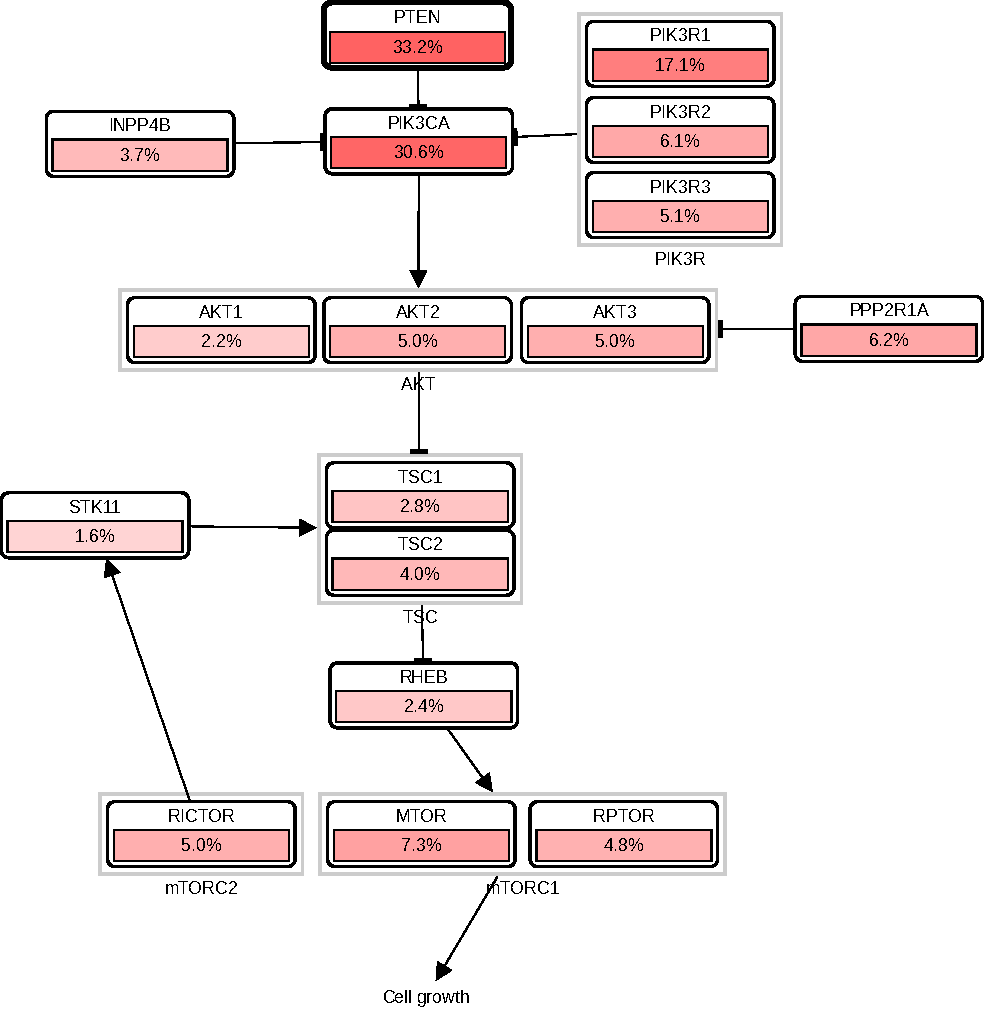
PTEN was among the most commonly altered PI3K-pathway genes in the TCGA-UCEC Firehose Legacy cohort, affecting approximately one-third of tumors. Alterations are primarily loss-of-function (nonsense/frameshift and splice). Approximately one-third are missense mutations that group in the catalytic DSPc (phosphatase) domain (~aa 90-180) and in the PTEN_C2 domain (~aa 186-351); the R130 hotspot (represented “R130G/Q/* and 3 more” in the plot) is the largest group and also has other recurrent changes nearby at C124, at G129, and at R173. Copy-number changes primarily consist of shallow deletions (with occasional deep deletions) and sporadic amplifications, consistent with reduced PTEN dosage in a subset of UCEC tumors4,5,9,10,11.
In Figure 1B, PTEN mutations were observed in tumors that also contained alterations in other PI3K-pathway genes, including PIK3CA and PIK3R1. These co-alteration patterns are consistent with prior reports showing frequent PTEN alterations in copy-number-low/endometrioid and MMR-deficient molecular classes. Figure 1C illustrates mutation clustering within the catalytic pocket and C2 interface; numerous missense mutations have been localized and have been found to impair lipid-phosphatase activity. Taken together, these results are consistent with structural inactivation and deletion of PTEN contributing to PI3K/AKT/mTOR pathway dysregulation in UCEC4,5,6,7. This interpretation is also consistent with early PTEN mutation studies identifying recurrent PTEN alterations in primary endometrial carcinoma9,10,11.
Survival Association
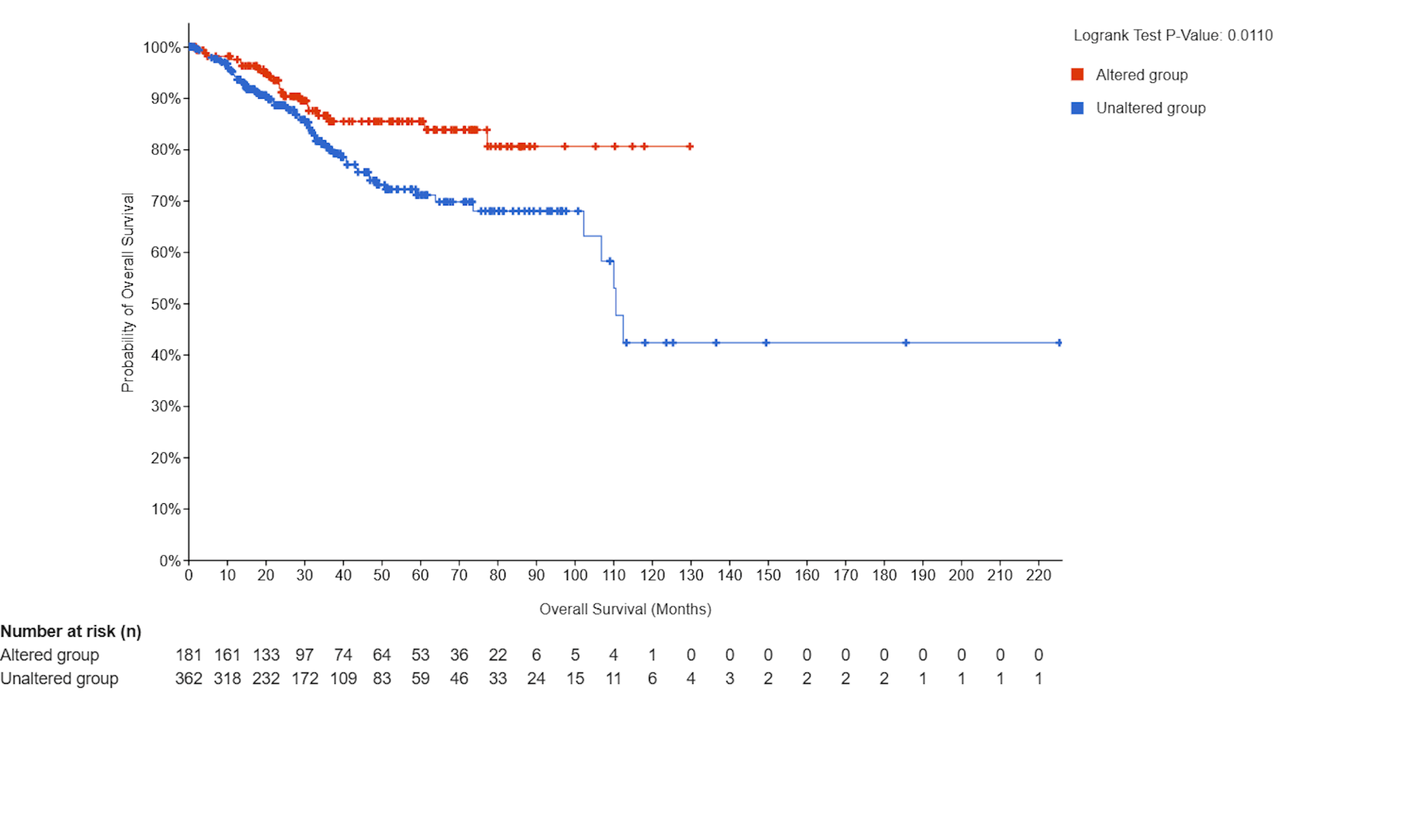
In Figure 2, portal-based Kaplan–Meier overall survival curves were compared between PTEN-altered tumors (n = 181) and PTEN-unaltered tumors (n = 362) in the selected TCGA-UCEC cohort. The displayed log-rank p-value was 0.0110, which met the conventional threshold for statistical significance in the unadjusted portal-based comparison. However, because this analysis was generated using cBioPortal’s built-in Kaplan–Meier output and did not adjust for stage, grade, histologic subtype, or molecular subtype, it does not establish PTEN alteration status as an independent prognostic biomarker.
Gene Dependency
(A)
(B)
(C)
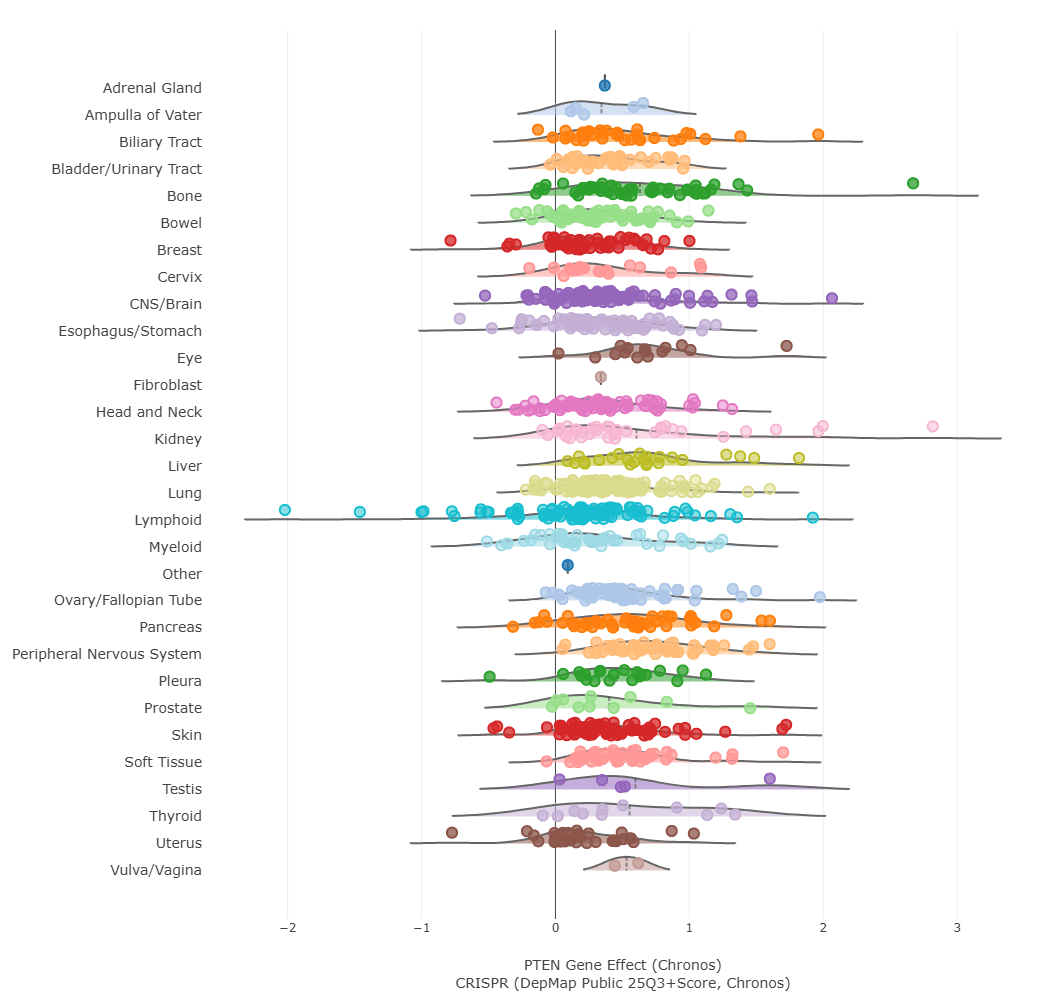
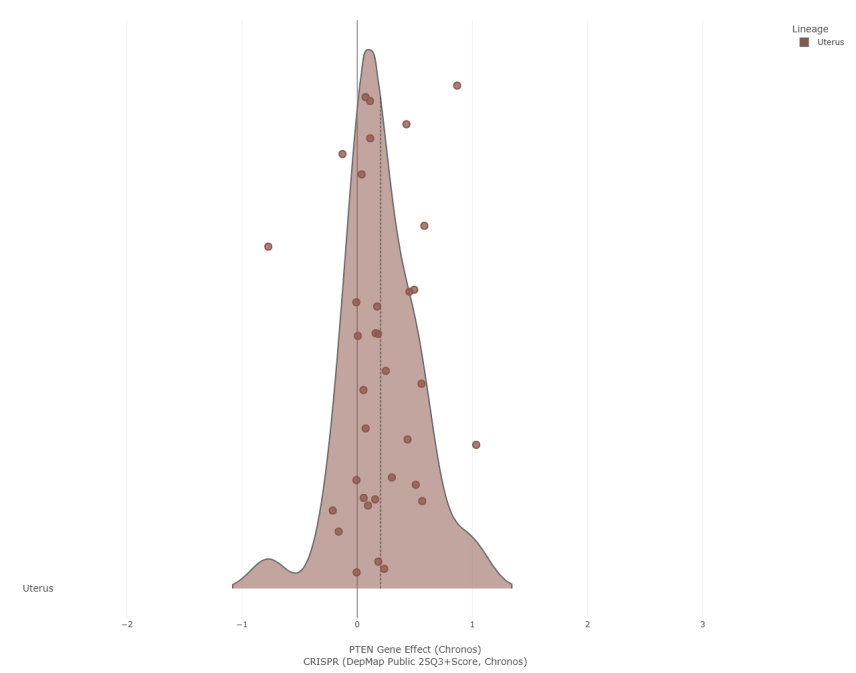
(A) PTEN Chronos gene-effect scores in endometrial/uterus lineage cell lines.
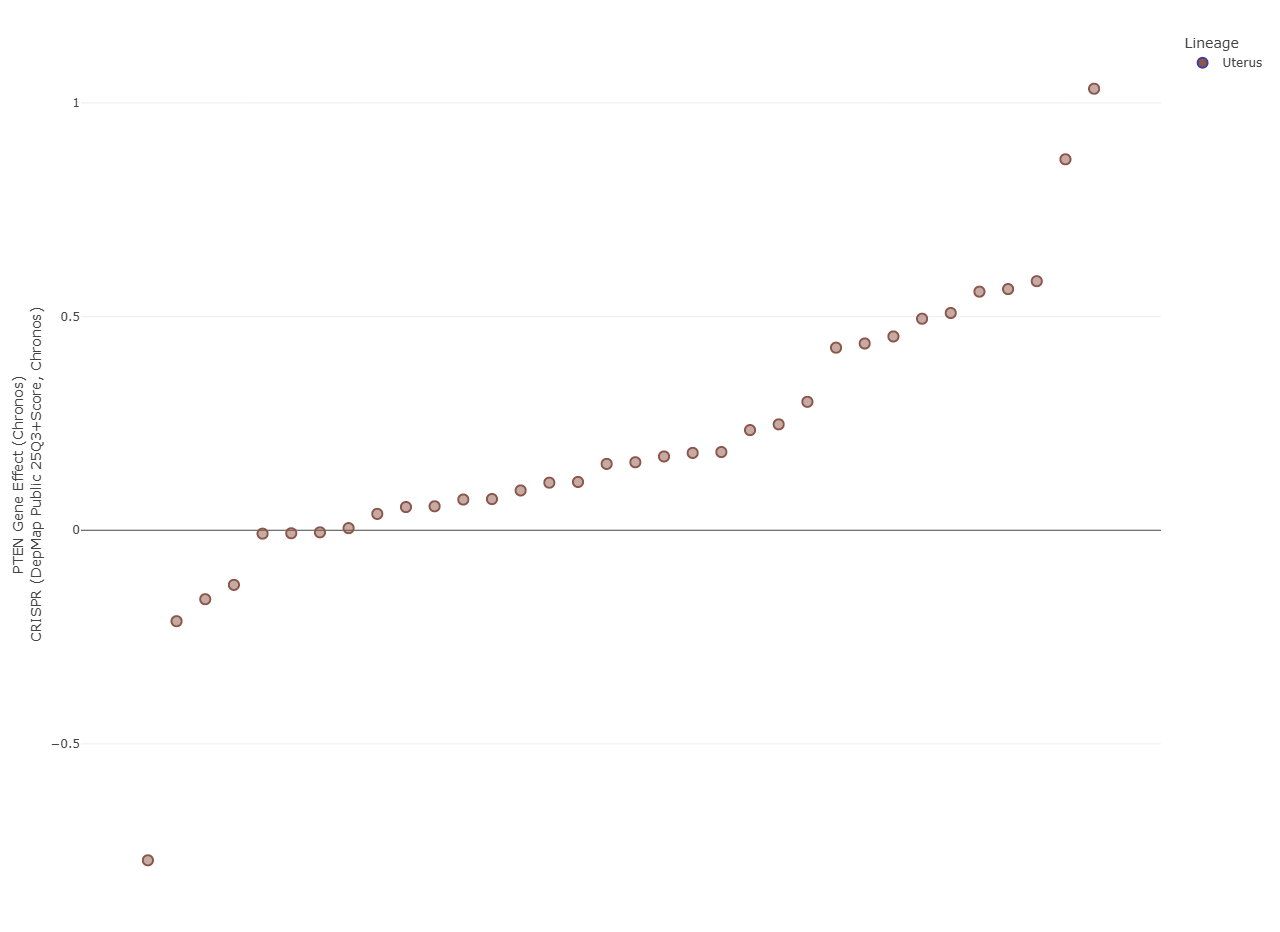
(B) Rank plot of PTEN Chronos gene-effect scores within the endometrial/uterus lineage.
(C) Distribution of PTEN Chronos gene-effect scores across cancer lineages, including the endometrial/uterus lineage.
PTEN scores in endometrial models clustered tightly near 0, with only a small negative tail (Figure 3A), indicating that most UCEC-relevant cell lines were not strongly dependent on PTEN in the CRISPR cell-fitness assay, consistent with PTEN’s role as a tumor suppressor gene. When endometrium/uterus lineage cell lines (n = 28) were viewed alongside cell lines from other lineages (n = 1,293) in Figure 3C, their PTEN Chronos scores generally overlapped with those of other lineages and were centered near 0. Only a minority of endometrial lines fell below commonly used dependency thresholds, such as −0.5, while several showed near-zero or positive scores. These patterns suggest that future therapeutic hypotheses may focus on downstream PI3K/AKT/mTOR pathway components rather than direct PTEN targeting; however, this was not tested directly in the present study.
Protein-Protein Interactions and Pathways
(A)
(B)
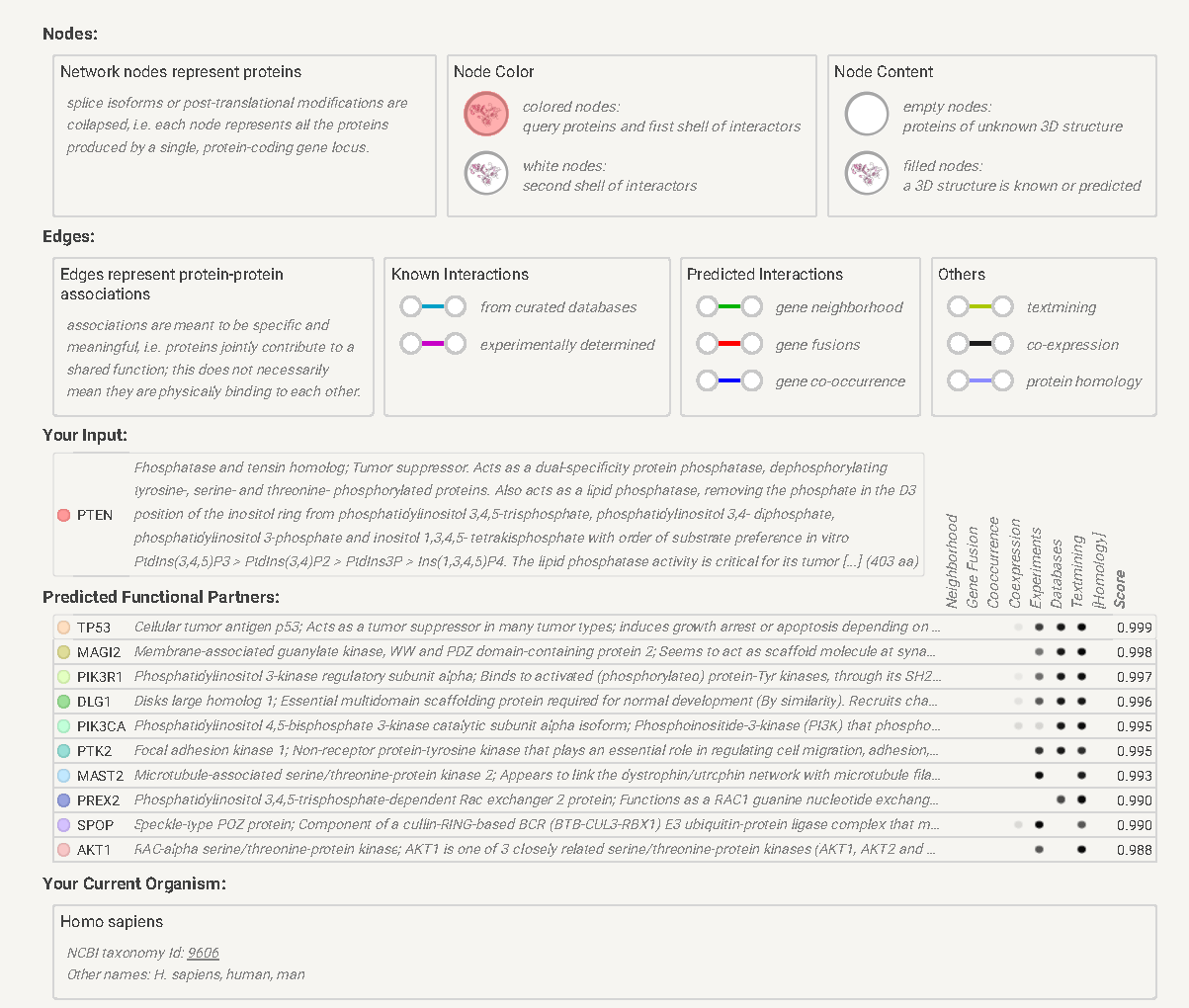
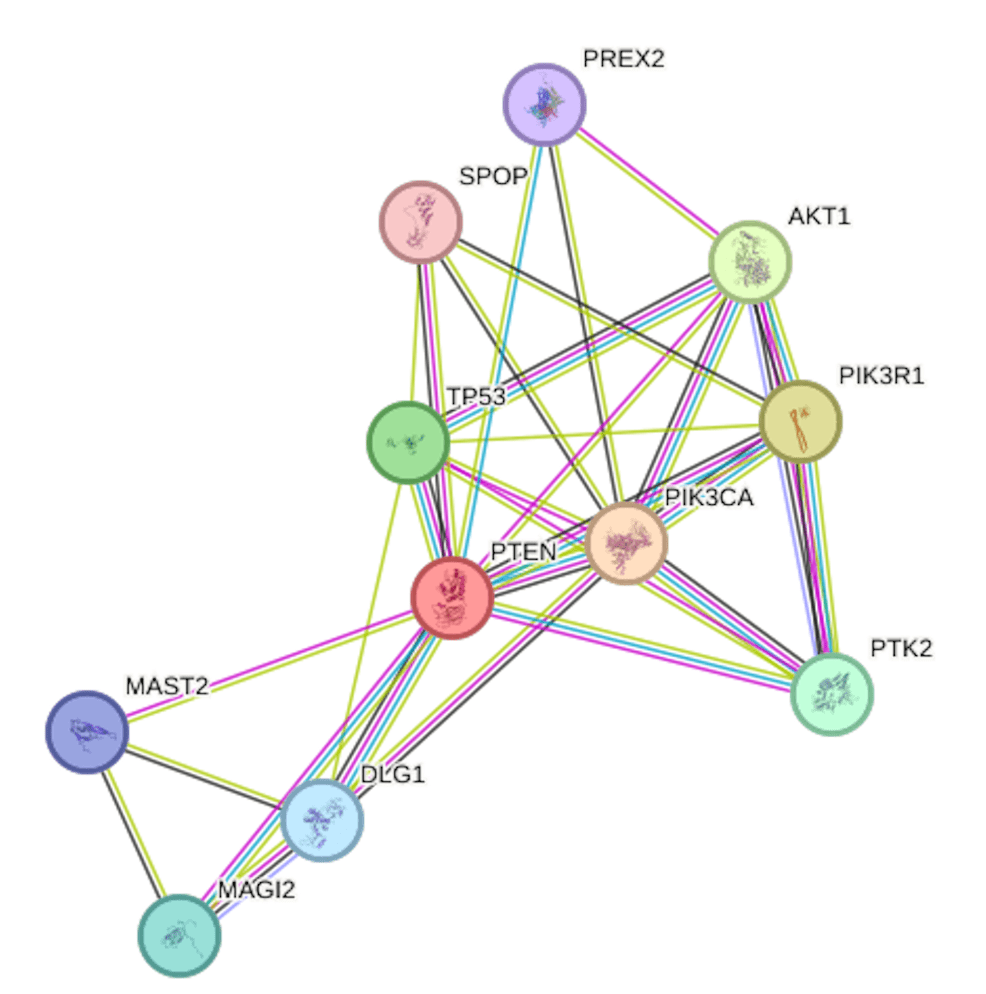
STRING first-shell network for PTEN in Homo sapiens using a high-confidence threshold of 0.700, 10 first-shell interactors, and 0 second-shell interactors. Edges represent functional associations rather than required physical binding.
Using STRING (Homo sapiens; high-confidence threshold ≥ 0.700; first-shell = 10; second-shell = 0), the PTEN-centered network formed a compact module linking core PI3K/AKT/mTOR components and tumor-suppressive regulators (Figure 4A). Top predicted partners included TP53 (0.999), MAGI2 (0.998), PIK3R1 (0.997), DLG1 (0.996), PIK3CA (0.995), PTK2/FAK (0.995), MAST2 (0.993), PREX2 (0.990), SPOP (0.990), and AKT1 (0.988) (Figure 4B). The dense connectivity among PTEN/PIK3CA/PIK3R1/AKT1 anchors the network in PI3K/AKT/mTOR signaling, while scaffold proteins MAGI2/DLG1/MAST2 map PTEN to membrane and polarity complexes, PTK2 links to adhesion and motility pathways, and TP53/SPOP connect to cell-cycle control and apoptosis. Edges denote functional associations, not necessarily direct physical binding. Overall, the network architecture is consistent with PI3K/AKT/mTOR signaling, cell-cycle regulation, and apoptotic regulation, supporting the mechanistic context for PTEN loss in UCEC.
Expression Analysis
(A)
(B)
(C)
(D)
(E)
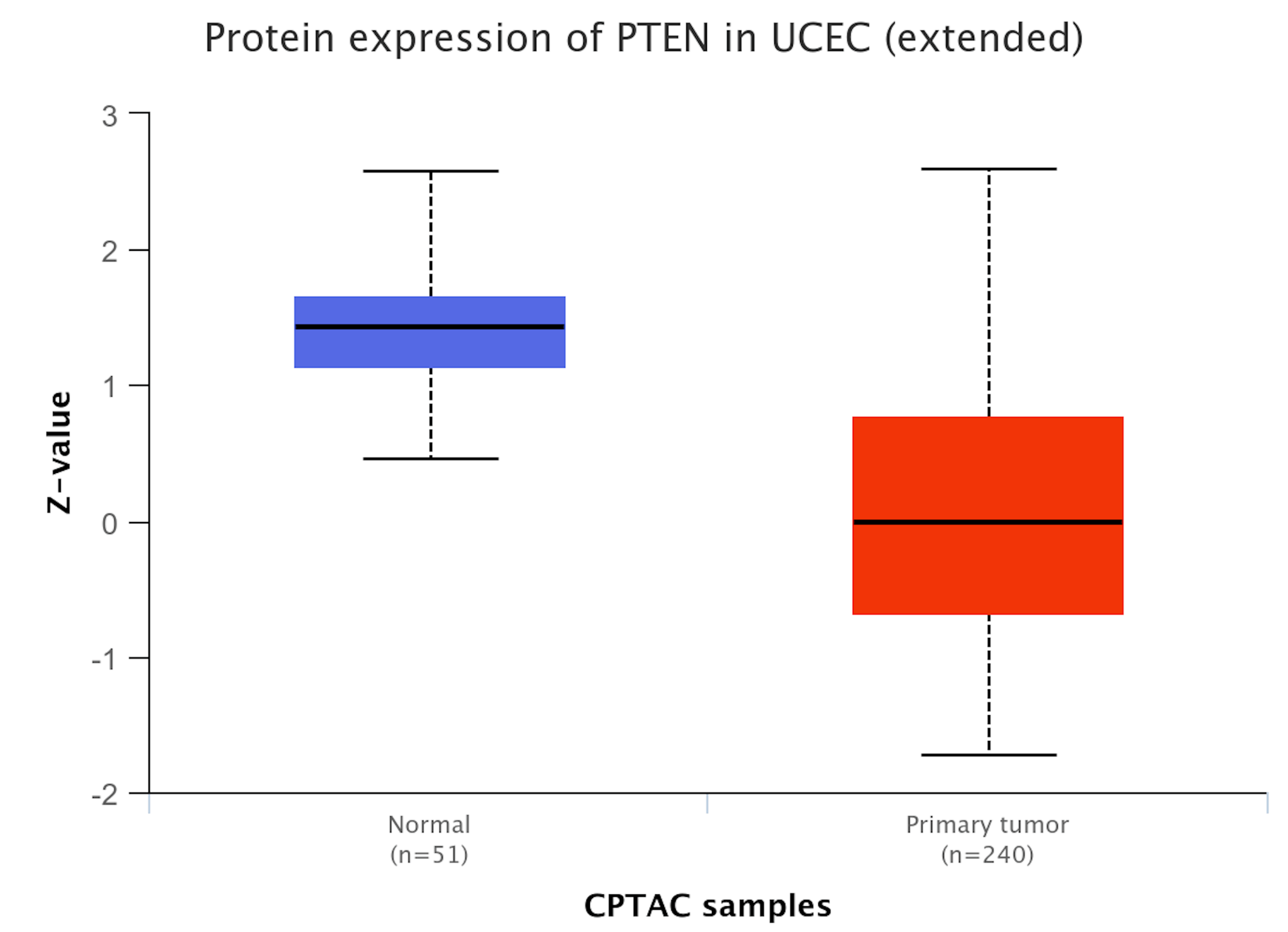
In Figure 5A, PTEN protein expression was lower in primary tumors (n = 240) compared with normal endometrium (n = 51): the tumor medians center around ~0 Z with a wide interquartile range and long lower whiskers, whereas normals cluster tightly around ~1.3-1.5 Z. This distribution is consistent with reduced PTEN protein expression in UCEC tumors and aligns with the mutation and copy-number results, suggesting reduced PTEN-mediated negative regulation of PI3K/AKT/mTOR signaling7,30.
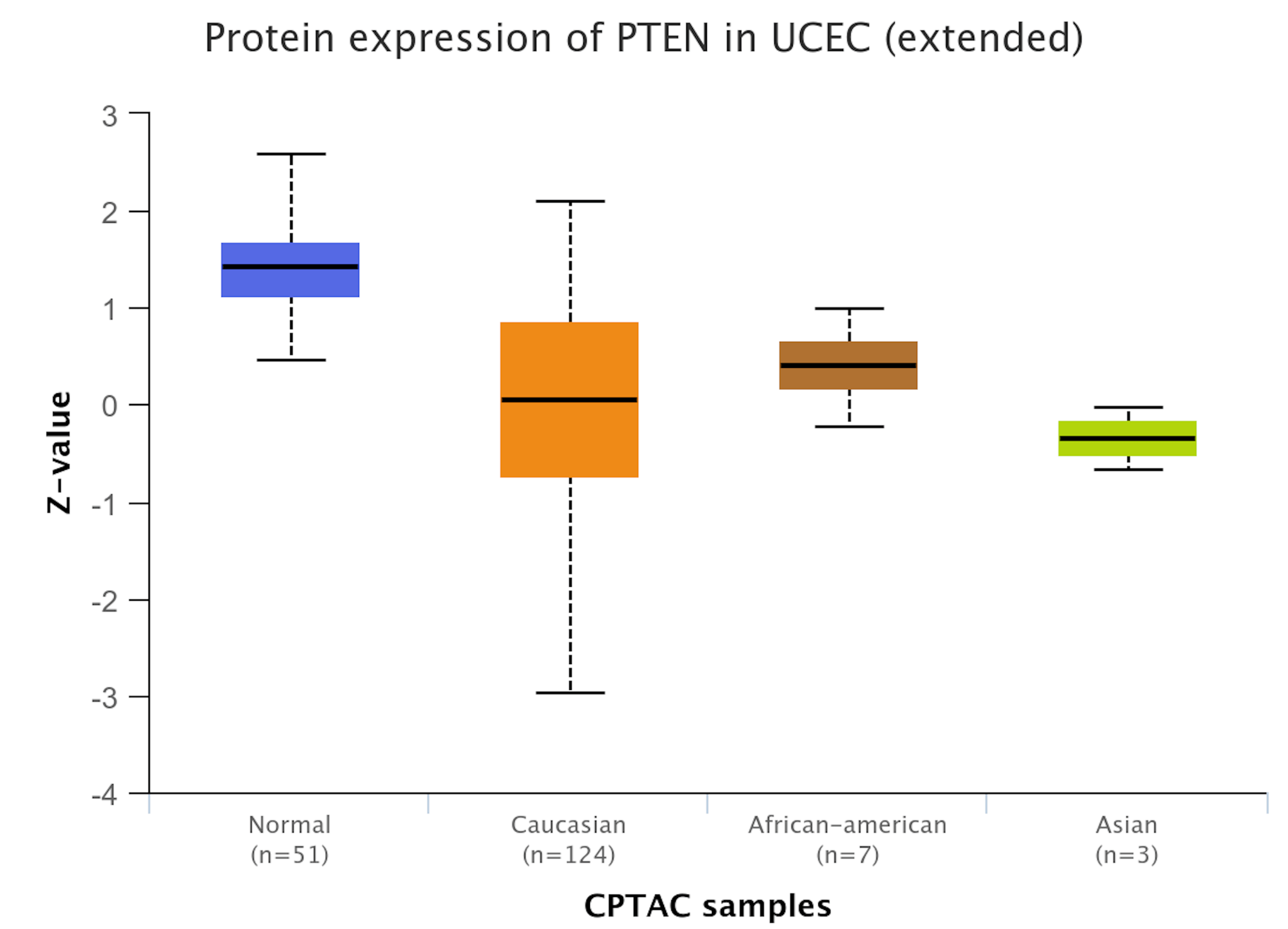
Figure 5B illustrates that tumor race subgroups showed lower PTEN protein-expression distributions than the normal group. These subgroup comparisons should be interpreted cautiously because some subgroup sample sizes were small. Overall, reduced PTEN protein levels were observed across race subgroups in this portal output30.
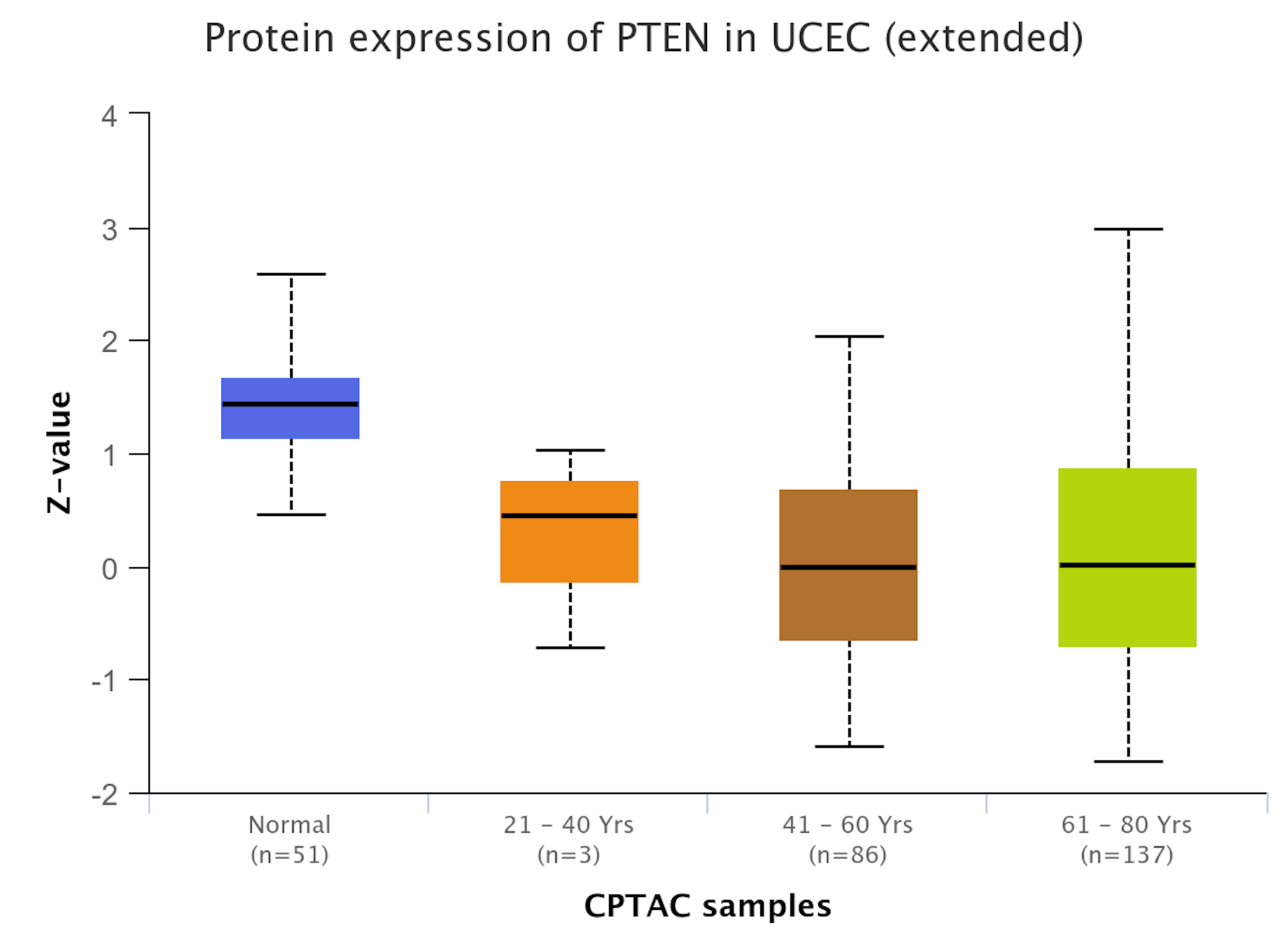
All of the tumor distributions in Figure 5C fall well below the reference normal. The very small 21-40 group showed greater variability, while both the 41-60 and 61-80 groups had medians close to ~0 Z with dispersed distributions. Reduced PTEN protein expression was observed across age groups in this portal output and was not confined to one age category in UCEC30.
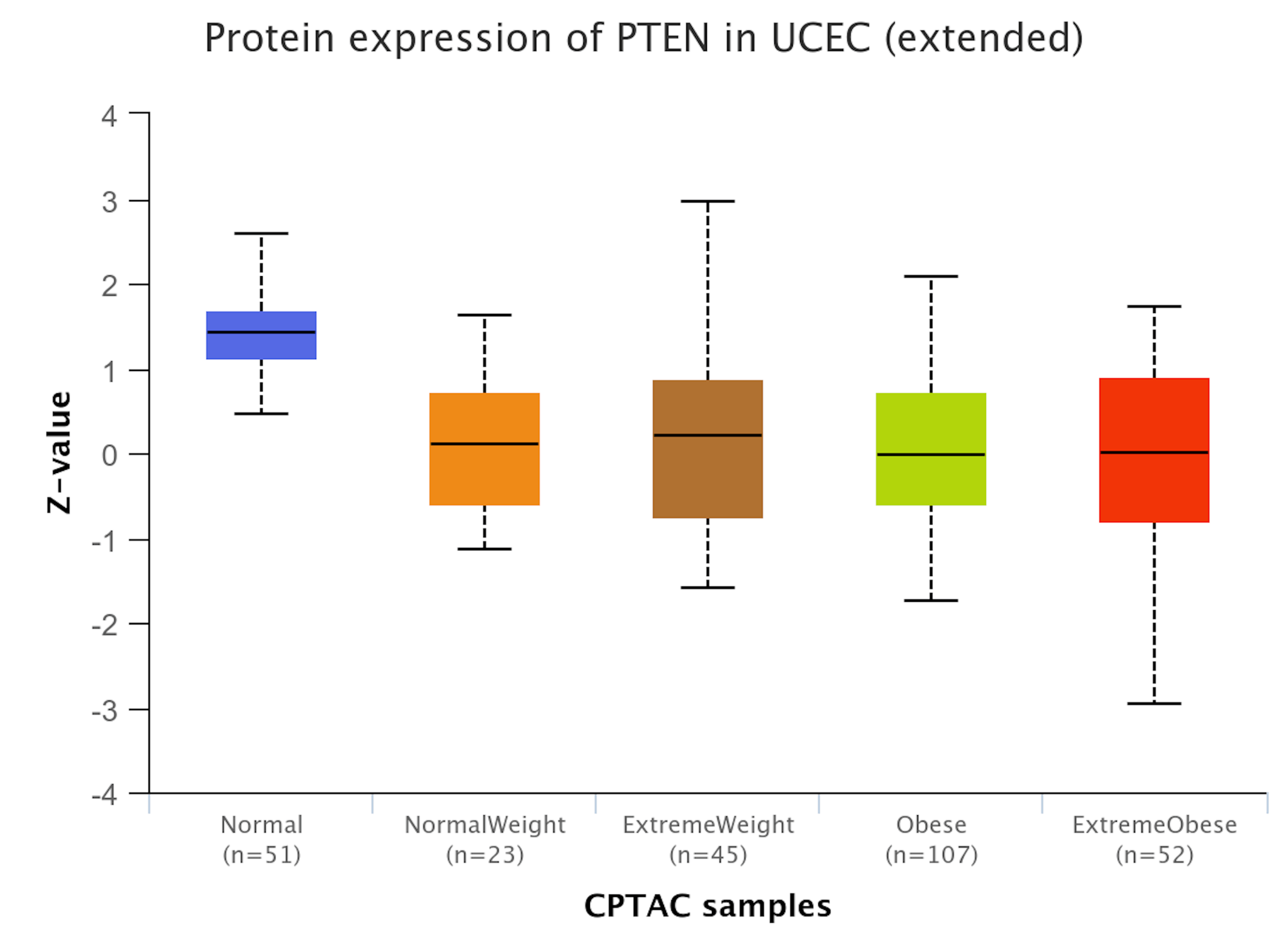
Relative to normals, all tumor BMI groups in Figure 5D showed lower PTEN Z-value distributions, with medians close to ~0 and distinctive lower tails, particularly for heavier groups. Reduced PTEN protein levels were observed across BMI/weight subgroups, suggesting that lower PTEN expression was not confined to one weight category in this portal output30.
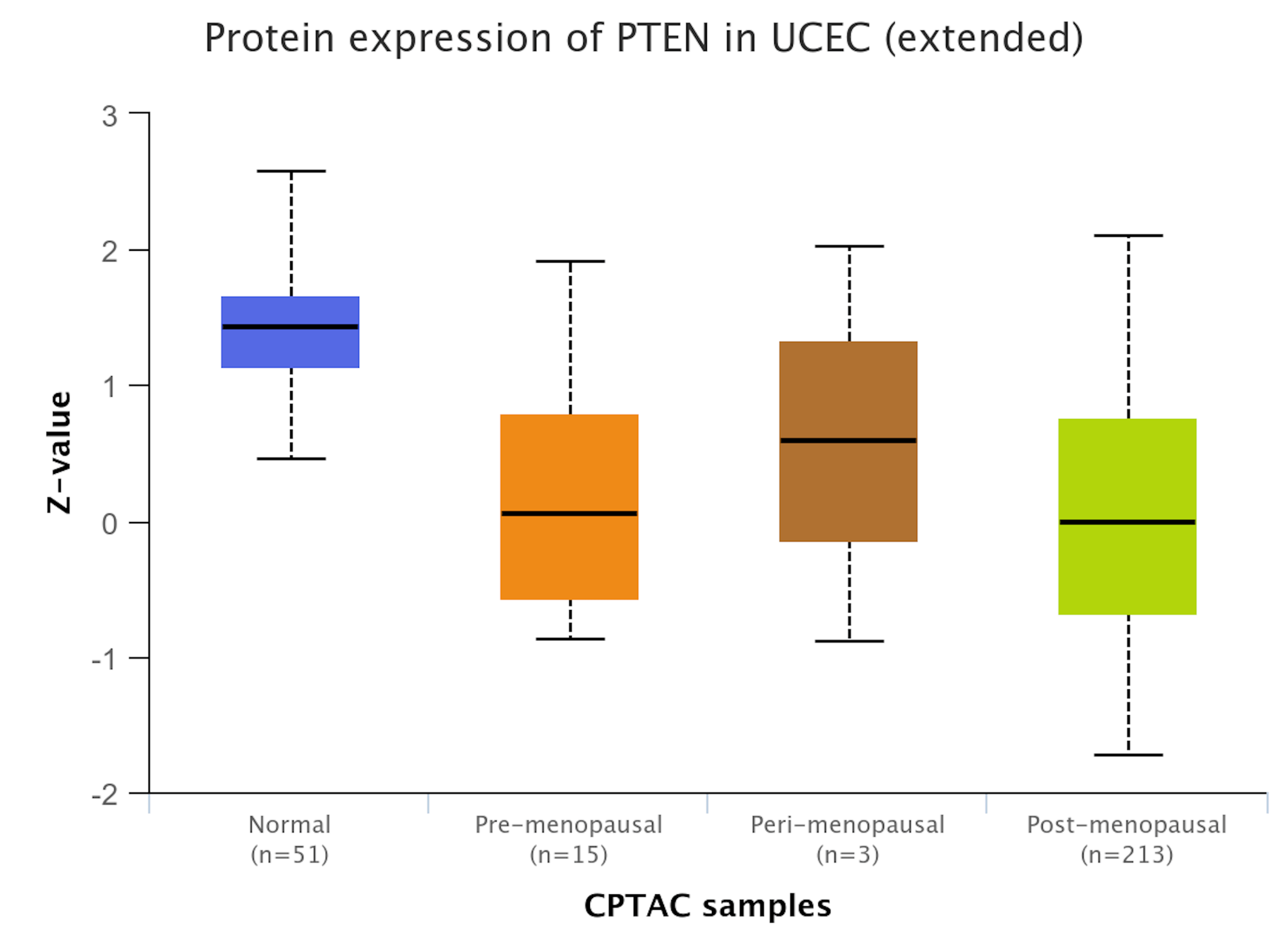
In Figure 5E, tumor subgroups showed lower PTEN protein levels than the normal group, with the post-menopausal subgroup representing the largest tumor subgroup and showing values concentrated around ~0 Z with wide variation. Lower PTEN protein levels were observed across menopausal-status subgroups, suggesting that reduced PTEN expression was not limited to one endocrine subgroup in this portal output30.
Discussion
The data reveal that PTEN is frequently altered in TCGA-UCEC in the selected cohort, with features including loss-of-function truncating and splice variants, hotspot missense mutations within the catalytic DSPc and C2 domains, and a predominance of copy-number loss4,9,10,11,18. These patterns are consistent with earlier primary studies showing PTEN mutation or loss in endometrial carcinoma and precursor lesions14,15,19. CPTAC-derived protein data demonstrate that PTEN levels are reduced in tumors compared with normal endometrial tissue, and this finding is consistent across multiple clinical strata, including age, BMI, race, and menopausal status5,30. Together, the genomic and proteomic findings are consistent with a model in which PTEN dosage and function are reduced in UCEC, potentially contributing to dysregulation of the PI3K/AKT/mTOR pathway7,20,21,22,23.
Survival analysis by a binary “altered vs unaltered” definition showed a statistically significant difference in the unadjusted portal-based overall survival comparison, but this finding should be interpreted cautiously because the analysis did not include multivariable adjustment for stage, grade, histologic subtype, or molecular subtype. This association may reflect cohort composition, because PTEN-altered tumors can occur in copy-number-low endometrioid and MMR-deficient classes, which generally have more favorable baseline prognoses than copy-number-high/TP53-mutant tumors4,18,28. Previous primary studies have reported mixed or context-dependent relationships between PTEN mutation, PTEN protein loss, and prognosis, which supports cautious interpretation rather than a single universal prognostic conclusion16,17,18,28. A more conclusive test would limit the exposure definition to unambiguous loss-of-function events or copy-number loss, stratify by molecular class, and adjust for stage and grade in a multivariable Cox model4,6,17,18,28.
Network and dependency analyses corroborate the pathway context. The first-shell network of STRING locates PTEN in a dense module with PIK3R1, PIK3CA, and AKT1, together with scaffolds MAGI2, DLG1, and MAST2, and regulators TP53, PTK2, PREX2, and SPOP. This wiring aligns with PI3K/AKT/mTOR signaling, cell-cycle regulation, and apoptotic regulation32. Complementary DepMap results showed that PTEN Chronos scores in endometrial/uterus lineage cell lines were generally near zero, suggesting that these models were not strongly dependent on PTEN itself for short-term survival. These findings provide pathway context but do not directly identify therapeutic vulnerabilities31.
Taken together, these results indicate that reduced PTEN activity is a recurrent biological feature of UCEC and may be associated with downstream PI3K/AKT/mTOR pathway dysregulation. At the same time, the present analyses are descriptive and do not directly evaluate treatment response; therefore, any therapeutic implications should be viewed as hypothesis-generating rather than as evidence-based treatment recommendations. Future work should evaluate such possibilities using subtype-aware and outcome-linked analyses.
Considerable limitations also constrain this study. The Firehose Legacy cohort and CPTAC proteomics do not have perfect overlap, which means some samples could not be linked. Subgroup sample sizes were also small, and no multivariable survival modeling was performed. These factors, combined with the potential for confounding within subtypes, limit the interpretability of the results. Future work should validate these findings in larger, harmonized cohorts with subtype-aware, multivariable survival models and studies designed to evaluate whether PTEN-related pathway patterns are associated with response to PI3K-axis approaches. Overall, this study supports PTEN as a biologically important component of UCEC-associated pathway dysregulation, but its prognostic and therapeutic utility remains to be clarified through more reproducible and clinically integrated analyses4,5,7,18,28.
Limitations
This study has several limitations. First, it is based entirely on secondary public datasets and portal-generated outputs rather than on raw data reprocessing. Second, exact reproducibility is limited because an external code-based rerun of the patient-level survival analysis was not performed in this version. Third, the datasets used across cBioPortal, CPTAC, STRING, and DepMap are not perfectly overlapping, so cross-platform comparisons are interpretive rather than fully sample-matched. Fourth, the survival analysis is limited to portal-based Kaplan–Meier output and does not adjust for stage, grade, histologic subtype, or molecular subtype. Fifth, the altered-versus-unaltered survival grouping may combine heterogeneous PTEN event classes with different biological consequences. Finally, the network and dependency analyses provide association-level pathway context and should not be interpreted as direct evidence of causality or treatment efficacy.
Conclusion
This secondary-data bioinformatics study shows that PTEN disruption is a prominent molecular feature of UCEC across genomic, proteomic, and pathway-context analyses. The results are consistent with PTEN’s established role as a negative regulator of PI3K/AKT signaling and support its relevance as a biologically important pathway marker in UCEC. Although the portal-based survival analysis showed a significant unadjusted association, it does not establish PTEN alteration status as an independent prognostic biomarker because no multivariable adjustment was performed. Therefore, the main contribution of this study is not definitive clinical prediction, but rather a multi-omics characterization of PTEN-associated patterns that can guide future investigation. More rigorous follow-up studies using exported patient-level data, reproducible computational pipelines, and multivariable subtype-aware analyses are needed to determine the true clinical utility of PTEN-related alterations in UCEC.
Acknowledgments
The author would like to thank Dr. Begüm Akman-Tuncer and Dr. Taner Tuncer of the University of Cambridge for their guidance during this project and the Cambridge Centre for International Research (CCIR) for program support.
References
- R. L. Siegel, A. N. Giaquinto, A. Jemal. Cancer statistics, 2024. CA: A Cancer Journal for Clinicians. Vol. 74, pg. 12–49, 2024, https://doi.org/10.3322/caac.21820. [↩]
- M. M. Braun, E. A. Overbeek-Wager, R. J. Grumbo. Diagnosis and management of endometrial cancer. American Family Physician. Vol. 93, pg. 468–474, 2016. [↩] [↩] [↩]
- J. Ngeow, C. Eng. PTEN hamartoma tumor syndrome: clinical risk assessment and management protocol. Methods. Vol. 77–78, pg. 11–19, 2015, https://doi.org/10.1016/j.ymeth.2014.10.011. [↩]
- D. A. Levine, The Cancer Genome Atlas Research Network. Integrated genomic characterization of endometrial carcinoma. Nature. Vol. 497, pg. 67–73, 2013, https://doi.org/10.1038/nature12113. [↩] [↩] [↩] [↩] [↩] [↩] [↩] [↩] [↩] [↩] [↩]
- B. Djordjevic, B. T. Hennessy, J. Li, B. A. Barkoh, R. Luthra, G. B. Mills, R. R. Broaddus. Clinical assessment of PTEN loss in endometrial carcinoma: immunohistochemistry outperforms gene sequencing. Modern Pathology. Vol. 25, pg. 699–708, 2012, https://doi.org/10.1038/modpathol.2011.208. [↩] [↩] [↩] [↩] [↩]
- B. Djordjevic, B. T. Hennessy, J. Li, B. A. Barkoh, R. Luthra, G. B. Mills, R. R. Broaddus. Relationship between PTEN, DNA mismatch repair, and tumor histotype in endometrial carcinoma: retained positive expression of PTEN preferentially identifies sporadic non-endometrioid carcinomas. Modern Pathology. Vol. 26, pg. 1401–1412, 2013, https://doi.org/10.1038/modpathol.2013.67. [↩] [↩] [↩]
- Q. Gao, F. Ye, X. Xia, H. Xing, Y. Lu, J. Zhou, D. Ma. Correlation between PTEN expression and PI3K/Akt signal pathway in endometrial carcinoma. Journal of Huazhong University of Science and Technology [Medical Sciences]. Vol. 29, pg. 59–63, 2009, https://doi.org/10.1007/s11596-009-0112-6. [↩] [↩] [↩] [↩] [↩] [↩]
- A. Joshi, C. J. Miller, S. J. Baker, L. H. Ellenson. Activated mutant p110α causes endometrial carcinoma in the setting of biallelic Pten deletion. The American Journal of Pathology. Vol. 185, pg. 1104–1113, 2015, https://doi.org/10.1016/j.ajpath.2014.12.019. [↩]
- D. Kong, A. Suzuki, T. T. Zou, A. Sakurada, L. W. Kemp, S. Wakatsuki, S. Yokoyama, N. Yamakawa, T. Furukawa, M. Sato, X. Y. Ohuchi, K. Sato, S. J. Meltzer, A. Horii. PTEN1 is frequently mutated in primary endometrial carcinomas. Nature Genetics. Vol. 17, pg. 143–144, 1997, https://doi.org/10.1038/ng1097-143. [↩] [↩] [↩] [↩] [↩]
- J. I. Risinger, A. K. Hayes, A. Berchuck, J. C. Barrett. PTEN/MMAC1 mutations in endometrial cancers. Cancer Research. Vol. 57, pg. 4736–4738, 1997. [↩] [↩] [↩] [↩] [↩]
- H. Tashiro, M. S. Blazes, R. Wu, K. R. Cho, S. Bose, S. I. Wang, J. Li, R. Parsons, L. H. Ellenson. Mutations in PTEN are frequent in endometrial carcinoma but rare in other common gynecological malignancies. Cancer Research. Vol. 57, pg. 3935–3940, 1997. [↩] [↩] [↩] [↩] [↩]
- J. I. Risinger, A. K. Hayes, G. L. Maxwell, M. E. Carney, R. K. Dodge, J. C. Barrett, A. Berchuck. PTEN mutation in endometrial cancers is associated with favorable clinical and pathologic characteristics. Clinical Cancer Research. Vol. 4, pg. 3005–3010, 1998. [↩]
- E. Bussaglia, E. del Rio, X. Matias-Guiu, J. Prat. PTEN mutations in endometrial carcinomas: a molecular and clinicopathologic analysis of 38 cases. Human Pathology. Vol. 31, pg. 312–317, 2000, https://doi.org/10.1016/S0046-8177(00)80244-0. [↩]
- G. L. Mutter, M. C. Lin, J. T. Fitzgerald, J. B. Kum, J. P. Baak, J. A. Lees, L. Weng, C. Eng. Altered PTEN expression as a diagnostic marker for the earliest endometrial precancers. Journal of the National Cancer Institute. Vol. 92, pg. 924–930, 2000, https://doi.org/10.1093/jnci/92.11.924. [↩] [↩]
- H. Sun, T. Enomoto, M. Fujita, H. Wada, K. Yoshino, K. Ozaki, T. Nakamura, Y. Murata. Mutational analysis of the PTEN gene in endometrial carcinoma and hyperplasia. American Journal of Clinical Pathology. Vol. 115, pg. 32–38, 2001, https://doi.org/10.1309/7JX6-B9U9-3P0R-EQNY. [↩] [↩]
- Y. Kanamori, J. Kigawa, H. Itamochi, M. Shimada, M. Takahashi, S. Kamazawa, S. Sato, R. Akeshima, N. Terakawa. Correlation between loss of PTEN expression and Akt phosphorylation in endometrial carcinoma. Clinical Cancer Research. Vol. 7, pg. 892–895, 2001. [↩] [↩]
- Y. Kanamori, J. Kigawa, H. Itamochi, H. Sultana, M. Suzuki, M. Ohwada, T. Kamura, T. Sugiyama, Y. Kikuchi, T. Kita. PTEN expression is associated with prognosis for patients with advanced endometrial carcinoma undergoing postoperative chemotherapy. International Journal of Cancer. Vol. 100, pg. 686–689, 2002, https://doi.org/10.1002/ijc.10542. [↩] [↩] [↩]
- A. Akiyama-Abe, T. Minaguchi, Y. Nakamura, H. Michikami, A. Shikama, S. Nakao, M. Sakurai, H. Ochi, M. Onuki, K. Matsumoto, T. Satoh, A. Oki, H. Yoshikawa. Loss of PTEN expression is an independent predictor of favourable survival in endometrial carcinomas. British Journal of Cancer. Vol. 109, pg. 1703–1710, 2013, https://doi.org/10.1038/bjc.2013.455. [↩] [↩] [↩] [↩] [↩] [↩]
- J. Pallares, E. Bussaglia, J. L. Martinez-Guitarte, X. Dolcet, D. Llobet, M. Rue, L. Sanchez-Verde, J. Palacios, J. Prat, X. Matias-Guiu. Immunohistochemical analysis of PTEN in endometrial carcinoma: a tissue microarray study with a comparison of four commercial antibodies in correlation with molecular abnormalities. Modern Pathology. Vol. 18, pg. 719–727, 2005, https://doi.org/10.1038/modpathol.3800347. [↩] [↩]
- K. Oda, D. Stokoe, Y. Taketani, F. McCormick. High frequency of coexistent mutations of PIK3CA and PTEN genes in endometrial carcinoma. Cancer Research. Vol. 65, pg. 10669–10673, 2005, https://doi.org/10.1158/0008-5472.CAN-05-2620. [↩] [↩]
- M. P. Hayes, H. Wang, R. Espinal-Witter, W. Douglas, G. J. Solomon, S. J. Baker, L. H. Ellenson. PIK3CA and PTEN mutations in uterine endometrioid carcinoma and complex atypical hyperplasia. Clinical Cancer Research. Vol. 12, pg. 5932–5935, 2006, https://doi.org/10.1158/1078-0432.CCR-06-1375. [↩] [↩]
- A. Velasco, E. Bussaglia, J. Pallares, X. Dolcet, D. Llobet, M. Encinas, N. Llecha, J. Palacios, J. Prat, X. Matias-Guiu. PIK3CA gene mutations in endometrial carcinoma: correlation with PTEN and K-RAS alterations. Human Pathology. Vol. 37, pg. 1465–1472, 2006, https://doi.org/10.1016/j.humpath.2006.05.007. [↩] [↩]
- L. Catasus, A. Gallardo, M. Cuatrecasas, J. Prat. PIK3CA mutations in the kinase domain exon 20 of uterine endometrial adenocarcinomas are associated with adverse prognostic parameters. Modern Pathology. Vol. 21, pg. 131–139, 2008, https://doi.org/10.1038/modpathol.3800992. [↩] [↩]
- M. E. Urick, M. L. Rudd, A. K. Godwin, D. S. Sgroi, M. J. Merino, D. W. Bell. PIK3R1 (p85α) is somatically mutated at high frequency in primary endometrial cancer. Cancer Research. Vol. 71, pg. 4061–4067, 2011, https://doi.org/10.1158/0008-5472.CAN-11-0549. [↩]
- L. W. T. Cheung, B. T. Hennessy, J. Li, S. Yu, A. P. Myers, B. Djordjevic, Y. Lu, K. H. Stemke-Hale, M. D. Dyer, F. Zhang, Z. Ju, L. C. Cantley, S. E. Scherer, H. Liang, K. H. Lu, R. R. Broaddus, G. B. Mills. High frequency of PIK3R1 and PIK3R2 mutations in endometrial cancer elucidates a novel mechanism for regulation of PTEN protein stability. Cancer Discovery. Vol. 1, pg. 170–185, 2011, https://doi.org/10.1158/2159-8290.CD-11-0039. [↩]
- B. Weigelt, P. H. Warne, M. B. Lambros, J. S. Reis-Filho, J. Downward. PI3K pathway dependencies in endometrioid endometrial cancer cell lines. Clinical Cancer Research. Vol. 19, pg. 3533–3544, 2013, https://doi.org/10.1158/1078-0432.CCR-12-3815. [↩]
- X. Bian, J. Gao, F. Luo, C. Rui, T. Zheng, D. Wang, Y. Wang, T. M. Roberts, P. Liu, J. J. Zhao, H. Cheng. PTEN deficiency sensitizes endometrioid endometrial cancer to compound PARP-PI3K inhibition but not PARP inhibition as monotherapy. Oncogene. Vol. 37, pg. 341–351, 2018, https://doi.org/10.1038/onc.2017.326. [↩]
- S. N. Westin, Z. Ju, R. R. Broaddus, C. Krakstad, J. Li, N. Pal, K. H. Lu, R. L. Coleman, B. T. Hennessy, S. J. Klempner, H. M. J. Werner, H. B. Salvesen, L. C. Cantley, G. B. Mills, A. P. Myers. PTEN loss is a context-dependent outcome determinant in obese and non-obese endometrioid endometrial cancer patients. Molecular Oncology. Vol. 9, pg. 1694–1703, 2015, https://doi.org/10.1016/j.molonc.2015.04.014. [↩] [↩] [↩] [↩] [↩]
- E. Cerami, J. Gao, U. Dogrusoz, B. E. Gross, S. O. Sumer, B. A. Aksoy, A. Jacobsen, C. J. Byrne, M. L. Heuer, E. Larsson, Y. Antipin, B. Reva, A. P. Goldberg, C. Sander, N. Schultz. The cBio cancer genomics portal: an open platform for exploring multidimensional cancer genomics data. Cancer Discovery. Vol. 2, pg. 401–404, 2012, https://doi.org/10.1158/2159-8290.CD-12-0095. [↩] [↩]
- D. S. Chandrashekar, B. Bashel, S. A. H. Balasubramanya, C. J. Creighton, I. Ponce-Rodriguez, B. V. S. K. Chakravarthi, S. Varambally. UALCAN: a portal for facilitating tumor subgroup gene expression and survival analyses. Neoplasia. Vol. 19, pg. 649–658, 2017, https://doi.org/10.1016/j.neo.2017.05.002. [↩] [↩] [↩] [↩] [↩] [↩] [↩] [↩]
- Broad DepMap. DepMap Public 25Q3. DepMap: The Cancer Dependency Map Project at Broad Institute. Dataset/portal, 2025. Accessed May 19, 2026, https://depmap.org/portal/data_page/?tab=allData. [↩] [↩] [↩]
- D. Szklarczyk, A. L. Gable, D. Lyon, A. Junge, S. Wyder, J. Huerta-Cepas, M. Simonovic, N. T. Doncheva, J. H. Morris, P. Bork, L. J. Jensen, C. von Mering. STRING v11: protein-protein association networks with increased coverage, supporting functional discovery in genome-wide experimental datasets. Nucleic Acids Research. Vol. 47, pg. D607–D613, 2019, https://doi.org/10.1093/nar/gky1131. [↩] [↩] [↩]