
Abstract
Neurochemical balance plays a critical role in optimizing athletic performance, yet its underlying mechanisms are often overlooked in sports science as greater emphasis is placed on physiological factors. This paper summarizes current research on how disruptions in brain chemistry may contribute to declines in both physical and cognitive performance among athletes. The main findings also suggest that factors such as poor diet, overtraining, and excessive stress can disrupt key neurotransmitters, particularly serotonin and norepinephrine, which play essential roles in athletic performance. Building upon this evidence, this paper also examines mental blocks, a phenomenon similar to athletic performance decline. Future research is needed to more precisely identify these relationships and to develop targeted interventions that can help athletes maintain both neurochemical balance and peak performance.
Introduction
Athletic performance depends not only on physical capability but also precise regulation of neurological systems that affect mood, stress, and concentration. Historically, acute declines in athletic performance have been attributed to psychological factors such as diminished self-confidence, anxiety, and resurfacing fear. Emerging research has found that imbalances and dysfunction in neurotransmitters, particularly involving serotonin and norepinephrine, may also impact performance.
Norepinephrine and serotonin are central components in regulating mood, stress, concentration, motivation, and motor control1. Disruptions of these, resulting from factors such as diet, external pressure, and overtraining, have been found to lead to trouble focusing, impaired decision making, and declines in athletic performance. Although dysregulation of serotonin and norepinephrine cannot currently be observed in athletes during performance, findings from human and animal studies show strong similarity that links imbalanced neurotransmitters to athletic burnout, reduced motivation, and diminished output over time1.
This paper summarizes current findings in neurobiology and cognitive neuroscience to answer the following question: What evidence exists that neurotransmitter dysregulation contributes to declines in athletic performance? Additionally, it examines the phenomenon of mental blocks, which remains poorly understood within the scientific literature, however relevant for a number of athletes. Given the limited direct evidence available, a relationship between neurotransmitter dysregulation and mental blocks is presented only as a hypothesis rather than a conclusion. By integrating the existing literature, this review aims to provide a framework for understanding the potential neurobiological mechanisms underlying poor performance and mental blocks while identifying directions for future investigation.
Hormones and Neurotransmitters Involved in Athletic Performance Focusing on Norepinephrine and Serotonin
To understand how imbalances arise, it’s necessary to outline how norepinephrine and serotonin are made. Serotonin and norepinephrine are two of the most crucial neurotransmitters affecting motor control and cognitive function and thereby athletic performance2.
Serotonin is a monoamine neurotransmitter that positively affects sleep cycles, mood, stress, and motivation. Other functions include regulating digestion and wound healing while also influencing blood clotting, and motor control2. Serotonin is also used to moderate stress and anxiety and facilitates adaptive responses to threats. It also plays a crucial role in risk perception and the fight or flight response, shaping fear learning and memory2.Norepinephrine is both a neurotransmitter and a hormone. It is released from the adrenal glands as a hormone and serves as a neurotransmitter by transmitting nerve signals across the body3. Norepinephrine as a neurotransmitter increases alertness, attention and arousal, and also maintains blood pressure in times of stress. When released as a hormone in response to dangerous situations, norepinephrine plays a major role in the fight or flight response in conjunction with serotonin3. Norepinephrine reaches all areas of the body such as eyes, airways, heart and blood vessels to initiate rapid bodily changes. Moderate levels of norepinephrine help with vigilance, focus, and cardiovascular readiness; however, higher levels of norepinephrine typically due to chronic stress, can cause high blood pressure, rapid heartbeat and excessive sweating3.
Other hormones and neurotransmitters that are related to this topic include gamma-aminobutyric acid, glutamate, cortisol and dopamine. Gamma-aminobutyric acid also referred to as GABA is an inhibitory neurotransmitter, meaning it helps with calmness and reduction of anxiety4. It also helps with regulating neuronal excitability by preventing excessive firing of neurons4. Glutamate plays an important role in neural communication and metabolism. Maintaining appropriate levels of glutamate is important for energy production and preventing neural damage5. Cortisol’s primary functions are vital regulators of metabolism, immune function and the cardiovascular system. However, in relation to athletic performance, it maintains energy by breaking down carbohydrates and fats, while also managing exercise induced inflammation6. Dopamine’s function is to help with motivation, pleasure, regulate mood, and reinforce learning7. Together, these neurotransmitters and hormones play an important role in athletic performance, however serotonin and norepinephrine are the main focus of this paper.
Effects of imbalances of neurotransmitters on athletic performance
Norepinephrine and serotonin imbalances can contribute to mental and physical stress by disrupting the prefrontal cortex (PFC) which maintains goal directed behavior by controlling attention, emotion and arousal. The locus coeruleus (LC) is a small nucleus located in the pons of the brain with the main function of releasing and regulating norepinephrine. Under regular circumstances in daily life, moderate levels of norepinephrine are released to the PFC, helping maintain optimal brain function including focus, vigilance, and quick responses to change8. However, excessive amounts of norepinephrine overstimulates the adrenergic receptors in the PFC, causing disrupted cognitive regulation8.
Serotonin is released from the raphe nuclei located near the pons. Serotonin serves to dampen excessive amounts of stress, but when levels are insufficient, it can lead to the brain being left in a hyper aroused state8. Together, if imbalances exist in norepinephrine and serotonin they can lead the brain to misinterpret normal situations as threats and overreact leading to physical stress like rapid heart rate, and increased blood pressure. If imbalances are prolonged they can also lead to chronic stress8 and potentially affect performances in athletes.
Optimal performance and stress regulation exists when both norepinephrine and serotonin are dynamically balanced. From an athletic perspective, norepinephrine sharpens focus and motor control while serotonin helps to manage excessive arousal and ensure correct recovery post performance. If norepinephrine and serotonin are disrupted acutely or long term, proper function before, during, and post performance can be impaired8. This shows how underlying dysregulation within interconnected neurotransmitters can possibly affect athletes short and long term.
To understand whether this relationship extends beyond theoretical mechanisms requires examination of experimental evidence. In one experiment, researchers performed a comparison between placebo and norepinephrine reuptake inhibitors(Rebox) on 9 trained male cyclists exercising in normal(18oC) and warm temperatures(30oC)9. Participants completed 60 minutes of cycling followed by a time trial, while researchers measured performance alongside physiological and hormonal responses. They found that the norepinephrine reuptake inhibition decreased exercise performance by 10% in normal conditions and 20% in warm conditions9. The author also noted that these findings confirm earlier evidence showing a decline in performance following norepinephrine reuptake inhibition, with the greater performance impairment in this study likely due to the higher drug dosage9. Norepinephrine reuptake inhibition also increased resting heart rate and altered ACTH, cortisol, prolactin, and growth hormone concentrations, suggesting central nervous system effects. The authors propose that the negative effect of norepinephrine on performance may be related to its interaction with serotonin pathways, which have been implicated in central fatigue9. Overall, the experiment’s findings indicate that alterations in norepinephrine signaling may influence exercise performance negatively.
Inverted U hypothesis
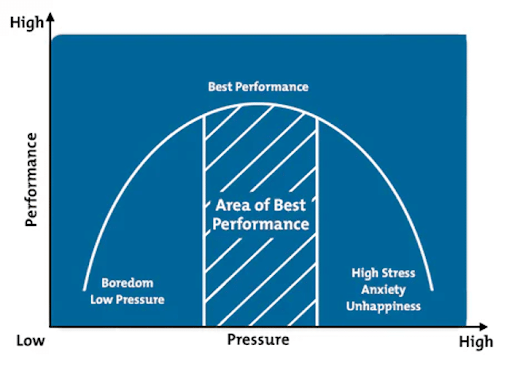
The inverted U hypothesis describes the balance needed for optimal performance.The inverted U hypothesis was founded by Yerkes and Dodson and it explains that during performances, it’s best to have moderate levels of stress and arousal because it can enhance attention and focus and block out unnecessary distractions10. As arousal increases, performance also increases, but this is only up to a point. Excessive stress that stems from environmental aspects during a performance causes the locus coeruleus-norepinephrine (LC-NE) system, normally balanced between low tonic firing and optimal phase bursts to become overactivated creating a surplus of norepinephrine10. This surplus may flood cortical and subcortical regions, particularly the prefrontal cortex causing neurons to lose their synchronized firing patterns. As a result, individuals may experience “tunnel vision,” a concept described by psychologists J.A. Easterbrook based off of the inverted U hypothesis11. Excessive amounts of arousal and cognitive stress causes narrowed vision and less focus making individuals hyperfocused on central cues causing them to miss peripheral information that could be essential to them11. This hypothesis is pertinent to athletes, as it is important that they are fully aware of their surroundings and maintain concentration and focus.
In addition, McEwen and Stellar introduced the idea of allostatic load. They explained chronic stress causes cumulative physical wear and tear on the body. When the body continuously has to adapt to prolonged stress, the strain on the brain, nervous system, and hormonal pathways can cause inflammation and eventually lead to tissue damage and illness13. In addition if the body is constantly stressed it doesn’t have sufficient time or resources to return to its normal reserves13. Allostatic load is relevant to athletic performance because it demonstrates how prolonged stress can affect brain and physiological function; however, it does not directly establish that these effects result from neurotransmitter dysregulation. Instead, it provides broader context for understanding how chronic stress may lead to underperformance due to the health problems associated with it.
Role of diet
Diet is one of the most essential components an athlete can control that influences proper norepinephrine and serotonin regulation. Norepinephrine and serotonin are synthesized through essential amino acid precursors and insufficient availability may reduce neurotransmitter and hormone production. Serotonin, also known as 5-hydroxytryptamine (5-HT), is synthesized from the essential amino acid tryptophan. Tryptophan crosses the blood brain barrier using a carrier shared with other large neutral amino acids like tyrosine and phenylalanine14. Once inside the brain, tryptophan is converted to 5-hydroxytryptophan (5-HTP) by the enzyme tryptophan hydroxylase. 5-hydroxytryptophan (5-HTP) is then converted to serotonin by aromatic L-amino acid decarboxylase14. If an athlete has low levels of tryptophan or lacks enzymes involved in serotonin synthesis due to poor diet, serotonin production may decrease. Inversely, consuming foods rich in tryptophan for serotonin and otherwise balanced to ensure sufficient enzyme production may provide the optimal conditions for serotonin regulation.
Norepinephrine is synthesized from the amino acid tyrosine. Tyrosine also crosses the blood brain barrier through the same amino acid carrier as tryptophan15. Inside neurons, tyrosine is converted to L-DOPA by tyrosine hydroxylase, then to dopamine by DOPA decarboxylase, and finally to norepinephrine by dopamine β-hydroxylase. Athletes consuming foods with higher amounts of tyrosine, can increase tyrosine availability and possibly avoid depletion of norepinephrine due to lack of chemical precursors16. Common foods that contain higher amounts of tyrosine are cheese, soybeans, meat, poultry, nuts and fish17. Common foods that can boost tryptophan are tuna, salmon, snappers, crab and pork18.
Despite diet being a major factor affecting neurotransmitter availability, variability between individuals when the amino acids cross the blood-brain barrier makes it difficult to fully predict neurotransmitter changes directly from diet.
In another research study, experiments were conducted to understand how gut derived compounds and intestinal microorganisms affect neurotransmitter metabolism and brain function. In one experiment, 20 male Sprague–Dawley rats were divided into control and trimethylamine (TMA)-treated groups, while another experiment divided 20 C57 mice into control, Candida albicans, Klebsiella pneumoniae, and combined-treatment groups19. Following exposure, researchers compared the groups to determine if any changes occured within the cholinergic system and other aspects of brain function. The result of the experiment showed disruptions to the gut microbiomes and the neurotransmitter signaling pathway that connect the gut and the brain19. The researchers found that the diet altered the levels of key enzymes, Monoamine oxidase A (MAOA), Monoamine oxidase B (MAOB), and Catechole-O-Methyltransferase (COMT) which help degrade, metabolize and regulate key enzymes like dopamine, norepinephrine, epinephrine and serotonin. Additionally, the rats experienced weight gain, increased blood glucose and TMAO levels (waste product created by gut microbiomes after digestion of certain foods)19. Although this study was done on mice and therefore we cannot say it directly correlates to humans, it still shows how a poor diet can trigger gut-brain axis dysfunction, altering enzymes affecting neurotransmitter availability and balance. Based on this research and the direct connection of key amino acids to serotonin and norepinephrine synthesis, it must be anticipated that similar forces are at play for athletes with poor or suboptimal diets.
Diet also plays a crucial role in the central nervous system. The brain is one of the most energy demanding organs as it makes up 2% of the body’s overall weight but consumes approximately 20-23% resting energy20. Neurons rely almost exclusively on glucose for energy as it is converted to ATP. Glucose can also be converted to acetyl-CoA which is a precursor for the neurotransmitter acetylcholine, used for memory. Although the brain can use beta-hydroxybutyrate and lactate as alternative energy sources during ketosis and hypoxia, these substrates still cannot replace glucose. Carbohydrates provide a primary source of glucose, maintaining adequate carbohydrates intake may support glucose availability20.
Neurons require large amounts of energy to maintain and restore ion gradients that include sodium, potassium, and calcium. These ion gradients are important for allowing neurons to release neurotransmitters such as glutamatergic, GABAergic, cholinergic and serotonergic signaling. Without them, neurotransmitter systems cannot function normally20. Research has also found a relationship between omega-3 fatty acids and serotonergic neurotransmission. Studies have shown that omega-3 fatty acids influence serotonin receptor function, neurotransmitter levels, and serotonin metabolism20. Low concentrations of DHA(an omega 3 fatty acid found in neuronal membranes) have been associated with reduced levels of 5-hydroxyindoleacetic acid (5-HIAA), the primary metabolite of serotonin, suggesting that DHA deficiency may be linked to reduced serotonergic signaling. Additionally, omega-3 fatty acids influence intracellular signaling pathways for example cyclic AMP (cAMP), phosphatidylinositol, modulate calcium-dependent ion channels, inhibit protein kinase C (PKC) activity20. These mechanisms help regulate neurotransmitter signaling, neuronal communication, and synaptic function, all critical for athletic performance. Diets high in saturated fats have been shown to inhibit brain derived neurotrophic level (BDNF) production which limits neuroplasticity, memory and learning20. Overall, the evidence suggests that proper nutrition may support normal neurotransmitter function and brain health, making it an important consideration for preserving both cognitive and physical performance in athletes.
Role of training load and recovery
Another important aspect that is under the control of athletes and training staff, is the relationship of neurotransmitter depletion with overtraining and insufficient recovery.
Research has shown that over-excerising causes the body to take longer to heal and return into its normal homeostasis. Over training puts high amounts of physical pressure on the body, leaving athletes feeling consistently fatigued. Also, high intensity workouts are judged to become progressively harder each time by athletes even when training load remains constant21. Furthermore, over training has been found to increase serotonin. When athletes train more, tryptophan uptake is increased in the brain causing additional substrate availability for tryptophan hydroxylase, which therefore, increases serotonin levels. The athlete may have mood changes, possibly reduced motivation and more fatigue21.
Research has also shown that the HPA axis becomes disrupted due to high intensity training and leads to adrenocorticotropic hormone (ACTH) and cortisol levels dampening. Usually acute exercise will temporarily trigger these hormones and then after an hour they return back to their normal levels. If an athlete overtrains, and is repeatedly exposed to these hormones, then over time those hormones can deplete and the response is blunted22.
Related to this topic is central fatigue, which is a reduction in muscle output. Central fatigueused to be thought of as a neuromuscular junction insufficiency, however more recently it has been found to originate from neurochemical imbalances23. Researchers found that central fatigue can come from altered neurotransmitter activity, particularly involving serotonin, dopamine, GABA and glutamate. Increasing exercise boosts serotonin levels in the brain by mechanisms described above, leading to the ratio of serotonin to dopamine to be thrown off, contributing to feelings of demotivation and tiredness23. Additionally, dopamine as discussed before, is typically used to sustain effort and motor drive during exercise. However, if physical activity intensity rises substantially above certain athlete specific levels, dopamine can become restricted in some areas of the brain and lead to mental fatigue23. Overall, these findings reveal that overtraining can contribute to a breakdown of stress regulation and disrupted neurotransmitter balance.
Sport psychology
This paper focuses on neurochemistry, however it is important to discuss other aspects that contribute to an athletes overall execution. It is well known that physical activity has modulating effects on cognitive function as it produces neurochemical and neurophysiological changes in the brain. This helps with enhancing learning, cognitive performance and the release of BDNF (brain derived neurotrophic factor), which promotes neurogenesis, protects hippocampal neurons, and supports the formation of new synaptic connections24. While all of these changes are good and beneficial to athletes, there still seems to be other factors at play for overall performance. Plenty of astounding athletes such as Simone Biles, Naomi Osaka and Michael Phelps have had issues with their mental health and coping with the pressure from competing at such a high level24. They serve as a reminder that overall performance is beyond physical athleticism and mental wellbeing is just as significant. Sports psychology, social pressures and psychological skills are all major influences on how well an athlete performs25. Research suggests that performance decline is a multifactorial process involving increased stress, burnout, reduced confidence, attentional difficulties, and maladaptive coping strategies. Recently, burnout has become increasingly concerning for athletes as this can cause underperformance and overall health decline as well26. Burnout can be described as emotional and physical exhaustion leaving athletes feeling a loss of motivation and sense of enjoyment in the sport26. Burnout causes long term stress that leaves your body constantly flooded with hormones that overtime wears down the organs and therefore causing constant exhaustion that weakens the immune system. Moreover, burnout can cause a lot of mental exhaustion that puts the athlete at higher risk of getting depression26.
Mindfulness has become a new meditation technique that can be useful for an athlete. Programs such as Mindful Sport Performance Enhancement (MSPE) and the Mindfulness-Acceptance-Commitment (MAC) program teach athletes acceptance, emotional regulation, and cognitive flexibility. Studies have shown that mindfulness training improves sports performance, reduces anxiety, and may help mitigate burnout by decreasing emotional fatigue27. Social relationships and group dynamics also play an important role in athletes’ psychological well-being. It allows for emotional support and stress relief so the athlete doesn’t feel like they are alone when going through hardships during the season. Positive coaching and strong team relationships also are really beneficial as they promote psychosocial development which is the process of building one’s personality, identity and talking skills as they interact with other people. Excessive competitive pressure may reduce these benefits and contribute to psychological challenges27.
Self talk is also important as this helps for overall motivation and healthier behaviors. One experiment found that grammatical structure of self-talk can influence intentions and motivation28. By asking questions or formatting the task in a “Will I?” type of way increased participants’ motivation and goal directed intentions28. Although the study did not directly demonstrate that intentions led to actual behavior, the authors suggest that interrogative self-talk may have practical applications, such as in psychotherapy to encourage healthy behaviors. They also recommend further research to investigate how other grammatical structures may similarly influence behavior28.
While contemporary sport psychology has substantially advanced our understanding of the psychological determinants of athletic performance, these explanations may not fully account for all instances of performance decline. Expanding this framework to include potential neurochemical mechanisms may provide a more integrated understanding of the cognitive and physiological processes underlying athletic performance.
Mental Blocks
Mental blocks represent a distinct and interesting manifestation of cognitive stress related brain dysfunction. Unfortunately mental blocks are a concept still being understood and researched, but due to their acute nature they may represent a unique window into the connection between neurotransmitter dysregulation and athletic performance. By exploring how neurotransmitter levels change around the time of motor dysfunction and underperformance researchers may gain deeper insight into mental blocks themselves. Mental blocks have been described by athletes as a form of a temporary psychological barrier, preventing them from performing at their peak or performing a skill at all. They are also one of the most visible examples of severe athletic performance decline29.
Current researchsuggests that mental blocks happen when an athlete’s brain becomes dysfunctional in its fight or flight response, however this is not yet certain and more of an educated guess given that little has been proven to link the two30.
A mental block can be a devastating situation for an athlete as it diminishes progression, reduces motivation but most importantly can fully eliminate the possibility of competing even after many years of training and demonstration of the required skills30.
Mental blocks typically happen in sports like gymnastics, golf, figure skating, diving or anything involving executing highly coordinated routines that can be dangerous and require deep levels of muscle memory and learned reflexes31. One of the more famous examples of a mental block was that of Simone Biles, a former 7 time gold medal winning olympian. She experienced high levels of anxiety and panic attacks causing her to drop out of the 2020 Olympic games. Her mental block was manifested in something she described as the “twisties” which left her unable to perform routine skills she had been training for years32. Although this is only one example, it demonstrates that mental blocks can have substantial consequences regardless of an athlete’s level of experience or achievement. Cases such as Biles’ highlight the need to better understand the biological and psychological factors that may contribute to their development.
Mental blocks may form because of initial fear of failure. They can also form due to relapse of repeated balking, meaning an athlete continuously bails out of a skill at the last minute. It is hypothesized that due to reinforcement learning of bailing out of the skill, the brain may interpret this as danger and create a fear response. The balking motion becomes automated making it extremely hard to override. To regain the skill an athlete may have to retrace their learning journey or take a break from it in hopes that learned fear dissipates33. Current hypotheses suggest that this is a form of rewiring of the brain that will allow physiological problems to resolve and therefore the skill to be performed again. However since neurotransmitter levels cannot be measured in real time, it is a possibility that waiting periods or retrenchments serve as a recovery phase to allow neurotransmitters to rebalance, not necessarily for a psychological issue to be resolved. Further research is needed to fully establish the true origin. The neurochemical mechanisms underlying mental blocks remain poorly understood. Consequently, mental blocks represent an important gap in the current biological literature.
Hypothesis
Through the integration of multiple sources, theories, and experimentations, this paper has shown how psychological stress, diet, and training load all have an impact on neurotransmitter regulation. The paper also outlines how neurotransmitters affect key systems that are essential for peak athletic performance and describes mental blocks and their effect on athletes.
For a more visual understanding this figure shows what has been covered in this paper.
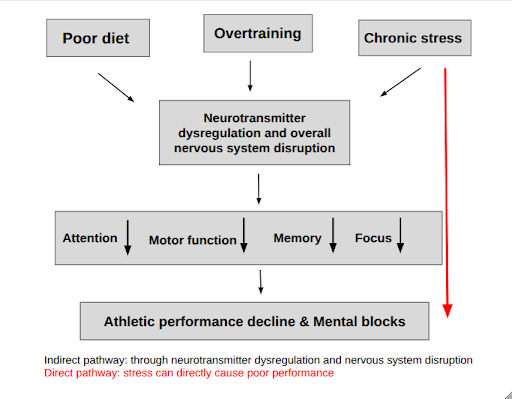
This leads into the hypothesis. Mental blocks and athletic performance decline may not primarily be a psychological problem and rather associate from neurotransmitter imbalances. Historically, mental blocks and athletic performance decline have been thought of as a psychological issue stemming from fear due to various reasons such as past injury, embarrassment, failure and external pressure from coaches, judges and teammates33. This leads to many people resorting to the traditional sport culture that equates high performance with stoic endurance and suppression of vulnerability. Meaning athletes need to “toughen up” in a situation like this. Usually treatment for this means the athlete needs to either work harder, get more reps in or focus on their “mental health”. Unfortunately the treatment is dogmatic, and there is no clear and direct path to take and every athlete’s experience is different. Also by only focusing on psychological issues, it overlooks our understanding that these processes also depend on neural circuits and neurotransmitter systems. Consequently, psychological explanations alone may not fully account for the variability in how athletes experience and recover from performance decline. This is not to say sport psychology is not a factor in athletic performance decline but rather this hypothesis expands the overall scope by considering how biological processes may also interact to influence cognition, motor control, and performance. Advancing research in this area could improve our understanding of athletic performance decline, support the development of more individualized prevention strategies, and ultimately enhance athlete health across a wide range of competitive settings.
Instead of treating mental blocks or similar symptoms to this, with current practice, coaches and athletes should take the approach like when treating a sickness. Implementing structured recovery periods may help mitigate chronic stress and prevent overtraining. Also athletes should consume a balanced diet that provides sufficient carbohydrates and omega-3 fatty acids, both of which have been associated with healthy neurotransmitter function. They could also incorporate other foods that contain higher amounts of tyrosine and tryptophan that are listed in the diet section of this paper, as that may also be helpful. By integrating this into an athlete’s lifestyle and overall training, it might help with keeping neurotransmitters balanced or fixing ones that may already be imbalanced. This could potentially allow for better performance and help prevent future mental blocks from forming or getting over existing ones quicker.
Potential experiments to test this hypothesis and advance our understanding
To add on to this hypothesis, it’s beneficial that we outline potential experiments others can perform to further evaluate and understand the connection between neurotransmitters, underperformance and mental blocks. As a student, conducting these experiments is beyond the scope and resources available to me. However, these approaches may provide potential directions for future research investigations. These proposals are intended solely as ideas for further investigation and should not be interpreted as recommendations or established claims.
One way could be testing the longitudinal of an athlete over the course of a season. A researcher could measure their blood biomarkers related to neurotransmitter synthesis, cortisol levels, diet, sleep quality, training load, psychological stress and performance metrics regularly. This could be a way to test if there are any changes in biological markers if an athlete does happen to go through a mental block or something similar during the season.
Exercise intervention studies is another possibility. A researcher could assign randomly different ways athletes that are experiencing performance decline ways to get over them. Such as, structured recovery periods, mindfulness, changes in diet that promote best possible neurotransmitter regulation, and stress reduction programs. Comparing these interventions could provide valuable insight for coaches and athletes into which approaches may be most effective for addressing performance decline. However, this approach may not fully account for individual variability. Lastly, researchers and scientists could conduct more neurotransmitter experiments on rats and mice. That way it’s easier and more efficient and less invasive compared to performing them on humans. The data collected cannot automatically transfer to humans and therefore may be limiting in that sense, but it still gains deeper insight and possibly helpful for other topics in the neuroscience field.
Limitations and Future directions
Although there is currently substantial evidence connecting physical and mental stressors to neurotransmitters and then to athletic performance, there are still some gaps that remain in literature. Most topics linked to athletic performance are explored in isolation causing the interactive effects of physiological stress, diet, and training load on neurotransmitters to be undiscovered. Instead, future experiments and research should incorporate a multiple of these variables to better understand the connection, rather than making educated hypotheses following one variable at a time studies. Secondly, more often than not, the experiments conducted are found to be on animals rather than actually human beings due to the inability to ethically perform the measurements needed. This highlights the importance of finding new techniques to measure neurotransmitters in humans in a non-invasive way. New technology in CT scans, MRI imaging, implantable sensors, or through the skin Raman or NIR spectroscopy may be avenues to explore to cover this gap. Lastly, research cited in this article explore how neurotransmitters and stress can affect the human body, however few of them touch on how athletes that already face struggles can recover from these setbacks. Future experiments should examine whether certain techniques or interventions could help rebalance neurotransmitters and return an athlete to their peak performance earlier or without having to relearn already mastered skills
References
- W. T. Blows. Neurotransmitters of the brain: serotonin, noradrenaline (norepinephrine), and dopamine. The Journal of neuroscience nursing : journal of the American Association of Neuroscience Nurses.Vol. 32(4).pg. 234–238, 2000. [↩] [↩]
- F. Tortora, A. L. Hadipour, S. Battaglia, A. Falzone, A. Avenanti, C. M. Vicario. The Role of Serotonin in Fear Learning and Memory: A Systematic Review of Human Studies. Brain sciences.Vol. 13(8),pg.1197,2023. [↩] [↩] [↩]
- S. J. Sara. The locus coeruleus and noradrenergic modulation of cognition. Nature reviews.Neuroscience.Vol.10(3),211–223,2009. [↩] [↩] [↩]
- W. Koh, H. Kwak, E. Cheong. GABA tone regulation and its cognitive functions in the brain. Nat. Rev. Neurosci.Vol.24, 523–539, 2023. [↩] [↩]
- Y. Zhou, N. C. Danbolt. Glutamate as a neurotransmitter in the healthy brain. Journal of neural transmission (Vienna, Austria : 1996).Vol.121(8),pg. 799–817. 2014. [↩]
- N. Athanasiou, G. C. Bogdanis, G. Mastorakos. Endocrine responses of the stress system to different types of exercise. Reviews in endocrine & metabolic disorders.Vol.24(2),pg.251–266, 2023. [↩]
- R. A. Wise. Dopamine, learning and motivation. Nature reviews. Neuroscience.Vol. 5(6), pg.483–494, 2004. [↩]
- N. N. Bouras, N. R. Mack, W. J. Gao. Prefrontal modulation of anxiety through a lens of noradrenergic signaling. Frontiers in systems neuroscience.Vol.17,1173326,2023. [↩] [↩] [↩] [↩] [↩]
- B. Roelands, M. Goekint, E. Heyman. Acute norepinephrine reuptake inhibition decreases performance in normal and high ambient temperature. Journal of Applied Physiology.Vol.105(1) pg. 206-212, 2008. [↩] [↩] [↩] [↩]
- D. M. Diamond. Cognitive, endocrine and mechanistic perspectives on non-linear relationships between arousal and brain function. Nonlinearity in biology, toxicology, medicine.Vol. 3(1),pg.1–7,2005. [↩] [↩]
- G. R. Dirkin. Cognitive tunneling: use of visual information under stress. Perceptual and motor skills. Vol. 56(1), pg.191–198, 1983. [↩] [↩]
- I. Highfield, Finding Your Sweet Spot: The Inverted U Theory and Optimal Arousal for Junior Golfers. [↩]
- M. C. Pfaltz, U. Schnyder. Allostatic Load and Allostatic Overload: Preventive and Clinical Implications. Psychotherapy and psychosomatics.Vol.92(5).pg.279–282,2023. [↩] [↩]
- M. Kanova, P. Kohout. Serotonin-Its Synthesis and Roles in the Healthy and the Critically Ill. International journal of molecular sciences.Vol. 22(9),4837, 2021. [↩] [↩]
- L. S. Hussain, V. Reddy, C.V. Maani. Physiology. Noradrenergic Synapse. In: StatPearls. Treasure Island (FL): StatPearls Publishing. Bookshelf ID NBK540977.2026. [↩]
- S. Kühn, S. Düzel, L. Colzato, K. Norman, J. Gallinat, A. M. Brandmaier, U. Lindenberger, K. F. Widaman[1]. Food for thought: association between dietary tyrosine and cognitive performance in younger and older adults. Psychological research, Vol.83(6).pg.1097–1106,2019. [↩]
- Top Foods High in Tyrosine. https://www.webmd.com/diet/foods-high-in-tyrosine. 2024. [↩]
- Foods high in tryptophan, https://www.webmd.com/diet/foods-high-in-tryptophan, 2025. [↩]
- Y. Guo, X. Zhu, M. Zeng. A diet high in sugar and fat influences neurotransmitter metabolism and then affects brain function by altering the gut microbiota. TranslPsychiatry. Vol. 11, 328, 2021. [↩] [↩] [↩]
- A. Wendolowicz, E. Stefanska, L. Ostrowska. Influence of selected dietary components on the functioning of the human nervous system. Roczniki Państwowego Zakładu Higieny.Vol. 69(1).pg.15–21, 2018. [↩] [↩] [↩] [↩] [↩] [↩]
- J. B. Kreher, J. B. Schwartz, Overtraining syndrome: a practical guide. Sports health.Vol.4(2),pg.128–138, 2012. [↩] [↩]
- F. A. Cadegiani, C.E. Kater. Hypothalamic-Pituitary-Adrenal (HPA) Axis Functioning in Overtraining Syndrome: Findings from Endocrine and Metabolic Responses on Overtraining Syndrome (EROS)-EROS-HPA Axis. Sports medicine – open.Vol.3(1), 45, 2017. [↩]
- J. E. Tornero-Aguilera, J. Jimenez-Morcillo, A. Rubio-Zarapuz,V. J.Clemente-Suárez. Central and Peripheral Fatigue in Physical Exercise Explained: A Narrative Review. International journal of environmental research and public health,Vol.19(7), 3909, 2022. [↩] [↩] [↩]
- P. Z. Liu, R. Nusslock. Exercise-mediated neurogenesis in the hippocampus via BDNF. Frontiers in Neuroscience.Vol. 12, 52, 2018. [↩] [↩]
- S. M. Rice, R. Purcell, S. De Silva. The Mental Health of Elite Athletes: A Narrative Systematic Review. Sports Med.Vol. 46, 1333–1353, 2016. [↩]
- Y. S. Rajpoot, P. K. Choudhary, S. Choudhary, V. C. Ciocan, S. Saha, C. Șufaru, V. N. Lucian, S. A. Kabasakal, C. A. Mihaela, M. A. Sava, S.-I. Pavel, J. Vveinhardt (2026). From Slump to Comeback: Psychological Determinants of Performance Decline, Burnout, and Recovery in Competitive Athletes—A Systematic Review. [↩] [↩] [↩]
- A. Martín-Rodríguez, L. A. Gostian-Ropotin, A. I. Beltrán-Velasco,N. Belando-Pedreño, J. A. Simón, C. López-Mora, E. Navarro-Jiménez, J. F. Tornero-Aguilera,V. J. Clemente-Suárez. Sporting Mind: The Interplay of Physical Activity and Psychological Health. Sports (Basel, Switzerland).Vol.12(1), 37, 2024. [↩] [↩]
- I. Senay, D. Albarracín, K. Noguchi. Motivating goal-directed behavior through introspective self-talk: the role of the interrogative form of simple future tense. Psychological science.Vol.21(4).pg.499–504,2010. [↩] [↩] [↩]
- A. Rew, Mental blocks and how to overcome them, https://members.believeperform.com/mental-blocks-and-how-to-overcome-them/, 2015. [↩]
- C. White, Mental Blocks: The Freeze Response. https://theathletemind.com/cortneewhitesportsblogarticles/mental-blocks, 2023. [↩] [↩]
- K. Wes, The Yips, Twisties & More:5 Mental Blocks that Challenge Elite Athletes. https://wellbeings.org/5-mental-blocks-for-athletes/, 2024. [↩]
- Simone Biles, an Unexpected Advocate for Mental Health, https://www.sciencedirect.com/science/article/abs/pii/S0006322324001069#:~:text=Our%20findings%20of%20stress%2Dinduced%20enhanced%20connectivity%20between,and%20activates%20the%20autonomic%20and%20central%20nervous, 2023. [↩]
- R. Smith, Top 10 Reasons Gymnast Get Mental Blocks,https://completeperformancecoaching.com/2017/01/01/mental-blocks/#:~:text=Research%20has%20found%20issues%20with,sport%20you%20play%2C%20it’s%20frustrating, 2017. [↩] [↩]