
Abstract
Adolescence is a significant developmental phase in regard to neuroendocrine regulation, where systems related to stress and regulation undergo major changes. Most current research on adolescent stress focuses on short-term laboratory analysis and/or group averages, which do not fully capture how individuals regulate stress over time. This study used an individual level longitudinal approach to examine how sustained cognitive competition creates divergent cortisol and testosterone change patterns in an individual over time. Twelve male/female adolescents (six of each gender, aged 13 – 16 years) competed in a structured, five-day competitive chess tournament and provided their saliva sample before and immediately after each match using a passive drool method. Samples were analyzed via enzyme-linked immunosorbent assay (ELISA). To determine hormone change, Δ values (post-match concentration-pre-match concentration) were calculated. Participant-level trajectory analysis, descriptive review, and exploratory linear mixed-effects modeling were used to assess changes in cortisol and testosterone. Participant level changes in hormones showed non-uniform patterns where individual-level variability and day-to-day variability was high. The mixed effects model results indicated that match outcome best predicted changes in hormone levels where wins had significantly higher testosterone Δ than losses. Also, pre-match baseline levels of cortisol as well as day of tournament to some extent accounted for variability in cortisol Δ. Gender and match-equity patterns had inconsistent results following correction and were interpreted cautiously. These findings suggest that continued cognitive competition leads to an individual-specific endocrine profile which is captured best through use of repeated measures and pre-to-post hormone level change modeling.
Keywords: cortisol, testosterone, adolescence, neuroendocrine regulation, sustained cognitive competition, chess, stress, longitudinal approach, linear mixed-effects model
Introduction
Adolescence is a time of rapid developmental shifts in cognitive function, emotional experience, and biological regulatory systems. Stress response is typically associated with physiological alterations occurring through interaction among many different regulatory systems making adolescence an especially significant time to study how biological stress regulation develops1. As a result, adolescents are highly susceptible to competition and social evaluation. The adolescent brain’s motivational, attentional and impulse control systems are still developing. These developmental processes have public health implications due to the relationship between adolescents’ levels of stress and emotional regulation and their mental health/behavioral functioning2,3.
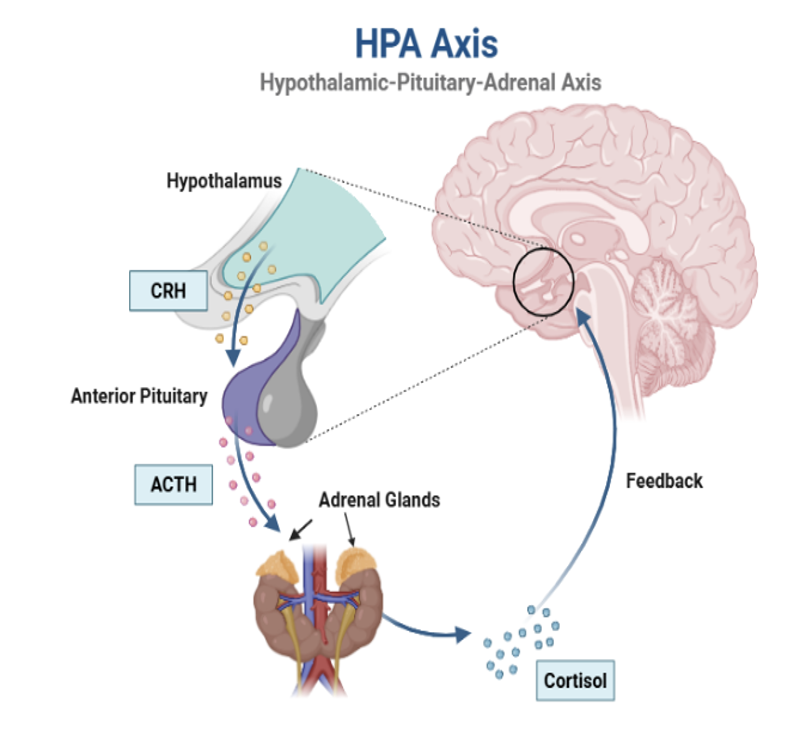
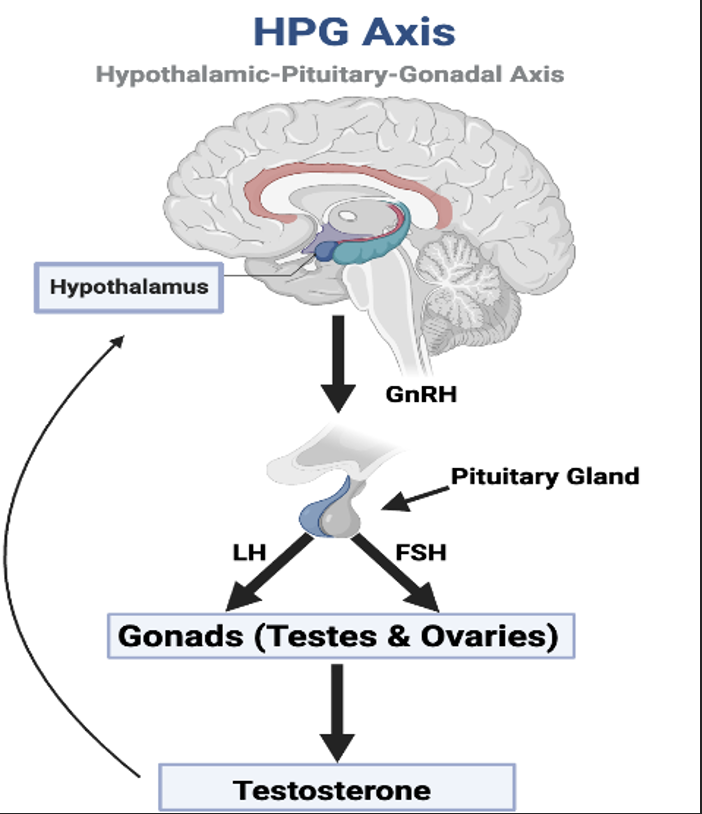
The Hypothalamic-Pituitary-Adrenal(HPA )Axis plays a central role in regulating cortisol and stress reactivity4. Salivary Cortisol is measured in many studies of Psychobiology and Stress Research due to its non-invasive nature and ability to be used as a marker for cortisol activity5. HPA and HPG axes can interact when regulating endocrine responses related to stress6. The Hypothalamic-Pituitary-Gonadal (HPG) axis regulates gonadal steroid hormones, including testosterone, and adolescent salivary androgen levels vary with pubertal development7. In adolescents, testosterone and cortisol have been examined together by researchers in relation to dominance/status-linked patterns8. Additionally, other studies on adolescence and competition have also looked at cortisol and testosterone together in regard to social cognition and competitive endocrine responses9,10. Therefore, in this study, salivary testosterone was interpreted as an androgenic/HPG-axis marker within a competitive endocrine framework, not as a direct quantitative measure of confidence, motivation, persistence, or resilience.
Figures 1 and 2 are provided as schematic representations of the hypothalamic–pituitary–adrenal (HPA) axis and hypothalamic–pituitary–gonadal (HPG) axis pathways which regulate cortisol and testosterone, respectively. The purpose of these background figures is to illustrate the rationale behind using salivary cortisol levels as an indicator of HPA-axis function; similarly, the rationale behind utilizing salivary testosterone levels as indicators of androgenic/HPG-axis function. As such, they do not represent findings from experimentation.
Recent literature demonstrates that adolescent endocrine responses are highly varied based on developmental and contextual factors as well as biological and psychological influences. In addition to being linked to the acute physiological responses (e.g., HPA activation) to psychosocial stress in adolescents, there is evidence for an association between salivary cortisol levels and the emotional/affective aspects of stress in adolescents11. Hair and saliva-based cortisol assessments have recently been used to examine associations with adolescent anxiety/depressive disorders12. Salivary cortisol has also been used in adolescent studies examining stress moodand stress-induced cortisol response13,14. More recent studies have demonstrated variability in salivary androgen patterns during puberty; therefore, it is essential to consider developmental stages and ages in interpretations of adolescent patterns of testosterone7. Studies examining both cortisol and testosterone together have also shown that these two hormones may interactively influence adolescent social cognition supporting a dual hormone approach but also require caution to treat each hormone as a singular indicator of a specific psychological state9.
Recent studies in competitive performance and exercise also strengthen the basis for this design. Studies with adolescent athletes have shown that salivary levels of testosterone, cortisol and testosterone/cortisol ratio vary significantly during competitive settings10. Additionally, studies on the effects of exercise have demonstrated that physical activity changes salivary levels of cortisol and testosterone related to physiological stress associated with exercise which support the use of chess as a low-exertion model of cognitive competition15,16. More recently, there is evidence from studies of both acute and chronic (prolonged) stress that differences exist in how testosterone and cortisol respond to different durations of stress exposure and repeated exposure, thus further validating the importance of taking multiple measurements over time (longitudinal sampling) instead of a single measurement after a stressful event17.
However, these studies have generally examined acute psychosocial stress, athletic competition, exercise-related stress, puberty-related androgen variation, or sample-handling methodology separately. The present study differs by applying repeated pre/post salivary cortisol and testosterone sampling across a structured five-day chess tournament to examine within-participant endocrine trajectories during sustained cognitive competition.
The importance of this interaction is particularly evident in terms of cognitive competition. Classic performance research suggests that effective performance under pressure cannot be explained simply by increased activation18. Effective performance under pressure also depends on self-regulatory processes such as maintaining attentional control, updating strategies, recovering from errors, and re-engaging after setbacks19. From a biological perspective, successful regulation during competition may depend on maintaining coordination between cognitive-emotional demand and physiological mobilization. Cortisol and Testosterone within this context are considered in combination as an endocrine measure of how the body responds to repeated competitive pressure as opposed to a direct measurement of psychological characteristics. Participants with similar cortisol elevations may exhibit different dual axis endocrine profiles dependent upon whether their testosterone levels are stable or declining6,9,10.
Studies that examine stress biology (performance/endocrine) using either acute or short term contexts include examination stress, acute psychosocial stress and stress-induced cortisol-response paradigms11,14,20. While these studies have value as they provide insight into changes occurring within a participant due to the effects of competitive experiences, they do not demonstrate how endocrine responses change as a result of competition occurring across multiple days. This is critical because stress regulation is not static; repeated demands can involve adaptation, recovery, sensitization, or dysregulation over time21. Therefore, a one-time snapshot of hormone changes provides evidence that hormone levels did change; however, it does not provide evidence as to how regulation evolves.
Another limitation in current literature about chronic cognitive strain is its dependency on group data. While means and overall trends are helpful in showing general direction of an effect, they do not provide insight into the individual paths which typically contain the most important information about biology. For example, if Participant A continues to adapt throughout a tournament, whereas Participant B continues to deteriorate, then the group will likely miss-identify both. Because adolescent endocrine responses can vary with psychosocial stress exposure, mental-health context, pubertal development, and circadian timing, this issue becomes even more important7,11,12,22.
Chess was selected as a cognitively demanding competitive task with lower whole-body physical exertion than athletic competition. This design reduced but did not eliminate physical-exertion confounding; therefore, participants were instructed to avoid vigorous physical activity before saliva collection15,16. Chess has also been studied in relation to cognitive and academic skills, making it relevant as a cognitive-competition setting23.
Therefore, the purpose of the present study is to use a five-day chess tournament to demonstrate adolescent neuroendocrine regulation as a long-term process rather than just a short-term response. This study evaluates how cortisol and testosterone levels change from before and after each match for each player across multiple repetitions; and also, how those levels can be influenced by gender, match type, and competitive equity. Gender was considered as an exploratory category due to previous studies demonstrating male/female differences in HPA-axis responses to stress24. Competitive equity was considered as an exploratory contextual factor since we anticipated that the level of difference in opponent ratings will impact the competitive environment of each match. Descriptive analysis was used to examine both equitable and asymmetric pairings to assess whether there are differing endocrine patterns based on match structure.
Primary research question was if repeated cognitive competitions would lead to unique endocrine trajectories within each participant, as opposed to a uniform group-level stress response. Our primary hypothesis was that as participants progress through the five days of the tournament, their salivary cortisol and testosterone patterns will increasingly reflect individualization and not convergence toward a singular stress response pattern. Secondary exploratory objectives investigated if there were differences in longitudinal patterns by gender; if cortisol and testosterone changes suggest different dual-axis endocrine profiles; and if competitive equity is related to variability in endocrine stability. Since our pilot sample size was small and focused, these objectives were treated as exploratory.
This study provides a model for examining adolescent neuroendocrine responses during a controlled, cognitively stressful environment using competitive chess as a research paradigm.
Salivary cortisol and testosterone levels were measured from day one to day five for each participant in competition. Emphasis was placed on the relationship between markers of HPA-axis activity and androgenic / HPG-axis activity over time. Although, the focus of this study is intentionally centered on these two primary hormone markers identified above and a well-defined adolescent population (ages 13-16) ,this narrowed approach allows for the examination of individual variability in regulation. Future research studies can expand on this by including additional physiological measures, while increasing the sample size to provide broader generalizability and applicability.
Methods
The longitudinal, repeated measures, and observational design utilized in this study spanned five consecutive days. The use of a within subjects’ design was optimal as the study focused on endocrine regulation during multiple competitions and not how an individual reacted to a single competition. Each participant served as his/her own experimental subject throughout the duration of the study providing information regarding changes that may have occurred in their individual’s baseline state prior to the start of the competition vs. changes observed in other participants.
Twelve adolescent competitive chess players from the same chess academy took part in this repeated-measures focused pilot study. The total number of subjects (n=12) was equally divided among genders with 6 males and 6 females. The age range of the participants ranged between 13 and 16 years. Mean age of participant was 14.1 years. Male participants were ages 13, 13, 14, 14, 15, 15 and female participants were ages 13, 13, 14, 14, 15, and 16. All participants were of South Asian descent. Elo ratings range was from 1320 to 1950, with male participants’ range from 1350-1950 and female participants’ range was from 1320-1920. Participants were chosen using predetermined nonmedical inclusion/exclusion criteria based on their active chess academy participation. Additionally, prior to participating in the study, the participants’ Elo ratings were required to allow for structured pairing of the players. All five scheduled tournament days had to have been completed by the participant. Saliva samples were collected both before and after each of the player’s games during the study. Additionally, participants had to comply with instructions provided prior to collecting their own saliva. Finally, both parental/guardian informed consent and the adolescents’ assents were required prior to study enrollment. The selection of the participants did not depend on the expected level of hormones; on expected performance; on outcome of the matches played during the tournament; nor on previous knowledge about endocrine responses.
Exclusion criteria included age outside the 13–16-year range, inability to complete the full five-day tournament, lack of sufficient chess experience or rating information for structured pairings, inability or unwillingness to provide saliva samples, inability or unwillingness to follow pre-collection instructions, or missing/unusable pre- or post-match hormone data. Because of its emphasis on collecting consistent longitudinal data over time as it relates to a specific, structured event (a chess tournament), formal assessments were not made in regards to developmental, medical or psychological screening. Future expanded studies can build on this framework by adding pubertal stage measurement; menstrual cycle monitoring; screening for medications and illnesses; screening for endocrine conditions; and baseline assessment of participants’ mental health.
The sample size reflected the focused repeated-measures pilot design and the availability of eligible participants who could complete the full five-day protocol. Even though there were twelve total subjects in this study, each subject provided multiple (pre- and post-) cortisol and testosterone measurements for five consecutive days during which they participated in tournaments, allowing within-participant endocrine change to be examined over time. Due to the limited number of subjects in this study, gender specific and equity related data from matches is considered an exploratory pattern of findings that may provide direction for future research at a larger scale, as opposed to providing definitive population-level conclusions
Contest pairings were generated using an Elo-based system where some matches played would be asymmetrical (Elo difference >=150), some equitable (Elo difference <=50), some against same gender and some against opposite gender. Using this methodology provided a means to categorize contests relative to competitive equity. More equal pairings were classified as “equitable” while those pairings with greater skill disparities were classified as “asymmetrical”. In addition, whether contests were between players of the same-gender or between players of opposite gender was recorded. Like competitive equity, these characteristics were intentionally incorporated into the tournament format and were not treated as extraneous background variables. Day 1, 2, 4 and 5 had a mix of equitable and asymmetrical matches. Day 3, the mid-tournament day, was intentionally structured with equitable pairings to provide a standardized checkpoint and reduce the influence of skill-gap variation during the middle of the tournament.
Saliva samples were collected using a passive drooling technique in sterile collection tubes by trained hospital staff. Each of the participants provided about 1.5-2.0 ml of saliva prior to and immediately following each match. The participants were asked to refrain from recent food consumption as well as caffeinated beverages, sugar-rich food items and/or beverage products, strenuous physical activity , toothbrushing, use of mouth wash, oral bleeding, oral rinsing with water and/or other agents and/or the ingestion of alcoholic beverages during the pre-collection period. All sampling was conducted on the same approximate time frame each morning (approximately 10:00 AM – 12:00 PM) to reduce variability in salivary cortisol levels and adrenal cortical activity due to time-of-day differences22,25.
Immediately post-collection, each sample was labeled with a unique code number, stored in a refrigerator at 2 – 8°C, then placed into a -20°C freezer within four (4) hours of collection. The samples were held frozen throughout the five (5)-day collection period. Each sample was thawed one time to prepare it for use in the batch ELISA assay and freeze-thaw cycles were avoided26.
In addition, prior to being assayed, each sample was inspected for adequate volume and visible blood contamination by observing for an abnormal pink/red/brown coloration. Hemoglobin strip testing, pH measurement of the saliva and determination of salivary flow rate were not conducted. Salivary cortisol and testosterone were determined using competitive ELISA assays specifically designed for saliva compatible kits supplied by Diagnostics Biochem Canada Inc., i.e. DBC Cortisol Saliva ELISA Kit, CAN-C-290 and DBC Testosterone Saliva ELISA Kit, CAN-TE-300. For the DBC Cortisol Saliva ELISA kit, CAN-C-290, the calibrator range was 1–100 ng/mL, sensitivity/lower detection limit was 1.0 ng/mL, intra-assay CVs were 6.5%–10.3%, and inter-assay CVs were 6.5%–9.8%. For the DBC Testosterone Saliva ELISA kit, CAN-TE-300, the calibrator curve included 0–1000 pg/mL standards, with LoD = 6.75 pg/mL and LoQ = 6.90 pg/mL. Manufacturer-reported within-run CVs were 3.0%–6.8%, between-run CVs were 8.4%–13.2%, and total CVs were 11.4%–18.0%.
Duplicate samples of each hormone were run on each sample, the two duplicate measurements for each hormone were averaged by the laboratory to obtain a single concentration value for each participant at each pre-match and post-match time point. Cortisol and testosterone were assayed using separate hormone-specific assay plates containing calibrators and internal control values for both plates. For longitudinal consistency, each participant’s full five-day pre/post series for a given hormone was assayed together within the same hormone-specific ELISA plate run. Laboratory-reported concentrations were provided in pmol/L; therefore, all hormone values, Δ values, percentage-change calculations, tables, and figures are reported in pmol/L. The primary dependent variables were cortisol Δ and testosterone Δ, calculated as post-match concentration minus pre-match concentration for each participant and tournament day. Percentage change was calculated as [(post-match − pre-match) / pre-match] × 100. The main predictors examined were tournament day, participant gender, opponent gender, match outcome, match duration, signed Elo difference, match equity, pre-sample time, and pre-match hormone concentration.
The match equity was obtained from the Elo difference and served as an explanatory categorical variable to describe pairings that were either equitable or asymmetric; the signed Elo difference was entered into the mixed-effect models as the rating gap-continuous predictor. Standardized variables consisted of the factors for saliva collection procedure, sample handling, external laboratory processing of samples, reporting units for hormones, and coding for participants.
The statistical analysis of the data set was performed using Python. The original (raw) participant-day data set was formatted in long form; that is, there was one row of data per participant per tournament day. Two separate, exploratory linear-mixed effect models were fit for both cortisol Δ and testosterone Δ. These two models accounted for repeated measures on each individual participant. Participant ID was entered into the model as a random intercept. Day of tournament, participant gender, match equity, opponent gender, signed Elo difference, match outcome, match duration, pre-sample time, and pre-match hormone concentrations were all treated as fixed effects. Due to multiple exploratory predictor variables being tested simultaneously in these analyses, it was necessary to apply False-Discovery-Rate (FDR) corrections to the p-values associated with the fixed effects. Model results were reported using estimates, 95% confidence intervals, raw p-values, and FDR-adjusted p-values.
This study received ethical clearance and approval before data collection, including parent/guardian consent and participant assent. The study was considered minimal risk because participants engaged in a familiar cognitive activity, competitive chess, and saliva was collected passively without needles, blood draws, deception, or invasive procedures. All saliva collection, sample handling, storage, ELISA testing, and biological-material disposal were performed by trained hospital laboratory personnel. Only coded, de-identified hormone values were returned for analysis, maintaining participant confidentiality.
Results
The primary endocrine response variables were cortisol Δ and testosterone Δ, calculated as post-match concentration minus pre-match concentration for each participant and tournament day. Positive Δ values indicate that hormone concentration increased after the match, while negative Δ values indicate that hormone concentration decreased after the match. The participant-day analysis dataset was organized in long format and included paired pre/post hormone values, sampling times, match durations, Δ values, percentage-change values, and match characteristics for use in the mixed-effects models.
Participant-Level Cortisol Change Across the Tournament
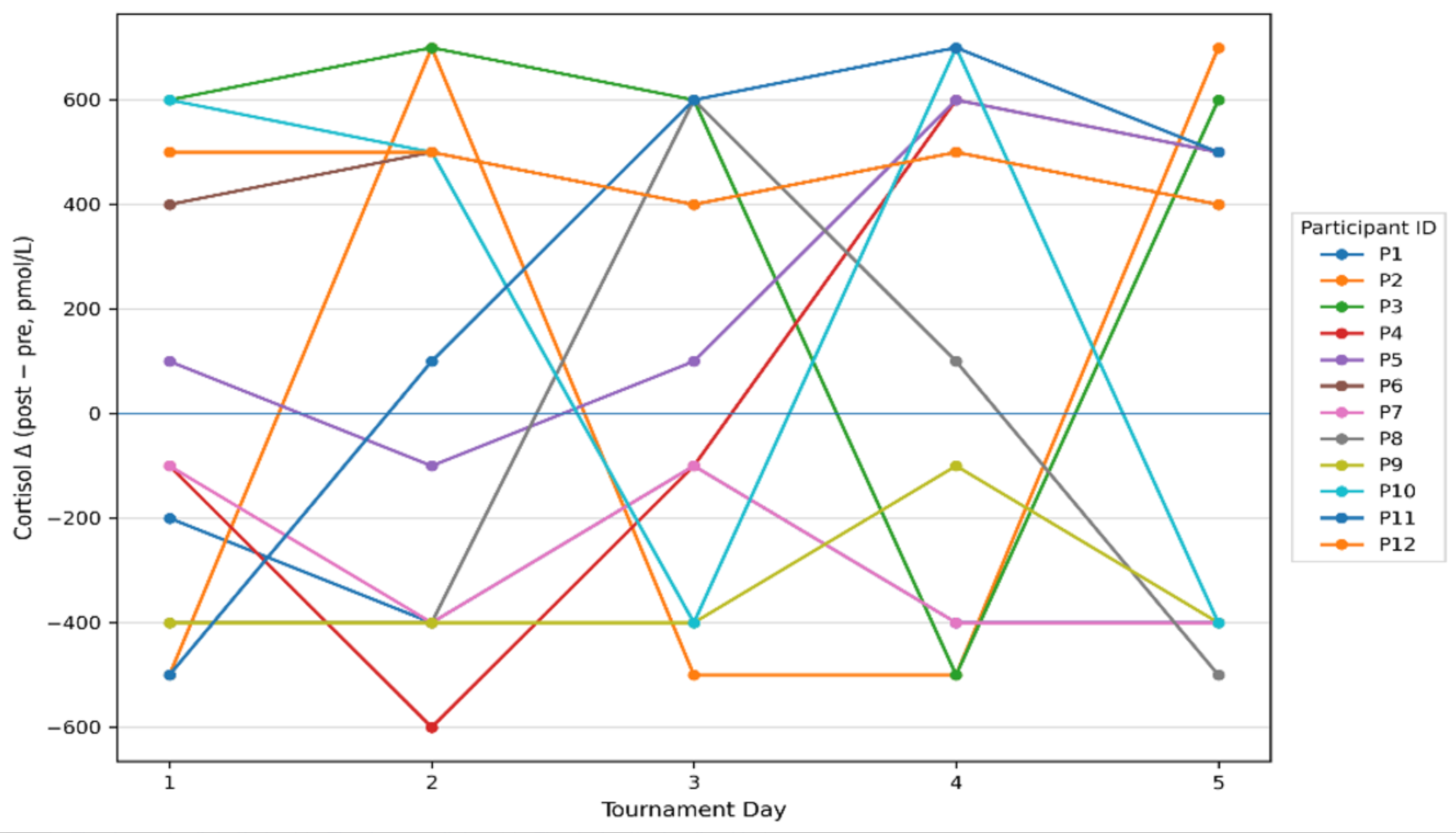
As shown in Figure 3, there were no uniform changes to cortisol levels among participants or tournament days. Some participant-days demonstrated a positive increase in cortisol after matches, while other participant-days had either decreased or lessened increases in cortisol. The results of this study support the primary research question as repeated cognitive competition did not result in one consistent group level (cortisol) response. Instead, cortisol regulation appeared individualized across participants and days.
Participant-Level Testosterone Changes Across the Tournament
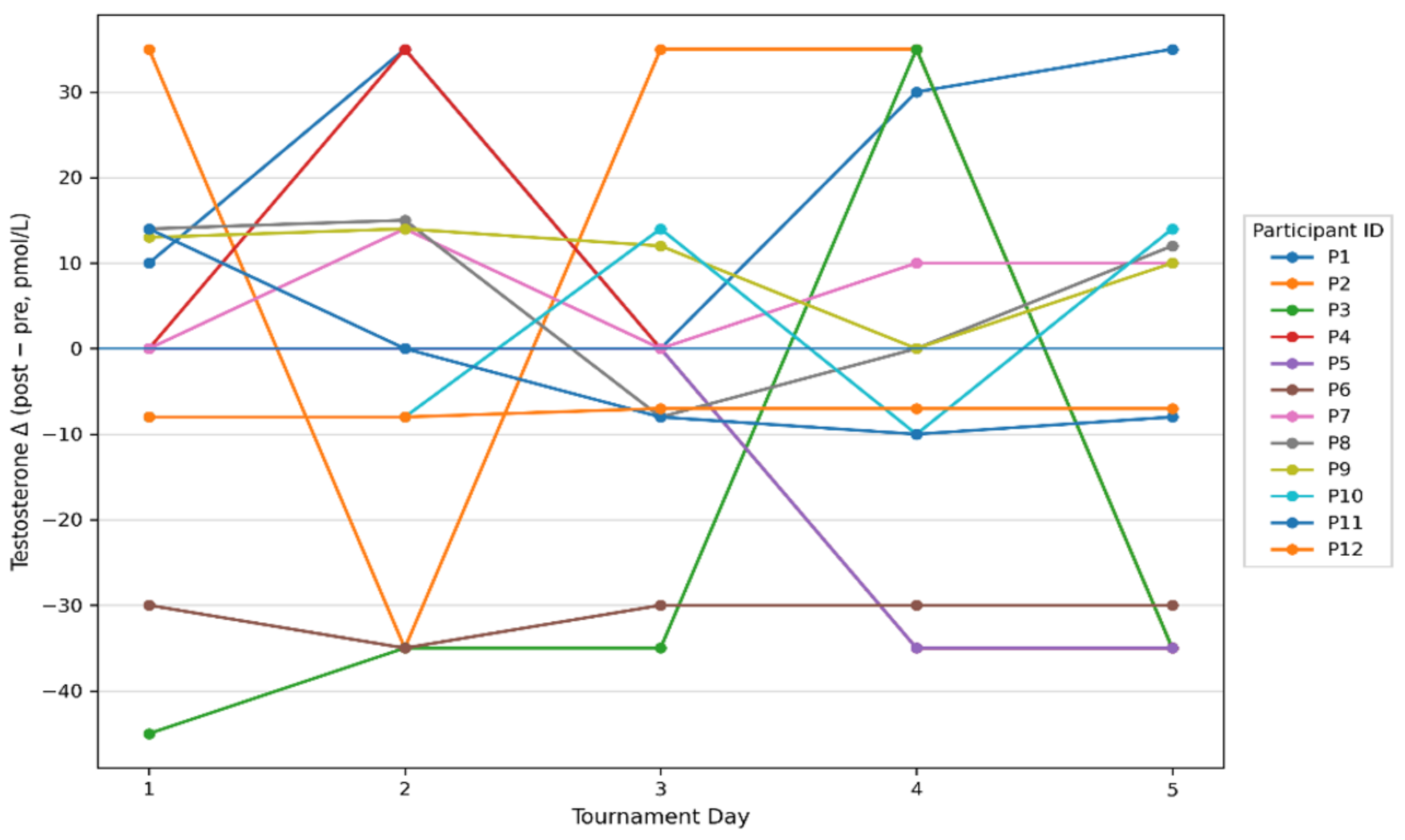
Figure 4 illustrates that testosterone Δ was variable among participants and over days. The HPG-axis and testosterone were not consistent with a single repeated response throughout all of the subjects. Some participants showed increases in testosterone Δ during certain matches, while others showed decreases or fluctuating responses across tournament days. These findings support the hypothesis that dynamic changes occurred in testosterone/HPG-axis responsiveness during repetitive competitive activities. Therefore, testosterone levels should be assessed using paired pre- and post-values instead of just using post-match values.
Representative Endocrine Δ Phenotypes
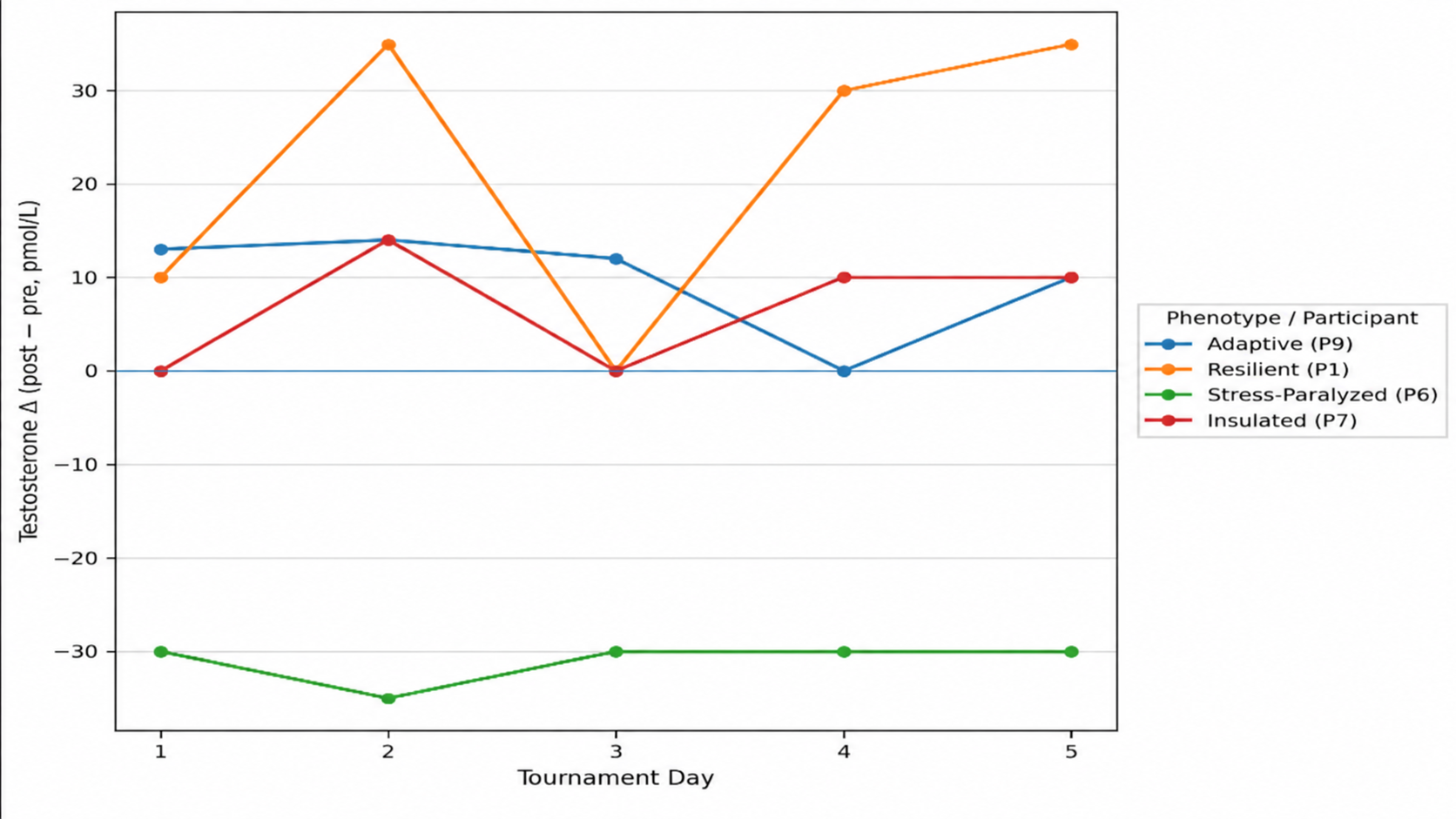
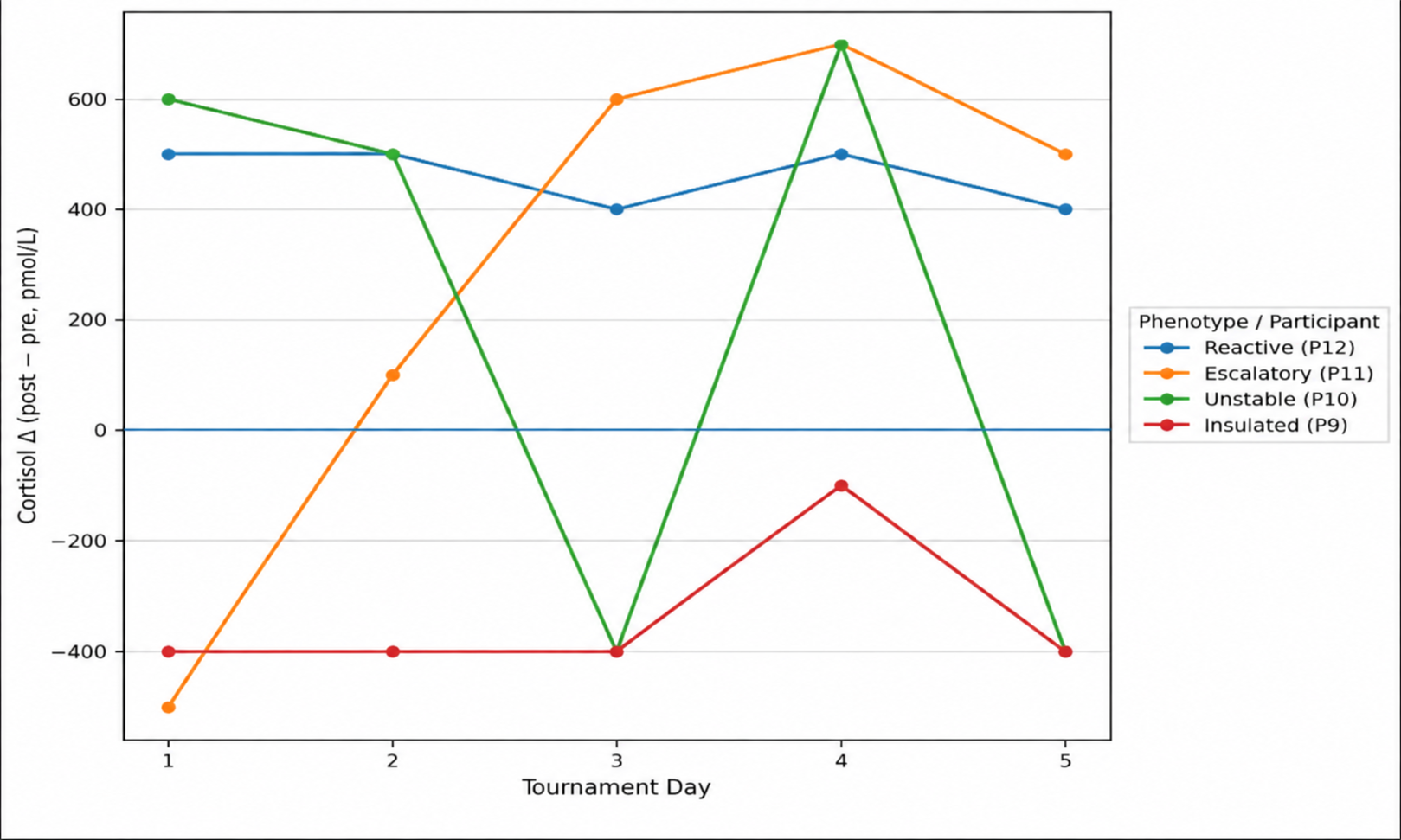
Figure 5A illustrates the four categories of a testosterone Δ as they are shown through the data: adaptive, resilient, stress-paralyzed and insulated. The adaptive and resilient patterns were the two categories with a positive, stable, or recovery trend in testosterone Δ and were indicative of healthy (preserved), or buffer testosterone/HPG-axis activity for each competitor. In contrast, the stress-paralyzed pattern showed more suppressed testosterone Δ values, while the insulated pattern showed muted testosterone change that did not closely track the broader competitive pattern. Together, these examples show that testosterone Δ did not follow one uniform response across participants.
Four cortisol Δ patterns were identified from data presented in Figure 5B: reactive, escalatory, unstable, and insulated. Reactive had repeated positive cortisol Δ values. Escalatory had larger positive values for cortisol Δ as time progressed. Unstable had large changes (between positive and negative) in cortisol Δ. Insulated had either low or negative cortisol Δ. These examples show that cortisol Δ, like testosterone Δ, varied substantially across participants and days.
Overall, Figures 5A and 5B graphically represent how individuals can respond differently to repeated competition. The described “phenotypes” are illustrative, but do not indicate that an individual is part of a distinct group based on their Δ values over time. They simply serve as a way to identify variability among study subjects at each point in time and support the results of the mixed model analyses that appear in subsequent figures.
Exploratory Mixed-Effects Model for Cortisol Δ
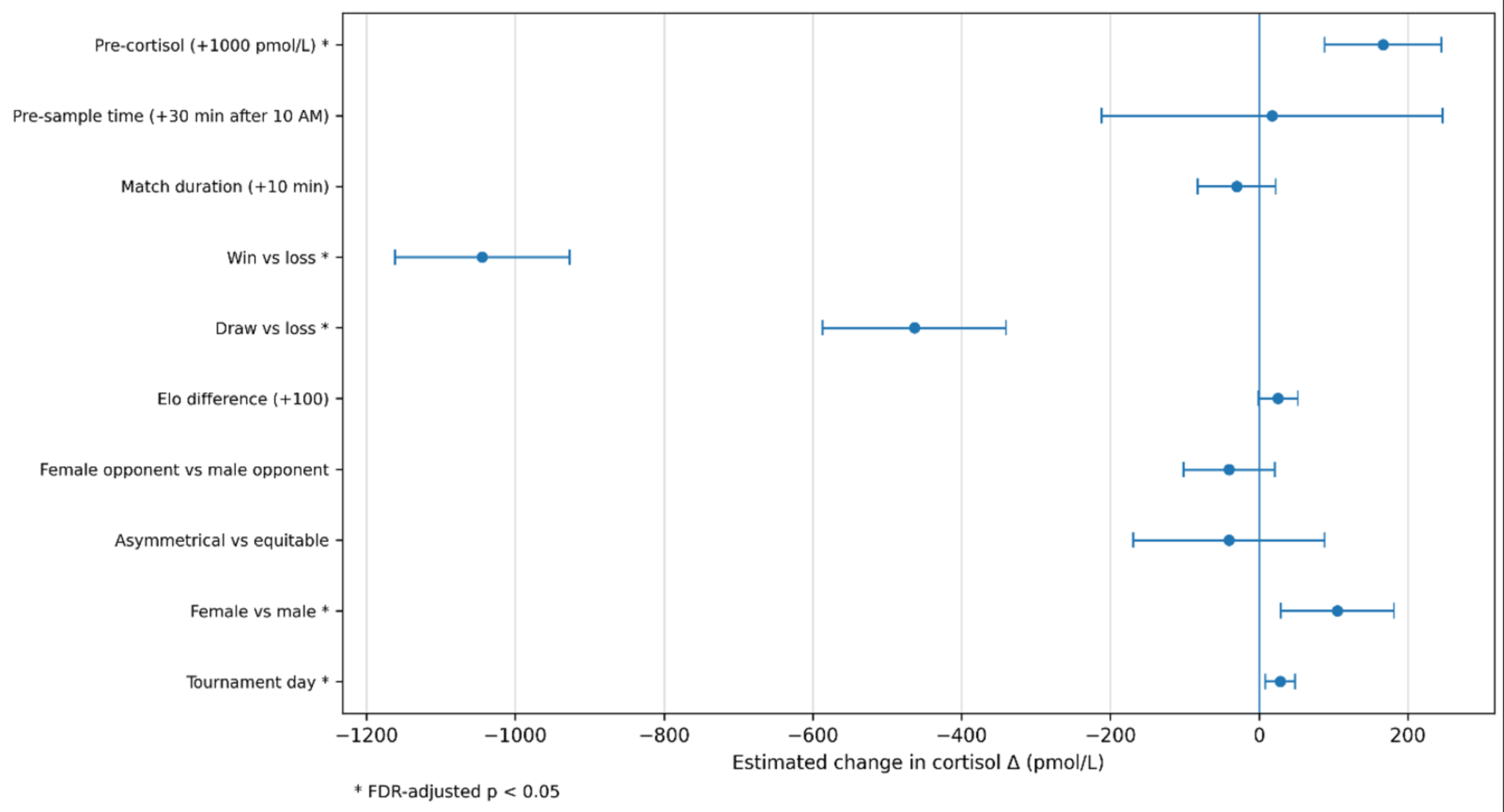
Figure 6 shows the exploratory mixed-effects model results for cortisol Δ. This model accounted for repeated measurements from the same participants across five tournament days. After false-discovery-rate correction, match outcome, tournament day, gender, and pre-match cortisol were retained as predictors of cortisol Δ.
Compared with losses, wins were associated with lower cortisol Δ, estimate = −1044.42 pmol/L, 95% CI [−1161.92, −926.91], FDR-adjusted p < 0.001. Draws were also associated with lower cortisol Δ compared with losses, estimate = −463.61 pmol/L, 95% CI [−587.06, −340.17], FDR-adjusted p < 0.001. Tournament day was positively associated with cortisol Δ, estimate = 28.06 pmol/L per day, 95% CI [7.88, 48.25], FDR-adjusted p = 0.014. Pre-match cortisol was also positively associated with cortisol Δ, estimate = 166.45 pmol/L per 1000 pmol/L baseline cortisol, 95% CI [88.05, 244.86], FDR-adjusted p < 0.001.
Gender was retained in the cortisol Δ model, with female participants showing a higher estimated cortisol Δ than male participants, estimate = 104.83 pmol/L, 95% CI [28.63, 181.03], FDR-adjusted p = 0.014. Because the study included only 12 participants, this gender-related finding is interpreted cautiously as an exploratory model-supported pattern rather than a definitive population-level gender difference.
Match equity, opponent gender, signed Elo difference, match duration, and pre-sample time were not retained after false-discovery-rate correction in the cortisol Δ model. Because match equity was derived from Elo difference, rating-gap effects were interpreted primarily through the continuous Elo-difference variable, which was also not retained after correction.
Exploratory Mixed-Effects Model for Testosterone Δ
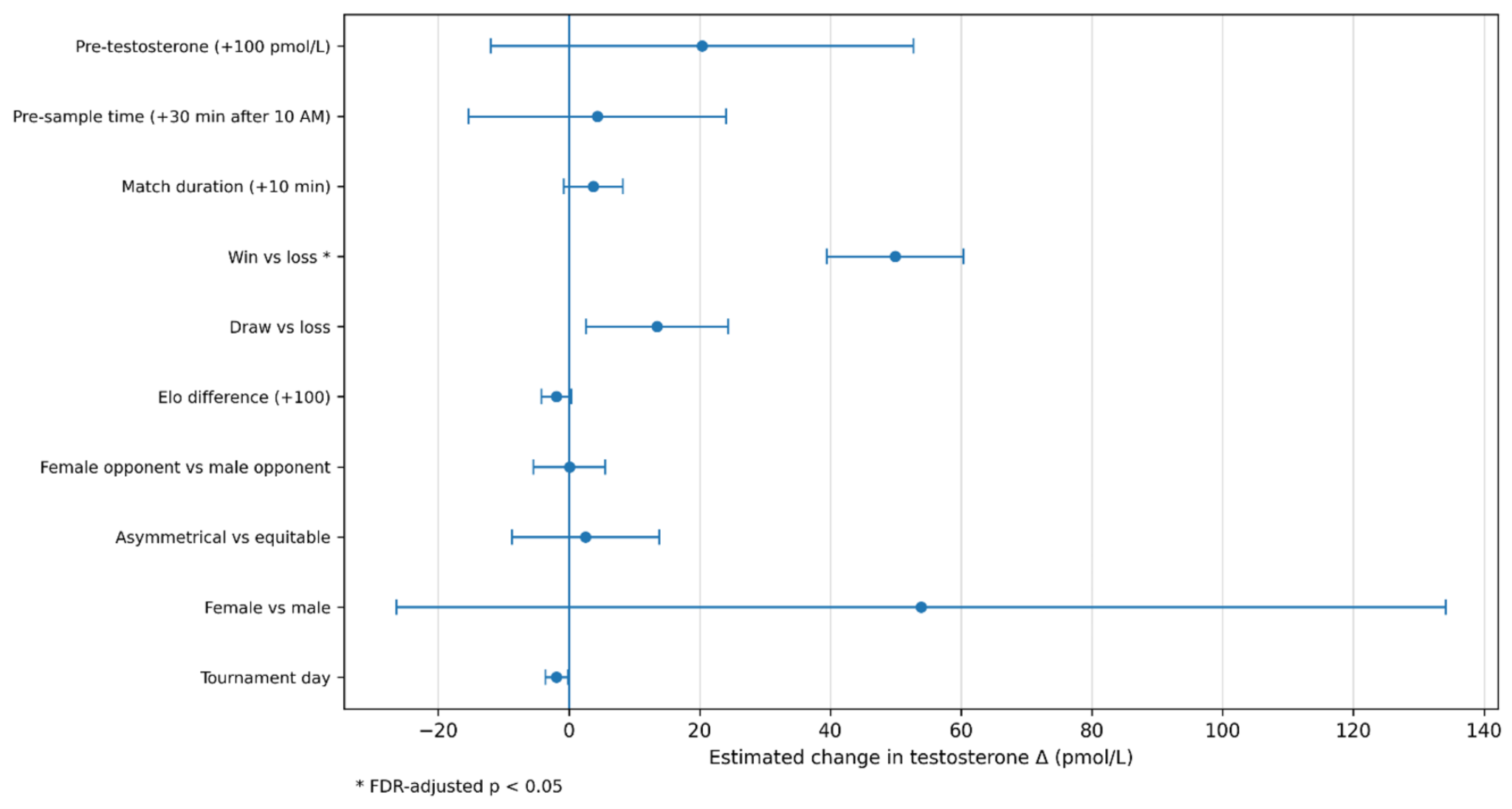
Figure 7 shows the exploratory mixed-effects model results for testosterone Δ. In this model, the clearest retained predictor was the win-versus-loss match outcome contrast. Compared with losses, wins were associated with higher testosterone Δ, estimate = 49.90 pmol/L, 95% CI [39.45, 60.34], FDR-adjusted p < 0.001. Draws also showed a positive estimate compared with losses, estimate = 13.49 pmol/L, 95% CI [2.63, 24.35], but this contrast was not retained after correction, FDR-adjusted p = 0.075.
Tournament day, gender, match equity, opponent gender, signed Elo difference, match duration, pre-sample time, and pre-match testosterone were not retained after false-discovery-rate correction in the testosterone Δ model. These results suggest that testosterone change was most strongly associated with winning versus losing in this pilot dataset, while gender-specific testosterone patterns should be interpreted as descriptive trends rather than confirmed group-level effects.
Conceptual Dual-Axis Interpretation
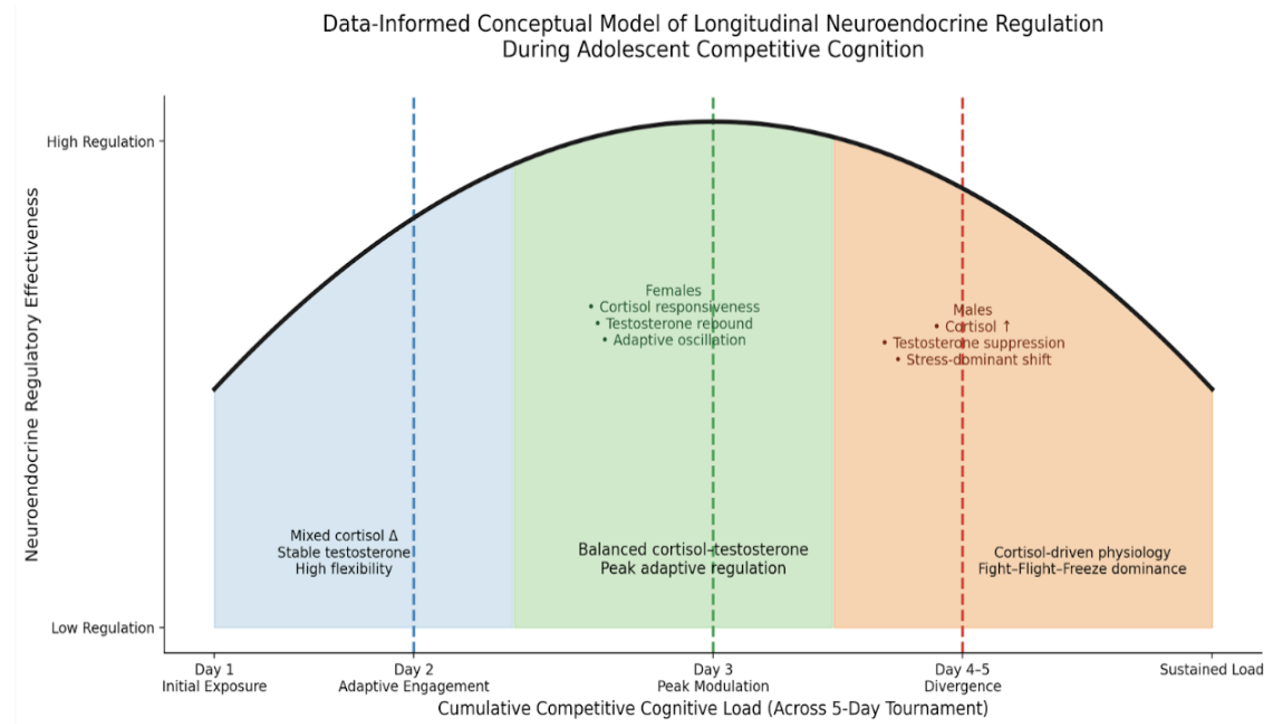
Figure 8 illustrates an interpretative framework for the study’s conceptual view of cortisol-testosterone coordination in response to multiple competitions. In other words, the model suggests that cortisol and testosterone changes are likely to provide greater insight when viewed collectively rather than individually. This figure however is not considered direct statistical evidence. Rather it presents a theory generating perspective which would help explain how repeatedly competing cognitively may lead to either more coordinated or less consistent hormone profiles.
Summary of Findings
The overall results showed that there were no consistent effects of repeated cognitive competition on hormonal responses. Instead, the paired Δ trajectories demonstrated an individualized pattern of changes in adolescent cortisol and testosterone levels from before through to after the matches over the duration of the five days of the tournament. The data supported directly the major premise of this study that (endocrine regulation during prolonged competitive exposure) is variable by participant and cannot be reduced to a single average effect across all participants. In other words, as noted above, the data clearly showed that each player had a unique trajectory of changes in his/her cortisol and testosterone levels throughout the tournament.
Furthermore, the exploratory mixed effects models presented another essential contribution in terms of statistical verification. The statistically significant relationship between repeated measures on each participant and match outcomes was demonstrated after accounting for repeated measures. Specifically, it was shown that wins were associated with increased testosterone Δ and decreased cortisol Δ relative to losses, whereas day-of-tournament and pre-match cortisol values contributed to explaining cortisol Δ. These findings suggest that the biological meaning of competition extends beyond mere length of exposure over time, to include how the match ultimately concluded.
This analysis adds to the scientific care of interpreting these results. Patterns for both gender-specific and match-type (match equity/equivalent Elo) were visually striking; however, neither was used as a definitive group-based conclusion. The cortisol Δ model included gender while it did not include gender in the testosterone Δ model. Also, none of the models which included match equity/Elo differences remained significant after adjustment. As such, the most accurate conclusion is that there isn’t evidence that either gender or match type will respond to repeated competitive chess events in an identical manner every time. However, repeated exposure to competition can reveal measurable, individualized endocrine trajectories that are shaped by competitive context and best understood through paired pre/post change and repeated-measures modeling.
Discussion
The findings suggest that there was no universal endocrine reaction to continued cognitive competition in adolescents, instead the paired (pre/post) Δ trajectories indicated that each adolescent’s and tournament day’s cortisol and testosterone change was unique from those of other participants and days. Thus, these findings support the overall concept of this research; i.e., that endocrine regulation during prolonged periods of cognitive competition is both dynamic and specific for each individual participating, and therefore cannot be generalized by averaging all individuals’ responses.
An additional strength of this analysis was the interpretation of endocrine responses based on Δ values (Δ = Post – Pre) rather than individual post-match hormone concentrations. It is critical to interpret absolute post-match hormone concentrations as a stress response or otherwise as they relate to their paired pre match baselines. Using Δ values for both cortisol and testosterone allowed to examine endocrine change within each day of repeated competition.
The exploratory mixed-effects models provided additional statistical support for the described changes in hormone trajectories. When controlling for repeated measures from each subject, the match outcome clearly predicted hormone change. Wins had higher (Δ) levels of testosterone and lower (Δ) levels of cortisol than losses. In addition to providing some explanation for the change in cortisol, pre-competition cortisol levels and the repeated exposure of subjects to the tournament on subsequent days also explained cortisol Δ. These results provide an example of why repeated-measure analyses are useful; these data indicate that hormonal responses to competition were not only due to competition itself, but also due to the end result of each match.
The phenotype examples in Figure 5A and Figure 5B help visualize this individual variation. For testosterone Δ there were four categories of responses; adaptive, resilient, stress-paralyzed and insulated. Cortisol Δ had four categories as well including; reactive, escalating, unstable and insulated. While these categorizations can provide a common reference point when discussing potential differences in endocrine responses to repeated competitions among different individuals, they should not be used as diagnostic labels nor independently validated statistical conclusions.
Because both the HPA and HPG systems can interact with each other, when interpreting how the body responds to stress through an endocrine system, cortisol and testosterone levels can sometimes give us better insight into what the results mean if we look at them together instead of one alone6. This study used this dual axis approach to explain changes in cortisol levels (Δ) alongside changes in testosterone levels (Δ), instead of looking at either one individually. This dual-axis model is consistent with studies examining cortisol and testosterone together in adolescent and competition-related contexts9,10. However, the dual-axis model in Figure 8 should be understood as conceptual and hypothesis-generating, not as direct proof of a biological mechanism.
The results suggest that there are gender-specific findings which need to be carefully evaluated. The model containing cortisol Δ did retain gender, but the model including testosterone Δ did not retain gender once FDR adjustment had been made. Therefore, the study does not support a strong conclusion that males and females have rigidly defined, separate dual-axis endocrine response axes. Instead, these gender-based trends can be considered as preliminary exploratory findings which could serve as a basis for future studies designed to assess gender differences through methods employing significantly larger sample sizes than were used here, as well as using formal assessment of puberty status and menstrual cycle timing.
Similarly, caution must be exercised when interpreting both match equity and Elo difference. Match equity was developed based upon Elo difference and served as an effective means to describe the configuration of the pairing of competitors within each tournament. Neither match equity nor signed Elo difference remained significant after FDR correction in the mixed-effects models. Therefore, this study cannot conclude that equitable or asymmetrical pairings directly caused different endocrine responses. Rather, match equity remains a useful hypothesis-generating contextual variable for future research on how competitive structure may shape biological regulation.
Overall, this research supports a more individualized approach to understanding adolescent hormonal systems responding to sustained cognitive competition. The strongest model-supported finding was that match outcome was associated with hormone change, especially testosterone. In addition, the general trends in trajectories show that there are meaningful differences in how adolescents’ HPA- and HPG-axis markers change after multiple competitive exposures. Therefore, these results align with the idea of different types of changes in repeated stress responses i.e. adaptations, recoveries, sensitizations, or dysregulations21.
The data from the pilot study of 12 adolescents are to be considered as preliminary or exploratory. The study’s results do not provide evidence of definitive gender-based differences in endocrine function; they do not confirm that an increase in match equity will lead to alterations in the regulation of endocrine function; they do not confirm a specific, mechanistic pathway by which increased match equity may alter endocrine function. Rather, the study provided a repeated measures experimental design, allowing measurement of adolescent endocrine responses to competitive cognition tasks using non-invasive methods.
Future research studies should have a larger and more diverse sample size, formally assess puberty, track menstruation cycles, keep log of the participants’ sleep and eating habits, screen for medications and illnesses, take mental health assessments at the beginning of their participation, and conduct additional physiological assessments (e.g., heart rate variability).
Limitations
A small but strategically selected repeated measures research design was utilized in this pilot study to allow for each of the participants to be compared with themselves on each of the 5 consecutive tournament days. Since all 12 participants were from the same chess academy and had similar demographics, this pilot’s results should only be viewed as exploratory and hypothesis-generating rather than providing insight into an entire population.
The design prioritized consistent pre/post hormone collection during real cognitive competition, however future studies can strengthen this framework by including larger and more diverse samples , formal pubertal & menstrual cycle tracking, health & medication screening, sleep/food/prior exercise logs, narrower collection window or non-competition control day to further address diurnal hormone variation. Future studies can also include hemoglobin testing, salivary pH measurement and flow-rate assessment for additional documentation of saliva quality.
Overall, this study establishes a non-invasive and applicable means for examining endocrine regulation during repeated cognitive competition within adolescents. Future work can build on this foundation to test whether the individualized cortisol-testosterone trajectories observed here replicate across broader populations and competitive settings.
Acknowledgments
The author thanks Dr. Surbhi Grover of the University of Pennsylvania, Dr. O.P. Arora, Ms. Lesley Reier, and Windermere Preparatory School for all the guidance and support throughout this research process. Special thanks to my family for providing unconditional support and constant motivation.
References
- R. M. Sapolsky. Why zebras don’t get ulcers. Holt Paperbacks, 2004. [↩]
- World Health Organization. Adolescent mental health. https://www.who.int/news-room/fact-sheets/detail/adolescent-mental-health, 2021. [↩]
- American Psychological Association. Stress in America: are teens adopting adults’ stress habits? https://www.apa.org/news/press/releases/stress/2013/stress-report, 2014. [↩]
- K. Dedovic, A. Duchesne, J. Andrews, V. Engert, J. C. Pruessner. The brain and the stress axis: the neural correlates of cortisol regulation in response to stress. NeuroImage. Vol. 47, pg. 864–871, 2009, https://doi.org/10.1016/j.neuroimage.2009.05.074. [↩]
- C. Kirschbaum, D. H. Hellhammer. Salivary cortisol in psychobiological research: an overview. Neuropsychobiology. Vol. 22, pg. 150–169, 1989, https://doi.org/10.1159/000118611. [↩]
- V. Viau. Functional cross-talk between the hypothalamic-pituitary-gonadal and -adrenal axes. Journal of Neuroendocrinology. Vol. 14, pg. 506–513, 2002, https://doi.org/10.1046/j.1365-2826.2002.00798.x. [↩] [↩] [↩]
- S. Patjamontri, A. Spiers, R. B. Smith, C. Shen, J. Adaway, B. G. Keevil, M. B. Toledano, S. F. Ahmed. Salivary androgens in adolescence and their value as a marker of puberty: results from the SCAMP cohort. Endocrine Connections. Vol. 12, pg. e230084, 2023, https://doi.org/10.1530/EC-23-0084. [↩] [↩] [↩]
- A. N. Shields, C. M. Brandes, K. W. Reardon, R. A. España, J. L. Tackett. Do testosterone and cortisol jointly relate to adolescent dominance? A pre-registered multi-method interrogation of the dual-hormone hypothesis. Adaptive Human Behavior and Physiology. Vol. 7, pg. 183–208, 2021, https://doi.org/10.1007/s40750-021-00167-3. [↩]
- H. Wang, S. Zhang, S. Wu, S. Qin, C. Liu. Cortisol awakening response and testosterone jointly affect adolescents’ theory of mind. Hormones and Behavior. Vol. 146, pg. 105258, 2022, https://doi.org/10.1016/j.yhbeh.2022.105258. [↩] [↩] [↩] [↩]
- G. Ficarra, D. Caccamo, M. Rottura, A. Bitto, F. Trimarchi, D. Di Mauro. Testosterone:cortisol ratio as a predictor of podium in adolescent rowing athletes. Heliyon. Vol. 9, pg. e22315, 2023, https://doi.org/10.1016/j.heliyon.2023.e22315. [↩] [↩] [↩] [↩]
- H. Dveirin, V. Acuna, M. L. Tran, E. E. Antici, K. R. Kuhlman. Salivary cortisol and affective responses to acute psychosocial stress among adolescents. Psychoneuroendocrinology. Vol. 172, pg. 107265, 2025, https://doi.org/10.1016/j.psyneuen.2024.107265. [↩] [↩] [↩]
- H. Kische, T. M. Ollmann, C. Voss, J. Hoyer, F. Rückert, L. Pieper, C. Kirschbaum, K. Beesdo-Baum. Associations of saliva cortisol and hair cortisol with generalized anxiety, social anxiety, and major depressive disorder: an epidemiological cohort study in adolescents and young adults. Psychoneuroendocrinology. Vol. 126, pg. 105167, 2021, https://doi.org/10.1016/j.psyneuen.2021.105167. [↩] [↩]
- M. J. Weigensberg, C. K. F. Wen, D. Spruijt-Metz, C. J. Lane. Effects of group-delivered stress-reduction guided imagery on salivary cortisol, salivary amylase, and stress mood in urban, predominantly Latino adolescents. Global Advances in Health and Medicine. Vol. 11, pg. 21649561211067443, 2022, https://doi.org/10.1177/21649561211067443. [↩]
- K. Maheshkumar, K. Dilara, P. Ravishankar, A. Julius, R. Padmavathi, S. Poonguzhali, V. Venugopal. Effect of six months pranayama training on stress-induced salivary cortisol response among adolescents: randomized controlled study. EXPLORE. Vol. 18, pg. 463–466, 2022, https://doi.org/10.1016/j.explore.2021.07.005. [↩] [↩]
- K. Tsunekawa, Y. Shoho, K. Ushiki, Y. Yanagawa, R. Matsumoto, N. Shimoda, T. Aoki, A. Yoshida, K. Nakajima, T. Kimura, M. Murakami. Assessment of exercise-induced stress via automated measurement of salivary cortisol concentrations and the testosterone-to-cortisol ratio: a preliminary study. Scientific Reports. Vol. 13, pg. 14532, 2023, https://doi.org/10.1038/s41598-023-41620-5. [↩] [↩]
- A. Caplin, F. S. Chen, M. R. Beauchamp, E. Puterman. The effects of exercise intensity on the cortisol response to a subsequent acute psychosocial stressor. Psychoneuroendocrinology. Vol. 131, pg. 105336, 2021, https://doi.org/10.1016/j.psyneuen.2021.105336. [↩] [↩]
- R. Zueger, H. Annen, U. Ehlert. Testosterone and cortisol responses to acute and prolonged stress during officer training school. Stress. Vol. 26, pg. 2199886, 2023, https://doi.org/10.1080/10253890.2023.2199886. [↩]
- R. M. Yerkes, J. D. Dodson. The relation of strength of stimulus to rapidity of habit-formation. Journal of Comparative Neurology and Psychology. Vol. 18, pg. 459–482, 1908, https://doi.org/10.1002/cne.920180503. [↩]
- C. S. Carver, M. F. Scheier. Attention and self-regulation: a control-theory approach to human behavior. Springer, 1981. [↩]
- E. González-Bono, A. Salvador, M. A. Serrano, J. Ricarte. Cortisol and secretory immunoglobulin A response to stress in university exams: the role of personality traits. Biological Psychology. Vol. 53, pg. 223–237, 2000, https://pubmed.ncbi.nlm.nih.gov/10808914/. [↩]
- B. S. McEwen. Physiology and neurobiology of stress and adaptation: central role of the brain. Physiological Reviews. Vol. 87, pg. 873–904, 2007, https://doi.org/10.1152/physrev.00041.2006. [↩] [↩]
- O. Berdina, I. Madaeva, S. Bolshakova, L. Sholokhov, L. Rychkova. Circadian rhythm of salivary cortisol in obese adolescents with and without apnea: a pilot study. Frontiers in Pediatrics. Vol. 10, pg. 795635, 2022, https://doi.org/10.3389/fped.2022.795635. [↩] [↩]
- G. Sala, F. Gobet. Do the benefits of chess instruction transfer to academic and cognitive skills? Educational Research Review. Vol. 18, pg. 46–57, 2016, https://doi.org/10.1016/j.edurev.2016.02.002. [↩]
- B. M. Kudielka, C. Kirschbaum. Sex differences in HPA axis responses to stress: a review. Biological Psychology. Vol. 69, pg. 113–132, 2005, https://doi.org/10.1016/j.biopsycho.2004.11.009. [↩]
- J. C. Pruessner, O. T. Wolf, D. H. Hellhammer, A. Buske-Kirschbaum, K. von Auer, S. Jobst, F. Kaspers, C. Kirschbaum. Free cortisol levels after awakening: a reliable biological marker for the assessment of adrenocortical activity. Life Sciences. Vol. 61, pg. 2539–2549, 1997, https://doi.org/10.1016/S0024-3205(97)01008-4. [↩]
- S. A. Sontag, D. Cabarkapa, A. C. Fry. Testosterone and cortisol salivary samples are stable across multiple freeze-thaw cycles. Journal of Strength and Conditioning Research. Vol. 37, pg. 915–918, 2023, https://doi.org/10.1519/JSC.0000000000004346. [↩]