
Abstract
Tennis players face unique risks of ultraviolet radiation exposure due to the nature of the sport, namely its prolonged outdoor play, minimal shade, skin-bearing clothing, and limited breaks. Despite public health campaigns promoting sunscreen use and general sun safety, there is limited research on sunscreen use habits across heterogeneous tennis populations. A preliminary cross-sectional study was conducted at the 2025 U.S. Open Tennis Championships in New York City, during which 37 tennis-playing attendees completed a 16-question anonymous electronic survey regarding their demographics, sunscreen use behavior, sunburn history, and skin cancer knowledge. While 59.5% of respondents reported applying sunscreen at least twice weekly when playing tennis, only 21.6% reported reapplying with the same frequency, and 62.2% reported never reapplying sunscreen during tennis. Everyday sunscreen use was strongly associated with sunscreen use and sunscreen reapplication during tennis, and participants with darker Fitzpatrick skin types reported fewer recent sunburns. Although 81.1% of respondents reported at least a basic understanding of skin cancer, no statistically significant association was observed between self-reported skin cancer knowledge and sunscreen behaviors. Overall, sunscreen reapplication during tennis remained consistently low despite widespread awareness of skin cancer. This suggests that improving sun protection among tennis players may require interventions that address behavioral habits, practical barriers, and social influences in addition to education alone. Larger studies are needed to confirm these preliminary findings. Future directions include improving sunscreen formulations, researching the efficacy of eliminating perceived barriers to sunscreen use, and investigating methods of improving public policy, such as sun protection availability requirements at tournaments, scheduled reminders for outdoor matches, and integrated sun safety education in USTA youth programs.
Introduction
Tennis is one of the most widely played outdoor sports in the world. Although early forms were primarily played indoors, tennis shifted to being an outdoor sport in the 19th century, expanding its accessibility and popularity1. In the United States, about 89% of tennis courts across all surfaces are outdoors and are the more popular choice due to their accessibility and lower cost when compared to indoor facilities2. On the professional tennis circuit, over 80% of tournaments played across the ATP, WTA, and ATP Challenger tours are held outdoors3. As a result, players are often exposed to the sun for prolonged periods of time, as tennis practice and matches typically last between one and a half to two and a half hours, and can continue for substantially longer4. The longest professional tennis match, the 2010 Wimbledon match between John Isner and Nicolas Mahut, lasted over eleven hours5.
In addition to the long duration of tennis matches, they are also mostly held during the daytime, as only about 38% of outdoor tennis courts in the United States are lighted2. Nighttime games on professional tours are also limited to prevent late finishes, as evidenced by the USTA’s late finishing match policy6. Additionally, tennis is an individual sport that is played on open courts with little shade. Unlike most other outdoor sports, tennis players must play for the full duration of their matches, and long breaks are uncommon7. Moreover, tennis attire leaves skin exposed to the sun, unlike in other outdoor sports such as football and baseball, where uniforms can serve as a layer of sun protection8,9.
Although sunscreen use is increasing, there is still no consistent use of sunscreen by tennis players, even among elite players. When asked about his sunscreen use in 2012, Rafael Nadal, a 10-time grand slam winner at the time, stated:
“No, I should use sun protection creams, but I can’t. I can’t play with this. I have the impression that afterwards my skin is sticky, and I don’t like feeling this, something sticky on my skin… I have the impression that even my hands are sticky. Even during practice I don’t use sun protection cream”10.
Although anecdotal, Nadal’s comments illustrate concerns often reported by athletes, including discomfort, sticky hands, interference with grip, and inconvenience. Additionally, standard sunscreens lose SPF and thus protection from ultraviolet (UV) radiation due to wash-off and redistribution from sweat11. These factors, including the culture surrounding sun protection among tennis players, the long match lengths under direct sunlight with minimal breaks, and skin-baring clothing, demonstrate the unique combination of risks of ultraviolet radiation exposure for tennis players12. Research involving outdoor athletes has consistently shown that prolonged UV exposure is associated with aging, skin damage, and cancers such as melanoma13,14,15. Excessive UV exposure remains the most important modifiable environmental risk factor for skin cancer, and regular sunscreen use has been shown to reduce both sunburn and long-term UV-related skin damage16,17. Current recommendations from the American Academy of Dermatology advise using a broad-spectrum, water-resistant sunscreen with SPF 30 or higher, in addition to seeking shade and wearing protective clothing during prolonged outdoor activity18. Even though public health campaigns encourage sun safety and the United States Tennis Association emphasizes player health, relatively little empirical research has examined sunscreen habits among tennis players.
A brief literature review was conducted to assess the current state of research on use of sun protection in tennis. We searched the PubMed and Elsevier databases using combinations of the terms tennis, sunscreen, sun protection, photoprotection, UV/ultraviolet exposure, and outdoor athletes from inception through October 2025. Although many publications evaluated photoprotection among outdoor athletes, relatively few specifically examined tennis players. Our inclusion criteria were primary-research papers in the English language that studied sun protection use among tennis players, focusing on skin sun exposure, attire, application rates, culture (including policies), and sunburn risk. Papers that did not study photoprotection in tennis, papers that were not indexed, and restricted-access papers were excluded. 14 papers met the inclusion criteria, studying tennis players aged approximately 14 to over 50 years old in the United States, Australia, Spain, France, and Germany. Serrano et al. monitored UV exposure among amateur athletes in Spain in 2010, and found that tennis players exceeded the International Commission on Non-Ionizing Radiation Protection’s (ICNIRP) recommended UV exposure limit daily, and received more UV radiation than runners, but less than mountaineers19. In 2011, Serrano et al. researched sun exposure among amateur athletes in Spain and France and found that tennis players encountered the highest rate of UV radiation per hour in comparison to hikers and runners20. Additionally, these tennis players exceeded the ICNIRP’s recommended UV exposure limit within 20 minutes every single day20. Among NCAA Division I tennis players and golfers, Sellyn et al. found that nearly half (48.4%) of the athletes reported applying sunscreen before activity, but correct and sustained photoprotection (adequate SPF, full coverage, reapplication) was uncommon, with only 4.8% of athletes reapplying sunscreen within the recommended one to two hour period21. Lawler et al. surveyed young Australian athletes participating in outdoor sports and found that 63% of male tennis players and 76% of female tennis players used sunscreen, but only 13% of males and 15% of females reported reapplying sunscreen during the activity22. Using the same study population, Berndt et al. found that although around 70% of the tennis players used sunscreen, 60% of them used it inadequately because they selected insufficient SPF (used SPF < 30), applied too little sunscreen, or failed to reapply23. Only 8.9% of the athletes followed guideline-consistent sunscreen practices23. Common reasons for improper sun protection included inconvenience, forgetfulness, greasy hands that could interfere with grip, and sunscreen getting into players’ eyes23. Interestingly, this study also surveyed Australian surfers and found 60.3% of them had adequate sunscreen use, which Berndt et al. suggested was due to stricter surfing regulations and club culture, as previously proposed in Lawler et al.22,23.
Importantly, these studies suggest that sunscreen use is influenced not only by knowledge but also by behavioral and social factors. Berndt et al. reported that athletes with stronger personal norms (higher relative importance of sun protective behavior to self), positive team expectations, and greater perceived social support were significantly more likely to practice adequate photoprotection23. Lawler et al. explored the power of behavior and habit frameworks and found that higher sun-protective habit strength was strongly associated with more frequent sunscreen use24. Education was also associated with more frequent sunscreen use: Ally et al. surveyed National Collegiate Athletic Association athletes before and after educational intervention and saw a significant increase in sunscreen use after intervention, especially with coach encouragement25. Additionally, an assessment by Igoe et al. found that 2019 Australian Open Grand Slam players—who had more flexible clothing regulation—generally had less sun protective clothing than umpires and ball kids26. This association suggests that regulations have an impact on a person’s sun protective behavior and therefore can be used to improve sun safety among players. Correlations between clothing coverage and activity were studied by Dixon et al. in an Australian population, and strenuous activities such as tennis were associated with a lower likelihood of wearing more protective clothing27. Using a subsection of the same population as Dixon et al., Lagerlund et al. studied use of sunglasses and observed that active people, including tennis players, were 40-70% less likely to wear sunglasses than inactive people, albeit use of sunglasses by tennis players was observed increasing at an approximate rate of 8% per year28. Alternative research by Leer et al. has emphasized that interventions addressing convenience, resources, and behavioral cues may be more effective than education alone for improving sunscreen adherence among athletes29. Leer et al. cited a survey of NCAA athletes by Wysong et al., which found that 73% of athletes surveyed were never or rarely asked about sun exposure or sunscreen use by coaches29,30. However, sunscreen use increased significantly with the frequency of coaches that encouraged sun protection30. These findings indicate that coaches have a large impact on the behavior of tennis players. Accordingly, it is significant that when Schneider et al. surveyed German coaches across 10 sports, tennis coaches showed the second-largest UV-specific skin cancer knowledge deficits31. Schneider et al. concluded that coach education and systemic implementation of sun-protective innovations are necessary31.
In addition to the impact of coaches on photoprotection use, associations involving attitudes towards sunscreen use are critical to having a complete understanding of sun protection behavior. Participants in Berndt et al. expressed high perceived benefits of sunscreen use, with participants who did not use sunscreen rating its perceived benefit as 4.58 (on a Likert scale of 1-6), while participants who used sunscreen adequately rated its perceived benefit as 5.2123. Despite this, both groups had similar rates of positive belief about getting a suntan during sport at around 3.6 for both groups. Berndt et al. and Lawler et al. shared the same sample population, but used slightly different analytical methods, and both found that 69-70% of their population had at least one sunburn during the previous season22,23. In respect to the impact of regulatory cues, Dobbinson et al. studied sun-protective policies of various sport clubs in Australia and found that clubs with such policies were much more likely to implement sun-protective practices such as providing/selling sunscreen and limiting scheduling of programs during peak UV times32. Among clubs that competed outside during summer months, tennis clubs had one of the lowest proportions of sun-protective policies at 35%32. These findings suggest a large opportunity for improving the photoprotective behavior of tennis players through policy advancements. While past studies on sun protection of tennis players and outdoor athletes included a wide range of athletes, studies involving attitudes towards sunscreen use focused primarily on homogenous groups of people with regard to skill level, rarely including casual players. These studies show a multi-leveled deficit in tennis’s sun safety culture. Despite education and knowledge about the dangers of excessive UV exposure, there is a lack of social reinforcement and policy infrastructure for proper sun safety in tennis.
Existing research has largely focused on narrow populations, including collegiate athletes, elite competitors, or young adults from Australia and the United States, which limits generalizability to the broader tennis-playing population. Few studies have examined sunscreen behaviors across a broader spectrum of recreational tennis players differing in age, playing experience, skill level, and skin color. Understanding sun-protective behaviors in a more heterogeneous tennis-playing population is important because most tennis participants are recreational athletes rather than collegiate or professional competitors. The factors influencing sunscreen use among these players might therefore differ from those previously reported in elite athletic populations.
This pilot study aims to evaluate sunscreen use, reapplication habits, skin cancer knowledge, perceived barriers to sunscreen use, and sunburn history among tennis players of various levels of experience attending the 2025 U.S. Open Tennis Championships. We therefore conducted a cross-sectional survey to assess these behaviors and beliefs.
Methods
Study Population
A preliminary cross-sectional survey was conducted among attendees of the 2025 U.S. Open Tennis Championships in New York City at the Billie Jean King National Tennis Center. Participants were recruited in person during Fan Week (August 18 – 23, 2025), during which admission was free, between 10:00 AM and 4:00 PM. Attendees who reported playing tennis recreationally or competitively at any level were eligible to participate. This survey was conducted in accordance with ethical standards for human subject research. Participation was voluntary, and no identifying information was collected.
A total of 41 individuals completed the survey. Two respondents younger than 15 years of age and two respondents who reported that they did not play tennis were excluded prior to analysis, resulting in a final analytical sample of 37 participants.
Questionnaire
A flyer introducing the aims of the study with a QR code linking to a survey was created and opportunistically passed out to passerbys. Individuals chose to participate by scanning this QR code. The survey was administered electronically using Google Forms and consisted of 16 questions assessing participant demographics, sunscreen use habits, sun exposure history, and other relevant information, as shown in Table 1. Survey questions were informed by and adapted from prior literature on sunscreen use among athletes and were modified for a more heterogeneous tennis-playing population in regard to skill level21,22,23,24.
The questionnaire included demographic variables (age, tennis experience, playing ability, and Fitzpatrick skin type), sunscreen use behaviors, sunscreen reapplication during tennis, other sun-protective practices (including hats, sunglasses, and protective clothing), perceived barriers to sunscreen use, recent sunburn history, self-reported skin cancer knowledge, and personal or family history of abnormal moles or skin cancer. Most behavioral questions used ordinal response categories reflecting increasing frequency (e.g., Never, Once a week, Twice a week, More than twice a week but not every day, and Daily). Questions regarding barriers to sunscreen use and additional sun-protective measures allowed participants to select multiple responses.
| # | Question | Answer choices |
|---|---|---|
| 1 | What is your age? | Under 15 years old; 15-25 years old; 26-35 years old; 36-45 years old; 46-55 years old; Over 55 years old |
| 2 | If you play tennis, how many years have you been playing tennis? | I do not play tennis; Less than 5 years; 6-10 years; 11-15 years; Over 15 years |
| 3 | What kind of tennis player do you consider yourself? | Beginner (1.0-2.5 NTRP); Low Intermediate (3.0-3.5 NTRP); High Intermediate (3.5-4.0 NTRP); Advanced (4.5-5.0 NTRP); Elite (5.0+ NTRP) |
| 4 | On average, how many hours per week do you play tennis? | Less than 1 hour; 1-5 hours; 5-10 hours; 10-20 hours; More than 20 hours |
| 5 | How often do you play tennis outdoors instead of indoors? | 0% of the time; 0-20% of the time; 20-40% of the time; 40-60% of the time; 60-80% of the time; 100% of the time |
| 6 | How many hours per week do you spend time outdoors doing other activities? | Less than 1 hour; 1-5 hours; 5-10 hours; 10-20 hours; More than 20 hours |
| 7 | What is your Fitzpatrick skin type? | Type 1 – pale white skin: burns and never tans; Type 2 – white skin: usually burns and rarely tans; Type 3 – white to olive skin: sometimes burns and tans averagely; Type 4 – moderate brown skin: rarely burns and tans easily; Type 5 – dark brown skin: very rarely burns and tans very easily; Type 6 – very dark brown to black skin: never burns and tans very easily |
| 8 | Do you generally use sunscreen for everyday life? | Never; Once a week; Twice a week; More than two times a week but not every day; Daily |
| 9 | What kind of sun protection is part of your everyday routine when playing tennis?* | Cap, hat, or visor; Sunscreen (lotions or sprays); Sunglasses/UV protective eyewear; Sun protective clothing; None of the above |
| 10 | How often do you apply sunscreen during tennis practice? | Never; Once a week; Twice a week; More than two times a week but not every day; Daily |
| 11 | How often do you reapply sunscreen in the middle of tennis practice or competitions? | Never; Once a week; Twice a week; More than two times a week but not every day; Daily |
| 12 | What limitations prevent you from applying sunscreen during tennis?* | Sweaty hands; Forgetfulness; General inconvenience; I don’t have sunscreen; I don’t need it |
| 13 | How many times in the past two years have you had a sunburn? | 0; 1-3; 4-6; More than 7 |
| 14 | How severe was the most serious sunburn that you experienced? | First degree: redness and mild swelling; Second degree: redness, swelling, and blistering; Third degree: Charred appearance and numbness (requires emergency care); N/A |
| 15 | Do you or your immediate family members have a history of abnormal moles or skin cancer? | Yes, me; Yes, my family; Yes, both me and my family; No |
| 16 | Do you know what skin cancer looks like? | Yes, and I know how to detect skin cancer myself; I have a basic understanding; No |
Table 1 | Questionnaire questions and answer choices.
* Indicates multiple answer selections allowed
Statistical Analysis
Statistical analyses were performed using methods appropriate for each survey variable. Ordinal survey responses (questions 1-8, 10, 13, and 14) were analyzed using Spearman rank correlation coefficients ( ) to evaluate associations between sunscreen behaviors, sunburn history, demographic characteristics, and skin cancer knowledge. Spearman correlation coefficients, exact two-sided p-values, and 95% confidence intervals were calculated. Due to the exploratory analysis of multiple correlations, Benjamini-Hochberg false discovery rate (FDR) correction was applied to the Spearman correlation analyses to reduce the chance of false positive findings.
Nominal survey responses (questions 15, 16) were analyzed categorically using Fisher’s exact tests because of the small sample size. To further examine factors associated with sunscreen behaviors and sunburn history, proportional-odds ordinal logistic regression was performed using sunscreen reapplication frequency and sunburn frequency as ordinal outcome variables. All statistical tests were two-sided, and statistical significance was defined as  .
.
Results
Summary
The final analytical sample consisted of 37 tennis-playing participants with diverse ages, playing experience, skill levels, Fitzpatrick skin types, sunscreen habits, and skin cancer knowledge (Tables 2–4). Although the cohort was heterogeneous, participants aged 25–35 years predominated, and no respondents reported Fitzpatrick skin type VI. Tennis ability was self-reported using the National Tennis Rating Program (NTRP) scale, where skill level ranges from 1.0 (complete beginner) to 7.0 (professional player). Skin color was self-reported using Fitzpatrick Skin Type, a system of classifying skin types by considering how skin reacts to sun exposure. Sunburn severity was divided into first, second, and third degree burns.
| Category | Characteristic | Frequency | Percentage (n=37) |
|---|---|---|---|
| Age | 15-25 yr old | 14 | 37.8% |
| 26-35 yr old | 16 | 43.2% | |
| 36-45 yr old | 2 | 5.4% | |
| 46-55 yr old | 2 | 5.4% | |
| >55 yr old | 3 | 8.1% | |
| Tennis Experience | <5 years | 10 | 27.0% |
| 6-10 years | 11 | 29.7% | |
| 11-15 years | 3 | 8.1% | |
| >15 years | 13 | 35.1% | |
| Tennis Ability (NTRP) | Beginner | 8 | 21.6% |
| Low Intermediate | 11 | 29.7% | |
| High Intermediate | 12 | 32.4% | |
| Advanced | 5 | 13.5% | |
| Elite | 1 | 2.7% | |
| Skin Type | Type I | 2 | 5.4% |
| Type II | 9 | 24.3% | |
| Type III | 14 | 37.8% | |
| Type IV | 6 | 16.2% | |
| Type V | 6 | 16.2% | |
| Type VI | 0 | 0.0% |
Table 2 | Participant demographics.
As shown in Table 2, 30/37 of respondents ranged between 15 and 35 years of age. 21/37 of respondents reported having played tennis for ten years or less, and 13/37 reported having played tennis for more than 15 years. Of those participants, 31/37 identified as beginner to high intermediate players on the NTRP scale. 35/37 participants reported playing tennis for ten hours or less per week, with 23/37 of players reporting playing outdoors 60-100% of the time. 23/37 reported skin types II (white skin: usually burns and rarely tans) and III (white to olive skin: sometimes burns and tans moderately) on the Fitzpatrick scale. 2/37 respondents reported skin type I (pale white skin: burns and never tans), and 6/37 reported skin type V (dark brown skin: very rarely burns and tans very easily). No respondents reported skin type VI.
| Category | Characteristic | Frequency | Percentage (n=37) |
|---|---|---|---|
| General Everyday Use | Daily | 16 | 43.2% |
| >2 times a week | 7 | 18.9% | |
| Twice a week | 1 | 2.7% | |
| Once a week | 4 | 10.8% | |
| Never | 9 | 24.3% | |
| Use During Tennis | Daily | 13 | 35.1% |
| >2 times a week | 8 | 21.6% | |
| Twice a week | 1 | 2.7% | |
| Once a week | 6 | 16.2% | |
| Never | 9 | 24.3% | |
| Reapplication | Daily | 4 | 10.8% |
| >2 times a week | 2 | 5.4% | |
| Twice a week | 2 | 5.4% | |
| Once a week | 6 | 16.2% | |
| Never | 23 | 62.2% | |
| Barriers to Sunscreen Use | Sweaty Hands | 12 | 32.4% |
| Forgetfulness | 13 | 35.1% | |
| General Inconvenience | 19 | 51.4% | |
| Not Owning Sunscreen | 4 | 10.8% | |
| Not Needing Sunscreen | 11 | 29.7% | |
| Sun Protection Used | Cap, hat, or visor | 23 | 62.2% |
| Sunscreen | 26 | 70.3% | |
| UV protective eyewear | 14 | 37.8% | |
| Sun protective clothing | 5 | 13.5% | |
| None of the options | 3 | 8.1% |
Table 3 | Sunscreen usage.
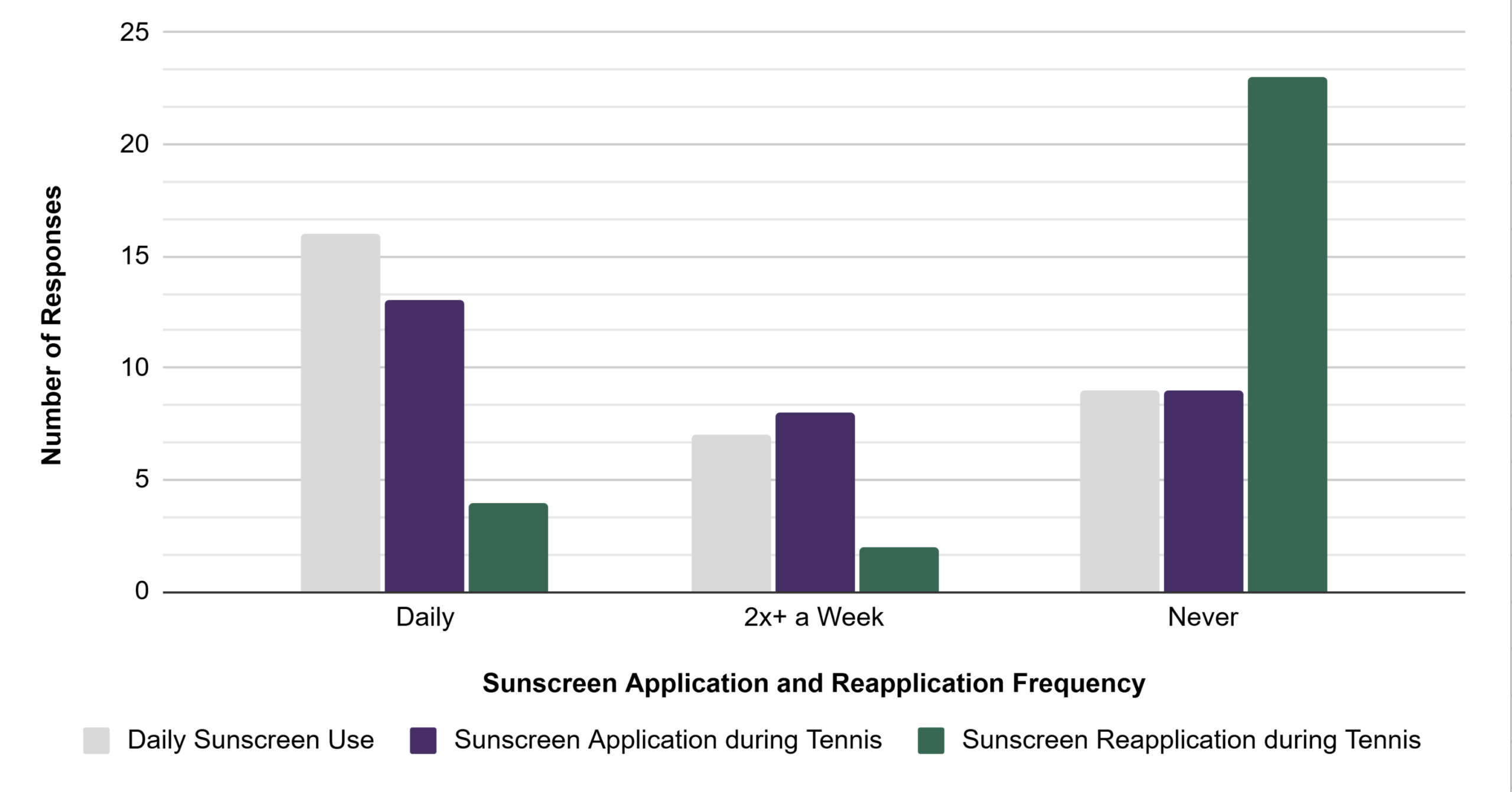
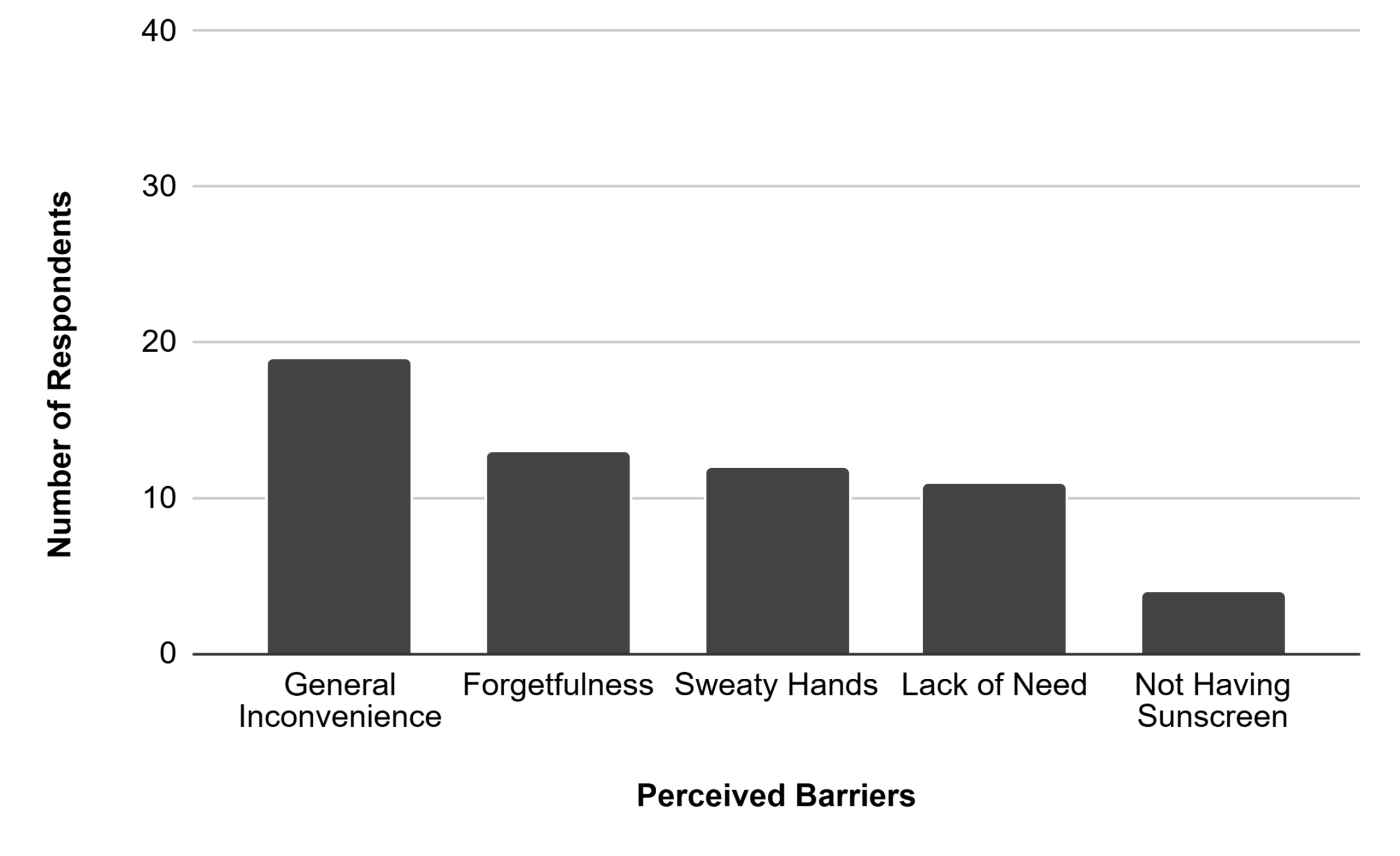
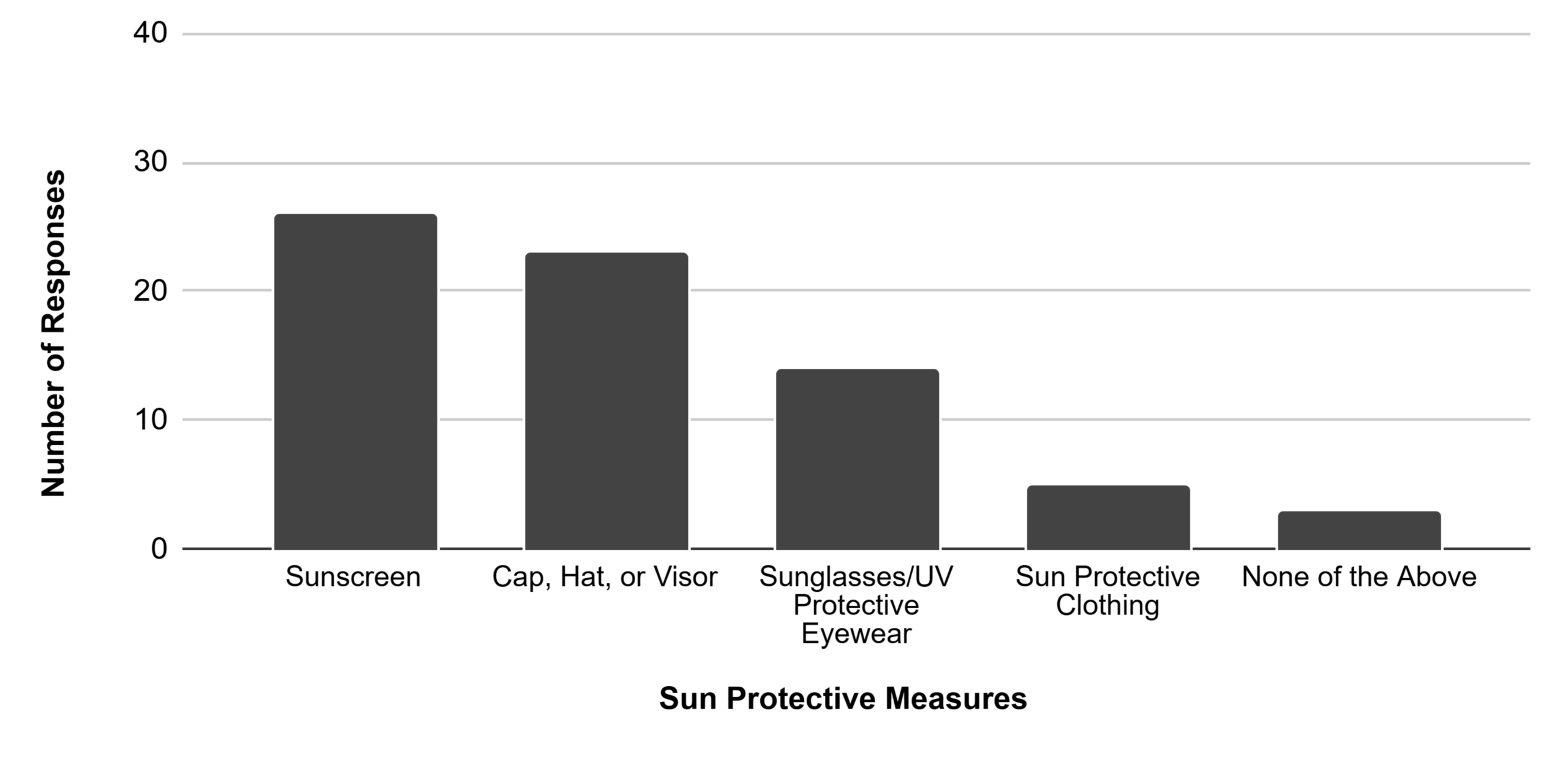
Regarding general sunscreen use, 16/37 respondents reported applying sunscreen daily, as shown in Table 3. 7/37 respondents reported applying sunscreen more than two times a week. 9/37 respondents reported never applying sunscreen. Frequency of sunscreen use was similar in daily life and during tennis practice, with 13/37 respondents reporting daily use of sunscreen during tennis practice, 8/37 reporting applying sunscreen during tennis practice more than two times a week, and 9/37 reporting never applying sunscreen during tennis practice. As seen in Figure 1, sunscreen reapplication rates in the middle of tennis practice or competitions were markedly lower, with 4/37 respondents reporting reapplying sunscreen daily, 2/37 reapplying sunscreen more than two times a week, and 23/37 never reapplying. Use of sunscreen daily, two times or more a week, and never is represented in Figure 1. This grouped bar chart illustrates a discrepancy between general sunscreen use and behavior during tennis play, especially in the reapplication of sunscreen. 13/37 of respondents used sunscreen daily, but only 4/37 reported reapplying. The most striking descriptive finding is the sharp increase in respondents reporting that they never reapply sunscreen during tennis. Although only 9/37 of respondents claim to never use sunscreen in daily life, this number spikes regarding reapplying sunscreen, as 23/37 report never reapplying during tennis play. As shown in Figure 2, respondents named various limitations that prevented them from applying sunscreen during tennis (with multiple selections permitted), including sweaty hands (12/37) forgetfulness (13/37), general inconvenience (19/37), not having sunscreen (4/37), and feeling like they don’t need sunscreen (11/37). As shown in Figure 3, respondents also reported other types of sun protection as part of their everyday routine when playing tennis (with multiple selections permitted, totaling 80 selections). In addition to using sunscreen (26/37), respondents reported using a cap, hat, or visor (23/37), sunglasses/UV-protective eyewear (14/37), and sun protective clothing (5/37), with 3/37 reporting none of the above.
| Category | Characteristic | Frequency | Percentage (n=37) |
|---|---|---|---|
| Recent Sunburns (past 2 years) | 0 | 14 | 43.2% |
| 1-3 | 13 | 35.1% | |
| 4-6 | 8 | 21.6% | |
| More than 7 | 2 | 5.4% | |
| Burn Severity (lifetime most severe) | Not Applicable | 12 | 32.4% |
| First degree | 18 | 48.6% | |
| Second degree | 7 | 18.9% | |
| Third degree | 0 | 0.0% | |
| History of Skin Cancer | No history | 19 | 51.4% |
| Personal history | 2 | 5.4% | |
| Family history | 12 | 32.4% | |
| Personal and family history | 4 | 10.8% | |
| Skin Cancer Knowledge | No knowledge | 7 | 18.9% |
| Basic understanding | 15 | 40.5% | |
| Understanding of how to detect skin cancer | 15 | 40.5% |
Table 4 | Sunburn history and skin cancer knowledge.
Regarding sunburns, 14/37 respondents reported no sunburns in the past two years, 13/37 reported one to three sunburns in the past two years, and 2/37 reported more than seven sunburns in the past two years, as shown in Table 4. In respect to the most serious sunburn in their lifetime, 18/37 respondents reported the most severe sunburn being a first degree burn (redness and mild swelling), 7/37 reported the most severe being a second degree burn (redness, swelling, and blistering), and no respondents reported the most severe being a third degree burn (charred appearance and numbness (requires emergency care)). As for history of abnormal moles or skin cancer, 19/37 respondents reported no history, 12/37 reported history in their family, 4/37 reported history in themselves and their family, and 2/37 reported history of abnormal moles or skin cancer in themselves only. Regarding skin cancer knowledge, 15/37 respondents reported having a basic understanding of what skin cancer looks like, 15/37 reported knowing how to detect skin cancer themselves, and 7/37 reported not knowing what skin cancer looks like.
Spearman Correlation Analysis
Spearman rank correlation analysis identified several significant associations among participant demographics, sunscreen behaviors, and sunburn history (Figure 4, Table 5). Exact two-sided p-values and 95% confidence intervals were calculated, and the Benjamini–Hochberg false discovery rate (FDR) correction was applied to account for multiple comparisons.
Correlations were defined by , and correlation strength was interpreted using the absolute value of Spearman’s . All of the components of the questionnaire were analyzed against each other, and significant relationships with  and values greater than 0.3 or less than -0.3 were plotted in Figure 4. This correlation heatmap displays positive values in red and negative values in blue, with greater values darker in color. Only statistically significant correlations that remain after FDR correction are displayed.
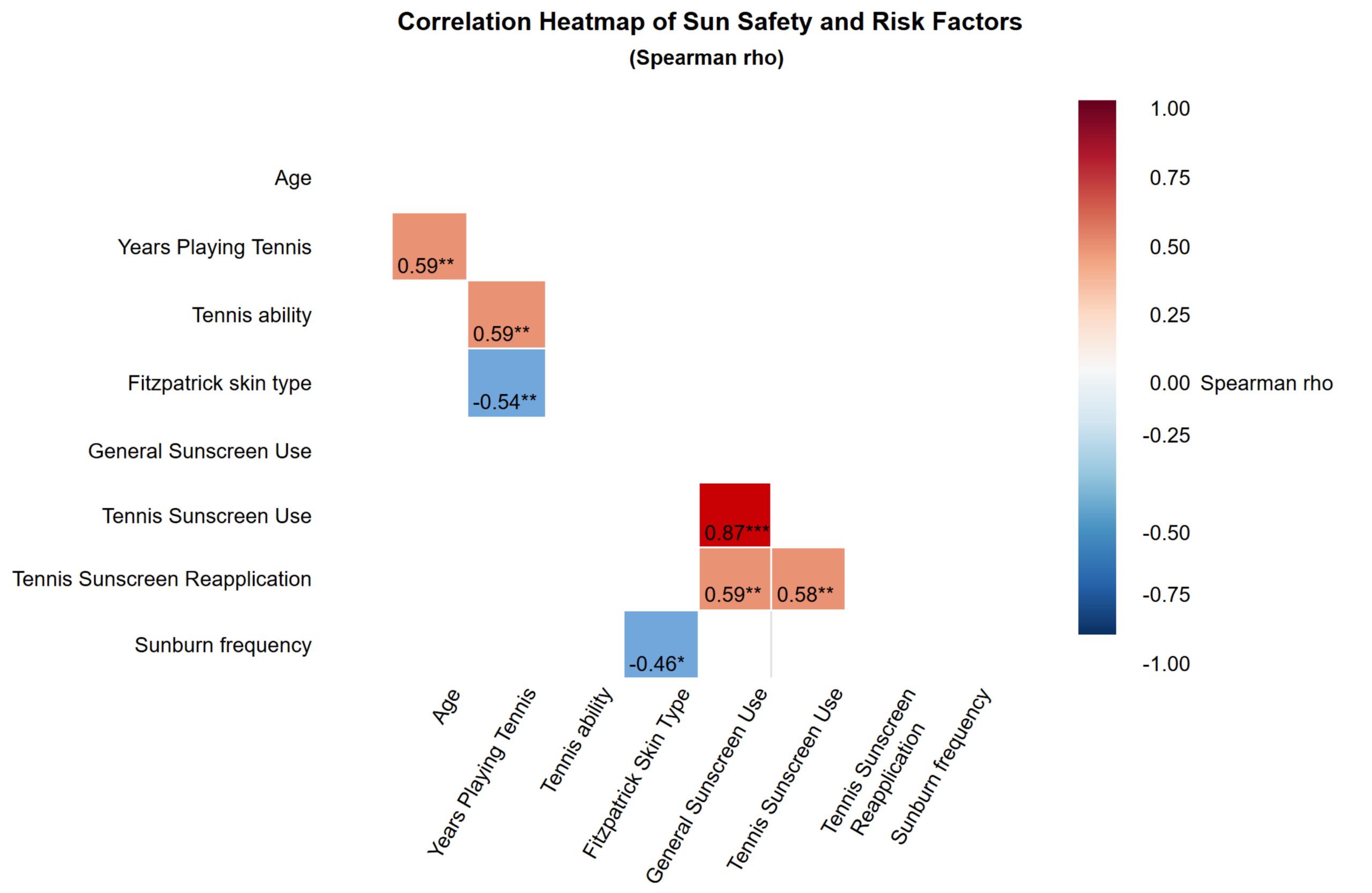
As seen in Figure 4, there was a strong positive association ( ) between general daily use of sunscreen and application during tennis, as well as between general sunscreen use and reapplication of sunscreen during tennis (
 ). There was also a strong positive association between application and reapplication of sunscreen during tennis (
 ). These associations suggested that players who already use sunscreen in their daily routine were significantly more likely to reapply during tennis. Similarly, the frequency of initial sunscreen application during tennis may be associated with reapplication and continued sun protection on the tennis court.
A player’s phenotype, indicated by their Fitzpatrick skin type, was associated with past sun damage. There was a moderate negative association ( ) between skin type and the severity of the player’s sunburn frequency. Lastly, there was a logical strong positive association () between player age and years of tennis experience. This also translated into a strong positive association between years playing tennis and tennis ability ().
| Variable 1 | Variable 2 | ρ | 95% CI | p | FDR q |
|---|---|---|---|---|---|
| General Sunscreen Use | Tennis Sunscreen Use | 0.868 | 0.719 – 0.973 | <0.000001 | <0.000001 |
| General Sunscreen Use | Tennis Sunscreen Reapplication | 0.592 | 0.385 – 0.760 | 0.000112 | 0.00198 |
| Tennis Sunscreen Use | Tennis Sunscreen Reapplication | 0.584 | 0.340 – 0.773 | 0.000150 | 0.00198 |
| Years Playing Tennis | Fitzpatrick skin type | -0.538 | -0.764 – -0.258 | 0.000593 | 0.00652 |
| Years Playing Tennis | Tennis Ability | 0.588 | 0.331 – 0.803 | 0.000129 | 0.00198 |
| Fitzpatrick Type | Sunburn Frequency | -0.455 | -0.719 – -0.140 | 0.004640 | 0.0437 |
| Age | Years Playing Tennis | 0.589 | 0.339 – 0.787 | 0.000124 | 0.00198 |
Table 5 | Significant Spearman correlations.
The corresponding correlation coefficients, 95% confidence intervals, two-sided p-values, and FDR-adjusted q-values are reported in Table 5. The strongest association was observed between everyday sunscreen use and sunscreen application during tennis ( ,
,  ). Everyday sunscreen use was also positively associated with sunscreen reapplication during tennis (
 ,
,  ), while sunscreen application during tennis was positively associated with sunscreen reapplication (
 ,
,  ).
).
Several significant demographic associations were also identified. Age was positively associated with years of tennis experience ( ,
,  ), while years of tennis experience was positively associated with self-reported tennis ability (
 ,
,  ). Years of tennis experience was negatively associated with Fitzpatrick skin type (
 ,
,  ). Additionally, Fitzpatrick skin type showed a moderate negative association with recent sunburn frequency (
 ,
,  ), indicating that participants with darker skin types generally reported fewer sunburns.
Ordinal Logistic Regression Analysis
| Outcome | Association | Odds Ratio | 95% CI | p |
|---|---|---|---|---|
| Tennis Sunscreen Reapplication | Tennis Sunscreen Use | 2.77 | 1.44 – 5.33 | 0.0023 |
| Tennis Sunscreen Reapplication | General Sunscreen Use | 2.99 | 1.36 – 6.58 | 0.0065 |
| Sunburn Frequency | Years Playing Tennis | 1.86 | 1.10 – 3.14 | 0.0196 |
| Sunburn Frequency | Fitzpatrick Type | 0.39 | 0.20 – 0.75 | 0.0048 |
Table 6 | Ordinal logistic regression.
To further evaluate the significant associations identified by Spearman correlation analysis, proportional-odds ordinal logistic regression models were performed and outlined in Table 6. Participants who reported more frequent everyday sunscreen use had nearly threefold greater odds of reporting more frequent sunscreen reapplication during tennis (OR = 2.99, 95% CI: 1.36–6.58,  ). Likewise, more frequent sunscreen application during tennis was associated with greater odds of sunscreen reapplication (OR = 2.77, 95% CI: 1.44–5.33,
  ). For sunburn frequency, greater years of tennis experience was associated with increased odds of reporting more frequent sunburns (OR = 1.86, 95% CI: 1.10–3.14,
  ), whereas higher Fitzpatrick skin type was associated with significantly lower odds of recent sunburn (OR = 0.39, 95% CI: 0.20–0.75,
  ). These regression analyses supported the primary associations observed in the Spearman correlation analysis.
Discussion
This preliminary cross-sectional survey evaluated sunscreen use, sunscreen reapplication habits, skin cancer knowledge, and sun-protective behaviors among tennis players attending the 2025 U.S. Open Tennis Championships. Unlike previous literature, which primarily surveyed young adults who engaged in competitive sports, this study surveyed participants across a broader range of tennis-playing abilities and included older tennis players. Overall, sunscreen reapplication remained substantially less common than initial sunscreen application, despite most participants reporting at least a basic understanding of skin cancer. These findings are consistent with previous studies of tennis players and other outdoor athletes, suggesting that inadequate sunscreen reapplication continues to be an important gap in photoprotective behavior.
While 22/37 of respondents reported applying sunscreen at least twice weekly during tennis, only 8/37 reported reapplying with the same frequency, and 23/37 reported never reapplying sunscreen during tennis. These findings are remarkably similar to those reported by Lawler et al., Sellyn et al., and Berndt et al., who also found initial sunscreen application was reasonably common but sunscreen reapplication remained uncommon among tennis players and other outdoor athletes21,22,23. This recurring trend suggests possible logistical and cultural barriers to sunscreen reapplication21,22,23,24. The most commonly cited reasons for not applying sunscreen were general inconvenience (cited by 19/37 of respondents), forgetfulness (13/37), sweaty hands (12/37), and feeling like they do not need sunscreen (11/37). Not owning sunscreen was cited by only 4/37 of respondents. These reasons reflect players’ reported attitudes towards sunscreen use, which are likely to be amplified regarding reapplication in the middle of playing tennis.
The Spearman correlation analysis demonstrated that sunscreen behaviors were strongly related to one another. The strongest association observed was between everyday sunscreen use and sunscreen use during tennis, while everyday sunscreen use and sunscreen use during tennis were both positively associated with sunscreen reapplication. These findings were further supported by the ordinal logistic regression analysis, in which participants reporting more frequent everyday sunscreen use and sunscreen use during tennis had significantly greater odds of reporting sunscreen reapplication during tennis. Rather than suggesting that tennis sunscreen use is an isolated behavior, these findings indicate that sunscreen habits during tennis appear to reflect broader personal sunscreen habits.
These findings reinforce speculated gaps in tennis’s sun safety culture, as previously elucidated by Lawler et al.22. This small scale study outlines a possible disconnect between knowledge and behavior. Despite 81.1% of respondents having at least a basic understanding of what skin cancer looks like, and 40.5% stating they know how to detect skin cancer themselves, this perceived knowledge did not always correlate with preventative or proactive action in respondents. Based on the responses, was little to no significant association ( ) between skin cancer knowledge and application, as well as reapplication, of sunscreen during tennis. This potential gap between knowledge and action may be partially explained by perceived inconvenience. However, limited evidence due to the survey’s small sample size and the question’s simplistic nature must be acknowledged; explanations of the gap between knowledge and action are speculatory. Out of the 15 respondents who stated that they knew what skin cancer looks like, 13 (86.7%) cited general inconvenience as a barrier to sunscreen application. This suggests that even among knowledgeable players, the perceived costs of sunscreen application, such as interrupting play or slippery grip, outweigh the understood long-term benefits of protection against skin cancer. This aligns with Nadal’s attitude towards sunscreen use, as shown in the aforementioned infamous quote, and findings of Berndt et al., where personal norms and attitudes were key determinants of sunscreen use23.
As 89% of all tennis courts in the United States are outdoors, playing tennis without proper sun protection contributes to a greater lifetime burden of skin damage. Additionally, the association between lighter Fitzpatrick skin types and more severe sunburns reiterates the varying risk profiles across populations.
Our findings suggest that education alone may not be sufficient to change behavior, as current practices may reflect both cultural and personal norms towards sun protection24,29. These findings are not generalizable due to the scale and limitations of this preliminary study; therefore, future research should aim to investigate in these directions. Improvement in sunscreen use habits may start from changing social and environmental cues, such as making sunscreen available during practices and turning sunscreen use into a shared norm23,32. Additionally, improved formulations of sunscreen for athletes might prove beneficial to alleviate the functional inconveniences of sunscreen such as stickiness or slippery hands. Future research may also investigate the most effective methods of improving public policy surrounding sunscreen use, such as sun protection availability requirements at tournaments, scheduled sun protection reminders for outdoor matches, and integrated sun safety education in USTA youth programs.
Limitations
This study has several limitations. Because only 37 responses were analyzed and the questionnaire flyer was distributed by hand at the U.S. Open Championships, this study faces potential for sampling bias and a lack of representative data for the tennis-playing population. Convenience sampling was used in this study, which created a sampling bias because U.S. Open attendees could have higher awareness, interest, or socioeconomic status than other tennis players, resulting in data that may not fully represent the broader tennis-playing population. Additionally, due to this small sample size, moderate associations observed in this study may have occurred due to chance. Although the survey was distributed during the U.S. Open “Fan Week”, during which grounds admissions were free, the population may be skewed based on socioeconomic status and engagement with tennis. Additionally, because this study is cross-sectional, only correlation, not causation, can be studied. Furthermore, reliance on self-reported and memory based questions creates high risk for recall bias, particularly regarding frequency of sunscreen use and number and severity of past sunburns. As a result, data is not fully accurate. Response bias was minimized because the questionnaire was electronic and anonymous. The survey did not ask for respondents’ sex or the SPF of sunscreen used, leading to a less complete analysis of correlation. Duration of sunscreen-use sessions, time between sunscreen applications, level of sweating, sunscreen water-resistance rating, amount applied, and body coverage were also not considered. Furthermore, environmental factors that influence sunscreen use—such as weather conditions, UV index, geographic location—were not taken into consideration. Demographic data, such as sex, ethnicity, education, and income was not gathered. As a result, analysis was less comprehensive because all of these factors may have influenced sunscreen use. Finally, because the survey was in English, non-English speakers may have been excluded, affecting the diversity of respondents. Future work with larger samples is needed to confirm this study’s findings and examine trends in sunscreen application with less risk of bias.
Conclusion
This study presents a preliminary demonstration that inadequate weekly sun protection, especially poor sunscreen reapplication during tennis play, may be prevalent among tennis players of a wide range of experience and skill levels. Although most participants reported awareness of skin cancer risks, our study found a potential gap between knowledge and behavior. A larger population-based study is needed to further investigate this possibility. According to the participants, the lack of sunscreen usage despite past sunburns and at times family history of skin cancer was primarily due to perceived inconvenience, forgetfulness, and concerns regarding impact on tennis performance. Because there was a relationship between sunscreen application and reapplication rates, sunscreen application may be viewed as a habitual behavior that can be reinforced by consistent encouragement24.
A large scale study is needed to expand upon the findings of this study. This future study should measure cultural attitudes towards sunscreen use and address limitations such as small sample size, low question specificity, and lacking diversity to acquire a more informed understanding of sunscreen usage in tennis players. Based on this future study, long term future improvements will be more informed than those presented by this study. This preliminary study indicates that future improvements may include making sunscreen application and reapplication more commonplace during tennis play, thus supporting the formation of healthy sunscreen application habits. Directions for a large-scale, population based study may include exploring targeted cultural and environmental factors, accessibility of UV protection at tennis facilities, structured opportunities for sunscreen application during play, and social norms around sunscreen use through examples set by coaches and leadership.
Tennis is one of the most popular and fast-growing sports in the U.S., with a recorded 3.3 million viewers for the Men’s Final of the 2025 U.S. Open, and an estimated 27.3 million U.S. tennis players, both professional and amateur. To ensure player safety and sustained popularity of the sport, further research into a comprehensive approach that integrates potential cultural shifts, behavior change, and product innovation is essential to identify the most effective method of reducing sunburn risks and long-term health impacts among players.
Acknowledgments
I would like to express my sincere gratitude to Alice Hou for her mentorship and support throughout the process of writing this paper. Her invaluable guidance greatly enhanced the quality of this work.
Supplementary information
The raw de-identified data (after removal of excluded respondents) can be accessed at the following link: https://docs.google.com/spreadsheets/d/1un9HHG5DZ8pTib7hHgWdBFX0c-0qubVVS7lBa8zqmUc/edit?usp=sharing.
| Variable | 0 | 1 | 2 | 3 | 4 | 5 |
|---|---|---|---|---|---|---|
| Age | 15-25 years old | 26-35 years old | 36-45 years old | 46-55 years old | Over 55 years old | |
| Years Playing Tennis | I do not play tennis | Less than 5 years | 6-10 years | 11-15 years | Over 15 years | |
| Skill Level | Beginner | Low Intermediate | High Intermediate | Advanced | Elite | |
| Hours Per Week Playing Tennis | Less than 1 hour | 1-5 hours | 5-10 hours | 10-20 hours | More than 20 hours | |
| Indoors vs. Outdoors | 0% of the time | 0-20% of the time | 20-40% of the time | 40-60% of the time | 60-80% of the time | 80-100% of the time |
| Hours Per Week Outdoors (Not Tennis) | Less than 1 hour | 1-5 hours | 5-10 hours | 10-20 hours | More than 20 hours | |
| Fitzpatrick Skin Type | Type 1 | Type 2 | Type 3 | Type 4 | Type 5 | Type 6 |
| Everyday Sunscreen Usage | Never | Once a week | Twice a week | More than two times a week but not every day | Daily | |
| Sunscreen Application During Tennis | Never | Once a week | Twice a week | More than two times a week but not every day | Daily | |
| Sunscreen Reapplication During Tennis | Sweaty hands | Forgetfulness | General inconvenience | I don’t have sunscreen | I don’t have sunscreen | |
| Sunburns in Past Two Years | 0 | 1-3 | 4-6 | More than 7 | ||
| Most Severe Sunburn | N/A | First degree | Second degree | Third degree | ||
| Personal or Family History of Abnormal Moles and/or Skin Cancer | None | Yes, me | Yes, my family | Yes, both me and my family | ||
| Knowledge of What Skin Cancer Looks Like | None | I have a basic understanding | Yes, and I know how to detect skin cancer myself |
Table 7 | Ordinal to numeric encoding key.
| Major literature review claim | Paper title(s) |
|---|---|
| Tennis players receive high amounts of UV radiation and commonly exceed the recommended sun exposure limit. |
|
| Sunscreen among tennis players has been reported to be inadequate overall. |
|
| Inadequate sun protection may partially be explained by perceived barriers and inconvenience. |
|
| Club culture, social/behavioral factors, and policy may have impacts on usage of sun protection. |
|
| Coach intervention may influence sun protection of players. |
|
Table 8 | Major literature review claims mapped to specific papers.
References
- R. Treisman. Lots of people love tennis. But do you know where it comes from? NPR. July 9, 2025, https://www.npr.org/2025/07/09/nx-s1-5459868/tennis-history-evolution-us-open. [↩]
- Tennis Industry Association. Research – Tennis Industry Association. Racquet Industry Research. 2021, https://www.racquetindustryresearch.org/page/research_general. [↩] [↩]
- ATP Tour. Tournaments | ATP World Tour | ATP Tour | Tennis. ATP Tour. 2026, https://www.atptour.com/en/tournaments. [↩]
- S. A. Kovalchik, M. Ingram. Estimating the duration of professional tennis matches for varying formats. Journal of Quantitative Analysis in Sports. Vol. 14, pg. 13–23, 2018, https://doi.org/10.1515/jqas-2017-0077. [↩]
- R. Venkat. The Longest Tennis Match in History: When Even the Scoreboard Stopped Working! Olympics.com. March 16, 2021, https://www.olympics.com/en/news/longest-tennis-match-history-grand-slam-record. [↩]
- ATP Tour. ATP & WTA Announce New Match Schedule Regulations to Minimise Late Finishes; Strategic Review on Tennis Balls Underway. ATP Tour. January 9, 2024, https://www.atptour.com/en/news/match-scheduling-tennis-balls-release-january-2024. [↩]
- J. Fernandez, A. Mendez-Villanueva, B. M. Pluim. Intensity of tennis match play. British Journal of Sports Medicine. Vol. 40, pg. 387–391, 2006, https://doi.org/10.1136/bjsm.2005.023168. [↩]
- N. J. Downs, T. Axelsen, P. Schouten, D. P. Igoe, A. V. Parisi, J. Vanos. Biologically effective solar ultraviolet exposures and the potential skin cancer risk for individual gold medalists of the 2020 Tokyo Summer Olympic Games. Temperature. Vol. 7, pg. 89–108, 2019, https://doi.org/10.1080/23328940.2019.1581427. [↩]
- J. Aguilera, E. Navarrete-de Gálvez, C. Sánchez-Roldán, E. Herrera-Ceballos, M. V. de Gálvez. Sun-protective properties of technical sportswear fabrics 100% polyester: The influence of moisture and sweat on protection against different biological effects of ultraviolet (UV) radiation. Photochemistry and Photobiology. Vol. 99, pg. 184–192, 2023, https://doi.org/10.1111/php.13679. [↩]
- C. Nguyen. Say what? French Open First-Round Quote Roundup. SI.com. May 30, 2012, https://www.si.com/tennis/2012/05/30/french-open-quotes-first-round. [↩]
- F. Keshavarzi, N. Ø. Knudsen, N. M. Komjani, M. F. Ebbesen, J. R. Brewer, S. Jafarzadeh, E. Thormann. Enhancing the sweat resistance of sunscreens. Skin Research and Technology. Vol. 28, pg. 225–235, 2022, https://doi.org/10.1111/srt.13115. [↩]
- N. Kluger. Underuse of caps by male tennis players at the 2024 French Open. Archives of Dermatological Research. Vol. 318, pg. 13, 2026, https://doi.org/10.1007/s00403-025-04479-2. [↩]
- K. Kliniec, M. Tota, A. Zalesińska, M. Łyko, A. Jankowska-Konsur. Skin Cancer Risk, Sun-Protection Knowledge and Behavior in Athletes—A Narrative Review. Cancers. Vol. 15, pg. 3281, 2023, https://doi.org/10.3390/cancers15133281. [↩]
- M. Moehrle. Ultraviolet exposure in the Ironman triathlon. Medicine & Science in Sports & Exercise. Vol. 33, pg. 1385–1386, 2001, https://doi.org/10.1097/00005768-200108000-00021. [↩]
- J. Fernandez-Ruiz, T. Montero-Vilchez, A. Buendia-Eisman, S. Arias-Santiago. Knowledge, behaviour and attitudes related to sun exposure in sportspeople: A systematic review. International Journal of Environmental Research and Public Health. Vol. 19, pg. 10175, 2022, https://doi.org/10.3390/ijerph191610175. [↩]
- I. Savoye, C. M. Olsen, D. C. Whiteman, A. Bijon, L. Wald, L. Dartois, F. Clavel-Chapelon, M. C. Boutron-Ruault, M. Kvaskoff. Patterns of ultraviolet radiation exposure and skin cancer risk: the E3N-SunExp study. Journal of Epidemiology. Vol. 28, pg. 27–33, 2018, https://doi.org/10.2188/jea.JE20160166. [↩]
- A. Green, G. Williams, R. Neale, V. Hart, D. Leslie, P. Parsons, G. C. Marks, P. Gaffney, D. Battistutta, C. Frost, C. Lang, A. Russell. Daily sunscreen application and betacarotene supplementation in prevention of basal-cell and squamous-cell carcinomas of the skin: a randomised controlled trial. The Lancet. Vol. 354, pg. 723–729, 1999, https://doi.org/10.1016/S0140-6736(98)12168-2. [↩]
- American Academy of Dermatology Association. Sunscreen FAQs. American Academy of Dermatology Association. February 11, 2025, https://www.aad.org/media/stats-sunscreen. [↩]
- M.-A. Serrano, J. Cañada, J. C. Moreno. Ultraviolet exposure for different outdoor sports in Valencia, Spain. Photodermatology, Photoimmunology & Photomedicine. Vol. 27, pg. 311–317, 2011, https://doi.org/10.1111/j.1600-0781.2011.00620.x. [↩]
- M.-A. Serrano, J. Cañada, J. C. Moreno, G. Gurrea. Personal UV exposure for different outdoor sports. Photochemical & Photobiological Sciences. Vol. 13, pg. 671–679, 2014, https://doi.org/10.1039/c3pp50348h. [↩] [↩]
- G. E. Sellyn, S. H. Millan, K. G. Harmon, A. Karpinos. A survey of sun safety habits among Division I National Collegiate Athletic Association golfers and tennis players. Clinics in Dermatology. Vol. 41, pg. 729–734, 2023, https://doi.org/10.1016/j.clindermatol.2023.09.015. [↩] [↩] [↩] [↩]
- S. Lawler, K. Spathonis, E. Eakin, C. Gallois, E. Leslie, N. Owen. Sun exposure and sun protection behaviours among young adult sport competitors. Australian and New Zealand Journal of Public Health. Vol. 31, pg. 230–234, 2007, https://doi.org/10.1111/j.1467-842x.2007.00053.x. [↩] [↩] [↩] [↩] [↩] [↩] [↩]
- N. Berndt, D. O’Riordan, E. Winkler, L. McDermott, K. Spathonis, N. Owen. Social cognitive correlates of young adult sport competitors’ sunscreen use. Health Education & Behavior. Vol. 38, pg. 6–14, 2011, https://doi.org/10.1177/1090198110367996. [↩] [↩] [↩] [↩] [↩] [↩] [↩] [↩] [↩] [↩] [↩] [↩]
- S. Lawler, L. McDermott, D. O’Riordan, K. Spathonis, E. Eakin, E. Leslie, C. Gallois, N. Berndt, N. Owen. Relationships of sun-protection habit strength with sunscreen use during outdoor sport and physical activity. International Journal of Environmental Research and Public Health. Vol. 9, pg. 916–923, 2012, https://doi.org/10.3390/ijerph9030916. [↩] [↩] [↩] [↩] [↩]
- M. S. Ally, S. M. Swetter, K. E. Hirotsu, J. Gordon, D. Kim, A. Wysong, L. Donnelly, S. Li, K. M. Nord. Promoting sunscreen use and sun-protective practices in NCAA athletes: Impact of SUNSPORT educational intervention for student-athletes, athletic trainers, and coaches. Journal of the American Academy of Dermatology. Vol. 78, pg. 289–292.e2, 2018, https://doi.org/10.1016/j.jaad.2017.08.050. [↩]
- D. P. Igoe, A. Amar, P. Schouten, A. V. Parisi, J. Turner. Assessment of biologically effective solar ultraviolet exposures for court staff and competitors during a major Australian tennis tournament. Photochemistry and Photobiology. Vol. 95, pg. 1461–1467, 2019, https://doi.org/10.1111/php.13132. [↩]
- H. G. Dixon, M. Lagerlund, M. J. Spittal, D. J. Hill, S. J. Dobbinson, M. A. Wakefield. Use of sun-protective clothing at outdoor leisure settings from 1992 to 2002: serial cross-sectional observation survey. Cancer Epidemiology, Biomarkers & Prevention. Vol. 17, pg. 428–434, 2008, https://doi.org/10.1158/1055-9965.EPI-07-0369. [↩]
- M. Lagerlund, H. G. Dixon, J. A. Simpson, M. Spittal, H. R. Taylor, S. J. Dobbinson. Observed use of sunglasses in public outdoor settings around Melbourne, Australia: 1993 to 2002. Preventive Medicine. Vol. 42, pg. 291–296, 2006, https://doi.org/10.1016/j.ypmed.2006.01.003. [↩]
- S. Leer, C. Ehls, S. Schneider. Guardians of the game: UV-specific skin cancer prevention by coaches in outdoor sports. Photodermatology, Photoimmunology & Photomedicine. Vol. 41, pg. e70007, 2025, https://doi.org/10.1111/phpp.70007. [↩] [↩] [↩]
- A. Wysong, H. Gladstone, D. Kim, B. Lingala, J. Copeland, J. Y. Tang. Sunscreen use in NCAA collegiate athletes: Identifying targets for intervention and barriers to use. Preventive Medicine. Vol. 55, pg. 493-496, 2012, https://doi.org/10.1016/j.ypmed.2012.08.020. [↩] [↩]
- S. Schneider, Z. A. Parsons, S. Leer. Beyond the scoreboard: Coaches’ UV-related skin cancer knowledge in outdoor sports. Journal of the European Academy of Dermatology and Venereology. Vol. 39, pg. 1297–1305, 2024, https://doi.org/10.1111/jdv.20461. [↩] [↩]
- S. J. Dobbinson, J. A. Hayman, P. M. Livingston. Prevalence of health promotion policies in sports clubs in Victoria, Australia. Health Promotion International. Vol. 21, pg. 121–129, 2006, https://doi.org/10.1093/heapro/dak001. [↩] [↩] [↩]


